Category: MARKETING

  • HDFC Life unveils a new ad campaign

    By A Correspondent


    HDFC Life has launched a new advertising campaign to raise awareness about its newplan Click2protect Plus, an extension of its flagship term plan Click2Protect. Click2Protect Plus, a traditional, non-participating pure term insurance plan comes with multiple additional benefits and options to choose from.


    Commenting on the new campaign, Sanjay Tripathy, Senior EVP – Marketing, Product, Digital & Ecommerce, HDFC Life said, “Following the launch of HDFC Life Click2Protect Plus, our new term insurance plan, we have embarked on this new ad campaign to spread awareness about the importance of having a term plan that is flexible enough to help the buyer customize it as per his needs. For example, we understood that as life’s responsibilities grow, there is a need to increase life cover too. Most term plans don’t allow this, while with Click 2 Protect Plus, the customer has the option to increase life cover at key milestones such as Marriage or the birth of a child. We also realized that more often than not, when people receive a large sum of money at once, they don’t know what to do with it. This money often gets frittered away and then there is a shortfall again. With this plan, the beneficiary has the flexibility to receive the claim amount in Lumpsum and Monthly payouts thereby ensuring that they will always be provided for. Both our ads illustrate the feature benefits using simple real life analogies and reinforce our brand promise of ‘Sar Utha Ke Jiyo.”


    On the campaign, Vikram Pandey, Creative Director, Leo Burnett, said, “The Life Insurance category is a complicated one, where people often tune out when technical features of policies are explained. The HDFC Life Click to Protect Plus campaign was an effort to explain the policy features simply, yet emotionally.”


    HDFC Life plans to take its new campaign to the customer through different platforms and intensify the brand experience. Apart from television, this film will be supported by other media such as print, OOH, DTH, cinema with significant focus on the digital and social media.


  • Madhuri Dixit appointed Brand Ambassador for Mahakosh Edible Oils

    By A Correspondent


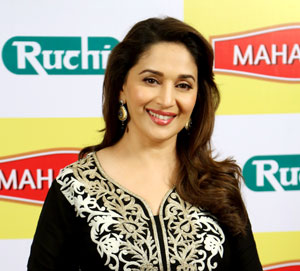
    Ruchi Soya Industries Limited has signed popular actress Madhuri Dixit as the brand ambassador for its brand ‘Mahakosh’. Ruchi Soya also announced that it would shortly be unveiling a mass media campaign featuring Madhuri, for Mahakosh refined Soyabean oil.


    Dinesh Shahra – Founder & MD, Ruchi Soya Industries Limited, said, “Brand Mahakosh stands for natural goodness and health. Madhuri Dixit’s persona is a perfect fit for Mahakosh. We are happy to have her as the brand ambassador for Mahakosh range of edible oils.”


    Satendra Aggarwal, COO, Ruchi Soya said, “Madhuri seamlessly fits into our new brand positioning for Mahakosh edible oil. She epitomizes the modern cosmopolitan woman who effortlessly over delivers on her many roles – she is a celebrity role model who is a working woman, a caring wife, a loving mother and trendsetter with an incredible blend of style and substance, as well as tradition and modernity. She is also extremely health conscious both for herself and her family.”


  • Soho Square bags creative biz for Bisleri’s new product


    Soho Square has bagged the advertising business for the upcoming launch of a new beverage by Bisleri. The said beverage is slated to hit the market later this year. Soho Square currently works on two of Bisleri’s brands namely Bisleri and Vedica.


    Samrat Bedi, Head of Office, Soho Square said, “Mr Ramesh Chauhan has pushed us to our limits on this one. Soho teams have input on numerous tasting sessions, packaging, positioning, pricing and even distribution to help give birth to the brand. Communication is just the icing on the cake.”


    Mohit Ahuja, Senior Vice President, Soho Square shared, “Since this marks the return of Bisleri into beverages beyond water and soda, the need to really stand out cannot be emphasized enough. We are planning a complete 360 campaign with a stature befitting a new drink coming from the house of Bisleri. We intend to create a splash in the market on a scale seldom seen.


  • Lowe Lintas crafts new Dengue-themed campaign for Godrej Hit


    Having made an impact with its earlier renditions for Malaria, Lowe Lintas has unveiled a new campaign for Godrej HIT that targets another serious vector borne disease – Dengue. While the Malaria threat has been known for some time, Dengue has emerged as the world’s fastest growing vector borne disease.


    What makes Dengue more lethal is that it spreads very rapidly in urban areas and its symptoms are difficult to diagnose. It is a debilitating disease, which often leads to hospitalization and in extreme cases death. The fact that there is no vaccine as yet for the disease makes it even more alarming.


    The campaign by Lowe Lintas has been themed around the core idea – “Kill it before it kills you”.


    Sharing his thoughts on the new campaign, Ajay Dang, VP – Marketing, Godrej Consumer Products Limited said, “Successful campaigns to fight diseases across the globe have one thing in common, a powerful and simple message and a direct call to action. HIT’s fight against Dengue mosquito stems from this very philosophy. The simple message of “bhagao nahi maaro” and the call to action of using the most efficacious mosquito solution – Godrej HIT.”


    Instead of talking about multiple things, Godrej HIT decided to keep the communication simple by highlighting the most important characteristic of the mosquito – its stubborn and aggressive nature. The problem is severe and doesn’t have a cure hence the need for a tougher solution – Godrej HIT, that kills every mosquito, leaving nothing to chance.


    Elaborating on the creative approach that was followed for the campaign, Arun Iyer – National Creative Director, Lowe Lintas + Partners said, “In order to make people aware about this new and unique Dengue mosquito our starting point was people’s casual attitude towards mosquitoes and how we could alter it. We decided to flip this casual attitude on its head and thus was born the idea ‘Dengue ke machchar ko marne se bada koi kaam nahi’. We thus, dramatized ‘killing mosquitoes’ as the most glorious job ever.”


    The campaign went live on August 18, 2014 and will be played across major entertainment, news and sports channels in India. The on-air campaign will be ably supported by a plethora of activities on other media platforms like print, radio, digital, outdoor, etc soon.


  • Fevistik unveils campaign highlighting high brand recall attribute

    By A Correspondent


    Ogilvy & Mather India has unveiled a new campaign for glue stick brand Fevistik. The current commercial shows a fake hero trying hard to impress the shopkeeper by somersaulting his way into a stationery shop but ends up banging his head on the wall. After a series of failed stunts, he asks the shopkeeper for Fevistik. But, the shopkeeper gives him some other glue stick. He takes huge offense to being offered a duplicate and accepts only the original glue stick Fevistik from the shopkeeper.


    Abhijit Avasthi

    Abhijit Avasthi – National Creative Director, Ogilvy & Mather said, “The challenge before us was to make sure that people insist on buying only the original glue stick Fevistik from the shopkeeper and not fall for local imitations. And what better way to drive the point than showing that even duplicates reject the fake glue stick and demand only Fevistik. The new commercial with the fake superhero delivers this message in an entertaining manner.”


    Anil Jayaraj – Chief Marketing Officer, Pidilite Industries Limited added, “Fevistik is a market leader in glue stick category and enjoys significant top of the mind recall. It is the only glue stick brand which consumers remember and recall. The new communication aims at reiterating the same fact and encouraging consumers about making the right decision when it comes to choosing the glue stick. The communication also aims at educating consumers to be aware of look-alike products. We believe this new communication takes our brand ahead and stands out in an entertaining manner.”


  • Hyundai Elite i20 campaign takes the web by storm

    By A Correspondent


    Hyundai Motor India Limited (HMIL) achieved a new milestone with the launch of the all-new Elite i20. The latest television commercial for Elite i20 crossed half a million views on YouTube in a span of just 3 days.


    Elite i20 is the car designed to fulfill the needs for driving pleasure of customers, while evoking a sense of confidence and class at the same time. The new model offers a premium ownership experience for novelty seeking, modern and premium elite customers. In the new television commercial, Hyundai has showcased the sporty, dynamic and innovative fluidic sculpture 2.0 design of the all-new Elitei20.The concept of the TVC focuses on evolved aesthetic and confident perfection.


    The commercial has been shot at various locations in Romania. The storyline revolves around an uncompromising secret agent who is dogged by the shenanigans of his agency whom he shakes off victoriously. Sanjay Gupta, Sr. General Manager Group Head Marketing, Hyundai Motor India Limited (HMIL) said, “All-new Elite i20 shows the progression of Hyundai in India to service the needs of the new age customer who does not compromise on anything including his/her car. This car gives them the best of both a Sedan & SUV.”


  • Oxemberg launches print campaign with ambassador Saif Ali Khan

    By A Correspondent


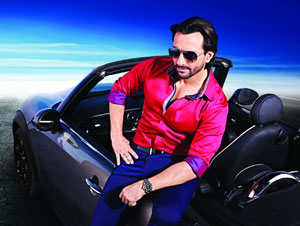
    Oxemberg recently shot a print advertisement campaign with Saif Ali Khan, the ambassador of the brand. The campaign has been designed to showcase apparel for every facet of a successful man’s life. The print campaign showcases Saif posing in style and elegance to display the flair and panache of the new collection.


    Speaking on the occasion, Gaurav Poddar, Executive Director, Siyaram Silk Mills Ltd. commented, “Oxemberg is an established brand with a lineage of quality, style and elegance. The brand has been associated with finest fabrics and cutting edge designs while retaining a sense of eternal style and elegance. Our main objective was to project the classy and wide range and nothing could have been better than shooting with the star of style, Saif Ali Khan. Saif ably demonstrated quality of the products carrying the Oxemberg label.”


  • ‘Camel crayons se hoga fun’, says new campaign by RK Swamy BBDO

    By A Correspondent


    RK Swamy BBDO has unveiled a new campaign for Camlin Crayons. A rap based jingle supports the TVC story which showcases the many dimensions of art and craft made possible by varieties of Camel Crayons on offer. The TVC features many fun-filled situations using different kinds of crayons offered by Camel – Wax, Oil & Plastic. The ambience is real and natural, habituated by kids expressing themselves and giving wings to their imagination with Camel Crayons. The TVC captures a range of emotions that when put together translate to ‘fun and enjoyment’.


    Saumitra Prasad, Chief Marketing Officer (Kokuyo Camlin) said, “Being the pioneer and market leaders of crayons we are aiming at increasing the consumption of crayons amongst children. With the help of this TVC, Kokuyo Camlin maintains it core promise of bringing fun and enjoyment in the growing years of children. Kokuyo Camlin offers the widest range of crayons which has become a part of everyday life of children at school, home and everywhere and this is what the TVC seeks to communicate. It has complimented the brand philosophy of ‘Fun and Enjoyment’ as vividly as possible, as being portrayed in the advertisement.”


    Gautam Pandit Sr. Partner & Sr. Creative Director, R K SWAMY BBDO said, “We had this key insight that crayons are often the first means of expression for children, sometimes even before they learn to speak. When they use colours, children express better and imagine much more which is what we are trying to show with this campaign with the promise of ‘Camel crayons se hoga fun’.”


  • Grey drives Fiat’s ‘Hello Life’ proposition further

    Having established an enormous fan base, Fiat has introducing the all-new Punto Evo with a revamped design. The carmaker has announced a new campaign that highlights the features of the new car, which has been developed by Grey Group.


    The task for Grey was clear: announce the new Punto Evo, re-instate its strengths while promoting all the new additions, and ensure the car is a part of Fiat’s overall brand positioning of ‘Hello Life’. The creative idea that has been adopted is ‘Life just became more interesting’ and uses the device of adding a different take to any situation. While something is enjoyable in its own way, it can be made even better by simply incorporating a different aspect to it.


    Nagesh Basavanhalli, MD and President Fiat Chrysler India said,” Punto Evo is a stylish, premium hatchback embodying Italian design flair making it a preferred choice of a style conscious consumer. Agency was given the task of communicating the strengths of Punto while making it appeal to its target consumers who are life maximizers – Youthful, Carefree, Cool, Hep, Happening, Stylish, Energetic who is a evolved and is tech savvy in today’s world. While we had a choice to talk just about the product, we wanted to keep it around the consumer and what the car promises to be to his/her life and hence, we developed the proposition of New Punto EVO, life just became more interesting. The TVC maintains the premium and international imagery of the brand and keeps the communication to the point yet very eye-catching and full of life”


    The look and feel of the communication has been kept very youthful, energetic and full of style. Malvika Mehra, National Creative Director, GREY group India shared, “Most car advertising in this segment typically sounds very transactional and competitive. It’s mostly about mileage, power, legroom etc. which while being an important part of the decision making process, sometimes leave out the ‘experience’ of what it ‘feels’ to drive that car. We forget that cars are actually an extension of one’s personality. With the new communication for the Punto Evo, with it’s exciting new features and great Italian design pedigree (an intrinsic part of the Fiat lineage), we have tried to occupy the mind space of a discerning consumer who while being reassured of the ‘basic asks’ of a great car (obviously) also has a chance to have an ‘interesting’ driving experience with this Italian hatchback.”


  • FCB Ulka campaign for MakeMyTrip’s mobile app

    By A Correspondent


    Growing beyond just providing voice calls, text messages, games and music, mobile devices have now also become the preferred choice to do online bookings. Though the mobile phone is convenient in many ways yet sometimes it puts us in sticky situations. Bringing on this insight that phone can put you in trouble, FCB Ulka has come up with its new TVC for the MakeMyTrip mobile app.


    The commercial aims at empowering the consumers to make instant flights and hotel bookings from anywhere, anytime and redeem themselves when stuck in an awkward situation.


    Mohit Gupta, Chief Business & Marketing Officer, MakeMyTrip, said “Mobile is the perfect channel for a travel company to provide real value to the customer and create higher engagement by enabling an easy travel-booking experience. Mobile provides a smoother user experience, increased personalization and allows faster access to relevant information. The film exhibits how MakeMyTrip mobile app provides instant bookings and cancellations of flights and hotels from anywhere.”


    The latest TVC is about a husband who is getting ready for taking a trip to Bangkok. His wife asks if the family can join him but he is insistent that it’s an official trip he and cannot take them. In the midst of their conversation they get interrupted by his friend’s call. Since he is busy getting ready he asks his son to put the call on speaker. The friend goes on talking about how efficiently he managed to fool wife into believing that it is an official trip, while in reality they are going to Bangkok to have fun.


    The commercial closes with the thought that if a mobile can put you in trouble then it can save you from trouble as well. Panicking, the husband asks for the solution which is the MakeMyTrip mobile app and cancel his current booking and re-book a trip for his entire family instantly.


    Commenting on the TVC, Sanjay Tandon – Chief Operating Officer, FCB Ulka said, “Life is really really on the go nowadays. So are travel plans that seize us at a moment’s notice. That is a key role that we are sure makemytrip’s mobile app will fulfil. And we needed to present that in an unexpected burry way.”


  • Flipkart to weave magic for Modi govt

    Online retailer Flipkart is all set to provide an online marketing platform to handloom weavers in the country. The Ministry of Textiles on Monday signed an MoU with Flipkart to provide online marketing platform to handloom weavers – an endeavour to boost the handloom sector, empower weavers and boost manufacturing in the country.


    Through this exclusive agreement, Flipkart will provide weavers in India online marketing platform, infrastructural support in data analytics and customer acquisition to help them get remunerative prices for their products and scale up their business, the press release said.


    Flipkart will provide online marketplace for sale of the products of the weavers/master craftsmen/national awardees/state level awardees and the others as advised by Development Commissioner for Handlooms.


    “This kind of a coordinated effort has been planned and executed for the first time with Flipkart for handloom weavers which will bridge the missing linkages of market intelligence, market access and logistics and help the Indian weavers in getting remunerative prices for their products,” the release added.


    According to the statement, “Flipkart aims to help weavers make optimal use of the available data to guide entrepreneurs and artisans on areas such as deciding on the right selling price, payment automation, proper packaging, transportation, brand building etc.”


    Commenting on the same, Minister of State (Independent Charge) Textiles Santosh Kumar Gangwar said, “The focus of this association should be to help weavers and weaver entrepreneurs to produce products in tune with the buyer requirements and grow significantly so that they may become manufacturers not only at a local but also at a national level.”


    Earlier this month, Flipkart signed an MoU with the Ministry of Labour and Employment’s Directorate General of Employment & Training ( DGET), aiming to train at least 5,000 students by December. Flipkart joined hands with the government to train people from semiurban and rural areas and possibly employ them at the company or its business partners.


    Source:The Economic Times

    Copyright © 2014, Bennett, Coleman & Co. Ltd. All Rights Reserved

    Licensed to republish
     

  • Kuch Chocolate Ho Jaaye!


    By Ravi Balakrishnan


    THE PAST

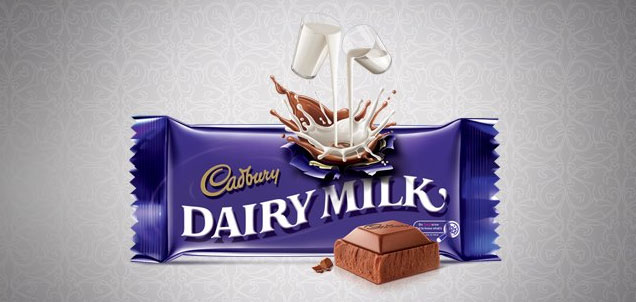
    Piyush Pandey, chairman and creative director, O&M South Asia has a challenge for all ad strategists: “I would like the best planner to write me a strategy document on the target audience for a laddu. I believe the target audience for a chocolate or a laddu is every human being with an urge for a moment of joy.” And that’s the core group for Cadbury Dairy Milk at least over the last 20 years, through which it’s moved from a product aimed at children to one that reaches out to everyone.


    Prior to 1994’s ‘The Real Taste of Life’ campaign, Cadbury Dairy Milk aka CDM aka “Cadbury” , the generic word for chocolate in large parts of the country, was already a well recognised brand. Early commercials saw indulgent parents bestow CDM on kids after trips out of town or for the tots lacing their own boots unassisted.


    Around the late 80s, the pressure of stagnation set in. Cadbury’s India realised it needed to widen its base. There were adults who ate chocolate but in a furtive manner, guilty about such a childish indulgence. Cadbury and Ogilvy made tentative attempts at reaching out: a film from the late 80s showed a father wolfing down a bar of chocolate under the pretext of telling his children a story. But the brand remained reluctant to make a clean break from its primary target audience.


    In 1993, the account went up for a pitch, sending panic through O&M. Mr Pandey, then on a vacation in Hawaii, rushed back to India. While miffed at having to cut short a long awaited break, he had an idea for a new direction: “One of our relatives who’d just had a bypass drove 150 km to pick us from the airport.


    While talking to him, we found he’d been on a ride at Disney which was specifically forbidden to people with heart conditions. He said ‘I wanted to check if the doctor had done a good job.’ I thought that was a great mindset.”


    Further inspiration hit Mr Pandey at a toy store in San Francisco filled with signs that said ‘By order of the management, you are obliged to play’. He spied an elderly couple crawling out from beneath a table in hot pursuit of a toy. Says Mr Pandey, “I wrote the jingle to ‘The Real Taste of Life’ on the back of a boarding pass.”


    The ad was presented and the account retained. Mr Pandey recalls, “Rajeev Bakshi who was on the brand at the time decided not to research it. He said, ‘Let’s make it first and research it later.’”


    The first film was a montage featuring several of O&M’s staffers at the time among others since the agency wanted people who looked “real” as opposed to models. Next up was the iconic cricket commercial featuring first time model Shimona breaking out into a spontaneous jig at a match. It’s an ad that Mr Pandey claims still gets applause even when played to an audience too young to have seen it the first time around.


    Says Siddharth Mukherjee, director – chocolate category & media, Mondelez India, “The ads very consciously showed adults consuming the chocolate in a very public setting. It was the first major leap forward to make the category acceptable for adult consumption.”


    Distribution was expanded and smaller packs introduced at more affordable prices. Mr Mukherjee says, “It led to 20% plus growth for 3 to 4 straight years. The category doubled in size.” The campaign continued with several variations, the most significant of which was ‘Khaane Waalon Ko Khaane Ka Bahana Chahiye’ featuring Cyrus Brocha distributing CDM at a wedding.


    Says Mr Mukherjee, “The challenge was to get a functional message across in what’s not a functional category.” There were also a couple of campaigns that died a quick death. Mr Pandey says, “We followed research which is a mistake I don’t make very often. People said they get perked up by a chocolate when they feel low. So we had two commercials about how to accept defeat with the line ‘saat rahe har pal’. We soon discovered that whatever people said in research, they didn’t want to see it on air.”


    In 2003, however, CDM itself was on the defensive after a controversy about worms in the chocolates gained traction. Celebrity spokesperson Amitabh Bachchan was roped in to give it a clean chit.


    Mr Pandey recalls, “Instead of arguing about who was right and wrong they looked at the brand and its responsibility. The speed at which they brought in new machinery on the back of a few stray incidents was testament to their belief in a relationship with consumers. The other great learning is when a consumer loves a brand, he gives it a chance and is forgiving.”


    It was a transitional time, with Cadbury dabbling with taglines like ‘Kush Hoon Khamaka’ (Happy for the heck of it) and a world cup special campaign called ‘Maza Aa Gaya’, none of which lasted. The time was right for a big change.


    THE PRESENT

    The current phase has been built around ‘Kuch Meetha Ho Jaaye’, marking a strategic shift for CDM. The brand tried to crack the larger market for sweets as far back as the late 1980s. Then in client servicing, Mr Pandey remembers going to Varanasi to research if Cadbury had a role in mithai; only to conclude it didn’t. But by 1999, the brand was starting to revisit the idea.


    Mr Mukherjee says, “Indians consume as much sweet as anyone else if not more. And meetha is such a strong part of tradition. Can we see the relevance of chocolate in occasions where people eat mithai?” The initial campaigns like ‘Pappu Paas Ho Gaya’ were about introducing CDM as a substitute for traditional sweets like pedas. This has been followed by ‘Pehli Tareek’ and ‘Shubh Aarambh’.


    Explaining the rationale, Mr Mukherjee says, “We are making the transition from once in a while celebratory occasions to more everyday events.” CDM has in the meantime worked out an exemplary collaboration between creative and media.


    Says Shekhar Banerjee, senior VP & head of Madison Media-Pinnacle, a division that works exclusively on Cadbury, “The core focus is actually about business goals led planning rather than media planning.” An early highlight was a tie up with Reliance and the education board in 2006 where people who sent an SMS inquiring after their exam results got the information and a branded message which said “Pappu paas ho gaya.Kuch meetha ho jaye.


    Banerjee says with a laugh, “We made sure the message only reached people who had passed.” The agency has tied ‘Shubh Aarambh‘ with unlikely partners like jobsite naukri.com. Or placed ads immediately after a commercial for a car or bike, recommending people who buy something new also have a bar of CDM to mark a fresh start.


    ‘Kuch meetha ho jaaye’ has been taken to sweet shops in Kolkata convincing them to include variants of chocolate with traditional mishti. It calls for an evolved style of working. Says Banerjee, “We’d list the occasions for ‘Shubh Aarambh’ and which media maps best. Ogilvy’s Abhijit Avasthi and Manoj Shetty would immediately take those and come up with creatives on each of them. It would be impossible to pull off without creative and media working together.”


    So where does the latest campaign featuring a couple romancing in a snow fight fit into this? According to Mr Pandey, “When a brand is this big and it’s succeeding in expanding the market, it should not forget its larger role of greater joy. So parallel to the activities you do in terms of increasing consumption, there’s the aura of a leader, the larger picture.


    THE FUTURE

    Mr Mukherjee sees meetha holding fort for a while: “We think of what the marketing task is at hand and if the line needs to be changed to achieve that, so be it. But a timeless line like kuch meetha ho jaaye may just need to be modified or refreshed.”


    Marketing consultant Harish Bijoor believes the brand is the taste of India in chocolate pretty much like Amul is in butter. It’s a brand that’s received a high degree of creative inputs both from the agency and the management team. However it’s not immune to the challenge every leader faces: “Each new entrant pecks at your share. The first task is preserving share and the second remaining relevant to an adult audience.”


    Mr Bijoor opines that apart from the social sanctions against adults eating chocolates which are still in place, there’s the functional idea of chocolates being a sugar rich category and therefore not good for health. He says, “This problem cannot be tackled by advertising and only by other offerings that may or may not do equally well.”


    By playing in the meetha space, the brand has perhaps set itself up for a tough slog. “When you say thanda matlab Coca-Cola you are competing with seven brands of soft drink. But when you say kuch meetha ho jaaye you are competing with thousands of traditional sweets including regional favourites. It’s a good piece of strategy, but whether it’s effective is the question.”


    Source:The Economic Times
    Copyright © 2014, Bennett, Coleman & Co. Ltd. All Rights Reserved
    Licensed to republish