Category: MARKETING

  • LGBT market gets a voice

    By A Correspondent


    MSLGroup India, Publicis Groupe’s public relations and social media network, has released its executive report ‘Out of the Closet and Into the Marketplace: The Birth of India’s Pink Economy’.


    ‘Out of the Closet and Into the Marketplace: The Birth of India’s Pink Economy’ shares insights about the Lesbian Gay Bisexual and Transgender (LGBT) movement in India, its evolution, and the community’s potential as a consumer segment. The report details the opportunities and challenges before marketers, as well as the sectors that have tapped this market. It also examines the lessons this holds for other businesses.


    It chronicles the fight for LGBT rights in India over the years, the economic potential unleashed by the decriminalization of homosexuality and how businesses can benefit from it. It analyzes the ‘pink’ market that now encompasses several services and products, from apparel to travel.


    The report offers insights into the sectors that have recognised the LGBT market’s potential and have made the first inroads into it. It also details how marketers can tap this potential and how they can use new-age tools such as social media.


    In this report, MSLGroup India has focused on the following opportunities:

    The size of the market: Estimated to be anywhere between 2 million and 130 million people, with a potential of several billion dollars, this is not a market that can be ignored. Many traditional businesses – such as banks – are launching LGBT-specific services and products.


    Spending power: The LGBT community tends to be educated and big on discretionary spending.


    The social imperative: LGBT-friendly businesses are better accepted and tend to be more successful.


    Among the things to keep in mind while marketing to the LGBT community are:

    * Not all LGBT people are out of the closet. You need to understand their sensibilities before you can market to them.

    * Social media and the mobile phone are the best tools to reach out to this community.


    Jaideep Shergill

    Commenting on the report, Jaideep Shergill, CEO, MSL India, said, “The LGBT community in India is making its presence felt in the societal and political contexts. Naturally, it is asserting its consumerist aspirations and unleashing its economic potential too. ‘Out of the Closet and Into the Marketplace: The Birth of India’s Pink Economy’ analyzes the birth of India’s ‘pink economy’ and the opportunity it holds for marketers.”


  • Milestone Brandcom rolls out OOH for Binani

    By A Correspondent


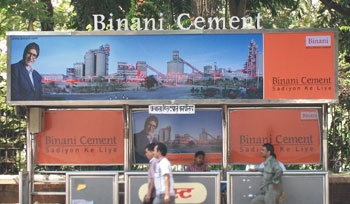
    Milestone Brandcom has rolled out Binani’s new Out-of-home campaign. Along with extended reach, the brand boasts a number of creative executions spread across circles.


    The communication objective was to ensure that the campaign be distinguished on OOH and also associate with people’s lives and be part of festive cheer. The brand ambassador for Binani Cement is Amitabh Bachchan, to further aggrandize his personality, only high impact media touch points were taken up. The campaign was executed for four weeks in 400+ towns across a wide array of 1200+ large format touch points like billboards, gantries, wall wraps, mall facades and unipoles. Extended presence was built using bus shelters and kiosks across all major junctions and arterial routes. The campaign was also taken onto the airports of all major metros for greater reach.


    There were a number of innovations executed for this campaign. Large 3D LED letters of ‘Binani Cement’ were installed over numerous billboards and bus shelters across the country. The campaign creative featured one of Binani’s manufacturing plants in India, the creative was enhanced with the help of LED lights aptly installed behind media to light up the windows in the creative. These ensured dominant visibility not only in the daytime, but even at night.


    “Milestone’s forte lies in their planning and innovations. The best part about Milestone is that they put the brand before the budget. They always provide us with an in-depth understanding of the market. Their OOH strategy is not skewed to the traditional planning route, but altered to suit what would work best for the brand,” said Bina Verma, Managing Director, Media Magix Braj Binani Group.


    Imtiyaz Vilatra

    Commenting on the campaign, Imtiyaz Vilatra, Founder Member & Managing Partner, Milestone Brandcom said, “The media mandate given to us for this campaign was to build salience for the brand and maximize impact through visibility and scale. In a highly cluttered media space, it was essential for the brand to stand out. We took an approach unconventional to the brand’s image and executed a number of innovations to ensure visibility and recall, and filled every city with a dominant presence of Binani Cement.”


  • LOOK-IN 2013: An exciting year ahead for Pepsi and Coke

    By Amit Bapna


    2013 is set to be an exciting year for colas, what with Pepsi stepping into role of title sponsor at IPL, Coke celebrating two decades in India (and almost certainly thinking of ways to derail its competitor’s official sponsor status), and Thums Up now backed by serial Bollywood hit-man Salman Khan. However the excitement around the category and its appeal to the youth is of an even earlier vintage as the first edition of Most Exciting Brands proves. (The Most Exciting Brands survey findings are published in the Brand Equity section of The Economic Times dated January 2, 2013 – Editor)


    The findings of the first ever Most Exciting Brands survey reaffirm that in spite of supposedly sexier categories like mobile phones and tablets, excitement about colas continues unabated. Three cola brands feature in the Top 5 rankings: Coca-Cola emerges as the most exciting brand followed by Pepsi at 3 and Thums Up at 5.


    Not bad for a category that was created way back in 1886, when Atlanta-based pharmacist Pemberton stirred up a fragrant, caramel-colored liquid and combined it with carbonated water. As per legend, the concoction initially sold a measly 9 glasses at five cents a glass for almost a year. Today Pemberton’s creation, famously known as Coca-Cola, is a ubiquitous brand, selling in over 200 countries and all set to celebrate 20 years of its return to India after being exiled from the country in the late 1970s.


    Competitive brand battles are nothing new, but few have been waged as consistently as the cola wars. To the people working on these brands, there is seemingly never a dull moment. Says Santosh Padhi, cofounder, Taproot India, “In a category like this, where the product is not there to sell (unlike a mobile where the features are being sold) what is being pushed is the imagery and all three brands have done a damn good job, when compared to any other category.”


    The cola brands have been on a journey of constant reinvention, building their brands around cultural references, including cricket, football, adventure, music and films.


    Says Tanuka Ghoshal, assistant professor – marketing, Indian School of Business, “For a low involvement product that’s often purchased on impulse, and where brand loyalty is typically low, sales thrive on one and only one thing: salience and top-of-mind recall.” In her view, this is what leads to a category that is overactive with each brand vying to outdo the other on share of voice and consequently share of mind. The brands strive to achieve this through a plethora of exciting and creative campaigns.


    For Coca-Cola, the leader of the pack in this survey, what worked well was the insight of integrating the brand with popular culture, through its campaigns and on-ground properties, informs Anupama Ahluwalia, VP – marketing, Coca-Cola India. Campaigns like “Ummeed wali dhoop, sunshine waali aasha” that exhorted people to believe in a “better tomorrow”, followed by the summer campaign, which profiled cricket as India’s most loved sport and featured the iconic Sachin Tendulkar, and finally the Coke and meals campaign, which spoke of happiness around mealtimes, seem to have worked well for the brand in creating buzz.


    Pepsi positions itself as “a curator of pop culture across the world.” The excitement has been kept alive by carrying forward it’s iconic ‘Change The Game’ plank shares Homi Battiwalla, EVP – Colas, Hydration & Mango Drinks, PepsiCo India. The campaign re-energised the brand. In 2012 the same central thought was carried forward in all communication.


    Piggybacking on the growing popularity of football as a sport in India, Pepsi created campaigns that set the world’s most popular sport against cricket and cricketers. The first commercial ‘Ab badlega game’ featured the brand ambassador Ranbir Kapoor arguing with a young football fan about why cricket is better. The other campaign featured cricketers and footballers playing against each other – Chelsea’s Didier Drogba, Frank Lampard and Fernando Torres against Mahendra Singh Dhoni, Virat Kohli, Suresh Raina and Harbhajan Singh.


    The idea was to showcase the possibilities in a country which is cricket-mad but also very football-interested. For the T20 series that was held in Sri Lanka, the campaign was all about “Na tameez se khela jata hai na tameez se dekha jata hai” (roughly translated as the rules of the game have changed – it is no more played or viewed in the same decent manner as it was done earlier). All the campaigns have the same irreverence and tongue-in-cheek tonality.


    Views Samir Gupte, president, OgilvyAction, the brand activation arm of the Ogilvy Group, “While advertising tries to create imagery for these brands non-traditional media, be it activation, events (sporting and others) or concerts help build differentiation and association with the brands especially in this category.” Come 2013, Pepsi is set to jump headlong into its IPL association as the title sponsor.


    Thums Up is one brand that has been keeping the testosterone levels high with its macho star associations – on TV and print as well on ground. The signing of Salman Khan as brand ambassador in 2012 has worked particularly well, especially with his dream run at the box office with Ek Tha Tiger and Dabbang 2. Prior to Khan coming onboard, the brand used the South-based star Mahesh Babu as its face with the campaign Aaj kuch toofani karte hain (let’s do something exciting today).


    The challenge for all these brands is to adapt to a world in which one-way communication is giving way to two-way consumer engagement and participation. Shares Samyak Sanjoy Chakrabarty, chief youth marketer, DDB Mudra Group, India, “It would be harakiri to take this target audience for granted, and that’s why the cola brands are always engaging with them whether through presence at the key touch points such as canteens, bars, college events, or live events and properties like the Coke Studio etc, which ensure top of mind recall.”


    In this task, the role of digital and social media is pivotal. Today’s youth is consuming multiple screens and brands are cognisant of this reality. Different brands are doing this with varying degrees of success and engagement. For instance, Pepsi’s football campaign generated a huge volume of conversation on social media – it reached out to more than 150+ million users online and garnered close to 570 million impressions across all platforms. Pepsi T20 Football Facebook activation got 2.5 million engaged users and added 1 million new fans. The way forward for cola companies, will be to invest extensively in creating experiences that allow on-ground activation and digital media to converge seamlessly.


    Source:The Economic Times

    Copyright © 2013, Bennett, Coleman & Co. Ltd. All Rights Reserved


  • Conclave to answer marketers’ questions about kids

    By A Correspondent


    EduMedia India is organizing a Decoding Kids Conclave, an event that aims to answer some of the biggest ‘why’s related to children, and how to go about effectively and responsibly engaging with them. It is an annual knowledge-sharing platform with a different theme every year. The first year’s theme is ‘Marketing to Kids’.


    Participants include brand managers and developers, marketing managers, product developers and innovators, advertising agencies, event agencies, PR professionals, researchers, startups / entrepreneurs targeting kids, TV professionals and other professionals working in the kids’ segment. Registrations close on January 14 th January 2013, fee is Rs. 3500/-


    The conclave is being held at The Lalit, Mumbai, on January 16 from 8.30am to 6pm.


    Topics Speaker Time Slot
    Welcome Address & Decoding Kids Handbook Launch 9:15 – 9:30
    All About Kids – Hanging Out with Digital Natives 9:30- 10:30
    Catch ’em Young – Shaping Gen Next Ravi Varanasi – Senior Vice President, National Stock Exchange of India Ltd 10:30 -11:15
    Kid Power in Rural India – Rural Marketing for Kids Products Pradeep Kashyap – CEO, MART & President, RMAI 11:15 – 12:00
    Grey Matters – Responsible Marketing to Kids (Panel Discussion) Shruti Verma Singh – Consulting Editor & Anchor, All About Ads on NDTV ProfitDr. Harish Shetty – PsychiatristLina Ashar – Chairperson, Kangaroo Kids Education Ltd

    Partha Rakshit – Vice Chairman, ASCI

    Tabassum Modi – Executive Director, EduMedia

    Mahesh Samat – Media Consultant

    12:00- 13:15
    DTK: Direct To Kids – Activation Case StudiesHorlicks WizKids by KrayonHDFC Life Spell Bee by Radio Mirchi

    The KidZania Experience

    Charubala Seshadri- Head of Marketing Excellence at GSK India Sanjay Tripathy- EVP Marketing, HDFC Life Hitesh Sharma – COO, Radio Mirchi

    Sanjeev Kumar -MD and CEO KidZania

    14:00 – 15:30
    From Blackboard to Storyboard – Kid in Advertising Prahlad Kakar -Ad Guru & Founder, Genesis Films 15:45- 16:30
    Success Mantras Unforgettable Brand Campaigns(Chhota Bheem & Bournvita Quiz Contest) Rajiv Chilaka – Creator, Chhota Bheem& CEO, Green Gold Animation Narayan Sundararaman – Director Marketing, Cadbury India 16:30 – 17:45
    Vote of Thanks & Future of Decoding Kids 17:45 – 18:00


  • Triton makes tyre brand Ralson flex its muscles

    By A Correspondent


    Triton Communications has reintroduced Ralco Tyres, one of India’s largest manufacturers of bicycle and automobile tyres, into the competitive tyre market, with more grip than ever.


    Announcing this, Yogeshwar Sharma, DGM – Advertising & PR, Ralson India Limited, underlined that brand Ralco/Ralson and champion wrestler Sushil Kumar complement each other quite perfectly; with strength, endurance and grip as attributes that qualify both the champions. Speaking about the association, Sushil Kumar added, “Aji hamare India ki sadkein akhade se kam thode hi hain.” – Indian roads are no less than the wrestling ring. “Ek akhade ka toh champion main hoon. Aur sadak wale akhade ka champion hai Ralco.” – I am the champion of the wrestling ring. And Ralco, the champion of the Indian roads.”


  • LGBT as TG: For pride and prosperity


    Shielding themselves from social stigma, India’s gay people lived double lives – one for the world and one in which they were true to themselves – for the longest time. Today, thanks to aggressive activism, growing awareness and an increasing number of LGBT people coming out of the closet, a new world has opened up for them. They are now carving out their space as niche consumers, giving marketers a new target group.


    Smart marketers are taking note of this newly empowered community. A report on Business.com said that gays and lesbians spend more than $600 billion every year across the world. They’re a business owner’s dream because they are:


    » Affluent: The average annual income for a gay household is $61,000, 20.4% higher than a heterosexual household’s, said the website


    » Educated: About 83% of gays and lesbians have either attended or graduated from college


    » Loyal: Approximately 89% of gays and lesbians are brand-affiliated and are highly likely to seek out brands that advertise to them


    Jaldi 5 with Ashraf Engineer: ‘LGBT community in India is making its presence felt in various ways’

    By Johnson Napier


    ‘Out of the Closet and into the Marketplace: The Birth of India’s Pink Economy’ report released by MSL Group India, has thrown up some stark realities about a community that for long has been a subject of neglect by many. That marketers chose to stay away from them for long is something that this report terms as surprising but suggests that there are opportunities galore for brands if they want to tap into this community.


    Ashraf Engineer, until recently Senior Associate Editor, The Hindustan Times – Mumbai and now Content Head, MSL India answers a few queries posed by MxMIndia on the report and the immense scope it presents to the marketers.


    01. The Pink Economy report has brought to the fore many facets concerning the LGBT community. What are some of the noteworthy observations from the report that you would like to highlight upfront?

    The biggest insight that we received is that even after the decriminalisation of consensual homosexuality I think the LGBT community is making its presence felt in various ways. Among that, one of those ways is economic manners where they are expressing their consumerist desires etc where we are seeing the first steps towards them becoming an important consumer group. I would be wary of stating that an economic boom or revolution is happening but the report takes the pains to say that is not the case. What the report makes very clear is that we are seeing the first signs of the pink economy emerging in India.


    It’s interesting to see a few businesses already taking advantage of this trend like apparels and accessories, travel and also events. These three have already recognised the opportunity and are working towards catering to this community.


    02. Why conduct a study/research towards a community towards whom the society is least concerned about?

    Through this study, we’ve looked at what is happening in the market, spoken to experts and then have come up with insights that are transpiring within this community. You could rather term it as being a business insight report. As for the need, any business-related organisation like ours where it is our job to support various businesses and communication strategies – it is our job to spot a trend early. We believed that it is going to be an important segment in the days to come and therefore felt the need to do the report.


    03. How have the marketers taken to the findings from this report? Do you see them more eager now to reach out to this section of the population?

    The response so far has been very positive. They also seem to understand that there could be an opportunity in time to come. In fact we have received a good response from the Media too. But this segment is not as evolved as it is in the West where marketers in various sectors specifically draw up business strategies and launch products centered towards this community. In fact apart from apparels and travel, even the BFSI industry abroad has been coming out with customised solutions that are aimed towards this community.


    04. Do you foresee obstacles regarding marketing or brands reaching out to this community, especially in a socially conscious market like India?

    In India, brands who are open and brash about this community may be a bit withheld for the moment but I think somewhere down the line they will understand that they need to continue drawing up plans for this community. As a consumer segment, for this community to attain full potential will take some time.


    How would you segregate this population basis their socio-economic classification? Does it throw up any interesting trend?

    The fact is that we only have international data to fall back on but in India there is no such study that tells us what the SEC standing is or for the matter even what the population base of this community is. If one were to go by the international pattern observed, the LGBT community is said to have more discretionary income. They have large incomes as they do not tend to have children; that trend is only now picking up. So as a consumer segment they are really very powerful.


    05. According to you, what are some of the learnings that Indian marketers can pick up from foreign counterparts when catering to this segment?

    Marketers first need to understand that this group does exist as a consumer segment and that there is an immense opportunity there. We already know of apparels and travel as potential segments but even lifestyle products in general need to wake up to them. Going forward, just like you have several banks abroad that offer solutions tailored towards their needs I think the BFSI industry in India needs to consider doing something similar.


    Know the market

    The LGBT market is different because it is many layered and poorly researched. It is crucial, therefore, for companies to study the market and understand which cross-section to target. This will help in getting maximum return on investments.


    Surveys conducted by various agencies indicate that gays and lesbians look at more magazines and newspapers and watch more TV than heterosexual consumers. They are also more driven by marketing campaigns to make purchases.


    One of the biggest strengths of the community is its resilience and its tendency to bond closely. When they come together for events, festivals or concerts, the energy is unparalleled. For marketers, this is a tailormade platform.


    Jerry Johnson, a marketing professional and TEDx speaker, said: “It is important for marketers to understand that the LGBT community is not just about sexual orientation. Our identities can also be identified with our interests. For any campaign to appeal to us, it should stay away from stereotypes and clichés. It would be best to keep it normal and inclusive. The Benetton ‘Unhate’ campaign was a great one as it had a simple message and yet had a strong impact. It conveyed that it is OK to be different. GAP too had a campaign that had two men wearing one shirt. These are big brands that are trying to be inclusive and we appreciate that.” Marketers have also identified that the LGBT community as an opportunity for gadget makers.


    Marketers are reaching out to them through social media, smart phones and other new media. Gay web portals are a great marketplace and have a captive audience. “Social media is the biggest tool; we are very active online. There are several online groups, websites and social forums that attract huge traffic,” said Johnson. “The internet gives customers the luxury of privacy. The best way to reach us is through our mediums.


    We become very loyal to corporations that advertise on our mediums and we also become their advocacy customers.”

    Apple, for instance, has several apps that help the community connect with a wide network. Apple’s DowneLink provides a space “for Downe (LGBT) people and their friends to exchange ideas, build friendships, and utilise local and nationwide services”. The app offers features such as social networking, blogs, e-mails, bulletins, forums, video/audio chat and instant messaging. It also has ‘365gay News’, which provides a space for LGBT people to stay abreast of current news and happenings in the world.


    The keys to success

    » Understand the segment:

    In Johnson’s estimate, there are 70 million gay people in India – many of them urban professionals with great purchasing power. “This is a huge segment and marketers are taking note of it. Mumbai, for instance, has three to four gay-related events every week. While they may not openly advertise them as so, community members spread the word and join the party,” he said.


    » Make business sustainable:

    In India, there are several challenges before pink businesses. The community is not very visible and, while there are many who are openly gay, there are millions still unwilling to come out in the open. For businesses, it is therefore best to cast the net wide than have explicit marketing campaigns. It isn’t wise to start an exclusive store as many still don’t like to be branded as gay and would shy away from visiting them.


    » Social media engagement and mobile marketing:

    Telecom and internet are two of the biggest opportunities in the LGBT space. Johnson explained that the gay people are eager to reach out and connect to others like them. “We spend a lot of time on the internet, on long-distance phone calls and BlackBerry Messenger groups. Domestic travel is another strong market. We love to travel and meet other members of the community,” he said. Since many gay couples have no children to support, their disposable income is high – something the automobile industry also recognises. Furnishings and home décor are important segments too.


    » Be sensitive and inclusive:

    Being flashy does not always grab eyeballs. It is the approach and attitude of marketers that can make or break a business when it comes to a niche market. “Gay-friendly businesses don’t need to spell that out. It is in the attitude. For instance, at hotels and restaurants, it is important that the staff are trained and sensitised. They need to treat customers with respect. Owners and managers realise that, at the end of the day, it is a business transaction and that they need to give customers the best possible service,” said Johnson. Jaideep Shergill, CEO, MSL India added: “The only tip I would give marketers is to treat them like other consumers. The more differently they are treated, the more the stigma is likely to remain.”


    Success stories

    While undoubtedly nascent, India’s pink economy has already tasted success. There is no market study, but entrepreneurs and observers have said that sectors such as tourism and apparel are catching on.


    A journey of a thousand miles…

    The pink rupee is finding its way into the bank accounts of travel companies catering to a gay clientele. Firms like Indjapink, Le Passage to India and Bangkok-based Purple Dragon are leading the race. The tours cover everything, from honeymoon packages and candle-lit dinners to wildlife safaris and spiritual retreats. Some tour companies have even conducted weddings with traditional rites for gay couples.


    The packages are mid-range to luxury and most of the clientele comes from the US and Australia. Though most agencies cater to only men, there are indications that lesbians in North America are interested in the country too.


    “India is high on the wishlist of many customers. The big attractions are history, culture, cuisine, shopping… We are happy about the Delhi High Court ruling and this might put some of our prospective India customers at ease,” Douglas Thompson, MD, Purple Dragon, told ‘The Indian Express’. Purple Dragon sends 200 to 250 customers to India every year.


    Delhi-based Indjapink specialises in gay tourism. “We create tours for the gay community, offering them outstanding personalised service and make them experience India in a discrimination-free atmosphere,” founder Sanjay Malhotra said. He felt that the reading down of Section 377 had liberated the community from discrimination and abuse.


    Malhotra told Reuters that his firm started off with 20 gay customers, but now has more than 100. “They feel they can breathe easy, live the life they want to. After the court order, we started getting more inquiries from gay men, both in India and abroad,” he added.


    Arjun Sharma, who founded Le Passage to India in Delhi, said: “It’s a $3 billion industry worldwide. Gay tourists are wealthy and have expensive hobbies like arts and fashion.”


    The Indian gay travel industry got a boost when the International Gay and Lesbian Travel Association listed the country as a destination site for gay travellers, with 11 gay-friendly or exclusively gay travel agents as partner businesses. “The gay community had so many apprehensions travelling to India,” Malhotra told Reuters. “Now, they look at the option of travelling to India without acting heterosexual.”


    India seems to be following the lead of Nepal, which became the first South Asian country to decriminalise homosexuality and legalise same-sex marriages three years ago and has since been actively courting the gay tourism market. American Thomas Roth, who runs an LGBT community market research firm in San Francisco, is among those hooked to India.


    Thirty years ago, when he first visited the country, he would evade questions about his wife and children. “Like most gays in India at the time, I was basically invisible,” he told Reuters. Today, he said, “With Gay Pride events, film festivals and parties, gay visitors can have it all.” A survey conducted by Roth’s firm last year ranked India as the second most desired cultural or adventure destination, just behind Thailand.


    When clothes set you free

    ‘The most powerful politics is the politics of economics,’ read the sign on the door of Azaad Bazaar, a clothes store that catered to the gay community in the Mumbai suburb of Bandra. Set up in 2009 in a garage, AzBaz – as it was popularly known – was the brainchild of Simran and Sabina (they both go by their first names only), strong voices in Mumbai’s gay rights movement. Their commitment to the cause was reflected in the way the store was designed – it doubled up as a coffee shop, where gay people hung out, sipped tea and chatted. It was as much a community house as a retail store.


    “A lot of people came in with their parents, and they usually come up to us with an awkward ‘hello’ but often end up in conversations ranging from the polite (‘So, how is the store doing?’) to the personal, about how they felt when their child came out to them,” Sabina told the ‘DNA’ newspaper. The store – which has now moved to Goa – also hosted book readings, film screenings and community meetings. “When we were younger, the community was not so accessible,” Sabina added.


    Sabina and Simran started AzBaz by retailing their own ‘Jailbird’ brand of T-shirts, which they marketed largely by word of mouth. It was a humble beginning, so imagine their surprise when several local shoppers started to walk in. “Once we explained the concept of the store to them, we got a variety of reactions that ranged from the evolved (‘You mean there is only one store like this in India?’) to the very excited (‘Oh, I have to tell my gay best friend about this!’),” Sabina told ‘DNA’. “This is not just about retail – it’s about understanding the concept of the store.”


    “The gay community is a targeted consumer and it’s growing now,” Simran told ‘The Indian Express’ newspaper.


    Excerpted with permission from ‘Out Of The Closet And Into The Marketplace – The birth of India’s ‘Pink Economy’ an MSLGroup India publication. If you wish to have a PDF copy of the report, write to editor@mxmindia.com with subject ‘Pink Economy Report’


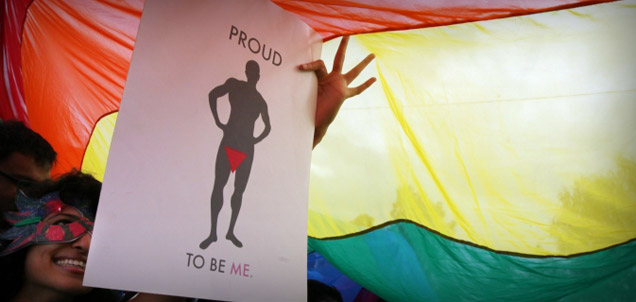
    Image: LGBT community at the Bengaluru Pride and Karnataka Queer Habba 2011. Image by Fotocorp

     

  • No tablet-phablet! Axe to offer free ride to space!!!

    By Namrata Singh


    Space expedition is the new paradigm in the world of marketing. Several consumers would have won laptops or a holiday tour through marketing contests, but here’s one that will take people from across the world to travel into space, where few men have ventured before.


    In what is being considered to be one of its biggest promotional events so far, Axe, a Unilever brand, has partnered with Space Expedition Corporation (SXC) to send 22 men and women from across the world into space. SXC is a private company, which is planning to kick-start its daily commercial flights into space next year.


    None other than Buzz Aldrin , the second man to walk on the moon, has been roped in as the ambassador to promote the Axe Apollo Space Academy , or AASA, to rhyme with NASA, which will shortlist men and women through an online competition . The winners will be sent into space on board the Lynx, a two-seater suborbital reusable launch vehicle, in 2014.


    So what does the man whose space vision is to generate the next wave of human exploration, have to say about AASA? “It brings into effect the things I have been waiting for where more people can learn about space. It’s an opportunity that has been given to the youngsters and they must avail of the same and learn more about space. They should avail of the opportunity to be selected early on pioneering flights,” Mr Aldrin said in an exclusive interaction.


    Across 90 countries, about a hundred people would be selected to go to a three-day space camp this year. They would experience the training astronauts undergo. From this group, 22 people would be selected to go into space. SXC is the launch customer of the space vehicle XCOR Aerospace’s Lynx vehicle that takes off and lands like a normal airplane from regular airports.


    The Curacao airport in the Caribbean is expected to be the first location.


    According to SXC’s website, the tickets to go to space are priced at $100,000, which means Axe, which has annual sales of over 1 billion euros, would be pumping in large sums of money into this promotion. The amount that would be required to send 22 people into space itself would cost around $2.2 million.


    “It is meant to be big. Big brands need to behave in a big way. Clearly, we believe this is something worth spending on. We are absolutely convinced that it is the right thing for the brand and the benefits would outweigh the costs. Our target of young men needs to be engaged and entertained. The essence of what we are really doing is to surprise in many ways,” said Russell Taylor, Unilever’s global brand VP for Axe (called Lynx in some markets). Mr Taylor, however, did not reveal the promotional spend numbers.


    The objective behind launching AASA is to recruit a new generation of consumers into the brand’s fold as also to retain existing consumers with new propositions. “We genuinely believe that people usually approach a brand for the first time and leave. This is a brand we want people to be a part of and that’s the business model that a brand like Axe would be following,” said Mr Taylor.


    According to him, Axe is one of the brands that would be contributing to Unilever’s larger goal of doubling its turnover.


    “The trick with young consumers is to always give something different as compared to what you have done before. It should be something that would surprise. Last year, we created exciting (versions) for ‘him’ and for ‘her’ . We did the female version to surprise and to generate conversations and debate. Space travel is the next big thing that is rapidly approaching. We decided to build something exciting around space and we launched a new variant called Axe Apollo,” said Mr Taylor.


    Axe is a leading global deo brand whose marketing proposition is to give young men the edge in the mating game. The brand figures among Unilever’s top 10 brands. It has a strong footprint in the developed world and is said to be growing fast in the emerging markets as well.


    (This writer was in New York on an invitation by Axe)


    Source:The Economic Times

    Copyright © 2013, Bennett, Coleman & Co. Ltd. All Rights Reserved


  • Solo is the way forward for Niloufer Dundh

    By Johnson Napier


    Having spanned diverse verticals under the ambit of Media during her almost two-decade-long professional career, former vice-president of Integrated Media at Hungama Digital, Niloufer Dundh has now taken the entrepreneurial route by announcing the launch of Ventes Dundh. To operate as a sales consultancy unit, Ventes Dundh will offer solutions in the realm of Media Sales, Branded Opportunities and Consultancy.


     

    In a note addressed to her well-wishers, Ms Dundh has cited her joining hands with three interesting opportunities that she have been following and monitoring for the past six months. These companies are in the space of:


    • Rural Mobility space, an ability to reach out to farmers. “I have always maintained that the real power of mobile will be when it can reach where SBI can’t possibly open a branch nor can Levers distribute its product. Finding a mobile grass root solution is always a challenge and I believe the company I have tied up with has the ammunition to provide meaningful opportunities to brands,” said Ms Dundh.
    • A kid’s digital eco-system, a confidential project which will be launched in Mar 2013. “I have always believed in Indian kids (my stint at Hungama TV showed me the untapped potential in the kids’ television space), now the India kid is on the net and is open to a world for herself. This is the core thought behind this project,” added Ms Dundh.
    • Crowdsourcing, something that has already shown great traction with brands and in the years to come will become a must do for brands who wish to be taken seriously in their digital initiatives. “In my digital tenure, I have experienced the true requirement for this and the poor quality that prevents brands to use this content in the way that they had envisaged it.”


    Elaborating further about her projects, Ms Dundh told MxMIndia, “I have handpicked these projects looking at their need gap in a client’s media and advertising options. But the domain will be largely digital. Moreover, the opportunities are immense in the journey going forward as the projects allow for good brand synergy and engagement.”


    When asked about her plans for raising a team and panning out operations across India, Ms Dundh asserted, “There will be no team as such and I will be operating solo for the first six months. I’m doing so as I want to work for the joy of working and feel the true pulse of being an entrepreneur.”


    On her decision to float a consultancy unit at a time when the market is not exactly welcoming of new ventures, she said, “In fact it is the best time to go solo as people buy from people they trust and I am confident my sales-oriented approach of the past would have left a strong impact with clients and agencies who will want to work with me in the future. Also, the need of the hour is to show brands relevancy and good engagement options; the time for me-too and one-fits-all is over.”


  • Integrated media approach to launch Bhartiya City

    By A Correspondent


    Bhartiya City from the Delhi-based Bhartiya group is a 125-acre integrated real estate development. Positioned as the ‘City of Joy’ in Bengaluru, it is envisaged as an integrated township.


    The Insight: Target consumer research conducted by the Bhartiya Group showed that key milestones in life such as marriage, children and career go hand in hand with property purchase, and all of this happens between the age group of 25-34-years, with over 40 percent of the potential segment considering a property purchase falling in this age group.


    The Marketing Approach: The objective was to launch and market Nikoo Homes, branded residences that were the first product line to be launched. This was a B2C marketing programme. In parallel or subsequently other products such as an IT SEZ, a hotel, a hospital would be launched which would be broadly B2B marketing.


    Focusing the key value proposition and the phasing of the supporting elements was important – Bhartiya City had to be positioned as a city with a vast array of features, facilities and advantages without overwhelming the customer.


    The Challenge & Opportunity: Real estate is a highly cluttered category and a typical newspaper issue had a number of players offering similar products. There was limited differentiation between brands and products and real estate advertising typically also followed a standard format. Focus group research showed that credibility for real-estate ads was minimal with readers discounting most of the communication and relying on the evidence of their eyes at site visits, past track record of the builder and word of mouth.


    Integrated Approach: There was close linkage between the product design and positioning, the marketing collateral and communication strategy. The role of the campaign was to make Nikoo Homes and Bhartiya City top-of-mind and generate site visits. At the site a 40,000+ sq feet ‘Discovery Centre’ displayed life-size flats and multimedia tools to walk potential residents through the making of the city.


    Creative Route: The creative challenge as per Wieden+Kennedy, Delhi, was to capture the feeling of living in a city, with simple pleasures brought to life through complex design and planning. The thought was brought to fruition by W+K with a true-to-scale image created by illustrator Rod Hunt for the launch campaign as well as across integrated media such as press, OOH, sales collaterals, films, the website and installations at the Discovery Centre.


    An integrated media campaign orchestrated by Lintas Initiative ensured that the campaign was visible across print, outdoor, buses, radio – each with its own story, yet aligned with the master communication plan. Activation was a key and unique element to position the city – within three months the grounds had played host to Slayer, Santana and Guns ‘n’ Roses. The promotion and subsequent concert attendance ensured that Bhartiya City was on the map.


    During the launch and subsequent days over 1,000 people visited the site daily and conversion rates from those visits have far exceeded the industry average.


    Jessie Paul of Paul Writer, who advised Bhartiya on the marketing effort, said, “A key factor has been focusing on building the product and brand with the belief that sales will follow. Some of the elements – like concerts – are unique to our marketing mix and have enabled a rapid ramp-up of awareness.”


    According to Subhas Warrier, EVP, Initiative, Bengaluru, the consumer insights analysed on a typical property purchase scenario in bengaluru helped them to establish the role for a multi-media strategy that included TVCs, print, radio, outdoor and digital. “Outdoor played a crucial role in addressing the IT catchment area in different parts of the city. We were able to provide sound communication plan that cut-through the clutter and reached out to our potential customers in the most cost-effective manner,” he said.


  • Pradeep Dwivedi leaves Tata Group for Dainik Bhaskar

    By A Correspondent


    Pradeep Dwivedi

    Pradeep Dwivedi has joined DB Corp Ltd. (Dainik Bhaskar Group) as Chief Corporate Sales & Marketing Officer (CCSMO). He will be based out of Mumbai and will report to the Managing Director, Sudhir Agarwal.


    Mr Dwivedi comes with a rich 19 years of management experience in B2B and B2C domain across functions and industries. He has wide-based expertise in leading Sales & Marketing, Service Delivery, Risk Operations and Business development. He has earlier worked with Tata Teleservices Ltd., American Express Bank, Standard Chartered Bank, GE Capital and Eicher Motors Ltd. As CCSMO, he will be responsible for overall Sales Revenues and will be leading nationwide Corporate sales for the group publications, Dainik Bhaskar (Hindi), Divya Bhaskar (Gujarati) & Divya Marathi (Marathi). He will also be responsible for trade marketing and establishing brand amongst the corporate market, and will be the Bhaskar representative with press, industry and government forums.


    Announcing the appointment, Sudhir Agarwal said, “Pradeep is a very accomplished seniorsales and marketing professional, and with him taking charge the group would benefit from diversity of his experience to take on the emerging challenges and further strengthen the group’s leadership in media sector.”


    Prior to joining DB Corp Ltd, Mr Dwivedi was with Tata Teleservices as Regional Chief Operating Officer & Senior Vice President- Enterprise Business.


    Speaking at his role and responsibilities at Dainik Bhaskar group, Mr Dwivedi said, “I am excited at the opportunity of joining the leadership team at India’s largest & most innovative newspaper group, working with our esteemed corporate customers and agency partners to firmly establish Dainik Bhaskar Group’s businesses and realize the vision to be the largest and most admired media brand enabling socio-economic change.”


    Mr Dwivedi is a MBA from Punjab University, (UBS) Chandigarh, India. He has also done an Executive Programme from the University of Michigan, Stephen M. Ross School of Business, at Tata Management Training Center.


  • For Adults Only… now in India!


    By Ullekh NP


    A Delhi-based photographer, Manasa Madishetty, 28, remembers paying a visit to Palika Bazaar, the crowded underground market in the heart of the national capital, along with a reporter a few years ago to survey sex toys for a magazine story. “Disgusting,” she describes the response of the shopkeepers.


    We are helping society evolve: Samir Saraiya
     

    By Johnson Napier


    It’s unusual to see Indians satisfy their sensual curiosity in a manner that could be termed appropriate. The reality today is such that if one senses the urge to experiment with one’s sensuality, the only way that’s possible is to do it in an inappropriate way and rather sheepishly. Part of the problem could be that the society hasn’t been liberal in its dealing with the issue and other such observations but the fact remains that there are a few from the lot that don’t mind indulging in experiences of sensual variety.


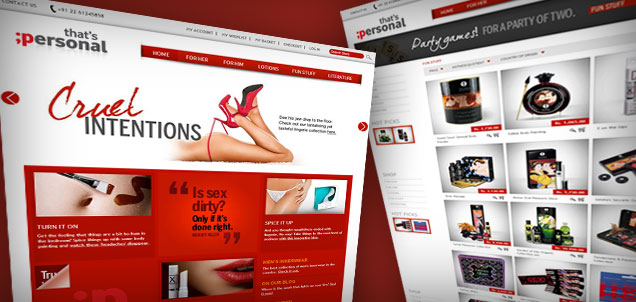
    In its quest to let this populace go ahead and indulge in some pleasurable moments, Samir Saraiya, CEO of Digital E-Life has announced the rollout of a unique venture titled thatspersonal.com. In a conversation with MxmIndia, Mr Saraiya discloses that the e-commerce venture will look at offering users products they wished to experiment within their bedroom but were afraid of doing so. And if you thought that this was not permissible under the Indian law, you’d be surprised to know that needn’t necessarily be the case if all the details are looked finely into. Read on to explore more…


    What led you to venture into a realm that is out of the ordinary especially given your professional stints across notable organisations in the past?

    Well I was with Microsoft for 5 years of which I spent three years in Singapore and two in India. Prior to that, I was with Yahoo. When in Singapore, a trend that me and my friends spotted in the Indian landscape was that in 2010-11 there were a lot of entrepreneurs who were getting into the e-commerce space. There was a lot of temptation by friends and family to also do something of my own in that space. But the question that arose was what do I get into? Each and every sector you can dream of had multiple players who were offering that service. After a bit of researching, what I realised that most players were playing e-commerce on three pillars: convenience, choice and pricing. So I decided to innovate and play on a completely new pillar – buy from me and nobody knows. Based on my interaction with friends and people at large, I realised that many people were not comfortable when it came to discussing or buying sensual products. Part of it was because of the upbringing that they were brought up with and also societal inhibitions that stopped them from trying these products out. During the course of this experimentation, what I realised is that sexual wellness is a very good category to begin with.


    So sexual wellness is how you would want to categorise your offering under? What was the next phase of the game plan?

    So when still in Singapore, the first thing I did was call my lawyer to check on the legal ramifications of operating in this space. After gathering sufficient knowledge on the subject, there was a level of comfort that I attained which made me look at this space even more prominently. Also, such a concept was doing fantastic business in Singapore where there was a lot of money being made by the players offering this service. When I sat to evaluate on what are the sexual wellness products available in India I found there was almost nothing compared to what you get internationally. My next step was to speak to international brands and get them interested to make a foray into India. Today I have close to 10-15 international brands and about a decade or so Indian brands on board. There are two guidelines when it comes to selling of such products in India. We follow two well-defined guidelines: products that are made in India for sale in India and secondly, products which can be imported under the Indian Customs Act under the open general license scheme prescribed by the Government of India where one can pay full duty and whatever surcharge amount that is to be paid. Once that procedure is followed, you can then go ahead and sell products that are sellable in India. So we would be selling products like lingerie, lotions, creams etc.’


    Indian families are seen to be conservative in their opinion on sex, especially females. Or is that perception changing? What is the female:male ratio of visitors you expect from your website?

    The thing is that we’ve just launched at the beginning of the year so we won’t be able to share such slicing of data. But from the initial feedback, we have getting a good response from the female audiences. That’s a good sign as normally e-commerce is mostly male-oriented but we are receiving good response from females as well. We believe that by maintaining the secrecy of customer information is something that females will appreciate more in this country. We also believe that we are the first store where a woman can shop in confidence for her personal products.


    How do you ensure secrecy options to your customers? Any novel delivery mechanisms being followed…?

    Yes, as far as delivery of goods go if anybody wants to get the product at their residence we will do so through a tamper-proof box which is unmarked so the entire delivery chain has no idea what is inside. So customers who want to shop our products can provide us their pin-code and based on where their home or office is they can select their delivery point and can either pick it up themselves or even authorise anybody else to do so on their behalf. So the customer gets to control the last mile. So from the time the product leaves our delivery room to the time the customer opens it nobody in the chain knows what is there in the box.


    Could you brief us on what the average TG looks like who shop from your website?

    If you are asking me who my TG is, the answer is I do not know who they are and I want to learn more about that aspect. Based on reactions with the outside world, half the people tell me that the 20-30 age group will buy my products while the others tell me that 30-45 age group will buy them more. The fact is that the youth in their 20s, 30s are pretty much experimental and more exposed to global trends.


    The other interesting feedback I keep getting is that half my customers will be people who have travelled abroad and are used to buying these products abroad and will therefore now buy these products in India as well. But there are also some who tell me that the smaller towns is where the action is – will get a lot more business from here compared to the metros. What we want to do is really learn the market and try and force our products based on the kind of price point that the Indian consumer wants. As we go forward, we would want to cater to the needs of the mass market as well.


    This space does have its share of players although they may not be operating in as organised a way as you do…

    There are other players but they may be insignificant or small. I do not think there is anyone who is doing it the way we are doing it which is an all-clean website…we are there in the media, have a clear shipping and return policy, well-represented international brands so one can be assured that the products will be safe and premium of sound quality.


    What are the promotional activities being undertaken to promote your venture?

    Social media is huge today and cannot be ignored. Our business model is a lot to do with PR, social media, etc and has a lot to do with educating the audiences about these products, the hygiene aspects, how they can be beneficial etc. As pioneers we want to set high standards in whatever we do.


    What are the challenges that a business such as your may encounter going forward?

    There are business challenges and there are learning challenges. The learning challenges are more important where we are pioneering this offering in the market and we are sure of what the Indian market wants in terms of products, pricing and other options. We are also learning facts from the Indian market like the fact that Indians do like products in sachets unlike the western markets where they prefer buying them in the open. So these are some of the things that we are picking up and will keep doing so as we go forward.


    Do you fear facing opposition from society and anti-social elements?

    We do not think we are doing anything wrong and feel that we are on the right side of the law. We feel we are helping the society evolve. So we do not expect a backlash as we do not think we are harming anybody.


    On a light note, did you face any resistance from your family when they learnt of your entrepreneurial plans?

    Not really. I was quite surprised that my family was far more open to what I was doing than I was. As I’d said earlier, we would be offering personal products to customers. We are looking at adding other personal products in the category of nutrition/dietary, beauty bath etc. Our feeling is that the privacy aspect of people is very under-served in this country. That is a need we are seeking to fulfil. But while we plan to broaden our base, we do not want to be seen as an adult shop; it’ll more of fulfilling one’s privacy needs.


    What is the way forward for your venture?

    We are looking at significant hyper growth in this business. We have laid out a strong strategy for the next 48 months and are excited to have started our journey in this space.

    “It was a highly embarrassing experience even for me,” says Sunil, a techie who didn’t wish to disclose this surname – he had gone to the same market a few months ago to check out an “arousal cream” his wife had demanded to celebrate their wedding anniversary. “The whole atmosphere was hostile. I got the cream, but wasn’t sure of the quality and ended up not using it at all,” he adds.


    Some others we spoke to said “it is always a depressing hunt”. A Mumbai-based 25-year-old entrepreneur says he organised a BDSM (bondage, discipline, sadism and masochism) party at home – inspired by EL James’s bestseller Fifty Shades of Grey – with products bought while on a tour of London. “Forget dildos and vibrators, even buying a few sensual creams can get embarrassing,” he says, requesting anonymity. BDSM is an umbrella term for a consenting adult relationship that involves domination and submission.


    A 42-year-old Mumbai-based techie says she’s ready to go through the embarrassment of being chuckled at by peddlers, like those “crazy” ones she met some time ago in Mumbai’s Manish Market, if only she is sure of the quality of the product. She wants to buy lipsticks that tingle and body oils. “Almost everyone I know has either bought it overseas or wants to use it,” she says, asking not to be named.


    Opportunity Strikes

    Samir Saraiya, who quit as lead, business development, Microsoft Singapore, last year to pursue personal interests, saw a business opportunity in the statement that “everyone wants to use it” – most of his friends also said the same thing. A brief enquiry in the local markets of Mumbai and a survey of the Indian adult products market convinced him to take the plunge: to launch an online shop to sell products that don’t invite punishment for obscenity.


    He got in touch with global brands such as American lingerie brand Shirley of Hollywood and other companies that sell sex products like Pjur (Germany), Wet (US), Shunga (Canada), Elegant Moments (US), Male Basics (US), Premium Bodywear (Germany) and so on to negotiate an exclusive agreement to sell their products in India through his website, thatspersonal.com (reported in ET on January 12). By then, Mr Saraiya, who is also the CEO of Digital E-Life which runs the site, had in place a team of co-founders and investors – all senior corporate executives impressed with the idea.


    Mr Saraiya’s research pegs the adult products industry in the country to be in the range of Rs 1,200-1,500 crore. He expects the industry to grow to Rs 2,450 crore in 2016 and Rs 8,700 crore in 2020, spurred by a rise in the number of people who want to spice up their sex lives. Other co-founders and investors in the new venture are Neville Taraporewalla, senior director, emerging markets, Microsoft India; Jaspreet Bindra, formerly regional director, retail, entertainment and devices, Microsoft India; Vikram Varma, head of internet solutions firm Digital Driftwood; Abhay Bhalerao of Amrut Software Ltd; and internet lawyer Lekhesh Dholakia.


    Last-Mile Connect

    Mr Taraporewalla, who was earlier director and country general manager at Yahoo! India and Mr Saraiya’s one-time mentor, says he is impressed by the team – it includes people with domain expertise in online marketing and an internet lawyer who could factor in the legal hurdles (see Legal Issues) while choosing products for sale.


    After sealing pacts with well-known international brands to exclusively sell their brands in the local market for three years, Mr Saraiya wants to offer a USP that online shops of sex toys overseas- like imbesharam, which has been endorsed by Canadian porn star Sunny Leone who has made a foray into Bollywood – might not be able to match.


    So he has tied up with logistics services firm Aramex International to ensure that customers can collect the products at locations of their choice. Which means a couple residing with their parents can collect the “tamper-proof, unmarked package” either from an Aramex office or from a location that they have specified in the application. “We innovated on the e-com delivery model to give our customers the ability to control the last-mile logistics,” says Mr Saraiya.


    The 41-year-old CEO says he has made his employees sign bonds to keep the names of the customers secret to prevent any misuse. “The case could be more sensitive if some of the customers are celebs such as Bollywood stars,” he says. Currently the payments are to be made online through a credit card, debit card, or net banking. Mr Saraiya says he plans to introduce cash-on-delivery services.


    Legal Clarity, Culture

    Like many others we spoke to, Mr Saraiya and his team regret that the laws in the country have not kept pace with the changing needs and preferences of people. Says Mr Dholakia: “This is not the case in developed western countries where they have recognised that with changing preferences the laws also need to change, which rationalises the legal effect on such altered patterns of behaviour in society.”


    Dr Sudhakar Krishnamurti, andrologist and sexual medicine consultant, argues that while most Indians are not yet ready for experimentation in matters related to sex, over the years such practices have become prevalent among some consenting adults. “I view this trend [of people using adult products] as inevitable… all these trends [such as BDSM parties] you observe now have been merely waiting to burst out of the closet and come into the open. The main trigger for all this is time, and the moment,” he says. “That time has come,” he adds. Maybe it has.


    Source:The Economic Times

    Copyright © 2013, Bennett, Coleman & Co. Ltd. All Rights Reserved


    The Legal Issue


    UNCLEAR: Laws in India are silent on sale of sex toys and erotic apparels. According to internet lawyer Lekhesh Dholakia, the concern arises more from the manner in which these sex toys/ apparel and related products are displayed and exhibited for sale. Since in most cases these items carry graphic, pictorial descriptions, which could be perceived as being obscene, they could attract the provisions of the Indian Penal Code, 1860, and the Information Technology Act, 2000 (for internet sales).


    OBSCENITY: Although neither the IPC nor the IT Act defines what obscenity is, Section 292 of the IPC and Section 67 of the IT Act (which corresponds to Section 292 of the IPC) explain “obscenity” to mean anything that is lascivious – or if its effect is to “deprave” and “corrupt” people.


    PENALTY: According to Section 292, whoever sells, allows to hire, distributes, publicly exhibits, makes, or has in his possession any obscene book, pamphlet, paper, drawing, painting, or figure or any other obscene object whatsoever, or advertises, or makes known by any means whatsoever that any such obscene object can be procured from or through any person, is punishable with imprisonment and fine.


    PRECAUTION: Therefore, obscenity is an offence if it falls within the purview of Section 292. Certain sex toys/articles that “carry the impression” of being “obscene”, may risk punishment. The ones thatspersonal.com sells can’t be classified as obscene, says Mr Dholakia.


    Source:The Economic Times

    Copyright © 2013, Bennett, Coleman & Co. Ltd. All Rights Reserved


  • Raising the underarm deodorant issue

    By A Correspondent


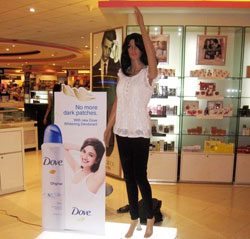
    Retail-media network Aurora Comms, or ‘A Comms’, used in-store mannequins to address the particular problem of underarm exposure among Indian women, in Hindustan Unilever’s campaign targeting upwardly affluent females for Dove’s ‘whitening deodorant’ promotion.


    For the campaign, a mannequin was set up in the women’s western wear sections of Central Stores and Shoppers Stop locations across the country. This is on a podium and the mannequin wears a white top with one arm raised. To highlight the ‘no more dark patches’ communication of the deo, this podium is lit up and a cut-out of the product and model placed next to it.


    On the same floor as the mannequin setup, the women’s trial rooms are branded with the promotion too, and the doors and mirrors carry the same visuals as the one next to the mannequin.