Category: MARKETING

  • Varun Dhawan to endorse Shaving category for Philips India

    By A Correspondent


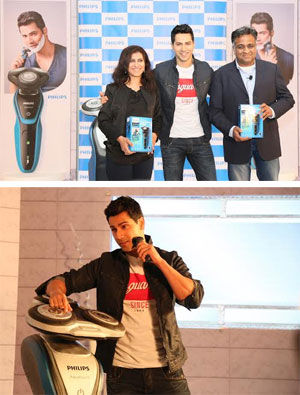
    With the intent of empowering the youth to express themselves freely through their personal style, Philips has created brand new categories in the market including beard trimming, and bodygrooming for men, depilation for women and many more. It is now leading the change from manual to electric shaving-a faster, easier and more skin-friendly way of shaving for the modern man. To further encourage men to adopt the ‘new way of shaving’, Philips India announced, Varun Dhawan as the brand ambassador for its Shaving category.


    Varun Dhawan will help drive the transition to the ‘new way of shaving’, to support which, he unveiled a new electric shaving wizard Philips AquaTouch – Wet and Dry Electric Shaver, which protects skin 10 times better versus a regular blade while giving a refreshing shaving experience. Varun will play a pivotal role in the brand and product communication across media platforms. Philips India will continue to focus on its trimming and bodygrooming business as well, with Bollywood Style icon Arjun Kapoor as the brand ambassador, while further strengthening the Shaving business with Varun Dhawan’s endorsement.


    Following this announcement, Philips India will also launch an extensive marketing campaign with Varun Dhawan starting with a TVC that will go on air on 16th July, 2015.The TVC has been conceptualized and created by Ogilvy & Mather.


    On the introduction of the newest brand ambassador for Philips Male Grooming, ADA Ratnam, President – Personal Health, Philips India, said, “Manual shaving is a thing of the past and we have been leading the shift to electric shaving over the years. The modern man of today does not wants a no-mess, skin-friendly, modern solution for his shaving needs and that’s what we promise to deliver with the Aquatouch. Varun Dhawan exemplifies the modern man – suave, confident and well-groomed. Who better than him to endorse the new shavers range that is designed for all the men to get the perfect shave without any nicks and cuts!”


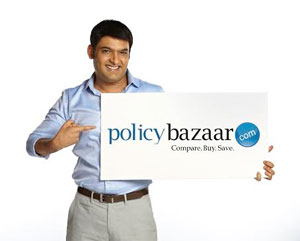
  • Policybazaar ropes in Kapil Sharma to promote brand message

    By A Correspondent


    PolicyBazaar.com has roped in actor comedian Kapil Sharma to launch its biggest brand campaign. The new campaign would see mass icon, Kapil Sharma urging consumers to compare before buying insurance, so that they don’t become an “Ullu”(a fool) and in turn get “Babaji ka Thullu” (a raw deal).


    The new campaign backs PolicyBazaar’s aggressive plans to spend nearly Rs.80-100 crore on its marketing initiatives this year across offline and digital mediums, highlighting the core offering that makes PolicyBazaar special, “Compare. Buy. Save”


    The campaign, conceptualized by the creative team of Lowe Lintas, takes the “ullu” idea forward from the brand’s previous advertising and marries it with India’s favorite actor comedian, Kapil Sharma and his all famous colloquial term “Babaji ka Thullu.”


    The campaign will kick off with teasers on TV followed by the release of 35-second TVC. The adverts would feature Kapil Sharma in different avatars, placing emphasis on “Ab India Nahi Banega Ullu”. The company will be launching three TVCs focusing on motor insurance, term insurance and PaisaBazaar.


    The PolicyBazaar launch campaign would be followed by PaisaBazaar.com, the non-insurance online platform of PolicyBazaar, unveiling its own brand initiative with Kapil Sharma as the lead later this month.


    Naveen Kukreja

    Speaking on the new campaign, Naveen Kukreja, Group CMO, PolicyBazaar & MD, PaisaBazaar.com, said, “Our key objective this year has been to increase ‘reach’ while keeping our core communication same – instilling the habit of comparing insurance before buying in the mind of consumer. When Lowe Lintas came with this idea of marrying ‘ullu’ and ‘thullu’, the only name we could think of was of Kapil Sharma. Being a mass icon, he has a deep emotional connect with the consumer which we wanted to make best use of through a witty yet thought provoking advert.”


    Shriram Iyer, Executive Director of Lowe Lintas said, “Policy bazaar had already created a fair bit of conversation with their advertising idea ‘Ullu mat bano’. With the introduction of Kapil Sharma in the ‎communication, we were looking to take ‘Ullu mat bano’ forward in a manner that would allow us to seamlessly integrate Kapil’s brand of humour.”


  • Fortis rolls out first ever brand campaign

    By A Correspondent


    Fortis Healthcare Limited (Fortis) has launched its pan-India brand campaign TVC with ‘Excellence Uncompromised’ as its central theme.


    This is Fortis’s first multi-platform brand exercise, spanning television, digital (web & social), print, outdoor, and cinema. The television commercial (TVC), created by Leo Burnett will be aired on all General Entertainment and News channels from July 31, 2015. The ad film will be screened in cinema halls and across all digital platforms.


    The campaign’s objective is to build equity for ‘Brand Fortis’. Hospital choice in India is primarily driven by the choice of empanelled doctors, and there’s little that any healthcare provider has done to create its own brand. Thus, this is a first endeavor not just for Fortis but a first in the healthcare industry, whereby the aim is to build positive associations and expectations from the ‘hospital brand’, that leads people to trust every doctor that they see at that hospital. Fortis wants to build this positioning and create preference by highlighting its superior medical expertise and proven clinical excellence.


    As part of the campaign, Fortis has also launched Hands of Hope initiative to provide life-saving medical treatment to the underprivileged children suffering from critical conditions. Everyone can participate in this noble initiative by logging in to the microsite via their Facebook or Twitter accounts. Every new member becomes a Hand of Hope. The more number of people that join this virtual human chain, Fortis will be able to undertake those many more medical interventions at its own cost, as for every person joining, Fortis is going to contribute 1 Re towards treatment of children in need of live saving healthcare solutions.


    The TVC captures the story of young Amar Agarwal who suffers from end-stage heart failure at a tender age. His parents run from pillar to post in search of treatment for their only child. They are turned down by couple of doctors due to lack of expertise to treat such critical illness. In the end, a doctor refers the family to Fortis where the child undergoes a complex heart transplant and giving him a new lease of life.


    “We wanted to tell the story of our brand in the most believable and humane way, especially because the TVC is based on a true story of a Fortis patient. Hence we looked at a very real style of storytelling. Thus what we’ve ended up creating is almost like a short film or a docu-drama, where the Brand is just a meaningful participant in the story, as against a typical ad commercial” said Gaurav Dudeja, Head – Marketing, Fortis Healthcare.


    Ravpreet Ganesh, Executive Vice President, Leo Burnett added that “We thought its best to tell the story from a patient’s lens and not from the brand’s perspective. The idea was to establish an emotional connect with patients and their families. Thus, the emotion of hope became center stage of this campaign. Hope is all a family has when they are living with a disease, and we through our campaign we have tried to establish how Fortis intervenes to keep this emotion of Hope stay alive.”


  • No passive, one-sided communication…


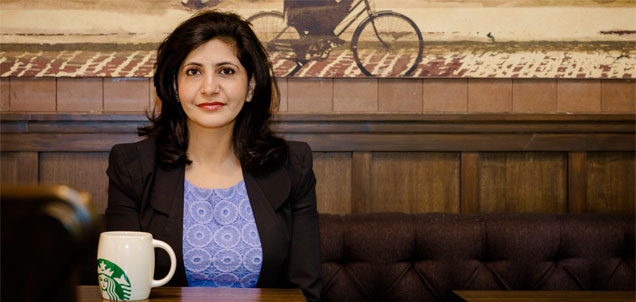
    Marketing at Tata Starbucks Private Limited outlets is more of building connections with customers, says Manmeet Vohra, Director – Marketing and Category of the international chain which open its 75th outlet in the country in Bandra today. The lady behind the much-seen but less-advertised brand speaks on what has kept the buzz going, ever since it made its India debut in October 2012.


    From your first store at Fort in Mumbai to the 75th one in India, how has the journey been so far? 

    It’s been amazing. In less than three years, we’ve reached the 75th store milestone. For Starbucks, India’s been [one of] the fastest growing markets. It’s been overwhelming to see how customers here have embraced us. We still get long queues every time we enter a new city or a different location. The excitement of the brand is very much alive.


    You have stores with proper seating, and you also have kiosks. Going forward, what’s your focus going to be?

    We have two or three classifications for our stores. Some of them are ‘flagship’ stores, like the one in Horniman Circle in Mumbai, Hamilton House in Delhi Indira Nagar in Bengaluru and Koregaon Park in Pune. These stores are special in terms of design, decor and space. For instance, the Hyderabad flagship store has drawn its inspiration from Hyderabadi pearls. Then there are ‘core stores’ and ‘corporate stores’ which are in commercial complexes, and are more like corporate stores. So all this is a function of the space available, and the neighborhood you’re in. But the one common thread is that all the stores reflect the values of the neighborhood and the spirit of the area in which they operate.


    While the familiarity with the Starbucks brand is high, were there challenges with the brand over the last three-odd years?

    The welcome we got when we launched has continued, and it’s really encouraging that we have been able to bring more customers to our stores. And not just the ones who have traveled abroad. So, more people have accepted us.


    Every time a new store opens, there’s a lot of local advertising and promotion. What’s been your stand on promotions?

    First, the offerings we have are designed — in terms of food, beverages and merchandise — to suit the needs of a wide variety of Indian customers, with regard to local sensibilities, culture and palette. We’ve made sure we have the signature blueberry muffin alongside a murg kathi wrap. Food is very important for Indians. A lot of our customers look forward to coming to Starbucks not just for coffee, but for the complete [dining out] experience.


    Another thing that attracts more customers is the connection our store partners have been able to create with them. It’s a key ingredient to a brand’s success in India. Starbucks’ store partners are not addressed as ’employees’ but ‘partners’. And this really reflects in the warmth and passion with which they make every handcrafted beverage. That connection between our customers and store partners has become stronger, as reflected in our loyalty programme. Customers are choosing to come to Starbucks over any other place because of this feeling of a connection.


    The third thing we’ve done is to engage with customers through various campaigns. One of them is the ‘Meet me at Starbucks’ campaign, launched in November 2014. The campaign turns on the need of people to meet, rather than be in touch over the phone or SMS. Today, youngsters are spending more time on their phones and laptops rather than with their family. In a world where everyone’s connected through social media, Starbucks emphasises that need to meet. So what we’re trying to tell our customers is that Starbucks is the place you can come to: a unique ‘third place’ (away from home and office) where you can meet people or spend time with friends and family, or talk business etc.


    Players like McDonald’s are doing similar things with their ‘Kuch offline ho jaye’ campaign, and connect with customers is a given in most snack outlets. How do you ensure there’s differentiation in what you do?

    Coffee has a strong social connotation. In a tea-drinking country like India, even people who drink tea at home, will go outside for coffee. These are some unique insights our brand has noted. We’ve actually seen customers come in for coffee, stay for the warmth [of the treatment from store partners] and come back for the human connection.


    What’s your biggest marketing tool? Is it the relationship your store partners have versus typical tools like ATL or BTL?

    Beyond the product, the customer looks for an emotional connection with the brand. And that emotional connection is what is required to build any marketing programme or brand communication. For us, it’s not just about a marketing campaign or a promotion, it’s about creating experiential marketing to build that emotional connection. And a big USP of our brand are our store partners who are really our brand ambassadors. Another way in which we connect with customers is through the ‘fourth’ or digital place. Your communication is not complete as a brand unless you also connect digitally.


    In terms of your spends (marketing and advertising), what’s the distribution like? Digital versus BTL, experiential and ATL?

    About 30 per cent each on store experience and digital. The rest are miscellaneous elements. That’s how much importance we’re giving to not just connecting at the store level, but also in the digital space. It’s important to have these ongoing conversations with customers — whether it’s through social media or our ‘meet me at Starbucks’ programme. Recently, we had a summer campaign called ‘Starbucks Fun Ventures’, in which we engaged with youth influencers. And in the internet space, we had great engagement with food and beverage enthusiasts and bloggers, and got people like Sonakshi Sinha, Rannvijay and Saina Nehwal involved.


    And what about mass media advertising?

    We don’t believe in passive communication.


    As you go pan-India, are you looking at doing television and print advertising at all?

    Some of it is important purely from an awareness creation point of view. For us, it’d be more from an awareness objective, than engagement. And 95% of my focus is on engagement marketing, not on passive, one-sided communication. Plus, every two months we launch new beverages. Recently we had the Alphonso mango Frappuccino, and our Christmas beverages are hot favorites. There’s a bit of awareness-led communication that one needs to do, but our focus is always on how to put engagement in the whole communication.


    Do you run campaigns on social media or is it all organically grown?

    A lot of organic conversations happen on our social channels — through bloggers and old assets — but we’ve also done a lot of campaigns like ‘Meet me at Starbucks’. We ran that campaign selectively in Bengaluru because it had a larger younger audience. In the internet space, we had a microsite called meetmeatstarbucks.in. We asked people to post stories and asked others to vote on it. There were stories that got up to 28,000 likes, and showed that people spent an average of 4.18 minutes on the site. And that’s a lot of time. These kind of things tell us that people want to engage with us.


    Is there any change in strategy for markets in the south, where coffee drinking is already big?

    One of the things we did for our Chennai launch was offer a special pour-over set there. This is a method of brewing coffee that we had especially for Chennai so that customers can buy from our selection of coffees, take it home and brew it using the pour-over system. Apart from this, the offerings of the brand have been quite consistent, whether in Chennai or Delhi.


    From the time you started to now, on the basis of insights that you’ve had, has there been a change in strategy that you employed to get more customers?

    In our product offerings, we have made certain modifications, given the local touches that we’ve created. In terms of food as well, we’re constantly introducing new items in keeping with the Indian taste palette, which appreciates international offerings but also wants its own comfort zone.


    What’s the next milestone and how fast do you think it’ll be achieved?

    We are already the fastest growing market for Starbucks worldwide, and I think the journey is pretty much clear ahead of us. We are going to be in locations where our customers want us to be and where they expect us to be. We’re constantly evaluating new locations, new cities, new geographies. So we are definitely going to grow beyond the current six cities we are present in, and go to other metros as well.


    Could you give any rough indicators about what kind of targets you have for the next year?

    We are evaluating more cities in the north, and more in Gujarat. We’re there in the main metros of the west and south already. We want to evaluate and move forward in some cities in the north.


    This interview first appeared on MxMIndia.com on July 20


  • Farhan Akhtar to endorse AskmeBazaar

    By A Correspondent


    Askme has announced Farhan Akhtar as new brand ambassador for its online marketplace Askmebazaar.com.  As per the terms of the contract, the actor will endorse the company’s products and services through advertising campaigns, which will be unveiled soon. The brand, known for its effort to recreate the great Indian shopping experience online identified Farhan as someone who continues to redefine the boundaries of success with his originality and enigmatic persona.


    As the brand ambassador, Farhan will be featured in a new integrated 360-degree campaign for Askmebazaar.com which will run across TV, print and online channels rolling out from August 2015. The actor will be seen endorsing the range of products offered by AskmeBazaar where consumers can buy products from multiple stores with great value offers.


    Commenting on the association, Manav Sethi, Group CMO, Askme said, “We are delighted to have multi-talented Farhan Akhtar on board as this association will help build a strong connect between the brand and consumers. Farhan Akhtar who wears different caps of a singer, lyricist, actor and director, truly exemplifies our brand philosophy which is defined by simplicity, great design and ease of use with contemporary Indian features.”


    AskmeBazaar was launched last year and has become India’s premier online marketplace where sellers from across India can open their online store and list their products for free. With zero upfront investment, the seller can now sell their products online by just paying fixed fees for processing every transaction on the platform. It has 35,000 storefronts with 700,000 SKUs (excluding movies & books) available on the platform.


  • The Science of Choice. By Mathew Willcox


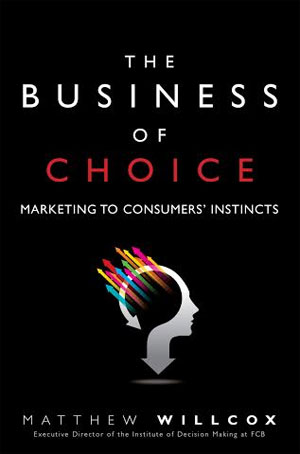
    Matthew Willcox, EVP, global planning director of FCB West and founder and executive director of FCB’s Institute of Decision Making has intertwined more than two decades of advertising and marketing experience with the findings of decision-science researchers from around the globe to create a marketing book that suggests a different approach to influencing people’s decisions.


    In The Business of Choice: Marketing to Consumers’ Instincts, Willcox makes sense of the brain’s decision-making systems and how to apply them to today’s marketing challenges. Laced with entertaining examples, Willcox illuminates how the brain’s decision-making systems have been evolving for millions of years and shape consumer choices about everything from toothpaste and clothing to smartphones and retirement plans. Here’s more from the book in an excerpt, published with permission of the author


    By Matthew Willcox


    We’re getting a lot better at understanding how people make decisions, thanks to advances in behavioral science and neuroscience.
     

    We are learning more about how people choose and learning it faster than we have ever done before. I am very fortunate to be writing this book at a time when we are in the middle of a golden age of decision sciences.


    In spite of the wealth of knowledge about human behavior and the future potential of the decision sciences to tell us even more about how humans decide, it is important to understand that, like life on earth, science is in flux and continually evolving.


    Decades ago, the study of the brain was just “neuroscience.” These days we see the emergence of specialized fields like “decision neuroscience,” “cognitive neuroscience,” and “social neuroscience.” The science of decisionmaking is more precise today than it was decades ago because of the natural progression of science (refining your questions and experiments based on previous results) and because of advances in technology—researchers today have access to non-invasive technologies that allow the human brain to be studied in real-time as choices are made. But, even though we have many answers about how humans behave and make choices, there remain many outstanding questions. This fragmentation of expertise is an indicator of the complexity that science has found in our minds. Neuroscience is doing for our understanding of the brain what the Hubble Telescope and its successors are doing for our understanding of the universe. We are learning more than we have ever known, but at the same time revealing how much we have still to learn. Be wary of anyone telling you they have figured out how the brain works or that they have located the “buy button.”


    Three big trends are driving the golden age of decision science, leading to an explosion of learning from behavioral and social sciences. The first is an intellectual revolution which prompted the acceptance that intuitive processes, rather than rational ones, drive human choices. Theories based on the importance of intuition in decision-making started to gain traction about two decades ago and inspired entire new research fields, such as behavioral economics and more recently, neuroeconomics.


    Many of you will have heard of behavioral economics. It is a wonderfully fascinating area, and I say without exaggeration, it should lead to one of the biggest changes to marketing thinking in the history of marketing. But, from a practitioner perspective, I don’t think it is particularly well named.


    Behavioral economics , as a name, comes from the origin of the field, which was when experimental psychologists studying behavior started investigating economic choices (and indeed, collaborating with enlightened economists).


    Hence behavioral economics. 1 But I think this makes it sound much more about economics and fiscal policy than about human behavior.


    My lay-person’s description of behavioral economics is this:

    Behavioral economics is an area of psychology that explores how humans behave and make choices by studying the differences between how we should act from a rational, economic perspective and how we really behave. In so doing, it reveals many of the nonconscious processes that drive human decision-making.


    I’ll use the term behavioral economics in this book, but I will also use related terms like “judgment and decision making” or simply “behavioral science.”


    By dissing its name, I hope I am not diminishing the importance of behavioral economics. It should be considered game-changing thinking for marketers. Its gift to marketing, though, has much less to do with economics and much more to do with revealing deep insights into human behavior and, in the process, providing the evidence to displace conscious, rational, or deliberative thinking as the lynchpin for how people make choices.


    Readers familiar with advertising agency structures may see a comparison withthe origin of the term behavioral economics and origin of the term account planning, the creative strategy discipline which was named from the merging of some skills from account management and some from media planning . Although this reflects the discipline’s origins, it doesn’t intuitively describe it. I feel the same about the term behavioral economics.


    The second trend is one of resource and capacity—a sort of human brainpower version of “Moore’s Law.” Gordon Moore’s observation suggests that the number of transistors on an integrated circuit doubles every two years, which enables a step change increase in computer processing power.


    We have seen a dramatic increase in the number of minds, and thus brainpower, focused on understanding human behavior and decision-making.


    Behavioral and social sciences have become the hot ticket in leading academic institutions across the world, and an estimate based on the sizes of the leading faculties and academic societies suggests that more than 5,000 professors and graduate students 2 are today involved in conceiving, carrying out, and analyzing experiments relating to behavior and decision making. The popularity of behavioral and social science research has led to large, interconnected communities of discussion and collaboration, the output of which is peer-reviewed papers (I estimate that the leading five journals 3 and conferences that cover human decision-making have yielded 1,500 papers over the last two years that are of at least some interest to marketers) and, of course, books like this one, jostling for space in the non-fiction section of airport bookshelves. Countless blogs on the subjects exist, and scientists like Dan Ariely have amassed Twitter followings that approach rock star proportions.


    The third trend is more like the real Moore’s Law, because it is one facilitated by technology. Behavioral and social scientists benefit from the decreasing cost and increasing availability of technology to perform experiments that were inaccessible to decision science greats when they made their landmark contributions—scientists like Kahneman, Amos Tversky, George Lowenstein, Paul Slovic, Richard Thaler, Paul Glimcher, and Bill Newsome, to name just a few. The field of neuroeconomics, for example, relies on functional magnetic resonance imaging (fMRI) scanners that were not available outside of medical schools until the first decade of this century.


    2. Estimate based on combined membership of relevant societies.


    3. Some examples are Nature, the Journal of Consumer Psychology, the Journal of Consumer Research, Cognition, the Journal of Judgment and Decision Making, and the Journal of Advertising Research. There are many, many more—the SCImago Journal Rank Indicator counts 5,000 active journals in the broad field of social sciences. A list of conferences I have found useful is in the appendix.


    4. Well, maybe not rock star proportions, but @danariely seems to lead the pack of behavioral scientists with 72,900 followers as of September 2014, and he had significantly more followers at that time than institutions and brands like Carnegie Hall (52,000), the Nissan Leaf (41,000), Samuel Adams (51,000), and 7Up (54,000).


    Now most leading business schools have MRI scanners in their basements (you will learn more on what these machines have revealed so far and their future potential in Parts II and III). Also, we can see the application of crowdsourcing to behavioral science experiments: Amazon’s Mechanical


    Turk, a service that distributes Human Intelligence Tasks (HITs) to online workers, enabling inexpensive and fast fieldwork for experiments; the use of everyday technology like smartphones and webcams records behavior and choices in natural environments; and the data trail from the Internet and mobile web reveals actual behavior rather than stated preferences and intentions.


    This third movement also presents the opportunity for huge learning in the social sciences but especially in marketing. The organizers of the Conference on Digital Experimentation (CODE), a conference at MIT that brings the worlds of social science and computer science together, introduced their inaugural event with the statement: “The ability to rapidly deploy microlevel randomized experiments at population scale is, in our view, one of the most significant innovations in modern social science.” Enabled by the ability to track real behavior in real-life digital environments, this approach allows randomized controlled tests (RCTs) to be conducted with a robustness of scale that would have been prohibitively expensive to previous generations of researchers. These massive RCTs can also be implemented with a speed that makes them significantly more useful for marketers than most research conducted to academic standards.


    Studies that take this approach have the potential to help us understand human nature at a macro level, in a way that avoids something that bedevils nearly all research—whether academic or commercial. Whether study participants are lying in an fMRI scanner; are taking part in a behavioral test and being rewarded with coffee mugs, pens, or course credits; or are in a focus group room answering questions about whether packaging design may lead them to buy a particular brand of yogurt on their next trip to the supermarket, virtually all research has to make methodological compromises that remove it from the real world, and therefore from the real behavior and outcomes it seeks to predict. Behavioral researchers refer to this phenomenon as concerns about ecological validity.


    While real-world RCTs of the type advocated by CODE hold great promise, marketers need to tread a little warily, as potential exists for ethical criticism


    ~~

    The Business of Choice is about how marketers can embrace what science has revealed about how people choose. It is not a science book, and I don’t believe that marketers need to become scientists. (I’m not sure that scientists becoming business people is a good idea either, but that might be simply a result of seeing too many villains following that course in movies like Spider-Man.)


    The Business of Choice includes practical examples of where good work has already started. I write about some intentional uses of decision science and other areas where marketers and their agencies have intuitively landed on ideas that leverage the science of human intuition.


    The book also highlights research that might make you think differently about how to change behavior, and I would be delighted to hear whether it inspires any ideas that actually do. More than anything else, my aim is to demystify decision science. I want to enable marketers to see this wonderful and fascinating area as compatible with a practical and ethical approach to marketing. It is possible to leverage knowledge from decision science in a way that doesn’t just help brands get chosen but can also create positive brand equity by helping the people who choose them.


    The Business of Choice: Marketing to Consumers’ Instincts is available as a Kindle ebook for Rs 532 (Search at amazon.in/kindle)
     

  • Eveready unveils new TVC for LED bulb

    By A Correspondent


    Rediffusion Y & R has unveiled a new campaign that showcases Eveready’s new product line- LED bulbs.


    Speaking on the new product launch and campaign, Amritanshu Khaitan, Managing Director, Eveready Industries India Ltd, says, “Eveready has forayed into the LED segment early this year. This product line presents the new face of the company, which has been traditionally associated with batteries and flashlights. LED’s are fast moving products in today’s urban landscape and the product promises the consumer better light output at an affordable price. Therefore the objective of this campaign is to encourage consumers to adopt change and switch to the brightest range of LEDs while remaining true to the essence of the brand that is all about power and energy.”


    Anil Bajaj, Vice President Marketing, Eveready Industries India Ltd, says, “Eveready touches the lives of millions daily. This commercial is a step to demonstrate the power of GIVE ME RED. How it affects their lives and makes it more vibrant. This time we have tried to present our very own GIVE ME RED in a more sophisticated, lively and interactive way, keeping the essence of power and energy the same.”


  • Creativeland Asia shifts gears. Version 2.0, a cool office & some big wins

    By A Correspondent


    Eight-year-old independent Creativeland Asia (CLA) known for its benchmark work on large brands like Cinthol, Frooti, Audi, Mercedes and MTS telecom is back with a bang.


    CLA has signed on integrated mandate for Domino’s Pizza, Godrej No1 soaps, the Rs 1000 cr soap brand from Godrej, the Indian Express Newspaper, She comfort Sanitary Napkins from Emami and the digital mandate for Jet Privilege.


    The total spends size of all these brands put together is estimated at Rs. 250 cr. The pure revenue to CLA could be estimated at Rs 21 to 25 cr which would not only compensate for the Parle Agro split in January but actually adds more than double the revenue it lost.


    Sajan Raj Kurup

    On the big wins, Sajan Raj Kurup, Founder & Creative Chairman of Creativeland Asia said “We stepped up the game when it was required. Every one did their bit as planned and the results are quite obvious. We have added substantial new business in the first two quarters of the year. Not a bad way to start a year I suppose. We have surpassed our target for the year in the first two quarters, so we have decided to opt a slightly different business strategy for the rest of the quarters.


    For Domino’s the apart from mainline work, Creativeland has been entrusted with integrated marketing duties which includes precision marketing and digital mandates as well.


    Said Harneet Singh, VP Marketing, Dominos: “We needed more strategic and creative minds to work with us, as partners,  to grow the brand and hence we selected CLA as our new agency partner in addition to our incumbent creative agency. We believe the strengths of CLA are very complimentary to our thinking and approach and together we can do some very interesting work on brand Domino’s.”


    For Godrej No1, Creativeland has been entrusted with integrated marketing communications mandate and to design and grow the No1 range including soaps face-washes and other NPDs.


    Sunil Kataria, Head of Sales & Marketing, GCPL said: “We have been working with CLA since 2011 and one of the things that I really appreciate about them is the ability to come up with genuinely creative ideas for the big moments . One of the reasons they are able to do this is because the top leadership themselves get involved into understanding the brand essence and tonality in depth and that makes a difference.”


    For Emami, Creativeland will be relaunching their newly acquired She comfort Sanitary napkins, Apart from Integrated marketing communications, CLA has been entrusted the responsibility of redesigning and revamping the brand including its packaging design.


    CLA has also been entrusted the responsibility of revamping brand Indian Express with their integrated marketing communications mandate. Their multimedia campaign which involves print, TV and digital will hit later this week.


    Currently, Creativeland has 14o-odd people working across disciplines and offices. On this new phase of the agency, Raj Kurup elaborated: “As most organisations that are born in the internet generation, Creativeland has always been in a constant state of reinvention. We have had eight awesome years, where work has always been Centre-stage. During these years, we had also sown seeds of our own ventures that are outside of advertising and design. CLA 2.0 is going to be Creativeland in a different gear. We are preparing for the next 10 years. We have made some fundamental changes in our organisational structure and added a Culture & Marketing team. Our technology team is all set. We have also spun out or Digital production department into a separate tech company called Creativeland Technologies which now houses end to end tech solutions spanning front-end and back-end solutions with a CLA edge. Our design team is looking beyond brands and identities alone and  venturing into retail, space, environment and infrastructure design.


    In terms of people, we are a diverse set. From technologists, to economists, to UI designers, to writers, to designers, to sociologists, we have them all. And that’s key to CLA 2.0’s ambitions.


    Our new office in Bandra-Kurla Complex one of the fastest growing, global business hubs in India, is well-appointed to keep the team motivated. Conscious of the long hours and the intense pressure the nature of our work commands, we are making amends by making our environment fun and rejuvenating. From a leisure room with a pool table, a table tennis table and a foosball table, to a spa with massage chairs and hair treatments, and a pantry that is the size of our first office, the office has everything one may want.


  • CenturyPly unveils brand campaign for Sainik Plywood

    By A Correspondent


    CenturyPly has introduced a new plywood brand – Sainik, for the value segment. The campaign, titled ‘Hamesha Taiyaar’, has been conceptualized by DDB Mudra West.


    Plywood is a commoditized but complex category. Consumer involvement is very low, there are multiple products at different price points based on various technical parameters. A consumer does not understand those technicalities but knows his budget. The role of the brand in this category is limited to passive reassurance.


    With an effort to trigger a larger brand appeal, the agency positioned Sainik as ‘Hamesha Taiyyar’ to display the toughness of the ply and its readiness for any eventuality or hardship that comes its way, much like a soldier.


    The thought behind the brand has been translated into a clutter breaking TVC and OOH implementations. The TVC intends to create a larger-than-life image of the brand in the consumers’ mind space. The storyline follows a platoon of soldiers in a forest, where they are seen engaged in a fierce combat across land and water, under the most trying circumstances. The testing journey of the soldiers is matched by the journey of the plywood box, which eventually turns out to be carrying letters from the homes of these soldiers. The unscathed surface of the box personifies the tested, yet undaunted spirit of the soldiers. In spite of the forces of nature and the troubles caused due to the rough terrain and handling, it stands strong with the strength that only a true soldier embodies.


    Amit Gope

    “This is another first attempt from Century Ply, where we are trying to create a sub brand in our journey for creating a commodity into a consumer brand. Sainik Plywood comes lower in the hierarchy of our products but is one of the most exciting products for our consumers. What we want to bring out from this campaign is built on a spirit of the Sainik in terms of integrity, commitment, strength etc. and this is what Century Plywood also stands for. Another offering from CenturyPly in terms of creating good advertisement and delivering good product to the market space”, says Amit Gope, Group Marketing Head – Century Plyboards (India) Ltd.


    Rahul Mathew

    Rahul Mathew, Creative Head, DDB Mudra West, said: “The name Sainik in itself holds so many virtues – strong, steadfast, resilient. This summed up what we wanted to say about our plywood as well. From here the story practically wrote itself, which was then beautifully captured by Anupam.”


  • Kellogg’s Muesli launches new print ad campaign

    By A Correspondent


    Kellogg’s Muesli has unveiled its new print ad campaign designed to appear like an Instagram post. Through this innovative ad, the brand endeavours to go beyond merely showing the food and bringing alive the experience of the sensorial journey that this tasty breakfast offering takes you on. In addition, to drive product trials, the brand has activated a mass sampling exercise targeting 1 million consumers.


    Through the new innovative design, the print ad aims to bring alive the product and give consumers the real ‘taste experience’ of Kellogg’s Muesli. The brand roped in renowned international food photographer, Stephen Clarke to bring to life the sensorial delight of enjoying the food. The attractive shots capture the multi-grain-cereal toasted to crisp perfection and garnished with rich inclusions like fruits and nuts. They are meant to highlight the appetizing features of the product and draw consumer reaction of desire to experience the multi textured taste of the food.


    Speaking at the launch of the campaign, Harpreet Singh Tibb, Director of Marketing, Kellogg India, said, “Kellogg’s Muesli is a multi-grain multi textured breakfast that is a unique food experience in itself. Through the new campaign of Kellogg’s Muesli, we are attempting to take consumers on a sensorial journey that will demystify our Muesli food and the consumers will enjoy. The ad which imbibes the look and feel of an Instagram post raises interest levels with its appealing food shots. It captures the varied textures and flavors of the food making it visually delightful and tempting to consumers”.


    A big part of the campaign is sampling to induce trials. In this regard, Kellogg’s Muesli has kicked off an on-ground sampling exercise where the plan is to do 1 million samples.  “At the point of sales to bring alive the campaign and demystify the food for shoppers in the store, the brand has partnered with Blippar, the augmented reality platform. This augmented reality campaign is a first of its kind in the FMCG space in India.  Through this campaign, we aim to communicate the core proposition of Kellogg’s Muesli being the tastiest breakfast option for young working adults”, he further added.


  • O&M Blr unveils new ad campaign for MTR Foods

    By A Correspondent


    MTR Foods has unveiled a new advertising campaign for its Breakfast Mixes range of products to bring alive the joy of weekend family breakfast in every Indian household. The campaign, which went live across broadcast and digital media emphasizes how MTR is an indispensible companion for the homemaker in the kitchen and helps her create a perfect beginning to a great weekend with family.


    The heart of the campaign lies in the simple insight that while homemakers are rushed for time on weekday mornings, weekend breakfasts tend to be more relaxed with taste and variety becoming the focus. This is why MTR’s easy-to-make breakfast mixes prove to be an ace up the homemakers sleeve by providing convenience, variety and wholesome taste. The objective of the new campaign is to communicate how MTR’s wide range of Breakfast Mixes is a great fit for weekend consumption and a natural choice for families to come together and enjoy a delectable breakfast spread.


    Vikran Sabherwal, Vice President – Marketing, MTR Foods said: “Breakfast mixes has been one of our successful categories and has huge potential going forward as well. Our research has shown that variety is a key hook for weekend breakfasts and with sixteen different breakfast solutions, variety is MTR’s USP. We took this thought forward and understood from consumers that variety combined with a relaxed weekend morning are perfect ingredients for the family to bond. Our new communication brings this thought together.”


    Explaining the rationale behind the campaign, Shamik Sen Gupta, Group Creative Director, Ogilvy & Mather – Bangalore said: “The campaign was aimed at establishing the ‘weekend’ as a consumption occasion for MTR breakfast mixes. The creative concept took the 6-arm device, which had become synonymous with MTR from the last campaign and gave it a fresh spin with the family. In the commercial, we see a family on Sunday morning, working in tandem to help mom make breakfast. The six-arm moment comes through as a finale to their synchronized movement. This helped us position the weekend breakfast as a fun-filled family event rather than just showing the homemaker in the kitchen.”


    The campaign has been released in three Indian languages spread over six weeks across TV channels and digital mediums.


  • Olx kicks off Phase 2 of ‘Keemat Bhi…’ campaign

    By A Correspondent


    On the back of a positive response to ‘Keemat Bhi, Kuch Keemti Bhi” launch campaign earlier this year, Olx has launched the second edition of the same. Two new commercials released under the campaign depict that there is both value and something valuable hidden in every Olx transaction. The two films aptly bring out the importance of being able to make others happy, while fulfilling one’s own aspirations.


    Said Amarjit Singh Batra, CEO, OLX.in, “Our second ‘Keemat Bhi, Kuch Keemti Bhi’ campaign is based on the resounding response to the first campaign from across the country earlier this year. As a consumer-to-consumer (C2C) platform, human connection is at the core of our business. Olx has always given people the best value for their used products, but every product is also tied to its user through a unique story, which is invaluable. These two Ads celebrate those invaluable aspects of an Olx transaction.”


    The latest “Keemat Bhi, Kuch Keemti Bhi” campaign features two films – A Phone. A Picture. And a lifetime of friendship in Kashmir’, which has been shot entirely in Kashmir, and ‘Old Treasure Found’, which has been released in Tamil, Telugu, and Malayalam.


    ‘A Phone. A Picture. And a lifetime of friendship in Kashmir’ depicts the story of a local shopkeeper and an army officer, and the beautiful friendship shared between the two. The second film features legendary actress Kanchana, who has acted in films in various languages including Tamil, Telugu, and Malayalam.