Category: SHAILESH KAPOOR

  • Shailesh Kapoor: Never Underestimate Cricket

    By Shailesh Kapoor


    The death of the One-Day International (ODI) cricket format has been debated at length over the last few years, with the advent of T20 in general and the IPL in particular. Till about a decade ago, channels would actively programme to avoid a key event (such as an episode with a turning point, a big movie or any other special) to clash an India ODI. Over time, with cricket ratings dropping, this became less of a concern.


    But what happened this Wednesday is a lesson to all – Never underestimate cricket. You never know when it will surprise you.


    Most readers would know that India annihilated Australia on Wednesday in perhaps the most ruthless run chase in ODI history. The match day fell on a semi-holiday, on account of Bakri Eid. Two important media events (and there could be others too that I’m not aware of) had planned to make use of the same holiday.


    Times Now had a marathon five-hour special (starting at 6pm) to reveal the results of their latest exit poll on the 2014 General Elections. And on the Bollywood side, Akshay Kumar-starrer Boss released this Wednesday, instead of a usual Friday release. Both were heavily-promoted events in their respective domains. When scheduling, neither would have realized that a giant iceberg would hit them between 7 and 9pm.


    Boss’ report card is out. The film collected about Rs. 120 million nett on the domestic box-office on its first day, at least 25 million short of what it would have scored if the game had ended up being like the one-sided first ODI on Sunday. Times Now will know the impact next week when the ratings are released, but to their advantage, the chase was so emphatic that it all ended with 6.5 overs to spare, and hence ahead of time too, around when Arnab Goswami makes his regular appearance every night. Talk about silver lining!


    The series announced itself with last week’s sole T20, which proved like a dress rehearsal to Wednesday’s second ODI. Most primetime GEC programmes showed a 10-30% drop in their viewership that night, in the ratings that were released yesterday. The message was clear: This is going to one good series, unlike those meaningless India-Sri Lanka ones. Underestimate at your own risk!


    Five more ODIs still to go, and then Sachin Tendulkar’s 200th Test match, followed by a South Africa series… we are in for one of the most high-profile cricket seasons in a while. This is what cricket is truly capable of, not what we see in those round-the-clock moneymaking games that have a recall of less than a week.


    There is another related aspect worth mentioning – The rise of ‘event programming’. As the interest with ongoing serials continue to wane, disruptive content is set to enjoy even higher appeal in the days to come. We can expect movie premieres like Chennai Express, big cricket matches like the ones this winter, season openers and finales of top reality shows, and other such ‘events’ to garner a higher share of viewership.


    Meanwhile, cricket has proven itself again. Let the naysayers be silent for a while now.


    Shailesh Kapoor is founder and CEO of media insights firm Ormax Media. He spent nine years in the television industry before turning entrepreneur. The views expressed here are his own. He can be reached at his Twitter handle @shaileshkapoor

     

  • Shailesh Kapoor | Rise of Period Dramas: Storm in a Teacup?

    By Shailesh Kapoor


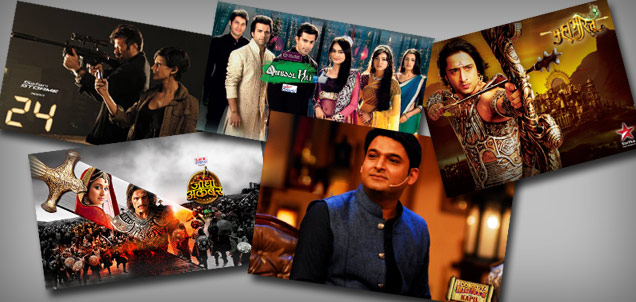
    2013 is drawing to a close soon. In what would have otherwise been a fairly regular year for content on Hindi GECs, “innovation” has come in the form of a genre that has taken the front seat like never before – Period Dramas.


    Life OK’s Mahadev emerged as a success story in 2012 – and continues to be so – propelling other channels to give more attention to the mythological and historical genres. Zee TV’s Jodha-Akbar has met with phenomenal success. Sony’s Maharana Pratap is the top weekday show on the channel. Star Plus’ Mahabharat was the biggest weekday launch on Hindi GECs in three years.


    With half a dozen launches, most of which have met with success, is it safe to call period dramas a “trend” that has emerged in the Hindi GEC category in 2013? May be not.


    It is important to distinguish a trend from just a serendipitous occurrence. It is important to distinguish the symptom from the real cause. And that’s my attempt in the rest of this piece.


    Think of it. Why would period dramas suddenly come of age in India? There has been absolutely nothing of note that has happened in our society or nation in the last decade to suggest that our love for historical and mythological content would show this dramatic surge. There is no subtext here. In fact, in many ways, a young and evolving India watching period content is counter-intuitive, if not inexplicable.


    The reason for the emergence of this quasi trend is very direct – fatigue. I wrote about this a few weeks back, that viewer fatigue is fast building up in the category. The sameness of content, coupled with slow pace and dragging perceptions, have meant that the overall category satisfaction index of the genre is at an all-time low since 2009. Cynicism and disillusionment are prime emotions that many core viewers are associating with weekday fiction on GECs.


    Of course there are exceptions like Diya Aur Baati Hum and Taarak Mehta Ka Ooltah Chashmah. But a handful of shows can’t compensate for the negative imagery created by more than 30 programmes collectively.


    As a result, we are in a phase when anything unique will stand out and get its more-than-fair share of attention, as long as it passes the basic relevance cut. Jodha-Akbar does that the best, by focusing on a love story, making it come across like a contemporary story with only the setting being ‘period’.


    The question to really ask is: Has there been any other launch in the last year or so that has passed the ‘unique yet relevant’ filter? You will find it tough to isolate even one program outside the period drama genre that fits the answer here.


    Hence, the rise of the period dramas is more a ‘default’ phenomenon, symptomizing dissatisfaction, than emerging as a true, stand-alone need gap.


    If GECs mistake this to be a trend, they may be tempted to find more concepts in this genre. Two things will invariably happen then. One, the genre will lose its uniqueness if 3-4 more such shows launch, and this will shake the foundation of why it’s working to begin with. Two, in the effort to follow a ‘trend’, channels may pick up concepts that are not entirely ‘relevant’ in the first place.


    The need is to look elsewhere. Surely, in a country as diverse and culturally rich as ours, there can’t be a dearth of unique cum relevant stories that lend themselves well to weekday fiction content.


    The real emerging trend is ‘fatigue’. Period dramas are the red herring everyone should be wary of. You have been cautioned!


    Shailesh Kapoor is founder and CEO of media insights firm Ormax Media. He spent nine years in the television industry before turning entrepreneur. The views expressed here are his own. He can be reached at his Twitter handle @shaileshkapoor
     

  • Shailesh Kapoor: The much-abused media word: Passion!

    By Shailesh Kapoor


    “What is the one thing about this role that interested you so much that you applied for it?”


    Over a decade now, having met more than a hundred ‘candidates’ (I prefer the expression ‘potential team members’, but it is a mouthful) for various positions, first in the television industry and now at Ormax Media, I have found this to be the one question that does half the job.


    Many candidates speak about the company’s credentials in their answers, in which case, being a true researcher now, I reiterate the “you” in the question. After all, why would a company’s credentials interest you, unless there was something in it for you?


    Some young people use the “growth and learning” plank for an answer. Most times, I am disappointed with their understanding, let alone articulation, of these two words. Both growth and learning are deeply proactive as concepts. To say that you will learn a lot in the company makes it seems like the company is some kind of an incubator with the responsible of ‘hatching’ you. The truth is, the company doesn’t even know at the interview stage if you are a good egg or a bad egg. The interview is about that itself!


    But the word that features the most in the answers, across younger and more seasoned candidates, is the P-word: Passion. “Because I have a passion for television…”, “Because media industry fascinates me…”, “Because I love research…”


    Let’s focus on the ‘passion for television’ for now, though you can replace the word with ‘films’ or ‘media’, and still read on. I have taken great pains in some of the interviews to understand what candidates actually mean when they say it.


    The first level of detail often given is: ‘I watch a lot of TV’. Television is a household thing. Everyone watches it, in varying degrees. So, “I watch a lot of TV” makes you no better suited for the job than a 33-year old mother-of-two in Indore!


    When I probe further, many are at a loss explaining their ‘passion’ as a mental thought. All they can explain is behaviour. I watch TV, I read about TV, I discuss TV, etc. If behaviour was all-important, half of Mumbai will be passionate about local trains.


    Here is a little passion-test I have developed over time, which goes beyond behaviour and evaluates the mindset. It will more applicable to ‘non-creative’ roles or to first-timers in the industry:


    1. Watching vs. consuming television: Everyone watches TV, but the truly passionate ones ‘consume’ it, at an overall category level. They build their thoughts based on what they watch, discuss them, have a view on them. An easy way to judge this by asking the candidate what her favorite show on television is, and what makes her like it. A ‘watcher’ will talk like a housewife. A ‘consumer’ will talk from inside the watcher’s mind.

    2. Watching breaks and promos: If you surf channels the moment a break starts, your passion for television is highly questionable. Being passionate about an industry includes being passionate about all aspects of it. The most fascinating things happen on TV channels in breaks. Those who are truly passionate have noticed them and can intelligently speak about them.

    3. Deciphering trends: A seasoned guy with a passion for TV will speak the language of trends in an interview. He will instinctively and effortlessly compare the program or channel being discussed to past successes or failures, some of them dating back to more than two decades.


    Passion is instinctive. You can’t prepare for it. And you don’t have to work hard to communicate it. If you are truly passionate, it reflects in your identity.


    Back in 1997, when I was graduating out of IIT Delhi, an anecdote about one of our seniors was doing the rounds. He had taken up a course on Corrosion Engineering as an elective. It was a post-graduate course and very few B. Tech. students opted for it. He had probably taken it because the faculty was “cool” and it seemed like an easy course to pass. In the first lecture, the professor asked him why he took a course as eclectic as this. His reply, and I kid you not, is a part of the folklore: “Since my childhood, I was always interested in rust and corrosion.”


    It was an intentionally irreverent answer. But when candidates try to pass the same ‘interest’ as genuine in interviews, it doesn’t fly.


    Shailesh Kapoor is founder and CEO of media insights firm Ormax Media. He spent nine years in the television industry before turning entrepreneur. The views expressed here are his own. He can be reached at his Twitter handle @shaileshkapoor


  • Shailesh Kapoor | Wanted: Dimaag Wala Filter For Sachin Programming

    By Shailesh Kapoor


    This is the big weekend when he hangs his boots. When all the hype around his retirement and his 200th Test will culminate in what we hope is an exciting climax at the Wankhede over the next 2-3 days.


    The core age of the cricket viewing audience in India today varies widely depending on the format. It is 35-50 years for Tests, 25-40 years for ODIs, and 15-30 years for T20. Tendulkar’s loyal audience are largely from the first two segments. Which means that they either started watching cricket when he was already playing, or that they have seen his entire career, from the Pakistan series in 1989 onwards.


    I belong to the second category. My first memories of watching live cricket on TV are from the 1984-85 England tour of India. By the time Tendulkar made his debut, I was a cricket fanatic. I grew out of it to some extent around 1999-2000. Hence, Tendulkar’s performances in his first decade are well-etched in my memory, while the decade that followed is a bit of a blur, besides the 2003 World Cup of course.


    Which brings me to my problem. As much as I would want to relive those memories, and that footage (which I vividly remember, complete with commentary), I just don’t know what to do about it. There is information everywhere. Star Sports has four channels showing various things on the great man. News channels are doing 24×7 Sachin programming it seems. Social media is abuzz with links to articles, videos, cartoons and a lot more. Newspapers are coming out with special editions. It’s all there, but it’s way too much to make sense of.


    In the good old DD days, it was easy. If someone was retiring or passed away, DD would make a tribute programme. There was no guarantee on quality, but you knew where to find the tribute. The documentary tribute to Raj Kapoor they aired upon his death was a riveting one. Simi Garewal produced it about four years before the showman died, but came across as highly relevant on the occasion.


    Today, there is no particular Sachin programme that you can look forward to. Channels are not even promoting Sachin shows anymore. They are promoting Sachin the idea, the concept. But that does not translate into saying that at such time on such day(s), you can watch a great show on Sachin. So, we have to wait for the stand-out shows to go viral on Twitter and Facebook. Call me old-fashioned, but that’s still not my idea of watching TV.


    This information overload is an increasing phenomenon in general these days. All of us are missing out on so much content that we would have loved to watch, simply because we don’t know where to find it. There are TV guides and EPGs, but individual tastes are so diverse and complex, just “genres” are not enough to recommend shows to audiences.


    Borrowing from Krrish 3, what we really need is a ‘Dimaag wala filter’. An app or a website that can read my mind, find my ‘real’ tastes and preferences, and recommend very specific programming to me around it.


    It’s a technology challenge, all right. But if addressed, it can open doors for niche channels and cutting-edge niche content like never before.


    Meanwhile, if you know a good Sachin show airing on TV, please share the details of telecast.


    Shailesh Kapoor is founder and CEO of media insights firm Ormax Media. He spent nine years in the television industry before turning entrepreneur. The views expressed here are his own. He can be reached at his Twitter handle @shaileshkapoor


  • Shailesh Kapoor | BCCL 2.0: The Integrated Media Organization

    By Shailesh Kapoor


    The oldest media organization of the country, The Times Of India group, also known as BCCL (Bennett Coleman & Co. Ltd.), completed 175 years last Sunday. In today’s world of instant gratification and media overload, history may hold little significance for many. But with more than a 150-year heritage gap between BCCL and other media bigwigs in the country today, fascination can’t be too far away.


    Two aspects of BCCL interest me in particular. One, it remains the only true multimedia organization in the media and entertainment industry in India today. While Zee is a TV-cum-print force too, and Living Media has presence across television, print and radio, none of them match the scale at which BCCL has managed to operate across sectors. Their scale and dominance in print and radio is well-known, and the last four years have seen strong consolidation on the television side.


    But BCCL’s multimedia presence goes beyond these three conventional media. They invested early in the internet, events and OOH businesses, albeit with varying degrees of success. In my stint at Zoom, I got a first-hand understanding of the power of a multimedia organization. There was always an ‘inhouse marketing option’ available to you, no matter which market or audience you wanted to reach.


    Such cross-promotional opportunities can be a marketer’s delight. If you had the right idea, the system will give you the platform it deserves. At that time, with the TV business being nascent, set processes to exploit such opportunities did not exist. I’m sure they exist now, as one gets a flavor of the same while consuming BCCL products, especially the newspapers.


    The second aspect of BCCL that interests me is the sales institution that it is. We all hear strong criticism of TOI ‘selling out’ through ad innovations that interfere with editorial content, and paid news via the Medianet platform. I find none of it either surprising or offensive, given the group’s clear sales focus. You can feel upset as a reader, but as a media commentator, you can’t help marvel at how BCCL has reinvented the advertiser part of their business over the last two decades.


    Many top executives in television today, especially in the ad sales function, come from a Times Response (BCCL’s ad sales division) pedigree. They bring three distinct qualities with them – a leader’s attitude, strong sales processes and an appetite for sales innovation. In just this one way, BCCL’s contribution to the TV industry goes well beyond its TV channels alone.


    It is difficult to say if integrated media organizations will be in vogue over the next 25 years. But in the era of convergence, integrated players like BCCL will hold an edge over other media giants.


    Ten years ago, BCCL was primarily a print organization. Today, it has spread its wings. And many like me will be keenly watching its flight ahead!


    Shailesh Kapoor is founder and CEO of media insights firm Ormax Media. He spent nine years in the television industry before turning entrepreneur. The views expressed here are his own. He can be reached at his Twitter handle @shaileshkapoor


  • Shailesh Kapoor: Roll our the red carpet for Hindi cricket broadcast

    By Shailesh Kapoor


    The recently concluded India-West Indies Test series, better known as Sachin Tendulkar’s farewell series, recorded some of the highest ratings for Test cricket in recent times. The second day (when Tendulkar came into bat in the morning in what many hoped will be a century effort in his final Test innings) and the third morning leading upto his farewell speech, rated at par with regular ODIs, a rare occurrence over the last two decades.


    What interested me more about the ratings was the Hindi to English viewership ratio, which ranged from 2 to 6, on various days. Some of this variation is explained by which channels Star Sports may be pushing on the last mile, and the fact that for the second Test, they had two channels showing the English feed vis-à-vis one showing the Hindi feed, which is when the ratio dropped.


    The fluctuation of ratio apart, all indicators tell us conclusively that Hindi sports broadcast is the future in the non-South markets in India. That’s what the viewers will increasingly shift to, and that’s what the broadcasters and MSOs will push with greater confidence in the months to come.


    Hindi commentary attempts are not new to Indian cricket, but the Star Cricket campaign last year (Jo baat Hindi mein who kisi aur mein nahin) was the first serious communication attempt in this direction.


    It can be argued that the language doesn’t matter in cricket. But that’s far from the truth. High language comprehension can enhance viewing experience and get irregular and light viewers to watch more. These are a large section of viewers who watch only India World Cup matches or select parts of exciting ODIs and T20s. Getting them to watch more matches for more time is the only real growth opportunity in cricket viewership today, and there can’t be a better growth injection for this than Hindi commentary.


    The criticism on the quality of commentary in Hindi has existed for decades now. But it has been primarily fuelled by Doordarshan and All India Radio commentary. Some unintentionally comic moments notwithstanding, Star Sports’ Hindi commentary this season has been well above the mark, both in terms of the choice of panel and the execution. The ‘elite’ audience who compare the two languages don’t really count. It’s more like The Big Bang Theory audience commenting on Balika Vadhu.


    If you are an ‘intersection viewer’ like me, who understands both languages equally comfortably, there is a good chance that you will still prefer English commentary. My two main reasons for this choice are the comfort level built with English commentary over three decades, and my preference for international commentators versus the Indian ones. The latter has nothing to do with language. Our lead commentators are generally not as articulate and opinionated as their counterparts in Australia and England.


    But most viewers are not intersection viewers. Comprehension of English ranges from nil to poor to barely-there in most households in India. Then there is the additional issue with foreign accents. We are perhaps the only country to subtitle all English entertainment content on TV in English itself!


    For this section of audiences, the Hindi broadcast is a lifeline. It has taken some time to come, but come it has. As time passes and generations change, the habit (my first reason above) will die too, and we will see the Hindi broadcast gain even more momentum.


    IPL too introduced Hindi commentary this year. They should be encouraged with the Star Sports performance and invest more in it in the coming year, with a stronger panel and better reach and marketing. IPL, in many ways, is the defining cricket tournament on television today, and it has the ability to set and fuel trends.


    So, well done, Star Sports. It would have been even better if you put your Hindi feed on Star Sports 1 and English feed on Star Sports 3, than the other way round. Would have been a nice, symbolic gesture!


    Shailesh Kapoor is founder and CEO of media insights firm Ormax Media. He spent nine years in the television industry before turning entrepreneur. The views expressed here are his own. He can be reached at his Twitter handle @shaileshkapoor


  • Are we a Noise-loving TV Nation?


    By Shailesh Kapoor


    You would normally not associate positive emotions with the word ‘noise’. It’s generally assumed and accepted that noise is bad. In context of television too, the media has propagated this notion for a while now. But there is very little real evidence to accept this belief. In fact, there is telling evidence to the contrary.


    For many of us, the first association with noise on Indian television would be Arnab Goswami. His rival channels even start their bulletins (the 10pm news on NDTV, for example) with the line ‘where you get news, not noise’. Yet, the high viewership of Arnab’s show speaks for itself. In the noise and the cacophony lies a sense of power the viewer feels. When you see the privileged political class being put in the docks and spoken to like they are criminals (words like hypocrite and hooligan are routinely used by Arnab to describe his guests), you feel empowered by proxy. And that would be impossible without the noise.


    Gauhar Khan is by far the most popular contestant on Bigg Boss 7 (Source: Ormax Characters India Loves). But she’s not someone who will die wondering. She’s out there, raising her voice, which gets rather shrill at times, at the slightest excuse. But like Arnab, her ‘noise’ comes from her conviction. And conviction is an unequivocal sign of strength.


    One of the top-rated shows on television for the last five years is what you would classically label ‘a loud comedy’. Yet, Taarak Mehta Ka Ooltah Chashmah, with all its executional hyperbole, continues to enthrall audiences, especially in Western India. I haven’t seen anyone who even remotely resembles the serial’s female lead Daya in mannerisms and talking style. A relatively moderate husband (Jethalal) provides a good contrast and the couple has been the most popular ‘jodi’ Indian television for a while now.


    There are many other examples across genres where one can sense that the mellow and the soothing is finding it hard to seek attention, while the noisy and the high-pitch manages to get viewership and media talk. One of the biggest successes of this year, Comedy Nights With Kapil, is a fairly loud show itself, even though it incredibly manages to keep its aesthetics consistently in place despite the noise. And the consistent performance of slapstick comedies and dubbed South action films on Hindi movie channels further propels the noise-works theory.


    Sometime earlier this year, I made the mental shift to accept that on Indian television, ‘noise’ and ‘loud’ are not undesirable, negative terms. Here, the viewer equivalent of what the US audiences will call ‘noise’ is ‘over’ (as in, “bahut over dikhaya hai”). ‘Over’ stands for over-acting or screenplay exaggeration. But ‘noise’, when not ‘over’, is perfectly desirable.


    In several discussions within the industry on this topic in recent years, the most interesting reason on why this should be the case goes as follows. There are more than 100 channels on an average consumer’s TV today. Even though she may watch only 8-10 of them regularly, the idea of multiple channels is still intimidating to the Indian audiences. So, the ‘surfing experience’ is still a stressful one, whereby the viewer is trying to come to terms with the plethora of choice available to her, often not knowing where to stop. With the number of channels on a perpetual increase, this intimidation is not going away anytime soon.


    In this context, in a ‘surfing’ scenario, a channel gets only about 5-10 seconds window to ‘attract’ the undecided viewer. This is where ‘noise’ comes in. It’s like a sales pitch or the good old Aussie art of ‘spruiking’, whereby you sell through showmanship of speech.


    There may be other reasons too, but ‘noise’ is in for sure. Let the drum rolls begin!


    Shailesh Kapoor is founder and CEO of media insights firm Ormax Media. He spent nine years in the television industry before turning entrepreneur. The views expressed here are his own. He can be reached at his Twitter handle @shaileshkapoor


  • Shailesh Kapoor | Live Election Results: A Reality Show Like No Other

    By Shailesh Kapoor


    In more than 30 years of active television viewing, no content has fascinated and captivated me more than live election results coverage. It’s the biggest reality show ever, unfolding in real time, with aftermath that can last for years, if not decades. One such reality show will play out this Sunday. And then there will be an even bigger one some time in the summer of 2014.


    In the good old Doordarshan days, General Election results were four-day long affairs, interspersed by Manoj Kumar films. When the Electronic Voting Machines (EVMs) were introduced in 1999, it meant that four days of excitement would crash into about four hours. Initially, I detested the EVMs for doing this to me. But over time, I have grown to love this new rapid-fire, T20 format of election results.


    Election results coverage is now all about thinking on your feet. As new data flows into the system in real time, it is impossible to rehearse this coverage out. From shifting between politicians and experts on one hand and between various states on the other, the anchor of such a show can find his plate too full for his own liking. Hosting live election coverage has to be the most challenging camera-facing job on TV today. The post-analysis leading upto government formation, which may last anything from one day to upto two weeks, is the more familiar news part, albeit nail-biting at times.


    Much as I enjoy it immensely, I have two pet peeves related to live election coverage that I hope are addressed soon. The first one is about the use of technology. There is just too much focus on portraying the technology as the hero of the coverage. Many channels run promos of their election results shows highlighting how their touchscreen-based technology or their graphics software are the best in the business.


    I fail to see the point. Good technology, unless it is a technology program we are talking of, should always be invisible. It is meant to seamlessly enhance the viewing experience, than become the star in the room. Live sports do it so well. Perhaps, they get more practice. And with so much talk about ‘high-end’ technology in live results coverage, if you still can’t ensure basics like your cameramen are not visible all over the show, you haven’t done your technical rehearsals right!


    My second pet peeve is more psephology-led in nature. With 63 years of elections history behind us, out of which about two decades have involved active use of computers, one would have expected news brands to have created some concrete metrics and indices to capture insights in a more structure and predictive form. This has not happened, and as a result, rarely are learnings from past elections used to analyze current results, except an odd anecdotal comment by an expert, which is often biased to lead to a pre-decided conclusion in his mind anyway.


    Psephology is a science before it’s an art. Yet, it unfolds on our television more like the latter, with wordsmithery being its primary form of execution, instead of any robust data-led indicators. In fact, such indicators, and not technology, can become true differentiators of a news channel’s election results coverage.


    But these are only minor irritants in what is the most enthralling television content for me. Come Sunday, and I shall be all eyes and ears from 7 am onwards.


    Shailesh Kapoor is founder and CEO of media insights firm Ormax Media. He spent nine years in the television industry before turning entrepreneur. The views expressed here are his own. He can be reached at his Twitter handle @shaileshkapoor


  • Shailesh Kapoor | Bigg Boss 7: The Coming-Of-Age Season

    By Shailesh Kapoor


    Since its start in 2006, Bigg Boss has acquired cult status in certain sections of the Indian audience, driven by youth and the urban elite. In today’s age of paid news, the programme gets sizeable free publicity in mainstream media, and has been a runaway hit with the social media in the last 3-4 years.


    Historically, Bigg Boss has not been a high-rating show, with the 3-TVR mark being considered a very good result. But there are many other factors that compensate for this, none less than the huge opportunity the programme offers for in-programme product placements and integrations. Colors has also invested well in the property over the last six seasons, upping the scale every time. The big leap, of course, was in Season 4, when they brought in Salman Khan as the host.


    If Season 5, which started with Shakti Kapoor in the house with a dozen women, was the worst Bigg Boss season till date, the current season (7) is what I’d call the coming-of-age season for the Bigg Boss franchise. It may lack a pivot like Dolly Bindra or Imam Siddiqui, who can single-handedly deliver content, but it breaks new grounds, which may impact Indian television itself, not just Bigg Boss.


    The biggest coming-of-age aspect in Bigg Boss 7 comes in the form of two very real love stories that have unfolded this season – Gauhar-Kushal and Tanisha-Armaan. In the past, Bigg Boss seasons have only hinted at romance, without much meat to chew. An episode in Season 1 ended with Aryan Vaid kissing Anupama Verma on her forehead. That, and a few massages apart, there hasn’t been much else in the name of love (or lust, for that matter) that registered.


    But the public display of affection this season has been heart-warming. Some may argue that it’s done on purpose to garner mileage and propel careers, but as an avid viewer, I’d pass that off as baseless cynicism. When Kushal proposed to Gauhar on screen, rather spontaneously, and she accepted, it was for real. They lived like a couple thereafter, till Kushal’s eviction this week.


    Armaan and Tanisha may not have formally announced their status, but it’s there for all to see. And the element of lust is apparent too, with rumours of their lovemaking in the house doing the rounds on social media. Both couples have also used the camera-free washroom rather brazenly at times. Full credit to the channel for telecasting at least some such portions.


    For me, this is a far cry from the kid-glove handling of romance and man-woman relationships that we are used to seeing on our television. Bigg Boss 7 pushes the envelope, and in a smart way that doesn’t allow for any silly protests or moral policing. After all, who can object to consensual love? (Oh wait!)


    In many of our serials, the hero and the heroine may well have been brother and sister, the way they maintain safe distance from each other, even in private moments. Perhaps Bigg Boss 7 will embolden the channels and producers to relook at what comes across, at least at times, as a playing-it-safe strategy.


    Only time will tell if this season was a real trendsetter, or just a flash in the pan when the channel got lucky because real people fell in real ishq wala love on the show. But for those who complained that Bigg Boss was way too sanitized compared to Big Brother, we have now officially moved on.


    Signs of a changing India?


    Shailesh Kapoor is founder and CEO of media insights firm Ormax Media. He spent nine years in the television industry before turning entrepreneur. The views expressed here are his own. He can be reached at his Twitter handle @shaileshkapoor


  • Top 5 Gamechangers on Hindi GECs in 2013


    By Shailesh Kapoor


    For the television industry, 2013 will be best remembered as the year of digitization. Similarly, we hope to remember 2014 as the year of a ratings system overhaul, with the industry shifting to the new system being developed by BARC. We are evidently in a period when technology and not content is emerging as the gamechanger.


    Yet, there were gamechangers that stood out on the content side in Hindi GECs too. Here’s a look at my list of Top 5 such shows. Established successful shows like Diya Aur Baati Hum, Saathiya and Balika Vadhu are not a part of this list, as their ongoing success is simply a continuation of what they promised in the last few years.


    5. 24

    The much-hyped 24 did not deliver high ratings. But it makes it to this gamechangers list for simply trying. As the Indian television market matures, we are bound to see fiction experiments beyond the regular family-based shows that currently rule the roost for the right reasons. When one such idea clicks, the floodgates will open. But 24 on Colors will always be remembered as the pioneer that brought this change. Here’s hoping for a more-Indianized second season.


    4. Qubool Hai

    Launched in late 2012, Qubool Hai scaled great heights of popularity in early and mid 2013, before losing some of the steam towards the end of the year. Driven by good casting that combined eye candy with solid performances, this Muslim social offered cultural variety, but with a contemporary and youthful treatment that had the college girls asking for more. Along with Sapne Suhaane Ladakpan Ke, it gave Zee TV a younger audience base that in turn helped the channel grow during the year, and sizably so.


    3. Mahabharat

    Star Plus challenged the status quo on production of daily fiction shows this year. After a rather half-baked attempt with Saraswatichandra, Mahabharat saw a real shift of scale. The show is easily the best-mounted fiction show ever in the history of Indian television. Its perspective on the epic tale is applause-worthy too, with considerable focus on the grey, than just the black and the white. Uneven pace and language comprehension issues may have limited its viewership in the early period, but the serial is now set for a creditable finish in 2014.


    2. Jodha Akbar

    Zee TV’s Jodha Akbar is a live case study on how to make a historical theme engaging by giving it a contemporary treatment. Story-wise, the programme uses the tried and tested elements of family and romantic dramas, exploited earlier to hilt in shows like Pratigya and Saathiya on Star Plus. It keeps the language simple, allowing for easy, fun viewing of what could have been an otherwise-overbearing show. Yet, the period look makes the show stand out in the crowd, offering the best of both worlds.


    1. Comedy Nights With Kapil

    This has to be a one-horse race if there ever was one. The success of Comedy Nights With Kapil on Colors cannot be measured by its ratings alone. Its consistently top-notch and flawless execution, combining fiction with live entertainment, has left me amazed episode after episode. How can you get something so right, I have often wondered. The show delivers two popular genres, which were beginning to look a bit jaded on television, in a refreshing avatar – Comedy and Bollywood.


    The comedy stays away from being crass or lowbrow at all times, yet manages to focus on popular culture and mass themes. The celebrity interaction is nothing we have seen before. It is audience-indulgent, not celebrity-indulgent. By now, it is common knowledge in the industry how celebrities aspire to be on the show and nervously prepare for it, so that they can match up to Kapil’s wit and timing.


    Comedy Nights With Kapil is the unifier show we have missed since KBC in 2000 – a show that various sections of the family and the society have an equal appeal towards. Thankfully, its success is not replicable, so we may not see too many clones coming out. Meanwhile, another 100+ delicious episodes await us in 2014.


  • Kejriwal Is News, News Is Kejriwal


    By Shailesh Kapoor


    On Koffee With Karan last weekend, a seemingly innocuous question left Varun Dhawan and Alia Bhatt stumped. When asked to name the President of India, their answers were Manmohan Singh and Prithviraj Chauhan respectively. If they were made to sit and watch news channels for a week as punishment, their answer would have probably changed to Arvind Kejriwal.


    Why just Dhawan and Bhatt? The way our news channels are covering Kejriwal these days, even the aam aadmi can be excused for believing that Kejriwal has replaced Manmohan Singh as the Prime Minister of India.


    2014 has arrived. We are in the year of the General Elections. Every political news story, across channels, is invariably trying to find a link with the General Elections. The news media have three poster boys in this pursuit: Narendra Modi, Rahul Gandhi and Arvind Kejriwal.


    Narendra Modi’s speeches are interesting, bordering on mild entertainment, and hence make for good live coverage. Rahul Gandhi makes news for leaving his party wondering if he’s on their side. His “personal” views may be heartening, but they come across as pontification at most times.


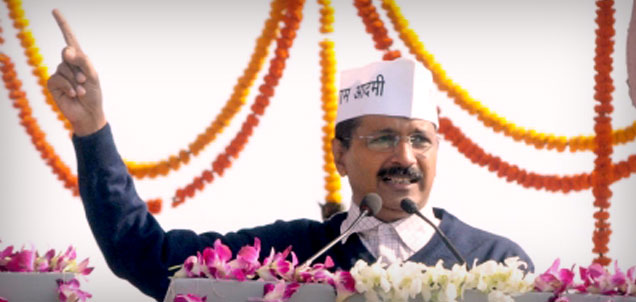
    Faced with entertaining but stereotypical competition, Arvind Kejriwal has managed to create a league of his own. A new style of governance is on display. It’s like Anil Kapoor’s Nayak playing out in real life. Even Salman Khan is creating aam aadmi songs against corruption. Idea created a commercial within days of AAP going to the people of Delhi for a referendum on whether they should form the Government in the capital. ‘What an idea, Sirji’, it acknowledges.


    It is easy to understand why Kejriwal and AAP have caught our fancy. It’s a radical departure from the politics we have all seen for years on end. From politics of greed, arrogance and corruption, we are now seeing the virtual other end. We would have been excused for thinking this happens only in movies. Till about a month ago, that is.


    The Delhi Government is getting coverage even the UPA Government at the Centre has rarely got. In the debate on the trust vote, Dr Harshvardhan, whom Arvind Kejriwal certified as a good man in the wrong party (BJP), commented on how even he has taken the Delhi Metro several times, but has not used it as a photo-op.


    But isn’t that precisely the point? What’s a “photo-op” to Dr Harshvardhan is “innovation” to the rest of the country. Tokenism and symbolism may come across as shallow words, but they hold so much relevance in this context. By traveling in his Wagon R and declining a luxurious bungalow, Kejriwal is giving messages, however symbolic, that may have far-reaching consequences in the shaping of the history of our polity.


    AAP is in a honeymoon phase with the media right now. It is difficult to fault their intentions. Their ability to execute will be realistically known only in six months or so, assuming the Congress doesn’t pull the plug. In fact, how openly AAP ridicules Congress even now, after having their outside support, itself makes for delicious copy.


    We needed the Aam Aadmi Party. We needed Arvind Kejriwal. Not just as citizens of India, but as media houses and media consumers. The political news on TV and in the papers was getting way too predictable of late. But here’s the man with the twist. If he can manage to translate even 20% of this euphoria into results in the General Elections, and win about 50 seats, I can assure you we are in for a rollercoaster ride on the political news front for several years ahead.


    Meanwhile, Alia Bhatt and Varun Dhawan may as well declare him the Prime Minister of India right away.


    Shailesh Kapoor is founder and CEO of media insights firm Ormax Media. He spent nine years in the television industry before turning entrepreneur. The views expressed here are his own. He can be reached at his Twitter handle @shaileshkapoor


  • Shailesh Kapoor | TV Ratings: Take It Easy, TRAI. Come Soon, BARC

    By Shailesh Kapoor


    The words that best describe the TV ratings scenario in India over the last year are confusion and uncertainty. TAM has been under constant attack, for mostly right and some wrong reasons, for the last two years in particular. BARC has been moving ahead at good pace to bring in a neutral, more robust ratings measurement system in India, which we hope sees the light of the day before 2014 ends.


    With BARC round the corner, TAM is virtually on a time bomb, in the last leg of what has been a rollercoaster ride of almost two decades. Trust TRAI to add to the confusion. The regulatory body has come out with guidelines for ratings agencies in India, to ensure fair and accurate measurement.


    You can’t fault the intent behind most of the TRAI guidelines. They seem designed to address the concerns of broadcasters and advertisers in all earnestness. But wasn’t BARC created towards exactly the same purpose? Surely, TRAI should be aware of what BARC is hoping to achieve and how the progress is going. The guidelines, while well-intended, have a “meddling” feel to them, which I fear may slow down BARC’s progress.


    Take the point on sample size for instance. TRAI guidelines say that the minimum panel size should 20,000, and should be increased by 10,000 every year till it reaches a figure of 50,000. Correct as this may sound, this guideline challenges the idea of a free market, where the panel size would be an outcome of what the stakeholders are willing to pay for the service. Will TRAI subsidize the balance panel if the industry is willing to pay only for 30,000-40,000?


    Then there are some micro-level points that TRAI could have easily stayed away from, such as defining the panel rotation rate at 25% per annum. If they were indeed stepping into the domain of research design, they would much rather have put down the most glaring gap that exists as of now, whereby error margins are not reported or published.


    There is a guideline that suggests that I&B ministry and TRAI can audit the systems of a ratings agency at any point of time. I don’t need to spell out how this can fast turn into a bureaucratic tangle, and encourage corruption.


    Another vaguely-worded guideline says ratings should be “technology neutral”, in that they should be able to address delivery platforms like cable, DTH, terrestrial etc. Never before has an “etc” interested me so much. Does it include Internet, mobiles and DVRs? If yes, we are in for a challenge for another degree altogether.


    The “toll free number for complaint redressal” is the comic relief in the guidelines. Imagine a Thursday morning when your show opens below your expectations and you get a research executive to call the toll free number to “complain”. That’s a phone call I’d love to hear!


    Dear TRAI, take it easy. TV Ratings is a private affair after all, and the market will find its answers.


    Dear BARC, come soon now. And till you come, keep the announcements going. There is a whole industry waiting with bated breath.


    Shailesh Kapoor is founder and CEO of media insights firm Ormax Media. He spent nine years in the television industry before turning entrepreneur. The views expressed here are his own. He can be reached at his Twitter handle @shaileshkapoor