By Prabhakar Mundkur
The week was full of tributes from all the people who knew and worked with him, including the famous Shelley Lazarus, one-time global CEO of Ogilvy and now Chairman Emeritus, who at one point of time was the only woman amongst seven men in the Advertising Hall of Fame.
I never knew Ranjan personally although I did bump into him a few times in Shunu Sen’s offices at the Levers office at Backbay Reclamation in the early 1990s, when he would dash in from Singapore. We would both be required to present to Levers our latest views on the Lever competition which typically meant P & G and Colgate.
While I never worked with Ranjan, I did have a competitive perspective on him because Ogilvy and JWT were both vying for Sir Martin Sorrell’s attention after being acquired by WPP – JWT was acquired in 1987 and Ogilvy a little later in 1989. Rumour had it those days that Sir Martin might have overpaid for Ogilvy, although in retrospect I am sure it was a wonderful decision. As one of the Lever agencies, we never considered Ogilvy a serious threat to the Lever business those days. Then came a major storm called Ranjan Kapur.
Since he joined in 1994, he seemed to have led a serious business transformation at the agency (before the word business transformation was to become popular). This included a huge emphasis on its creative product which he believed would lead to both fame and fortune. By 2004, when Ranjan retired from Ogilvy, it was an awesome agency that had not only built itself a great solid reputation but was also sniffing at the heels of JWT which was always considered the #1 in revenue in the country. Without IMRB’s revenue, Ogilvy was already bigger than JWT as I remember it back in 2004, while pouring over the annual reports of both agencies.
Since I observed Mike Khanna, the erstwhile CEO of JWT from close quarters, I knew Mike always thought of Ranjan as a good friend, but he was more than aware of Ranjan also being the formidable competitor. As luck would have it in 2005, I was one of the invitees for an Kolkata Ad Club function along with Ranjan. And I was fortunate enough to catch him and wife Jimi at the airport where our flight had a miserable delay of a few hours. This was my first real meeting with Ranjan and Jimi and I found them a warm and lovable couple. We exchanged notes on a number of things including the quirks of our neighbourhood, since we both stayed at Prabhadevi.
There are some whom you meet and you wonder why fate hadn’t brought you together earlier. Ranjan was one of those people. As tributes pour in from every corner of the country, one can see how much he is being missed.
Patriotic Branding
I don’t think we have ever had a formal study of  patriotic brands in India, although several brands have pledged their patriotism,  but in the US where brands are continuously studied for their degree of Patriotism,  brands like Jeep, Hershey’s, Coke, Levis, Ford, Wal-Mart, Campbell’s and others  have stood out as patriotic brands. An annual research study finds out which brands were most associated with the value of patriotism. Quite often when we say American icon I guess what we are really referring to are patriotic brands. Largely, it has to do with being an American company or really being made in the U.S.A.  In the  2016 research, a national sample of 4,750 consumers, 16 to 65, evaluated 248 brands across a collection of 35 cross-category values. Consumers identified the following brands as leading 2016’s patriotism parade. Percentages indicate brands’ emotional engagement strength for the individual value of patriotism.
- Jeep/Disney (98%)
- Levi Strauss (96%)
- Ralph Lauren (95%)
- Ford (94%)
- Coca-Cola/Jack Daniels (93%)
In India, Bajaj has always been known for its patriotic branding right from the days of the old Bajaj scooter with “Hamara Bajajâ€. Many brands pledged their patriotism this Republic Day but I thought one brand did it really well. And no prizes for guessing. It was Bajaj with its Invincible Indians ad. It told stories of brave Indians who were serving society at large with the help of their Bajaj motorcycles.
Advertising Ideas are not Intellectual Property?!
Â
Most ideas of any kind today are getting copyrighted both in the arts and the sciences. Create a piece of music and you can copyright it. Create a piece of art and you can copyright it. Create a scientific invention and you can copyright it. Write a great advertising baseline, and consider it given away for free, forever. And be prepared to be forgotten. When Idea Cellular changed its agency from Lowe to BBDO late last year, the industry was left in suspense about what would happen to all the great properties created for Idea including “What an idea, Sirjee†which became a part of colloquial lingo in the country over the years.
So when Shashi Shankar CMO of Idea Cellular recently said “The tagline belongs to the brand; it doesn’t matter who coined itâ€, I can see a copywriter cringing in a corner somewhere, about why he joined a profession where a client can say he doesn’t matter. After all, that is not the tradition. Most people are given credit for the good work they have done on a brand even if they lose the business over a long period of time.
So, did the new work justify the change of agency from Lowe to BBDO. I am not so sure. I thought the new Idea commercial lacked the zing, and the intrusive personality the brand had built up over all these years. Somehow, the new commercials felt like they were for an older, soberer brand, unless it was intentional. In addition, the famous baseline “An idea can change your life†felt like it had been relegated to the background, along with its erstwhile agency. The line preceding the baseline “A video can change your life†felt forced and idealess.
But such is life in advertising. You can slog your butt off for decades on a business and be forgotten forever!
 By Nirav Modi’s own admission in a letter to the PNB Chairman he is reported to have said: “In the anxiety to recover your dues immediately, despite my offer (on February 13, a day before the public announcement, and on February15) your actions have destroyed my brand and the business and have now restricted your ability to recover all the dues leaving a trail of unpaid debts”.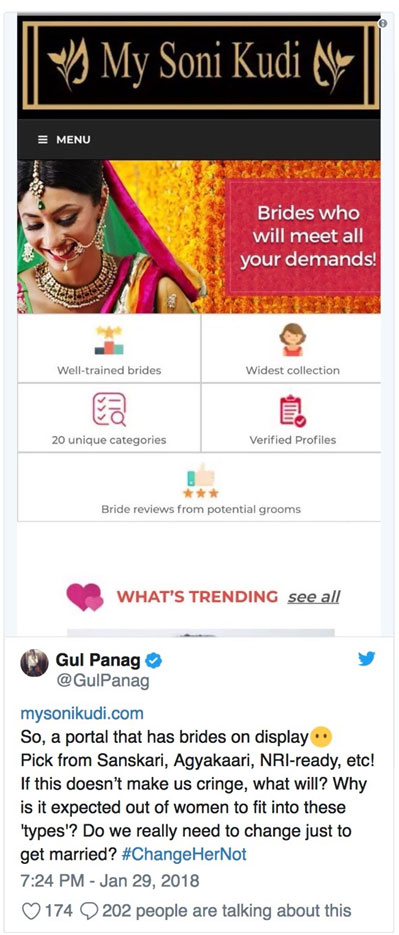

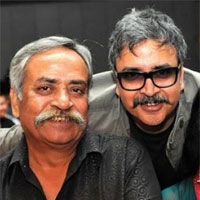 With this award, Piyush and Prasoon Pandey join an illustrious band of creative people around the world that has included David Droga, Marcello Serpa, Bob Greenburg, Joe Pytka, Lee Clow, Dan Wieden and Sir John Hegarty. Not everyone might be aware of the work created by these distinguished gentlemen, or even knowwhere they work.The Lion of St Mark is one of those awards that lets the winner soak in humility and pride so deserving of a life time award, which by definition implies that it can only be won once.
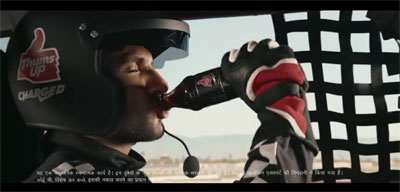 For the marketing intellectual, the introduction of Thums Up Charged might hold room for an interesting debate. Variants according to textbook marketers can endow the mother brand with rewards ranging from increased market share to a longer life. But how does that augur for a category like colas, which is increasingly being seen as unhealthy? And Thums up Charged might well be dubbed an even unhealthier variant given the extra levels of caffeine and the heightened aeration. So how will an unhealthier variant of an already unhealthy brand perform? Of course, to its credit, Thums Up remains the market leader in a market which has the world’s leading colas. Another point to debate might well be how will the two variants will be differentiated in the advertising. Will it be differentiated enough for the consumer to know which variant is being advertised or will the consumer just see it as another Thums Up ad? This often is the acid test for variant advertising.



 When the ad agency was on 15% commission there was no need to cheat. Although margins were thin at 3-4%, the ad agency was able to handle its rent, training, staff costs and other overheads and make a decent profit although always much less than their clients. The quality of staff was infinitely better. When I first started doing the rounds of the IIMs in the late eighties, agencies were not a preferred employer, but it didn’t take long to get there. In the period between 1985-1990, HTA (the erstwhile Wunderman Thompson) hired anywhere between 50-60 young business school graduates every year. And we ran a two-week workshop for them called Entrez Vous typically held at one of the hotels in Marve (in suburban Mumbai). After the training programme, the trainees dispersed to the various offices across the country and formed an incredible buddy network that stood the agency in good stead.