Category: COLUMNS

  • Introducing a new weekly column by Sanjeev Kotnala: Time we recalibrated UnMetro Consumer Understanding

    It’s surprising to see the lack of studies in understanding the consumer in these markets, writes Sanjeev Kotnala in a new weekly column

     

    By Sanjeev Kotnala


    I am surprised that there is still an ambiguity among Citizens of Planet ‘Media Buying and Planning’ and ‘Marketers’ about UnMetro market potential and possibilities. Because, it  silently crept in while they remained glued to their ivory tower windows with a limited view. The result: no one understands it. All they have is a scrap book filled with decades of old metro-centric planning to refer.


    No doubt, there is a gap, a result of a lack of investment in understanding it. There is really no champion of its cause. One who would go beyond lip service but really push the envelope. UnMETRO, the event by the Dainik Bhaskar group, was the most visible and serious one.


    This apathy towards UnMetro is unnatural. The business has shifted and to survive /grow, marketers have to tap these markets. It’s surprising to see the lack of studies in understanding the consumer in these markets. Tackling the metro consumer successfully is no guarantee of success with the streetsmart UnMetro consumer.


    UnMetro is a huge market. It is the true reflection of the oft-quoted vignette of cultural-social-economic diversity, which creates differential mindset. Most of the marketers have maintained an arms length relationship with these markets. But, this will change. The punishment posting will become hard-earned chip on the shoulders. One who understands these markets will command premium.


    In UnMetro,the policy of one-size-fit-all does not be work. One needs to dig in and best exploit local a medium like print, radio, OOH etc. One will have to tweak the offering in its tonality even within the state. Neither will the old understanding take you anywhere, nor will the inferences drawn on comments by internal resources work. The real UnMetro representatives within the industry migrated a long time back. Most live with a picture that is no longer valid. In fact the marketers, the media and the creative agencies must get their licence to address the UnMetro consumer renewed.


    Old UnMETRO is dead. The towns that suffocated with stagnant infrastructure are gone. No longer higher studies mean compulsory migration. No longer ambitions need to be strangulated under pressure of relationship, care and family needs. Sacrificing possibilities and opportunities is a rarity and not a rule.


    The hunger and desire for brands, experiences and service is not a result of untapped / unserviced built-up demand. It is the outcome of newly acquired  prosperity and a never-say-die attitude to life. The old leaders in industry saw UnMETRO as something  not critical for their success. The new guard is not so myopic.


    The real literacy in UnMETRO is on a high. Parental confidence and commitments are fueling new heights of ambition and dreams. The media revolution and ease of information coupled with positive government initiatives bridging the gap. Mass media – TV and Print – rules. Radio aptly supports the new ecosystem of aggravated lifestyle needs.


    It’s essential for marketers to re-evaluate their filters. Look into the opportunities with open arms and mind. Invest in understanding, so that they can recalibrate their tools to face the challenges it offers. ‘India’stands stumped while ‘Bharat- UnMetro’ is live and kicking.

     

  • Somewhat Seriously: Martin beats Arnab 7-4 in Shadow Boxing


    By Sanjeev Kotnala


    Thank you IAA for making it possible. One can see why the IAA India Chapter won the most active IAA Chapter award recently.


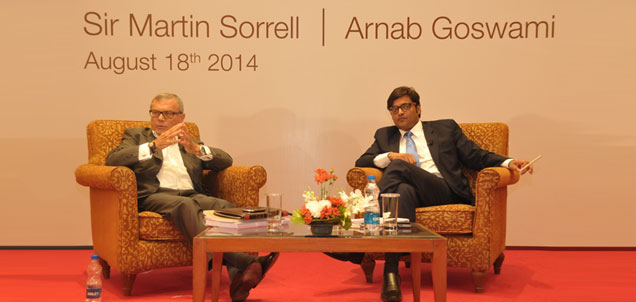
    Sir Martin Sorrell (SMS) gave a basic course in TACKLING Arnab Goswami (AG). From the world GO, SMS opened with Cricket stating that it seems MSD seems to be a captain with fixed thinking. Then he fired His question. How have the elections been for you? An open-ended conversation that followed with: why was there a gap between the Rahul and Modi interviews?  It forced AG to go in a detailed explanation. It was half-way through his comment that AG realized it was he who was supposed to be asking the questions.


    The election discussion closed with SMS probing. When the Congress says the media is to blame for their debacle, were they referring to media as media or you? AG in self-congratulating mode pointed out the Rahul English media exposure was limited to Times Now.


    I wish that Indian politicians should not watch this show when it’s telecast or is on Youtube. They may learn how a tactfully well-prepared person, with smile and humour can enjoy the discussion. How to be precise in your answer, not allow AG to corner you or allow him to put words in your mouth. SMS seem to have taken the advice in yesterday’s post.


    AG started with -‘I am honoured to be interviewing you and I have great regards… ‘ Was turned by SMS into a class for politely being rude. SMS said ‘you can be sure it’s going to be tough one and dam sure if the guy says ‘Personally I have nothing against you’.


    AG – there is respect in your well-preparedness and being very focused in your approach and questions. You as always were well-prepared with your data, quote and historical references. But today, you did meet someone who betters in it.


    SMS ON MEDIA: There is a mismatch between, the amount of time the consumer devotes or by the way the consumer consumes media and the investment (read advertising revenues) by agencies and client in it. Pointed out that this will find its balance. Fragmented media is a challenge and it will get more challenging with time.


    SMS ON TAM:  AG half-volley  ‘Your comment on TAM’ was met with a nice cover drive ‘Nice Company’.  Keeping the Indian scenario out of discussion, SMS pointed out that in most  (I did hear him say all) of the companies there is only one TV audience measurement currency. Can there be 1-2 or 3 measurement currencies is something that the market will decide.  AG doosara on does TAM (read SMS) need to wait for government directive for enhancing TV Meter numbers was hit hard. SMS pointed out that additional meters means additional cost and it must be shared by the agencies, client and the channels must share the burden.  Reiterating that WPP is committed to provide the most accurate measurement, he made a point that it’s not meters alone but a willingness to shift measurement process with change in consumer habits is required. Giving an example he cited the use of C+3 and C+7 meters that track not only on-air but deferred viewing.


    SMS ON INDIA AND CHANGES: The Independence Week made AG continuously probe SMS outside the off-stump. Is India at the Vortex of change? Can India- made media be global?  SMS showed a straight bat. He was optimistic that the new strong leadership in government is coupled with strong commercial leadership, then India which has been in the wrong side of the history for so long would definitely see a change.  And that it is advisable for the businesses to first exhaust the local opportunities before looking out.


    SMS ON FURTHER INVESTMENT BUYOUTS IN INDIA: He rattled off that WWP business in India is about 499 Million. And growing @ 10%. Talking to Sam (Balsara), he said: ‘If there is a business opportunity that is 50 million worth, he would consider it and is willing to write a blank cheque.” SMS thinks that his competitors in recent past have made some ill-advised low-leveraged investments and that is starting to reflect in their figures.


    SAM AND SMS: Sam raised a probing question that in the Indian situation where TV and Print (the legacy media) dominants. The foreigners (like you) come and talk just digital-digital. Are you not missing the bus?  In SMS’s view: “This is true as of now but all businesses have to look future-ready. I am not sure when the tipping point will come and change the dynamics. But it will come surely, with the speed of change speeding up’.


    SMS ON THREAT.  The biggest threat is not competition but Complacency, Arrogance, Satisfaction and lack of energy. He said he is a disruption freak. All his life the growth has come from disruption.


    SMS ON BALANCE. He referred to his divorce as an example. His lawyers had two possible solution and they asked: what was more important – business or family.  Not surprising, the answer is both.  This was when AG tried creating a 2×2 matrix between King and God on one side and Data and Analysis on another. SMS went to the extent of drilling the point home in more ways then one. As per him, creative and data, science and art, gut feel and analysis are such a pair where balance is more important.  Balance is not something that’s 50-50, but the right mix. Whenever the pendulum would swing to one side creating a biased skew: correction will be needed.


    MY SPECIAL:  (1) SAM, can we raise the same question on legacy v/s new media for all the discussion that happens in Indian forums? And many such places you are one of the guiding force? (2) I am surprised at the limited attendance to the event. At any stage, there were not more than 120 people in hall set for 150-plus. IAA could start planned invitation push (even paid) public beyond their members for such an event.  (3) Liked SMS referring to AG as a fly buzzing. (2) Liked AG comparing SMS to a Smart Politician and we would know where that feeling was coming from.


    Disclaimer: The above personal interpretation of the discussion.


    Aside: In a fraternity meet like this, with most being media or IAA invitees or senior people- this long introduction of SMS and AG- was that required?  I personally felt it went too long.


    Sanjeev Kotnala is Head Catalyst, P1P2Solutions. The views expressed here are his own


  • In Jest | Sanjeev Kotnala: Sir Martin’s Secret 7 Steps for Encounter with Arnab

    By Sanjeev Kotnala


    MARTIN Vs ARNAB promises to be an interesting Reality Shadow Boxing Show. Live today at 3:30pm at ITC Grand Central, Lower Parel. Mumbai.


    Sources in WPP and IAA requesting anonymity tell us: “A lot went into ensuring Sir Martin Sorrell (SMS) 69, CEO, WPP to agree to converse with Arnab Goswami (AG), the 9pm dude of Indian television. It’s a great combination and a must-watch for the audience. Hope AG does not tone down his usual theatrics.”


    AG the sport that he is was willing to grill SMS risking his future. You don’t know what Martin buys next. IAA convinced him that Martin is no Rakhi Sawant or Lalu and could not guarantee TRPs at 9pm. ‘Frankly Speaking with Arnab’ was out of question. Hence the 3:30pm slot with a live audience.


    It started with the head of one of the Martin’s many companies pushed by the polite tall gentleman of IAA approaching Martin for the Encounter. Who is this Arnab Goswami? Is he head of some media business that you guys want Martin to meet was a natural question raised by SMS’s secretary.


    Primary research over the Net revealed AG, born 1973, writer of missing-from-the-racks ‘Combating Terrorism’, is an Indian journalist + Editor-in-Chief + News anchor of ‘Times Now’ and primarily responsible for all the Noise at 9pm. He has 21K+ likes on his Facebook pages (FB does not count Hates). While ‘NATION WANTS TO KNOW’ is his pet verse, truth is AG already knows and decides what and how much the nation should know.


    This was insufficient information for SMS who believes in knowing the ememy. WPP India team was directed to provide a complete dossier incuding list of Youtube videos to watch. Due to conflicting views, SMS finally made his own assumptions. Child’s play, he uses the same technique for understanding any thing Indian, including the economy.


    For the last seven weeks, SMS been preparing for the Encounter wrongly named Conversations. And here is the exclusive step-by-step action of the 7-week preparation programme.


    Step I: Watch Youtube videos and track social media on AG. Avoid polarised performance vedios with Rahul Gandi and Modi.


    Step II: Practise raising voice. AG loves a fight. SMS went to the best, he has been coached by Thirumurugan Gandhi who holds the record for outshouting AG.


    Step III: Dodge questions on Economy, FDI and cross-media ownership.  Fighting AG is a waste of time. Polite conversations will be the best weapon. AG after all is ill experienced to handle politemess and logic.


    Step IV: Build immunity to shouting.  With no body to shout at him, this was identified as the weakest point. Now, SMS is expected to  allow AG to shout when he breaks down the discussion to few limmited  focussed points, without  bothering if he was stating things out of context. Right context. WPP Generals have informed him audience would love it.


    Step V: Carry no notes. Sit straight. No gestures. Head must always be held above AG line of vision this makes AG nervous. Only AG can hold paper and bang the table or raise his voice shouting ‘The Nation wants to know”.


    Step VI: Shuffle through recnet past. Read all your past comments. Articles- interviews and even the SMS and Whatsapp messages. AG is bound to bring something from your past that even you may not remember.


    Step VII: Minor details major impact. AG is known to wear suit with white shirt. SMS been advised to stick to light pastals. SMS expected to avoid Dark Red and sit facing North. AG is allergic to anything Red or South. If he reports in wearing just shirt and trousers, be on guard, this is his style of trapping you.


    The two parties agreed on a NO-DISCUSSION LIST.


    Point 1: Salary and Copensation. SMS Total calculated compensation 2013 was 2.98 crore GBP. SMS is staunch supporter of salary hikes for CEO and Board members.


    Point 2:The failed merger of Publicis Groupe and Omnicom Group. It is old news.


    Point 3: Need for media measurement. Both WPP bosses IAA and the publication houses has warned AG on it.


    The tall gentleman from IAA been extra-cautious. No playing ‘My Funny Valentine’ by Chet Baker and Gerry Mulligan, especially the trumpet. It is known to change SMS’s mood. Deva oh Deva or ‘mai doll hu peetal di‘ is not allowed as AG natural instincts get charged and errupt out of context, just like some of his debates.


    Media Punters taking bets on (1) How late will the programme start  (2) How long will Martin last (3) How many times will we hear ‘The Nation wants to know’ ( The audience wants to know would qulify) (4) How many non-planted questions will be asked. *Conditions apply.


    No bets are being taken decibel level beyond perisible limits. Punters do not take bets on facts – truth and near certainty.


    Disclaimer: Late update reveals that it’s going to be mellowed down AG taking in equally polite SMS. With no satellite beam and lack of people to switch and noute; Arnab is expected to show his other side that audience will hate to love.


    If you are on Twitter, just go ballastic at the conversation


    Sanjeev Kotnala is Head Catalyst, P1P2Solutions. The views expressed here are his own


  • Sanjeev Kotnala: Nothing wrong if the Boss cooks

    By Sanjeev Kotnala


    Another point of view on The Innocent Simple TVC by Airtel.


    I am happy to note that the spot is still on air. It demonstrates that the client is not spooked by criticism. And I appreciate it.


    Media, creative expert and social science adventurers have not been able to see how progressive the TVC is. We must applaud   this progressiveness. Or the barbaric assault on creative will make many creative people chained to retro ideas.


    This has only increased viewing of a mediocre ad. Let’s not forget that the consumer of the brand has audience beyond metro and hence the creative expression cannot be judged by metro standards alone. Truly, the giant step of wife, as a boss, could only be accepted if the man was the boss at home, equating to wife cooking at home and waiting for him.  Let creative be analyzed for its creative and strategic intent.


    Bura Jo Dekhan Main Chala, Bura Naa Milya Koye

    Jo Munn Khoja Apnaa, To Mujhse Bura Naa Koye

    [I searched for the crooked man, met not a single one Then searched myself, “I” found the crooked one]


    It is probably the first brand in India bold enough to create WIFE-AS-THE-BOSS scenario outside the home. First to demonstrate the AMBITIOUS, NO-NONSENSE HIGHLY PROFESSIONAL SIDE of woman, if she demands performance her command must be obeyed. She in her professional avatar is away from the bonds of family and social relations and so called hierarchies. Yet she is caring.


    May be the crowd criticizing it on its myopic vision fails to appreciate. Sari in office and shorts and top at home is such a brilliant piece of costume designing.  Promoting sari as a office wear is so nationalistic and shorts and top at home show respect for the tradition and culture, but freedom in relationship. The choices being made are independent with self will and not being forced.


    Is there anything wrong in her lovingly cooking at home, seducing him with visual delights of definitely appetizing dishes and being in touch with her husband? Would the reaction been positive if after coming home, she played with the infant kid, breastfeeding the baby and showing those pictures on smartphone to her husband. Would that not still be sticking to the stereotyped images? Many would have questioned her need to work with an infant baby. Because, they need to serve; deep-fried stale creative comments with high frequency.


    May be the creative team did discuss the possibility of her ordering pizza at office and at home and eating in virtual togetherness created by the smartphone screens. May be they missed this insensitive highly progressive twist.  Why do we shy away and find fault at reflecting what is really happening in our society?


    How did they miss the macho male progressive trick of senior male boss taking load from an obviously overworked junior lady and allowing her to go home? Then from home, when the clock struck 11, the junior- who is also wife-, would have shown the dinner to him and her silently requested ab toh ghar aa jao.


    Though technically the whole premise of boss wife is weak.  Most companies do not appreciate/ allow/ employ husband wife combo and definitely not in a direct reporting structure.


    Think most of the baiters have missed the last lines of the ad. The relentless professional boss in caring wife avatar does not take the bait by an equally emotional husband.


    WIFE : Boss ko bol wife bula rahi hai

    HUSBAND :Tuh hi bolo na boss ko

    WIFE : Zaldi aana wait karoongi


    And they miss that it is just an episode of their life. How cute and loving the real relationship between these two would be. Why negate and why not look at positives.


    Maybe the next ad from Airtel must could make the Boss wife stay back for a meeting. Husband to comes back and cooks for her. End visual almost same with role reversed. Double stroke of breaking stereotypes and appreciation form this crowd.


    Hopefully that will never happen. Brands do not need to always looking at creating social revolution. Nothing wrong in being sensitive caring and easily adapting to changing role requirement.


  • Ranjona Banerji: Tiny cracks emerging in Delhi’s media’s love for Modi govt

    By Ranjona Banerji


    If you listen to Trinamool Congress MP Derek O’Brien on TV, then almost the entire media and most certainly the Ananda Bazaar Patrika group is against Mamata Banerjee and the Trinamool Congress. But if you visit Calcutta and read the The Telegraph, it is clear that the media has no option in the matter. As a matter of course, the media should be anti-establishment and the TMC is the Establishment. The ABP group had earlier supported the TMC against the Left Front.


    Of course, the media in Bengal is greatly assisted by the shenanigans of the TMC and not least by the chief minister herself. The Telegraph outdid itself with a couple of front page headlines last week. The first was on December 12, after TMC minister Madan Mitra was arrested by the CBI in connection with Sharada chit fund scam, when the front page punned on “Madan” and “Madam”.


    The second was on December 14, when Mamata Banerjee made one more unsavoury reference to a bamboo being inserted into the human body while attacking the BJP for Mitra’s arrest. The headline simply said, “Ouch” and below that was a picture of bamboo with a sharpened point. When a CM stoops to such language, the media cannot be expected to stand back and applaud.


    **


    However, the same does not necessarily hold true of the rest of the media when it comes to the government at the Centre. We are still in the laudatory stages where every word and action of the prime minister is treated like signs from the Almighty on High, especially on TV.


    And yet, when it comes to our Delhi-based intelligentsia and the columnists who tell us what’s what because they know it all, there are a few tiny cracks emerging. Tavleen Singh for the second week in a row is not too happy with the Modi government, Madhu Kishwar has been fire and brimstone ever since Smriti Irani was made HRD minister, Surjit Bhalla’s columns on the economy now find not enough is being done and Ashok Malik has not been gung-ho about the new government’s foreign policy among other things.


    All these columnists, among others, had earlier told us that the new Modi government was going to be a magical mystery tour where all our dreams would come true. Instead it’s turned into a bag of conjurer’s tricks with deft sleight of hand and smoke and mirrors being used to deflect attention from the lack of actual work. One supposes that no journalist can ignore the signs for too long. So far however, Prime Minister Narendra Modi is being spared and the blame for lack of action and bad decisions is being put on the shoulders of bureaucrats, the RSS, “fringe elements” and just about anyone else.


    **


    But to see how the fan club continues, it is worth trying to watch an interview of BJP president Amit Shah on Headlines Today. The interviewer is Rahul Kanwal and although he asks tough questions, his dulcet tones can be a lesson to all people who want to learn how to woo and coo. And when Shah refused to answer a single tough question, the matter was taken no further.


    Does that hoary old chestnut: “Let’s wait and see” have any traction here? I wonder.


  • Ranjona Banerji: Pak-bashing takes a break given Peshwar…

    By Ranjona Banerji


    The horrific attack on an army school in Peshawar on December 16 got worldwide media coverage. There was sympathy for Pakistan from across the world as bloody and poignant images streamed across TV screens and on the internet. The numbers of the dead and injured got progressively worse and the fact that most of the targets were children made everything worse.


    Taking a cue from Australia’s #I’llRideWithYou twitter campaign after the attack on a Sydney cafe by a gunman who was both inspired by Islamic State and was also a known criminal, many from India and around the world tweeted with the hashtag “#StandWithPakistan”.


    Opposition leader and once ace cricketer Imran Khan got into trouble with Pakistanis on social media and in the traditional media for being mealy-mouthed when he condemned the attack. Even though the Tehreek-i-Taliban Pakistan had announced that they had done the attack, Khan said on TV words to the effect of, “whoever has done this”. It seemed to many that on a day of grief, Khan was still protecting his power sources.


    By the evening, once Indian news channels got into debate mode, it was time to walk the tightrope between blame Pakistan and show sympathy. This is a dilemma that India cannot escape, not in the near future. Pakistan is an emotive issue and our Delhi-based high-flying journalists often show neither perspective nor discretion. In cynical terms of TRPs, Pakistan-bashing gets eyeballs. For those who are still attending appreciation workshops of the new government, the said government has been sending out mixed signals.


    So on December 16, we were told “today is not the right time “ to bring up any questions about possible action by Pakistan about Hafiz Saeed of the JuD and once of the LeT and seen as the mastermind of the November 2008 attacks on Mumbai. December 16 was only to be a day of mourning.


    But journalists have to be able to separate personal pain from covering an event or a happening, no matter how gruesome. And this includes uncomfortable questions about Pakistan’s policies. As it happened, Pakistani journalists were asking tough questions but Pakistanis who choose to appear on Indian TV do not always grasp that all Indian journalists are not always as friendly as those who do candlelight vigils at the Wagah border or rush across to interview Pakistani movers and shakers in the spirit of subcontinental friendship and let bygones be bygones.


    Unfortunately, on December 18, an anti-terrorism court in Pakistan allowed bail to Zai-ur-Rehman Lakhvi, an LeT commander said to be the handler in the Mumbai attacks. Journalists remain unable to distinguish between an arrest and guilt and bail and an acquittal. So there was massive outrage. The question of bail did not affect some journalists so much as the timing of the bail: the gesture thus being more significant than the fact.


    However, when it comes to Pakistan in India, high emotions will always win over everything else, including cynicism.


    Therefore it did not take even two days for the coverage slant of the Peshawar attack to switch from all-out sympathy to doubting Pakistan’s motives.


    Business as usual.


  • Shailesh Kapoor: Time To Reinvent The Movie Marketing Template

    By Shailesh Kapoor


    It’s been a shockingly poor year for Bollywood. The domestic nett box office stood at about Rs. 17 billion in 2011. It grew a staggering 35% to Rs. 23 billion in 2012, and then a healthy 17% to Rs. 27 billion in 2013. Even if today’s release PK becomes the highest all-time grosser in the history of Hindi cinema, we are looking at the year ending at Rs. 25-26 billion at best.


    There are three problems that have contributed to this saturation, which became starker as 2014 progressed. Lack of content innovation leads the pack. In 2011, we are dishing out content that worked in 2011. The audience has moved on, even as the industry tries to recreate what has worked. The second problem is the ever-escalating ticket prices. Year-on-year, they have grown at about 15-20%. Effectively, that would mean a doubling of ticket prices in five years. Audiences now have virtually no incentive to watch mid-range films, which anyway look like me-too versions of past hits, at these escalated prices.


    But I want to focus here on the third factor – the marketing problem.


    For long, television has been the lead medium for promoting films, and it shall remain so for at least the next five years. While the internet and the social media have become more effective by the year, the reach television gives to a movie campaign is unmatched. While everyone understands the importance of television, how to use the medium well has been an area of poor understanding.


    The starting problem is measurement itself. The viewership currency (TAM currently) addresses a broad demographic. Only about 2% of Indians are regular theatre-goers. Conventional media plans, that relies on reach and frequency targets, has to be created for a wider TG, such as 15-34 SEC AB in 1million+ towns. The media wastage could be as high as 85% here. But instead of solving this problem of commercial efficiencies, producers have shown a tendency to over-spend and out-shout to compensate. At the end of it all, several films do not even recover their marketing costs at the box office.


    There are some dodgy media buying ‘rules’ that were set about 15-20 years ago, and still continue to exist. Buying on the so-called ‘trade channels’ (ETC, Music India and the likes) is the dodgiest of them all. The ‘trade’ community, which is by now highly amorphous to be treated as a unit anyway, supposedly watches only these channels, and if a film is not promoted on them, it is not ‘garam’ enough. There has been a change in the mindset in the more progressive studios on this count, but a large section of the industry continues to be trapped in age-old conventions that were never sound to begin with.


    At a more strategic level, there is a problem of exhaustion. Have you gone to watch a Hindi film in recent times and felt that you had already seen the best dialogues, jokes, songs, moments or action sequences in the promos? Watching most average films can create this sense of exhaustion, leading to audience attrition from theatres over time.


    Last year, the film industry got a boon in the form of Comedy Nights With Kapil. It has the right audience profile for a film, both in quantity and quality. It also allows for thematic integrations of the film’s marketing message. But within months, the show became a tick-off on the list of movie marketing activities that a film should undertake. The audience is, of course, smart enough to sniff the marketing peg. Another opportunity lost then!


    There is no reason why film marketing should not follow proven conventions of classical marketing, such as segmentation, targeting, positioning and media mix. Till a decade ago, we didn’t have professionals in the business. But that’s not the excuse anymore. Over the last decade, because the business was growing, no one questioned too many things anyway. But even that’s not the excuse anymore at the end of 2014.


    So, it’s time to reinvent the movie marketing template. Or we may see further decline in 2015.


  • Ranjona Banerji: News TV in a permanent state of end-of-the-world-ness

    By Ranjona Banerji


    Election results day today and I’m assuming that every news channel in India is in a state of high excitement. Almost as excited perhaps as yahoo.in was when Salman Khan’s sister got married.


    This has been the story of the year and the story of every year as far as 24 hour news television is concerned: A permanent state of end-of-the-world-ness, no matter what’s happening. It could be Narendra Modi fans dancing in New York, it could be women beating up men in a bus in Haryana, it could be a minister who smiled at someone he or she shouldn’t have. The details are immaterial. The positioning and the hype have to be the same.


    Lack of discretion is one way of looking at it. Providing equal opportunities to all news events is another. And this is an ideal time to segue into what really was the story of 2014: the (so far) undying love (admiration, obsession, devotion) to India’s now not so new prime minister Narendra Modi. As ever Arnab Goswami of Times Now set off the trend with his fawning interview of the then PM aspirant. Since then, we have seen much of the media in thrall and awe of the former Gujarat chief minister and now leader of the free world. O, isn’t he? Well, he might well be soon, given his enormous popularity in all foreign lands. Or so the media would have us believe.


    Some columnists in print though would rival TV’s fawning fandom. Having told us that Modi was the next best thing for India after the invention of the wheel (invented in ancient India, obviously), now they have found ways to blame the following for all the things Modi has not done yet: bureaucrats, Nehru, the Congress, the Opposition, RBI governor Raghuram Rajan, “fringe elements” in the Sangh Parivar, non-fringe elements like the RSS, Smriti Irani, the weather, the world economy and the Planet Uranus. Okay. I made up the last one but it’s only a matter of time. One day, they will have us believe, when Modi has conquered all these dragons, the world will change for the better.


    Yeah.


    Of course the evil Congi Marxist Macaulayist Missionary Muslim anti-Hindu Wicked sections of the media carried on with their anti-Modi propaganda. This is despite all the best efforts of some of India’s best TV anchors. Some people will never learn.


    **


    The biggest news casualty of 2014 has been cricket. There was a time when every small doing on the cricket field and the BCCI’s backyard would overshadow everything else as far as the media is concerned. Instead politics and the media’s misunderstanding of what makes a rock star have hogged all the media space.


    The Indian cricket team, N Srinivasan, the Supreme Court have tried their best to get back to earlier ascendancy positions but to no avail. There have been occasional successful incursions into media space short bursts of supremacy but not enough and not as much as the years before. Will 2015 be any better for Indian cricket? Or while the media has been distracted, have kabaddi, football, hockey and tennis made significant inroads?


    Any ideas?


  • Ranjona Banerji: Life Before Narendra Modi and Life After

    By Ranjona Banerji


    This is the season of “yearenders” for the media and I must confess that even I have succumbed to a couple. Sometimes they can be fun and sometimes they are routine for the sake of tradition. Ah, well. Moving on.


    The year for the media in India can be divided fairly into two categories: life before Narendra Modi and life after. And more shamefully for the media, those who decided to be part of the fan club and those who decided to stand apart. The first category is large in number and loud in voice. Which only means that the shameful lack of objectivity is on display in neon lights. Who knows who they think they’re fooling.


    It will evidently take the media and the jaw-jaws some more time to figure out that the Congress Party is not in power at the Centre and in most of the states any more. Therefore, the constant sneering reference to “Congi journos” paid by the Vatican and the mafia to support Sonia Gandhi (no really, that’s how stupid rightwing hatred can make you) will soon find no traction. The Congress Party is hardly to be seen or heard these days after all. The media that is not pro-Modi is just being itself. And there were a few who were always critical of Modi and most of those are still standing too.


    Until the media on the whole realises that its primary role is not to make excuses for the government in power, we will be treated to the cringing sights of famous news anchors calling the PM a “rock star” (you can work out if that’s a true compliment by googling the life story of Keith Richards if you know who Keith Richards is) or taking selfies with him and other Cabinet ministers.


    Oddly, as the year ended and what the media rather embarrassingly and without self-consciousness refers to as the “honeymoon period” is over, it was former fan columnists who started showing their talons. There are only so many speeches, hats and NRI dances that anyone can take, apparently.


    So what does the crystal ball I don’t have say? More of the same for a little while more until the next Budget…


    **


    Since we’re looking back, the oddest trend this year was the attention paid to cricket. Usually, cricket takes centrestage over everything else in India, even and especially politics. But for the first time that I can remember, cricket took second place not only to politics but also to other sports. And these are shockers: athletics, badminton, kabaddi, hockey, football and tennis. I mean kabaddi? When was the last time who even heard the word until Star Sports decided (an excellent idea in my opinion) to promote it?


    Of course, Sachin Tendulkar had retired and perhaps cricket writers felt the enormous gap left behind by a supernova. And much as they tried, no one else could fill that space although we do have a veritable galaxy of stars.


    But for me the funniest phenomenon in media and sport this year was the International Premier Tennis League. India has done very well in tennis over the years and we have some big international names today, Grand Slam champions among them albeit in various doubles categories: Mahesh Bhupathi, Leander Paes, Sania Mirza, Rohan Bopanna, Somdev Devvarman.


    But the arrival of the IPTL (conceptualised and organised by Bhupathi) in Delhi in December put the media into a tizzy. This is the non-tennis media because as they know, big stars including Rafael Nadal come to Chennai ever January for the Chennai Open, one of the first events on the ATP Tour. Also, Vijay Amritraj’s Champions Tennis League, with its own cache of international tennis stars, had just played in India to half-empty stands and perfunctory media coverage.


    So what made the IPTL such a media sensation that every journalist who knows nothing about tennis jumped on to the bandwagon?


    I’m guessing it was the glitz, the professionalism and it was, more than anything else, it was Roger Federer. I confess I have followed the tennis player since when he was a player and not a star and I can safely say I have never read so much breathless half-baked rubbish about Federer as I did when he reached Indian shores. I get Google alerts about Federer and even I confess that I did not read half of them because they were so much frothy nonsense.


    The conclusion: Whether it’s Narendra Modi whom I don’t like or Roger Federer whom I adore, media fandom is deeply embarrassing!


    See you in 2015.


  • Sanjeev Kotnala: So what’s your Resolution for 2015?

    By Sanjeev Kotnala


    There is something really evil sinfully sexciting and orgasmic in slowly giving in to temptation and surrendering to an early break of otherwise a well-debated resolution. Yet, resolutions take birth, fully aware of their short life. This destined death makes the process of creation a lot more interesting.


    There are our independent individualistic favourite resolutions, one that we have broken many times. Not to get angry. Leave smoking. Drink moderately. Diet and many more. In process, we have been self-centred with a constrained small radius of individuality, not willing up to own the responsibilities that come with our other part of life. We have rarely looked at the weapon of resolution in our professional life. Trust me, it reality needs an injection of this mighty ritualistic process.


    Here is a shortlisting to get you going. Do pick a few. I am sure, you will find one that suits you. And, yes, the one that you will shamelessly break at the next opportunity. Maybe it will leave a mark on your professional value system before ejecting like a harmless comet.


    Go ahead. Check this list. Silly to real to profound ones, as said, resolutions come in all sizes.


    GENERAL

    :: I will no longer use social media just to crib and complain, but whenever there is an opportunity, I will also register my appreciation.

    :: When asked I will share my honest frank opinion and feedback and not what the boss wants to hear.

    :: I will take at least two vacations not counting seminars and office offsite

    :: I will not take credit for someone else’s ideas or work

    :: I will appreciate team in public and reprimand in private

    :: I will be an active member of at least one industry body or professional forum

    :: In a year, I will invest in at least one week of training/ upgradation to update my knowledge

    :: I will properly disclose my freelance income when filing taxes

    :: I will at least mentor one junior team member

    :: I will not crib on the quality of speakers in the events I attend, but I will engage them in healthy debate by raising relevant questions

    :: I will not attend industry events just to catch up with friends and have free booze

    :: I will not choose a flight based on loyalty points

    :: I will not submit food bills for liquor I consume in trips

    :: I will ensure that we arrange for women team members to be safely dropped home when they work late


    MARKETING BRAND

    :: I will call for pitches just for Idea Shopping

    :: If I do call for pitches, I will not invite the existing agency (I know their capabilities)

    :: I will not use pitch ideas unless I have paid for the same

    :: I will give proper brief with a very strong proposition

    :: I will always tell agencies the reason for rejecting a campaign and not just ‘Mazaa nahi aaya, kuch different nahin hai’

    :: I will give agencies a reasonable time to work on any creative

    :: I will share the real budget at the time of briefing


    AGENCIES

    :: I will not pitch without a pitch fee

    :: I will not lift ideas from under disguise of success transfer or localisation

    :: I will not enter scam ads for awards

    :: I will not freelance for a competing brand of my agency

    :: I will not accept a vague brief

    :: I will not accept ‘Mazaa nahi aaya, kuch different nahin hai’ from client

    :: I will always demand the reason for rejecting a campaign

    :: I will not write the script looking at my passport

    :: I will work a print campaign independently and not as an after thought from the TVC

    :: I will not tolerate below par language translation but seek trans-creation


    MEDIA

    :: I will not talk 360 and integrated till I have understood its meaning

    :: I will not disrespect and shout down other competing brands

    :: I will not engage in paid news and paid content without highlighting it

    :: I will not present a uni-dimensional analysis of media reports

    :: I will not bribe media planners to get included in campaigns

    :: I will neither create preferred media partners nor recommend a media unless needed by the campaign

    :: I will really treat client funds as my own

    :: My next plan will not be a cut-copy-paste of the last plan

    :: I will not sign a client for its name value if the retainer ship does not make business sense


    If you have any more suggestions, do share with me.


    Sanjeev Kotnala is Head Catalyst at INTRADIA and believes that the best way forward for an organization is to enhance the potential of internal teams instead of depending on external resources. He is a management- marketing- media consultant and also conducts specialised workshops in the area of ‘Harvesting and Liberating Ideas’ and ‘Innovation’. To contact, email netkot@yahoo.com or tweet at s_kotnala visit www.intradia.in www.sanjeevkotnala.com


  • Top 5 Gamechangers on Hindi GECs in 2014


    By Shailesh Kapoor


    2014 will not go down in Indian television’s history as a particularly memorable year. It was the year when the industry waited for its new ratings system, amidst possibilities of a ratings blackout. Some new channels launched, but none of them proved to be gamechangers, though Zindagi’s launch campaign was amongst the best in recent years.


    The sports genre saw more action than most others, with Kabaddi and Soccer leagues in the second half of the year. While they passed muster in their first essay, only time till prove if they have longevity.


    Established shows like Diya Aur Baati Hum, Saathiya, Jodha Akbar and Sasural Simar Ka remained strong in the Hindi GEC space. While high-profile launches like Yudh and Everest (particularly the former) struggled to make an impact, there were some other launches that influenced the category in 2014.


    Here’s a look at the Top 5:

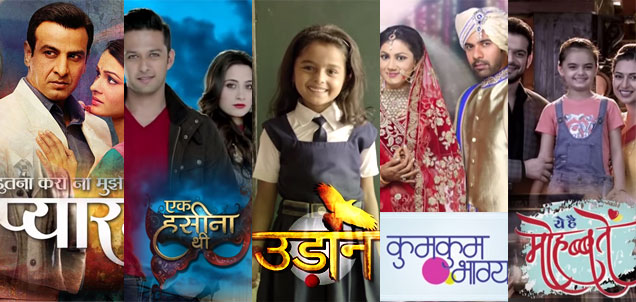
    5. Itna Karo Na Mujhe Pyaar

    In what was an otherwise forgettable year for Sony, the last quarter saw a mini-revival with the launch of Balaji Telefilms’ Itna Ka Karo Mujhe Pyaar. Mounted of familiar principles as Bade Achhe Lagte Hain (mature love story with a strong starcast), the show has emerged as one of the more ‘sticky’ show on primetime television today, albeit on a small audience base. Itna… looks very “written”, but its squeeze-the-emotion-out treatment and excellent use of obscure Bollywood songs as the background score makes it stand out. Let’s see if it emerges as the pivot around which Sony makes a comeback in 2015.


    4. Ek Hasina Thi

    Star Plus moved out of its comfort zone to dwell into the grey zone of a revenge thriller dished out in a soap format. Ek Hasina Thi was loosely based on the hit series ‘Revenge’. Though the show had a short lifespan of about eight months, it managed to catch the young audience’s fancy very early in this period.


    3. Udaan

    Colors revisited its roots, with child protagonist programming centred around a social issue (bonded labour this time), with Udaan. The show built a strong viewer base on the back of the growing popularity of its lead protagonist Chakor, who entered the list of Top 5 popular fiction characters on television within three months of launch. Udaan was also the prime reason why Colors managed to stay ahead of Zee TV in the second half of 2014.


    2. Kumkum Bhagya

    Balaji’s Kumkum Bhagya had a slow start, but gathered momentum once the story of its lead pair (SritiJha and Shabbir Ahluwalia) came into the forefront. This love story has been aided by great chemistry between its leads, aided by some good writing and treatment. Zee TV’s fate in early 2015 will hinge a lot on Kumkum Bhagya’s ability to keep the magic going.


    1. Yeh Hai Mohabbatein

    Launched in December 2013, this 11pm show is a mature inter-caste love story between a single father and a woman who can never become a mother. As it turns out, the potential of Yeh Hai Mohabbatein was considerably underestimated. Within weeks, it had opened up the 11pm slot, rating more than several shows airing in the thick of the primetime. Once Star Plus gave it the additional 7.30pm slot, Yeh Hai Mohabbatein found new wings, sailing over everything else, with combined ratings of the two airings making it the top show on television today. But for Yeh Hai Mohabbatein, Star Plus’ leadership position in 2014 would have been under considerably more threat.


    Another Balaji show (third on this list), Yeh Hai Mohabbatein has emerged as the quintessential all-in-one programme, that has good casting, performances, social messaging, family values, comedy etc., all rolled into it. But at the heart of it is a story of two cultures (Punjabi & Tamil in this case), a subject that would find increasing resonance with viewers in 2015-16, in both cinema and television.


  • Ranjona Banerji: Should editors learn to handle owners, managers & staff?

    By Ranjona Banerji


    Rahul Pandita quits The Hindu as editor of the Op Ed page. And this time, unlike the exits from the venerable and respected newspaper in 2013, it is not because of pressure to do with political leanings and support or lack of for Narendra Modi. Instead, it is to do with real journalism stuff: the interference of owner-editors into the newsroom process. Here’s the letter: http://www.twitlonger.com/show/n_1sjlbdp


    The Kasturi family’s relationship with each other and with the newspaper is on its way to becoming a liability for such a venerable journal and here’s another unfortunate step along the way.


    On reading the letter, you might argue that Pandita should have been made of sterner stuff. That this is what senior journalists have to learn to cope with if they want the top jobs. That the challenges of running a newsroom include handling owners, managers and staff.


    You might and you would be right up to a point.


    Because you could also argue that editors should not have to tolerate constant interference. That editors and senior journalists should be allowed to do their jobs like the professionals they are. That if owners do not want professionals they should not hire them. Because it is this sort of interference that leads to a newspapers or journal losing value in the long run. How many editors and senior journalists do we all know that have turned into management lackeys because they didn’t have the courage to stand up for themselves?


    I am unable to comment on news television here because it appears to march to a very different drummer – in India at the moment at least.


    But in print, the over-interference of the owner/ manager has been disastrous. In the last newsroom I was part of, this was a daily affair and we had not one but two owners often with contradictory needs and demands. We also had an official plant with limited journalistic skills and experience who worked as a spy for one owner. I realised soon after joining that this was the way new journalism would function in India until editors took a stand.


    Many of us quit but I am uncertain how many of us took the sort of stand that Pandita has. Perhaps we felt there was no point. Perhaps we thought about the next job. Perhaps we thought simply about the pressures of making a living. Or perhaps we knew that owners who didn’t value professional skill while we were working there were not that interested in our opinion after we quit.


    If we’re lucky and you believe in symbolism then Pandita’s courage will be the stepping stone for the next year, where journalists will speak up for themselves and what they will and will not do.


    I am making an example of this resignation letter only because it delineates so many problems editors face but often do nothing about. Except fester… or drink it off… or take it out on family and friends. You take the job because you are addicted to challenge and pressure but this is the sort of pressure you can do without.


    **


    For the rest, what will 2015 bring us?


    More of the same I would imagine except that over time, the pro-government media lobby will shrink.


    That we will forget almost everything we did in 2014 and keep repeating it in 2015.


    And this one I am sure of: No more yearenders and forecasts after next week.


    Phew.