Category: COLUMNS

  • Shailesh Kapoor: In Support of an All-Vegetarian MasterChef India

    By Shailesh Kapoor


    The contempt our social media elite have towards mass Indian television is well-known. Barring an odd Bade Achhe LagteHain, all fiction content on Hindi GECs (and most non-fiction too) is frowned upon by the upper echelons of Twitter. Even then, I was surprised by the attention MasterChef India going vegetarian in their latest season received over the last week.


    MasterChef India has never got media attention in the past. But earlier this week, a story in The Economic Times suggested that the show going vegetarian this season could have much to do with one of its two principal sponsors – Amul and Fortune (The Adani Group).


    Anyone who knows how Indian television works would laugh that conspiracy theory off. MasterChef India is not an ‘advertiser-funded programme’, where the creative control is shared between the channel and the advertiser.


    Twitter picked up the news, and soon, it was the hot topic of discussion, with a largely negative sentiment surrounding it. Not that Star Plus would be bothered. They would know that those commenting are not the target audience, and more importantly, they have little understanding of the real target audience.


    When we see the decision of turning the show vegetarian from the viewership lens, it makes perfect sense. I must clarify that I’m as non-vegetarian as one can get, and would have personally liked to see a non-vegetarian-only MasterChef. But TV shows are not made for individuals, are they?


    If you’ve been brought up in a progressive, cosmopolitan environment, it would be impossible for you to understand the issue at hand. That would have been the case with me as well. But over the last five years, we have conducted extensive research on food and lifestyle television. The disgust that the sight of meat can generate in certain audiences (and by “certain”, I mean 30-40%) has to be seen to be believed. We have had live examples of upper middle class housewives instinctively turning their faces away from the screen when something as basic as a bowl of chicken pieces is shown. We’ve seen this happen across India, city after city.


    I know there are studies that suggest that the consumption of non-vegetarian food is increasing in India. But there are many caveats on how to read that data. A lot of this consumption is infrequent, once in a fortnight, for example. Also, a lot of it is ‘out of home’. When we talk Hindi GEC, we are talking of ‘family viewing at home during dinner time’. All three parts of that phrase (family, at home, dinner time) support a vegetarian idea.


    In MasterChef Australia, meat is called ‘protein’ and if you fillet a fish well, you are ‘respecting’ it. In an episode a couple of seasons ago, a trout was called ‘lucky’ because it was going to be cooked on the show. In the latest season, when there was a vegetarian challenge, where all ‘protein’ was removed from the pantry, half the contestants cooked Indian!


    It’s easy to argue that Indian television channels should be ‘progressive’ and help India’s outlook evolve towards a more global one. I would totally support that point when it comes to issues related to woman empowerment, education, health, gender equality, sexuality, racism and the likes. But maybe we can leave food out of this? It has no social impact whatsoever. And there is a deep, religious aspect to this all, which should not be questioned in all fairness.


    Like always, the choice of viewing or not viewing is with the one who controls the remote. I think we may do well to respect the viewer before respecting the ingredients.

     

  • Ranjona Banerji: How Times & Bachi Karkaria gave in to the God of 140 characters!

    By Ranjona Banerji


    This column has to be dedicated to the power of Twitter. Or, as Bachi Karkaria, well-known journalist, columnist and noted punster would put it, “extraneous noise”.


    The Times Literary Carnival invited Tarun Tejpal as a panellist on the subject of the “Tyranny of power” in the first week of December. Manu Joseph, journalist, was to be the moderator, with journalist, editor, writer and now scriptwriter Basharat Peer and politician Mani Shankar Aiyar as the other participants.


    Is there anyone here who has forgotten the Tejpal story from last November? The apology letter from the founder-editor-owner of Tehelka, the “recusing” of himself from the job and the “penance of laceration”, the determination of the young colleague to expose his assault on her, the escalation of events from an admission of sexual harassment (hence the penance blah blah), the private mails made public, the police action on a rape case, the filing of charges?


    It did not stop there either. Tejpal evaded arrest, was taken dramatically to Goa and put in jail. Once the lawyers entered the picture, the apology mails were retracted and his accuser was blamed for, well, the usual defence in such cases, asking for it. Collateral damage in all this was the reputation of Tehelka’s managing editor Shoma Chaudhury and Tehelka itself. Certainly one of Indian journalism’s most sordid scandals, except that we have such short memory spans.


    Not that it ended there of course. Once Tejpal’s defence was settled on “the victim asked for it” or “why was she in a short dress” or “why did she get into a lift with me”, some attempt at rehabilitation was in order. It began with articles on video footage of the corridor outside the lift where the assault happened. Reams of high flown text on the corridor in defence of Tejpal from Manu Joseph, yes indeed, the man picked as the moderator.


    It was apparently Swapan Dasgupta, columnist and good friend and defender of the BJP, who first set Twitter off by pulling out publicly from the “carnival”. The outrage and protests grew on social media. Some people felt that the principles of free speech and presumption of innocence could be applied to the decision to invite Tejpal. Others felt this was just a way to rehabilitate him as a public figure and public “thinker”. And the overwhelming feeling was one of anger that such an attempt was being made at all.


    The problem with the presumption of innocence argument is that Tejpal himself apologised, publicly and privately before the matter became a police case. This was not a forced police confession to be retracted in front of a magistrate pleading torture or coercion or seen as inadmissible in law. Add to that the largely unaddressed issue of sexual harassment in media offices – for all our posturing and pointing fingers at other industries – and the problem is magnified.


    One assumes therefore that the Times Literary Carnival knew what it was doing when it invited Tejpal as a panellist. And yet it found itself unable to come up with an adequate defence against the anger on Twitter. So Bachi Karkaria, organiser of the literary festival, announced on Twitter that Tejpal had been asked not to attend because the festival did not want “extraneous noise”.


    I have discussed the notion of extraneous noise in a piece for the opinion website, DailyO, and will not repeat that here. Instead, let us salute extraneous noise and the power of public opinion on social media, which can make a behemoth notice a pesky ant and change direction. Not a retraction, not a “recusal”, not a “penance that lacerates” but at the very least, a shift in “adamantine resolve”.


    The God of 140 characters, I salute you!


  • Ranjona Banerji: Journalists get it right while TV News muddles it up

    By Ranjona Banerji


    The International Committee for the Red Cross and the Press Institute of India held their annual media awards in New Delhi this week. I was honoured to be part of the jury, together with Pamela Philipose and Sreekumar Varma. The usual focus is humanitarian journalism but this year the theme was “Reporting on the fate of the victims of armed violence”. A Best Photographer Award was also added this year to the best reporter award.


    Reading through the entries was a heart-warming experience not just because of the stories of the victims but also because of the tremendous effort put in by the journalists concerned. These were stories which required commitment from editors and the management if they are to be even remotely successful. There is a lesson somewhere here for the mainstream print media. The only two major newspapers which featured on the winning list are the Telegraph for Sumir Karmakar’s piece on the terror victims of Karbi Anlong and Manob Chowdhury’s photographs in the Hindu on landmine victims in Jharkhand. The other winners were Sohini Chattopadhyaya on Rohingya Muslims living in camps for Open magazine, Lakshmi Subramanian’s report on Tamils in Sri Lanka for The Week, Parvez Majeed’s feature on civil service aspirants and young IAS officers in Jammu & Kashmir for Sahara and Pattabi Raman’s photofeature on Tamils in Sri Lanka for Fountain Ink.


    India’s major newspapers and magazines hardly featured in the entries. Most were from local newspapers. This is a matter of great shame. It is remarkable and encouraging that there are media houses which are willing to invest in good stories and in newsgathering but it is much worse that there are so many which are not. We are destroying our own future by concentrating on the short term, on the here and now, on personality politics and on a circus in which we are not just instigators but also stakeholders.


    More on the event here:

    ‘This year’s PII-ICRC media awards winners have raised the bar’


    **


    I spent half of Thursday in transit. So when I got to a television in the evening, I was very keen to know what the Supreme Court had said about the BCCI and N Srinivasan. What a colossal mistake!


    Because television news as we know is not about the news at all but about the reactions after the news. And if you do not know what the news itself is, well, too bad. So Times Now was having hysterics while the images were of Srinivasan entering his house and refusing to comment. After I watched this footage of Srnivasan entering his house and refusing to comment at least 15 times, I finally understood it. N Srinivasan had entered his house and refused to comment. That there were some nice potted plants and sculptures outside Srinivasan’s front door is the most that I gleaned from that footage. Then Times Now decided to show and reshow and reshow some interview with Srinivasan from 2013. This is a particular absurd TV tactic. They won’t give you details of the news as it happened three hours ago. But they’ll play some dumb tape from one year ago especially if it features their star anchor or editor or whatever.


    So on to the other channels. The anchor on CNN-IBN was having an apoplectic fit that Srinivasan had not been sent to the gallows yet, IPL had not been banned, Chennai SuperKings was not disbanded, MS Dhoni was not weeping in the studio corner. None of the guests could console the anchor.


    NewsX was also angry and ran plenty of hashtags like “#BCCIstripped”, but of course, no details of how and when. They ran the funniest interview with Justice Mudgul on whose report the Supreme Court has set much trust apparently. Mudgul would not answer any questions about the case which did not stop the reporter from asking the same question in 9000 different ways.


    NDTV had Shaina NC on and she was not talking about the BCCI and Srinivasan so I lost interest.


    And I still found out nothing. Did I say nasty things about newspapers somewhere in this piece? I take it back.


  • Shailesh Kapoor: The Phil Hughes Tragedy: A Deathblow To Cricket

    By Shailesh Kapoor


    Twenty-five-year-old Aussie batsman Phil Hughes passed away last morning, after battling for life for two days, since being hit by a bouncer in a first class game at Sydney. There was high chance that Hughes, who would have celebrated his 26th birthday this Sunday, would play in the first Test against India next week. Now, the Test itself is under question, as players come to terms with the loss.


    Even as family, friends and the cricketing community grieves, fans have also been left shaken. I’ve invested more than 30 years in this sport, though the interest has admittedly reduced over the last few years. I have seen Mike Gatting being hit on the nose by a Malcolm Marshall snorter, Sanjay Manjrekar have a bloody debut, Sachin Tendulkar fighting it out at Sialkot after a nose blow, Kris Srikanth’s forehead blow against Wasim Akram, and many others.


    In recent times, ace South African wicketkeeper Mark Boucher had a nasty eye injury on the field, forcing him to retire from cricket, and start a recovery process that’s still on after more than two years.


    There are many other instances, including former Indian opener Raman Lamba losing his life after being hit by a shot fielding at forward short leg in a game at Dhaka. Lamba was not wearing a helmet. But with Hughes’ incident, even that little learning can’t be taken.


    There are two ways for a fan to handle such an incident. You can either pass it off as a one-in-a-billion case, convincing yourself that you are unlikely to see any other tragedy of this scale in your lifetime again. Or you can watch each delivery in each future game with a sense of trepidation, hoping all goes well. The reality, at least for me, will lie somewhere between these two ends.


    There’s so much media talk around cricket of late. Sachin Tendulkar released his wonderfully sterile autobiography recently, and the Supreme Court is going all guns blazing to clean up the IPL. But the Hughes incident dwarfs everything else, in terms of its potential long-term impact on the game. I shudder to think what could happen if this freak, one-in-a-billion incident repeated itself within the next few months with another International cricketer.


    The media coverage around the incident has been reasonably mature, though I haven’t seen much in the Indian media that’s insightful analysis with an eye on the future. On social media, some new agencies and publications were under attack for posting pictures of the on-field incident. The pictures are not “gory”, and one could question if there was indeed a need to exercise censorship here, or is it by now a stereotypical response to pan the media for being “insensitive”, when a tragic incident happens. But that’s another debate, for another day.


    Helmet-makers will find some answers. ICC will find a few other. But a promising International cricketer has died at the age of 25. For me, cricket may never be the same again.


  • Ranjona Banerji: Sympathy for the ill-informed DD anchor?

    By Ranjona Banerji


    Last week, a video of a Doordarshan anchor at International Film Festival of India (IFFI) in Goa went viral. Let’s be clear. The girl was awful. She was babbling, did not know cinema, did not recognise important people, did not know how to look at the camera, got easily distracted, did not seem to realise she was on air, kept nodding at people who were off-camera, asked inane questions and was a total disaster.


    Unfortunately for her, her horrendous second appearance on national television was captured for posterity and seen by thousands on social media who may not have otherwise watched Doordarshan. She was also the subject of the sort of vicious remarks that social media excels in. People speculated about whether she was so happy because she had lost her virginity to her being stupid, crazy, dumb and so on.


    The girl is apparently “traumatised” by the attacks:

    http://www.telegraphindia.com/1141129/jsp/nation/story_19102425.jsp#.VHlBlP9yrk1.twitter


    Let’s assume she has no future in television after this debacle.


    But let us also spare a thought for the training that goes into being on television. Or lack of it, as in this case. The head of Doordarshan’s Mumbai office (responsible for the coverage) says her mike was not working. But this technical issue was the least of her problems. She clearly had done no homework and did not know what she was talking about. So what was she doing on air in the first place? We all understand how shallow we are but surely, surely, a few more skills are required in this job than a pretty face? Was there no one more experienced on DD’s payroll or phone books?


    Once it was obvious just how she couldn’t cope, why didn’t DD take her off air? They’ve done enough disastrous switches in the past – my own most traumatic was switching to news at the end of a Wimbledon final in the late 1970s – to know how it can be done. One of those “Rukavat ke liye khed hai” (we are sorry for the break) messages that were once a staple on DD? No? Then how about someone with half a brain using at least a quarter of it?


    And finally, the cruelty on social media is a given. But it is also true that those who can dish it out can rarely take it. Lesson for us all in there somewhere.


    **


    Two girls are groped in a bus (Rohtak, Haryana). They decide to fight back and thrash the men involved. The passengers watch the fun. The bus driver and conductor do nothing. One girl is thrown off the bus. Usual national and television outrage after.


    However, why do news channels make this a political issue? And am I really asking this question? Some problems are social issues and the treatment of women is one of them. No matter which political dispensation is in power, misogyny and patriarchy squeak through. Why not speak to social activists, to the cheerleaders of patriarchy, to the families of the men who groped these women and leave politicians out of it? Most serious conversations get diverted into that ridiculous you did this, you did that game and the issue is forgotten.


    Sorry. I have to end here. I’m going to look for a brick wall.


  • Ranjona Banerji: Chutney journalism on news telly?

    By Ranjona Banerji


    There is a little mystery surrounding the sisters from Rohtak, Haryana, who were filmed beating up some men who allegedly molested them on a bus. Another video has emerged of them doing the same thing elsewhere. Who knows, either they are women who have had enough and will not put up with male superiority or they are serial thrashers of men in public places. The mind boggles at the second. Does one applaud or condemn?


    However, that’s the subject of another debate. First, let’s get past the media which brought them to our attention. The women were immediately dubbed “bravehearts” on TV. This term is now used for everything from a soldier killed in the line of duty or above and beyond the call of duty and any civilian who stands up to someone else in everyday life. One can only assume that some fan of Mel Gibson or perhaps William Wallace first used the term. Actually on second thoughts, strike the William Wallace reference. What are the odds anyone today has heard of him. The movie too came out in 1995 when most of today’s editors were in nappies being fed pap by their mummies and ayahs.


    At any rate, the term “braveheart” has been rendered meaningless by overuse. Then we have the first video itself. It ran endlessly on TV, the women were interviewed, primetime debates were held but was any journalistic due diligence used at all? Did anyone find out about the provenance of the video, the background of the story, speak to witnesses or undertake any journalistic work of any kind? Or was the video taken at face value and presented to the world as is? Of course that’s what happened: Because it was in newspapers that a larger story emerged.


    TV, as we have all had drummed into us by now, operates on a different spectrum. It is a hungry, demanding master which wants to be fed constantly and instantly. Time is a luxury TV does not have because, ironically, it is ruled by a 24-hour news cycle. But philosophical truisms apart, what does this make of the basics of journalism? As we can see, in plain Indian terminology, a fine chutney.


    **


    If you missed this when it was aired, then you have denied yourself a barrel full of laughs. This edition of Left, Right and Centre on NDTV is a must-watch because of Trinamool Congress spokesperson and MP Derek O’Brien. He defends Bengal chief minister Mamata Banerjee, attacks the media particularly the Ananda Bazaar Patrika Group and provides some real gems like: “Naveen Patnaik is Naveen Patnaik, Tarun Gogoi is Tarun Gogoi and Mamata Banerjee is Mamata Banerjee.”


    Indeed.


    At the end of it all, the other participants and the anchor Nidhi Razdan have no option but to laugh. This is not a spoof by the way.


    http://www.ndtv.com/video/player/left-right-centre/mamata-vs-bjp-is-the-trinamool-chief-nervous/346936


    **


    The idea of a “reader’s editor” or an ombudsman has not been taken too kindly or seriously by most Indian media houses. The only consistent exception has been The Hindu. In this excellent piece for The Hoot, Sumana Ramanan, who was reader’s editor with The Hindustan Times in Mumbai, discusses her experience:

    http://thehoot.org/web/home/story.php?storyid=7928&mod=1&pg=&sectionId=19&valid=true


  • Shailesh Kapoor: GECs’ Latest Challenge: The Urban Itch

    By Shailesh Kapoor


    As the year draws to an end, it’s increasingly clear that 2014 shall definitely not be remembered for being the year of content innovation on Indian television. In fact, as it turns out, it would perhaps be remembered as a year when status quo was given only a feeble challenge by new ideas, with little success. At the end of the year, most top shows on television are launches from 2010-13, barring an odd Udaan or Kumkum Bhagya, 2014 launches that walked the road traveled before.


    In the second half of the year, a certain pattern emerges if you study the new Hindi GEC launches. There seems a conscious attempt to go urban (read cosmopolitan), and connect with a more evolved and exposed mindset. This is evident across several shows launched over the last four months. (I’m choosing to not take show names as examples, as the point being made is a collective one.)


    Most recent launches have a liberal sprinkling of the English language, a dominant presence of women professionals and out-of-home situations, and an overall cosmopolitan ambience, in terms of styling, production and treatment. More importantly, the issues being tackled are urban in their relevance, with a resonance only in the upper echelons of our vast country.


    I have been watching these shows unfold on air over the last quarter. Most of them have performed average to below average on ratings. Covering topics like estranged familial relationships, divorces, extra-marital affairs and the likes, the conflicts in these shows are based on premises that are essentially against the core of the much-revered Indian culture (read “sanskaar”).


    Much as one would hope that such shows work, so that variety of themes can prosper, it’s a well-established marketing rule that relevance should be non-negotiable for a product to succeed. I know that most channels and even producers are well aware of this. After all, ratings have made everyone “research savvy” in one way or the other.


    Yet, we see concepts being written and treated in ways that lack resonance. Many young television writers believe that it’s their duty (and opportunity) to change Indian television. So far, so good. But their idea of what constitutes a positive, relevant “change” seems misplaced in a half-baked understanding of the target audience.


    That the channels actually end up endorsing such writing and production is our television industry’s version of marketing myopia, where consumer needs take a backseat to a mindset of product innovation and growth.


    There is an inherent manufacturer’s bias also at play here. We are humans after all, and if we like watching content of a certain type, we would want to make more of it. And because we essentially interact with more people like ourselves in our day-to-day lives, they also like similar content and the bias keeps getting reinforced by the day.


    In its truest sense, innovation is always customer-centric, where the idea keeps the user of the product (the viewer in our case) at its heart. Many may argue that the last year or so has been the year of innovation and failures, and that’s not always a bad thing. But I’d rather call it a year when the urban itch came to the fore. Real innovation is still being awaited, barring Satyamev Jayate.


  • Shailesh Kapoor: DDLJ: A Thousand Weeks, A Million Memories

    By Shailesh Kapoor


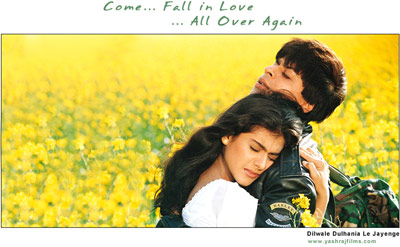
    There’s little that can be written about Dilwale Dulhania Le Jayenge (DDLJ) by the way of facts, that’s not commonly known or easily found. This month, the 1995 film completes 1,000 weeks at the box office, holding forte in the morning show at Mumbai’s Maratha Mandir for almost two decades now.


    DDLJ is the original NRI romance, of which we saw many versions for almost 15 years, till the overseas market saturated and Salman Khan changed the rules with his brand of homemade cinema with the likes of Wanted and Dabangg. Over years, DDLJ has influenced many directors, writers and actors, in both films and television. Earlier this year, Varun Dhawan and Alia Bhatt starred in a semi-spoof-semi-modernised version, called Humpty Sharma Ki Dulhania.


    But nothing, it’s now well understood, would ever come close to the original. If any Indian filmmaker, however big a stalwart, wants to make the greatest love story of Indian cinema, he would know his benchmark is set incredibly high.
     

    I have lost count of how many times I have revisited the film, in whole and in parts. But I distinctly remember half a dozen visits to the theatre in October-December of 1995, many of them to the infamous Uphaar cinema in Delhi, which was a short ride away from the IIT campus.


    Even in those days, when film marketing was not an assault being unleashed on us through a mix of media, DDLJ had become an event film leading upto its release. I don’t remember what exactly would have led to it, but it just seemed the right follow-up film to the immensely popular family film Hum Aapke Hain Koun..! (HAHK), which had released more than a year earlier but was still running strong in the theatres in late 1995.


    The second half of DDLJ was HAHK-like in many ways, in that it evoked the same family values and emotions that HAHK managed to. There was always a split verdict on which half was better, and over the years, the first half may have won that debate. But I firmly believe that it is the second half that brought the families to DDLJ, and created repeat value.


    DDLJ was re-released in 2005 on the completion of 500 weeks. Watching it in a half-filled multiplex was an odd experience, after many packed-house screenings a decade back. I’m not sure if classics should be re-released at all. It takes away from the house-fullness of it all, if there were a term like that.


    Sometime in 2011, I was at Mannat, waiting for SRK, who was running late for our meeting. It was Sunday night 9pm and Max started airing DDLJ. Watching the film for about two hours at SRK’s home is as surreal as it can get. If ever there was any element of ‘star-struck’ in me, I saw the last of it that night!


  • Sanjeev Kotnala: Letter from a Consumer to a Marketer: I am Promiscuous because you are a Flirt

    By Sanjeev Kotnala


    Dear Marketer,

    We have seen a lot many good days but it is becoming intolerable. You keep on playing tricks that no longer amuse, engage or involve me. The pressure of one-dimensional unilateral expectations you have is chocking me. In our society of MAC: Market, advertisers and communicators, the relationship between you, the marketer/ Brand and I the consumer/ customer has been evolving dynamically. Some say it has been deteriorating with time. How you look at depends what your stance is.


    I enjoyed the attention that you showered in past. That was the time you were curious. There was no cloud over your child-like innocence and passion. You were your own without Big Data guiding you. There was some magic.


    Now, I am surprised when you sit down and think about me, you forget your own experiences. You no longer see things rom my point of view.  Under pressure from Revenue, your devilish mind continuously tries to think of strategies, the next upgraded with newly revised lure to the consumer. For that you tend to intrude into my privacy. And the rouge you are, you do that under disguise of selective permission and notification from my side. Remember going for a movie and sitting on the corner seat is no invitation to things that are in your mind.


    I am wary of you. Many times, you have put me in awkward situations. You have lost the respect I had. You do not have a new trick/ thought/ emotion to interest me. Like an amateur magician, your tricks no longer amuse me. I am selective when I think of my future and it shows in our strained relationship.


    I am neither a moron nor your wife, what if Uncle Ogilvy thought so. You never wanted me as a girlfriend but always wanted me to commit and be your wife. Should the same rules not apply to you? Why should marketers have all the fun?


    Earlier, you showered me with lovely presents. Loyalty points, home delivery, extended warranty, CRM, Customer service enhancement, free upgrades and much more. As usual, you were late. The question of loyalty was dead and buried. I want the same freedom you enjoy as a brand owner. Why do you think that the brand belongs to you only!


    Today in the Supreme Court of an informed marketplace, the brand wants to side with me, it wants me to cuddle, shape and show him the future.  How does it feel when you no longer control the thing most dear to you?


    You have forgotten your own rules ‘nothing can be taken for granted’. I am not only promiscuous but I like this feeling of being empowered by my new powers and I do not hide them.


    Do you think there is any place for Loyalty in in our world of ‘free open marriage’ that thrilled you? It took you so long to understand my ploybrandous behaviour. The earlier you understand it, the better it would be for you. It is you, who repeatedly broke our unwritten code of engagement. Yet, you seek the mirage called loyalty from me.


    I am tired of calling you and listening to your mechanised bitch of a secretary: the IVR system. She has been working too much with your CRM but is no good. All she knows is numeric options and a mechanised brutal tone: ‘your call is important to us, please be on line…. Brand jingle… repeat.’ or ‘sorry we have not received a valid input’.  Do you think I give a F***.


    I always gave you another chance but you refused to learn. When I asked a simple question ‘is my data /details/ identity safe with you’ all I get is ‘your reference number 435673896 has been recorded and been forwarded to the concerned department. Someone will shortly revert to you in next 48 hours’. You know, it does not amuse me any longer. Come on, you take more time to come than even the old telephone ever did. This public forum stops me from using the language I would want to. You introduced and educated me about engagement and involvement.  Open society and social media. With friends like them, it is natural for you to forget that engagement happens in a running alive relationship.


    Now, do not beg me for another chance. I want to see a change in you.


    Bye, until you earn the lost trust


    I will be sharing more as I realized that ‘KISS AND TELL SELLS’


    No longer only yours,


    Consumer


    Sanjeev Kotnala is Head Catalyst at INTRADIA and believes that the best way forward for an Organization is to enhance the potential of  internal teams instead of depending on external resources. He is a management- marketing-media consultant and also conducts specialised workshops in the area of ‘Harvesting and LiberatingIdeas’ and Innovation.  To contact email netkot@yahoo.com or tweet at s_kotnala visit www.intradia.in  www.sanjeevkotnala.com


  • Sanjeev Kotnala: LESSONS WASTED: You need to protect yourself

    By Sanjeev Kotnala


    Uber Rape is the name social media has given to the unfortunate event in Delhi. As expected, the verdict was out much before the culprit was apprehended. The discussions and debates as usual will continue for some time. The questions raised are important, but soon, we would get back to our routine. We will forget the lessons learnt until the next incident. Then once again the collective conscience will demonstrate another blip. We would believe we have done our part of the duty. We will demonstrate adaptability and flexibility by accepting the state we live in.


    Banning Uber and all app-based taxi services is a perfect example of kneejerk reaction from the powers-that-be. It had to show some action. I am surprised no one asked for the resignation of some minister. We will have to wait to see, how soon it be erased from the collective memory of the citizen, the government, the brands and the consumers?


    If one was to believe the government, then Uber and other app-based taxi services are unsafe ONLY in Delhi. ONLY Delhi police is at fault for providing an unfair character certificate. ONLY the car-owners in Delhi hiring such drivers are at fault. Life in the rest of the country goes on.


    The underpaid and overworked policemen along with the Uber management have taken the easy way out. Someone else is paying the price for it. They have flouted the processes designed to deliver on the ‘unsaid promise of Safety’. Uber must be prosecuted for this.


    Trust is one thing and allowing rampant process failure another. The consumer banks upon the brand that they trust to be diligent in their processes. However, loopholes exist and we remain culpable to repeated offence. Uber and the Delhi police or the car-owners are not the only one exploiting the system or taking the easy way out. Hence, what is needed is a system overhaul.


    Maybe it’s time that the police team that gave the wrong certificate, the car owner who was not diligent in seeking proper documentation be tried as accomplice/ abetting rape. So should we all, who do not respect law. We hardly find it necessary to get police verification for our household help (drivers included). We pride ourselves in bribing to get certificates. Yet, we find someone else doing so wrong!


    We repeatedly elect politicians known to be corrupt. Educated senior employees indulge in sexual exploitation with no fear. People known to the victim commit most rapes and sexual misconduct. Yet, what we do is accept and adapt.


    We live in a jungle raj. No one can deny that. The government has repeatedly demonstrated its impotence in controlling such acts. The laws are not stringent enough. The police-government-friends-families and all around are insensitive and just voyeuristic b*****ds. They speak politically correct language. They all remain immune because they believe it will never happen to them.


    Even if you disagree in current state of affairs, the onus of safe conduct for women and other people rests entirely on them as an individual and partially on us as part of the society that allows it to continuously torment us. Risking being called prudish and unprogressive, I share what I ask every female acquaintance to follow. These no way are foolproof. Following them is no guarantee of safety. These can act as a deterrent.


    1. This country is not safe. DO NOT take a cab or any public transport service alone at night.
    2. The males of this country cannot be trusted. DO NOT get outnumbered in male company in evening parties and events. Seek the safety in numbers.
    3. The people around you cannot be trusted. Enjoy life. Learn that enjoying does not necessarily mean drinking. DO NOT drink more than you can handle.
    4. ALWAYS get a male to drop you. If there is no male, then leave in company of other female friends.
    5. Use the technology; ALWAYS share the CAB NUMBER PLATE and the MUG SHOT of the driver on WHATSAPP before starting the journey.
    6. During the journey, ALWAYS remain in touch with someone trustworthy. Talk to them. Repeat the CAB INFORMATION.
    7. Do not hesitate. ALWAYS carry the SPRAY. Hold it in your hand, so that you do not have to search for it in case the need arises. Use if at slightest provocation. This country can leave with coughing irritated males.
    8. Know your city. Know your routes. Know the people you are with. NEVER ask/ seek help from unknown people.
    9. NEVER get out of the crowded part of the city.
    10. ALWAYS keep the windows of the hired vehicle open.
    11. If you are driving by yourself, NEVER stop until you reach your destination.
    12. People will take care of themselves. DO NOT stop to help anyone if you are driving alone.
    13. Do take a course on self-defence.


    Meanwhile pray that no such incidents happen. It seems only God can save women in this country.


  • Sanjeev Kotnala: INMA South Asia Conference: The House of Inertia

    By Sanjeev Kotnala


    The INMA South Asia Conference went through the rituals on November 12 and 13 with total dedication. It was a somewhat smaller gathering from the earlier editions. The networking break was redefining with 50 percent delegates either representing sponsors or The Times of India group. The opening address, macro-data session and panel discussions were monotonous set pieces with little variation. The expected hedging of opinions and futuristic statements were ruthlessly displayed. The lack of transparent nakedness and trust amongst industry stalwarts was as loud as a Salman Khan movie.


    The lack of second level of leadership was apparent. The same set of faces stared at you from the dais, making statements that have refused to move forward in time. This is not the way to address or seek new ideas.


    “Next year, we will celebrate the silver jubilee of the cover price discussion” was a relevant comment from a senior industryperson. This was immediately after CEO panel with the theme ‘Options to Grow Newspaper Revenues Beyond Advertising’ moderated by DD Purkayastha with Sanjay Gupta, Rajiv Verma, Pawan Agarwal and Rajiv C Lochan as speakers. With due respect, other than Lochan (possibly, because he is new in the game), all were diplomatic in their speaking if not thinking. Cover price, content justification, advertorial, news plants and events were briefly celebrated in discussions. Unfortunately, no one referred to low cover price as the strategic entry barrier, which it is. The internal mistrust among titles remained unaddressed.


    Rewind to 2011 or 2012, I may have got the year wrong but the panel was same with few changes. The cover price issue was raised then and Sanjay Gupta said: “If 7 people on this dias decide to change the cover price, it can happen tomoorow – but we will always be with a  shadow of doubt – debating who will be the first to blink.” And that is the ugly truth we don’t want to accept.


    For the umpteenth time, INMA CEO Earl Wilkinson tried to showcase an urgent need to evolve to Print+Digital, the new way of approaching content and the business. His presentation with a powerfully passionate delivery ‘A Window to the World: Media Worldwide And Its Relevance to South Asia’ seeemed a rehash of the same idea with newer support examples. He presented  relevant examples demonstrating the media companies adaptation/ exploitation/ defending/ amplifying the use of new realities of a multi-platform brand.


    However, if you looked at this year’s INMA South Asia Conference with an open mind strongly searching for positives, the picture could be different.


    One of the highlights was Santosh Desai’s presentation titled ‘Changing Consumer Behaviour: An Expert’s Opinion’. It brought alive the unspoken imperatives for the newspaper business, leaving the audience to complete the imperatives-cause-result loop in their mind. A nice move.


    The panel discussion ‘Search engine/aggregator: Friend or foe?’ led by a well-prepared Paritosh Joshi with strong speakers Ashwani Kumar, Punitha Arumguam and Anant Rangaswami was interesting. They spurred with thoughts with brutal honesty. Though it remained inconclusive, the content and digitisation aggregator roles were dissected for their impact across the business. Though one missed participation from a content businessperson from the Search Engine in the discussion.


    It pained to see a totally relevant subject ‘UnMetro your mind- Emerging India Opportunities in Markets Beyond the Metros’ plugged by Dainik Bhaskar with smart AV fizzling out in discussions. The context was aptly created by Kaacon Sethi in her inimitable style but could not sustain it in discussions with Lloyd Mathias and Sanjay Tripathy.  The whole spectrum of possibility remained in sepia tones.


    The editorial session ‘How is Newsmedia Driving Change?’ boomed with sharp observations and comments by Harivansh in the panel moderated by Nicholas Dawes. He did plug Prabhat Khabar but he was one of the best. The so-called Integrated Newsroom, a buzz of 2011, is yet to become a reality in this zone as we continue to grapple with changing realities. There was unanamity in the panel on need for social-level enagement with readers and the newspapers do need to involve themselves in ground-changing programmes.


    It was interesting to watch Dawes correctly deciphering comments by Harivansh (in Hindi) without much knowledge of the language. INMA could have got an immediate translation of done of his comments and projected on screen to help not only the moderator but also the delegates not conversant with Hindi.


    The HR session ‘Media Companies Need To Attract Robust Talent from Different Industries’ moderated by  Arunabh Das Sharma with Rekha Jacob Koshy, Vibha Paul Rishi and  Nina Chatrath had some good news: the employability for media employees with other industries exist. It however skirted the issue of internal training versus bringing in people from other industries in various and mostly senior positions. Trust me, this issue of enhancing the internal team potential is something the industry needs to address fast.


    As an afterthought, I wish INMA team could have whetted the presentations. Hate to see presenters skipping slides saying ‘As we do not have time I will skip’.  With due respect, I suspect they were ill-prepared. Either they were unaware of the time allotted or were serving a canned presentation.  A 60-minute slot extending to 90 minutes is as bsad as a panel opening for discussion with 15 minutes remaining!. Both happened at INMA. The radio Session on Day 2 would really be the top contendor for waste of time with ample pitching and plugging.


    One question that remains unanswered and is equally relevant to INMA and the delegates: If one had attended the 2011, 2012 or 2013 conference and missed the 2014 edition, would he or she miss out on anything substantially important? I don’t really have an answer.


    ……………………………

    Observations include sessions till Lunch on day II.

    ……………………………..

    Sanjeev Kotnala is Head Catalyst at INTRADIA and believes that the best way forward for an Organization is to enhance the potential of  internal teams instead of depending on external resources. He is a management consultant and  conducts specialised workshops in the area of  Liberating Ideas and Innovation.  To contact email netkot@yahoo.com or tweet at s_kotnala visit www.intradia.in  www.sanjeevkotnala.com


  • Sanjeev Kotnala: Will the average Indian dad be cool with his daughter taking off to Lonavala without intimating?

    By Sanjeev Kotnala


    It was late evening. The TV was on and I was using the ad breaks to make some calls, when out of the blue, my daughter asked me a simple question.


    Papa what would you have done?

    When?… I had no context to the subject.

    If I told you, I am going to my friend’s house for overnight study. Then, late at night, called to tell you that I was in Lonavala with friends.

    Preetica, what is this? I know, beta, you will never do that… (A doubt crept in) will you… but why would you do that … I was now getting worried not knowing where it was leading

    No, think if I really did.


    Ok… Parenting instinct kicked in… I would ask you to hold where you were… take the address… comes over to pick you… However, I know you would never do this. Right? (There was a father seeking confirmation)


    What if, I said I was feeling guilty having lied and hence was calling you to inform.


    I do not think there would be a change in my reaction. If you have to do something behind my back without informing me, then there is no trust. Or, say, the trust is broken. And it would not be the right thing, otherwise why would you do that. Not to encourage you, (Tolerate would have been wrong word) I would come and pick you up.


    Papa, I love you.


    Suddenly the Kinley TVC came on. I saw the interaction between an ultra cool unworried father and daughter. I realised what made my daughter pose that question. The communication was not right.


    My wife joined the discussion and this time I head another take. Do you advertising guys (I am still seen as one) truly believe that a father in current times would be ok and tell her go to sleep. WHAT KIND OF A DAD IS HE? I just hope you do not react like this. Trust is one thing and this is rather a serious breach of trust. It cannot be overlooked. And because you have 20-30 seconds, there is no check – where are you, who are the friends, do we know them, can I have alternate number, when would you be back, don’t do this again! Now, do not give me the argument that not everything can be shown. Consumers need to complete it in their head. And did Manmohan Desai show Jai and Viru reloading their revolvers every tine?


    I then talked to as many people I could and realised that they find the situation and the talk dumb. As dumb as ‘Sachaai Har Boond Mein’.


    My wife was not finished with the subject and in the morning she fired another salvo. What is the kind of an industry you work in, it raises a debate when boss (wife) lovingly cooks for her husband but is silent when a daughter lies to her father. Or all such things are well-timed PR for the industry. Good, now people hardly believe and they laugh or switch off (mentally) during the break.


    I did not tell her this was by O&M and what Piyush Pandey had to say for it. May be  ‘Paani  ki har boond mein sachaai’ in sometime will be as strong as ‘Fevicol matlab mazboot jod’. I personally doubt it.


    May be (that is all there to say) the TG which consumes mineral water has a differentially moral values and culturally so open that such behaviour is common and justified. May be their dads are not a worried lot. May be they expect that sometime daughters lie. To them her calling and letting him know is a victory. It is not important that the daughter had not only lied and gone out of town. OVERNIGHT. The representation did imply that dad was not calling from Khandala but from a nearby town like Mumbai. No question, no creasing of forehead. Absolutely calm. Totally in control. A dad that definitely does not represent Bharat.


    I read Piyush defending ‘It was all about picking instances from real life with two possibilities. Avoiding unpleasant by lying or taking the courageous path of being honest and facing the situation. And honesty brings an inner strength to face the results’. No issue with this thought, it is a strong one and that helps the brand move a bit more positively forward with the theme, but the situation sucks.


    People from UnMetro that I spoke had a simple reaction. Sautela Baap hoga. Kaisa baap hai kuch bhi tension nahi.. Beti ne toh bhata diya. Boli neend nahi aa rahi thi. Aab woh soyegi aur yeh jagega poori raat. (Must be her step-father. What kind of a dad is he? No tension? Now that she has told him, she will sleep and he will be awake the whole night).


    My friend’s grandmother with her wrinkled toothless smile had the best take. Hota hai beta, is umar mein hota hai. Aab kya mohalla uthayega. Prathana kar theek-thak wapas aa jaye chhori. Ghar aayegi tab dekhlenge phir kaisey khabhi pair rakhti hai baahar. (These things happen in this age. Now will you wake up the mohalla. Just pray she comes back safe. And then we will she how she steps out of the house ever.) I completely understand her point of view.


    Then someone said she has gone to Lonavala not Khandala that the dad should be worried. I think this is the only place where Piyush and team is right, picking the right reference avoiding ‘Aati kya kandala’ links.


    ……………………………………………………………………………………..

    Sanjeev Kotnala is Head Catalyst at INTRADIA and believes that the best way forward for an Organization is to enhance the potential of  internal teams instead of depending on external resources. He is a management- marketing-media consultant and also conducts specialised workshops in the area of ‘Harvesting and LiberatingIdeas’ and Innovation.  To contact email netkot@yahoo.com or tweet at s_kotnala visit www.intradia.in  www.sanjeevkotnala.com


    Sanjeev Kotnala’s ‘KOTMARTIAL’ appears on Wednesday. It couldn’t be carried yesterday due to a tech hitch.