
Category: SANJEEV KOTNALA

  • Building Trust in Print


    By Sanjeev Kotnala


    Sanjeev KotnalaSanjeev Kotnala People at all ends, the readers, the advertisers and the stakeholder like employees and business associates, have time and again raised questions about the need, efficacy and effectiveness of print. The “traditional media”, as it’s called. So, whenever print does an engaging campaign, it starts answering a few of these questions and works on many levels.


    THE TRUST OF INDIA.

    The Times of India has time and again presented its readers, campaigns that have helped build the brand. The current  TOI Campaign is not based on any differentiated advantage, but the presentation is fresh. Taking the news/ scandals/ events issue, it broke on the national platform and followed it to the logical, final conclusion, presenting the case for TOI as #TheTrustOfIndia.


    The beauty of the campaign is not the choice of six to seven subjects. Any print media brand would have the luxury of such news to pick from. No doubt, the subjects are carefully chosen to cover a spectrum through subject of interest and time period. The headline or the body copy does engage.


    The brilliant choice is using the famous R K Laxman- the common man- a cartoon that goes with the advertisement copy. One that always said more than what it showed. It is a tough act to follow. To use minimalistic words and convey so much more. Moreover, the unique RK Laxman common man is something deeply associated with the brand to help make further helps the point.


    WORKS IN BEB SEGMENT.

    Such a well-crafted campaign engages the readers. More so, it reiterates the power of print as a media. It demonstrates what a well-crafted print advertisement can do. If it can work for the media brand, it would work for the other brands.


    TOI has done well not to go half-page on this campaign. In the process, making another point to would-be advertisers. Print ad to work; they need not be large-sized. Being big in idea and execution makes it equally potent. If you visit the site,  the trust of India, you can see the images of some of these stories in the pages of TOI.


    The brand also ask people to share the common man cartoon on social media and start a conversation on the subject. Well, I don’t know how many such conversations are really taking place- but in few of the WhatsApp groups I see people debating the campaign.


    HINDU too.

    Another print brand that has done brilliant long copy print ads is The Hindu. The ads make another point. If it is interesting and engaging, it will be read and talked about, even in this video led short attention span in the digital world of today.


    The Hindu has demonstrated it across subjects that people typically do not call to be interesting enough. Take any of the ads. Ads like, ‘Meet the dumbest creature on planet earth’. Or ‘All it took was a microscopic organism to make us more human’. Or ‘Hats off to your incredible courage, dear humans’. Or the ad on social distancing or mental health. All of them show how and what makes print ads- work, be engaging and interesting.


    I am not fully aware of the teams who have worked on these campaigns. But whosoever you are, you are doing great work. Just don’t let your client get complacent or lethargic. And trust , unfortunately is now influenced by multiple external factors.


    WILL OTHER PRINT BRANDS FOLLOW?

    I hope other print brands take a lesson from TOI and Hindu. Stop doing those insipid, uninteresting, non-engaging silly print ads invariably crafted and created in-house or from an agency that quoted the least retainership*. Such campaigns are also responsible for contributing towards the reader and advertiser increasing apathy to the media. Suppose a print media brand, which knows the product and the medium, cannot use the print media best. In that case, they have no reason to ask, suggest, recommend or guide any other brand on using print effectively.


    While I am at it. Dear Print Media houses, please do innovation at a just profit, not an astronomical cost that remains viable only for big brands. Let the golden goose of innovation- impact-relevance-originally create a buzz and bring focus to the print media.

    …………………….


    TRUST AND AUDIENCE AND THE REPORT.

    Two questions always get asked on such campaigns. One by restricting exposure in Print and trying to ignite conversation on social- are you limiting the audience? Are you only talking and trying to retain rather than enlarge the audience?


    And the second question, how come the brand feels the need to claim ‘TRUST’. The Print has always been the most trusted media.


    A 46-country survey by Reuters Institute for the Study of Journalism (RISJ) – released on 25th June 2021, listed TOI as the most trusted among major news media brands in India- with a trust score of 74%. The survey respondents were young, affluent, and among the urban population – and ONLY English media was considered. Maybe that is why the report could have initiated the campaign but does not find the mention in the campaign. Moreover, India has been ranked 31 out of the 46 countries. And as per the survey, only 38% of the respondents in India trust the news they consume. Perhaps, TOI saw this erosion of trust and an opportunity leading to this campaign. Your guess is as good as mine.


  • Sanjeev Kotnala: Brand. Movie. Magic

    Sanjeev KotnalaBy Sanjeev Kotnala


    Well, in addition to the real religion and regionalism, the three prominent religion equivalents in India are Cricket, Movies and Politics. Brands tend to exploit and leverage situations, topical events, and celebrity from them. Nothing else compares to the popularity and engagement than these three.


    Politics being somewhat out of bonds for obvious reason, brands use cricket and Bollywood celebrities for everything: selling a coaching institute, sandal, insurance, banking, car, deliveries, and anything else you may need. Nothing wrong in it.


    Cult movies and specific scenes and dialogues provide an opportunity for the brands to associate and leverage. Some of these have been used in the past very cleverly and successfully. Not necessarily clip merchandising, product placement or movie association.


    But taking the clue from the movie, redoing it, or repurposing it to suit the brand communication. In past ‘Gabbar ki asli pasand’ by Britannia Glucose D has used the character from Sholay and re-enacting the scene. Tetley Tea has used ‘Kitna Inam rakha hai Sarkar nai’. Here are two examples where brands have used the opportunity. Something that just clicks. Where the brands have done well to ensure that association is simple and strong. The audience do not just watch the clip or the restaged scene- but they remember the brand with its message.


    Dunzo uses ‘Tareekh Par Tareekh’  and Sunny Deol to great impact. The cult fitness studio uses DDLJ epic scene phenomenally well.


    I personally feel that Indian advertising has not really leveraged epic/iconic movie situations and moments in advertising films, whereas radio has leveraged or rather exploited every sound- dialogue and situation to no end. Do you remember some other iconic movie shots used in advertising films, do share?


  • Shouldn’t Media Brands be also Considered Influencers


    By Sanjeev Kotnala


    Sanjeev KotnalaAs part of the fraternity, I respect the Advertising Standards Council of India (ASCI) as an industry body trying to rein in the irritants indulging in misleading advertising. In the past, I had questioned AAAI and AdClub for inviting senior leadership of the Babajee Brand as speakers at Goafest. It was when Babajee and his team were blatantly flouting every ASCI guideline. At another time, I have called ASCI a toothless tiger that no one is afraid of. I have raised questions as well as appreciated influencer guidelines in digital when we have not been successful with the traditional media doing the needful. And questioned why celebrity endorsement should be an advertiser issue than an ASCI issue. And, my love-hate relationship with ASCI continues- as I know- if self-regulation fails, regulations will be imposed.


    Recently, I complained to ASCI about something that was a clear violation of ASCI guidelines. In one case, the verdict was in my favour. In two cases, the complaint was rejected or summarily dismissed. That’s ASCI way, and there is nothing wrong with it. However, it gave rise to some questions, which I plan to raise here.


    The aim is not to only find fault with ASCI. It has done a decent job of what it is expected to deliver on and continuously expands its scope. But, then, at times, there is an expectation-experience, promise-delivery gap.


    Some Advertisers Are More Equal Than Others?

    Recently, someone complained about advertisements by the government. And ASCI asked the person to better speak to the I&B ministry. As a policy, ASCI does not interfere with political and non-commercial advertisements by the government.


    In this nation of democratic and secular values, ASCI, an industry body, the watchdog of Indian advertising standards, binds itself with the mandate and policies constraints and ends up differentiating between advertisers.


    Quote from ASCI:

    ‘ASCI recommends that anyone who has complaints against any political advertisements should write to the Election Commission of India. And send complaints against non-commercial government-released TV advertisements to the Ministry of Information and Broadcasting, New Delhi, which is the regulator for TV content and for press advertisements to the Press Council of India, New Delhi, which is the regulator for print content.’


    Quote over.

    As per ASCI, ‘It is a “self-regulatory” body created by advertisers to keep a tab on advertising created by the commercial industry. That is ASCI’s mandate.

    In some countries, the government gives self-regulatory organisations a mandate to regulate governmental and political ads, but that is not the case in India.

    Now, we can continue to have this policy and use the mandate as an excuse or work towards changing with time.

    After all, such ads can influence the composition of a government. They are far more harmful than any other brand or service. Someone needs to re-evaluate. Hopefully, ASCI will take action.


    Media as a Responsible Influencer

    We all know that media is a big influencer. And when it comes to print that enjoys the highest trust- people still take the written (News) as gospel truth. Paper may chappa hai. It is printed in the newspaper. So, should the guidelines that impact and apply to digital influencers not apply to older traditional media with a potentially larger audience susceptible to its charm. More so, when a lot of misleading advertisements are being released as Advertorial- native advertising.


    Does ASCI have no role in the media prominently flagging such work as Advertorial? Remember, most readers may not differentiate between news – Advertorial- feature or impact feature.


    Does ASCI have no role in defining the size and placement of such a disclaimer?


    Can ASCI guidelines not prevent such disclaimers from being tucked at the end bottom in small point size? And should this not use the language of the newspaper? Otherwise, it should be acceptable for an influencer tweeting in English to put the disclaimer of material gain in Russian.


    ASCI – Scope Ends at Advertisers & Agencies

    In the last case, ASCI first rejected the complaint against an ‘Impact Feature’ of a leading Hindi newspaper of Uttar Pradesh, as beyond its purview as it saw it as news. It was pointed out that it says Impact Fature at the bottom of the page in small print. The whole page with some 14 news items on a single educational institute is an ad. It can’t be news. At least the body governing advertising should understand this much. ASCI finally accepted the complaint.


    Why is ASCI so myopic?


    Why must someone have to point out and explain this simple thing?


    ASCI sent a clarification notice to the advertiser! Who conveniently decided to ignore and not reply.


    Can ASCI use its clout with media to stop the educational institute from running new or similar advertisements or advertorials until it answers ASCI?


    ASCI says they have no say on the content of a newspaper. It may not be fake news, but it is curated news. It is drafted and crafted to look-and-feel and be consumed like news. Thus, it is no longer mere content but an advertisement with financial considerations.


    I am not sure if the media house was contacted or prevailed upon. That’s where the story ends.


    Meanwhile, the media brand – the newspaper – continues to publish such advertorials. There seems to be no advertising-media body willing to call this clear misleading and highly influencing act. There is no doubt that the advertiser and the media partner in crime and laugh at ASCI’s inability to act on such complaints. Is ASCI willing to continuously be laughed at?


    ASCI agrees that the media can be more responsible in matters pertaining to advertorials and promises to try and work on a stronger resolution to address that.


    The question is, what are we waiting for?


    Net-Net

    One would want to know.

    1. Why does ASCI not treat media brands as an influencer and apply influencer guidelines to them?

    2. Why does ASCI not question media when any large media house is (should) be aware of what they are doing?

    3. Does ASCI fail to understand how damaging Advertorials are to the gullible audience?

    4. Does ASCI seriously believe that such advertorials fulfil its Honesty, Decency, Non-harmful and Fair criteria in competition?

    5. As a voluntary self-regulatory organisation comprising members from India’s marketing, creative, media, and allied companies, does it have no role to ensure media acts responsibly? And if yes, does such an act is not against its construct?

    6. And who should the public complain to if ASCI fails to deliver on its promise?


    Maybe there are well-known guidelines, but recent reactions of ASCI in treating such instances clearly tells that media, advertisers, and ASCI don’t seem to care.


    Sanjeev Kotnala is a senior brand strategist and educator. He writes on MxMIndia on most Wednesdays. His views here are personal


  • So which ads would you like refreshed & rehashed?


    By Sanjeev Kotnala


    Sanjeev KotnalaThe Cadbury ‘Kuch Khaas hai hum sabhi’ ad is not the first remake case, but it is the first one with an apparent role reversal that has led to a huge buzz. Now, many brands would be asking a question, if their archives hold such opportunities?


    REMAKES ARE NOT NEW

    Remakes are not new. Social media is full of remakes. How it started, how it’s going. Whether it’s the same set of people re-enacting a scene. Films have been remade and recrafted to the new context and geographies, so have advertisements. In the case of ads, logically, the iconic/epic ads get remade. However, most of them use the same cast or effect and are not fresh enough.


    BUDWEISER REMAKE

    Budweiser remade its ads from the 50s with #SeeHer for International Women’s Day. In this case, the women portrayed in the original ads now had more balanced and empowered roles under the themes of independence, equality, and fulfilment.


    MONSTER.COM SPOOF – A REMAKE

    Sometimes creative teams and external audiences spoof an ad for a topical tactical gain. This was the case when the iconic 1999 ad of Monster.com was used to create an ad aiming to stop Trump from getting the second term. Watch the spoof ad here.


    PARTIAL REMAKES.

    Like above, sometimes the cause is a noble one. And we all watched and admired Cindy Crawford recreate the iconic Pepsi ad of 1992 for cancer research and in 2018 came in as a cameo in the Pepsi ad.


    REPURPOSED REMAKE

    Or you don’t really remake but repurpose the communication. Like TD Bank (ad titled Dancer )  from service went to ask people bank from home. Watch the repurposed ad.


    REMAKES A CONTINUITY

    In the Indian context, Nirma, Ambuja Cement and Liril have been remade so many times. And there has been not much of a tremor. They just went into a long-running campaign.


    GENDER REVERSAL REMAKE.

    Then Cadbury happened. It took the iconic ad  Kuch Khaas Hai hum sabhi  with role/gender change of the main cast (I am trying not to use role reversed). The batter was now a girl and the friendly spectator appreciating the game – a male, a Sardar to be precise. By now, the new ad has been compared to the old in multiple forums. There are blogs, news, and clubhouse discussion where the recent remake of the Cadbury ad has been analysed for the story, purpose, context, and hidden message.


    OPPORTUNITY IN ARCHIVES.

    The social media jokes and memes started discussing which brand ads would one want to see remade and which one would want no one to try remaking. It is a tough one. A question that is subjective and full of false interpretation. And the more you think about it, you’re your choices vacillate. Here are some that I think would/ could do with a refresh, not necessarily with just the role reversal – but just recontextualising and repurposing. While trying to do so, I realised how the recency of communication impacts you.

    So, I agree with many who think that the current remake of the Cadbury ad is relevant to people who remember the original. The young crowd just see it as one of the millions of ads- good- feel good- nothing excellent.


    BLACK COFFEE, PLEASE.

    First on the list – Ericcson One Black Coffee. This was a brilliant one. A lot has changed in consumer behaviour on how they use the mobile. Now the screen size matters. The privacy of a small phone is not sought. What messages can this be infused with? And what happens with the gender role reversal.


    LALITAJI RELEVANT TODAY

    An ad that is relevant today.  The Lalitaji Surf ad would work in the new price-value conscious consumer. With a WFH lifestyle, even a gender change would be appreciated.


    ROLE & GENDER REVERSAL IS NEEDED

    The Cadbury Dairy Milk  Silk ad of the boy holding an umbrella for the girl – and that could do with a gender role reversal. An area that should be changing.


    GENDER REVERSAL IS NOT POSSIBLE FOR THE BRAND

    Anouk had a series of Bold & Beautiful ads in a series. The brand may not be an apt place for the role reversal. Can some brand do the Anouk with a role reversal?


    TOO EARLY FOR GENDER REVERSAL

    For another brilliant ad –  maybe we are not yet there –  but it could definitely do with a younger version with rile reversal: The SBI insurance ad.


    RELIGION REVERSAL.

    When you look for the remake, it is possible to go wild with imagination and possibilities. What if gender or religion was reversed in the Tanishq ad, trolled for all its worth.


    GENDER SENSITIVITY FROM YOUNG AGE.

    Maybe the ad – DAG AACHE HAI is perfect for a role reversal. The elder sister protecting the younger brother or even, the elder brother.


    NO TO REMAKE

    There are a host of brand ads where one would hate any remake or remake with gender reversal. One will hate to see a remake of Liril original 1985 ad but may welcome one with a fresh model without much tinkering to the original. Ads like  SRK Lux adAkshay Kumar HarpicAxeFogg are not a candidate for remake in any way and format.


    And then the Airtel Boss film cannot be role reversed – as the ad is role-reversed already. If I was to say – let the old original remain untouched, be inspired, don’t remake, rehash the whole thing.

    When the context has changed, and the world has moved on from the earlier communication problem, think afresh and think different. In the case of Cadbury, it had the first-mover advantage. The rest will be followers. And no one looks up to followers.

    ………………………

    In case you have yet not seen the  original Cadbury ad, here it is:


    ………….

    Do let me know, if there is an ad from past that is interesting enough for a relevant  remake with gender/role reversal.


  • Evolution, Revolution & Mutation of Kanyadaan by Manyavar


    By Sanjeev Kotnala


    Sanjeev KotnalaMatriarchy, patriarchy, new norms and rules, purposeful intent, a lot is happening worldwide on equal opportunities and an unbiased evaluation of women’s contribution to life. Advertising is not left untouched. Brands are seeking a say in it with their camouflaged purpose-led communication.


    They are trying to pick things that are now considered unquestionably questionable. However, they result from changes in life, society, expectation, experiences through the ages. In this evolution process, the new rituals with ignorance and misunderstanding of the original thinking and real purpose have crept in.


    The evolution of societal role assignment has polarised roles. One party took a dominant seat, and the other was pushed back to such an extent that it now demands a revolution. It is no longer satisfied with the slow-paced evolution. There is a vested interest in the well-intended commercial businesses fuelling the fire.


    There is a kneejerk reaction to a situation. What one understands is simple and somewhat controversial, might even be wrong. Revolution leads typically to mutation. And one mutation cannot be the answer to another.


    Men are in a crisis and victims of the same social setup and value systems. Women are no outsiders to the deteriorated situation and misaligned understanding. It is natural for them to want a share of the material powergame. In that sense, many things are not about reversing the power gap but evolution to the desired status. Equal say, equality of opportunities and consideration for the women contribution is a result of the process. As a result, a lot of process and affirmative actions for women has been rightly introduced. Some of them are actions like the custody laws, divorce laws, triple talaq, opening of new frontiers, breaking the glass ceiling, the reduced taboo around menstruation, and laws against objectifying women. But it might not be enough or not fast enough.


    Family and marriage should not necessarily be seen as patriarchal institutions invented to subjugate women. Behind the women’s demand for revolution is a demand for equality and respect. No one can find fault at it.


    Many women readers could object to current rituals and expectations. They may rightly say, ‘I wish it was always like that, but it isn’t’, and they might not be far from the truth. The new push against female foeticide, child marriage. Parental leave. Push for education and resulting financial strength are positive outcomes. But it may take ages to happen, and hence the need felt for revolution.


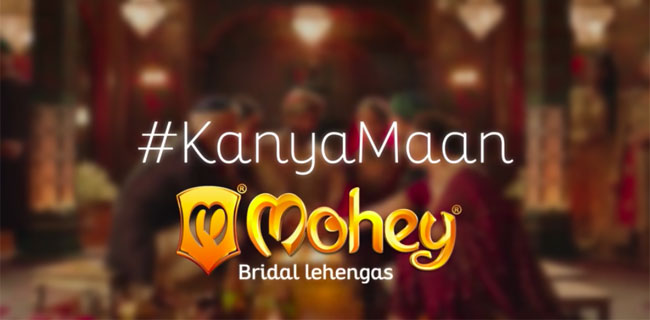
    However, society too follows a bell curve. There will always be a mix of bad and good, supportive and oppressive, facilitating and barrier creators, patriarchal and matriarchal POV. The right and wrong are contextual and much complex than a simple #Kanyadaan to #KanyaMaan.


    Women have lived a complex life. They are the pivot of the family in more ways than one, juggling relations, maintaining relationships, balancing the budget, and making the  house a home. In fact, they dominate the transfer of legacy, culture, and social values to the next generation. In many ways, these contributions are so hidden that they fail to be realised. As a result, the lives seen through the societal lens of experiences are not comparable across genders.


    However, does it not give brands a right to wrongly portray the situation and rituals of only one religion and suggest corrective measures? Why are brands blind to other religions traditions and practices? Do they lack a spine to do so? Or do they fear a violent backlash?


    Yes, I am totally irritated with this appalling situation. And when brands try to define society and start commenting on it, they better be willing to share the repercussions, however well-intended their actions be.


    ‘Real-life needs a more intelligent, holistic, nuanced and science-based intervention and not one driven by ideological antagonism and resentment against patriarchy or rituals of a religion. (Comment picked up from a discussion in a closed WhatsApp group)


    Patriarchy exists, however, it did not happen overnight. It is a social evolution based on circumstances. If the situations change, the rituals and their meanings are bound to change. But a revolution that mutates the mindset due to gross misrepresentation is not the solution.


    Yes, differences exist, and they are bound to exist. Roles are assigned based on social expectations and situations, which were driven by pure biological needs, property consolidation, physical attributes, and the ecosystem. Some experiences may not be exactly right by today’s standards, and one is right to question them. It is life.


    The truth: If you fight for women, you are a hero! If you fight for men, you are a misogynist! If you defend your religion, you are radicalised! And I am happy to be a hero, a misogynist and radicalised at the same time.


    The concept of paraya dhan seems to be easily understood and exists across religions. Giving away of the bride has been wrongly established as a Daan or giving away the responsibilities.


    The lives in the urban and rural world, the world of the haves and the have-nots’, the life in Bharat and India are different. The ecosystem is different. The lives are different, and the interpretation, naturally different. Somewhere female kids are seen as a burden and an asset for social alliances and growth in other places. And in a lot many places, the Maan of the family.


    I am not against change and a brand trying to make it their purpose. In such a case, few things are essential. Authenticity and Consistency. And more than that, a proper understanding of the rituals. No lazy armchair analysis and no polarised communication emerging from a lack of misguided understanding. It will only result in poisoning the mind of the generation and further alienate them from the real meaning.


    Brands can take the right way. Project the proper understanding and meaning. Remind and revise the culture and not just try pin-pointing the wrong, if any. The biggest problem is the freedom of making choices and decisions impacting their own lives. And most of these need to have a constitutional and law-based solution, not a one-film wonder. Till personal laws remain different, till a country is not governed under the same law and grant equality, equality of gender will remain a distant fantasy.


    Having said so, I have a question for these well-intending brands. Is there no way to be good without pointing to someone else as bad? Am I been too idealistic? Or is being politically, societally and religiously incorrect the new politically correctness for the brands?


    If someone really pursues the subject, they will understand that ancient Indian thinking, the progressive variety, has complete gender differentiation but much respect for women. And here I am, not even using the term Hindu.


    Much has been said and written about this #Kanyadaan and #KanyaMaan. But the best that I read and endorse seem to be captured in the tweeted thread by @MumukshuSavitri. It correctly identifies it not as an Alia Bhatt ad- but a brand Manyavar advertisement featuring Alia Bhatt. And here, the brand is to be questioned and not the endorser.


    Can Manyavar refute that Kanyadana and other rituals of the Vivaha ceremony in Hindu marriage are not patriarchal but show immense reverence and Mana for the bride? If not, they must apologise and withdraw this highly offensive ad and stop demeaning & demonising Hindu customs.


    Can brands stop half-baked attacks and false representation of the Hindu religion? And while saying it, I am not asking the brands to look and project rituals in any other faith as wrong. I ask them to detest from interfering and objectifying, downgrading Hindus, the tolerant ones.


    The tweet takes offence to the brand Manyavar claiming #KanyaDaan in Hindu Marriage objectifies women. And I #ignorantHindu share it for a wider reach.


    …………………………………………..


    THE TWEET TEXT . I have done minor correction in the text- and the original tweet can be read above. Few brackets in the below text are my addition.


    In reality, no other marriage ceremony in the world honours & reveres the bride as wholly as the Hindu Vivaha (marriage) ceremony.


    Marriage is seen as a means of spiritual growth; the husband and wife are co-partners in religious life and function. The wife is not a mere pleasure companion of her husband for the temporal life. Manu (9.26) states; The husband is said to be one with the wife. The wife is designated ARDHAGINI. i.e. the half part of the body of the husband as constituted by the wife. Women are created, by the Atman, as equal halves of man, thereby completing them, like halves of a shell complete the whole shell.


    Undoubtedly, patriarchal distortions crept into Hindu marriages due to the dark age of Islamic rule when women were raped, molested & killed relentlessly. Social evils like child marriage & dowry arose due to the desperation of Hindus to marry their daughters & protect them. (societal evolution and mutation).


    Authoritative Hindu texts, however, expressly forbid treating the bride as a material object to be exchanged. The Manu Smriti clearly warns that anyone selling their daughter for any price & treating her like property is assured a place in Hell.


    None of these later patriarchal distortions in the Vivah rituals were sanctioned by original Hindu sacred texts. The Hindu Vivah has always based its essential rituals on the famous cosmic marriage described in the most ancient Rig Veda (Mandala 10, Sukta 85).


    The Rig Vedic verses describe the cosmic union of the Sun with the Moon. Surya Savitri is the sun bride & Soma, the moon groom. The Vivah honours this celestial marriage by reciting the same Rig Vedic Mantras as a reminder of the sanctity & cosmic significance of Vivah.


    Surya and Soma are the prototypes for all Hindu couples as human marriages follow the pattern of the celestial union. The bride & groom re-enact it to unify & elevate their lives & walk together on the path to Moksha, as Hindus believe humanity is a reflection of divine life.


    The Nirukta provides the etymological basis of Vedic terms. It defines Kanya as derived from the root “Kan”, which means to illuminate. So the bride/Kanya symbolises the illumined Sun who fulfils creation & the groom symbolises the Moon who receives & reflects her light.


    This deliberate usage of the word “Kanya” reveals the real intent of Kanyadaan. If it was about giving away a daughter, Putri or Duhita would suffice. The specific usage of Kanya emphasises the Rig Vedic view of the bride as the illuminating Sun, Surya Savitri.


    Vedic rituals were later elaborated in many Grihya Sutras, like Apastambha, Bharadwaja, Baudhayana, etc., to understand the ceremony, rituals & local customs according to the Gotras. These rites demonstrate how the Hindu bride is revered & respected in every part of the Vivah.


    From the initial betrothal ceremony (Kanyavarana) itself, tradition requires the groom to appear in his best clothes to ask for the guardian’s consent to the marriage. Once consent is given, he must first worship the bride & pray to her for good luck, health & children.


    The bride’s guardians perform Kanyadana to bestow the luminous Surya (the sun bride) to be received by Soma (the moon groom). Ignorant people understood this to mean donation (dana) of an object when it actually refers to receiving her energy as Kanya-Adana.


    During the Kanyadana, the guardians recite Mantras bestowing the bride as Lakshmi, who unites with the groom representing Vishnu. This is a symbolic transformation of the cosmic Surya & Soma manifested in earthly forms to mimic the ideal divine pair Lakshmi & Vishnu.


    Kanyadana thus treats the bride as divine energy. It shows both mana (respect) & parigraha (reverence) for the bride, so for Manyavar to coin a new term, “Kanyamana”, is ridiculous. It indicates they know nothing about Hindu marriage & even less about the Sanskrit language.


    After Kanyadana, the groom asks the guardian, “Who gives this bride to me?” And the answer is “Kama” (The God of love). This clearly shows that Kanya was not given away as an object but symbolically bestowed by the God of love when she is ready to share her life energy.


    It is only after this that the Pani Grahana (holding hands) shown in the ad follows. The groom clasps the bride’s hand to receive prosperity & divine energy. In the Ramayana, Janaka tells Rama that he is accepting prosperity by grasping Sita’s hand during this ceremony.


    After essential ceremonies such as Agniparanayana, Lajahoma, Asmarohana, Saptapadi are all performed, the couple is blessed by everyone. Then the couple does Suryadikshana (homage to the Sun) during the day or Arundhati darshanam at night.


    Viewing Arundhati-Vasishta (Alcor-Mizar) indicates Hinduism’s profound knowledge. Most binary star systems have one-star stationery as the other rotates around it. Here both stars revolve around each other. Neither dominates; both support & travel in an ideal partnership.


    Post-wedding during the Grihya Pravesh, the bride is worshipped as Lakshmi. She tips over a pot of rice at the threshold to symbolise prosperity entering her new home. With feet dipped in red lac, she walks through the home to leave auspicious footprints & bless her new family.(Will an objectified item given as Daan be accorded this respect)


    In her role as Lakshmi, she also gives charity to Brahmanas & poor people on behalf of her new family. Dressed in the best garments & jewellery, she worships the family deities & temples. The Ramayana recounts how Sita & her sisters performed these rituals on reaching Ayodhya. (Was Sita a Daan to Rama?)


    To Hindus, Vivaha is not a contract. It is a sacred process to endow the couple with abilities to refine their moral & spiritual traits as householders (Grihastha). It transforms lower desires into higher spiritual goals to attain Moksha together.


    An analysis of the rituals practised in a traditional Hindu Vivah demonstrates that the bride is not just respected but worshipped as sacred illumined energy throughout the ceremony. No other tradition comes close to giving women such prominence & reverence.


    Sanjeev Kotnala is a senior marketing and business strategist and educator. He writes on MxMIndia every Wednesdays. The views here are personal.


  • Sanjeev Kotnala: UpGrad gets it right!

    By Sanjeev Kotnala


    Sanjeev KotnalaYou can’t but love these new TVCs from UpGrad. Covid has done a lot to online education and its acceptance in the employment market. Candidates are regularly asked if they have invested in keeping themselves future-proof and have they acquired additional qualifications, certifiable knowledge and skill set.


    At the same time, there are memes and comments primarily on social media as to the potential damage and harm from online education. Some of these memes are, in fact, a reflection of reality. And the batch of 2021 and 2022 may suffer from it.


    So, it was obvious for UpGrad to identify this barrier. However, the way ‘The Womb’ has treated the campaign ‘fast forward your career with online courses from UpGrad‘ is simple, straight, engaging and entertaining.


    The approach is simple. It is the career journey of three college friends – two male and one female. One of them, the lady, has used UpGrad to upgrade her qualification and knowledge set. The film shows how a lady is now joining the company, where the two males are already employed. And she is going to be their boss- why? Because she upgraded herself with online education.


    I always like a brand to take the story forward. In this case, the whole episode of her interaction with her batchmates while she joins as their boss has that degree of innocent discovery, explanation, friendship and closure with acceptance. And there is an inbuilt message that UpGrad works even in the higher edtech needs.


    Will such communication build in some preference or premium for the brand is tough to say. Perhaps, it will broaden the awareness funnel and UpGrad will be searched and compared  before making a decision on online education.


    Will currently employed candidates use it to expand their potential and possibility, or will the inertia remain. We will all soon learn. However, I know many who have used the Covid periods and WFH  in adding certificates to their resume. Thus not only demonstrating their zeal to learn but also expanding the opportunities.


    We know that despite online getting a boost and expanding the horizon, it still needs to impress the recruitment circuit. After all, it is the alumni who make the institute. Meanwhile, on the site you get confidence boosting figures with a line that one has heard many times. Over two lakh registered learners. Highest salary offered 73 Lakh LPA, 50% average salary hike and 300+hiring partners and 700+ industry experts!


    The current set of films leaves the story tantalisingly poised with multiple possibilities that further make the point. Is that time for UpGrade to even try some UGC!


    Here is my favourite for a sequential storytelling: Tata Sky ka Chota Recharge


  • Sanjeev Kotnala: Which Life Are You From? Review of Mayank Gaur’s book

    Sanjeev KotnalaBy Sanjeev Kotnala


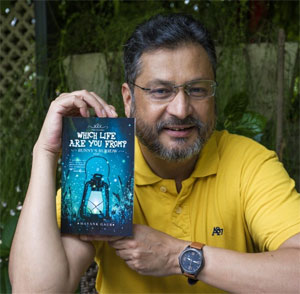
    Sometimes books are all it takes to get connected back with a friend after decades. Mayank Gaur, the author of ‘Which Life Are You From?: Story 1-Bunny’s Burrow’, is a close friend and our lives overlapped for some six to nine months. Later, we crossed paths and maybe met twice-thrice when I was in Delhi in the early nineties,


    Mayank Gaur
    Mayank Gaur

    Recently, he read of the short story contest for writers with roots in Uttarakhand. No, he did participate in the contest, but we connected overcall. The time-warped back to the early nineties. We were back in time and realised we shared common interests. The conversation was so close that it was natural to ask- Which Life Are You From?


    This was when I came to know of Mayank’s book. He sent a signed copy that will not be UnCaged soon. I have thoroughly enjoyed reading it and maybe have a hint of an idea. From some life that I don’t remember or know and that is anyway not important.


    The Mind Cannot Remember What the Soul Cannot Forget.

    A simple line innocuously tucked away somewhere at the start of one of the chapters in the book sums the whole concept. The eternity of journey. The repeated chasing of connections and reconnections. The past defining future and present. The need for an absence to really know and find logic. The need to believe and flow.


    The book keeps religion and spirituality at arm’s length. There is humour, love, tragedy, faith and hope and maybe points for introspection. Perhaps finding your own belief without reason.


    MORE TO COME.

    As the name and the title, ‘Which life are you from? Story-1’ suggested Mayank does have plans for more stories in the series. Happy writing to him, but this could be tough. Knowing him, that will be the least of the problem. I will definitely wait and read the following story.


    You may, towards the end, find a transitory touch of Adam in Mitch Albom’s ‘The Five People you meet in Heaven’. But remember, incarnation, intertwining life, soul needs and desires is a Hindu (Read eastern and Indian) concept that western authors have presented and projected. Here is another interesting presentation by an Indian author in his debut novel. All the best.


    THE IDEA BEHIND THE BOOK.

    When questioned on how the idea to write the story like ‘Which Life Are You From?: Story 1-Bunny’s Burrow’ came, here is what Mayank says: “’We Hindus believe in the continuity of life over lifetimes, as an ongoing cycle of birth-death- birth. We wish our departed souls ‘Om Sadgati’ – implying, ‘may you have an auspicious journey to the next life’.


    “But beyond religion and faith, some path-breaking work over the last century has been done in the space of science, which strongly suggests- there are many lives. I can quote many respected authorities, like Dr Ian Stevenson, Dr Raymond Moody and Dr Brian Weiss, to name just a few. While conventional scientists may still consider parapsychology to be a pseudo-science, they cannot deny that over a million documented cases of NDE (near-death experience), and thousands of eye-opening interviews of children who remember past lives astonishingly vividly, exist in eminent institutes across the world. They cannot just be swept away.


    “Looking beyond parapsychology and metaphysics, things begin to get interesting! Astrophysicists, cosmologists, gurus of quantum physics and quantum mechanics are now beginning to say that conventional science knows precious little! Beyond the event horizon and the point of singularity of black holes, other universes, other manifestations of reality must most certainly exist. Besides, consciousness is still beyond the comprehension of their sciences. Yet, to say ‘it cannot presently be proved; hence it doesn’t exist’ would be most un-scientific (pun intended). I can go on and on about how neurologists in the US, armed with futuristic brain-scanning technologies, are conforming that some patients revived from clinical death vividly remember the goings-on during the period that they were ‘no more’!


    “In other words, it is becoming increasingly evident that a lot of what is written in the ancient Indian scriptures is more modern than modern science; that recurring lives are not just likely, the assumption makes solid sense.”


    PERSONAL EXPERIENCE.

    It may count for nothing, and I do not have any corroborative explanation or witness to it. However, it is said then in early childhood, I would crawl like an army man, act like I was in a war. Tell parents that I was killed in a war. Born in 1963, it was always thought to be related to the 1962 Indo-China war. No explanation, no defending the subject. However, I do not recall anything other than what the elders have told me. But, perhaps, this may explain my deep-rooted admiration and respect for armed forces, discipline and patriotic feelings. I have been interested in the subject of many lives but never had the urge to put myself under the scanner with a life-regression expert. But, I have a few friends who have participated in such experiments.


    MAYANK SPEAKS.

    My mother is a state topper in psychology from the early sixties. During her postgraduation, the story of Shanti Devi’s past-life memories had the world of psychology abuzz with excitement. My mother, as part of her field study, interviewed two little kids who remembered their past lives. She is convinced beyond doubt that those toddlers couldn’t have been tutored to say what they remembered about another time and place. Hearing her speak about this had me hooked on to the subject since childhood. So, I’ve been reading up on whatever I could lay my hands on in subjects related to reincarnation and paranormal phenomena.


    I have interviewed several regression therapists and heard many stories of reincarnation in my own family and friends’ circles, but who am I talking to! Did you not as a child yourself remember the gun positions during the ’62 Chinese war? ( This one is addressed to me in particular)


    Lastly, I have been meditating intensely for a few years now. While I cannot claim to remember any past life, very vivid memories from other times and places are beginning to occasionally occur to me lately; a fascinating experience!


    This background is the space from where the idea of my book ‘Which Life Are You From?’ comes from.


    SO, IS THE BOOK FICTION OR INSPIRED BY REAL-LIFE EXPERIENCES?

    The book is pure fiction, but it is peppered with events, incidents and especially mischief from my childhood in army cantonments, among them Mhow, where this story is based in. As the story progressed, Bunny and her family became very real to me. They still are.


    I will reiterate that I have studied this subject deeply, conversed with many doctors, psychologists, regression therapists, an amazing ‘medium’ from Australia, sadhus, even Aghoris. I have listened keenly to many cases of reincarnation by friends and acquaintances, including you, and unlike most sceptics, I have thought about it at length. So, this fiction is born of my interpretation of the lives of people I have met.


    DOES THE BOOK PROMOTE HINDU RELIGION?

    And here, I like what Mayank says: N”o, I am not at all promoting religion or Hinduism. In fact, Hindu philosophy is way older than any religion; my story suggests that while religion may be a path to spiritual evolution, even an atheist, on the right path, will get there.” There are no churches, temples and mosques on the other side now, are there?


    MY TAKE- OUT from ‘Which Life Are You From?’

    In addition to saying I enjoyed reading the book, there are two profound learning I take out. One of them I have shared above, ‘The Mind Cannot Remember What the Soul Cannot Forget’. Please do reflect upon it. To me this is the difference between one life and many lives. And the second ‘everyone who wept at her grave will realise that grief is not the evidence of separation, it is, in fact, the proof of forthcoming reunions’. No, it may not help release the pain, which is natural, but one can look forward to the forthcoming reunions.


    AT THE END.

    You may read ‘Which Life Are You From?: Story 1-Bunny’s Burrow’  as a story, and it is beautiful. Wish I could write like that. Or you can read it with all the layering of a believer or non-believer in the very thought of multiple lives. However, it will at the end ask you a question you are most likely not to have an answer to, ‘Which Life Are You From? Check out the first 4 chapters here- free preview. And if you want to buy and read the book- click here.

    ………….


    SNAPSHOT of ‘Which Life Are You From?’ 

    Lieutenant Colonel S.S. Narula, a.k.a. Sunny, has been staggered by a series of bizarre coincidences since he arrived in Mhow cantonment in Central India this morning. As he gazes with moist eyes at his childhood bestie’s tombstone, the giant of a man has no idea of the extraordinary turn his life is about to take. Little Bunny had shaken up the sleepy army cantonment when she had arrived in town with her English mum, Debbie, and her Anglo-Indian daddy, Major Robert Hudson, in the late ’70s. She was blonde, beautiful, a bundle of mischief and a reservoir of compassion. She was also mildly dyslexic and occasionally made vague allusions that sounded like memories from other lives. Love, wealth, expensive toys, the freedom to be naughty – Bunny had plenty and more of everything, except time. Everyone was devastated when Bunny passed away. But one young lad became obsessed with her return; Vikram, the teenaged elder brother of her dear friend Vaani. But why? Being a hosteller, he hardly met her; and teenagers don’t much care for little kids anyway. Could it be that since the mind cannot remember what the soul cannot forget, Vikram was grieving the loss of a soulmate without even knowing about it? Thirty years later, as the new age of spiritual awakening begins, Bunny’s Invisible Observer sets up amazing coincidences that will bring her scattered soul family together. And everyone who wept over her grave will smile again when Bunny returns. With it, the author hopes readers will take away the diverse nuances of love, the value of laughter and the essence of spirituality.


    ABOUT MAYANK GAUR.

    Mayank  is an advertising writer and creative director for over three decades and has created several award-winning campaigns for leading brands. He is a keen trekker, sports- films- music addict, and like to think of  himself as a ‘spiritual wanderer’. He closely follows subjects as diverse as ancient philosophies, parapsychology, metaphysics, quantum physics/ mechanics and astrophysics.


  • Sanjeev Kotnala: Insurance advertising still dominated by rationality and logic

    Sanjeev KotnalaBy Sanjeev Kotnala


    In the past, insurance advertising dominated print. Educating the potential customers was then considered a top priority. Insurance pushed through agents scouting for the next ill-informed victim, someone clueless about what they were buying into. The other part was the legally enforced insurance policies like the automobile and group insurance., where the process was completely different.


    Today, there are portals helping customers transparently compare policies and directly buy them at a discount. In the case of a standard insurance policy, the agent is slowly moving out of the picture.


    Insurance companies are closing down offices as technology allows for better customer interface and experience. Consumers have started appreciating the financial science behind the stability insurance policies provide. The customers are more open to buying life, Mediclaim, accidental, term plans, motor vehicle, house, fire, and other insurance policies.


    However, insurance advertising is still dominated by rationality and logic. Life Insurance policies stay away from talking about the second truth in life- death. And death could be used differently.


    Insurance advertising, not surprisingly it is all about Saam ( Logic), Daam (Price), Dand (Penalty) and Bhed (Doubt and differentiation). It is true that legally the Insurance companies and policies cannot do or say much.


    In this scenario, the ad by Ladder Insurance for its Life Insurance policy created by Fred & Farid (Los Angeles) seems so fresh. It is really unexpected and at least not seen in the Indian market. And they have really been at trying to make a difference using technology in the insurance space.


    Whereas in the Indian market, we try to avoid reference to death in advertising – here, the storyline depicts the whole family attempting to kill the insured person. And the thought, “Life insurance so good, they’re gonna want you dead”, is so apt to sum it.


    If that is not surprising enough, the disclaimer takes the cake. “But seriously, intentionally killing a policyholder will void all life insurance benefits”. That’s it. This clutter-breaker insurance policy ad remains in your head and is definitely memorable.


    I would say differentiated ads with a strong storyline stand out in any category- and the case of insurance is no different.


    The old Thai insurance ad ‘Believe in Good’ is still fresh in my mind.


    And then here is the Policy Bazar ad- of doing good!.


    So, is the SBI Life Insurance- ‘Heray Ko Kya Pata tumhari Umar’.


    The one that I recall most- the death scarring one for Max New York Insurance.


    One needs to be reminded, and the whole ad featuring Irfan Khan ad for Religare Insurance comes back. It logically explained ‘Kum Insurance Lene Ki Bimari’ was fresh and differentiated when it was launched.


    And then you must watch the Metlife ad-My Dad is a liar.


    And then this humorous ad for life insurance – and you would realise, insurance can be fun and the message delivered with relevance, originality and impact.


  • Suffocating Creativity in an Opinion Polarised Country


    By Sanjeev Kotnala


    Sanjeev KotnalaLast week was involuntarily hectic with a trip out to Mahabaleshwar with family and Milo Kotnala, my lovely pet. I enjoyed the lack of connectivity at Forest County Resorts, a pet-friendly hotels. Even with limited connectivity, it was clear that everyone on thesocial media was trying to hit a chawka on every mauka. It seemed that getting trolled is becoming a passionate hobby for few and a legitimate communication strategy for some brands. How can one explain this repeated insensitivity and lack of touch with audience reality?


    It was maha confusing for me. Despite my angst against some of the advertising and events, I fear that we are suffocating brand communication and creativity as a very touchy audience. Where do you draw the line if the brands need to be sensitive to the polarised audience? In a few instances, I have raised my voice, questioning the creative. No, it is not a time of remorse or guilt trip. It is different.


    Towards the end of the week, we finally lost to Pakistan in our first match of the T20 World cup. We lost unexpectedly and badly to the arch rival. Maybe MaukaMauka will eventually be retired. However, I would expect the channel to pull a rabbit out of the hat. A new woke Mauka may be there in case Indian, and Pakistan meet in the final. Possibilities exist.


    And then the kneeling of the team in support of Black Lives Matter (BLM) took everyone by surprise. Why? It seems it was a directive from ICC/BCCI. But why? I have never seen the same bunch kneel or speak out against the religious racism in the country and across the border.


    Everyone was so upset that they forgot the games the team had won in the past. Again demonstrating passionate following has its price, and we have a short memory. It also said that the spectre of Pakistan will never get wiped out.


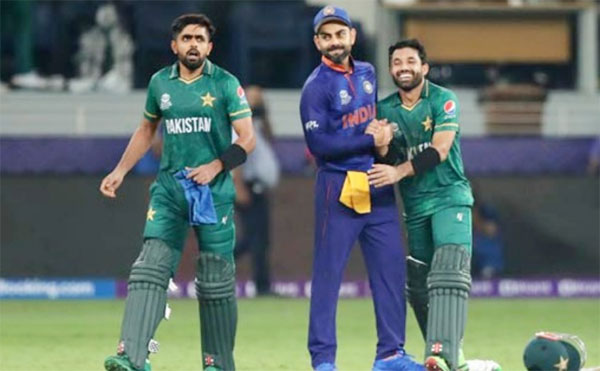
    Virat showed sportsmanship in loss, and the picture found support from intellectually oriented people. However, most did not like the emotion or the expression. Everyone has their reason. We just had a bad day in the field, and hopefully, by Sunday, we will see a turnaround.


    Source: Internet


    The loss hurts, the trolling hurt patriotic feelings. However, no one should be trolled for such failure. No one can win all the time.


    Fem Bleach tried to cash on a new mauka called Karwa Chauth. It got a mixed reaction to its same-sex couple Karwa Chauth. It was not well-made but was branded a progressive approach in a not-so-progressive product category. It seemed such communications were made to fuel controversy and get the brand some hype and buzz. Every publicity counts. In the past too, Fem had Karwa Chauth ads, but that was in complete sync with the public opinion. A simple SMEAR check and evaluation of the script would have said it is going to be trolled.


    I missed out on watching the T20 debacle, thanks to Karva Chauth. While India was losing the match, I was with my wife on a long drive. So, she is aptly distracted during the last few hours of her waterless fast before moonrise. No, I am not suggesting the script for a Karwa Chauth ad.


    Fab India joined the list of brands trolled this year. The urdunisation of the Hindu festival did not sit well with the audience. The audience is widely divided and polarised on this subject. I do not find anything wrong. Oh, yes, it could have been more celebratory. But, should that not be something the brand should decide. The brand must have some creative freedom.


    Frankly, I do not want advertising to find rituals in other religions and suggest something they have done with Hindu festivals and rituals. I want them to stop playing with Hindu festivals. However, I would love to watch brands mining rituals across religions to prove that they have not picked on Hindu religion and festivals because they are easy targets. They are so divided that they cannot retaliate. Brands know it will be playing with fire if they try such stunts and purpose-led creative suggestions on other religions.


    Case in point, Ceat’s advertisement featuring Aamir Khan- but that was the week before. And well, we have almost forgotten the Tanishq ad of Goad Bharai or the advertisement of Manyavar how the brands are not sensitive to audience reality of the largest audience segment.


    Everything is not doomed. There was a positive feeling too.


    I applaud Mondelez’s efforts. The favourite chocolate brand took advertising to the next level, serving a different level of mauka to local businesses, presenting them an opportunity to get a brand endorser like SRK! The approach is exciting and worth all the effort. It rightly garnered a lot of earned media, and the buzz was Megha. The smile on local business owners:- priceless.


    It is time for brands to cautiously tread on purpose if it is around religious and community sentiments. The purpose should be inherent, not forced.


    Meanwhile, there seems to be no complaint at ASCI against Fogg for misleading communication that could be leading to complacency in people approach to Covid. Is it the truth? Does it have government approval to make such a statement? Is the brand right in suggesting that  Hathi Nikal Gaya – Poonch Bakki hai! Now, don’t tell me that I am unnecessarily raising a non-issue and encouraging someone to take it up.


    The festive season is on.


    Keep your eyes open and your fingers free to play the social media game


    There will be two-three more opportunities for every one of us to question the advertising and marketing fraternity decisions and brand communication. Well, they could always pre-check their communication for SMEAR.


    As I said earlier, I don’t know where to draw the line on freedom of creative expression and brand communication. The brands take a strategic conscious-eyed decision based on research, deliberations and strategic insights. And they have every right to do what they do, including taking pot-shots at the majority- their biggest audience.


    Freedom of expression works both ways. The audience has the right to react the way they want to. Sometimes these incited emotions can be dangerous. In a democratically secular country, where the minority defines the majority, no one knows Unth Kis Karvat Daihega.


    It will be a wild west between brands and polarised skewed audiences, where everyone must stand for themselves. The tectonic plates of hurt emotions have been under pressure for a long. I suspect some brand communication may trigger an earthquake of reaction- we all would want to avoid.


    Sanjeev Kotnala is a senior brand consultant and educatior. He writes on MxMIndia every Wednesday. His views here are personal


  • 21 Dilwala Observations this Diwali


    By Sanjeev Kotnala


    Sanjeev KotnalaThere is life beyond advertising, and that is the actual business. Diwali is almost the start of a fresh year. The festivities open the market, and not a surprise that Dassera-Diwali is called the fifth quarter. After last year’s washout and restrictions, Diwali was under a cloud till Covid numbers started coming down.


    So here are 21 observations this Diwali of 2021:


    1. The FIFTH QUARTERis opening the business with a bang. The trapped demand for items has just seen a volcanic eruption. The customers are back in the market, and though they keep cribbing about rate hikes, they are spending.

    2. STOCKMARKETcontinues to be the stockmarket. It builds on aspirations – dreams and some illogical expectations. There is so much buzz around the large IPO with high multiples like Paytm, and the real numbers of companies like Nykaa are going under the radar. Why the market should cross 60,000 is debatable.


    3. DIGITALis booming, but currency is not yet written off. Yes, India has taken to digital payments in a big way. You can now almost pay for anything digitally. Wallets and bank accounts have been linked. However, there is a strong urge for cash payments in many areas. Maybe reflecting the belief in hard currency.

    4. The THIRD WAVE. There is a complete polarisation on what Covid is all about. How the waves surge and how they get flattened. Vaccination numbers and the deaths that are ascribed to the virus. Need to mask or remain unmasked. The Diwali festival period with about 5-10 days lag will really tell us if we should have had some more restrictions. Whichever way it happens, the government will take the flak.

    5. Time for POLARISED BRAND COMMUNICATION. You can be trolled for anything and everything, from Mangal Sutra to crackers, to Karva Chauth to Bindi to Godbharai. And hence the clients will have to take a call. Result: you will see polarisation. One set and the larger set will play it safe for some time. Another will play bold (read risky), hoping they can manage if things go wrong.


    6. SHORT-TERM MEMORY WILL OPERATE IN SPORTS. We have already started forgetting the Olympians. We have the fresh wounds of Mauka-Mauka Pakistan to take care of it. And soon, we will know if we have got some balm in the last three matches, or the wounds could get worse. But, soon, all will be forgotten as we will start discussing the possibilities of the home series of three T20 and two Test matches with New Zealand.

    7. The celluloid POLITICS-POLICE GAME of the early seventies will be more real-life. More scandalous claims will be made. More representatives’ careers from political and law enforcement will find themselves in the spotlight. The news will take centrestage for some time. Republic TV and NDTV will find reasons to take sides. And nothing will change. NCB and ED, along with Income Tax authorities, will play on the sidelines.


    8. WFH WILL POLARISE PEOPLE. More and more companies will be forced to reinvent their working ways and culture. Many are expected to go back to earlier working from the office. And most expected to adopt a hybrid model. Whatever the adapted model, there will always be a set of employees not in sync with it.

    9. INFLATION MAY BE THE NEXT ONION.Inflation, natural – disguised or forced, will raise its ugly head. If the price of diesel and petrol keeps spiralling, they will have a strong impact on all items. And, if that remains the case, it may impact the state-level elections too. Some amount of managing inflation is required, and no one has any idea how.

    10. WELLBEING-HEALTH WILL TAKE CENTERSTAGE.Most consumer products will be evaluated on their health impact. The global climatic impact may not still make a mark or impact the decision making- but individual health impact will determine success.

    11. PRIORITIES & COMMUNITIES REDEFINED. Expected consumers to redefine priorities in terms of financial needs. Insurance and safe deposits will see a surge. To safeguard against fluctuation and fulfil sudden emergency fund needs, there will be some holding back of hard currencies and a decrease in high return-high risk advantage.


    12. ONLINE EDUCATION WILL GIVE AGNI PARIKSHA. There has been a surge in online education, and teachers and students are getting acclimatised to them. The recruiters are not in sync. So, the batches that pass in 2021 -22 will have to prove someone right. If not for professional education, online will still accept skill enhancement, future-proofing and short courses.

    13. NORMAL WILL NEVER BE THE SAME.The goal post will keep shifting. Tectonic technology advancement and shifting consumer behaviour will remain a crystal ball and remain a point of speculation.

    14. THE MIDDLEMAN WILL CONTINUE TO BE THREATENED.Nothing new. The trend has been on the rise. Most technologies will try to bridge the gap and reach the customers directly- raising expectations of better service and experience.

    15. THE RECOVERY WILL NOT BE SMOOTH.Have you seen a monkey on an oily pole? Climb four feet, slip down three. We most likely will see this. But how many notches the monkey climbs or slips? No one knows.


    16. INNOVATION. ENERGY will be the new trinity. But like most, they will always be at loggerheads. Manage one; the second will go off balance. The one who could manage it- will be the winner.


    17. SOCIAL PLATFORMS WILL FURTHER DISTANCE PEOPLE.The community and individuals will shortly realise the curse of social media and platforms. That will be too late. The soft control of the amount of time dedicated to social platforms will no longer work, as mobile and screen addiction will increase. Anxiety-depression-mental disorders will creep up, and so will be OTC drugs for the same. Everyone will know the problem – but no one will know of a solution. Digital detox and deaddiction centres will be the new wellness spa centres. Protocol and SOP will be generated. And Happiness will be the new promise.


    18. SOCIAL POLARISATION WILL PEAK.Polarisation and community-based association on the region- religion- beliefs and rituals will speed up. Cross-community tempers will flare. And product services may get a specific focussed approach like the Jain tours or Vaishnav Dhaaba or Halal meat.


    19. THE DATA DEPENDENCEfor insights and solution development will increase. More refined AI will slowly move toward Alternative Intelligence. Analytics will be much in demand, but the actual utilisation of mega data in the smaller organisation is still far off.


    20. PURPOSE WILL BE CONTINUED TO BE OVER-RATED.Brands will continue to attempt to be associated with purpose- real- imaginary – inherent, or crafted. It is different that the world is hardly purpose-led. Even consumers will try finding a meaning to life and overtly support purpose-led brands.


    21. ORGANISATION WITHIN ORGANISATION.Like the shop-in-shop, we will find smaller cross-functional teams that will act as mini-organisations to challenge and compete within others, such groups. The entrepreneurial spirit will be something that will be highly valued.


    The world will get far fluid and dynamically chaotic. So trends will change faster than digital algorithms.


  • Time to Rethink on Gambling?


    By Sanjeev Kotnala


    Sanjeev KotnalaThe government is known to act slowly and is constrained by the operating laws. Most of the time, the government tries to manipulate, control and at times ban the consumption of things that are addictive or can lead to addictive or polarised behaviour.


    Things that may be against the moral and ethical fabric of family and society. Porn, tobacco, prostitution, gambling, and the liquor industry are prime examples of it. They are addictive, impair judgment, accentuate unwanted behaviour, and have long-term health, financial or environmental impact.


    Even though controlled and at times banned, many products and services find ways to service and satisfy their large clientele. They may be prohibited from marketing and advertising but remain a perfectly legal product or service, with surrogate branding and advertising.


    Everyone knows and easily identifies a surrogate. None of the operating laws effectively block their marketing and sales. There is clear polarisation in the industry about working on legal surrogates. The polarisation exists even in the case of celebrity endorsement and association. Many celebrities are open about their decision not to associate with such products and services.


    Similarly, some products claim to require a skill. They ask you to make judgmental calls like financial investments, the stockmarket, and insurance. The warnings incorporated in the advertising for such products and services are standard but worded and delivered at a scorching pace. Most of the audience is blind and deaf to these warnings even though the government keeps asking to read all the documents and make a conscious open-eyed decision. And, one can say, that is the maximum the authorities can do.


    There is no denying that gambling is addictive and is banned in most states. Wherever they operate, they are within a controlled environment.


    And then there are these fantasy leagues hiding behind the clause of being a game of skill. They have been able to convince the courts of this condition and now are big business. No surprise that the communication of these leagues now voices a warning of its addictive behaviour and possible financial risk.


    There are ways to control maximum bet or quantum of play. It does need skill for proper planning and playing. There is some truth in it. However, when you see the set of people playing these games and interacting with them, you know where skill is ranked as a necessity and the dependence of luck. The level of addiction is high.


    The fantasy leagues ensure that the participants are not betting on the result of a particular game or a specific player’s performance. The bet covers points earned by a   particular team but a fresh team constituted by the better. The prize or reward is fixed and clearly communicated  in advance. It also talks of prize money not  a result of  participants or bet money. And at the end the winning to reflect the use of  skill, talent and expertise.


    It is more like the single-number lottery- the way the large subset plays them. I may be exaggerating the situation. Still, I sincerely think there is a need for more than self-regulation. We know laws lag real life. The category keeps finding loopholes and exemptions to exploit trends, interests, and rules.  But it’s time that we had more than a cursory discussion on responsibly gambling and control/self-regulation. There is a need of One Country One law for such activities. And if there is a need for regulation, it must be implemented universally.


  • Brand Signature Moves… Sahi Hai?


    By Sanjeev Kotnala


    Sanjeev KotnalaAfter a long time, I am enjoying some of the advertising I see. And the buzz is not because the brands have purposefully commented on some rituals. The ideas are well-presented and powerfully pushed to the audience. Intentional communication delivers a directional message to the unconscious mind. And, if this was unintentional, maybe it is a good post-rationalisation for the idea.


    I may not have thought so, but then my friend and consultant Vermajee drew my attention to it. He elaborates over Lawson Williamson, his newly acquired taste in mid-level whiskey. I think he has been minutely observing judges empathising on signature moves of Dance India contestants. I guess it made Vermajee focus on brand signature lines, action cues of audio-visual hammering in a recent communication.


    YEH SAHI HAI

    Mutual fund communication at every possible opportunity reiterates Sahi Hai’  for investing in Mutual Funds. The regulatory warning that is part of the communication does not matter. As the statement ‘Sahi Hai’ gets repeated, it starts making sense. In fact, more sense than it should. The uninitiated investors who must rethink their options start seeing Mutual funds with coloured glasses. Their confidence gets further enhanced with every new story, exposure of Sahi Hai loaded with strong visual cues. The pause and the applause are perfectly timed. The use of cricketers – caution statement- logical explanation- push for meeting experts. Saab Sahi Hai. Only if they can get the verbal nail a visual hammer to amplify it further.


    CARBONATED THOUGHTS

    Toofan Wahi Jo Sab Palat De’ says Thums up. The character dramatically tilts the bottle upside down. It is a powerful visual cue. Drink and flip. The whole story is engaging and delivered powerfully. It again leaves you with a strong visual hammer and an audio nail. The tonality is all masculine and charged up, just like the extra string drink.


    FANTASY LEAGUE DRUMMING THE DREAM.

    The Dream stories in Dream-11 shout loudly. The brand tells you stories of realised dreams.  It wants you too to dream big. The seed is implanted subconsciously. Think Big. Dream Big. Bet Big. In most fantasy leagues, there is an additional challenge to beat the selection of superstars of cricket. They hurt the ego of an armchair critic who thinks he knows better. The challenge must then be accepted. The game is now beating the cricket superstar acumen as a team selector.


    I have been a fan of Dream-11 communications through the years and the way it is evolving. A robust strategic intent and planning is apparent. They know where they are going. From celebrating teams and gully cricket, anything for the gameDimag se Khel- eek hi Dhoni– Game hai Mahan to realising big dreams. It is different that I see a need for strong regulations for fantasy leagues because of their addictive- habit-forming nature. Any day would love to meet and interact with the Marketing teams behind it.


    CRED GAINS CREDIBILITY WITH FREQUENCY

    Cred is the joker in the House. One may question the need for high decibel advertising that the brand indulges in. But there is an established format now for the brand. It has two parts. The static, fixed part A and the tactically changing part B with celebrities like Rahul Dravid– Kapil Dev– Neeraj Chopra and more. Cred is leveraging a reverse flip. If the second statement is engaging, humorous and authentic, the earlier information must also be similar. Making that strongly uninteresting functional statement enjoyable enough. Frankly, I hate it- because even though people remember the celebrity stunts- the brand association is strong enough. Strategically, quirky Cred  is building its own unique communication signature.


    STRONG BYJU

    Byju intrigues. It uses jealousy and competitiveness along with a rational explanation. It seems to be working. I loved how Byju exploited vulnerable parents during the Parent Day #Honourtheirsacrifice with short clips of students. Vermajee rightly points out that Byju was not reminding students of the sacrifices their parents made. It was pushing parents down memory lane. There is always a better chance of them relating to the problems better them than the students.


    ALL IS NOT WELL

    There are few brand communication that confuses me. I fail to understand the primary intent and why the brand is doing what it is doing.


    MISSING UNACADEMY

    Now the last one. #TeachThemYoung by Unacademy is a cryptic one. What the hell is the brand connection? What were they selling or proposing? Even Vermajee is zapped. He tried to decipher the brand intent and gave up. Maybe the stakeholders know better.


    GOBHI AALU DISCOUNT – NETMED

    Netmeds’ discount advertising featuring Kareena and Karishma Kapoor is silly and confusing. Why should one fall ill to earn discounts on medicine? And that too for vegetables. How sick should I be to get a decent discount at Netmeds to buy even a one-time vegetable? Do I buy medicines t get a discount, or do I purchase medication at a discount? Creative license?


    The Netmeds ad on trust and ‘discount on medicine is possible’ works because it reflects customer apprehensions. I would have loved it if they had stuck to quality medicine delivered on time and at a reasonably discounted price. But, please, stop the Gobhi-Aloo discount on medicines.


    NET-NET 

    We are living in an era of information parity, easy access and social connectivity. Everyone is sharing suggestions- recommendation or their skewed point of view. The brands need to be extra cautious in developing their signature tag, a signature move supported and held by a verbal nail repeatedly hammered visually. Some brands discover it. Sometimes it is a mistake that gets post rationalised. But always better to spend that more time in developing and investing in creating communication with brands signature touch- Just like Men will be men, a powerful idea holding it together. The thought is the brand signature, but the brand association could be stronger. Maybe, (I say maybe as I can’t think how) a consistent signature visual hammering to further strengthen it.


    You may finally have a signature move or not, a verbal nail or not and a visual hammer or not- but be alive to the reality and life of your audience- be sensitive to their beliefs, region and religion