
Category: SANJEEV KOTNALA

  • Sanjeev Kotnala: Fixed. Simply, Functionally & Emotionally

    By Sanjeev Kotnala


    Creative minds always try to find different ways to present things. It is part of their role expectation. The brands also want to Innovate and Improvise. The brand guidelines are often wrongly quoted as constraints and stifling freedom of expression. These at best, are excuses. More so when the recent campaign tries to match past brilliance. No one wants to just fix it and remain faithful to the brand’s creative language.


    Any day, I will take an advertisement that clearly delivers the brand message, than one with convoluted creativity resulting in much appreciated creative but lacking clarity. Simplicity is critical in such executions. Here is one of the recent example.


    1. FIXIT, REALLY FIXED IT. 


    The recent communication by Dr Fixit is one of the functionally loaded campaigns. Yet, it manages to deliver the message while adhering to the brand’s creative language.


    Fixit uses Amitabh Bachchan as Amitabh Bachchan. The script is excellent, and it even makes Big B interaction sound convincing. In the TVC, Big B asks the unaware consumers some probing questions and in the process introduces him to the right solution for roof repairs and waterproofing; Dr Fixit Roof-seal.


    The brand attacks the prevalent practice of using paints and patch-up as a solution for water seepage. What is creditable is that the story creates an almost perfect environment for the protagonist to give a perfectly valid answer and technical reasons. With visual support, Elastomeric Nanofiber Technology does not sound like a technology bomb. It seems a perfect explanation. It makes you believe that the brand will provide long-lasting protection against water seepage and leakage.


    FIXIT HAS BEEN FIXING IT FOR LONG.


    The brand retains its humorous take and tonality in its communication. There is somewhat of a questionable sarcasm like in case of Leakage ka doctorrising starJodiLeakage man  and my favourite the waterrrrr series ) Dr Fixit Roof-seal TVC. The script is sensitive to the situation—the dialogues delivered in a typical banter between the brand Ambassador and the unaware consumer. Yet, the consumer is enlightened without being embarrassed. That’s the beauty of it.


    Fixit is not the only brand that has successfully used the brand communication language to build familiarity through continuity. Here are some more examples


    One cannot  forget how the Happydent campaigns always bring a smile to your face. The new TVC has evolved with time and addresses a social problem, but the smile and the flash retain past campaigns’ language.


    With its Men Will Be Men series, Imperial Blue shows how a brand can stay true to its creative language. The brand does it consistently enough with not-so-subtle situations that it even encourage spoofs and customer-generated content. To me Imperial Blue along with Fevicol and Tata Tea that symbolises this consistent brand language.


    And while we are at it, a small reminder from MTV. Saal Khatam Khatra nahi.


  • Sanjeev Kotnala: Communication. What to Say v/s How to Say It

    By Sanjeev Kotnala


    ‘You are wrong, and you know it’, thundered my mentor and consultant friend Vermajee. ‘Sometimes, what matters more, is not what to say but how to say it. You seem to have forgotten the Tanishq fiasco. The SMEAR index. Baat Niklegi Toh Dur tak Jayegi’.


    I had just updated Vermajee of my meeting with a new client and the opportunity that came with it. We were debating the brand communication. The client wanted a creative according to what he thought should be done. And, I was insisting on doing a no negative research, if not one dedicated to find what to say.  The discussion pingponged between strategy and creative. I told the client: ‘We would be home, once we lock-in who we are addressing and what we need to say. That is the tougher part. How and where to say it is far easier’. The client, as you would have guessed thought otherwise.


    Vermajee cooled down. Took a sip of hot steaming cup of tea and I knew another masterclass like ‘consultant dharma and loyalties to the  brand’ was in the offering.


    He said, ‘It is always about balance. One needs to prioritise the resources. All must optimise all four to get the best ROI from the intervention. We often know what is to be said, but issues and constraints do not allow to say it clearly. Or maybe we are unable to find the best way to say it. Engaging and involving enough for the targeted audience’.


    Vermajee added. “Error in getting ‘What to say’ wrong can lead to significant issues. However, knowing that is not a guarantee of success, if you end up not saying it correctly. The problems  may get magnified. Here are two examples. You may love or hate the creative. But hell I am sure, they knew what to say and have said it right’.


    TOILET SMELL. #ShitSmellsBad


    Toilet Smell. The subject is not new, and we all have faced the issue.  So, how do you address it, without sounding cheap or irritating? And how innovative is the hashtag #ShitSmellsBad. They took the call not to go the  logical hygiene and smell way—the removal of the odour. PeeBuddy’s ‘Before and After Toilet Spray’ is working on a higher plane. Damn it. Their purpose, saving relationships and marriage. Taking you on a  148 seconds tour to say #ShitSmellsBad.


    UNWANTED. #ShhNotOkPlease


    OH NO. OH YES. That’s it. Female Contraceptive. The choice and the message is clear. Control of unwanted pregnancy. Don’t hush and shh the discussion. Friends and relatives are in a hurry to hear the good news. Take it head. Don’t shh. The brand decided not to take the most obvious, the educative communication loaded with rational arguments. Instead, the brand introduced a song and dance routine for the UNWANTED 21 Days. But somewhere Unwanted21 branding is questionable. Are they not wanted 21 days!


    FINAL SALVO.


    Many brands have invested in how to say a lot more after what and who to tell. Always invest in creative.


    Here, watch a few more brands taking on the challenge. Naukri.com was telling you about changing the job, Onida- neighbours envy for TV purchase, Maggi Sauce- its different, FixIt– water seepage solution, Erickson was showing how small the phone isFevicol demonstrating the bondM-seal doing a slice of death advertising, RIO pads using red instead of blue in advertising for sanitary pads and then Sunny Leone telling you not to smoke in 11 minutes. All, demonstrating the importance of ‘How to say’.


    The jury is divided on the question: what is more important -what to say or how to say? While we are at it, another voice rises to question the importance of where to say it. But that is for some other time. Resources are always limited and you have to choose what to prioritise.


  • Another wake-up call this R-Day


    By Sanjeev Kotnala


    The Nation was celebrating its 72nd Republic day. Dressed in a kesaria kurta, I had returned from a drive to Bandra Band Stand. The taste of Jalebi-Dhokla-Vada Pav from Punjab Sweets at Pali Hill was still fresh. It was slowly getting subdued with the fresh cup of Society Masala chai. A heavy dose of customary patriotic songs over the radio stations during the drive had charged me. On return to my society, I had even stopped and shot the typical picture, saluting the National Flag. And I had just watched the Republic Day communication developed by Manish Bhatt and the team at Scarecrow M&C Saatchi for the client Ambuja Cement.


    For a change, the TV set tuned to NDTV I was watching the live parade telecast. In such a pleasant situation, dulled with everything will be right. The NCC cadets marching on Rajpath, the helicopters flying over the parade.


    I was jolted to reality.


    In between the parade coverage, the channel kept the viewers updated with visuals from the three alternate parades happening in the capital—the tractor rally of so-called protesting farmers.


    What one saw was disappointing. One felt ashamed for the fellow countrymen taking this solemn moment to act in the way they did. They have been playing cat and mouse game with the government for long. January 26 was just a culmination of ill intension most likely supported by outsiders. This time it was not as bad as the riots of 2020.


    One wished we were not a democracy. That the protesters had some fear of the law-and-order machinery. That the machinery was allowed a free hand to do what they are meant to do- maintain law and order. Hoped that they were amply supported with right weapons and intelligence. And when one saw the visuals from Lal Qila, one wished they allowed to shoot at sight, instead of allowing the hooligans to keep the city terrorised.


    The law-and-order machinery was never in the game. The Government was put into catch 22 situations. The Government was anyway getting called for not acting. And would be called if they did act. Charged with this confidence, the patriotic farmers were busy challenging the Government.


    The WhatsApp groups were full of typical armchair analyses if the situation. I was one of the vociferous participants. Whatever may be the Rajneeti, the politics of protest. Whoever may be supporting such a protest and gundagardi. If they were Nihangs or Jats. If they were on tractors or on foot. If they agreed or were protesting against a law that the elected representatives have crafted. And one that a large part if the country finds no problem with. None had the right to act the way they did. I go a step ahead; none should dare to act the way they did.


    There is an urgent need in this country to bring new laws and take hard actions. Bring the destructors and penalise them. And if that calls for an emergency type of situation, so be it. The Nation has a responsibility. The Government has responsibility and accountability. What about the citizens of the country? What should the country expect from them?


    I don’t know how, but we cannot afford such destructive protests. The Nation cannot be held to ransom. The laws are enacted by the elected representatives, and any question must be raised in the parliament. In my view, they should not even be challenged in the supreme court. At the worst case just like the president, the court can ask the Government to reconsider – but not force to amend a law duly enacted by an elected government. The battle has to be fought inside the parliament. If the regulations are anti-people, the people have the opportunity in the next election to reject the appeal.


    When one sees the Rajpath Parade, and the Protestors violent parade side by side on the TV screen one gets disoriented. When one views a highly emotive campaign by brands on such occasions, one tends to get disoriented. When one listens to those songs that charge you up, one is unsure which country they refer to.


    I know advertising cannot reflect this violent mood of the Nation. It will still continue to play on the emotions that you hold so dear. The campaigns will remain idealistic and the brands purpose-led. I am sure no brand will comment on what happened on January 26, 2021. Not sure, if they should. The taste has soured. The Ambuja Cement commercial was no longer making sense. What made sense is the MTV and  GoldMedal electricals ad.

    https://youtu.be/yMd29gMcJXQ


    What I am sure is that we, hopefully, feel the need to wake up and take a stance. Tell the government we are with them. The citizens do not need to be threatened and terrorized of such gundas. We have elected a Government to keep order. As citizens, we just want to go about our business in peace and have a good night sleep. The citizen wants no more such incidents.


    That the citizens feel about the Nation. They are patriotic enough not to raise questions if the Government acts decisively. The citizens feel charged when they see the patriotic campaigns not because it is not real-life. But because it is the Nation, they want to live in. And for it to happen, the citizens look at their elected government and the whole opposition to be constructive and decisive in action. Otherwise, none will be spared, and that is not being said figuratively.


    So, if you are still not up. Here is another to close the argument- this time from Adani. And I am happy to note that instead of mussy-mussy all for the Nation- Tera Hai Par Mera Hai feeling- some are raising the questions.


  • Sanjeev Kotnala: Do you have a Black Hole in your organisation?

    By Sanjeev Kotnala


    Recently, I read an article in National Geographic. It said the closest (known) Black Hole to Earth was found ‘hiding in plain sight’ and far nearer than expected. Moreover, the Black Hole, the massive cosmic object was lurking in a star system one can see with the naked eye.


    Is There a Black Hole in Your Organisation?


    Black Hole in an organisation are people, process or a system that pulls down the experience. It sucks all the energies and wipes off all the positive gains. The result, they holds back the organisation and prevents growth. Blackholes processes are considered sacrosanct within the organisation and are never challenged. At some stage, the organisation invested funds to create these systems at a high consultant fee. They maybe a favourite of the corner office and no one want’s to tell the king.


    The Black Hole typically is so historical, traditional and fundamental to the whole organisational ecosystem that we take it for granted. We do not re-evaluate it. We instead try to adapt and adjust around it.


    Black Holes Are Everywhere.


    Black Holes are typically found in the headquarters. They are also known to surface in a remote district, where no amount of focus and investment seems to show any signs of gains.

    Like the Milky Way which is littered with Black Holes, the organisation and its operations too are full of Black Holes hiding in plain sight. They remain unrecognised because of the lethargy and lack of intent of the system to address the problem.


    Look at the area  where organisation expects no growth. The reason maybe the Black Hole rather than the potential of the market. The Black Hole most likely is the reason behind the gap between the expectation and experience delivered by the product, brand or service in the market.


    Every marketing ecosystem is full of Black Holes. They are efficiency and effectiveness dampener. They pull back, create a bottleneck and are primed with negative energies. They think of problems but never a solution. They avoid detection by remaining in shadows of a star performer. A star performer may turn a Black Hole when promoted or given responsibility beyond their current capabilities without training.


    Another View Of Organisational Blackhole.


    Organisational Black Holes lead to opaque systems. Any and every kind of idea, innovation and change are killed without much cross-examination. The Black Holes resist changes and departure from established processes. They remain inward-directed and hold on to the legacy of past successes. They are template operators in a self-contained system.


    Black Holes continuously feed on others to keep the chaos increasing. Clinging to the star performer, they feed and survive of collaborative teams glory. They are insecure and isolation. They hate new authorities and changes.


    Blackholes must be removed from the system. 


    Organisational must invest time and energies to identify the Black Holes and then defuse their gravitational pull by changing their profile and responsibilities. Maybe few black holes need to be kicked out with high orbital velocity.


    If organisations fail to address the system,  the blackholes will continue to bring down energy levels and eat up the employees who bring with growth ideas. And at some stage, the Black Hole can be so powerful and strong, that the whole system can disintegrate.


  • 10 Super Creatives from Super Bowl LV

    Representative Image from Super Bowl XXXIX (2005)


    By Sanjeev Kotnala


    The first Sunday of February holds special attention for me. It is the Super Bowl night. A day full of anticipation and compulsory follow-up viewing. I am interested in the game but the commercials aired with it. As shared by Adweek, it is of minor relevance that Super Bowl 55 Ratings Fell 15%, With 96.4 Million Multiplatform Viewers. I know IPL will never be the Super Bowl of India. In fact, we don’t have an equivalent window where brands expose their freshly minted commercials.

    Every year, a few commercials break and experiment with creative barriers and execution styles. You end up applauding their insight and many times the calibre of execution. Unfortunately, this year, maybe because of lockdown-unlock and still remaining uncertainties, there was not much excitement. However, there were a few worth mentioning in the post. Here are the 9 Brands and 10 commercial ( from some 50+ commercials) that made my list compared to 12 Commercials that made my list last year.


    MEET THE KING. JIMMY JOHN- TONY BOLOGNAVICH.

    I was introduced to Jimmy John’s as one of America’s fastest-growing sandwich chains. I never knew that. The spot, “Meet the King,” with Brad Garrett starring as Tony Bolognavich, the “King of Cold Cuts’. I loved the humour. It made me smile when the war became too personal because the family and the employee preferred Jimmy John’s sandwich. I always love the way such creatives explain the rational- functional differences and drive home the point.


    NEVER JUST ABOUT THE BEER.

    It is never just about the beer. Let’s Grab a Beer or share a beer has so many inherently active cues and hidden meaning. After all, there are moments within moments when people share a beer. Beer moments are impact moments in many ways.  This is so insightful and true across the category, that it finds a special mention. Here is the commercial from Anheuser-Busch the largest brewery and own brands like SABMiller, Budweiser, Busch, Michelob, Bud Light, and Natural Light.


    JEEP; THE ROAD AHEAD. MIDDLE

    Expected after the Trump era and the COVID that we all are fighting with. The impression of inclusiveness and togetherness, adventure, passion and freedom. The age of reunited states of America. The execution is brilliant. Adding one more to the ROAD AHEAD series. It’s impossible to think about where we’re going without appreciating where we’ve been. Here’s to the road ahead.


    HELP ALL JOB SEEKERS. INDEED.

    Simplicity always has an advantage. Today, job seekers have a different ecosystem to operate in. And INDEED simply says what it does. Help Job Seekers in a very secular way, without differentiating. So, indeed helps people with experience and people without experience, the starts and the oldies looking for a fresh start. They just help people get a job.


    HERE FOR SOME MOTIVATION.

    Oh, how could we have finished without some brand trying to motivate the audience? Be the source of confidence. Here is one that says #Beleive and # YouWill… of #BeleiveYouWill.


    If you believe you will, here is another question, will your happiness will be momentary or through the whole game. Are you happy because you win, or do you win because you’re happy? Michelob ULTRA tells you it’s only worth it if you enjoy it.


    TIDE TRIES HARD BUT DISAPPOINTS.

    Seems nothing can beat, it’s a tide ad. This year the TIDE Jason Hoodie commercial does not have the same impact. But just for the thought, it makes to my shortlist.


    MORGAN ROCKET MORTGAGE- YOU ARE CERTAIN

    Then there is this simple modular communication loaded with humour. It is where the difference is created through advertising. Just like ‘it’s different’ for Maggi. This time, it is the difference between BEING SURE and BEING CERTAIN when you use Morgan Rocket Mortgage.


    AND THEN THE MYSTERY.

    Films and Channels are not behind in plugging their hot properties. OLD; the new Horror Movie from M. Night Shyamalan stands out. Personally, I loved each one of his movies. Old seems to have a Stephen King touch somewhere.


    You can watch rest of the Super Bowl 55 commercials here. Let me know, if there is someone I missed out which should have the above list.


  • Sanjeev Kotnala: Engaging with Multiple Triggers

    By Sanjeev Kotnala


    Creative teams fear the listicle brief. The client gives a series of points, benefits, advantages, or differentiators to be communicated. A brief that is apt for a pamphlet than a commercial. It goes against the focussed communication approach.

    Few creative teams rise to the challenge. Then the creative device or the idea becomes the tool to engage the audience. Some of them create a story around it, some sing and dance. But, they still tick all the points. Here are some recent examples which I personally liked. I would have loved to be a part of the team that crafted and created them.


    BURGER KING- NEWS REPORTER.


    Burger King new video. It features a news reporter excitingly giving his best pitch while what is breaking news. The reporter stands at the Burger King outlet, sharing the inside story. What he has uncovered about Burger King Whopper. It immediately strikes you as a mellowed down version of your news channels. It is still over the top, hyperbole, exaggerated, sensational reporting! The film #AgainstSensationalism tells the audience Burger King Whopper is so good that it does not need sensationalism.


    JIMMY JOHN’s – TONY BOLOGANAVICH.


    Now watch Jimmy John’s Sandwich Super Bowl LV video. It uses Tony Bologanavich, the king of Cold Cuts, who is super confident of what goes into the sandwich. But, then he realises that his employees and his family are eating Jimmy John’s sandwiches. Oh, what a story, what great acting and how engaging it is.


    BURGER KING OR JIMMY JOHN’S- WHICH IS BETTER.


    The Burger King video touches you. After all, you have been the unwilling victim of relentless hyperpitched least differentiated news over channel battling for TRP.

    I love Jimmy John’s King of Cold Cuts video. It works for me at various levels. More touches of humour. And definitely more engaging.

    Both Jimmy John’s and Burger King video do the same thing. Empathising the difference without overt comparison and highlighting the salient points client wanted. Hopefully, the one that matters to the audience.

    They are investing in how to say. It does work.


    POSSIBILITY OF CONTINUITY.

    I can see ‘King Of Cold Cut’ getting another shot with still wilder association and engagement. Almost a series like Jeep- the Road Ahead. The Burger King New reporter follows the brand communication DNA of being irreverent, but that’s it. It may not have the same fun or versatility as the old- Thanda Matlab Coke.

    What do you think? Which works better- Jimmy John’s or Burger King.


    TRIVAGO

    While I was thinking of these two videos, I could not but reflect upon the much-maligned Trivago ad. It explained the process step-by-step. It did serve the brand needs, and it did work.


    DUMBING CAN BE ENTERTAINING AND EDUCATIVE.


    Recently, I saw this simple video KAUN DUMB HAI by Condom Alliance. An attempt by a few condom manufacturers and marketers coming together to further popularise condoms. A refreshing approach to urge young adults not to be dumb and use a condom. It also reminded me of award-winning video Dumb ways to dieDummy Not Dumb by CEAT tyres was another one, which could have something to do with Kaun Dumb Hai- Dummy Kaun Dumb. Too many Dumb possibilities.


    Would love to know your take on these videos?


  • Sanjeev Kotnala: Not the Bigg Boss I know or like

    By Sanjeev Kotnala


    Bigg Boss is one of my favourite reality shows. The Season 14 got over last Sunday. The channel claims Bigg Boss 14 was the best season with more eyeballs than ever before. It seems the magic continues. May be the magician has found a new audience to play with. However, loyalists like me are upset with the experience. It failed to meet our expectations. It is not the same show that we liked and grew with.

    On the other side, the channel and team must be complimented in producing and running the show without major issues. May be it is the best the channel could serve in the Covid-led pandemic.

    That I was able to predict the Top 5 finalists and the winner in advance is not a comment on the show content. To predict Bigg Boss 14 winner was so very simple.


    Is There A Problem?

    No, apparently there is no problem. The show did perform very well.  Even though I don’t have access to the viewership data, I do believe the channel claim. Anyway, nowadays, one is not sure, which data should be trusted?

    The show with its legacy, voyeuristic content and a large following is nowhere threatened.

    May be it’s that the show that has moved on. Maybe, the initial set of viewers no longer matter.  The show has attracted a new set of audience. Everything is okay. The show is performing. The host is superb. The channel is happy. The brands have no issue. Who am I to crib?


    The Difference

    Nothing. And that is the problem. Nothing has changed with the show. Yet, Bigg Boss is no longer the same show.

    Creativity is dead. The tasks are repetitive. The majority of the participants seem coached on how to ace the show. Some have not even bothered to see the last season or so they claimed.

    The captain of the house is no longer in command. Participants have a simple strategy of non-cooperation. Dissent is the default option. Rebellion is seen as content and entertainment. Participants start groups as a result of a desire to control and survive. They cannot be faulted for it. However, these groups are merely opportunistic. Participants drift in and out of groups without any agenda.

    There is class inequality. It is demonstrated across actions and judgment. There is no control of the language. Aukat, Ghatiya, Neech are some of the terms used to broadly paint someone. The language has so bad that it needs viewer discretion or some other warning.

    There is absolute anarchy. There is No Control. Wild cards and other members bring outside information and discuss them. The inside information is used as a leverage. The Bigg Boss remains inert to any such advances.

    The candidates in the show know who the other contestants are. No more are the names a surprise to them.


    Biggboss – Mandir Ka Ghanta

    This is what is really upsetting. The show has lost the plot. Candidates walk in and out of the show. They exit for silly reasons and re-enter with sillier explanations.

    There is no sanctity of being a contestant, ex-contestant- wild card or pure Bigg Boss inter-season traveller. There are ex-winners who are the regular faces on the show trying to act their part. The charm is lost.

    The wild card can enter anytime- fine but how many wild cards! A candidate who steps out to act and was given a proxy in the house! Bigg Boss – Mandir ka Ghantakoi bhi aaye aur bajayeh.


    The Winner Is No Longer A Mystery.

    Of the five finalists, Rubina was the deserving winner.  Every attempt was being made to ensure her win. Or that’s what social media chatter said.


    Salman Khan, The Saviour

    Whatever Salman Khan maybe charging the channel, I think it is perfectly justified. Fortunately, the ageing Khan still commands respect or fear. He is like a GodFather. And, it is he, who makes the weekend worth watching.  Unfortunately there is no alternative for Salman Khan. But, even Khan’s delivery and control is showing signs of tear. Is there an alternative? The question remains unanswered.


    Overall

    Bigg Boss14 was a drag. May be it was the lengthiest season of all. The viewership numbers may give the channel and the production house a feeling of complacency. But, it is time someone seriously takes a re-look on how the show is shaping up.


    What is so big about it and who is the Boss there?

    Bigg Boss14 was like some C-grade movie. It seems the script was written on the sets. The producers taking the viewers for granted. The creativity, the gamesmanship, the rewards all mixed up. The participants were controlling and dictating the terms.

    Bigg Boss decided to remain a mute spectator till pushed to act. Many times denying justice to the participants and trying to explain the situation.

    Frankly, the show lost ground and many loyal viewers. It became a drag at later stage.

    I sincerely believe in the show and the format. I believe it requires the infusion of fresh thoughts. And, I would hate the show to lose out. But if it decides to be the Mandir Ka Ghanta –  then joh chahe jab chahe, use bajayega.


     Sanjeev Kotnala is a senior marketing and strategy consultant. He writes on Wednesdays, and sometimes on other days as well. His views here are personal.

  • International Women’s Day: You Can Be The Difference


    By Sanjeev Kotnala


    March 8, International Women’s Day is just around the corner. The annual celebration of Womanhood and Empowerment. A day with the spotlight on women. Just like the Diwali lights, when the day is over, these spotlights on women and their issues will be neatly packed and tucked away till next year.

    As I write, many brands and organisation will be giving the final touch to their Women’s Day celebrations. Nothing has changed. Celebrating Women’s Day is a statement of truth and reality. It tells you that the bias exists. That there are created stereotypes by men, barriers and obstacles in the life of a woman. That society still needs to mend its way.

    I don’t think in my lifetime the need to celebrate women’s day will become obsolete.


    WOMEN’S DAY MARKETING

    Suddenly many brands wake up from deep sleep. They find a new purpose. Shamelessly try speaking on behalf of women and demonstrate how wrong the society is. Treating the audience with wonderfully crafted videos. All in good intent! But the intent counts for nothing.

    The brands will speak of women empowerment, her right to decide, multitasking, contribution as homemakers, how the male in the house should support her and how motherhood is a challenging journey. Brands celebrate women achievers across society. They amplify how they care for them.

    Women-centric brands will be vociferous in their solidarity with women. They will go out of their way to associate with the occasion. And in this fake make-believe world, few brands with real intent and action will also be lost.


    WOMEN’S DAY JUDICIARY, POLITICS AND GOVERNMENT

    Even the government and some politicians treat women’s day as an opportunity. They talk about how statistics prove that things are changing. How they have been conscious of the need and what they have done for women. Few schemes addressing women vote-bank will be announced may, only to be forgotten later.

    Other than the few landmark judgments, you will keep hearing of questionable views—no rape in marriage, the rapist should marry the victim. And many more that will shake up your belief.


    MEDIA AND WOMEN’S DAY

    Newspapers, television channels will dig into their archives and bring alive the multifaceted women. Interview woman high achievers and dedicate a whole supplement to them. Most of them will paint a rosy picture of how things have changed. And when you ask women, you will realise, nothing has changed, or the change is just not enough.

    A brave few will take realistic stock of the situation. But, most will continue to undermine the role and position of women in the society.

    Social media will celebrate the day as they do every other moment. Maybe with a little bit of more sensitivity. But mostly, it will be the mask that you will see.

    You will find predominately male panels discussing the life of a woman. Polarised views on empowerment, second innings after motherhood, sanitary hygiene, girl child education, love jehad, right to abortion and same-sex marriage, all will find their slots in the discussions.

    Sites dedicated to advertising and marketing will do an in-depth analysis of how brands have tried communicating what they may not believe in. It happens every year. (MxMIndia doesn’t do it any longer, but we know who Mr Kotnala is referring to. – Ed)


    MEN WILL BE MEN

    The males will leisurely wake up and wish ‘Happy Women’s Day’ to the women in the house. They will carry that to the workplace with a knowing smirk. And then they will pat themselves, a job well done. Job is over. Even before Women’s day is few hours old, they will be back and jokingly say, men, will be men.

    Wisecracks will be shared on social media. There will be jokes on women day and their problems. A few politically inclined will talk the right things but will never walk the talk in reality.  But most myopic men will continue to be scared of women empowerment.


    Net-Net

    The day will leave the homemaker and the working women equally fatigued. They will be emotionally, mentally and functionally scarred through the year and mostly not in a position to appreciate the well-intended efforts! They still have to work about work arena biases, sexual molestation, rape, murder and unsolicited advice. They will always remain worried about returning late at night from work and the prying eyes. Nothing would have changed.

    The little change that would have happened would have been because of the lockdown. Instead of Government and brands, they would thank Coronavirus.


    YOU CAN MAKE A DIFFERENCE.

    If you are really concerned and want to take a proactive step, start celebrating women’s day every day of the year. Encourage education and financial independence. Stop child labour. Promise yourself not to remain a silent observer if you witness women being targeted unnecessarily. Be fair in your dealing and expectations. Be gender-sensitive.

    Because every small step and acts count.

    And in the process, prove that the cynical me is wrong.

    That there is hope.


  • Common Sense indeed


    By Sanjeev Kotnala


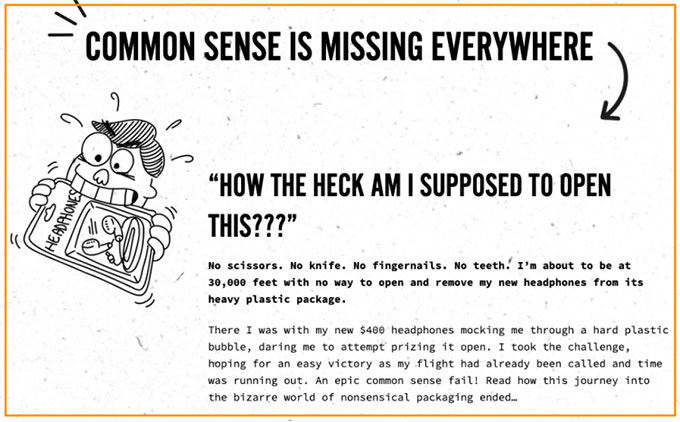
    Sanjeev KotnalaI have been a Martin Lindstrom fan. I have read most of his books. I frequently use examples, suggestions and learnings from Buyology, BrandWashed, Small Data, Brand Sense and Brand Child in my business. The two books by Martin Lindstrom that I am still to be read are ‘Clicks Bricks and Brands’ and ‘Brand building On The Internet’. So, it was natural for me to order his new book, ‘The Ministry of Common Sense’, when I came to know of it in one of the events held by Economic Times. Later, Martin Lindstrom’s session in the same event promised, the book will tell you how to restore common sense. It further enhanced the curiosity and an urge to read the book.

    One understands there are few companies with real Ministries with the sole purpose of cleaning the useless rules, regulations and day-to-day trivialities. Things that should not be there in the first place. That’s common sense by Martin Lindstrom.


    THE ERROSION OF COMMON SENSE.

    Business is all about need identification, providing a better-perceived solution, scaling up and growth. While scaling up templates, SOPs, uniform codes of behaviour and approach documents archiving the winning ways get created. They, with time, written and unwritten rules are created, norms and processes are defined. Soon, there is an army of employees hiding behind these rules, templates and approaches. The way things get done. The culture.

    The organisation fails to identify things that are no longer required, between right and wrong, smart vs foolish, simple vs complex and things that may have outlived their utility. As a result, organisations carry dead systems without upgrading. People willingly follow acceptable rules than to question them.

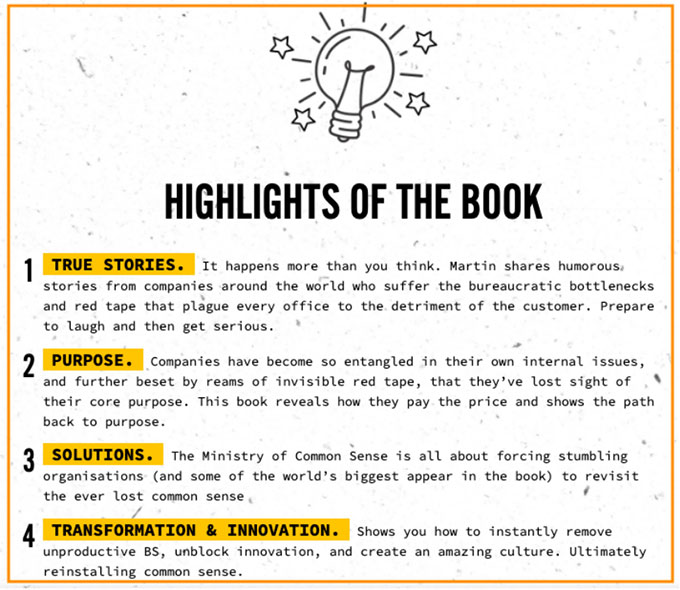
    In his latest book, ‘The Ministry of Common Sense- How to eliminate Bureaucratic red Tape, Bad Excuses, And Corporate Bullshit’, Martin Lindstrom presents a well-documented case for lack of common sense. There are examples to show that maybe we all have lost common sense. And that Martin is there to find these abrasions and solve the problem. I am not really getting into citing the examples, other than to say they are so in front of your face that you laugh at them.

    You laugh till you start looking deep within your life and the organisation you work/run. You will find many places, processes, SOP’s within the framework of accepted and at times celebrated work culture of your organisation, things that defy common sense.

    Now, you don’t really need Martin Lindstrom’s new book to know that. For me, Acharya Rajneesh did it many years back in his example of the Ritual cat.


    THE STORY OF THE RITUAL CAT.

    When the spiritual teacher and his disciples began their evening meditation, the cat who lived in the monastery made such noise that it distracted them. So the teacher ordered that the cat be tied up during the evening practice. Years later, when the teacher died, the cat continued to be tied up during the meditation session. And when the cat eventually died, another cat was brought to the monastery and tied up. Centuries later, learned descendants of the spiritual teacher wrote scholarly treatises about the religious significance of tying up a cat for meditation practice.

    Seriously, a silly joke on army life circulated in the WhatsApp university of education will alert you to question silly, outdated rituals, offering, processes in your organisation and life. The need to question things and keep an open mind. The need to upgrade and update. Otherwise, even ‘The Ministry of Common Sense’ will remain a good read and nothing else..


    BUILDING RITUAL AND PRACTICES- ARMY LIFE.

    A regiment had a new CO. On inspection, he saw two soldiers guard a bench. He asked for the reason.

    “We don’t know, Sir The last CO told us to do so. It is a regimental tradition.”

    The CO searched for the phone number of the last commander. He called him and got a reply. “I don’t know. The previous commander had the guards. I kept the tradition.”

    He went back another three COs and until he located an 80-year-old retired General. “Excuse me, Sir. I’m now the CO of your regiment, which you commanded 50 years ago. I find two men assigned to guard a bench. Could you please tell me about the bench?”

    Retired General, “What? Is the paint still wet?”


    HOW TO BRING BACK COMMON SENSE.

    The five-step guide to finding and questioning the lack of common sense just need a bit of common sense. The examples in the book are definitely hilarious and humorous. They make a point. They make the book a good read. But, I think you don’t really need the book to help question, identify and replace or change these hidden gems in your personal/professional life or workplace. All you need is to look inside out. Think about how the organisation functions and interacts with the prime stakeholders—re-evaluate the process. Raise question with an open mind. And then make small changes to win the process approval. Oh, that all the book said.


    MARTIN LINDSTROM’S PAINTED HOUSE.

    This book ‘The Ministry of Common Sense’ is at a different pitch than the rest of his books. To me, the examples quoted in the book seem too familiar. It appeared to be a book written in a rush. The book seems superficial, and frankly, I did not get much out of the book. Maybe that points to better prevailing common sense or the lack of it.

    It is like the “Painted House’ by John Grisham. Not having the same taste and flavour or feel to it. Maybe it is common sense that after really contributing to branding and purchase decisions, the accumulated examples and experience be crafted into a new book.


    NET-NET.

    ‘The Ministry of Common Sense’ by Martin Lindstrom is an excellent little book to read and chuckle at the examples.

    Now, it is a different case if you are gutsy enough to look inside out. To question the process, rituals, SOP’s, templates, norms, and laws that govern, dictate and define approaches in personal/professional life and the place you work/ run. Question them and re-streamline them. You can do that; you don’t need this book. What you need is common sense.

    Reading this book will cause no harm, so pick and read it. Unfortunately, it will not benefit you. It is Common Sense. So, am I recommending the book or not, you should be able to infer that with common sense. And, if it is not clear, maybe you should read the book.

    Here is the book promo av.

    PS. The text boxes have been sourced from martinlindstrom.com


  • Newspapers Must Stop Cheating Readers


    By Sanjeev Kotnala


    Sanjeev KotnalaMy Twitter timeline tells me that newspapers are cheating their readers with what is necessarily advertisements masquerading as news. Maybe it is their necessity with dropping advertising revenue. Unfortunately, it is weaning away discerning readers.


    The Truth Remains Unchanged

    Readers buy newspapers for news/ infotainment and not for advertisements. Many readers depend on news and other content in the newspaper to take decisions in their lives. I may be exaggerating the last bit, but even in the digital age, it holds true at least in the Tier-2 and 3 towns. Print still has a role to play.

    Native advertising was earlier considered a digital news problem. Today, it finds itself in newspapers, what they claim to be advertisers-influenced behaviour.

    A reader expects their newspaper to highlight the sponsored content, disguised advertisement, advertorial, or native advertising. Not doing so is breaching the reader-newspaper trust.

    The lack of clear and well-regulated norms/rules/guidelines for such disclosure is in many ways responsible for readers’ failure in identifying native ads.


    Is the Bold Editorial Dead?

    WNP;-What’s new in publishing laments the fact that the old editorial guards are dead and buried. The kind that believed in preserving the objectivity in newspapers. They would never think of collaborating with brands to help them mask their advertisements as editorial content. From their perspective, native advertising is unethical and deceptive. It only shows disrespect for media consumers. They fear it might push journalism over the edge, to the point of no return.


    The Ugly Side

    The same article points out. Some editors don’t have anything against native advertising. On the contrary, they believe, if appropriately incorporated, sponsored content could bring significant financial benefits and help publishers protect their businesses while also bringing value to readers.

    A two-year-old estimate says that native advertising generates 18% of overall advertising revenues, and publishers expect it will reach 32% by 2020.

    Now is that not alarming as a reader.


    The Breach of Trust

    I further quote from the above report. ‘Journalists are expected to unbiasedly report, with their end goal of accurately informing the public. When sponsored content comes into the picture, the motives change as their goal becomes profit-oriented. Journalists then agree to tell stories that fit a brand’s marketing objective. They do so in exchange for money, which automatically undermines their professional role’.

    If that not a breach of trust, then nothing is.


    Secular Guidelines Should Apply to All Media

    There is a high decibel demand on social media influencers to specify if the content is sponsored and paid. Ironically, the coverage of ASCI (Advertising Standards Council of India)  guidelines for such acts in digital content on platforms, such as Facebook, Instagram is in the newspapers known not to follow the guidelines. The industry is applauding ASCI for the welcome step.

    It is beyond my understanding why should similar guidelines not apply to all news media. Why newspaper as a respectful infotainment provider not be hauled for this breach.

    ASCI is trying to control digital when it has failed to control it in newspapers.

    I found an advisory for TV advertising but failed to see one for print.

    I am sure the guidelines exist. But, how often have they been used to bring errant newspapers to the task? My tweet request to ASCI on the subject went unanswered.


    Native Advertising/Sponsore Content – Not New

    Native advertising is not a new format, as many newspapers would want us to believe. Wojdynski and Evans (2016) define native advertising as “any paid advertising that takes the specific form and appearance of editorial content from the publisher itself”. It is considered effective if the media can mimic the content produced by journalists and, through such advertising, gain the same credibility as news.

    A study across five European counties observes that news outlets do not follow a consistent way in disclosing native ads visually, negotiating the balance between transparency and deception. In this balance, news organisations do not boldly push for transparency and instead remain ambiguous. Their analyses showed that both national and organisational characteristics matter when shaping the visual boundaries of journalism.


    The Root Cause

    The problem is newspapers over-dependence on advertising revenue. And advertisers desire to see enhanced efficiency/ROI for newspaper advertising. Everyone getting on the bandwagon cannot be an excuse for other newspapers to follow it.

    Really what defines such unethical behaviour is the organisational ethos and an understanding that they can get away with it. Each newspaper is trying new means to avoid flagging such content.


    No One Will Bite The Bullet

    The newspapers must bite the bullet of upping their cover price even at the cost of losing the fringe readers. It may seem a dangerous strategy, and maybe it is when done in isolation. But, collectively executed, it is what the doctors prescribe. The business model needs an overhaul.


    Alarm Bells

    No surprise that a 2017 report by International News Media Association (INMA) and The Native Advertising Institute (NAI) found something alarming.

    • Slightly more news media companies are offering native advertising as an option, 51% this year compared to 48% last year.

    • Last year, 35% of publishers surveyed described native advertising as “very important” to their companies. This year, 50% did.

    • Last year, 26% of publishers were working with an external agency to deliver native advertising. This year, that number is half at 13%.

    • 27% of news media companies surveyed have a dedicated native advertising team, up a bit from last year’s 20%.

    You realise how alarming the issue.


    The End

    There is no denying that it is becoming more difficult for readers and regulators to identify the advertising content masquerading as news and, therefore, misleading and deceptive. It is challenging to regulate, as there is no standard format. Newspapers find new ways and captions to sidestep the issue and need to flag such content.

    It is time for ASCI to focus on it. It will help the readers and the industry.

    Why pinpoint social media influencers and expect them to flag the sponsored- paid-for content and allow newspapers to continue having a ball. Some visible practical steps will help.

    ………….

    One may further read this report; native Advertising in India: How one company set the benchmark.


    Sanjeev Kotnala is a senior business and marketing strategist and educator. He writes on MxmIndia every Wendesday. His views here are personal

  • Mind The Gap… between Expectations & Experiences


    Sanjeev KotnalaBy Sanjeev Kotnala

    It was a lovely breezy evening at Nirvana Cottage in Mukhteshwar, Uttrakhand. At 7,100 feet and some 72 Km from Haldwani, the temperature was a bone-chilling 2-degree centigrade. The bonfire and our favourite Old Monk was working overtime to keep us warm. I was facing a tricky situation in Life. The experience not even coming near the expectation. Everything was against me. Fight, Flight or Freeze! Action, reaction and Inaction! I expected everything to work against me. My friend, philosopher and guide, Vermajee; the marketing consultant was my last stop of confession and advice.

    I was not to be disappointed. After the third peg of Old Monk with Coke, ever-dependable Vermajee opened up and the shower of gyaan started. ‘Life is an experience and a journey into unchartered terrain. We may be on the same train but can have different expectation and experience. After all, we have our own filters. After the two truths of Life, the birth and the certainty; death, everything is probabilistic in nature. Everything is a transaction. There are expectations and experiences. In fact, we are living our Life all around these two dimensions. Even emptiness, meditation, self-lessness too has these two elements of expectation and experience’.

    I was impressed. It felt like Arjun with Lord Krishna. It was all about loyalty and dharma.

    Having interacted with Vermajee, I sincerely believe that there is a market for a Corporate Swami. Let me park that thought.

    Vermajee who chooses his battles well continued. ‘You must manage the E-Gap in your Life. Life is simple. Don’t complicate it’, Initially, I did not know where the discussion was going. Still, a part of me desperately agrees to what he was saying.

    ‘We all try to be responsive to changing expectations and have our expectations. For us to be happy and at peace. The experience must exceed expectation. That’s where the catch is because the expectations are telescopic in nature’.

    Vermajee took another gulp from his glass, I realised it will need a refill soon. He looked up seeking answers from the milky way that was visible in the clear sky.

    ‘We all look for engagement and involvement, try to be innovative in finding solutions, create an ecosystem of family and friends as supporting audience. We use every trick Shaam (logic), Daam (price), Dand (Penalty) and Bhed (differentiation) get our view based on our past experience and re-negotiated expectation’.

    ‘We prioritise as per our needs and situation. Life is all more about what to sacrifice than what to do. We evaluate our potential and capabilities. Challenge the ever-present possibilities. Try balancing the narrative and POV’s of the stakeholders, hoping things will follow our expectations’.

    He now looked me square in the eyes. With a smile, he said, Sanjeev, Life is two-dimensional; Expectation and Experience. The actions, reactions and inactions, strategically or otherwise, resulting from E-Gap; emotional gap between the expectations and experience. Nothing more’.

    ‘By nature, every episode in Life real or perceived, intentional or unintentional, selfish or self-less has an element of expectation attached to it. The expectation can be tangible or intangible, emotive or functional, numeric or expression-based. Even when our experience is not detailed out, expectation exists. Our rational arguments and logical inferences, along with emotive, irrational thoughts define our expectations’.

    ‘Unfortunately, we remain self-centred, lacking the empathy to view situations by getting into other party shoes. We ignore our critique and feedback. We tend to negate history, along with changing expectations and experiences. We must take them into consideration. Look at the pain and pleasure points of stakeholders in our ecosystem. They are the best indicator and directional pointers to future possibility. The pleasure points are our experience enhancers, and we tend to just become comfortable with them’.

    ‘To create likeability to satisfy our misplaced egos, which anyway results from past expectations and experience, we make Life complicated. We tend to ignore weighing the possible impact and relevance of our actions in the long term’.

    ‘We rarely voice our expectation, agreement, and prioritisation. And we expect the outer environment to understand the unsaid expectation and the experiences to follow it. The complete experience has multiple small prioritised experiences. In Life all, experiences have foreplay and follow-up. Hence, the brands must look at the complete scope of experience and expectations’.

    The marketing consultant Vermajee toyed with my confused look. ‘Hence in Life, there is a premium on consistency and authenticity. Our repeat experience re-establishes, re-strengthens or negates the experience or the resultant perceptions. We know, perceptions, the resultant summary of expectation and experiences is more real than the truth. A recent experience is benchmarked against expectations and past experiences. Hence consistency and authenticity are a critical element in all our relationships’.

    ‘To make Life simple, we must constantly re-evaluate expectations and examine the experience feedback. We should Pause, reflect on the existing E-GAP. Absorb the learnings. Tweak, redraft-recraft wherever required and move on’.

    ‘Our capability to re-align experience to expectations and vice versa should be a constant process in today’s dynamic world of interlocked ecosystems of relationships. So, go ahead, and land evaluate your actions against not only your expectation and experiences but also other’s expectations from us and the experiences we deliver’.

    I was surprised at the new avatar of Vermajee, and it was natural for me to ask, how did it happen? Where did you get these insights into Life?

    Vermajee smiled and looked disappointed with my observation. He then told me the secret. ‘I am a brand and marketing consultant. A brand is a living entity just like you and me. A social entity which must appreciate realities.  What I told you is no different than what I will tell the brand. In case you feel different, just read the above by replacing you with a brand, and it will read the same’.

    ‘The whole branding and marketing game, sales and delivery, product design and innovation, service and recovery geared to create preferences and premium works around Expectation and Experience. Everything that any brand does is manage the E-GAP, the resulting emotional gap between the Expectation and Experience. Hence, the brand must manage expectation and experience. As the expectation results from many things that may not be in total control of the brand, it’s the experience that the brand must manage’.

    I know my expectation from Vermajee was getting higher by the day and he is going to find it really tough to match it with experience. But, let’s keep it simple and leave it for the next time.


  • Goafest: No News is Not Good News


    By Sanjeev Kotnala

    Sanjeev KotnalaIt is that time of the year. Goafest time. For the last 15 years, until 2020, Goa was my annual advertising, marketing, networking pilgrimage. I have attended every edition of Goafest.

    I have associated with Goafest in multiple capacities. I have been a delegate, a sponsor, an awardwinner and a jury member. Oh, I have rebelled by attempting to hijacking one evening with a successful standalone show. Few unfinished stories started at the Goafest and never reached a conclusion. I led cross-functional teams to publish the daily newsletter, including the first 3D issue at Goafest. Once, I objected to some Swami’s presence as a speaker. Pushed for more respect and participation to Publishers’ Abby.

    I have been an observer who regularly provided unsolicited inputs and suggestions. Some of them found the right ears and minds to impress and were implemented with no credit. But that’s par for the industry, or I think some else too had similar brilliant thoughts at the same time.

    So, it is natural that towards the end of March and the first/second weekend of April, I am full of nostalgia. My mind longs to be at Goa and enjoy the festival of advertising excellence. Thankfully, there are no withdrawal symptoms.


    GOAFEST 2020

    Goafest 2020 was rightfully postponed as the entire country was reeling under the spectre of the Covid-19. Later, Abbys were also deferred. The Red-Abby, which was to have its maiden appearance, remained silent. Later the whole show was cancelled.


    GOAFEST 2021

    One expected 2021 to be better. But, the Covid pandemic is back with a vengeance. The organising bodies AAAI and Advertising Club are silent. There is no announcement I know of.

    Don’t think there is any time left. In all probability, Goafest 2021 is dead.

    The question that stares you on the face is not so simple. Will Goafest ever be revived? There is no reason to believe it is dead! But most people do not see many reasons for it to be restored.


    FESTIVALS ADAPTING TO CHANGE

    I do not understand. When most of the awards have adapted to the new realities and have gone online or found other ways to celebrate, what stops from Goafest from doing the same?

    Is Goa the problem? Goa and virtual fun – does not sound right. What about the drinks? The tamasha? The knowledge sessions? The manpower poaching and interviews? Maybe, this is the right moment to get Goa out of Goafest. Maybe, it is time to get back to celebrating the excellence in Advertising and Marketing and be location-agnostic.


    ABBY COULD HAVE CONTINUED

    The Advertising Club says on its site: ‘ Recognition of efforts is what motivates an individual. And for an industry that thrives on motivation, the Ad Club has initiated various awards to ensure that Indian ad professionals receive the recognition they deserve. The ABBY AWARD are the Oscars of Indian ad awards to honour creative excellence in advertising.”

    So, when  Cannes changed its format and dates, it allowed a rich interaction with archives and sessions.  Adfest Pattaya went online and announced the winners of the last two years. Near home, award functions continued. Virtual webinars and exhibitions thrived. Knowledge seminars buzzed with suitable content and names… so what about Goafest? Kyoorius Award have started the entry process and were successfully conducted last year – what stops Goafest? Meanwhile, I read about the Filmfare Awards 2021, when the industry was almost shut for the last year. As I write this, I wait to watch the Mirchi Music Awards.


    EXPECTATION AND EXPERIENCE

    Goafest has evolved with time. Setting up new expectations and creating experiences to bridge the gap. So, what stops it from taking that leap of faith and get to a 2021 Goafest version going.

    Don’t the organisers have the responsibility and direct accountability to the community of agencies, clients, researchers, PR and marketers. Should the elected body at Ad Club and AAAI not go the extra mile to see it happens.

    2020 is understandable. But what about 2021.

    Why is no one asking and raising the voice?

    Or maybe Goafest does not call for such concern!

    Maybe, it is just me who is paranoid about the changes and what it could spell for Goa in Goafest.

    The industry has worked within imposing constraints. Brands and agencies innovated to find new ways to create fabulous relevant-original and impactful work.

    Should these industry warriors go unrecognised?

    Or do we plan to have a three-year award show in 2022 – subject to fair weather conditions.


    THE INDUSTRY NEEDS POSITIVITY  

    The economy, business and the advertising-marketing fraternity can definitely do with some positivity and celebration. Offline or online. WFH or lazing around in Goa. Remember, consistency is always a winner. Voids and absence give rise to many uncomfortable thoughts. Frankly, I can’t think how we will bridge the gap if Goafest is not held this year.

    Sanjeev Kotnala is a senior marketing and business strategist and educator. He writes on MxMIndia every Wednesday. His views here are personal