Category: RANJONA BANERJI

Ranjona Banerji’s hard-and-soft look at nightly news and the fare in the morningers

  • Ranjona Banerji: Vicious anger against the media

    By Ranjona Banerji


    The media is now well and truly in the middle of the general elections in India. And it is the Aam Aadmi Party which has stirred up the pot. For one, the fact that journalists are joining the party has riled both politicians and other journalists. There are questions being raised of fair play and objectivity – how far should one trust a journalist’s work just prior to his or her joining a political party? And it is the Bharatiya Janata Party and its supporters which are most upset. Yet this is not the first time journalists have jumped into politics in India and it won’t be the last. And as for the BJP, from the top of the head let’s count Arun Shourie, Chandan Mitra and Swapan Dasgupta who all are or were journalists but are still part of the BJP.


    There are enough other names and being part of the PMO or the Prime Minister’s press office – Sanjaya Baru, Suman Dubey, MJ Akbar (who even stood for elections for the Congress before he fell out with Rajiv Gandhi and turned against the party), Sudheendra Kulkarni who was part of LK Advani’s office, Rajeev Shukla of the Congress was once a journalist apparently, thus stretching the meaning of the word. Madhu Kishwar, once the flagbearer of feminism in India and editor of Manushi now appears to have become Narendra Modi’s main cheer leader, whether self-appointed or not it is still unclear.


    Therefore, this phenomenon is not new and it is not unusual. The anger against AAP of course is that this new party has threatened the status quo. And also, perhaps as significantly, is that television has now made the media accessible to everyone and the internet has given everyone a voice. As has been observed many times before, anyone with a weblog or a twitter account and a camera phone considers himself or herself no different from a reporter or even a columnist. It is another matter that very few outside the media can comprehend that a print newsroom is not populated only with reporters. And very few of those who watch news on television can envisage that there is anyone in the Times Now newsroom except Arnab Goswami.


    The anger against the media is vicious and it appears that the situation is only going to get worse in what is one of our most polarising elections in recent times. Of course lay allegations about media biases are usually unsubstantiated and sometimes even amusing in how gigantically they get it wrong. It is a bit sad that a lot of the anger against the news media on social media comes from former journalists, especially those who have joined PR. I am not sure that our sisters and brothers in public relations are following a wise course here. After these elections are over, life might a little difficult for those in PR who need the “mainstream media” to further their clients’ interests.


    **


    The general elections in India are of course big news. And the mammoth personalities of Narendra Modi and Arvind Kejriwal make for compelling stories. But the biggest story of the week has been the missing Malaysian Airlines plane. Has the Indian media done it justice? Perhaps to the extent of being suitably insular and informing the Indian public about how many Indians were on the passenger manifest. But there is more to this story and we have missed the boat on this one. And the plane.

     

  • Kejriwal and the Media: Ranjona Banerji & Pradyuman Maheshwari


    Ranjona Banerji: Kejriwal’s threat to democracy?


    By Ranjona Banerji


    The media, willy-nilly, has become part of these elections. Not as the “fourth estate” of democracy but more like a “fifth column” which is out to destroy institutions – that is, if you listen to our politicians of all colours and persuasions and try to assess the anger on social media. But why blame politicians or Twitter and trolls alone? The media itself – and here most fingers will have to point to television – has behaved in extremely irrational and even unprofessional ways when it comes to bread and butter journalism.


    Starting from the extraordinary coverage of the India Against Corruption movement in 2011, television decided to become a player rather than an observer. Even I got taken in by the exhortations of TV anchors in 2011 when they talked about millions of people taking to the streets in support of the Anna Hazare-led movement to clean up public life. Alas, when I arrived at Azad Maidan, there were less than 500 people present. Not the hundreds of thousands promised by well-positioned TV cameras.


    But once India Against Corruption transformed itself into a political party – the Aam Aadmi Party – and Anna Hazare was replaced as the movement’s leader by Arvind Kejriwal, TV started to change its tune. The tide was now against the movement. None of the surveys running up to the Delhi state elections could predict what AAP would do. The Congress would be struck down and the BJP would win is what we were told. Instead, we had the AAP forming a very close second. So much for election surveys, psephology and astrology.


    Once the AAP formed the government, the wrath of television knew no bounds. Of the English channels, Headlines Today and Times Now were the angriest. Every hand gesture of AAP members was dissected and denigrated. This is not to suggest that the AAP had a perfect month in power – far from it. Indeed, their law minister Somnath Bharti’s unconscionable midnight raid looking for sex workers in Khirki Extension deserved the strong condemnation it received. But the poor AAP did not even have the short “honeymoon” period accorded to everyone else by the media.


    Since then, some TV news channels of all languages have abandoned all objectivity and decided that the AAP has to be their primary target. The fact that some journalists have joined this party has enraged them even further. The AAP has reacted with matching bile and Kejriwal has decided that he will arrest mediapersons if he comes to power. What a wonderful circus of democracy. Enter the clowns, exit all good sense.


    Some mediapersons have now had additional tantrums about the threat to democracy promised by Kejriwal. All this is sans irony, especially of the threat to journalism as practised by them. Never mind.


    Here are some other media views:

    Senior journalists question the overreaction to Kejriwal: http://www.thehindu.com/news/ national/why-overreact-to-kejriwals-criticism-ask-journalists/article5789153.ece


    And Shekhar Gupta speaks as an “aam patrakar” in The Indian Express: http://indianexpress.com/article /opinion /columns/national-interest- main-hoon-aam-patrakar/


    **


    The upshot is that the AAP has to be treated as one more political party. Neither angel nor devil. And that ought to hold true for all of them.


    Ranjona Banerji, senior journalist and columnist, is Contributing Editor, MxMIndia. The views expressed here are her own. Twitter: @ranjona


    Mediaah!: Time media shows Kejriwal his place


    By Pradyuman Maheshwari


    Not many moons ago, Arnab Goswami could be seen screaming at anyone who didn’t agree with him that there was an Arvind Kejriwal wave sweeping the country.


    Arnab isn’t too kind with anyone who disagrees with him. His body language changes and his head shakes in denial the moment the guest with an opposing view opens his or her mouth.


    In fact, even before a guest finishes his first two or three words, Arnab opens his mouth and the two can be seen to be talking together. But that’s his style, and people love the Times Now editor-in-chief for that.


    The problem for Kejriwal is that soon after his party’s great showing at the Delhi elections, he started negating the highfalutin statements he made before the polls and after them.


    Many in the media – and this writer included – had then regarded Kejriwal as the messiah who God had sent to cleanse the country’s political system. And as it often happens, it propelled him to dizzying heights.


    Some of my friends and colleagues in the profession didn’t think too much of Anna Hazare and Arvind Kejriwal. I thought they would come around the man and his ways soon enough. After all, weren’t there many who thought a certain Mohandas Karamchand Gandhi was nuts with his satyagraha and non-violence movement?


    I was proved wrong and to my dismay – quite like the disillusionment I had with the BJP post L K Advani’s Rath Yatra and the Babri Masjid desecration in 1992 – Kejriwal made a mockery of himself and all that he stood for.


    In fact things have gotten so bad now that even though the AAP leader could well be speaking the truth, no one really trusts him.  The media at least doesn’t.


    We know the media isn’t above board. There is corruption in many newsrooms.  Paid news is rampant, and despite all of the Election Commission’s efforts, the smart ones still get away. There is paid news even for non-political content, but I don’t think Kejriwal will be too bothered about the other kind of parties.


    But is it right for him to question the integrity of news channels just because they are now treating him the way they treat all others? Just because they are questioning every act of his, which they wouldn’t just six months back?


    I have found Arnab Goswami unduly harsh on Kejriwal (see: Is Arnab being too harsh on Kejriwal, mid-day, March 13:  http://www.mid-day.com/articles/is-arnab- being-too-harsh-on-kejriwal/15156104), but that’s no reason for anyone to rubbish him (Arnab) and suggest that he and other newsroom bosses are on the take from Narendra Modi or Rahul Gandhi.


    The News Broadcasters Association acted on it a few days after the utterance and his issued a warning to the AAP leader. The message from the NBA: stop the trash, Mr Kejriwal, or our members will stop covering you.


    While Arnab Goswami was pretty scathing on his News Hour, the real blow came from Rajat Sharma on his show ‘Aaj Ki Baat’ on Times Now. Coming on air when he was down with fever and a bad throat, Mr Sharma was scathing in his criticism of Kejriwal and exposed his doublespeak in a one-hour show.


    Meanwhile, Arvind Kejriwal and AAP would’ve been taught a lesson not to subject the media to their loose talk.  Damn the media, and be ready to get damned.


    Although Pradyuman Maheshwari is Editor-in-Chief and co-founder of MxMIndia.com, the views expressed here are his own. Twitter: @pmahesh


  • What young journos can learn from Khushwant Singh


    By Ranjona Banerji


    Khushwant Singh personified that one thing that all journalists ought to have: irreverence. Add to that a refusal to take oneself too seriously and you have a winning combination. And like the contradictions in journalism, these are lessons from a man who did not start life as a journalist. He was already a renowned author when he took over editorship of The Illustrated Weekly in 1969.


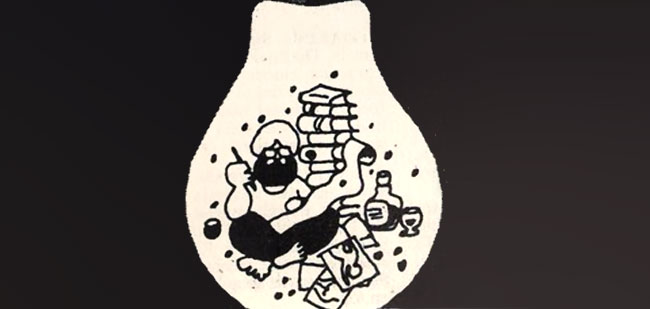
    Is it an exaggeration to say he defined or redefined what journalism and editorship has meant to us ever since? People may not always realise this, but the Khushwant Singh effect is still with us. He took a fuddy-duddy publication and gave it lightness and life and humour, which should not be mistaken for fluff. He encased himself in a light bulb – or was sentenced to it by cartoonist Mario Miranda – but by doing so he freed journalists from boring strangleholds of dead habit.


    Certainly, Singh increased sexy content in the Weekly and his witty but risqué jokes were looked forward to. He understood the influence of cricket and films on the Indian psyche – so I guess we can blame him for so much of the bilge that passes for journalism today? Kidding! But such was his hold over the reader that for decades after he left the Weekly his columns had to be carried in newspapers because of public demand. All those editors who dreamed of themselves captured for perpetuity in a light bulb had to bow down to the allure of Kushwant Singh and his wit. I know several people for whom he was still India’s foremost columnist long after his prime.


    Many of today’s young journalists (ah yes, here comes the old person’s lecture) would do well to emulate Singh. He was not afraid of taking on the high and mighty, he was not afraid of admitting his mistakes and he was not afraid of being contemptuous of hypocrisy. Indeed, he thrived on the last! His admiration of Sanjay Gandhi and the Emergency he would deeply regret but he did not hide it. One might argue that those who acknowledge their errors and transgressions are far more admirable than those who refuse to accept they ever made them. He objected to Operation Bluestar and made his objections public but he was no fan of Sikh extremism either.


    Singh was also a serious historian especially when it came to Sikh history and India’s Partition. His Train to Pakistan remains a seminal work on that painful subject. Singh was always intensely secular as well – regardless of how insulting that term is to rightwing India. He spared no punches when it came to communal elements either. His many novels are varying in excellence and his sex writing was somewhat tedious. But his autobiography and his books about himself and his writings though are must-reads for every young journalist and excellent examples of honest, scathing and witty writing. I would also suggest them for all our older journalists as well – especially those dripping with self-importance.


    Singh’s life in journalism leaves behind a rich legacy. We can immediately pick up that if you get too close to any political dispensation, you will pay the price for it or regret it or both – as happened with Singh and the Gandhis. And you cannot under any circumstances take yourself and any passing pomposities too seriously. What a lot of balloons to puncture when you look at all the fat-headed pundits around.


    I suppose the third lesson is that journalists who make plenty of jokes and drink a little single malt everyday live long and fulfilling lives? Khushwant Singh lived a life to be celebrated and we need to raise a glass to that!


    **


    Understandably, today’s newspapers have devoted pages to the Grand Old Man. Bachi Karkaria’s piece in The Times of India speaks from the heart and personal experience – she and Singh joined The Illustrated Weekly the same year; indeed she is one of Singh’s many protégés.  TOI also had Rahul Singh, son and journalist himself, writing on his father. TOI’s institutional memory remains dominant, whatever other criticisms can be chucked its way. Vikram Seth’s poem in Hindustan Times – written some years ago – is apt. Though one wishes Hindustan Times had collected all the Singh recollections on one page rather than scattering them around. Indian Express got LK Advani to talk about him – a change from all the seat woes for the political veteran. Mid-Day pulled out relevant extracts from Singh’s writings about Mumbai people like Dom Moraes and Protima Bedi. DNA had photographs and recollections. Economic Times went with Shobhaa De.


    Fitting tributes all. But none more so than Singh’s own epitaph for himself:

    “Here lies one who spared neither man nor God

    Waste not your tears on him, he was a sod

    Writing nasty things he regarded as great fun

    Thank the lord he is dead, this son of a gun.”

    Unlikely though that too many will agree with that last line.

    We need to raise a glass to that!


  • Ranjona Banerji: When editors get into party-mode

    By Ranjona Banerji


    MJ Akbar, respected and well-known journalist, joins the Bharatiya Janata Party. There is applause at one side of the political spectrum and disquiet at the other. Akbar, like anyone else, is free to do what he wants. This is not the first time he has taken to politics – he was with the Congress in Rajiv Gandhi’s time.


    The question to be asked is not about Akbar himself – because he is one of many – but about journalists leaning towards political parties or being members of political parties or being outright supporters of particular politicians. If objectivity is a cornerstone of journalism, then joining a political party means that you are immediately disqualified.  But there are subtle arguments that lurk about that deny such an extremist position.


    A reporter and a sub-editor for instance need to be objective. But editors and columnists? They are allowed a little leeway. For instance, an opinion writer can be politically left or right – without necessarily being part of or approving of political parties that follow a similar ideology. But it’s a fine line and where should one draw it?If an editor or a columnist – who is a journalist, not an academic or analyst and so on – is openly supporting a politician or a political party, what happens then? In India, unfortunately, media houses do not openly declare their political leanings. They all claim to be all things to all people but in fact overtly or covertly support one party or another. The odd thing is, they can declare their political leanings without any damage to credibility. Everyone knows what The Guardian or what Fox News stands for.


    The essence of journalism is to criticise everyone and perhaps we need to be more stringent about that. Also, when newspapers invite non-journalists as columnists, they need to make their political leanings clear.


    And finally, it ought to be understood that once you join a political party, you are no longer an independent-thinking journalist. At best, you can edit the mouthpiece of the party to which you belong.


    **


    Some of the bluster against media houses however remains from disgruntled supporters of some political party or agenda who feel they’re not getting fair treatment from every single media house. However, since one can easily count people who are on some side, these accusations are easily debunked. I am amused though by fellow journalists who stridently object to editors who are seen as favouring one side but have ample excuses for those who favour another side. Double standards of course are a human failing and perhaps even a sound survival device.


    **


    Rajdeep Sardesai of CNN-IBN has discussed media responsibility in his column for Hindustan Times. His argument is partly about attacks on the media and the difficulty in starting an independent media house in India. I must however disagree when he makes a case for owners, saying that it is unfair to tag them as evil when responsibility must end with the editor. That is true in an ideal world. What is true in today’s media is that owners do play a role in determining how a TV channel or newspaper or website responds to news. And the phenomenon of “paid news” is a deal struck by the managements of media houses, not by journalists. Yes, journalists are not innocent but that does not mean that owners are not guilty.


    http://www.hindustantimes.com/comment/rajdeepsardesai/time-for-media-to-turn-the-gaze-inwards/article1-1199548.aspx


    **


    I make this plea in vain to Star Sports India – for the umpteenth time. If it could please not bother to buy tennis tournaments that it does not want to show in their entirety. This week’s Miami Open coverage has been upstaged by football and motorcycles. Agreed, Star Sports is free to show what it wants. But tennis fans don’t really want to watch a tournament in between the requirements of other sports. So if your six channels are not enough and one channel is reserved for endless reruns of Jai Ho, leave tennis alone and let someone else show it. This dog in the manger attitude is winning you no fans.


    It might also be polite if whoever runs the @starsportsindia twitter handle would answer questions put to it now and then.


    This is not the first time I have discussed this and I am guessing it will not be the last…


  • Ranjona Banerji: When journalism pretends to not be tabloidy

    By Ranjona Banerji


    The Supreme Court’s scathing observations on the running of the Board of Control for Cricket in India, on the BCCI president N Srinivasan, on the Indian Premier League and on the general state of cricket have more or less ousted politics from headline news for at least one night and one day. Supreme Court advocate Harish Salve’s criticism of MS Dhoni’s deposition before Justice Mudgul meant that the India captain was also under scrutiny.


    NewsX had a debate on Thursday night with an extraordinary proposition: that Dhoni should be “barred” from Indian cricket. Not all the guests agreed with host Rahul Shivshankar which is hardly surprising. Once more, we see how journalists – I use the term loosely to include TV anchors – are unable to distinguish between allegations and proof and deliberately try to create sensations instead of reporting or commenting on the news. Nothing wrong with tabloid journalism: the problem is when you pretend not to be a tabloid or a TV equivalent of one.


    Dhoni of course has gone from being a media darling to the equivalent of a major demon after some losses by India in the field. Now he is being accused of corruption of the highest order though the actual suspicion is not of the highest order. This is how reputations are destroyed based on whispers and journalists need to understand this better.


    It is no one’s case that journalists should not go after someone because they are popular or successful. But even journalists have to work on some kind of proof. It would help if all the news channels which are on this demonisation course would do some investigations of their own. Of course, it is another matter that many journalists do not know the difference between a judicial probe and a court of law or between an allegation and evidence and between an observation and a verdict. And if I might add in a non-related political aside, that so many actually believe that “clean chit” is some legal provision in the Indian Penal Code.


    The other tragedy as far as the media is concerned is that few of these arguments being made against cricket, the BCCI and the IPL are new. So if there are to be debated again and again, it would help to get some new names on their panels so that we can hear some fresh points of view. Otherwise, we might as well be on perpetual rewind.


    **


    The rest of the media’s time is spent trying to figure out whether Narendra Modi will be India’s next prime minister or not. The fact that no one knows except the Indian voter is no deterrent. Instead, the media has decided to do the BJP’s work for it. Please note I am not ascribing any allegations here but only pointing out that some journalists have sort of forgotten if they ever knew what their job is.


    **


    Having said that, The Indian Express has a very readable story on how the Aam Aadmi Party’s journalist-candidates are using their media experience. http://indianexpress.com/article/cities/delhi/from-reporting-news-to-being-the-news/


    Have to also thank Indian Express for explaining to readers the back story of Aditya Verma, the Cricket Association of Bihar man who filed the PIL that started the whole process against the BCCI. http://indianexpress.com/article/sports/cricket/little-known-aditya-verma-and-his-powerful-backers/


    **


    Indeed, if you read the sports pages of all the newspapers you get an excellent idea about what’s happening in the BCCI. One alone will not do.


  • Ranjona Banerji: Were journalists of 30 years ago mere stenographers, as Rajdeep Sardesai said?

    By Ranjona Banerji


    According to an article written in Hoot by senior journalist Seetha, editor-in-chief of CNN-IBN Rajdeep Sardesai commented at a CII panel discussion that 30 years ago journalists were stenographers rehashing press releases while today’s journalists are more assertive and questioning. The credit for this, he felt, was due to television.


    Seetha’s excellent piece demolishes the stenographer accusation. I found the supposition a bit strange and thanks to the logistics of Twitter, had a small conversation with Sardesai – whom I do not know – on the issue. The upshot of which was that Seetha had not quoted his whole contention and used his comments out of context, that 30 years ago journalists were stenographers but there were also some good journalists then and it was unfair to attack TV journalism which was a soft target and finally, “Let’s not glorify the past and damn the present.” (That’s a direct quote from Twitter by the way.)


    I am not going to venture into Seetha’s territory, since she has done an excellent job defending the “stenographers” of the past. (http://thehoot.org/web/home/story.php?storyid=7398&pg=1&mod=1&sectionId=10&sectionname=Columns)


    But I am going to look at the further discussion. Past and present. TV and print. My understanding is that there were good and bad journalists then as there are now – which is hardly rocket science. In which case the “stenographer” remark is gratuitous. The additional argument that TV has made journalists more assertive and questioning is intriguing. I suppose in one way, Sardesai is correct. TV journalists are forever asking all kinds of questions: How do you feel, why didn’t you do this or that, should X do this or that, are you a tomato or have you at any time been a tomato. Not to mention asking questions on behalf of the nation. Then there’s assertiveness. Which you have to be if you are going to stick a microphone in someone’s face.


    So let’s assume that Sardesai is correct. TV has made journalists more assertive and questioning. The problem is the quality or the need of the questions. And that’s when we feel old, like Father William. Even at the risk of sounding like a fuddy-duddy stenographer of yore, TV journalism in India at least has failed at taking the profession further. Our primetime programmes have descended to chaos and melodrama. Decibel levels determine success. And if investigative and development journalism earn low dividends in print, you can rest assured they are meaningless on television.


    Obviously, there are good and bad TV journalists and good and bad print journalists. And there are better and worse as well. But on an average, the nature of TV journalism, in India at least, seems to have got stuck. The discourse has been lowered and like commercial cinema, the lowest common denominator always wins. Newspapers have also dipped in quality in some areas, but they have maintained them in others. That is the nature of the beast. Print will always find it easier to be all things to all people. It will also be able to fish in a larger pond of interests. And the time that print has to process and absorb “breaking news” gives it an edge.


    The biggest threat to both however comes from the internet. There will be good and bad websites (I am getting so tired of this meaningless chestnut) but on the whole, they will give both paper and TV a run for their money. News websites can be immediate, like television, but they can also be discerning like print. I am all for the future even if I am an old and grizzled stenographer. The present is what I find dubious. There was perhaps no golden age in journalism like there was no golden age in anything. But to damn the past is beyond my limited capabilities or understanding as also to demean my peers and forebears.


    Let’s put it this way then: one would only wish that today’s journalists, especially some of those on TV, would be a tad more intelligent and aware while they are being assertive and questioning? Is that a lot to ask? I am aware of today’s date, so am not holding my breath.


    And here’s from the genius BBC comedy series Broken News: https://www.youtube.com/watch?v=JRbihhHfTcQ


  • Ranjona Banerji: Is it right to watch the Tejpal tapes?

    By Ranjona Banerji


    How seriously should journalists take the Supreme Court rulings on keeping secret the identity of a woman who has filed a rape complaint? And do journalists have to respect court and investigative procedures if they get hold of evidence that is material to a case? Is the search for a story more important than everything else?


    Tarun Tejpal is still in jail on rape charges (or sexual assault amounting to rape). The case had many sensational elements in it, was highly publicised and both the accused and the accusers were journalists. Issue of work place harassment, India’s new rape laws, the functioning of Tehelka, how seriously journalists take themselves, the role of Tehelka managing editor Shoma Chaudhury were all discussed. Tejpal is still in jail, bail pleas having been rejected.


    And now as the case comes to trial, we see defence for Tejpal being built in the media. Articles on blogs and in magazines claim to have seen the CCTV footage of Tejpal and his accuser leaving the lift where the incidents are supposed to have taken place. Now this footage is part of the evidence. It lies only with the defence and the prosecution: or that is how it should be. Those who are part of the young victim’s (or accuser if you prefer) support team have not seen the CCTV footage nor it seems has the young woman herself seen it, according to lawyer Vrinda Grover.


    Journalist Manu Joseph in Outlook first suggested that he had seen the footage in his article ‘What the elevator saw’ but is later quoted as saying that it is not “relevant” whether he has seen the footage or not. Filmmaker Anurag Kashyap says he has seen the footage which proves that no rape took place. Senior Seema Mustapha also says she has seen the footage and it proves that the young woman was lying.


    So does a journalist who comes by such red-hot material abide by the law and refuse to view it or write about? Or does a journalist see this as a massive scoop where journalistic ethics trumps the law? The Supreme Court ruling about keeping a rape accuser’s identity secret is precisely to avoid the sort of vilification that is taking place by the Tejpal defence. How seriously should journalists and editors take that? Is a journalist one might ask supposed to take sides and work for the defence of either an accused or an accuser?


    After the Niira Radia tapes expose by Outlook and Open magazines, Joseph, then editor of Open, is supposed to have told Barkha Dutt, as I was reminded by a very senior journalist: “Sometimes the source is the story” or words to that effect. The implication was that Dutt had missed the fact that a telecom lobbyist was pushing for A Raja as telecom minister. So did Joseph ask himself why he had been given the tapes and whether he was being used as a stooge by Tejpal’s defence team?


    I am asking these questions because we are in a very grey area here. We all have our personal responses to the issues of rape and sexual harassment and mine is that the Supreme Court ruling as far as the identity of the accuser is concerned must be followed. Certainly, any journalist is free to argue for and against any person. But if he or she wants to take on the Supreme Court on the subject of keeping a rape accuser’s identity secret, then they should do it directly. By talking about the CCTV coverage, they have showed bad judgment and bias.


  • Ranjona Banerji: Rajya Sabha TV is the channel to watch

    By Ranjona Banerji


    Should news channels have broadcast the BJP’s election manifesto as it was revealed on Monday? Unless the Election Commission issues a written embargo to all news publications or had banned the BJP from releasing its manifesto once voting was underway, this whole exercise becomes a little pointless. The media has to share news as it gets it unless it is illegal to do so and even then there are some grey areas. As we have seen so dramatically played out in the Julian Assange, Bradley Manning and Edward Snowden cases. If the Election Commission wants its diktats to be heeded then it has to be stricter in the way it goes about it.


    **


    Meanwhile as the elections approach, it is time to start choosing which channel you are going to track the results on. Those looking for excitement and high drama must of course go to Times Now and watch Arnab Goswami run around like the Duracell bunny. Or if you want platitudes and placidity, you can watch CNN-IBN. If you are youth-obsessed, there’s Headlines Today. If you are confused, there’s NewsX. And if you are nostalgic by nature, there’s the Prannoy Roy-Dorab Sopariwalla double act on NDTV.


    As for me, through trial and error, I have found my haven in Rajya Sabha TV. It is to the point, the results are up-to-date and the anchors and panellists are not given to high drama, hi jinks or spouting meaningless hi-falutin hogwash.


    **


    While on the BJP manifesto, media reactions have been mixed. Some have applauded good economic sense and the focus on job-building and the “neo-middle class”, others have been struck by the manifesto’s mentions of the Ram Temple, Uniform Civil Code and Article 370 and there are those who are amused by the similarity to the Congress manifesto. The Times of India’s edit calls it “lacklustre” and perhaps that is closest to the truth.


    In fact, everything that has happened around the BJP manifesto brings up the question of whether a manifesto really matters to voters any more.


    **


    The big issue for the media remains the polarisation of society and opinion over Narendra Modi. The venerable Economist, the publication that looks like a magazine but calls itself a newspaper, decided against Modi in spite of the economic development he may bring to India as prime minister. Those who applauded the Economist for calling Manmohan Singh ineffectual were very upset with this leader: http://www.economist.com/news/leaders/21600106-he-will-probably-become-indias-next-prime-minister-does-not-mean-he-should-be-can-anyone


    Which only proves once more that you can never trust any media organisation, ever.


    And The Guardian has not helped with this comment about whether Narendra Modi’s anointment as prime minister will be good for gender issues: http://www.theguardian.com/commentisfree/2014/apr/04/narendra-modi-as-prime-minister-womens-rights-india


    **


    I was quite surprised to learn that Meenakshi Lekhi, now a BJP Lok Sabha candidate from Delhi and once a formidable BJP TV spokesperson, was allowed back on Times Now even after she accused star anchor Arnab Goswami of taking money during a discussion on LGBT rights. I really thought that she would never ever ever never ever never ever appear on Times Now again after that.


    **


    And if, like me, you find most Indian news channels very distressing, there is hope: Comedy Central India have brought back their anchors Ornob Musambi and Rajbeep Sardesai. You might never ever never ever ever want to watch anyone else again!


  • Ranjona Banerji: Curses UnLtd on Social Media

    By Ranjona Banerji


    If there is one argument that has got really boring, it is the squabble amongst journalists about who is fair and objective and who is not. Frankly, everyone has a political perspective or leaning. And every columnist has a point of view. I can understand the general social media-empowered public throwing curses at every columnist who does not agree with him or her. But journalists should know better.


    The social media has become a hilarious space for journalists to throw accusations others. None however see the irony in the fact that they display their own preferences while they accuse others of prejudice. Even worse, the jejune arguments used by party worshippers are now being used by journalists as well. Grow up, guys. And if all you want is a column with your mugshot next to it, then please hone your arguments. From what I read right now, Facebook posts are as far as most deserve!


    **


    The third phase of polling saw big voter turnouts and big play on TV all day. But by the evening, Samajwadi chief Mulayam Singh Yadav’s comments which appeared to justify on rape dominated the news space – hardly surprisingly. Some primetime discussions also centred around the issue and on Times Now, Arnab Goswami got a chance to bellow about a subject he seems genuinely concerned about. I also saw the former BJP TV spokesperson and now Lok Sabha candidate Meenakshi Lekhi back on Times Now myself – evidently, she has been forgiven for saying that he took money.


    Mid-Day has done a spine-chilling interview with Abu Asim Azmi, Mumbai’s Samajwadi chief  where he has made his own deplorable comments about women and rape. http://www.mid-day.com/articles/shocking-women-having-sex-should-be-hanged-says-abu-azmi/15222050


    **


    Prime ministerial hopeful Narendra Modi’s sudden disclosure that he has a wife also collected a chunk of news time and space. Everybody already knew that he had a wife but his admission on his nomination form is a first. Political opponents have made the most of it – especially since he did not admit to this wife in all previous elections. As The Indian Express points out, the disclosure came only after the Supreme Court insisted that candidates fill in their forms without omissions.


    Only The Times of India, as far as I could tell, mentioned an allegation from the Congress that Modi said he “did not know” his PAN card and any financial details. This I find more intriguing than his long-known-about wife. Surely, in these days of corruption chatter, we need to know more about the financial condition of this PM nominee?


    **


    In their news sections, just about every newspaper saw a spurt of support for the BJP or electoral calculations favouring them. This perhaps either means that all newspapers are now BJP agents or not or are just reflecting what they have seen on the ground? It somehow puts paid to the blanket argument one way or another.


    However, edit pages understandably give you analysis and comment and that can wander in any direction. Avijit Ghosh in The Times of India talks about how this much-touted “Modi wave” thins out as you move into the hinterland of Uttar Pradesh: http://blogs.timesofindia.indiatimes.com/Addictions/entry/whither_the_great_wave _the_modi_effect_fades_as_one_steers_off_highways_and_drives_deeper_into_up_s_hinterland


    Senior journalist Bharat Bhushan also did see a Modi wave in this opinion piece for Business Standard: http://www.business-standard.com/article/ opinion/bharat-bhushan-modi-is-unsure-if-the-surf-s-up-114040901248_1.html#.U0Z3_wpF1a8.twitter


    Anil Dharker in the Hindustan Times points to the UPA’s many deficiencies, communication being at the top of the list: http://www.hindustantimes.com/comment/analysis/ inability-to-communicate/article1-1206714.aspx


    **


    Then there’s the plane. The media is very hopeful of its being found.


  • Ranjona Banerji: Media booms with Baru book

    By Ranjona Banerji


    Sanjaya Baru’s book, The Accidental Prime Minister, about life in prime minister Manmohan Singh’s office from 2004 to 2009, has captured media space ever since it was released. Baru, a journalist was media adviser to Singh for the United Progressive Alliance’s first term at the Centre. But what the book is about is another matter: all things to all people.


    To the media, not unnaturally, it is about controversy. Baru has attacked the PM and the UPA when they are at their weakest, he has given ammunition to the Opposition, he has confirmed what everyone always knew – that the PM was a puppet and Sonia Gandhi ran the government.


    The Government and the Congress have gone into high dudgeon, thus providing even more fodder for the media, what with attacks on Baru. The Opposition is rubbing its hands with glee and smiling like the shark in Finding Nemo.


    Baru himself has said he was written things as he saw them and said the publisher decided on the release date, Further, the PM read the book before it was released and said nothing. No comments on that!


    The Indian Express has a front page story on how furious Singh’s family is on Baru’s abuse of trust. This is a journalistic coup for the Express, since no one else has managed to get what Singh himself thinks of the matter.


    But commentators provide a variety of explanations. Manoj Joshi in Mid-Day thinks that the Congress did itself no favours in protesting about Baru’s book. It has been exposed in its efforts to protect Sonia Gandhi at all costs: http://www.mid-day.com/articles/the-pmo-files/15230074


    An edit in the Hindustan Times questions the timing of this book and that of former bureaucrat  PC Parakh on the coal allocations scam: http://www.hindustantimes.com/comment/timing-of-two-recent-books-showing-pmo-in-a-poor-light-is-suspect/article1-1208092.aspx


    Jaitirth Rao, founder and former CEO of Mphasis, says in The Economic Times, that Baru is clearly a Manmohan Singh fan who has however decided not to ignore the PM’s faults: http://economictimes.indiatimes.com/opinion/guest-writer/the-accidental-prime-minister-sanjay-baru-shows-manmohan-singh-in-good-light-with-some-blind-spots/articleshow/33755224.cms


    On Monday night, Karan Thapar on his new programme on Headlines Today, ‘To the point’, skilfully conducted a debate between Shashi Tharoor batting for the Congress party and Seshadri Chari for the BJP. Since Thapar does not allow decibel-challenging hysterics on his show, the discussion was interesting and even illuminating.


    But perhaps there is some truth in Joshi’s assertion that this matter will only die out when the Congress party shuts up about it. The more it screams ‘Et tu Brute’, the more the media and the Opposition will make merry.


    **


    Two surveys on the media in these elections need attention (warning: this is not about election results). CMS Media Lab looked through prime time coverage of five news channels (Hindi and English) between March 1 to 15 and found 429 minutes were devoted to Arvind Kejriwal, 365 to Narendra Modi and 72 to Rahul Gandhi. Not all of this was positive coverage however. The channels scrutinised were Aaj Tak, ABP News, Zee News, NDTV 24×7 and CNN-IBN.


    This means, effectively, that between 8 and 10 pm, we have Kejriwal dominating over the rest. Rahul Gandhi frankly is a very poor third while Modi has perhaps fallen a bit, coverage-wise at least. However, Kejriwal got more negative coverage than Modi. In all the allegations thrown around about “paid media” and “paid news” this survey makes for interesting reading.


    Of the topics discussed, the list is even more fascinating, keeping in mind the feeling that this election is all about “development”. Personality topped the list, followed by Hindutva, party, development, corruption, public policy and governance.


    The full story is here in The Times of India: http://timesofindia.indiatimes.com/home/lok-sabha-elections-2014/news/TV-time-429-minutes-to-Kejriwal-365-to-Modi-72-to-Rahul-Gandhi/articleshow/33755909.cms


    **


    As far as social media goes, a survey by the Pew Research Centre shows that most Indians use social networking sites to keep in touch with family and friends (90 per cent) and share matter/opinions on music and films (87 per cent). Even religion tops politics – although by one one per cent at relatively low percentages of 36 and 35 per cent respectively.


    Perhaps these elections are being fought on the ground and not on social media after all…


    **


    Congratulations to The Guardian and Washington Post for winning the Pulitzer for the Snowden leaks.


    More power to them.


  • Ranjona Banerji: Rumours UnLtd on news channel top jobs

    By Ranjona Banerji


    The rumour mills within the media are running as fast as those in the political sphere. Just about everyone is playing musical chairs or is on the merry-go-round. Changes at the top are forecast at CNN-IBN, Times Now, NDTV, Indian Express, India Today… Those of you who are feeling left out are free to start your own rumours. Remember however to add a dash of feared political reprisal because of your leanings, the dangers or joys of corporate interference and the ability to interact with sundry India experts in foreign universities in order to give your rumour some believability. The last only applies to print journalists and editors. TV has its own rules about where it finds experts. Usually, it is print journalists.


    I have to confess some severe dereliction of duty. The decibel levels surrounding this election have steered me far away from TV news. However, I watched Times Now the other night after ages. The panel included Rahul Narvekar, once of the Shiv Sena but now with the Nationalist Congress Party. Before the discussion on Ramdas Kadam’s remarks on how Muslims would be treated if Narendra Modi comes to power could begin, there was a little light-hearted studio banter. Arnab Goswami mentioned Narvekar’s shift to the NCP. The person from the National Conference said Narvekar could join the NC anytime. Goswami said to Narvekar, See you are getting job offers. Narvekar said, Why Arnab I believe you are also getting job offers. Goswami simpered. Yes, dear reader, I still watched this programme for another 15 minutes.


    **


    I also watched Nidhi Razdan’s Right, Left and Centre on the hullaballoo over the principal of St Xavier’s College, Mumbai, writing a mail to students telling them to “choose wisely” when they voted. The principal did not mention any names but since he stated that the Gujarat model was not all that it was touted to be, the inference was that he was asking his students not to vote for the BJP. Since he talked about the Food Security Bill, he was pushing students towards the Congress was the other inference. In today’s climate, even heavy breathing down an old-fashioned telephone line can start a forest fire. And so we had one.


    True confession: I was invited to be on the show but could not make it. But veteran journalist Anil Dharker and Nandini Sardesai, former head of department of Sociology at St Xavier’s put up a fine defence of the institution while Kiran Bedi and Gurcharan Das blustered through the various merits of the Gujarat model. Das interestingly seemed to think the St Xavier’s principal was against job development.


    On Twitter meanwhile, people were struggling with the difference between principal and principle.


    **


    For a few weeks now, former colleague Govind Ethiraj has been running a serious on Google hangouts called India Hangouts where he, Ayaz Memon and guests discuss election-related news as well as other issues of the day. I joined one yesterday as a guest, talking about Mumbai’s low voting percentages. Questions are taken on Twitter. It’s a half-hour show and there is little digression from the issue at hand. An interesting experience and an alternative to TV debates.


  • Ranjona Banerji: No discretions please, it’s poll time for politicians

    By Ranjona Banerji


    This election has definitely gone on for far too long. The tedium and desperation is evident in political campaigns and in the media. And the horror is that we are still not done. Results will be announced on May 16 so this farcical circus has over two weeks to make matters worse. As political parties are getting more strident and making melodramas over minutiae, they are also throwing good manners and caution to the winds. And as people like Azam Khan discovered, while earlier you could say awful things to your close followers and no one would get to know, very little is secret any more. But rather than exercising some discretion, politicians seem to have decided that all out attacks are their only recourse.


    For the media, this means that they have to play up every little thing that happens or anyone says if only to keep this election juggernaut rolling news-wise. Rajdeep Sardesai of CNN-IBN, Barkha Dutt of NDTV and Rahul Kanwal of Headlines Today and other TV worthies have hit the roads, picking up campaign heat and dust. Arnab Goswami of Times Now has stayed in the studio – the Newshour now extended to weekends – to badger his guests.


    Vikram Chandra of NDTV conducted his Big Fight last Sunday in a Punjab village, with everyone sitting on charpoys. Picturesque as this was, there was clearly no connection between the audience and the contestants – Gul Panag of AAP, Pinky Anand of the BJP and local candidates. The debate was in English, the audience spoke in Punjabi – as much as I could understand anyway. Whatever the purpose of this sylvan setting was, it only highlighted the tremendous communication gaps we still have in India.


    As for the Newshour, I caught one this weekend on the subject of some change in land laws perhaps to suit Robert Vadra and perhaps to suit land sharks and developers in general. The issue was so specific that the debate had no punch. Goswami seemed to be on the backfoot on details and when confronted with details, he took the moral high ground of “propriety”. Once it was amusing, all this “nation wants to know” posturing. Now it has become sad and funny.


    **


    The direction which the media is taking is also under discussion, especially television. NDTV for instance has long been slammed for being pro-Congress. Now it appears to turning pro-BJP according to some. This means it joins the list of all other English TV channels, according to gossip in the pro-Congress camps. However, the pro-BJP camps still find that TV channels are not as nice to them as they should be. So is this the pot calling the kettle black or needless conspiracy theorising or that we all see only what we want to see?


    I don’t really have the answers. But it does seem to me that media houses will now ensure that they stay on the right side of whoever they think is likely to come to power. There is the inherent anti-establishment aspect of the media and the which-side-the-bread-is-buttered aspect of the media and the conflict is evident.


    **


    Meanwhile, for a really superb critique of the media, American and Indian, you cannot spend a better eight minutes of your life than watching John Oliver’s take on media coverage of the Indian elections. Truly unmatchable!


    http://news.scroll.in/article/663108/US-comedy-show-host-John-Oliver-takes-a-dig-at-Arnab-%28and-berates-the-US-media-for-ignoring-the-Indian-polls%29