
Category: RANJONA BANERJI

Ranjona Banerji’s hard-and-soft look at nightly news and the fare in the morningers

  • Ranjona Banerji: Good job by media on Phailin

    By Ranjona Banerji


    Cyclone Phailin (I almost put a hashtag before Phailin as a default reaction from too much Twitter!) was obviously an acid test not just for state administrations but also for the media. And for the most part, the media did a very good job. Many brave young reporters stood with their rain gear bringing us the latest from the coastline and inner areas of Odisha and Andhra Pradesh last Saturday, with almost non-stop cyclone coverage.


    Anchors in the studios filled us in with the meteorological stuff, all in CNN style minus Anderson Cooper and holographic images of course. For some reason, Times Now did not get the memo that Phailin, name chosen this time by Thailand, was pronounced Pey-lin and so continued with the ‘F’ effect.


    Of the lot of them, CNN-IBN was the least restrained and most professional. Or at least I was jogging along with this impression until at crunch time when the cyclone was supposed to hit they went into a sponsored feature from Siemens. I mention the company name because I remember it. For newscasters and advertisers, there are times when you have to realise that advertising is intrusive and it is better PR to just put it on hold for a while.


    Ads were the problem across all channels however but that was just regular breaks. And everyone understands that media houses have to make money but perhaps even the advertiser needs to wonder if they want their brand associated with natural disasters as they unfold.


    Newspapers did what they have to do under such circumstances: gather all the information available and put into perspective for their readers.


    **


    As usual, social media was steps ahead of everyone else and many followed American meteorologist Eric Holthaus on Twitter for his predictions. As it turned out, Holthaus may have overestimated the category that Phailin would fall into but his constant tweets, updates and pictures were of great help. (His handle is @EricHolthaus for those interested).


    **


    Phailin and its coverage will hopefully nudge the media in India – of all kinds – towards better weather and climate coverage. Newspapers like The Hindu and Hindustan Times are among the few that take it seriously, the rest just give it a cursory nod. Of the TV channels, NDTV has stuck to bringing the weather to its viewers long after its once most recognisable weather girl Anuradha has presumably moved on to other things.


    It seems amazing that this phenomenon which affects our lives and that of our planet everyday is so ignored. And with all the advances in meteorology and in technology, there is plenty of fascinating information available. As we saw with the Phailin coverage, the Indian Meteorological Department has moved forward in leaps and bounds. Surely, the weather is worthy of a little more attention?


    **


    Taking off from that, why have climate change and the environment fallen below the media’s radar? Its effects are there for everyone to see and experience. We need to take the sciences a little more seriously perhaps in the media. I’m not saying stop salivating over Bollywood, cricket and Narendra Modi. I’m just saying widen the frame a bit…

     

  • Ranjona Banerji: Old Spice goes down the dude

    By Ranjona Banerji


    I just do not get the Old Spice ad with Milind Soman. He’s a good friend Milind Soman and a good-looking man. But something about the ad doesn’t click. For one, Old Spice flubbed very badly by dubbing the original international ad starring Isaiah Mustapha on the assumption that Indians don’t understand anything. Having done that, they have now tried to take the same idea – manliness and a sense of humour and cobbled together an ad which achieves neither. Soman looks either too pleased with himself or unconvinced at the words he’s made to spout, which are not that funny anyway. In fact, you cannot figure what he’s saying at first listen which defeats the whole purpose anyway.


    One understands that Old Spice doesn’t want to be seen as a fuddy-duddy brand but also doesn’t want to be seen as a dude-y brand. Its current positioning however seems to be neither and nowhere at all.


    I found the whole Park Avenue take off on manliness in their Beer Shampoo ads far more amusing. It was ridiculous on the manliness part of it – frightening bears, chopping gigantic logs of wood, being stupid enough to drink the shampoo (something which Old Spice does not achieve) – and then contrasted that with the shiny bouncy hair that is presumably every man’s dream.


    **


    The Hindu family coup against professional editors has now turned absurd. The newspaper itself ran a story about how employees burst firecrackers with joy because The Family had returned. There was a giveaway tucked into that story somewhere – promises of large bonuses. Yeah, we would all go the firecracker way if those were coming to us.


    On Twitter, Malini Parthasarathy has been taking pot shots at professional journalists and very pointedly putting the professional in inverted commas. Meanwhile, MK Venu, resident editor of The Hindu’s Delhi edition has also quit.


    Some of the problem seems to be former editor Siddharth Varadarajan’s decision not to give Narendra Modi front-page news every time he squeaked. The Hindu family has said that they are not pro-Hindutva (which has long been evident) but they did not buy Varadarajan’s explanation that Modi did not deserve to hog the front page.


    However, these are problems which should be sorted out by a phone call. There has to be something deeper than that in an overnight removal of an editor two years after a dramatic decision to remove editorial from family control. Six members of the Hindu board are still against N Ram’s decision to remove Varadarajan and CEO Arun Anant and also at Ram’s use of a double vote. How that plays out is yet to be seen but the alacrity with which other board members have jumped into editorial roles might show that these six will have to lick their wounds.


    The Hindu has achieved something which its mighty magnificence has withstood for 135 years – made itself a laughing stock. If anyone is licking their chops here, it is The Times of India which will see this as a boost to their advancement into South India.


    **


    Random thoughts: Sachin Tendulkar’s impending retirement has been hogging headlines and that is bound to make his fans delirious and detractors left fulminating. One suspects the fans will win. The Economic Times has dumped its non-economic feature-driven back page and replaced it with sports. How will that play out? The Hindustan Times is still continuing with its half-jacket on the front page, unknown to what purpose. However I did get a very nice collection of bathing soaps as a gift for renewing my subscription. This makes up for the DVD of Paan Singh Tomar which I did not receive last year!


    Ranjona Banerji is a senior journalist and commentator based in Mumbai. She is also Contributing Editor, MxMIndia. She can be reached via Twitter at @ranjona. The views here are her own


  • Ranjona Banerji: 2014 is an acid test for journalistic integrity

    By Ranjona Banerji


    Indian newspapers seem to be trying to follow a western pattern in the run up to the next general elections by picking their favoured candidates/parties most likely to win in 2014. However they don’t quite have the hang of it yet. So while there is a general tilt towards the BJP, they suddenly appear to veer off into the opposite direction. American newspapers seem to have taken their own sides too and much more emphatically. The New York Times is firmly against Narendra Modi while The Wall Street Journal favours him. This has, not unnaturally, caused some heartburn in the parallel universe of the social media which is filled with Modi fans. But there should be nothing to worry for them: several international newspapers like The Guardian and The Telegraph (politically as diverse as you can get) have questioned the sanity or validity of Rahul Gandhi’s various remarks.


    **


    This is not connected with any evidence, empirical or otherwise, or is not even conjecture. But it vitally important at this time to keep an eagle eye on the media at this point in time. This is when the bogey of paid news rises, as elections approach. This is when managements decide it is time to make money out of political parties and individual candidates by printing pro-stories for a consideration. One easy giveaway is when the same newspaper carries diametrically opposite stories on the same party or same candidate on different days. Often managements, who are extremely clever and strategic, neglect to inform their troublesome colleagues in the editorial department of what they are up to.


    There is much confusion about paid news in the general public. Some see at as a tag to be attached to journalists who do not support their chosen political party or candidate. Others see it as journalists looking for freebies and are willing to write anything for in return – whether from a political party or a five star hotel. The first contention is nonsensical. Just because journalists disagree with your political ideas does not make them agents of the other party. Tragically however, the other breed does exist: the journalist who will write anything for money and the journalist who is in the pay or thrall of a political party. There is a third category, seen more often in the non-English media where a journalist is forced by managements to act as a marketer as well.


    These are the scourges of the profession. It is because of them that managements like Bennett Coleman introduced Medianet where a celebrity or wannabe celebrity can pay the newspaper to get favourable news printed. Other managements have followed suit. These are no longer editorial decisions or the actions of a crooked journalist. Medianet and its variations are now rampant and no reader can (or should) believe most of what appears in the glamour papers.


    Paid News is the Medianet of politics. And there are other similar strategies for corporate and business coverage as well. Journalists one has to say have brought this upon themselves. But readers and viewers can exercise judgment for themselves. There are a couple of well-known columnists who appear on TV as spokespersons for the BJP for instance. Therefore when you read their columns you have a clear picture of where they come from. Supporters for the Congress are a bit thin on the ground and every “secular” person is not necessarily a Congress agent.


    But there is no question that this is dangerous territory, filled with landmines for readers, viewers and those journalists who have not sold out. The Election Commission has taken Paid News seriously and has recently included newspaper managements in its scrutiny. This general election is going to be extremely vicious and divisive and the scope for transgressing all the rules is massive. On our toes, then.


    Ranjona Banerji is a senior journalist and commentator based in Mumbai. She is also Contributing Editor, MxMIndia. She can be reached via Twitter at @ranjona. The views here are her own


  • Ranjona Banerji: Be damned if you write about the Right!

    By Ranjona Banerji


    Writing or speaking negatively about the BJP, RSS and Sangh Parivar never fails to attract plenty of anger and insults – both on paper and via the internet. There are enough stories about journalists getting various kinds of threats and women usually bear the brunt as imaginative descriptions of rape are often attached to these threats. While other political groups may also take umbrage in unpalatable forms, the rage of the right wing in India is particularly vicious.


    In the current battle over who owns the legacy of Sardar Vallabhbhai Patel, Hindu columnist Vidya Subrahmaniam went back into history and Patel’s scathing letters to the RSS. Since then, she has received 250 calls threatening death by callers claiming to be from the Tamil Nadu branches of the RSS and VHP. She is quoted as saying, “The callers have been abusive and also threatened physical harm by bombing me at my home. They have used filthy and vulgar words.”


    While one can get inured to insults and threats via snail mail, email, social media and the comments sections of websites and journals, getting phone calls at home is quite another matter. Political parties need to work out better ways to control their cadre and the police need to understand how to deal with such abuse.


    Interestingly, our political parties are so caught up in scoring points over each other that the Congress’s Ajay Maken took up the matter with the implication that Subrahmaniam had approached the Congress for help, which she denied. The BJP’s Meenakshi Lekhi just sidestepped the actual threats with an attack on the Congress. Taking responsibility for actions is not something politicians find it easy to do – perhaps that requires character?


    **


    The trial into the phone-hacking and bribing of police and other officials by former News of the World editors and staff has started in the UK. It is worth following the questioning of Rebekkah Brooks and Andy Caulson, both the accused editors. Lots of murky and salacious stuff is emerging but behind the muck, there are some very real questions of media over-reaching which have to be tackled. The scandal did not just shut down the News of the World, it also led to Ruper Murdoch being questioned by MPs, with him apologising. A commission into media ethics headed by Judge Brian Levenson was set up and its report is still being debated by editors and Parliament.


    **


    Media ethics… Hmm not a bad subject to debate in India either? A scuttlebutt says that a prominent cricket “historian” has been dumped by a news channel on which he was a favourite for reasons that could be best described as unknown. However, newspapers of the same group continue to use his ‘writing’. What is going on?


    **


    The Mumbai edition of the Hindustan Times has started a series on Mumbai’s roads. A full-page everyday looks at problem roads and solutions with excellent graphics. Good layout, negotiable text and plenty of information – HT has to be commended for this effort. This is what establishes a city newspaper.


    **


    Newspapers – and they are well within their right to do so – have started using RTI and RTI activists to collect information on how much the government spends on itself. We have been informed about how much petrol and diesel is used by government in Delhi. We have been told that meetings were cancelled because people had to catch flights. We have been told that drivers earn more than ministers in Maharashtra because of overtime. All is well.


    But as any canny journalist can tell you, all those stories can be reversed. You can outrage that to save on petrol bills, bureaucrats in Delhi who did no work and did not visit troubled areas. The amount of money spent on cancelled plane tickets just for one meeting can be another story. And ministers in Maharashtra who never step out of Mantralaya can be one more. Wait for it!


    Ranjona Banerji is a senior journalist and commentator based in Mumbai. She is also Contributing Editor, MxMIndia. She can be reached via Twitter at @ranjona. The views here are her own


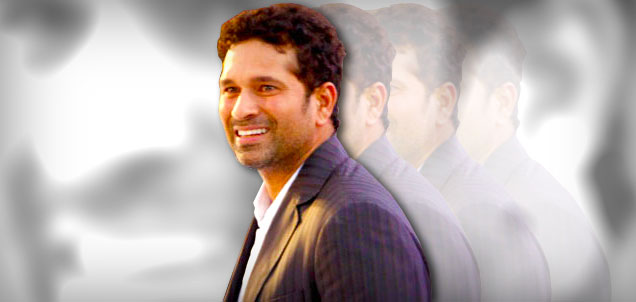
  • Why the media will miss Tendulkar much


    By Ranjona Banerji


    Is the media going needlessly gaga over Sachin Tendulkar’s impeding retirement? Or is this in the natural course of events, given the great cricketer’s tremendous influence on Indian life?


    In fact, it is hard to imagine how the media will survive once Tendulkar has retired. At least one week will be very difficult, given the range of our collective memory.


    1. The most upset will be those writers and journalists who have made a career out of slamming Sachin Tendulkar. Some have had the good sense to quickly bring out books on the subject before his retirement so they can make a little money from sales for at least three days. Although they had been calling for Tendulkar’s retirement for at least 10 years, it would actually have served their cause if Tendulkar had kept playing till he was about 53 or indeed, never retired at all.


    2. The secondmost upset will be those who have made a career out of Tendulkar memories. I saw him first, I recognised him first – well, those one can understand. And then there are spin-offs like I saw him last but I still knew he was great and so on. However, it is likely that these writers will manage to get leverage a little longer than the anti-Tendulkar brigade. Because nostalgia gives everything a nice rosy colour: many more books will be written about My Times with Tendulkar than How I Wish Tendulkar Had Retired At 53 So I Could Keep Bitching For Another Thirteen Years.


    3. Cricket statisticians will find themselves temporarily jobless as many records will remain unbroken or unchallenged for a while. There are only so many times you can mention “This is XX’s first Test match”. Actually, you can say that only once. Unless of course some other player decides to keep playing till they’re 53 or at least 40. Then the Anti-Tendulkar brigade can also jump on to that bandwagon and get some reflected glory. This ploy works best if the next player you target will be the one you had supported against Tendulkar. Like life coming full circle or a helicopter shot.


    4. Advertisers and sponsors will now have to find some other sure-shot selling smile, squeaky to non-squeaky voice, curly hair to non-curly and back. I would suggest that tennis sports goods, fast cars and rock bands can continue to use Tendulkar as a celebrity endorser. His large fan base (larger than the anti-Tendulkar base, much to their own disgust) will keep the cash registers clinking and chi-chinking away. Sports channels though can keep making programmes on Tendulkar. Retired sports greats make excellent fillers in between cars going round and round or people pretending to bash each other up.


    5. The band of Bengali sports writers who feel that Sourav Ganguly was done badly by Tendulkar in the Greg Chappell as coach days will now largely be out of sorts. They have to find someone else to feed their persecution mania. Since Ganguly has established himself as a very good commentator in English and Hindi, their best bet to feed their rage is in case Tendulkar becomes a commentator too.


  • Ranjona Banerji: Same old same old on Sachin

    By Ranjona Banerji


    Sachin Tendulkar announced his retirement from cricket on Thursday and hardly surprisingly it shook the world and the media. Although the announcement has been anticipated, it was a still a moment of sorrow if not shock. Almost every newspaper led with it and most tried to outdo the other with a catchy headline. The Economic Times said “India will never be the same again”, The Times of India went for “God Bye”, Mid-Day took a bold decision to dedicate the whole paper to the great cricketer, Hindustan Times said, ‘There will never be another you” and The Indian Express went poignantly simple with “The Void”.


    The articles inside were a mix of rehashes of old comments by former cricketers and old interviews as well as some new writing. Plus all the facts we did and did not know about Tendulkar. (Yes, I did know that he was a big John McEnroe fan as a kid, so there!) The problem is that so much has already been said about Sachin Tendulkar, good, bad, indifferent. However, India captain Mahendra Singh Dhoni’s recollections of his first meetings with his idol in TOI were moving. If only TOI had found someone other than the dull and cliché-ridden Boria Majumdar to write its front page piece on Tendulkar. India has a vast collection of excellent cricket writers, some of them within the TOI stables. Why go to an outsider? Why not ask your national sports editor Bobilli Vijay Kumar? This is the easiest way to demoralise your own staff.


    News channels must have all gone gaga on Tendulkar but I could not watch the same old same old. They have all already had innumerable debates on when will Sachin go, why doesn’t Sachin go, who will make Sachin go, to make any discussions they have from now on seem like a bunch of hypocritical hooey.


    **


    This week, MxM editor Pradyuman Maheshwari wrote about communications he had with NDTV’s new ombudsman eminent jurist Soli Sorabjee. It is clear from the exchange that the role of an ombudsman is still muddy as far as India is concerned. Sorabjee’s responses were those of a lawyer rather than someone who had been appointed to act as the viewer or reader’s representative when it comes to grievances against a news outlet. A similar confusion can be observed in the manner in which Markandey Katju treated his earlier days as chairman of the Press Council of India.


    Much as everybody thinks that they can be a journalist, life as a newsperson is neither that simple nor apparent at face value. That old saying “it’s not rocket science” is deceptive – anything that you don’t know enough about can be as confusing as rocket science to a lay person. So yes, journalism is rocket science to an outsider and it is definitely not the same as law.


    The Hindu is the only newspaper which has taken the idea of an ombudsman seriously, where complaints against the paper are printed and addressed. The Mumbai edition of Hindustan Times used to have a reader’s editor but not any longer after the person who did it quit.


    As for NDTV, it is laudable that they have an ombudsman and such a well-respected one at that. However the job of the ombudsman is to protect the viewer from the channel and not the other way around. Also, it would help if the NDTV website told you how to reach the ombudsman. The Complaints Redressal section took me to this:http://www.ndtv.com/convergence/ndtv/new/Complaint.aspx


  • Ranjona Banerji: Time for both Tejpal and Shoma to quit Tehelka

    By Ranjona Banerji


    Sexual harassment of young females by senior male editors is one of the Indian media’s worst-kept secrets. Everybody knows several stories of young women being propositioned, coerced and threatened by men in positions of power far above them in the pecking order. And everyone also knows that those that complain usually lose their jobs. And yet, for all its moral posturing about problems elsewhere, the Indian media has been satisfied with doing little but some private outraging.


    Will the Tehelka story change all that? At first glance, it seems that Tehelka tried to follow the old path of cover up and forget about it, after a young female reporter accused the magazine’s editor-in-chief Tarun Tejpal of sexually assaulting her. The responses from managing editor Shoma Chaudhury suggest that the top management decided to close ranks with their boss. Tejpal himself “recused” himself from the magazine in an extremely ill-judged letter in florid prose full of Biblical and religious overtones. He talked of atonement, penance and laceration all of which would be significantly poetic if it wasn’t so vomit-inducing.


    The story broke through the social media after news emerged that Tejpal had stepped down for six months. But it was soon clear that this stepping down or atonement was nothing but smoke and mirrors. Tejpal’s letter talked of misreading a situation and taking responsibility for an unfortunate incident. Had he looked leeringly at a young girl and asked her to come up and look at his etchings, “misreading” might perhaps apply. But what Tejpal did – according the young woman’s complaints doing the rounds on the Internet – was sexual assault and could be construed as rape.


    This makes Chaudhury’s responses to the media even more inexplicable if not inexcusable. What happened is not an “internal” matter and a questioning media cannot be dismissed as being more upset than the “aggrieved party”. Indeed, Chaudhury’s statement that the “aggrieved party” is satisfied was countered by the complainant telling news channels that she was far from satisfied and she was angry that her complaint had not been circulated internally the way Tejpal’s was.


    There has been some discussion that Chaudhury being female should have stood by her staffer and understood her pain. However history demonstrates that the sisterhood has not really stood up for itself within media organisations. The Network of Women in Media has become stronger over the years but it is an outside organisation. Loyalties within are another matter. Having said all this, it is still astounding that Chaudhury was not moved by the young woman’s complaint which talks of a very grievous assault and then an appalling attempt at flirtation which turned into threats.


    Instead, Chaudhury wrote an email to the staff, filled with the most sanctimonious hifalutin nonsense: “We have also believed that when there is a mistake or lapse of any kind, one can only respond with right thought and action. In keeping with this stated principle, and the collective values we live by, Tarun will be stepping down for the period mentioned”.


    What is “right thought and action” and what are these “collective values” one may well ask.


    However, without getting as sanctimonious and self-righteous and morally reprobate as Tehelka, the outraged media must turn now that spotlight on itself. NDTV’s Nidhi Razdan said on TV that her channel has followed the Vishaka guidelines of the Supreme Court on sexual harassment. Sachin Kalbag, editor of Mid-Day, also said that Mid-Day is Vishaka compliant in a tweet. What is the story with other media organisations? How do they handle complaints of sexual harassment? How have perpetrators been punished? What sort of a future can the complainant look forward to in the organisation? It must be mentioned that the victims need not only be women and that the perpetrators need not always be men. But even while being politically correct and upholding gender equality, the sad truth is that it is women who usually bear the brunt.


    That the entire media has come out in support of the victim is heartening and might even suggest that a few small changes may happen… Poor Rahul Singh who tried to defend Tehelka’s track record as an investigative magazine got short shrift on Times Now. As several participants pointed out, it was Tehelka’s founder Tejpal who had damaged his own magazine’s reputation. In a side note, because politicians were not invited to primetime news debates on the subject, discussions on the Tehelka issue were conducted with some decorum and minus the high-decibel pyrotechnics viewers are normally subjected to.


    The correct thing would be for both Tarun Tejpal and Shoma Chaudhury to quit Tehelka. Neither can inspire confidence, either as leaders of an organisation or from an editorial perspective. If Tehelka is to maintain its motto of being fearless, frank and so on then it needs new management.


    Ranjona Banerji is a senior journalist and commentator based in Mumbai. She is also Contributing Editor, MxMIndia. She can be reached via Twitter at @ranjona. The views here are her own


  • Ranjona Banerji: Do news channel panellists know how awful they look and sound?

    By Ranjona Banerji


    Was the biggest story of last week Sachin Tendulkar’s retirement from cricket? Possibly yes. Was it the only story of the week? Definitely not. But for television channels ducking out of covering the expose on snooping charges against the Gujarat government this was the explanation: “Saturday was Sachin’s day”. But these are 24 hour news channels. To fill up 24 hours only with Sachin Tendulkar is not just impossible, it is downright foolish.


    The immediate allegations on social media were that the news channels were too frightened of Narendra Modi to cover the Cobrapost.com and Gulail story. (Incidentally, news channels are usually called “paid Congress agents”, an accusation which shows how divided social media is politically.) It certainly was curious that this story was ignored. After all, what Cobrapost.com and Gulail had exposed was that Amit Shah, then home minister of Gujarat, had asked the Gujarat police to tail and record all the activities of a young woman on the instructions of “Saheb”. That “Saheb” was Narendra Modi was confirmed by the woman’s father and BJP president Rajnath Singh. The taped conversations were part of the evidence provided by IPS officer GL Singhal to the CBI, as part of his own defence after being arrested in the Ishrat Jehan case, alleged to have been killed in a controversial “fake” encounter. Cobrapost.com and Gulail said that they could not verify the authenticity of the tapes.


    Even so, it makes for a story and every newspaper in the country thought as much. TV woke up a day late – after the story had front-paged practically every newspaper in the country. And of course, they jumped straight into “debate” mode which saves them the cost of newsgathering, once the bulwark on which journalism rested. I have to confess that I did not watch any of these “debates” but I have heard that Anniruddha Bahal of Cobrapost.com did not get a chance to speak in between all the yelling and screaming of the representatives of political parties.


    While BJP followers have long claimed that the entire English media is on the payroll of the Congress party, is there now a good case to made that the entire English television media is on the payroll of Narendra Modi and the BJP? While Cobrapost.com and Gulail were announcing their story at a press conference, news channels were showing the world one more speech by Narendra Modi, Gujarat chief minister and prime ministerial hopeful.


    **


    Dare one suggest that this primetime screaming contest that we have all got used to in India, looks very unseemly in an international context? The Australian Broadcasting Corporation brought its lively Q&A programme to India this week (I get ABC from my cable operator but this episode was also shown on DD). Panellists included Karan Thapar, Shashi Tharoor, Swapan Dasgupta and Shoma Choudhury. The idea was to increase India-Australia communication and attack stereotypes. Half the panellists demonstrated just how irritatingly self-righteously smug we are in India.


    But most unedifying of all were the spats that Swapan Dasgupta got into with panellists over Narendra Modi (sigh, him again). Karan Thapar dealt with him with that razor-sharp firmness he uses on The Last Word. But Shoma Choudhury succumbed and the two, seating next to each other, proceeded to have wonderfully absurd verbal pyrotechnics. Do these people ever watch themselves on reruns? Do they know how awful they look and sound?


    **


    After the revelations of Cobrapost.com and Gulail story, many pro-Modi fans brought up the case of Rahul Gandhi being accused of kidnapping and raping a woman called Sukanya Devi as defence of the Gujarat chief minister. As it happens, the case against Rahul Gandhi was first thrown out by the Allahabad High Court as being “malicious” and later by the Supreme Court as well.  But an internet search on the matter leads to the Firstpost.com website which carried a video with the headline: “Rahul Gandhi raped Sukanya Devi”. I do not quite understand the technicalities of the internet, but Firstpost.com perhaps need to look into being associated to this piece of slander.


    Ranjona Banerji is a senior journalist and commentator based in Mumbai. She is also Contributing Editor, MxMIndia. She can be reached via Twitter at @ranjona. The views here are her own


  • Ranjona Banerji: Not much imagination in the Tendulkar coverage

    By Ranjona Banerji


    Is it going to be all about Sachin Tendulkar’s farewell series or the Campa Cola compound? Either way, Mumbai dominates the news this week, making this a rare exception from all the endless political tamasha that we have been subjected to in recent times.


    Tendulkar’s retirement has been everywhere and it takes a very brave Indian Express to not run with the first day’s play on Page 1 of the Mumbai edition, bar a photograph. The rest of the newspapers knew what people were interested in and went with that. With everyone jumping on to the bandwagon though there is a range of Sachin nostalgia writing to pick your way through from the mundane to the sublime. Ayaz Memon’s piece in Mumbai Mirror on Thursday was filled with delightful nostalgic nuggets, based on his long experience covering cricket and as an editor. Clayton Murzello, sports editor of Mid-Day, showed why he is one of the best repositories of Mumbai’s (and India’s) cricket history today. The Times of India dedicated pages to Tendulkar’s retirement but could surely have expended more effort and dipped further into its formidable 175 year archives. The Hindustan Times was adequate but is often better at sports not called cricket. The Economic Times new sports page is still dismal and needs plenty more work.


    Cricket writing was once considered an art form but somehow that talent is not showing through enough in the new breed of sports journalists. It does not help that others have jumped on to the bandwagon but not every academic can write like Ramachandra Guha and not every former cricketer can write like Ed Smith. Given that most of the big celebrity names writing on cricket are sponsored and the cash registers can never be silenced, some more effort to nurture in-house writing talent may have good long-term effects.


    Of course, the Sachin Tendulkar story is not yet over so quite likely we shall see some more during the day. One thought on the Star Sports coverage and commentary: The discussion show on Tendulkar and cricket called Sachiiin Sachiiin is far more interesting and in-depth than the non-stop cliché-ridden jabber in the commentary boxes, particularly the Hindi ones. You feel that Navjot Singh Sidhu now has competition from Kapil Dev in how to never stop to take a breath between inanities. A little birdie tells me that apparently those who tune into Hindi commentary need cricket to be explained to them all the while and abhor silence. Sounds a bit… condescending?


    **


    The story of the apartment blocks with illegal floors in the Worli area of Mumbai has not unnaturally been covered by city newspapers. But it was a surprise to see the Campa Cola compound make it to national television on Monday, as the dramatic story of residents fighting to save their homes played out. There was misery, hope, politics and illegality on plenty of levels making for a great spectacle.


    The next day saw the effect of the media at work. Apparently the Supreme Court judge who had ordered that the residents vacate their homes on November 11 watched the media coverage, was deeply distressed and could not sleep all night. The next morning, he ordered a stay on the demolition of the illegal floors and gave residents till May next year to move out.


    In between all this were several comments from senior journalists about how because the Campa Cola residents were middle class they got media attention, which slum dwellers don’t get. Undoubtedly there is truth in that remark. But it is also true that the Campa Cola case revealed one more instance of developer-municipality-politician culpability, which affects slum dwellers and the middle class both. Any exposure is therefore not to be sneezed at.


    And just to push the point further, I have actually read about slum demolition in newspapers and seen it on TV. How far it has made Supreme Court judges lose sleep I do not know. Room for improvement everywhere perhaps.


    Ranjona Banerji is a senior journalist and commentator based in Mumbai. She is also Contributing Editor, MxMIndia. She can be reached via Twitter at @ranjona. The views here are her own


  • Ranjona Banerji: Star Sports network is welcome, but no unannounced switchovers please

    By Ranjona Banerji


    The international media is very taken with India’s Mars Orbiter Mission.


    Andrew North, BBC’s South Asia correspondent, on the BBC website, wrote from the scene of the launch at Sriharikota, “No one was interested here in questions about India’s priorities.”


    Which is a bit disingenuous. Since there have been a number of questions on whether ISRO needed to send this PSLV-C25 to orbit Mars as well as on the Rs 460 crore spent. Perhaps no journalist on the scene discussed the issue of priorities with North but they certainly did it elsewhere. Al Jazeera was more matter of fact on its website, restricting itself to details of the launch on the website. CNN’s Tom Hume saw the launch as a “symbolic coup as China steps up its ambitions in space”. In a nuanced story, the criticism came from Indian commentators, academic-activists like Jean Dreze and former ISRO chief G Madhavan Nair.


    The Telegraph UK, normally very critical of India, had a nuts and bolts story by Dean Nelson of the launch, picking up a tweet from columnist Tavleen Singh about how India cannot provide drinking water to its people. However, plenty of scientists quoted talked about inspiration for young Indians and so on.


    DNA’s website had an IANS story for the main piece on the Mars Mission while Indian Express’s website had PTI. The Times of India had three people sharing a byline, one of which is Srinivas Laxman who has covered aeronautics and space-related events for the paper for many years.


    **


    Star Sports has Indian cricket captain MS Dhoni telling us to “believe”. This is part of a massive media blitz to launch its new face and its new channels (some of which used to be ESPN). Star Sports now has four regular channels and two HD channels. This is welcome news indeed for sports fans. Today’s Times of India in Hyderabad had Star Sports on the front jacket and the front page was all sports-related stories and the regular front page followed it. Good planning to launch on the first day of the penultimate Test match featuring Sachin Tendulkar. Since most of the faux front page stories were about Tendulkar, including columns by Brian Lara and Sourav Ganguly and comments from Roger Federer.


    One can only hope that Star Sports can fulfil the dreams of all sports fans with all its channels and not switch mid-tournament in one discipline to showing another at random – the way it has been doing regularly so far. Us tennis fans have thus suffered because of football, Formula 1 and of course cricket. Perhaps now they will only buy rights to tournaments that they can actually show us. This may be some pipe dream, but still.


    But to be fair to Star Sports, it is not the only transgressor. The normally reliable Ten Sports decided on Tuesday night to stop showing the ATP World Tour Finals in London – which it did on Monday night and Tuesday evening – and switch to football without so much as a by your leave. Star Sports HD 2 did show it however. Ah well.


    Ranjona Banerji is a senior journalist and commentator based in Mumbai. She is also Contributing Editor, MxMIndia. She can be reached via Twitter at @ranjona. The views here are her own


  • Ranjona Banerji: Flip-flop take ‘Hindu’ back in time

    By Ranjona Banerji


    One more shake-up at The Hindu has the media a bit, well, shook up. Overturning what was a controversial decision two years ago, the Hindu board has now removed Siddharth Varadarajan as editor of the paper and Arun Anant as CEO. Interestingly, it was N Ram who fought with his brothers and sisters and the board and bulldozed his way to make sure Varadarajan got the job and The Hindu its first professional (non-family) editor in 50 years. And now it is N Ram who has sacked Varadarajan, a very well-respected journalist.


    The allegations against Varadarajan tilt on the bizarre side: that he had diverged from the “core values” of the paper, that there was “editorialisation in the guise of news and manipulation of news coverage.” Anant has been accused of ruining industrial relations and of having a “communal” approach at times. There are hints that a PIL filed by Subramaniam Swamy over Varadarajan’s US citizenship may have had some role to play here – it comes up for hearing this week.


    Also strange is the fact the six board members have opposed this move by N Ram to remove Varadarajan. When Varadarajan was appointed in 2011, the board had been against all the moves by Ram to professionalise the editorship of The Hindu. Ram had referenced other family-owned groups like The Times of India at the time, where family members do not hold controlling editorial posts.


    In many ways, this new flip-flop takes The Hindu back in time. For what it’s worth, The Hindu has been a very respected newspaper in India and the world and is looked by many to be a sort of gold standard for its fair investigations and its Constitutional stance and the fact that it did not appear to bow down to corporate interests. But the family saga which keeps playing out in the background means that every professional journalist and potential CEO will be even more wary about taking up an offer from The Hindu.


    Varadarajan, rather than accepting being kept on as a contributing editor and “senior columnist” resigned immediately, making the announcement on twitter – as seems to be the norm these days. His tweet which was put up at 5.28 pm on October 21 says, “With The Hindu’s owners deciding to revert to being a family run and edited newspaper, I am resigning from The Hindu with immediate effect.”


    All those who resigned when Varadarajan was appointed in 2011 are now back – N Ravi, Malini Parthasarathy and Nirmala Lakshman – at the top as is N Ram.


    The obvious implication is that the family could not bear to be away from the editorial decisions of their newspaper and have therefore buried their differences – however bitter they may have been. It also may mean that the somewhat more contemporary feel of The Hindu will now revert to its early fuddy-duddy days.


    Anant, the former CEO, has been accused of forcing permanent employees towards the contract system and this could well have been a major thorn for the board. The Hindu is well known for allowing people to stay in positions until eternity regardless of ability – a strategy most other newspapers have long since abandoned. Although heartening for employees ensured of permanent employment disconnected with their output and a welcome change from the new hire and fire policies rampant elsewhere, it is also true that running a professional newspaper with excessive deadwood can be counterproductive if not impossible.


    Whatever the reasons for these changes, both journalism and professionalism undoubtedly take a bit of a beating when a much-admired newspaper like The Hindu falls back in time.


    Ranjona Banerji is a senior journalist and commentator based in Mumbai. She is also Contributing Editor, MxMIndia. She can be reached via Twitter at @ranjona. The views here are her own


  • Ranjona Banerji: Slippery slope of big biz-funded media

    By Ranjona Banerji


    The Supreme Court has taken the media back to one of its most shameful episodes: the exposures against senior journalists in the Niira Radia tapes. For those who have been living on Mars since 2010, here goes. The transcripts of the conversations between corporate lobbyist and various people including several journalists were leaked by Outlook and Open magazines. Radia’s phones had been tapped by the Income Tax department after allegations of financial irregularities by a former associate. But the tapping led to enormous breakthroughs in the 2G spectrum scam case.


    Radia, employed by the Ambanis, the Tatas and Mittals, was heard talking to various journalists asking them to help ensure that A Raja became telecom minister in the 2009 UPA Cabinet. She said she was speaking on behalf of Kanimozhi of the DMK. Of the journalists she spoke to, Barkha Dutt of NDTV sounded the most helpful as also did Vir Sanghvi, then editorial director and columnist with Hindustan Times. Sanghvi and Radia also discussed how Sanghvi’s columns could be used to project Mukesh Ambani’s point of view as far as the KG Basin gas project was concerned.


    There was an understandable uproar after the tapes were made public and Sanghvi lost his once very well-respected column but that was about it. Dutt remained defiant, putting down her comments as regular journalistic practices. In an incredible TV show, she told several senior journalists who questioned her that they knew little about how journalism in New Delhi functioned and moreover that she didn’t think there was anything remarkable in a corporate lobbyist who represented people with telecom interests calling journalists to influence Cabinet selections.


    Indeed, if that is what passes for standard practice for journalists in Delhi, it is tragic as far as Indian journalism is concerned. This new Supreme Court directive will lead to the tapes being examined again and perhaps Indian journalists and media houses will be under the scanner again for several nefarious practices. Too much has been allowed already in the name of making money. Nothing wrong with profit at all: we all know it is vital for survival of our system. But for people who spend all day pointing fingers at other people to bend the rules when it comes to themselves is unacceptable.


    There is a tangential discussion possible here on the inroads which the public relations industry has made into journalism but that is for another day. The onus here is on the journalists – all very senior and powerful – that Radia spoke to. Interestingly, not one thought that there was a story in the fact that the Tatas and the Mittals wanted Raja to be telecom minister and not Dayanidhi Maran or that the DMK insisted on retaining telecom or indeed on the divisions within Karunanidhi’s family made apparent by Radia’s requests. At face value, this looked like a great story to the rest of us.


    **


    If journalistic integrity needs to be examined again, so does the problem of paid news and corporate interests in the media. The big story for the last couple of days for almost every newspaper, journal and news channel has been the FIR lodged by the CBI against Kumar Mangalam Birla for his company’s involvement in the coal allocation scam. However, there are allegations and insinuations that the story has either not been covered or has been downplayed by Hindustan Times and by Headlines Today. The Hindustan Times is a Birla company owned by Kumar Mangalam’s cousin Shobhana Bhartia and Kumar Mangalam Birla has invested heavily in the India Today group.


    From what I have checked, Hindustan Times on October 16 of its Mumbai edition did not carry the story as lead, unlike every other paper. The story appeared on page 10, a nation page, below the fold. I cannot confirm the Headlines Today accusation because I did not track the channel after the story broke.


    However, there can be little doubt that this is how corporate investment is a potential danger for even a semblance of free and fair journalism: conflict of interest. Is it possible to keep burying such a story? Conversely, how would it look if these journals or news channels tried to support KM Birla? Indrajit Hazra, a columnist with Hindustan Times, has written this rather scathing piece for newslaundry.com on this “lapse”: http://www.newslaundry.com/2013/10/canaries-in-the-mine-shaft/


    R Sukumar, editor of Mint, also from the Hindustan Times group, has this perspective to offer in Mint: http://www.livemint.com/Opinion/F7R4IYn8nJp2Kj5C5RwtaN/Edspace–The-Kumarmangalam-Birla-story.html


    It’s a slippery slope and we’re all falling down it as far as I can see…


    Ranjona Banerji is a senior journalist and commentator based in Mumbai. She is also Contributing Editor, MxMIndia. She can be reached via Twitter at @ranjona. The views here are her own