Category: BY INVITATION

  • From TA to TE – How jazzed are you?

    By Shaleen Sharma


    In baseball, there are “good hitters” and then there are “power hitters”. The epithets themselves are self-explanatory. Power-hitters are those who swing the ball harder with roughly the same stance and effort.


    Maybe, that is why, coaches believe that if you can teach a “good-hitter” some extra bit of power, it is an endeavor worth the effort.


    If I were to choose a singular concept in Marketing as if my life depended on it, I would choose Positioning. I hope many of us would do the same.


    But one concept that edges close is Target Strategy.


    It is great to see most marketers putting so much of creative energy working out the positionings of their brands & product lines. May be, some bit of that creative energy needs to be directed towards developing a better sense of what is clinically called – Target Audience.


    It is surprising to witness the sheer agnosticism around the TA field in marketing briefs. While Positioning is regularly evaluated & refreshed in consonance with the changing times, TA understanding is seldom revisited or re-scripted.


    The world we live in spawns a consumer culture that is fast changing. Amidst such an environment, the right user group can be the best “message amplifier” for a Brand.


    Apart from right positioning this can be the single biggest opportunity window for the success of a marketing / brand campaign.


    Let me exemplify it with two recent & extremely successful campaigns / products where the positioning remained more or less the same but the real innovation was in rethinking the target audience strategy.


    Breaking Dawn -An audience with a muscular commitment:

    On November 16th, Summit Entertainment released a much awaited sequel to the 2011 film – The Twilight Saga: Breaking Dawn – Part 1. Needless to say, Breaking Dawn – Part 2 has witnessed an unheard of viewer response.


    What could be the reasons?

    For much of the last decade motion picture as an entertainment product looked for teenage males as their target audience. But this TA was gradually being lost to Games, Television & Social Networking etc. Twilight in that sense made an exception. It pitched itself to an overwhelmingly female audience. With Kristen Stewart as the emotional centre of the franchise these women audience embraced the product and made it into a blockbuster.


    One important point-of-difference these women audiences had from males was that they were more enthusiastic about the movie, made it a point to tell it to at least a couple of their friends and created a swirl of buzz around it. These women were not just consuming the product. They were propelling it. They were not just Target Audience, they were evangelizers.


    To their credit, the creators of Twilight have understood this quite well. The producers of Twilight have been running a successful online & social media relationship with these Target Evangelizers.


    On Twitter and Facebook the Twilight network has 1.1 million & 80 million followers respectively.


    When Bill Condon, was brought on to direct Breaking Dawn, he introduced himself to the fans on the Facebook page. In that sense, it was not what classic advertising would have done. It was like a classic gossip-update with friends.


    Obama – A tale that grew in the telling:

    Similarly, what has made Brand Obama successful is not just the voter turnout this year. It has been a cache of people spreading the “Obama message” full time. Right from 2008, especially in the swing states of Virginia, Ohio & Iowa, these people had been evangelizing the Product Obama.


    David Plouffe, senior adviser to the Obama campaign called it the “persuasion army”. What this “persuasion army” did was to send e-mails, make phone calls & conduct meetings in their own real-life social circles. USA Today reported that by January this year this persuasion army held 2700 house parties. These people were not just consuming the Obama product. They were abetting it, giving it momentum and making it unbeatable.


    So how would you like to characterize your Brand’s consumers? Target Audience or Target Evangelizers?


    The writer is Partner – National Planning & Strategic Initiatives, RK Swamy BBDO, New Delhi

     

  • By Invitation | Joydip Kapadia: BARC takes its first step

    By Joydip Kapadia


    As they say “A journey of a thousand steps starts with a single step


    BARC has issued a Request For Information (RFI). The RFI seeks ideas and capabilities from varied solution vendors (perhaps Research cos as well as Tech cos) to give their inputs on how they would approach TV Measurement. This presumably sets the ball rolling for precisely why it came into existence. This is but one step in the several layers that need to be laid before the final system is set up.


    The Three Fundamental Questions

    In the design of a system as complicated and consensus-based as TV Measurement, there are always multiple facets to look at and analyze. The three critical areas to address for any joint industry initiative at this stage are:-


    1. Industry Leadership Vision (awaited)

    2. User Requirements, Feedback (awaited)

    3. Vendor Capabilities  (this is the current RFI issued by BARC)


    Awaiting BARC’s Vision

    One is also hoping for a vision statement that puts clearly on the table BARCs ambitions. What will be the expanse of coverage in terms of geography, target groups, pop-strata and many more. Is the vision also to capture TV viewing on ‘other screens’? With consumption of TV having changed and changing fast how will this dynamism be captured and with what accuracy – meaning how much would the emphasis be on R&D?


    Industry leaders represented on the BARC Board should typically build a consensus on the contours of the new system. Not defining the perimeters in this case could lead to angst and confusion among some of the stakeholders.


    Consultation on User Requirements

    The current RFI has been asked from organisations who could possibly provide data or technology or both. However, one hopes that what will also come in soon is to ask Users of the data and other stakeholders, their requirements and concerns as part of a consultative approach. The stakeholders could be asked to present their consultative papers on what they feel should be the construct of the new system. There are clearly a lot of diverse users utilizing TV Measurement and some of these folks have had all sorts of angst on sample sizes, geographical coverage, representation of certain pop-strata, analysis variables in the system, sampling methodology/ criteria, etc etc.


    A compilation and understanding of these papers would help BARC look for a option that can provide more or less what the stakeholder are looking for. Very much in line with what TRAI did before implementing digitisation. The success of BARC lies in building consensus among all the stakeholders.


    Vendor Capabilities (The Current RFI)

    BARC has issued the RFI wherein they have asked varied companies to provide their capabilities. This is critical but will be only be a partial solving of the Measurement conundrum. The other pieces mentioned in this piece are also critical to capture. One hopes to see more action in this space in days to come.


    Joydip Kapadia is Business Head, Television Street Maps. He has worked with TAM Media Research as VP Operations from October 1998 to July 2008. Earlier, he had a 14-year stint with market research firms ORG-MARG and Mode (1984-1998).


  • By Invitation | Apurva Purohit: Seeta and Geeta

    By Apurva Purohit


    Yesterday I saw a commercial for a car which bothered me a bit. It was not a great piece of communication, either in strategic intent or in execution. But that was not the reason for my dismay. It was the stereotyping that goes on in Indian advertising even to this day that alarmed me.


    The story line, if it indeed can be called that, went something like this – A cool dude is shown driving the car in question. He sees a girl waiting by the kerb for a lift and veers to offer her one. She comes forward when suddenly he swerves away, and takes a violent u-turn. Why? Because he has just spotted a girl on the other side whom, we presume, he is more attracted to, and turns to offer her a lift instead.


    To showcase that the second girl is more attractive than the first, she is shown wearing a short dress versus the salwar suit the first girl is dressed in, and has smartly bobbed hair versus long hair and so on.


    This typifying continues to be prevalent in ad commercials, ad nauseam. So if you wear a sari you are an aunty or a mummy, if you wear a salwar suit, you are a behenji, and if you wear a dress, you are hot and happening and thus attractive to men.


    It reminds me of one of our management trainees who came back from doing a survey in a small town, and was very shocked at seeing women in saris driving two-wheelers there! To this day I haven’t been able to figure out what shocked him more; that women were driving two-wheelers or that women wearing saris were driving two-wheelers. And in case it was the later, what then should be the ideal dress code for women if they do want to drive?


    Thankfully, unlike advertising commercials, real life is neither linear nor typical. It has interesting people like Usha Uthup. If she had been living in the imaginations of our advertising buddies, she would have been wearing short black dresses, to go with the western songs she sings, you see. But look at her – Kanjeevarams, gajras and Adidas keds redecorated to match her saris. Wow!


    Although in the confines of our creative friends’ minds, I am sure she only materializes to sing classical bhajans!


    Apurva Purohit is CEO, Radio City. This was first published in her blog, Women at Work (http://www.womenatwork.co.in). Ms Purohit views and essays on women striking the balance between work and home is being published in a still-untitled book in the next quarter by Rupa Publications.


  • Guest Column by Chintamani Rao: No safety in numbers with Crowdsourcing

    By Chintamani Rao


    ‘Unilever to boost reliance on crowdsourcing with eYeka’ – News item


    “[Lowe] have created a very strong creative vehicle that’s extremely well defined and portable. But their work has created a problem for them, because it makes Peperami the obvious candidate for crowdsourcing.” That’s how a Unilever London spokesperson explained it when, two years ago, the company fired the advertising agency on Peperami, in favour of crowdsourcing.


    Some compliment! Can you see the agency head calling in the Peperami team? “Folks, I’ve just returned from lunch with John Client. Peperami is tracking superbly on every parameter. You’ve created one of those rare great brand properties that will stay with the brand for many, many years. Unilever have paid you the ultimate compliment: we’re fired. From now the public will make the ads.


    “Jean, pop the bubbly. I’m proud of you guys. You are our A Team, and here’s an A Team challenge for you. I am assigning you to our biggest Unilever brand: get fired on it within the year. A special Christmas bonus if you make it. Cheers, and more power to your elbow.”


    If the idea itself is strange, the outcome is bizarre. Unilever received 1,185 entries and selected not one but two submissions (Both of which came from laid-off advertising professionals: a copywriter from London and a former creative director from Germany. So much for the crowd.), and announced that they would combine the two ideas to make the new campaign. “We’re certain the two ideas will be a successful campaign,” said the Peperami marketing manager. That, from the company which taught us that every advertisement must be based on a “Single Selling Idea” – the first of the ten Unilever Principles of Great Advertising.


    Whether Unilever’s winning Advertiser of the Year at Cannes that year was because of Peperami or despite it we don’t know.


    Meanwhile, Kraft Foods in Australia crowdsourced the name for the new cheese variant of its iconic bread spread Vegemite, and chose – hold your breath – iSnack 2.0.


    “The name Vegemite iSnack 2.0 was chosen based on its personal call to action, relevance to snacking (I snack, get it?), and clear identification of a new and different Vegemite (2.0, wow!) to the original,” said a Kraft spokesperson. “We believe these three components completely encapsulate the new brand.” Consumers didn’t, apparently. Following a furore, Kraft rather tamely put out a list for people to choose from, and equally tamely changed the name to a blase Vegemite Cheesybite.


    Around the same time Frito-Lay in India sought ideas for new flavours of chips. To the credit of Frito-Lay it must be said that they weren’t chintzy – on the contrary, they generously spent more than they might have had they done conventional market research instead. For four shortlisted flavours they awarded a prize of Rs 5 lakh each – a total of Rs 20 lakh or over US$ 40,000, way more than Unilever London paid to get a new idea for Peperami. The prize for the ultimate winner was Rs 50 lakh (over US$ 100,000) and 1 percent of sales revenue.


    Frito-Lay were truly generous, but in any event, what they did was essentially to solicit consumer opinion on a new product, which might otherwise have been done by conventional market research. But meanwhile other marketers like GE, General Mills, Pepsi, Dell and Starbucks have been seeking everything from product and service ideas to, reportedly, inputs on agency selection and media placement.


    Crowdsourcing shops have come up which will brief the crowd and filter the solutions, as Idea Bounty did for Peperami. That’s awfully interesting. Suppose one day Lowe had told Unilever London, “You’ll be delighted to know we’ve increased the creative strength on your business. We’ve fired your entire creative team. Now, instead of being limited to a handful of people under our roof, we’ll put our briefs on your brands out on the Internet and get ideas from hundreds, if not thousands.” Might they have saved the Peperami account? I don’t know about you, but I can’t see a delighted client congratulating the agency on its farsighted initiative.


    Now Unilever has taken a big step in the direction of crowdsourcing, saying, “A key role for us as marketers is to create magic and to excite people with innovative ideas.” I always thought a key role for marketers and related professionals was to actually develop the ideas that create the magic, but perhaps I’m wrong.


    Proponents of crowdsourcing cite the ‘wisdom of crowds’, propounded by Surowiecki in his book of the same name. “I don’t think people realize how powerful the crowd can be when engaged on working on a good idea,” says one. Perhaps, but this is not the crowd working on a good idea; it is a multitude of individuals independently developing ideas. They’re not building on each other’s thoughts; there’s no cross-fertilization of thinking.


    Diversity, independence and decentralization are three of the four “elements required to form a wise crowd” that Surowiecki lists: “Diversity and independence are important because the best collective decisions are the product of disagreement and contest, not consensus or compromise.” But 1,185 responses to a brief from perhaps as many people working independently of each other do not constitute collective thinking, and are not the product of disagreement and contest.


    Surowiecki’s fourth element is aggregation: in this context, the marketing management of the company deciding – singly, collectively or sequentially – among the shortlisted submissions. So it is finally down to the quality of decision-making. If you decide on iSnack 2.0, it doesn’t matter whether the submissions come from the crowd through a crowdsourcing agency, or from known people through an advertising agency.


    That the advertising agency has designated, informed people and institutional memory is only one of its advantages over a crowd. The other is that if you make bad decisions you can always blame the agency and fire it. You can’t fire a crowd.


    The writer is a Strategic Marketing and Media Consultant


  • By Invitation: Geetanjali Bhattacharji: Exciting times ahead for the media planning and buying fraternity

    By Geetanjali Bhattacharji


    The new entity OMC controlling over 40pc of global advertising budgets has several  implications:


    1. Shrink  – lesser competition

    WPP’s Martin Sorrell will follow suit with another merger and the competitive pie will shrink.


    Marketers will have no option but to work with competing agencies, now as part of one group. Confidentiality, strategic controls and disclosure walls will collapse internally in the guise of “synergy”


    2.  Clout – greater buying muscle

    Greater consolidation of media buys will imply higher AVRs ( Agency Volume Rebates) and the ability to push rates in the direction they desire. How these get accounted for within the new entity remains to be seen…


    The newly found entity could exert immense clout over the market leading to an imbalance of sorts.


    3. Scale - do clients buy into size or talent?

    The success of small creative hotshops in recent years has shown that marketers are hungry for partners who are committed, agile and responsive. It remains to be seen how the collaboration will manage that and deliver outstanding work despite the distractions of size…


    With the supply side becoming more and more monopolistic in nature, it becomes the responsibility of every marketer to make partnership performance more and more measurable.


    The birth of a powerhouse could well imply the rise of documented transparency and accountability.


    GeetanjaliBhattacharji is CEO-Marketing Services Audit at Spatial Access Solutions


  • Guest Column by Saurabh Parmar: Branding in today’s digital age of Brand-Consumer Interaction

    By Saurabh Parmar


    In almost every conversation we have with a client or a potential one, the word ‘brand’ comes up. The interesting bit in most cases – I see the interpretation vary. And remember I am talking about marketeers here. I don’t think there is a right or wrong but the definition of what a brand is has evolved in this digital age.


    For me, a brand has never been a logo or a fancy tagline. It’s not even a vision or mission statement. At the end of the day it’s a dynamic entity which lives what it says, it evolves from where it is, it understands from it’s customers.


    It means a lot of those things which are probably taught in brand identity classes – Colours used, shape of the logo, brand identity guidelines, the thought behind the brand  etc. Yet  I earnestly believe – it has always been about something more – How the people perceive the brand.


    Think about brands like Apple, Vodafone or Dominos.. What do you see? What do you feel? And the exact answer will change, depends on who you ask. The logo, tagline, marketing campaign, product remain the same but people’s interpretation of it defines the brand for them and to an extent their social circle.


    This is more so in today’s world – where customers are directly interacting with brands via social media, where there are more brands making more noise via marketing and where technology is changing proximity and interactions between humans themselves. As a result, the dynamic nature of a brand is all the more obvious.


    I like brand X let’s say a restaurant but  if the food was bad last time or whether the waiter was rude or service slow all those things impact brand perception. But it doesn’t take a direct interaction always does it?


    Friends who have been raving about a product or place, a Zomato review or a review in HT or 5 of your friends having already like this new place on Facebook -all these live interactions influence our brand perception over time.


    So what should a brand do? There’s lots it can do, but for me 6 main things which stand out:

    1. (From the above) Remember brand building does not happen on day 1 only it keeps happening till the day you exist and if you are fortunate or maybe unfortunate enough people will have opinions even after you cease to exist. So be open to constant evolution.


    2. Having said that, like any human being you may evolve how you talk, how you interact, what you say but you remain mostly true to your core beliefs. Same goes for brands.


    3. Brands are often afraid of taking a stand, having an opinion. We believe that’s not the way to go, great brands stand for something and they also stand against something.


    4. An often heard statement ‘Great brands need to be larger than life’. I tend to differ and more so in today’s day and age of a cluttered market with enough brands shouting their greatness.


    Brands need to be true to life – They are based on a customer’s needs and aspirations and needn’t look down from a pedestal or exaggerate their own identity which makes it hard for a customer to trust them. (Eg: How many men believe that by spraying a deo, women will start swarming around you but for years brands have failed to go beyond the thought)


    5.Great brands focus on transparency -to their customer, their employees and other stakeholders. An interesting example by McDonald’s http://www.youtube.com/watch?feature=player_detailpageandv=oSd0keSj2W8


    6. They do not look at advertising as a means to display but as a means to communicate. And that brand-consumer interaction does not happen in silos but in an environmental and cultural context.


    Saurabh Parmar is Founder and CEO, Brandlogist Communications


  • Bobby Pawar: Awards – 2. Awards Business – 4

    By Bobby Pawar


    The gamification of awards has perverted the very reason why advertising awards were birthed.


    The first award shows came about when some of the finest practitioners of the craft came together to cherry-pick the best work. It was put on stage so we could all celebrate it, learn from it, and hopefully, be inspired to beat it. That was a noble purpose.


    Yes, it was still a contest. But it was a field where one idea jousted with another. The biggest ones won the day, and their creators bathed in the applause of their peers. Careers were made in those moments, not just of the people who held aloft the shining statuettes of their creativity, but also of those in the audience who were fired up to do work that was great enough to get them there, one day. Almost all of today’s creative legends, even those who now bemoan the awards, became what they are because their shelves glitter with gold.


    It was all good, till it wasn’t. What happened? When did awards lose their innocence?


    My theory is that the wheels came off when statistics slipped a roofie in our creative cocktail. Agencies stopped merely celebrating great ideas and started counting the awards that they won. The thing is when you start keeping score, what you are doing becomes a game. Everyone knows the objective of a game is to win. When that became a corporate imperative, and let’s not fool ourselves it has, the objective became to win at all cost.


    Awards were supposed to put a spotlight on what’s best about our business, now they have become a for-profit business. Every award show has become a festival and the people who attend have gone from being fans of great work to delegates. Duck me with a fork and call me Daisy.


    Now you may call me a regressivist, a naïve fool or simply a fool, but the question still remains are we better off now than we were all those years ago?


    Bobby Pawar is Director and Chief Creative Officer – South Asia, Publicis Worldwide. The views here are his own. A slightly shorter version of this appeared in ‘dna of brands’ dated April 13, 2015


  • By Invitation: N Chandramouli: The Trust Bond between a Brand and its Ambassador

    By N Chandramouli


    The relationship between a brand and its ambassador is highly interconnected, and that which will impact one will also invariably impact the other also very closely. The reaction of the consumers on the other hand is a case of the ‘congruence of values’ of the consumers with the brand. So when a brand or its ambassador consider its actions in the current day social era,  each must have a responsibility of building the trust of the other. Else, with its unfettered and unfiltered information exchange of the age, often even small things have a high potential of exploding out of proportion.


    After the recent Aamir Khan controversy, the brand he endorses, Snapdeal, came out with a statement distancing themselves from the ‘personal’ comments of Aamir. This was probably after a huge public resentment of the ambassador’s statement, demonstrated by one star ratings of its app by angry consumers, nearly 67,000 of them.  Similar incidents have happened in the past, but why do some actions get the response they do, while others simply slip by?


    The answer depends on how close a relationship the brand and its ambassador share. A similar reference that can be taken as an example that (luckily for the brand ambassador!) did not have the a different result – that of Shah Rukh Khan in his ‘intolerance’ quote to a TV channel a few weeks ago. However, that statement did not impact Bigbasket.com in the same manner as Aamir’s statement hit Snapdeal goes to show two things.  Firstly, it shows the success of the Snapdeal campaign in totality.


    If the first thing that comes to the public’s mind on saying Aamir Khan was Snapdeal, in no certain terms, the connection between the two was quite well-established. Secondly, it goes to show the relative importance of the brand to the consumer and its importance that the consumers place in its values. The consumers of Snapdeal relate to more than in the case Bigbasket, and this is evident in the sharp consumer action against Snapdeal. In all this mess, Snapdeal should rest happy in one deep insight, that whatever they were doing with Aamir Khan in their campaign was working well, and they should use this as an opportunity to knowing and understanding the trust of their consumers better.


    N Chandramouli is CEO, TRA Private Limited (publishers of ‘The Brand Trust Report’)


  • By Invitation: Kalpit Jain on How hyper-personalisation is the holy grail of digital success

    By Kalpit Jain


    Brands are building giant audiences on the social channels, and engaging with them strategically has become more necessary than ever before. For a brand to market relevantly, it needs to generate real-time content and engage through it with customers on a regular ‘real-time’ basis.


    The genesis of the principle to make content more real-time and engaging lies in the fact that today consumers are suffering from an ‘information overload’.Over 270 billion emails are being sent every day. In a day, the average number of emails received by a user is 121. Thus mobile devices are now inundated with communications that seldom wins over the attention of the recipient. Add to it the complexity of the Indian market where a section of mobile users own more than one device. It has therefore become extremely tougher for brands to catch hold of their consumers’ time and make a meaningful impact.


    Key search engines such as Google and Bing too have been waging an algorithmic battle to direct more personalisedand relevant searches, products and news feeds. Similarly, the rise of digital nomads has led to the acute need for hyper-personalisation that categorises users into neatly defined clusters based on their search history, buying behaviour and social trending—and even geolocation and behaviour.


    Real-time marketing has risen from the dungeons of being a jargon and proved that it can effect great turnaround in conversions and increase ROI. Earlier, marketing tactics were executed based on sample data. However, with developments in technology, marketers have moved towards relying on historical as well as real-time customer engagement data to build an intuitive and accurate marketing workflow.


    It is this war of screen and dwindling attention spans that has made consumers more impatient and demanding. Consumers expect a seamless and hyper-personalised experience to be delivered by brands. It’s lethal to adopt a one-size-fits-all approach. Organisations must stop viewing their audiences as segments, but rather as unique individuals. Simply listening to what consumers are saying, using that data to build intelligent customer profiles, and tailoring each email communication to reflect the interests and preferences of specific consumer segments is critical to realizing a hyper-personalised marketing strategy.


    While FMCG brands are yet to test the waters, other sectors such as BFSI and e-commerce have already started minting benefits of adopting hyper personalisation through the use of marketing technology. For instance, a leading fashion e-commerce player witnessedincreased market share and an increased demand by using real-time email engagement. Being the first online personal styling app, its proposition of using the power of their technology i.e. machine-based predictions and the power of expert curation, cumulatively helped it solve a timeless problem of every woman: “What should I wear today?”


    It capitalised on the 10,000 rule algorithm that powers its website and which helps users find the right product on the basis of filters like skin tone, body type and preferences and this content is reflected real-time on each email communication they sent out to customers. The leading fashion e-commerce player utilised this efficiency in its email campaign by mirroring it in the email campaigns that it sent to its customers.


    The result was a 26 per cent increase in the session time through email as a channel, 118 per cent increase in the brand’s overall revenue through real-time and urgency-based email. There was a 10 per cent increase in the overall engagement from subscribers. Likewise, it is necessary for every brand to send out to a consumer, a hyper-personalised and real time communication message.


    Data analysis is a critical step in executing on a hyper-personalised marketing strategy. Organisations must have a large accumulation of consumer data, but if marketers aren’t able to interpret what the data is telling them, they’re missing out on a huge opportunity to connect with their audience on deeper and more intimate level. While it’s unrealistic to assume that marketers have the capacity to scrutinize each individual piece of raw data that’s made available to them, marketing automation tools have made data aggregation and interpretation much less of a manual and  time-intensive process.


    Today, the competitive landscape is defined by customerexperience. The future is going to be dominated by brands that have customised their marketing activities to consumers. With multiplicity of devices or mediums consumers today are inundated with marketing messages. So, relevant and hyper personalised messaging is the critical differentiator that will save messages from being ignored or spammed.


    Hyper-personalisation is all about maximizing opportunities to customize content that fits your customers’ needs. Companies should use these opportunities to consistently target the right audience throughout the customer lifecycle. Creating meaningful connections and driving engagement among your audience allows for more leads and better conversions.


    Kalpit Jain is CEO, Netcore


  • George Abraham: Can Sports Broadcasters not Overlook Blind Cricket Fans?

    BCCI
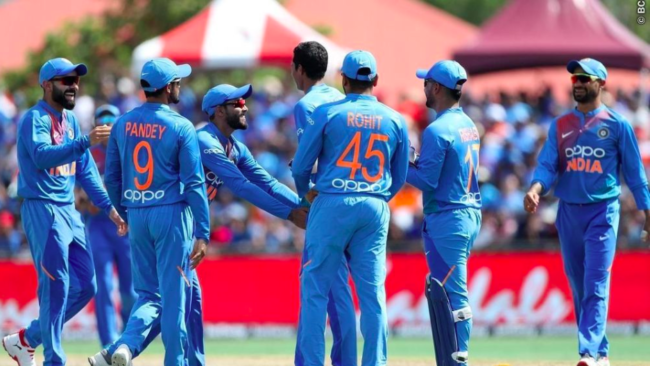
    File Picture of the Indian cricket team in a cricket match. Representative Picture only. Courtesy BCCI.TV


    George AbrahamBy George Abraham


    I have been following Indian cricket since 1969. I debuted as a cricket fan during the India vs New Zealand series when the Graham Dowling-led side locked horns with Tiger Pataudi and his team. India won the first Test at Mumbai, New Zealand levelled the score at Nagpur while the third Test at Hyderabad was drawn thanks to rain. Next, the Indian cricket fan was treated to a five Test feast when Bill Lawry’s Australian team visited India. Every match was covered on radio, every ball was described in detail, updated scorecards were read out at regular intervals. Listening to the radio commentary was accelerating and we, the listeners, were literally made to feel that we were present pitch-side. As a visually impaired youngster, I was totally bowled over by the sport, never missed a match. Commentators like Anant Setalvad, Devraj Puri, Dicky Rutnagur, Balu Alaganan literally became the eyes of millions of listeners across the nation. During a Test match, I, like many others, would be carrying a transistor radio wherever I went. Conversations at streetcorners, coffee houses and social events would be about cricket.

    Then in 1978, when the Indian cricket team under Bishan Bedi made the historic tour of Pakistan, the cricket fans across the country were introduced to television coverage for the first time. Yes, Doordarshan coverage was by then available nationwide. Now fans could actually see live their cricketing heroes and action sitting in their homes. These were exciting times for the cricket aficionado. I was in college and I remember watching the games along with friends in the common room. Kapil Dev had made his international debut. Seemed an exciting prospect. Fans across the country had the opportunity to watch the flair of Gundappa Viswanath and Zaheer Abbas, the grit and focus of Sunil Gavaskar and Javed Miandad, the flight and guile of Erapalli Prasanna and Bishan Bedi alongside the pace and swing of Imran Khan and Sarfraz Nawaz. Television had ushered in an exciting new era in cricket coverage.


    Over the next few years, TV coverage became the preferred mode for fans to follow the sport. The emergence of former cricketers as commentators added fresh colour and appeal to watching cricket. Former legends like Richie Benaud, Ian Chappell, David Gower and Sunil Gavaskar added tremendous value to the cricket viewing experience.


    While I did enjoy these developments, as a blind person, I found that I was missing out on critical information. For instance, at the toss, the playing eleven of the two sides are displayed on the screen. The commentators only talk of some key players being featured in the match. As a fan, I would like to know the entire list of players. When a new batsman walks out into the middle or a new bowler comes into the attack, the screen has the display of his career records. Often, the commentators do not talk about it. Ever since the scorecard details are displayed on the screen, the practice of reading out the detailed scores at the end of a session of play has stopped. Very often, when a brilliant catch or an outstanding piece of fielding happens resulting in a dismissal, the name of the fielder is not mentioned by the commentators. During the just-concluded ICC World Cup that took place in England, there were several occasions when one did not know as to who was Virat Kohli’s partner since the commentators kept talking about Kohli’s greatness, his stats and so on. As a blind cricket fan, I was at a loss as to who was at the non-striker end or who was taking strike when Kohli was at the non-striker end. I guess they assume that viewers can see and recognise players and besides the screen perhaps is displaying the details.


    The commentators certainly add a huge amount of interesting content by way of their humour, insights, anecdotes and knowledge of the game. However, I believe television companies and cricket boards need to draw up a set of guidelines which would ensure that the coverage becomes more inclusive. There are millions of fans like me who are blind and follow the games on television. Having travelled extensively within the country promoting cricket for the blind, I can confidently assert that there are thousands of blind cricket connoisseurs who tune into TV channels in support of their favourite cricketers and teams. I believe that a little bit of awareness and consciousness of the prevalence of the blind viewer and a willingness to make those minor tweaks in the way commentators engage, could make cricket viewing exciting for all.


    Starting October 2, South Africa has been playing  India in a three Test series followed by a fairly busy domestic season for the Indians leading up to the T-20 World Cup in 2020 and the World Test Championship which concludes in 2021. There is a lot of cricket and I believe blind cricket fans would love it if television cricket coverage becomes inclusive.


    Some Pointers:

    1. Playing squads must be read out at the start of the match

    2. Name of the bowler and batsman must be mentioned at the start of every over

    3. When a batsman walks into the middle for the first time, his stats must be shared

    4. Likewise when a bowler is brought into the attack for the first time in the innings, his bowling records must be shared

    5. When runs are scored, the commentators must call out the name of the batsman and the number of runs accrued

    6. When a wicket falls, the commentators must mention the mode of dismissal and the names of the players involved in the dismissal

    7. When a catch or a brilliant piece of fielding happens, the name of the fielder must be mentioned

    8. The updated scorecard must be read out at the end of each playing session

    9. When interesting records and titbits are shared on the screen, the commentators must read it out

    10. Often Twitter handles and phone numbers are shared on the screen to interact with the commentators and experts, they must be spoken out too

    11. The team score and the individual scores of the batsmen at the crease must be spoken aloud at the end of each over

    12. When the camera focuses on famous personalities in the stadium, it would be nice if the commentators can mention the names. This adds to the excitement of the action

    13. Finally, the commentators must be conscious that their viewers also include passionate cricket fans who are visually impaired and that these fans too are interested in every piece of the action. In fact it might be a good idea for the commentators to from time to time recognise their blind viewers.


    These are my personal suggestions to make cricket television coverage more inclusive. I believe it is time broadcasters covering cricket in particular and sport in general realise and recognise that their coverage reaches out to millions of viewers who are blind. It certainly could make business sense to start including them.


    George Abraham has been blind since his early childhood, but that hasn’t prevented him from working and living his life like any of us. He worked with an advertising agency like Ogilvy, pioneered blind cricket in the country and now runs Score Foundation which, among other things, also offers a helpline for visually impaired individuals who need support and direction (Toll-free number: 1800 5320469). On Sunday, October 20, George Abraham will run the Delhi half marathon. He can be reached via Twitter at @georgebhai and via mail at george [at] eyeway.org


  • By Invitation | Why it’s so important to get agency relationships right and how to do it: Sandeep Khewle, CEO, FirmDecisions India

    The last month has seen a major controversy around the decisions allegedly taken by the former CEO of one of India’s largest creative agency network and part of one of the most respected advertising networks in the world. Nothing has been on record and decidedly not in public, so we can’t name names. For the moment, it’s being dismissed as a silly rumour.


    Be that as it may, last fortnight, we published a comment by Prabhakar Mundkur which was very well-received. Soon after, we also invited Sandeep Khewale, CEO, FirmDecisions India to comment on the issue of transparency and how the marketing business can take measures to ensure transparency. – Editor


    By Sandeep Khewle


    In India and other major markets around the world, relationships between advertisers and their agency partners are under pressure like never before. This is true for both media agencies of record that plan and buy campaigns as well as creative agencies which develop creative assets to sell and represent the brand. The media and marketing ecosystem is becoming complex day by day and the options available for brands multiply ongoing basis, including into the realm of customer experience.


    The increased complexity of media and creative agency relationship demands greater scrutiny, knowledge, and professionalism in advertiser companies. This is necessary to ensure that agency partners deliver optimal value and return on investment. It’s also vital to determine that agencies aren’t cutting any corners that are in their own – but not their clients’ – best interests. It means that marketing, finance, and procurement teams at client-side need to work together to build functional and effective partnerships with their agencies of choice. Get it right, and the benefits on both sides can be transformational. Get it wrong, and brands can find themselves having to embark on the laborious, costly, and time-intensive process of finding a new partner all over again. In essence it all comes down to openness, transparency, and trust.


    Contracts are king

    In any agency partnership, it’s important that advertisers put in place a contract that enshrines their rights in a simple and clear manner. Contracts should be regularly reviewed – as often as annually in the ever-changing marketing landscape – and amended to include developments in supply chain management, agency ownership structures, and technology. Contracts must also be signed, by both parties. It seems like a trivial issue, but it is not uncommon for both global and national brands to operate with contracts that remain unsigned, months and even years after they’ve been drawn up, putting into question the enforceability of the terms if issues arise.


    The right to audit

    It is critical that contracts provide advertisers with complete and transparent access to all marketing and financial data related to their business, and this can come in the form of data or platform access, supplier contract ownership, and financial transparency. Contracts with agencies also need to include clauses that stipulate rights to an independent audit.


    We have seen contracts which specify that audit partners should be restricted to just one of the Big Four, global auditors. This presents two key challenges. First, the Big Four are not specialists in marketing contract compliance – they’re generalists, and so advertisers working with the Big Four (or anyone else not specialists in the field for that matter) may not be in receipt of the best advice available. But second, advertisers shouldn’t be told by their agencies which audit partner should be used to assess the work of the agency. Advertisers should be free to appoint whoever they choose as their audit partner. If not, it’s like a student grading their own exam paper. Being compelled by contract to choose from a limited pool of non-specialist auditors is little better than having no right to audit at all.


    Creative agency focus

    The industry focus for the last few years has been on media agency transparency, but it’s not only in media where advertisers need to enshrine transparent ways of working in their contracts. It’s vital in creative, too. It’s well known that media agencies can receive benefits from media vendors (publishers, platforms, and sales houses) for purchasing media inventory in bulk on behalf of multiple clients. Unless they’re explicitly called out in advertiser-agency contracts, these benefits can stay with the media agency and not be returned to the brands who fund the marketing ecosystem.


    In exactly the same way, there are issues of transparency and trust that advertisers need to address with their creative agencies. These include: creative agencies’ failure to reconcile project costs or the moving of residual balances into holding accounts, both of which can lead to money not being passed back to advertisers; the over-recovery of staff costs; the outsourcing of studio or production services to affiliates owned by the holding companies, without undertaking competitive bids, circumventing due process; and, bid rigging (making the agency affiliate the most cost efficient option). What’s more, choosing to work with a limited pool of production houses – because they are owned by or affiliated to the creative agency – means that advertisers can end up sourcing talent which is neither the best nor the most relevant for brand campaigns.


    In summary

    It’s the high-profile agency misdemeanours that make headline news. Yet in reality, advertisers should strive to make all of their agency relationships work hardest for them, in media – of course – but also in creative and production. The chances of being under-served abound when you take your eye off the prize; the opportunities for building a solid partnership in everyone’s best interests only emerge when these critical relationships receive proper attention.


    Sandeep Khewle joined FirmDecisions in 2017 to set up business operations in India. Prior to joining FD, he was Financial Controller at Publicis Media and has worked in advertising, ITES and the BFSI sectors. FirmDecisions is the one of the largest independent global contract compliance specialists. It provides advertisers with transparency into their marketing and media agencies. It works closely with advertisers and their agencies to validate and verify that clients receive what they pay for. Over the past 15 years, FirmDecision says it has completed over 4,500 audits in 70 countries, examining over $200 billion in transactions.


  • By Invitation | Prabhakar Mundkur: Rediffusion – Never too late?

    Prabhakar MundkurBy Prabhakar Mundkur


    “Tomorrow is nothing, today is too late, the good lived yesterday”.


     Marcus Aurelius


    Rediffusion has come a long way since WPP’s Martin Sorrell made a bid to up his 26.7% stake in the agency in the early millennium, which had a tripartite shareholding of WPP, Dentsu (13.3%) and 60% owned by Dewan Arun Nanda and Ajit Balakrishnan.  The two international shareholders holding 40% were strange bedfellows making the once highly regarded agency a bit of an oddity.   The agency touted some of the industry’s best people once upon a time including the late Dr Ashok Bjiapurkar and Kamlesh Pandey who later moved on to script writing in Bollywood. Not to mention many other well-known names like V Shantakumar. Why, even Mohammed Khan was one of the original founders before he went on to start Enterprise.


    Like many agencies of its ilk, it kept attracting back some its best names in some consultative capacity or the other.  Mr Nanda is known to have had good ties with most of the people who worked for him and that could be the reason.


    According to the grapevine those days, Nanda might have paid dearly for refusing Sorrell’s offer to increase his stake in the early millennium.  Sorrell was known to be very clear in the ownership patterns of his acquisitions. He always wanted a clear majority and typically the starting point would be at least 51% share before engulfing most of the remaining stake in the shortest period of time.  People those days spoke in hushed whispers that Sorrell had threatened that if he couldn’t increase his stake in the agency, he would pull out its largest piece of business which at that time was Colgate, being a global Y&R account and terminate the Y&R partnership with Rediffusion. Moving global accounts to another agency is not a piece of cake, but Sorrell finally seems to have carried out his threat by moving Colgate to Bates 141, which created a special unit to handle the account, reporting directly to the Y&R global management. This gave credence to what thus far was attributed to agency gossip.


    Team Colgate was a typical WPP style business unit that that had become Sorrell’s favourite model, a prime example being GTB for Ford.  This ensured that Sorrell had direct control over some of the most important global accounts in the group.  There is a bit of history there, since the agency heads of individual accounts can become quite powerful with time. A great example was Peter Schweitzer at JWT, who by heading the Ford account which once upon a time contributed to almost 25% of JWT’s global revenue, grew too powerful for Sorrell’s liking. When Schweitzer retired as CEO, Sorrell quickly moved Ford from JWT into WPP’s special unit called GTB thereby retaining direct control over this large piece of business.


    When Colgate left Rediffusion, it was a telling blow.  Losing large accounts didn’t faze Rediffusion. They had lost Airtel in the first decade of the millennium. And after Colgate they it lost the Tata Sons PR business which was placed in their partnership with Edelman to Adfactors.


    In the M&A business, timing is critical. Both for the buyer and the seller. Rediffusion no doubt was well past its best valuation having waited too long for someone to come along.  But the ego and the resilience of the founders kept it plodding along.  What has Sandeep Goyal really bought into, one is not quite sure. The press release talks of its past glory rather than anything else clearly making it a ‘has been’.


    So it would be interesting to speculate on what Goyal would do with the agency he has bought.  He would necessarily have to fill the shell with some meat. If one goes by his earlier reputation, he is known to walk into agency pitches with a bag full of advertising campaigns, something that used to shock advertising professionals 20 years ago because it painted a picture of the ‘servile’ model for advertising.  Servility in the advertising business has peaked since then and also contributed to its downfall.


    The industry did little to continue the legacy of equal partnership and mutual respect with clients.  It needs to be seen however whether the same tactic will work today.  His long-term gameplan of course would be to dress up the bride.  For this, he would need to build adequate value in Rediffusion to attract a global agency for an acquisition.  Of course he can hardly be underestimated. His aggressive business stance is well-known.  As is his passion for hard work, and particularly his extreme dismay at losing.


    But it may take a while for the once famous agency of yore to re-acquire its earlier halo!  For Rediffusion, Sandeep Goyal might well be its Angel Gabriel, the Arch Angel of Resurrection, the Voice of God and the Bringer of good news.


    Prabhakar Mundkur is a veteran advertising person, a former agency CEO – in India and elsewhere in the world, a musician, a music producer, a talkshow host, a prolific commentator and a great conversationalist with an infectious laugh. His views here are personal.