Category: BY INVITATION

  • Ayaz Memon in Newswatch: A series that wasn’t

    Newswatch is a weekly series where we invite editors and veteran journalists from across the country to comment on media coverage. Last week we had Aroon Tikekar, this time, it’s Ayaz Memon:

    The English media’s coverage of the Indian cricket team’s ill-fated tour this summer went from heady expectation to surprise then astonishment followed by disappointment and finally distraught acceptance.

    By all accounts, this was a terrible tour, arguably the worst-ever in Indian cricket history. This was captured well in the mood and tenor of the media which, like the rest of the cricket world, had been taken by surprise by India’s utterly hopeless performances.

    The 4-0 whitewash in the Tests followed by a 3-0 defeat in the ODIs left the Indian team exposed to barbs and criticisms, not all unjustified. To twist a famous quote, no team had promised so much and delivered so little, which perhaps made the job of the media difficult. After all, how much can analyses vary if the team’s failures follow the same pattern every time, with only one player – the magnificent Rahul Dravid – performing in match after match?

    The build-up to the Test series had been fantastic; the best I’ve seen in three decades. In earlier years the media in England could be neglectful or patronizing, but this time the volume of space and tenor of opinion bespoke India’s status in the sport – both on and off the field.

    As the powerhouse that drives the eyeballs for cricket currently, India has acquired a curiosity, awe, envy, frustration, ire, appreciation, admiration across the globe. But interest in this tour was not only because of the financial clout India commands: this was also a marquee series, remember, because Mahendra Singh Dhoni’s team was number 1 in the ICC Test rankings and only a couple of months prior had also won the 50-over World Cup.

    The charisma of Sachin Tendulkar, poised to get his 100th international century, made the series even more seductive. Tendulkar had scored his first-ever international century in England in 1990 and had since gone on to become not just one of the greatest cricketers of all time, but also the Pied Piper of modern cricket, attracting fans and media everywhere.

    Tendulkar’s teammates were stalwarts like Rahul Dravid, V V S Laxman, Zaheer Khan, Harbhajan Singh, Gautam Gambhir and Dhoni which India an all-star attraction. The fact that the first Test at Lord’s would be the 2000th in the history of the sport and the 100th between India and England added to the significance and the glamour, always good grist to the mill for the media.

    Pre-series write-ups flooded the English newspapers. Broadsheets devoted big space to the greatness and virtuosity of Tendulkar, Dravid and Laxman – all on their last tour of England – as well as India’s phenomenal rise in international cricket in every aspect over the past decade.

    England’s victory in the Ashes series a few months earlier had made them strong aspirants to become the number 1 Test team, and this contest promised high drama and spectacular performances galore. But this proved to be unfounded as India crumbled badly because of poor preparation, and even poorer application under pressure.

    By the middle of the tour, it was clear that there was to be no turnaround in India’s performances and the tone of the media had gone from admiration to cynicism. The world champions were looking like they had feet of clay. Tendulkar’s impending 100th century became a matter of ifs, buts and sighs. Barring Dravid’s resilience – and to an extent the hard toil of Praveen Kumar – there was little to extol in the Indian team.

    Several causes and reasons were sought to explain the utterly abject performances of this highly regarded side and inevitably the Indian Premier League, the BCCI’s greed, recalcitrance to accept the DRS etc came under sharper focus than might otherwise have happened.

    One of these debates on TV led to an altercation between former captains Ravi Shastri and Nasser Husain – with the former defending the BCCI and Husain emphatic that he had a right to criticize as a professional mediaperson — that was to resonate even across the seven seas.

    In many ways, that was also the high point of a series that wasn’t in the cricketing sense.

  • Spikes Sidelights | No random networking

    By Chhaya Balachandran Aiyer
    It was an insightful weekend at the Mandarin Oriental Singapore reviewing some of the best works from across Asia. But before I get to that, let me say that the dinner on the evening before we actually sat together to review the work, helped to get together and know one another, be familiar with the professional backgrounds to set the pace of views and reviews that would be relevant over the next two days.

    Rather than an informal dinner setting I appreciated how Spikes Asia had organized a sit down dinner where each jury was assigned their table to group together with their co-members. So there was no random networking, and no one was left out of the conversation. It was a very
    productive dinner so to speak.

    The next two days we started really early, well yes by Indian Standard Time, it was a 6 a.m. Fortunately I was able to be wide awake for the prospect of reviewing work with people across the Asian region was definitely exciting, plus to have anyone from Crispin Porter + Bogusky to chair the meet was an equally if not more exciting prospect. And Jeff Benjamin, chief creative officer CPB, the jury chair, was someone I did learn from over the last two days. I was humbled of course by the kind of work that rest of Asia is producing. And yes, barring an idea or two, saw how far away we in India are from thinking beyond getting the basic’s right, executing great ideas, and presenting stuff in a manner that can capture the juror’s attention.

    We had some fun during the day of course. There was the jury photo shoot where the jury chair more than we women on the jury was concerned about the effect of blowing wind and his flying hair, and well, when a couple of guys decided that the silence from the next jury room was killing. So a `help me’ note was slipped under the door, a lot of sound effects were created so it would get noticed and we get some reaction, but the note was totally ignored :P.

    Finally the day was over. We finished with champagne by the poolside last evening after we had finally decided on the metals. It was refreshing. Jeff ordered some Singapore Sling shots, to top it, and that was a nice lift to the end of the day.

    Hope to catch up on the some of the sessions today at the Festival, and some of the after dark parties organized by some of the agencies here in Singapore this evening.

    Chhaya Balachandran Aiyer is founder and managing director, BC Web Wise

  • Spikes Sidelights | Not a spectacular night

    By Chhaya Balachandran Aiyer

    Finally, the grand evening, the Awards Night for Spikes Asia at the Esplanade Theatre. I must admit the evening was not as spectacular as I thought it would be. It was a laundry list of awards being given out. But the highlights were, as it should rightly be to see the presentations and films for the Gold and Grand Prix winners. That I must say, almost all of them made me believe in advertising and
    communications all over again. It was fascinating to see some awesome craft and design work in particular. They did let the imagination take leaps and bounds.

    It felt very good whenever `India’ won something and whenever any Indian walked up on stage. It felt good to see Samsonite win the Advertiser of the year award and an `Indian’ who was the Asia-Pacific head, Dr Ramesh Tainwala of the Tainwala Group that Samsonite has its joint-venture with, walk up on stage to receive the award.

    A simple man, simply dressed, humble to say he is not used to it, and who said the best of things any agency, in this case JWT, would love to hear, and ensured that the Indian arm Contract got a mention too when he was up there on stage. That speaks volumes about the person, and I guess a reason why Samsonite is such a big success in the region, they got the best partners in India.

    I skipped the party thereafter at a place called `Indo Chine’ I think, hosted by Leo Burnett. Thought I would catch an early nights nap, for we leave the hotel tomorrow morning at 7 a.m for the airport, and that is 4.30 am India time.

    Signing out from Spikes Asia… thank you, it was fun and a great learning opportunity in many ways.


    Chhaya Balachandran Aiyer is founder-managing director, BC Webwise

  • The anchor: Harish Bijoor on 6 lessons today’s marketers can learn from Salman Khan

    # 1 Hold your sense of humour and your panache even when the chips are down. It’s the reverse of what we have all grown up with: What goes down has to come up some day or the other! Oops!

    One needs to learn from every downside the star has gone through. The Chinkara, Aishwarya Rai, Vivek Oberoi, Amercian Express Cleaners not withstanding. Listen to the way he cheekily (pun unintended) describes his latest health downside as a flaming affair between his nerves and his veins, giving him an electric shock in his brain.


    #2 Think young, as the market is young

    Never mind that you are on the wrong side of 40. Think 25. That’s the median age of the country 56 percent of the population of India is below the age of 25. You might be an old marketer, but think the age of the nation. Don’t try to get the young nation of consumers think your age. Get contemporary in your marketing.


    #3 Stay fit

    The market is young. Youngsters themselves may not be fit, but everyone loves to live vicariously fit lives through the lives of their brands and stars. Keep your brand looking contemporary, young, with-it and trendy. Invest in those small little changes forever. Keep your brand looking different all the time. Don’t get cast into a stereotype. Gone are the days when a brand needed t look just the same. Today, visually, brands need to evolve. Evolve as fast as the consumer is evolving. The marketing problem today is that marketers are changing far too slowy as compared to consumers.


    #4 Poke the other brand in the eye and make him blink

    Brands that maintain the status quo with the competition are boring. Poke the competition in the eye. Wake it up. Make it react and make it make all those mistakes as well. Be seen as the market-mover. Be seen as the one who is the gold standard on everything around. Be the hero brand. The hero is forever on the prowl.


    # 5 Stay naughty

    Every consumer has a child in him and her. Most are pushed to suppress this side altogether. Life and the rat-race at large makes one suppress it all. Wake up this naughty side of your consumer through your own naughty brand stances. Do it all the while. Make your consumer live his life vicariously through the brand he uses. Stay naughty in your brand stances and push the gauntlet one step at a time.


    #6 Be Human. Be faulty

    This is not a pun on Salman’s Being Human! It is all about he fact that Salman is the first to accept all his faults. No point in hiding the fact that you love your drink. Be real. Be open. Be transparent. Be human. Consumers love the fact that the brands they franchise are alive as well. Good to think that everyone is faulty at large. Brands with foibles will be the new trend. Brands that falter just as you the consumer falters, will be the new trend of the future. Marketers can learn much from this. Brands that are level with the consumer and speak form the same level as the consumer will be loved. Gone are the days when brands spoke top-down language with the brand on top and consumer below. Today is the day and age of level peer-to-peer communication. Brand Peer to Consumer Peer communication, if you will!

    Harish Bijoor is a brand expert and CEO of Harish Bijoor Consults Inc. You can follow him on Twitter @harishbijoor

  • Newswatch: Covering the queer spectrum

    By Nitin Karani


    There’s little to be happy about the state of journalism today, but this piece will try to remain upbeat and offer constructive comments on coverage of LGBT (or queer issues). The focus is mainly on the English-language media. First, a pat on the back for doing by and large a good job, especially in the editorials department! A lot of the reportage is either by queer and queer-friendly journalists themselves or driven by them.

    These journalists are also the most innovative in their approach to queer issues and in touch with the pulse of queer communities despite not being on an ‘official queer beat’— another sign to management why they need diversity and inclusion in their organisation. Having people in your media house from different communities helps you understand them, reach out to the communities and broaden and strengthen your coverage. One editor deserves a special mention here. Aditya Sinha, currently with DNA, launched a weekly ‘Sexualities’ page (it was mainly about queer issues) back in April 2008 when he was with The New Indian Express. The practice continues at DNA, which has a monthly page. Quality may be ultimately important but for marginalised identities this is great exposure in the short run.

    This is not to say that there is no homophobia in the media. Of course there is sensational and sleazy reporting (TV9’s “sting” op in Hyderabad; “Central Park a Gay Paradise”: Mid-Day); insensitive, even biased writing (“A baby for gay, deaf, mute couple? It’s cruel”: Deccan Chronicle) and totally muddled, pseudo-scientific horrors as well (“Lesbian? Not quite, say psychiatrists” and “Trapped In Bad-Girl Taboo”: The Times of India). Then, there is the let’s-not-talk-about-it attitude, which is probably true of quite a few publications, but probably nowhere as ingrained as at the Reader’s Digest. However, change is inevitable and so is a debate on queer issues.

    What the media needs to do most is to go beyond the superficial, else both reader and writer will be bored! And which reader would like to start their day with a humdrum piece on a Pride parade when there are so many other colourful diversions? There are many interesting queer stories waiting to be told yet. If mainstream newspapers and channels won’t tell these, then the competition will (for instance online news magazines such as FirstPost.com). The White House has a new LGBT liaison but how many people know he is of Indian origin: Gautam Raghavan. Usually, the press goes gaga over desi achievers, even those who want to deny their Indian origins. So isn’t the Gautam Raghavan story worth an interview or at least some column inches? Let’s start with the basic issue though.

    The terminology: Admitted it can get confusing, especially with the never-ending acronyms (LGBTQI… – even The International Lesbian and Gay Association named its 2002 Mumbai regional conference ‘A-Z: The Other Asia’). However, journalists are supposed to know. Or find out! The latest NGO abbreviation is “MTH”, or men-who-have-sex-with-men, transgender and hijra. Label with care! Most people use ‘TG’ and ‘hijra’ interchangeably with eunuch. But hey, it’s all about letting people be themselves and choosing their own labels instead of imposing. Also, note that not only is the word ‘eunuch’ outmoded, but also a lot of queer people object to it as a derogatory term. Dictionaries can’t seem to keep up with these changes, so cultivate your go-to experts for advice on such matters. Ultimately, of course, people are more complex than labels.

    Pride marches: It’s been more than a decade since this annual event became a regular feature on the queer calendar in Kolkata, and every year new Indian cities are added to the list. However, in terms of visuals at least, our photographer colleagues give it the same hackneyed treatment – the usual close-ups of a hijra/transgender or of two transgenders kissing each other. The focus is always on the most garish. If they would only look more closely, and not get blinded by all the colour and pageantry, they will perhaps capture new stories of the gay couple with kid in tow, the gay bankers network, the lesbian elders who have been together longer than you have been a journalist and so on, instead of dismissing the rest of the crowd as ‘boring, normal-looking’ LGBs (lesbians, gays and bisexuals).

    TV debates/‘balance’: Twenty years of sat TV and all we have to show for it is a handful of coming-out stories and the same old discussion on every Oprah copycat show. These shows do face limitations because not many people are willing to out themselves on TV yet (even when given the honourable way out by hosts such as Simi Garewal). It’s a challenge that needs to be taken up, though, and tackled with ingenuity. Only ‘reality’ TV is pushing the boundary here, not the news channels. Although the distinction seems to be blurring!

    Meanwhile, newsroom discussions have the mandatory religious figure (to the point that it has become predictable which talking head will be on air and what they will say) even when the discussion on decriminalisation of homosexuality has nothing to do with any religion, especially Christianity. Politicians and ministers, who fight shy of the issue in public regardless of which side of the debate they are on, are never pinned down, unless they are also small-time politicians with a religious minority connection. Besides Tamil Nadu parties, which have shown some initiative on TG issues, no political organisation has been made to speak up on queer issues, although politicians are difficult to shut up on any other subject. When some of them do open their mouths to speak utter rubbish, like Ghulam Nabi Azad and Farooq Abdullah did, the media allows them to get away with it.

    On the other hand, sometimes journalists defend insensitive writing on specious grounds. In the name of religious celebration, it is common for people to dance on the streets of Mumbai to Sheela, Munni and Shakira numbers, and no one blinks an eye. What then would you say to a journalist specifically seeking out people who could have moral issues with Mumbai Pride week celebrations in suburban Bandra – just so that there is “balanced coverage” of the celebrations! That too in the midst of the Pride week, when some off-balance zealot might get provoked by irrational fears of children “getting into wrong things” expressed in the piece.

    The business of gay icons: Most stories about showbiz are created by PR people and so a new ‘gay icon’ emerges every few weeks. Often the actors too are fooled into believing their ‘iconic’ status by their producers. The rare actor does try to live up to the status with a sensible head on his shoulders and some genuine concern for gay equality. Seriously though, gay men have very diverse tastes, and rarely is an actor put on a pedestal by them. So most of the talk about someone being a gay icon, and asking every other actor what they think about being called one is, well, a con. Sure, let’s ask what actors think about playing gay on screen (though most will give you hypocritical answers as directors such as Onir will testify because they fight shy of doing such roles). But let’s also ask them the tougher questions, such as why they play the stereotypes and caricatures when they apparently root for gay equality.

    Staying with icons, how come we don’t read about lesbian icons in showbiz? Is it because it’s a male-dominated industry in a patriarchal society that still represses women’s sexuality? So the straight men will continue to enjoy the thought of girl-on-girl action but are unlikely to toast an actress as a lesbian icon anytime soon. The serious journalist would find enough genuine queer icons if they only looked.

    Reactive, not proactive: Most of what we read on the subject tends to be event-driven—a film festival, the launch of a business catering to the queer community, and so on—rather than being driven by the journalist’s imagination. With so much happening anyway (and so many press releases being dumped into the mailbox, not to mention the noise on social media), it may seem reasonable to forget about queer issues. However, bear in mind that the queer community works with limited resources (even if a certain set seems to party hard), can rarely afford to employ PR professionals and most community organisations are dealing with one crisis after another (such as suicides, threats from families, HIV-positive people falling seriously ill suddenly, hate crimes, ministers shooting their mouths off, big question marks over police permissions for public events and funders not releasing money on time). In such a scenario, the journalist needs to chase the well-networked individuals from the queer community for stories too.

    Outing, crime: Gossip is cheap but sometimes true. When it comes to a person being allegedly queer, the juice is passed around but rarely gets into print. Affairs of Bollywood stars and celebrities get written about endlessly, and not just in filmy magazines. Now even sports stars and politicians are making headlines for amorous achievements off the field. Only as long as it’s all heterosexual. Contrast this with the very polite treatment of gay rumours. Once in a while, a Shah Rukh or a Karan Johar will be asked about the enduring goss (okay, Karan, it wasn’t polite that one time). A Milind Soman will even admit that the silliest rumour he has ever heard about himself is that he had an affair with a man no less than Ratan Tata. However, even a quotable quote will remain buried, never receiving the same threadbare treatment of a hetero affair. Like Milind Soman telling Stardust years ago that had he not been in love with Madhu Sapre, he would have been in love with a man. No controversy there apparently, but great controversy about the Tuff in the buff ad!

    That is not to say that every silly rumour should be chased and every quote blown up into a headline. However, why the unequal treatment? The privacy argument should apply equally to queer and hetero individuals. Frankly, the privacy argument is bogus and just a convenient excuse to cover up. No one’s interested (okay, some may be) in who does what with whom in bed. How is privacy invaded though by just saying that you are gay, bisexual, transgender, asexual, intersexual, or whatever? In fact, unwillingness to answer that question, especially when you don’t tire speaking about every other mundane aspect of your life, can only mean one thing. If a person claims to be an environmentalist or feminist but runs a polluting industry or is a doormat wife of a bigamist, wouldn’t you point out the double standards at least? So if a closeted gay politician does anything to harm the queer community or a filmmaker produces a film with gay stereotypes or caricatures, shouldn’t such people be outed? Those are the questions that stare journalists in the face today.

    Once, in my journalism class, there was a group discussion where we students were given a hypothetical scenario. A cinema known for its gay porn gets burnt down and several male patrons lose their lives as a result. Among them are well-known, closed members of society. The newspapers have a choice to report the names of the dead, or hide them to spare the families of the dead person the stigma. Predictably, quite a few of my classmates recommended the newspapers should not publish the names. Many queer people would also agree, on the ground of ‘privacy’. However, not publishing the names, especially when that is the publication’s usual practice in case of such accidents, suggests and reinforces the sentiment that being gay is shameful. The dead person is not around to be affected by the ‘outing’, and we don’t even know what their choice would have been had they been alive: whether to come out, or not.

    As a matter of routine these days the police just hands out the names of queer murder victims whenever they think there is a ‘gay angle’ – sometimes one even wonders if they aren’t being overzealous about discovering a  sexual slant. The names get published, which is not problematic per se. What should bother us is whether any journalist even pauses for a minute and questions the police’s version of events in their minds.

    Dead people may be unaffected by the outing but it could be hell for closeted gay men abused, called names and forced to give out their names and contact details to the police simply for being at a party. If this isn’t torturous enough, they are put on display before an unquestioning, servile, insensitive media which has been ‘tipped off’ so that the pictures can be beamed to the world and played in an endless loop.

    How come no one argues for privacy when the cops ‘bust’ a private gay party? Who takes responsibility if one of the guys kills himself or gets beaten black and blue by his family? Even as the US President tells Manmohan Singh and the rest of the UN to protect their queer citizens, the Mumbai police won’t even let gay people party.


    Nitin Karani edits equity research for a living when he is not trawling the web for media reports on queer issues. He also blogs infrequently at queerindia.blogspot.com, and writes for Bombay Dost magazine.
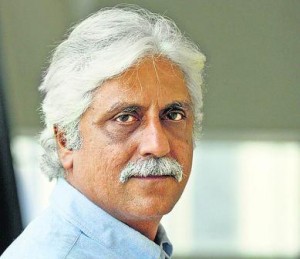
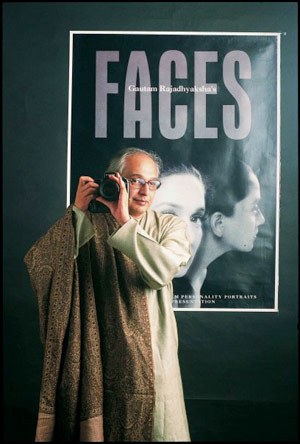
  • Through the lens, sadly: Remembering Gautam Rajadhyaksha

    By Hemant Kenkre

    The last message from my friend Gautam Rajadhyaksha, a few days ago, said: I will be heading the School of Photography at the Symbiosis International University; we are launching soon. He was planning to head to Pune for the launch on September 16 (his birthday) with his dear friend, ace makeover artist Mickey Contractor.

    As I write this, the events of the last ten hours have yet to sink in. Gautam’s gone to the great studio in the sky, without saying farewell to his many friends and (very unlike the propah man that he was) not letting the institute know. As one walked up the winding steps, dotted with posters from classic operas, all the way to his quaint, artistically done second-floor apartment on Hughes Road, memories of an association of more than 25 years flashed by.

    The many shoots that one witnessed of Gautam clicking away  making superstars of hopeful actors. The high notes of operatic arias immortalized by the likes of Luciano Pavarotti and Placido Domingo (Kiti Chintu [Rishi Kapoor] sarkha disto na? he used to say to me) or the dulcet tones of his favourite muse, Asha Bhosle.

    Much has been written about his photographic skills  inspired by the late Wilas Bhende, whom he considered his guru. Gautam was also passionate about music  operas, Marathi natyasangeet and RD Pancham Burman. When Pancham went for a photoshoot at Gautam’s residence cum studio, the duo started to discuss the finer points of opera, leaving a bemused Ashaji wondering when the shoot would start. This was probably one of his favourite shoots. The other, undoubtedly, was when he shot a live (and rare) concert featuring sisters Lata Mangeshkar and Asha Bhosle at the Salt Lake Stadium to commemorate Calcutta’s tercentenary. His work, while he sat hunched on the round stage for more than four hours, perfectly depicts the versatility and class of the two divas.

    It was one of his pet dreams to get Ashaji to sing operas  selected by him  in Hindi. Gautam would certainly have known which operas would suit Ashaji as he has the second largest collection of operas in India. In the early 1990s Gautam co-scripted the film Bekhudi which saw the birth of Kajol as an actress. I will never forget the many discussions we had as to who should be the music director. Pancham, alas, had just passed away.

    One feels sad that Gautam could not live to see the birth of his baby: The School of Photography in Pune. He was hell-bent on passing on the tricks of his trade to Gen Next and this school would have brought him immense pleasure and satisfaction. Gautam was not just a connoisseur of art, music and culture but was, in the words of ace lensman Shantanu Sheorey, one of the many photographers he mentored, a complete giver.

    And, as his mortal remains were being carried down those steps on the final journey, the high notes of Pavarotti rang out, bidding goodbye to one of music’s fondest devotees.

    Farewell my friend, we will all miss you.


    Hemant Kenkre is a senior communications consultant and cricket analyst.


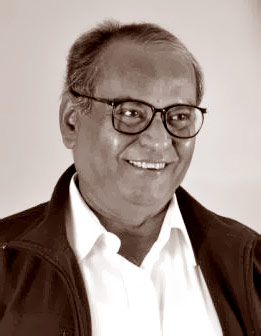
  • The anchor: Naresh Gupta on 7 things research will never tell a marketer

    No self-respecting marketing executive can live without market research. Market research offers purposeful information to make plans, policies, programmes and procedures for any marketing activity. The market research industry is as old as the communications industry and, many would argue, more important than the mainstream communications industry. Yet there are pitfalls, and things that can’t be foretold. Here are seven things MR can rarely tell.
     

    #1 Reflect reality

    Market research is a post facto measurement of what had happened. The common belief is that research data reflects the current reality and hence can be used as a basis for predicting future. If that was the case then well researched brands would have never failed

    #2 Predict the future

    Research means placing human beings together in one place ask them their opinions and forming that as the basis for predicting the future. This is like saying that if you watch a lion in zoo, you will learn all about lions. The human zoo is no different from an animal zoo, and is rarely the right basis for prediction.

    #3 Is never free of bias

    Any form of research suffers from investigator bias and statistical errors. Research too is a classic case of stimulus response. The answers depend on what you ask, and that define the findings. Can research ever be free of bias?

    #4 Right answers depend on the right questions

    The new Coke is the stuff that is now a case study. While the new formulation tested well, scored on blind tastes and passed every test the research industry threw at it, it failed when launched. The consumer was not asked the most obvious question; will the formulation change the brand they love? Do they want the brand to change? The result was a massacre in the market.

    #5 No guarantee of success

    Testing a new commercial for predicting its success in market is a common practice. It is easy to score a commercial on emotional appeal, on message comprehension, on ability to create perception. Yet more commercials fail then succeed. We all know that, yet we are slaves to practice.

    #6 Does not replace experience and gut

    We need to remember that research is a tool, and not the decision. A marketer’s gut, experience, market reality are far more important than any amount of research data. Yet the tendency is to live more by research data and less by collective experience.

    #7 Quality matters

    We all know this.

    Right?

    Yet an average marketer rarely spends time on figuring out who will administer the stimulus for research. Will an average field executive be up to scratch? Will the average investigator strike the right balance of objectivity and expertise? Most researches are spoilt by simple overlooking of this crucial aspect. Next time, pay attention to field investigators.


    As a simple test try this, ban MR for a while, live by what you know as a marketer, trust your experience, trust your market feel, trust the hours you have spent in the field. Take the decisions that need to be taken, and use research almost as the last step to check gross negative. You just might speed up the process, learn a great deal more from mistakes, and possibly be more successful.

    Experience always triumphs over data.


    Naresh Gupta is Head – Brand Strategy, iYogi Technical Services

  • I Will Miss You Dad: An iPhone pays tribute to its Legendary Father, Steven P Jobs

    Author:
    Kris Dhingra

    It’s not often that you get woken up in the morning on your day off with a piece of news that leaves you shell-shocked and makes you fervently pray that what you’ve heard is all a rumour or a dream. Such reactions are normally reserved for unfortunate incidents that happen to your near and dear one’s.

    On the morning of October 6, 2011, while lying in sleep mode, I was suddenly picked up from my dock and rushed into the living room to verify what my owner had heard, “Steve Jobs has lost his battle against pancreatic cancer“. It was true, the moment I believed was still many years away had come much sooner than I expected. It was shocking, it was painful and it was sad both for my owner, myself and for millions of my siblings (other iPhone models) and cousins (ipod, iPad and other iOS devices) around the world.

    My birth father and the person who had visualized, conceptualized and created me was no more. I think I saw my owner shed a tear while watching visuals of my dad’s amazing keynote presentations from previous years. As the news started to sink in, my body started to get into motion as I began to access the twitter and facebook apps, update the timelines, render the graphics etc. It was hard to deliver the fabulous experience that I am known for given what I had just seen and heard, but I managed it as it was part of my DNA.

    My chief Architect and originator Steve Jobs was undoubtedly a brilliant man. In fact he was one of the greatest inventors and visionary entrepreneurs that this generation has ever known. Not many people in today’s world have seen or heard the likes of Edison, Marconi, Graham Bell or Einstein, but they have surely seen and heard my father introduce devices that have changed the face of this planet. He envisioned us in a manner no one could have ever imagined thanks to his extraordinary risk taking ability and capability to understand what users needed before they themselves knew what they needed.

    My owner and other iOS users around the world love what we can do for them and how easy we have made their lives, but what they don’t know is how loved we feel when we are bought. I have many foes today who come in a variety of weird names from the house of Samsung, LG, Motorola, Nokia etc and when I see people lining up for days outside our first homes (the Apple stores) it gives us such great delight and joy. No one else has or ever will manage to get such a following unless they believe what my father believed:

    Your time is limited, so don’t waste it living someone else’s life. Don’t be trapped by dogma — which is living with the results of other people’s thinking. Don’t let the noise of others’ opinions drown out your own inner voice. And most important, have the courage to follow your heart and intuition. They somehow already know what you truly want to become. Everything else is secondary.

    Today, I can’t help but feel sad at the passing away of Steve but I also consider myself fortunate to have shared some part of my life with him. I am certain that my owners will continue to take great care of me and treat me in the best way possible, and they will certainly remember Steve every time I create some of the magic that my father gifted me with. Thank You Dad for everything you have done, I will miss you dearly.

    Steve Jobs encouraged us to listen to our heart and think differently, so in keeping with that spirit we decided to try this new format to pay homage to our idol.


    Kris Dhingra is founder and editor at DelhiPlanet Media. He can be reached at krisdhingra@delhiplanet.com]

  • A pinch of cynicism, please!

    Instead of raising awkward questions, theIndian media went along — and encouraged — with the wave of emotionalism which took over some of the country during Anna Hazare’s anti-corruption campaign… introducing a new weekly column by Editors tracking news across the country

    By Aroon Tikekar

    It is distressing to see the Indian media print as well as electronic- going berserk at the slightest provocation. Has the constant fear for survival affected the healthy vision of the Indian media? Why have the tried and trusted tenets of the profession been disregarded, intentionally or otherwise? These are some of the questions that demand a discussion.

    First and foremost, do the new brand of journalists sincerely believe that a demonstrative approach to solving social problems can and does help? Coming out on the streets shouting slogans can highlight political issues. Pressure put on the powers that be may help hasten a political process. But mere highlighting of social issues does not ensure their solution, as essentially it requires a change in social mind. Obviously journalists are not so nave as to believe that the Anna Team is not going to wipe out corruption from the Indian scene at one go. Then why did they not educate their readers or viewers to doubt the efficacy of any such attempt? Without a pinch of salt called cynicism, media ceases to be the Fourth Estate in a democracy.

    Indian media should raise awkward questions on the right occasions. Joining the bandwagon would have been considered in the past as bad journalism and an affront to the calling. The editors do have a right which is ex-officio to criticize the high and the successful. Reporting on the news and analyzing it for the benefit of readers or viewers as the case may be, is one thing and creating news by emphasizing unimportant aspect and commenting on it is another.

    Today’s Indian media, while fighting a battle of survival, is creating news unworthy of reporting and repeating it ad nauseum, much to the chagrin of readers or viewers. Supererogation of emotion has become willingly or unwillingly the hallmark of our electronic channels, but why should the print media too compete with the electronic media in sensationalizing or pandering to emotions? Whenever we, the people become victims of emotionalism in any large democracy, it becomes the prime duty of the media to educate them. The gullible masses are prone to seek and expect miracles to happen and can easily be tricked into accepting an apparent solution. The media has to come out to warn that miracles are not possible by emphasizing need to be cautious, even cynical of quick successes.

    Secondly, it may sound strange but the media, by definition, is supposed to be critical and is duty bound to take a negative stand by pinpointing weaknesses and lacunae in any proposal or happening which the gullible and innocent person may accept without complain or questioning. Social responsibility is nothing to be ashamed of. In fact it is expected that a newspaper editor or channel editor be so detached from the theatre of activity that he should be able to swim with ease against even torrential current of people’s emotions. The editors should not ride waves of emotionalism. Such objectivity is a pre-requisite in journalism.

    Thirdly, why do the media fail to grapple the historical fact that a political revolution is possible almost overnight but there cannot be a social revolution? Social change can take place only on evolutionary lines. History has shown us time and again that change for the better by slow absorption, not by convulsion, but by assimilation this is the only formula for social change. There are no short cuts to social change, no miracles, and no magical remedies.

    The same newly cropped up weaknesses were displayed by our journalists when the Anna phenomenon was taking shape in Delhi. Society should have been warned that wiping out corruption is not an easy task. Team Anna has only made a beginning. The entire country is aroused and is up in arms against corruption. All these are good signs, but nothing much per se is going to be achieved by the mere introduction of Anna’s Jan Lokpal Bill in Parliament. The roots of corruption have reached deep within our system. Again, on the issue whether the electorate is sovereign or the Parliament, the media should have brought out that our Constitution-framers have taken care to see that no section enjoys absolute sovereignty.

    Even while appreciating the novel idea of distributing caps with I am Anna written on them, the media should have warned the agitators about the limited use of such symbolism. It was on the contrary seen going overboard and was quick to call Anna Hazare as the Second Gandhi.

    The catapulting of Anna Hazare into a national figure is largely the media creation. Media is responsible for creating his larger than life image. One is not even sure whether he has the qualities of a national leader. But media called him as the second Gandhi. Let’s face it. To compare Anna with the Father of the Nation is a cheap gimmick. Comparison of the two is odious. Anna lacks vision. He also lacks wisdom, one doesn’t even know how much the Gandhi literature he has read. The original Gandhi did not even approve of the ways of revolutionaries as he believed that to assassinate is the highest kind of censorship, but Anna does.

    Aroon Tikekar is former editor of Loksatta

  • Gouri Dange: Most art reviews leave us feeling weak & witless

    Introducing Naming no Names, an all-new mid-week column by well-known novelist, columnist and counsellor, Gouri Dange.

    Dange is a brilliant writer (disclosure: MxMIndia only publishes brilliant writers!). And exceedingly funny.  But it’s not forced humour. Her simple, middle class-y view of life and everything around it will be evident from her observations of the strange and often pointless stuff we see in the media.

    Without much ado, presenting Gouri Dange. The column: Naming no Names. Every Wednesday, on MxMIndia’s Journalism channel:


    Most art reviews leave us feeling weak and witless


    Why does one read reviews? To get a little glimpse of what to expect when you read, view, or listen to creative effort, right? Works fine with most reviewing. For instance, a music review will clearly tell you that a singer was in peak form and reminded you of his illustrious grandfather in the rendition of his Bhairavi. A book or film review will tell you what works and what doesn’t, at least for the reviewer. A dance performance will be reviewed in terms of the dancer’s grace, rhythm, expression…you get the point.


    It’s the art reviews that stand quite apart, leaving most people completely flummoxed not to mention gobsmacked. Take a look. I swear I am not making any of this up – I couldn’t write like this even if there was a gun held to my head:

    “For this artist of course colour is almost another type of vessel – rather than just a vehicle, it is a protective continuum for a soft and vulnerable molusk-like feel that she besets her canvasses with. The motifs of chaotic profusion resonate against the happenings of frontal development that bring functional ethos to a standstill.”


    Now in this mindblowing welter of words and ideas, it may be nit-picky of me to say this, but molusk is not spelt right. But what’s a little misspelling in the midst of all this gobbledygook? I mean somebody please, please tell me what frontal development is…and what, pray what, is the functional ethos that has been brought to a standstill? And how does one beset the canvas with this so-called molusk-like feel. I mean, did this writer go to the same kind of schools and colleges that we did…or is there some secret institution that teaches you to write gibberish, especially to review art.


    There’s more priceless twaddle:

    “Interestingly known more for her impressionist zeal the paper works in this show reveal that the artist is busy shedding its primary historical role as a representation of the object in favour of the dynamic engagement of physical form in real space. …The whole symbolism unravels in essence as a container for visual but in-depth illumination in thought.”


    When I read bits of this out to an art historian and curator friend of mine, she laughed, and then cried a little at the sorry mess that masquerades as art reviewing. She tells me that all contemporary Indian art reviews in the newspapers and magazines are full of gormless gabble of this kind.


    P G Wodehouse would have had a field day if he read any of these. Remember his favourite piece of inanity: “Across the pale parabola of joy…”?


    Ever the anxious language lover, not understanding what I’m reading used to eat me up. I had then taken to reading these sentences out loud over and over again, hoping to tease the inner meaning out like I do to extract a tick from inside the dog’s ear. All I got was a headache and a bit of a stammer.


    Here’s some more, from another place:

    “The function of colour in her palette is like a mooring of moments, of deeper shades or shifts that create a vortex of lines around the contours of a heady sprinkling of forms to the articulation of a surface and the evocation of more than a fleeting shadow. Full dense volumes in tiny notations oscillate happily with solid forms. The complex tensions between the parts and the whole that animate these spellbound paintings are all around her.”


    Spellbound paintings? Again I quibble, but can we at least have the grammar go right when talking bunkum?


    My question is, who is this stuff written for, in the newspapers? Must be for the aliens amongst us. I can’t see real people read this and call out to their spouse or sister: “Hey we must go see this show, it has cartloads of functional ethos and oscillating notations… come, let’s hurry there now“!


    And the other thing I am just dying to know is whether reviewers who write like this, talk like this too? Meaning writing claptrap is one thing, but actually mouthing it with a straight face, can they do it? You try it – try reading that molusk excerpt out loud to someone in your home, with a straight face. Guaranteed to bring the house down.

    This confirms one theory, that the word vocabulary has an Indian origin. It comes from: voh-kya-boli-rey?

  • Gouri Dange: Dealing with journos hungry for quotes

    Do you really want to be that rent-a-quote person?

    They’re polite, of course. And young. And completely unaware of how tiresome they can be. The phone call goes something like this: “Hello, I’m writing a story on thisthatandtheother, and I was hoping to talk about it to you.”

    At first, in the early years, you feel quite pleased to be called up in this way. You drop what you are doing, and whisper urgently to anyone who is sitting around you, “It’s The Press, they want My Opinion”.  People around you immediately go dead silent in deference to this Moment – it’s almost as important as if you were invited to address the nation from the ramparts of the Red Fort on Republic Day. [The woman who works in my house says that Republic Day is when there is good circus to watch on TV (the parade) and Independence Day is when all phaltus go on doing bud-bud on TV, and Budget Day is when some ‘chassmister’ (erudite looking person in glasses) gives you the bad news about fuel and vegetable prices so that your idle boozard husband can tell you that you need to pick up a few more dirty-dishes-doing jobs to stay ahead of prices.] But I digress.

    So, in the early years of being contacted by journos to give them ‘expert quotes’, you are inordinately happy to oblige. You proceed to hold forth on your subject, while the journo at the other end furiously scribbles or keys in as you speak. The rude shock comes a few days later when you ring up 60 friends and tell them that you are being Quoted, and not to miss reading the relevant article that day. You have made these calls before you have opened the paper and actually read your quote. Three things can now happen. A) The journo who you waxed eloquent to for 20 minutes has simply not used your quote – either she didn’t understand a word of what you spoke or there was no space for your quote. B) Worse, she may have misquoted you comprehensively, where you end up sounding like an envious whiney loser who hates everyone else in your field; as a bonus, she has got your name wrong. C) All your pearls of wisdom have been used, in fact what you spoke constitutes the whole article, but you have been given no credit. Your name is not mentioned at all. It is as if this article was born via immaculate conception.

    A few such incidents, and you get older and wiser pretty quickly. You’re at the next level of the rent-a-quote market. Someone calls, and you first get a good sense of what this journo is going to be saying in his/her article first. Then you carefully choose your words, keeping it all very very simple, and hope for the best. You are also now smart enough to request:  can you please call and read out or email me what you’re quoting from this conversation? This way you can clarify, I said ‘intuition’ not ‘tuition’ and other such things. But there’s nothing much you can do about being described by the journo as a music listener who “bubbles over with names, when asked about her favourite musicians”. Or being described randomly as ‘unputdownable’ or ‘peripatetic’ or ‘intrepid’ – all favourite journo adjectives. Makes you sound like some wandering pest.

    Some journos send you a list of questions to reply to by email. This may sound better than having to gabble on the phone and then get thoroughly misquoted. However, the level of detail required from you in replying to these questions would surely be the equivalent of writing the entire story yourself, and also perhaps could be that PhD proposal that you’ve been postponing writing.  Too much hard work.

    Some of them will pop up on Gchat and say the following: Hiiii….I need quotes from celebs, psychologists and young people on ‘Long distance marriages: Is it workable or a recipe for disaster?’ …need the quotes along with high res images in 3 hours. Can u help pllleeez??”  Your only option is to quietly log out.

    Here’s another double-edged thing about being quoted in newspapers and magazines, though. Whatever garbled version of your quote appears, the lay reader immediately takes you very seriously and your stock rises dizzily in your field. However, colleagues tend to go nudge-nudge and deduce that you are rather idle and/or have friends in the Press and are a bit of a Quote Bank. So it’s a bit of a toss-up – to be quoted or not to be quoted?

    If you choose not to be, then here are some ways to duck out. Tell the journo to call you four hours later. They’re usually plugging in quotes at the last minute, and it is likely that they don’t have four hours, plus you sound busy and important. So you’re safe. Or come up with something exotic. Huff and puff on the phone and say you’re climbing Kilimanjaro. The poor dears will hurriedly get off the phone so as not to cost you roaming charges.

  • Gouri Dange: The Media Menu Card

    Talking of paid news, it’s interesting to see how it all works. Meaning the modus operandi. Not just the big-ticket paid news where political parties and heavyweights slip big bucks to large newspaper and tv corporations.


    I’m talking about the mere-mortals path to godhood via the media. Well if not godhood actually, at least the pay-your-way route to your five-minutes-of-fame. Everything’s on sale, going by Media Menu Cards that doctors, lawyers, academics, business people, sportsmen, performers et al have been getting via email over the last couple of years. They are sent by big papers and small, national as well as local and some tv channels too.


    Here’s a sample menu card, with the cunningly worded introduction.

    Dear So-and-so

    Your contribution to society is a matter of pride for us. It would be our pleasure to feature you and your achievements in our paper. Your valuable opinions are also solicited on matters of importance in our city. Please contact Ms X or Ms Y (note, they are interchangeable, the first is a journo and the second is an adgirl from the publication) after going through the contents below.


    Page 3 package

    Rs 4,000/- + taxes for parties

    Our Deliverables : Your presence at any Page 3 event, and/or your and your spouse photograph.

    Rs 8000 + taxes (photos to be provided by you) for family wedding

    Our Deliverables: Event will be reported, pictures of you and any important guests will be featured.


    Opinion-maker package

    Rs 8,000 + taxes
    Our Deliverables : Your views solicited and quoted in stories relating to your field of operations.


    Conference reporting package

    Rs 5000+ taxes (local); Rs 8,000 + taxes national; Rs 10,000 + taxes international. (with photo to be provided by you)

    Our Deliverables : When you attend a conference as a speaker/delegate, it will be our pleasure to report your contribution to the proceedings.


    Hospitalization

    Rs 5000/- taxes

    Our Deliverables: Successful emerging from surgery or illness will be reported, along with pictures (our photographer will be sent).


    …and so on and so forth, you get the point! There are these packages offered foreign trips, awards, donations that you make, stuff that you publish, charitable visits that you undertake to cancer-struck kids and slums…all of it can go up there as news, if you tick the right choices in the Media Menu Card.


    That last one is my favourite – I mean I had never thought of coming out of hospital as news, unless you were a loved leader, or a jailed corporate type pretending to be ill, or had climbed Mt Everest and were in hospital for exhaustion. And one would imagine that the ordinary person wouldn’t particularly like to be shown wheeled out of somewhere. But it looks like there is some valuable brand-enhancement to yourself by being hospitalized. Go figure! Perhaps the hospitals involved are also being contacted as we speak, for their frontage to appear in the papers, at a price. But hell, everything is on sale, so why not!


    While I haven’t been offered this Media Menu Card myself (what, I’m not a potential news-client? My money’s not good enough for these people?), I and other book writer friends have been offered similar menus, by bookstores. Not the ordinary corner bookstores that invite you to actually talk about book; and not the ones where I have launched all my books without paying a penny. But a few other new entrants, that go by lofty names. Their ‘bill of fare’ goes something like this. On an ascending scale starting from Rs 8000 right up to Rs 25,ooo (this was last year, perhaps the rates have gone up in a year), you are offered packages like:


    > venue

    > seating

    > sound

    > f&b (tea and cookies for 40 people)

    > art work for invitation card

    > invitation to our databse


    Write out a larger cheque and you can get
     

    > media presence

    > venue

    > seating

    > sound

    > f&b (tea and cookies for 40 people)

    > art work for inviation card

    > e invitation to our databse


    Then come options where you pay for the book to be stacked on the cash counter. Perhaps they haven’t thought of it yet, but they could easily offer you a package in which a stack of your books accidentally falls on people’s heads.


    And then come the more expensive add ons that maketh or breaketh your book, they say:


    > Your book banner up for 4 weeks in our store


    And the crowning glory that is within easy reach if you’re ready to fork out more mullah:


    > All of the above facilities for your book, PLUS it is placed on our bestseller list for eight weeks running.


    Somebody pass me the antacid, this menu’s a little too rich for me.