Category: BLOGS

  • Reviewing the Reviews: Raanjhanaa wins them over

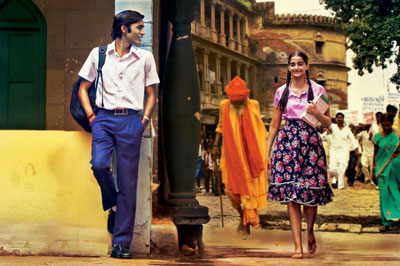
    Raanjhanaa

    Key Cast: Dhanush, Sonam Kapoor, Abhay Deol

    Written By: Himanshu Sharma

    Directed By: Aanand L Rai

    Produced By: Krishika Lulla


    Southern star Dhanush has bowled critics over with his powerful performance as an obsessed lover. His casting was undoubtedly a coup. The film by Tanu Weds Manu director Aanand L Rai has won accolades for its technical excellence and astute portrayal of small-town society.


    It has also been criticized for the naive picture of youth politics in the second half – the two halves look like they belong to different films.


    Female critics have also been somewhat spooked by the protagonist being a stalker – more so at a time when crimes against women have become a serious concern. Still, it earned 3 to 3.5 star ratings across the board, and a decent word of mouth too.


    Shubhra Gupta of the Indian Express wrote, “‘Say you love me, or I will slit my wrists’, Kundan threatens Zoya, and we know instantly that he means business. He is not saying this for a lark. Nor for a nudge-and-wink. He is saying this as if he means it. We know instantly that Raanjhanaa is a no-holds-barred love story, not your half-hearted romcom that passes for a romance these days in Bollywood. The riveting first half of the film lives up to its old-fashioned title, with a young lover whose chief driver is passion, the innocent young girl who is the object of his adoration, and the problems that keep them apart. Post interval, it comes unstuck, and squanders its gains. If Raanjhanaa had kept its tone intact, it would have been a great love story.”


    Meena Iyer of the Times of India raved, “Director Aanand Rai should be credited for drawing a superlative performance from the National Award-winner Tamil superstar, Dhanush, who makes his Hindi cinema debut here. His Kundan is a gem (pun intended). Sonam Kapoor is in top form giving Zoya several shades from giggly to grey. Unfortunately, she gets covered more for her fashion than her true mettle as an actor.

    Note: You may not like this film if you cannot digest brooding love stories.”


    Saibal Chatterjee of NDTV.com was appreciative too. “Raanjhanaa, director Aanand L Rai’s second film, not only averts the curse that often befalls a sophomore effort, it also actually turns out to be an improvement on the well-received Tanu Weds Manu. Raanjhanaa, scripted by Tanu Weds Manu writer Himanshu Sharma, is a love story with a huge difference that benefits no end from a clutch of exceptional performances. The film defies the expectations of the audience at several crucial junctures and holds out absolutely no apologies for springing abrupt surprises. It builds the drama at a gentle pace, taking care to create the right kind of physical and psychological spaces for the characters to breathe and evolve in.”


    Karan Anshuman of Mumbai Mirror gushed, “The first thirty minutes of Raanjhanaa is absolutely riveting. Well, riveting might be the wrong word but the searing strides of a romance that covers decades in fast forward leaves you having to remember to breathe. It is impossible to tear your eyes off the screen as two factors work their magic: Dhanush’s madly infectious enthusiasm as the young Kundan and the signature tune that plays every time his heart beats for the love of his life, Zoya. You want to grab on to these moments, pin them down so you can stare at them on your time with the same elation as Kundan’s eyes have for Zoya. And you wonder if director Aanand Rai is going to tell his tale all so quickly – is this film going to end all too soon?”


    Sanjukta Sharma of Live Mint was not completely sold on it. “There’s a lot happening in Raanjhanaa although not all of it neatly collates on screen. Rai’s treatment is lyrical and his ingredients are that of a sweeping Bollywood drama: a story charged with emotions, A. R. Rahman’s staple lilts, the camera’s busy, colourful frames and a tempo accentuated by the background music. The unlikely hero’s remarkable arc is the events and lives which surround him not quite forming a seamless ring. As much as Sonam Kapoor’s stilted histrionics try to derail the already overburdened plot, Dhanush keeps the film buoyant and watchable till the last scene.”


    Sukanya Verma of rediff.com praised Dhanush to the skies. “In Raanjhanaa, a guy from Benares tests his owns limits to the extent he’ll go for the girl he’s been besotted by ever since he was a little boy. Endeavours that begin this early have a way of getting out of hand and exasperating. But Rai has Dhanush – wonderful, tangible, indefatigable Dhanush, and the actor in his first Hindi film holds fort from start to finish. This is his story – complicated but transparent, one that you may be inclined to feel judgemental about but one that you’ll see from his perspective. Eventually.”


    Rajeev Masand found much to like. “Tanu Weds Manu director Anand Rai exploits the vibrancy of the holy city, and yet gives us a lived-in feel of Benares, rather than taking the typical travel-brochure approach. He banks as much on the unmistakable charm of his leading man to deliver a terrific first hour that breezes by with plenty comic moments and some genuinely heartfelt scenes. Kundan’s obsessive pursuit of Zoya is nothing short of stalking. Equally disconcerting is the idea that the filmmakers would endorse slashing one’s wrists as a way to profess love. Yet, truth is, these scenes don’t necessarily ring untrue in the film’s spot-on depiction of small-town India and its Bollywood-bred youth. The script unfortunately goes off the rails in the film’s second half, when the story shifts to the JNU campus in Delhi, where our protagonists put romance on the backburner and busy themselves with active politics.”


    Anupama Chopra of Hindustan Times wrote, “This love story is fantastical but these are characters we could know. Their emotions move us – so much so that when Kundan finally breaks down and cries, I wept too. But this is where Raanjhanaa gets frustrating. Rai hits a false note as soon as the story shifts to Zoya’s romance with her college friend, Akram, played by Abhay Deol. And post-interval, when we leave Benares for New Delhi, the film derails considerably. The actors still move us – including Sonam who looks effortlessly beautiful and gives her career’s best performance – but the plot becomes more and more convoluted. You are neither immersed in the film nor removed from it.”


    Shubha Shetty-Saha of Mid-day was impressed too, “There is this unique energy in Aanand L Rai’s films, the earlier one being ‘Tanu Weds Manu’ and now ‘Raanjhanaa’. Colourful and vibrant, but laidback and subtle. It was Kanpur in ‘Tanu Weds Manu’ and in ‘Raanjhanaa’, Varanasi gets lucky. In this film, Varanasi is captured beautifully. But interestingly, it is the backdrop to the characters and never the ‘please look at my landscapes and get awestruck’ kind of way (cinematography by Natarajan Subramaniam and Vishal Sinha). In a way, that makes this film more beautiful. And in a way, that also reflects in the most interesting character of this film, the unassuming but fiercely passionate Kundan, the beauty of whose character is not in your face but subtle and endearing, nevertheless.”
     

  • Debrief: Toyota service: No hurry, take your time!

    By Anil Thakraney


    Cool ad for Toyota  service. The idea is simple: By the time ma’am gets decked up for the noon show, our man will be able to get his Etios all serviced and ready. The commercial intercuts between the lady doing her make-up while cribbing about the car having been sent for service, and service personnel working fast on the car. Promise: Super-fast service.


    Nothing wrong with the treatment, it’s slice of life stuff, and the cribbing lady acts quite naturally (all those of you who are married will identify with this situation). In fact, it’s her acting skill that makes sure you don’t get bored on repeat ad exposure, even though it’s an ordinary commercial. And the single-minded communication ensures the promise is delivered smoothly: No more waiting endlessly for your car to be serviced.


    So all very well. But here’s the problem, and it’s for the Etios guys to worry about, not their ad agency: This sort of a promise alarms me. Because my experience with care service stations has always been horrid. The staffers are usually careless, they work in a slip-shod manner, most of the complaints filed by the car owner are ‘forgotten’. I don’t want to worry you much, but I have seen these guys damage cars in a hurry to finish their jobs. Which is why the ‘quick service’ promise frightens me.


    I would much rather have a car maker tell me the service will be patient, careful, that their staffers will treat my gaadi like their own car. And I don’t mind if they take their own sweet time, I rather have an upset partner than a car that arrives half-done, or worse, dented. For a change, I am questioning the promise, not the creative.


    Rating: (On a scale of 1-5): 2. Dicey strategy. But creative is okay.


    Anil Thakraney is a senior journalist and commentator. He is also Editor-at-Large, MxMIndia. The views of the writer are his own. He can be reached via Twitter at @anilthakraney


  • Anil Thakraney: ICC Champions Trophy Diary

    By Anil Thakraney


    Nope, I did not follow the just concluded championship trophy, though I made it a point to watch the final match, as am sure most Indians did (aside from those in Uttarakhand, sadly). Droopy eyes at work on Monday was a clear tell-tale sign. The reason I did not care much for the ICC Champions Trophy is cricket fatigue, post the IPL. Even though I like the game, there’s only that much of it I can take. Anyway, here are some notes.


    Totally enjoyed the final between England and India, not just because it was a tight game but because it was good to see Kohli, Raina, Rohit, Dhawan, etc, play alongside each other, and not against each other. Every year I yearn to see this soon after the IPL ends. Don’t like the image of our cricketers snarling at one other, that should be left to our esteemed netas.


    I had written in a previous post that we in the media need to go easy on Maahi over the ‘conflict of interest’ allegations. And I still maintain that. However, I suspect our fickle-minded media, now soaking in the victory, will completely forget all about it. That too is not correct. If the man has done wrong, he should be investigated; the idea is to be fair to him. To all those speculative TV anchors now singing hosannas in the captain’s honour, here’s what I have to say: I may write a Booker winner, but if I have been accused of evading income tax, that victory doesn’t absolve me of the charges.


    It was great to see our young cricketers perform courageously. They appeared neither intimidated by the opponents nor by the bigness of the event. I like this spirit of Young India. Despite Sachin, Saurav and Rahul’s greatness, this is one quality I seldom noticed in them. The oldies would get nervous while reaching a milestone, and their faces showed tension during crunch moments. But these young chaps seem to give two hoots for pressure. I think the retirement of the old stars has done a lot to improve the can-do-will-do spirit in the team. I see brilliant times for Indian cricket in the coming years. Provided, of course, the boys manage to keep the bookies at bay. The problem with today’s kids is while courage is on the rise, so is greed.


    Lastly, Sunil Gavaskar’s contradictory comments left me a bit befuddled. During the tournament, when asked if the team is out to prove a point following the recent scandals, Sunnybhai denied any such thing. He said the boys had left all that behind in India, and were focused on the match at hand. However, after the final win, he seemed to have changed his mind. He said Dhoni was hurt by all the scandals, and that’s why the animated reactions after the England match. Hmm. Guess the cricket legend got over-awed by the victory. Hota hai, cricket does this to many in India.


    ***


    PS: Nothing brilliant about this ad, but it’s a cool idea. What I like most are the breathtaking car shots. They make you want to own this machine.


    Anil Thakraney is a senior journalist and commentator. He is also Editor-at-Large, MxMIndia. The views expressed here are his own. He can be reached via Twitter at @anilthakraney


  • Ranjona Banerji: Tablets & tabloids – shape of news to come

    By Ranjona Banerji


    Having spent too long in a newsroom bossing about, I’d almost forgotten the cliquish little world that reporters live in, especially same-beat reporters. But one day of covering the Wimbledon tournament for Mid-Day and I feel that I am ready to write a thesis on the tribal customs of travelling tennis journalists.


    I had the same feeling years ago when I covered – just one, mind you – a film shooting for fun once. (Thanks actually to the founder editor of this website). All the habitual film journos hung around together and demanded entertainment from the PR guys who had organised the trip. They paid no attention to the shooting or the stars. Because it was a novel experience for me, I hung around the set – interminably boring – and interviewed one of the two main stars. The other never emerged from her room.


    In the same way, the Wimbledon press centre remained full of people watching TV and filing while I the wide-eyed rookie ran around the place. Great fun. However, more seriously, it seems that in spite of the fact that there were some women about, the media is the preserve of what NGOs call “male, pale and stale”. That is, sports journalists tend to be old white men! I tried to take aphotograph of the press enclosure on Centre Court to prove my point but apparently journalists in the press enclosure are not allowed to take photographs. Go figure.


    **


    There seems to be a lot of anger against the television media in India for its coverage of the Uttarakhand floods. It is impossible to know what went wrong from so far away but I can conjecture that as usual Indian TV went into “blame mode” rather than reporting mode and this meant that the issue became a school-playground level debate between opposing yellers and screamers. How this is of any help to anyone is a pointless question however since TV editors evidently cannot think beyond “discussion journalism”.


    But one story was intriguing and that was The Times of India report that Gujarat chief minister Narendra Modi travelled to Uttarakhand and rescued 15,000 Gujaratis. It was not made clear in the story how exactly the Gujarat state administration left behind the other people or how in extreme weather conditions they identified who was who. A petition on change.org (http://www.change.org/en-GB/petitions/chairperson-press-council-of-india-inquire-into-serious-violation-of-media-ethics-by-times-of-india?utm_campaign=share_button_action_box) has asked some questions about violation of ethics. The implication in the petition is that the story was a PR exercise for the Gujarat chief minister to show how efficient he is. But the underlying feeling is a bit of holocaust-type politics where you save only one kind of person (depending on ethnicity) and abandon the rest. Which is pretty bad PR if you think about it…


    **


    Meanwhile, here in the UK, once again you notice how news dissemination is no longer what it was. Newspaper subscription on tablet devices is winning the battle against paper. And on the tube, tabloid newspapers are common, free or otherwise. Some lessons which India will have to pick up on sooner or later. Sooner for the media industry’s own good but who knows.


    Ranjona Banerji is a senior journalist and commentator based in Mumbai. She is also Contributing Editor, MxMIndia. She can be reached via Twitter at @ranjona. The views here are her own


  • Debrief: Kotak Mahindra: Catching them young

    By Anil Thakraney


    Kotak Mahindra Bank has decided to expand its market share. And no, unlike IndusInd Bank they aren’t offering you a lucky number, they have decided to go after your kids. The bank has launched Kotak Junior, a new scheme whereby bachchas can now have their own account.


    As you would expect, the commercial is cute. A sweet little girl goes about collecting chillar from her family members by hook or by crook. Once she’s amassed enough, it’s time for the next step: Open a bank account. The jingle is sweet too and the ad is shot nicely. I like it that they haven’t shown adult faces, their presence is only suggested. This keeps the focus on the little girl, and that’s what makes the ad endearing.


    However, the TVC leaves some key questions unanswered. I guess Kotak Mahindra is hoping that sufficiently enticed, and under pressure from their kids, parents would visit the local branch with queries. I am not too sure that gamble will work in this case. Since the juniors will only land up with a membership card, with no direct control of the account, the delicious add-ons that Kotak Mahindra would most likely offer the kids need to be indicated in the ad. Today’s kids aren’t simple souls as bachchas from my generation used to be; they are very smart, and without tangible promises, they would not get interested.


    And by the way, hope Kotak Mahindra is offering a slightly higher rate of interest to the juniors. Itna toh banta hai, boss!


    Rating: (On a scale of 1-5): 2.5 Cute ad. But communication is incomplete.


    Anil Thakraney is a senior journalist and commentator. He is also Editor-at-Large, MxMIndia. The views of the writer are his own. He can be reached via Twitter at @anilthakraney


  • Ranjona Banerji: Inexplicable Times

    By Ranjona Banerji


    It is hard to make sense of The Times of India’s stories and comments about Narendra Modi, especially from far away. Or indeed the way the Indian media appears to have focused half their attention away from a terrible humanitarian and ecological disaster on to the chief minister of Gujarat.


    Even assuming Modi swooped into Uttarakhand with his extraordinary Gujarat Special Ops team and managed to identify 15,000 Gujaratis and whisk them off to safety, the story had to be on the people of Uttarakhand and the visitors to that state. These are the accusation against the media, from what I can gather.


    For one, there’s the Modi PR exercise which now has the piquant problem of the newspaper which publicised Modi slamming the media for publicising Modi. The Times of India can sometimes be most inexplicable. It’s one thing to be all things to all people. But it is quite another to lose all sense of coordination and contradict yourself in public.


    This is the time when the newspaper should come out with an explanation as to its conflicting policies about Modi or about news items versus columns or indeed about half-baked apparently PR-driven stories. On the off-chance that all these conjectures are untrue, this would also be a good time for this or any other news organisation to clear its name. But alas, such ivory towers sometimes are less impregnable than Saruman’s Isengard.


    The other horror from Uttarakhand that I have noticed is a TV reporter who did his report sitting on the shoulders of a flood victim who was standing in chest-deep water. I really do not know what to make of this. I read an explanation given to Newslaundry where the reporter said he was wrong but still managed to blame the cameraman for revealing that he was on the man’s shoulders! Words fail me, to be honest.


    The only thing I can give thanks for is that I am spared the nightly hysteria on Indian television as people who know nothing fight with each other in ferocious effort to obfuscate the real issue. I defy anyone on TV to read that last sentence out loud!


    **


    I am assured by a friend, tennis expert and former colleague who is covering Wimbledon for her newspaper that it is the Grand Slam tour that is particularly weighted heavily by male reporters/tennis experts, journalism stars. The rest of the tour apparently has a good proportion of women reporters, almost equal she says and quite clearly dominant especially in the noise department. Good to hear. Right now, all the white hair on display rivals mine. Which is quite an experience, given that the average age of a newsroom in India is now about nine and a half.


    One gentleman in about my age category (but he has it seems removed all evidence of grey hair on head by removing all hair) has sat next to me at Centre Court three days running. But he is barely interested in the tennis. Instead, he scans the crowd carefully for celebrities, has whispered confabulations with his colleague and then scoots off. It is thanks to his audible whispers that I learnt that British Olympic marathon star Mo Farah was in the Royal Box!


    Ranjona Banerji is a senior journalist and commentator based in Mumbai. She is also Contributing Editor, MxMIndia. She can be reached via Twitter at @ranjona. The views here are her own


  • Comment: News media must black out netas at Uttarakhand

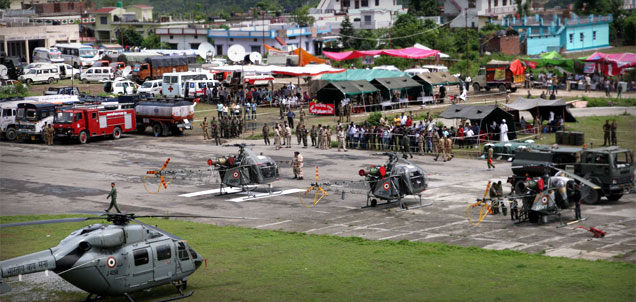
    Representative picture courtesy PIB of the IAF rescue helicopters at Gauchar airport, in flood-hit Uttarakhand on Wednesday, June 26


    It is indeed sad to see several dead and many injured as rescue operations are still on in Uttarakhand. What rages us is the game of one-upmanship between political leaders in grabbing camera time and the importance our news vehicles give to these visits. We present the comment by our Editor-at-Large and senior journalist Anil Thakraney on the issue which would normally appear as Hard Knocks on a Friday. – Editor


    By Anil Thakraney


    In the entire television din over the role of politicians on the Uttarakhand disaster, Prasoon Joshi made the most valid point. (Prasoon, if you are reading this post, I would urge you to take part in the tube debates regularly, we need a few sensible voices out there.) While the others were heatedly accusing the netas of seeking photo-ops during the tragedy, Joshi said the media must consider WHO is providing them with these photo-ops. Very true. If the media stopped covering these opportunistic politicians, they will immediately vanish from the scene.


    The defining neta moment so far was the two Andhra politicians exchanging fisticuffs at the Dehra Dun airport, as they fought over who would fly with the ‘cargo’. And no, the cargo in this case wasn’t medical supplies for the victims, but those people who had been rescued, and were anxiously waiting to be flown back home. Absolutely pathetic. And then there is Pheku and Pappu busy scoring brownie points over each other, and the many chamchas defending their actions. At least half of the media time and space gets spent on these jokers. What a bloody waste!


    My humble request to colleagues in the media is this: For the Uttarakhand news, take a firm decision not to provide any coverage whatsoever to the visiting politicians. Not only are they unable to help in any way, with their shenanigans, they come in the way of rescue and relief operations. And there’s no keeping these hyenas away, they will come to feed on the dead, it’s in their nature. Emotional situations like these give politicians a cool opportunity to win more fans, or so they believe. Let’s deprive them of it. And let the entire media effort be focused on the victims, the rescue and rehab. And on the jawans who are doing all the hard work, these brave souls who are putting their own lives on the line so that maximum number of people can be saved. I want to see their faces, I want to hear their voices, I want to know their stories. And this is what the media must provide us.


    Net net: Let’s make Uttarakhand a template for future disasters. No spotlight on any neta. Let it only be about those who matter, and those who do the real work. That done, no politician will ever arrive to disturb rescue operations. Once the oxygen supply (cameras) is cut off, they won’t see any point of jet-setting in. Good riddance.


    Anil Thakraney is a senior journalist and commentator. He is also Editor-at-Large, MxMIndia. The views expressed here are his own. He can be reached via Twitter at @anilthakraney


  • Anil Thakraney: Media must go after the RTOs

    By Anil Thakraney


    And, yet again, over the weekend, two licensed drivers, in panic, ‘forgot’ the difference between the brake and the accelerator. And two more innocent lives abruptly ended on the streets of Mumbai. This has been happening in the past, and will continue to happen again and again. Why so? Because the RTOs give away driving licences as if they were distributing Cadbury Éclairs to children inside a mall. In exchange for some ‘goodwill’, of course.


    Now, we all know that almost all the public sector organizations in India run on corruption money. The regular scams that get reported will tell you that. So there’s no reason why the driving licence issuing authorities would want to be left behind. The problem is this: Corruption in telecom spectrum allocation, in coal mining allocation, in arms purchase, in the Commonwealth Games, etc, doesn’t kill anyone, not directly at least. But corrupt RTOs literally gift people the licence to kill, this is akin to culpable homicide. This does not happen in any civilized nation in the world, it’s easy to get laid on the first date in London and New York, but you have to work really hard to get hold of the driving licence.


    Which is why I have always wondered why the Indian media hasn’t taken this up in a big way. I have personally alerted a couple of newspaper editors in the last few years, but they seem to have ignored this problem. What is urgently needed is a 360-degree journalistic campaign on the (mal)functioning of the RTOs in India. Starting with massive, nationwide sting operations to expose these buggers. And then going after the big fish with hammers and shovels. Followed by continuous checks, right till the time these guys get their act together, till the processes are cleaned up. And till the time obtaining a driving licence becomes as tough in India as it is in the US and the European nations.


    I must also add that I find it odd when the first thing the traffic cops check is if the killer driver was drunk. That should be the second step. They should instead first check if the person is capable of driving at all. And they’ll discover the real culprits are chilling in their own backyard.


    PS: Absolutely brilliant car ad. It’s not a new commercial, but it’s worth watching again and again. Not a single shot of the car, and the point of cars being made for human beings beautifully made. It’s another matter, of course, that in India cars often kill human beings.


    Anil Thakraney is a senior journalist and commentator. He is also Editor-at-Large, MxMIndia. The views expressed here are his own. He can be reached via Twitter at @anilthakraney


  • Reviewing the Reviews: Ghanchakkar fails to spin

    Ghanchakkar

    Key Cast: Emraan Hashmi, Vidya Balan

    Written By: Parvez Sheikh, Raj Kumar Gupta

    Directed By: Raj Kumar Gupta

    Produced By: Ronnie Screwvala, Siddharth Roy Kapur


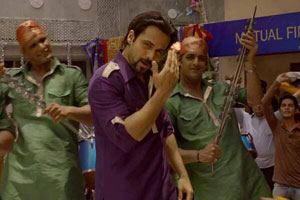
    So much promotion – Emraan Hashmi in red polka-dotted ‘night-suit’ and Vidya Balan in ghastly Lokhandwala costumes went everywhere. They must have believed in the film to do this, but critics were not so impressed. More so because director Raj Kumar Gupta’s earlier films, Aamir and No One Killed Jessica were such zingers.


    Mostly 2 or 2.5 stars, and a common refrain… starts off well and goes downhill.


    Shubhra Gupta of The Indian Express quipped, “Horny woman who doesn’t bother hiding it plus dour man with a secret, has the potential to be a humdinger. Ghanchakkar sets up trying-to-go-straight safe-breaker Sanju, and his blowsy trying-to-be fashion-forward wife Neetu, and a couple of rogues, around a bank heist, and lets them loose. This could have been a hoot, but the execution lets down the premise, and the film remains one of those that could have been edgier and funnier.”


    Rajeev Masand of IBNLive.com sounded almost disgusted. “The mystery in Ghanchakkar involves the whereabouts of a suitcase containing stolen cash. Yet, a harder puzzle to crack is figuring out just how so many talented people could make such a disappointing film. No One Killed Jessica director Raj Kumar Gupta recruits a competent cast, but flounders with a half-cooked script that doesn’t know where to go after setting up its delicious premise.


    Karan Anshuman of Mumbai Mirror wrote, “Gupta paints himself into a corner with no out and ends up botching the third act. He meanders, wastes time visualizing the obvious, and refuses to get a move on by throwing in situation after situation that only serve to widen, not propel the premise. Perhaps he could’ve started with more characters to play with rather than the four we’re focused on, for the majority of the time based in one apartment. Sure, Gupta eventually takes the story to a place you don’t expect, but is this a satisfying end? I didn’t think so. Because this entire construct, this choice of subject, hinges more on the destination rather than the journey, the sense of loss is even greater. And if there’s a deeper layer to this film, I’m missing it.”


    Raja Sen of rediff.com commented, “The finest, most fascinating mysteries are the ones where we find the red herrings stashed away in plain sight all along. In Raj Kumar Gupta’s Ghanchakkar, the true clue to the proceedings is barely hidden. It’s in the song playing in every trailer, the song over the opening credits of the film: it’s fiendishly smart to say Lazy Lad and make us assume the filmmakers are talking about the protagonist when in reality they mean the screenwriter. For this is a confoundingly half-written film. What is exasperating is how good it is right up to the third act, right up to the point when the people plotting this clever and twisty story decided not to type out any more ideas and let the film remain an almighty mess.”


    Nandini Ramnath of Live Mint sagely commented, “It helps to keep expectations low while watching Ghanchakkar, which isn’t as madcap as the title promises. Gupta opts for a mix of deadpan and mental, slowing down the movie ever so often to let a joke play out, and then speeding it up in order to reach the next humour zone.”


    Saibal Chatterjee of NDTV.com ranted, “The odd-couple pairing of Emraan Hashmi and Vidya Balan apart, this madcap whirligig has little on offer by way of innate allure. The fundamental concept of Ghanchakkar is intriguing all right, but it simply isn’t sturdy enough to bear the weight of an entire two hour-plus film. It presses a 1980s plot device into the service of what is meant to be a new age comic thriller and inevitably comes a cropper. Three guys pull off a bank heist, one of the robbers suffers a memory loss, and the booty goes missing. The pace of this black comedy is so somnolent that all the characters, and not just the ‘lazy lad’ of the film’s quirky opening song, appear to be sleepwalking through it all. What makes the film worse is that none of the handful of players is a rounded figure that the audience can relate to.This film about a man’s lost yaadasht and the complications that it sparks off seems destined to be quickly forgotten.”


    Aniruddha Guha of Time Out wrote,”Ghanchakkar’s best moments come in the latter half, when a bewildered Sanju (Emraan Hashmi) struggles to fathom everything that’s going wrong in his life. He can’t remember where he left a suitcase full of cash, two men threaten to end his life, and he’s unsure about where his wife’s loyalties lie. He runs helter-skelter, trying to piece together fragmented memories, waiting for a clear picture to emerge. These moments, shot on the streets of Mumbai, remind you of director Rajkumar Gupta’s first film, Aamir, which also involved a harrowed man and a suitcase.”


    Meena Iyer of The Times of India tried to be kind with 3 stars, but it doesn’t quite reflect in the review. “Director Raj Kumar Gupta is an ‘inspired’ writer/filmmaker. He draws liberally either from other cinematic material or from headlines. His first film Aamir had many similarities to the Filipino film Cavite. His No One Killed Jessica was quite obviously taken from the Jessica Lal murder case. In his third movie outing, Ghanchakkar, the director is ‘inspired’ by innumerable Hollywood and UK black humour flicks.”


  • Debrief: Hyundai i20: The ghost-buster

    By Anil Thakraney


    Haha, scary ad for Hyundai i20, it will give you the shivers. Our sleepy, exhausted dude is driving by the countryside on a dark, rainy night, when he spots this sexy lady standing by the corner. Naturally, our excited hero wants to offer her a lift. But he suddenly finds her standing next to the car, and then inside it, all quite magically. The terrified chap discovers she was standing by a cemetery, and that the hot babe is a ghost. She commands him to drive, and there’s no option but to listen.


    Then comes the twist in the tale, as the tables turn. The ghost is petrified when she notices that our man can get the wipers moving ‘without touching a thing’, the headlights come on ‘by their own’, and she really freaks out when the guy reverses the car ‘without looking in the rear’. This prompts the ghost to vamoose.


    I like this one because it’s a surprising solution, it’s very unlike typical Indian car ads. And the Hyundai guys must hope that within the ghost story, the car features highlighted in the ad will prompt the buyers to visit the showroom and suss out the machine. Which indeed is the job of an ad: To get the brand noticed, and to get potential customers interested. I think this twin objective has been achieved nicely.


    And the sexy ghost ensures the ad breaks the clutter, and is entertaining to watch on repeat exposure. I am definitely going to check out the i20. And shall recite the Hanuman Chalisa while I do so. 🙂


    Rating: (On a scale of 1-5): 4. Surprising solution. Highly entertaining.


    Anil Thakraney is a senior journalist and commentator. He is also Editor-at-Large, MxMIndia. The views of the writer are his own. He can be reached via Twitter at @anilthakraney


  • Anil Thakraney: Are reporters adequately trained?

    By Anil Thakraney


    If you happen to know this dude called Narayan Pargaien, please tell him never to come face to face with me. If he does, I am going to sit on top of his shoulders and make him give me a ‘lift’ when Mumbai’s streets get flooded with gutter water. In case you haven’t heard, not only did this News Express reporter do something totally disgusting in flood ravaged Uttarakhand, he has brought global disrepute to the entire Indian media, the world press is busy sniggering at us. (The firangs love, love, love stories like this from Incredible India.) Here’s the link to his shameful deed: http://www.youtube.com/watch?v=RMq7KPgynU0


    This incident reminds me of another equally sickening one I personally witnessed in Nagapattinam, in the after-math of the tsunami. A TV reporter found a very old woman wailing by the beach, she had lost her entire family. Our chap started filming her, and began demanding she wail harder so that it looks ‘good’ on television. He even encouraged the unfortunate lady to beat her own chest. Even better television!


    I hope the rest of the Indian television reporters conduct themselves better on the field, but such incidents are a reminder of the woefully poor quality of training that happens in the media companies. We like to call ourselves ‘The Vibrant Indian Media’, but do all these channels/portals/newspapers bother to educate their reporters before letting them loose? I seriously doubt it. Pargaien has been sacked, but is that the solution? This is like punishing the traffic havaldar who got caught for accepting a fifty buck bribe, and hoping that the problem is solved.


    Most Indian media barons are reeling because of cash crunch, we are all aware of that, but they simply have to find a way to invest in training so that their reporters and cameramen conduct themselves with dignity while covering a story. Despite the mad rush for ratings and scoops, there have to be specific dos and don’ts outlined with a clear warning: Follow them or get out. Each media company must never forget one hard truth: If your staffer behaves shoddily, it directly damages your brand’s name, since he/she is representing you to the public. Therefore ignore training at your own peril.


    PS: This outdoor campaign from IBM scored big at Cannes this year. Richly deserved, I say. Such a simple but powerful idea. While Balki envies work done for Gujarat Tourism, this is the sort of work that makes me feel jealous.


    Anil Thakraney is a senior journalist and commentator. He is also Editor-at-Large, MxMIndia. The views expressed here are his own. He can be reached via Twitter at @anilthakraney


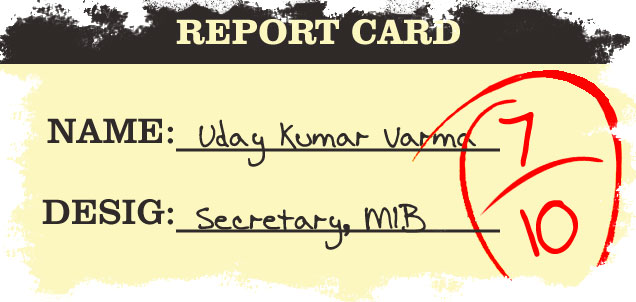
  • Mediaah! Report Card on Uday Kumar Varma’s tenure as I&B Secretary: 7/10


    By Pradyuman Maheshwari


    Uday Kumar Varma

    In October 2011, when Uday Kumar Varma had just been appointed Secretary in the Information and Broadcasting ministry there was much hope from the ace bureaucrat. He didn’t just have sound experience in the administration, but he also had spent a good time in the MIB.


    So he would be plug-and-play given the little time he would need to learn the nuances of the ministry.


    However, it’s one thing to be Special Secretary and another to be ‘the’ Secretary, especially when you know your stint is going to last two-odd years and you will be retiring after the tenure.


    MxMIndia had carried an article as a part of the Anchor with the headline: 5 Things the New I&B Secretary Uday Kumar Varma must do (see link: http://www.mxmindia.com/2011/10/the-anchor-5-things-new-ib-secretary-uday-kumar-varma-must-do/).


    There was a five-point tasklist. Here are the headlines:

    #1 Ensure new digitization announcement is implemented on time.

    #2 Must let self-regulators rule.

    #3 Should ensure paid contentwallahs are punished.

    #4 Push for news on FM Radio.

    #5 Empower government media – Doordarshan and All India Radio.


    I am not going to factor in #2, 3 and 5 here, because in a two-year stint there’s not much that you can expect any Secretary to achieve.


    Phase 3 of the FM radio regime has still not taken off and one can’t see independent news happening in a hurry on FM radio. It requires someone who believes in the medim to push these through with missionary zeal in what’s clearly a non-priority sector.


    Varmaji made the regular noise on self-regulation, measurement and paid content, the kind one expects from a Secretary.


    But it’s with digitization that the former Secretary has received the maximum bouquets and brickbats. At the outset, he deserves all the credit for digitization finally seeing the light of day. When the minister changed less than a week before first phase was scheduled to happen,  it was Shri Varma and his team’s conviction that ensured it takes place.


    But what happened before Phase 1 of digitization was effected was deplorable. The readiness numbers that the ministry declared were in sharp variance with the ground reality.


    It was Varma & Co’s resolve and understanding that the hiccups are inevitable is what led to the digitization been effected. Phase 2 was also pushed through, with its own share of problems, but by then the Secretary knew that it’s not switch-off-switch-on game. Every phase will have its own sub-phases.


    Had it been just the effecting of digitization, Varma would’ve got an 11 on 10, but the fact that the initial process had its share of big problems and that one had huge expectations from him given his knowledge of the functioning of the ministry, we give him a score of 7/10.