Category: BLOGS

  • Our fascination with Musharraf

    By Ranjona Banerji


    Wednesday night provided some interesting debates on television. NDTV looked at whether Manu Sharma, convicted for killing model Jessica Lal, should have been given bail to attend a family wedding, especially since he violated his parole conditions the last time. Headlines Today and Newsx both examined cricket issues – why ticket sales were down and the consequences of match-fixing. Times Now looked at the granting of bail to the Malegaon accused and whether there was institutional bias against Muslims, also examined parole then moved on to Mamata Banerjee and her changing stand on the Maoists. My cable operator has decided that I do not need to view CNNIBN, so I am a bit handicapped here.


    Is it heartening that the anchors behaved better than most of the guests? The tendency to shout, interrupt and refuse to allow others to speak is not just vastly annoying for viewers but also reflects quite badly on our standards of civilisation. For instance Mahesh Jethmalani did not even allow Kamini Jaiswal to speak on Times Now. Whatever their past animosity, a certain minimum level of decorum is expected here. Even Arnab Goswami seemed to have had enough. Interestingly, perhaps tired of being told that he does not do enough homework, he quoted chapter and verse of the parole laws to lawyers to make his point – and score a couple of brownie points.


    I saw on Twitter that former Pakistan president Pervez Musharraf had been shooting his mouth off in an interview on NDTV. I have never been able to understand the media’s fascination for this former general, who is so desperately searching for some space in the limelight, and as a result I did not bother to watch. Did I miss anything? Apparently that Dawood Ibrahim masterminded the 1993 Mumbai bomb blasts a few years in advance as retribution for the 2002 Gujarat riots, according to Twitter. I always thought that the 93 blasts followed the post-Babri demolition riots but am sure that NDTV and Musharraf know better. Or perhaps all the people on Twitter got it wrong. The point is, why keep going back to Musharraf if you’re not going to ask him about Kargil and his role in bolstering ISI support for the Taliban?


    **


    But on a similar note, is there any purpose served in getting Pakistani guests on a panel discussion on Indo-Pak relations and then allowing your guests to get into a slanging match? It makes for distasteful television for sure. It may make better sense to hold one-on-one interviews with relevant Pakistanis so that viewers can at least understand what is going on instead of having to watch people trading insults. Everything in life does not have to be a copy of Big Boss/ Big Brother.

    **


    After all the flak which Markandey Katju has faced for his remarks about the media in India, he did earn some kudos for his views on the defamation case on Times Now. He made it quite clear that Rs 100 crore for a mistake was excessive. He also indicated that India has a long tradition of judicial restraint.

    Perhaps it is time to build some bridges and a better relationship with the new chairperson of the Press Council of India?

    eom

  • Debrief: A wing and a player

    By Anil Thakraney


    Many experts (and non-experts!) have given us their views on the Kingfisher airline mess. Many reasons why the airline is in trouble have been speculated upon. And all this while the man in the hot seat, Dr Mallya, only posts pissed-off tweets. But doesn’t tell us what really is going on.


    Here’s my theory, and I put it out despite the fact that I know as much about the airline industry as Rakhi Sawant knows about nuclear physics. And I do so because I believe the main problem isn’t really about the business itself, it’s about branding.


    Yes, Mallya and gang have messed up on the running of the company. Yes, they could have handled flight scheduling better. Yes, they should have hired better talent at the top, and yes, the government’s unhelpful policies have added to their woes. But the real problem is that Dr Mallya has fallen into a self-created trap. Because the Kingfisher airline is a brand extension of the high selling and very profitable Kingfisher beer, it must carry forward the brand values of the latter. Any deviance from those would hurt the beer brand, because they share the same identity.


    Now, Kingfisher beer is synonymous with good life and high living. And has been so for many years. If the airline goes totally cheap and down-market, it runs contrary to the mother brand’s values. I suspect this is the battle that Dr Mallya lost, because it has conflict embedded within. With the downturn in the economy, spiraling cost of fuel, heavy taxes on airline travel and some serious competition in the sector, downgrading Kingfisher airline, cutting off all the frills, was the order of the day. What Dr Mallya did instead was to spend more on comfort, food, service and entertainment. And sent the operational costs crashing through the roof. He HAD to do this because the Kingfisher brand = Good life. He had no choice. Dr Mallya cuts the good life on the airline, it comes straight back to haunt his cash cow Kingfisher beer.


    Make no mistake about this: Dr Mallya is no spring chicken when it comes to dhandha, he runs a massive, very profitable liquor empire. He knows a lot about costs, revenues and bottom-lines. Where he went wrong was in the branding strategy. That trapped him big-time. He ought to have coined a new, independent brand name for the airline. A stand-alone brand that fights its own battles and is unburdened of any legacy. In which case Dr Mallya could have taken tough decisions on his airline. He could have gone really low-cost, and may well have been saved from the miseries he’s facing today.


    Perhaps he should have called it ‘Deepika’ airline. His equally flamboyant son would have approved! 🙂


    ***


    PS: Very happy that the media left Baybee Bachchan alone. Maybe Justice Katju has got to them. Maybe the broadcast editor’s guidelines were taken seriously. Maybe an earlier post from me opened their eyes (hee hee). Whatever. But this incident could well be a turning point for Indian journalism. Let’s hope so!

  • Stand up and be counted against paid news!

    By Ranjona Banerji


    The best TV news programme I watched all weekend was the BBC’s Panorama on the August riots which hit England, with particular emphasis on the city of Manchester. As you might remember, the riots started in London over what appeared to be a clash between the police and residents of a locality over the shooting of a black man. However, it soon became clear that race had little to do with the rage of the citizenry as anger spread from city to city and then manifested itself in arson, looting and attacks on the police.

    Panorama concentrated on Manchester, how the police – who had spent officers to London as the capital was struggling – watched and waited. How many had little idea why the riots hit Manchester and how quickly they spread. How those who worked in the poorer areas – like Salford – were not surprised at the extent of the anger against the establishment.

    The programme spoke to the police, to some rioters and tracked the process of how video footage helped in making arrests. The home minister was also interviewed.

    However, there were no “general” experts who put forward any psycho-babble theories and nor did the reporter pontificate. Instead, here was an old-fashioned report, minus glitz and packaging. It made, perhaps obviously, for compelling viewing.

    I’ve heard endless theories, as have we all, about how TV news in India is in its nascent stages, how TV is all about rating points and can never look further and how sensationalism is the only way competition can thrive. But I have never yet heard or seen any competent research which proves that Indian TV news viewers are all uniformly dumb. In which case, surely once in a while, TV can allow some good journalism to sneak through?


    MxM partnered a film viewing and a seminar on paid news organised by Moneylife Foundation last Friday – paid news. Umesh Agarwal’s documentary Brokering News was a hard-hitting look at the scourge of our times – paid news. The film looked at the trend of media houses approaching politicians and political parties to sell them editorial space for positive coverage. The reader or viewer of course is not informed that the coverage has been paid for. This has become an across-the-spectrum practice during elections for four or five years.

    It has long been known that smaller newspapers particularly in the regional languages use their reporters to get advertisements as well as get stories. Sometimes, the information gathered is used to blackmail politicians and businesspeople to increase the newspaper’s revenue. Brokering News tells the story of Rakesh Sharma who decided he could not be used like this any more his employer – Dainik Jagran – and is now fighting a lone battle against the newspaper. Sharma pointed out that other newspapers – he named Dainik Bhaskar and Hindustan among others – were also involved.

    The film looked at corruption in the sports and entertainment sectors of journalism and ended with the Niira Radia tapes and its impact on the media. It was interesting to see Rajdeep Sardesai of CNNIBN, who was interview in the film, damning the practice of cosying up to PR people or subverting the cause of journalism and then copping out when it came to actually taking on the people exposed by the tapes. The biggest fish caught in the net were of course Barkha Dutt, Vir Sanghvi and Prabhu Chawla.

    The film should be seen by every journalist. There was a bigger caveat I think to the media, which can sometimes become too complacent. The film played to a packed audience, with standing room only in a hall which seated about 300. For a documentary, that is remarkable. The media ought to take heed that the general public is not completely oblivious to its shortcomings. The warning signals are quite visible.

    I think those of us who are not caught up in the seamy side need to come out and speak out, with more strength. The panellists – Paranjoy Guha Thakurta, Ayaz Memon, Bhawana Somaiya, Umesh Agarwal – and moderator Sucheta Dalal examined and slammed paid news and acknowledged the degradation in the media. Now we need more.

    eom

  • Debrief: Zzzzrfan Khan

    By Anil Thakraney


    Vodafone has decided that people with, let’s just say ‘limited means’, but with a mobile phone in hand must do more on their phones than just talk.


    This makes sense. A whole lot of Indians at the bottom of the telephony pyramid use basic handsets and are averse to experimenting with features. They are happy to use it purely as a speech device. If some of them convert and do more voice-based things, it expands the market. So no issues with the strategy.


    In order to communicate this to the lower end of the consumer spectrum, Vodafone has gone back to the ‘aam aadmi’ actor: Irrfan Khan. A series of TV commercials have been unleashed. I watched two. In one, the actor cribs that people invite him to parties just to get an update on the latest Bollywood gossip. And he says they should use their Vodafone connection for their gossip needs. In the other one he complains that his missus cooks cauliflower all the time. When all she has to do is use Vodafone to learn new recipes.


    Now while I understand that the intent is to keep the communication simple given the target audience, that does not mean the ads have to be dull and witless. The problem is the scripts aren’t funny, and the continuous stand up drone of Khan can get really irritating after a point. And even if you are the sort who smiles at such stuff, you will not do so on the second exposure. Also, for some strange reason, Irrfanji mumbles his way through the ads, as if they woke him from deep slumber. I had to watch the ads many times to even comprehend what the man is saying.

    Bring the Zoozoos back, I say!


    Rating: (On a scale of 1 to 5): 1. Only good for putting you to sleep.   

  • Hard Knocks: Heavy price for a goof-up

    By Anil Thakraney


    In a nation that boasts of hundreds of news channels (with more dying to get into the fray), speed of content is crucial. It’s a cut throat situation out there, and there is tremendous pressure in the news rooms to be first with the story. In this high tension scenario, mistakes can and do happen. And even if heads of news channels build in fool-proof checks and balances in the process, one can never totally eliminate the chance of a slip up.


    Because making mistakes is human, we have all been guilty of it at some point or another. That’s why the defamation suit of Rs 100 crores slapped against Times Now by an aggrieved judge is not just a bit excessive, it’s rather frightening for all of us in the media. The case pertains to the channel erroneously carrying a picture of the judge while reporting on a scam story.


    Now, I have no doubt at all that the judge in question has every reason to be upset. We would all be in similar circumstances, when someone wrongly tarnishes our integrity. But with due respect to the esteemed judge, if the channel has publicly apologised, that should be the end of the matter.


    While the good thing that could come out of this incident is that the media will hopefully be more careful in the future, there is no denying that the rather harsh punitive action against Times Now has alarmed all of us in the media. Many of us would now think a hundred times before running edgy stories, even after filtering them through a battery of lawyers. Who wants to carry the burden of such a stringent defamation action? And when, after having said sorry, the case goes on.


    On my own part, I have reached a state where I am seriously contemplating seeking a PR job. Forget imagining what an amount of Rs 100 crore looks like, the very mention of the figure gives me nightmares.

    Meri to phat gayee, yaar!


    ***


    PS: So, the Bigg Boss cuckoo house has a new inmate, a porn star. Makes no sense to me. The only great thing a porn star can do is to expose, that’s her ticket to fame. And when she can’t be allowed to expose on a family channel, what’s the point in spending so much money on her? They should invite me into the house, and I am available for a fraction of her fee. I shall create trouble in seconds, that’s my ticket to fame! 🙂

  • HT’s series on medical malpractices

    By Ranjona Banerji


    I have to congratulate the Mumbai edition of the Hindustan Times for its hard-hitting series on medical malpractices – particularly the way doctors take patients for a ride by prescribing any number of fake tests. Almost everyone I know has been a victim of this scam at some time or another and it is shocking the way it has proliferated. Well done to HT – we have so many stories telling us about some celebrity doctor importing some ground-breaking medical practice at some exorbitant price or about the dismal state of government hospitals. Both aspects are undoubtedly true. But it’s also necessary to highlight the problems within the medical community which in keeping with the zeitgeist appears to be greed!


    I must admit to not being a fan of the Mumbai edition of Hindustan Times – being better than what DNA has become is hardly something to be proud of. On a normal day, The Times of India just whitewashes the competition with its total city coverage. But targeting issues which affect citizen and packaging them well is a time-tested and intelligent way of increasing reader interest and HT has done it well here.

    **


    It is quite amusing to compare last night’s television to this morning’s newspapers. So while some channels decided to focus on the Special Investigation Team’s submission that the Ishrat Jahan encounter case was actually murder, others were taken by the BJP’s plan to boycott Union home minister P Chidambaram in the Parliamentary session. Mayawati’s quickfire session to chop Uttar Pradesh into four also got airtime as did Pakistan’s problems with what has been dubbed ‘memogate’.


    The Times of India used the rupee’s downslide compared to the dollar as its lead tying into general economic woes, with Ishrat Jahan as second lead. Hindustan Times did a DNA and gave us everything – Mayawati as lead, then Ishrat, then NDA and Chidambaram with the rupee as a single col. The Indian Express has Anna Hazare and his wax likeness as a lead pic, with Ishrat Jahan as the lead, Mayawati second and the NDA boycott as third.


    The Telegraph, Calcutta, stuck to a local story as lead, went with Pakistan and memo-gate as second lead and Ishrat Jahan as third.

    So what then is “news”. The general news-entertainment channels would usually leave the rupee to the business channels so that could not be “news”. Besides it is almost impossible to have a sensational TV debate on the subject. Ishrat Jahan and Mayawati obviously deserved top billing. Pakistan’s memogate is one more in a list of problems to for most newspapers it was international page news. But Pakistan makes for TV drama, so it makes it there.

    The NDA boycott possibly got stuck in the news spin cycle because the bigger story will be about Parliament was disrupted, not the announcement of the disruption plan.


    **


    Having forced myself to watch NDTV, I was lucky to get a bit of a laugh when during Nidhi Razdan’s evening show, she played a clip of Srinivasan Jain’s interview with Anna Hazare. As is his wont, Hazare held forth on his normal procedure of flogging those who drink alcohol after being warned off three times and then taken to a temple the fourth time (I am guessing there are no Muslims, Christians, Buddhists, Jews, Sikhs and Parsis and anyone else I’ve missed out on in Ralegan Siddhi). Jain, rather than question Hazare on this frankly outrageous practice, proceeded to repeat and expand on it, presumably for us who didn’t understand Hazare the first time around. Razdan was rightly outraged, but her guests – Manish Tiwari, Nirmala Seetharaman, Jyotirmay Sharma and Shoma Chowdhury were even appropriately very amused and could barely hold back their laughter at Hazare’s absurdity.

    **


    By the day, did anyone read Shoma Chowdhury’s defence of all the allegations made against Tehelka? Too much explaining never works in journalism. Brazen defiance works better.  Therefore, a tedious read.

    eom

  • Let’s look beyond Kasab!

    By Ranjona Banerji


    Newspapers in Mumbai this week will be full of articles and opinions about 26/11 this week as it’s been three years since terrorists ran amuck all over Mumbai in November 2008, killing and maiming. I have to confess that I have done it as well with my column in Mid-Day. However, I cannot quite understand why there is so much focus on the money spent on Ajmal Kasab, the sole terrorist who was caught. Kasab has been sentenced to death and is awaiting a Supreme Court appeal. Most of the money, as the newspapers tell us, has been spent on securing Arthur Road jail which surely should have already been done considering the number of terrorists and underworld characters who live there. In which case, the story should be: why was Arthur Road jail not secure enough to house one terrorist?


    The big stories for me out of 26/11 start with the shoddy investigation into whoever helped the terrorists on the ground – considering the two put forward by the police were acquitted? After all, convicting Kasab was inevitable, given the evidence against him and he is now within the judicial process on his way to the gallows. But what about those of us who are still alive – what has been done to secure Mumbai since? What about all the promises about equipment for the police? Is there enough electronic surveillance? Where are the boats which the Coast Guard can actually use?
    Hopefully, our newspapers will give us more and get out of this Kasab focus.


    **


    It is good to see Indian TV getting interested in the renewed revolution in Cairo. Suddenly, it’s been headlined on a few channels after the Arab Spring was ignored for weeks in India as if a Bollywood-cricket-faff-filled Indian brain could never be interested in anything else.


    **

    Is it good journalism or bad that the birth of Aishwariya and Abhishek Bachchan’s first baby was treated with kid gloves? I would have thought that in these hard-boiled, in-your-face paparazzi times, good manners would have been thrown out of the window. Even worse, everyone just fell in with Amitabh Bachchan’s requests? Come on, this is not the way a free, independent media behave. Whoever said that we had to be polite and non-intrusive?


    It is true that I care a hoot about this child (I think it’s been born because I saw a picture of Amitabh carrying it out of hospital) but the rest of the country surely wanted to know? Who does the media owe first loyalty to? Readers and viewers, surely!


    **


    Those interested in the run up to the US presidential election should try and catch the debates between the Republican Party hopefuls on CNN. It actually makes for compelling and amusing viewing as candidates rip into each other or trip up. Nothing like watching a politician looking bad – whichever country he or she belongs to!

  • Debrief: Tata Tea: ROFL!

    By Anil Thakraney


    Remember that offensive cad in the Tata Tea ads, the one who’d smugly ask us to ‘Jaago Re’? Well, mercifully he’s been given a break in the new TVC created to celebrate 25 years of the brand. Now the message is ‘Soch Badlo’, and there’s a lady protagonist.


    But the anti-corruption tirade goes on. A cynical man cribs in his living room that corruption will never end in the nation, and that basically India is doomed (my thoughts exactly!). He then turns to his wife and demands a cup of tea. The missus uses the opportunity to teach him a lesson. And she delivers a long lecture about how preparing tea is like changing the state of the nation. A convoluted metaphor about boiling water being the raging nation or some such gibberish.


    I don’t know whether the makers of the ad intended this as a desired response, but I was left laughing out loud. Because the whole anti-corruption crusade of Tata Tea is getting cornier by the ad. And the juxtaposition of tea-making with nation-building is completely hilarious. Plus, in all this pagalpanti, the tea story gets buried somewhere.


    Yes, some soch needs to badlo out here. On the part of Tata Tea managers and their ad agency. They should leave the anti-corruption drive to Anna saheb. And stick to selling us chai.


    Rating: (On a scale of 1 to 5): 2. The marks are only for some good laughs!   

  • Newswatch: Irom Sharmila and the loneliness of the long-distance runner

    By Pradip Phanjoubam


    Irom Sharmila is in love with somebody who has been communicating and sharing soul anguish with her in her confinement through letters. A report in The Telegraph, Kolkata declared this loudly. Nothing very strange about this, after all Sharmila is only 39 years of age and has been living alone in a prison cell after having vowed to sacrifice eating to demand the repeal of the Armed Forces Special Powers Act (AFSPA) for nearly 11 years. Her fast completed 11 years on November 2 which is the day her family says her fast began, or November 5 when the newspapers first took notice of her fast and put it on record in the next day’s edition.


    The terrible privation she has inflicted upon herself and how she has been coping with it is next only to superhuman, and it is a wonder that her spirit did not break down long ago. Ordinary men and women would have probably lost their sanity by now. She is still very much alive today, carrying on the fight she took upon herself to shoulder. It must come with a great deal of bewilderment for many to discover that a superhuman has the heart of a human within. This should not be a matter of discouragement but of elation. After all, what we want to see demonstrated is an ordinary human pushing the boundaries of achievement and not a god doing what are humanly impossible.


    We would in this sense give three cheers to Sharmila for the revelation and not downgrade her stature in any way, although we do feel as a public figure she should have been a little wary and discreet about going public with her very private life. It is also unfortunate that she had not indicated this to the local media, making it seem as if the local media has been party to keeping her feelings under wraps. Or is it a case of efforts by interested parties to do just this? This should become known sooner than later.


    But no great damage done, the truth is out, so be it, and hopefully for the better towards the actualisation of the noble cause she is fighting for. Her direct supporters, and all the rest of us, must come to terms with the new and more human image of the lonely tough-willed fighter, and carry the movement forward with renewed vigour. After all the movement is what is important, and with or without an iconic figure like Sharmila as standard bearer, it should carry on without any sense of loss or that the wind in the sails has diminished. She has done enough to highlight the issue, more than anyone behind the cause can imagine every doing. We should not be on the lookout for a martyr in her. Instead we should be encouraging her to end her self-inflicted privation and carry on the struggle without having to go through all the torture of unending hunger. The issue is the draconian AFSPA and not Irom Sharmila, however great she is.


    We cannot however help wondering if Sharmila is not under psychological stress more than ever in the past few months. It is learnt that meeting her even by her own family members is no longer as easy as it used to be, permission now having to be acquired from the chief secretary of the state himself. All of us who have visited the iron lady in the past know her confinement was not so strictly guarded. For whatever the reason, her privation was being deepened and surely her loneliness too in equal measures, after all she is a human too. Imagine 11 years in a prison cell all alone, not even in contact with other prisoners as she is in a special jail ward in the Jawaharlal Nehru Hospital Porompat so as to enable medical care and nose feeding.


    Not only this, going without food is not just about tolerating hunger. In fact, in her case, hunger may not be much of an issue for she is fed through the nose and kept alive. But her self-denial is more about foregoing taste and smell of food, some of the most gratifying of all human senses. Any lesser person would have lost sanity under the circumstance. Is this additional stress having a toll on her? We hope not.


    In any case, the campaign against the oppressive AFSPA has been allowed to hinge on Sharmila alone for too long. This was not good for her as she is finding out now, or for the movement, for it deprived individuality of individual campaigners, most of them having simply to rally behind Sharmila, abdicating in the process the need to take individual stances in the manner Erich Fromm described the emergence of dictatorships in “Escape from Freedom”.


    The episode is sad in another way though. The paradoxical thing is, to be a public leader entails a great deal of sacrifice of private life. Sharmila as a selfless crusader against the embodiment of an oppressive law automatically came to be lifted on an exalted public pedestal. Sharmila as a shy private woman can lead a happy individual life but will disappear from the public domain. This is the difference between an inspirational leader and a common citizen. The freedom to aspire for either should remain with the individual. Let Sharmila decide her own future without any guilt. She has contributed enough already. Manipur and its resistance against the AFSPA must however continue undeterred even if she decides to retire to a peaceful normal life.


    Leaders and Followers

    But there are more to what this recent development has proven. The fact that a personal decision of Irom Sharmila is now seen somewhat as a threat to the campaign against the AFSPA in Manipur is a demonstration of the strategic and structural flimsiness of any protracted struggle to resort to hero worship. It has to be said that Sharmila’s direct followers are guilty of having done this to a great extent. Even if it is not hero worship, they had built their campaign with her as the major, if not the only prop.


    The approach should instead have been to see Sharmila as a star campaigner, but not the heart and soul of the campaign, but unfortunately, for whatever their reason, this route was not given much importance. And so a single report of Sharmila’s love affair with a hitherto unheard of man, and her reported statement that she is disillusioned with her followers, caused so much trepidation and even the fear that the campaign against the AFSPA would lose much of its steam.


    We hope this does not happen and the movement is able to find new legs that could do with but did not absolutely need Sharmila as a prop if she at all becomes unavailable. Indeed, the myriad human rights organisations actively involved in the campaign must now take time off to rethink, retrospect and reorient their future strategies. Meanwhile leave Sharmila to be where she wants to be.


    But increasingly confounding is also the reason why The Telegraph chose to give so much prominence to Sharmila’s declaration of her very personal affair. This is even more intriguing for in all of the 11 long years she has been staging her protest fast, even on the day she completed the 10 year landmark, she was not seen as deserving headline space by this newspaper. Many other newspapers and television channels even ignored the event. So why this sudden interest in her personal affairs, even though it is clear she was the one who revealed it to the journalist who did the report.


    The timing, whether by design or coincidence is also curious for only a few days earlier the Union home minister, P Chidambaram had announced in New Delhi that the government was considering a review of the AFSPA. Moreover a reflected halo from the Anna Hazare blitzkrieg in New Delhi was beginning to hover over Sharmila, signifying perhaps liberal India’s conscience was being awoken, and the issue of AFSPA was beginning to attract national attention. It was in the midst of this that the story of Sharmila’s love affair butted in rudely.


    The story was heart-warming no doubt despite the hiccups caused by a passage suggesting Sharmila was having very serious differences with her supporters, still the question of its timing as well as the prominence given to it, would undoubtedly make many suspicious that it may have motives other than plain journalistic calibration of news value. Thankfully however, it does now seem the sensational revelation is unlikely to sidetrack the anti-AFSPA campaign.


    The development also should bring back the old debate of whether leaders make situations or the situations make leaders. The Sharmila case should again highlight the need to find the right balance between two. Leaders with vision give any movement the right focus and charisma, but it is also equally true that it is the peculiarities of a given situation which throws up a leader. For instance it is unlikely Gandhi could have happened in the 18th Century or Abraham Lincoln in the 20th Century.


    This notwithstanding, it would be wrong to also dismiss human agency in shaping event and indeed history. If everything were to be predetermined by circumstance and leaders too were forged only by the impersonal forces of history, as Isaiah Berlin noted in “Crooked Timber of Humanity” a difficult ethical situation would arise whereby it would become impossible to hold anybody accountable for history’s many atrocities. Hitler, Stalin, Pol Pot and all the other mass murderers of history would then appear to be no more than quasi-tragic figures, compelled by historical circumstances to do what they did.


    In this context, Pol Pot who killed two million of his countrymen in the span of a decade of his rule, believed whatever he did was for the good of his country even on his deathbed as became evident in what was to be his last interview by Far Eastern Economic Review. It would thus be prudent for the human rights movement in the state to assess the situation arising out of Sharmila’s changed emotional constitution from this light.


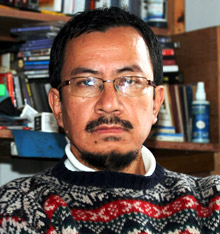
    Pradip Phanjoubam is Editor, Imphal Free Press.

  • How about a little ethics from owners & managers?

    By Ranjona Banerji


    The big news for Friday’s newspapers and Thursday evening’s television will undoubtedly be the assault on Union minister Sharad Pawar in Delhi and whatever happens to Sachin Tendulkar in the match against the West Indies in Mumbai.


    But the big news for Thursday was the announcement on Wednesday evening that Cyrus Mistry was to take over from Ratan Tata as chairman of the Tata group in December 2012. Although Mistry – son of Shapoor Pallonji of the giant construction company and a significant shareholder in Tata Sons – was on the shortlist, most of the talk had been of Ratan’s half-brother Noel, who runs Trent.


    So plenty of scope for journalistic speculation, projection and detailing from Mistry’s choice of music to his preferred holiday destinations most of which has been fulfilled in the newspapers. The Economic Times also wins the award for Desperate Need for A Pun with the headline ‘Mystery Ends, Mistry Begins’.


    Since Ratan Tata will only retire when he turns 75 in December 2012, there is enough time for our largely adulatory business media to tell us everything we never wanted to know about Mistry (or, if you prefer, No-more-a-mystery). Puns, as you can see, are endemic, chronic and largely incurable in journalism.


    **


    But the biggest issue for the media is more media-related. The edit page of The Times of India carries a long and extremely well-argued lead article by N Ravi of the Hindu group called ‘Censors at the Gates’. The ludicrously large fine on Times Now for defamation has been dissected and dismissed, the dangers of allowing government regulation of the media has been delineated and the Press Council of India and its new chairman Markandey Katju summarily castigated.

    Ravi says, “What is causing consternation among the media now is that to the expected chorus of complaints from parties in power facing media exposure of corruption have now been added the voices of the Vice-President of India Hamid Ansari and former Supreme Court judge and newly appointed chairman of the Press Council of India Markandey Katju. Self-regulation of the broadcast media has failed and there was a need for a state-sponsored body to regulate the media, both asserted at an event held ironically to mark the National Press Day…

    “The debate on the media has somehow got tangled with the discussion on putting in place an ombudsman to tackle corruption among ministers and high public officials though they are two entirely different sets of issues.”

    Ravi points out that much as the media dishes it out, should be able to take it. But he makes a distinction between being subject to the laws of the land and being subjected to unfair legal conditions or restrictions of any kind by the government.

    So far so good. No media person can argue with Ravi. The difference however between being a journalist and owner of a media house emerges at the end of the article when Ravi discusses government trying to stifle the media through its wage board. Regardless of how good a newspaper The Hindu is, let us not forget that the standards of journalism are upheld by journalists and no by owners. Most of the degradation in the media today — paid news, private treaties and other forms of institutionalised corruption – are invented and carried out by owners and managers. The wage board ensures that newspaper owners pay their journalists and other workers. It is hard to understand the moaning and carping of newspaper owners that paying wage board rates will force newspapers to close down. The Times of India, for instance, several years ago switched to the contract system for journalists when the birth of broadcast news created a shortage of journalists and an escalation of salaries. A few that stuck to the permanent employee-wage board system got paid comparative pittances. Some in fact, at the tail end of their careers, found they were earning about the same as trainees.

    It is also well-known that many language papers pay their reporters almost nothing and expect them to make a living through helping the owners through various channels of institutionalised blackmail. When I was with The Times of India in Ahmedabad in the early 2000s and Divya Bhaskar was launched, the other Gujarati papers were horrified that Bhaskar paid English-newspaper rates rather than the usual Rs 1000 a month for reporters.

    The upshot is that wage board recommendations are minimal and most large English and some language papers pay well above them. The recommendations are tailored to the size of the newspaper – they are not uniform across all of them. I do not know of any industry where employees have to be willing to work happily for peanuts while the owners rake it in. Not surprisingly, the journalists are quite happy with the wage board because it means at least they get paid something. Journalists would be even happier if owners and managers did not dictate news to suit their advertisers, gave up Medianet and stopped the practice of paid news.

    So how about a little more media ethics from owners and managers?


    eom

  • The Anchor: 5 indications that India is e-commerce-ready

    #1 Internet penetration

    The sheer number of internet users has grown drastically in the past decade. In 2001, the number of internet users in India stood at 7 million. In 2010 this figure had grown to 100 million (source: Internetworldstats). As a result, the size of the market that needs to be addressed by e-commerce players today is very different and has much more potential.

    This growth in internet users is also largely due to the fact that the key enablers for e-commerce are currently coming together in the Indian market. Aspects like broadband and credit card penetration, wireless connectivity, and penetration of hand-held and computing devices have found widespread acceptance today, unlike their limited penetration in 2001. Moreover with mobiles, especially smartphones, becoming more accessible to the average consumer, internet access through mobile platforms is also on the rise.


    #2 Multiple players investing to increase awareness and adoption rates

    The players currently operating in the e-commerce space are also of an extremely different mindset. Players are more organized, and understand and appreciate the value proposition offered by the industry far better. E-commerce companies are today making investments in technology and innovation that will serve to strengthen and grow their business in the long run. They are not looking at short-term business solutions but are interested in scaling up their operations over a period of time. They are also taking the trouble to understand the points of concern that consumers may have with respect to online shopping and taking the trouble to address that. At Flipkart, for example, we have started our own logistics company to smoothen last-mile deliveries. We also offer services and features like cash/card on delivery, EMIs and 30 Day Replacement Policies to deal with concerns like revealing credit card details or not being able to check the quality of products online.


    #3 Change in consumer mindset

    Additionally, an increasing number of Indians are now trusting online players as a reliable channel for shopping. Post the success of travel sites, more and more customers are beginning to appreciate the convenience of online shopping. They are beginning to realize that the choice, convenience and cost benefits of online shopping outweigh those of physical retail stores, and are turning to e-commerce for more and more of their shopping requirements.

    The industry is expected to grow by 47 percent in 2011 to reach Rs.46, 520 crore by the year-end, according to a report by the Internet and Mobile Association of India. Online retail (excluding travel ticket booking, etc.) will account for 6 percent, or about Rs.2, 700 crore, of the total market. By 2015, this space is expected to grow to about $10 billion. E-commerce users today stand at 10 million (including travel) and this number is constantly growing.


    #4 Popularity of online travel sites

    Certain sectors related to e-commerce have already proven themselves in terms of their growth and popularity. Online travel sites began to do well even when there were hardly any players in the online retail sector. This has given e-commerce companies the confidence that the Indian consumer is open to the idea of shopping online and the success story of online travel has consequently begun to rub off on other verticals as well.


    #5 Growing investment in an e-commerce eco-system

    Market trends are not going unnoticed and more and more professionals/industry bodies are giving serious consideration to e-commerce as a viable investment option. There have been extensive investments made in the e-commerce ecosystem by both government and private players. The realization that the industry players are in this for the long term and are building up their business, keeping in mind benefits to the consumer and the economy, have fuelled an interest that can only speak well for the Indian e-commerce market.

    We have been a big believer in the e-commerce story of India. With the country poised to become one of the largest e-commerce led economies in the world, we will continue to aggressively invest in this space and contribute to this growth story in every way we can.


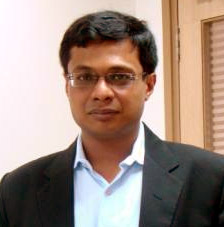
    Sachin Bansal is the CEO and Co-founder of Flipkart.com.


  • Hard Knocks: Why this Kolaveri Di, indeed! Why?

    By Anil Thakraney


    When I first came across links to Kolaveri Something on the social media sites, I quickly ignored them. Thinking this is another one of those time-pass videos that keep getting shared by virtual pals. But the video went viral in a matter of days, and by now millions have watched it and the world is talking about it.


    As a result I was compelled to click on it and must say I was left pretty unimpressed. A regular kind of sod sings some nonsense inside a recording studio, words that sound like a cross between Tamil and rustic English. I found it neither funny nor entertaining. And was left wondering what I had missed out here. Incidentally, I felt the same when the Pakistani band Beygairat Brigade went viral.


    Three observations I have to make in this matter. One, it’s abundantly clear that you can now use only social media to launch a brand with a huge bang. If there ever was any doubt on that, then it can be laid to rest now. Owners of mass media need to pay close attention because as time goes by, more and more advertisers will take social media a lot more seriously, and not as a ‘secondary’ medium which it is currently treated as. These are not freak incidents but a clear warning sign for the future.


    Two, no one can predict with any degree of accuracy what can go viral in the virtual world. I found the Kolaveri video quite stupid, but millions of people don’t think that, they love it. Maybe a study needs to be conducted on this subject, and it would be quite helpful. However it’s clear people have found a way to showcase their ‘talents’. I already see many imitators busy at work.


    Three, my own guess is that the best chance to strike gold on the net is to be as absurd and loony as possible. And the more rustic and unrefined you are, the better your chance of getting noticed. Now all of us have a real shot at being stars!

    ***


    PS: So, Cyrus Mistry is the chosen one, and by all accounts this seems to be a decision made purely on meritorious considerations. However, one wonders if things may have been different had Ratan Tata married and had his own children. Would the Dynasty Raj have played a part? Like it happens in all walks of life in India? Well, we’ll never know. My own hunch is this: Mr Tata would still have used merit as the yardstick. Indeed, it is this culture that makes the group unique in this nation.