Category: BLOGS

  • The Anchor: 4 reasons why one worries about Google

    By Sanjay Mehta


    So you think Google Plus has its set of challenges, as it ambitiously takes on Facebook? Well, I am not even talking about that. My worry is about Google’s core product and cash earner, Google Search!


    Let’s do a quick dipstick here:


    • When you search on Google for information, how fast do you get to the right information that you need? That is, if you ever get it!
    • If the information that you are looking for is not something as basic as “what is the current time in San Francisco?” or “temperature in New Delhi”, there is every chance that information search is a frustrating experience on Google. Do you agree?


    These are the reasons I am concerned about Google.


    1. Not all search queries produce good results on Google

    While Google has been doing a fair amount of innovation in search, and for certain types of enquiries, you can get to the information faster, there are a whole host of search queries that do not lead to good results, and where as a user, you look out for alternative options.


    2. Google’s revenue model on search worries me

    The revenue model is largely an advertising model. An advertiser takes ads on Google, while mapping search words. In other words, if I am a florist, I will likely buy Google ads, for keywords like “florists in Mumbai” or “Valentine’s day flowers” and so on. In short, when someone is searching for words or phrases of these kinds, then I would like them to see my advertisement on the right side of the page on Google. Because, then I would have the best chance of finding a connect to the particular user, and tempting him to click on my ad, and come to my website.


    The other key thing to know and understand is that advertisers typically pay only when someone clicks on their ad and not otherwise. Also, all advertisers do not pay the same amount. The amount that an advertiser pays per click depends on the budget or rate that he has chosen, and it is based on a dynamic demand-supply situation of advertisers and searchers, for that particular word or phrase.


    But, from the point of view of the advertiser, whatever rate he has agreed to pay per click, is his “cost of acquisition”, or the cost to get an interested user, to visit his website. So, who would spend how much on advertising on Google?


    If your business is transportation of very large-sized goods, you may still use Google advertising to get across to people who are looking for such services. But for you then, this is a marketing campaign, and you want a certain visibility amongst your target group. So you would put money here in campaign bursts, and leave it at that.


    On the other hand, if you are an e-commerce company, selling online, whether it is travel services or products, for you, the Google ad is a direct customer acquisition cost, and all the traffic that you pull in from these ads, you have a chance to get them to buy from you, right away. Since there is a way to map conversion from such clicks also, an e-commerce company can quickly calculate the equivalent cost of acquisition, of not just a visitor to the site, but an actual buyer.


    For those who don’t get this, let me explain with an example. Say, a hotel booking company advertises on Google and spends Rs50 per click. Say, 100 people click on the ad. So the cost is Rs5,000. Mapping for conversions from these 100 clicks, he finds out that 20 of those actually made a booking.


    So to acquire those 20 customers, he has spent Rs5,000 or his per customer acquisition becomes Rs250. Now, if his average booking transaction is Rs10,000, he may have no issues in this kind of spend, and may keep doing the spend forever, unlike the advertiser who spends on marketing campaigns in bursts and then goes away.


    Now here is where the challenge for Google comes in.

    All of the transaction-oriented e-commerce businesses are starting to get their own specialized search engines, which do a far better job than what Google does.


    3. If the searcher moves away from Google, so will the advertiser

    Larger and regular monies are spent on Google ads, by companies who have a quick transaction engine on the web – for them, it is direct customer acquisition. However, for most of such needs, users are finding better options to go and search at; over time, users will move away from Google to search for their needs of hotels, flights, products to purchase, movie tickets, etc.


    If the searcher moves away from Google, so will the advertiser who is looking for that searcher. What constitutes the larger spends on Google ads, will take flight and move to more relevant locations to get better returns for their money.


    You don’t buy this argument? Let’s take the spin. Say, you are searching for tickets from Mumbai toChicago. And you are looking to find options. What do you get?


    What I get on Google.com are a lot of ads, on the top and on the right, and in the main search, I get a few clearly SEO-doctored links, and then a few links to travel websites. So yes, if I play around these links, I will get the information that I am looking for, in a few clicks.


    But, I go to any of the leading travel sites instead and punch the same request – I get a quick response in terms of flight options for Mumbai to Chicago.


    And then I go to a travel comparison site like say, ixigo.com, and I get the same search results from several travel sites, simultaneously. Flight options, prices, all at a quick glance, together on the same page.


    So why would I go via Google at all? If, similarly, I was looking for ‘hotel options in Jodhpur’, the experience will be identical to the above. Question again will be that, if I were looking for hotel options, why would I go to Google at all?


    Let’s consider products. Say I was looking for a book, “The Maverick” by Ricardo Semler. What will be my experience?


    Searching on Google gives me stuff about the book, about Semler, reviews, and 1-2 links to Amazon.com.


    Instead I go to junglee.com (the killer app on Indian e-commerce, I reckon), and I get a bunch of options for purchase of the book, with price details, and seller information. Bang on! Exactly what I need.


    Repeat this for most e-commerce or transaction-oriented categories, and you will find a similar challenge. That Google does not give you what you want. There is a specialist platform that gives you perfect results.


    So the bottom line is that people may not start at Google when they are searching for such transaction-oriented information. And this is where the cheese may be moving away for Google!


    This is where the old time Internet service providers and portals went wrong. Time was when AOL and Prodigy and others were the starting point for anyone in theUS, wanting to get information from the Internet.


    Then came portals and search engines. And the game shifted. Sites like Yahoo and Lycos became the default starting points for people, as they offered best recommendations for news, education, entertainments, science, sports, or whatever.


    Then came specialist sites for finance and matrimony and recruitment, and people went there directly, instead of going via portals. I am seeing a similar movement, away from search engines, or rather, away from Google.


    4. Google’s revenue may see a downward spiral

    Considering that search is the main money earner for Google, if they do not correct, this could be the beginning of the southward movement on the revenue front. And that will hurt Google far more than their experiments with social networks – Wave, Buzz, Google Plus, Orkut, etc not taking off!


    I worry for Google.


    Sanjay Mehta is the Jt. CEO, Social Wavelength

     

  • Expect the same old, same old this Valentine Day

    By Ranjona Banerji


    Television is the favourite whipping boy of most media commentators and, for the most part, not only is it justified but it also great fun. (Is it also a coincidence that most media commentators have a print background?) But this Sunday’s newspapers were so dull that TV seemed to be a brutal relentless machine working its poor journalists to the bone with its constant hunger for more and more news and therefore deserving of much sympathy. I get five newspapers on a Sunday and finished the lot in an hour.


    Most Sunday papers run on a weekly cycle, which means there is ample time to plan and execute. But instead of fresh ideas and stories, we got the same old, same old. It is amply clear that the cutting of newsgathering resources and the desire to replace all talent with an army of sub-editors and, yes, boys and girls has led to a lack of imagination in newsrooms. Is there any point hoping that this is a temporary trend?


    Valentine’s Day, which is tomorrow, therefore threatens to bore us to tears as we read about real and manufactured love, as we did last year and the year before.


    We are constantly told in the media that we have to appeal to young audiences but I refuse to believe that every 20-year-old in the country is a dimwit who has no chance of recalling the same claptrap which was fed to him or her last year.


    * * *


    Can someone in The Times of India please get a promotion quick for wonderful stories to promote the boss’s daughter, so we can stop reading stories about Trishla Jain’s exhibition? The subject seems to have been stretched to the absolute limit.


    * * *


    TV and print seem to have taken quite opposing views on the army chief and his battle over his date of birth. TV was all for General VK Singh and put the government in the dock – and any studio guests who said otherwise were immediately put in the “unpatriotic” category.


    In newspapers however, commentators were more balanced and the dangers of the army chief’s actions were discussed. Now that the Supreme Court has rapped the army chief and the government on the knuckles, a more sober approach is being taken. Well, sort of – some sections of the media have now decided that the army chief must resign to protect his honour.


    This obsession with other people’s honour is a new media phenomenon andIndia’s star cricketers are its usual victims.


  • Debrief: 7UP: A downer

    By Anil Thakraney


    Well, summer’s still to arrive but the cold drinks marketers are already in action mode. 7UP has a new commercial on air, and this one features brand ambassador Sharman Joshi and a penguin.


    The idea is about always feeling ‘UP’ in life (Not to be confused with Uttar Pradesh!). And this idea tenuously ties in with the brand name. Always up, never down, so to speak. Joshi inspires a penguin to dance along with him, and their ‘jugalbandi’ is pretty much all that the ad has to offer. And it all leaves you cold and confused in the end. Let me explain.


    I think they should have single-mindedly stuck to the penguin as the core idea. It’s cute, cuddly and cool. Stories could have been written around 7UP and the penguin.


    There was no need for the Bollywood actor; he takes away from the commercial.


    [youtube width=”400″ height=”200″]http://www.youtube.com/watch?v=BrWiN4qTSwo[/youtube]

    Two, their dance is totally unexciting and the very ordinary jingle doesn’t help matters. Poor execution of the ‘feeling UP’ idea. Three, for some strange reason, another unrelated brand, Nimbooz, has been shoved into the commercial and this causes dissonance. Where was the need for that?


    Opportunitylost. Penguin wasted. Methinks some super cool ads can be created around feeling alive in life, and not letting bad things come in the way. In fact, last year’s ‘Gussa Hatao, Chill Machao’ ad had more jaan to it. They may as well have continued with it.


    Rating: (On a scale of 1 to 5): 1. Leaves you frozen.

  • Need to relook at aid

    By Ranjona Banerji


    In a total break from television, let’s look at today’s newspapers and some thought-provoking opinion pieces. On The Times of India’s edit page, Ramesh Thakur looks at the conundrum of foreign aid which helps the donor more than the recipient. The issue has popped up again with the British media replaying Union finance minister Pranab Mukherjee’s year-old comment that the aid which India gets from Britain is “peanuts”.


    Thakur discusses how aid can often be crippling to a country trying to pick itself out of a crisis and what is most required is not handouts but forcing governments to perform. The Africa experience with aid has been much discussed and certainly no continent has suffered as much. Pakistan is also paying the price of too much and not even home-grown development.


    When India tried to stop aid from Britain, it was the British agencies which asked for the aid to continue. The call in Britain is to use that money internally, needed in times of cutbacks. It would make good sense perhaps for the governments of India and Britain to relook at aid to India. If we don’t need it and they do, why should we still take it?


    **


    In the Business Standard late last week, Mihir Sharma argued that contrary to popular belief, Indian governments give too many handouts to the rich and middle classes (“Handouts for the well-heeled”). It’s a well-argued piece, bolstered by facts, which should prove a shocker to middle class thinkers and people who usually see the poor as some undeserving, greedy, grasping lot who are a burden to the exchequer.


    **


    Sundeep Sengupta on the Hindu’s edit page puts into perspective how far India has strayed from its earlier stand on climate change and the consequences of conceding so much ground in Durban. Climate change no longer seems to be a hot ticket as far as the Indian media is concerned but that doesn’t make it any less important!
    Another subject which hasn’t perhaps been adequately discussed is the situation in Syria, especially from the Indian point of view. Krishnan Srinivasan, former Indian foreign secretary, has a look at the war-like situation in Syria and examines the role of UN sanctions.


    **


    Since it is Valentine’s Day, the Deccan Chronicle has looked at it seriously. Novelist Charu Nivedita questions whether India can know real love, hampered as it is by convention!


    On which note…


  • Gouri Dange: Smooth new words for same old fare

    By Gouri Dange


    I love the print and TV media advertiser’s smooth transition to silky new words.

    Nothing is ‘free’ anymore, it’s ‘complimentary’. No one wears underwear anymore, it’s inner wear – somehow under has become a crass word. But inner, like inner beauty and inner strength, has a more sophisticated ring to it.


    What we knew as a second-hand car, is now only ever referred to as a ‘pre-owned car’. Is this fancy term somehow supposed to take the sting out of not being able to afford a new car?


    Everyone’s on to the jargon. Now when you’re asked in a restaurant if you’ll go in for the ‘exec thali’ or ‘open thali’, you have to know that these are the brave new words for the old words ‘limited thali’ and ‘unlimited thali’. In ice-cream parlours no one uses the word scoop anymore. It’s all about single-serve and double-serve. Remember the time there were little ads and banners for shops that would sell ‘novelty’ or ‘fancy items’? No more. Everything is ‘exclusive’ now.


    When you go shopping for something to wear, get on with the program and use the right words. Never say you’re looking for readymades. That word has been thrown into the shredder. The gushy-mags have changed that word. Now it’s prêt that you’re looking for. Briefly it was ‘off the rack’. But French fakery always wins hands down when it comes to fashion-speak and food-speak. So what our moms used to call imitation and our older sisters used to call fake and we used to call junk jewellery, is now ‘faux’. Remember, faux. And don’t go and pronounce it ‘fox’ and look all gauche.


    The French connection is everywhere: now you got to say haute. You can’t call anything ‘high fashion’ now; it has to be haute couture. There’s nothing like ‘fancy cooking’ anymore. It has to be haute cuisine. Take the word cuisine, itself. In English we had the perfectly serviceable word ‘cooking’. But no, that was not good enough – too easy to pronounce and maybe smelt of boiled cabbage or something. So it’s all about cuisine now.  Even if it’s good old dahi-bhaat or taair-shadam, you’re serving Maharashtrian or Tamil ‘cuisine’.


    Remember when your ma used to dye her hair? Now we colour, or even more obliquely, we ‘treat’ our hair. We never dye. If you ask for your hair to be dyed in a fancy beauty salon (not beauty parlour, that word’s out and used only by aunties who will wax and pluck – oops, I mean ‘exfoliate’ – in their balcony-turned-into-a-parlour), they’ll look at you as if you’ve crawled out from under a flat stone. You must say: I want to colour my hair. And if you want to clarify that you’re not looking for red and gold tints or anything, but stuff that covers that tell-tale inch of white at your scalp,  then you can say airily: “I’m looking for ‘grey coverage”. And oh ya, salon is so yesterday, it’s spa now. Even a hole in the wall with only a glass door is a ‘spa’, no less.


    And these spas now refer to everything, mysteriously, as ‘product’. So it’s never shampoo, conditioner, moisturizer (god forbid you use really ancient and doddering words like vanishing cream or snow or lotion or hair dressing or that pre-historic word ‘pomade’); remember, it’s always ‘product’. And no one’s skin is ever called ‘old’ or ‘ageing’ or ‘sagging’ in ads and in spas. The right word is ‘mature’ skin.


    There are two phrases that seem to have no meaning whatsoever, but are such a hit with interviewers and journos. One is ‘personal favourite’. A celeb shares his ‘personal favourite’ recipes with you. A singer plays us his ‘personal favourite’ song. My question is: What other kind of favourite can there be? A favourite is a personal choice in the first place.


    The other phrase that defies logic but is a ‘personal favourite’ of so many journos and corporate types is ‘leading from the front’. The last I knew, there is only one position from which you lead – which is the front. Only cowherds and shepherds lead from the back, shouting halyaaa, thirrrr as they direct their flock forward.


    But then what do I know? I’m just a mature type who needs to use some product for grey coverage.


  • Debrief: Chevrolet’s emotional route connects

    By Anil Thakraney


    Chevrolet is back with another tear jerker for its corporate campaign, ‘Sang Rishte Chalen’. This one features an emotional relationship between a father and son.


    In the TVC, the ‘puttar’ is all grown up and he’s busy packing to start a new life in another town. The father hovers over him, wondering if the son has forgotten to pack important stuff. The interaction between the two indicates an uncomfortable relationship. The dad fondly stares at an old family picture, in which his son is a little kid, and that brings back memories. Finally the son departs, but carries the same picture with him in his Chevrolet Beat. And yes, there’s a lot of rona dhona in the ad.


    I think Chevrolet is doing the right thing. While the brand ads can be more functional, it makes sense to create an umbrella corporate campaign that rides on raw emotions. This would help in building a bond with desi car buyers since we Indians are suckers for emotions.


    [youtube width=”400″ height=”200″]http://www.youtube.com/watch?v=2vFklija8XQ[/youtube]

    Must also add that the commercial is shot nicely, emotions flow easily in the treatment, it isn’t forced. And the strained father/son relationship is only hinted at, and not shouted out, which makes the film work even better. That one shot of the father trying to hug his son and the latter choosing to touch the dad’s feet is a gem.


    Good work all round.


    Rating: (On a scale of 1 to 5): 3.5 Warm play of human emotions.

  • 5 reasons why Phase III is vital for FM radio growth

    By Rana Barua


    1. More reach:

    The reach of radio will further increase with an additional 839 new FM stations in more than 200 new cities. Thus the medium will become even more effective and the opportunity will also be huge for the advertisers, especially because of radio’s reach in even the tier 2 and 3 cities.


    2. News in FM radio as a revenue stream:

    News on FM radio, in whatever form, will open up newer revenue streams if packaged well. The industry, for long, has been waiting for news to be allowed on radio. It will therefore be interesting, especially from the listeners as well as the advertisers’ point of view.


    3. Multiple Frequencies to create new genres:

    Multiple licensing, especially in larger cities, will bring new genres to radio. Larger stations, for instance, may want to create another genre of station, perhaps in a different language or a completely different programming category altogether. This will be another interesting facet for the advertisers and listeners.


    4. Networking will be allowed:

    Networking will bring down cost and thus play a critical role in radio’s growth. It will streamline a lot of cost of being in radio. Allowing networking means one will be allowed to run the FM station sitting out of a main hub; as a result the cost may come down.


    5. Create job opportunities:

    Phase III will open up a lot of job opportunities. Multiple licensing, news and networking will open up jobs. Therefore FM phase III will bring a lot more excitement as well as opportunities, thereby bringing in more talents, and genres.


    Rana Barua is veteran media professional, a former COO, Red FM and an advocate of radio

  • The Anchor: 5 faces that define Indian advertising

    1. Piyush Pandey

    He provides creative leadership to one of the leading advertising agency of India. He leads by example and the interesting bit is that most of his creative education came by travelling in trains. He was playing for Ranji Trophy and they could only afford train travels for their players. During these travels he got insight into the small-townIndiawhich he uses in his creatives. Trains give a glimpse into different types of people and their lives which can weave into beautiful stories.


    2. Prasoon Joshi

    He is a brilliant music writer besides being an excellent advertising professional. He has made it on his own from a small town inIndia. He is the original bilingual copywriter ofIndia.


    3. Aishwarya Rai Bachchan

    We had launched her with a three-second presence in Pepsi commercial where she said: “Hi, I am Sanju”. Her presence made every male from 8-80 get into a tizzy and they wanted more of Sanju. She has become one of the most recognizable face of the Indian advertising, besides being that of Indian film industry.


    4. Katrina Kaif

    She made it fashionable for foreign faces with an accent to make their presence felt in Indian advertising. She is every director’s dream come true and a face that is not easy to forget.


    5. Me

    Beauty is only skin deep but my motto is ugly is forever. So I am immortal face of the advertising industry.


    Prahlad Kakkar is an ad filmmaker and CEO, Genesis Films

    Photograph: Fotocorp

  • Anil Thakraney: Left & right brains must marry

    By Anil Thakraney


    The other day I was having a drink with a friend, an old world agency creative director. He’s one of those many old chaps who’ve been seriously challenged by the onslaught of the new media, and are at their wit’s end on how to deal with this ‘menace’. You see, not only are many clients now demanding to see creatives for the digital space AHEAD of the TV storyboards, they are putting pressure on the creative directors to make sure the videos go viral.


    I quite empathize with my old fogie pal’s predicament. Trained only in making television commercials, he’s finding it very difficult to learn new tricks. And what creative directors like him are doing is to hire net savvy kids and unleash them onto the clients. With the hope that the bachchas will take care of the digital work, while uncles, like my friend, can continue to focus on the old media.


    Personally, I don’t think this approach is going to pay dividends in the near future… in fact, it’s already showing signs of collapse. Digital marketing and advertising outfits are mushrooming by the day, and they are threatening to walk away with the digital business from clients. Clearly, this is revenue loss for the traditional ad agencies, and cannot be allowed to go on.


    I think ad agency creatives must begin operating the way movie studios work on sci-fi films, where massive technical effects are required. The movie director and the techies form a core team and each feeds off the other to produce scintillating cinema. The director makes sure the story keeps the connect with the audiences, and the tech specialists keep innovating till both are satisfied with the end result. Check out Steven Spielberg’s amazing work on the film Warhorse. The movie zaps you with special effects but the emotion runs through in every scene.


    In short, creative directors are digging their own graves if they leave the ‘headache’ of social media to youngsters in their office. They need to hire tech cats and then work ALONG with them for each brand, to make this work. Yup, the left and the right brains have to marry and produce goods that will meet the new media challenge.


    * * *


    [youtube width=”400″ height=”200″]http://www.youtube.com/watch?v=1n-9-6ULjHY[/youtube]

    PS: British Airways has released a new commercial to commemorate its sponsorship of the forthcoming Olympic Games. It involves a race between luggage bags headed for various destinations. And the ad has been executed like the TV coverage of a sports match. Funny and smart. And I must add this: Many travellers on BA complain about lost luggage. Well, now we know why. The bags lose their way in all the hurry! 🙂


  • Ranjona Banerji: Sena on shaky ground, polls to decide all

    By Ranjona Banerji


    Mumbai has elections on February 16 to select its municipal corporators. Since the Brihanmumbai Municipal Corporation has a bigger budget than some state governments, this is an important election. It is also a political test for the incumbent Shiv Sena-Bharatiya Janata Party and a signal for the Congress-Nationalist Congress Party alliance – which is in power in the state – about the roadblocks ahead for the next general election.


    Not surprisingly, election coverage has dominated Mumbai’s newspapers. Most seem to think that the ground is shaky for the Shiv Sena. This is, in a sense, a last bastion for the Sena – it has ruled the BMC for almost two decades. But everyday, newspapers are full of the shortcomings of the corporation and the corruption involved in most deals. Mumbai’s roads and water supply get the most attention and none of it positive.


    The general sense you get from newspapers is that this time there will be a challenge to Bal Thackeray from not just the Congress-NCP but also of course from his nephew Raj Thackeray and his breakaway party, the Maharashtra Navnirman Sena. Uddhav Thackeray – the son and the main bone of contention – does not have the requisite firepower, seems to be the overwhelming feeling. There is also a discussion on whether both the Senas will cancel each other out.


    The Times of India and The Indian Express both carry interviews with chief minister Prithviraj Chavan, who says he pushed for an alliance with the NCP this time – to avoid fracturing the vote as happened when both parties went alone in 2007.


    * * *


    All newspapers have also focused on the low voter turnout in Mumbai and have exhorted citizens to come out and vote. You could pick up any newspaper to find out all about the candidates from their bank balances to their educational qualifications. The new seat reservations have created some turmoil in parties, all of which have been faithfully recorded.


    * * *


    Interestingly, the high number of dry days – three have been decided by the Election Commission – has been cause for consternation in print. The bar and restaurant association has put in a plea reported in Wednesday’s papers to allow the sale of alcohol in the evenings of the dry days, after voting is over on Thursday. The right to drink is well-felt by most journalists, so it is easy to see why this forced abstinence should get prominence.


    * * *


    It is these little titbits which make newspaper reading so pleasant a pastime. The oddities of life rarely find room in the high-pitched breaking news landscape of TV land.


  • Anil Thakraney: How Brand Thackeray has got devalued

    By Anil Thakraney


    The Mumbai civic elections are scheduled for tomorrow. No, I shall not vote, I never have and never will. That’s because when I stare at the candidates list, my first thought is to migrate to Qatar or Bangladesh or Yemen. The names are that depressing. But this post isn’t about my allergy to the Indian democracy, it’s about political parties as brands.


    In that context, I want to deal with Brand Shiv Sena. Whether the netas like it or not, their parties have to follow the principles of brand management. They have to market their parties, create the right image amongst the target audiences and then nurture that image for a long period of time. And I must say, Thackeray Sr has turned out to be a rather poor brand manager. Either because of old age or because of blind love for his son, he has allowed the Sena brand to depreciate very badly.


    Saheb broke the fundamental rule of branding: Stick to your core values. If you deviate from those, it creates serious dissonance in the minds of your consumers.


    Brand Shiv Sena’s appeal for all these years has been parochial aggression and exclusivity. Loyal consumers have, for decades, bought into that brand value. Their hardcore fans connect with the ideology of violence and street justice. The moment


    Thackeray Sr, the brand custodian, delegated decision making to his son, and looked away when the brand values were being tinkered with, Saheb allowed the brand to move away from its core strengths. His son, the ‘junior’ brand manager, has been talking non-violence, inclusiveness and development. And in the process, he’s converted Brand Shiva Sena into a me-too to Brand Congress and Brand NCP. Thus losing the brand’s only USP, its source of power in the target market.


    This massive shift in the positioning has already had a huge impact. The brand appeal has eroded in the last seven years or so, and the vacant slot has been usurped by Brand Raj Thackeray. And therefore I would be very surprised if in the current elections, Brand Shiv Sena’s market share doesn’t erode even further. No rocket science this, it’s basic marketing logic.


    [youtube width=”400″ height=”200″]http://www.youtube.com/watch?v=GAGeLgiTKmY[/youtube]

    Moral of the story: It’s not enough for political parties to launch election campaigns and run promotional drives. They have to run their parties like brands. Here’s Brand Shiv Sena’s latest promo. Notice how confused, jaded and uninspiring it is.


    Good luck to them anyway!


    * * *


    PS: A bit long, but it’s worth a read. This hilarious incident very accurately describes the state of the media today:

    A biker is riding by the zoo inWashington,DCwhen he sees a little girl leaning into the lion’s cage. Suddenly, the lion grabs her by the cuff of her jacket and tries to pull her inside to slaughter her, under the eyes of her screaming parents. The biker jumps off his Harley, runs to the cage and hits the lion square on the nose with a powerful punch. The lion, whimpering because of the pain, jumps back letting go of the girl, and the biker brings her to her terrified parents, who thank him endlessly.


    A reporter has watched the whole event. The reporter addressing the biker says, ‘Sir, this was the most gallant and brave thing I’ve seen a man do in my whole life.’ The biker replies, ‘Why, it was nothing, really, the lion was behind bars. I just saw this little kid in danger and acted as I felt right.’


    The reporter says, ‘Well, I’ll make sure this won’t go unnoticed. I’m a journalist, and tomorrow’s paper will have this story on the front page… So, what do you do for a living and what political affiliation do you have?’


    The biker replies, ‘I’m a US Marine and a Republican.’ The journalist leaves.


    The following morning the biker buys the paper to see news of his actions, and reads, on the front page:

    US MARINE ASSAULTS AN AFRICAN IMMIGRANT AND STEALS HIS LUNCH


    The views expressed here (in Para 1) are Anil Thakraney’s and not necessarily those of others in the MxMIndia.com team. Certainly not mine :-). If you are in an area where there’s polling tomorrow (or in the future), please do go out and vote. – Ed

  • Anil Thakraney: India Inc needs Narendrabhai

    By Anil Thakraney


    If there’s one CM most industrialists adore, it’s Narendra Modi. Ratan Tata and Mukesh Ambani have been pretty vocal in their appreciation of Mota Bhai. Can’t fault them. Modi, being a Gujarati, has dhanda engraved in his genes; he understands business more than any other desi politician. In any case, he stands out big time amongst the chief ministers because the rest are either corrupt (we all know of them, don’t we?) or angsty (Bengal) or inefficient (most of them except perhaps Nitish Kumar).


    And so, Gujaratis flourishing in terms of industrial growth, there has been a lot of development in that state since Modi took charge. This is an undeniable fact. Which is why I am quite sure the corporate world would want Modi to run the entire country in the near future.


    Projects will get cleared faster, infrastructure will get a serious boost and most importantly, whether you like Modi or not, he is not known to be a corrupt man. At least, so far there’s been no evidence to the contrary. He would most likely kick people like Raja and Kalmadi out of the cabinet the moment there’s a whiff of chori.


    Yup, he is a doer (Manmohan Singh is a pure theorist) and India Inc needs such a man at the helm. As a case in point, I don’t see projects like FDI in multi-brand retail being so easily knocked off the radar under Modi’s regime.


    However, there’s a big impediment to Modi’s progress beyondGujarat: his massive ego. Okay, so the SIT commissioned by the Supreme Court has exonerated him of direct involvement in the post-Godhra riots, but that still doesn’t change the fact that the violence happened under his watch. That, hundreds of people got killed right under his nose. Just for that, Modi must unconditionally accept his failure and apologize. And move on. That done, who knows, people may move on as well and he could get that black mark erased from his otherwise healthy resume. And look to moving toDelhiwith a larger mandate.


    I really thinkIndia’s industrialists, for their own good, must meet Mota Bhai over chai and dhoklas, and educate him on the importance of ego management.


    * * *


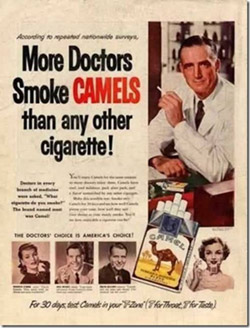
    PS: Blast from the past! Can you even imagine such an ad being allowed to run in 2012. Kahaan gaye woh din? 🙂