Category: BLOGS

  • Ranjona Banerji: When Boria Majumdar went ballistic on Vikas Krishan

    By Ranjona Banerji


    Even though the greatest show on earth is far from over, it can be nominated a news dominator this week and possibly next week as well. The Olympics have been at the forefront of news in India, as has plenty of hope, hysteria and of course given that this is an international competition, as much jingoism as possible.


    The top purveyor of jingoism in the English news world in India is Times Now and its main proponent is Boria Majumdar. I do not know what his journalistic credentials are (the few times I have tried to read his mediocre writings he is described as an academic) but there he is, screeching away as he saves India’s pride or takes India to task all over London. His greatest glory came when the boxer Vikas Krishan was first declared a winner and then a loser in his bout against an American boxer. Majumdar stayed up all night pondering this terrible act of cruelty. Then he woke up all the Indian officials to find out why they were sleeping when they should have declared war on Britain, the International Olympic Committee, the USA, the various boxing federations, the judges and so on.


    Once Majumdar informed Times Now (I really hope he woke up all the biggies at 5 am also), the channel found a juicy bone to get its patriotic teeth into. India demanded answers, why was prime minister Manmohan Singh not calling American president Barack Obama, was Suresh Kalmadi somehow responsible, how dare India sleep when an Indian as insulted and other such thrilling stuff.


    The other channels and other journalists and other sportspersons which and who are clearly not such supreme patriots started looking for the reasoning behind such a brutal decision by the judges. Boxer Akhil Kumar on CNN-IBN said quite clearly that the American had boxed better and he was surprised when Krishan won. Others who saw the match said that even the Indian boxer looked surprised that he had won. Others pointed out that this outrage should have been directed at the loss handed out to Indian boxer Sumit Sangwan who everyone, from the commentators of the match, said had been cheated out of a victory.


    Anyway, soon Indian Saina Nehwal won a bronze medal and then shooter Vijay Kumar won a silver (and that story we shall take on tomorrow) and Krishna Poonia conducted herself very well in the discus competition and we forgot all about the war fronts India had opened up across the planet.


    **


    And at the end, a lesson for Anna Hazare and his dyspeptic gang of newborn politicians – next time you want to launch a grand movement, don’t do it during the Olympics. There is only so much patriotism the people of India can digest at any one time.


    Ranjona Banerji is a senior editor and commentator. She is Contributing Editor, MxMIndia. The views here are her own

     

  • Ranjona Banerji: Any more skilling and I’m killing myself!

    Ranjona Banerji

    By Ranjona Banerji


    The Oxford English Dictionary, the last word on lexicography to many, has included many new “Indian” words in it. These are words that are peculiarly Indian like “prepone” or “airdash”, plus “crore” and “lakh”. So bring out the tricolour and let’s have a round of “Jana Gana Mana” to celebrate.


    Journalists across the country, please take a bow. Airdash is definitely a journo word and every Indian newspaper uses lakh and crore. Except, of course, the pink papers who want to be international and so prefer million. As we all know the international community of bankers and investors are falling over themselves to read Indian pink papers. I lie. I sometimes doubt whether bankers and investors can read at all, whatever their national origins. I would also give a journalistic nod to “chargesheet” and “undertrial” since newspapers use both all the time, though presumably, so do the police and the legal fraternity.


    Prepone and airdash are not so bad if you think about it: Both make sense. Though to be honest it’s not often that meetings in India start before the appointed time. And more curiously, airdash was coined when the only Indian airline was Indian Airlines and no would describe the experience of flying with them “dashing”. And, fact is, the words have become a little cliched and jaded and we’ve laughed at them for years.


    Years ago senior subs would tell their young ones to avoid used airdash since it had become a joke. And grammar purists of yore (now called grammar nazis by the Twitter generation who can neither spell nor understand syntax construction) would shudder at prepone.


    But tolerance can only go so far. I now await with horror the day that the Indian use of “lesser” becomes acceptable. For some reason, we don’t like to use the simple “less” when it comes to quantitative measures. Some things just cost less money. No need to make it lesser money. Lesser money would imply that the money itself was devalued. Like what’s happened to the rupee against the dollar. You could at a stretch say that because you used the rupee instead of the dollar to pay your bills, you used lesser money (all right, off with my head). Lesser is a qualitative description.


    But that’s my permanent language bugbear. You might have your own.


    Right now though, I’m worried about the management jargon that enters the mainstream by the “backside” (okay, a cheap joke, but backside usually refers to the human posterior end in common usage rather than the back of some inanimate object which is how it is all too often used). I read a headline in the Economic Times the other day – written by some management type – which asked for more “skilling”. Now this is not an Olympic sport. It is part of an ongoing management trend – led, it seems, by Americans – to make nouns into verbs. So if you want to increase or hone skills, then that presumably is skilling. The great management skill it seems is to kill language.


    Incidentally, Microsoft Word does not seem to like airdash or prepone but that could be because mine is an old version. But what the IT community has done to language is a whole other grouse. The only good news is that Word doesn’t accept skilling either. Yet.


  • Ranjona Banerji: Good to hear sports greats on CNN-IBN

    Ranjona Banerji

    By Ranjona Banerji


    Which is bigger news wise? Gagan Narang winning an Olympic bronze, the collapse of the Northern grid leading eight states, including the national capital, powerless for close to eight hours or a fire in a train in Tamil Nadu leading to at least 30 deaths? It’s a tough call to some but most newspapers decided that “feel good” was the way to go and Narang got top billing therefore. After that, as far as Mumbai’s big two broadsheets are concerned it looks like Hindustan Times exercised better judgment than The Times of India. HT Mumbai took the power grid collapse as the second lead and carried the train accident just above the fold, giving all there prominence. Times of India gave the power story a single column and then decided to go what used to be the DNA way when I worked there – fill every page with 80,000 stories. This can be counter-productive: the reader may be impressed that you have so much news but gets confused about which tiny bit to read first.


    **


    Primetime TV news was on its usual trip. These days, they have permanent scanners on Gujarat chief minister Narendra Modi and on members of the Anna Hazare-led India Against Corruption movement. And when the two converge, nothing like it! Every time Modi sneezes or Arvind Kejriwal hiccups, we get a panel discussion. The same people mysteriously appear on every channel at the same time. They say the same things. And most sensible people are either watching the Olympics, Masterchef Australia, going out for dinner or reading a book.


    But I have to give a shout out to Arnab Goswami for his impassioned speech about the flip flops in the Anna Hazare movement. And good effort by Rajdeep Sardesai, trying to make some sense of why safety is not a priority for the Indian Railways.


    **


    Olympics coverage has been good across most newspapers – although sometimes with too much focus on India. The world’s best athletes have gathered to demonstrate their prowess after all, so more about them please. But the winner for me would be the special discussions on CNN-IBN with Michael Ferreira, Geet Sethi, Vimal Kumar, Enrico Piperno, Raghavendra Rathore and others. It’s illuminating to hear sports greats discussing other sportspersons and recounting their own experiences without losing their tempers. Getting the great Carl Lewis is a good coup as well.


    Times Now has the squeaky and annoying Boria Majumdar so I am afraid to go there.


    **


    While on sports, he’s a good friend of mine but I defy anyone to anyone to make sense of Bobbili Vijay Kumar’s attempt in yesterday’s Times of India to try and give a cricket spin to archery just because the Olympic event was taking place at the hallowed ground of Lords. After two paragraphs I knew that even if William Tell’s father stuck an apple on my head I wouldn’t be able to understand it.


    Ranjona Banerji, senior journalist and commentator and Contributing Editor, MxMIndia, reviews media four times a week. The views here are her own.


  • Ranjona Banerji: Anyone cares about Freedom of Speech?

    By Ranjona Banerji


    The case of Shireen Dalvi, editor of the Mumbai edition of the Urdu newspaper Awadhnama, perfectly and in some ways tragically encapsulates our wavering devotion to freedom of speech and the up-and-down solidarity between journalists.


    Many in India – on social media at least – came out in support of the French satirical magazine Charlie Hebdo even though few had even heard of it before the ghastly terror attack by Islamists leaving 14 dead. But standing with Shirin Dalvi is another matter. So what if the newspaper she edited is published from Mumbai and not Paris? So what if she’s been in hiding since January 17 because of cases filed against her by Muslim fundamentalists and others because she reprinted a Charlie Hebdo cartoon? So what if her children are too frightened to go to college? So what if the Mumbai branch of the newspaper has been shut down by the owners leaving Dalvi and other employees jobless?


    Dalvi has been charged under section 295A of the Indian Penal Code, “outraging religious sentiments with malicious intent”. Dalvi had in fact apologised for carrying the cartoon, making it clear that she did not want to blaspheme the prophet Mohammed. She also wrote an editorial saying that the way to protest against such cartoons is not by killing or threats.


    The idea of freedom of speech has to be absolute. But in India, we are constantly alert to various sentiments being upset. The idea that Dalvi as an editor and a journalist has certain rights has been ignored by the Mumbai police in this instance over the rights of those who have felt offended.


    Veteran journalist Jyoti Punwani, in this article for scroll.in, finds that there is another angle to the hounding of Dalvi: the fact that she is a rare female editor with a meteoric career rise in the male-dominated world of Urdu journalism: http://scroll.in/article/704074/Behind-hounding-of-female-editor-who-published-Hebdo-cover,-pettiness-of-Urdu-journalism-lies-exposed


    It is heartening in some small measure that both the Mumbai Press Club and the Bombay Union of Journalists have issued statements in support of Dalvi and most Mumbai editions of newspapers have been carrying articles about the case. But a larger voice, like we saw for Charlie Hebdo? Uh-huh.


    This is from the statement of the Mumbai Press Club:

    “We see this as a systematic attempt to intimidate a journalist who was merely doing her job, and drive her out of the profession. Her being a woman editor, a rarity in the Urdu media, seems to have has added an edge to her persecution. We call upon the state government to create conditions for her and her children to be able to return home and live in security.


    The Press Club is also writing to Maharashtra Chief Minister Devendra Fadnavis, who also heads the state Home Ministry, to stop the harassment of Shireen Dalvi through trumped up FIRs, and to ensure that she and her children are provided police protection.”


    **


    The national media’s hysteria over the Delhi state elections continues (or, as one news channel put it, “our continuous coverage continues”).


    Those who watch TV regularly know that the entire world is circumscribed by Arvind Kejriwal, Kiran Bedi, Amit Shah and Narendra Modi. Who knows, perhaps it is.


    **


    The only way out for those in India who have other things to think about than Delhi seems to be the release of a new Amitabh Bachchan film. Which perhaps proves that Bollywood PR beats political PR hands down. This I write judging from the appearance of India’s best known film star on every news channel.


    A “sham” approach to news?


  • AAPHEW! Ranjona Banerji: Times Now, Twitter score with Delhi results

    By Ranjona Banerji


    “ARNAB GOSWAMI JUST CONGRATULATED ARNAB GOSWAMI FOR HIS VICTORY IN THE DELHI ELECTION!”


    This is a tweet, capital letters and all, from Overrated Outcast (@Over_rated). Because without a doubt, Times Now was the only channel worth watching, for its entertainment value at least, as the results of the Delhi state elections were being counted.


    It started soon after 8am on February 10 as the counting started. Other news channels started putting out trend figures. Goswami was spitting scorn. Other channels, he said, were “psephological paparazzi”. Some hapless guest tried to claim that phrase as his own. I laughed so much that I missed who the guest was: mea culpa. But Goswami used the phrase through the morning as results poured in and has effectively made it his own.


    He carried on with it and by 11.40am was even asking for a CBI enquiry into news channels which put out figures which inflated the BJP’s wins!


    Times Now and Goswami also took great glee in pointing out that exit polls and forecasters got the Delhi election wrong, since the Aam Aadmi Party effectively swept through Delhi. But one might point out that the night before, on February 9, Navika Kumar of Times Now said that the BJP could not be written off since the BJP claimed that there was a voting surge for them between 3 and 5 in the afternoon on voting day. Goswami did not at that time react as fiercely as he did with such claimants on February 10.


    Instead, Goswami, who is often seen as pro-BJP, took off on the BJP as the results became clear. Shazia Ilmi walked out of the studio after being asked tough questions. This is a sure way of getting ahead of the rating points for any channel and Times Now has won.


    Having surfed through most news channels in various Indian languages, it was clear that the most exciting channel was Times Now. And all credit for that has to go to Goswami for being compelling viewing, with all the attendant melodrama and hysterics. He interrupted the discussions to show us where in the world the hashtag #TimesNow was trending. The US apparently, where he told us, Times Now has a huge following. No ad breaks, however.


    But having doffed my hat to Times Now and it is still blaring as I write this, the winner has to be Twitter across all media. There is no better way to track news events. You don’t just get the news but you get humour, analysis, wit, scorn, anger, bitterness and rubbish as well: the whole human experience.


    And as for tracking the election results, the Election Commission is surely the most reliable: http://eciresults.nic.in/.


    You can track the results through constituency, party and vote share. You can therefore be ahead of the hysteria of news channels. Though the fun of Arnab Goswami cannot be beat! NDTV, too civilised and calm. Headlines Today looks like a CNN-IBN copy unless Rahul Kanwal and Gaurav Sawant are allowed to prance about. NewsX looks like a copy of all. CNN-IBN looks like His Master’s Voice except the BJP master and his main puppeteer are missing in action after this drubbing.


    **


    Jokes aside though, there is an urgent need for India’s best known journalists, especially those on TV, to do a little thinking. Their all out sycophancy for the government at the Centre has run its course. No?


  • Ranjona Banerji: The nation wants to know when Barack Obama will answer Times Now! No, really!

    By Ranjona Banerji


    Many people have complained to me that if I was being sarcastic about Arnab Goswami and Times Now being the best anchor and channel to watch on the Delhi election results day this week, it did not come through. My sincere apologies. But I reassert that Times Now was the most entertaining channel to watch!


    **


    But here’s a story where you have to partially at least agree with Goswami and Times Now: the assault on Suresh Patel by the police in Madison, Alabama, which has left him paralysed: http://www.washingtonpost.com/news/morning-mix/wp/2015/02/11/alabama-cops-leave-a-grandfather-partially-paralyzed-after-frisk-goes-awry/


    I say partially because while the story is horrific and the actions of the police smack of both brutality and racism, it was ridiculous for Goswami to sit in his Mumbai studio and demand an answer from US president Barack Obama. Certainly, you can castigate the US system, you can take on racism but it is silly to use a hashtag like ObamaStopPreaching to highlight Sureshbhai Patel’s plight.


    The fact that Obama spoke of the need for secularism in India did not mean that he said that there is no racism in the US. Quite the contrary. He mentioned racism in America and his own experiences in his speech in India as well. But in a jingoistic way, it is heartening to see an Indian TV anchor, watched by 1.2 billion people (Goswami hinted at that on Thursdaynight though I have yet to see it in a Times Now ad) ask questions of the US president with no hope of ever getting an answer.


    Meanwhile, NewsX has been claiming since Friday morning that some part of this story was “first on NewsX”.


    Wait till Goswami hears about that, all you paparazzi channels!


    **


    NewsX however went hammer and tongs at activist Teesta Setalvad on Thursday night, after a Gujarat high court denied her anticipatory bail application in a case about possible fraud in money collected for a museum to commemorate victims of the 2002 Gujarat riots. The anchor Rahul Shivshankar made it clear to some hapless guests that he did not want to discuss the legal aspects of the case but the hypocrisy of Setalvad.


    Just to make life interesting, the Supreme Court has since stayed the arrest warrant. Obviously the apex court is more interested in discussing the legal aspects of the case than Shivshankar?


    This comment from The Economic Times puts some of the questions for and against Setalvad in perspective: http://blogs.economictimes.indiatimes.com/et-editorials/stop-harassment-of-human-rights-activist-teesta-setalvad/


    **


    Mohammed Fahmy and Baher Mohammed are hopefully to be released on bail soon from an Egyptian jail. The two Al-Jazeera journalists were arrested on suspicion of being Muslim Brotherhood sympathisers. A retrial has been ordered in their case. Earlier, Australian journalist Peter Grieste also one of the three Al Jazeera journalists, had been allowed to go home as well.


    http://www.aljazeera.com/news/middleeast/2015/02/egypt-court-releases-al-jazeera-journalists-bail-freeajstaff-150212114228426.html


    **


    The US is mourning the deaths of two senior journalists. Bob Simon, celebrated foreign reporter and war correspondent with CBS, died in a car accident in New York on Wednesdaynight. Simon had reported on wars since Vietnam. He was 73. http://www.cbsnews.com/news/cbs-news-correspondent-bob-simon-1941-2015/


    The New York Times is mourning the loss of David Carr, 58, who wrote a very popular media column. Carr collapsed in the newspaper’s Manhattan newsroom on Thursday.

    http://www.nytimes.com/2015/02/13/business/media/david-carr-media-equation-columnist-for-the-times-is-dead-at-58.html?_r=0


  • Ranjona Banerji: Barkha Dutt leaves NDTV, Rajyavardhan leaves women fuming

    By Ranjona Banerji


    Celebrated TV journalist Barkha Dutt shot to fame during her coverage of the Kargil War-Like Situation. She also gathered an enormous fan following with her studio discussion programme, We the People, which debated various issues in a sort of unstructured format. Many feel she has a way of connecting to people that is rare and appealing. In her 20 years with NDTV, in the various names the channel has been known as, she has been an abiding face.


    However rumours of her leaving the channel have not been new in media circle, from when Peter Mukerjea set up the Newsx-9x brand to when Rajdeep Sardesai quit CNNIBN. Now Dutt has quit to set up her own media outfit, although her two shows, We the People and The Buck Stops Here will continue.


    Yet, Dutt’s tenure in television has not been without controversy. There were objections to her access to army positions during the Kargil conflict. Her coverage of the Gujarat riots of 2002 angered Hindutva followers and her coverage of the 2008 terror attacks in Mumbai angered many who felt she gave away vital information putting lives in danger.


    But her worst moments were when the Niira Radia tapes were made public by Open and Outlook magazines. To hear a senior journalist agreeing to become a messenger for a corporate lobbyist trying to influence the appointment of a cabinet minister for the telecom ministry was shocking even to hardened journalists. Dutt denied she ever meant to pass the message on. But why Radia ever thought Dutt would help her was not made clear. To some of us oldtimers, at the risk of sounding unbearably self-righteous, there are limits beyond PR reps are not allowed in. Calling you at 4 am to discuss cabinet ministries is one of them.


    Even worse, as was brought up by then Open editor Manu Joseph during a questioning of Dutt organised on NDTV itself, was why a journalist as experienced as Dutt did not see a story in Radia’s request. The fact is, the telecom industry was pushing for A Raja of the DMK to become telecom minister in UPA 2. By any standards, that’s a story.


    And here’s this one:

    http://www.huffingtonpost.in/2015/02/16/barkha-dutt-ndtv_n_6690808.html


    **

    Last week, Information and broadcasting minister and Olympian shooting champ Rajyavardhan Rathore annoyed women and journalists by a speech he made to the Indian Women’s Press Corps. The minister said that women journalists need not go out into the field but might better use their skills for analysis. He also mentioned their safety and their other roles and responsibilities as mothers, sisters, daughters and so on.


    There was immediate outrage on social media, where his patriarchy was questioned. Rathore then responded with a number of tweets which first said that he was misinterpreted and then that he was misquoted. India Today took their story off their website as a result of the tweets and blamed the news agency (IANS) for the mix-up. But as the link below from newslaundry.com shows, Rathore did indeed make those remarks and those media outlets which succumbed to his tweets and took down the story, had jumped the gun.


    Women in journalism have fought very hard to get where they are. And they do not need advice of this “know your limits” sort from anybody. No need for a shooting champ to shoot his mouth of.

    http://www.newslaundry.com/2015/02/16/the-benign-patriarchy-of-rajyavardhan-rathore/


    **


    Twitter fascinates me, as regular readers of this column know. The way companies respond to complaints and ideas tells its own story. Makemytrip possibly wins with its sense of humour demonstrated when BJP candidate and now MP Giriraj Singh said that all opponent to Narendra Modi should go to Pakistan. Makemytrip’s twitter account said it was organising charter flights. On a personal note, Makemytrip has always responded and helped when I’ve tweeted to them. So have Indigo and Jet Airways, Tata Docomo, Vodafone, Ten Sports and Neo Sports.


    The two failures in this regard remain by old bugbear Star Sports, now without ESPN but still as silent to tweets and Tatasky.
    My humble opinion is that companies which do not respond to customers and people on social media will one day pay the price…


    **


    For those who missed this, Twinkle Khanna’s brilliant column on the All India Bakchod Roast and the Indian right to be being offended:
    http://m.indiatimes.com/entertainment/this-twinkle-khanna-column-is-breaking-the-internet-today-230279.html


  • Ranjona Banerji: Express on the top

    By Ranjona Banerji


    Aah cricket! I can’t believe that I’m writing this but cricket made a difference to the news mix last week. We’ve been so full of politics for so long now and that includes the politics of sport. But the start of the Cricket World Cup and India’s two wins in the first stages meant that we had a break from manufactured outrage.


    Of course there is no doubt that cricket fatigue will set in at some point and I’ll be grumbling here quite soon as this tournament goes on and on… There will be an endless questioning of Sachin Tendulkar and the endless squeaking of Boria Majumdar both on Headlines Today. There will be some needless (I cannot say gratuitous because no money = no appearance) film star presence because cricket is not glamorous enough in India as we all know. There will be outrage over every small fielding position. There will enormous anger that some other team actually dared to play well.


    And not all the deities in the world can save Team India from the media’s wrath if things do not go the media’s way… There you have it. That’s the World Cup in three paragraphs!


    **


    Actually, it’s been a news-filled week and the Indian Express has been at the top of one of the biggest stories: what the media dubbed the “terror boat” from Pakistan. Since the story of the boat that blew itself up on the night of December 31 2014 broke in the first week of January, questions have been raised, not least by India’s intelligence agencies. The Indian Express was at the forefront, asking uncomfortable questions with uncomfortable stories and incisive opinion pieces.


    Last week, they came up with a speech by a DIG of the Coast Guard where he claimed that he was in Gandhinagar when the boat was headed to the Porbandar coast and he had ordered that it be blown up (“We don’t want to serve them biryani”). There was hell to pay after that and denials and counter-accusations flew fast and thick between the Coast Guard, defence ministry, the government and the media, especially (obviously) television.


    The Indian Express waited as the denials became stronger and then released a tape of the DIG’s speech. This led to maximum embarrassment.


    However, fun as all this was, there are a couple of problems here. The first, amusing as it is for the media, is the “I was misquoted” excuse. The electronic age makes this excuse redundant. You can wiggle around saying you were misunderstood or quoted out of context. But even those have limited traction. If you are going to blab secrets or put your foot in your mouth, find a better explanation for your words before someone makes your words public.


    The second problem is more serious. It is the way that every story falls so quickly by the wayside. The coast guard DIG’s statement is serious because, among other things, it points to a frightening lack of communication between our security agencies and implies the defence ministry lied to the nation especially on a subject as fraught with tension as our relationship with Pakistan.


    But we have already forgotten about the story as we have jumped on to the next big one: The auction of Narendra Modi’s suit, the Budget session, the disappearance of Rahul Gandhi, Mohan Bhagwat’s comments on Mother Teresa or the information leaks and robberies from the petroleum ministry to petroleum companies. Some of these are not even that big but stories are judged on how they can be milked for attention and not for their intrinsic worth.


    Ah well.


  • Ranjona Banerji: Faulty faculty at journalism schools

    By Ranjona Banerji


    Discussions about the future of journalism and journalism trends in India tend to get terribly depressing, especially if the discussion is amongst journalists over the age of 40. A friend who has started guest lectures at a well-known journalism school is appalled at the quality of both students and faculty. One uses the word faculty cautiously here. All too often, people with minimum or no experience are made heads of departments and what they teach is open to speculation. As for the students, they are caught up with the glamour of TV and dream every night of their families watching them interview Ranbir Kapoor and Narendra Modi every single day.


    But one cannot blame the students. It is not their fault that teaching in schools is pathetic – at least judging from the entrance tests that I have conducted over the years where both general knowledge and language skills have been dismal. It is not their fault that the way they understand journalism is from TV. The young do not read newspapers and when and if they do, it’s usually that glamour stuff. And in today’s India, the glamour stuff is not journalism but paid content cooked up by PR and marketing people.


    Is it surprising that a growing number of young journalists who cut their eyeteeth in the “glamour” beats switch to PR? They know that that is where the real power is when it comes to film stars and movies.


    But there’s another conundrum at work here, brought up by a conversation with another old friend: older journalists who turn to general PR and then become experts on how journalists should behave. Unlike the young people, this lot is excessively annoying. In many cases, you know just how good or bad they were in their former profession and how badly placed they are to be “experts” in anything at all. And yet they hold forth on how journalists should behave.


    Unfortunately, as with any profession, the more you stay away the less connected you become. But journalism being what it is, the pull remains and this causes a sort of bitterness and resentment at what you have given up. And, let’s be honest, the power you’ve lost. It is this bitterness and regret that tints their diatribes against journalists.


    I am willing to concede that journalists can behave very badly with PR people, ask for all kinds of favours and not do their homework. And those are genuine complaints from PR people, whether they were former journalists or not. But if journalists-turned PR professionals do not want to lose all respect of their former colleagues, they need to hold back on the gratuitous and frankly often idiotic advice.


    **


    The Railway Budget, as is our wont in India, led to interminable discussions on matters that most people are not really interested in. I wish TV anchors would ask their “experts” just one question before they invite them to share their views: “How often do you travel by train in India?”


    That might give us some real opinions instead of what we are saddled with. No doubt, The Budget on Saturday will give us more of the same…


    **


    The world of Twitter on Thursday/Friday was consumed by a question of whether a particular dress was black and blue or white and gold. Yeah, right. Priorities.


    As ever, mashable.com had the answer: http://mashable.com/2015/02/26/dress-white-gold-blue-black/?utm_cid=mash-com-Tw-main-link


  • Ranjona Banerji: Journalism touches new low with Essar leaks expose

    By Ranjona Banerji


    As the Indian media was trying to cover the Union Budget in as dramatic and in some cases as unbiased a way as possible, it was being hit by an internal crisis. The Indian Express has published internal correspondence between employees of the industrial giant Essar which reveals that favours were done not just to politicians but also to senior journalists across media houses. The result is that at least two have lost their jobs and others will follow.


    So far, Sandeep Bamzai has resigned as editor of Mail Today and Anupama Airy as energy editor of Hindustan Times. The other people named in the leaks from Essar include Meetu Jain of Times Now, Mayur Shekhar Jha of News24, Dev Sharan Tiwari and Shereen Bhan of CNBC.


    There are also allegations that Tehelka attempted to spin stories in favour of Essar since Essar was a sponsor of the magazine’s “Think” festivals. Other journalists in Jharkhand seen as “sympathetic” to Essar also got various favours.


    Interestingly, most of these favours as seen from press reports seem to consist of offering cars and cab services, hosting parties for journalists and allowing them to use Essar facilities like guesthouses. By any of today’s standards when it comes to freebies, these are small cheese. But judging from the way top journalists have resigned, one suspects that the actual transgressions are much bigger.


    Indeed, as anyone in journalism knows, ethical standards when it comes to accepting favours and junkets have practically vanished. It more or less depends on the personal value system of every journalist. For the past 15 years at least, managements have even encouraged journalists to accept particular favours, if it cuts down on their newsgathering costs. In the worst case, the hand-over-fist bartering of editorial space in newspapers by journalists led to Bennett Coleman introducing Medianet, so that the company could take over the sale of news space.


    As the fight between Airy of Hindustan Times and her bosses shows, the lines have become very blurred in media houses, over what is acceptable and what is not. At the risk of sounding unbearably self-righteous, when I started working in journalism in the 1980s, nothing was allowed. Colleagues who were caught accepting favours lost their jobs. Within 10 years, all that had changed. Managements encouraged journalists to go on junkets. Business press conferences were all about gifts which were flaunted around offices. Senior editors openly wrote puff pieces about politicians and were rewarded with flats.


    Just about every media house which raised its eyebrows when the Times of India started Medianet has since succumbed in one way or another. One very senior journalist who wrote very strong pieces against Medianet was exposed by the Radia tapes. If Medianet is restricted to glamour news, the phenomenon of “paid news” refers to the pages once seen as sacrosanct. Business sold out long ago. At the risk of being dramatic, there is no part of a journal or a broadcast which is not for sale.


    The Radia tapes dented the credibility of all of us. The Essar leaks have pushed us to a new depth. Or rather, Indian Express has exposed to the public what we within the profession already knew. Contrarily, I can only hope that this is just the opening of the can of worms. For a profession that is so sanctimonious about corruption in other fields, if we cannot clean our own stables then we deserve all the opprobrium placed on our heads. I can be even more self-righteous and say that if we do not take heed then we are doing not just ourselves but democracy a disservice.


    The Indian Express expose: http://indianexpress.com/article/india/india-others/essar-leaks-2-journalists-resign-third-put-on-notice/

    http://indianexpress.com/article/india/india-others/wooing-politicians-with-high-end-phones-journalists-with-cabs/99/

    The Tehelka angle: http://www.dnaindia.com/india/report-essar-links-take-its-toll-on-media-2064909

    The Airy-Hindustan Times fight: http://www.newslaundry.com/2015/02/28/allegations-and-counter-allegations-at-hindustan-times-after-essar-leaks/

    **


    After this, are you really interested in the Budget? You haven’t had enough of it? I have!


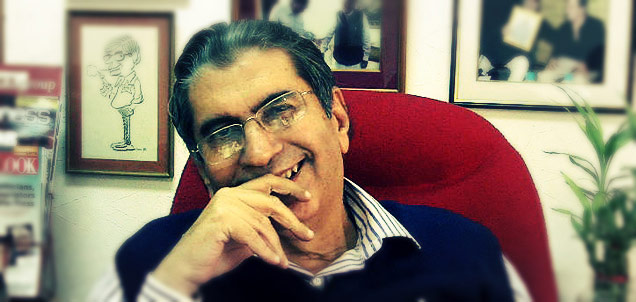
  • Vinod Mehta (1942-2015). Editor of Editors


    By Ranjona Banerji


    To the reader, Vinod Mehta was a witty, self-deprecating columnist while to the TV news watcher, the man who appeared on TV with a drink in his hand and a joke to share. But to the journalist he was an editor of editors. An editor who stood by his staff, who stuck his neck out for a good story and who did not bend to his own advantage as political winds shifted. If he did not win everyone’s love, he certainly gained almost everyone’s admiration.


    It is almost impossible to explain just how Mehta had that editor’s touch. It is not that he did not make mistakes and paid dearly for it when it came to both the Indian Post and The Independent. But more than that, Mehta had that ineffable instinct for the fresh and the refreshing. He did away with the pompous gloom associated with an editor’s office and instead imbued his publications with that terrible cliché: both style and substance.


    This was evident in every publication he touched, from Debonair to Sunday Observer to Indian Post to Independent to Pioneer to Outlook. He also had those other qualities which sets a great editor apart from a self-important bore: he was irreverent and able to laugh at himself. This saw him in good stead through his career in journalism and possibly his life.


    His last great story for which Indian journalism should be permanently grateful is the publishing of the transcripts of the Radia tapes. Between his Outlook and Open magazine, then edited by one of his protégés Manu Joseph, the world discovered the invidious links of power and payment between corporates, politicians and senior journalists. Eventually, the story cost him his job at Outlook, largely thanks to the ire of Ratan Tata, and he was removed from the newsroom which he ruled for 17 years to a more ceremonial post. It seems fitting in a way for an editor who was one of the last to be willing to risk management wrath for a good story.


    His last two books, Lucknow Boy and Editor Unplugged, told his story in his own words and no one can do it better. He has written about his successes and his failures, both professional and personal. His style is intact in both although Editor Unplugged is somehow darker. Both should be required reading for all journalists, old and young.


    The media is full of stories of personal tributes for Mehta. Many have wished that they could have worked with him and that is, undoubtedly, the best tribute any editor could wish for. It is ironic that in this age of journalists taking selfies with politicians and behaving like fangirls and fanboys, Mehta who did neither, managed to attract India’s top politicians to his funeral. Perhaps there is a lesson there for young journalists – you can earn respect even of people you disagreed with if you have professional integrity. Given the state of Indian journalism today, yes, I am laughing as I write these words.


    Mehta has been lambasted for being unabashedly secular and was often accused of being a Congress stooge. He discusses this in his books as well. The letters page in Outlook was full of such accusations and Mehta was courageous enough to carry all the opinions against him while sticking to his own stand.


    Of the several tributes, one of the most ungracious comes from veteran columnist Swapan Dasgupta on Twitter who appears to have dismissed Mehta as a gossip with facile political understanding. This might seem a bit rich coming from someone who propagates through his columns the point of view of the BJP but that is Dasgupta’s prerogative and he has his right to his own opinion. It is a cheap fallacy that once a person is dead he or she must be universally praised. However, as every journalist worth his or her salt knows, gossip is the cornerstone of our existence.


    I never worked with Mehta and I do not build my life around regret. But I did meet him a few times, the last when he was given the Lifetime Achievement Award for 2012 by the Mumbai Press Club. Having a drink after the event, he looked around him and asked me, “Are these people really journalists?”


    It was a good question then and remains one now. How many of us really are any more?


  • Ranjona Banerji: News or Entertainment?

    By Ranjona Banerji


    This is a story which I heard the other day. A friend who lives abroad went to a restaurant in Mumbai one evening to get some food packed. He found that the TV screens were all on Arnab Goswami and Times Now. He asked the owner how he could bear it. The owner laughed and said, “But sir, this is more entertaining than any soap or serial.”


    I write this as several media commentators have made some very succinct, incisive and well-argued comments on the damage done to journalism by Goswami in his crusader mode, especially when he fought for India’s image with his #NirbhayaInsulted hashtags, railing against the India’s Daughter documentary.


    However, I might want to argue that in many ways TV in India has gone beyond journalism. There is almost no space for the boring, anodyne, journalistic stuff any longer. It’s now all hysterics, outrage, anger, reaction and provocation. And finally, you just have to laugh. I would argue that Goswami is a pioneer in India who has redefined TV news. There was a time when I compared him to Howard Beale in Sidney Lumet’s 1976 classic Network. But Goswami has gone beyond Beale and created a distinct and enviable persona of his own. The mood at dinner time or in drawing rooms rises and falls to the cadences of his voice as he builds up his case for the night.


    And whether they admit it or not, half the news anchors in India either emulate, copy or want to be like him. There are a few who are hanging on to their shreds of sanity. And there are some star TV anchors who bemoan what TV has done to journalism. But those are just the last remnants of a lost civilisation.


    News is now entertainment in India and it will take a revolution to change that.


    **


    The most intriguing love-hate relationship in India is between TV journalists and the Aam Aadmi Party. When it was the India Against Corruption movement, TV loved it. TV cameras exaggerated crowd figures as did reporters. TV anchors made us believe the whole country had come to a standstill. Even I believed it and dragged a friend interested in politics to Azad Maidan with me to watch this phenomenon. It was sorely disappointing to watch a straggling crowd of a few hundred when I had been led to believe it was thousands. Luckily, the Mumbai Press Club and cheap Old Monk is close enough to drown all sorrows and outrage at TV, er, lies.


    That was 2011. Since then it was been a very rocky relationship between TV and Kejriwal and clan. No other political party in India, and this is in spite of all the efforts of Sanghi trolls and Congi agents, has been under such close scrutiny as the AAP. Every move it makes or doesn’t make is analysed in high decibel theatrics.


    The AAP has been peculiarly obliging to the media too, letting itself and its supporters down with clockwork regularity. All its shenanigans seem to be made for TV too, with sting operations and press conferences and public dissent and revolution. AAP and TV media are now involved in one of those symbiotic or parasitic relationships you read about in nature, where one organism cannot survive against the other.


    All the established parties can spend millions and try as much as they like to win PR battles. AAP has figured out the publicity game perfectly even if it is often to its own detriment.