Category: BLOGS

  • Reviewing the Reviews: Mostly 2.5-3 stars for ‘Hasee Toh Phasee’

    By Deepa Gahlot

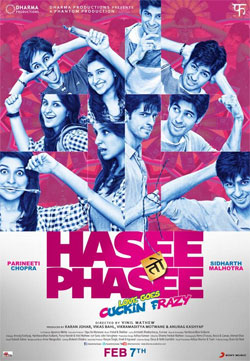
    Hasee Toh Phasee

    Directed by: Vinil Matthew

    Starring: Sidharth Malhotra, Parineeti Chopra, Manoj Joshi, etc


    Adman Vinil Mathew’s debut feature Hasee Toh Phasee has enviable backing—Karan Johar and Anurag Kashyap.  The romantic dramedy got mixed reviews, mostly 2.5 and 3 star ratings, slight disappointment at not reaching its potential, unreserved raves for its lead actress Parineeti Chopra and just a little less appreciation for Sidharth Malhotra and Manoj Joshi.


    It’s not very often that the female lead in a film is an eccentric scientist, so the film scores some points there. The love triangle set amidst a wedding (oh no!) is otherwise standard issue, down to the armies of overdressed relatives and the airport pre-climax, but with some deviations.


    Shubhra Gupta of The Indian Express wrote, “Batty girl meets sweet fellow. Is it cute? Yes, that first ‘mulaqaat’ is. And then? Then ‘Hasee Toh Phasee’ wanders about figuring out whether it wants to be a contemporary rom com, or a Gujju soap, or a 60s melodrama, or all of the above. This confusion confounds the film, fronted by the most talented female lead working in Bollywood right now, and makes her much less fun than she can be. And that holds true for the film, too. It is most exasperating, because ‘Hasee Toh Phasee’ seems to have everything going for it. The smart, varying sensibilities of co-producers Karan Johar and Anurag Kashyap, a likeable leading man, and a crackerjack heroine. What it doesn’t have is a coherent story, and that’s why none of the refreshing bits add up.”


    Saibal Chatterjee of Ndtv.com was more impressed. “Mercifully, Hasee Toh Phasee, notwithstanding its rather unimaginative title and its muddled core, is a mildly diverting, if somewhat woolly-headed, entertainer held together by its unapologetically absurdist spirit.  The film works primarily because the lead pair is in fine fettle, flowing along with the unstoppable tide of fluffiness while adding their own angularities to the proceedings. The multiple cross-connections that occur as the film meanders to its predictable climax are bizarre. After a sluggish first half that is expended largely on setting the stage for the eventual scramble to unravel the tangle, the second half springs to some semblance of life, and in pleasantly surprising ways.”


    Sukanya Verma of Rediff.com liked it more than others. “Directed by Vinil Mathew and based on Harshavardhan Kulkarni’s story/screenplay, Hasee Toh Phasee takes a familiar premise — two people on the brink of tying the knot and introduces a third party to cause expected stir. Only it doesn’t happen like it used to. Instead how everything transpires is Hasee Toh Phasee in a nutshell. Even though there’s a brief backstory to brief us about the temperament of sensitive Nikhil (Siddharth Malhotra) and peculiar Meeta (Parineeti Chopra), Hasee Toh Phasee doesn’t move cut to cut, it progresses gradually without letting us feel how time flies by. Like it usually happens when you’re in fascinating company.”


    Rajeev Masand  of  CNN-IBN commented: “A young man finds himself drawn to his fiancee’s sister in the days leading up to his wedding. That ghisa pita formula gets a fresh coat of paint in ad-filmmaker Vinil Matthew’s feature debut, ‘Hasee Toh Phasee’, a not-always-convincing but seldom boring romantic comedy. For the most part, Matthew and writer Harshvardhan Kulkarni stay away from standard tropes of Bollywood love triangles, choosing quirky humor over sappy sentimentality to endear their protagonists to us.”


    Sanjukta Sharma of Mint found merit in it. “No genre of cinema is as prolific and palliative as the Hollywood romcom—an index of our appetite for the quickie fairy tale. When the milieu is urban and somewhat damaged, it’s more abiding on the multiplex screen. Hindi cinema has produced a few successful attempts at building on this template of urban romance set in quirky families, where emotional dysfunction is malleable enough to make happy endings believable. Director Vinil Mathew’s debut feature film, Hasee Toh Phasee, is a smart and winning feint of that formula. It is an extremely likable balance between light and shade, the sadness in his beautiful lead woman sitting happily alongside her smiles. The sugar is pleasingly granular.”


    Shubha Shetty-Saha raved, “A sparkling fresh love story, well-written script and dialogues, and competent performances make this film a fun watch. The film’s laugh-out-loud moments make it worth the ticket price. But here comes the irony: even when Vinil is dealing with characters and a storyline that has never been thought of before, he breaks the flow to include some done-to-death song sequences that are typical of big budget love stories, as if he is afraid to venture too far with his approach. Perhaps a more confident and braver approach would have bettered this already lovely film.”


    Mihir Fadnavis of Firstpost.com was also positive. “For a first time filmmaker, it must be a staggeringly difficult task to balance the commercial elements of Dharma Productions’ target audience and with one’s own inclination to topple them over. Everything about Hasee Toh Phasee’s script is formulaic, but Matthew manages to find a new way to tell his story, finding a uniquely humorous tone in the formula. As demos go, Hasee Toh Phasee is a superb one for Matthew, who can now join the tribe of directors who have made seamless shifts from advertising to Bollywood.”


    Sudhish Kamath of The Hindu was more guarded. “It’s all about chemistry. What happens when you take all-about-loving-your-parents from the Karan Johar brand of cinema and try to blend it with rebellion-against-the-system from the Kashyap school? What happens when you take a generous dose of sanskaar and Shaadi rituals and add drugs and dysfunction to it? What happens when you reverse the gender types? When you make the girl an explorer, a restless geek with a drug problem and make the boy rooted to family values and commitment? What happens when the boy needs to pay the bride money to marry and the girl comes to rescue him from his routine? What happens when you take a feisty Parineeti Chopra and pair her with Sidharth Malhotra?And like most chemistry exercises, Vinil Mathew’s Hasee Toh Phasee is an experiment but a fun one at that. There’s a lot that explodes but also a little that fizzles out. Love it or hate it, you have to give it points for trying.”

     

  • Ranjona Banerji: Don’t support Modi and get damned!

    By Ranjona Banerji


    It’s familiar territory but it still requires revisiting. Both Rajdeep Sardesai and his wife Sagorika Ghose, both of the news channels CNN-IBN, were targets of online trolls this week – again. And again, the anger was aimed at their political affiliations. Or more specifically, because they were perceived as being opposed to the BJP’s prime ministerial candidate, Narendra Modi.


    Now online trolls are a well-documented group who use anonymity to attack people for all sorts of reasons. These attacks are often personal and vicious. Some have the ability to withstand them and some don’t. I myself have argued that journalists – because we operate in the public domain – must develop thick skins if we want to survive.


    So the discussion here is not about viciousness and threats of bodily harm. It is about the increasing inference that any journalist who does not support the BJP or Narendra Modi is corrupted. The obvious corollary is that journalists who do support the BJP and Narendra Modi are pure and untainted. Yet, both cannot be true.


    Either we want total objectivity at all times from all journalists which means that Swapan Dasgupta and Ashok Malik (I am just pulling names out of a hat) can no longer support or become mouthpieces for the BJP and Modi in print as much as all the others who are accused of being “Congress stooges” must stop interpreting Rahul Gandhi for the benefit of the rest of us. But if you allow one – and I see no one stopping either Dasgupta or Malik – then you have to allow the other – and that includes just about any political party or formation, not just the Congress.


    The irony for Sardesai and Ghose of course is that their employer and the channel they work for are widely seen as being pro-BJP and definitely pro-Modi. The same odd situation was faced by TV journalists of the Hindi news channel Aaj Tak during the Gujarat riots of 2002. While the India Today group was clearly pro-BJP (and this was evident in the writings of the India Today correspondent in Gujarat, among other indicators) members of its news channel were attacked for simply reporting what was happening.


    Indeed, this is why it is dangerous for media houses to have clear but unstated political positions. Everything is open to misunderstanding and attack. It is perhaps time, it needs to be reiterated, for media houses and journalists to be clear and open about their political affiliations. It happens in other countries; why not here?


    There is little doubt, for me at least, that this credibility crisis for the media has worsened after the revelations of the Niira Radia tapes and the conversations of Barkha Dutt and Vir Sanghvi with the lobbyist and PR person. After the initial disclosures by Open and Outlook magazines, there was some media coverage which soon petered out. This was a serious lapse on our part. We needed to have been more stringent because we in the media suffered the most. Instead, we hoped that if we ignored it, it would go away. Rot, however, has its own patterns of behaviour.


    The attacks on Caravan magazine for publishing interviews it did with terror accused Swami Aseemanand emphasise again the dangerous media environment we know live in. There’s no point denying it: the question is how we deal with it.


    **


    There is one brand of journalist who is forgotten in all this Congress versus BJP hoopla: those who do not support any one party but find various elements of many parties disturbing or difficult. I happily put myself in this category. As the old saying goes: I am not prejudiced, I just hate everybody!


  • Ranjona Banerji: Nothing’s changed in a no news week!

    By Ranjona Banerji


    The last week has been spent on holiday in Munnar, surrounded by tea estates and no internet connectivity. And given the enormous natural beauty around, there has been no time or inclination to watch television. News has been gleaned from a cursory glance at a newspaper at breakfast before rushing off somewhere or the other.


    And what have I found? That when you come back to it, nothing has changed. There’s Anna Hazare smiling his gummy smile in support of Mamata Banerjee. There’s Andhra Pradesh in an uproar over its imminent separation into two states. There’sNarendra Modi thundering along in some mock martial pose. And there’s the Aam Aadmi Party ready with its plan to take over the country. And there’s India, losing another cricket series away from home.


    Of course, the news cycle is what it is. When you work in a newsroom you do not always realise how little you have to work with. The latest scandal or some new revelation in an ongoing case consumes you. But as a “consumer”, you are faced with a wall of homogenous mediocrity from which you try and find something that might interest you. The short lesson is this: journalists need to spend a little time as consumers of their own products to understand how boring or predictable they can become.


    **


    The upside of being in a new place of course is the local news: the auto drivers’ striking in Coimbatore over set rates, the bird-sighting successes in the Ooty-Coonoor area, the latest freebie from the Jayalalitha government in Tamil Nadu or the side-stepping between the Communists and the Congress in Kerala are far more informative than the tedium of national news. The fact that the film stars are all different in South India also helps – the grasp of Bollywood reaches only so far.


    **


    The biggest loss of bad connectivity, at least on my part, came from the sudden divorce from social media. You do not realise, until you do not have it, how much those of us who use it depend on social media for the latest news and views. Twitter for the news and Facebook for the links which your friends find useful, instructive or annoying. You get glimpses into worlds you are not always familiar with and those can be used for topics of discussion in Twitter. Mainstream media needs to do a bit of thinking here, even while it still reaches where the dongle does not work!


    **


    Television news in India is still struggling with whether it is a news provider or an opinion aggregator, which is odd. It is clearly, the first place for “breaking news” as it never ceases to tell us (until the internet wins that war, which it will). But in India, it is still obsessed with picking up millions of opinions and presenting those, without establishing what is being discussed. Our host tried desperately on Wednesday morning to find out from television news just what had happened to the last Test match India played in New Zealand. But all he got from TV was a discussion on MS Dhoni’s captaincy from the anchors, from Rahul Dravid and from Sunil Gavaskar. From reading between the lines, we gathered that the Test was drawn. Who knows what the truth is. What is it, by the way?


    Ranjona Banerji is a senior journalist and commentator based in Mumbai. She is also Contributing Editor, MxMIndia. She can be reached via Twitter at @ranjona. The views here are her own


  • Reviewing the Reviews: Mostly 2.5 stars as Highway disappoints critics

    By Deepa Gahlot


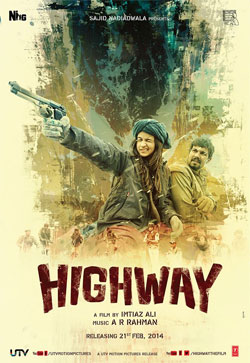
    Highway

    Directed by: Imtiaz Ali

    Starring: Alia Bhatt, Randeep Hooda, Durgesh Kumar, etc


    Imtiaz Ali carries on his penchant for journeys in his latest Highway, that has earned more accolades for young Alia Bhatt than for the director who has made a meandering movie on stunning locations.


    A cliché-ridden story of a girl who falls in love with her kidnapper—the classic Stockholm syndrome— tries to be profound but only ends up being boringly pretentious and quite predictable.


    Most critics were disappointed and stayed with 2.5 stars, the highest being four by Mumbai Mirror’s Rahul Desai who was more impressed by the film that any other mainstream reviewer.


    Rajeev Masand of CNN-IBN made a very valid point about the plot at a time when the country is concerned about women’s safety.  He wrote, “The film – a brave experiment on Ali’s part, who uses long stretches of silence, improv dialogues, and characters over plot to drive the narrative – doesn’t necessarily work. It’s meandering and indulgent in many parts, tiring you out well before it’s over… A beautiful mess, but a mess nonetheless.


    Anupama Chopra of Hindustan Times made a similar comment. “The film posits kidnapping as therapy. It tells us: So what if you’ve been abducted, heal yourself as you travel the undiscovered countryside. Given the horror inherent in the situation, this just feels false and fundamentally wrong. Imtiaz skillfully creates moments that are at once, tender, funny and fragile. But my problem was that I simply didn’t buy into the story.And yet, both Veera and Mahabir stayed with me. They are compelling, intriguing characters. Randeep is extremely effective as the brutalised and brutal Mahabir. I just wish they had met under different circumstances.”


    Sanjukta Sharma of Mint commented, “Imtiaz Ali’s Highway is about escape. It is a dreamlike film, complete with achingly beautiful Himalayan landscapes and vast, unpopulated, dusty expanses. At the centre is a pair of utterly unlikely soulmates—a spunky, rosy-cheeked girl of wealth from South Delhi and her captor, a Haryanvi rogue extortionist. What is this utopia? What are they running from? Torment that they have nursed from childhood. Finally, life has opened up, and the promise of happy-ever-after in the upper Himalayas is in sight. It is a sort of meta-love that cynicism and intellect alienate. This is spectacular fluff. But what really rankles about Highway is the central message—and the message is loud and clear—that for a young girl, the escape from abuse in her ivory tower is through another kind of captivity which she begins to love because at least the captor is honest. It’s a disturbing message.”


    Shubhra Gupta of Indian Express found it disappointing too. “A couple of damaged strangers seeking redemption via a road journey is the premise of Imtiaz Ali’s latest ‘Highway’. The director’s attempt to move away from his trademark candyfloss-ness has mixed results: this is perhaps the most picturesque road movie I have seen coming out of Bollywood, but the story struggles with its twin threads and uneven tone. ‘Highway’ is a patchy ride, with the occasional high spot.”


    Aniruddha Guha of Time Out was kinder. “Escaping the first half-second half quandary of most Hindi films, Imtiaz Ali marks his return to theatres with a solemn, clearly-demarcated-in-three-acts film. Highway gets off to a good start, finds itself grappling in the middle, before striking a punch in the gut with a moving finale. The last 40 minutes of the film, in many ways, is the film itself, where Ali steps out of the comfort zone of his earlier movies and makes his point about an issue most filmmakers would shy away from addressing in a film with a similar canvas. Yet, this isn’t a film driven by a social message. Instead, Ali crafts a sensual film-watching experience to make a strong, informed statement.”


    Saibal Chatterjee of NDTV.com was complimentary. “Writer-director Imtiaz Ali has hit a road less taken. The result is a stylish two-hander that is defiantly unconventional, if not entirely satisfying.  Shot on stunning locations spread from Delhi all the way up to the slopes of Himachal Pradesh and Kashmir, via the plains of Rajasthan and Punjab, the film yields bewitchingly beautiful images. But it isn’t just the visual and auditory delights on offer that make Highway a sensitive, understated entertainer. Its two exceptional characters sway to the kind of subtle emotional riffs that usually elude mainstream Hindi cinema.”


    Rahul Desai of Mumbai Mirror raved, “Highway is Imtiaz Ali’s fifth film and, I suspect, his first film too. His previous efforts seem like milestones on a modern highway, designed to bring him closer to the movie he really wanted to make. The signs were visible: road trips, eloping couples, destructive alpha males, epiphanies around snowcapped Kashmiri peaks, meditative montage sequences. As exemplary as his filmography has been, the focus has always been on a couple, on relationships, hence making it easier for his work to be flawed. In cinema, there is no right way to portray fictional characters; there are only good or bad ways.”


    Sukanya Verma of Rediff.com wrote in a similarly laudatory vein, “In Highway, he uses travel like artistry, a narrative form to unfold the adventures of its two leading protagonists learning (and unlearning) a few precious lessons about the capricious course life follows when tackled head-on.


    Though he doesn’t dwell upon the scenery enough to extract an allegory, there’s both warm familiarity and exotic wonderment to the visual delights he paints before us through Anil Mehta’s majestic cinematography. One seldom acknowledges, forget applaud, the merits of recce after watching a film. Courtesy Ali and Mehta, Highway is a worthy exception.”


    Vinayak Chakavorthy of India Today sneered, “Is it a love story? Suspense drama? Pop philosophy? Or simply an exquisite showreel for Discovery Travel mounted on a fiction set-up? Imtiaz Ali’s new film looks like all of the above by turns as the reels roll, and in the end of it all you are not quite sure which one it definitely wanted to be.”


  • Ranjona Banerji: How the media is everyone’s whipping boy

    By Ranjona Banerji


    The media is now everyone’s whipping boy and there is no need for the media to get defensive about this. As long as everyone thinks you’re doing everything wrong, it is clear that you are doing everything right. The expression “paid media” is now indiscriminately used to describe journalists who do not subscribe to your political point of view, when the term within the media is used to describe managements who sell editorial space to political parties or politicians without informing readers or viewers.


    Arvind Kejriwal of the Aam Aadmi Party has accused the media of being pro-Bharatiya Janata Party and pro-Congress and also said that some of the media is dancing to the diktats of Mukesh Ambani and Reliance. More specifically, the media he says is either pro-Narendra Modi or pro-Rahul Gandhi; the unspoken implication being that the media is anti-him. However, through 2011 the media was extremely pro-Kejriwal and the India Against Corruption movement headed by Anna Hazare. One might wager that without media support, the IAC movement would have gone nowhere. Non-stop coverage of every IAC event, gross exaggeration of public participation figures all ensured that IAC, Hazare, Kejriwal, Manish Sisodia, Kumar Vishwas, Kiran  Bedi, Prashant Bhushan and others became household names.


    India’s controversial former chief of army staff VK Singh has also jumped into the fray, calling journalists “presstitutes”. This is how urbandictionary.com describes “presstitute”: “A term coined by Gerald Celente and often used by independent journalists and writers in the alternative media in reference to journalists and talking heads in the mainstream media who give biased and predetermined views in favour of the government and corporations, thus neglecting their fundamental duty of reporting news impartially. It is a portmanteau of press and prostitute.”


    In fact, I would question Celente’s (an American “trend forecaster) wisdom and political correctness in damning commercial sex workers (the now accepted term for prostitutes) by associating them with the media and with journalists.


    Jokes aside, Singh has been angry for a number of reasons – his various dates of birth did not sit well with either the Indian Army, the GOI or the Supreme Court, his various PR efforts sometimes backfired and Indian Express published a story last year about how some troop movements during his tenure were looked at suspiciously by the Government.


    The Editors Guild has taken exception to all this media-bashing and issued a strong statement: “Ironically, leaders who built up reputations and support by engaging the public through the media are now turning on the very media when they come under critical scrutiny…


    “The media that question and criticise political leaders and indeed every section of society should of course be open to criticism, even if it is harsh, of its functioning and to its flaws being exposed. The problem arises, however, when abuse and vague, unsubstantiated accusations of corrupt motives take the place of reasoned refutation and debate. An additional danger is that some of the followers could take their cue from the statements of leaders and may not stop with verbal attacks. Both print and television journalists have been subject to physical violence as well by political party workers.”


    Physical attacks on journalists are reprehensible and have to be tackled strongly by law and order. But general criticism of the media and of journalists has to be accepted as par for the course. As we have pointed out in these columns, there are clear instances of media bias on display at times and criticism of political parties, politicians and big business is sometimes a carefully calibrated exercise.


    The spread of the tentacles of lobbyists and PR people is well-known when it comes to film and business journalism for instance. And the Niira Radia tapes exposed the susceptibility of some of India’s biggest names. These are problems which the media must discuss more stringently, or criticism from those we criticise will only get stronger.


    If we don’t guard ourselves, someone else is going to try and do it for us. And that would be the real disaster.


  • Time to call Minster’s bluff. 6.5/10 performance by UPA-run I&B ministry


    By Pradyuman Maheshwari


    It’s perhaps unfair to damn only Information and Broadcasting Minister Manish Tewari for his performance. Successive occupants of that office – under various regimes – have made a mess of things over the years. Right from the time of BV Keskar, the first mantri who banned Hindi film songs on Vividh Bharati to occupants such as LK Advani, IK Gujral and Sushma Swaraj who didn’t do much for the sector. Ministers like Priyaranjan Dasmunshi and Anand Sharma were on war with many broadcasters and Ambika Soni was by far the best of them all though the digitization execution process was messed up when she was at the helm.


    Earlier this week, as part of the Bharat Nirman series of ads, the DAVP inserted an ad making several claims under the headline “Empowering People Through A Liberal Information Order”.


    I think it’s important that someone were to call the minister and ministry’s bluff. The text in italics is my response to the points made in the ad.

    • Several policies issued and implemented for the liberalization of Print Media Sector in last 10 years

    Is it? Like? Save appeasing the sector with DAVP ad hikes, there’s precious little done 

    • Television industry grew from Rs 18,300 crore in 2006 to Rs 50,140 crore in 2014

    This would have happened any which way. No marks for the UPA 

    • Total number of TV channels increased from 130 in 2014 to 788 in 2014

    Again no credit to UPA for this. In fact, the government has been sitting on many applications and approvals over the last few months 

    • 3 Crore Set-Top Boxes installed in the first two phases of digitization

    Yes, Digitization is an achievement of the government. But look at what happened with it? Chennai is not fully digitized. Kolkata faced several hiccups. Phase 2 is nearly 90 percent, which is heartening 

    • New policy guidelines for Television Rating Agencies issued in 2014

    One is not very sure whether the government should be getting into policing television audience measurement. That should be left for the industry. Thankfully, the government hasn’t got into IRS or advising ad duration on radio and column centimetres/ad-edit ratio in print 

    • New policy guidelines issued for Headend in the Sky (HITS) Broadcasting Services and Internet Protocol Television (IPTV)

    It is fine to issue guidelines, but an IPTV, for instance, has been a non-starter. And HITS is just about a nice acronym 

    • Radio industry grew from Rs 600 crore in 2006 to Rs 1540 crore in 2014

    Would’ve grown more had news been allowed. Isn’t it ironic that all and sundry can start news channels – on satellite and cable – and our radio folks aren’t trusted? 

    • 245 FM channels in 85 cities since 2005. In the next phase 839 channels proposed in 294 cities

    Phase III? Ha ha ha ha ha ha ha ha ha ha ha ha ha ha. Phase III has become a joke. We’ve heard about it just so often. Even the Mumbai Metro would’ve started, but our government would be sitting on the papers. 

    • Community radio stations increased from 64 in 2009 to 163 in 2014

    For a country of a billion-plus people, 163 community radio stations is an apology. Not enough done to evangelise it.

    • Foreign Direct Investment for five segments of broadcasting sector revised in 2012

    And what about news? So FDI can be upped in critical segments like telecom, but not so in news. Just why?


    • Overhaul of the Cinematograph Act, 1952 by Justice Mudgal Committee

    Some welcome steps here? Implemented? 

    • National Media Centre with ultra modern facilities inaugurated

    No point having just one in Central Delhi. The Central Telegraph Offices in various cities which had press rooms should’ve been upgraded too. News journalists exist in other parts of the country too, Mr Minsiter! 

    • National Museum of Indian Cinema being set up in Mumbai

    Better late than never… but would’ve been nicer to coincide with 100 years of cinema.


    What the ad doesn’t tell us is the several things the government hasn’t been able to achieve. Make Doordarshan an independent and top quality pubcaster like the BBC, for instance. Some attempts to improve DD News were nullified by interference in newsroom operations.


    Ever since Manish Tewari has taken charge as the Minister, he has waxed eloquent on the paradoxes of the industry qua (his favourite word) exigencies of the business. He has even tried to police the cable trade on ownership issues since the networks in his home state of Punjab are managed by his political rivals.


    The government has tried its best to keep the issue of self-regulation issues alive by scaring the news media on and off. Under the pretext of protecting the interests of consumers, the 10+2 ad cap was introduced which saw much resistance from news broadcasters.


    The government hasn’t been able to do much on Paid News. Newspapers still carry paid content with or without disclaimers in fine print.


    So how would you rate the last 10 years of the UPA-run I&B Ministry? I would give it a 6 on 10. Okay, let’s make it 6.5, because it could’ve even gotten worse.


  • Ranjona Banerji: Survey results are not gospel

    By Ranjona Banerji


    The TV channel News Express did a sting operation on market research companies to discuss poll surveys. They posed as members of political parties and asked if polls could be tweaked to favour them. The channel approached several agencies, of which some refused to take on any jobs on the grounds that they were too busy while others agreed to varying degrees.


    There is a serious need for market research companies and opinion poll companies to relook at their methodology and strategy. The fact that the last quarter results of the Indian Readership survey have been suspended points to some dire flaws in the system. It was apparent from the IRS results that either the surveys were faulty or that they were manipulated to favour some companies. Political surveys especially for election results have been so wrong for so long, that it is surprising that anyone pays attention to them at all.


    Many have pointed fingers at the media over poll surveys saying since it is the media which commissions these surveys, the onus is on them to ensure that the results are clean and correct. But that is an impossible burden on the person paying the bill. The media in that case would be better off sending its own journalists to track popular moods – which many newsrooms do anyway.


    The problem is – and this is especially true of television news – when the survey results are presented, they are done as gospel. Critical analysis is in short supply and empirical evidence, experience and sometimes common sense are abandoned in breathless declarations of these miraculous results. And when the surveys go wrong – as they most often do – no one takes responsibility.


    However, saying all that, banning such surveys infringes on the idea of freedom expression. People have the right to be foolish and believe foolish things. All one can hope for is for newsrooms to look at survey results with a more stringent eye before broadcasting them.


    Shivam Vij has done an analysis for scroll.in on this issue and it is well worth reading: http://scroll.in/article/the-case-for-banning-pre-election-opinion-polls?id=657211


    **


    While on the subject, many congratulations are due to Naresh Fernandes, Sumana Ramanan and the team at Scroll.in for their research-filled journalism which covers a number of issues that mainstream publications, television news and other websites ignore or forget about. Scroll.in needs to become a must-read for media professionals especially.


    **


    Pradyuman Maheshwari, editor-in-chief of mxmindia.com has started a column on primetime news for Mid-Day. I wish him all the best in this endeavour and welcome him to the horrendous task of watching the Yellers and Screamers on Indian news television, which some of us are forced to suffer. I keep an extra supply of blood pressure tablets, just in case, which I am willing to share.


    **


    I almost felt sorry for the Karnataka MLA who went on a junket to Australia, New Zealand and the Fiji Islands and came back to file a report on how cows and sheep grazed on grass there which should be followed in India and how more public toilets were necessary. He was grilled incessantly by Shiv Aroor of Headlines Today, who could barely contain his own laughter at the inanity of the report.


    The hapless MLA was seemingly unable to understand what he had done wrong. Sometimes Indian TV news can beat a comedy show.


  • Reviewing the Reviews: Critics divided on Shaadi Ke Side Effects

    By Deepa Gahlot


    Shaadi Ke Side Effects

    Directed by: Saket Chaudhary

    Starring: Farhan Akhtar, Vidya Balan, Vir Das, etc


    About Saket Chaudhary’s Shaadi Ki Side Effects, most critics were divided. They were also disappointed that an idea with potential was frittered in a plot that is so callously misogynistic and most unfair to the woman. Farhan Akhtar’s performance as the reluctant dad was appreciated by most; Vidya Balan seems to have been given a dead-end part with hardly any redeeming features.


    The ratings went from two to three, but mostly hovered at 2.5, and that too because the subject of an urban marriage coming apart by parenthood is relatively novel for Hindi films.


    Shubra Gupta of the Indian Express rued, “Till the half-way mark, Saket Chaudhary hits things right on the mark. Post-interval, the film is all over the place. Sid’s mentor ( Kapoor) takes him down a dodgy path which involves ‘me time’ carved out of a bunch of white lies. Out comes the tired homily : for a happy marriage, a few untruths are necessary. To stay consistent to this very guy thing, Sid is made to experiment with a change of image. The film, which was moseying along with sure-footed lightness, even if it was from an exclusionary male point of view, starts becoming forced.”


    Saibal Chatterjee of NDTV.com commented, “White lies, some harmless subterfuge and an occasional return to the joys of a “carefree single life” are offered as a way out of marital drudgery.  Sure enough, the side effects of that formula are far too many for comfort and they boomerang many times over on Sid. Shaadi Ke Side Effects isn’t exceptionally engaging fare. It is essentially a single idea stretched to the very end of its tether. Yet, the sheer ordinariness of the circumstances that the story hinges on helps the film retain its amusing core.”


    Rediff.com’s Prasanna D. Zore ranted, “Shaadi Ke Side Effects (SKSE), written and directed by Saket Chaudhary, who also helmed Rahul Bose-Mallika Sherawat starrer Pyaar Ke Side Effects, opens on this contrived note and meanders for an over-stretched 145 minutes, full of twists and turns, that one has come to so famously associate with soaps produced by Balaji.  Chaudhary has, at times, over-simplified the complex issues married couples face (sharing of parental responsibilities) and, at times, over-amplified the way these strange creatures (read married couples) react to facts of married-life, like pregnancies.


    Anupama Chopra of Hindustan Times had fun in the first half, “But post-interval, another film begins,” she wrote. “One that is curdled and contrived. New characters are introduced but instead of being organic to the narrative, they seem like an afterthought – tacked on simply to keep a movement going.


    Saket creates flashes of genuine insight into marriage and parenting – toward the end, Trisha finally gets a moment to articulate how overwhelming motherhood can be for a woman – but these get lost in the clumsy, overstretched plot.”


    Rajeev Masand of CNN-IBN had the same opinion. “Unfortunately, the steady stream of laughs from the first half more or less dries up post intermission, when the writers struggle to come up with dramatic plot-points for a film that frankly has no story. Sid’s mid-life crisis – he buys a motorbike, and begins partying with his new “bro” Vir Das – feels far-fetched and contrived, as does a subplot involving a helpful maid (Ila Arun) who subsequently oversteps her boundaries. Even a half-baked attempt at a twist in the film’s final act can be guessed from a mile away.”


    Deepanjana Pal of Firstpost commented, “If you’ve seen Chaudhary’s first film, Pyaar Ke Side Effects, and the trailer to Shaadi…, which shows a cool husband and his nagging wife, then the expectations would be different. It turns out that Shaadi… falls smack in the middle. It has some genuinely quirky moments, but it’s also half-baked, juvenile and completely lacking in insight.”


    Nandini Ramnath of Mint wrote, “Chaudhary’s debut, released in 2006, had endearing characters, several nicely executed gags, a consistently comic tone and empathy for the female lead even though the story played out entirely from a male point of view. Shaadi Ke Side Effects continues with the male POV, has the same exasperated voice-over and similar sense of shock at the responsibilities foisted by marriage on the male gender. The second film has gained gloss and glamorous leads but at the expense of variety and tonal consistency. Early-reel wackiness is jettisoned for heavy-handed sermonizing, Sid’s suffering enters masochistic territory, Trisha begins to look less like a misunderstood mother and more like an uncaring hausfrau.”


    Anuj Kumar of The Hindu quite liked it. “Apart from conjuring up funny moments around seemingly serious issues, Saket’s storytelling keeps you engaged even when you know the obstacles on the way are not entirely novel. The arrival of the child, the presence of a handsome neighbour, the emergence of a marriage guru in the family, we know the basic tropes but still Saket manages to keep us in good humour with witty lines and a couple of foot-tapping party numbers. He has a knack for making you feel complacent and then surprising you with a little twist in the treatment.”


    Sarita Tanwar of DNA was also kind. “Shaadi Ke Side Effects is a romcom that begins with a married couple indulging in some role play on a night out. Right off you know, this is the kind of Hindi film that you haven’t seen before. It deals with the situations - comical and ironical - that follow once Trisha (Vidya Balan) and Sid (Farhan Akhtar) realize they are expecting a baby. The arrival of the tot brings with it challenges that neither anticipated. Sid grapples with how to be a good husband and father while being financially and emotionally supportive. Trisha worries constantly about her baby, her weight gain and giving up a career. It is an unknown territory for both and it throws up new situations and complicates their life to the point they don’t recognize it, or each other. Lies and deceit follow.”


  • Ranjona Banerji: Endless political coverage on TV can be tedious

    By Ranjona Banerji


    Rather than reporting on the news and commenting on outcomes, our TV news channels have opted for a paparazzi predatory mode. They’re all out to get someone – anyone – and then turn the screws on them. Headlines Today is watching every sneeze and wheeze made by Arvind Kejriwal in case they signify that he is making tall promises he cannot possibly keep. Times Now is looking under every pebble for a new UPA scam: don’t be surprised if you hear Arnab Goswami thundering about whether Sonia Gandhi knew that the gardener at 10 Janpath had requisitioned for 10 rose bushes and planted only eight.


    CNN-IBN continues to waffle between supporting Narendra Modi and the Bharatiya Janata Party, attacking the Congress and other parties as well as keeping up the pretence of objectivity. And NDTV, although it is often seen as a Congress voice, is attempting to sidestep this game completely.


    It was foolish of me to have expected more TV play on the sting operation on opinion poll companies by the Hindi channel News Express. But how could they, since most new channels pump up excitement by commissioning endless opinion polls on electoral results? You could find out, said one channel breathlessly, how Maharashtra would vote if the elections were held this minute. Needless to say, if Maharashtra voted in another minute, another result would be possible.


    **


    While political rallies are important, endless coverage can be tedious and lead to viewer fatigue. News television might think about having special two hour shows dedicated to political rallies and leave the rest of the time to real news like whether Koffee with Karan should have pushed itself back to 11 pm last Sunday because of its “steamy” content. Or whatever else they see fit.


    **


    Twitter just saw another ridiculous battle between Madhu Kishwar, still Narendra Modi’s most tireless cheerleader and Sagarika Ghose of CNN-IBN. Kishwar tweeted to Ghose: “CNN\IBN coverage of Gujarat & hype ard AAP likely 2b be used in journalism schools as example of devious,unethical journalism”


    I am not sure what “ard AAP” means but Ghose responded about “differing brands of journalism”. Upon which Kishwar said that she was fond of Ghose personally but they were far apart. Amusing as these little insights into people you don’t know are, there is also the fact that as Caravan reported and observers (including me) have pointed out TV18 which owns CNN-IBN has gone very clearly rightwing and pro-Modi. But obviously that is not enough for Kishwar. Perhaps total obeisance is the correct response.


    **


    Narendra Modi, who wants to be prime minister of India, was scheduled to appear on a live show organised by Facebook, Newslaundry and NDTV. Modi cancelled at the last minute – promos were running for days on FB and NDTV – and according to a Hindustan Times story, he did not want to share the platform with Arvind Kejriwal and others. Hindustan Times quotes NitiCentral, the pro-BJP website on this. I am unaware if Modi’s other unofficial mouthpiece, firstpost.com, had any explanation on this withdrawal. Madhu Trehan of Newslaundry’s tweets suggested that anyone has the right to change their mind. Indeed.


    However, as far as one can tell, Kejriwal, Mamata Banerjee and Lalu Yadav were not appearing at the same time as Modi but on other days. Whatever the reasons, speculation that Modi is unwilling to answer questions that may show him in a bad light continues. Propaganda is easier to manage when you are the one in control.


  • Reviewing the Reviews: Barely two stars for Gulaab Gang

    By Deepa Gahlot


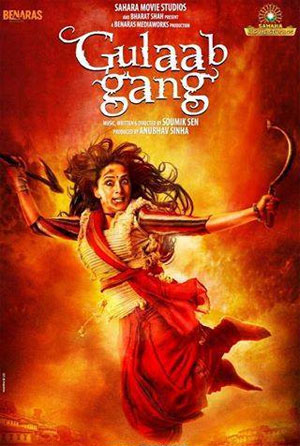
    Gulab Gang

    Directed by: Soumik Sen

    Starring: Madhuri Dixit, Juhi Chawla, others


    Much was expected from the inspired by real life story of a female vigilante. Madhuri Dixit and Juhi Chawla together for the first time, a lot of promotion, some controversy (Sampat Pal of Gulabi Gang trying to stall the film) and at the end of it a damp squib of a film.


    The week’s other release Queen opened to universal acclaim but Gulaab Gang could barely manage two star ratings.


    Shubhra Gupta of the Indian Express ripped it apart. “So fine , maybe Madhuri Dixit’s ‘Gulaab Gang’ has nothing to do with Sampat Pal’s real-life ‘Gulaabi Gang’, even if both wear pink saris, and fight for women’s rights in a rural North Indian outpost. The difference between the two films ( and ‘Gulaabi Gang’ did the smart thing by releasing just ahead of the Bollywood take) is stark : the first, featuring the plain-faced Sampat, is a hard-hitting documentary ; Madhuri Dixi’s gang, on the other hand, is as make-believe as make-believe can get. ‘Gulaab Gang’ is faking it.”


    Nandini Ramnath of Mint commented, “For all its feminist fakery, Gulaab Gang‘s villains are women. First off is Rajjo’s evil step-mother, plucked straight out of a ’50s movie. The bigger threat is posed by Chawla’s all-powerful politician Sumitra, modelled onSonia Gandhi, Mayawati, Sheila Dixit, and every other woman who has ever dared to storm the male bastion of Indian politics. Sumitra’s villainy is straight out of a Telugu mass movie…”


    Rajeev Masand of CNN-IBN called it muddled and forgettable. “Madhuri makes the most of her stunt scenes, but appears trapped under the weight of this predictable script, which in the guise of a feminist film offers no more than your standard good vs evil story. It’s particularly hard to take Rajjo seriously when she breaks into choreographed dance sequences each time the women are taking a break from beating up some offender.”


    Anupama Chopra of Hindustan Times called it messy and illogical. “In Gulaab Gang, writer-director Soumik Sen brings together a slew of talented women – Madhuri Dixit-Nene, Juhi Chawla, Divya Jagdale, Tannishtha Chatterjee. He lifts liberally from the inspiring story of Sampat Pal, an illiterate villager who formed a group of women vigilantes called Gulabi Gang in Bundelkhand. But Sen is unable to embed the actresses into his fictionalised version in a coherent way. The result is an ineffectual and messy ode to women empowerment in which women, with nicely styled hair and handloom saris, maim, kill, fight elections and in between find the time to sing and dance.”


    Suhani Singh of India Today commented, “It doesn’t take long to realise that Gulaab Gang has adopted a familiar route. A wrong is committed. There’s the search for justice. It is achieved with fierce fighting. And then there’s a song to celebrate the good times. Just when it ends, you are back to the hardship in the form of death of a gang member or oppression/crime. The screenplay is stuffed with lines written to draw whistles. We don’t know if rhyming declarations like “Rod is God” work with the audiences, but the effort is more than apparent when Dixit says, “Sangathan ki chalti hai, akele mein aapki phatti hai.”


    Shubha Shetty Saha of mid-day found is as fake as a pink elephant.”The best thing about cinema as a medium is that you get to know the filmmaker’s intention and mindset, no matter what garb the film is presented in or what the filmmaker wants you to believe. Gulaab Gang might look like a feminist film but unfortunately, it is anything but one. For one, a film made with even an ounce of sensitivity towards women would never feature a cringe-inducing scene of a man crawling between the legs of a woman. Or a scene where Rajjo seethes with anger at an injustice being committed and soon after, shakes her graceful hip to a random song. Well, all this and more happen in Gulaab Gang.”


  • Ranjona Banerji: Vicious anger against the media

    By Ranjona Banerji


    The media is now well and truly in the middle of the general elections in India. And it is the Aam Aadmi Party which has stirred up the pot. For one, the fact that journalists are joining the party has riled both politicians and other journalists. There are questions being raised of fair play and objectivity – how far should one trust a journalist’s work just prior to his or her joining a political party? And it is the Bharatiya Janata Party and its supporters which are most upset. Yet this is not the first time journalists have jumped into politics in India and it won’t be the last. And as for the BJP, from the top of the head let’s count Arun Shourie, Chandan Mitra and Swapan Dasgupta who all are or were journalists but are still part of the BJP.


    There are enough other names and being part of the PMO or the Prime Minister’s press office – Sanjaya Baru, Suman Dubey, MJ Akbar (who even stood for elections for the Congress before he fell out with Rajiv Gandhi and turned against the party), Sudheendra Kulkarni who was part of LK Advani’s office, Rajeev Shukla of the Congress was once a journalist apparently, thus stretching the meaning of the word. Madhu Kishwar, once the flagbearer of feminism in India and editor of Manushi now appears to have become Narendra Modi’s main cheer leader, whether self-appointed or not it is still unclear.


    Therefore, this phenomenon is not new and it is not unusual. The anger against AAP of course is that this new party has threatened the status quo. And also, perhaps as significantly, is that television has now made the media accessible to everyone and the internet has given everyone a voice. As has been observed many times before, anyone with a weblog or a twitter account and a camera phone considers himself or herself no different from a reporter or even a columnist. It is another matter that very few outside the media can comprehend that a print newsroom is not populated only with reporters. And very few of those who watch news on television can envisage that there is anyone in the Times Now newsroom except Arnab Goswami.


    The anger against the media is vicious and it appears that the situation is only going to get worse in what is one of our most polarising elections in recent times. Of course lay allegations about media biases are usually unsubstantiated and sometimes even amusing in how gigantically they get it wrong. It is a bit sad that a lot of the anger against the news media on social media comes from former journalists, especially those who have joined PR. I am not sure that our sisters and brothers in public relations are following a wise course here. After these elections are over, life might a little difficult for those in PR who need the “mainstream media” to further their clients’ interests.


    **


    The general elections in India are of course big news. And the mammoth personalities of Narendra Modi and Arvind Kejriwal make for compelling stories. But the biggest story of the week has been the missing Malaysian Airlines plane. Has the Indian media done it justice? Perhaps to the extent of being suitably insular and informing the Indian public about how many Indians were on the passenger manifest. But there is more to this story and we have missed the boat on this one. And the plane.


  • What young journos can learn from Khushwant Singh


    By Ranjona Banerji


    Khushwant Singh personified that one thing that all journalists ought to have: irreverence. Add to that a refusal to take oneself too seriously and you have a winning combination. And like the contradictions in journalism, these are lessons from a man who did not start life as a journalist. He was already a renowned author when he took over editorship of The Illustrated Weekly in 1969.


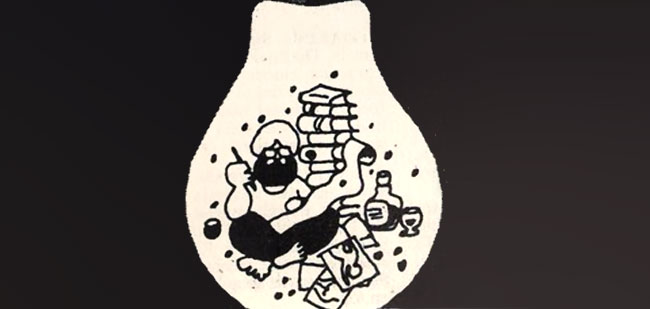
    Is it an exaggeration to say he defined or redefined what journalism and editorship has meant to us ever since? People may not always realise this, but the Khushwant Singh effect is still with us. He took a fuddy-duddy publication and gave it lightness and life and humour, which should not be mistaken for fluff. He encased himself in a light bulb – or was sentenced to it by cartoonist Mario Miranda – but by doing so he freed journalists from boring strangleholds of dead habit.


    Certainly, Singh increased sexy content in the Weekly and his witty but risqué jokes were looked forward to. He understood the influence of cricket and films on the Indian psyche – so I guess we can blame him for so much of the bilge that passes for journalism today? Kidding! But such was his hold over the reader that for decades after he left the Weekly his columns had to be carried in newspapers because of public demand. All those editors who dreamed of themselves captured for perpetuity in a light bulb had to bow down to the allure of Kushwant Singh and his wit. I know several people for whom he was still India’s foremost columnist long after his prime.


    Many of today’s young journalists (ah yes, here comes the old person’s lecture) would do well to emulate Singh. He was not afraid of taking on the high and mighty, he was not afraid of admitting his mistakes and he was not afraid of being contemptuous of hypocrisy. Indeed, he thrived on the last! His admiration of Sanjay Gandhi and the Emergency he would deeply regret but he did not hide it. One might argue that those who acknowledge their errors and transgressions are far more admirable than those who refuse to accept they ever made them. He objected to Operation Bluestar and made his objections public but he was no fan of Sikh extremism either.


    Singh was also a serious historian especially when it came to Sikh history and India’s Partition. His Train to Pakistan remains a seminal work on that painful subject. Singh was always intensely secular as well – regardless of how insulting that term is to rightwing India. He spared no punches when it came to communal elements either. His many novels are varying in excellence and his sex writing was somewhat tedious. But his autobiography and his books about himself and his writings though are must-reads for every young journalist and excellent examples of honest, scathing and witty writing. I would also suggest them for all our older journalists as well – especially those dripping with self-importance.


    Singh’s life in journalism leaves behind a rich legacy. We can immediately pick up that if you get too close to any political dispensation, you will pay the price for it or regret it or both – as happened with Singh and the Gandhis. And you cannot under any circumstances take yourself and any passing pomposities too seriously. What a lot of balloons to puncture when you look at all the fat-headed pundits around.


    I suppose the third lesson is that journalists who make plenty of jokes and drink a little single malt everyday live long and fulfilling lives? Khushwant Singh lived a life to be celebrated and we need to raise a glass to that!


    **


    Understandably, today’s newspapers have devoted pages to the Grand Old Man. Bachi Karkaria’s piece in The Times of India speaks from the heart and personal experience – she and Singh joined The Illustrated Weekly the same year; indeed she is one of Singh’s many protégés.  TOI also had Rahul Singh, son and journalist himself, writing on his father. TOI’s institutional memory remains dominant, whatever other criticisms can be chucked its way. Vikram Seth’s poem in Hindustan Times – written some years ago – is apt. Though one wishes Hindustan Times had collected all the Singh recollections on one page rather than scattering them around. Indian Express got LK Advani to talk about him – a change from all the seat woes for the political veteran. Mid-Day pulled out relevant extracts from Singh’s writings about Mumbai people like Dom Moraes and Protima Bedi. DNA had photographs and recollections. Economic Times went with Shobhaa De.


    Fitting tributes all. But none more so than Singh’s own epitaph for himself:

    “Here lies one who spared neither man nor God

    Waste not your tears on him, he was a sod

    Writing nasty things he regarded as great fun

    Thank the lord he is dead, this son of a gun.”

    Unlikely though that too many will agree with that last line.

    We need to raise a glass to that!