Category: BLOGS

  • Reviewing the Reviews: Besharam is savaged by critics

    Director: Abhinav Kashyap

    Cast: Ranbir Kapoor, Pallavi Sharda, Rishi Kapoor, Neetu Singh


    By Deepa Gahlot


    Ranbir Kapoor’s golden boy image took a bit of battering with this one, more so because this pairing with Dabangg director Abhinav Kashyap was expected to work wonders.


    The plotless film, with crude gags, has Ranbir playing a Delhi lout who first steals the car of the woman he loves and then tries to get it back. The film depends too much on the star and his parents Rishi and Neetu Kapoor, who play cops, but are actually there, because it made for a newsworthy casting coup. The leading lady (Pallavi Sharda) and villain (Jaaved Jaaferi) seem incidental to the goings on.


    No wonder the film was savaged by critics, the unkind one giving one star and the kinder ones, two. Most hovered at the 1.5 stars mark.


    Rajeev Masand of ibnlive.com ranted: “The film’s plot, likely scribbled on toilet paper during an inspired moment on the pot, is centered on a loutish car thief, Babli (Ranbir Kapoor), who must steal back a car that he sold to a murderous money launderer (Javed Jaffrey), when he falls for the poor girl who owned the car (newcomer Pallavi Sharda). Handled with adequate lightness, this might have been an inoffensive, forgettable comedy, but Kashyap’s treatment of the material is so indifferent, the film doesn’t even hit that mark. Indeed ‘Besharam’ appears to be rolling out rather than unfolding, with not one actor so much as pretending to have a good time. What do you say about a film in which Javed Jaffrey looks too bored to over-act?”


    Sukanya Verma of rediff.com lamented: “The director of the predictable but entertaining Dabangg opts for yet another hackneyed plot about the proverbial misguided but golden-hearted orphan cum car thief and his decision to turn a new leaf after he falls in love. Only Besharam, with its tedious soundtrack (brace yourself for a song after every few minutes) and low-cost disposition, is so unbelievably sloppy and senseless, not even the best actors in the business can redeem it no matter how hard they try. And try they do, hard, too hard.”


    Wrote Karan Anshuman of Mumbai Mirror: “Filmmakers and stars should realise that a formula done fifty times over is not a similar golden egg-laying goose. The only motivation behind Besharam is to devise a hit– to work a spreadsheet and spit out receipts worth Rs 100 cr at the box office. Everyone understands that films need to be profitable. But are filmmakers forgetting that telling engaging stories is also a part of the job? Can cinema be reduced to an equation? In case you’re wondering, here it is: [Dabangg-Salman+Ranbir x flip introduction for climax+new girl+6 songs (subdivide one for each mood)-story+meta father son jokes] 2.”


    Sarita Tanwar was bowled over by Ranbir in DNA. “There is no denying that he is the glue that holds this film together. He is in every frame. And he does this new genre unabashedly. He proves there is nothing he cannot do. He shows off his versatility (and butt cleavage! A dig at Saawariyaa and Sanjay Leela Bhansali?)”


    Nandini Ramnath of Mint commented: “The flesh is willing but the spirit weak in Besharam, Abhinav Singh Kashyap’s unimaginative tribute to seventies Hindi cinema. Ranbir Kapoor’s carefree car thief Babli is inspired by characters played by Dharmendra and Amitabh Bachchan, but there’s a big difference between now and then. None of Kapoor’s predecessors had to shove socks into their underwears, adjust the area of their trousers around their crotches, imitate Michael Jackson dance moves, sniff the mattress used by their lady loves, and verbalise their sexual prowess. Kapoor’s bare back and a hint of whatever lies below it is viewed in a bathing scene that is sure to have a long afterlife on YouTube. Another seventies star, Ranbir’s father Rishi Kapoor, plays a constipated police officer who is seen in two painful sequences on the toilet pot, willing his intestines into action.”


    Shubha Gupta of Indian Express nailed it: “This is a film which pre-empts us from coming up with the classic line, “haaye, sharam nahin aati hai kya”, because it is called Besharam. Which then frees it to indulge in every single “shameless” thing a Bollywood flick safely can, presumably because it has an A-list star. This is a film in which the hero is a self-confessed luchcha-lafanga: remember that phrase? The kind of thing that the villain used to do- be an illiterate lout, crack cheap jokes, harass the heroine, and pull at his crotch whenever possible – is now down to our hero. Not discreetly, that would be unbecoming of a ‘besharam,’ but loudly, accompanied by background music, with the kind of exaggeration that doesn’t allow you to look anywhere else.”

     

  • Ranjona Banerji: Kunal Vijayakar – very funny, very right!

    By Ranjona Banerji


    At the outset, I take no credit for what I’m about to relate. The way events unfolded may be entirely coincidental but they are curious. A few weeks ago I tweeted that CNN-IBN’s normally excellent satirical news programme, The Week That Wasn’t now appeared to have become overtly right wing. Someone retweeted this to Kunal Vijaykar, surely one of the funniest men on Indian television and an exceptional mimic. Vijaykar replied asking what I meant and I explained that all political parties were made fun of but the BJP. There was no further communication after this exchange.


    However, the next episode of The Week That Wasn’t had a little fun at Narendra Modi’s expense. The opportunity was immense – that incredible Happy Birthday to Narendraji song sung by Mallika Sherawat (http://www.youtube.com/watch?v=2i-OyKTTdG8). It was Sherawat though who bore the brunt of the jokes made on the show, not Modi barring a few elliptical remarks. And according to some observers, a line about Modi’s birthday cake coming from Best Bakery (which I saw) was removed in the reruns. Interestingly, I saw the line about Best Bakery doing the rounds on Twitter the day of Modi’s birthday, which was a Tuesday (September 17). The Week That Wasn’t is aired on the weekend so…


    The week after that, the show struggled again to try and find something funny to say about the BJP and settled on LK Advani for some feeble attacks. The impression was this has to be done so let’s get on with it. This week too was weak and meagre at best. However the jokes about Rahul Gandhi, Mayawati, Mulayam, Manmohan Singh and sundry other people remain better than the rest. From the past, Vijaykar’s take on former president Pratibha Patil is perhaps his best, followed by his Mayawati. The last BJP person who was targeted as far as I can remember was Nitin Gadkari and he was easy pickings.


    Sadly, the skit on Laloo Prasad Yadav this week, after he went to jail, was not up to standard in spite of all the excellent matter available for satire. I sense tiredness in the show’s funny bone. Perhaps it needs a rejig. Perhaps its writers need a holiday. Perhaps they need a better understanding of politics.


    This is not to suggest that the show has to be fair and attack all political parties equally. It is well within its rights to be biased and support whoever it wants. In which case, it should inform us all of its intentions rather than pretend that it treats everyone equally. It does appear though that the TV18 group, after all the churning that has happened staff-wise, has become right wing. It was always evident in firstpost.com and now is visible often on TV. I’m not even alluding here to media gossip which is rife but just going by what you see on TV and read.


    It is odd though that the India Today group which is often accused of being right wing and pro-BJP and RSS can come up with that excellent So Sorry series which pokes brilliant fun at everyone while The Week That Wasn’t no longer can. The So Sorry cartoon on Rahul Gandhi and the “nonsense” ordinance and Narendra Modi dreaming of become PM are two of my favourites.


  • Mediaah! Bizarre! NDTV ombudsman Soli Sorabjee’s response to mail on Barkha Dutt-Niira Radia episode

    By Pradyuman Maheshwari

    I was delighted with the news that Soli Sorabjee was to be the Ombudsman of NDTV, the news-to-cookery information network. Sorabjee is one of India’s best legal eagles, is a former Solicitor and Attorney General and is known to be a wise man. He’s frequently on television, his views are much sought after by people who matter. He’s not a Ram Jethmalani.


    NDTV is one of India’s best known news vehicles, although just 25 years in the business. And it’s well-respected too.


    However, the last five years has seen question marks being raised about the network. And this goes beyond its performance in the stockmarket, its decision to get into entertainment television and then exit it, staff cuts and more recently the trimming of operations of business channel NDTV Profit.


    What has caused considerable loss of face for the channel’s reputation goes beyond its business decisions. After the Mumbai terror siege, there was an uproar against the coverage of some news channels and consequently there was a vicious online attack on Barkha Dutt. Yes, it was vicious, but as I look back, Barkha and NDTV should’ve just let it be. Instead they took legal action against techie Chaitanya Kunte. They may have won the battle and silenced Kunte, but there was much anger building against them.


    And then there was the Niira Radia controversy. While journalists do often indulge their sources and help them with info (and even fix stuff), what happened in the Barkha Dutt episode was unfortunate. Especially the way she and NDTV handled the issue. She should’ve apologized on camera rather than defend herself on the show where questions were posed to her by a few top editors. NDTV, a channel until then known to have a squeaky clean reputation, too ought to have handled the crisis better and should’ve instituted an internal enquiry (headed by an outsider and asked Barkha to go off the newsroom or at least off air in that period). It didn’t, and went down several notches in the eyes of its core viewer – the Indian intelligentsia.


    However, that’s not the reason for writing this. When I heard about Soli Sorabjee being appointed Ombudsman, I wondered how he would’ve handled the Barkha Dutt-Niira Radia issue. That was reflected in the report we carried on his announced (see link: http://www.mxmindia.com/2013/09/ndtv-appoints-soli-sorabjee-as-ombudsman-now-will-he-clear-air-on-barkha-dutt-episode/ ).


    I wrote two letters to the Ombudsman. The first was on my name getting exposed to NDTV, to which Sorabjee responded writing: “I do not appreciate the need for anonymity.”


    I found this a little weird. If a corporate’s name gets exposed to a journalist who he/she is complaining about, there’s bound to be a backlash.


    But it’s the second exchange that has had me shocked and surprised.


    Here goes the mail I received from Sorabjee’s Ombudsman id (See letter image).

    QUERY

    Hello, Mr Sorabjee. Thank you for accepting NDTV’s invitation to be the media group’s Ombudsman.

    I would like to bring to your notice the controversy around Barkha Dutt and her telephone conversation with lobbyist Niira Radia. While Ms Dutt’s defence was subjected to a cross-exmination on television by eminent journalists, there is a view that her act brought disrepute to the profession and the NDTV group. There is also a view that Ms Dutt’s services or appearance on television should’ve been suspended pending investigation. It would be good to have an eminent jurist like you to comment and give your ‘verdict’ on the issue/episode. Your views may well clear Ms Dutt’s name once and for all. Or we may have you aver that Ms Dutt was incorrect by doing what she did and she deserves a stiff reprimand. In both cases, it will be a great service to Indian journalism. Sir, since this episode happened, many have questioned the ethical standards that prevail in the Indian news media and have even gone on to say that our news entities do not have the moral authority to question others on inefficiencies/corruption etc since their own houses may not be in order.

    Your comment on the matter will help clear the air on this.

    Thanks, Pradyuman Maheshwari


    RESPONSE

    The role of the Ombudsman is not judgmental but to ensure that dissemination of news is fair, accurate and balanced. However, Ms. Barkha Dutt should not participate in any programme concerning her and the Radia Tapes. I have advised NDTV to inform Ms. Barkha Dutt accordingly.

    Soli Sorabjee,

    Ombudsman, NDTV


    Is Soli Sorabjee refusing to take a stand on an issue that has a strong linkage with the “role of the Ombudsman to ensure that dissemination of news is fair, accurate and balanced”. And what’s this bit about “However, Ms Barkha Dutt should not participate in any programme concerning her and the Radia Tapes. I have advised NDTV to inform Ms Barkha Dutt accordingly.”???


    Mr Sorabjee is a wise man, but why is he sitting on the fence on the issue? Has NDTV asked him to not comment on the controversy? We don’t have the answers, but at the time of writing on October 9, 2013, when we tried visiting the Ombudsman’s page/corner/whatever on the NDTV.com site, we couldn’t find any label/tag on the homepage. Perhaps, viewers are expected to remember the ndtv.com/soli url. Or perhaps the network doesn’t want us to go complaining to Soli Sorabjee.


    The views expressed by Pradyuman Maheshwari, Editor-in-Chief and CEO, MxMIndia in Mediaah! are his own and not necessarily those of MxMIndia Private Limited. Email him at pradyumanm (at) mxmindia.com


  • Ranjona Banerji: Good job by media on Phailin

    By Ranjona Banerji


    Cyclone Phailin (I almost put a hashtag before Phailin as a default reaction from too much Twitter!) was obviously an acid test not just for state administrations but also for the media. And for the most part, the media did a very good job. Many brave young reporters stood with their rain gear bringing us the latest from the coastline and inner areas of Odisha and Andhra Pradesh last Saturday, with almost non-stop cyclone coverage.


    Anchors in the studios filled us in with the meteorological stuff, all in CNN style minus Anderson Cooper and holographic images of course. For some reason, Times Now did not get the memo that Phailin, name chosen this time by Thailand, was pronounced Pey-lin and so continued with the ‘F’ effect.


    Of the lot of them, CNN-IBN was the least restrained and most professional. Or at least I was jogging along with this impression until at crunch time when the cyclone was supposed to hit they went into a sponsored feature from Siemens. I mention the company name because I remember it. For newscasters and advertisers, there are times when you have to realise that advertising is intrusive and it is better PR to just put it on hold for a while.


    Ads were the problem across all channels however but that was just regular breaks. And everyone understands that media houses have to make money but perhaps even the advertiser needs to wonder if they want their brand associated with natural disasters as they unfold.


    Newspapers did what they have to do under such circumstances: gather all the information available and put into perspective for their readers.


    **


    As usual, social media was steps ahead of everyone else and many followed American meteorologist Eric Holthaus on Twitter for his predictions. As it turned out, Holthaus may have overestimated the category that Phailin would fall into but his constant tweets, updates and pictures were of great help. (His handle is @EricHolthaus for those interested).


    **


    Phailin and its coverage will hopefully nudge the media in India – of all kinds – towards better weather and climate coverage. Newspapers like The Hindu and Hindustan Times are among the few that take it seriously, the rest just give it a cursory nod. Of the TV channels, NDTV has stuck to bringing the weather to its viewers long after its once most recognisable weather girl Anuradha has presumably moved on to other things.


    It seems amazing that this phenomenon which affects our lives and that of our planet everyday is so ignored. And with all the advances in meteorology and in technology, there is plenty of fascinating information available. As we saw with the Phailin coverage, the Indian Meteorological Department has moved forward in leaps and bounds. Surely, the weather is worthy of a little more attention?


    **


    Taking off from that, why have climate change and the environment fallen below the media’s radar? Its effects are there for everyone to see and experience. We need to take the sciences a little more seriously perhaps in the media. I’m not saying stop salivating over Bollywood, cricket and Narendra Modi. I’m just saying widen the frame a bit…


  • Shailesh Kapoor: Never Underestimate Cricket

    By Shailesh Kapoor


    The death of the One-Day International (ODI) cricket format has been debated at length over the last few years, with the advent of T20 in general and the IPL in particular. Till about a decade ago, channels would actively programme to avoid a key event (such as an episode with a turning point, a big movie or any other special) to clash an India ODI. Over time, with cricket ratings dropping, this became less of a concern.


    But what happened this Wednesday is a lesson to all – Never underestimate cricket. You never know when it will surprise you.


    Most readers would know that India annihilated Australia on Wednesday in perhaps the most ruthless run chase in ODI history. The match day fell on a semi-holiday, on account of Bakri Eid. Two important media events (and there could be others too that I’m not aware of) had planned to make use of the same holiday.


    Times Now had a marathon five-hour special (starting at 6pm) to reveal the results of their latest exit poll on the 2014 General Elections. And on the Bollywood side, Akshay Kumar-starrer Boss released this Wednesday, instead of a usual Friday release. Both were heavily-promoted events in their respective domains. When scheduling, neither would have realized that a giant iceberg would hit them between 7 and 9pm.


    Boss’ report card is out. The film collected about Rs. 120 million nett on the domestic box-office on its first day, at least 25 million short of what it would have scored if the game had ended up being like the one-sided first ODI on Sunday. Times Now will know the impact next week when the ratings are released, but to their advantage, the chase was so emphatic that it all ended with 6.5 overs to spare, and hence ahead of time too, around when Arnab Goswami makes his regular appearance every night. Talk about silver lining!


    The series announced itself with last week’s sole T20, which proved like a dress rehearsal to Wednesday’s second ODI. Most primetime GEC programmes showed a 10-30% drop in their viewership that night, in the ratings that were released yesterday. The message was clear: This is going to one good series, unlike those meaningless India-Sri Lanka ones. Underestimate at your own risk!


    Five more ODIs still to go, and then Sachin Tendulkar’s 200th Test match, followed by a South Africa series… we are in for one of the most high-profile cricket seasons in a while. This is what cricket is truly capable of, not what we see in those round-the-clock moneymaking games that have a recall of less than a week.


    There is another related aspect worth mentioning – The rise of ‘event programming’. As the interest with ongoing serials continue to wane, disruptive content is set to enjoy even higher appeal in the days to come. We can expect movie premieres like Chennai Express, big cricket matches like the ones this winter, season openers and finales of top reality shows, and other such ‘events’ to garner a higher share of viewership.


    Meanwhile, cricket has proven itself again. Let the naysayers be silent for a while now.


    Shailesh Kapoor is founder and CEO of media insights firm Ormax Media. He spent nine years in the television industry before turning entrepreneur. The views expressed here are his own. He can be reached at his Twitter handle @shaileshkapoor


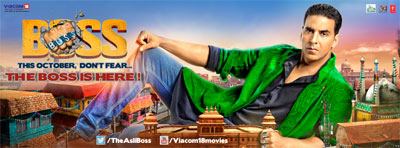
  • Reviewing the Reviews: Boss didn’t deserve more than 2 stars

    By Deepa Gahlot


    Boss

    Directed by Anthony D’Souza

    Starring Akshay Kumar, Mithun Chakraborty, Aditi Rao Hydari, Shiv Pandit & Ronit Roy


    This one’s every critic’s nightmare, the kind of film for which it’s hard to point out any positives, but the moviegoing public watches with relish. In the case of Anthony D’Souza’s Boss, even this low-brow and forgiving audience has turned up its nose.  Maybe Akshay Kumar should reinvent himself since Salman Khan has cornered the market for action comedies and Ajay Devgn for pure South-style action. There’s no more room at the top.


    Ratings could not go beyond two, which is understandable, the film didn’t deserve more


    Rajeev Masand of IBNLive.com wrote, “Directed by Anthony D’Souza, who helmed that awful underwater adventure ‘Blue’, this remake of the Malayalam hit ‘Pokkiri Raja’ is packed with lengthy flashbacks, cringe-inducing melodrama, and the kind of pedestrian dialogues that evoke memories of bad ’80s potboilers. The action scenes are surprisingly gruesome, their effect amplified by the sound design. The film’s gags, meanwhile, are uniformly juvenile.”


    Sukanya Verma on rediff.com commented, “In the plausibility-challenged schemes of Boss, a teen, tanned version of Hindi-speaking Akshay Kumar hurling a volley of coconuts on Sudesh Berry’s unsuspecting skull grows up to be full-grown, fair and fit Haryanvi-spewing Akshay Kumar making audible mincemeat out of the baddies. Needless to say, it all takes place in slow motion. As if the monotony wasn’t stretching long enough!”


    Shubhra Gupta of Indian Express gave up at the start, “Within a few minutes of the opening, I knew this is one of those flicks you can watch with your ears. Dhadaak, khachhaak, crrruunch, thapppadd, dhachhaak. And krrrrich, bhadaang, dhadaam. And when Boss aka Akshay Kumar decides to take a break from pulverizing bones and flashing cleavers and blowing up cars, it becomes dhinchak, dhinchak, dhinchaaak! The soundtrack is a faithful raconteur of the Boss’s (Kumar) exploits in his turn as a rowdy from Haryana, in another ‘South remake’ after Rowdy Rathore. For a minute I thought I was back in Rathore land, because there were Sonakshi and Prabhudeva shaking a leg with Akshay. For all intents and purposes, this could be called Rowdy 2, because Akshay does exactly what he does in that earlier film, but with different co-stars, and a plot that is totally subservient to labelling him Boss every two minutes.”


    Vinayak Chakravorty of India Today quite rightly pointed out that Boss simply went for a toss. “It is one thing creating a Guinness record with the world’s biggest poster as a publicity gig for your film and quite another being Bollywood’s biggest boss. Akshay Kumar has done the former to hardsell his new film, and he has been gunning for the latter over the decades. If box-office records could be manufactured like Guinness-compatible posters, Akshay would have wrested them long ago. Boss once again underlines the aimlessness that has largely dominated Akshay’s career in his race for the top. The film rides his stardom from the moment he enters the frame about 40 minutes into the runtime. Only, what follows has nothing new to offer.”


    Nandini Ramnath of Mint felt that a walk in the park would be better than enduring this film. “There’s enough bone-shattering violence in Boss to make you wonder about the film’s UA certificate. Forget the children, whose innocence might be lost forever after sitting through over 2 hours of action sequences strung together in a semblance of a plot, and spare a thought for the grown-ups. The dialogue, by lousy punning specialists Farhad-Sajid, is juvenile; the actors go through the motions; the action wouldn’t look like anything if it ran at its normal speed instead of in slow motion.”


    Karan Anshuman of Mumbai Mirror mused, “T here was a time when homicidal maniacs who killed for fun and games were referred to as the antihero. Now take the same chaps and give them a sense of humor, selective altruism, and they’re heroes for the masses. As long as a flamboyant hero’s intent is in place, whether he delivers or not and regardless of his past, he is who you are to root for.”


    Saibal Chatterjee of NDTV.com wrote, “A Haryanvi hunk, supine on a charpoy atop a truck, arrives at a granary and proceeds to kick up plenty of heat and dust. His grand entry is accompanied by ear-splitting background music. Here to ward off a posse of criminals, he takes up position on the right of the frame.


    His main foe, the leader of the hoarders, asks him why. The protagonist’s answer is as predictable as it is daft: haven’t you heard that the boss is always right? He repeats that line ad nauseam through the film. Unfortunately, for all the pain that he inflicts on himself and the audience, this boss is never quite right.”


  • Ranjona Banerji: Old Spice goes down the dude

    By Ranjona Banerji


    I just do not get the Old Spice ad with Milind Soman. He’s a good friend Milind Soman and a good-looking man. But something about the ad doesn’t click. For one, Old Spice flubbed very badly by dubbing the original international ad starring Isaiah Mustapha on the assumption that Indians don’t understand anything. Having done that, they have now tried to take the same idea – manliness and a sense of humour and cobbled together an ad which achieves neither. Soman looks either too pleased with himself or unconvinced at the words he’s made to spout, which are not that funny anyway. In fact, you cannot figure what he’s saying at first listen which defeats the whole purpose anyway.


    One understands that Old Spice doesn’t want to be seen as a fuddy-duddy brand but also doesn’t want to be seen as a dude-y brand. Its current positioning however seems to be neither and nowhere at all.


    I found the whole Park Avenue take off on manliness in their Beer Shampoo ads far more amusing. It was ridiculous on the manliness part of it – frightening bears, chopping gigantic logs of wood, being stupid enough to drink the shampoo (something which Old Spice does not achieve) – and then contrasted that with the shiny bouncy hair that is presumably every man’s dream.


    **


    The Hindu family coup against professional editors has now turned absurd. The newspaper itself ran a story about how employees burst firecrackers with joy because The Family had returned. There was a giveaway tucked into that story somewhere – promises of large bonuses. Yeah, we would all go the firecracker way if those were coming to us.


    On Twitter, Malini Parthasarathy has been taking pot shots at professional journalists and very pointedly putting the professional in inverted commas. Meanwhile, MK Venu, resident editor of The Hindu’s Delhi edition has also quit.


    Some of the problem seems to be former editor Siddharth Varadarajan’s decision not to give Narendra Modi front-page news every time he squeaked. The Hindu family has said that they are not pro-Hindutva (which has long been evident) but they did not buy Varadarajan’s explanation that Modi did not deserve to hog the front page.


    However, these are problems which should be sorted out by a phone call. There has to be something deeper than that in an overnight removal of an editor two years after a dramatic decision to remove editorial from family control. Six members of the Hindu board are still against N Ram’s decision to remove Varadarajan and CEO Arun Anant and also at Ram’s use of a double vote. How that plays out is yet to be seen but the alacrity with which other board members have jumped into editorial roles might show that these six will have to lick their wounds.


    The Hindu has achieved something which its mighty magnificence has withstood for 135 years – made itself a laughing stock. If anyone is licking their chops here, it is The Times of India which will see this as a boost to their advancement into South India.


    **


    Random thoughts: Sachin Tendulkar’s impending retirement has been hogging headlines and that is bound to make his fans delirious and detractors left fulminating. One suspects the fans will win. The Economic Times has dumped its non-economic feature-driven back page and replaced it with sports. How will that play out? The Hindustan Times is still continuing with its half-jacket on the front page, unknown to what purpose. However I did get a very nice collection of bathing soaps as a gift for renewing my subscription. This makes up for the DVD of Paan Singh Tomar which I did not receive last year!


    Ranjona Banerji is a senior journalist and commentator based in Mumbai. She is also Contributing Editor, MxMIndia. She can be reached via Twitter at @ranjona. The views here are her own


  • Ranjona Banerji: 2014 is an acid test for journalistic integrity

    By Ranjona Banerji


    Indian newspapers seem to be trying to follow a western pattern in the run up to the next general elections by picking their favoured candidates/parties most likely to win in 2014. However they don’t quite have the hang of it yet. So while there is a general tilt towards the BJP, they suddenly appear to veer off into the opposite direction. American newspapers seem to have taken their own sides too and much more emphatically. The New York Times is firmly against Narendra Modi while The Wall Street Journal favours him. This has, not unnaturally, caused some heartburn in the parallel universe of the social media which is filled with Modi fans. But there should be nothing to worry for them: several international newspapers like The Guardian and The Telegraph (politically as diverse as you can get) have questioned the sanity or validity of Rahul Gandhi’s various remarks.


    **


    This is not connected with any evidence, empirical or otherwise, or is not even conjecture. But it vitally important at this time to keep an eagle eye on the media at this point in time. This is when the bogey of paid news rises, as elections approach. This is when managements decide it is time to make money out of political parties and individual candidates by printing pro-stories for a consideration. One easy giveaway is when the same newspaper carries diametrically opposite stories on the same party or same candidate on different days. Often managements, who are extremely clever and strategic, neglect to inform their troublesome colleagues in the editorial department of what they are up to.


    There is much confusion about paid news in the general public. Some see at as a tag to be attached to journalists who do not support their chosen political party or candidate. Others see it as journalists looking for freebies and are willing to write anything for in return – whether from a political party or a five star hotel. The first contention is nonsensical. Just because journalists disagree with your political ideas does not make them agents of the other party. Tragically however, the other breed does exist: the journalist who will write anything for money and the journalist who is in the pay or thrall of a political party. There is a third category, seen more often in the non-English media where a journalist is forced by managements to act as a marketer as well.


    These are the scourges of the profession. It is because of them that managements like Bennett Coleman introduced Medianet where a celebrity or wannabe celebrity can pay the newspaper to get favourable news printed. Other managements have followed suit. These are no longer editorial decisions or the actions of a crooked journalist. Medianet and its variations are now rampant and no reader can (or should) believe most of what appears in the glamour papers.


    Paid News is the Medianet of politics. And there are other similar strategies for corporate and business coverage as well. Journalists one has to say have brought this upon themselves. But readers and viewers can exercise judgment for themselves. There are a couple of well-known columnists who appear on TV as spokespersons for the BJP for instance. Therefore when you read their columns you have a clear picture of where they come from. Supporters for the Congress are a bit thin on the ground and every “secular” person is not necessarily a Congress agent.


    But there is no question that this is dangerous territory, filled with landmines for readers, viewers and those journalists who have not sold out. The Election Commission has taken Paid News seriously and has recently included newspaper managements in its scrutiny. This general election is going to be extremely vicious and divisive and the scope for transgressing all the rules is massive. On our toes, then.


    Ranjona Banerji is a senior journalist and commentator based in Mumbai. She is also Contributing Editor, MxMIndia. She can be reached via Twitter at @ranjona. The views here are her own


  • Ranjona Banerji: Be damned if you write about the Right!

    By Ranjona Banerji


    Writing or speaking negatively about the BJP, RSS and Sangh Parivar never fails to attract plenty of anger and insults – both on paper and via the internet. There are enough stories about journalists getting various kinds of threats and women usually bear the brunt as imaginative descriptions of rape are often attached to these threats. While other political groups may also take umbrage in unpalatable forms, the rage of the right wing in India is particularly vicious.


    In the current battle over who owns the legacy of Sardar Vallabhbhai Patel, Hindu columnist Vidya Subrahmaniam went back into history and Patel’s scathing letters to the RSS. Since then, she has received 250 calls threatening death by callers claiming to be from the Tamil Nadu branches of the RSS and VHP. She is quoted as saying, “The callers have been abusive and also threatened physical harm by bombing me at my home. They have used filthy and vulgar words.”


    While one can get inured to insults and threats via snail mail, email, social media and the comments sections of websites and journals, getting phone calls at home is quite another matter. Political parties need to work out better ways to control their cadre and the police need to understand how to deal with such abuse.


    Interestingly, our political parties are so caught up in scoring points over each other that the Congress’s Ajay Maken took up the matter with the implication that Subrahmaniam had approached the Congress for help, which she denied. The BJP’s Meenakshi Lekhi just sidestepped the actual threats with an attack on the Congress. Taking responsibility for actions is not something politicians find it easy to do – perhaps that requires character?


    **


    The trial into the phone-hacking and bribing of police and other officials by former News of the World editors and staff has started in the UK. It is worth following the questioning of Rebekkah Brooks and Andy Caulson, both the accused editors. Lots of murky and salacious stuff is emerging but behind the muck, there are some very real questions of media over-reaching which have to be tackled. The scandal did not just shut down the News of the World, it also led to Ruper Murdoch being questioned by MPs, with him apologising. A commission into media ethics headed by Judge Brian Levenson was set up and its report is still being debated by editors and Parliament.


    **


    Media ethics… Hmm not a bad subject to debate in India either? A scuttlebutt says that a prominent cricket “historian” has been dumped by a news channel on which he was a favourite for reasons that could be best described as unknown. However, newspapers of the same group continue to use his ‘writing’. What is going on?


    **


    The Mumbai edition of the Hindustan Times has started a series on Mumbai’s roads. A full-page everyday looks at problem roads and solutions with excellent graphics. Good layout, negotiable text and plenty of information – HT has to be commended for this effort. This is what establishes a city newspaper.


    **


    Newspapers – and they are well within their right to do so – have started using RTI and RTI activists to collect information on how much the government spends on itself. We have been informed about how much petrol and diesel is used by government in Delhi. We have been told that meetings were cancelled because people had to catch flights. We have been told that drivers earn more than ministers in Maharashtra because of overtime. All is well.


    But as any canny journalist can tell you, all those stories can be reversed. You can outrage that to save on petrol bills, bureaucrats in Delhi who did no work and did not visit troubled areas. The amount of money spent on cancelled plane tickets just for one meeting can be another story. And ministers in Maharashtra who never step out of Mantralaya can be one more. Wait for it!


    Ranjona Banerji is a senior journalist and commentator based in Mumbai. She is also Contributing Editor, MxMIndia. She can be reached via Twitter at @ranjona. The views here are her own


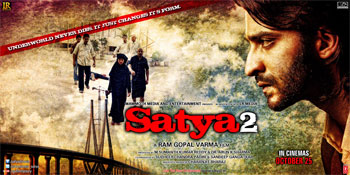
  • Reviewing the Reviews: A max of 2.5 stars for Satya 2 if the critic was generous

    By Deepa Gahlot


    Satya 2

    Director: Ram Gopal Varma

    Starring: Puneet Singh Ratn, Sharvanand, Anaika Soti


    After the genre-busting Satya (1998), Ram Gopal Varma’s career just never reached that high again, even though there were intermittent successes like Sarkar. His obsession for the underworld seems to have smothered his film-making skills because Satya 2 has hit a nadir in the director’s filmography which already has horrors like RGV Ki Aag (popularly voted as the worst film ever) and The Attacks of 26/11.


    Satya 2 got as little as 0 and 1/2 stars and a maximum of 2.5 if the critic was generous. Even the Times if India stopped at 2 this time, which is a rarity. Most reviewers, were not as scathing as they were sorrowful that a filmmaker of RGV’s early potential has just lost it and created such an unmitigated disaster.


    Shubhra Gupta of the Indian Express wrote, “By calling his hood’s company, ‘Company’, is RGV being meta? Or just smirking? You can draw parallels from this maverick director’s film trajectory, which has yo-yoed between the very good and the very bad and some indifferent stuff, to this Satya Number Two’s ‘Company’, which, in his words, is more a ‘soch’ (thought) than anything else. You want to ask RGV: what was he thinking? Or has he abandoned it altogether now?  ‘Satya’ was a gamechanger. ‘Satya 2’ is not even in the game. ‘Goli maar bheje mein’.”


    Nandini Ramnath of Mint analysed, “Not very long ago, Varma too was the insider-outsider, an intelligent and gifted loose cannon who influenced film-making style and production methods by unearthing new talent outside the family-run circles that govern the movie trade. Satya 2 does have academic value, as a study of a director’s systematic attempts to demolish his legacy and bury one of his most enduring creations-the Man With No Background who represented the dreams and nightmares of Mumbai in the 1990s. How Varma has become his own worst enemy, and how he insists on sharing his very public decline with audiences, one film at a time, is itself a subject of a movie. Perhaps there is no better person to make such a movie than Varma himself.”


    Rajeev Masand of CNN-IBN commented, “Cinema has the power to shock you, but Ram Gopal Varma takes that quite literally in ‘Satya 2’. In one particularly gruesome scene, a burkha-clad woman wielding an electric drill directs the weapon towards a rapist’s crotch, and blood splatters everywhere. This is Varma’s idea of the new underworld, where citizens play vigilantes, forming an anonymous ‘company’ that strikes fear in the hearts of the rich and the powerful. The mastermind behind this nameless crime enterprise is Satya (newcomer Puneet Singh Ratn), a man who deliberately keeps his background a secret so he cannot be caught.”


    Vinayak Chakravorty of India Today wrote, “Satya 2 is erratic in the way the film has been edited and loud in the way its background score assaults your ears, neither of which offset the problem that the script has nothing new to offer. Too many underworld sagas have come and gone between 1998 and now. The world of bhais with its violence, angst and camaraderie seem all too familiar now to invoke fresh curiosity as Satya did in its time. You fail to notice any attempt on the part of RGV to add a new dimension.”


    Paloma Sharma writing for Rediff.com ranted, “The film is categorised as an action thriller. But there is very little action. Characters spend most of their time talking, brokering deals and playing the “dimag ka khel”. As for the thriller part of it, there’s not much there either unless you enjoy the way the camera voyeuristically pans to Chitra’s naval or Special’s scantily clothed form. Ram Gopal Verma attempts to make a film about the underworld but at points he turns it into a Yash Raj production where the hero and heroine are dancing with Kashmir/idyllic village in the backdrop.”


    Karan Anshuman of Mumbai Mirror wrote, “Satya 2 didn’t need to be called Satya 2. There’s no connection to the original Satya whatsoever. If anything, christening this film Satya 2 is a sign of Ram Gopal Verma’s despair; trying to cash in on the film that made him a true force, a distinctive voice in Bollywood that heralded change in the mainstream, indeed created a genre. RGV’s hankering to stay distinctive remains. But the means have all but deserted him.”


    According to Tushar Joshi of DNA, “Satya 2’s biggest flaw lies in its basic concept of raising a one man army against the powerful pillars of law and order. Even if we look at the film in solitary without making any comparisons to its inspiration, there isn’t much material to sift through. As Satya, Puneet Singh Ratn seems a miscast. He might look serious, brooding and intense, but that soon becomes a rut and a trap for his  character to die a slow painful death.  Songs serve as a distraction from the gritty plot, but their editing needed to be sharper.  Background score is loud and grating to the point where it drowns out the main action. Satya 2 might have an interesting premise, but the execution and poor casting kills any chance of the film coming off as a decent entertainer.


    Shubha Shetty Saha of Mid-day rued, “A few years back there was an outrage when Ram Gopal Varma attempted a horror – a remake of the classic movie Sholay. As if to atone for that sin, this time RGV massacres his own best film Satya with a horrendous sequel in the form of Satya 2. All that went right with the original Satya released about a decade and half ago has gone wrong with its sequel. The raw and gritty Satya is replaced by the shady, badly written, half-hearted attempt of a movie, Even if we stop comparing this movie to the original Satya, which was unarguably the best underworld movie in Bollywood, it becomes simply unbearable after a point of time.”


    Pratim D. Gupta of Kolkata’s The Telegraph wrote, “Now with Satya 2 arriving a good 15 years later, Mumbai underworld today spells ‘tedious’ on screen with so many movies having already shredded the subject to bits. Varma himself has made a dozen under different one-word titles. In the turkey-delivering department RGV’s business is, of coursing, booming. And so this time too, very few will turn up in the first couple of weeks, but Satya 2 is unlikely to do any damage at the box office and definitely not become a benchmark of any sort. The unknown faces in the lead will remain unknown and it will not inspire any young dreamer. But will it all end with Satya 2?”


  • Shailesh Kapoor | Wanted: Dimaag Wala Filter For Sachin Programming

    By Shailesh Kapoor


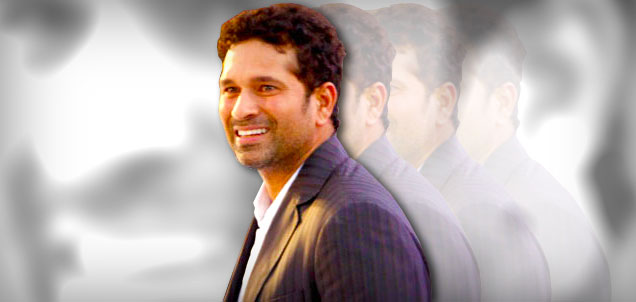
    This is the big weekend when he hangs his boots. When all the hype around his retirement and his 200th Test will culminate in what we hope is an exciting climax at the Wankhede over the next 2-3 days.


    The core age of the cricket viewing audience in India today varies widely depending on the format. It is 35-50 years for Tests, 25-40 years for ODIs, and 15-30 years for T20. Tendulkar’s loyal audience are largely from the first two segments. Which means that they either started watching cricket when he was already playing, or that they have seen his entire career, from the Pakistan series in 1989 onwards.


    I belong to the second category. My first memories of watching live cricket on TV are from the 1984-85 England tour of India. By the time Tendulkar made his debut, I was a cricket fanatic. I grew out of it to some extent around 1999-2000. Hence, Tendulkar’s performances in his first decade are well-etched in my memory, while the decade that followed is a bit of a blur, besides the 2003 World Cup of course.


    Which brings me to my problem. As much as I would want to relive those memories, and that footage (which I vividly remember, complete with commentary), I just don’t know what to do about it. There is information everywhere. Star Sports has four channels showing various things on the great man. News channels are doing 24×7 Sachin programming it seems. Social media is abuzz with links to articles, videos, cartoons and a lot more. Newspapers are coming out with special editions. It’s all there, but it’s way too much to make sense of.


    In the good old DD days, it was easy. If someone was retiring or passed away, DD would make a tribute programme. There was no guarantee on quality, but you knew where to find the tribute. The documentary tribute to Raj Kapoor they aired upon his death was a riveting one. Simi Garewal produced it about four years before the showman died, but came across as highly relevant on the occasion.


    Today, there is no particular Sachin programme that you can look forward to. Channels are not even promoting Sachin shows anymore. They are promoting Sachin the idea, the concept. But that does not translate into saying that at such time on such day(s), you can watch a great show on Sachin. So, we have to wait for the stand-out shows to go viral on Twitter and Facebook. Call me old-fashioned, but that’s still not my idea of watching TV.


    This information overload is an increasing phenomenon in general these days. All of us are missing out on so much content that we would have loved to watch, simply because we don’t know where to find it. There are TV guides and EPGs, but individual tastes are so diverse and complex, just “genres” are not enough to recommend shows to audiences.


    Borrowing from Krrish 3, what we really need is a ‘Dimaag wala filter’. An app or a website that can read my mind, find my ‘real’ tastes and preferences, and recommend very specific programming to me around it.


    It’s a technology challenge, all right. But if addressed, it can open doors for niche channels and cutting-edge niche content like never before.


    Meanwhile, if you know a good Sachin show airing on TV, please share the details of telecast.


    Shailesh Kapoor is founder and CEO of media insights firm Ormax Media. He spent nine years in the television industry before turning entrepreneur. The views expressed here are his own. He can be reached at his Twitter handle @shaileshkapoor


  • Why the media will miss Tendulkar much


    By Ranjona Banerji


    Is the media going needlessly gaga over Sachin Tendulkar’s impeding retirement? Or is this in the natural course of events, given the great cricketer’s tremendous influence on Indian life?


    In fact, it is hard to imagine how the media will survive once Tendulkar has retired. At least one week will be very difficult, given the range of our collective memory.


    1. The most upset will be those writers and journalists who have made a career out of slamming Sachin Tendulkar. Some have had the good sense to quickly bring out books on the subject before his retirement so they can make a little money from sales for at least three days. Although they had been calling for Tendulkar’s retirement for at least 10 years, it would actually have served their cause if Tendulkar had kept playing till he was about 53 or indeed, never retired at all.


    2. The secondmost upset will be those who have made a career out of Tendulkar memories. I saw him first, I recognised him first – well, those one can understand. And then there are spin-offs like I saw him last but I still knew he was great and so on. However, it is likely that these writers will manage to get leverage a little longer than the anti-Tendulkar brigade. Because nostalgia gives everything a nice rosy colour: many more books will be written about My Times with Tendulkar than How I Wish Tendulkar Had Retired At 53 So I Could Keep Bitching For Another Thirteen Years.


    3. Cricket statisticians will find themselves temporarily jobless as many records will remain unbroken or unchallenged for a while. There are only so many times you can mention “This is XX’s first Test match”. Actually, you can say that only once. Unless of course some other player decides to keep playing till they’re 53 or at least 40. Then the Anti-Tendulkar brigade can also jump on to that bandwagon and get some reflected glory. This ploy works best if the next player you target will be the one you had supported against Tendulkar. Like life coming full circle or a helicopter shot.


    4. Advertisers and sponsors will now have to find some other sure-shot selling smile, squeaky to non-squeaky voice, curly hair to non-curly and back. I would suggest that tennis sports goods, fast cars and rock bands can continue to use Tendulkar as a celebrity endorser. His large fan base (larger than the anti-Tendulkar base, much to their own disgust) will keep the cash registers clinking and chi-chinking away. Sports channels though can keep making programmes on Tendulkar. Retired sports greats make excellent fillers in between cars going round and round or people pretending to bash each other up.


    5. The band of Bengali sports writers who feel that Sourav Ganguly was done badly by Tendulkar in the Greg Chappell as coach days will now largely be out of sorts. They have to find someone else to feed their persecution mania. Since Ganguly has established himself as a very good commentator in English and Hindi, their best bet to feed their rage is in case Tendulkar becomes a commentator too.