Category: ADVERTISING

  • Smart move! Huawei ropes in Chetan Bhagat

    By Gulveen Aulakh

    India’s bestselling writer is entering unchartered territory, perhaps a first for any writer-the world of celebrity brand ambassadors. Chinese telecom equipment maker Huawei Technologies has roped in Mr Chetan Bhagat as brand associate for its devices such as smart phones and tablets, a senior executive told ET.


    “Mr Chetan Bhagat is a youth icon and he has changed the dynamics of the publishing industry. Our endeavour is to bring high-end technology at affordable prices. Our target audience and values are the same,” Huawei Devices India President Mr Victor Shan said. He refused to disclose the size of the deal. Industry insiders estimate it at nearly Rs 1 crore.


    Mr Bhagat-whose fifth book, Revolution 2020, is scheduled for launch on October 8-said he liked the concept of brand association. “They offered a brand-association in which I had no pressure to say nice things as such, unless I actually liked the product. I liked that concept,” he told ET in an email from Bangkok.


    <r Bhagat has been using Huawei phones for more than a month. The move has come as a surprise for brand experts. “I do not believe it (the partnership) gels, but it just might work. Companies make very odd choices, sometimes they click and do well,” brand consultant Mr Harish Bijoor said. He added that the deal gives hope for a different class of brand ambassadors and pave way for more cerebral kind.


    As part of his first endorsement deal, Mr Bhagat will launch Huawei’s new products including the world’s first Android 3.2-powered tablet, Mediapad, and Vision cloudphone, the world’s first smart phone based on cloud services.


    The tablet, scheduled for launch next month, will have electronic versions of Mr Bhagat’s books pre-embedded in it. Mr Bhagat will also be associated with all promotional and marketing activities of the firm across all media-be it digital, above-the-line or below-the-line campaign.


    Huawei, which plans to spend $3 million on promotions and advertising till December, has been struggling to build a positive image in India. Its image took a hit when the Indian government raised concerns that Chinese vendors could use telecom equipment they supply to snoop on the country and even launch cyber attacks.


    Huawei -the world’s second-largest telecom gear maker after Ericsson with 2010 revenues of $28 billion, or Rs 1.27 lakh crore – is now banking on Mr Bhagat’s power as an influential writer and motivational speaker to revive its image.


    Mr Bhagat will be Huawei’s brand associate for six months. “We will monitor the change in perception of the brand after the association, and then decide to extend it further,” Huawei Devices Director, Marketing & Solutions, Mr Anand Narang said.


    Huawei, which has been selling its gadgets in India for two years now, plans to become a more consumer-oriented company. In 2010-11, it recorded $490-million sales in the country and sold 12 million units including data cards, set-top boxes, CDMA and GSM feature phones and smart phones. The company targets $600-million sales this fiscal.


    It will seek to reach out to young consumers through new products and services over the next few months. Mr Bhagat will use these products and engage with consumers.


    “Chetan has a huge presence on Facebook and Twitter, with a combined following of nearly 2 million. He will engage with consumers on social media on his new book Revolution 2020, beginning from a contest on Facebook site this week,” Mr Narang said.


    Huawei is the launch partner for Revolution 2020. Huawei Devices Sales Director Mr P Sanjeev said that the company will consider the possibility of Chetan creating content for the brand, for instance, writing short stories that will be available for Huawei device users. The gear maker also plans to work with colleges where Huawei may offer some products at special prices .


    Source:The Economic Times

    Copyright © 2011, Bennett, Coleman & Co. Ltd. All Rights Reserved

  • The Anchor: Sanjay Tripathy on 7 reasons a marketer chooses an ad agency

    #1 End-to-end expertise and servicing. An advertising agency which provides a bouquet of services and is capable of creating effective 360-degree integrated communications campaigns is important, as classic one-dimensionaldvertising is becoming less relevant in the current environment.

    #2 Team credentials and clients handled. People form the most important part of an advertising agency, and their credentials and experience are a huge factor in deciding to work with them. The advertising agency needs to be evaluated to determine their expertise in handling different business categories, especially their experience of working on your type of business and if they understand the competition in your field. At the same time, it is important that the agency have some experience in other business sectors as it brings in fresh ideas and helps create clutter-breaking communication.

    #3  Size and scale of agency. It is important to ascertain whether the agency is adequately equipped to deal with the corresponding size of the client’s business in terms of creative, operational and technical resources.

    #4 International exposure. The more the agency has interacted with global clients and has experience in creating campaigns globally, the better. It helps bring in more professional working and a lot of fresh ideas.

    #5 Consistency in dealing. The ability of an agency to maintain consistency as well as transparency in dealing with its clients is very vital from a client’s perspective. It enables ease in dealing on a day-to-day basis and helps meet timelines and implement campaign plans more efficiently.

    #6 Strength in research. A strong research wing in an agency helps ensure that the campaign is backed by high sensitivity in terms of socio-cultural understanding and aesthetics while maintaining the brand philosophy. The tools that the agency uses in planning campaigns and analyzing the brand and competitors need to be scientifically prepared.

    #7 Balance between creative and business strategy. A path-breaking creative idea may not always be the best solution for a business problem. An agency which understands the importance of business problem-solving through communication is beneficial in the long run. Also, its ability to align with the long-term strategy of the client is important.


    Sanjay Tripathy is Executive Vice President – Head Marketing and Direct Channels at HDFC Life.

  • Gufic’s good medicine for MPG

    By A Correspondent

    MPG India, the flagship brand of Havas Media, has been awarded the media account of Gufic Biosciences Ltd (GBSL), a Mumbai-based biosciences company with a focus on pharma and personal hygiene products.

    GBSL operates across many categories in India including pharmaceutical and personal hygiene. The company’s key consumer brands are Roll-on, Shapers and Stretchnil. MPG’s appointment will extend through all its key brands including soon-to-be launched brand Relieve and Relax.

    Commenting on the win, Mr Anil Kamath, Vice President, Marketing and Sales at GBSL, said, The team at MPG showed a thorough understanding of the categories that we operate across. Given the nature of the brands and the high clutter in the space, it is not always easy to come up with innovative solutions, but MPG team did just that.

    Ms Anita Nayyar, CEO of Havas Media, India said, The personal hygiene industry is on an upswing given the consumer is getting more and more concerned and conscious both about health and hygiene. We are confident our product offering will add value to the business and our knowledge in the category will get enriched by working with Gufic.

    Mr Kunal Jamuar, Executive Director West, MPG India, added, GBSL not only have a portfolio of well-known brands but also have a great vision on how to take them forward. We are hoping to do some interesting work and set new trends with disruptive thinking.


  • Anil Thakraney: Brand SRK needs help

    Celebrities are brands. And just like detergents, condoms, noodles and cars, they need to build and nurture their brand image. Because that’s what ultimately decides their performance in the market place. People like to be associated with desirable brands. And that’s also the reason advertisers like to associate their brands with celebs. To have the values of the celeb brand rub off on their own brands.


    When I examine how Shahrukh Khan has been going about building his own brand of late, it kind of confuses me. Clearly the actor isn’t really thinking out here. Let’s first study his movie brand. Instead of competing with Aamir Khan, and experimenting with new forms of cinema, he seems to have made it a mission to target Salman Khan. Perhaps in reaction to the success the latter has enjoyed with his recent mindless action films. SRK is now taking his brand into the ‘Mine is bigger than yours’ space. Completely ignoring his own core brand strengths, which is the soft, vulnerable, caring, sensitive, romantic persona… the image that endears him to his fans… and is now trying to compete with a macho star on values alien to him. I really have a bad feeling about the so-called India’s most expensive film Ra One, and its debacle will hurt the SRK brand considerably.


    Next, his choice of brand endorsements and his performances in them. You’ll notice glaring fault lines here too. Not only is there no attempt at being discerning, which once again Aamir Khan is, SRK agrees to endorse just about anything that comes his way, and acts the same in every commercial, convinced the buyers will buy into whatever nonsense he does on the screen. Frankly, it’s embarrassing to watch him in ads for Hyundai i10, Linc Pens, Videocon and many others. There’s another cringeful ad he’s done with wife Gauri (it’s so silly, can’t even recall the brand name). Guess baniyan and chaddi brands are next up. If this continues, and his movie career stagnates, SRK will find the going quite difficult.


    Celebs, like all brands, must fiercely guard their value. So that it remains powerful, relevant and enduring. The hit-and-run approach won’t work. Guess SRK badly needs a brand manager.


    ***


    PS: Watch this brilliant ad from Pro Infirmis, a Swiss organization that supports handicapped people. THIS is the way to use emotion in advertising. A big hug for the creator of this advert.


    [youtube width=”400″ height=”300″]http://www.youtube.com/watch?v=zFWr-CKMWGY[/youtube]


  • Yes, the French do have designs on India!

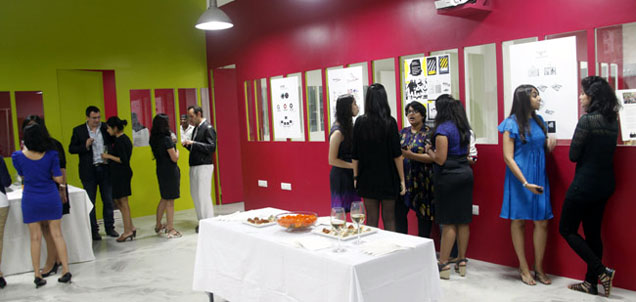
    Students and guests at the formal unveiling of ecole intuit.lab last week


    By Shubhangi Mehta

    École intuit.lab is a design and visual communication French school cofounded in 2001 by Patrick Félices along with Clément Derock and Frederic Lalande.

    The aim of the school has been to produce high quality professionals whose profiles meet the specific needs of the graphic design and visual communication sectors in India, France and across the world. With the newly begun school in India, the syllabus has been especially skewed to meet the professional demands of the visual communications industry in India and to tap the potential that design holds in the country.

    The average fee across various courses is 3.5 lakh annually. The institute will provide the students with high class faculty,French graphic designers which will provide the students an edge over others.

    Mr Ravi Deshpande, co-founder, école intuit lab, India,said, “Over the last few years we have seen a massive talent dearth. I thought of being a part of the solution rather than being a part of the problem. The school has been established to cater to and encourage talented students.”

    École intuit.lab through its students have built solid relationships with over 800 companies in France and other countries.

    The setting up of top French design school, école intuit.lab in Mumbai is a step in the direction of the marked improvement that is required in the field of education related to graphic design, art and advertising.

    Mr Rajesh Kejriwal, founder, CEO, KYOORIUS, said, “India really needs such design institutes; the China government is planning to open 500 design institutions across the country, Indian government should also  try and do something similar as the existing and upcoming institutes are expensive and not everyone can afford them. Hence a lot of talent will still be left behind without opportunities.”

    Ms Preeti Vyas, Chairwoman, VGC, mentioned, “These institutes are extremely important. If we put 20 more such institutes in our country, it will still be a lesser number. The courses are expensive but the kind of inputs, technology and faculty that goes into such institutes, it is impossible to have a low cost institute for such courses until and unless it’s a government funded institute.”

    École intuit.lab has achieved success by incorporating professional exposure in the academic curriculum – a much needed position that has been so far vacant, in the design and art education milieu in India.

    École intuit.lab through its students have built solid relationships with over 800 companies in France and other countries. école intuit.lab’s excellent success rate in finding work placements for its students makes it a real standard setter in vocational training for the visual communications sector.

  • Anil Thakraney: No Sahara for hockey

    Must say I am quite confused why the Sahara Group would want to invest in Formula 1, an extremely niche, up market, Page 3 sport. Sahara, at least to my mind, has always had the image of being the aam aadmi’s organization, and their association with Indian cricket for all these years is par for course. And suddenly, out of the blue, they tie up with Mallya’s UB Group, and invest a whopping $100 million in the F1 team.

    Yes, every corporate has the right to decide where it parks its monies. And I can understand Mallya’s interest in F1, not just as an extension of his own flamboyant, high profile personality, but because of all the booze brands he owns. However, in Sahara’s case, the F1 investment seems a bit out of character. Almost like a ‘wannabe’ decision, so to speak. How much value they’ll eventually get out of the association remains to be seen. And am not sure if Sahara will acquire the image they probably desire.

    But the real pity is this: One sport that’s crying out for serious investment in India is hockey. Not only is it our national game, it’s a sport that connects with the masses. It may be dying because of little support from the corporate sector and the sports associations (the players have to demand meager prize monies when they win big tournaments!) but it’s still the aam aadmi sport. And this is where a company like Sahara ought to have shown interest. Not just for noble reasons, but also because they can own hockey, promote it, and make it their own. And capitalize on it once the popularity grows again. In any case hockey, in terms of branding, connects well with Sahara’s image. (By the way, I am aware the group has pitched in with prize monies on occasion for the hockey players but it’s not the same thing as owning the sport.)

    The hard truth is this: US$100 million may have been invested. But F1 in India will always be perceived as a UB Group event.


    ***


    PS: Must read. An open letter to Barkha Dutt by a blogger. Good points on why social media needs to be taken seriously.


    Link: http://marchingonthesand.wordpress.com/2011/10/16/open-letter-to-barkha-dutt/

  • Cadbury’s Diwali message with a twist


    By Ravi Balakrishnan


    [youtube width=”350″ height=”250″]http://www.youtube.com/watch?v=Pl2xsSJbE3M[/youtube]

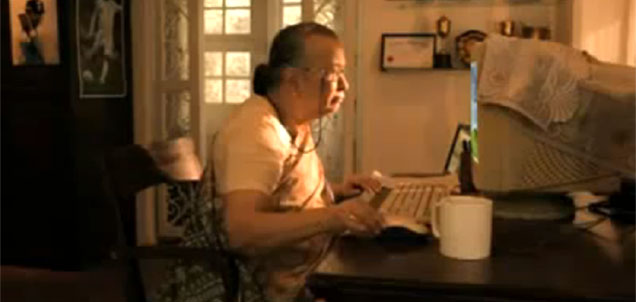
    Cup of coffee in hand, grim determination on her face an elderly woman struggles to turn on a decade old computer and struggles even harder to get online, spilling coffee over the keyboard. All the while a voiceover from her son intones about how busy he’s become, leaving him no time to ‘waste’ hanging out with friends (and, by implication, his mother), and why bother anyway when they can stay in touch via phone, chat and social networking? It seems like a fairly standard tearjerker for a HelpAge India style NGO. Except it is actually for Cadbury’s Celebrations; a range of chocolates specifically designed for gifting through the festive season.


    Celebrations’ previous ads have always been, well, celebratory. For instance, a sister shows up unexpectedly for Raksha Bandhan. And Diwali is a noisy backdrop to the commercial in which a young man bonds with the neighbourhood grouch. In ‘Lonely Maa’ though, there are none of these happy endings; no sudden ring of the doorbell with the son showing up, pack of Celebrations in tow. A courageous tack to take even if it is a bit of a downer.


    However, according to both marketer and agency, the new ad does not mark a radical departure from the central brand thought or strategy. The ad still ties into the line ‘Iss Diwali Aap Kisse Khush Karenge?’ (Who will you make happy this Diwali?). This time around, though, there’s a definite call to action, to provoke people into stepping out of the digital space. Says a company source, “We wanted to get people to physically meet the ones they want to make happy. There were many creative renditions, but we chose this one since quite often, our parents and elder relatives are not comfortable with the digital medium. The medium too does not convey emotion all that well.”


    Younger tech savvy consumers who spend large parts of their lives online were the main target audience. As a result, the commercial is an online exclusive and won’t be seen on television. Lonely Maa was seeded on the brand’s Facebook page, with links to YouTube. Says Mr Raj Nair, national creative director, Contract, who also stepped behind the camera to shoot the film, “It’s criticising the online medium while being on it. That’s hitting people a lot harder and driving the point home.” In its fifth day online, the commercial had garnered 14,112 views at the time of going to print. Both Contract and Cadbury are counting on the ad going viral. If marketer and agency are to be believed, it is particularly popular with the NRI audience who are unfortunately not the immediate target for the brand.


    The few comments on YouTube are full of presumably negligent children lamenting the error of their ways and promising to be home for Diwali. And that’s as per plan according to the company source: “While the mother in the ad is struggling, she still has a positive attitude. Unless we made it a bit provocative, the response to the call for action wouldn’t have been there.”


    For something built around the insight of technology as an alienating force, ‘Lonely Maa’ does evoke an early Nokia ad featuring a similarly lonely mother sifting through photos of her son. Mr Nair says he doesn’t recall the Nokia commercial at all but adds: “I leave it to people to draw their own inferences. This is a bigger thought: telling people to go and meet each other (preferably with a box of Celebrations). The non-technology aspect distinguishes it.” Apart from the commercial, Cadbury Celebrations also has a special Facebook linked programme lined up, to fly people home from Mumbai to Delhi in time for Diwali. So, to all the Lonely Maas out there; be careful what you wish for.


    Source:The Economic Times

    Copyright © 2011, Bennett, Coleman & Co. Ltd. All Rights Reserved


    Image: Grab from TVC on YouTube

  • First on MxMIndia: Pioneer bags BEST tender

    By Nibha

    Pioneer Publicity has won the BEST (Brihanmumbai Electric Supply and Transport Undertaking) tender for advertising rights on single and double-decker buses. Established in 1873, BEST operates one of India’s largest fleet of buses.


    The company has won the rights for three years – 2011-14 – for about 4050 old buses in all.


    Confirming the same, Mr Sunil Vasudeva, said on the win, “We worked for BEST from 2002-2008,after that the business went to Bright Outdoors. Now, we have the business again with an account size of 85 crore.”


    Prior to this development, Bright Outdoor had owned the ad rights to the buses, but, as reported by MxMIndia, due to heavy losses it had withdrawn from the tender.

  • Must make OOH likeable: Daniela Krautsack

    Mainstream advertising is going non-traditional; print media has caught up with viral; it is a manifestation of media in which the logical conclusion seems to be 360° surveillance.

    How does the consumer cope with the futuristic outlook of a media world in which everything seems to be public and nothing is private any more? Does the media industry’s guiding light of ‘branded utility’ justify an unlimited use of hi-tech chips and codes? Who are the consumers that voluntarily jump on the ambient media bandwagon?

    Daniela Krautsack, Media Innovation Strategist, Managing Director, Cows In Jackets, talks about today’s global media trends and visions with a critical eye on their creation, their degree of popularity and their lifespan in an interview with Nibha.


    Q: When did you discover your passion for the non-traditional form of out-of-home media?

    It was about a decade ago when I moved from dreamy but advertising ‘old-school’ in Vienna to London. The company transfer within the MediaCom group offered me three simple things: to watch, listen and learn how international media strategy & co-ordination is done. Today, when I look back, I know how lucky I was. “To be at the right time, at the right place.”

    The ‘Find Your London in Yellow Pages’ campaign got me ‘in touch’ with many new forms of media when I travelled from my home in Belsize Park to work in Soho. From the moment that I walked into the station to the moment I walked into our office door, I was touched by ‘The yellow pages points’.

    The company had advertised on the backside of my ticket and even on the wallet that protected it. The entire train and its seat interior were covered in bright yellow design. Never having experienced transit media in this scope before, I felt intrigued to find out more. That was the moment when my exploration started.


    Q: Does the OOH media industry’s guiding lights of branded utility justify an unlimited use of hi-tech chips and codes?

    I would like to define that term ‘branded utility’ first: it means that brands or ideas are genuinely useful to the people they touch. So, how useful are codes and chips and do they ‘touch’? The integration of codes in OOH media in countries such as Japan where I experienced the use of QR (= quick response; a two-dimensional bar code) and other 2- and 3-dimensional codes years ago has not spread considerably across the world – yet. My experience is that the percentage of mobile phone users that have an application installed which allows reading a QR code, has not even in Japan reached the mass. The use outside of Japan is still insignificantly small in order to consider an OOH campaign that would achieve reasonable results. At present, QR codes can be rated as the best and most effective technology for mobile data capture. What I like about it so much is the thought of reducing OOH media to its core function, the visual transfer of a brand and product image with the focus on “image” rather than “text”. Including a QR code within the design of an advertising campaign that uses billboard or any other ambient OOH form allows a “pull” interaction by the recipient of the message. QR technically allows future billboard designs to use significantly less space to transfer lots of information. If interested in the message, people will connect.

    So, returning to your question: Every way that ‘helps’ the community – and this touches current trends such as “economy of time” symbolizing our aim to efficiently manage time – will be embraced and appreciated. I personally do not fear an unlimited use of this code technology. At the moment companies use codes and chips within their communications strategies predominately to play with people’s curiosity and the media’s enthusiasm and willingness to publish these ‘media-first’s’.


    Q: Who according to you are the consumers that voluntarily jump on the speed media bandwagon?

    I am always quite amused to see how small the number of people is that jump on the media bandwagon. When I visualize this ‘future train’, I only count the number of passengers with two hands. I have just been to a party with a crowd of 20- to 40-year olds, people that you could describe as pretty normal when it comes to adopting trends such as the latest technology and fashion and during a discussion, someone asked: “What is a podcast?” I looked around, astonished to experience this lack of contemporary knowledge. I had to realize that only a handful of people knew that a podcast is a word fusion of the word iPod and broadcast, that it is a digital media file and that podcasts allow you to download or stream content about any topic you care about.

    The consumers who are the clever cookies when it comes to being updated of what’s going on around the world in society, culture and technology are those who jump on. And we don’t necessarily only speak about the ‘young’ crowd. They just adapt easier to new technology because they don’t think about it as much as an older, more experienced media consumer.


    Q: According to you how does the consumer cope with the futuristic outlook of a media world in which everything seems to be public and nothing is private any more? Panopticon or individual freedom of expression?

    When I observe the mood and listen to the opinions of people who share their thoughts about the ‘media’ world we live in, I notice that they appreciate the increased opportunity to express themselves, but they are also aware of being monitored. This place can be visualized as a panopticon. We still have a choice to publically plead for a higher sensibility and reluctance to give out personal data to somebody we do not know. The careless behavior of our society to wildly publish every intimate fact bears a huge risk of violating our private sphere.


    Q: What has been your greatest challenge in ambient media?

    Convincing clients who were very sceptical towards this media form. The other one was the launching of a communications agency, ie  entirely dedicated to ambient media and non-traditional strategies and that too at  a time where taking the risk and trying out new things in communications planning wasn’t fashionable.


    Q: How do you define third place marketing and creativity in the OOH media?

    While ‘first places” represent “the home”, a place that I decorate and feel comfortable living in and ‘second places” the ambience of work, ‘third places’ are landmarks with a core attraction of such extraordinary extent that seeing them is an absolute must; thus talk-of-town organically develops. Third places can be museums, wide-open spaces but also supermarkets and shopping malls. They come to life with light, video projections and special installations. These venues feature an emotionally charged ambience and for which there is no admission fee. Without creativity, I dare to say, a third place doesn’t exist. Creativity is one of the cornerstones of the third place foundation. And OOH media logically benefits from the strength of such an eye-catching place.


    Q: What all factors do you take into account when you make a media strategy, which involves innovation in the ambient media?

    • The objectives of the campaign

    •  The demographics/psychographics, moods and opinions of the target group

    • The brand status

    • The competitors’ activity

    • The creative execution

    • The budget

    • Innovative technologies or never used before ideas, techniques or material

    • A measurement tool / method


    Q: According to you what is the approximate share of ambient media advertising in terms of ad spend when compared to the total ad spend in the OOH media?

    Considering the different definitions of ambient media (in the UK, the media industry does not even use this term anymore, they call it non-traditional OOH or brand experience or shopper marketing or stunt, etc) worldwide, I can only give a rough estimate. I just looked at the OOH share in Austria, the UK, Mexico and India and it is quite similar, roughly between 5.5 percent to 7.6 percent, Mexico showing the smallest share and India the highest OOH share.

    While ambient media is a category still not being monitored in most countries in the world, the UK reports approximately a share of 6 percent. This however does not consider guerilla, ambush and experiential marketing, sampling, promotions and events. It is clear though that this is a category that will continue to grow.


    Q: How do you see the scope of ambient media in South-East Asian countries and Africa and where does India stand among all?

    Overall speaking there is a large potential for ambient media throughout Asia and Africa. Whereas we experience a counter movement by ‘the new’ traditionalist opinion leaders in cities across Europe and the United States that plead and demonstrate for an advertising-free ambience, the outdoor category overall is growing. We are challenged to create OOH media not only in a more visually attractive way but also in one that is considered as a “useful” platform again, e.g. as an information platform that hopefully focuses on core images and incorporates technological measures (e.g. code technology) to allow information to be picked-up when needed. The important model for the future is to position OOH media as “a likeable platform” that interacts with the life of city inhabitants; media to stimulate opinions and thoughts, to inform and to entertain.

    Due to its high level of ambient media activity, Thailand has become a role model for non-traditional media in the Southeast-Asian market. Some of the award winning ambient media campaigns were developed in Bangkok and rolled out across Asia. According to my own observation in India as well as the opinion of local media experts, the potential for ambient media in India is considerable. The biggest challenge for India is not the lack of investment or funds – it is about finding clever solutions to scale ideas across India and the increase execution opportunities outside main metro-cities.

  • Exploiting OOH’s true potential: Mukesh Manik

    By Nibha


    If developing strong and reputed brands makes good business sense, and if brands are what the consumers relate to, identify with, and buy, then it is important for marketers to exploit the true potential of billboards and other OOH media.

    More on this in an interview with Mukesh Manik, M-I-C (Man-In-Charge) at Encyclomedia Networks, the only Indian OOH media creative shop that is currently headquartered in Mumbai, India. It is represented in four markets under joint venture agreements – Australia & New Zealand out of Melbourne, Australia (www.mediatag.com.au), Latin America out of Buenos Aires, Argentina (www.encyclomediala.com) with offices in Guatemala and Mexico, Kiev, Ukraine and Jeddah, Kingdom of Saudi Arabia (www.encyclomedia.me). Besides, Encyclomedia is also represented through exclusive distribution contracts in Bangladesh, Kenya, Nigeria, Pakistan, Croatia, Kazakhstan and Hungary.


    Excerpts from the interview:


    Q: How has your journey been in the media Industry till date and what is it that excites you about billboards?

    Media and advertising has always intrigued and amused me. A message is sent out to the masses repeatedly over a period of time, and that this message has a multi-dimensional impact on the choices that are made by an individual and the perception of a product is fascinating. Billboards are my favourite as more and more people are spending time out of home. They also present their own set of challenges as they have to deliver a message while the viewer is moving in most cases at speeds of 60 km/hour. This gives just a few seconds to catch the attention, deliver the message and assist brand recall. The trick lies in the design which should be able to engage the viewer in those critical few seconds while there are other distractions like traffic, environmental landscape, music, etc. A well-designed billboard is easily one of the most powerful, consistent and effective means of communicating to an audience on the move. Marketers still have to exploit the true potential of this medium and this in itself presents an opportunity like no other.


    Q: What role do you think innovation plays in OOH media? And in the recent past can you name any campaign which can be termed as “really innovative”?

    Innovation isn’t just about using cutouts and neon, though I admit that they are effective at times. Innovation lies in understanding how best to use the tools available to enhance the billboard creative, to create an impact that has a lasting recall. Truly innovative billboards are remembered years later, much after the campaign is over. In the recent past, one of the most innovative billboards I have seen was the Barclays Bank Billboard which just carried their logo on a white background. The innovation was in its simplicity and ability to make the announcement that Barclays is now in India.


    Q: How does one justify the cost of innovations in terms of both the recall value and the rise in the market share especially when we don’t have any posting technology at place to justify the effectiveness of the OOH campaign?

    “Innovation” is perceived as being expensive but in actuality it is quite the opposite. In the Barclays billboard mentioned above, there was no additional cost of materials, cutouts, neon, etc. but it still had the desired impact. Innovation drives recall, recall fuels sales. Advertising is meant to provoke a response. If the ad is forgotten, it cannot possibly invoke a call to action. Though there is technology available to measure the effectiveness of Outdoor advertising, the true measurement is in the after effects of the campaign. Product advertising is easier to measure compared to a service as the advertiser can just take a look at their sales graph.


    Q: What difference can be made in terms of ‘Innovation’ for Outdoor (Traditional Media) and for Indoor (Alternative Touch Points)?

    I believe that a media plan consisting of an Outdoor campaign and an effective Point of Sale is sufficient to achieve sales objectives for a brand. Marketers need to appoint specialist agencies for the different media formats they advertise on. This is easier said than done. The creative and innovation has to be across all the formats. An agency specializing in TV commercials and Radio cannot possibly be expected to come up with innovative creative solutions for an Outdoor campaign.


    Q: According to you is accountability the factor that is keeping the clients at bay from the OOH Media, when it comes to the media plan? And do you think that the clients are ready to experiment with the real time innovations and not just cutouts and neons in the near future…?

    Clients are increasingly accepting Outdoor as an independent medium. The double digit growth in the Outdoor advertising industry confirms this trend. With over a 100 TV channels and hundreds of print publications, the chances of an advertisement being missed is higher than ever. Outdoor advertising addresses that issue easily as a good outdoor campaign cannot be missed when people are on the streets. The industry will mature with the growth in Outdoor spends. Cutouts and Neon are considered innovations in the absence of specialist Outdoor design studios.


    Q: How do you rate the change in the Indian OOH industry, especially in the past 3-4 years…? And according to you, what is it that will make OOH media more than just a reminder medium?

    The more clients see pathbreaking billboard designs by specialist agencies, they will demand the same for their brand as well. This will lead to fantastic creative innovation in Outdoor advertising and billboards will not be considered a poor cousin of mainstream advertising. There are many brands even today that successfully use only Outdoor Advertising to communicate their message.


    Q: How do you see the n-sync between the agencies, the media owners and the statutory authorities? And who according to you should take the initiative to improve the OOH industry overall?

    To expect the media owners, agencies and statutory authorities to come and work together is far-fetched. The change has to be from within. I believe that if media owners offer international standard media formats and quality media displays to agencies, it will encourage better designs and print quality. This in turn will change the cityscape for the better. It has already started to happen with the introduction of street furniture, modern bus stops, etc.


    Q: What according to you are the essentials of outdoor advertising?

    There are five essential skill set components in outdoor advertising.

    The first essential skill is creativity, the art of being innovative and imaginative. We must apply creativity to everything we do – tirelessly exploring innovative ways to communicate the brand USP in a meaningful, relevant way. The message has to break through and resonate with the consumer to be successful. Consumers are not waiting for your message. You must deliver it to them in an unexpected manner. An effective creative has an after-shock. It will be felt long after the campaign is over. When that happens, you’ve done your job. That’s creativity; you can’t put a price on.

    The second skill is being media-savvy. With the media fragmentation increasing exponentially, each medium must be understood for what it is really capable of delivering. It must be targeted precisely and assessed with the end user in mind. As with the creative, media planning and placement must build the clients business.

    The third is unyielding commitment. You are more than the agency; you must be an evangelist, preaching the virtues of your client to your staff, your client’s staff and public. We must be committed advocates as well as dedicated business partners. The entrepreneurial approach that we apply to each of our client’s business must be evident in every phase of the advertising development, from planning to creative to execution.

    The fourth essential skill is discipline. At Encyclomedia, we assist clients in focusing on the compelling, differentiating selling points that include consumer consideration. We must never lose sight of that focus as we move from creative development through media planning and execution. We seek to reach the targeted consumers with an effective, focused communication to which they will respond.

    The fifth is accountability. The bar is set with the client’s business objectives. Then we raise it a few notches higher. Our philosophy is the image-building and branding must always be balanced against the need to deliver on the bottom line. Advertising in Outdoor is a mean to an end, not an end in itself.


    Q: What’s your take on breakthrough ideas in the OOH domain, especially in terms of the changing scenario?

    Breakthrough ideas might appear to be instant or impulsive, but they are not. They are based on sound strategy, outstanding visuals, and the correct application of timing and media. The art is in ensuring that all elements of communication work together, so that the end result is more powerful and effective. It’s like conducting a symphony orchestra – all the instruments working together, the timing just right to make beautiful music. In outdoor advertising this is a total business solution.

    We’re a very visual audience. The world is changing in so many ways. Today, television shows and movies are quickly clipped, with constant talking and constant cuts. There are no more long scenes. In outdoor advertising one must understand that this is how people consume information, so one must work to bring them in, but then your campaign must nurture them and be there for a long time. Remember that an outdoor medium is not a “speaker’s point”.


    Q: And about the core component of the brand message?

    It is important to understand the life cycle of a category, a brand, and a product to take a brand to the next level and drive long-term success. New brands must establish a niche. A mature brand must find new life, possibly by re-inventing itself through extension or by creating a new identity that connects with today’s consumers.


    Q: Do you think the budget affects creativity and deliverables to the client?

    Outdoor advertising will always, like any other advertising, be dependent on the brand’s budget to some degree. Having inadequate money to spend puts undue pressure on the advertising. Whether you have the budget or not, the advertising must be truthful, relevant, eyecatching, memorable and downright pleasing; only then will it go through to mind and memory of the consumer. Smart advertisers know that outdoor advertising helps develop brand awareness, and they select a specialist outdoor design and production agency to deliver the job.


    Q: What’s the key to your success as a specialist OOH creative agency?

    To be successful, you must be involved. You must take the time to learn your client’s business and brand attributes well. Let the client know that you care as much about the business as he or she does. Analyze the business, its chief competitor its unique culture, mission, vision and trends of the category it’s in. Most importantly, stay focused on brand attributes upon which the client can build. Be single-minded, literally. Don’t throw many attributes out there in the hope they’ll take away just one. Be certain the one is the one you want them to take away. If you don’t know your client’s business intimately, you are likely to focus on attributes that aren’t really important to the consumer, often at the client’s request. It’s your uncomfortable obligation to be honest and say, “That’s an attribute that has no meaning to the consumer.” Recommend what is right for business, what is supported by logic, research and solid, strategic thinking; that which differentiates your brand from the competition. Only then can you communicate in a compelling manner, cut through the clutter and attract interest and attention.
  • J19 wins rights for Jet buses

    By Nibha

    J19 Max (Jash Media And Communication Pvt Ltd), an OOH agency, recently won the advertising rights for three years for the 96 on-ground Jet Airways air transfer buses that ply within 15 major airports in metro and micro-metro cities across India, from 2011 to 2014.

    In an exclusive chat with Nibha of MxM India, Mr Sunil Gohil, Director J19 Max, said, “We have recently won the advertising rights for a period of three years, and this includes both bus grab handles (which was earlier with Atin Promotions) and contravision running feet of right, left and rear panels inside the buses, which ply across all the 15 major airports, including Mumbai, Delhi, Bangalore, Hyderabad, Chennai and Goa.”

    Mr Gohil added, “The contravision will be executed for the first time inside the Jet Airways a/c Tarmac buses where a 6”-high tape will be offering a branding space at the right, left and rear inner panels inside the coaches. Apart from that each bus will continue to have 25-30 double side grab handles with a display size each of size 5”x3”. And, at most airports, the Jet Airways Terminals have no aerobridge facility, so all departing and arrival passengers pass through these coaches. Thus, we shall be catering to double-digit-lakh eyeballs per month.”

  • First on MxMIndia: Slowdown forces Bright Outdoor to give up BEST bus biz

    Story: By Nibha


    Bright Outdoor Advertising, Mumbai’s premier OOH Media owner has withdrawn itself from advertising on Mumbai’s BEST (Brihanmumbai Electric Supply and Transport Undertaking) buses and thus a fresh tender will soon be up for bidding in the next month.


    Bright Outdoor CEO Mr Yogesh Lakhani confirmed the development to MxMIndia, saying, “Due to huge losses, we’ve given it up.” Industry sources tell MxMIndia that since the amount bid to win the tender in 2010 was very high, Bright found going the tough given the slowdown in adspends in the outdoor domain.


    It may be noted that in November 2010, Bright Outdoor had won a 3 year tender from Pioneer Publicity for an upwards of Rs 120 crore for all the non-airconditioned BEST buses in Mumbai