Category: ADVERTISING

  • AdBuzz by Prabhakar Mundkur: Manyavar makes a come back


    By Prabhakar Mundkur

     

    Prabhakar MundkurManyavar is clearly the darling of celebration wear.  But when it featured Alia Bhat in an ad which was forward-looking by suggesting that giving away the girl in marriage or Kanyadaan is sexist and regressive, the ad angered the public. Further, Manywar suggested that the age-old practice must be named Kanyamaan adding fuel to the fire. But no right-thinking individual could deny the patriarchal nature of Indian society.


    However, Manyavar has managed to come out of that temporary setback. What with the wedding season reaching its peak in the winter months, the brand could not afford to slow down. So, the new string of commercials features Ranveer Singh.


    While the campaign features on the groom (Ranveer as dulha), it also showcases the baaratis who also have to be well-dressed. Manywar has a full range of celebration wear; from exquisite sherwani to Indo-westerns classic kurta jackets to matching accessories. Being a dulha of course means all eyes are on you.


    Personally, I felt the commercials lacked a real idea. All it did was captured a realistic wedding situation with the focus on Ranveer. So if Kanyamaan had a strong idea about making a comment on society, these commercials are pure entertainment – music and dance. But they seem to have captured the imagination of the public all the same.


    Also, their tag of #ManyvarAaGaya was carried out throughout social media. Influencers on Instagram prompted the dance moves to the same music as the commercials. The copy says

    “ Hey grooms and baaratis,

    When the beat drops, #DoTheManyavarMove

    Show your moves and get ready to set the dance floor on fire, kyunki

    @manyavar

    #ManyavarAaGaya


    View this post on Instagram


    A post shared by Saorabh Rajnish Choughule (@mesaorabh)


    Another Instagram post said:

    Listen up grooms and baaratis,

    Let’s burn the dance floor and #DoTheManyavarMove

    Aap bhi try karo aur dikhao apna swag, kyunki #ManyavarAaGaya


    View this post on Instagram


    A post shared by Rohan Mehra (@rohanmehraa)


    What it has certainly managed to do is create awareness of the approaching wedding season and prompting consumers to be ready for it with their attire.


    And while the ads have no real idea, Manyavar has made people forget their angst against the Kanyamaan ad and the brand has moved ahead with their happy string of commercials announcing the wedding season.


  • Truecaller – Jamming the Scam Calls


    By Prabhakar Mundkur


    Prabhakar MundkurPerhaps in any other country, Truecaller would not exist. Because other countries respect the privacy of their citizens. I recently spent a month in the UK and my family did not get even one unsolicited call.


    Unfortunately, in our country, all our details are an open book. We all no doubt get at least a few scam calls a day. If they are not scam, they are at least greedy marketers who are aggressively calling you to sell their wares. I have noticed a new trend now. Some of calls are mechanised and as soon as I pick up the odd unknown caller, a pre-recorded voice is trying to sell me something. These recorded calls in many ways are the most irritating because you can’t be rude and insult the mechanical voice as you can do with a real person at the other end.


    It is not only our phone numbers that are available freely. Our car registration numbers are available not only on the official Government app Parivahan but on a score of other private apps. At least the government app tries to hide the complete details of your name, but the private apps don’t even bother to do that.


    If that were not enough, our car insurance details are also an open book. I get a score of emails from various insurance companies every time my car insurance is nearing its expiry date. Recently, I read about a well-known person who got scammed on life insurance. The victim had an insurance policy that had lapsed in 2014. The scam caller called the victim and offered to not only reinstate his policy but offered to redeem the policy, trapping the victim who could naturally do with a little more money. It is only when he reached the end of the call and the scammer started asking for his bank details and offered him an OTP did the victim realise that it was a scam call. These activities are being done openly in our country in spite of the fact that both telephone calls and insurance have government entities supervising the industry – IRDA for Insurance and the TRAI on telecom. It is strange that these government bodies are doing nothing to protect the privacy of the Indian citizen.


    But coming back to Truecaller. I was in the UK and I must have received at least 30 scam calls. Thank you Truecaller because I would immediately get the notification that they were scam calls and I could safely leave them alone.


    Though no one is writing much about it, I also like the Truecaller advertising. For one, it is entertaining. And they seem to have proved me wrong that Indian advertising has lost its humour. Truecaller uses humour to show how the app can frustrate the scammer. It also demonstrates the stages of the scam and makes fun of the account numbers and OTPs that scammers normally demand as the call progresses. Some of you may remember how Netflix exposed the entire process that scamsters employ in their movie on Jamtara – Sab Ka Number Ayega. 


    Truecaller has in some ways also exposed the process of the seamster but with a humorous twist. I particularly liked their Diwali ads. I believe scam calls are at their highest during the festival seasons because this is when most people are looking for deals and are therefore most vulnerable.


    I also thought that their sign-off line is quite interesting Scam ka Jam is quite appropriate.

    Well done, Truecaller. Here is wishing you the best in protecting Indian citizens from scams.


  • Advertising and the Two Indias


    By Prabhakar Mundkur


    Prabhakar MundkurAdvertising like the other arts of cinema, music, is the perfect mirror of an emerging society. Often the arts can lead society, and at other times, it may just be a mirror of where society is today. It’s important for a brand to constantly search for cues from our daily living. So, a brand can often be a mirror of where we are but equally a brand may lead society into their own future.


    But advertising like cinema is good at constantly exploring emerging societal trends. Of picking up something that exists today but may not still be big. I think it is brave for any art to pick up an emerging trend that is not necessarily popular or fits societal norms. Titan is one brand that comes to my mind which is constantly leading from the front. Unfortunately, it has also meant that it has often come under fire for being experimentative. You will remember how it got trolled for the Tanishq ad last year which showed a real situation which revolved around an inter-faith couple and the husband’s family. One can’t deny that inter-faith marriages do exist in India and perhaps they are only growing. But that ad was from one of the Indias and trolled by the other India.


    Another ad that got into trouble with one of the Indias, was the Manyawar ad featuring Alia Bhat. Because of a play of words that the ad engaged in where the ritual of Kanyadaan was interpreted as Kanyamaan.


    And now comes another ad from Tanishq again in the area of marriage and relationships. And I can’t help feeling that it has done a good job of appealing to both Indias. Or has is?


    The conversations between the couples in the ad are very real, honest and portray the trust and confidence that two partners can place with each other by sharing their innermost doubts, desires and thoughts with each other. But equally I think it portrays a certain equality between a man and a woman in a relationship.


    For years, we have portrayed the Indian woman as subservient, something that is backed by the new GenderNext report (https://ascionline.in/gendernextreport/2/index.html) from the ASCI which says:


    “Women being featured in care-taking roles, placing the good of the family and friends as their primary focus and concern

    :: Women being targeted for beauty products featuring an unrealistic and unobtainable standard of beauty

    :: Women being informed and educated by the voice of a male authority figure”

    The Tanishq ad I thought breaks the traditional stereotype of how women have been portrayed in advertising. It is steering the portrayal of women in a very positive direction, while simultaneously exploring the deep relationship and trust that life partners can place with each other.


    Is the real India like this one may ask? Yes and No. I think, that in urban centres we can see man-woman relationships like the ones in the ad, but I can’t help feeling that as we move down the population strata, it may still be quite unrealistic.


    This ad may still be appealing to only one of the Indias and most probably this is the Tanishq target audience. What is different and perhaps a lesson for advertisers in the future is that it is possible to talk to only one of the Indias without upsetting the other!


  • Are we Losing our Sense of Humour?


    By Prabhakar Mundkur


    Prabhakar MundkurHumour is a powerful communication device if used in the right way. Film, advertising and the other arts are often a mirror of society’s interests, attitudes and behaviour. As Ogden Nash once said: Life imitates art far more than art imitates life.


    Oscar Wilde affirms that what is found in life and nature is not what is really there, but is that which artists have taught people to find there.


    If a cool-headed Martian were to descend on to us to examine the state of humour in our art he could possibly find that we are probably losing our sense of humour. In fact no one is laughing these days, barring the laughter clubs that I encounter on my morning walks. And even those are forced laughs because there is actually nothing to laugh about.


    In Indian cinema, comedy was a central part of the Bollywood industry of earlier years. Look at Bollywood’s Jaane Bhi Do Yaaro. Never before was there such a great team of talent together. Kundan Shah, Om Puri, Pankaj Kapur, Bhakti Barve, Ravi Baswani, Naseeruddin Shah and Satish Shah to name a few.


    If Bollywood is no longer producing comedies, humour which always been a key way to communicate for advertising has nearly all but disappeared. The advertising figures of speech are very much like grammar isn’t it? There are just a few figures of speech that advertising plays around with.


    First there is the Torture Test. Where a product is put through strenuous and extreme conditions to prove it’s a good product. Take any tyre advertising and this is easy to see while the ad will put the tyre through extreme conditions like potholes and rough terrain.


    Then there is Hyperbole. Where you take a product attribute and exaggerate it just to make a point. You don’t expect consumers to literally believe it, but it helps to accentuate a particular point about a product.


    Another ploy that advertising uses is the Parody. The Parody uses humour to make a point about a product. It entertains them. It helps to sell a unique attribute of the brand.


    This is what I am missing now in Indian advertising. Commercials are becoming too serious and striving for a deep emotional response rather than entertaining people. And often portraying too much reality is getting advertisers into trouble as we have recently seen, with advertising getting trolled and ultimately having to withdraw their commercials.


    Look at some of the parodies that were created in yesteryears. What stands out amongst them and is relatively more recent is Mentos. I am just wondering why the ad industry is not attempting any more advertising in this genre. Another common ploy is Juxtaposition. Where you take opposites to make a point. Big, Small – Black, White, etc.


    Then there is Personification. This is very common in Indian advertising which is constantly using celebrities in the hope that some of the qualities of the celebrity might have a positive rub off on the product being advertised.


    The last category of advertising uses A Moment of Captured Reality. Attempts that fail are called Slice of Life.


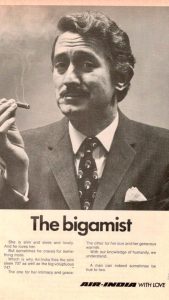
    How Air India used humour in its ads

    All of Air India’s advertising was really based on humour. It was the Maharajah having a laugh at current events both in India and overseas. Which is why an Air India hoarding would always bring a smile to your face. Even advertising without the Maharajah employed humour as a ploy to make a particular point about the airline.


    Stand-up comedy is relatively new to our country. Maybe just a little over 10 years old. Although audiences are relatively small, we have proven that we are very close to the global standard of stand-up comedy. Unfortunately, our comedians seem to be getting into trouble with the law all the time.  This is unlike other countries where comedians have a free rein to entertain people. Which leads me to the conclusion that perhaps we can no longer appreciate parody, and we have lost our ability to laugh both at ourselves and at others.


    So, coming back to the question that I started with. Are we losing our sense of humour? I certainly hope not. If we are, then it’s time we did something about it.


  • Prabhakar Mundkur: Mechanical watches – the new piece of jewellery

    By Prabhakar Mundkur


    Prabhakar MundkurThere was a time when mechanical watches were considered the simpler and cheaper option to buying a watch. When I was growing up to have an automatic watch was considered superior and expensive. Then of course came the quartz watch which was supposedly more accurate and save the change of a battery every few years, was supposed to work tirelessly forever almost. In fact quartz watches didn’t really cost much more because they had fewer guarantee claims, since they were almost fault-free. Also, the amount of labour perhaps was much less than a mechanical watch or one with automatic movements.


    My first watch was a mechanical and it was an HMT, those considered the pride of India. If I am not mistaken, they cost about Rs 500 those days in the 60s. Over the last few years, I have been collecting the old mechanical HMT watches just to relive the magic of mechanical watches. My first project was to restore my father’s HMT Jubilee watch which was also probably bought sometime in the 60s.


    Then a couple of years ago I noticed that the quartz and even automatic watches were no longer as fashionable as they were once upon a time and the clock had wound back to the mechanical watch in terms of fashion and exclusivity. Rolex for example introduced mechanical watches a few years ago. And they were not cheap. In fact, the price reversed your opinion that mechanical watches had to be cheap.


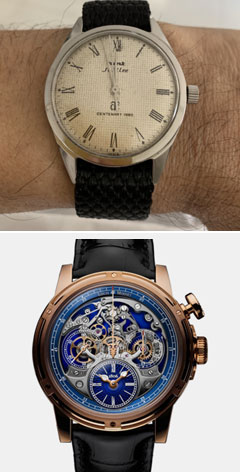
    They were more expensive than quartz watches. The Louis Moinet mechanical on the left, for example, costs only about Rs 45 lakh!


    Titan has done well to cash in on this trend of mechanical watches and have just launched their own range of mechanical watches in line with the global trend.


    Again they are not cheap. The first watch I saw on their website was Rs 195,000. Which I think is a pretty steep price for a Titan given that the brand does not carry the same attraction as better known Swiss watches.


    But mechanical watches are labour-intensive, handmade and produced in smaller quantities, making it more expensive to manufacture. The new TV spot highlights the inventiveness of mechanical things.


    The story is about a damsel in distress on a lonely mountain road when her tyre gives away. Prince Charming in the usual formula for such stories passes by and noticing the damsel in distress and immediately starts to fix the girl’s bike. He pulls out what looks like a twig from the grass nearby and all the viewer can guess at this stage is that he is doing something to the wheel. Pull back to reveal that he has attached his front wheel to form the rear wheel of the girls cycle. A nice element of surprise there.


    As a cyclist for many years I have never known anything like this to happen, in fact if one were to actually attempt this mechanical engineering feat I guess one would need a lot of tools (unlike our protagonist who tightens nuts with his bare hands). But I suppose it is eminently possible.


    The man and woman then merrily cycle away with the Titan baseline for mechanical watches ‘Move your world’. The spot is nicely done. The fact that the couple wasn’t carrying the damaged tyre and seem to have just left it behind, is of course creative licence. All in all, I thought a good TV commercial that explains the ingenuity and labour involved in a mechanical watch with the cycling metaphor.


    Someone once said that a watch over $200 is a piece of jewellery. The Titan mechanical is definitely a piece of jewellery.


  • Wunderman Thompson: Pinning the tail on the donkey


    By Prabhakar Mundkur


    Prabhakar MundkurSir Martin Sorrell when asked what he thought of the Wunderman-JWT merger had once used a euphemism in his characteristic style when he said: “So in a way, and I will probably be chastised for saying that, but Wunderman would be like pinning the tail on the donkey here.” Of course his comment was on the Indian market, where JWT was a giant and Wunderman a little, fledging marketing services agency. Unfortunately, many other markets faced the same situation.


    Thompsonites, which normally refers to JWT employees and alummi who are still very much in love with the agency, shed a few silent tears to mourn the merger three years ago. After all, JWT left a huge impression on the world – in fact often known as the University of Advertising.


    First established in 1864, no doubt old Commodore J Walter Thompson must have done a few backward flips in pain in his grave. It was not just the merger but the ignominy of it. I have always wondered if the Thompson employees in the merger felt like losers?


    Everyone knows that there are possibly only three alternatives to a post-merger branding situation.


    :: Adopt the name of the stronger brand for the merger. When US Airways merged with America West, its executives decided to retire America West. Made sense since US Airways was the stronger brand. Or when DHL acquired Airborne Express. Incidentally, I think JWT was the stronger brand in this particular case.

    :: Using the best of both brands. Wunderman Thompson falls in this category. But the first name of the double barrelled name, normally means that the first name is the horse they are backing. Considering the relative fame of JWT and Wunderman and their relative sizes it was a bit of a surprise to the Thompsonite. While using both the names is a good strategy, usually which names comes first also signifies that there is a winner and a loser. In the Wunderman Thompson case clearly JWT was the loser.

    :: The merger creates a new brand name and identity for the merged companies. Bell Atlantic’s merger with Nynex 2000 created Verizon for example.


    I think what irked most Thompsonites was the backbench given to their favourite agency.


    The redeeming feature of course was that given the relative sizes of JWT and Wunderman in India, the man incharge of the combined entity was Tarun Rai, earlier CEO of JWT, a deviation actually from the global formula where the merger was largely headed by the Wunderman chief. Thompsonites in India took some solace from that. But this fate has affected all the other great brand names in the WPP group as well. Y&R, Grey unfortunately have also had the short end of the stick. As a global rule, Mark Reed of WPP seems to have made the digital head the CEO of the merger. Has this preference or bias to do with the fact that Mark Reed himself was a Wunderman chief? Maybe.


    A number of marketers do claim that while digital is growing by leaps and bounds, it is having a detrimental impact on creativity. A study by Simzek in 2018 which surveyed more than 500 marketers around the world suggests that the industry is still struggling to nail the marriage of digital advertising and powerful creative work. I can’t help feeling that the Wunderman-JWT merger is likely to have impacted the overall creative quality of the new agency. In the larger quest for digital to deliver on measurability, the quality of creative has often been suspect.


    I have often also wondered how clients have reacted to the change over the last few years. My favourite clients Unilever, Kelloggs, to name a few, have always put good strategy and creative quality in the front. As an industry outsider now, I wonder how they are adjusting to the change.


    With Tarun Rai taking up another assignment within the network, the last vestiges of a Thompson company in India blur into the distance. I of course wish Wunderman Thompson and its new leader the very best for the future. But clearly all the remnants of my Thompson memory have been as brutally deleted as when you reformat a hard disk. And all the wonderful JWT memorabilia of yesteryears that I carried with me perhaps now has no real heir.


    I will give them a decent burial in my memory.


  • Air India Maharajah: An Anachronism or Timeless?


    By Prabhakar Mundkur


    Prabhakar MundkurThe tirade against the Maharajah is almost as old as that against the airline itself. The Air India top management, the aviation ministry and their new advertising agencies have been wanting to do away with the Maharajah for almost 30 years now. The agency HTA* that created him and nurtured him, even lost the Air India business after handling it for over half a century, maybe because they were the creators of the Maharajah.


    It is really a wonder he has survived this long. He doesn’t look the same, he doesn’t speak the same language that he spoke years ago when I handled the business, he has lost his unique sense of humour and wit, he is completely out of touch with current affairs, in fact he is a mere shadow of his former self and he might as well have been executed than allowed to linger like this on a ventilator. He was born on the corner of a letterhead, and he has gone back to being there, making me wonder if he might also be buried there.
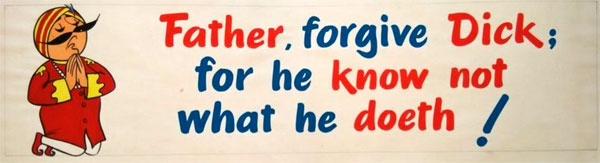
     

    On Richard Nixon during Watergate


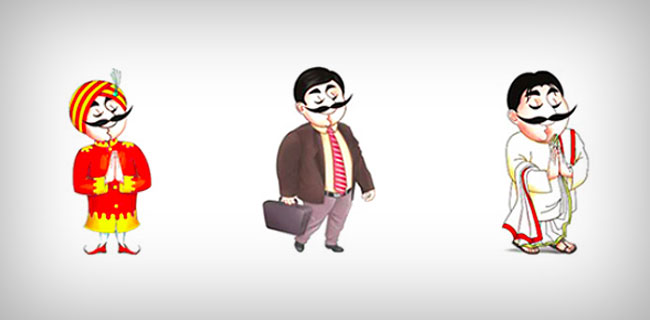
    Most people who have this point of view don’t understand that he is not just a Maharajah. He is a mascot who embodies the soul of Air India. Only his garb is that of an Indian prince. When he was conceived, he was meant to stand for everything that Air India stood for. Just like well-travelled Indian royalty that could speak authoritatively to both India and the world. Also, the Maharajah was not just the Maharajah. He took many shapes and forms disguised for the country he was meant to represent.
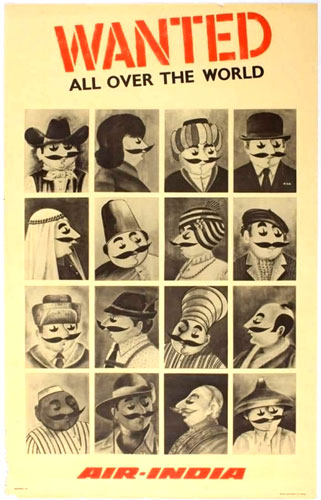
     

    Sawant, one of the Creative Directors at HTA who could draw the Maharajah in 15 seconds. was so inspiring that HTA once created a film, by making Sawant draw the Maharajah in real time, with a camera following his talented hands.


    K ‘Bobby’ Kooka, the Commercial Director of Air India, is once known to have said: “We call him a Maharajah for want of a better description. But his blood isn’t blue. He may look like royalty, but he isn’t royal.” Famous for having conceived the Maharajah along with Umesh Murdeshwar Rao of JWT in 1946, the Maharajah is one of the oldest mascots in the world. Kooka was later Chairman of Hindustan Thomspon Associates*) and watched the Maharajah and Air India advertising grow in stature and popularity.


    Ivan Arthur, earlier National Creative Director of JWT, and now educator and author, when asked about the Air India advertising, said: “Conceived as a letterhead design, the Maharajah broke the fetters of the line drawing and became flesh with a personality and DNA of his own: the double helix of gracious exotica. That DNA did not permit him to stand in the street corners of conventional media and tout his destinations like a cheap ticket salesman. His famous romps on those hoardings were not advertising. They were non-advertising: parlour talk, one-liner points of view, camaraderie, provocation and good humour, all of which did not ask you to buy an Air India ticket. In fact, in many of the hoardings, he refused to have the Air India logo as sign-off. He was the sign-off. He was no commercial mascot. He became a national figure. Much loved and respected.


    The Maharajah dies a 100 deaths
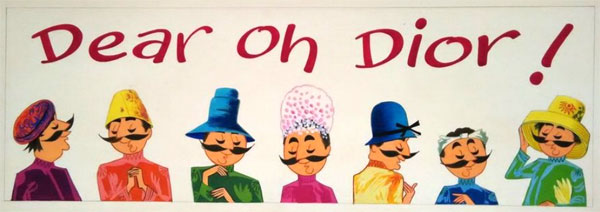
     

    Come the ’80s, however, frequent changes to the Chairman of Air India position resulted in the Maharajah dying a 100 deaths. Air India chiefs were keen to kill the Maharajah in lieu of something new and more contemporary. One such case was when in the late ’80s one Air India chief hired Landor, the well-known design firm, to redesign the logo of Air India in 1989. An airline identity change is one of the most expensive identity changes for any industry because it involves repainting all the aircraft, the livery, the ground vehicles and every signage in every country. But Air India went through all that bravely, eager to dump both the Centaur, which was their logo for the longest time and the Maharajah who was accused of not being in tune with the times. Rajan Jetley, then Managing Director of Air India, had said in defence of the new logo: “It is a public statement of change and a product exercise in the classic marketing sense.”

     

    Air India’s new identity created by Landor


    This was painted on the tail of the aircraft and the Boeing 747 Rajendra Chola became the first aircraft to carry the new logo and the livery. This facelift is known to have cost Air India $35 million back in 1989. But the public started questioning the change, immediately missing their familiar brand Air India. Questions were also raised in Parliament about the change of identity. But in spite of the identity change, the Maharajah seemed reluctant to leave the brand and its advertising. For every one person who didn’t want him, there was a loyal fan who wanted him back.
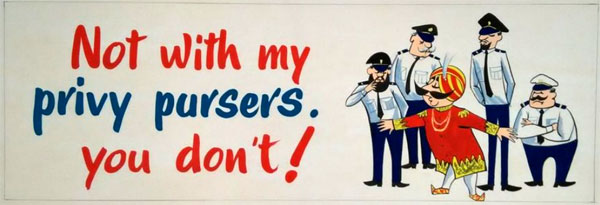
     

    Abolition of privy purses 1971


    Changing a brand’s identity is not an easy task. It is easy to say the Maharajah is an anachronism for those who don’t understand the Maharajah and the brand. Colonel Sanders who died in 1980 is still a part of the KFC logo. The Marlboro cowboy first made his appearance in 1954 while the cowboy era ended in 1885 at the end of the American Civil Revolution. They are not anachronisms. They are timeless just like the Maharajah. As Piyush Pandey, Chairman of Ogilvy is known to have said to Economic Times last week: “The Air India Maharaja stands for India. For any brand, any mascot, any logo, any identity is as meaningful as what they do with it.”


    With the Air India brand firmly with the Tatas, one wonders what the future of the Maharajah might be? Considering that the Maharajah is a crucial part of Air India’s brand equity and having worked on the brand, I can only hope that he will be re-incarnated.


    *now Wunderman Thompson

  • Cadbury ad. Overdependent on Nostalgia?


    By Prabhakar Mundkur [updated]


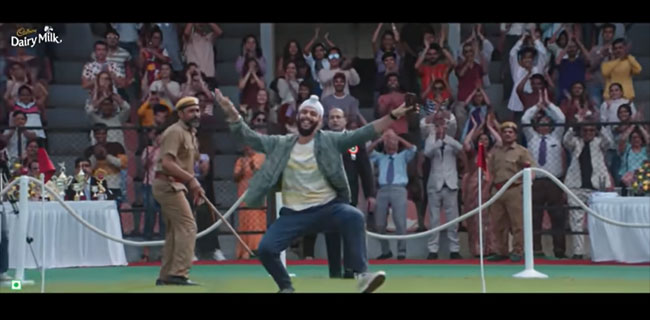
    Prabhakar MundkurAs I write this, I am sure the latest Cadbury’s ad has already gone viral if that is a measure of its success. The latest message I got on WhatsApp went like this:


    “In 1994, Ogilvy India made an ad for Cadbury Dairy Milk.

    In 2021, Ogilvy India made the same ad for Cadbury Dairy Milk, with a difference.

    Check both out!!!”


    The praise showered on it has had no bounds over the last two days.  One of the comments went like this: “It’s a follow-up to the ad the great Piyush Pandey wrote in 1994 which catapulted him to advertising fame.”  No doubt Piyush is a shining star in the advertising firmament, but I am not sure this criterion can be used to judge an ad, both by commoners or 50-year-old advertising executives. I never thought of an ad as great only because David Droga or Bruno Bertelli wrote it. In any case, I am getting used to the hysteria and adulation India accords its heroes. Just yesterday, we saw a union minister likening our Prime Minister to God.  And later, the Prime Minister’s Report Card handle on Facebook posted the Cadbury ad, giving it record likes and shares. God himself then has endorsed this ad.  So, who am I, a mere mortal to even start evaluating it?


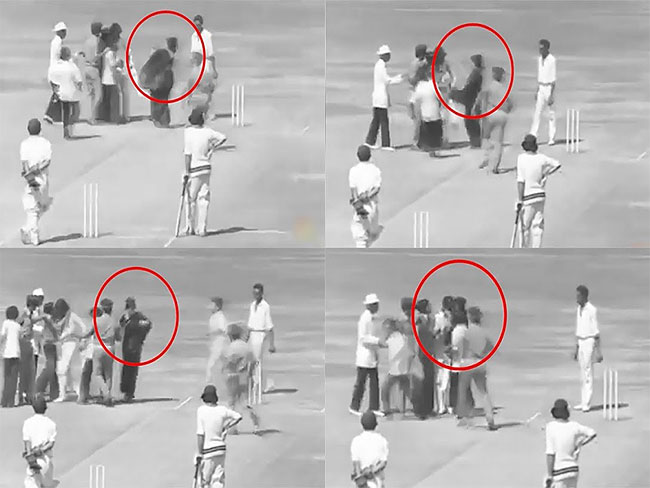
    I must admit I am an aberration of the Indian consumer because I spent the better part of the 90s working overseas and could not use the 1994 ad as a reference. It seemed like just another cricket ad to me, or simply put just a typical scene from Indian cricket which we have seen repeatedly, for much longer than the Cadbury ad. After all, didn’t a woman do the same thing to Brijesh Patel when he scored a century in 1975?  She went past the security (India’s disrespect for the law is legendary), right until the pitch and then planted a kiss on Brijesh’s cheek. I know cricket is a hot button in this country, but the 99 runs on the scoreboard with a sixer coming up is both a bit trite and hackneyed.


    Which brings me back to one basic question: if this ad was trying to capitalise on nostalgia marketing, was it aimed at people who were over 50 years old? We don’t know Cadbury’s strategy, but it could well be that they no longer wanted their brand to be seen as a young person’s brand. If the target audience were expected to have seen the ad in 1994, it does mean that this ad is talking to people who are in the age group of 40-50 years at least or even more.


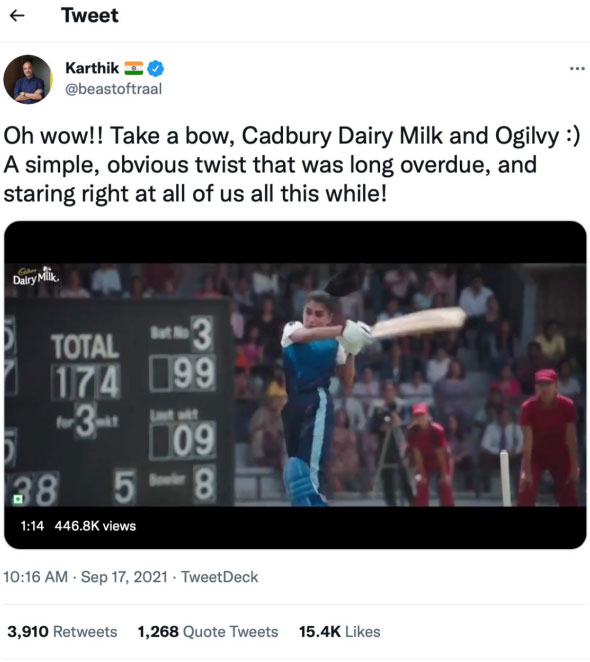
    Of course, while arguing my way through the merits and demerits of the ad, many people stoutly defended the ad saying that it was brilliant, even as a standalone, and even if people had not watched the 1994 version. Maybe, but I would imagine that the people who had seen the 1994 ad would rate it 5x times better than the people who hadn’t seen the 1994 ad. People who first posted the ad on social media were mostly older, but the overall hype was so overcoming that I believe the youth had taken to sharing the ad later, on Instagram. Take this tweet for example which got a rousing response. I don’t know Karthik personally, but I am willing to wager that he is at least 40 years old to have seen and remembered the 1994 ad.


    But somehow the Cadbury ad seems to have touched a chord and has got accolades for showing a woman in the lead role. Many people have commented that this was a long time coming. Of course, any ad like Cadbury’s is a welcome addition to the tirade against gender discrimination. India for centuries has discriminated against women, and there is still scope to do much more. India ranked 131 in the 189-country survey on the Gender Development Index. So, any commercial or full-length movie that goes towards portraying the importance of women is welcome because it can help to change the status quo. I see advertising and cinema as important influencers in pushing the envelope for social change.


    Oscar Wilde in his 1889 essay ‘Decay of Lying’ posed the rhetorical question, whether Art imitates Life or Life imitates Art. I firmly believe that Art must do its bit to change society so that Life can start to imitate Art. The Cadbury ad from that point of view is a step in the right direction.


    Except that as I said earlier, the Brijesh Patel incident also raises the question if this is Art Imitating Life?  It could well be!


    Oscar Wilde was right in posing this queer and difficult paradox.


    Prabhakar Mundkur is a former advertising agency captain and has spent over four decades in marketing services across geographies. He is a prolific writer and was a few years back rated as among the top voices by LinkedIn. Other than advertising and writing, Prabs, as he is known to friends, is a very active musician and a self-taught producer of music. In the pandemic, he has performed and produced nearly 50 songs, including one with the very accomplished Usha Uthup. Mundkur’s views here are personal.


  • It’s Mera Bharat Mahaan for Micromax


    By Prabhakar Mundkur


    In light of the Tanishq controversy, the new Micromax commercial provides an interesting counterpoint.


    The larger  truth that I am missing in all the marketing discussions on Tanishq is that ‘brand purpose’ came about because Millennials and Gen X in the West were looking for authenticity, honesty and purpose in brands.  In other words, they were looking for brands to mirror their own feelings and their higher purpose.  And this higher purpose took the form of say ‘Real Beauty’ for Dove as a proof of authenticity or the higher purpose took on a higher social responsibility to support some cause: sexism, racism (for us it is casteism), climate change, sustainability, poverty, domestic abuse, climate change and a host of other causes.


    I don’t know if the big brands have done a study of what this greater social responsibility might mean for Millennials and Gen X in India. I don’t think it is any of those that I mentioned for the Western audiences above.


    But the important point here is a that it is not marketing directors who sit in their ivory tower offices and determine brand purpose or the language a brand speaks. For brand purpose to be real, it must coincide with the people’s aspirations. Just as an example if the higher purpose of our targets in the country is to prevent “love-jihad” they may want to see brands that reflect that higher purpose. And Tanishq’s higher purpose was at odds with the higher purpose of a section of the public that engaged in the destruction of their commercial.


    After all, brands are not allowed to have a purpose that excludes the people it is talking to unless it wants to be altruistic or idealistic, which I am sure is not what Tanishq wants to be.


    Moving on, I found a useful counterpoint in this Micromax commercial.


    https://m.youtube.com/watch?v=aRo69b1wTNg


    The commercial essentially announces that they are back in the game after having taken a beating at the hands of the several Chinese mobile handsets in the market.


    In its ‘come back’ commercial appropriately titled ‘Micromax is Back’, the brand touches all the hot spots of the new Indian. Look at the various subtle inflections.  The story of an Indian entrepreneur who came from the ‘gullys’  of middle class India after borrowing Rs 3 lakh from his father.  A brand that was the No 1 brand in India and in the top ten brands in the world.  Stirring the new sense of ‘nationalism’ in the Indian.


    Then look at the skillful way in which the brand provokes anger against China by saying he was put down by Chinese brands. And that too in his own country? Oh, the injustice of it all!


    Then invoking the border conflict with China, invoking the Prime Minister were all briiliant strokes in a campaign that reeks of Made in India.  And to cap it all the new series being marketed by the marketers is ‘IN’. Another stroke of brilliance to use the first two letters of the country name. What could be more Indian, more desi that?


    Now go back to the Tanishq commercial and think for yourself whether it invoked the right feelings in the target audience. Or did it provoke mob anger by touching on a raw nerve that people are most sensitive about.


    For me this is a case study that brands cannot speak a language that does not strike the right chords among the people. Brands can’t hold beliefs that are in insolation without consulting the people they are talking to. Brands need the permission of the people before they speak.


    We have a choice now.  Either conform to the feelings of the new India that has been emerging for the last six years or continue to live in the past.


    Lofty ideals for brands must be examined in the light of the current mood of the nation.


    Prabhakar Mundkur is a veteran advertising professional and commentator. And also a musician. He has worked across geographies. His views here are personal


  • Prabhakar Mundkur: While the world is rising for unity, are we digressing?

    By Prabhakar Mundkur


    2020 is a year of huge upheavals not only because of Covid, but because of the huge social uprisings for unity.


    The killing of George Floyd, a 46-year-old black man in Minneapolis, by the police sent a sweeping shock wave of social change the world over.


    Racism of any kind just went out of the window this year. And the impact on brands was tremendous. Almost every brand worth its salt pledged to be fair and non- discriminatory. Brands asked people to stand against racism. Even the stoic Hindustan Unilever joined the tirade against discrimination of any kind when it decided to change the name of one its most profitable brands in country Fair & Lovely to Glow and Lovely. Such were the sweeping forces of an unprejudiced world. I sometimes wonder if Covid might have helped because it didn’t discriminate either between rich and poor, black and white or rich and poor.


    So, when Tanishq one of India’s favourite brands put out a commercial about the unity between two religions the uprising on Twitter felt unfair and the height of discrimination. After all India has been a pot pourri of various races and religions for centuries.


    https://twitter.com/beastoftraal/status/1315848777123598337?s=20

    Tanishq has pulled the creative off YouTube. The ad can be viewed here on a tweet by @bestoftraal – Ed


    Another common practice has always been to celebrate each other’s festivals and cultural practices. After all who can but help to eat biryani at Id, order a Sadya menu for Onam, or offer tilgul for Makar Sakranti. Somehow India has grown up celebrating every festival irrespective of which state, language or community it belonged to. Following this pattern, the commercial shows the mutual respect for each other’s customs.


    So, the outrage on Twitter seemed a little misplaced. Unless it was not representative of the feelings of the population at large.


    Should brands give in?


    I think when brands have done no wrong they should stick to their guns. And not get cowed down the mass hysteria on Twitter? Why do Twitter mobs behave in such extreme ways? Mob anger can be strange, pathological and monstrous. Behaviour of a larger group is known to have a big influence on individual behaviours and have been an area of interest in social psychology for years. Psychologists have found that group behaviour tends to be more extreme and amplifies the typical behaviour of its individual members. Mobs are known for losing their self-awareness. Sociologists refer to the process as de-individuation where individual personalities become dominated by the collective mindset of the crowd. Gustave Le Bon an early explorer of this phenomenon viewed crowd behaviour as “unanimous, emotional, and intellectually weak”.  The other reason is that twitter anger dies down as quickly as it is ignited. The half-life of a tweet ( average lifespan ) is 24 minutes or thereabouts.


    So, a kneejerk reaction to take your commercial off the air might well be unfounded.


    What else can brands do?


    Companies need to figure out strategies for dealing with social media manipulation with respect to their ads. After all a pattern seems to have been established of cyber bullying to pull out movies and ads.


    It can’t be difficult to gauge the reaction to your ads. Research should warn you about cultural inflections, and if there is an ad that has even a small probability of inciting twitter mob anger it might be better to go in well prepared. If social media and twitter can be manipulated by politicians and religious groups can’t they be manipulated equally by the biggest and best marketers in the country?


    Maybe we are seeing the dawn of a new era. Where brands can use their marketing power to do what politics and the law can’t do. Right the wrong. Tell television channels to stop doling out trash to the public. Tell Twitter mobs to shut up. Hail brand power! We might well be at the edge of a new era in marketing!


    Prabhakar Mundkur is a veteran advertising professional and has led agencies in various geographies, including India. He is a prolific writer and also a prolific musician. He comments frequently on MxMIndia, as on LinkedIn and other platforms. His views here are personal

  • The Unfairness of It All


    By Prabhakar Mundkur


    When Hindustan Unilever announced its decision to rename its moneyspinner $500 million brand Fair & Lovely to Glow & Lovely, it was a classic case of doing too little too late.


    To imagine that the decision was perhaps based on the greatest upheaval of racist stereotyping of our time with the excruciating George Floyd pinned to the ground doesn’t say much for Hindustan Unilever’s decision. There is nothing to congratulate them about.  There can be no appeasement of public emotion. There can only be guilt and shame.


    Activists through the decades have objected to Unilever’s fairness cream but it needed a revolt as ugly as George Floyd’s death, for the great marketer to make this small move.  Not since Rosa Parks was denied a seat on a bus in Montgomery has the world been so affected by the colour bias of the human race.


    But how good is the new name Glow & Lovely? Decades of skin care research has shown that ‘Glow’ is a major benefit in for the skin care regimen. Just like ‘Shine’ is. a major benefit for hair. So, taking a benefit from research and planting it in a brand name is perhaps not the most creative way of configuring brand names. But then Unilever has not been particularly known for its creativity. That lesser brands like Emami had already pre-empted this thinking by naming their brands Glow & Handsome is a bit of a shame. After all, one expects leaders to show the way. Not follow in the footsteps of their smaller competitor in the FMCG business.


    But is Glow and Lovely a good name?


     There is a reason why Glow and Lovely doesn’t sound right given the vagaries of the English Language. The reason why it doesn’t roll of the tongue as easily as Fair and Lovely has to do with the English language. Both Fair and Lovely are adjectives. Glow on the other hand is either a verb or a noun depending on how you use it. Glowing & Beautiful would have sounded better in English. Because Glowing is an adjective. But it then lengthens the brand name. And Unilever might have decided they would stay close to the current syntax. Anyway to the large majority of Indians it would hardly matter. It’s just another name for Fair & Lovely. Fair and Glow are both four-letter words. But how the name changes the advertising need to be seen. Will the new ads have dark and glowing faces to make amends with the brand’s past? That is anybody’s guess.


    How Darkie changed its name


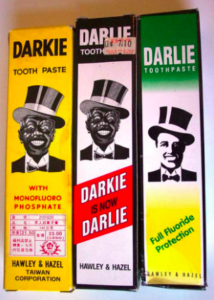
    It may interest people to know that the exact opposite of Fair & Lovely existed as a toothpaste in Asia many decades ago. A toothpaste called Darkie. Produced by Hawley and Hazel, the brand was very popular in Asia. The pack showed a smiling black performer. The brand was then acquired by Colgate Palmolive which faced a lot of racist flak on the brand. In 1989, Colgate Palmolive decided to change the brand name to Darlie.


    “It’s just plain wrong,” Reuben Mark, chairman and chief executive of Colgate-Palmolive, said about the toothpaste’s name and logotype. “It’s just offensive. The morally right thing dictated that we must change. What we have to do is find a way to change that is least damaging to the economic interests of our partners.”


    Seems like a shame that another global company had thought about this so deeply more than 30 years ago. So Unilever in many way is 30 years too late.


     What will posterity say about Fair & Lovely?


     But what this would mean for the generations to come is anybody’s guess.  Will Generation Alpha which may use the brand a few years from now warm up to the brand given its history? (Generation Alpha is the demographic cohort succeeding Generation Z. Researchers and popular media use the early 2010s as the starting birth years and the mid-2020s as the ending birth years.)


    How will these young people see our racist past? One piece of research showed that Generation Z are as racist as their millennial parents. But will this continue on to Generation Alpha? Technology is likely to change a lot of mindsets in the future. And that may change the fortune of the brand called Glow & Lovely.


    Prabhakar Mundkur is an advertising veteran, a lateral thinker, storyteller and musician. He has spent several years in advertising – in India and elsewhere in the world – including at JWT China where he headed the Unilever business, amongst other functions. In fact he worked on Unilever brands for a good 17 years… though never on F&S ;-). A prolific writer now, he was LinkedIn’s #1 Top Voice for 2016 and YourStory’s 100 Emerging Voices 2018. He writes frequently on MxMIndia.

  • Cheil India unveils campaign

    Cheil India has launched a campaign showcasing features of Galaxy A55 5G and A35 5G. The campaign films featuring the duo of Shanaya Kapoor and Rohan Gurbaxani encapsulate the spirit of Generation Z .

    Commenting on the campaign, Aditya Babbar, Vice President, MX Business, Samsung India, said: “Galaxy A series democratizes innovations by making them accessible to all. With the introduction of Galaxy A55 5G and Galaxy A35 5G, we are democratizing flagship-level features, experiences and affordability. In our new campaign, we are proud to showcase how Galaxy A55 and A35 5G continue to push boundaries, delivering cutting edge technology that empowers creativity and elevates user experience.”

    Talking about the campaign, Vikash Chemjong, CCO, Cheil India, added: “We believe that everyone deserves awesome—whether it’s awesome meetings, awesome memories, awesome ambitions, or simply an awesome life. And, when you finally get an awesome phone, you get one step closer to achieving the rest.”