
Category: ADVERTISING

  • OMD retains Nivea India Account

    By Our Staff


    OMD, media agency – part of the Omnicom Media Group, retains its position as the Agency on Record for global skincare giant – Nivea. The agency will continue to handle the integrated media duties for the skincare conglomerate, serviced from its Mumbai office.


    Said Anisha Iyer, CEO of OMD India: “OMD has been producing great results over the last 8.5 years that have helped Nivea grow. Our dedicated efforts towards the talent transformation agenda have reenergized the relationship with Beiersdorf, which makes us immensely proud. We look forward to building further on the strong foundations of our relationship and helping the business scale to new heights in India with the Omni product suite and data-led expertise.”


    Neil George, Managing Director of NIVEA India, added: “With today’s rapidly evolving consumer journeys and shifting sentiments driving the intersection of creativity, media, data and innovation – it is vital for us to resume our journey with a partner who understands our growth ambitions and supports the length and breadth of our goals. OMD’s capability of driving strategic conversations upstream, refreshed team of media mavens and best-in-class data-led thinking and tools, aligned with what our need of the hour is. We’re pleased to be continuing this journey with them and look forward to seeing their data-driven expertise at play as we work to achieve sustainable growth over the coming years.”


  • Should dominant archetype and persona gap across stakeholders worry you?


    By Sanjeev Kotnala


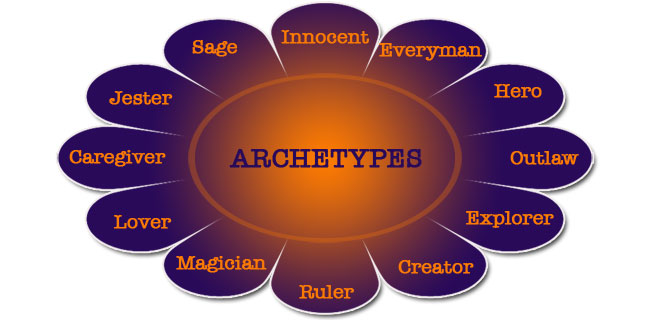
    Sanjeev KotnalaArchetype, Brand Persona, Brand Association and masks are not new concepts. In 1919, more than a century back, Carl Jung suggested that “There are forms or images of a collective nature which occur practically all over the earth as constituents of myths and at the same time, as individual products of unconscious and that these [archetypes] are imprinted and hardwired into our psyches.” He took this understanding further to create brand archetypes aligning with predominant Customer profiles. Carl Jung identified 12 archetypes: Innocent, Everyman, Hero, Outlaw, Explorer, Creator, Ruler, Magician, Lover, Caregiver, Jester, and Sage.

    Now consider the possibility that the consumers and people at different positions hardwired with a particular archetype may be putting up a mask that may or may not be in sync with their dominant archetype, as it may help them with better relationships, image perception, enhanced efficiency and effectiveness.

    The truth is that people do wear a mask all the time and life’s varied roles and responsibilities require them to act differently and wear different masks. Sometimes, people use multiple masks to interact with various stakeholders and audiences, and such a situation creates confusion because of the difference between expectation and experience.

    Moreover, masks are not true to the identity and may slip, compromising all the efforts.

    Masking is tricky but is a done thing.


    THE IDEAL SOLUTION

    The solution is to unmask and synchronise the archetype and brand persona for the desired consistency in reaction and impression. After all, what counts more than reality is perception.

    Exploratory work suggests that it is natural for the demonstrated archetype (Persona), real archetype and perceptual archetype to differ. The person may retain dominant traits of the real archetype, as they are hardwired. However, variations and tweaks, subclasses and subgroups of archetype and persona get reflected in their behaviour, actions and reactions, thus altering and influencing the resultant image and perception.


    BUSINESS ENVIRONMENT

    In a business environment, various stakeholders and audiences may perceive the archetype differently based on their experiences. To simplify the situation, we look at the dominant archetype and the perception created across five prime audiences; senior management, peer group, juniors, self-perception and perception outside the organisation.

    The person is more at ease with self and surrounding when there is an alignment across all the above perceived personal brand persona (archetype). And there is chaos, turmoil, and frustration if they conflict. There could be a problem of mismatch between self-perception and stakeholders’ perceptions.

    Many brand marketing consultants have focussed on streamlining the brand archetype and the company desired Vs demonstrated archetype through culture intervention and programmes. However, they have understandably missed looking at the archetype (persona) alignment of the prime assets of an organisation – the workforce.


    EXPLORING THE AREA

    I have worked with a few organisations open to exploring and addressing this subject.

    We used various net-based questionnaires to identify the personal archetype and persona. We used animal and celebrity association for perceptual archetype identification and cross-checked using net-based tools.

    For stakeholders outside the company, like retailers, business associates, and the workforce at the plant, we again used associations to understand the persona perception as it seemed more focused and easy to administer with a lower margin of error.

    We used a series of animal and celebrity pictures with important pre-identified characteristics to ensure everyone was on the same page. This characteristics list grew with time as audiences helped expand it with more generic interpretations.

    In some places, in-depth discussions were done for a better perception and understanding. We observed people were more open and better placed when the references were in their native language. Moreover, language allowed for highlighting finer nuances. The respondent would differentiate between a Shahukar and a banker, an adventurous sportsperson Vs a hobbyist, a Lieutenant vs King Vs subedar Vs Wazir, A government servant Vs a Government department head and a bureaucrat and, off-course, between a python and a cobra. We dropped political figures from the list as they had a highly individualistic and confusing interpretation.


    FINDINGS

    The findings fell in line and expectations.

    In one such case, the CFO was seen as a Sherlock Holmes by the franchise, a Sahukar by the retailers and a dictator by the sales force. And the CFO saw himself as a Sage and a comedian in sync with the company brand archetype. Even the MD and the directors saw him differently.

    In fact, in senior management, there was a considerable difference between self-perception and archetype discovery in how they saw each other.  And we tested these during the recruitment process to hire the right fit through net based tools. However the perceptual images reflected by the interview panel normally had wide variations.

    In another case the Sales head was seen as a true leader by the juniors, an opportunist by the peer and a wasted resource by the management.


    ACTION

    Multiple levels of counselling was done. The challenging phase was sharing the findings with the individual and explaining to them valid perceptions, and more difficult was determining the possible tweaks and corrections and monitoring them.


    NET-NET

    The final impact of such an exercise and counselling is yet to be seen. The management believes we are moving in the right direction to streamline archetype perceptions with the company/brand desired archetype. However, it has been interesting, exciting and somewhat of an eye-opener. One looks forward to working with another open organisation to understand and explore it further.


  • Wunderman Thompson South Asia appoints Harsh Shah

    By Our Staff


    Harsh Shah
    Harsh Shah

    Harsh Shah has been appointed as Chief Digital Officer at Wunderman Thompson South Asia. In his new role, he will be responsible for accelerating the digital transformation of the Wunderman Thompson Group, and working with all of its agencies across Creative, Communication, Tech, Health and Commerce to deliver an integrated solution to all clients across the Group.


    Based out of Mumbai, Shah will report directly to Shams Jasani, Chief Executive Officer, Wunderman Thompson South Asia.


    Commenting on Shah’s appointment, Shams Jasani said: “We are Delighted to welcome Harsh to the Wunderman Thompson Family. He brings in a wealth of experience across Digital, Technology and Commerce. Our work at Wunderman Thompson harnesses the power of creative, technology, and Commerce to drive unprecedented growth for some of the world’s biggest brands. We are glad to have Harsh onboard at a critical juncture when we are keenly looking at offering end-to-end capabilities to our clients at scale.”


  • Wunderman Thompson unveils annual trend almanac

    By Our Staff


    Wunderman Thompson unveils annual trend almanac ‘The Future 100: 2023’. It features 100 bitesize predictions that offer a splash of colour, inspiration, and an insightful glimpse into 2023.


    The outlook, from the 9th edition of the annual essential trend almanac which offers a snapshot of the most compelling trends to keep on the radar for the year ahead, says that despite on-going economic and environmental crisis, people are choosing joy.


    Coined by Wunderman Thompson Intelligence as the ‘Joyconomy’, the rise of trends such as ‘Elevated Expressionism’, ‘Feel-Good Feeds’, and ‘Ageless Play’, demonstrates the opportunities for brands who lean into consumers’ desire for inspiration and optimism, as people become are determined to show resilience, innovation, and joy in the face of continued hardship.


    Emma Chiu, Global Director of Wunderman Thompson Intelligence says: “In a year when all signs should point towards a bleak and chaotic outlook as a rocky economy, political instability, and environmental deterioration persist, we’ve found that there are endless opportunities for brands to tap into this consumer mindset as last year’s unbounded optimism shifts to an exuberant need for uplift and play.


    “Community, creativity, and colour vibrantly paint 2023. The stress of the past years has put an emphasis on optimizing both the mind and body to empower an elevated self; the lightning pace of technology sees the evolution from building to living the metaverse (with every aspect of our lives being explored in this new frontier of customer experience); and people are demanding that brands use their influence to better society by putting accessibility and inclusion at the fore,” she continued.


    In addition to the rise of the ‘Joyconomy’, highlights include:

    :: Culture – Indigenous Innovation: Indigenous Techniques are forming regenerative approaches to managing the environment

    :: Tech & Metaverse – Techcessibility: Companies are redesigning their digital environments for greater accessibility

    :: Travel & Hospitality – Temperate Travel: Rising temperatures will prompt travellers to seek out cooler destinations

    :: Brands & Marketing – Amplifying Diverse Creators: Growing calls for authentic representation in advertising are driving a wave of brand collaborations with marginalized creative talents

    :: Food & Drink – Cell-cultured Dishes: As cell-cultured food moves from lab to grocery store, luxury dining may be the first beneficiary

    :: Beauty – Resurrected Ingredients: Brands are bringing back extinct and forgotten sensory ingredients

    :: Retail & Commerce – Crisis Retail: As the financial crisis bites, brands are stepping up to help their most vulnerable consumers

    :: Luxury – Residence at Sea: The next-gen digital nomad is taking to the sea—in style

    :: Health – Menopause Retreats: From HRT education to nutritional advice, retreats designed specifically for the menopause journey are on the rise

    :: Work – Generation Flex: Employee expectations are rising. Despite economic woes, could the balance of power be tipping in their favour?


    Naomi Troni, Global Chief Marketing & Growth Officer at Wunderman Thompson said: “The world is on the brink of recession, and it has never been more important for brands to be on top of the latest trends that will define consumer spending in the year ahead. With competition for share of mind and pocket becoming increasingly tough, The Future 100: 2023 reveals the essential, unexpected, and occasionally jaw-dropping insights that will help forward-thinking brands stay ahead.”


    ‘The Future 100: 2023’ from Wunderman Thompson’s futurism, research, and innovation unit, Wunderman Thompson Intelligence, has been compiled by a leading team of trend analysts, bringing together exclusive expert interviews and proprietary research.


  • OML appoints Manav Parekh as the Creative Head

    By Our Staff


    OML Entertainment, content studio and creator management company, appoints Manav Parekh as its Creative Head for its Branded Practice. His role at OML will see him as head creative, leading all branded content work across all businesses at OML.


    Tusharr Kumar – Chief Operating Officer – OML Entertainment said: “At OML, we’re always looking for people who want to work at the cutting edge of the digital content evolution. In fact, we’re attracting talent from traditional advertising agencies and businesses as they want to work in a collaborative space that gives them a canvas to express on in newer, unconventional ways, a space that’s the future in the creator and creative ecosystems. Manav’s ability for brand storytelling and understanding of the new media space will help us drive a big impact for our brand partners – old and new. We’re looking forward to working with Manav and continue building the creative teams at OML”


  • ASCI tightens disclaimer guidelines

    By Our Staff


    The Advertising Standards Council of India (ASCI), has updated its “Guidelines for Disclaimers made in supporting, limiting or explaining claims made in advertisements”. The ASCI code requires that suitable disclaimers be used to properly explain and support claims made in advertisements to ensure that consumers can read all the information presented. In the past three years, ASCI has processed over 800 advertisements which were found to be in violation of the disclaimer guidelines.


    In a recent survey carried out by ASCI with 130 consumers, it was observed that

    1. 80% of respondents did not notice the disclaimer

    2. 33% could not understand the disclaimers clearly even after adequate exposure  time had been provided

    3. 62% of respondents felt that the disclaimer was excessively long.


    The Consumer Complaints Council (CCC), during their meetings, have also observed that sometimes, the frame of the advertisement that contains the disclaimer was very crowded, and distracted the viewer’s focus.


    To address these issues, the Guidelines for Disclaimers made in supporting, limiting or explaining claims made in advertisements have been amended by ASCI after consultation with stakeholders. The key additions to the existing disclaimer guidelines are as follows:

    :: The use of disclaimer should be kept to a minimum. Long or otherwise complex disclaimers with large blocks of text and difficult words are a deterrent to viewers attempting to read the contents of the disclaimer. In such cases advertisers should modify the headline claim to reduce the need for further qualification through disclaimers.

    :: Hold duration and readability of disclaimer – In television commercials or any other video advertisement on digital media, all disclaimers should be clearly readable to consumers. In a single frame in an advertisement:

    >> There should not be more than one disclaimer

    >> The disclaimer should be restricted to two full length lines and remain on  screen for more than four seconds for every line

    :: For regulatory requirements where the disclaimer exceeds two lines additional hold duration should be accounted for. For the purposes of calculating the duration of hold of disclaimers, all forms of text appearing on screen at any one  point in time should be counted. This includes both disclaimer text and any text  content in the main ad creative regardless of where on screen it appears and  whether or not it is repeated in audio.


    Other key facets of the disclaimer guidelines which remain unchanged are:

    :: A disclaimer can expand or clarify a claim, make qualifications, or resolve  ambiguities, to explain the claim in further detail, but should not contradict/modify  the material claim made nor contradict the main message conveyed by the  advertiser or change the dictionary meaning of the words used in the claim as  received or perceived by a consumer.

    :: A disclaimer should not attempt to suppress material information with respect to  the claim, the omission / absence of which is likely to make the advertisement  deceptive or conceal its commercial intent.

    :: A disclaimer should not attempt to correct a misleading claim made in an  advertisement.

    :: A disclaimer shall be in the same language as that of the claim/s of the Advertisement. In case of bilingual advertisements, the disclaimer should be in the dominant language of the advertisement.


    Commenting on the changes, Manisha Kapoor, CEO and Secretary-General ASCI said: “While ASCI has had disclaimer guidelines since 2016, it was observed that over-use of disclaimers made it difficult for consumers to understand all the information presented in the ad. This is evident from our survey where 80% of consumers did not even notice the disclaimers. Hence, it is important that claims are crafted in a way that minimizes the need for qualificatory disclaimers. Where disclaimers are needed, they should be  presented in a manner that someone who is interested in reading them has the  opportunity to do so.” For the full disclaimer guidelines: https://ascionline.in/disclaimer-guidelines.pdf


  • Scarecrow M&C Saaatchi elevates Mustafa Kapasi to ECD

    By Our Staff


    Mustafa Kapasi
    Mustafa Kapasi

    Scarecrow M&C Saatchi has announced the elevation of Mustafa Kapasi to the role of Executive Creative Director (ECD). He has spent 7 years in Scarecrow and has handled an eclectic mix of brands including Future Generali, Adani Gas, Mahindra Trakstar, Wagh Bakri, Business Standard, Vimal, Spykar and many more.


    Said Raghu Bhat, Co-founder of Scarecrow M&C Saatchi: “Mustafa is an exceptional human being who thoroughly deserves this promotion. He has a unique combination of creativity, resilience and a hunger for learning that sets him apart. What I’m most impressed about is his ability to adapt and re-invent himself in the ever-changing digital landscape, which is a testament to his commitment to always get better, at whatever he does.”


    Added Manish Bhat, Co-founder of Scarecrow M&C Saatchi: “Mustafa is a true leader who can inspire, motivate and improve his team members. He is a great listener and his life experience allows him to come up with great insights in our conversations. One of his best qualities is that he inspires trust and has a fantastic work ethic, which is very rare to find. I wish and hope that Mustafa will continue to blossom in Scarecrow and create some more great campaigns.”


  • Havas gets Debanjan Basak as Group Creative Director

    By Our Staff


    Debanjan Basak
    Debanjan Basak

    Havas Worldwide India, the creative arm of Havas Group India, has further strengthened its creative team with the appointment of Debanjan Basak as Group Creative Director.


    Havas Worldwide India has been on a creative transformation journey in recent years, with notable additions to the team’s creative steam. Basak’s appointment follows the appointment of Anupama Ramaswamy as Chief Creative Officer last year followed by Jaibeer Ahmad as Managing Partner – North. Basak will report to Ramaswamy and will oversee the expansion of the agency’s digital and social portfolio. He’ll be based in Gurugram.


    Bobby Pawar
    Bobby Pawar

    Speaking about the appointment, Bobby Pawar, Chairman & Chief Creative Officer, Havas Group India said: “For the last four years, Rana [Barua] and I have gone about shaping Havas Worldwide India into a brand-led, digital-first creative solutions company. This has helped us grow the agency multi-fold. The creative output, too, has gotten steadily better. Anupama is here on a mission to raise it several notches and I believe, with the addition of Debanjan, the creative leadership team will accelerate that. He is a man of many talents – he’s non-territorial, a great team player, and he can write. As you can imagine, I am kinda partial to that.”


    Anupama Ramaswamy
    Anupama Ramaswamy

    Added Ramaswamy: “With a superb body of work, Debanjan brings with him a wealth of experience across formats. He will play a key role in driving our agenda of creativity beyond silos. Debanjan is not only a good creative leader, but he is also an extraordinarily warm and generous person. That’s exactly what Havas Group believes the new bunch of leaders should be. Debanjan will be responsible for driving creative excellence for clients and it really is such a pleasure to have him as a part of the Havas Worldwide India team.”


  • Pitchfork announces influencer marketing division

    By Our Staff


    Sangya Lakhanpal
    Sangya Lakhanpal

    Pitchfork Partners has launched a specialised influencer marketing division. It is led by Sangya Lakhanpal, an Instagram influencer with a healthy follower base. She is an experienced influence marketer with both back-end and front-end knowledge of the industry.


    Pannkajj D Desai
    Pannkajj D Desai

    Said Pannkajj D Desai, Chief Operating Officer, Pitchfork Partners: “With an influencer marketing service, we can create much-required synergies for holistic marketing solutions, which are the need of the hour. It will act as a force multiplier for brands as they seek to spread their reach and achieve instant recall. Established brands who were allocating large budgets for celebrity brand ambassadorships will now be able to economise better with influencer marketing. Evolving brands, meanwhile, will be able to grow their reach through smaller budgets, making it a win-win situation for all.”


  • Sideways ropes in Swati Balani as Creative Head of Digital

    By Our Staff


    Sideways agency has onboarded Swati Balani as Senior Creative Director in charge of its digital output.


    After over three years in traditional advertising working with agencies such as Ogilvy, DDB, and Draft FCB, Balani switched to Digital with AutumnGrey. In just seven and a half years, she helped build a robust team there and delivered on the biggest brands across industries including ITC, Burger King, USL Diageo, Microsoft, P&G, PepsiCo, Aditya Birla amongst others.


    On her appointment, Abhijit Avasthi, Founder, Sideways, said: “With digital being a mainstream lever in business now, we needed a solid experienced hand who understands the nuances of this domain and can impact visible outcomes . In Swati we found such a person – besides being an able team builder.”


    Welcoming Balani to the team, Sameer Sojwal and Nilay Moonje, ECDs and Creative Heads of Sideways, added: “Swati joins the Sideways team to further strengthen our digital offering. She brings with her deep understanding of the digital world and the experience of handling multiple brands and teams across digital and mainline agencies. We are super happy to have her and look forward to seeing more Sideways thinking in the months to come.”


  • Tonic Worldwide bags digital mandate for Waman Hari Pethe Jewellers

    By Our Staff


    Following a competitive multi-agency pitch, Tonic Worldwide, a digital-first creative agency, has won the digital mandate for Waman Hari Pethe, a Mumbai based Jewellery brand founded in the year 1909 with a legacy of 114 years. Tonic Worldwide has come on board as the digital partner for the brand with a mission of growing the business through integrated brand communication.


    Chetan Asher
    Chetan Asher

    Speaking on the new win, Chetan Asher, Co-founder & CEO, Tonic Worldwide, said: “We are excited to partner Waman Hari Pethe in its vision to reach the digital audience with WHP, the digital brand that will cater to the younger generation. This TG is increasingly getting more interested in the category.  With our digital first approach to brands and the understanding of e-commerce funnels, we wish to put the brand in the TG’s top consideration. Our specialist arms GIPSI, Twip and Yellow Labs will play an important role along with our Media expertise in realising this vision.”


    Dr. Aditya Pethe
    Dr. Aditya Pethe

    Added Dr. Aditya Pethe: “With this new venture we are looking at creating an online brand identity for WHP Jewellers that will have pan India resonance. Our aim is to expand The Waman Hari brand to include a larger group of patrons especially the younger generation through relatable and trending content. We are looking forward to this new journey.”


  • Is travelling an expense or investment?


    By Sanjeev Kotnala


    Sanjeev KotnalaTravel and expenses go naturally together. And one takes time to realise that maybe that is an old and wrong way to see things. It should have been Travel and Investment instead of Expense. The idea was waiting to happen. It is as good a case as Insurance and Safety or Insurance and protection and future planning. Insurance and Death are naturally occurring but hardly exploited in insurance brand communication.


    SOME FRIENDLY EXPERIENCE

    A small set of people do see travel as an investment.

    One of my juniors would save and take one or more trips to a new destination every year.

    One of my friends passionately explores new countries. He invites people to join him on trips, thus gaining trip partners and new friends. His trip in life is to visit all the counties, and he is inching towards it.

    I have interacted with young foreigners on a backpacking trip at a few religious destinations. They say they have taken a gap year for the trip o explore the world.

    They are investing in travel as a tool.

    I am a fan of such travel experiences. On my trips, exploring a new destination, I try not to leave anything for the next time. And I diligently plan and study the destination before the trip.


    TRAVEL AS INVESTMENT

    Cleartrip is exploring by propositioning travel as an investment. Cleartrip presents the case to treat travel investment as an investment into friendshipwanderlustand love. Keeping the same protagonist who gets different reasons from family members for investing in travel with Cleartrip. Naturally, everyone has a different reason.

    The Cleartrip format has the potential to include other reasons for travel as an investment. And there is a clear line while talking of investing in travel as a bonding exercise- that it is not subject to market risk. Some smart copywriting. The overall communication is well thought-out and smartly executed with highly functional but integrated brand mention.

    The brand can take the proposition forward, and other brands can work toward such a mindset change.


    MORE ON TRAVEL AS INVESTMENT

    Travelling solo or with people to newer destinations helps personal growth. It exposes the traveller to new cultures, perspectives, and ways of life, expanding their horizons and challenging their beliefs.

    They have new experiences and rich memories that last a lifetime. Some incidents and episodes from travel carry anecdotal value for many years. Travel forces one to adapt to new environments, situations, and problem-solving. Many times, language compatibility issues, in fact, help to improve the traveller’s communication, organisational and interpersonal skills.

    Every destination has a pace to it, and one must realise it. Travelling should not be hectic; a must-see and experience-everything mode. It should lead to relaxation and rejuvenation and better physical and mental health.


    TRAVEL – A COMPLETE EXPERIENCE ECOSYSTEM.

    The travel ecosystem kicks in from the time one starts planning. It includes selecting the destination, studying, discussing, finding out about the destination, evaluating and choosing travel mode, stay options, being at the destination, the real exploration and experience and coming back with tonnes of memories.

    All of these must work smoothly to create a superb experience. Unfortunately, something is always below expectation in such a complex matrix, and the gap between expectation and experience creates dissatisfaction. But even that is a learning opportunity.


    NET-NET

    Travel may not have a direct financial return, and it is easy to see it as an expense as there is a money outflow. However, it can offer personal, mental, and emotional benefits that enrich the traveller’s life, making it a valuable investment. And for the country, travel is an economic multiplier.

    ……………………

    ADD ON.

    Here is the Uber Ukraine Ad: keeping Ukraine moving. Well it could be true there but the reaction of an Indian Uber user would be highly different.

    There are three stories, two of them are the story of Uber driver Pasha and  Dima.