
Category: ADVERTISING

  • The Changing World of Inspirations


    By Indrani Sen


    Indrani Sen Wunderman Thompson’s recently published ‘Inspire Score: Top 100 2022’ (now in its third year) reflects how people’s ideals and aspirations have been changing with the digital and technical innovations as well as the conditions of the uncertain times that we have been living over the last two years. The Inspire Scores are no longer influenced by the brands’ inherent core values, their relationship with the consumers and their ability to adopt to the changing environment but are influenced by the changing focus in the consumers’ lives, consumers’ wish list for achievements.


    According to the report, Inspire is a “proprietary global platform that explores what makes brands inspiring and what inspires consumers, making Wunderman Thompson the world’s leading researcher into inspiration.” Wunderman Thompson has designed the ‘Inspire Score’ based on robust methodologies in order to find out how elevating, magnetic and motivating the different brands are to determine their inspire scores which in turn guide the brands about how they can connect better with the consumers to become more inspirational in their eyes and achieve tangible growth in terms of market share. Within a category, the brands with high inspire scores can charge a higher premium for their products and services enabling them to increase their profitability. Cross category comparisons of inspire scores help in understanding the changing mindset of the consumers.


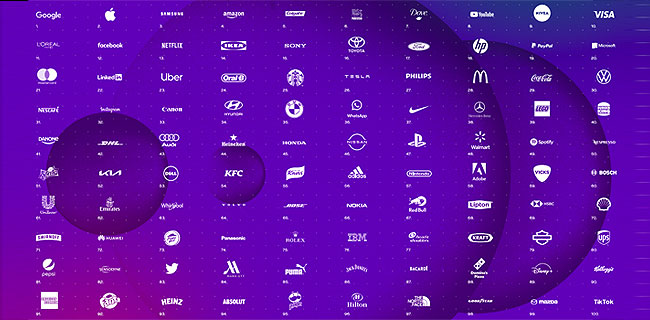
    For the second year running, Google is the most inspiring brand in the world followed by Apple, Samsung and Amazon, who have also managed to hold their positions within the top four. Apart from Nike (37), brands like Adidas (51), Unilever (56), IBM (76), etc. do not even feature in the Top 50 inspiring brands. In the automobile industry, Toyota (16) and Ford (17) lead the pack, followed by Tesla (26), Volkswagen (30), Hyundai (34), BMW (35), Mercedes Benz (38), Audi (43), Honda (45), Nissan (46), Volvo (64) and Mazda (99). The presence of a dozen automobile brands in the Top 100 shows the category continues to be highly relevant to the consumers, though the brands have become comparatively less inspiring than brands in digital, social media and ecommerce categories.


    Social media brands have seen strong gains in 2022 over 2021 reflecting their growing importance in people’s lives through social interactions.  Facebook has moved up from 16 in 2021 to 12 in 2022 and the inspiring power of both Instagram and WhatsApp has grown despite various problems. Twitter (83) has gone down the Inspire Score ladder in 2022 due to the controversies surrounding the brand and what the industry has started describing as the “Elon effect”. The Chinese brand TikTok (100) has managed to enter the Top 100 for the first time in 2022.


    Streaming brands remain inspiring with YouTube moving up two notches within the Top 10 brands and Netflix’s score has risen from 28 in 2021 to 13 in 2022. Spotify has also moved up couple of notches from 52 in 2021 to 49 in 2022 and Disney+ has entered the Top 100.


    It was surprising to find Microsoft has slipped in the inspire score though it has managed to stay within the Top 20 brands. Intel which ranked 87 in 2021, has dropped out from Top 100. The Chinese brand Huawei, a leading global provider of information and communications technology, has gone down the inspire score ladder drastically from 26 in 2021 to 72 in 2022. Does this show a trend where the consumers are taking digital technology for granted and are finding the applications of the technology more inspiring?


    In the personal care and beauty categories, Colgate and Dove have gained hugely and have entered the Top 10 in 2022, while Nivea has manged to retain its position within the Top 10 and L’OREAL has slipped one notch from 10 in 2021 to 11 in 2022.


    Impulse brands have done well in the post lockdown year, with inspire scores of soft drinks, beer and spirits rising. However, coffee shops and fast-food chains have lost the inspiration momentum which they had during the Covid years.  Except Nestle which continues to feature in the Top 10, other CPG food brands have also become less inspirational.


    To sum up,  Wunderman Thompson’s efforts to generate ‘Inspire Score’ year on year would surely help in accelerating globally the growth of marketing investment in the various forms of digital media for reaching target consumers.
     

  • Kaushik Datta joins Cheil as ECD

    By Our Staff


    Cheil India has appointed Kaushik Datta as Executive Creative Director (ECD). Datta’s last stint was at Leo Burnett. He was helming their New Delhi office while also managing the pan-India duties of Art & Design. In his current role, he will report to Cheil India’s CCO-Vikash Chemjong.


    Said Vikash Chemjong, CCO, Cheil India: “It’s exciting times for us at Cheil. Not only in terms of the type of work we are trying to do but also in terms of the type of talent we are attracting. And now with Kaushik coming in with his talent and experience and rigour and enthusiasm, it’s another shot in the arm for us!”


    Added Sanjeev Jasani, COO, Cheil India: “We are pleased to welcome Kaushik Datta to the Cheil family. He is a well-known name in the industry and brings with him a wealth of experience that will help Cheil deliver the best transformational work to our clients.”


  • Oktobuzz wins Westside mandate

    By Our Staff


    Mumbai-based digital communications agency Oktobuzz has won the digital marketing mandate of Westside store. The agency will be responsible for managing the social media handles and campaigns of the fashion brand from the house of the Tata Group.


    Regarding the partnership with Oktobuzz, Umashan Naidoo, Head-Customer and Beauty, Trent Limited, said: “Westside has already established itself as one of the leading fashion retail brands in the country. As we grow our presence across the country, we also want to leverage Digital in the most constructive way and thereby make Westside the brand of choice for consumers aspiring for efficient and accessible fashion. Oktobuzz’s robust understanding of the market and digital ecosystem made the mark for us.”


    Added Hemal Majithia, CEO and Founder, Oktobuzz: “We are extremely delighted to partner with Westside in this phase of hyper-growth, especially harnessing the power of digital. We are aligned with the brand’s ambitious vision of being at the forefront of fashion and intend to convert data-led insights into clutter-breaking creative solutions that not only pushes creative boundaries but also impacts business positively.”


  • Cadbury 5 Star changes logo to Five Stars

    By Our Staff


    Cadbury 5 Star, the chocolate brand from Mondelez India, has taken its tagline ‘Do Nothing’, a notch higher. The brand has simplified its logo into a graphic of five stars. The campaign is created and conceptualised by Ogilvy Mumbai.


    Said Nitin Saini, Vice President – Marketing, Mondelez India: “With every subsequent Cadbury 5 Star campaign, we have strived to do something out of the box while shining a spotlight on the ‘Do Nothing’ proposition. As a youth centric brand, all our recent efforts were aimed to resonate with the current generation – from NothingCoin, to our Valentine’s Day alibi campaign ‘My Cousin’s Wedding’ campaign. Now with #5StarsEverywhere, the goal is to get consumers to engage with the brand in the most inventive way possible. By simply tweaking our logo, the brand has created waves by investing next to nothing on advertising and still gaining maximum eyeballs across almost every app. Steering away from the quintessential way of promotions, Cadbury 5 Star adds a fresh perspective by relaxing and leveraging the five-star review on the apps to spread the sweet message – Do Nothing.”


    Added Sukesh Nayak, Chief Creative Officer, Ogilvy India: “Cadbury 5 Star believes in the philosophy of ‘Doing Nothing’. To solidify this idea in young minds, we conceptualized a smart hack with #5StarEverywhere. This is a disruptive, app takeover idea which maximises partnerships by ensuring that 5 Star’s brand logo integration happens effortlessly across apps which have a rating mechanism. In the festive season when brands bombard consumers with thousands of branded ads, we cleverly re-designed the 5 Star wrapper to mimic the ‘ratings’ section which are present across most apps and subliminally turned them into ads for 5 Star. So now anyone who sees an app rating page will think of Cadbury 5 Star. Yes, you will see a 5 Star literally everywhere. The list goes across platforms, service categories, languages, and countries. What adds to the fun, thanks to our ingenious idea, is that the brand will achieve to be literally everywhere and be part of fun conversations by doing nothing beyond the regular media budget.”


  • An Ode to Bad Advertising


    By Ashoke Agarrwal


    Ashoke AgarrwalImagine a world without bad advertising.


    Where else would 80% of the advertising and ad sales world find gainful employment?

    Furthermore, research has proven (sort of a la BARC) that bad advertising causes channel switching that contributes to a more equitable distribution between cable channels. And equality, as the pundits tell us, is not something to be sneezed at, market economy or not.

    In his masterpiece “infinite Jest”, the much-lauded and laudanum-loaded David Foster Wallace posits that bad advertising sublimely promotes sales. He hypothesises a kind of mental jujitsu in the viewer’s mind that transfers and transforms the effect of bad advertising into a compensatory admiration of the brand’s gall leading to sales – a result of the Stockholm syndrome transported to the marketing world – a coping mechanism to a captive or abusive situation.

    Mr Wallace’s insight has helped me resolve a professional puzzle. Why do big, successful brands that control 80% of advertising put out advertising that is 99% bad? Now I know marketing and brand managers are much wiser and more insightful than I thought. So perhaps there is a case to be made for making “Infinite Jest” required reading in marketing and advertising courses. After all, we want to propagate and nurture the proliferation of bad advertising well into the future to keep unemployment in check, equity in the media world and market leaders in the gravy.

    This brings me to advertising awards and the worthies who judge them. Imagine their plight if bad advertising ceased to exist! Not only would their load increase, but it would rob them with the opportunity to reward and award their core fraternity – the confederacy of the mediocre and the smug.

    Let me take a broader societal view. In the doom and gloom of the post-pandemic, on the brink of World War, inflation-ravaged, crime-infested world, bad advertising allows us to think – “Ah! Here is at least one insufferable thing I can easily switch away from”. And that’s why society needs more bad advertising to offer more frequent relief to its suffering people.

    To dig a little deeper, is there a degree of badness in advertising?

    For example, it is the kind of advertising that damages the family relationships of the creative hack who acknowledges creating it worse than the insidious, long-running campaign that has haunted the world for years.

    Is a case to be made for Razzies in advertising to counter the usual annual awards to mediocrity? Usually, the world thinks of countering mediocrity with excellence. However, shouldn’t we, in our admiration of the all-around utility of lousy advertising, focus on countering mediocrity from the aft?

    Bad advertising has a love-and-hate relationship with the digital and social media world. Digital and social media allow advertising to work with not the Big Bad Idea and Small Bad Ideas. And as digital and social media continue their march to dominance, advertising might soon proclaim, “The Big Idea is Dead! Long Live the Small Big Idea!!”

    However, while digital and social media have made the purveyors of bad advertising that much more productive, they have also created intense competition. A whole army of content creators is now competing with bad advertising regarding the degree of badness and flow intensity. Bad advertising has, to some extent, sought to co-opt this trend with (bad) influencer marketing.

    Finally, here is a word of advice to the millions of young people seeking to make a career in advertising. Go right ahead. Some among you, the truly creative and passionate kind, will fight a righteous battle until you leave with honour intact for other worlds. Others, savvier and flexible, will find their niche in the big, bad proliferating world of advertising. Either way, you are in for an exciting time.

    PS: I have been in the world of advertising now for decades. I have seen it change from being a field of creativity to being a business vendor. This article is a satire that allows me to vent as I continue to fight the good fight to get advertising back to its core function – to build lasting brands that increase the sum total of happiness in the world.


    Ashoke Agarrwal writes on the confluence of technology and marketing. He writes on MxMIndia on alternate Thursdays. His views here are personal


  • BBDO wins mandate for Cargill edible oil

    By Our Staff


    Cargill India, the American global food corporation, has appointed BBDO India to manage the brand strategy and creative for their edible oil brands portfolio.


    Asked about the partnership, BBDO India’s GM and chief growth officer, Nikhil Mahajan, said: “The relationship between us has been built on great conversations, insightful work and the desire to do something more than just an ad. With a unified vision and a common goal, I am certain that this partnership will lead to some great pieces of work that will always find ways to stir up a conversation with our consumer.”


    Added Krishna Mani, Chief Creative officer BBDO India (Delhi): “We are really looking forward to working with our partners at Cargill to write meaningful and impactful narratives for various brands in their portfolio.”


  • AFAA announces’Changemakers For Good Awards’

    By Our Staff


    Asian Federation of Advertising Associations (AFAA) Chairman Srinivasan Swamy announced a set of unique new awards called Changemakers For Good Awards in in Taipei at the inaugural session of the fifth DigiAsia.


    Srinivasan Swamy
    Srinivasan K Swamy

    Said Swamy: “Technology must empower change for good. And we must acknowledge such change and such Changemakers For Good. This power to communicate change for good is what sets us apart from any other industry in the world. We can change mindsets and help save the environment and help change behaviour regarding domestic violence and gender stereotypes and animal abuse and so many other things. Yes, we are the Changemakers For Good. And to recognise, salute and encourage these Changemakers For Good amongst us, AFAA is instituting a unique and inspirational set of awards called the Changemakers For Good Awards.”


  • FoxyMoron appoints Alin Choubey as Business Head – North

    By Our Staff


    FoxyMoron Media Solutions has appointed Alin Choubey as Business Head – North. Choubey, who will be reporting to Prachi Bali, FoxyMoron’s National Head of Client Partnerships, will be fortifying the agency’s North operations.


    Commenting on the appointment, Prachi Bali, National Head Partnerships and Business Head, North, FoxyMoron said: “Alin is a formidable force who has an unwavering drive to propel FoxyMoron’s vision and mission forward.  In him we see the acumen, experience and leadership qualities to lead the growing team in the North to create their best work. His diligence in understanding our client needs and doing what it takes to meet their business goals is an asset for our network and all our partners.”


  • Colvyn Harris to be conferred with AAAI Lifetime Achievement Award

    By Our Staff


    Colvyn Harris
    Colvyn Harris

    The Advertising Agencies Association of India (AAAI) announced that the AAAI Lifetime Achievement Award for 2022 will be conferred on senior advertising professional Colvyn Harris. This is the highest honour to be given to an individual in India for his/ her outstanding contribution to the advertising industry.


    Anupriya Acharya
    Anupriya Acharya

    Making the announcement, Anupriya Acharya, President, AAAI, said: “Colvyn Harris is in every sense a true pioneer and visionary. Apart from singlehandedly making JWT a top agency, he has also contributed significantly to the industry in various capacities, including as President of AAAI. He’s been a key driver and pivotal force in establishing Goafest as the largest advertising festival in India.  I am pleased to say that the entire committee was unanimous in selecting Colvyn as this year’s AAAI’s Lifetime Achievement Award winner. He is truly deserving of this honour.”


    Some of the past winners of this award include Subhas Ghosal, Alyque Padamsee, Mike Khanna, R K Swamy, Piyush Pandey, Sam Balsara, Prem Mehta, Roda Mehta, Ram Sehgal, Madhukar Kamath, and Arvind Sharma amongst others.


  • AI, B2I, CI & Advertising


    By Ashoke Agarrwal


    Ashoke AgarrwalAdvertising sits at the interface between marketing and media.


    Therefore, the impact of technological change in the media world has had a lasting effect on advertising. Advertising’s first phase of evolution was from being a press-driven cognitive medium to the emotive resonance of the radio age. Then, in the television age, the emergence of video changed the very grammar of advertising. And now, in the Internet and social media era, advertising is trying to come to terms with a shift from being an intrusive form of mass persuasion to learning to be interactive and conversational.


    Historically, technological changes in spheres other than media have had a peripheral effect on the business of advertising. For example, computer technology has improved studio, planning and operations productivity.


    A new era of technological disruption is approaching with the gathering emergence of AI in its various avatars. But what will the effect of AI be on the business of advertising? Will the impact be peripheral, or will it affect the core? Two alternative scenarios emerge.


    Like the IT age, the AI age may only affect the productivity of advertising agencies. For example, the AI age could lead to a more efficient and faster path from idea to campaign production. Creative departments could use AI-driven CGI to create photographs and videos using avatar-licensing arrangements with celebrities, influencers, and models. Strategic and media planning could use Deep Learning engines that probe research databases and Big Data to deliver more effective plans. Operations could be more streamlined with meeting memos and day-to-day communications handled by bots. The lead in productive efficiency and effectiveness that the AI age brings to the advertising business could be as high or even higher than the IT age.


    The second scenario is when AI disrupts the very core of the advertising business. Imagine a situation where due to advances in AI, advertising as a business, if it was to continue to exist, has to sit between marketing and the individual and not as it currently does between marketing and media.


    Marketing in the AI age could morph into a discipline which truly owns the consumer relationship. Today companies act in the world of mass marketing. So much of a company’s marketing, sales and advertising budgets are wasted on addressing consumers who will never buy their products and brands. Tomorrow marketing could shift to being the art and science of marketing the brand to an individual, one individual at a time. Let’s call it B2I marketing. A B2I brand will focus on owning and nurturing the brand’s relationship with a specific individual, individual by individual.


    A B2I brand’s product development, distribution, marketing and marketing communication budget will be an accretion of the resources required to build and nurture the relationship with a specific individual, individual by individual.


    The age of B2I marketing will dawn when AI leverages a slew of other technologies. Robotics-assisted flexible manufacturing technologies will enable the customization of products. High bandwidth, low latency mobile and IoT networks combined with real-time Big Data analytics will drive true customization of services. In addition, the maturing of delivery drone technologies will facilitate D2C distribution. Finally, Deep Learning engines will sit atop the entire ecosystem to build ROI across the system.


    The brand will become, in essence, an AI entity in touch with individual customers. And marketing will shift to the next generation of the Service-Dominant-Logic (SDL) paradigm as outlined in my MxM India column dated 27th October 2022.


    The AI brand-side revolution in marketing will also have a consumer-side AI facet.


    As AI scales over the coming decade or two, it will develop as a “consumer appliance”, which I call Concierge Intelligence (CI). I have written about CI in my MxMIndia post on 6th January 2002 titled “The Coming Post-Digital Age.”


    An individual’s CI will communicate with the brand’s AI in two-way, always-on, low latency, Big Data cognisant communication. The objective will be to maximize the individual’s satisfaction levels with the brand while driving the brand’s ROI.


    The question now is if, in the AI age, marketing morphs into B2I marketing, what will become of the business of advertising?


    If it is to exist in the age of B2I, advertising will become the art and science of always-on, customised two-way conversation between two sets of AI engines- the brand-side AI and the individual-side AI (CI).


    It stands to reason that the business of advertising agencies will then become the business of creating proprietary AI designed to deliver the most effective communication between a brand’s AI and an individual’s CI. Brands would go to external agencies to develop this AI because of the same reasons they prefer external advertising agencies today over in-house cells – specialized expertise honed over multiple brands.


    The dawning of the digital and social media age allows agencies to develop the planning and creative chops to deliver effective two-way one-to-one conversations with consumers. But, alas, most traditional agencies are frittering away the opportunity by delivering digital and social media campaigns that follow the time-worn principles of aiming one-way campaigns at an amorphous mass of consumers.


    A few tech-driven marketing communication agencies are beginning to hone the technology and creative nous that will enable them to deliver the AI and two-way conversational advertising of tomorrow.


    To sum up, the age of AI in one scenario offers substantial productivity gains to both creative and media agencies. However, in the other scenario, the age of AI could make creative and media agencies obsolete.


    Under this scenario, marketing communication will morph into a specialised and customised AI engine that drives brand-building conversation between the brand-side AI and the consumer-side AI (CI).


    Tomorrow’s marketing communication agencies could then very well be AI specialists. Specialists who build and operate proprietary AI customised to a brand’s AI ecosystem to interact with various types and levels of individual AI (CIs). To nurture and develop brand-to-individual relationships.


  • Lintas bosses Amer Jaleel & Virat Tandon rumoured to be turning entrepreneurs

    Amer Jaleel & Virat Tandon

    By Our Staff

    Every few years, just as one thinks the ship is sailing rather smoothly, there is a surprise announcement of the big bosses of Lintas moving on.

    It happened with R Balki, Joseph George, Arun Iyer and now the duo of Amer Jaleel and Virat Tandon. Jaleel has been Group Chief Creative Officer and Chairman of the MullenLowe Lintas Group and Tandon has been Group CEO. They are, like their predecessors, reported to be turning entrepreneurs. They had taken charge in September 2018.

    Subramanyeswar S, popularly known as Subbu, who has been the long-standing Chief Strategy officer – Asia Pacific & Head of Global Planning Council of MullenLowe Group is said to be the new Group CEO.

    When contacted, Jaleel said he was on vacation. A representative of the the Mullen Lowe Lintas Group told MxMIndia that there is no announcement made so far

  • Prasanth Kumar is President of AAAI

    By Our Staff


    Prasanth Kumar
    Prasanth Kumar

    Prasanth Kumar, CEO – South Asia of GroupM, was elected President of the Advertising Agencies Association of India (AAAI) for the year 2022-23. Rana Barua, Group CEO of Havas Group India, was unanimously elected Vice President of the Association.


    Other elected members of the Board in alphabetical order are:


    :: Vishandas Hardasani: Matrix Publicities and Media India Pvt Ltd

    :: Kunal Lalani: Crayons Advertising Pvt Ltd

    :: Rohan Mehta: Kinnect Pvt Ltd

    :: Chandramouli Muthu: Maitri Advertising Works Pvt Ltd, Kochi

    :: Sridhar Ramasubramanian: Beehive Communications Pvt Ltd

    :: Shashidhar Sinha: Initiative Media India Pvt Ltd

    :: K Srinivas: Sloka Advertising Pvt Ltd, Hyderabad

    :: Vivek Srivastava: Innocean Worldwide Communications Pvt Ltd


    Immediate Past President, Anupriya Acharya will be ex-officio member of the AAAI Board for 2022-23.


    On this occasion, Kumar said: “I’m extremely honoured to be elected President of this prestigious association. Advertising is, in my opinion, a dynamic and idea-driven industry. Collaboration with industry organizations will allow us to shape the industry in a progressive way that benefits everybody. I look forward to building synergies with like-minded people and organisations and I believe that we will be able to achieve our goals if we work together. As always, I expect lots of support from my peers and colleagues within AAAI as well as from the broader ecosystem as well.”


    PK, as he is popularly called, is a GroupM veteran with over 25 years of experience having worked across the industry. He has worked at Pepsi, The Hindu, The Media Edge and McCann Erickson before joining GroupM. He has also been Vice President of AAAI from 2020-22.


    Added outgoing President Anupriya Acharya: “It has been a privilege to hold the office of President and take on the responsibilities that come with it for the last two years. We transitioned AAAI from a Society to a Section 8 Company, returned with our key events as the nation moved out of covid restrictions, relaunched the iconic Goafest and Abbys in partnership with The One Show, refreshed the AAAI logo in step with the times. But most importantly, we furthered our agenda on inclusion as we partnered with UN Women backed Unstereotype Alliance and brought more digital agencies into the fold and continued strong partnerships with other industry bodies. I would like to take this opportunity to thank my fellow Board members for giving their energy, expertise, and time when most needed. I would also like to congratulate Prasanth Kumar on his election as President. He has been a key member of the Indian media and advertising industry for a long time. I’m sure he will take the Association from strength to strength.”