Category: ADVERTISING

  • W+K appoints Anirban Roy as head of strategic planning

    By Our Staff


    Anirban Roy
    Anirban Roy

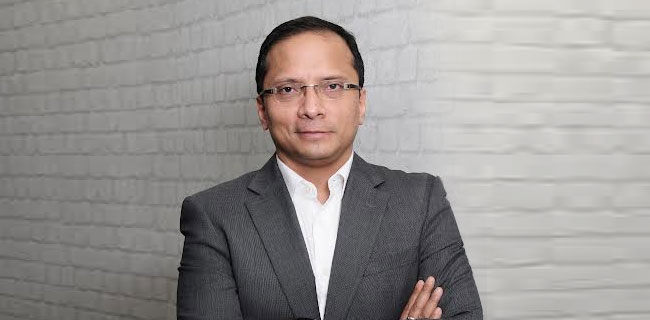
    Wieden+Kennedy India has bolstered its leadership team by bringing in Anirban Roy, to head Strategic Planning for its Delhi and Mumbai offices.


    In his last role, he was heading Strategic Planning for McCann Worldgroup in Delhi. Prior to which he has worked at Ogilvy and Saatchi. He has worked in Delhi, Bengaluru, Mumbai, Kolkata and Manila, where he steered strategic conversations at Nestle, Yum Foods, BMW, Amazon, Coke, Unilever, among others. He has also helped script the brand narrative for some of India’s unicorn start-ups like Licious & Flipkart.


    Commenting on the hire, Ayesha Ghosh, President W+K India said: “With Anirban’s valuable perspective, we intend to steer the fundamental brand thinking and look forward to building lasting brand relationships. While we’ll always have room for brands that want to do short term projects, the real test of an agency lies in building brands over years, like W+K has done with Indigo. Anirban has steered important brand conversations for many big MNC clients, as well as for start-ups and in doing so has helped them fetch Effie, Cannes, AME, Kyoorius and D&AD awards. I’m really excited to see him at work at W+K.”


    Added Santosh Padhi, CCO W+K India: “Client, Creative, Account Management and Strategic Planning are the four key pillars of advertising that build and hold the foundation of a brand and help grow their business. I’m happy that we now have the fourth pillar in order, with Anirban, to help our brands grow stronger, bigger and bolder.”


  • We’ve built a fabulous place. We’ve grown, hired talent, got clients…


    It’s not easy doing an interview with Rana Barua, Group CEO, Havas Group India. He reads your mind, and has perhaps guessed all the questions you are going to ask. But that’s why it’s challenging interviewing him, as we revive a new series of power interviews with industry captains. Excerpts from a freewheeling interview with Rana Barua.


    Let’s start by taking a stocktake of how things have been since the last time we interviewed you. How has it been since then?

    Honestly, we’ve probably surpass the expectations of the group in terms what India could overall build or achieve. Every global media company has a certain ambition when you are literally starting from a certain base or scratch. I think we have built a fabulous place-we have grown, we have built, we have created, we have hired talent, we have got clients.

    We have got an ecosystem where we currently have close to 15 agencies under the three verticals of creative, health and media. We are over 1200 people. We have become a very strong ecosystem where we have acquired agencies, we are doing well our creative and media are independently doing very well, and health is been quite steady. So, I think where we have reached a point where we are now only going to get bigger in our own ecosystem of Havas Group internally. We are setting much higher targets within the Group for ourselves and the global team is supporting us.


    You spoke on expectations – were the expectations high or low given that even though it’s been a while since Havas has been around in India, it has never really been among the top flight agencies.

    Havas Group, a French network, had not really invested in India. They were testing waters carefully and cautiously, which is why Bobby and I were brought on board to help turnaround the network. That’s what a lot of international companies have done – they have come to India, they have seen, they have tried and if it’s not happened, they have quietly left. Or some people have reduced their investments or some people have stayed there because of whatever reasons.


    You’ve spent some time in the recent past with the WPP Group. What is the key differentiator between WPP and Havas? The WPP Group is said to be run by accountants. What would you say is Havas?

    So, the WPP Group was naturally very finance-driven, very clear about the bottomline and numbers and all. I think the clear difference between WPP, and I think that is why I am enjoying my time at the Havas Group, is that Havas  is very entrepreneurial-led. Of course numbers are important, profitability is key, and why not? We are not a charitable institution – we are all running a business. But it allows you take a lot of risk, t allows you take a lot of decisions on your own.


    They allow you to make mistakes?

    Yes, of course. Absolutely.


    Anything that you can give an example of that perhaps as you look back may have been a mistake and they have said screw it, it’s all right.

    So, I wouldn’t call it a mistake. One of our acquisitions  didn’t work out for cultural reasons, for the reasons of the business model changing post-Covid. Before Covid, there was a reason why we had bought a certain agency with expertise on digital and we thought that this is how we are going to integrate it into the system. In the Covid years, we realised that it was very tough, things changed and the model changed. There were different conversations. So, culturally, we drifted.  But we moved apart beautifully. No clients got impacted. We are rebuilding and we have started looking for newer acquisitions which fit our culture.


    Would you look at another acquisition in the same space?

    Absolutely in the same space. The agencies that we are talking to are aware of everything. I think one of the big conversations that happen in our group is reputation. What is your reputation in the market? And that is something which is tougher than deliveries on financials.


    On a scale to 1 to 10, how would you rate the agency since you joined

    There are two ways to look at it. We see it one is as per your external environment — how you are doing in India vis-a-vis people and competition. And the other is your internal benchmarking. So, if I do an internal benchmarking, let’s say at a time when we came in, it was a 2 or 3. Are you part of the global team? Are you part of the global council? Are you part of the G9 or G10 as we call it as the best companies? No, we were not anywhere near that. There was no global reporting, we would never have any direct interactions and all. So, let’s say we were at a 2-2.5-3 out of 10 which probably has moved to 6-6.5 internally or a 7 which is a great place to be. Because now you are among the Top four-five countries where investments are happening, conversations are happening, centres of excellence are being formed, expansion plans are happening, acquisitions are happening. We didn’t have clients then and were probably at 2-2.5 to 3. We have done a fab job, So a 5.5-6. .


    On creative output, on creativity?

    5.


    And where were you earlier before you came?

    I don’t think we had any value. I don’t think we were even known, Now there are so many new clients who have come on board. I am not saying that the last two years has been very easy for the industry. So, I would say that we have raised the bar to a certain quality from where we were, and the investments have started.


    Investments?

    In terms of people and quality that we are hiring we have just announced few days back that Anupama (Ramaswamy) has joined us as the CCO with Bobby. We are going to be investing in a very strong CSO very soon. I think we realised that we probably invested a bit too early on a senior strategy head maybe we should have got the ecosystem right and then have someone.


    And awards? Not too many awards so far.

    No. Not at all.


    So, when do you think they will happen…

    From next year we will definitely see some…


    Your budget on sending entries will increase?

    Yes. Absolutely.


    Will you sending some 500 entries?

    No, not so many.


    That’s the shortcut to get many awards.

    Now, you are taking me to a heavy discussion.


    No. Fine. At the end of the day, awards are important for a creative agency

    Very important. When I joined, I said let’s give it three years. But then the pandemic happened. I have now done four years now, so in my fourth, fifth, sixth year is when we will see a lot of these recognition, awards and proper movement into a higher zone of growth and size and everything that’s now.


    Would you say that in the next two years you should be getting a good amount of awards?

    100%.


    A creative agency is looked at by the kind of work you do, and the awards you get?

    Yes, and that’s the same focus for media also we are looking at Emvies and Effies in a much bigger light. If your client list has moved up from two or three or four. If you look at the media client list or the creative clients list it’s now into 40s, 50s, 60s there are too many clients now they are all going to ask for recognition in any form.


    What is the pitch you give a person who is with another agency – why should they select Havas? Or, why should a start-up come to you?

    I think one of the main conversations we have on is the philosophy. It’s for everyone to see that people have started investing in this brand. So, if you look at the Havas brand, in the last few years, it has suddenly become a brand of choice for many people. They are seeing a very positive ecosystem which is delivering effective results. We have zero attrition in media, not a single client drop out in creative. There is a genuine effort to get the product right for the client, there is a partnership intent. I am actually telling people: invest in Havas and you will see the difference. If you ask me, what number am I? I will say I am number 4, 5, 6 whatever you tell me. But we are a very big number in our scheme of things, which is giving us the confidence to taken on large clients. We are invited for some of the largest pitches in the country. We may be winning some, we may be losing some… but we are striking gold in many places. We have got a lot of Tata work in… Tata CLiQ, Tata Luxury, Tata Beauty, Tata… we are part of most of the Tata pitches that are in the market right now. In media too, we are doing very well.


    How is the status of your acquisitions? Anything new coming up?

    I would like to first integrate and then look for newer ones and not just keep adding on agencies. Because one of my core philosophies is that you don’t grow on acquisitions, you need to have your own code and then add the acquisition. You can go buy 35 companies and you will have a number, but you will not have a culture. You won’t have a Havas Group. You will have a plethora of agencies which form a group. So, that was never the intent and that was one of the clear beliefs.

    I have always maintained that in India you have to build an ecosystem around creative and media.. So, while there were few acquisitions which came in under the creative banner, it took us two three years to fully integrate. There is absolute clarity on where we are headed, we are looking at an acquisition in performance marketing, we are definitely looking at a PR agency.. we are  looking for a digital agency. A B2C, hardcore, an integrated one and we are also looking for size. That’s the big difference from three years back. We are also looking at consumer experience journey, content, data…


    And how is activation and events agency doing?

    Very well.


    Even though the last two years were bad…

    Yes, Shobiz has done a phenomenal job this year.


    Since you are talking about Havas Integrated, is the money more on digital or is the money more in traditional advertising?

    In terms of media spends?


    Yes.

    In terms of media spends, it’s pretty much I would say 60-40. When you say traditional means you are talking about TV and all offline mediums right? It’s still 60%-65% there in media. But your returns on that 65% might be very little because you know how the commission model works. Your returns on that 35% would be much higher because that’s what digital allows you to do. In sum, if you look at the mix, India is still very skewed towards traditional formats.


    If we interview you a year from now what are the two three things that you think we will be talking to you about

    I think one will be on awards. And when I say awards, it means it just not one creative award it can be you won a lot of Emvees or you won a lot of Effies or you won an international award or something. So, I think that is one thing you are going to definitely talk about, is did you move the needle at all? The ecosystem is now on track. You can’t pull it back because the foundation has been created, people have come, system has been created. It’s in a great place now…




  • Dentsu Creative unveils CMO report


    By Our Staff


    ‘The Power of Modern Creativity: Insights for Today and Tomorrow’ report was unviled by Dentsu Creative with results from survey of CMOs in the UK, US, China, India, and Brazil asking what them what they need and want most from their agencies. The report identifies eight key themes that define the future of modern creativity, and what clients most want from their agencies 85% of clients agree that while consumer behaviour has undergone rapid changes in the last 5 years, the agency model is yet to adapt. 78% say that the silo-ed agency model is no longer fit for purpose in today’s world.


    Clients are seeking a new agency model, where creativity is a horizontal not a vertical, with 82% agreeing they “want to see creative solutions across every aspect of my business – Media, Commerce and CXM – just as much as in campaigns” India is the market where CMOs are most likely to have invested in creating their own TV programming.


    China and India dominate for the creation of Branded Entertainment and IP, with 53% of CMOs in these markets investing here, while China is the global leader in creating Branded Characters and IP As many as 78% of CMOs feel that the silo-ed agency model is no longer fit for purpose while 82% want to see agencies seamlessly combine capabilities to deliver new and innovative solutions, agreeing “I want to see creative solutions across every aspect of my business- Media, Commerce and CXM – just as much as in campaigns.”


    When asked what is needed to engage the next generation of consumer, 63% of CMOs say that brands need to create rather than borrow from culture. The vast majority, at 84%, believe that to connect with younger generations brands now need to “entertain and engage” to earn attention through entertainment properties or rich virtual experiences, most importantly, they believe that connecting the right diverse talent around their challenges, regardless of silos or geographies is the only way to deliver work that will resonate in culture.


    Said Amit Wadhwa, CEO, Dentsu Creative India: “We all know that the business landscape is rapidly changing and so are the expectations from agencies on how and what we deliver. It’s extremely essential for all of us to be in tune with the requirements and expectations in this changing environment. With this very objective, the CMO survey was conducted. What really excites me is that the responses augur extremely well for the direction we took when we launched DENTSU CREATIVE based on the philosophy of Modern Creativity. Excited with the way we are moving ahead.”


    Eight key themes identified and unpacked in the report:

    1. FROM COMPLEXITY TO SIMPLICITY

    Today’s clients reject artificial divisions and binaries, seeking simple but powerfully integrated solutions to their problems.

    73% of marketers agree that the modern comms landscape, and by extension their roles, have become increasingly complex.


    2. INVENTING THE FUTURE

    Investment in gaming, virtual technologies and social commerce continues as clients believe the online space is where their most meaningful customer interactions take place.

    84% agree that an online store should feel as immersive as an offline store.


    3. BIG IDEAS, BOLDLY EXECUTED

    The big organising idea is more important than ever but today big ideas must be executed in bold new ways, to connect in personal, contextually relevant ways.

    84% agree that Modern Creativity creates culture, it doesn’t just interrupt.


    4. RADICAL COLLABORATION

    Delivering Modern Creativity means rejecting traditional silos and traditional definitions of scale, using data and technology to nimbly connect the right talent around the right brief.

    76% want agencies to connect the right talent around the right brief, wherever it sits in their networks.


    5. CREATING CULTURE

    CMOs across the globe are investing in content marketing, entertainment and IP as never before, building their own audiences and creating their own properties.

    84% of respondents are implementing or have implemented Entertainment platforms and IP as a strategy


    6. HORIZONTAL CREATIVITY

    To thrive in the modern world, networks must embrace creativity across every touchpoint; content to commerce, media to CXM. Creativity is no longer a vertical or discipline but a horizontal.

    82% want to see creative solutions across media, commerce and CRM, just as much as in campaigns.


    7. CHANGING SOCIETY

    CMOs speak with one voice on the vital importance of using their platform for good and the imperative to pivot their business model in response to the climate crisis.

    84% agree that real change is only possible through sustained collaboration between businesses, consumers and policy makers.


    8. EMBRACING DIFFERENCE

    Designing for the modern world means investing in teams that reflect the modern world. Today’s agencies must embrace difference as the only true way to deliver work that makes a difference.

    95% agree that it is a brand’s responsibility to change behaviour and change society.

  • Dentsu Creative strengthens North creative

    By Our Staff


    Dentsu Creative has announced the appointment of Dalip Daniel and Tulika Seth as Group ECD and Group CD respectively. Both will report into Joy Mohanty, Chief Creative Officer, Dentsu Creative India.


    Speaking on the appointments, Mohanty said: “Together with a superb body of work, Tulika & Danny bring with them a wealth of experience across formats. They will both play a key role in driving our agenda of creativity beyond silos. It is great to have them on board.”


  • When the festival videos go marching in….


    With apologies to none at al


    By Vikas Mehta


    Vikas MehtaI am a sucker for feel-good, soppy, emotional videos. A story about a good deed or a sacrifice, or someone lending a helping hand to the deprived or needy, family reunions, going an extra mile to be considerate to other people; all this is guaranteed to make my eyes moist. Nothing wrong in it and I suspect most of us have same feelings and emotions for every act of kindness or goodness.


     

    And this is what we encounter with the festival season upon us in terms of brand videos and messages. As the famous song from Bruce Springstein continues, all brands like to join the festival videos number. What I have described above fairly summarises what all Diwali brand videos try to portray. I guess this is also the time for ad filmmakers to rake in the money. (As also for some over-the-hill Bollywood personalities and some famous TV stars).


    With the virus of viral culture, the only expenditure that the brands incur in making of the videos, media is not a concern as social media is supposed to do the job, free, it’s a free for all. So, we, the unsuspecting consumers, are subjected to a barrage of minimum 2-3-minute-long, mushy videos. This is also when I am thankful to whatsapp for their not more than 5 forwards at a time policy. Maybe, some people will get tired and I will not be a part of their forward list. That’s definitely one of my Diwali wish list.


    But I am digressing. After watching two-three Diwali videos for this year, I opened my YouTube feed and searched for Diwali videos. Unsurprisingly, some good folks had compiled “Emotional festival ads” which had been released in last few years. After going through the compilation here are my thoughts

    1. I remembered seeing almost all the videos before. Unfortunately barring one or two, I could not remember the brand associated with them.

    2. I think the brand custodians know this. So, most of them have a brand logo in the top right hand or left hand corner throughout the full duration of the video.

    3. Many of the videos have no connect to the brand narrative at all. Mankind Pharma, Oppo (or was it Vivo), Ghadi detergent, Vikram Tea were some of the mushy videos that tried an impressive sign off at the end which was more like a public service message than a brand message. Ghadi detergent ki ek gujarish is Diwali dimag ki mail nikalo (This Diwali remove all wrong impressions from your mind). Or nayi shuruat wali Diwali Vikram chai ke saath (This Diwali new beginings with Vikram tea). Or even Gharwali Diwali from Pepsi.

    4. The Pepsi Diwali video is a classic example of doing a long video for the festival season and in the process forgetting the brand personality. Pepsi is about a rebel, someone who does not follow norms, thinks out of the box, goofy fun. Coke on the other hand is all about family, getting together, fun and frolic with friends. It is also famous in the west for its Christmas time videos, which as a festival rivals our Diwali. Pepsi, actually tried to emulate the same by becoming Coke. Little surprise that no follow up happened in the later years.

    5. It’s all about views and likes. The Pepsi ad has had more than 17 lakh views in the last 6-7 years and I guess the brand custodians are happy about that. But does it help Pepsi as a brand?


    The role of a brand as one friend of mine said, is to create an inexplicable preference, an irrational disposition and an unwavering bias towards it. To do this brands need to not just be about rational benefits but create a space in the users heart and mind with strong emotional connect, continuously. The rational and the emotional have to work seamlessly together. I think with Diwali only a very few brand videos pass this test. So, let me stick out my neck and try to talk about what may work for Diwali videos.


    One, it’s not necessary for all brands to jump into the Diwali bandwagon. If the festival message suits your personality and more importantly play a role in the festival, then by all means use Diwali. Cadbury’s celebrations and Coke are two very good examples of the same. By all means, use Diwali for a promotion or to try and induce sales but it’s not necessary to do a feel-good Diwali video as a force fit.


    Two, if your brand can attach with a good purpose and can make it relevant to your brand then the role of brand gets amplified.  HP did it very well for a few years. They encouraged buying from small traders and wove their computers and printers very well with the story. The rational and emotional connect was perfect. For the last three years, Cadbury’s has been doing something similar but at a different level. More about that in the future. Asian Paints and JK Cement did it too. Asian Paints have taken it to another level in Bengal with its association with the Pujo pandals. The Aamir Khan AU Bank video failed to show the connect to badlav (change), which is what the bank is all about and the change in traditions. It is ironical that the brand which had earlier released ads about how they are changing consumer banking, could not relate the change in tradition to their story of badlav.


    Three, Diwali has many rituals. Maybe try and get your brand associated to those rituals. Surf Excel has intermittently associated Rangoli and Daag acche hain. A wonderous connect of a strong emotion of the festival with its rational, removing stain, claim. Asian Paints endeared to the ritual of cleaning and painting our house. Laxmi Puja, Bhai Dooj are more such rituals that can be associated with.


    Four, own the ritual. Take it up and celebrate it consistently year after year. Build a moat around that ritual for your brand. Cadbury’s celebration has aced the ritual of gifting sweets. And now they have taken it to another level by actually using technology to make Diwali sweeter for small traders and hawkers across the country. Kuch meetha ho jaye, kuch accha ho jaye (Have some sweets, do some good). Coke has aced the family get together ritual. That’s why these two brands are such relevant brands and can leverage Diwali well.


    Dassera and Diwali time is India’s Christmas, New Year, Thanksgiving, Super Bowl; all rolled into one. It’s every brand’s final destination. For many brands, yearly sales targets are met or lost in this time-frame. For many new brands this is the time to establish themselves. International brands like Amazon or Vivo try and use this time to weave a more Indian narrative about themselves. But the mistake most brands make is by thinking that an association with the festival is good enough. Personality, relevance to its own purpose, owning a ritual, all play an important role too. Just because you can afford a production and media can be generated free does not mean that the brand adds to the Diwali clutter.


    Which videos made the cut this year and which did not? Wait for a fortnight.


  • Are Hindu rituals the favourite hunting ground of brands?


    By Sanjeev Kotnala


    Sanjeev KotnalaIt is festival time, and every brand is trying to make a difference. Some work with the functional advantage to create a preference and charge a premium. Many brands adapt to the new purpose-led communication to influence customers. And a few rare breeds of brands, in the name of change, question rituals and their understanding and relevance in today’s world. Invariably the questions are targeted at the majority – Hindu. To an unbiased observer, the need and scope for reconsideration and rethinking of customs, traditions and rituals that exist only for the Hindus and other predominantly minority religions are perfect. There is nothing to change or question.


     

    Recently, SC rejected a plea to ban firecrackers. It said you are an opportunity and are coming right before the festival and should have come early, asking why and what they were waiting for. And this is right. Festivals are for the celebration of tradition, culture and rituals; raising issues and objections and suggesting new ways to the concerned community is absolutely hitting below the belt. I do not appreciate any brand – service, or organisation raising issues with the traditions of any community. There are positive and negative ways to do things, and brands should consider what is better.


    Why just Hindu?

    Most likely, it is a result of four simple things.

    Every brand wants to connect with the largest possible base of customers. Hindus form the largest chunk of the population and hence the natural choice for the creative and brand team to deep dive into it whenever they have a brief about change or community.

    Second, the Hindus have repeatedly demonstrated their incapability of taking any such attack on their culture, ritual, religion, or mythology to its logical end. They just raise their voices in protest on social media, suggesting boycotting the brand, and that is where they stop.

    The Hindus are victims of their own brand imagery of being secular and tolerant. Sanatan Dharma, in existence from time immaterial, pushes for adapting and inclusiveness. It has survived repeated attacks through time and is expected to continue doing so.

    It is old with a rich tradition of oral continuity and learning. As a result, the people of today readily believe that many truths have become fictionalized or exaggerated through time. And everything is anecdotal mythology lacking historical evidence. And hence the revered gods and goddesses and their messengers are mere characters in a story, which makes them an easy pick for suggestions and remoulding as per the brand’s liking.


    Science v/s Belief?

    So, from time-to-time, brands stretch the boundaries taking potshots at Hindus. Not all such instances are bad or wrong, they are progressive, and the new generation would agree with the brand thinking. However, there is only one option against the regular onslaught by brands challenging Hindu religious practices and thinking – defend everything questioned. Don’t not critically re-examine them as an isolated case. The fear remains that if one did not object to any of these instances, it would open the floodgates of questioning. Hence, at every opportunity, the challenge must be defended.

    Unfortunately, Hindus get trapped and forget that the defence cannot be based on scientific reasoning. It should be based on belief. Belief kills every doubt and reason for questions. Belief is the tactic and the tool that the minority uses so effectively, making the argument short.

    At times, a regular counter-argument is raised by the so-called secular forces. Is the Hindu religion so weak that advertisements can threaten it? Well, the direct answer is NO. However, if the attempt is continuous and on multiple fronts, there is bound to be an increase in doubts and levels of questioning.


    Blame the Brand and the Creative Team

    It is futile for Hindus to question the actors and the celebrities enacting the stories of change in brand communication. It is a deep strategic initiative of the brand after considering possibilities and potential reactions. They are in the business and think through their strategy. And, If they cannot do this simple thing, some consultants and advisors can help them with the possible reaction with analysis like SMEAR.

    So, whatever brand communication is finally in the public domain, it is approved. It is the brand thinking; this is how the brand sees Sanatan dharma. Maybe the followers should forget what the religious leaders, facilitators and guardians tell them. The brand knows better how Hindu practices must be shaped to remain relevant in today’s world.

    This reminds me of a simple, strong line from the recent movie Goodbye, and the brands should think about it. Everything that you don’t understand is not wrong. Brands having differential self-regulation beyond the guidelines and legality is highly desirable.


    Every brand communication could not be wrong?

    The problem is simple: the majority and the minority cannot allow any brand to question religious practices. There is no room for error or negotiation. Hence, every communication should be evaluated in isolation. The brands often suggest a little rethinking and point-of-view without questioning the basics. They use elaborate storytelling to create a situation – while suggesting a change. Not everything is bad, but no single body can define what is good and bad, what is acceptable and what is a cause for concern. Everyone has to take their own call.


    AU Bank – Badlav Hum Se

    The AU Bank advertisement is a case in point. It presents the flip side of the coin. Here the groom is coming to the bride’s home as a ‘Ghar Jawai’ for some reason, like the wheelchair-bound bride’s father. Usually, the bride stepping into the groom’s home would walk through the plate with Alta leaving her foot marks and kick a pot of rice. However, here it is playfully suggested that as it is the groom who is coming to the house, he should take the first step. What’s wrong with it? And if we allow our insecurities to raise such flippant questions, we will kill the art of storytelling. How come we understand that the breed of new authors in mythology space create contemporary fiction and not question the beliefs. Still, we forget when it comes to advertising.


    BharatMatrimony #BeChoosy

    This is a different case by Bharat Matrimony , a provocative thought. Breaking of Karva Chauth fast. No married woman will think breaking the fast is for her husband’s long life. This is a celebration of the thought. It is collective working towards what is good for the family and adapting to the situation. This is the celebration of culture with a strong positive statement- if I can fast for your life, I can also break my fast for you. This also shows that a negative portrayal is not the only way to question tradition or culture.

    In the past, the Stayfree communication – touch the pickle was the right suggestion with new solutions. And every year, we find new brands getting caught in this trap of questioning- where the celebration would be a far better option. Earlier brands like Tanishq and Manyavar did face the Hindu music.


    Net-Net

    The change will happen- it is a natural process. Questions will be raised- and they will be full of agenda. Suggestions will be made even by the least interested and knowledgeable in trying to hasten the process. However, suppose the brands think through the initiatives and stop poking fun only at Hindus. In that case, life could be much more straightforward. Conversely, Hindus may be better off by not questioning every brand communication that even remotely suggests a different perspective. However, personally, I think and reiterate that these brands under their purpose and change have no right to raise finger on the rituals and traditions of any community. And if they start raising issues with traditions of other communities, it does not solve the purpose or address es the issue. Such changes have to come from the communities and start at a group level. Brands taking on position and using mass media is not the way. The time is over and the brands may encounter harsh reality and retaliation in the place it matters- the market place.


    Sanjeev Kotnala is a senior marketing and business strategist. And an educator. He writes on MxMIndia every Wednesday. His views here are personal


  • Network Advertising & Whisper Media partner with Vinod Cookware

    By Our Staff


    Vinod Cookware kitchenware brands, along with its AOR, Network Advertising, is going mainstream by partnering with Whisper Media for a series of In-Content Advertisements (ICA)  in the festive season. In addition to the ICA ads, the brand will also be running quarter-page ads in mainline newspapers ‘Hindustan Times’ and ‘Hindustan’ to promote its Platinum Series and Pressure Cookers.


    Said Priya Jacob, President- Media, Network Advertising Pvt Ltd: “The campaign is designed to maximise the Reach of the brand’s promise of being an intelligent cookware in our target markets. We believe that this campaign will establish Vinod Cookware as a trusted and intelligent cookware partner for our consumers.”


    Added LS Krishnan, CEO & Director, Whisper Media India: “Vinod Cookware has associated with Whisper Media In Content Advertising (ICA) since its inception and it is heartening to know that the format has worked for them. Vinod Cookware has been a pioneer in using this format and this reflects its ethos in doing disruptive innovations, be it on the product side or Media. The attention that Whisper ICA delivers enhances the message and brand recall in the era of clutter and short attention spans. We are privileged to be associated with Vinod Cookware.”


  • Ogilvy promotes BSA LB cycles with campaign

    By Our Staff


    BSA LB cycles is set to launch their latest range of girls’ cycles during the ongoing festive season. The campaign is created by Ogilvy India (South).


    Speaking about the campaign, Vimal Varijakshan, Senior Brand Manager, BSA, said: “As a brand our mission has always been to enable young girls to be the most fearless version of themselves. With our new range of vibrant contemporary cycles, we wanted to bring a new offering into the market that was as dynamic and energetic as the girls who ride them. With the launch of this campaign, we hope to empower the young girls of today and tomorrow and open a world of possibilities and this campaign is our ode to their drive and courage.”


    Throwing light on the creative journey, George Kovoor, Group Creative Director and Digital Lead, Ogilvy South, added: “Today, young girls are defining their own journeys – they choose their path on their own and pursue them without fear. This film gives a voice to those girls and their ambitions. I hope that this film inspires more and more girls to pursue their passions, to head out, explore and discover their own roads.”


  • Brands like Dhara & Sabhyata show how to do it the right way


    By Sanjeev Kotnala


    Sanjeev KotnalaFestive times are the times to celebrate. Time to understand and appreciate the positivity of rituals and practices. Time for inclusive togetherness and not the time to point figures.

    There are enough issues, problems, and opportunities relevant to the brand category and promises that can be exploited. There is no need for brands to look at religious rituals and practices to question. This year we have seen fewer brands opting to question religious rituals and practices. It seems brands have understood that it does not make strategic sense to risk business for some fancy agenda of change.

    Some brands understand the subtle need and nuances to strengthen their positive connect with their audiences. They have a purpose, maybe even a real purpose. They remain sensitive to their ecosystem and do it the right way. Here are some examples.


    CADBURY

    Cadbury has used festival time and Diwali, in particular, to add freshness and smiles to people. The efforts are enormous, and the impact is measurable. They address real problems and provide real-time solutions within festival mood and ethos. There is a genuineness in creating inclusiveness in business and a consistency in approach through the years. The purpose here seems genuine. This year’s effort- Jinki Dukan Nahin Hoti– for people with no fixed place to set the shop is brilliant.


    DHARA.

    Dhara’s new ad in the series Khane Pe Kehna’ celebrates the festival. Dhara does not ask the audience to change; it asks them to return to the original ritual and practice of sharing and distributing handcrafted, homemade sweets. The family gets together and shares responsibility. In the process, the tradition and the art of making sweets get transferred through the generation.

    Maybe the older generation will remember it more. The current generation is happy sharing and delivering e-commerce goodies. The line ‘Tyohaar Ke Rivaj mai Zara Sa Badlav lana Hai. Apno Ko Ane Haath Se Khilana Hai’ is apt and well-presented in the ad. In fact, the way the daughter places the suggestion is full of grace and respect.


    SABHYATA DIWALI 

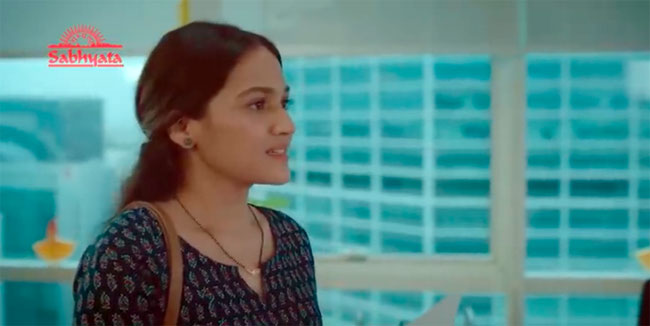
    Sabhyata’s Diwali ad is a simple story. It demonstrates an understanding of the new-age women’s aspirations and issues. And there is a different hiring ritual – that’s it. The leisurely build-up aligns with how it wants to steal your attention. Sabhyata, the ethnic wear brand, as something to wear to the interview connects. Though there are a few questions, is the message to hide the pregnancy the right message? Is that empowering, or is that re-instating the fear?

    I believe sometimes we should stop being too critical and stop debating every frame from a logical point of view. The communication must be seen in its totality. The only issue is that the advertisement may only work with people aware of the brand. The product does not really stand out and speaks to the potential future consumers- which it could have done to expand its base.

    Sabhyata has challenged the expected stereotype and practices in past. Here is another ad from the brand where mother-in-law and daughter-in-law team together to trap the husband into making tea.


    DABUR RED TOOTHPASTE

    Indian dental care market has seen everything. The concept of ingredients that help dental care has come a complete circle. People understand the Indian brand’s formulation and benefit outweighed the MNC-created products. The MNCs, which once denied and rejected Indian understanding of dental products, now outshout each other in telling the consumer they have it all, from Salt to charcoal.

    Dabur Lal Dant Manjan is one such product. The contemporised format Dabur Red Toothpaste promises the same results and uses modern-day science’s power to extract the best of Ayurveda.


    So, you have Amitabh Bachchan presenting the logical part of communication. And there is a song and dance version made on the 80th birthday. It uses the famed AB song- Ek Rahe Bir … They bring in three ‘gora’ and their dental issues while AB continues enjoying the fruits of strong teeth. It works. The song, ‘Eer Bir Phatte’ remade for Dabur Red Paste, nicely presents the story and the product benefit- maintaining problem-free healthy oral care.


    HP WORLD STORE.

    HP World Stores’ #ThodiSiJagahBanaLo (make a little space) calls for supporting the local Indian artisans to showcase their art and scale it up. It is a simple story but powerfully presented. The brand has taken the thought to the street with HP WORLD STORE across some cities bringing alive the idea in real life.


    REAL ‘ME’ DIWALI

    Primed with tradition and the meaning of the festival is the Real ‘ME’ Diwali advertisement. An overload of emotions and a story that may resonate with the new generation is a meaningful brand expression.


    And then there is BharatMatrimony  I discussed in the last blog, and Tasva– the Naya Nazariya– which was nothing new.


    NET NET

    The above are rich examples of change. They do not question religious practices but operate within the gamut of collective togetherness and the spirit of festivities celebrating the possibilities. The brands are sensitive to the business ecosystem, and the communication is powerful and relevant to the category.

    There are enough issues, problems, and opportunities relevant to the brand category and promises to be exploited impactfully. There is no need for brands to look at religious rituals and practices to question, and maybe the brands will understand it.


  • Havas Life Sorento elevates Sachin Talwalkar to CCO

    By Our Staff


    Sachin Talwalkar
    Sachin Talwalkar

    Havas Life Sorento, the health, wellness marcom and digital agency of Havas Group India, has elevated Sachin Talwalkar, Executive Creative Director, to Chief Creative Officer.


    As a part of his new role, Talwalkar will be responsible for further bolstering the agency’s creative and communications efforts through Havas Life Sorento’s offering in healthcomm. He will also be responsible for expanding the agency’s scope through digital health, health CX and consumer health within India, Southeast Asia, and the Middle East, effectively making India the hub for Havas Health & You. The aim is to become the ‘go-to’ and cutting-edge healthcomm agency in the region.


    Bobby Pawar
    Bobby Pawar

    Speaking about the elevation, Bobby Pawar, Chairman & Chief Creative Officer, Havas Group India, said, “Sachin’s elevation is in recognition of the role he’s played in transforming Havas Life Sorento over the last few years. He has brought in better talent and has fostered a climate where they can do their best work while having fun in the process. He has evolved the creative department based on my belief that creatives with traditional and digital skills must work together so that they infect each other and, in the process, become more rounded creatives. Lastly, he’s been a great partner to me, always ready to help out with anything.”


    Sangeeta Barde
    Sangeeta Barde

    Added Sangeeta Barde, Managing Director, Havas Life Sorento said, “I am confident that with this elevation, Sachin will continue to make a difference to health and wellness communications and create a team of passionate people under him who will set the creative benchmark within the industry and the region.”


  • Samsung Ads & Verve table survey on response to ads on TV

    By Our Staff


    Samsung Ads India, the advertising division of Samsung Electronics, partnered with global market research agency Verve to survey a panel of 700 Smart TV users in India.  The research aimed to uncover advertising engagement across various TV platforms, including linear TV (cable) advertising supported video on demand (AVOD) and subscription based video on demand (SVOD) that are set to introduce ads as part of some subscription tiers.


    Said Prabhvir Sahmey, Senior Director, Samsung Ads India & South East Asia, of the report: “The Indian market demonstrates a high degree of receptiveness to ads shown to them on their TV screens. To maintain this momentum, it’s important for advertisers to understand the dynamic TV landscape and how audiences respond to differing  platforms so that ads can be delivered to the most appropriate audiences at the right moments. To keep high degrees of engagement, a data-driven approach to advertising will be critical so that brands continue to  reach the right audience with the most relevant message at the best time. ”


    According to the survey, 81% of Indian consumers are happy to watch ads on their TV screens in return for free content, according to a new study commissioned by Samsung Ads India.


    :: Relevancy of ads

    In addition to the vast majority of respondents who are willing to watch ads in exchange for free content, a similar amount (80%) claimed to be happy to watch ads if they featured content relevant to them.

    Respondents considered AVOD and SVOD services to be the best at delivering relevant ads with 63% and 64% of respondents agreeing, respectively. More than a third of Indians (38%) [LB1] who watch ads in full on AVOD find them to be engaging due to their length and relevance. The ads are perceived as shorter and therefore less disruptive to the viewing experience.


    :: Emotional response

    According to the research, over half of respondents in India demonstrated a positive emotional response to ads across all platforms. Both SVOD and AVOD generated the most positive emotions amongst audiences.

    SVOD prompted 63% of respondents to feel excited, whereas AVOD prompted 60% of respondents to feel the same emotion. Similarly, 64% of respondents thought SVOD ads were enjoyable and 62% considered AVOD ads to be enjoyable.

    These positive reactions help to explain why Indian respondents said they were more likely to take action in response to advertising on AVOD (64%), followed by SVOD (62%).

    This reflects how effectively streaming services have been at delivering ads to Indian audiences in OTT settings. Unlike in other markets, Indian audiences demonstrate little distinction between these services, with some SVOD services already offering an ad-supported tier. Whilst SVOD is a strong performer in India, there is consumer frustration that ads are being shown on paid subscription-based channels. Whereas in other markets, the introduction of ads to the streaming giants is still very much in its infancy.


    :: Trustworthiness of ads

    Just under two thirds (62%) of Indian respondents were likely to take action in response to an ad shown to them across all three platform types (AVOD, SVOD, and linear). This is likely a reflection of how highly this market trusts the ads which are delivered to them.

    More than 60% of respondents in the survey considered ads across platforms to be trustworthy. This is highest in an SVOD setting where two thirds (66%) of respondents trusted the ads. Similarly, 64% of Indians trust the ads they are shown in AVOD.


  • Omnicom wins mandate for Electrolux

    By Our Staff


    Omnicom Media Group (OMG) India has been appointed to manage the integrated media mandate for Electrolux. This will involve creating end-to-end media solutions for the business and accelerating its growth journey in the market.


    Notes a communique: “Team OMG will help Electrolux scale to new heights by drawing on its talent, strategic capabilities and data-driven approach; as the brand ramps up its proposition and presence in India to achieve sustainable growth.”