
Category: ADVERTISING

  • What ails Brand Pakistan @ 75…

    https://www.freepik.com/
    Source: Freepik.com


    By Avik Chattopadhyay

     

    Avik ChattopadhyayAs we celebrate ‘Azadi ka Amrit Mahotsav’, so is Pakistan celebrating ‘Jashn-e-Azaadi’ to commemorate 75 years of its existence. The first is the cause while the latter is the effect!


    Pakistan would not have happened but for the creation of India as an independent nation state in August 1947, so technically, while India can rightly claim this as her 75th year of independence, Pakistan technically can claim this her 75th year of creation. Therefore, our neighbours in the north by northwest should be celebrating their ‘Jashn-e-Wajood’.


    This paradox itself is a demonstration of brand “Pakistan”. A brand made up of contrasts, paradoxes, and conflicting paradigms. Its very creation is due to the existence of another. Therefore, it’s very lifeline is dependant on the health of another.

     

    This is the typical image of the brand. It is a bit like a parasitic plant, living on the nutrients from another brand that is India. Maybe I sound too harsh, but that is the reality of brand Pakistan today. Almost all references to Pakistan are vis-à-vis India. Comparisons are natural to be drawn but they are of the nature of proving time and again that the brand has been one big mistake. I remember listening to a lecture by journalist M.J. Akbar in 2016 where he said that the current state of Pakistan actually proves that partition, though painful, was a correct step in India’s favour. And Pakistan has not done itself any favours over the last two decades to prove us wrong.


    Can the 75th year of its existence give it the space to introspect? Is the Pakistan today the one that the elites of the Muslim League led by Syed Ahmed Khan had dreamt of in the early 1900s? Is this what Mohammad ‘Allama’ Iqbal visualised? Or for that matter even Jinnah? While the germination of the thought of a separate state for the Muslims in British India was a reactionary one, emanating out of fear of losing out rather than any positive vibes, being casually called a ‘rogue state’ and a ‘basket case’ could never have been the desired outcome.


    And it is this fundamental principle of brand creation and building that decides where it finally ends up. A brand born out of negative emotions cannot last for long in a positive state of being. It is inflicted with complexes of various dimensions… neglect, inferiority, and lack of self-belief. The brand cannot stand on its own feet. And this exactly is the malaise of brand Pakistan.


    Pakistan is one of the world’s richest cultural and civilisational regions. It is the one melting pot of Mehrgarh of the Neolithic Age, Indus Valley of the Bronze Age, the Greeks, the Seleucids, the Mauryans, the Kushans, the Guptas, the Umayyads, the Hindushahis, the Ghaznavids, the Sultans, the Mughals, the Durranis, the Sikhs and the British. It carries a historical legacy that would have seen it as one of the most socio-culturally thriving parts of the world. It could have created a model nation state based on plurality of cultures rather than the purity of faith it opted for. It has ended up choosing the turbulence of multiple cultures rather than their inherent richness. This is so typical of brands that somewhere neglect their roots and natural moorings and go for causes that are non-credible, transactional, and synthetic.


    Pakistan is the land of the Nobel winning physicist Dr. Abdus Salam. It is the land of the pathbreaking ‘Ommaya Reservoir’ that transformed medical surgery. It is the land of Naveed Zaidi who developed the first plastic magnet. It is the land of the Farooq Alvi brothers who created the first computer virus (c)Brain! It is the land of Raza Kazim who has created the Sagar veena. It is the land of Mahbub-ul-Haq who created the ‘Human Development Index’! It is the land of Abdul Sattar Edhi who set up the world’s largest private fleet of ambulances.
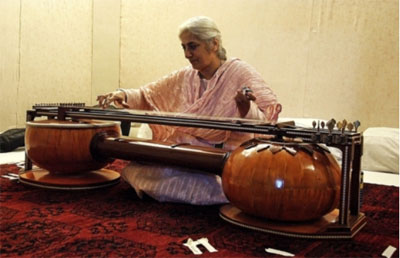
     

    Noor Zehra, daughter of Raza Kazim, playing the ‘Sagar Veena’

    Pakistan is Faiz, Manto, Iqbal and Eliya. Pakistan is Imran Khan, Hassan Sardar, Jahangir Khan and Abdul Khaliq. Pakistan is Nusrat Sahab, Abida Parveen, Nazia Hasan and Strings. Pakistan is Sadiq Khan, Riz Ahmed, Ayesha Jalal and Zayn Malik.


    Pakistan is well beyond the army, ISI, JeM, Masood Azhar, HuM and the Taliban. Pakistan is well beyond bombings, ethnic hatred, corruption, and fundamental terrorism. But the brand is a victim of such a narrative. Pakistan today is a pale picture of the vibrant Pakistan of the 1960s and 1970s. It stands before India today as a stark reminder of what we could become and should stay away from.
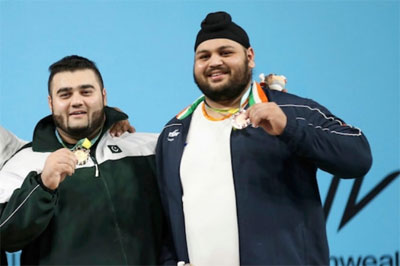
     

    Nooh Butt and Gurdeep Singh in Birmingham

    When Nooh Dastgir Butt dedicates his weightlifting gold in the just concluded Commonwealth Games to Mirabai Chanu and celebrates with his dear friend and Indian weightlifter Gurdeep Singh dancing to Siddhu Moosewala songs, it is a Pakistan that is counter to the popular narrative. When Arshad Nadeem throws his javelin beyond 90 metres and remembers his sparring competitor Neeraj Chopra in his moment of victory, it is against the narrative.


    On 31st May this year, the Institute of Policy Studies in Islamabad and the Fatima Jinnah University in Rawalpindi organised a seminar titled ‘75 years of Pakistan: Constitution, Public Representation and Governance System’ where some of the sharpest minds reiterated the crucial role the revised constitution of 1973 plays in keeping powers in check and needs to get stronger by the day. To quote from the deliberations, “Martial laws have been imposed on the country a number of times, however, all of the initiators had to seek some form of public representation after some years. Ayub Khan had to resort to local democracy, Zia-ul-Haq had to conduct a referendum to provide the impression that he was a representative of the people, even Pervez Musharraf had to turn to local bodies elections and a referendum.”


    In 1956, Pandit Nehru saw Abdul Khaliq run the 100 metres and called him ‘Parinda e Asia’.

    In 1960, Ayub Khan saw Milkha Singh race against Khaliq and called him ‘The Flying Sikh’!


    On the 75th anniversary of its existence, Pakistan has to take a strong hard look at what defines its very existence as a brand. It has to question its core purpose and promise to itself. It has to decide whether to remain the parasitic rafflesia flower or evolve into the the symbiotic orchid. And that will be done by its people and not the government, army or ulema.


    The two brands of India and Pakistan are inseparable. How I wish the two nations were to together celebrate ‘Azaadi ka Amrit Jashn’. For each brand has a part of itself living in the other.


    I conclude with the final lines from Piyush Mishra’s song ‘Husna’ written a decade ago…


    “Aur rota hai raaton mein

    Pakistan kya vaise hi

    jaise Hindustan,

    O Husna?”

    [And does Pakistan shed tears every night just as India does, my love?”]


    Jeevey jeevey Pakistan!

    Jai Hind!!


    (You could watch the song being performed by Piyush Mishra and Hitesh Sonik at Coke Studio MTV Season 2 on YouTube at https://www.youtube.com/watch?v=4zTFzMPWGLs)


    Avik Chattopadhyay is a senior brand and business strategist and advisor based in Gurugram. He writes on MxMIndia every other Thursday. His views here are personal.


     

  • Tiranga everywhere


    By Sanjeev Kotnala


    Sanjeev KotnalaAs I look outside, I can see that the density of Tiranga decorations is slowly decreasing. And am sure that in a few days, it will be tough to catch a sight of the tricolour in the near vicinity. Unlike other years, there was something different. The energy and public participation were like any other major community/ religious festival.



     

    Yes, there was the usual hoisting of the national flag, a march past and the patriotic songs blaring since morning.


    The permission to fly the Tiranga at home is not new. It was in 1995 that Navin Jindal approached the courts as the Flag Code prohibited flying the tricolour by private citizens. The Supreme Court’s 2004 judgment allowed every citizen to fly the national flag with respect, dignity and honour, thus making it a fundamental right. However, more changes were needed in the Flag Code before the Har Ghar Tiranga festival could be pushed. The Flag Code of India, 2002 was amended permitting national flags which were machine-made or made of polyester and earlier handmade khadi material. Further amendment on July 19 2022, allowed the flag during day and night, thus paving the way for the nationwide celebration.


    It is different that if one strictly followed the Flag Code, many citizens could be under scrutiny and penalised for Flag misuse. Understanding the passion and the festivity – many incidents have been overlooked as they confirmed flying the flag with respect and right intent.


    There was a marked difference in the level of respect and care demonstrated by the citizens. There was social media communication on how, when and where to fly the Tiranga. How to dispose of and what to do after the festival. Some brands sensing the opportunity, have come forward for the proper disposal of Tiranga with all respect and care. We need more of it.


    The government could be faulted for not using the opportunity to push educating citizens about the national flag and anthem. It could have been done by communicating it through media- and would have been a minor part of the overall cost. Maybe the media could have done it on their own.


    It is essential to impart this knowledge, respect, and care in the early stages of education- at the school level. In marketing and branding terms, this was a 75th year celebration, a window of opportunity to recharge the nation. A perfect window for a Har Ghar Tiranga campaign.


    Further, it may be noted that the government, as part of the Har Ghar Tiranga, urged the citizens to fly Tiranga at their homes. However, the citizens have the full freedom and fundamental right to fly Tiranga every day and night of the year.


    TIRANGA SHOULD UNITE, NOT DIVIDE.

    Tiranga is a national pride that every citizen respects and cares for. So, making it in any way associated with religious and regional symbolism is a waste. One was surprised that SRK and Aamir Khan flying Tiranga at their residence was news for all the wrong reasons. Flying Tiranga or not flying it is in no way a measure of someone’s Desh bhakti – patriotism or nationalistic sentiments. It should remain so.


    NET-NET

    I hope this does not remain a one-time campaign. I hope we use the two opportunities almost six months apart, Independence and Republic Day, to celebrate the nation. And for that to continue and be purposefully pushed, we need to be cautious, educated, and respectful in handling the nation’s pride- our Tiranga.

    I hope that in future, we do not have to make do with wrongly crafted, poorly printed and shoddily cut fabric as the tricolour. I wish that we get back to only hand-woven Khadi material Tiranga. Perhaps, it is time that we have a set window for the national anthem and hoisting of the flag across the nation on such a day.


  • Publicis Worldwide appoints Oindrila Roy as MD

    By Our Staff


    Oindrila Roy
    Oindrila Roy

    Oindrila Roy marketing has been appointed Managing Director at Publicis Worldwide India.


    Paritosh Srivastava
    Paritosh Srivastava

    Welcoming Roy to the agency, Paritosh Srivastava, who also helms PWW operations, said: “Publicis Worldwide is the flagship agency network for the Groupe and India is a very critical market. Finding the right leader for PWW was quite a task. Oindrila is just the right person for the role for many reasons. She is that rare breed who has solid traditional brand management experience along with a keen sense of where the future lies. Oindrila has a rich and varied exposure to creative agencies, media and data, which our wonderful brands and clients can benefit from. Having worked in the Groupe before, she is familiar with the philosophy of ‘Power of One’ and the magic it can create for our client partners.”


  • GroupM Nexus appoints senior leadership in APAC

    By Our Staff


    GroupM, WPP’s media investment group, has unveiled a roster of C-suite appointments in Asia Pacific (APAC) who will lead the regional transformation of GroupM Nexus, a global performance organisation that unites the network’s performance talent and technologies into one single outfit.


    Arshan Saha
    Arshan Saha

    GroupM Nexus APAC leadership appointments comprise Arshan Saha, CEO of GroupM Nexus APAC (formerly CEO of Xaxis & Specialty Businesses APAC), Jon Thurlow, COO of GroupM Nexus APAC (this is an additional appointment to his corporate remit as COO of GroupM APAC), Deepika Nikhilender, CEO of Xaxis APAC (formerly Senior Vice President of Xaxis APAC) andBrett Poole, CEO of Finecast APAC & AUNZ (formerly Managing Director of Finecast Australia).


    Said Saha: “GroupM Nexus is a cross-channel performance-led organisation that unites our expertise in service excellence, AI-technology and the most advanced solutions. This is the future of marketing, and we are poised to offer our clients and agencies the most powerful performance engine that will accelerate their growth. I’m honoured to be working alongside some of the world’s best specialists at GroupM Nexus to collectively cultivate a better media ecosystem.”


  • Leo Burnett LB launches LB Regional…

    By Our Staff


    Publicis Groupe owned Leo Burnett India announces the launch of LB Regional, a specialised division helping brands maximise their reach with national audiences by understanding region-wise insights.


    Dheeraj Sinha
    Dheeraj Sinha

    Speaking about the launch of the division, Dheeraj Sinha, CEO, Leo Burnett, South Asia & Chairman BBH India said: “To succeed in today’s times, brands need to win in regions, not just nationally. Often, brands have opportunities or problems that are typical of certain regions.  We have to deploy region-up thinking, using insights of that region to be able to solve for these. Also, there is a growing demand for local, vernacular, Indianised content, which if done right, presents a big opportunity for brands to grow their audiences. With this in mind, we have created this division which helps brands think and create regional-level solutions. We already created local level interventions for some brands and have seen great results in going region-up rather than national-down in our thinking and creation.”


  • IAA IndIAA Awards to salute 75 years of Independence

    By Our Staff


    The IAA India Chapter will conduct its annual IndIAA Awards in Mumbai on August 23.


    Megha Tata

    Said IAA India Chapter President Megha Tata: “As the country celebrates 75 years of its independence, we will be structuring our awards event around the meaningful role communication has played in fostering the idea that is India. I am very happy that in its 7th year the IndIAA Awards has carved out a special prestigious niche in the minds of the communication industry.”


    Abhishek Karnani
    Abhishek Karnani

    Added IndIAA Awards Committee Chairperson Abhishek Karnani: “These are unique awards that salute real hardworking advertising. The short list is compiled by a set of senior journalists and these are judged by an eminent jury comprising of advertisers who own and invest in brands. The awards are presented to the co-creators of the winning work”


    This year the jury chair was Suresh Narayanan, Chairman & Managing Director, Nestle India and included Charulata Ravikumar, Managing Director-Accenture; Karan Shroff, Partner & Chief Marketing Officer, Unacademy; Vineeta Singh, CEO & Co-Founder, Sugar Cosmetics & Vivek Khanna, COO, Mahindra Holidays & Resorts India Limited.


  • Dentsu onboards Bhasker Jaiswal as COO, Media

    By Our Staff


    Bhasker Jaiswal
    Bhasker Jaiswal

    Dentsu India has announced the appointment of Bhasker Jaiswal as the Chief Operations Officer, Media, Dentsu India. As a member of the executive team, he will report to Divya Karani, Chief Executive Officer, Media, Dentsu South Asia.


    In his new role, Bhasker will lead integration, transformation, and operational excellence agendas while driving innovations and excellence for Dentsu clients and businesses through its three award-winning media agencies; Carat, iProspect and Dentsu X. He will work closely with Karani to deliver business transformation, set up and standardise operations and systems, govern product leadership, and enable sustainable revenue growth.


    Divya Karani
    Divya Karani

    Speaking on the appointment, Karani said: “Bhasker joining the team here in India is another great step on our journey to become the go-to network of choice for brands in India. His impressive track record, savvy business judgment, operational excellence, and an innate understanding of people and their motivations make him ideal to lead our transformation and integration.”


  • Three Routes to Global Relevance for Indian Brands


    By Ashoke Agarrwal


    Ashoke AgarrwalIt is time for Indian brands to bid for relevance on the global stage. An extensive and high-growth domestic market can provide the ballast. Here are three ideas that can do the rest:



    Leveraging India’s Soft Power: As of today, only the practice of yoga has leveraged this power. Though only as a generic brand. Is there enough juice left in the concept of yoga for an Indian consumer brand to parlay it into global prominence? Can the power of yoga go beyond the category of yoga studios and yoga mats? For example, can a fashion and personal accessories brand out of India based on the core material and design principles of yoga become a global player? Ayurveda is beginning to emerge on the world stage. While selling it as a branch of medicine worldwide is fraught with high resistance and many pitfalls, I think it has potential as a personal and health care platform. However, to go beyond appealing to a niche audience among the Indian diaspora and diehard Indophiles, a personal and health care brand based on Ayurveda will need to adapt and invest in scientific research and testing with a vengeance. L’Oreal and its sister brand Garnier won global leadership by combining the natural ingredients story with the pharmaceutical activation concept and by putting high-intensity marketing behind it. Companies like ITC and brands like Haldriram have successfully taken packaged food based on Indian cuisine to the global market. However, their success again has mainly been confined to the Indian diaspora. I believe there is excellent global scope for an Indian cuisine-based fast-food chain. The key here would be to crack the technology to deliver Indian cuisine at scale across geographies. Indian ethnic wear is the other area of potential.


    Take The Leap Into Web 4.0:A lot of hype and capital has gone into the concept of Web 3.0 built around technologies like blockchains, cryptocurrencies, NFTs and metaverses. Most products and services based on the above ideas cater to the millennial mindset. However, marketers worldwide are beginning to realise that the mentality of the next generation of young – Gen Z – is very different and, in many cases, the antithesis of the Millennial mindset. Gen Z looks beyond self-fulfilment to ‘self-expansion’ – an experiencing of multiple identities by immersing oneself into the reality of various situations, communities and ways of being. In a way, the typical Gen Z will be a neo-hippie, unlike the Millennial who is a neo-yuppie. Tomorrow’s winners in the technology services and the content arena will be those that understand this mindset and cater to it. The core Indian ethos of subsuming the individual into a spiritual and community identity will appeal to this neo-hippie outlook. Combine this with India’s technology edge, and India could lead a Web 4.0 revolution to global leadership.


    The ‘High-Quality Low-Cost’ Quadrant: The earlier Make in India initiative and current Production-Linked-Initiative (PLI) stimulate the B2B manufacturing sector and, to some extent, the consumer electronics sector, mainly smartphones. I believe there is excellent scope for India to attract global FMCG brands to make their products in India for the worldwide market. To attract top brands to India will need the removal of bottlenecks in the availability of quality ingredients and some reimagining of duty structures and tax incentives. The advantages of developing a ‘high-quality, low-cost’ ecosystem in India for global FMCG brands are many:

    » A boost to the agriculture sector

    » Mass employment prospects

    » Balance of trade improvement

    » Better quality products for the Indian consumer stimulate the Indian consumption economy, leading to a virtuous cycle.


  • How should brands react when prices are going up?


    By Mary Kyriakidi


    Published with permission from an article first published on Kantar.com


    The scary thing about inflation now is not that it’s the highest it’s been in 40 years, it’s that it’s high and trending up. The last time this happened – back in the late seventies and early eighties – recessions followed. Money supply was reduced, and interest rates were raised and, as in a perfectly built chain of dominoes, the last piece to fall was aggregate demand. Consumers spent less, unemployment rose, and, as a result, inflation gradually subsided.

    The last two generations of consumers (and marketers) have only read about high levels of inflation in economic literature, they haven’t had to deal with it in real life. But for the last six months, the rate of change in the prices has been hard to miss. Labour shortages and rising energy, gas and oil costs have inflated consumers’ basket of goods and shrunk businesses’ margin potential.

    History teaches us that strong growth isn’t on the immediate horizon. And that’s ok.


    Growth is achievable if you sort out profit first

    Christensen, Harvard Business School professor and the architect of the world’s supreme authority on disruptive innovation, said that innovators should be patient for growth, but impatient for profits. As sage as this advice sounds, our world currently has a fascination with billion dollar unicorns that hastily sacrifice profitability and sustainable growth at the altar of growth at speed (think WeWork: the making and breaking of a $47 billion unicorn).

    Growth at all costs might take you to the poor box. Such is the finding of a research study by Per Davidson at al. that was later replicated with greater rigour by Cyrine Ben-Hafaïedh and Anaïs Hamelin. The two academics conducted a study covering over 650k firms spanning 28 countries and a variety of different sectors and sizes. Their findings?

    Firms are much more likely to end up in the enviable position of achieving high growth and high profitability if they focus on profitability first, and then expand. They also found that firms are much less likely to become profitable because of their growth.

    We believe the same principles apply to brands of any size. A focus on growth alone is not enough and can even be dangerous. Brands create value through higher margins and greater profitability.


    Success is more likely to start with a profit focus, not growth

    https://www.kantar.com/-/media/project/kantar/global/articles/images/2022/how-should-your-brand-react_chart-1_1500x575.png

    Source: Analysis of 660k European SMEs


    Fixing price is key to profitability

    But hang on, whose job is it?

    Pricing and profitability are unquestionably linked. It has been almost 20 years since McKinsey published evidence that a price increase of 1% could generate an 8% increase in operating profits. Seven years later, foremost pricing expert Rafi Mohammed revisited the question in his book 1% Windfall, in which he argued that profitability would shoot up by more than 10%. In fact, out of all the levers one can pull (including sales, fixed costs and variable costs), an increase in price will have the greatest impact on profitability. The caveat? Not many want to pull it: 3 in 4 CMOs question whether pricing is even part of their remit.

    Although for some, pricing is the overlooked P of the 4Ps of marketing, a brand’s pricing power – its ability to raise prices and still influence consumers to pay without losing business to competitors – is a measure of its perceived value. Once market research is done and segmentation, targeting and positioning have taken place, it’s an opportune moment for pricing. At precisely this moment, marketers are asking: ‘does our target segment believe our product or service is good value?’ before they swiftly move on to reap the harvest of their hard work on behalf of the business.

    But instead of seizing the moment, many succumb to the lures of price promotion.


    Marketers often sabotage their profits

    Why is that?

    Although the very essence of marketing is to sell more stuff to a greater number of people at higher prices, marketers often resort to price promotions. Some of that is simply a necessary evil. Discounting is an established way to maintain or increase physical availability: being price competitive allows you to maintain retailer listings and ideally create short-term growth which opens up new line distribution opportunities.

    However, you need to make sure you are managing against that objective, as perilous downsides will come from it: firstly, price promotions are often a magnate for existing customers – half of them would have bought your product anyway (at full price) and secondly, your competitors will follow suit with a similar sales promotion act. The temptation to do it again the following year just to hit your sales targets will likely land you in a price war, or a ‘spiral of doom’ cycle, and decimate your profits.

    We analysed the chronicle of a price war for one of our clients, a leader in an FMCG brand in Mexico. They were determined to find out whether sales promotions are beneficial or detrimental to their portfolio and to the whole category. A key factor was price elasticity of demand – a measurement of the change in consumption of a product, brand or category in relation to its price. We found:

    :: A decrease of 1% in price brought relatively low incremental volume to the category, i.e., category volume is inelastic (-0.8), whereas demand for the average brand was elastic (-1.37) and resulted in lower volume and brand share.

    :: The price war quickly turned into a game of winning and losing share but did little good to the category and brand portfolio profits.

    :: A 5% decrease in price roughly resulted in a 5% increase in volume. Whereas a larger price cut of 15% resulted in a 22% increase in volume – an action that would, in all likelihood, trigger another damaging price war.


    The anatomy of a price war -in the spiral of doom, the biggest loser is profitability

    https://www.kantar.com/-/media/project/kantar/global/articles/images/2022/how-should-your-brand-react_chart-2_1500x546.png

    Source: Category and brand elasticity of demand during a price war/ FMCG, Mexico


    The perils of discounting are greater for name-brand or national-brand products and services compared to private-label or store brands. Research has shown that share gains made by private-label brands during economic disruptions are asymmetrical: when the economy recovers, private-label brands retain a good portion of their share gains, however, name-brands don’t recover all the market share they lost.

    Possibly the greatest tip about how to survive a price war (advice directed both at brands and retailers) is not to start it by signaling to your competitors in advance what you will do. Shoppers might be lured by a competitive price, still there are other values they seek on top of it. The reasons for choice vary by market (you can find more details in our eCommerce ON booklet) with product assortment, product quality, membership rewards, points programmes, ratings and reviews ranking highly internationally.


    Evaluating your pricing position and Pricing Power is the most important thing to do right now

    A brand’s greatest strength is its ability to justify its price – its Pricing Power – and should be seen as the first line of defense against rising prices and inflation. Indeed, billionaire Warren Buffet rates his investment opportunities on their Pricing Power, so you know that “you’ve got a very good business”.

    At Kantar, we have a process for assessing perceived worth relative to price. It tells you directly how to make pricing decisions and how to prepare for inflation. This measure of worth, a metric from our validated Meaningfully Different framework, is called ‘Pricing Power’. It gives marketers the courage to resist the temptation of price discounting as a knee-jerk response to inflation.

    Mapping the brand equity of thousands of global brands in our Kantar BrandZ database against their current price has enabled us to quantify Pricing Power’s benefits:

    :: For every 4 points of increase in relative price, 1 point of Pricing Power is needed to justify it

    :: Consumers are willing to pay 13% more for brands with high Pricing Power (top 30%) than those with low Pricing Power (bottom 30%)


    We have found many of the brands analysed were in vulnerable positions as their Brand Equity does not support their current price. Is your brand well-placed on the map to defend its price, maybe even capture more profits from each sale?

    The answer rests with your place against the dotted black line in the chart below. The further away you are from the line, the greater the opportunity to re-think your pricing strategy. If your brand sits north of the line, there is likely an opportunity to increase price and, equally, to ease promotional discounting. If your brand is south, it suggests that consumers’ price perceptions do not currently align with real price. This means you may have to advertise more than competitors or accept a reduced margin in the market.


    Reformat your territory around pricing

    https://www.kantar.com/-/media/project/kantar/global/articles/images/2022/how-should-your-brand-react_chart-3_1500x872.png

    Source: Kantar BrandZ


    How brands achieve high Pricing Power

    Three examples from our Kantar BrandZ data:

    1. Loxonim S, an over-the-counter painkiller in Japan, Pricing Power Index: 114

    This category uniquely has three key players, but only one can demand a high Pricing Power – Loxonim S. Consumers’ perceptions of superior performance and its personality associations with ‘expert’ and ‘sage’ archetypes reinforce its sense of difference and ability to justify a higher price.

    2. Method detergent in the USA, Pricing Power Index: 107

    Back in 2016, Method was a small brand with a strong potential for future growth. As more people began to use it and better understand its benefits, its high price point was considered reasonable.

    3. Hypermarket/supermarket chain Kaufland in Germany, Pricing Power Index: 108

    Kaufland might be a bargain store, but its prices range well above those in Aldi and Lidl. The location of its stores, the shopping experience, and the range of goods on offer explain its strong Pricing Power relative to the category.

    Torn between different scenarios of your brand’s perception change? Our mind to sales simulator can predict the likely change in your brand equity and Pricing Power.


    Consumer decision is richer and more complex than price alone3

    Consumer data is key when it comes to fighting inflation. During the 2008-2009 crisis, our Europanel data on Food and Grocery revealed that consumers were absorbing 75% of the inflationary impact. Meaning that for two-thirds of the prices, they shrugged their shoulders and pursued with their purchase.

    And now again we observe the same pattern. It’s not that shoppers are happy with higher prices. But we find no proof that price has taken over consumers’ decision-making, whether it’s choosing the brands that they buy or the focus on sustainable practices. Quality, habit, and convenience rank highly as drivers of choice. Further down the pecking order, price-triggered choice was recorded as low as 11% during our first wave of the Kantar’s Global Issues Barometer.

    The reality is that some brands navigate the inflation waters more gracefully, aided by the lightweight but sturdy paddles of their Pricing Power. These brands are more inelastic than others; their demand doesn’t go down when they increase price, a phenomenon we call in economics ‘price elasticity. But in simpler, everyday terms, pricing is just a muscle that we shouldn’t neglect building, more so in prolonged inflationary conditions. As this muscle gets stronger, it yields healthier margins and better-shaped profits.

    “Pricing is back on the agenda big time” Mark Ritson told me in our recent Future Proof podcast. “You’ve got to make profit otherwise you won’t survive; failure will no longer be forgiven.” For that, understanding your Pricing Power and how to handle price increases become critical, especially as we might have to do it a few times. Not sure how? Get in touch to find out how Kantar can help you get there.

    This article on Pricing Power is the fourth in Kantar’s Modern Marketing Dilemmas series, where themes that have polarised our industry have been discussed.

    Mary Kyriakidi is Global Thought Leader, Brand Guidance.


    This article was first published at https://www.kantar.com/inspiration/brands/how-should-your-brand-react-when-prices-are-going-up. Republished with permission from Kantar


  • Contract bags Haldiram’s mandates

    By Our Staff


    Contract Advertising has won the mandate for Haldiram’s, the popular brand for sweets and snacks. The account will be handled out of the Contract Mumbai office. The mandate includes brand strategy and creatives for the domestic and export market, and Retail/QSRs.


    Welcoming Contract Advertising to Haldiram’s, Pankaj Agarwal, Managing Director, said: “Haldiram’s has always been trusted for their quality offerings. As a key player in the snack, sweets, and restaurant sector, we are known to generate excitement amongst the consumers. We, as a brand, are constantly innovating and trying to raise our high-quality standards. To make consumers aware of our wide brand portfolio, we needed an advertising agency that understands our constant rise and the consumer’s changing mindsets. And that is why we are excited to partner with Contract Advertising to build effective marketing communications & reach new heights.”


    On the choice of Contract as the agency for Haldiram’s, Divya Batra, Marketing Head, added: “Over the years, Haldiram’s has expanded its range from Traditional Namkeens to Western Snacks, Frozen Snacks, Ready to Eat, Ready to Cook, Chocolates, and many more food categories. To communicate the same to our consumers, we needed an agency passionate about reaching and engaging with consumers impactfully. After an extensive process and multiple pitch rounds, we are exhilarated to partner with Contract. Together with the data & consumer insights approach, we target to build effective marketing communication and increase brand footprint.”


  • Havas appoints Anupama Ramaswamy as CCO

    By Our Staff


    Havas Worldwide India has announced the appointment of Anupama Ramaswamy as its Chief Creative Officer. She comes on board to further catapult the creative transformation of the agency, which has seen unparalleled business growth over the last three years. Anupama’s last stint was with Dentsu Impact where she was working as the Managing Partner and National Creative Director.


    Ramaswamy will be reporting to Bobby Pawar, Chairman and Chief Creative Officer, Havas Group India, and begin her new role at the agency effective October 2022. She will also work closely with Manas Lahiri, Managing Director, Havas Worldwide India.


    Said Pawar: “We have steadily been building Havas Worldwide into a company that embodies Yannick Bollore’s ‘Together’ philosophy. Where skill sets from the old world and new work seamlessly and harmoniously. This and the rising standard of our work have made us the fastest growing agency. Now is the time for our work to take a giant leap. And I can’t think of a better person to lead this than Anupama. She is a hugely talented creative with a heap of awards and great work to prove it. But the one talent of hers that I value the most is her ability to nurture a culture that makes people and their ideas better. She is a team player and fits right into our philosophy. And I believe she will be a leader who will usher not just Havas, but also our industry into the future.”


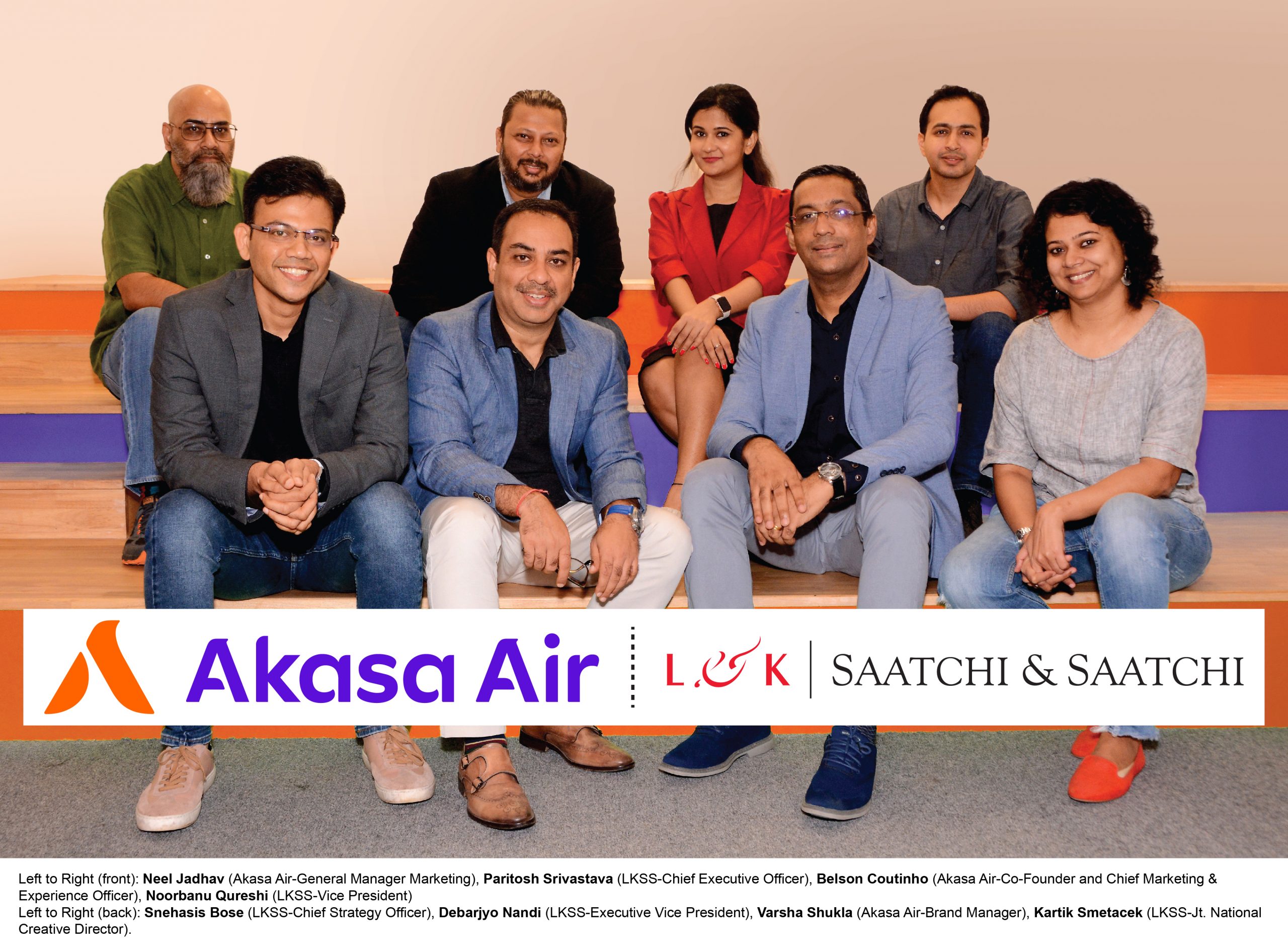
  • L&K Saatchi & Saatchi partners with Akasa Air for launch

    By Our Staff


    Putting its strategic and creative might to the fore yet again, L&K Saatchi & Saatchi won the creative mandate of India’s newest and much-awaited airline brand, Akasa Air. As its creative partner, the agency will manage strategic and creative initiatives for the airline which include developing brand and tactical communication for above-the-line and below-the-line elements. It will also develop brand communication campaigns and creatives for launch and sustenance phases and be involved in designing brand identity applications across mediums.


    The account will be managed by the Mumbai office of the agency.

    Commenting on the association, Belson Coutinho Co-Founder and Chief Marketing & Experience Officer at Akasa Air said: “We are on a journey to build India’s most dependable and affordable airline that delivers warm, reliable and efficient service. Hence it is inevitable to have our communication strategy that complements both the brand promise and our actual delivery on ground. We want our brand communication to be authentic, drive creativity and innovation, and at the same time reflect our core value of empathy.”


    Sharing his views on how Akasa Air would power India’s growth engine, Paritosh Srivastava, CEO, L&K Saatchi & Saatchi said: “It’s literally a once-in-a-lifetime opportunity to launch an airline; it doesn’t get bigger than this. The experience of being a part of the core team at Akasa and going through the journey of the launch of something as massive and transformational for our country and people is truly humbling. Aviation is a tough business, and everyone involved has to bring their best game to the table. We will try everything in our power to contribute to Akasa’s success in the time to come. We believe we are not an agency for Akasa; we feel a sense of ownership, and treat this as our own business.”