Category: ADVERTISING

  • India Shining, in Adspend Growth Projections


    By Our Staff


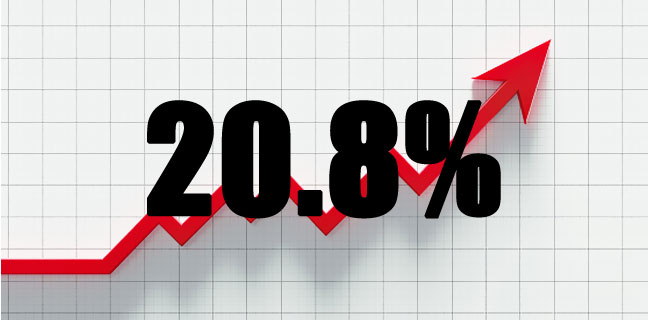
    India is in fifth place of adspends, accounting for 4.6% of the growth this year, even though it is only the twelfth-largest ad market. India will be the fastest-growing market in percentage terms, expanding by 20.8%, driven by election advertising and the resumption of festivals that were cancelled at the height of the pandemic.

     

    Jai Lala
    Jai Lala

    Said Jai Lala, CEO, Zenith India: “India continues to have a robust AdEx growth on the back of Digital and TV. Key categories continue to be led by FMCG and the new app-based clients in the area of Fintech, Edutech, Foodtech amongst others.”


    Global adspend is forecast to increase by US$58 billion in 2022, rising to US$781 billion from US$723 billion in 2021. Most of the new ad dollars will come from the US, which is forecast to expand by US$33 billion in 2022, driven by continued, rapid digital transformation, accounting for 57% of all the money added to the ad market this year. China, Japan, and the UK come next, supplying 9.1%, 6.2%, and 5.8% of new ad dollars, respectively.


    Global advertising expenditure is forecast to grow 8.0% in 2022, according to Zenith’s latest Advertising Expenditure Forecasts report, published today (June 8). This represents a minor downgrade from the 9.1% growth rate Zenith published in December 2021. Growth will be supported by the Winter Olympics, mid-term US elections and soccer World Cup, which for the first time will take place in the most advertising-intensive period of the year in the run-up to Christmas. Faced with this tough comparison, growth will slow to 5.4% in 2023, before the Summer Olympics and US presidential elections help boost it to 7.6% in 2024.


    Zenith’s forecasts for North America, MENA and Western Europe this year are unchanged at 12%, 7% and 6% growth respectively. Latin America was downgraded slightly from 9% to 8%, but Asia Pacific was upgraded from 6% to 7%, thanks to a very strong performance from India. Severe disruption in Russia and its closest trading partners after the invasion of Ukraine will lead to a 26% decline in adspend in Central & Eastern Europe, even though most other markets in the region will continue to grow.


    Adspend has remained on track despite the macroeconomic headwinds that emerged this year. High inflation, concentrated in essentials like heating, petrol, and food, is forcing consumers to reprioritise their spending, particularly the less well-off, and has led to a drop in consumer confidence. But for now, consumer spending continues to grow, as consumers demonstrate their strong appetite for the travel and entertainment experiences that were denied to them over the pandemic. Business confidence is generally high, and corporate investment is rising, and there is little evidence of widespread cost-cutting.


    Higher prices in traditional channels accelerate shift to digital alternatives

    The sustained growth in demand from advertisers is pushing up media inflation, particularly in television, where the supply of audiences is falling steadily as viewers switch to alternatives. Price rises vary widely for different audiences in different countries, but the global average cost of television advertising across all audiences is expected to rise by 11%-13% this year. Online video prices are expected to increase by about 7%, although in this case the supply of audiences is rising. Other digital channels where supply is climbing and volumes are flexible are inflating only modestly, with 3% average price rises forecast for social media and other digital display. Out-of-home and radio prices will go up about 4% this year, while print prices will remain stable, because demand for advertising in printed publications is falling as rapidly as readership.


    Brands that simply buy broad audiences to achieve reach targets will not be able to avoid having to spend more to reach the same audiences. But brands that use first-party data to identify their most profitable customers, and combine it with third-party data to target their best prospects in the most efficient channels, will be able to mitigate much of the effect of media inflation. The huge and growing volume of digital content consumption is making it more effective for brands to scale by aggregating digital audiences. Zenith predicts 62% of ad budgets will be spent on digital media in 2022, up from 59% in 2021, and that this proportion will reach 65% in 2024.


    “In a world where trading is becoming dominated by auctions, competitive advantage is achieved not by scale, but by data,” said Ben Lukawski, Global Chief Strategy Officer, Zenith. “Inflation will hit cheap reach buyers hard, but brands that make smart use of their data will manage costs and grow their business at the same time.”


    Online video overtakes social media as the fastest-growing channel for the first time in past decade

    Online video is now predicted to be the fastest-growing channel over the next three years: Zenith forecasts it will grow 15.4% a year on average between 2021 and 2024, driven by the rapid development of connected TV, ad-funded video-on-demand, streaming and other video formats. Connected TV is now a mainstream video platform in the US, with a higher penetration than cable TV, and is becoming established in other markets, especially in Western Europe and Asia Pacific. The introduction of cheaper ad-funded tiers by SVOD services like Netflix and Disney+ will boost growth further by providing new high-quality environments for brand communication. Mixed video-on-demand models that combined subscriptions with advertising will also help online video audiences continue to grow across the world by recruiting consumers unwilling or unable to afford the growing roster of subscription-only services. Zenith expects online video adspend to rise from US$62 billion in 2021 to US$95 billion in 2024.


    Online video will overtake social media, the fastest-growing channel for the previous nine years. Social media adspend (which includes video ads in social media feeds) is still forecast to grow at an average rate of 15.1% a year between 2021 and 2024, propelled by rising competition among platforms that is driving continued innovation on formats and closer integration with commerce. Meta’s share of social media adspend outside China has been falling steadily since it peaked at 89% in 2019, reaching 85% in 2021 as TikTok, Snapchat, LinkedIn and Pinterest gained market share. Zenith forecasts social media adspend will rise from US$153 billion in 2021 to US$187 billion in 2022, when it will account for 25% of expenditure on advertising across all media.


    Cinema and out-of-home will take third and fourth place among the fastest-growing media, averaging 11.9% and 8.0% annual growth between 2021 and 2024 respectively. These are still recovering from the deep losses they suffered in 2020 and 2021 when cinemas were closed, and consumers were confined indoors. Cinema and out-of-home have a lot of ground to make up, however, and are taking their time to do so. Many brands that were forced to find alternatives, often digital, have found them effective, and see little need to shift their budgets back again. Zenith expects cinema adspend to reach US$3.9 billion in 2024, well below its pre-pandemic level of US$4.8 billion in 2019, while out-of-home will reach US$45.0 billion in 2024, exceeding the US$42.3 billion it achieved in 2019 for the first time.


    Linear television advertising is forecast to grow by 1.1% a year on average between 2021 and 2024, from US$173.6 billion to US$179.2 billion, as price rises continue to compensate for loss of audiences. This ongoing decline in reach and efficiency will drive brands to digital channels, however, including online video. Television’s share of total adspend is forecast to fall from 24.6% in 2021 to 20.8% in 2024, while online video’s share increases from 8.8% to 11.1%.


    “Online video is growing by creating new opportunities for building brand awareness, complemented by social media’s capacity for cost-effective targeting with low barriers to entry,” said Jonathan Barnard, Head of Forecasting, Zenith. “Online video is steadily narrowing the spending gap with television, and will be half as large as television by 2024.”


     

  • Havas strengthens creative management team

    By Our Staff


    Arthi Basak
    Arthi Basak
    Esha Datta
    Esha Datta
    Sougata Kundu
    Sougata Kundu

    Havas Worldwide India (Creative) has strengthened its strategy and account management leadership with senior appointments. Arthi Basak has joined as EVP & Planning Head – West and Esha Datta and Sougata Kundu have been roped in as Vice President, Client Servicing. While Arthi and Esha will be part of the Havas Mumbai office, Sougata will work out of Havas Gurgaon.


    Manas Lahiri
    Manas Lahiri

    Commenting on the appointments, Manas Lahiri, Managing Director, Havas Worldwide India (Creative), said: “Havas Worldwide is currently at a very interesting growth stage with a client roster of well-established traditional as well as many new-age brands. Marketers are now increasingly seeking our expertise in creating cutting-edge, innovative solutions that are strategic, tactical, and out-of-the-box. With Arthi, Esha and Sougata on board, we will be able to further strengthen our client partnerships.”


  • ASCI releases guidelines on gender stereotypes

    By Our Staff


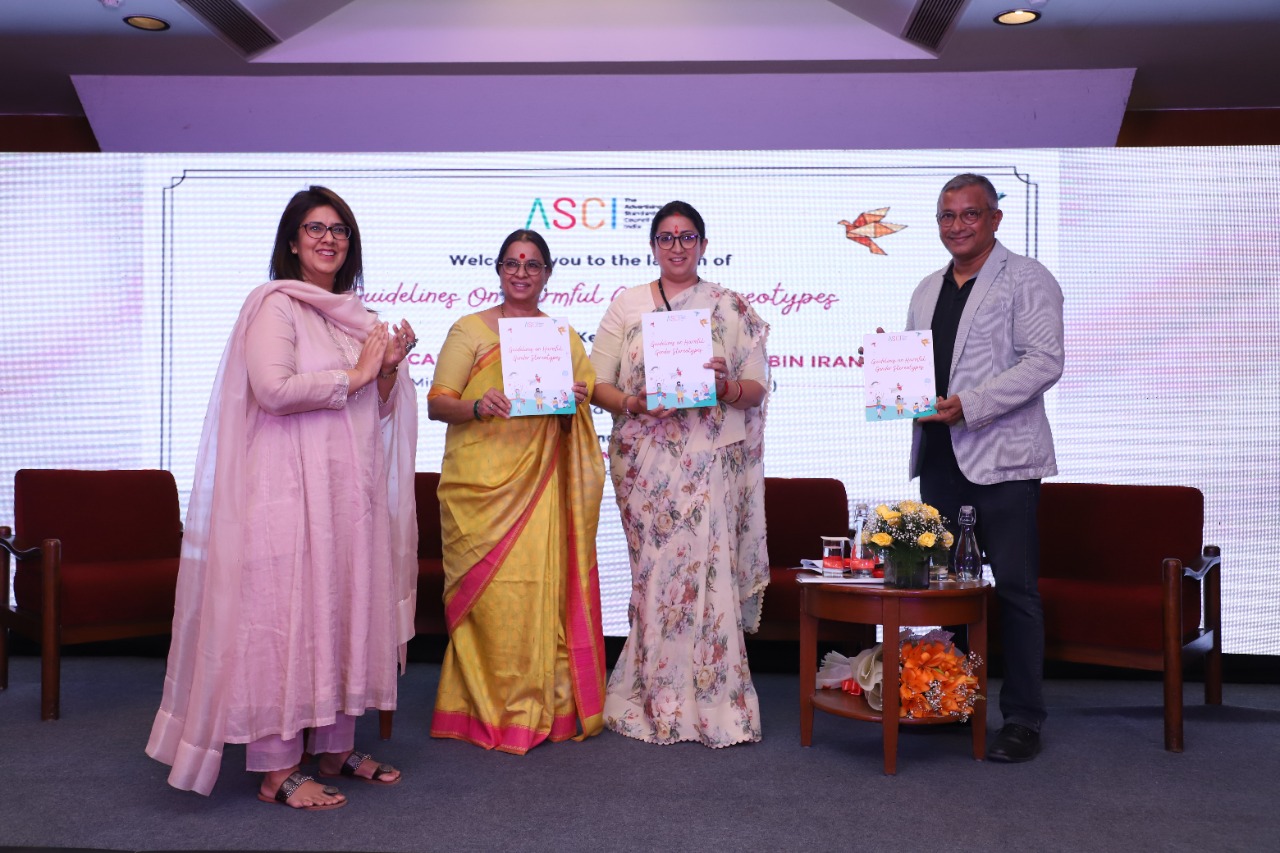
    The Advertising Standards Council of India (ASCI) has followed up the launch of its GenderNext report in October 2021, a study by ASCI and Futurebrands, with the release of guidelines that guard against harmful gender stereotypes. The guidelines were released at an event held in Delhi presided over by Union Minister for Women and Child Development Smriti Irani.

     

    While the guidelines focus on women, they also provide pointers for depiction of other genders.


    The guidelines, encourage advertisers and creators to deploy the SEA (Self-esteemed – Empowered – Allied) framework that guides stakeholders in imagining as well as evaluating portrayals of gender in their advertising by building empathy and aiding evaluation, as well as the 3S framework, which provides a checklist to guard against tropes and implicit stereotypes that creep into advertising.


    These frameworks can prove to be extremely useful for marketing and advertising professionals to improve their advertising ROIs.


    Speaking at the launch of the guidelines on harmful gender stereotypes, Irani said: “While there are women who are happy with the incremental change that has been made in the advertising industry, women of my generation are a bit more impatient. It is time not only for the men but also for the women in the advertising industry to step up. This is a very important move, and I believe that there is a long journey to be undertaken to turn the thinking but it’s required now. Work in this area must move with more and more speed and organisations like ASCI should lead this, the action beginning with its member base.”


    Added Subhash Kamath, Chairman, ASCI: “The new guidelines were created after extensive consultation with many partners- both from industry, as well as civil society organisations, including the Unstereotype Alliance and UNICEF. These guidelines are a big step forward in strengthening ASCI’s agenda to shape a more responsible and progressive narrative. We are grateful to the government and Shrimati Smriti Irani for supporting these guidelines, and to the many partners who have been with us on this journey.”


    ASCI’s Guidelines on Harmful Gender Stereotypes in advertising:

    Note:

    1. ASCI will consider an ad’s likely impact when taken as a whole and in context.

    2. ASCI will consider stereotypes from the perspective of the group of individuals being stereotyped.

    3. The use of humour or banter is not likely to overcome the underlying issue of such harmful stereotypes.

    4. The guidelines do not intend to prevent ads from featuring:

    5. glamorous, attractive, successful, aspirational or healthy people or lifestyles;

    6. one gender only, including in advertisements for products developed for and aimed at a particular gender;

    7. gender stereotypes as a means to challenge their harmful effects.


    Advertisements must not include gender stereotypes that are likely to cause harm or serious or widespread offence.

    1. While advertisements may feature people undertaking gender-stereotypical roles e.g., a woman cleaning the house or a man going to an office, or displaying gender-stereotypical characteristics, for e.g., a man being assertive or a woman being sensitive to others’ needs, they must not suggest that stereotypical roles or characteristics are:

    :: always uniquely associated with a particular gender;

    :: the only options available to a particular gender; or

    :: never carried out or displayed by another gender(s).

    1.1 Advertisements that are aimed at / depict children may target and feature a specific gender but should not convey that a particular children’s product, pursuit, behaviour, or activity, including choice of play or career, is inappropriate for one or another gender(s). For example, ads suggesting that a boy’s stereotypical personality should be “daring” or that a girl’s stereotypical personality should be “caring”, or someone chiding a boy playing with dolls or girls from jumping around because it is not the typical activity associated with the gender, are likely to be problematic.


    2. While advertisements may feature glamorous and attractive people, they must not suggest that an individual’s happiness or emotional wellbeing depends on conforming to these idealised gender-stereotypical body shapes or physical features.


    3. Advertisements should not mock people for not conforming to gender stereotypes, their sexual orientation or gender identity, including in a context that is intended to be humorous, hyperbolic or exaggerated. For example, an ad may not belittle a man for carrying out stereotypically female roles or tasks or make fun of a same-sex relationship.


    4. Advertisements should not reinforce unrealistic and undesirable gender ideals or expectations. For example, an advertisement must not depict a man with his feet up and family members creating a mess around a home, while a woman is solely responsible for cleaning up the mess, or a woman overly grateful for the man helping her in everyday chores. Similarly, a woman returning from work may not be shown as solely responsible for doing household duties while others around her are at leisure.


    5. An advertisement may not suggest that a person fails to achieve a task specifically because of their gender e.g., a man’s inability to change nappies; or a woman’s inability to park a car.  In categories that usually target a particular gender, care must be taken to not depict condescension towards any other gender or show them as incapable of understanding the product or unable to make decisions. This does not prevent the advertisement from showing these stereotypes as a means to challenge them.


    6. Where an advertisement features a person with a physique or physical characteristics that do not match an ideal stereotype associated with their gender, the advertisement should not imply that their physique or physical characteristics are a significant reason for them not being successful, for example in their romantic, social or professional lives. For example, an ad may not suggest that a man who is short, a woman who is dark, or any individual who is overweight has difficulty finding a job or a partner due to this aspect of their physique.


    7.. Advertisements should not indulge in the sexual objectification of characters of any gender or depict people in a sexualised and objectified way for the purposes of titillating viewers. This would include the use of language or visual treatments in contexts wholly irrelevant to the product.  For example, an online takeaway service featuring an image of a woman wearing lingerie lying back in a provocative pose behind various fast-food items would be considered problematic.  Even though the image may not be sexually explicit, by using a suggestive image of a woman that bears no relevance to the advertised product, the ad would be considered objectifying women by presenting them as sexual objects, and therefore is a gender stereotype that is likely to cause harm.


    8. No gender should be encouraged to exert domination or authority over the other(s) by means of overt or implied threats, actual force or through the use of demeaning language or tone. Advertisements cannot provoke or trivialise violence (physical or emotional), unlawful or anti-social behaviour based on gender. Additionally, advertisements should not encourage or normalise voyeurism, eve-teasing, stalking, emotional or physical harassment or any similar offences. This does not prevent the advertisement from showing these depictions as a means to challenge them.


  • Mr B, please note: Govt may slap Rs 5mn fine on habitual offenders from amongst celeb endorsers. Plus ban for 3 years

    By Our Staff


    The Central Consumer Protection Authority (CCPA) under the Department of Consumer Affairs of the Government of India has notified ‘Guidelines for Prevention of Misleading Advertisements and Endorsements for Misleading Advertisements, 2022’ with an objective to curb misleading advertisements and protect the consumers, who may be exploited or affected by such advertisements.


    The guidelines seek to ensure that consumers are not being fooled with unsubstantiated claims, exaggerated promises, misinformation and false claims. Such advertisements violates various rights of consumers such as right to be informed, right to choose and right to be safeguarded against potentially unsafe products and services.


    The CCPA has been established under section 10 of the Consumer Protection Act, 2019 for regulating matters relating to violation of the rights of the consumers, unfair trade practices and false or misleading advertisements which are prejudicial to the interests of public and consumers and to promote, protect and enforce the rights of consumers as a class.


    In exercise of the powers conferred by section 18 of the Consumer Protection Act, 2019, to CCPA, the Guidelines were notified


    Misleading advertisement has already been defined under section 2(28) of the Consumer Protection Act, 2019.


    The present guidelines define “bait advertisement”, “surrogate advertisement” and clearly provides what constitutes as “free claim advertisements”.


    Keeping in view the sensitiveness and vulnerability of children and severe impact advertisements make on the younger minds, several preemptive provisions have been laid down on advertisements targeting children. Guidelines forbid advertisements from exaggerating the features of product or service in such manner as to lead children to have unrealistic expectations of such product or service and claim any health or nutritional claims or benefits without being adequately and scientifically substantiated by a recognised body. The guidelines say that ads targeting children shall not feature any personalities from the field of sports, music or cinema for products which under any law requires a health warning for such advertisement or cannot be purchased by children.


    Disclaimers in advertisements play a pivotal role from consumer perspective since in a way it limits the responsibility of the company. Therefore, guidelines stipulates that disclaimers shall not attempt to hide material information with respect to any claim made in such advertisement, the omission or absence of which is likely to make the advertisement deceptive or conceal its commercial intent and shall not attempt to correct a misleading claim made in an advertisement. Further, it provides that, a disclaimer shall be in the same language as the claim made in the advertisement and the font used in a disclaimer shall be the same as that used in the claim.


    Similarly, guidelines have been laid for duties of manufacturer, service provider, advertiser and advertising agency, due diligence to be carried out before endorsing and others. Guidelines aims to protect consumer’s interest through bringing in more transparency and clarity in the way advertisements are being published, so that, consumers are able to make informed decisions based on facts rather than false narratives and exaggerations.


    Penalty for violating the guidelines are also clearly outlined. CCPA can impose penalty of upto Rs 1 million on manufacturers, advertisers and endorsers for any misleading advertisements. For subsequent contraventions, CCPA may impose a penalty of upto Rs 5 million. The Authority can prohibit the endorser of a misleading advertisement from making any endorsement for upto one year and for subsequent contravention, prohibition can extend upto three years.


    The guidelines can be viewed at

    https://consumeraffairs.nic.in/sites/default/files/file-uploads/latestnews/CCPA%20Notification.pdf

    PS: So, why did we put Mr B in the headline. Well, he’s a favourite of our friend Kamla. Yes, Kamla’s Pasand 😉


  • DailyHunt appoints DViO Digital for performance creatives

    By Our Staff


    Digital marketing agency DViO Digital has been appointed as creative and digital agency for DailyHunt.


    Said Sowmya Iyer, Founder & CEO, DViO Digital: “At DViO Digital, we believe in navigating through a business’s growth journey and helping them realise and utilise marketing tools which are beneficial. With the team’s deep understanding and experience of marrying data, creatives and technology, we are looking forward to transforming the brand. We have a unique strategy in place and we are very excited to get started on it.”


  • Grapes Digital wins the Digital AOR mandate for CP Plus

    By Our Staff


    CP Plus, the security and surveillance solution provider, has signed Grapes, an integrated marketing agency for its digital AOR mandate. The company has won the mandate following a multi-agency pitch and will service the account from its New Delhi office.


    Speaking on the development, Ananmay Khemka, Executive Director – CP Plus, said: “Being one of the recognised brands in the advanced security and surveillance solution, our constant endeavour is to provide the best range of products and services catering to the security needs of India. In the last few years, CP Plus has witnessed unmatched growth. We are quite enthusiastic to expand our business. Thus, digital plays a crucial role in building the business. We are impressed with Grapes vision for our brand. We are quite optimistic that Grapes expertise and nuanced understanding of digital media will fuel our vision”.


    Commenting on the win, Shradha Agarwal, CEO and Co-Founder Grapes, added: “We are pleased to associate with CP Plus as their digital partner. It’s a market leader in the security and surveillance industry. The demand for cameras and other surveillance products has witnessed an uptick demand owing to safety reasons. Also, the consumer behaviour pattern is changing, and there is a lot of scope in the market to perform well in the coming year. With a strategic approach and creative thinking, we look forward to creating great work in new and unprecedented directions for the brand. With our expertise in digital solutions, we strive to increase the visibility of the brand and create top-of-the-mind recall value amongst consumers”.


  • If self-regulation fails…


    By Sanjeev Kotnala


    Sanjeev KotnalaGood news. ASCI acted fast. It is debatable who acted first to ban/ withdraw the controversial Layer’r Shot ad. Was it the government or the Advertising Standards Council of India (ASCI)? I am glad someone did. However, the story has died fast. Everyone is okay after the ad is withdrawn and a vague apology tendered. One does not know the mandatory approvals, who approved, and why there is no further action?


    Meanwhile, the government got into the act. The Central Consumer Protection Authority (CCPA) released new guidelines against misleading advertisements. It says surrogate advertising is now banned- was it allowed earlier? The celebrity must disclose association and do due diligence before endorsing – was that not the case?


    Meanwhile, ASCI released new guidelines on Harmful Gender-Stereotype in advertising. It aims to encourage advertisers to create progressive gender depictions. It is okay if the ground realities are different and do not reflect this expected holier-than-thou depiction in advertisements.


    This reminds me of Sunny Deol’s famous dialogue; Guideline pe Guideline pe guideline- nahi milte hai toh misleading advertisements se chutti.


    Minister Calls ASCI act

    I read the overdramatic comment of the Union Minister for Women and Child Development, Mrs Smriti Irani and I smiled. She said, “If women were valued enough, we wouldn’t need guidelines”. I believe she would know the reality.

    However, she made a relevant observation on ASCI members and their engagement. Of the 800 ASCI members, just three members (officebearers) were at the guideline event. That’s how integral ASCI is to the industry. That is how concerned, involved, and serious the industry is towards self-regulation?


    Intent does not Count

    The guidelines on Harmful Gender-Stereotype in advertising call for not including gender stereotypes likely to cause harm or serious or widespread offence. For ASCI, it is a strong step towards a more responsible and progressive narrative. Well, I am not so sure. We know how guidelines are exploited, played with, and not adhered to by advertisers.

    The truth is that most creative and client teams do not know the guidelines and don’t understand them. Brands simply don’t give a damn to ASCI, given that it only seeks a polite enquiry and request to withdraw the offending advertisement.


    Things have changed a bit 

    ASCI has streamlined the processes. There are quick processes to address the problem. But withdrawing the ad with no public apology shows ASCI has no bite. In most cases, the advertisement achieves its objective before ASCI request a withdrawal.  However, the ASCI service #GetItRight, get the creative pre-checked at the production stage, returns a 404 error!


    Different strokes

    Surprisingly, large brands and big advertisers regularly feature in the quarterly reports of offending work. ASCI guidelines have no say on advertorials, political and Government advertisements.


    Will ASCI guidelines restrict creativity?

    In today’s world of rapid information exchange, heightened point-of-views and hardened social voices help nudge the brands in the right direction. But storytellers must have creative licenses.

    Is ASCI not asking too much for brands to reinforce unrealistic and undesirable gender ideals or expectations. For example, expecting a woman to return from work may not be shown as solely responsible for doing household duties while others around her are at leisure. Remember Airtel.


    Should advertising worry about social reform?

    When the guidelines become constraining, they will be questioned.

    Should advertising stop reflecting the social and cultural realities?

    Will it not make them irrelevant, ineffective, and tough to relate to?

    Should advertising aim to nudge people towards the right desired way of life?

    Or should the ground realities change before advertising reflects it?

    Are we not giving advertising too much credit for possibly impacting human behaviour?

    Are guidelines not trying to dictate what should be controlled by the market forces?


    Net-net

    Advertising is becoming a tough maze with all the guidelines. There is too much of what not to do. Maybe creative teams see it as a decent challenge. But this forced wokeness is wrong.

    The brands should be free to tell the story how they want and ensure that no misinformation or false promise is being made. And that it does not hurt religious, regional, language or gender groups or objectify any gender.  And if there are guidelines there should be a robust way to implement them by Sham, Daam, Dand or Bhed. (Logic, cost, Penalty and differentiation/doubt).


    Let us understand, that ASCI cannot do much till the corporates, the marketing and the brand owners take the initiative. Self-regulation is all about knowing and doing things consciously as per the guidelines. Till the time ASCI does not have real teeth to penalise and persuade brands for breach of guidelines, they may just remain guidelines.


    Not against self-regulation

    I am not against self-regulation; it is crucial. As an industry we all owe to the society the right way of promotion. If the industry continues to fail at self-regulation. In that case, someone like government will have to regulate it, which will be a sad day for the industry.

    I am all for effective self-regulation, where there is one expectation from every stakeholder, and the regulating authority has the right to take action. Where every team member on the client and the agency side understands and appreciated the need for the guidelines, maybe then they will follow it better. Maybe I am asking for too much.


  • Publicis appoints Chief Metaverse Officer

    By Our Staff


    Publicis Groupe France has announced a new interface to further help its clients understand, navigate and develop Web3 strategies. The interface will take the form of an avatar named Leon in the role of Chief Metaverse Officer.


    Created by Publicis Conseil, Leon has spent his entire career with the agency. As a Web3 native, he has strong grounding across communication disciplines and is a metaverse expert.


    Said Arthur Sadoun, Chairman and CEO of Publicis Groupe: “The metaverse isn’t a destination, it’s a real-time learning moment for all. It requires interrogation, education and experimentation. We are committed to being on that journey with our clients, to help them understand what it means for their business and to bring them the existing Web3 capabilities in the Groupe across data, media and technology. Leon embodies that as an avatar and will help our clients navigate this new channel and progress every step of the way.”


  • Dentsu expands its bouquet of networks

    By Our Staff


    Dentsu International’s Global CEO, Wendy Clark, and Global CCO Fred Levron have announced the launch of Dentsu Creative, Dentsu’s global creative network. Dentsu Creative will serve as the sole creative network for Dentsu international working with clients around the globe.


    In alignment with Dentsu’s global vision of designing a structure for horizontal creativity, Ajay Gahlaut, Group Chief Creative Officer, will now also be in charge of “infusing creativity” across Media and CXM besides Dentsu Creative in India.


    Led by Fred Levron, who joined Dentsu international as Chief Creative Officer in November 2021 and has demonstrated the transformative power of creativity throughout his acclaimed career; Dentsu Creative will comprise 9,000 creative experts in 46 markets connected to 37,000 media and CXM experts across Dentsu international and collaborate closely with Dentsu’s creative team in Japan. In the near future, further leadership announcements will be made as Dentsu Creative brings in the next generation of strategic, production, business and creative leaders.


    Said Levron:  “If you had the chance to build a brand new global creative network designed for the modern world, what would it look like? That is what we are answering with the launch of Dentsu Creative. Clients, talent and the industry at large are craving for a change: in the way we build brands, in the way we collaborate and in the role we give to creativity. If the current players have set the rules of the previous century, we have the ambition to set the rules for the decades to come.”


    Added Wendy Clark, Global CEO, Dentsu international: “At Dentsu, we’re building a modern agency network fuelled by horizontal creativity – a creativity designed to unify our people, their capabilities and our delivery for clients. We’re fortunate to draw from our Japanese heritage steeped in a relentless focus on craft, innovation and creativity. This legacy inspired our vision for modern creativity that was born in Japan and raised in a connected world. Dentsu Creative offers a simplified, modern creative proposition that answers clients’ needs for us to break down agency silos and inefficiencies and seamlessly connect our talent around the right client opportunities at the right time.”


    Said Amit Wadhwa, CEO India, Dentsu Creative: “Dentsu has over the years, time and again demonstrated innovation through creativity. With Dentsu Creative, we will unite our creative talent under one brand; this will further simplify client engagements and strengthen our creative prowess. Moving with times is important and now is the time to transform brands and businesses through the lens of Modern Creativity. Dentsu Creative ensures the best output for our clients and the best opportunities for our people, which is the most exciting part for me.”


    Added Gahlaut: “With Dentsu Creative, we will transform the creative face of dentsu as a network. As we add Modern Creativity to all the disciplines within the network and combine them, we will create a new-age powerhouse. Our aim is to bring profit and purpose together for our clients and our people. This is what the industry has been waiting for, and we are the forerunners of this breakthrough. Exciting times ahead!”


  • Madison BMB creates mental health awareness campaign for music academy

    By Our Staff


    Madison BMB has created a mental health awareness campaign for True School of Music (TSM).


    Said Raj Nair, CEO and Chief Creative Office, Madison BMB: “We have always believed in the power of creativity, and the potential it has in bringing about meaningful change. For this campaign, we used music itself as a language, quite literally, for its ability to have a universal impact and drive home the message of support we wanted to give to the creators of music. We are confident that it will strike the right chord with musicians especially and many will genuinely benefit from their association with True School Of Music and The Mood Space.”


    Added Ashutosh Phatak, Co-Founder, True School of Music: “Music is such an integral part of our lives. It has the ability to inspire, motivate and heal. But the creative process has tremendous challenges. Musicians bare their souls and in that expression there is often anxiety and insecurity.  This is a real issue that people go through and at TSM we would like to raise awareness about these issues while offering help and solutions at the same time. Whether you’re someone who is just thinking about having a career in music, or someone who is studying to be a musician or someone who is just starting their career or someone who’s had a very successful life making music, this process is riddled with ups and downs.  I think it’s important for us to recognize this and help and support anyone who is in this inspiring and creative musical journey.”


  • Wipro retains Experience Commerce as digital agency

    By Our Staff


    Experience Commerce; a Cheil group company, has announced that it has consolidated the ongoing partnership with Wipro Consumer Lighting by retaining another year’s contract for its digital mandate. The mandate cements the six-year-old ongoing relationship between Wipro and EC which has witnessed positive business results year on year.


    Said Jayaganesan Kandan, Marketing Head at Wipro Consumer Lighting: “It is extremely important for us to continuously be in touch with our consumers. Be it our new product launches, festive campaigns, or any other promotional drives, it becomes crucial for us to communicate in a crisp and clear manner that is creative too. Experience Commerce is highly focused and acts based on a sharp customer data-driven approach that helps the visibility of our products to the right audience and helps us increase our sales and revenue. Experience Commerce has provided us support irrespective of the day of the week or the hour of the day. We see a perfect partner in them for our digital requirements.”


    Added Meera Ghare, Vice President, Account Management at Experience Commerce: “Wipro is not our client but more like a family now. Since the early days of the digital journey, we have grown together from strength to strength. The partnership is very strategic, and we are extremely focused on delivering the best of ours to Wipro. EC’s combination of content, technology, and strategy will continue to help Wipro increase its consumer base and business. While working together we have learnt so much from them and look forward to multiplying the value in their business.”


  • Wunderman Thompson launches virtual beach metaverse activation

    By Our Staff


    Wunderman Thompson has launched the WT Inspiration Beach, an immersive metaverse activation to celebrate the start of advertising’s biggest festival in Cannes. It allows people from all over the world to experience the agency’s unique take on creativity, content, and connectivity.


    Said Gareth Jones, SVP Global Marketing at Wunderman Thompson: “At Wunderman Thompson we’re always looking for innovative ways to create a more inclusive customer experience. This is why we’re excited to launch the WT Inspiration Beach, a virtual activation in the metaverse to allow our clients and colleagues around the world to experience our take on creativity in a unique and highly immersive environment.”


    Added Reid Santabarbara, CEO of Odyssey: “As brands seek to enter the metaverse, many are looking to Wunderman Thompson who are thought leaders in this space. Through our collaboration, we’re able to provide these ambitious brands the most accessible, highest-visual-fidelity streaming metaverse platform on the market today. In creating the WT Inspiration Beach, our product team, led by Odyssey CTO Maxime Long, has captured the creativity and inspiration of advertising’s biggest festival and delivered an experience that demonstrates the limitless opportunities of the metaverse.”