Category: ADVERTISING

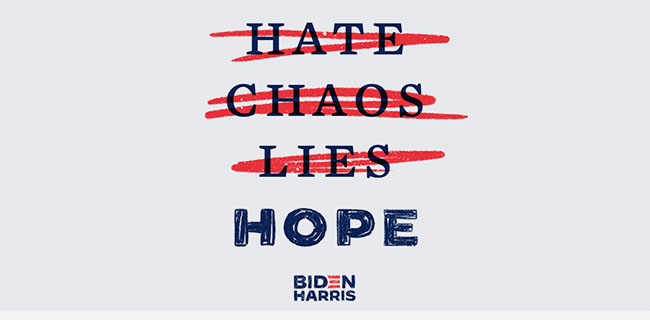
  • Brand lessons from the Biden campaign


    By Avik Chattopadhyay


    The Biden election campaign was one that I followed closely more from the perspective of brand building, nurturing and management right from June 2020 when he became the unanimous Democratic candidate. As a case study it is surely worth analysing if it has any lessons or pointers for brand managers and strategists.


    Maybe the campaign unfolded and grew in an unplanned manner, evolving with every passing day, but in hindsight, it sure has some key takeaways. If it was all planned as I see it then it is surely one of the most incisive and insightful campaigns to have been rolled out to such effectiveness.


    So, here are my 5 brand lessons from the 2020 Biden Harris campaign.


    Lesson #1 – Slogans or taglines not always needed

    The campaign did not have a slogan at all. It was simply “Biden for President” and then “Biden-Harris”. Simple and straightforward. No fuss. No frills. Nothing to outdo or counter Trump’s “make America Great Again”. Each state and town went ahead and built their own slogans that were most relevant to their desires and aspirations. So, every campaign need not have a slogan or tagline. As the occasion demands, being simple is simply super.


    Lesson #2 – Assert, don’t aggravate

    He knew his opponent too well and allowed him the rope to play himself to the hilt. In the process, Trump ended up alienating more than those he embraced. Guess the average American voter, irrespective of allegiances, somewhere wished less rhetoric and more substance to allow him / her to finally decide. This was crucial for it went down to the wire. So, the focus needs to be on two things for a brand manager – quality content over the mere ability to amplify, and the tone of voice to be chosen for the campaign.


    Lesson #3 – Include and involve

    Biden ensured he took along every Democratic presidential candidate with him after he became the front-runner and final choice. This was crucial to ensure maximum internal buy-in and support from all corners of the party. Trump was all about himself and a certain part of the Republican Party actually wished he lost and closed his own case. Also, the Biden campaign was hugely inclusive in actively involving people of all ethnicities and economic backgrounds. The Trump campaign was run by specific sections of American society who were either of a certain colour or a certain economic class. So, the lesson for the brand manager is that for any campaign to be successful, one needs active buy-in of all key internal stakeholders.


    Lesson #4 – Always pays to say “Sorry”

    Humility and candour never go out of fashion, in any culture and in any situation. Biden displayed both in his journey as a senator, apologising if he made a mistake. That is a quality that creates instant affinity that sustains lifelong. One just cannot imagine Trump ever acknowledging a misstep, forget a mistake. The Biden campaign obviously encashed heavily on this value system of their candidate versus an incumbent who was given to inconsistent raving and ranting. The same applies to any brand in our everyday lives. It sure is tough to say “I am sorry” before your customer or prospect but the ability to say so will reap priceless equity for the brand.


    Lesson #5 – Build in flexibility

    Planning a campaign well is good but making it water-tight is not a virtue in today’s dynamic times. The Biden team built in enough flexibility to allow modifications and changes, big and small as the campaign rolled along, without losing the core narrative. This allowed customisation of the narrative in each state and also rapid improvements based on feedback. Studying pictures of his campaign across various cities I did not see the same messages being used or carried on placards and banners. While Biden and Harris remained central, the stories around them were ably tailored to appeal to specific vote pockets. This is crucial in today’s brand campaigns too which depend more on social media platforms that are intrinsically dynamic and fluid in nature. This also requires new skills for the brand manager to be engaged in the campaign till its entire timeline and not rest easy once it rolls out.


    I am sure there are lessons from the Trump campaign too.


    It was obviously the most beautiful campaign, the most loved and the most followed.


    It was a campaign befitting that of a winner.


    It was simply humongous and awesome.


    Just that the required numbers did not take the bait.


    Thankfully!


  • Delhi Darevils’ Hemant Dua joins ‘Do Your Thng’

    By A Correspondent


    Hemant Dua

    Do Your Thng (DYT), a branded content marketplace, announced the addition of an entrepreneur to its leadership team. Hemant Dua joins DYT as Co-founder and Chief Growth Officer.


    Dua has more than 25 years of global leadership, including a decade of strategic development and plan execution. Most recently, he held the position of CEO, Delhi Daredevils.


    Said Ankit Agarwal, Founder and CEO of Do Your Thng: “We are ecstatic to have Hemant as the Co-founder & Chief Growth Officer at DYT. He brings rich experience and valuable perspective to the team. Hemant’s extensive expertise in driving strategy, market expansion and internal growth are unmatched. All are skills that would help DYT strengthen partnerships, develop strategic alliances and expand our presence.”


    Added Dua: “I am thrilled to be joining the DYT team and enjoy the challenge of transforming it into a bigger and better enterprise. In the year since its inception, DYT has already worked with upwards of 80 brands on 100+ campaigns with 20,000+ creators.  I hope to accelerate the platform further, incubate ideas and translate them into reality.”


  • Ad Club Bangalore announces Big Bang Utsav 2020, Arvind Kumar Memorial Award

    By A Correspondent


    The Ad Club Bangalore is putting together a series of programmes  to engage with the advertising, media and marketing fraternity this festive season.


    The three-week series starts on Dec 4 and will be held on Friday evenings through December. It will feature events like Open Mic Comedy, a fun quiz, Singing with a Twist and many other fun activities that make it mandatory for the participant to leave their home-office for a while and just let their hair down.


    The BB Utsav is presented in partnership with Facebook and is open to all from the media, marketing and advertising community as long as they are members of The Ad Club Bangalore. The Club had recently announced that membership benefits for all who enrolled from June 2020 will be valid for a two-year a period through June 2022.


    Speaking on the BB Utsav, Laeeq Ali, President of The Ad Club Bangalore and Co-Founder – Origami Creative said: “We want to celebrate Big Bang differently this year. Considering the overall pandemic situation as well as the stress which the industry is going through, we have decided to call off the regular Big Bang Awards and the whole focus starting with Big Bang Utsav will be to celebrate as well as elevate the people. While the Big Bang Utsav is purely focused on fun and building the camaraderie within the advertising, media and marketing fraternity at large, we also plan to roll out a series of upskilling initiatives which will help the fraternity starting early next year.”


    Added Kishankumar Shyamalan, Head of the Big Bang Utsav 2020 and Chief Growth Officer – Wavemaker: “It is a very stressed environment out there currently and we wanted this program to come like a breath of fresh air. We have a series of programmes spread over three weeks which will not just be fun, but also a refreshing break. I urge the entire advertising, media and marketing community to come, encourage your team members to join us and make this event a very memorable one.”


    Along with the programmes, the Ad Club Bangalore is also inviting nominations for the Arvind Kumar Memorial Award for the most Enterprising Professional of the year in the age group of 25-40 years. Judged by an eminent jury, the winner will be announced on the last Friday of the series. Nominations are open from November 27, onwards and can be submitted on https://bigbangawards.com .


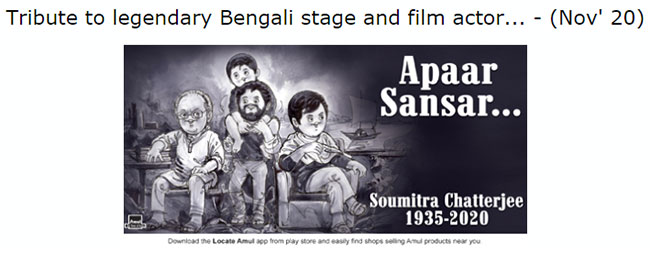
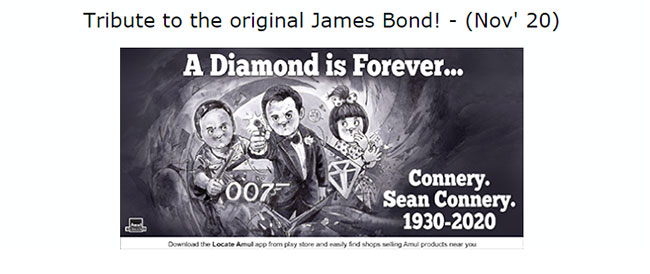
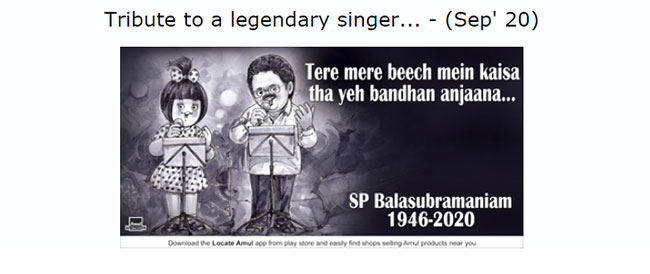
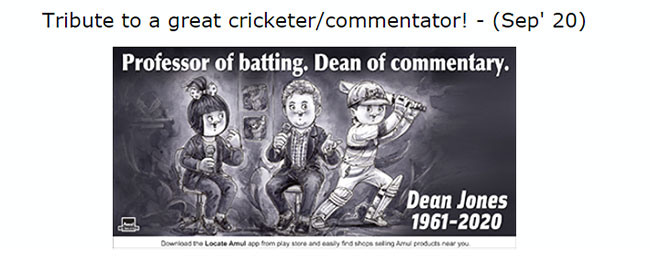
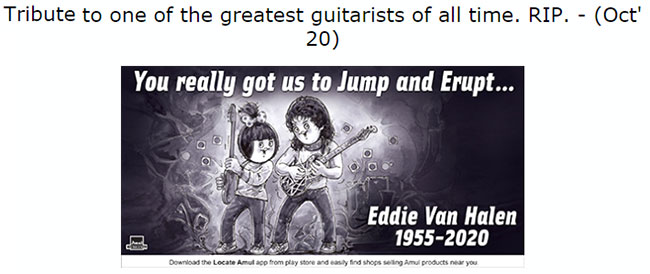
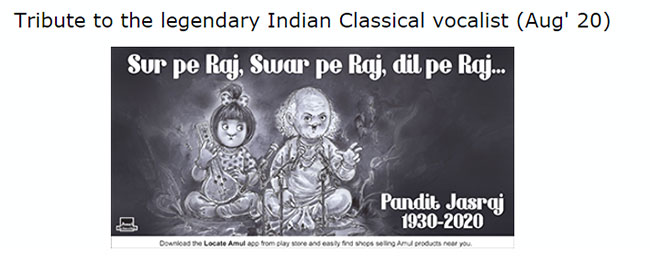
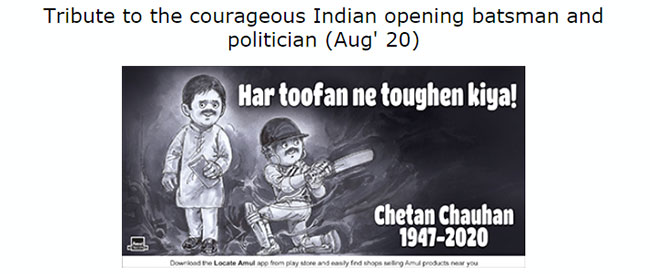
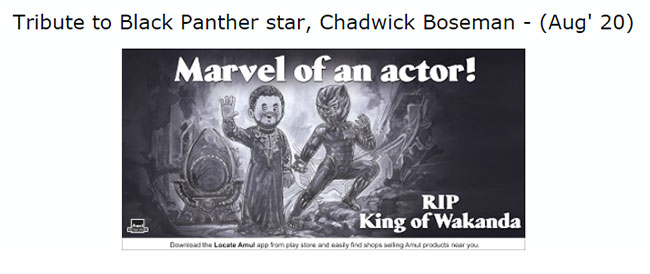
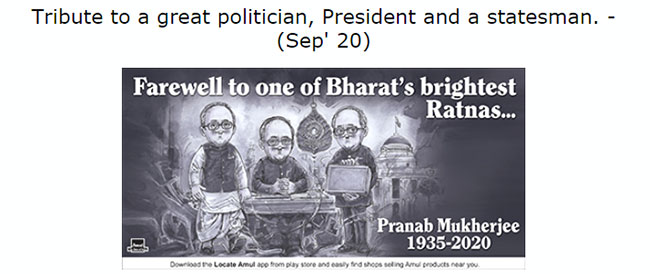
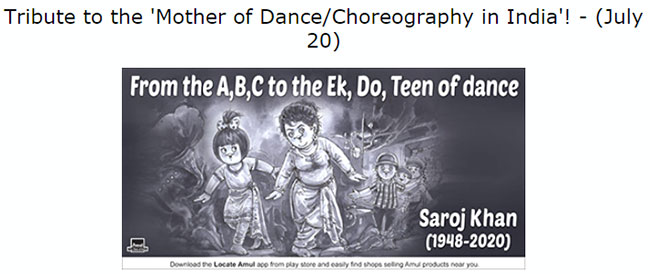
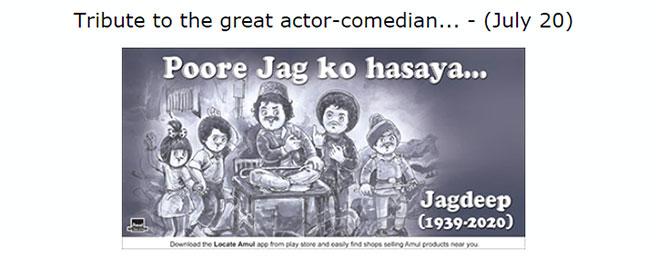
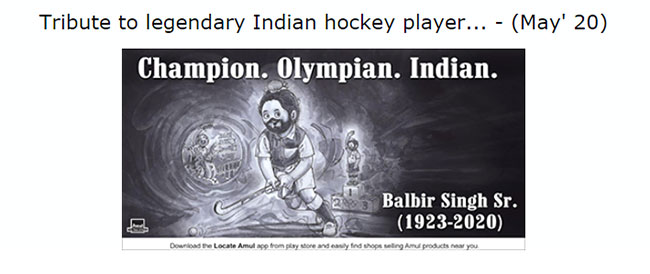
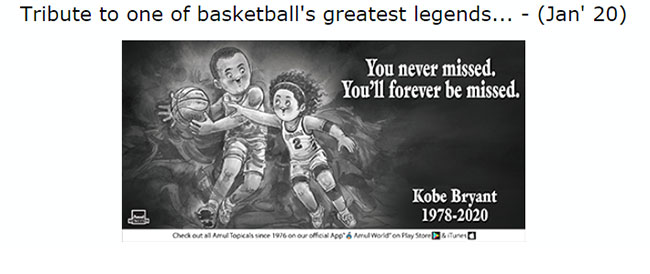
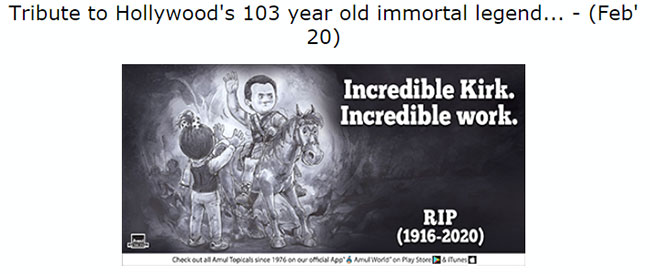
  • Recording the Passing via Amul ads


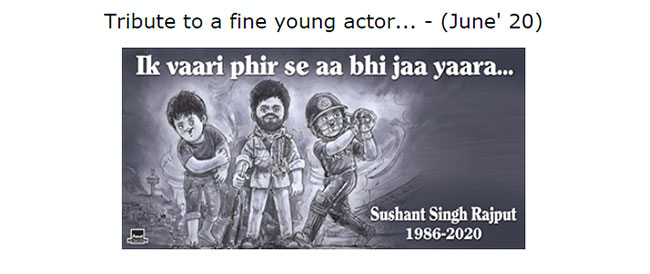
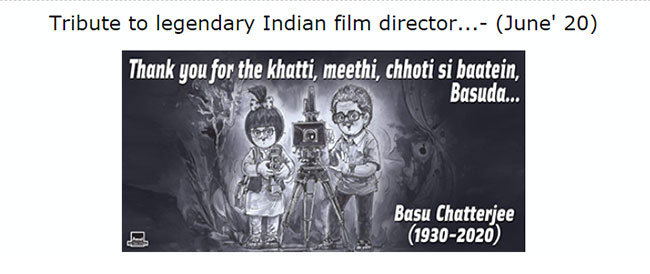
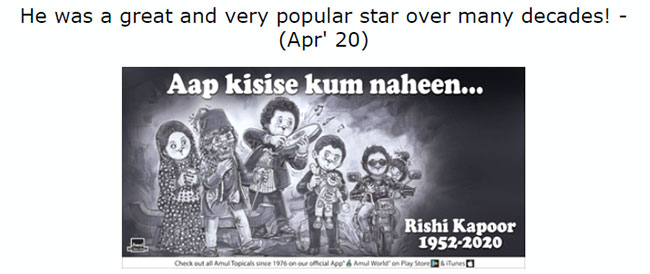
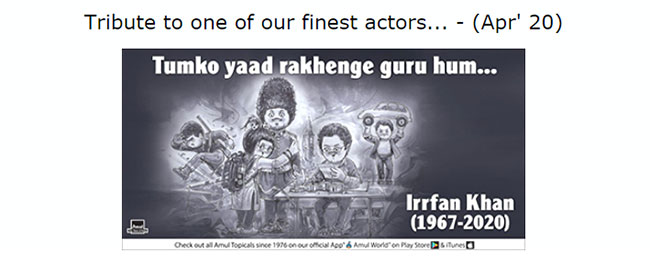
    The Amul topical ads crafted by the team at da Cunha associates are in every way perhaps the best chronicler of our times. Here we have compiled the advertisements that Amul has published in 2020 on the various personalities who have passed away.


  • Spends decline of 4.4% in UK, 9% in US: GroupM TYNY


    By A Correspondent


    This is the time when various media agency networks release their annual forecasts. There’s GroupM, IPG Mediabrands and Zenith. And first off the block this year is GroupM. The reports are for the UK and US markets, but these are good indicators of what’s happening across the world.

    Given that the two media economies have a significant penetration of adspends in digital, normally what holds good for UK and US and many other digitally developed markets does not hold for India.

    But this year, things may change, and hence it becomes important for a careful study of the study.


    Chalo, let’s read what has been put up:


    The UK: A Decline of 4.4% for 2020

    It could have been worse. Nine months into the COVID-19 pandemic, the scale of its impact on the U.K. is relatively clear by now. Overall, our forecast predicts a decline of 4.4% for 2020, which is much improved over our prior expectation of a 12.5% decline that we forecasted in June. While the economy was historically weak as anticipated, marketers both large and small proved to be relatively resilient. ​

    One of the “bright spots” of advertising in 2020 has been in digital. We estimate that pure-play digital advertising will grow by 4.9% during 2020, following 2019’s 16% rate of growth. Next year should see additional growth of around 12%, tapering off toward 7% after 2021. While this year’s gains look strong in comparison to the rest of the industry, it reflects significant deceleration versus prior years.

    Additionally, e-commerce growth in the U.K. has seen accelerated growth—53%—economy-wide during the third quarter. We anticipate that e-commerce-related advertising will continue to experience rapid growth, rising around 50% this year and 66% next year, reaching £2.4 billion in media owner ad revenue by 2024.

    In television, for 2020, we estimate it will fall by 10%, the worst rate of decline since 2009, but better than we anticipated earlier this year. Our 2021 forecast now anticipates a 10% gain and a return to 2019 levels in 2022. Although streaming services receive much of the industry’s attention, traditional ad-supported television continues to do the bulk of the work supporting marketers’ brand-building efforts. SVOD is drawing consumption away from conventional TV, at least in line with the heightened levels of investment going into the new offerings from the media owners themselves. But legacy media owners’ platforms are finding ways to add value for their customers.

    Some other key takeaways:

    Print media, including newspapers, magazines and their digital extensions, will account for 7% of media owners’ ad revenue in 2020, down from 9% last year. We expect a decline of 23% this year, followed by a rebound of 13% in 2021.

    Out-of-home advertising is set for a decline of 45% in 2020; however, much of that loss should be regained next year, when we expect the medium to expand by 31%. Digital formats, which now represent around 60% of the medium’s activity, will continue growing next year and beyond.

    Cinema has been most heavily affected by the pandemic, with an estimated decline of 80% for 2020; however, we expect a strong rebound of 160% in 2021 as film studios seek to monetise their backlogs with a surge of highly anticipated launches. While this rebound may seem optimistic, we note that it only brings cinema back to 52% of pre-pandemic advertising spend.

    For 2020, we think audio will fall by 16%, and we expect growth of nearly 12% in 2021. The bigger question is what happens in the years beyond? The effectiveness of audio-based media has rarely been in doubt, though its appeal has been somewhat limited, as the medium commands only 2% of industry spending. Arguably, this presents opportunity for growth over time, especially as new digital formats emerge.

    For 2021 and beyond, Brexit uncertainty still weighs on the British economy. While the implications for media might not be obvious, the macroeconomic impact is potentially significant. At a minimum, our forecasts anticipate some degree of disruption to the economy in the early part of 2021 as adjustments are made; however, we think Brexit’s impact on the advertising market will be limited to a shift in spending away from the first quarter rather than meaningful full-year cuts. More generally, we continue to assume that “normal” activity will return by the second half of the year, which pre-supposes that Brexit will not cause ongoing problems and that an effective vaccine will be widely distributed across the population.


    **


    The US: Digital Advertising is the ‘Bright Spot’

    Despite a pace of economic decline that will produce the worst economy since the Great Depression, the ad market might end up falling by little more than we saw 2001. It will certainly be better than in 2008 during the fallout of the global financial crisis.

    And much like the overall economy, the advertising industry is experiencing a K-shaped recovery – the pandemic has seen rapid acceleration for e-commerce and advanced digital services and cratered industries like restaurants, bars, travel, entertainment and traditional retail.

    The bright side, though, is that the underlying rate of decline for advertising is not quite as bad as we thought it would be in our June forecast when we predicted a 13% decline. We think the decline will be closer to 9% because of the strength in digital advertising in particular or, more specifically, the unexpected pace at which digital’s small-business-skewed customer base expanded its spending.

    Digital advertising is the “bright spot” in an otherwise dark year for the industry. We estimate that pure-play digital advertising will grow by 5% during 2020 on an underlying (ex-political advertising) basis, following on 2019’s 17% rate of growth. During 2021, we estimate that digital advertising will account for 55% of all advertising we track. Political advertising has proved to be an important source of growth for digital media during 2020 as roughly 4% in total digital advertising was for political candidates and issues advertising, representing around 3% of the year’s gains.

    National TV advertising will see a decline of 7.9% during 2020 and rebound to grow by 6.6% during 2021 before returning to a flat or slightly declining longer-term trend. At this pace, national TV is faring better than every other category of media other than digital. Post 2Q, advertising has held up well because most of the dominant advertisers adapted their behaviors, at least on an aggregated basis, which translates to national TV ad spending at levels that resemble pre-pandemic levels.

    Underlying (ex-political) advertising for local TV will see a decline of 21% this year after a flat 2019 but, next year, we should see a 2.7% underlying gain. Revenue for political and issue advertising reached record levels by the end of November, with the hotly contested run-off elections for Georgia’s Senate seats still to come. If trends play out as expected, political and issue advertising on local broadcast and cable could reach approximately $7 billion for the year.

    Some other key takeaways:

    Print media is expected to decline 20% for magazine publishers and a 30% decline for newspaper publishers. It is our view that neither the magazine nor newspaper sectors will ever exceed $10 billion in ad revenue in their current forms, even including existing digital properties.

    OOH advertising, including its digital extensions, will decline by 31% during 2020 on an underlying (ex-political advertising) basis, following on 2019’s 10% rate of growth. Next year should see a partial rebound of 23% growth, which tapers off toward 5% in subsequent years.

    Cinema advertising is unlikely to see any meaningful rebound until traditional movie-going returns, and this will require studios to resume launching their major titles in theaters rather than via direct-to-consumer platforms. Even once the virus has receded, it seems unlikely studios will release as many titles in theaters as they did in pre-pandemic years, meaning admissions are likely to remain below 2019 levels for some time.

    Audio advertising, including its digital extensions, will fall by 27% during 2020 on an underlying (ex-political advertising) basis, following on 2019’s 2.1% rate of growth. Next year should see muted growth of around 6.6%, reflecting a weak local market for advertising and a first half that will probably be particularly negative for locally oriented media.

    Direct mail is estimated to generate around $13 billion in revenue during 2020, down 26% on an underlying basis but only 21% including political advertising. We expect to see a partial rebound next year for 17% growth, or 10% including political, before resuming single-digit declines.

    2021 and Beyond: Looking at 2021, an assumed second-half return to normalcy paired with the significant growth that followed the trough of 2Q this year leads to expectations for robust growth of 11.8% on an ex-political basis, or 6% including it. For subsequent years, we anticipate slightly higher growth than we previously forecast—now 5% in 2022 followed by 4% in 2023 and 2024—to reflect what we think will be an accelerated pace of investment in digital media by marketers of all sizes.

     

  • Havas launches ‘Women Who Inspire’ initiative

    By A Correspondent


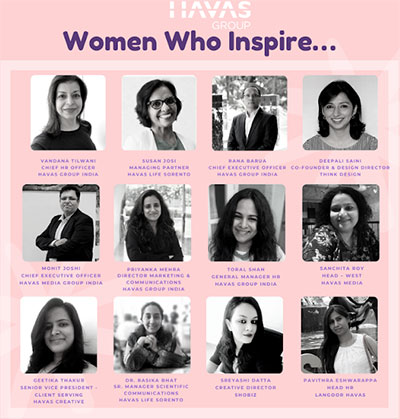
    Havas Group India has kickstarted ‘Women who Inspire’, an initiative to foster gender diversity and women leadership. A core group has been formed which consists of members in senior roles, across the six Havas agencies. This core team will meet every alternate month to discuss key issues, opportunities, and changes relevant for the group as a whole and works towards recognising and celebrating the great work that women leaders do across the group.


     

    Said Rana Barua, Chief Executive Officer, Havas Group India: “Being diverse is all about enabling a culture that is conducive to freely express, share thoughts & perspectives. As we embark on this journey, we are excited about the potential cultural and mindset change that it can bring to the lives of women employees within Havas Group India. We see this as a step to bring about a huge transformation and one that will help us move in the direction of building a versatile workforce that is futuristic and aligned to the changing global world order and economy.”


    Added Vandana Tilwani, CHRO, Havas Group who is leading the initiative: “As we gear up for our next phase of (post-covid) growth at Havas, we have to adapt to a different way of working which involves merging of work and life, remote working and adapting to agile and flexible team structures. Becoming a gender-diverse organization, breaking of many fixed rules and taboos and thus encouraging more women leaders is not only important in creating a futuristic workplace, it is now a necessity in order to have a competitive advantage.”


    Members of the core committee:

    # Rana Barua, Chief Executive Officer, Havas Group India

    # Vandana Tilwani, Chief HR Officer, Havas Group India

    # Mohit Joshi, Chief Executive Officer, Havas Media Group India

    # Susan Josi, Managing Partner, Havas Life Sorento

    # Deepali Saini, Co-founder and Design Director, Think Design

    # Priyanka Mehra, Director Marketing and Communications, Havas Group India

    # Toral Shah, General Manager HR, Havas Group India

    # Sanchita Roy, Head – West, Havas Media

    # Geetika Thakur, Senior Vice President – Client Servicing, Havas Creative

    # Dr Rasika Bhat, Senior Manager Scientific Communications, Havas Life Sorento

    # Sreyashi Datta, Creative Director, Shobiz

    # Pavithra Eshwar, Head HR, Langoor Havas


  • Wondrlab opens in NCR, brings in Ankit Grover & Biswajit Das from Arc Worldwide

    By A Correspondent


    Wondrlab, the Saurabh Varma-founded agency, has officially kicked off operations in North India with an office in NCR, which will also cater to the East. Teams comprising platform, strategy and creative experts are in place in both North and East, notes a communique.


    Vandana Verma
    Ankit Grover
    Biswajit Das

    The firm has made two senior appointments for the new office. It has brought in Ankit Grover as Lead Integration Director, and Biswajit Das as Lead Strategist, for the Experience Platform. Both will report to Vandana Verma, Co-Founder and Managing Partner – Experience Platform at Wondrlab.


    Saurabh Varma

    Said Verma, Co-Founder and Managing Partner – Experience Platform, Wondrlab: “Starting off our Delhi office means we now have excellence in the North and East. This move has come a little after Wondrlab’s launch and the momentum is unprecedented. Ankit and Biswajit are a great choice as leaders; both are new-age thinkers, excellent integration managers and tech enthusiasts with diverse cross-category brand experience. Our clients can expect hands-on leadership involvement in their business problems, great turnaround time and collaboration on the implementation of industry-first solutions at an enormous scale.”


    Grover has over 14 years of experience in experiential and integrated marketing and has joined from Arc Worldwide – Publicis Groupe’s experiential marketing arm – and has been part of agencies such as Wizcraft, RK Swamy BBDO and ESP Active.


    Das Biswajit has over 12 years of industry experience. His previous stint was also with Arc Worldwide. He has previously worked in companies such as Hansa Events, Network18 and ESP Active Marketing.


  • BBDO bags integrated brand mandate for Toroikaa Pharma’s Dynapar QPS spray

    By A Correspondent


    The agency will handle strategy and communication across digital, social and mainline for the brand.


    BBDO bags integrated brand mandate for Toroikaa Pharma’s Dynapar QPS spray. The agency will handle strategy and communication across digital, social and mainline for the brand.


    Said a spokesperson for Troikaa Pharmaceuticals: “After a long and protracted pitch, we are happy to have BBDO India on board. We plan to leverage this strategic and creative partnership to build a great future for Dynapar QPS pain relief spray. This brand is manufactured with QPS technology, which is globally patented including the US and Europe. QPS technology enables higher amounts of Diclofenac to penetrate the skin, as compared to conventional gels/sprays, ensuring fast and long lasting pain relief. The brand is a growth driver for us at Troikaa and has great future potential. We believe that our collaboration with BBDO India for Dynapar QPS, a pain relief spray will help us devise a better growth trajectory for this brand and help us corner a larger share of the pain management market.”


    Added Nikhil Mahajan, Chief Growth Officer & GM – BBDO India, Delhi: “This is a very special win whereby we are going to partner with the team of this wellknown brand. It’s a revolutionary product which is bound to shake up the category. and where our data driven approach on insight mining and targeting will be key to the way we build the brand. Our approach and expertise in digital-first thinking and execution is what clients are increasingly seeing value in and the recent wins are ratifying our belief of how brands need a single partner that can anchor the brand across social conversations, be present in all relevant places on digital while making sure the idea comes first. I am really excited and looking forward to creating some magical work for Dynapar QPS.’


    “It’s a rare opportunity that one gets, a chance to define and grow the brand right from the outset. Dynapar QPS is a hugely respected brand. Now the job of advertising is to ensure the brand gets more love from its users and widens its base significantly, said Akashneel Dasgupta, Chief Creative Officer – BBDO India, Delhi”


  • Global ad market to grow 12.3% in 2021: GroupM

    By A Correspondent


    Group M has updated its our 2021 outlook for the global advertising market from its June forecast of 8.2% to 12.3% growth.


    Here goes the report:

    Looking at the eight largest markets—the U.S., China, Japan, the U.K., Germany, France, South Korea and Canada—we expect seven of them to see declining growth of nearly 2% and worse in 2020. The exception is China where we expect a rate of growth in China at 6.2%. The good news, though, is we expect all these countries to show growth in 2021: 11.8% in the U.S., 15.6% in China, 12% in Japan, 12.4% in the U.K., 4.6% in Germany, 7.2% in France, 1.6% in South Korea and 15.1% in Canada.


    And  this is the overall forecast for the industry:

    Advertising weathered the storm relatively well and will end up declining by “only” 5.8% on an underlying basis (excluding-U.S. political advertising), a much better expectation than our June forecast of an 11.9% decline for 2020.

    The nature of the downturn and new consumer behaviors forced businesses to rapidly adapt to e-commerce models, and digital advertising benefitted.

    As such, we’ve updated our 2021 outlook for the global advertising market from our June forecast of 8.2% to 12.3% growth.

    Each of the top eight markets is expected to grow by nearly 2% and better in 2021.

    Understanding that context, here are the six key takeaways from This Year, Next Year: Global 2020 End-of-Year Forecast Report:


    Digital advertising is expected to grow by 8.2% during 2020, excluding U.S. political activity. This follows nearly a decade of double-digit growth, including the last six years, when it was better than 20% globally.

    Digital advertising for pure-play media owners like Amazon, Facebook, Google, etc., should be 61% of advertising in 2021. This share has doubled since 2015 when it was only 30.6%.

    By 2024, we estimate digital advertising will have a 66% share globally.

    Television advertising will decline by 15.1% excluding U.S. political advertising, before rebounding to grow 7.8% next year.

    Digital extensions and related media, including advertising associated with traditional media owners’ streaming activities (primarily on connected environments), will grow 7.8% this year and 23.2% next year.

    Outdoor advertising is estimated to decline by 31% during 2020, including digital out-of-home media. Next year should see a partial rebound, with 18% growth.

    Beyond 2021, we expect outdoor advertising to grow by low- or mid-single digits and generally lose share of total advertising; however, we do expect larger brands generally to allocate more of their budgets to the medium.

    Cinema is newly separated in our global forecast for markets where data could reasonably be estimated. The global sector likely generated less than $3 billion during 2019 and likely fell more than 75% during 2020 given the absence of major studio releases in most markets around the world.


    Print advertising, including newspapers and magazines, is expected to decline 5% for the year, a significant acceleration over the high-single-digit declines of recent years. However, those single-digital declines should resume following an economic recovery.


    Audio advertising is likely to decline by 24% during 2020 as advertisers disinvest, in part, because of the medium’s dependence on away-from-home activities, such as driving. Digital extensions, including streaming services from terrestrial stations and their digitally-oriented competitors and podcasts, still attract relatively small audiences of a few billion, but help make the broader medium more appealing to marketers.


  • Adspend is now forecast to shrink 7.5% in 2020, compared to July’s 9.1% forecast: Zenith

    By A Correspondent


    The global ad market has recovered more rapidly than expected from the severe slump in Q2 caused by the coronavirus pandemic and is now forecast to shrink by 7.5% to US$587bn across 2020 as a whole, according to Zenith’s Advertising Expenditure Forecasts, published today. This is a marked improvement on Zenith’s forecast of a 9.1% decline in July.


    Zenith predicts that global adspend will grow by 5.6% to US$620bn in 2021, boosted by the favourable comparison with 2020, as well as the delayed Summer Olympics and UEFA Euro football tournament. Despite this bump, spending will remain below the US$634bn spent in 2019. In 2022, adspend will grow by 5.2% to reach US$652bn, exceeding 2019 by US$18bn, though it will be about US$70bn lower than it would have been if it had remained on its pre-pandemic track.


    These forecasts assume that the global economy will start a sustained recovery as Covid-19 vaccines are introduced in 2021, and are subject to the wide uncertainty over how rapid this recovery will be.


    Zenith predicts that global digital adspend will rise 1.4% in 2020, and increase its share of total adspend to 52%, up from 48% in 2019. The pandemic has forced brands to step up their digital transformation, as ecommerce has proved a vital tool for maintaining relationships with existing customers, mitigating the loss of in-store sales, and even finding new customers. Euromonitor International forecasts that ecommerce sales will increase 25% this year, while in-store sales drop by 5%. Brands have increased their spending on digital media to promote and drive traffic to their own ecommerce operations and to retailer partners. Search and social media, up 8% and 14% respectively, have proved particularly useful for these purposes.


    The growth of ecommerce is not expected to reverse once the world starts to recover from the coronavirus pandemic. Now that brands have proved the value of digital transformation under stress, they are likely to press ahead with it enthusiastically, devoting even more of their budgets to digital advertising. Zenith forecasts that digital advertising will account for 58% of global adspend by 2023.


    Advertising on connected TV is compensating for the rise of SVOD: Consumers’ viewing habits have been evolving for years, but 2020 saw a real step change as online video platforms benefited from a long-term boost to awareness and demand. Forced to spend much more time at home, consumers flocked to existing SVOD platforms like Netflix, which added 25 million new subscribers in the first half of the year, and new ones like Disney+, which achieved its five-year growth target in just nine months.


    Importantly for advertisers, who are locked out of SVOD platforms, demand for ad-funded video on demand (AVOD) has been even stronger, especially on connected TV sets. Between January and April 2020, the reach of SVOD services on connected TV in the US rose by 5%, but the reach of AVOD services rose by 9% to 58.5 million households, or 48% of the total1.


    AVOD combines the premium viewing environment of television with the data-fuelled targeting capabilities of digital advertising. It offers high ad recall, and high reach among young audiences that are hard to find on traditional TV. As it continues to grow over the next few years it will counterbalance the loss of audiences to SVOD and help fuel an average of 8.4% annual growth in online video adspend between 2020 and 2023.


    “Now that it offers mass reach in key markets, it’s the right time for brands to invest in connected TV,” said Christian Lee, Global Managing Director at Zenith. “Brands should use connected TV for both branding and performance, exploiting its high ad recall and full targeting and tracking capabilities to drive awareness and sales conversions at the same time.”


    Retailer media is diverting commercial budgets to advertising: The spike in ecommerce this year fuelled rapid growth in demand for retailer media – display or search ads that appear on retailer platforms and direct users to products available for purchase there. This is a well-established channel in China but is relatively new elsewhere. By promoting products at the point of purchase, it acts more like in-store displays than traditional above-the-line advertising, and brands commonly pay for it from commercial budgets set aside for negotiating with retailers, rather than from marketing budgets. It can therefore grow without cannibalising existing ad expenditure. Amazon is the main supplier of retailer media outside China, and its revenues grew by more than 40% year-on-year every quarter in 2020.


    Retailer media has huge potential for growth globally, given that its market share outside China (3%) was less than a sixth of its market share in China (19%) last year. Zenith estimates advertisers spent US$35bn on retailer media in 2019, and will spend US$51bn in 2020, up 46% year on year.


    “Retail platforms are powering their growth by putting pressure on brand margins. Their focus on bottom out price wars, and enhanced consumer experiences, benefit consumers while brands bear the cost,” said Ali Nehme, Global Chief Commerce Officer, Publicis Groupe. “In this scenario, brands must flex their own power, by selecting retailer partners who offer demonstrable value through transparent data and measurement, as well as the ability to deliver the consumers who will drive much needed category growth.”


    Asia Pacific and Central & Eastern Europe to lead recovery: Adspend is forecast to bounce back to 2019 levels in 2021 in both Asia Pacific and Central & Eastern Europe. The successful containment of Covid-19 infections in many Asia Pacific markets has limited the economic damage and prepared the region for rapid recovery in 2021. Countries in Central & Eastern Europe have generally suffered more, but their ad markets are less developed – accounting for 0.4% of GDP compared to 0.7% in Asia Pacific – and they have a faster underlying growth rate. Zenith forecasts adspend in both regions to shrink by 6% in 2020 and grow by 7% in 2021.


    North America has fared better than any other region this year and is forecast to shrink by just 5.3% in 2020, but that’s partly owing to very heavy political spending in the run-up to the US Presidential election. The absence of political adspend will make the comparison look tougher for 2021, when Zenith forecasts just 3.3% growth. Adspend will then grow by 4.5% in 2022, which is when North America will return to pre-pandemic levels of spending.


    Western Europe, Latin America and the Middle East & North Africa (MENA) are all forecast to shrink by 12.3%, 13.8% and 20.0% respectively this year. Of these, Zenith expects the quickest recovery from Latin America, another underdeveloped advertising region with the fastest long-term growth rate of the three, which will overtake 2019 spending levels in 2022. Mature Western Europe will not return to 2019 levels of spending until 2023. MENA has been shrinking for years as a result of conflict, political instability and volatile oil prices, which the pandemic has only exacerbated. Zenith forecasts that adspend in MENA will still be 4.1% lower in 2023 than it was in 2019.


    “The global ad market has been recovering from its Q2 nadir throughout the rest of this year,” added Jonathan Barnard, Zenith’s Head of Forecasting. “The prospect of multiple effective vaccines gives us confidence that adspend growth will continue in 2021 and beyond, returning the market to 2019 levels in 2022.”


  • Mirum to provide social listening to Bajaj Finance

    By A Correspondent


    Bajaj Finance Ltd, the lending and deposits arm of Bajaj Finserv, has appointed Mirum, a digital solutions company from the WPP Group, as the social listening partner.


    Said Hareesh Tibrewala, Joint CEO, Mirum India: “Winning the Bajaj Finance account is a feather in the cap for Mirum India. We are the pioneers in Social Listening space in India with nearly a decade of experience. We aim to bring all our expertise to the table to provide a seamless Social Listening solution to Bajaj Finserv.”


  • Meet the New Acquirer


    By A  Correspondent


    When we interviewed industry leader Saurabh Varma post his unveiling of his new advertising and marketing services company Wondrlab, he told us that he is going to be up to something big soon and that we can expect some big announcements.


    We didn’t know what to expect, though in the next few weeks there did come missives of people and account acquisition. Elsewhere in the world, there was a controversy around the Tanishq Ekatvam advertisement and that was pulled down without much of a fuss by the Tata company. The ad in question was created by What’s Your Problem (WYP), which was set up by Amit Akali with brother Praful. WYP has a 60-member team, an office in premium Bandra Kurla Complex area and is one of the buzziest agencies in Indian adland.


    So, well, What’s Your Problem is now a fully owned part of the WondrLab network.


    WYP may have been around for over five years, but has bagged accolades at Cannes Lions and Clio amongst others. Amit Akali, Founder – MD & CCO at WYP will now be a Co-founder at Wondrlab. Akali comes with nearly 25 years of experience. Before founding WYP, he was National Creative Director at Grey India and part of the Grey Global Creative Council.  Meanwhile, Wondrlab reports bagging 25 clients and will have over 100 employees by December 2020, according to a communique.


    Said Saurabh Varma, Founder and Chief Executive Officer, Wondrlab: “I had the opportunity to watch WYP during a pitch and was incredibly impressed by their thinking, passion and ability to solve clients’ problems in a meaningful way. I decided to connect with Amit and over a few conversations realised that we had the same purpose and belief in the kind of work we wanted to do. We both believed in the power of creativity and the future which data and technology can serve us. We both felt that our future is in building our own platforms. It is truly amazing seeing WYPs journey and the incredible job Tejas Mehta, Ruchita Zambre and the entire team has done and the reputation they’ve built for it. I am proud that Amit joins us as a co-founder. I could not have asked for a better partner to help us shape and drive our creative firepower. WYP is our first acquisition and we will continue to curate, partner, launch and acquire as we move forward.”


    Said Akali:  “What we’ve achieved at WYP has been phenomenal. Today, we are a 60-member team at our new BKC office in Mumbai. The momentum in the last year has been even greater, with us being probably the only agency that’s grown manifold in the lockdown. We’ve been lucky to create some of the most talked-about work in the last few months, be it the iconic Johnnie Walker Travelling Billboard, Tanishq ‘Ekatvam’ or the IPL campaign for Dailyhunt. A big thanks to Praful who helped me start WYP with the other co-founders. To Tejas, who has played a key role in our growth and continues to do so. Along with every past and present employee who’s always looked at WYP as their own family and given it their all. We are thrilled to be a part of Wondrlab. I am excited about the new, even larger, playing field we’re getting. The integration is almost seamless as the vision is identical. In a digital-first era, platformisation and technology are the drivers of customised solutions for brands,” adding: “When I first spoke to Saurabh and the other co-founders Vandana and Rakesh, it was uncanny how we share the same goals, ambitions and ideals. Together we aim to be a technology and creative powerhouse.”


    Meanwhile, according to the grapevine, there are a few more acquisitions that Varma & Co and have planned though no more in the creative space. These are likely to be announced in the early first quarter of 2021. It’s surely ‘achche din’ for Varma & Co.