Category: ADVERTISING

  • Prabhakar Mundkur: What happens when the Scam-accused is also the Brand

    By Prabhakar Mundkur


    No doubt people’s attention the entire week was focused on Nirav Modi.  While the finance experts tried to unravel the mysteries of the scam and the LOUs, the marketing and advertising experts argued on what would happen to the brand.In retrospect, the diamantaire extraordinaire might have made the mistake of using his personal name as a brand.  It has certainly pointed out to marketing experts that brands like Kingfisher, Satyam etc. which also went through a scam were perhaps less affected because the brand name was not connected to the alleged scamster.  The Nirav Modi case is different because every time you mentioned “Nirav Modi” the brand name was being dragged through mud.  We might have been more forgiving if the owner of the brand was an accused but called John Smith to make a point. That way the Nirav Modi brand could have lived on.


    By Nirav Modi’s own admission in a letter to the PNB Chairman he is reported to have said: “In the anxiety to recover your dues immediately, despite my offer (on February 13, a day before the public announcement, and on February15) your actions have destroyed my brand and the business and have now restricted your ability to recover all the dues leaving a trail of unpaid debts”.


    That now leaves one option were Nirav Modi to consider getting into business again.  He would need to think of a new brand but where he is only the designer.  Unless of course the brand gets suitably exonerated, through  legal battles with the CBI and PNB.


    Zee’s Social Media Experiment mysonikudi.com

    In a world where people still believe that communication has to be hard-hitting and that normally means that you spend a lot of money trying to hammer a message into people’s heads, it was refreshing to see the Zee campaign for mysonikudi.com


    They followed the Stimulus-Response approach which evangelised that if you want someone to believe something, you don’t just hammer that message into their heads.  So, for example, if I want you to believe that I am a funny man, I don’t show you my certificates in humour and shout at you loudly that I am a funny man. Because you might well not believe me.   Instead I tell you a joke, and then your response is that I am funny.


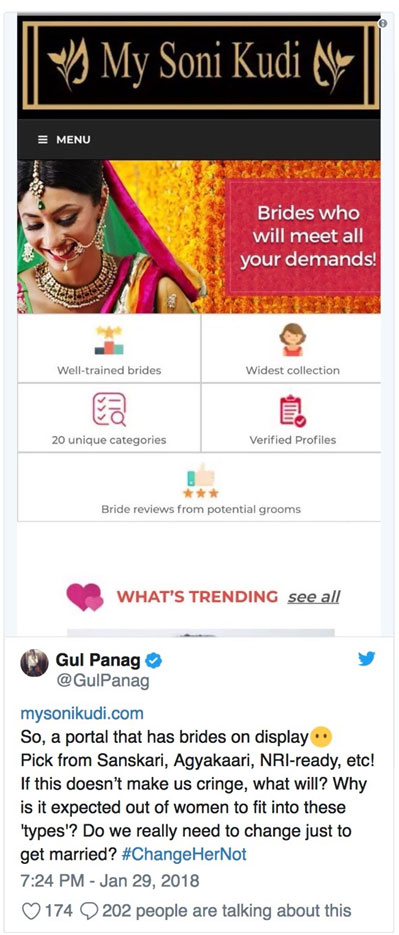
    Mysonikudi followed this approach when they got Gul Panag to tweet about a make-believe website called sonikudi.com which projected itself as a portal which provided customised brides like Wonder Chef’, ‘Bachat Focused’, ‘Agyakari’, ‘Gharelu’, and ‘Sansakari’.


    Gul Panag #changehernot hashtag was trending in no time and it drew the ire of the public at large making the campaign a great success.  The fake website I believe drew over 3000 eager beaver husbands-to-be putting in their preferences for the stereotypical housewives offered on the website.


    Yahoo advertises for India

    These days in drawing room conversations with my daughter’s friends, they say: “Uncle, we are no longer on Facebook, we are on Instagram”.  While I am still trying to grope around with a theory that would explain this millennial behaviour they add fuel to the fire by telling me that Facebook is only for older people.  That really makes me feel really old.  In the last months, I had almost come to the conclusion that Facebook was for old dads and grandads. And that Instagram was for all the young happening people. Of course I thought being an ad guy that this was a clever strategy by Facebook to differentiate between the users of Facebook and Instagram since they own both platforms.


    And now there is this campaign called “Live to Love” by Facebook that says all my thinking is wrong. For one its shows young people (read millennials ) and it also shows old people like me. Here are sample commercials for  both Neha the young doctor, and Sunny the 58 year old portly businessman.


    While the campaign does look like a strategy planner wrote a very detailed brief that eulogised about the target group and the creative just decided to translate it into a film, the campaign does what every mass marketer is known to do.  Talk to everybody, both young and old.  Which, somehow goes against the the tenets of positioning and targeting.  But I guess when you have 217 million users in India and those users are a pretty amorphous lot, you don’t have too many choices.


    In any case, the campaign does two jobs:  it reassures me that not only old people use Facebook.  And it reassures younger people that they need not shun it and go to Instagram.  If that is what Mark Zuckerberg wants in this second largest market the campaign perhaps meets the objective.


    PrabhakarMundkur is an ad industry veteran who is now a prolific commentator on LinkedIn and his own website – prabhakarmundkur.com. The views here are personal


  • Prabhakar Mundkur: Indian Advertising and its Mother Schizophrenia

    Prabhakar Mundkur

    By Prabhakar Mundkur


    It would have helped if we had a uniform understanding of Indian mothers.  Last week, we saw two very different portrayals of mothers both emanating from Indian agencies.  One of course was the All Out TVC which ostensibly was making a commercial, that was in support of Indian mothers #StandbyToughMoms.  But the portrayal may have just backfired in spite of good intentions.


    Largely because it showed an Indian family sitting down to a meal where the Indian mother didn’t even have a seat at the table.  She then begins to play the servant rolled into a doormat role where she is busy serving an enormous family while she goes hungry herself.  She decides to be stern with her son who is behaving like the usual spoilt Indian brat and pushing his plate away rudely, only to be reprimanded by the mother-in-law – another cameo from the India of the past.


    Says Priyadarshini Narendra, an experienced strategist: “How is this a tough mom, when she doesn’t show the guts to stand up for herself and acts like a doormat? At the end,she needs to be rescued by a man, without his validation, she just standing there looking mulish.  It harks back to the Nirupa Roy trope. Which hopefully we have outgrown.”


    Milan Vohra, well known writer, says: “I find the ad regressive. It’s high time they stop glorifying clichés. And why does this woman behave like she’s their tight-lipped maid? Does she need someone else to speak for her? If the whole point was to show she’s a silent tough type maybe she could have had one pithy comment at the end to the bratty beta. Bah!”


    So, in many ways what might have been a film made with good intentions seem to have upset a lot of mothers because of the regressive woman stereotype portrayed in the film.


    And the big surprise is that the commercial was made by the same agency that did the path breaking #Shareyourloadcommercials for Ariel, which fought for an equal status for women.


    The India – Pakistan advertising collaboration

    Another much shared commercial on WhatsApp was the Shan Foods commercial for Peek Freens Cake-up. The ad focuses on two characters; a working mum and her son. The mum religiously fills up the son’s tiffin box with cakeeveryday and there is a letter she puts in the tiffin which attempts to instill the right values in her child.  So far, so good. Yes, it is touching at one level.  And it is a beautifully made film.


    But after having seen it one can’t but help, come up with some questions.


    One mother I showed the ad to said without any hesitation, that at one level the film was saying “I love you so much beta, but I’m a cliched working mum who is never around and therefore I will assuage my guilt by feeding you processed cake with artificial ingredients and sugar EVERYDAY!”.


    Of course, having worked on brands like Kellogg’s, which are maniacal about nutrition one can’t help asking the second question. What are the daily nutritional requirements of this cake and is it really wise for a mum to be feeding her child this cake every day?


    But at least it portrays the modern mother in Pakistan.  Now take a look at the All-Out portrayal of the Indian mother.  Are mothers in Pakistan more progressive than India?  Or is it just our schizophrenic understanding of what today’s mothers are about?


    Indian Print ads – lots of media innovation and no creative innovation

    In the 80s and 90s, Indian print ads moved you. Whatever happened to the print ads of today?  They are so obvious, they don’t make you smile or evoke any emotion at all.  And all the while you are struggling to read your daily newspaper that is so full of media innovations, it’s a struggle to read the paper because it is falling apart with fold-outs.  Or is it that we know how to be creative in English and we know how to be creative in Hindi, but we haven’t quite got around to being creative in Hinglish?


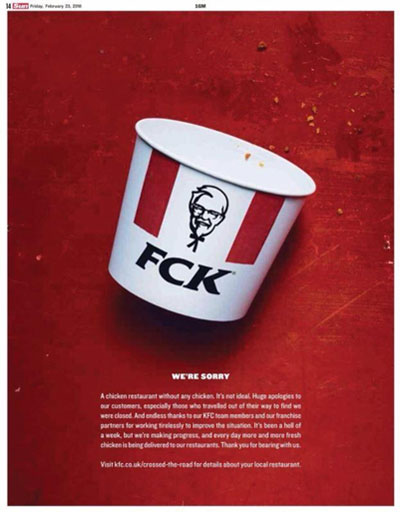
    But the KFC ad in the UK brought resurrected the creativity of print advertising. Provoked by a shortage of chicken in all their restaurants, KFC decided to turn the overall consumer disappointment on its head.


    The ad read “A chicken shop without any chicken. It’s not ideal. Huge apologies to our customers, especially those who travelled out of their way to find we were closed,” the ad reads.


    “It’s been a hell of a week, but we’re making progress, and every day more and more fresh chicken is being delivered to our restaurants.”


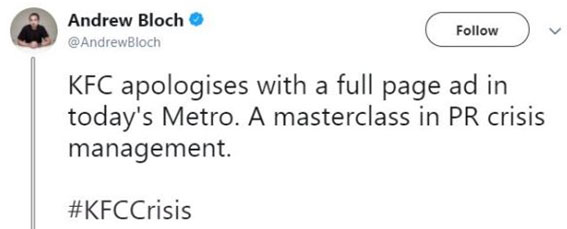
    Andrew Bloch, Founder and Group Managing Director of Frank PR called it a ‘master-class in PR crisis management’ on twitter. I can’t help but agree!


  • Introducing Ad Buzz, a new column by Prabhakar Mundkur


    Adperson, musician, bicyclist and someone who doesn’t hesitate to speak his mind…. every Thursday on MxMIndia.


    By Prabhakar Mundkur


    Prabhakar Mundkur

    The year-end was full of the cacophony of writers making predictions for 2018, or mundane reviews of 2017, in spite of the fact that a calendar year has no particular statistical significance for trend spotting.  Change is always continuous and never separated by any discrete intervals, especially an interval that lasts exactly twelve months. In some ways, 2017 may have just stolen the thunder from 2018, with the strides in artificial intelligence in the form of Sophia the Robot, or personal assistants like Alexa making a major impact in our lives towards the end of the year.


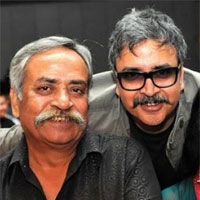
    But one bright spot for December was the Lion of St Mark awarded to the much-deserved Pandey brothers.  They have truly raised the bar of creativity to a global standard, besides putting India firmly on the advertising creativity map.   Showering undue adulation on our stars is an Indian trait and we do it constantly with all our stars, whether they are from cinema, sports or any other field.  We may just have added ‘advertising’ to the adulation list.


    With this award, Piyush and Prasoon Pandey join an illustrious band of creative people around the world that has included David Droga, Marcello Serpa, Bob Greenburg, Joe Pytka, Lee Clow, Dan Wieden and Sir John Hegarty.  Not everyone might be aware of the work created by these distinguished gentlemen, or even knowwhere they work.The Lion of St Mark is one of those awards that lets the winner soak in humility and pride so deserving of a life time award, which by definition implies that it can only be won once.


    St Mark incidentally is the evangelist pictured in the form of a winged Lion holding a Bible and is symbol of the city of Venice where the first Cannes was held in 1954.  But the significance of all this may be lost to many, or otherwisedismissed as unimportant.  At least one of our advertising weeklies, which covered the event exclusively, could well have educated their readers on the significance of the award.


    ~~


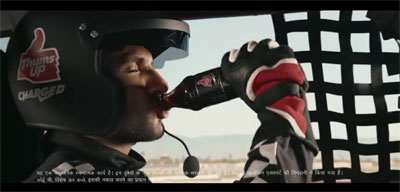
    For the marketing intellectual, the introduction of Thums Up Charged might hold room for an interesting debate.  Variants according to textbook marketers can endow the mother brand with rewards ranging from increased market share to a longer life.  But how does that augur for a category like colas, which is increasingly being seen as unhealthy?  And Thums up Charged might well be dubbed an even unhealthier variant given the extra levels of caffeine and the heightened aeration.  So how will an unhealthier variant of an already unhealthy brand perform?  Of course, to its credit, Thums Up remains the market leader in a market which has the world’s leading colas.  Another point to debate might well be how will the two variants will be differentiated in the advertising.  Will it be differentiated enough for the consumer to know which variant is being advertised or will the consumer just see it as another Thums Up ad? This often is the acid test for variant advertising.


    ~~


    If the rumour mill is to be believed at least one leading ad agency of earlier years shut down its Delhi office on Dec 31.  What a way to close 2017.  I believe the agency is managing its Mumbai office on skeleton staff.  Another well-known agency that at the turn of the millennium was threatening to hold the creative high ground is being absorbed by another agency in the same communications group.  As an ad guy, I find this kind of news depressing.  Partly because I always questioned the soothsayers and never wanted to believe in the death of advertising that has been a hot topic of discussion for some time now.


    For those of us who were celebrating the close of the old year, I am sure this is a week for sobering up and reflecting on what the new year holds for all of us.  The first week of a new year always feels like the end of one journey and the beginning of another.


    Having spent nearly four decades in the advertising business with companies like JWT, Havas and Y & R in India, Africa, and Asia, veteran adperson Prabhakar Mundkur is Chief Mentor at HGS Interactive, a part of Hinduja Global Solutions. He was LinkedIn’s Top Voice in India in 2016 and is a prolific writer. He recently set up PrabhakarMundkur.com as homebase for his writings. Ad Buzz will appear weekly on MxMIndia.com. The views here are his own.


  • Ad Buzz by Prabhakar Mundkur: Will advertising strike back at consulting cos?

    By Prabhakar Mundkur


    Consulting vs Communication Groups

    In a surprise move, Sir Martin Sorrell may have silenced all the critics who have been proclaiming the death of advertising, as consulting companies have been making forays into digital marketing and advertising. Some investment gurus have even been predicting the eventual take-over of the advertising industry by the consulting industry. Kantar, one of the major companies in the WPP group, collapsed four brands – Kantar Added Value, Kantar Futures, Kantar Vermeer and Kantar Retail – into one brand called Kantar Consulting.  Kantar has already informed their clients about the development and hopes to have about a 1000 staff that consists of analysts, thought leaders and software developers.

    Will the others quickly follow suit?  It remains to be seen, but if they do, advertising is certainly striking back. Old professions have great survival skills, as the oldest profession in the world has proven to us time and time again.


    Social Media inspires Communication themes

    Earlier, brands took their cues from the news, cinema and other fields. Or used topics like another brand’s major event to take advantage and poke fun at them. Remember in 2017 when BMW celebrated its 100th birthday, how Mercedes acted cheekily with this ad?

    It paid BMW a left-handed compliment to make a point about themselves while overtly congratulating BMW.

    They also went all the way and invited all BMW employees to the Mercedes-Benz Museum “to discover the complete history of the automobile” from March 8 to 13.

    Now all that is changing. The latest source of inspiration is what is trending on social media.  While President Donald Trump’s #nuclearbutton tweet might have fazed political pundits, some brands decided to have some fun with the latest topic of conversation around the world.

    Closer home, Amul Butter has for the last 5 decades always capitalized on what is the current buzz. President Donald Trump’s tweet inspired this hoarding from Amul Butter.

    KFC UK and Ireland decided to get cheeky with McDonald’s on Twitter. Many Americans acknowledged they weren’t even aware that KFC existed in that part of the world until their tweet took Twitter by storm.


    Consumer Protection

    When Consumer Affairs Minister introduced a new Consumer Protection Bill in Parliament last week, it might have sent shivers down the Advertising and Entertainment industry in an already cold January.  The bill provided for a fine of INR 50 lakh which of course is unlikely to bother the top celebrities since it represents only a fraction of what they earn through endorsements. What might have seemed to be harsh to them was that celebrities could face up to three years imprisonment for appearing in misleading.  No doubt agents of celebrities would seek clarification on what exactly is misleading advertising.  The Advertising Standards Council of India has already made an offer to advise if an ad is misleading.

    Quite simply, misleading means giving the wrong idea or impression about something. In the case of products, if the claims made in advertising are not honest and truthful, it would mean an advertisement is misleading.  Anyway, the new act is likely to put the brakes on blindly accepting every brand offer that meets the celebrity’s standard fee.  Celebrities are also being careful about how the brand affects their own brand equity.  When Virat Kohli refused to endorse Pepsi last year, he was actually being careful about the repercussions on his own image.


    Creativity vs Effectiveness

    The advertising industry celebrated the Effies with their usual revelry. The Effies typically precede the euphoria of getting ready for the Abby’s which are around the corner. The cynics of the creative awards will quote Dave Trott when he famously said “You are not doing advertising for six million people anymore, but for ten people in the jury, and for a few clients”.   While the creative people are centre stage for the creative award, the effectiveness awards are for the ad-fiddlers as Dave Trott labeled our dear planners.

    However, it looks like the old polarity between creativity and effectiveness no longer holds true.  Increasingly I find that it is the creative agency that also wins the Effie.  And often I find that the best campaigns are quite likely to win both the creative awards and the effectiveness awards.  Hopefully it has nothing to do with the same organisation in India conducting both the awards.


    Having spent nearly four decades in the advertising business with companies like JWT, Havas and Y & R in India, Africa, and Asia, veteran adperson Prabhakar Mundkur is Chief Mentor at HGS Interactive, a part of Hinduja Global Solutions. He was LinkedIn’s Top Voice in India in 2016 andis a prolific writer. He recently set up PrabhakarMundkur.com as homebase for his writings. Ad Buzz will appear weekly on MxMIndia.com. The views here are his own.


  • Prabhakar Mundkur: Does using the same idiom as someone else make an idea original?

    Prabhakar Mundkur

    By Prabhakar Mundkur


    The death of Kapil Mohan,the creator of the Old Monk rum drew a number of memoirs and essays on this iconic brand.  But one particular ad on social media on January 10, became quite popular and went viral.


    To me it was an idea made famous by Chivas Regal in their campaign below.

    In a debate with some of my contemporaries, the opinion was divided.  Many felt that it was reminiscent of the old Chivas campaign, but others felt that it was an adage that could well be re-used. One of my friends even questioned whether the ad was legal since it promoted Old Monk rum. (although the word rum was cleverly not used). Another friend raised the issue of the ad being created as speculative work, since it was not approved by Coca-Cola according to the tweet from the agency that created it.


    One awardwinning creative director I asked said: “Yes it reminds me of Chivas, but the visual makes up for it”.  Another awardwinning creative director said: “Yes it reminds me of Chivas. I remember it was something like ‘To the host it’s half empty, to the guest, it’s half full’.  However, since it’s an adage, nobody really owns it. Chivas did a fine job of adding a twist while in the Thums Up ad, the art director went for a literal visual depiction of the adage.”

    But I leave you to decide if you think the ad is original and if it needs to be applauded.


    Patanjali – LVMH Alliance

    While as a financial proposition it may make some sense, news of the LVMH-Patanjali partnership is as different as chalk and cheese to use a very tired phrase. The L Catterton Equity Fund was set up by LVMH to make investments in high growth companies with consumer brands and is one of the largest funds in the world.


    I thought that there might be some major hurdles to overcome especially the brand name itself.


    L Catterton Managing Partner, Ravi Thakran told the press that he is keen to explore markets like US, Japan, China, South Korea and Europe for Patanjali. However, the markets he mentions are hardly homogenous. For that matter, even the markets in North East Asia are not homogenous.


    The first hurdle for overseas markets could be the name itself – Patanjali. First of all, it is a four-syllable name which is quite uncommon in Asian markets. In addition, the Japanese recognise the foreignness of names both in Katakana and Roman alphabets and the Chinese recognise foreignness whey they see certain Hanzi characters.  And if the foreignness is attributed to Indianess, one is not quite sure what Indianness and Indian products mean in these markets. For most North East Asian markets India is considered both chaotic and mysterious.  The Chinese feel that Indian media is constantly portraying them as evil, which is not going down well with the Chinese.  In addition, in countries like China, the government is officially atheist.  So Babas and Vaids have little cache there. According to a research conducted in 2008, less than 40% of the Japanese population is religious.


    Besides, for Patanjali to accept any foreign investment, might be a bit like selling the brand’s soul, given its nationalistic, anti-MNC positioning thus far.


    The Art of the Crowd

    Crowd Art is an often-employed ploy by artists and advertisers.  The first great commercial to use crowd art was the British Airways commercial in 1990.  It used thousands of people to create a face which then winked at the audience before dissolving into a Union Jack.

    The recent Mercedes ad re-inforcing their leadership in the Indian market used crowd art to form the three-pointed star which was quite interesting.

    Which brings me back to the question I started with: is using the same idiom as another person but dressed differently, original?  When it comes to art, the question of originality needs some deeper introspection.  Under some conditions it still remains original. To me for example, Bernard Shaw’s famous play Pygmalion had to make a transition from being a play to being a musical when it became My Fair Lady, but for me My Fair Lady is still original.


    In general, I like Herman Melville’s view of originality when he ways, “It is better to fail in originality, than succeed in imitation.”


  • Is Your Ad Agency Cheating on You?


    By Prabhakar Mundkur


    When the ad agency was on 15% commission there was no need to cheat. Although margins were thin at 3-4%, the ad agency was able to handle its rent, training, staff costs and other overheads and make a decent profit although always much less than their clients. The quality of staff was infinitely better.  When I first started doing the rounds of the IIMs in the late eighties, agencies were not a preferred employer, but it didn’t take long to get there. In the period between 1985-1990, HTA (the erstwhile Wunderman Thompson) hired anywhere between 50-60 young business school graduates every year. And we ran a two-week workshop for them called Entrez Vous typically held at one of the hotels in Marve (in suburban Mumbai). After the training programme, the trainees dispersed to the various offices across the country and formed an incredible buddy network that stood the agency in good stead.


    HTA was incredibly honest. I was once hauled up by the CFO of the company because he suspected that I had overcharged a client on a particular job – that I had charged more than the customary 15%. As it turned out, all I had done was charged a service fee for an exhibition in Rajasthan which was legal according to the HTA manual and the service fee I still remember had the billing head B7.  B8 was the production head where the remaining costs for the exhibition were billed like the artwork and the bromides to go over the panels. Exhibitions were charged a service fee because it was highly labour-intensive and if the agency were to just charge for artworks for exhibition panels, the job was highly unprofitable. I had had the client approve the estimate with the service fee and my CFO had to acknowledge that I was both clever and honest!


    My first memory of clients being suspicious of agency earnings was when clients started interrogating film production estimates. I would say this was roughly around 1990.  I found myself being grilled on a particular film production estimate. And I couldn’t believe it. A little later, all film production estimates were going through an external film auditor which was a shame for an honest agency like HTA. Later, I discovered that the problem was with one of our competitive agencies, which used to pad up film production estimates to 25% or over while its client contracts specified 15% on both media and production. The client had discovered an anomaly in the other agency’s film production estimate and was naturally suspicious of us as well. I was a little shocked that any agency could charge 25% when all agreements with clients mentioned the standard 15%. This ultimately gave rise to the emergence of the film production services auditor of which there were a few in the country. They matched up agency production estimates with actual market costs and advised clients accordingly. The objective was to discover the hidden padding of the film production estimate.


    Come the 1990s and agency earnings were rapidly going south. First the 15% agency commission broke down, and then came the major shock to the ad agency – the separation of the media from the creative business. This actually meant that neither the media nor the creative business was earning like before.


    So now it was the media arm’s turn to make a little extra money which was above and beyond the agency contract. In fact, I was once meeting the Chairman of one my largest clients in Asia, to make a very important presentation to him on one of his main competitors. When my Asia Pacific chief heard about my meeting, he at once wanted to accompany me knowing the stature of the client. When I put in a request to the Chairman that my APAC chief wanted to attend the meeting, the man winced. Clearly, he didn’t want to meet my boss. Later, I heard that the Chairman had a grouse against my Asia Pacific Chief because in another Asian country, my agency had not given back the media rebates the agency had earned, which were to be returned to the client as per the client contract. Yes, you guessed it – ultimately the lack of transparency in media rebates gave rise to the media services auditor. It is still difficult to separate ‘co-mingled buys’ that leverage the collective buying power of their clients but aren’t tied to any specific client’s account.


    And so, it has carried on for the last 20 years or so. Nothing has changed. A few weeks ago, a prominent up-and-coming and eminently successful CEO was summarily dismissed because he had been caught cheating his clients on film production costs amongst some other accusations. Tinkering with company P&Ls seemed like the lesser sin. A sad end to a promising career. Of course, he was trying to make his agency rich by maintaining margins much larger than his agency had promised the client globally. What could be the motivation? A really honest guy who probably was just trying to bump up his bonuses.


    I felt a twinge of sorrow when I heard that story. That is the sad downfall of the advertising agency as I knew it, since I first joined the profession in 1977. But who is to blame? I think the clients are to blame for negotiating terms that are so hard, that agencies are left with no option but to find means of increasing their profit. I blame the agencies for negotiating unrealistic terms with their clients just for the greed of handling their business. And lastly, I blame the agency bosses for laying unrealistic targets on their CEOs. In the process the ad agency seems to have lost its moral compass along with its ability to stay alive as it loses business rapidly to the digital agency of the future. Although, one must add, that digital agencies are not invulnerable. There are already stories of padding up hours for fee-based clients. But I am hoping they survive the future better than their predecessor.


    And I also wish agencies – networked and otherwise – relook at the way they conduct their business. Given a significant premium on the marketing spend, transparency is critical in the marketing services business. Clearly there is no room for any monkey business.


    Prabhakar Mundkur is a veteran adperson having worked across geographies leading agencies. He is also a prolific writer and recognised by LinkedIn as its #1 Top Voice in 2016. He writes frequently on MxMIndia. His views here are personal


  • Reverse Snobbery Works & How!


    By Avik Chattopadhyay

     

    I have a friend in Paris, the tony, fancy part of Paris. He has a four-bedroom apartment in an ornate late 19th century building. Antique furniture, impressionist paintings, a pair of Mings and a Steinway among other collectibles. And he drives a Smart ForTwo! That’s a 2.6 metre two-seater car costing around Rs.5.0 lakhs that just about manages to hold him, his wife and a couple of shopping bags inside. “That’s all you own?” “Oui. That’s good enough. Easy to park. Easy to use. Easy on the environment. Easy on…” “Okay, okay, get the idea. Making a statement, aren’t you? You could afford an exotic Alfa Romeo but wish to make a certain statement with the Smart.” “Voila! You get it. I stay in the heart of Paris in my own apartment. And I use the Smart!”


    Reverse snobbery.

    That’s what it is. Plain and simple.

    Cocking a snook at the ‘wannabees’ who are desperate to flaunt their BMWs and LVs, paying their EMIs through their noses.

    This is the “rebel” brand. One that questions straight-jacketed conventions and the holy cows. One that challenges the age-old traditions as irrelevant and ostentatious.


    It works. It sure does work.

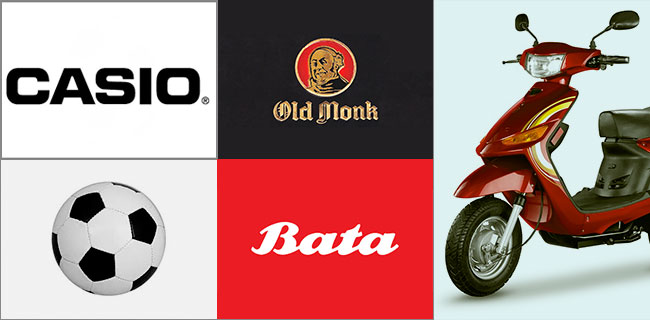
    And quite a few brands have built their raison d’etre on this very platform of standing up and smirking at the typical symbols of status and exclusivity. I have picked my favourite 5, apart from the Smart, that have proven beyond doubt that reverse snobbery is a viable and sustainable space to occupy, both as a philosophy and as a business proposition.


    Casio.

    Specifically the G-shock range that has truly transformed the digital plastic cased and strapped watch into a near icon! It goes off the shelves in no time in any part of the world, appealing across age groups. In any premium watch retailer you will see it displayed alongside far more “premium” brands like Tissot, Armani and cK. It is a rage amongst the gen-Z for its sheer larger than life physical manifestation and built in “cool” features that the premium brands do not offer. Swatch did play the same role very effectively till some time back but its absence from the smartwatch segment has seen it slip in the eyes of the beholder. Titan also missed a beat or two with Fastrack in taking it up the image ladder.


    Old Monk.

    Never could imagine a benign Benedictine padre to be a spirited confidante of millions of homes in India! And also travel across the world bringing both joy and solace to the Indian diaspora. My alma mater has something called OMAXI, the Old Monk Association of XLRI with a ‘chief’ ceremoniously elected and crowned every year! One really committed group I must admit. That glass bottle with the caramel brown liquid has given a beating to some of the biggest global spirits in terms of loyalty, advocacy and also relevance. When your customers release ads on your 60th anniversary you sure know the prayers are on your side!


    Football.

    Yes, the beautiful game came back with a bang with the English Premier League getting into our bloodstream through ESPN a decade and a half back. In a nation obsessed with cricket [still so] and sports like golf and Formula 1 catering to the “elite”, Sir Alex Ferguson came with a sledgehammer and rearranged the living room a wee bit. Football got a bigger footprint beyond its traditional following in Bengal, Kerala, Goa and Punjab. Rich kids went around chilling in Manchester United and Chelsea t-shirts. Then came the wave…La Liga, Bundesliga, Serie A, Champions League and more. It was cool to discuss Mourinho’s follies in the toniest of parties in Delhi and Mumbai. The game of the masses finally saw a fashionable following in the “class”.


    Bata.          

    The good old fuddy-duddy school shoe brand is back with a bang! After decades of meandering around directionless, they have finally hit the purple patch. Excellent product portfolio, much improved product quality and most importantly, a new customer base that sees it cool enough to wear and flaunt. The shopping experience has also been taken a few notches higher with a strong online push. The renewed self-confidence is demonstrated by the introduction of an entry-level fast-fashion brand like FootIn. The brand co-existing with the likes of Hush Puppies, Caterpillar, Scholl and Weinbrenner has actually paid off immensely for its own image makeover.


    The Scooter.

    Its no longer “sissy” to be seen moving around on a scooter anymore. You need not pass off yours as your sister’s before your friends or colleagues. The scooter is cool. Its more responsible. Its more flexible. Its more than a motorcycle. The relaunch of the Chetak by Bajaj tells you that the guys at Akurdi have realised their mistake of vacating this space to competition. The Honda Activa is the largest selling two-wheeler in India. It’s a scooter! The category today offers you a range to choose from based on your personality type – family man = Jupiter, fashionable = Fascino, speed freak = Ntorq, cruiser = Burgman and so on. The scooter looks as aspirational and adorable as any motorcycle. And the fact that it continues to cater to both men and women with consummate ease is what attracts the ‘metrosexual’ to it in droves.


    These are my top 5 picks of brands that thrive on reverse snobbery.

    Just wish the Tata Nano were also on this list.

    Had all the ingredients of being a global icon.

    Alas, that is one big lost opportunity…another story…another day…


  • A Prize Too Far?


    By Avik Chattopadhyay


    Abhijit Banerjee wins the Nobel. Bezwada Wilson wins the Magsaysay. Satyajit Ray is bestowed with the Irving Thalberg award. Arundhati Roy wins the Man Booker prize.


    All moments that have made the nation proud and also brought certain special and superlative people to the forefront who would have otherwise remained in the inside pages of a newspaper. They were brought to the front page by being associated with certain awards and prizes that are the gold standard in their respective fields…the Nobel in Economics, the Magsaysay for Social Service, the Thalberg for a lifetime contribution to films, the Booker for literature and so on.


    As Indians we have gone into overdrive every time such an achievement happens. I personally have tried my hand at “reflected” glory by having known Siddhartha Mukherjee in my adolescence, Bezwada Wilson as a professional and now Abhijit Banerjee as the elder brother of my business partner! Apart from the fact that I keep good company, I sure take pride in the value of the associations. Of the stature of the prizes and awards. For these are testimonials of their individual prowess at a global level and a recognition of their contribution to the betterment of society at large.


    So, in the middle of all the euphoria of Abhijit-da [co]winning the Nobel for Economics, one simple question came up in my mind. Why could we never have an award or prize of international scale and fame? One that people from every corner of the world would crave for. One that every media publication in the world would write about. One that would make us proud as a nation for not only having produced stalwarts but also recognising ones from all walks of life, all fields of endeavour and all forms of excellence.


    Sadly, we have none.

    There is the Jawaharlal Nehru Award for International Understanding but it has hardly attained that global stature and the last one was anyway given in 2009 [to Angela Merkel]. Tells you about the commitment to continuity by the award givers. And the present government will have none of it as “Nehru” is a bad word nowadays.


    We have lots of film awards, but none at the level of the Palme d’Or.

    We have lots of sports awards, but none at the level of the Laureus.

    We do have a few awards for journalism, but none at the level of the Pulitzer.


    Why is this so? Why could India not create at least one award of global stature that had the world looking forward to the winner being announced every year? We take pride in being the first nation to have attained freedom through peace. So why not one for peace movements? We take pride in being the world’s biggest feature film market. So why not one for non-English movies? We take pride in being one of the world’s oldest civilizations [a few flagbearers will claim us to be the oldest]. So why not for historical studies?


    Four clear reasons why not.


    First. We fear global comparisons.

    As a nation, we are a very apprehensive lot with lots of mental reservations about being evaluated on development parameters at a global level. We would love to vote by the millions for a movie star on the internet and declare him the “most popular” in the world. We have made religion out of a sport that is played by only a handful of nations with just 12 of them being full-time members of the sport’s governing council! We hate being exposed to indices and metrics that put us out in the open against people of other nations. Years of thriving on mediocrity in the garb of development have led us to this unique state of being. The ones that go out and establish themselves on the world map do so purely by themselves, with little support and encouragement from the nation. But once they get global recognitions, they become beacons of all that is great and glorious about India!


    Second. We take comfort in volume and not value.

    We are a very opportunistic nation, taking recourse to facades that help us in specific contexts. So, as a poor nation, why do we need to have international prizes and awards and give away serious prize money to outsiders? Don’t our poor need to be fed? Such precious money cannot be wasted at all. We are all about numbers…population by the millions, roads by thousands of kilometres, schools by hundred-thousands, languages by hundreds, rituals by thousands and so on. We are not really about the qualitative aspects of the population, the roads, the schools and so on. Hence, the sheer value of creating and nurturing an award of international stature does not hold much water.


    Third. Philanthropy is not our thing.

    Imagine a Man Group in India putting their money behind an international award for literature like the Booker. Or someone like the Rockefeller Fund partnering with the family to create the Magsaysay. Or the motion picture association creating an Oscar. That’s not really our cup of tea. Non-government awards and prizes are constituted to pat each other on the back. They are not necessarily for greater good. People of dubious repute or minimal contribution are given the nation’s highest civilian honour! How many like Maulana Abul Kalam Azad have we had who had the guts to refuse the Bharat Ratna as he felt he was not eligible enough? Why could the Ambanis not institute a global award for entrepreneurship? Why could the government not revive the Nehru Award in the right spirit?


    Fourth. Sadly, we still lack self-esteem.

    Collectively, we are still not out of our colonial hangover. We still feel that we are not good enough to be counted at the global scale, apart from a few Guinness Record events being stage-managed. We will crave for associations and recognitions from overseas but not have the ego to go ahead and create one recognition of global repute. Political pontification and posturing do not help. Building tall statues and long bridges are not a sign of self-confidence. Creating gold standards whereon stalwarts from across the world are evaluated surely are.


    After winning the Nobel in 1913, on being called to yet another celebration ceremony in Kolkata, Tagore had politely refused being garlanded. He said that while he did not yet know how the Western world recognised a poet standing on the Eastern coast, back home he was sure to acknowledge the ‘intoxicated euphoria’ of his own people but not consume it!


  • The Festival of Freedom


    By Avik Chattopadhyay


    We are a land of festivals. There is a phrase in Bengali that goes like “12 months, 13 festivals”.  Just the Bengali ones, mind you. If one were to add up all the festivals across all faiths and occasions, we would end up with probably 10 times that. We just love celebrations, of all types, shapes and sizes. And most brands around us surround us with their specific pieces of communication for each festival. Wishing us health, prosperity, happiness and most of all, spending money.


    Two such festivals fall end-January and mid-August.

    The “feeling nationalist” festivals.

    Tomorrow is one.

    When as a nation we shall see a surge of nationalism and being Indian.


    Over the last one week many of us would have bought the national flag.

    Ones for our car dashboards. Ones for pasting on our windows.

    Ones for placing on our work-desks. Ones for our verandahs and rooftops.


    We will wear traditional clothes and gather at parks and community centres to hoist the national flag, sing the national anthem, exchange pleasantries, hear out a few speeches, and then carry a little box of a samosa and a laddu back to our world of WhatsApp, Twitter and Instagram, passing judgments, drawing conclusions, pouring vitriol and acting holier than thou.


    Brands also have this seasonal booth of national pride.

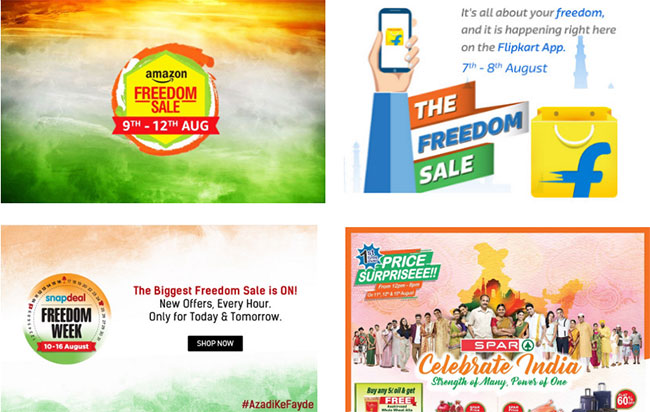
    We actually have multiple “freedom sales” going on.

    Amazon simply calls it the “Freedom Sale”.

    Flipkart says “it’s all about your freedom…”

    Snapdeal promises it is #AzadiKeFayde.

    While Spar encourages you to “Celebrate India. Strength of Many. Power of One.”

    How utterly ridiculous can the entire thing be!?

    First, you misuse the sanctity of an occasion like the Independence Day to push out a commercial activity. And then you wrap cheeky communication around it that makes you think you look smart! What about my freedom does Flipkart really deliver? And what “fayde” [benefits] of freedom does Snapdeal promise me? The Spar one actually goes one step further by saying things that are totally inane. The marketing heads behind these exercises need some brain scanning.


    Then we have lots of brands espousing national pride and the spirit of unity on television. Liberty Shoes. Benetton. Manyavar. Times of India. Lava. And so on. There are some truly ridiculous ones that you can watch on YouTube in collections called “Independence Day Ads” part 1, 2, 3 and so on. I found one by Oyo featuring actors Manoj Bajpayee and Raveena Tandon totally demented. And there is one by PayTM that claims that a cashless India will be corruption free, even if you may give people in kind. The mind boggles. Then there are quite a few that are forcing you to be misty-eyed. But then there are ones by Ambuja and Bajaj that strike the right chord.


    I have three observations to make on all the advertising that is specially prepared for occasions like Independence Day [or even Republic Day].


    Why not for the whole year?

    The values of freedom and being part of a nation cannot be restricted to only 2 weeks of a year, like any other festival. They need to be communicated through the year, in all languages, to reinforce the true meaning of being an Indian, in its inclusiveness, openness, progressiveness and the responsibility that lies in each of us to preserve, nurture and propagate these values. Only then can the message register and resonate. Otherwise we will continue to have one week of cacophony and then slip into yet another festival.


    Why always feel good and not feel disturbed?

    Every piece of communication wants to tug at your heart, create a lump in your throat and leave you misty-eyed. Like a television soap. Freedom entrusts us with the responsibility of not just sharing the good stories but also highlighting the issues of concern. The nation need not be sung to sleep but also woken up rudely with uncomfortable truths staring us in the face. Communication needs to provoke the recipient into thought, debate and positive action. Brands can take up a cause that is close to their heart and wake people up, beyond shares on social media.


    Why not encourage people to give instead of buy?

    Do not make people buy. Instead, teach them to give. To a cause. To specific sections of society. To the underprivileged. To the exploited. To the deserving. We Indians are terrible philanthropists, bordering on being downright inconsiderate and selfish. Let all the e-commerce platforms encourage their members to move beyond the donation boxes in the places of worship onto the streets where millions of our brothers and sisters could benefit from our little contributions.


    Wish brands accord the occasion its due respect and stop treating every national holiday a shopping spree. Also try to resist the temptation of melodrama in your communication as that quite ridicules the sacrifices of our forefathers for the cause. As Netaji had said, “Freedom is not given. It is taken.” Jai Hind!


  • The ICC World Cup of Brands 2019


    By Avik Chattopadhyay


    Cricket is possibly the only thing that binds India on this date. A few others like the National Anthem, the Constitution and the Flag are going through their phases of revisionism and identity-crisis. Bollywood has never been a unifier! If you feel offended, ask the movie-goer in Chennai and Cochin for the right perspective.

    So, when the ICC One-Day Cricket World Cup happens, every brand wants to ride the bandwagon. Either directly as ICC sponsors and partners or with the media vehicle Star Sports. In either case, paying top money for primetime. We were pitted against England as the favourites to win the cup, so eyeballs would be guaranteed till the 12th of July.

    The biggest sponsors of this world cup were Kohli and Dhoni.

    Kohli was on air for Uber, Shyam Steel, Google Duo and Nuvoco Vista.

    MSD for Dream 11, SRMB Steel, Orient LED, MasterCard and Bharat Matrimony.

    Pardon me if I have missed out any more.

    Through the tournament I just hoped some guy with a sense of humour would announce, “This match is brought to you by Nissan, Oppo, Coca-Cola, MRF, Virat Kohli and MS Dhoni.” But that moment never came.

    Instead, India stopped at the semis.

    And so did most of the eyeballs.

    Now that the nation is at relative peace and debating only about ICC rules and New Zealand being short-circuited [almost patronisingly], here is a good time to look at how the brands on the b[r]andwagon fared. My assessment basically from the multitude of products and services that spent oodles of money on television over the 48 matches…into 3 sets of the good, the bad and the ridiculous. They are in no ranking order, hence the alphabetical order.


    The Good 5


    Coca-Cola – adorable communication featuring Paresh Rawal and Ranbeer Kapoor. Simple story, brilliantly told. Though one might argue the open invitation to gulp down gallons of aerated sugar water, the sheer quality of the campaign pardons the sin. “Chaar saal dete hain world cup waale…” should go on to become an iconic quip over time.


    Dream 11 – in the 5 WhatsApp groups I am part of, there were at least a dozen individuals hooked on to this site. Old and middle aged people, mind you, leading otherwise responsible family and corporate lives, indulging in betting! Obviously, the communication, simple and compelling enough, made the most of the occasion. MSD kept well here…no byes and drops.


    Google Search – while the Google Duo communication was quite flaky, the one by Search was bang on! Again, like Dream 11, made the most of the occasion.


    Swiggy – they had started off during the IPL, but the excellent campaign continued through the world cup. The brilliant tie-ins with various cricketing situations through the commentary brought a smile on millions’ faces I am sure. They had quite a few stories on air but my favourite one is the “Batsmen are taking a risk here…” featuring the two old friends ordering quesadilla and lasagne!


    Uber – very tactical and topical but well communicated and that is why it is in my list of the Good 5. Virat played well, on all types of pitches, in all conditions. Disarming and to the point. Only I could not understand playing the ad on the final. But that is for another day and under another subject…


    The Bad 5 – these are brands that spent a lot of money on advertising that did not work, according to me, for various reasons, specific to each.


    Fogg – we know that “Fagg chal raha hai” but why? There was no new story…nothing on the occasion of the world cup. They are smart communicators, hence I was sure disappointed when they spent a lot of money rehashing their IPL messaging. And I just wish we stop playing up the anti-Pakistan bit any more. What is innocent fun at one time can become laboured if stretched beyond relevance.


    Kamla Pasand – this one really shook me up by the scruff of my neck. The dream of 130 crore people! Give me a break please. I expect such talk in Parliament, not for a sport catering to the middle class and above. And all that flag waving? Nope, does not work. Being a ‘pan masala’ does not help things. Do not try to be Amul or Tata Tea. To communicate like them you need to switch businesses.


    MasterCard – okay, so you got a couple new stories to tell, but do you need two celebrities to drive home your message? Also, too many messages I thought, with none clearly registering [in my mind at least, in spite of being a MasterCard user]. Visa did a much better job with a single story being driven home.


    Oppo – you are the sponsor of the Indian team and the ICC and this is all that you do…bring a pretty girl close to a prettier bird?! Did you think that just your name appearing on shirts, grounds and backdrops would do the job? Nope, according to me. That was just your name that millions saw across the cricket playing world, not your brand. Lost a big chance of doing something truly relevant and memorable.


    Pepsi – I know, I know…they were not on television but so what…they did spend a lot of money trying to out-do Coke. They thought they did this super clever “digital” campaign forcing the grand old lady Charulata Patel do weird poses with her fingers. You think that’s swag? Take a good swig!


    The Ridiculous 5 – these are the jewels that I have not figured out why they were there in the first place! I am sure they still do not have the answer themselves.


    Apollo Tyres – just because MRF is there? Huh? You think that is reason enough? “Ambush marketing” in the age of AI and ML!! Sad. Please think up a better reason. It’s a nice, feel-good ad, but totally wasted on this platform. Therefore, money well wasted.


    Bharat Matrimony – we know young immature couples do propose at the cricket ground or in flights taking them to one, but you really want to talk about all this just because MSD is your brand ambassador? This is no way to “maximise” presence and squeeze the last bit from your lemon. Lemon!


    Nissan – you are one of the world’s most respected brands and this is what you do? Make an SUV reverse into the crease, create an android hand and smash a metallic ball? Seriously? Katayama-san would commit hara-kiri on this!


    Orient LED – I was a kid once so let’s get this straight – kids do not study during summer vacations and when a world cup is on…any world cup. Period. So, stop the preaching on whether the LED light flickers or not. That’s when exams come up. Okay?


    Shyam Steel – every time I saw yet one more ad of the most loving couple in the cricketing world, I cried. For I wanted it to end as soon as it started and the only way out was to look away or quickly check WhatsApp messages. Need I say more?


    Avik Chattopadhyay is a senior brand and business strategist based in Gurugram. This is the first in a new series of columns he will write for MxMIndia.

  • Is the world’s oldest brand under threat?


    By Avik Chattopadhyay


    Religions are some of the world’s most enduring ‘brands’. Substantial following, terrific returns on investment, upward stock value, handsome market-share and sustainable reserves. What more could a business want?


    There is a lot that business brands can learn from religions or faiths.

    How to spread and amplify one’s core message.

    How to build a network of loyalists and advocates [called the faithful] who ensure a steady flow of customers [called the followers].

    How to weave mythical and endearing stories around entities and happenings [called mascots and milestones in the corporate world].

    How to establish a set of rituals and a behavioural code and perpetrate the same.

    How to keep the religion or faith relevant and in sync with the emerging and young generation.

    How to ensure it is financially self-sustaining through regular and large infusions [called sponsors in the corporate world].

    How to put in a smooth crowd-funding process that ensures the entire operation is co-owned [the corporates call this shareholding].

    How to ensure the same level of fervour and following in all types of situations and circumstances [the buss word here is sustainability].


    Countries are born out of religion.

    People are identified by religion.

    They are also divided by religion.

    Economies are built on religion.

    And also destroyed by religion.

    Such is the power of this brand!


    Hinduism is the world’s oldest surviving religion or faith and, therefore, the oldest operational brand!


    While some may counter that what we call Hinduism came about only around 500 AD and all before that was either Vedic or Puranic, I shall not get bogged down by such trivia and insist that the faith has certainly evolved over the years, but at the core, what was practised as Vedic is now Hindu.


    And the world’s oldest brand is right now under threat!


    This is not the first time that the faith has faced such a situation. It possibly happened for the first time with the increasing popularity of Buddhism. Then with the onset of Islam in India. Then again with the mass adoption of Christianity especially under British rule. Every time, the religion came out reformed, refreshed and therefore stronger to last a few more centuries in peaceful coexistence with all other faiths around itself.


    Very much like any popular brand with a massive footprint and following when competition comes in, either niche and disruptive or equally large and with monetary muscle to challenge the leader.


    Buddhism was competition that was born from within led by a ‘rebel’ wanted to set up a new ‘organisation’ to cater to a certain population segment that was thoroughly neglected by the leader. The entry of Islam was unique in the fact that certain people following another faith wanted to benefit from the same life of comfort and prosperity that was India. They came in small numbers and gradually grew in numbers over four centuries to finally counter Hinduism and almost ‘relegate’ it to a secondary position in northern India. Christianity came in through various missionaries over almost 200 years till the various European East India companies finally anchored on Indian shores and made the new faith replace Islam as the ‘ruling’ faith pan India.


    In each of the previous occasions, Hinduism went through intense introspection and concentrated revamp of the social structure be it during the Gupta rule, the Bhakti movement or the neo-Vedantic era.


    On each occasion, stalwarts rose up from various parts of this vast land to lead the revision.

    The Gupta rule saw the likes of Kalidasa, Aryabhata and the foundation of Nalanda.

    The Bhakti movement saw the likes of Basava, Kabir, Nanak, Tulsidas, Tukaram, Mirabai, Jayadev and Chaitanya.

    The neo-Vedantic era, closest to our current existence, saw the rise of the likes of Ram Mohun Roy, Savitri Phule and Vivekananda.

    The leadership was crucial for the revival. And it came from all aspects and functions of life…literature, art, social reform, science, spiritual thought and even royalty.


    So, like any enduring brand, Hinduism made itself more relevant to the emerging population, reached out to dissatisfied sections of society, restructured itself by ridding itself of regressive dogmas, started a fresh narrative of collective co-existence and emancipation and most importantly, embracing fringe, niche and micro-local faiths into its fold. Buddha became one of the Dasha Avatars when ‘spiritual’ peace was brokered with Buddhism and almost embraced [along with Jainism] both rebels under the larger umbrella of a faith that is free and flexible. Mergers and acquisitions, as a business strategist would say.


    Over the last five-odd years, the wold’s oldest enduring brand seems to have raised an ugly head of intolerance and extroverted assertion. As if some new-found ‘freedom’ has given the followers of the faith the power and entitlement to ride roughshod over all else in the tearing hurry to establish ‘supremacy’ and extract ‘submission’. Like the unleashing of some “revenge” against the non-believers…something one would typically experience in nation-states that propound a specific faith rather than a heterogeneous democracy with secularism as a constitutional right and duty.


    Almost when the market leader gets into a raucous and rowdy mood in a market.

    And is virtually combative and short-sighted.


    This moment of threat in the brand’s lifecycle is very different from the previous occasions. And this difference is what makes the threat more potent and the religion more fundamentally fragile.


    Four specific reasons to drive my hypothesis.

    Forgetting the brand idea and purpose

    The core brand idea, the brand’s values, the brand’s key promise and the delivery are totally forgotten or deliberately debunked for personal gains. Hinduism is not only the world’s oldest brand but also its most free and harmonious faith. To quote from Wikipedia, “Hinduism includes a diversity of ideas on spirituality and traditions, but has no ecclesiastical order, no unquestionable religious authorities, no governing body, no prophet(s) nor any binding holy book; Hindus can choose to be polytheistic, pantheistic, panentheistic, pandeistic, henotheistic, monotheistic, monistic, agnostic, atheistic or humanist. Ideas about all the major issues of faith and lifestyle including vegetarianism, nonviolence, belief in rebirth, even caste, are subjects of debate, not dogma.”


    Misrepresenting key symbols and facts

    This is a breakdown of the basic brand architecture within an organisation when facts are either twisted or fabricated while key symbols are misused. It’s almost like using the brand logo in a context and application far removed from its intended purpose. Concepts like “Ram” and “Saffron” have been usurped for wrong narratives and optics. The core concept of Ram is of unbiased good governance. The core concept of the Saffron colour is of abstinence and sacrifice. Continued misuse and misrepresentation of such core symbols will lead to irreparable destruction of the brand idea and purpose. Something that every organisation that aspires for sustainable business is obsessed with and therefore cautious about.


    Lack of quality leadership

    This time there is neither an external threat nor an internal rebellion. The situation is unique in its lack of quality leadership that could steer the followers away from fanaticism. A bit like blind men feeling an elephant and describing the ‘cause’. The leadership is inept and uneducated in the basic tenets of the faith, wanting to use the faith as a tool for political and economic power rather than an ensuring social superstructure. Incompetent and a morally corrupt leadership would drive the wrong narrative amongst the foot soldiers, making them act counterproductive to the actual health and relevance of the brand. We need the Jayadevs, Mirabais and Phules most in the faith to give it much needed stewardship and wrest control of the ship from the ‘pretenders’.


    Trying to live some other faith’s life

    This is any brand manager’s nightmare…when those in ‘charge’ of the brand think they actually “own” it rather than the man or woman on the street. And therein lies the faultline. The obsession of living someone else’s life rather than ones own, as determined by the millions of faithful and followers, is what makes a brand really susceptible to constant attacks and gradual erosion. Right now Hinduism is trying to behave like a few other faiths, which I shall not name, that thrive on principles of exclusion, forced conversion and persecution for survival.


    From the corporate world, I shall take three specific examples of brands with mammoth mass appeal, adoption and advocacy across boundaries that wavered on these fundamentals and reached their points of implosion. At their pinnacles of success and ubiquity, nobody ever dared talk about their vulnerabilities. One folded up. The second is in a new avatar. The third is at an existential crossroad.


    The first is Kodak. The ones above 40 years of age all know of it. The millennials have the faintest of ideas, unless you are in business school and the Kodak case study is part of your curriculum. Amazing childhood memories. And that’s it. For the guys at Kodak got caught in the ‘ritual’ of loading photographic films into cameras. The leadership thought their business purpose was making the best film. The leadership failed to stick to the fundamental purpose of ‘preserving memories’, whatever the medium or method. The film roll was the symbol of cutting-edge technology. The obsession was with the Japanese and Germans.


    The second is Nokia. Again the darling of the above 40s. The millennials and further younger have no legacy to swoon over. Can we oldies forget the cover of Forbes November 2007 issue with the words “Can anyone catch the cell-phone king?”. Well, many did. Lots and lots did. And the king is now a pawn at the best on the chessboard. The leadership here was arrogant beyond description. And they thought they had all the answers to the world of tomorrow. They were obsessed with the hardware and the quality of the buttons. The youngster wanted a touchscreen with something called ‘applications’. The core purpose of “connecting people” was totally forgotten in the business rituals of the here and now. The piece of hardware was merely a “phone” and not a device that empowers the user with content and creativity. Again the obsession with the status quo just like in Kodak, with no one in the leadership to envision and reform. In the new avatar under HMD global, the going is sure tough. For, to the young Indian consumer, you are “my dad’s childhood phone”!


    The third is Facebook. In serious trouble as a very concept. Its core purpose has lost its way ‘into the dreary desert sand of dead habit’ [to quote from Tagore]. The founder is going through huge existential crisis as he chose to deliberately twist an open social platform into a tool of commerce, in your face, shunning all the values that you once stood for. Facebook is a marketing tool now. Nothing more. And that is what tomorrow’s generation is not interested in. it is caught between the powerful and the empowered. The former wishes to influence minds. The latter minds all doctored influencing. Zuckerberg needs to decide the future of his creation. To me, drag it entirely into becoming a marketing tool while starting on a fresh social platform, from scratch, with the same spirit of openness and enquiry as he had set up the first.


    As for Hinduism, it is more a way of life than merely a religion.


    And it needs to come out of its current state of self-inflicted vulnerability through one more round of review, refreshment and revival. The world’s oldest brand needs to teach a lesson or two to today’s world of start-ups and unicorns on how to remain relevant and sustainable for generations to come!


    Avik Chattopadhyay is a senior brand strategist and advisor. His views here are personal

  • Is Brand Indigo still ‘6E’?


    By Avik Chattopadhyay


    Avik Chattopadhyay

    What happened with the Indigo passenger is the symptom of a disease that lies deep down. Just like an internal infection manifests itself as a bad cough or a painful boil. That disease is an outcome of serious neglect and denial…like most diseases. In this case, it is the denial of operating in the service industry, wherein each employee has to have patience, empathy and politeness ingrained into the blood flow through training and mentorship. Obviously, all this is lacking in the Indigo training and resource development system. They just teach processes and nothing more. The “ladies and gentlemen, boys and girls” is mere lip service and does not come out of any deep down customer intimacy.


    While this one incident will make Indigo the brunt of lots of WhatsApp jokes and memes for some time, till the next such blunder by any airline, the management should see this as a clear warning of how they train, prepare and nurture their employees. Personally, I prefer Air India any day…they are polite, understanding and definitely far more patient with all those that fly the airline.


    Brand Indigo is definitely negatively impacted by this incident. The once poster boy of the industry has been losing its sheen over the last couple of years while competition has been upping its service levels and operational efficiency.


    For a service business, the brand is built through every point of customer interface and experience. The once “wow” factors that defined the Indigo brand as a leader are now tablestakes. The innovation has stopped, the flight delays have started, the prices are no longer value and the menu remains the same. How boring is that!!??


    The advertising that once was a reinforcement of on ground brand experiences is now just gimmicky…playing with words. This incident is symptomatic of all that ails the brand now. It is an overt expression of the internal stresses and anxiety. These internal factors do seep into the psyche of all employees. This employee just gave vent to the tensions within the system.


    As my brand guru Wally Olins used to repeat, the brand is a promise of an experience delivered consistently over time. Once that chain breaks, one needs to start afresh…repairs typically are not known to work. More than the incident, Indigo’s reaction, response and redressal system, or lack of it, exposes the disease within.


    Avik Chattopadhyay, co-founder of brand strategy firm Expereal, was until a couple of years back marketing head at Volkswagen India. He has also been India CEO of Saffron Brand Consultants. Hecan be reached at avik@exper.in. The views expressed here are his own