Category: ADVERTISING

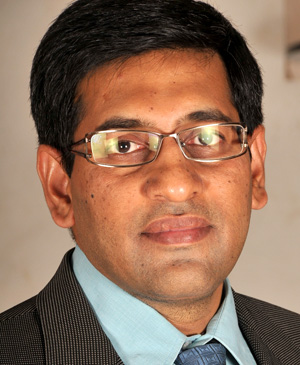
  • The Anchor: Pradeep Chopra on 8 mistakes marketers make about social media

     #1 Marketers treat social media like a short-term advertising campaign.

    Social media is all about building a lifetime relationship with your audience. However, marketers are still to understand and acknowledge that. It requires more of unlearning vs new learning.


    #2 Marketers measure ROI of social media like other digital marketing avenues.

    Unlike SEO, PPC or even email marketing, social media is not just about driving traffic to a website and measure the contribution in a typical funnel approach as used in SEO or PPC advertising. Leveraging FB ads for lead generation will be an exception.


    #3 Marketers underestimate the value of content and quality of conversations.

    Unfortunately, even today a significant percentage of marketers are focusing on metrics such as number of fans on Facebook. While the number of fans is necessary, it’s not sufficient.


    #4 Marketers don’t put required effort into defining objectives.

    While social media requires constant experimentation, laying down the objectives lays down the framework to think, execute and measure appropriately.


    #5 Marketers believe social media is about technology.

    A large number of marketers still consider social media more of a technology and less of a marketing activity. Thus, they don’t put the right resources in at the right place.


    #6 Marketers think that listening to their customers is optional.

    In the fear of confronting negative conversations about their brand, marketers don’t realise that they don’t control what others are saying about them. Hence, listening to their customers on social media is not a choice.


    #7 Marketers believe that they’ll jump in when it gets settled.

    It’s been over seven years and the only thing which is constant about Facebook is change. By the time social media reaches a stage of stability, the opportunity will be proportionally low of newer players.


    #8 Marketers still feel that social media is timepass.

    Unfortunately, a large number of marketers still feel that platforms such as Facebook are only for socialising or passing the time. While Facebook started as a social network, today it has taken the shape of a hybrid (social + professional) network and there are global case studies of B2B companies, such as Intel, Dell and GE, which have been leveraging Facebook to fulfil various business objectives.


    Pradeep Chopra is co-founder and CEO of Digital Vidya, and co-founder of dvBytes

  • Mediaah!: Is Arnab Goswami the “over-the-top anchor” in the TOI ad?

    By Pradyuman Maheshwari


    This is not the first time that someone from within the Bennett, Coleman & Co empire has taken on Arnab Goswami and Times Now. In the past, Prashant Panday went hammer and tongs at Arnab. The post was on Prashant’s Facebook wall, and didn’t beat about the bush. I must say I was quite surprised that the CEO of a group company which runs the very popular Radio Mirchi network could write all of it so openly (read: An open letter to Arnab ).

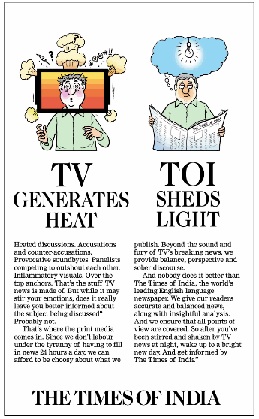
    The fact that Prashant wrote it and still has his job speaks volumes for the internal democracy that exists in the group. Though my wicked brain thinks there’s more to it… especially when I saw this ad on the sports pages of the Mumbai edition. Chhota 15×3 ad, but very interesting.

    You must read the text… all of it.


    Heated discussions. Accusations and counter accusations. Provocative soundbytes. Panelists competing to outshout each other. Inflammatory visuals. Over-the-top anchors. That’s the stuff TV news is made of. But while it may stir your emotions, does it really leave you better informed about the subject being discussed? Probably not.

    That’s where the print media comes in. Since we don’t labour under the tyranny of having to fill in news 24 hours a day, we can afford to be choosy about what we publish. Beyond the sound and fury of TV’s breaking news, we provide balance, perspective and sober discourse.

    And nobody does it better that The Times of India, the world’s leading English newspaper.We give our readers accurate and balanced news, along with insightful analysis. And we ensure that all points of view are covered. So after you’ve been stirred and shaken by TV news at night, wake up to a bright new day. And get informed by The Times of India.


    Not all of it is untrue. Panelists do outshout each other on news TV. Put Jayanthi Natarajan and Ravi Shankar Prasad in one discussion and there’s more noise and less discussion. Also you can be sure you won’t find all the news on television… esp the private channels. Doordarshan News has a lot more meat, but it is soooo boring.

    What deserves another look and no real reading between the lines is a bit from the first para:

    Heated discussions. Accusations and counter accusations. Provocative soundbytes. Panelists competing to outshout each other. Inflammatory visuals. Over-the-top anchors. That’s the stuff TV news is made of.

    So let’s look at the people who dominate the nightly news on the English non-business news channels, which I guess is what the TOI ad is talking about: Rahul Kanwal (Headlines Today), Rajdeep Sardesai and Sagarika Ghose (CNN-IBN), Vikram Chandra, Barkha Dutt, Prannoy Roy (NDTV 24×7) and of course Arnab Goswami on Times Now. There’s also Rahul Shivshankar on NewsX, but my cable operator doesn’t offer the channel, so would reserve comment on him.

    Rahul Kanwal is aggressive and provocative, but he is not sound and fury. Rajdeep has mellowed (and become very good once again), but Sagarika can go high-pitched. On NDTV, Dr Roy and Vikram C are exceedingly softspoken and can’t harm a fly. Barkha still attempts to ask some tough questions, but like Rajdeep isn’t what she used to be around the time of the Gujarat riots.

    The one man who fits most of the attributes described in the Times (of India) ad is Arnab Goswami. I don’t agree with him being over-the-top, though there are many who believe so. I think he asks the tough questions, and is possibly the only one to do so day after day. Yes, he gets carried away, but needs to be cruel with our politicians. And even as I join others in lampooning Arnab for his the-nation-wants-to-know-line, the fact of the matter is that we all really want to know.

    I do feel that Times Now overstretches itself on issues like Pakistan, China or racism, but heck we need it.  As for inflammatory visuals, I think the print media is also fairly irresponsible. Though the impact of television is a lot, lot more on the common man or woman.

    Let’s keep this discussion on. Email Mediaah! at pradyumanm@mxmindia.com and I will carry the best comment here when I am back on Tuesday.


    Pataudi, RIP


    But for the time when he patted me on the back and gave me an autograph, I’ve never met him. But heard loads about him.

    When the news of Tiger Pataudi’s passing came in last night, almost by reflex I called a colleague to check if we could get someone in adland to reminisce dealings with him for endorsements. Then we tried checking on his connections as editor of Sportsworld and for his stint at Dev Features. The Sportsworld team is scattered all over. There’s an interesting tribute by Derek O’Brien in The Telegraph.

    I called Vivek Sengupta on reading his tweet, and finally convinced him to write a few lines. That was around midnight. Vivek may have turned into a public affairs and PR practitioner for a while, but he’s essentially a journo. He knew I wanted him to write, and sent his copy in an hour.

    Meanwhile, we had no luck with getting an adman to write on Pataudi’s ads. But here are two of his TVC that I found on YouTube (the  first a rather long Gwalior Suitings ad and the other being the recent Lays TVC with Saif)

    [youtube width=”350″ height=”260″]http://www.youtube.com/watch?v=iei989o4l-I[/youtube]


    [youtube width=”350″ height=”260″]http://www.youtube.com/watch?v=dTVIrhnt5x4[/youtube]


    Buzz me if you have a story to tell. Confidentiality assured. There are various ways you can reach me:

    pradyumanm[at]mxmindia.com, 23050B5D, pradyumanm@gmail.com, @pmahesh, 98338 76278.

  • Riot moves to SK&V Communications

    By A Correspondent

    SK&V Communications has just picked up the fashion brand Riot, whose advertising spends are pegged at a couple of crores this year.


    This is the agency’s third win in its first three months. It has already acquired the 360-degree businesses of Saint-Gobain Weber and Gesture Jeans.


    Riot is a part of Suditi Industries, a leading garment manufacturer and exporter since 1991. The brand has grown substantially in the past two years. Within Mumbai one can find Riot stores at R City Ghatkopar, Korum Thane, Center One Vashi and Infiniti Mall Malad. In Nasik, it’s placed at City Center. At Goa, the Riot store is at Madgaon, in Aurangabad at Prozone Mall and in Raipur at City Centre.


    Riot is readying to take on Pune with stores in Phoenix Mall and Pacific Mall,  – Pune. And plans to enter more cities will be unveiled soon.


    According to Mr Harshad Sharma, Partner & Head Creative, SK&V Communications, “When you partner a company that also creates concepts on a daily basis, the most important thing is the meetings of minds. We found ourselves on the same page as the Riot team in most respects –  the way we look at creative, temperaments, priorities etc.


    Ms Dheeraj Vashisht, Partner & Head, Business Development, SK&V Communications, adds, “Fashion brands have always been a passion. My 17 years in the business includes stints as Marketing Head of Killer Jeans and Provogue. We would like to believe that we have a deep understanding of the category.”


    Mr Vibhaas Singh, Vice President Marketing & Creative, Riot, said, “At Riot we believe that fashion is a medium of expression rather than just clothes… and it reflects the voice of the people who subscribe to it. Working with SK&V came naturally because they as an agency are completely clued on to the youth mindset and make our job at Riot effortless when it comes to communicating our brand to the consumer. Denim Ver 2.0 is a new chapter in Riot that they have written for us beautifully. We look forward to a great and long association.”

  • Are ads crossing the line too often these days?

    By A Correspondent


    Sinful minds must be at work in the advertising world these days. Or we are simply not getting it. Of late, the Advertising Standards Council of India (ASCI) has been deluged with a flurry of complaints about “offensive” ads.


    This year the council has received 777 complaints regarding 190 ads, a steep jump over the 200 received last year about 153 ads. The most vociferous complaint has been about increased sexual content, with parents saying it is difficult to watch the ads in the company of children.


    They cite the recent Tata Docomo ads for their suggestive content and alleged class bias. One of the ads shows a rocking SUV which stops when a cellphone rings. “How do I explain that ad to my daughter when she asks me what it means?” asks mr Sunil Krishnan, a media executive in Chennai.


    Another father, Bollywood icon Shah Rukh Khan, has the same problem with other ads. He says he cracks a joke to divert the attention of his children. “The deo ads can get naughty,” he said. “Like the one that showed a batsman getting out. But the girls run after him rather than the fielder who’s taken the catch, because the batsman’s wearing a particular deodorant.” Incidentally, the star says he “turned down a deo ad because he didn’t like the idea of women chasing him.”


    Obviously, it doesn’t work that way in real life. An aggrieved user, Mr Vaibhav Bedi, took Unilever to court in 2009 saying he’d been using the Axe deodorant for seven years and not one woman had found herself inescapably attracted to him.


    Do the parents have a point? The problem, says Mr Anand Halve of the brand consultancy firm Chlorophyll, is that a number of ads have begun to use sexual attraction gratuitously. He cites an SUV ad in which “the woman is so taken in by the driver that she tries to hide her mangalsutra from him” . He adds, “In such cases the use of sexual attraction is built on the assumption that, ‘Arrey, audience ko sex achcha lagta hai’.”


    But that does not work every time. According to ASCI secretary-general mr Alan Collaco, there’s only so much leeway a company or its advertiser should take. Not for moral reasons, but financial. He cites the earlier Fast Track ads – “which depicted young men and women being promiscuous” – that were shown to college students to elicit their opinion. Mr Collaco says the students turned around and told him, “But that’s not us” .


    Which is why Mr Collaco believes that “an ad which grabs eyeballs when it is first released might at best garner some sales but all future sales will depend on the quality of the product, not the ad” .


    Flying Machine recently ran into trouble with its latest ad campaign for jeans. The tagline said: “What an Ass!” It punned on the word for bottom, then went on to say the “ass” was “the man who didn’t call me after the first date” or “the friends who wanted to give me a makeover” . That wasn’t how women’s rights activists saw it. They protested to the National Commission for Women (NCW) saying the ad was “vulgar” . The complaint is now with the ASCI, which will decide on the case next month.


    Mr Arun Iyer, national creative director of Lowe Lintas, defends his ad for Flying Machine, saying the idea was to grab attention. “The ad is tongue-in-cheek and progressive,” he says. “It shows a woman with attitude.”


    Just as nonplussed is adman Mr Prahlad Kakkar, who was recently sent a notice by the Information and Broadcasting ministry for his tagline in the Lilliput children’s wear ad – “There’s another man in every woman’s life.” Once the suspense has built up, you realise the “other man” in every woman’s life is the son. “I really don’t understand why they’re objecting ,” he says.


    Source:The Economic Times

    Copyright © 2011, Bennett, Coleman & Co. Ltd. All Rights Reserved

  • The Anchor: Sanjay Reddy on 7 reasons why regional GECs should be treated differently

    #1 Ethnicity and Culture: India is a multi-cultural society, where every state has its own culture and language. Shows that do well in Hindi Speaking Markets (HSM) might not do so well in Tamil Nadu or even Andhra Pradesh. The GECs of the market need to show content that is in tandem with the culture of the masses.


    #2 Identification & Familiarity: Viewers like to feel associated with content that they can identify with and which feels familiar. Any major shift from this safe zone can sometimes (not always) lead to the viewer leaving the show. Most of these regional markets have their own movie Industries, showcasing their need for differentiation and attraction to what seems familiar.


    #3 Targeted Advertising: Most retailers look for the most cost-effective way to reach their target audience. If the TG is based only in Maharashtra, it does not make sense to advertise on a Hindi channel as the spillover would be tremendous. Thanks to the presence of Marathi channels in the region, the ROI is high and the spillover is limited. Having a strong GEC with content targeted at the regional market makes it a more appealing and value-for-money proposition for the advertiser.


    #4 Continued Experiments with Programming: Regional GECs speak to a smaller audience compared to the Hindi GECs. Hindi GEC need to provide content that caters across HSM giving it the chance to experiment with content and create shows that might not appeal to masses in small towns but might end up doing well in metros and big cities. In case of Regional TV GECs, yes sure here also people can experiment but anything too over the top might not go well will the audience and as most brands look at regional TV for targeted advertising, there are only a few mistakes that a channel can make, a typical chicken and egg situation.


    #5 Relationships in South and North GECs: When it comes to relationships, North and South India have a few differences. In AP a man can get married to his sister’s daughter – something that is totally unheard of in the north, similarly a marriage between a man and his bhabhi is an accepted fact, something that won’t be taken well in AP. This was just a small example but surely both GECs need to have different treatment in story structure and relationships.


    #6 Production Costs: Given the kind of advertising spends a regional channel sees, compared to a national Hindi GEC, it would be unfair to compare the two. Sets from the top Hindi shows are too high-maintenance for regional channels. There are regional channels that have spent a lot on their sets and shows but there can be only one show in the channel that can get such lavish budgets.


    #7 Influence of Western Culture: HSMs are more prone to western cultural influences, something that can be seen with successful shows like Indian Idol, India’s Got Talent, KBC, Big Boss, Masterchef India etc, which are remakes of popular international shows. Shows with a contemporary packaging haven’t done too well in regional markets.


    Sanjay Reddy is EVP – South Cluster, Zee Entertainment Enterprises Limited

  • Hard Knocks: Why does the ad world lose talent?

    During my interview with O&M’s chief Piyush Pandey for MxMIndia, he mentioned that the biggest challenge the industry faces today is one of hiring and retaining talented people. That some of the most interesting people don’t want in. His theory is that it has mainly to do with remuneration, and the problem of agencies not being able to pay people properly. Surely he’s right, he must know being an industry leader. But I think there’s more to it than money. Here are two other reasons why I believe the ad world does not attract as much talent as it should, and why many of its stars defect to other industries.


    One, there is killer competition amongst ad agencies, and the pressure and anxiety to win and retain accounts is intense. Now while business rivalry is healthy, when it borders on desperation, something’s gotta give. So not only do clients suck the agencies dry, some also tend to treat agency personnel with disdain and disrespect. This leads to loss of morale within an ad agency office, and the inevitable happens. One is always looking around for better career options. We must remember not all ad agencies are led by heavyweights like Piyush and Balki. Who can stand up to an unreasonable client. For most agencies, putting up with all sorts of demands from clients becomes a way of life. There’s the sword of losing a client perpetually hanging on the head. And frankly, I really can’t see a way out of this mess. It was like this decades ago, and it’s pretty much the same now.


    The other thing ad agencies have done is to give up the strategic planning function to the clients. Sure, large agencies have the so-called planning department, but these guys often do a cosmetic job for the brands. And are more like an extension of the market research agency. There was a time when client servicing people would offer major strategic insights. Now no one expects any from them. Either the creative directors figure out their own strategies, or the brand managers inflict one on the agency. It’s no longer cool being a suit in the agency business, it’s become more of a maintenance job. How can we then blame the officers for leaping over to brand management?


    And that’s also the case with media specialists, post the disbanding. I wonder if there are any media planners left. I only hear of media buyers being in demand purely for their abilities to cut sweet deals with media owners.


    It can’t be only about money. It never is.


    ***


    PS: With Twitter on a roll, every Seeta, Geeta and Reeta thinks she can be a journalist. Guys and gals, while I appreciate your enthu, do give us journos some credit, we must be in possession of at least a few skills, if not many! Ghazal master Jagjit Singh (who’s very much alive at the time of writing this, and all the best to him) was declared dead by some over-excited tweeters. Clearly, the khujli to “break news” is not restricted to the media.

    The lesson: Dear tweeters, leave news to us. And stick to sharing your lunch menu.

  • Clients want specialization but without siloization: Ashish Bhasin

    By A Correspondent

    Non-traditional media is picking up, and even at a time when ad spend projections are being corrected downwards, digital is being looked upon favourably. Little surprise then, that Aegis Media India, in its pursuit of a creative agency opted for Doosra, agency gaining ground in non-traditional brand communication area. Net result: creation of Doosra Brand Communications.

    The surprise element in this deal, however, is that it is perhaps for the first time in India that a true blue media network has brought a creative agency into its fold. Does one hear the returning footfalls of an integrated communication agency here? Not quite the same, explains Mr Ashish Bhasin, Chairman India & CEO South East Asia Aegis Media. “Integrated communication as we knew it earlier is neither feasible nor practical in today’s world. Clients do require and demand specialization – for instance, one needs a specialized digital agency to meet the clients’ specific needs in that area. The same is true of every specialized field. However, clients no longer want to deal with 20 people. Our ‘One country – one Aegis’ policy gives them all the benefits of specialization, without the disadvantages of silos.”

    The creative agency’s role, he says, cannot be undermined, as no media plan can be effective without an effective message. He elaborates, “We need to understand and value the creative agency’s role in achieving clients’ communication objectives. In each of Aegis’ specialized areas, we require creative expertise – be it activation, digital or tradition media.”

    The buzz has been on for some time that Aegis is looking for a creative agency. Why the decision to get into equity partnership with Doosra? “Doosra is an excellent fit for us – Zahir Mirza and his team’s creative excellence spans beyond traditional – they are about much more than TV commercials, and they would definitely bring a new dimension to Aegis Media’s holistic ‘integrated marketing’ approach,” explains Mr Bhasin.

    Doosra Brand Communications will operate out of Aegis Media’s office at Poonam Chambers, Mumbai, and in fact have already moved in.

    Picture: Fotocorp

  • Slowdown? McCann, Dentsu are hiring like crazy

    By Ratna Bhushan & Neha Dewan


    After a lull of about two years, largescale hiring is back in advertising agencies such as McCann Erickson and Dentsu. McCann Erickson has recruited at least 50 people over the past two months, 30 of them at the senior level, to service new businesses like Aircel and General Motors , a person familiar with the matter said . Dentsu is in the process of recruiting 15 senior-level officials and more at the junior level as it revamps its business.


    McCann Worldgroup Executive Chairman Mr Prasoon Joshi said the size of his agency’s India operations has grown by about 40% and business from its Delhi branch alone has almost doubled this year . “The new talent we have brought in is completely growth driven ,” he said. In the past few months , McCann Erickson has bagged some big accounts such as telecom services provider Aircel , auto major General Motors and paints maker ICI Dulux.


    Dentsu India Group Executive Chairman Mr Rohit Ohri , who quit the country’s largest ad agency JWT this June to join Dentsu , said he will hire 15 people at the VP and higher levels across its nine offices in the country , besides hiring at junior levels. “We are looking at restructuring the agency and creating the Dentsu India group holding company ,” he said.


    All agencies including Dentsu Communications, Dentsu Creative Impact and Dentsu Marcom will report to this company. But he denied rumours of poaching people from JWT as had been the buzz earlier. McCann’s recent top-level hires include executive director Mr Alok Lall , planning head for Delhi Mr Jitendra Dabas , who moved from JWT , creative directors Mr Mayur Hola and Mr Anshumani Khanna, who came from Ogilvy and Mudra , respectively , and senior VP Mr Ashish Bahl. They will mostly service the big ticket accounts the agency has won in recent months.


    The Aircel account is estimated at Rs 200 crore while the GM account could be worth close to Rs 150 crore . This is the first time the US carmaker consolidated its brands Beat, Cruz, Optra, Spark and Captiva with a single agency. McCann won the deal after a four-month-long pitch .


    Other new businesses with McCann this year include ACC Cement, Britannia Dairy, History Channel, Parx from Raymonds, quick service restaurant chain Subway and mobile phone brand Lava. Globally , there is a freeze on recruitments across many leading agency groups such as WPP, Publicis and IPG.


    In 2009 , the world’s largest agency group network WPP, with agencies like JWT, Ogilvy & Mather, Young & Rubicam and Grey in its fold, had laid off 14,000 employees , and in fact that year the ad industry saw layoffs amounting to 200,000 jobs. WPP Group Chief Executive Sir Martin Sorrell had said in an email to employees that any job offers made but not accepted must be withdrawn immediately .


    But in India, agencies have been hiring on and off on account of new businesses. Ms Usha Hephzibah, promoter and owner of Head & Tail Hunters, a search firm specialising in recruitments for advertising and media , said : “Tremendous hiring is happening at all positions, from top to bottom, in the advertising industry.” Agencies such as Leo Burnett said they are doing limited hiring, depending on requirement . “There has been no large scale hiring; we haven’t done it in bursts,” Leo Burnett Executive Director Mr Samir Gangahar said. He said the agency hired 4-5 people in Delhi last month .


    Source:The Economic Times

    Copyright © 2011, Bennett, Coleman & Co. Ltd. All Rights Reserved

  • Can TOI win the Kerala race?


    By Tuhina Anand


    The Times of India has been giving the last-minute push to its entry into the Kerala market. Speculation was that the TOI would enter the market by early October – the launch date now seems to be October 24.  Mr Rahul Kansal, Chief Marketing Officer, Bennett Coleman & Company Ltd agreed that the TOI is looking to enter the market around this time but refused to name a date, saying that things do get delayed due to various reasons and hence he would prefer to refrain from specifics.


    The TOI in Kerala would have four main editions, he said, including Cochin, Trivandrum, Malabar and Cochin Upcountry, but in total the paper would be printed from 10 centres and would devote space to carry hyper local content.  So in that sense there will be 10 editions. However, Mr Kansal refused to divulge details about the number of print copies initially planned.


    He also said that TOI has entered into an alliance with the Mathrubhumi Group, which will aid TOI in providing logistics support. It is also possible, say sources, that there could be a combo offer available to Mathrubhumi readers.


    Mr Kansal said, “I think we are entering the Kerala market at an opportune time as it has a large literate population and English newspapers is largely a virgin market, with the presence of The Hindu as the dominant player.”


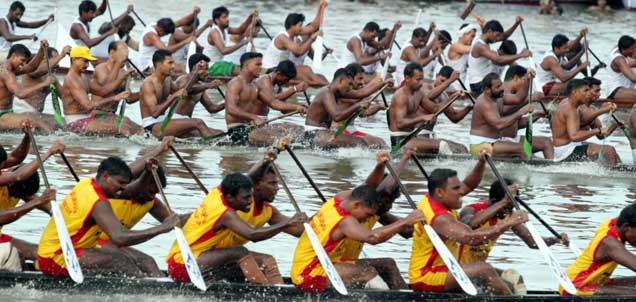
    The Kerala market is an interesting and unique market with literacy rate of close to 94 per cent and is dominated by Malayali dailies including Malayala Manorama, Mathrubhumi, Deshabhimani, Madhyamam, and Kerala Kumudam.  The English newspapers other than the Hindu include The New Indian Express and the recently-launched Deccan Chronicle. Advertisers include real estate players, but jewellery advertisers lead the pack.Players like Muthoot Finance and Manappuram Finance also have gone all out in the media lately with their gold loan schemes, and gained prominence.


    An observer of the market feels that there is a huge opportunity for an English newsppaper like the TOI in Kerala, especially with the young readers. The New Indian Express used to have a strong foothold which has declined over the years and The Hindu has following but is stronger near the Tamil Nadu border, hence there is a space for a strong English player. But it is also a tough market with the literacy rate being high, and readers well informed. So the strategy of entering the market with some sort of alliance with Mathrubhumi makes sense as by leveraging the strength of a vernacular paper, TOI could make impressive inroads. Also the challenge would be to tap the huge retail market like jewellery and textiles, where again it would help to have a regional partner. In terms of content too, the market thrives on regional content even more so than other parts of India, so even though TOI would have a strict template, its plan of having 10 centres of printing with four main editions, carrying localised content from other six markets, may prove to be smart strategy.


    Picture Credit : Fotocorp

  • No place for Sonal Dabral and Prasoon Joshi at O&M


    By Anil Thakraney


    It has been a fantastic advertising career, to put it mildly, for the 56-year-young Piyush Pandey. Enough has been said about Ogilvy & Mather’s top dog and the Indian ad industry’s most celebrated player. So let’s just sneak in some yorkers and see if the bat still packs in the punch. It’s always a joy to meet the man because of his joie-de-vivre and the on-the-tap humour. Tonight it’s even more fun as we lounge by his sea-facing apartment off Shivaji Park, with Piyush downing vodka shots.


    Q: Don’t see you much in the media these days. Finally got fed up of the over-exposure?

    I have never approached any journalist ever in my life. And I have never said no to any journalist either. Actually, I have been travelling quite a bit these days. But I have never felt I am missing out on anything. And sometimes journalists call to ask about things one doesn’t know. Anything that happens, I get a call! (Laughs.) Also, in the earlier days, I used to attend parties but now I seldom go. I even avoid judging (ad competitions) these days because it takes away five days of my time.


    Q: You’ve spent a lifetime in the ad world. Still get the same buzz? Aren’t you bored?

    The day I stop getting excited about this business I will go. You don’t know what a kick I get out of this profession. Gratification comes to people from various things. Some get it by playing golf. Others by spending a day at the club. I get my kicks out of meeting people in my office, and out of the ideas. I have never thought of my job as a burden, I am having a ball.


    Q: Oh ok. After you built yourself that palace in Goa, I thought Piyush would disappear to the beaches.

    It’s a three-bedroom house, not a palace! And when I am in Goa, I look at my watch and say, “Oh! It’s only nine o’clock!”


    Q: O&M’s big boss, Shelley Lazarus, famously said you are the brightest mind in the network. And we all thought Piyush would take global charge of the agency.  

    It doesn’t make sense to the company and it doesn’t make sense to me. I do sit on the worldwide board, I have a view on the worldwide policies. But I will never re-locate myself. Also, I don’t believe in controlling the world, I enjoy being in India. I think we are still on a graph which is unfolding. And I love having Indians around me. So I can give all that I have learnt to the world, wherever relevant, but I don’t think that burden is mine. (Laughs.)


    Q: I suspect the key reason for your huge success is understanding the Indian culture and ethos. By extension, that means you will struggle in other nations.

    Markets don’t scare me, I do help if there’s a need somewhere. I go there and discuss the idea and then leave it to the locals to express it. What I once hated happening in the good old days, how can I do that to the others now that I am a worldwide board member? I will never do all those things which I disliked. Even when I discuss ideas with Pakistan, I tell them I don’t think I am capable of understanding their local nuances.


    Q: Ah, I get it. You don’t want to do what Neil French did to you. Which is to try and interfere in your work. I remember you told him this: “Neil, come help me, don’t f*** with me.”

    I did tell him that. Because he tried to (interfere). But he couldn’t do it. My first conversation with him was, “I will show you some work we have done for Cadbury’s and I don’t want your comment on it”. (Laughs.) I must share another incident with you. Many years later at a creative meet near Jodhpur, Neil saw the Hutch boy-and-dog film and tried to make fun of the song. And in the evening my boys went and got the Rajasthani musicians to sing the same song for him! (Laughs loudly.)


    Q: Your rival agency heads are pursuing other passions and enjoying a lot of success in those. Making movies, writing songs. You don’t feel the need to experiment?

    Those things come to you when you are bored of what you are doing. And I don’t think three hours is a greater achievement than one minute. I did it once, I wrote the script for the film ‘Dus’ for Mukul Anand but it never got completed because he passed away. But it (movies) never excited me. The kind of people who wanted me and Prasoon (Pandey) to write… from Yash Chopra to Subhash Ghai to Dev Anand… and I told all of them this is stuff I would do on a weekend or at night. That my first job is advertising. I can only handle one thing at a time.


    Q: New media is upon you in a big way. Ready for it? Honestly.

    One, we are investing heavily in the new media. There is no technology that we haven’t provided to our youngsters. And two, in my working life, things aren’t going to change. I see maximum activity in the mass media at least for the next five years. So the idea is to invest for the future. Which we are doing.


    Q: And you aren’t on Twitter or Facebook.

    I am not even on the internet. I don’t even know how to start a computer.


    Q: You are joking.

    I am not joking. I did not study all these years to become a typist. Every computer user is a fantastic typist. (Guffaws.)


    Q: So if a client wants to know how he can promote his brand on the digital media, you are in trouble.

    I will sit with him (the client) to assess the solution. And tell him that I have people on my side who will help him. To give you an analogy, I know what a good ball is, but I can’t bowl it. So I will get Kapil Dev to bowl it.
     

    Q: I think you are a test match player who now has to deal with the T20 format. And you don’t understand that game.

    I am saying to the client, I will put together a team that can satisfy his needs. I will not play the T20 match. But I will come and watch every match. I will hire the best T20 players. And I will cheerlead them.


    Q: There’s a flip side too. Does it worry you the excess use of tech may make the youngsters get disconnected from the real world? Which is where big ideas come from.

    I didn’t write the MP Tourism ad, the kids wrote it. Also the Asian Paints work featuring the two brothers. They wrote it. So I think the next generation is very savvy. They know that even in the digital space it is the idea that will win. The idea is to know the medium, but express the same kind of engagement that we have done all these years. But yes, about being buried in technology, there is a worry, and for the world at large, not just for Ogilvy. I say to the youngsters: go to Facebook, but don’t become faceless. That, interface is the greatest way to connect with people.


    Q: The one big challenge facing the ad world?

    We need better remuneration from clients to be able to hire interesting people in the industry. I don’t have the answer to this challenge right now. But before I leave this company, I will make every attempt to make sure this is solved. If we don’t pay people well, how will we get the best people into the industry? Every agency is under so much pressure, we are not negotiating properly with clients. Maybe clients are better negotiators than us. If other industries are taking our people away, then we have a problem.


    Q: Does it hurt when you nurture young guys, train them, and then they go and head rival agencies?

    Sometimes, yes. But not with guys who are leaving to do the same job that I am doing. That is a natural progression of life. I regret losing those people who had misconceptions about themselves and their abilities, and left to do it on their own. And then disappeared. And all that talent Ogilvy alone hasn’t lost, the industry has lost it. Because in the next job, if the guy is a failure, he simply disappears.


    Q: If Sonal Dabral and Prasoon Joshi wanted to return to O&M, and you had place only for one, who would you pick?

    None of them. Because our people have grown. And in the last five years, they’ve done work that’s the best in the industry. So why would I put anyone on top of them? Sometimes when you vacate a position, others grow into that position so fast, it becomes difficult for them to be brought back. If you missed three matches, and Vinod Kambli came and scored three double hundreds, how do you get Kambli out of there? It’s important for all of us to be at the right place at the right time. Suppose I decide, before my retirement, that I want to be in Goa and am going to write my book. Then somebody will obviously occupy my position here. Now if I want this position back two years later, and if that guy has done so well in the meanwhile, they’ll say ‘Sorry!’.


    Q: Are you planning to write a book?

    I will write one. But it will not be a prescriptive book. I will write something that people read between the lines. It will apply to life and not just advertising.


    Q: Any red hot-tips for youngsters?

    One, celebrate life. Don’t crib. Because if you crib four hours a day, you don’t approach anything with a positive mind. Two, if you are passionate about something, go ahead and do it. Don’t worry about society. You might actually become the role model for that. And three, in the world of communications, respect your environment. If you don’t think of the receiver, you will never make a good giver. For example, on your way to Jaisalmer, did you notice, in that 48 degrees heat, those guys who are tarring the roads, they are singing songs to distract themselves from the adversity? That is what will give you insights.


    Q: Your retirement is due in exactly two years. Will you actually leave?

    Maine aaj tak life plan nahin ki. Did you, in your younger years, ever hear from me that one day I want to be the Chairman of this company? You didn’t. I don’t make long-term plans, I only make plans for tomorrow. That I will wake up at five in the morning and go for my walk. And even that may not happen! (Laughs.)

  • Malls are great for Digital: Ishan Raina

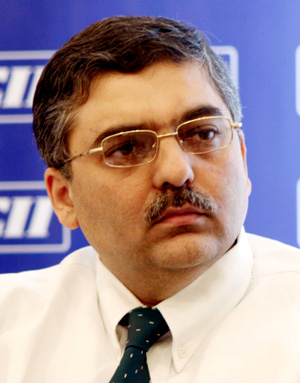
    Ishan Raina, CEO & MD, OOH Media India Pvt Ltd is an advertising veteran. An IIM Calcutta Alumni, Raina was one of the first industry experts to stress that it was important to engage consumer at various touch points.  The changing lifestyle today has proved his conviction true. In a conversation with Ritu Midha of MXM India, elaborates on the evolving OOH medium, advent of digital OOH and measurement. Excerpts:

    Q: How do you see Digital OOH growing in India vis-à-vis other media?

    The Out of home TV medium in India is about four years old and still in its growth phase. But the medium has grown a lot as compared to what it was four years ago. It was a conceptual selling at that point of time where the challenge was not only in growing the company but also growing the industry as a whole. Today people understand this medium and the future prospect of this medium. The change in the lifestyle trends of the consumers and media fragmentation has led to the growth of this industry. Time spent for consuming traditional mediums is also getting shorter. OOH TV being an SEC ‘A’ focused medium adds dynamism to the existing media plan of the clients for their brands.

    Today OOH industry commands 15-20 percent of the total advertising share.  Digital OOH TV has 15 percent of this share ie 1-2 percent of the overall advertising budget. The biggest challenge is to grow the size of the market which is still at a growth stage. We need to grow this to 4-5 percent in the next two years.

    Today we have over 300 clients from across categories from Automobiles, Finance, Telecom, Retail (Luxury, Apparels etc), Media, FMCG, Consumer Durables, Travel & Tourism, Education etc. using us for various reasons /campaigns. In brief, since the industry is still emerging and not yet mainstream media, there is immense scope for new clients, categories and growth. While starting new clients & categories has been difficult, repeat clients have been relatively easier, due to good formal (research) & informal (word of mouth) feedback.

    Q: In terms of new types of Digital OOH advertising, how does India compare with US, China and Europe?

    In India there is certainly a considerable change in the lifestyle of consumers today. People spend more and more time out of home whether it is in their offices, malls, multiplexes, restaurants, gymnasiums, bookstores etc. This change in the lifestyle trends of the consumers and media fragmentation has led to the growth of this industry. OOH television networks adds a great value as it follows these consumers wherever they are thus becoming the only medium present in a day of the life of a consumer.

    India is a growing market and thus provides tremendous opportunities to advertisers to reach out to their target group. This has also resulted in the development of various new media formats with digital OOH being one of them. In general, Digital OOH space is expected to see a tremendous growth in the future, given the expected infrastructural growth, increased amount of time spent outside home, and the general economy boom in the coming years.

    China is the largest market in the world for digital OOH TV, and our strategic partner Focus Media, is the global leader. In Europe as in the US this medium has become more of a point of sale medium and not a “day in the life of an SEC A consumer” as it is in emerging markets, such as India and China.


    Q: What part of media spends goes into Digital OOH?

    Digital OOH TV commands 1-2 percent of the overall 24,000 cr advertising industry. This will grow to 4-5 percent in the next 2 years. About 80 per cent of this would belong to 2-3 national players and we hope to continue being the revenue leaders of digital OOH TV industry. Digital OOH advertising is emerging as an integral part of the media mix for advertisers, and is being used by them for various companies and launches.

    Q: Is measurement still an issue with Digital OOH advertising and promotions? What kind of research is now being done to measure?

    In Digital OOH format, we understood the gap of measurement in traditional OOH and thus initiated OOH Metrics, which is today India’s first ever large scale digital Out-Of-Home TV research. Out-of-Home media conducted this research in association with Nielsen – world’s leading provider of marketing information and audience measurement.

    OOH Metrics is the only Metrics available in Outdoor Audio Visual space as of now conducted to understand the Demographic profile of the people and the audience behaviour. It is the study done across 8 cities, conducted by Neilsen, with a sample size of almost 15,000. OOH Media also does campaign research for the brand advertisers on OOH screens to quantify and qualify the viewership.

    We have done over 100 Campaign Evaluation Studies across categories like Auto, Telecom, Finance, FMCG, IT and many more to find the recall of ads through this medium. The results have been encouraging which have resulted in long term relations with clients.

    Q: If we look at geographical segmentation – do some parts of the country respond better to Digital OOH than others? Similarly would the trends vary in metros and non-metros?

    Digital OOH is value for money in metros but as you go down the chain that is tier 2 and tier 3 cities, it becomes an expensive option because of the availability of the regional formats. So Digital OOH is actually a medium for major 8 metros with good density & quality of audience or locations.  This will change over time.

    Q: To what extent has the advent of mall culture and modern retail helped the cause of Digital OOH. And how do you see it contributing five years from now?

    The OOH TV format has actually evolved tremendously in Offices / Commercial Bldgs and Tech Parks / Residential complexes, Gymnasiums as well as large format malls / multiplexes / Modern Trade. There is a constant evolution of infrastructure (malls and hypermarkets) which is bringing the radical change in lifestyle and spending patterns of consumers. These In-stores facilities offer a wonderful opportunity for Branding of various products at the “point of purchase”. Thus greater the increase in number of In-store networks more is the opportunity to utilize these networks as a medium of advertising and creating a top of mind recall. Digital OOH media is strategically present in In-store locations with more than 2000 screens in Malls, lifestyle stores, Supermarkets. Digital OOH adds a lot to the communication by being the only audio- visual medium and thus we can say the medium is increasingly becoming effective and is here to stay for a long time.

    Q: What as per you are emerging trends in Digital OOH advertising?

    Audience, not screens, is the Mantra:  The quality and quantity of audiences that the screens provide, is what is the ultimate driver for this medium and the differentiator between different brands in the medium.

    Localisation / Customisation of Messages: OOH Media has been the most flexible medium today and gives a chance to slice and dice the message of the campaign as per the kind of audience an advertiser would like to reach. The client can select the locations, cities, frequency and language as per their requirements. Flexicasting provides an advantage of getting as local as possible just like an outdoor but with the power and capability of Audio-Visual.

    Relevance is the new king: The role of content is thus becoming very important in this medium and OOH Media continuously experiments with content to make it more relevant for the audiences and thus attracting more eyeballs. Content Integration helps in creating a contextual connect for the brands. OOH Media customizes in-house content as per the client’s requirement and offering to make it contextual.

    Connect with consumer: The medium offers an advantage of Flexicreation i.e. creating customized ads and content according to the kind of audience the client wants to reach and also the kind of locations they want to advertise in. Flexicreation for the same medium is impossible in any other audio visual medium. The future will be and has to be the contextualization of the content and advertising messages.

    Q: How effective are touch screen kiosks and how best can they be utilized by the advertisers?

    It is still early  days – not currently scalable. Our model is ‘Push’ to the consumers, where as Kiosks rely on consumers to take some action.

    Q: A lot of money is being spent on airport advertising? Is it just the premium customer that lures the advertisers there – or is the recall value much higher of airport ads?

    Airports are a very effective locations –and of course brands advertise there to target a specific target group.

    Q: How powerful is OOH as part of experiential marketing?

    Its part of the experience currently, not really experiential marketing or interactive marketing. What OOH TV ensures is great recall across Sec ‘A’ and increasing also reach in select locations where due to media fragmentation and audience habits, OOH TV is actually the first time the audience is exposed to the advertising.

  • Peugeot seeking PR agency in India

    By Shubhangi Mehta

    Peugeot, the French motor car brand, has called for a PR pitch after its re entry in the Indian market, industry sources close to the development have confirmed the news to MxM India.

    The creative mandates for them are mainly handled by Euro RSCG globally and Peugeot is one of the biggest clients for Havas Media .

    Peugeot is gunning for the launch of the Peugeot 508 premium sedan in India before the end of 2012. The car will be priced in the range of Rs 20-25 lakh. Apart from the Volkswagen Passat, the 508 will have to compete for space against Honda Accord, Toyota Camry, Nissan Teana.

    After its exit from the country nearly 15 years ago, the company is cautious on its re-entry. Globally, the brand competes with Volkswagen and such brands and it is expected to be similar in India.

    The French company will set up a vehicle manufacturing facility near Sanand at an investment of Rs 4,000 crore ($650 million). At an initial capacity of 165,000 vehicles a year, the plant is slated to be commissioned by 2014 and can be expanded to 340,000 units in phases.

    The family business that precedes the current Peugeot company was founded in 1810. On 20 November 1858, Emile Peugeot applied for the lion trademark. The company produced its first automobile in 1891. Due to family discord, Armand Peugeot in 1896 founded the Société des Automobiles Peugeot.

    Peugeot’s roots go back to 19th-century coffee milling and bicycle manufacturing. The Peugeot company and family is originally from Sochaux, France. Peugeot retains a large manufacturing plant and Peugeot Museum there. It also sponsors the Sochaux football club, founded in 1928 by a member of the Peugeot family.