Category: ADVERTISING

  • So Zomato Gets the Tomatoes!


    By Sanjeev Kotnala


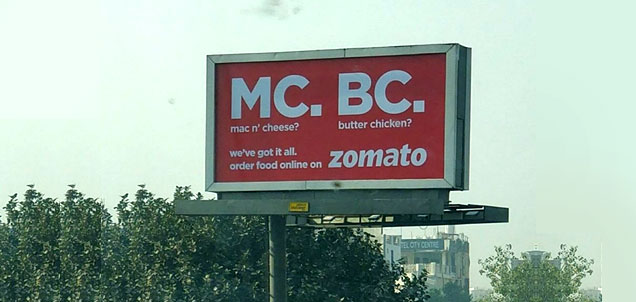
    Dear Zomato, I have been wondering what made you do the MC. BC. hoarding. It is now a public property. So, it is okay to believe that the agency/ individual presented many options, and you picked up this one along with the rest of equally good creative in Red & White to go.

    It was a conscious call! If I as an outsider see the set of creative, this does not fit the template. And that’s where it gives me an idea that you went along for the buzz and social media hype. It would be hard to believe that the agency, and the client did not understand the way they were pushing the boundary. You did and even when you were taking the decision to bring it down, there is a little smile playing on your face. Hopefully, I am absolutely wrong in this statement.

    Hopefully, and that is tough to think that you were diligently naive to the statement you were using. MC-BC is one of the most commonly used abuses above the tropic of cancer. It’s so prevalent that one of my friends Mahendra Chandola never could allow to use his initials to be playfully called M.C. I have another friend M C. Anand Kumar and what do you think happened; he was okay when fiends called him MCee.

    Or was Zomato saying we have got enough of ‘MC. BC.’ for our service, so believe you must order online. Then it is definitely a comment on the user subgroup. I pray that is not right.
    So, that brings me to another thought. Just like ‘Beauty lies in the eyes of beholder’, ‘Dirt lies in the mind of the thinker’. You as a brand consciously went ahead with the campaign. Unfortunately, the agency forgot to add Dahi Chana to the list, which would have made it B.C., M.C, and D.C and the whole issue would have vaporised. But then there would not have been Google Naresh and Suhel Seth ( 4.5 Mn followers on Twitter) trashing it upfront. The latter for whatever it was worth even tagging Hon. I&B ministe,r Sniriti Irani for no reason. Someone wanted to go and complain to ASCI on the subject.

    It’s different that Zomato Co-founder Pankaj Chaddah apologised for the ‘offensive’ ad saying that the company will take it down. “We can see why it can be offensive to people, and we apologize for it. We will take this ad down with immediate effect,” he tweeted. It came after commentator Suhel Seth took to Twitter to call out Zomato for the same. I can understand what Pankaj is saying.

    In effect, he is letting down few of the people who were not so much culturally socially nose in the air type. Here is what one of them said Arjun Pal @pal_arjun said ‘@pankajchaddah, hats off to the creativity of your Marketing Team @Zomato . Don’t pull down the ad coz of some moron. This way @suhelseth will ban all historical Hollywood movies when they write 36 BC or 69 BC’

    Let me share the fact that in F&B, there are acronyms that get popularised. I remember that once in HTA Delhi, while working on the roof-top-restaurant at ‘ITC-welcomegroup Maurya Sheraton’, the agency came with a beautiful name ‘West Court’, and the client (Nakul Aanad) rejected it for a valid reason. He said, soon it will be known as W.C and then who would want to eat there. I still believe that the reason was not strong enough to justify losing a good name. But then that is history.

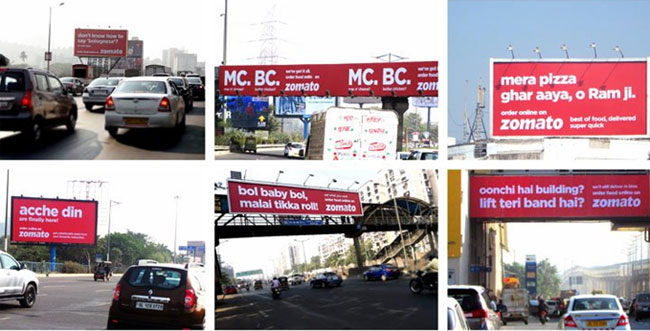
    Meanwhile, as always we have people with a different take on the campaign. If you give it time and see all the creative, you will realize they have a sense of cheeky take on the subjects. They are harmless. They are interesting. They are something you read and smile. Including the one that is the centre of the conversation.

    There is no point in Badi Goldflake ( Prathamdev- Recently mastered the art of being misunderstood- with 399 followers on twitter J ) , Mihir ( 61 – followers on twitter), Akshar Pathak (1.3 Mn Followers on twitter) comment. We are taking life too seriously. MC and BC are in your mind, there is no explicit mention. There are far freer to be wrongly interpreted contextual advertising that no one seems to object.

    Here is a tongue in cheeky playing by the word comment by Mohita @ReineDeDeniers that sums most of the feeling ‘Hey, @Zomato, you didn’t have to apologise for this. You didn’t hurt anybody’s sentiments or anything. Trust me. I’m from Delhi and if I’m not taking offense at BC, then it’s not offensive BC!’
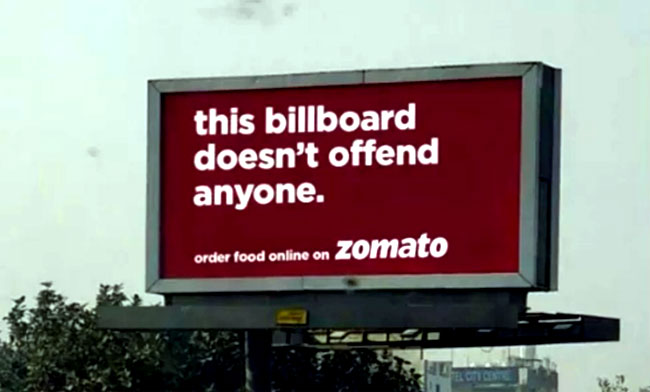
    I am not sure, that this hoarding exists, but it sums up the whole thought process. And I stand corrected, There is definitely a mixed reaction to the campaign.. Because Opinions are like Asshole, everyone has one. So the strong belief; ‘Dirt Really Lies In The Mind Of Thinker’. Some people are more right than others and hence the poor Butter Chicken cannot be called BC. To round off- I don’t find anything wrong in the campaign, but then that may not count for anything.


    Sanjeev Kotnala is a senior marketing and strategy consultant and trainer. He writes weekly for MxMIndia and whenever there’s an issue that merits more immediate attention. The views here are his own
  • Adspends to grow just 8.4% in 2018: Zenith


    By A Correspondent


    India is #4 in the Top 10 contributors to global adspend growth 2017-2020. But that’s perhaps the only statistic that indicates ‘achche din’ for adspends. India, btw, is not in the Top 10 adspend markets. Neither in 2017, and not even in 2020. But that’s a headline you’ll possibly read elsewhere. Let’s examine the real thing.


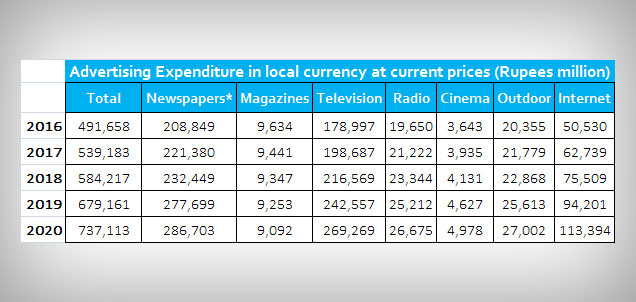
    First, take a closer look at the table above. Total adspends, according to Zenith, were Rs 491,658 million in 2016, Rs 539,183mn in 2017 and the forecast for 2018 is 584,217mn. Since we are still in early December 2017, one presumes the 2017 number of 539,183 is an estimate. But given that number, the adspend growth is 9.7% as compared to the forecast of 11.2% made last year. The forecast for 2018 is 8.4%, even lower than the estimated growth for 2017.


    Yes, you read it right. Zenith (eka Zenith Optimedia) believes that adspends will grow 8.4% next year in comparison to 9.7% this year. Remember, we are supposed to have seen the worst of the worst in 2017 given demonetisation last November and GST just ahead of the festive season. So why the not-so-achche din in 2018?


    Here’s what a communique says: Year 2017 will close atRs 53,918 crore, registering a slightly slower pace of growth is on account of demonetisation introduced in November 2016. Total AdEx for India will climb up to Rs58,422 crore, growing  at 8.4% in 2018, led by television. Growth rate for television is pegged at 9% while newspapers will grow at 5%. Radio will grow at 10%, while cinema and out of home will grow at 5% respectively.


    Tanmay Mohanty

    Said Tanmay Mohanty, Group CEO, Zenith India: “Growing Internet penetration accelerated by operators such as Jiowill significantly enhance digital adspends in India and give access to previously untapped markets. India has seen some fluidity in overall ad-expenditure but remains one of the fastest growing advertising markets globally.  With the dust settling down on demonetisation and GST, we expect a measured recovery on ad spends. Consumer confidence is definitely on the rise. In 2018, mobile handsets, FMCG, automobiles, BFSI, travel and tourism and political ads will drive up the pace on adspends.”


    Here’s more from the communique we received:

    Amid growing debate as to whether brands are overspending on digital media, Zenith research has found that the effectiveness of internet advertising has now caught up with digital adspend.


    Until 2015, brands struggled to make effective use of internet advertising, and their spend was not matched by the resulting ‘brand experience’(an accurate proxy of market share*). However, by 2016 internet advertising accounted for 34% of global ad budgets but produced 35% of brand experience.Internet advertising is now therefore working harder than advertising in other media.


    For many years Zenith’s Advertising Expenditure Forecasts reports have consistently reported sizeable increases in the internet share of advertising budgets. The December 2017 edition of the report is published today. For the first time Zenith has been able to demonstrate the ROI of internet adspend, not just its scale. We used our proprietary Touchpoints ROI Tracker tool to compare internet adspend to internet brand experience over the past few years.


    In 2014 advertisers spent 27% of their budgets on internet advertising, which produced only 21% of brand experience. By 2015, though, brands were using internet advertising more effectively: it accounted for 30% of both budgets and paid brand experience, before tipping over in 2016, when brand experience exceeded budget share.


    We expect internet advertising’s share of global adspend to continue to rise, reaching 40% in 2018 and 44% in 2020. Its value will rise from US$203bn in 2017 to US$225bn in 2020. The share of advertising expenditure allocated to internet advertising varies widely across the world. In the most advanced markets (Sweden and the UK) it will account for more than 60% of total expenditure next year, and it will account for between 50% and 60% in another six (Australia, Canada, China, Denmark, Norway and Taiwan).


    India is placed No 4 in the Top 10 contributors to global adspend growth 2017-2020.

    India follows USA, China and Indonesia in that order. (See executive summary)


    Between 2017 and 2020 we forecast global advertising expenditure to increase by US$72 billion in total. The US will contribute 27% of this extra ad expenditure and China will contribute 20%, followed by Indonesia, India, the UK and Japan, which will contribute 4% each.


    Five of the ten largest contributors will be Rising Markets* (China, Indonesia, India, Brazil and Russia), and between them they will contribute 33% of new adspend over the next three years. Overall, we forecast Rising Markets to contribute 54% of additional ad expenditure between 2017 and 2020, and to increase their share of the global market from 37% to 39%.


    In India, internet adspend will capture 11.6% of the market in 2017.  India is therefore a leading digital market/keeping pace with global developments/has a lot of scope for growth in internet advertising. We forecast 20.4 % growth in internet advertising in India in 2018, compared to 8.4% growth for the market as a whole. By 2020, internet will account for 15.4% of total adspend in India.


    The rise of the internet has had huge consequences for the other media, which are covered in detail in the executive summary.


    Big platforms are capturing digital growth

    The internet is driving the great majority of global growth in advertising – it will account for 94% of the growth in adspend between 2017 and 2020. And most of this will be captured by just five big platforms – Google and Facebook, plus the Chinese platforms Baidu, Alibaba and Tencent. Between them these five platforms increased their share of global internet adspend from 61% to 72% between 2014 and 2016, and captured 83% of the growth in internet adspend over that time. Baidu, Alibaba and Tencent accounted for 54% of the growth in internet adspend in China, while Google and Facebook accounted for 96% of the growth in internet adspend in the rest of the world. Between them Google and Facebook accounted for 76% of internet adspend outside China in 2016.


    Big countries are adding most ad dollars

    In dollar terms, most of the growth in global adspend is coming from a few big markets. We forecast that just two countries – the US and China – will contribute 47% of new ad dollars between 2017 and 2020. The five biggest markets – the US, China, Japan, the UK and Germany – will contribute 57%.


    Big cities are driving global adspend growth

    Big cities are driving global adspend by concentrating growth in productivity, innovation and trade. We have conducted a unique study that attributes adspend to individual cities by estimating the value of their inhabitants to local, national and international advertisers. We forecast that the top 10 cities alone will contribute 12% of all global adspend growth this year, and that the top 725 will contribute 60%.


    We predict that between 2016 and 2019, adspend in the 10 biggest-contributing cities will grow by a total of US$7.5bn, representing 11% of growth over these years. These ten cities will be, in descending order: New York (where adspend will grow by US$1.4bn), Tokyo, Jakarta, Los Angeles, Shanghai, Houston, Dallas, Beijing, London and Chicago (which will grow by US$0.6bn).


    Advertisers feel the pressure from digital transformation and polarisation of growth

    Advertisers are feeling pressure from the rapid transformation of their businesses, exemplified by the rapid shift of marketing communications to online media in response to changing consumer behaviour, and the polarisation of growth to big platforms, big countries and big cities. At the end of November we conducted the third in our series of exclusive surveys about brand growth among key Zenith clients. On a scale from 0 to 100 – where 0 means everyone expects decline in 2018, 100 means everyone expects growth, and 50 means the average expectation is for no growth – the average response was 57, down from 67 this time last year. Food and drink brands have been the least affected, with a score of 66 this year, down just a point from 67 last year. Packaged goods, retail and telecom brands have all fallen to 50, expecting no growth, down from positive scores last year.


    “We are seeing a battle played out in business, marketing and media between big players and small players,” said Vittorio Bonori, Zenith’s Global Brand President. “Growth is coming from big countries and big cities, and being captured by big platforms. Brands should focus on upstream strategy, data-informed UX planning and downstream automation”.


    “Internet advertising is the biggest advertising medium in the world and the biggest driver of growth,” said Jonathan Barnard, Head of Forecasting and Director of Global Intelligence at Zenith. “Our unique research shows that brands are starting to use it effectively after struggling to adapt over the last few years.”


    *Brand experience is a combination of two factors: reach (how likely consumers are to encounter brand messages at eachtouchpoint) and influence (how likely each message is to consumer attitudes or behaviour). It covers all touchpoints across paid, owned and earned media, but because we were comparing it to advertising expenditure, here we measured only the brand experience of paid media.


    Touch points ROI Tracker is Publicis Media’s brand contact measurement and planning tool, based on more than 950,000 consumer interviews since 2004.


  • Chitralekha unveils Niraj Srivastava’s award-winning novel

    By A Correspondent


    Chitralekha Group launched the international award-winning novel ‘Daggers Of Treason’ (The Curse of the Mughal Series) by Niraj Srivastava in Mumbai on Monday. Superstar Amitabh Bachchan graced the occasion as chief guest. The high-tea evening, hosted by ex-senior bureaucrat, Ashok Kacker and Chairman Chitralekha Group, MaulikKotaksaw theatre and film director, playwright and screenwriter, Firoz Abbas Khan reading excerpts from the book.


    On associating with the book launch, Chitralekha group President and Publisher Mitrajit Bhattacharya said: “We are delighted to be a part of this launch. The book is thoroughly researched and well-presented and can easily be an international bestseller. Mr. Bachchan having agreed to launch the book added so much meaning to the whole event.”


  • Isobar’s report on ‘Augmented Humanity’ explores key trends

    By A Correspondent


    Isobar predicts that 2018 will be the year of Augmented Humanity, a year where technology enhances and scales our most human attributes. In 2018, technological interfaces will become more natural and instinctive, technology will automate repetitive tasks to free up time for creativity and compassion, and artificial intelligence will meet emotional intelligence.


    Jean Lin

    Said Jean Lin, Isobar’s Global CEO: “Artificial intelligence is great, but humans score on emotional intelligence. The power of being human is in empathy. This cannot be automated or outsourced. Augmented Humanity will use technology to scale everything that is best and most powerful about human interaction.”


    Shamsuddin Jasani

    Added Shamsuddin Jasani, MD Isobar India: “It’s already clear that such technology will thrive in almost all businesses and will revolutionise the way we treat and manage specific services across sectors. The coming years will guide body augmentation competencies  in a number of ways that will empower humans to be smarter, stronger and more capable than they are today. In India, consumer technology has already taken a huge leap forward. Analytic practices are growing in density and companies are using machine learning and prognostic modelling to increasingly consider complex data sets.”


    The report argues that we may one day view the era of anonymous, one-size-fits-all transactions as a temporary blip in our evolution, and that as technology advances it will become more human, not less. It will return us to a time where voice will be the primary way we interact with the world, where we will be recognized and rewarded in stores, and where we will buy more directly from trusted suppliers.


    Isobar’s five key trends for 2018 explore this intersection of technology and humanity, magic and the machine, code and conscience:

    – Body Talk explores the body as an interface, as our eyes and ears replace touching and tapping.

    - Powered by People tackles the shift from customers to communities as technology turbocharges the sharing economy.

    – The Economy of Me looks at the power of AI to deliver ever more personalised products, prices and places.

    – The Ethical Algorithm tackles technology as a force for good; in a world of fake news and algorithm bias is there such a thing as moral code?

    – The Makers and the Machines explores the extraordinary union of art and technology to create outputs we could never before imagine.


  • Sigh. Zenith retains Nestle


    By A Correspondent


    So what is an essentially account retention move doing as the lead story on MxMIndia today? Because one, it’s our biggest story of the day. And two, we are committed to tracking the media agency business beyond just news on movements. But, most importantly, it means a lot for Zenith (earlier called Zenith Optimedia)… it is Zenith’s biggest account in India, estimated to be in the region of Rs 650 crore annually.


    Leading chocolate-to-beverage conglomerate Nestlé India has retained Zenith as its Agency on Record for its media business. Recently Nestle had also consolidated its Nutrition digital marketing business with Zenith and DigitasLBi.


    The FMCG major called for a review after five years in November 2017 which saw some leading media groups from across the country participate. Zenith was appointed as Nestlé’s media agency in 2005 and has been handling the company’s media duties since, across business segments.


    Said Tanmay Mohanty, Group CEO, Zenith India says, “Nestlé is Zenith’s flagship account and we have had this relationship for more than a decade. We are super delighted that the client has once again handpicked us and it is a clear endorsement of Zenith’s competency and ability to deliver.”


    In India, Zenith’s key clients include Nestlé, Parle Products,   Micromax, Toyota, ZTE Mobile, Honeywell Air Purifiers, H&M, Singapore Tourism Board, Fox Networks, BASF and Singapore Airlines among others.


  • Native advertising rises in importance, notes INMA report

    By A Correspondent


    The importance of native advertising continues to rise in the revenue mix even as labelling is inconsistent for many media companies, according to a report released by the International News Media Association (INMA) and the Native Advertising Institute.


    Based on a survey of 231 media executives from 51 countries, “Native Advertising Trends in News Media” captures the sharp rise of native in the advertising mix – 11 per cent last year, 18 per cent this year, and projected to be 32 per cent by 2020.


    With the rise in revenue comes challenges, with 11per cent of publishers not labelling native advertising at all. Author Jesper Larsen, founder of the Native Advertising Institute, says this lack of labelling hurts the credibility of news media and needs to be addressed.


    Meanwhile, publishers say they are open to going to war with advertising agencies and media agencies since the alternative would be they will be left with a low-margin business model.


    The report looks at integrating native advertising content, the effect on the bottomline, native advertising solutions and sources, measuring the effect of native advertising, opportunities and threats.


    “Native Advertising Trends in News Media” is punctuated by best practice case studies from CNN, Helsingborgs Dagblad,and Bild.


    The report is available for free to INMA members and available to non-members for US$795 – which includes one year of association membership, all strategic reports, Webinars, and access to all INMA content and peer connection tools.

  • Happy mcgarrybowen launches its Delhi-Gurgaon operations

    By A Correspondent


    Happy mcgarrybowen, the creative agency from Dentsu Aegis Network, has expanded its footprint into the Delhi-Gurgaon region in an attempt to serve its existing clients better and to partner with more clients in the future.


    The Gurgaon-based operation will have Jay Gala and Bodhisatwa Dasgupta in leadership roles. Gala, who comes armed with over ten years of experience with Creativeland Asia and production thereafter, will be handling the agency’s business operations. Dasgupta, who has previously worked with JWT, Wieden+Kennedy (W&K) and Ogilvy, will be leading the creative efforts for Happy mcgarry bowen.


    “I am super excited to be a part of the Happy mcgarrybowen family. It has created exceptional work in the last decade. I look forward to partnering with the very talented team to deliver the agency’s vision and invigorate growth. I can’t wait to roll up my sleeves, get into the thick of things and get ready for Happy times ahead,” said Gala.


    Added Dasgupta: “There’s something about the word ‘Happy’. Something bright, friendly, cheerful, ridiculous, sunshiny. Here is an agency that at the heart of it, wants to create happy ideas. Joining Happy was a no-brainer. I’m excited and scared. Excited to create a unique kind of work, for a unique set of clients. And scared that I may have bitten off more than I can chew. Thankfully, there’s the infectious energy of the entire agency to get me by.”


    Said Ashish Bhasin, Chairman and CEO – South Asia, Dentu Aegis Network: “Happy mcgarrybowen has been expanding rapidly and it is brilliant to see them enter the Delhi NCR market, which today has some of the largest clients. And what an entry! A big bang entry with the Suzuki two wheelers win and several more in the pipeline. I think this is a great step in Happy mcgarrybowen’s success path and in many ways, will transform the Delhi creative agency scenario as there are relatively few future-looking, new age creative agencies in that market.”


  • Harish Shriyan promoted to CEO of Omnicom Media Group India

    By A Correspondent


    Omnicom Media Group India has strengthened its local leadership by promoting Harish Shriyan to the role of Chief Executive Officer. Shriyan will oversee the performance of the group’s four offices in the country, as well as drive its further expansion across the country to accommodate the demands of new growth.


    Having been with the group since its establishment in India in 2007 and serving as Chief Operating Officer since 2013, Shriyan has developed an unrivalled understanding of its agencies’ niche offerings amidst a highly competitive marketplace.


    In this new capacity, Shriyan will work closely with the leadership of OMD and PHD, namely Priti Murthy and Jyoti Bansal respectively, fueling the agencies’ continued growth, driving digital transformationand innovation for its clients, and delivering exceptional performance in the Indian


    “Over the past decade, Harish has played an integral role in establishing Omnicom Media Group’s presence in the Indian market,” commented Torie Henderson, CEO of Omnicom Media Group – South East Asia and India. “This promotion is a testament to his hard work and dedication over the years, as well as the respect and trust he has earned from our staff, clients and partners. He has a clear mandate to drive innovation, digital transformation and performance for our clients and I am delighted that he has risen to this challenge.”


    Added Shriyan: “Having been with the group for just over a decade, the agencies and its people have become like family and I can’t think of a better place or team to be a part of. I am excited to take on this new challenge and work closely with our talented management team on the next chapter for our agencies, especially at a time when the media and marketing landscape is transforming so rapidly and profoundly. There has never been a more exciting time to work in the industry, with emerging opportunities allowing us to make an even bigger impact for our clients’ brands. I look forward to raising the bar even further for our agencies, our people and our clients.”

  • Point Nine Lintas launches its media arm, Lintas Mediahub

    By A Correspondent


    Mullen Lowe Group has announced the entry of Mullen Lowe Mediahub into the India market with the launch of LintasMediahub. In India, the media agency will operate as a division of Mullen Lowe Lintas Group’s omni channel agency


    Speaking on the launch, Vikas Mehta, CEO, Point Nine Lintas said: “The separation of creative and media in the past two decades has gradually sucked ideas out of the media business. Media innovations have been largely ‘standardised’ and whilst there are some breakthroughs, they are few and far between. With Lintas Mediahub, we want to bring ideas back to the heart of the media offering. The addition of media capabilities to our service stack brings PointNineLintas another step closer to our omnichannel vision.”


    Lintas Mediahub will be headed by Vidhu Sagar who joins as National Director –Media, and will be based in Mumbai. Sagar joins from WPP where he was business lead at Global Team Blue (GTB) – WPP’s integrated agency for Ford Motors.Prior to that he was an EVP at Carat Media India, served as General Manager, FCB‐Ulka Delhi and was also Head of Marketing at the India Today group, amongst other roles.


    Said Sagar: “I am extremely excited to join Lintas Mediahub. It’s a magical combination really. Point Nine Lintas, with its omni channel thrust and an unmatched service stack, is uniquely positioned to address the growing need for a comprehensive surround approach to communication planning. Lintas Mediahub will be the perfect amalgam of science and art, seamlessly fusing logic with lateral thinking. We hope to challenge the status quo by adding a layer of imaginative thinking that’s missing from the offering of most media agencies today.”


    Commenting on the India launch, John Moore, Global President, Mullen Lowe Mediahub said: “We are thrilled to launch in the India market. Our goal is to take the same successful approach we are using in the US, and other key global markets,leveraging our position as a challenger media shop for challenger brands, and driving an unfair share of attention for those brands. The Mullen Lowe Lintas Group creative clients have been asking for a media offering for some time and now we can create more powerful and holistic solutions with creative and media under one roof. As a result, our initial strategy is to grow our practice through working with Mullen Lowe Lintas Group and then eventually winning in media only pitches. We are excited about our future and know that Vidhu is the right person to lead and grow Mediahub in this important and dynamic market.”


  • The Racist Cover uses music to fight racism

    By A Correspondent


    Delhi-NCR based Bridge Music Academy has launched a campaign to provide people a platform to counter racism. Conceptualised by Dentsu Webchutney, ‘The Racist Cover’ campaign demonstrates the ill-effects of racism in a simple way. The campaign is supported by Culture Fox, an Indo-European community of art connoisseurs and travellers.


    Said Ritesh Khokhar, Founder, Bridge Music Academy: “I have always believed that art has a higher purpose. Music is a universal language. While racism divides, music unites. We are committed to use the power of music to create a better world by raising our kids better,”


    Added Gurbaksh Singh, Chief Creative Technologist, Dentsu Webchutney: “The beauty of The Racist Cover is in its simplicity. It is so simple that anyone can understand it, even a 5 year old. We are creating many innovations to advance the idea further.”


  • Expedia campaign targets Indian travelers

    By A Correspondent


    Travel portal Expedia has launched a new ad campaign for Indian consumers themed – What a pleasant surprise! The ad, conceptualised by Taproot Dentsu, aims to acquire new shoppers and customers to the site and get them to try Expedia for booking travel with enhanced facilities like zero booking fee on over 500 airlines across the globe and free cancellation on 220,000 hotels globally.


    Speaking about the campaign, Manmeet Ahluwalia, Marketing Head, Expedia in India said: “The brief given to the agency was to showcase and address trepidation, hesitancy, and state of inertia that keeps consumers away from trying something new in life and the associated surprise, joy and contentment of that new experience. Our aim with this campaign is to encourage new users to visit and experience Expedia and generate awareness amongst the consumers about our Zero Booking fee on flights and Free cancellation on hotels, in order to help the consumers save money and ensure a pleasant experience while managing their travel.”


    Added Titus Upputuru, Creative Head, Taproot Dentsu: “Unless we try something, we will never know. This is the key insight we developed into a campaign where the protagonists try out things that they’ve never tried before. As a result, they end up discovering experiences that they thoroughly enjoy! Not only that, once ‘bitten’ by the experience, the protagonists don’t want to stop. We hope new consumers try Expedia.co.in and find to their delight and surprise, exciting experiences!”


  • AdEx to grow 12.1% in 2018: IPG Mediabrands


    By A Correspondent

    India ​will ​be a ​Rs ​1 t​rillion​ advertising market by 2022 India has waned through the lingering impact of currency exchange in November 2016 and pass through effect of unified tax structure in July this year​, notes IPG Mediabrands.​


    Transitory costs for introducing bold structural reforms have been paid and upswing in economic activity is strengthening. The bank recapitali​s​ation plan coupled with insolvency and bankruptcy code 2016 revives the sector and this will boost private investment. Revival in rural economy and growing middle class will boost economic growth. GDP in real terms is expected to grow +6.7% a speck slower than earlier projected +7.17%. In 2018 IMF report predicts growth of +7.4%.


    Advertising revenue will grow at CAGR of +12.1% in the next five years to touch INR 1.07 tn. Growth will be led by digital with +21.6%. Television will still rule the top as the largest media in 2022 with a market share of 41%. Digital and Print will have equal share of 25%. Mobile will displace desktop as the 3rd largest category by 2020.


    United States and China contribute close to 50% of the incremental ad dollars between 2018 and 2022 while India ranks third with a 6% contribution. The traditional categories like Print are so strong and growing YOY in India that over 60% of this incremental dollars is coming from traditional categories.


    The ​estimated Adex growth rate of +11.5% ​made ​earlier in June ​2017 ​has been revised marginally downwards to +11.1%. In 2018, ​IPG Mediabrands expect​s​ the Adspends to grow +12.1%. Categories driving up spends next year will be:-

    AUTO enjoys a strong domestic demand due to rising income, rising middleclass and a young population. Demand for commercial vehicles due to heightened infrastructure activity and government’s focus on electric vehicles to meet emission targets are some of the growth drivers.

    FMCG penetration will increase with modern trade growing faster in Tier-II and Tier-III cities. Raising disposable income among rural consumers, E-commerce strengthening their offering with daily products, evolving consumer lifestyle and government FDI policy is infusing growth.

    BANKING demand will raise thanks to increase in working population. Housing and Personal finance are key drivers. Government’s financial inclusion plan is expanding the reach of banking services and insurance coverage to rural segment.

    CONSUMER DURABLES demand will grow with rural electrification and e-commerce expansion.

    E-COMMERCE growth is propelled by increasing smartphone penetration, digital literacy combined with affordable data costs. GST will help E-commerce players to streamline supply chain and eliminate dual taxes. The sector is attracting more users from Tier-II and Tier-III cities.


    Net Advertising Revenues by category (​Rs Cr Net)


    Net Advertising Revenues: 2018-2022 (​Rs bn Net)


    Net Advertising Revenues:Top 10 markets (​USD Bn)