Category: ADVERTISING

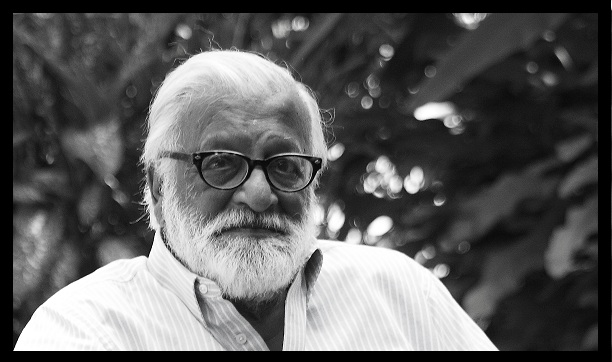
  • Obituary – Bal Mundkur: Slogans, spice and a bite of ‘song’

    By Vidya Heble


    “Bal Mundkur has passed away.” It seemed an impossible thing to believe, but the fell hand had indeed taken him, on the morning of January 7, 2012.


    It was on a winter day many years ago when I first met Bal Mundkur at his home, Surya, on the banks of the river Mandovi in Goa. He was, of course, a legend and I trembled inwardly at actually meeting him, albeit in a personal capacity.


    His career as a naval officer and aviator had been followed by an illustrious innings in advertising, which he had famously given up to retire in Goa. ‘Retire’ was only figurative, because he proceeded to put his unrelenting energy into designing and building his house, and then lending his prodigious talent to projects which he felt would benefit society, including restoration of a fort and setting up of a museum. He even found his way into an offbeat little film (http://wn.com/rare_indie_goa,_ma_cherie_part_1) which is quintessentially ‘Bal’.


    “For the Royal Society for Asian Affairs, where he contributed an article on ‘Incredible India: The Inconvenient Truth’, he described himself “as neither an activist nor a frustrated journalist but as a dispassionate commentator”.


    People in Goa looked on him with awe, and he was known as a man of exacting standards and uncompromising expectations. Even my “Hello”, I felt, would be subjected to scrutiny. But he was delighted to meet a fellow Konkani, and dwelt pleasurably on the joys of Konkani food, much of which he was not allowed to eat by then. Pickle, chutney and spicy food was out of bounds, but Uncle Bal, as I called him, managed to sneak teekha stuff onto his plate now and then. When he discovered that I can cook, he extracted from me a solemn promise to make him some standard Konkani dishes, among them potato ‘song’ – a simple dish of cubed potatoes cooked in well-sauteed onions, tamarind and a lot of chilli. I made a mental note to tone down the chilli for Uncle Bal, who of course read my mind and said, “Don’t forget, lots of chilli!”


    But Uncle Bal had so much else on his plate that he never did find the time to come over for a Konkani meal. With time and circumstances, I didn’t meet him again for some years. But being in the business of media news meant, inevitably, that our paths would cross professionally. When I rang him up after a long interval, to ask for an interview on Ulka’s anniversary, he remembered the long-promised ‘song’, and once again we assured each other that I would cook and he would eat, one day.


    As always, however, Uncle Bal had too much going on in his life. One never knew where he would be next – dashing between Goa and Mumbai, scooting off to Europe or South-East Asia or somewhere else – or what project he would take up. Perhaps fittingly, his last offering was the history of Indian advertising, Ad Katha, which was released at Ad Asia 2011 in New Delhi.


    But those who know him, know that he would not have rested after this. That fertile brain would have been working on something else, and he would have been ringing people up with exhortations to participate, to donate, to sponsor. His zeal was unwavering and his passion, perpetual. Somewhere he might even have found time to stop for a bite of ‘song’.


    We will all remember Bal Mundkur in different ways. I’ll recollect him with a dash of spice.
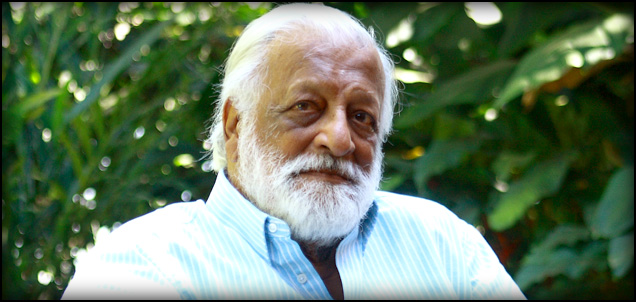
     

  • Bal Mundkur: Tributes by Shashi Sinha & Bunty Peerbhoy

    By Tuhina Anand


    Shashi Sinha, CEO, Lodestar UM

    Bal Mundkur did what he believed in and did that pretty well. He was passionate about advertising per se and was not among those who would look at action from far but get personally involved with work that he took charge of. I had the opportunity to work with him for 5-6 years and I can recall that ion those days advertising was really different ball game yet even then he would be pushing boundaries and not hesitate in taking chance. He would lead from the front and give his ideas to better creativity. He got into advertising pretty late but when he got into it he followed it from his heart.


    Bunty Peerbhoy

    I have known Bal very closely. I remember an interaction with him which he had with my father one day at Habour Bar in Taj where he was sitting alone. My father introduced me to him and he asked him how much I was being paid by my father. As a trainee, my father replied that I was being paid Rs 90. He made an offer to me to join him where he would pay me Rs 500. My father was stunned but Bal was unfazed. He said, “You are underpaying a smart young man, I am offering him what he deserves’. That was my first interaction. Though there is an aside to this story and that is when my father introduced me to Bal, I was sheepish because those days I used to play cards with Ulka people and Bal would drop in at times so in that sense we had met before but it was an introduction which I definitely didn’t want my father to know of.


    I have spent time with him and known him both professionally and personally. He has also been a speaker at the memorial lecture that we conduct every year in memory of my father called the Ayaz Peerbhoy Memorial Lecture. He was a lovable incorrigible person who always challenged the convention. He never shied away from being blunt. At time when agencies were doing speculative campaign he came out strongly saying that while people in advertising may talk against it but when it came to doing one for a prospective client they would not shy away from doing it. He stressed on the fact that one should not say things that they don’t mean. He always spoke his mind. He was certainly among one the colorful men of our business whose language too was equally colorful…but that was Bal.


  • Remembering Bal Mundkur


    By A Correspondent


    Founder of Ulka Bal Mundkur, 86, passed away on the morning of January 7, 2012 of heart failure at his residence, ‘Surya’, in Reis Magos, Goa, overlooking the Mandovi River.


    The agency, now Draftfcb + Ulka, celebrated its 50th anniversary last year and is ranked the third largest advertising group in the country.


    Mr Mundkur was originally a naval officer, and later a commercial airline pilot. A modelling offer from his brother, who worked at Levers, marked his entry into the world of advertising which he joined in 1951. Ten years later Mr Mundkur founded Ulka, which means shooting star, and the agency’s career was indeed starry. In a span of 10 years, Ulka became the fourth largest agency in the country, and by far the largest independent Indian start-up.


    A release from Draftfcb + Ulka says, “An avid collector of all things rare and beautiful, Bal’s prized chess set starred in Satyajit Ray’s celebrated Shatranj Ke Khiladi. Bal was not just a businessman, but he was also an extremely passionate crusader for a wide range of causes, from a building for a cerebral palsy hospital to bringing the choir of Trinity College, London on a tour across India.


    “In the nineties, Bal retired… and moved to Goa, where he continued working for causes close to his heart – which included helping set up Asia’s very first Museum of Christian Art in Goa.


    “Bal remained full of energy and enthusiasm till the end – at 85 he set up the Centrum trust, which recently published Ad Katha, the story of Indian Advertising over the decades.


    “Bal has moved on, but he will live on in the hearts of those who knew him.”


    Read:

    Obituary – A dash of spice

    http://www.mxmindia.com/2012/01/obituary-bal-mundkur-slogans-spice-and-a-bite-of-song/


    Tributes – Warmly remembered

    http://www.mxmindia.com/2012/01/bal-mundkur-man-and-memories/


    Mediaah!: RIP, Bal Mundkur

    http://www.mxmindia.com/2012/01/mediaah-rip-bal-mundkur/


    Photograph: Shreta Arora/O Herald O

  • Bal Mundkur passes away

    Bal Mundkur
    Bal Mundkur

    By A Correspondent


    Bal Mundkur, veteran adman and founder of what is today DraftFCB Ulka, passed away in Goa today. Mr Mundkur founded Ulka in 1961 and was recently seen mingling with the fraternity at Ad Asia 2011 where he also released Ad Katha, a special volume tracking the history of Indian advertising.


    He will be cremated tomorrow (Sunday).


    Notes a citation on the 50 years of the agency (at http://ulka50years.com/history.html):


    “50 years back, a gentleman felt that there was a need for an Indian agency that would challenge the then agency stereotype. He was convinced that the main cities had abundant talent and a community of entrepreneurial clients would embrace an agency that could do pioneering work based on the principal of ‘accountable marketing.’


    Bal Mundkur founded Ulka in 1961 and within the first ten years, the agency made a smooth transition from a creative hot shop to a large mainstream agency. Today, the agency is in the top 5 with 50 of its brands being category leaders.”


    * Please stand by for detailed report


    Also read: Seminar” href=”http://www.india-seminar.com/2004/543/543%20bal%20mundkur.htm” target=”_blank”>An Outsider in Goa (an article in Seminar magazine, published in 2004)


    Photograph: Shreta Arora/O Herald O


  • Debrief: Snapdeal: Deadly idea

    By Anil Thakraney


    It takes some guts, especially in a superstitious India, to run ads that feature the god of death as the protagonist. Well, the ‘great deals’ website Snapdeal.com has done exactly that, and no, don’t think the site will expire in a hurry.


    Termed ‘Yamdude’ in the campaign, the deadly god goes about having fun with scared dudes and the cool Snapdeal deals. He basically saves lives instead of taking them, being distracted by the product offers. In one ad, a sky diver’s ‘time’ has come, so Mr Yamdude arrives mid-air to get him. But when the chap flashes his discount coupons, the god gives him a chance to live, and instead buys himself goodies with the coupons.


    [youtube width=”400″ height=”200″]http://www.youtube.com/watch?v=zUJc1gyFVb4[/youtube]

    Good, fun advertising. And the wackiness will help get instant brand recall. This sort of an over-the-top idea is required for a new website that simply deals in great sales offers. Safe advertising would have killed the brand even before the god of death arrived. So, a pat on the back for taking the risk.


    Seems to have paid off already. Snapdeal.com, because of the cool Yamdude, is being discussed on the social media. Always a good sign for brands targeted at the urban youth.


    Rating: (On a scale of 1 to 5): 3.5 Funky idea, entertaining ads.


  • Everest to handle Kotak Mahindra Mutual Fund

    By A Correspondent


    Hot on the heels of bagging Augere’s Wireless Broadband business in India, Everest Brand Solutions has now added Kotak’s Mutual Fund business to its kitty. No pitch calls preceded the account win. The company awarded the business to the agency based on the strategy and creative work presented by them.


    Dhunji Wadia, President, Everest Brand Solutions, remarked, “We welcome Kotak Mutual Funds to the Everest family. We believe in working with our clients and adding value to their business. More and more clients are recognizing what we bring to the table. It’s a huge vote of confidence for our way of working. This is a significant win for us.”


    Mr Wadia further stated, “Everest is in an exciting phase of transformation. The hard work put in over the last few months is bearing fruit now. We expect a lot of action in the coming months.”


    Rahul Jauhari, NCD, Everest said, “Our point of view on what Kotak Mutual funds should do, given the turbulent times in the market found favour with the Kotak team. And, of course, the vibes between our teams were great. It’s an exciting category as well. We look forward to a long and fruitful relationship.”


    Everest witnessed the onset of change with a change of guard at the senior management level and subsequent additions to the core team in 2011. Since then the agency has been in a ‘transformational’ mode, adding businesses like Danone B:lue, Ranbaxy Volini, GoAir, Augere’s Wireless Broadband, amongst others, to the kitty.


    Kotak Mahindra Asset Management Company Limited (KMAMC), a wholly owned subsidiary of KMBL, is the Asset Manager for Kotak Mahindra Mutual Fund (KMMF). KMAMC has over 10 lakh investors in various schemes.


    Everest is the second oldest agency in India, started in 1946. Everest has built some of the biggest brands in the market place – Parle Products, CNN-IBN, GoAir, Emami, Tata Housing, Akai, T-Series, among others.


  • Bobby Sista, Alyque Padamsee & Gerson da Cunha on Bal Mundkur

    While tributes keep pouring in for the ad legend and intrepid explorer who was ahead of his time, MXM asked his peers from the golden era to look back at the Bal Mundkur they knew.


    Gerson da Cunha, stage and film actor, social worker and author:

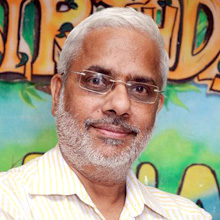
    Bal Mundkur was a man of immense energy; he was tireless. Once he decided to do something nothing would stop him. For instance, take the case of the book Ad Katha. There have been three previous attempts by the Indian advertising industry to write this book but every time it resulted in failure, because either the money could not be collected or nobody would be available to take on the writing task or both. But the key among the two was finding the money. Bal Mundkur then sat down and wrote off a series of letters to people asking them to donate money towards the cause. As soon as he collected the money it became a serious project and people began to join him. That’s what I mean: when he decided to do something he would go ahead and achieve it. The next important thing about the book was the drafting of the letter for the book. Otherwise you and I could also write to people and they would give a damn, but to Bal they responded. In fact many of them owed things to Bal – he had built a brand, he had given them a job, etc. So the book in a way represents the kind of person that he was.


    In fact we both met about a year ago in Goa and he told me about this book. He said to me, “Let’s do it.” I responded in the affirmative and thus began our quest. While I was in charge of the content, he was in charge of the money. While we were working on the book, I’ll never forget what he told me halfway through that project. He said, “You know Gerson, I have done many good things in my life but this by far is the best thing that I have done.” And he did it – he completed the job, and he left us.


    Also, there is something else about Bal Mundkur. There are people who, when they leave this life, take something irreplaceable away with them. For example Behram Contractor or BusyBee, as he was fondly known. When he died, he took away with him the bentwood Irani shops, the cuisines – that extraordinary part and spirit of Bombay, as it was known then, which no longer exists. He took it with him and went away. Or Mario Miranda, for example. He took with him a part of Goa and a part of Bombay – Colaba especially, and went off. What Bal has taken with him is a much more complex thing. Yes, it is an era of advertising that was professional, that was innocent… there was not the kind of cut-throat rivalry that was today. Even people competing for the same account were polite and would meet each other up for a drink in the evening. So that professionalism and innocence that existed in the advertising space then has gone with Bal Mundkur.


    He was also involved with a lot of public causes – for the crippled children, did his bit for cancer patients… in fact he he was the first to do a remarkable campaign around cancer. And there were many other causes that he supported. Not just advertising and marketing, he was involved in other facets of life like hosting seminars, promoting the industry to the outside world… he even got the Trinity College of Cambridge choir here.


    There was also a generous side to Bal Mundkur. He knew the value of money but what he did with that is what makes him even greater.


    Bal Mundkur has definitely left a void and he has taken a part of the world of advertising that we once knew.


    Bobby Sista, Founder and Executive Trustee, Population First:

    It’s not really easy to describe Bal Mundkur but he was certainly one of the most colourful and charismatic personalities in advertising. He was not your ordinary guy – he could be arrogant, he could be short-tempered, he could be very charming, he could be very helpful… all of these things, but certainly he was a very good adman.


    Bal Mundkur and I go back a long way. We were closely involved in mooting the idea for forming the Advertising Club of Bombay in the early days. We also discussed the idea of starting an agency together before he floated Ulka. We almost came close to an agreement and everything else was done but then there was a last-minute hitch and it didn’t work. A year or two after that he started Ulka. So while he became fully dedicated towards Ulka, I started working for a client. But we remained friends.


    He was very talented in what he did. Such was his stature that he could even walk into the cabin of an MD with full confidence and if certain things didn’t work out he wouldn’t hesitate in calling it off.


    I do know that he was highly respected by the advertising profession. He certainly brought in a new angle to how advertising could be created. He had that kind of leadership quality – making people think differently and come up with good work.


    One of his noteworthy works includes his effort around the book Ad Katha. I remember that when he conceptualised the idea, he came and spoke to me about it first. He wanted to form an advisory council to get help on this book. He was supposed to have named his book History of Indian Advertising. Bal had even written about 180 pages of the book by then. But then he got in touch with Gerson da Cunha and they went through 2-3 different changes before they renamed the book to Ad Katha. I am happy that he was able to complete the book and launch it at Ad Asia along with 1,500 people from the industry.


    Also, one of the things that you could say about Bal Mundkur and his extracurricular activities was that he was a great fund-raiser. He had the ability to collect funds for various causes, including for seminars around advertising, both in India and abroad.


    Alyque Padamsee, theatre personality and ad film-maker:

    Bal Mundkur was a pioneer who started his own Indian ad agency, even though all the ad agencies at the time were foreign-owned. He built Ulka Advertising into one of the big five agencies of the time. He was not only a superb account management honcho, but also an extremely creative genius. Bal Mundkur was known as a very frank and fearless adman, and pushed his ideas across with charm and force.


    Photograph: Shreta Arora/O Herald O
    
    
  • How to get ideas (& climb the corp ladder)

     
    By Tuhina Anand


    Veteran adman and now business and innovation coach R Sridhar has come out with an e-book titled ‘How to get ideas – an incomplete book’. The book is a collection of insights from various people who have shared their mantras on how they get their ideas. Mr Sridhar, who is former chairman at OgilvyOne Worldwide and director at O&M, and whose website is at ideasrs.com, explained, “I am an innovation coach and I work with people to help them do things differently. So when it comes to doing things differently, idea plays an important role in achieving this. I have had several conversations with people on what triggers an idea in them and this led me to collate the responses and put it in a book.”


    Mr Sridhar calls it an incomplete book because he hopes to come out with version 2 in three to six months’ time, where he aims to include not just national players but inputs from global players. However, Mr Sridhar categorically avers that the book is not targeting advertising professionals as he adds that most in the business think they know it all, but largely aims at the corporate world.


    He added, “We are all creative in one way or the other but don’t really know how to express it.  While some may have the opportunity to express their creativity in the outer world many don’t. The purpose of the book is to help people find their own creative streak. There are many places when we are stuck and don’t know how to move ahead or are not comfortable asking for help. The book will help people in different situation by giving them cues and find their groove.”


    Mr Sridhar in fact says that the book will be handy for even professionals like doctors, lawyers and even homemakers. In your daily life if you are stuck even for simple things like planning a menu for an evening dinner, the book will give cues on how one can be creative and, with minor variations and combining different things, can come up with an innovative menu.


    He concluded, “Most importantly, in today’s corporate world there is a need to be innovative to lead. The person with ideas will move up the ladder at a quicker pace than any other and that’s where this book comes into play. For any ambitious person who wants to succeed, I would suggest he should keep a copy of the book on his laptop.


    Click on the image for larger view

    Excerpts from the e-book:


    Pulling strings in the head

    Few things I always do. Look out for interesting and unique stuff while I travel, watch TV,   read, talk with family, watch movies… I register it in my mind (luckily it stays there for ever). 🙂 When my sales team comes with a brand brief, I read a lot about the brand, understand it well  and thereafter,  my mind automatically starts pulling strings from all the available information in my head.


    Then…..I get the first spark of an idea… After that I go talk to different people about it, get inputs, shape it, modify it, answer their questions. If I scrap the idea I go back to step 2.


    Aparnaa Rajasekar


    Helicopter ride in the mind

    I remind myself that ideas are everywhere if I choose to look.  I try to take completely unrelated things and try to connect them to the problem. Something I came across in DeBono’s work really struck home with me. Roughly he said, everything can be connected  with everything else. Thinking laterally is like taking a helicopter ride and getting dropped off in an unknown location (unrelated object) and finding your way back home (the problem) by making connections.


    Among specific things I do to generate ideas: sleep on the problem and wake up early. I find I am in a great frame of mind at this time. I try to find someone who will listen uninterruptedly so that I can speak aloud, hear myself think. I am able to generate more ideas like this.


    I spend time by myself, retreating inwards; I spend time browsing the internet, looking for inspiration; I drive; I talk to my wife; sometimes my dogs; to my dictaphone; to my colleagues at office; to my clients.


    Santhan Reddy


    Ray of light passing through

    Ideas often are often like , a ray of light, it just passes through the mind while doing something totally unconnected. Could be while cooking, drinking coffee, reading a book, taking a walk, reading the newspaper, bathing and very often while on the pot (pardon me saying that).While travelling by car, is another time when ideas flash past. I personally use mind mapping to generate ideas and solutions to complex situations. Invariably I note them down as the thought is lost as we get busy in something else. If I need to generate ideas, thoughts I generally go to a room, sit down, relax and allow thoughts to flow. This is invariably while doing problem solving or looking at multiple options. Bouncing off ideas is with a close friend who will be objective and tell me if i am terribly wrong.


    Laila Sethna


    Just let it be

    I first surf the net for the subject and randomly follow links to related subjects. Almost like immersing myself in the topic. Someone somewhere has always faced a similar problem. I have found from hard experience that its best not to actively think about ideas. Just let it be and sleep over it. Then I talk to some selected people who are good sounding boards about the general subject (NOT ideas). They usually ask me some more questions during the discussion. Again I let all this be in my mind. Ideas then just come to me… sometimes inspired by imminent deadlines.


    What not to do (for me)


    Active brainstorming – I find this yields superficial and obvious ideas.

    Tell people that I am looking for ideas – again people limit their thinking and discussion and come up with the most top of head obvious stuff.

    Generate ideas without researching the material.

    Pressure myself for “ideas” – just doesn’t work.


    What works


    Talking to specific people who are able to think and talk at an abstract level – then I manage to find analogies from unrelated areas.

    Talking about the subject without a goal in mind.

    Talking to my kids – sometimes yields surprising ideas

    Surfing, surfing, surfing with broader and broader search terms.

    Thinking of the subject when I go to sleep. Often, I wake up with an idea.

    Nalini


    Just start writing

    I just start writing my ideas. If I wait for ideas to come, they never do. But when I sit down and start writing, then they seem to come out. Writing is usually on the laptop on the iPad.   When writing, I try to structure my thinking. Mind maps help quite a bit.

    Suman Srivastava


    Excerpted with permission from the writer.

    The e-book ‘How to get Ideas’ can be accessed at http://ideasrs.com/ebook/

  • Anil Thakraney: Buck up, lazy HR!

    By Anil Thakraney


    I have worked in a few organizations in my career, and across the board if there’s one department I have been left disappointed with, it’s HR. Somehow I never really felt a need for these people. And the failing, I realize, is not of the function itself but the way it seems to be practised, and naturally I speak from my own experiences.


    I have always found the HR personnel to be the reactive sort; their presence only gets noticed when there’s a problem. When someone needs to be hired/fired (and that’s essentially paperwork) or when there’s indiscipline in the organization, ranging from regular employee absenteeism to sexual harassment issues. And this aspect too mainly involves lip service and paperwork from HR… all the actions/decisions are usually taken by the line manager or the CEO. And therefore I have always wondered why we need these guys at all.


    I think HR personnel aren’t being held accountable in organizations, and perhaps this is what leads to their laidback behaviour. Although I am not an HR guru, here are a few key functions where I think they can become very useful to an organization, if they play a proactive role:


    • Keeping a regular, sharp eye on star performers in other organizations, so that they can provide leads to department heads even if the latter haven’t asked for fresh recruits.
    • Bonding with employees from down to top, rather than from top to bottom. So that employees across all levels can confide in them. And by the time the HR team meets the department head, they can share relevant employee information with the managers. Most HR heads I worked with will first meet me, and ask silly questions like: “How’s the morale in your department? Hope all well?”
    • Coming up with useful, scientific and insightful ways in which a department can be structured better to maximize staff resources. Most HR heads have no interest in even going down this path. Either they are too lazy or don’t want to risk upsetting department heads.
    • Drafting innovative and smart employee rewards/motivation schemes. Sending out cold birthday cards is so yesterday. And a cop-out.
    • And of course, formulating kickass employee loyalty schemes and organizing fantastic training programmes. Usually both these chores are left to the line managers to figure out.


    [youtube width=”380″ height=”230″]http://www.youtube.com/watch?v=uCKgCkubGc0[/youtube]

    Net net: Lots of value additions can be provided by the HR people. But they aren’t. And this can’t be allowed to go on. At some point, organization heads will need to crack the whip. I don’t need a heavily paid HR Vice Prez to meet me once a year and ask me if I am okay. I can do without those homilies, thank you very much.


    ***


    PS: Ahaha! Totally love this ad. It’s so simple and so funny. Especially the spunky ol’ lady. Too cute.


  • Law & Kenneth bags eBay’s creative pitch

    By Shubhangi Mehta


    Law & Kenneth has bagged the eBay India business. The online shopping and auctions portal had called for a pitch a few weeks back and several agencies participated in the process. Mr Anil Nair, CEO and managing partner, Law & Kenneth while acknowledging the news to MxM said: “We at Law & Kenneth are super excited to have been chosen to work with eBay, which is a pioneer in the global e-com market.” A source close to the development indicated that the annual media spends for the year would be around Rs35 crore.


    In the past, Wieden + Kennedy had handled the creative mandate for this account. The agency had won the business in September 2009. Though the company has utilised the traditional media route to expand its market in the past, it has taken to online marketing from 2010.


    It remains to be seen how Law & Kenneth will take eBay’s communication forward in 2012 across traditional and new media platforms.


  • Rahul Thappa is back @ Mindshare

    By Akash Raha


    After his stint at Mail Today, Rahul Thappa has once again joined Mindshare. Mr Thappa will be working at Mindshare as Leader – Client Leadership, South Asia, reporting directly to Mindshare CEO Ravi Rao.


    In his last stint with Mail Today, the compact Delhi daily which is a joint venture between India Today Group and Associated Newspapers (ANL), publisher of Daily Mail, UK, he was the COO of the organization. He had joined the newspaper in May 2011, taking over from the then-COO, Mr Suresh Balakrishnan.


    Mr Thappa’s earlier stints include working as the Managing Director at Mindshare Malaysia; Business Director, Entertainment Sports & Partnerships at Group M Malaysia; Business Director at Mindshare Malaysia; and Planning & Buying Director, Team Unilever at Mindshare, Malaysia.


    MxM had received no official confirmation from Mindshare at the time of this report.


  • @GroupM: M Suku to join ESP, Mindshare restructures

    By A Correspondent


    It’s change time at Group M too. The media major’s Mindshare arm had announced a series of changes on Wednesday , the leading media agency of the country, announced on Wednesday a series of management changes and key appointments to strengthen the company and position it for long-term success.


    In what may not necessarily be a related development, MxMIndia learns that veteran media specialist Mr Suku Murti who is currently with Aidem Ventures is also moving to Group M. Mr Suku has been with GroupM in the past, having set up Broadmind which later transformed to the entertainment, sports and promotions practice (GroupM ESP). He headed ESP for the entire Asia Pacific region. Mr Suku has worked with Unilever, Colgate, Lintas, JWT, ABCL, Eenadu other than Group M and Aidem.


    Mr Suku will continue to be associated with Aidem for a few months even as his association with Group M ESP begins.


    Meanwhile, the rest of the restructuring news @ Mindshare: Mr M Parthasarathy or MAPS currently the Leader-Business Planning will head the Client Leadership team. Mr Alok Sinha will now oversee Strategy, enabling ‘no-line’ thinking across India. Mr Sandeep Pandey will spearhead Consulting & Intelligence which involves analytics and modelling for better ROMI (Return on Marketing investment). Ms Anita Karnik will continue to handle Branded Entertainment and Activation. Messrs Jai Lala and Ashok Lalla will continue in their current roles managing Exchange and Digital.


    Speaking on the restructuring, Mr Ravi Rao, Leader – Mindshare South Asia said in a communique: “With this infusion of senior talent and expertise, I am looking forward to beginning the year with the Mindshare mantra: Original thinking that brings in thought leadership, innovation that aids in brand growth. Fueled by great ideas, intelligence and analytics, the focus will be on growing our existing clients behind a strong strategy and thrust in digital. We have competent teams and the changes will ensure continuity in each role, while enabling us to broaden our team’s experience and capabilities – something that will be important as we continue to drive new business and grow our market share.”


    The new appointments also include Mr Rahul Thappa (as reported by MxMIndia on Wednesday), who has come in to manage North and rest of Mindshare South Asia. He has been entrusted with business operations in Pakistan,Sri Lanka and Bangladesh.