Category: ADVERTISING

  • HDFC Life associates with ‘Hawaa Hawaai’

    By A Correspondent


    HDFC Life has announced its association with Hindi film ‘Hawaa Hawaai’ directed by Amole Gupte and presented by Fox Star Studios, for in-film placement and theme integration. The film features popular young star Saqib Saleem along with national award winner child actor Partho Gupte.


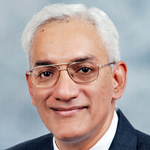
    Sanjay Tripathy

    Speaking on the association, Sanjay Tripathy, Senior Executive Vice President and Head, Marketing, Products, Digital & E-Commerce, HDFC Life said, “Amole Gupte’s films always touch the emotional chord with a strong social message. Hawaa Hawaai is another thoughtful film from his stable. It’s about the triumph of human spirit and of strong will and determination (pakka iraada). As a brand, we have always propagated ‘Independence and Self respect’ or ‘Sar Utha Ke Jiyo,’ as a way of life and the film’s core message is a perfect fit with our brand philosophy. Through this film, we are celebrating people who help fulfill others’ dreams through their efforts and live their life with head held high. Both the protagonists of Hawaa Hawaai are the kind of people we celebrate as a brand. Arjun, the protagonist, lives his own dreams through his determination, whereas his coach Lucky is determined to enable him to achieve those dreams.”


    HDFC Life has been associated with films in the past. In 2007, the company co-promoted the movie Spiderman. In 2010, HDFC Life associated with Patiala House, a family drama/sports film for in- film placement. This film was about a sports person’s determination and struggle to fulfill his dreams.  With Hawaa Hawai, the company has moved a step further with in film placement and thematic integration.


    Vijay Singh, CEO, Fox Star Studio said, “Hawaa Hawaai is a celebration of the dream chasers among us and stems from the idea that the will and sheer passion of human spirit can achieve everything. We are glad to partner with HDFC Life as the brand resonates with the core of the film, which is to celebrate dreamers and believers-those who dream and those who help others fulfil their dreams. Together, we are happy to bring to the audiences a film that is a breezy, inspiring summer entertainer that will tug at the heart.”


  • Online railway ticket booking witnesses a spurt

    By A Correspondent


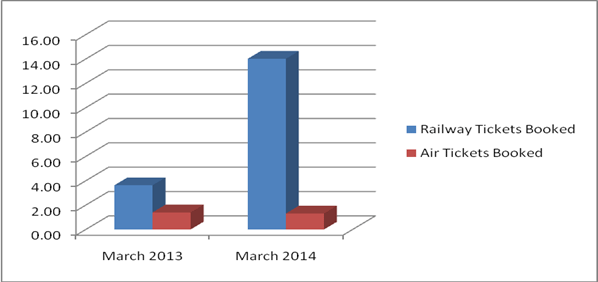
    According to the latest Internet Economy Watch, published jointly by the Internet and Mobile Association of India (IAMAI) and IMRB, the online booking of railway tickets increased from 3.63 million in March 2013 to 14.02 million in March 2014 registering a y-o-y growth of 286 per cent. While online booking of railway tickets grew phenomenally, the air tickets booked online in March 2014 were 1.31 million as compared to 1.40 million in corresponding month last year.


    Source: IAMAI/ WAM Data March 2013-14


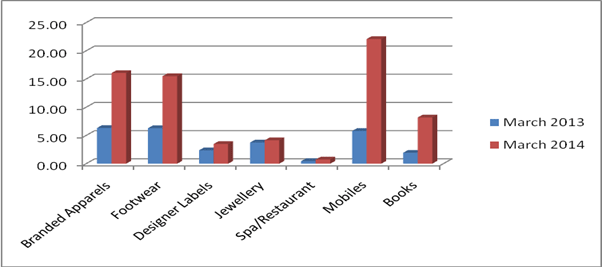
    The monthly tracker also finds a y-o-y growth of 154 per cent in online user visits to branded apparel category. While branded apparels witnessed 16.08 million online user visits in March 2014 as compared to 6.34 million user visits in March 2013, the footwear segment registered 15.51 million online user hits in March 2014 as compared to 6.30 million user hits in March 2013.


    Source: IAMAI/ WAM Data March 2013-14


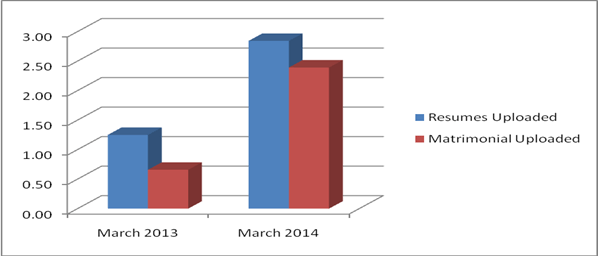
    According to the data captured from major matrimonial sites in the monthly tracker, the number of profile uploads in March 2014 were 2.39 million as compared to 0.66 million in the corresponding month last year. The number of resume uploads increased to 2.84 million in March 2014 from 1.25 million in March 2013.


    Source: IAMAI/ WAM Data March 2013-14


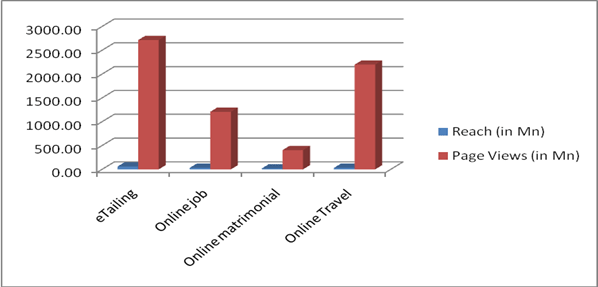
    The monthly tracker further indicates 59.48 million people accessed various e-tailing sites. There were 2714.28 million page views in the category. The user reach for job and matrimonial websites is 31.18 million and 19.86 million respectively with 1209.48 million and 403.20 million respective page views. Online travel segment has reach with 32.13 million reach and 2198.801 million page views.


    Source: IAMAI/ WAM Data March 2013-14


    Sourced from all India active internet data, the monthly internet tracker is based on WAM data captured from various relevant sites, and encapsulates online usage for e-tailing, online travel and vertical classifieds.


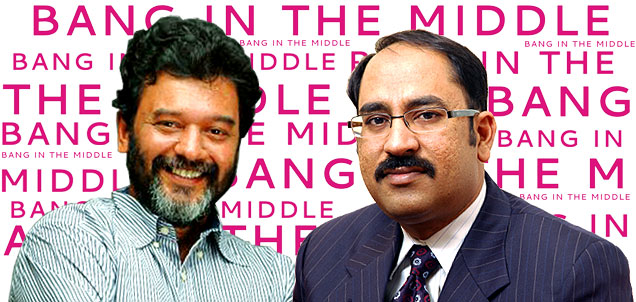
  • The Bang in the Middle theory: Interview with Prathap Suthan & Naresh Gupta


    Two years back, Prathap Suthan and Naresh Gupta and a few other professionals announced the formation of an agency with a difference: Bang in the Middle. Like its name, the proposition was meant to be ‘hat ke’, a lot of which came with the way the philosophy of its founders. MxMIndia has been tracking the agency right from the day it was launched, chronicling its every high, and every new client acquisition.


    As it completed two years last week, we posed a few questions to Messrs Suthan and Gupta including one on something that many have been talking for a while: that it’s a good target for an acquisition.


    The interview:


    01. The first two years can be good fun, but the trials and tribulations could also be many. Ask us. We had many, many highs. And many, many lows too. How has been your journey? Banged more or got banged more?

    Banged, we more than survived the first two years, and we survived to the plan we had written. We won many business, did some exciting work, won some industry accolades. To do a design project from Rolex was more than prestige, we learnt how exacting the Swiss can be, the Swiss learnt how detailed Indians can be. We won Dulux in a hard fought pitch with biggies just when we started,  Veen Waters gave us a global mandate, we won Zee News in a competitive pitch and as the second year came to an end we won Jabong in a dead heat against the largest of agencies.  Today we have a robust set of clients and some very exciting conversations with a set of large clients


    02. Do you find that the world around you has also changed in these two years and hence people are more inclined towards your kind of creative work?

    The world is changing at a pace faster than at least we can fathom. The largest of marketers are investing more in digital, the traditional agencies are not investing in that skill at all. We have experienced this in our conversations with many of the clients that they are willing to work across spectrum with one agency, it’s the agencies that are not ready to step up and play the role they could. Ideas have always been the currency of communication companies, and ideas have to go beyond TVC That does make brands more tuned to the kind of work we do


    03. For those who don’t know too much about BITM, how would you like to be described? Are you more creative-led, planning or strategy-led or just about everything and re-orient as per client needs?

    We are Mutant. We merge the traditional medium with new media. We are pure play digital agency for some of our clients, we are a conventional agency for some other of our clients. For a fees of our clients we are the only agency they use. We have more startup clients today than most agencies, and for each one of the startups: Diva’ni, Oxolloxo, Gyanshree School we are the only agency they have on board. From website to mobile app to mainstream advertising, we do it all for them


    04. How much of your work is traditional advertising and how much of it is digital and for BTL etc?

    We have stopped even looking at that divide, specially when the clients today are discussing the key words to target on web in the same vein as creating a campaign on TV. For a client we merged the social media with TV advertising, the brand trended on Twitter, saw a huge jump in traffic post the TV campaign and followed up the TV campaign with a social campaign. I don’t know where to slot a client like this. Most of the briefs we are working on today are mutant briefs


    05. Does it help being an Independent? Would you consider being acquired by a global network?

    It is absolutely fun being independent. Coming after many years of working for networks and waiting for decisions to be taken at some place in cyberworld, being independent is a big asset. More than us, its our brands that we work with will vouch for it. We are fast, we take decisions faster and add speed to their business strategy.


    On being acquired, we have been spoken with even before we turned one. Those conversations have only gained speed. There are more than one network speaking us, there are some non network brands speaking with us. Being a part of a network is not necessarily a bad thing, provided we can preserve the DNA of ours: of being feisty and of being quick on our feet


    06. What according to you has been the best work so far?

    I would like the clients to answer that. For us every piece of work we have put out from Veen to Rolex to Zee to Diva’ni to Vimal to Dulux to Freecultr to FabFurnish every piece of work we have done, we are proud of it. We strive hard to ensure that we put out a communication solution that will help the brand grow, beat competition, increase value or whatever else they may have briefed us. These two years have been the year of learning for us too. Today, we are doing things that we never did before, and there are challenges we faced without the support for a global network.


    07. One or two happenings in these two years where you would’ve told yourself the agency has arrived?

    First such moment was when Zee News consolidated more than one channel with us. Winning Jabong was second such moment when we realised we can stand up to the might of the large agencies. We actually feel that every new brand that brings us on board makes us believe that we are on our way. We have a client who has acknowledged that the best work on the brand ever done is from BITM, another said that they never realised that we were a startup, we never came across as one. Each one of such moments are moments that tell us that we are reaching the destination


    08. And one or two WTF moments? When you said why the hell did we get into this?

    More than one, almost every month. We lost a large brief only because the global system didn’t want to hire a home grown agency, we lost a brief because a Mumbai client didn’t want a Delhi agency. These are moments that tell us that we haven’t reached there, we are not established, we have to work hard and we have a long road ahead


    09. Do you think you could’ve been acquiring bigger clients (and hence bigger business) in the last two years?

    Yes and no. At one level its a good thing that we have a committed set of clients who work with us closely, some of them are large too, at another level we do feel we could have won larger brands. The latter is more a wish and in no way is to undermine the former. I think a few large clients are around the corner


    10. Any advertising that you think BITM should’ve been doing? And could’ve done better?

    The team has extensive experience across three categories with proven credentials: tourism, automobiles and cellphone handsets. Those are three categories where we would definitely like to have. In each of these categories we would have done better work than the work that is on air

     

  • Lifebuoy’s ‘Jump Pump’ activity casts positive impact on schoolkids

    By a correspondent


    It is a startling fact, that more than 2 million children lose their lives to diarrhoea every year. It is even more alarming, that a major contributor to this number is India. Washing hands with soap at key occasions during the day has been proven to be the most cost-effective and scalable solution to prevent the spread of deadly infections likes pneumonia and diarrhoea. This simple act has the potential to save millions of lives.


     

    Over the years, Lifebuoy has implemented several innovative programs to create habit change for hand washing amongst children as well as to raise awareness about the five critical hand washing occasions in a day. Of these five, one of the most important is washing hands with soap before eating.


    In April 2014, Lifebuoy chose the occasion of the mid-day meal to convey this message. India’s mid-day meal scheme feeds over 120 million children a day, making it the perfect opportunity to address the maximum number of children across schools, at the actual moment of truth.


    Across many rural schools, it was found that children were not washing hands before having lunch, despite the availability of soap. The fact was that the old and heavy hand-operated pumps are the only way to access water in these schools. Young children find it difficult and tiresome to operate these pumps and hence would simply not bother coming near them. The focus was thus shortlisted towards this key barrier.


    Vipul Salvi, National Creative Director / Geometry Global India said: “We need to keep pushing the limits of creativity to help solve basic problems like poor hygiene… the great thing about the Jump Pump is that it worked like a charm with kids while being cost-effective and easy to implement.”


    Rahul Saigal, President / Geometry Global, India added: “Sometimes the best way to teach kids an important lesson is to distract them into learning. You can’t engage children by mere preaching; you need to talk to them in a language they understand: the language of play!”


    What Lifebuoy did was install a specially crafted rocking horse, made from a combination of wood and metal with a simple screw-on mechanism, on to the handles of these hand pumps in schools – transforming them into “Jump-Pumps”.


    At lunchtime, when children headed out of class for their meal, they were taken by surprise by this colourful addition to their school premises. Promoters explained the concept and the proper technique of washing hands with soap along with putting up posters at prominent spots in the school to explain the “Jump Pump” game. Apart from this, Lifebuoy soap was also provided to ensure soap availability throughout the activation period.


    Currently, about 1500 rural schools across UP and Maharashtra are being impacted with this activity between April-May 2014.


    George Koshy, General Manager (Skin Cleansing), HUL said:” Lifebuoy has a proud history of being a brand that stands for saving lives. It is indeed our mission to ensure that hand washing with soap becomes a habit for children, as a step to reducing diarrheal mortality. The ‘Jump Pump’ activation is an innovative approach, appealing to children in a manner that is fun and enjoyable.”


  • Tata Capital wins big at The Communicator Awards 2014

    By a correspondent


    Tata Capital’s Half Stories initiative, part of the ‘Do Right’ initiative, won the Award of Excellence (Gold) in the Integrated Campaign category at The Communicator Awards 2014. The Communicator Awards is the leading international awards program recognizing big ideas in marketing and communications. Founded two decades ago, The Communicator Awards receives over 6,000 entries from companies and agencies of all sizes, making it one of the largest awards of its kind in the world.


    The ‘Do Right’ initiative emanates from the brand philosophy of Tata Capital – ‘We only do what’s right for you’ and aims to spread the spirit of ‘doing right’ in society at large. ‘Half Stories’ – the journey of doing right – is a 2000km bike journey that aims to discover simple stories of unfulfilled needs of everyday people from some of the remotest parts of India. Through digital media, specifically social media, the initiative helped showcase these stories, and then by letting ordinary citizens step in and support their needs and dreams, effectively script a happy end to these ‘half stories’.


    Speaking about the achievement, Veetika Deoras, Head of Brand Marketing and Corporate Communication, Tata Capital said, “The ‘Do Right’ initiative is a key initiative for Tata Capital and our aim through the initiative is to help propagate the philosophy of ‘doing right’ by inspiring people to do right, provide platforms to doing right and doing right ourselves. Half Stories is a platform that allows us as ordinary people, to get connected with simple stories of simple needs of other people and together script a happier end. It is about two halves, which ordinarily would have never met, meeting. We are deeply encouraged by this recognition and want to thank the Communicator Awards panel for their vote of confidence in the campaign and supporting us.”


    The Communicator Awards is sanctioned and judged by the International Academy of Visual Arts, an invitation-only group consisting of top-tier professionals from acclaimed media, communications, advertising, creative and marketing firms. IAVA members include executives from organizations such as Conde Nast, Disney, Estee Lauder, Lockheed Martin, MTV Networks, Sotheby’s Institute of Art, Time, Wired and Yahoo!


    The Communicator Awards honors work that transcends innovation and craft – work that made a lasting impact, providing an equal chance of winning to all entrants regardless of company or agency size and project budget.


  • Ogilvy to participate in Kyoorius Awards. Leo Burnett entries in too

    By A Correspondent


    Okay, it’s official. Ogilvy is participating in an Indian creative advertising awards event this year.  This was confirmed to MxMIndia by Abhijit Avasthi, National Creative Director, Ogilvy via the agency spokesperson.


    It may be recalled that Ogilvy had chosen to not participate in the Creative Abby last year (2013) and this is the second successive year when the agency – which has traditionally dominated the awards tally – has stayed away.


    According to a Kyoorius official, Leo Burnett, which was rumoured to be staying away from all awards this year, has sent in entries.


    Although the entries closed yesterday (May 5), given some requests from a few agencies, a few entries will be accepted till early tomorrow morning (May 7).


    Meanwhile, the entries for the Abby at Goafest have also closed and according to numbers that Goafest organising committee members have informally told us, the aggregate number of entries for all the Abby – Creative, Media, Digital, Broadcast, PR and others – is in the region of 2700. An Advertising Club officebearer told MxMIndia that a communiqué will be issued on the numbers.


  • Pops goes Now. Joins SapientNitro as Chief Creative Officer

    By Ravi Balakrishnan


    K V Sridhar

    KV Sridhar, former chief creative officer of Leo Burnett for South Asia, has joined digital agency SapientNitro as chief creative officer. It marks the first time the SapientNitro, which works with brands like Coca-Cola and Absolut in India, has created such a role.


    Says Rajdeep Endow, managing director – India, Sapient: “We feel there’s a space for a new type of agency given what is happening in the consumer space and with marketers looking at creating new experiences. One of the things we needed was a creative storyteller.”


    Speaking on why he chose Sridhar in particular, Mr Endow says, “We had a shared worldview on where advertising and the brand consumer interaction was going.” On his part, Mr Sridhar claims to have been a fan of the agency ever since he saw a piece of work it created four years ago called Best Job In The World for Queensland Tourism which invited applicants to be the caretaker of an island off the Great Barrier Reef.


    He says, “It was an incredible way of selling a country and I felt there was a new way of communication.” The job, he claims, is an attempt to reinvent himself and stay relevant for the next 20 years.


    “I couldn’t live in the past and wanted to connect with the audience of today and try and connect them with brands. My patience was running out since I am an angry young man. I saw a perfect fit with a new age agency. I feel like a teenage boy. After years of teaching I will now be learning,” he elaborates.


    While currently focused on the digital end of the business, Messrs Sridhar and Endow have ambitious plans. However in most cases digital agencies are still expected to collaborate with mainline agencies who lead on creative and strategy.


    Asked if he foresees problems in collaboration, Endow says, “It’s a given in this context. I don’t see cultural issues at our end. And if others have these issues, hopefully the client interest will prevail.”


    Source:The Economic Times

    Copyright © 2014, Bennett, Coleman & Co. Ltd. All Rights Reserved

    Licensed to republish


  • Y&R, JWT & TBWA in running for Tata’s global creative pitch

    By Pritha Mitra Dasgupta


    Two WPP agencies, Y&R and J Walter Thompson, and Omnicom shop TBWA Worldwide are in the final rounds of the first ever Tata Group global advertising pitch, currently underway. These three agencies will make their final presentations next week to the Tata team which is being led by Mukund Rajan, Brand Custodian and Member – Group Executive Council, Tata Sons. Atul Agrawal, vice-president, Group Corporate Affairs & Media, Tata Services is also a key decision-maker, said two senior officials familiar with the pitch process.


    Two other agencies in the fray – Interpublic Group’s FCB Ulka and McCann WorldGroup – were eliminated after preliminary rounds of presentations. In response to a mail sent by ET, a Tata Sons spokesperson declined to comment, stating, “This is internal to the company.” However, a senior Tata official, on condition of anonymity, confirmed that both WPP and Omnicom have reached the final round of the pitch process.


    The agencies are flying in global pinch hitters for this business, estimated at Rs 100-200 crore. “Teams from JWT New York and Y&R New York are a part of the pitch process,” said a source. Several senior WPP India officials also said that Martin Sorrell, CEO, WPP made a one-day visit to India to meet key Tata officials when the pitch began in the first week of April. When we contacted Sorrell to comment on the teams that will represent JWT and Y&R in the final round of presentations, the brief given to the agencies by Tata Group and if he at all came to India when the pitch process started. But he declined to comment and he said, “Obviously I couldn’t possibly answer any of those questions”.


    An email written to Tom Carroll, president and CEO TBWA Worldwide, did not elicit a response. Tata Group had given the agencies a formal brief, for an advertising mandate that would cover four key international markets including the US, the UK, Africa and China.


    The mandate is to create a global corporate campaign for the Tata Group as the company is looking to reposition itself globally. “In each market the company’s positioning is different. For instance, it is the largest employer in the manufacturing sector in the United Kingdom, which is very different from their positioning in US or even China. So they are waiting to hear from the agencies how best they can build their brands in these highly competitive markets”, said a senior official from one of the agencies still in the fray.


    Source:The Economic Times

    Copyright © 2014, Bennett, Coleman & Co. Ltd. All Rights Reserved

    Licensed to republish


  • Text100 unveils insights into B2B technology decision maker’s journey

    By A Correspondent


    New research from integrated communications agency, Text100, has revealed the uphill struggle faced by technology companies as they seek to sell to an increasingly multifaceted and diverse audience.


    Based on interviews with 1,900 IT decision makers worldwide, the research found on average six people are involved in the technology purchasing decision-making process. Although 55 per cent of companies have the Head of IT involved in making the final decision, 42 per cent require CEO/Managing Director sign-off, while 22 per cent require final approval from Board of Directors.


    The Text100 Influence Index: Paving the Path to Advocacy report, which explores how global business decision makers are influenced as they consider buying technology solutions, reaffirms the tendency of executives doing initial research on various reference sources, including supplier’s website (43 per cent), search engine (34 per cent) and online endorsements, reviews or recommendations (27 per cent) before deciding which technology solutions to buy. In fact, 1 in 4 chief information officers claim to do initial fact-finding themselves.


    Aedhmar Hynes

    “We know people no longer simply walk into a shop or visit a website to buy a product without first checking online reviews, social recommendations or price comparisons. This is no different with the B2B technology buyer,” says Aedhmar Hynes, CEO, Text100. “By truly understanding the stakeholder and their behaviour, objectives and sources of influence, technology suppliers will stand a better chance of making sure the decision goes their way.”


    This increasingly complex environment emphasizes the need for technology suppliers to present a balance of technical and business content when engaging decision-makers throughout the buyer’s journey, which involves the awareness, intent, action, confidence and advocacy stages.


    Despite being the most common source of information, supplier’s websites are not deemed the most influential. While an average of 40 per cent of decision-makers use them at all stages, supplier websites only ranked fourth in importance. Instead, respondents rated trusted advisors, including colleagues, peers and professional experts as the most important sources of information.


    When approaching a business challenge, over two-thirds of decision makers first reach out to people they know such as colleagues, peers and existing suppliers for advice, emphasising the notion of trust and the importance placed on existing relationships and recommendations.


    Findings from the research, which was also conducted in China and India, exhibit some degree of differences across markets. In India, colleagues and peers are less referred to as compared to supplier’s websites, specialist IT magazines, consultants, Facebook and e-newsletters. The importance of channels evolves across the decision-making journey – proactive internet search increases in importance at the intent stage before they arrive at any action.


    While relationship sets the foundation of the buyer’s journey in China, expert’s validation is also found to be most critical in driving decision-making outcome. 70 per cent of Chinese respondents refer to existing suppliers instead of reaching out to colleagues and peers when facing a business challenge. Analyst report holds considerable role in shaping the ultimate decision in China, as well as India.


    The report also suggests worldwide technology companies to actively engage customers and influencers on social media throughout post-sales journey in order to drive a lively community of brand advocates. Assuming customers have a positive experience with a supplier, they are willing to share their user experience either voluntarily or when asked by a supplier.


    The decision makers surveyed provided an encouraging response when asked about their tendency in sharing experience on social media channels, contributing a rating of over 7 and above for each media including forum, blog and Twitter (on a scale of 1-10). While Twitter is found to be the least important social source, forums and blogs play a pivotal part in informing their purchase decision, especially during the awareness and intent stages.


    “Customers who have a positive purchase experience can become brand advocates and are not only more likely to make a repeat purchase, but also serve as third-party influencers who shape purchase preference for other buyers,” adds Hynes. “Technology suppliers have a real opportunity to influence purchase decisions and drive a path to advocacy with buyers. If they get that right, it doesn’t just mean securing a sale. It means gaining a powerful advocate for future sales too.”


  • IAA Young Turks Forum to host Nihal Kaviratne

    By A Correspondent


    The International Advertising Association (IAA) India Chapter has announced its next important initiative – IAA Young Turks Forum – which is focused on young executives who are keen to interact and learn from industry leaders. This will be a bi-monthly series and for the inaugural one, Nihal Kaviratne, CBE, Chairman, Akzo Nobel India has agreed to meet the young professionals to address as well as mentor them. Nihal Kaviratne will initially present an analysis of consumption trends in Asia and then interact with the audience on leadership in turbulent times.


    The series will be held on Tuesday, May 13 at 5 pm at the Hall of Harmony, Nehru Centre, Worli. HBO South Asia is the Presenting Partner for IAA Young Turks Forum.


    Kaviratne was cited in the Queen’s 2004 New Year Honours List in the UK and was awarded as the Commander of the Most Excellent Order of the British Empire (CBE) for services to UK business interests and for sustainable development in Indonesia. In January 2004, he moved from being Chairman of Unilever Indonesia to a regional role in the Unilever Asia Business Group based in Singapore as Senior Vice President – Development & Environmental Affairs. In January 2005, he assumed additional responsibility as Chairman of Unilever’s US$2.5 billion Home & Oral Care business in Asia.


    Today, Kaviratne is Director of DBS Group & Bank, StarHub, Singapore Airport Terminal Services Limited (SATS), Wildlife Reserves Singapore, GlaxoSmithKline Pharmaceuticals Limited. He is a member of the Governing Board of Bombay Mothers & Children Welfare Society.


    Srinivasan K. Swamy

    Srinivasan K. Swamy, President, IAA India Chapter & Vice President Development Asia/Pacific region of IAA said, “IAA has been thinking of doing something for young executives who are the backbone of industry tomorrow. With the launch of IAA Young Turks Forum, we hope to fill this gap. We are delighted to have someone like Nihal Kaviratne who has rich global experience to be our guest at the inaugural IAA Young Turks Forum series. We are sure young professionals will take full opportunity to learn from his insights on whatever he expounds.”


    Manish Advani, Head – Marketing and Public Relations, Mahindra Special Services Group, who is also Chair of the IAA Young Turks Forum series added, “The IAA Young Turks Forum is a unique effort to bring together international gurus and young professionals face-to-face. We are confident in presenting top notch leaders every two months to this young audience”.


    Meanwhile, in an attempt to generate interest in the topic, the IAA (India Chapter) has invited Young Turks to send their thoughts on “Asia, Who’s Consuming” or “Leadership in Turbulent Times” in about 500 words to iaaindiachapter@gmail.com. The chosen best article will win a Nokia cellphone along with a Certificate from the International Advertising Association.


  • It’s final. Publicis and Omnicom will not merge


    By A Correspondent


    There’s one man who must be guffawing at this piece of news. Publicis and Omnicom have agreed to terminate the proposed merger of equals.


    The much awaited merger of the two advertising and marketing services giants isn’t happening. A news release that MxMIndia received around dawn today gave a very clear message:


    “Publicis Groupe S.A. and Omnicom Group Inc jointly announced that they have terminated their proposed merger of equals by mutual agreement, in view of difficulties in completing the transaction within a reasonable timeframe. The parties have released each other from all obligations with respect to the proposed transaction, and no termination fees will be payable by either party. This decision was unanimously approved by the Management Board and the Supervisory Board of Publicis Groupe and the Board of Directors of Omnicom.”


    Maurice Lévy
    John Wren

    In a joint statement, Maurice Lévy, Chairman and Chief Executive Officer of Publicis Groupe, and John Wren, President and Chief Executive Officer of Omnicom Group, stated: “The challenges that still remained to be overcome, in addition to the slow pace of progress, created a level of uncertainty detrimental to the interests of both groups and their employees, clients and shareholders. We have thus jointly decided to proceed along our independent paths. We, of course, remain competitors, but maintain a great respect for one another.”


    When Mr Levy was in India in December 2013, he seemed very bullish about the merger. It had been cleared by the Competition Commission of India (CCI) and was awaiting similar clearances from the European Union, China and Columbia, Mr Levy said. He indicated that the merger should happen around the second quarter of 2014 and made light of the comments of arch rival and WPP CEO Sir Martin Sorrell on the merger as “part of his job”.


    When asked whether the Publicis group was on course of its target of doubling revenues by end-2014, Mr Levy said post the merger with Omnicom, it will be more than a doubling.


    Meanwhile, in an interview to Adveristing Age, Sir Sorrell said he wasn’t too surprised at the eventuality. When asked why they (Publicis and Omnicom) made the decision in the first place, he said: “I think it was an emotional decision. Wren and Levy wanted to knock WPP off its perches. Any deal was doomed to fail. Secondly, it was Gallic charm. Wren was charmed by Levy into believing Levy would ride off into the sunset. That clearly was not the case if you look at the structure. The third thing: Their eyes were bigger than their tummy. On the quarterly earning calls for Q1, both made the case for separate [companies] being as good as they are together, which begs the question, why did they put the deal together in the first place, if they’re as well off separately as they were before.”


    And what does this mean for WPP, Adage asked. Sir Sorrell said: “We obviously made hay while the sun was shining. [On new business] we won Marks and Spencer, Vodafone, E-Trade. There will be further opportunities as a result [of the collapse]. I’m sure there will be repercussions.”


    Evidently the last hasn’t been heard on the tu tu main main between the three. As for the various Publicis and Omnicom group agencies in India, it’s going to be business as usual. “For the last year-odd, things have been in a bit of a limbo and we weren’t sure of how we would be going in the months to come,” said a CEO of one of the group companies, requesting for anonymity.


  • WPP’s Sir Martin Sorrell outlines 10-point keynote at IAA World Congress

    By a correspondent


    With some of the powerful and influential names like Jim Elms, Global CEO, Initiative; Andrew Ward, Vice President Marketing, Etihad Airways; Ben Hughes, Deputy Chief Executive, Financial Times; Doug Pearce, CEO,OMG China; MykimChikli, CEO Zenith Optimedia China; Tim Andree,Executive Chairman, Dentsu Aegis Network etc gathered at the 43rd IAA World Congress in Beijing China, WPP’s Sir Martin Sorrell took the opportunity to present to the gathering his key-note address, which was more a ‘ten-point list’ on issues concerning the ad industry.


    The points included: 

    – Shift to East, South and East – meaning a potential shift in power in the world. The USA is still the center, but undeniably power is beginning to move. With a focus still on “BRICS and the next eleven”. WPPsees a G2 world in the future.


    – Overcapacity and shortage of human capital – in key industries such as automotive there is massive capacity, but changing lifestyles, and aging populations.
    – Rise and rise of the web – 12 years ago WPP’s web business was close to zero and now it is 30 per cent.


    – Growth of retail power – and the changing relationship now between retailers and consumers as populations move to urban areas, with busy two earning families using the e-commerce more and more.


    – Importance of internal communications – data – people talk about “data” and we are now applying more technology to data and its role in our organization’s communications.


    – Global and local structures – WPP sees the rise of Africa -which represents significant opportunities with a dramatic shift in power taking place.


    – Relative power of finance and procurement – the balance of marketing functions and finance is now very much out of balance, and this needs to be addressed- in all parts of the world. Not just the western economies.


    – Growth of government – WPP has government clients in almost every country.They are more significant players than ever. In some parts of the world, such as China, there is also an element of “Government run capitalism”.


    – The acceptance of social responsibility – the issue and attention towards sustain ability is considerable now. And for companies to “do good” is still”good” for business.


    – Industry consolidation – this was a big news day with the announcement that the Publicis Groupe and Omnicom Group merger is not proceeding.