Category: ADVERTISING

  • Flying Machine gets Arjun Kapoor to endorse brand

    By a correspondent


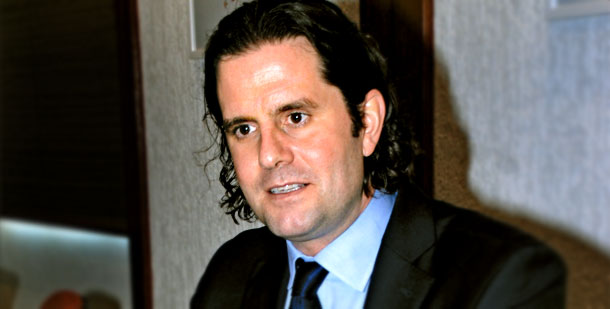
    Flying Machine has announced the signing of Arjun Kapoor as its new brand ambassador. A print and television campaign is being launched featuring Arjun Kapoor showcasing the new Spring Summer’14 collection.


    “Catering to the fashion needs of a generation looking for instant gratification, the brand’s promise of “New Cool” resonates very strongly with its young fashion patrons,” said Alok Dubey, COO Arvind Lifestyle Brands Ltd.


    Commenting on the partnership with Arjun Kapoor, Dubey said, “Flying Machine is the vanguard of youth trends and hence our next brand ambassador also had to be someone who’s seen and believed to be the new cool. With noteworthy performances behind him, quite a few big releases ahead and his zeal and commitment to be in the big league, we believe Arjun Kapoor is all set to be “The New Cool” not just in the  film industry but with youth at large. He’s leading a cultural shift where bold new subjects are being taken to the target audience and a new youth culture is being defined. He’s definitely a youth icon with a real persona and that is a glove-fit for Flying Machine, a cult icon itself. ”


  • What makes the Pencil so Pure?


    By Shephali Bhatt


    If ‘popular’ is the operative word for a Cannes Lion, ‘pure’ would perhaps be the most apt for a D&AD pencil. Among the most revered awards in advertising, the London-based show has a rigorous judging process that sets it apart. The winning categories are In Book (entries that find a place in the D&AD Annual, and an equivalent of Bronze), Nomination (Silver), Yellow Pencil (Gold) and finally Black Pencil (an equivalent of the coveted Grand Prix.)


    The judging for D&AD 2014 was held at Kensington Olympia in London over a period of one week starting 24 March. With the award entries spread out in the Olympia’s grand hall, it certainly makes a case for the most beautiful judging room, rivalling even the Palais at Cannes with its views of the Mediterranean.


    Unlike other shows where agencies enter a lot of work across categories to raise the odds of winning, here they only send what they think is exceptional. Part of it can be attributed to the high participation fees, says Sue Daun, executive creative director at Interbrand London and one of the jury members in the Branding category this year. But more importantly, it’s because everyone views the work basis its excellence.


    What’s encouraging is how the jurors don’t run a good piece of work down just because it wasn’t entered correctly. If they feel it’s deserving of some recognition, they go to the extent of asking if it’s also been submitted to the right category and if not, they ask if it can be. “There’s no agenda except to bring out the best work,” says Tista Sen, JWT India’s NCD and a D&AD 2014 jury member for Outdoor. Nobody tries to find which agency has created a particular piece or make an agenda of running down advertising from rival shops or networks. That whatever wins will be a reflection of the judges’ calibre is what drives them. “We should be able to defend the work we vote for,” is the mindset the judges have here which is unheard of at many other shows around the world which operate on a ‘more the merrier’ philosophy when it comes to trophies.


    At the same time, the criteria for choosing the best work are extremely stringent. So, phrases like ‘I like it’ or ‘I just don’t like it’ don’t cut ice with ‘Craft for Advertising’ jury foreman Louise Sloper who is also the head of design at BETC London. You will have to be able to answer ‘what bits did you like in particular’. The judges are tough but evidently fair. So John Mescall, Mc-Cann Melbourne’s ECD (Yes, of the Dumb Ways To Die fame) can solemnly ask to “kill the sound” of an entry for trailbytimeline.org.nz because the jury needs to experience what it is like to visit the actual website which doesn’t have a supporting voice-over.


    Alcohol brands are in for a hard time with the jury across categories since most innovations are suspected to have been “done before.” So is the case with any PSAs that come their way. Rob Reilly, jury foreman of Integrated and Earned Media and the global creative chairman of McCann Worldgroup, opines it’s easy to create a great idea for an NGO and convince them to buy it. It’s a challenge to do that for great brands and he for one has more respect for the latter while judging.


    Some judges did complain of too many entries trying too hard and becoming complicated in the process. The judges unanimously believe that to make something simple is a lot harder. What dominates the entire judging process is an aura of positivism where judges are immersed in bringing out the best work ahead and everyone is allowed to have their say, senior or rookie (which many complain is absent from other award shows). If implemented well, some of these ideas can raise the standards of the gong fests back home. Something that we are in dire need of.


    Source:The Economic Times

    Copyright © 2014, Bennett, Coleman & Co. Ltd. All Rights Reserved

    Licensed to republish

     

  • Publicis bags Ambuja Cement creative mandate

    By a correspondent


    Ambuja Cement has announced that they have entrusted the creative duties for brand Ambuja to Publicis.


    Vivek Deshpande- Head Branding, Ambuja Cements said, “We have very ambitious plans for our brand – we wanted an agency who would partner us at every step of the way forward. In Publicis we found both the strategic and creative quality that gives us confidence. We look forward to this partnership.”


    Nakul Chopra

    Nakul Chopra, CEO Publicis South Asia added, “Ambuja is an iconic brand; we feel privileged to partner them in taking their brand to the next level. That this opportunity will allow for media neutral ideas which could straddle traditional and non-traditional media – makes it even more exciting.”


    Partha Sinha
    Bobby Pawar

    In a joint statement, Partha Sinha and Bobby Pawar, Directors Publicis South Asia said, “We are delighted with this opportunity – we have some ambitious ideas for the brand and are currently in the middle of executing them. It’s a fantastic brand team to work with and we are confident of delivering big on this brand.”


  • BCCL wins INMA Global Innovation Awards

    By A Correspondent


    Bennett, Coleman and Co Ltd was among the four regional winners in the International News Media Association (INMA) Global Innovation Awards announced in Dallas,USA. The competition rewards excellence in media company innovation programmes. A global winner will be announced on May 13 at the INMA World Congress in San Francisco.


    The other regional Global Innovation Awards recipients were Gannett, US; Fairfax Media, Australia and MittMedia, Sweden.


    The Best in South Asia accolade went to BCCL for its entry on “Transforming Print Media Sales Culture Through Technology.” The sales culture transformation programme looked at ending silo selling, more efficient pricing, driving agility and creating a climate of accountability, and data-driven selling. The programme included intense effort at changing the internal culture to one that encourages efficiency, agility, and accountability.


    From these four regional winners, a global award recipient will be unveiled at the closing dinner of the INMA World Congress May 13 in San Francisco. Regional winners’ innovation programmes will be presented at the World Congress and awards formally presented.


    The INMA Global Innovation Awards are designed to shine a spotlight on the fast-emerging structured innovation programmes of media companies seeking new foundations in transformational times.


    “With this new competition, INMA wants to reward the people, programmes, and processes behind the emerging innovation culture in the media industry – the foundations upon which novel ideas are being launched at a rapid rate,” said Earl J Wilkinson, executive director and CEO of INMA. “We want to reward media companies that are mastering the art of innovating routinely.”


  • AAAI announces the winners of Young Lions Competitions

    By a correspondent


    The Advertising Agencies Association of India (AAAI) has announced the winners of its Young Lions Competitions in Creative (Print), Media and Marketers categories.


    The winning teams included: Young Lions Creative Competition that was won by Gaurav Joshi & Siddharth Joglekar from Publicis India, Mumbai for “Come forward and help crime and accident victims”; Young Lions Media Competition that was won by Chinmay Kelkar & Rohan Sood from MediaCom, Mumbai for “Don’t bribe and kill the nation”; and Young Lions Marketers Competition that was won by Samyukta Iyer & Janvi Parekh from Hindustan Unilever, Mumbai for “A premium brand enters a traditional Indian category of hair oil but Indians are not willing to pay the premium. What Ad strategy should they use?”


    The jury for Creative Competition comprised Josy Paul (Chairman and National Creative Director, BBDO India), K S Chakravarthy (National Creative Director, FCB Ulka), Bobby Pawar (Director, Chief Creative Officer – South Asia, Publicis India) in Phase-I and Haresh Moorjani (Creative Director, FCB Ulka), Bobby Pawar (Director, Chief Creative Officer – South Asia, Publicis India), Nandan Srinath (Director-Response, Bennett, Coleman & Co. Ltd) and Vinod Nair (Managing Director, Network Advertising) in Phase-II.


    For Media, the jury comprised Dinesh Vyas (General Manager, India-Planning, MEC), Anand Chakravarthy (Head-West, Maxus), Sujata Dwibedy (Vice President, Starcom India), Deepak Netram (Vice President, Lodestar UM) in the Phase-I and Sam Balsara (Chairman & Managing Director, Madison Communications), Jasmin Sohrabji (Managing Director, Radeus Advertising) in the final phase.


    The jury of Marketers Competition comprised Ajay Kakar (Chief Marketing Officer-Financial Services, Aditya Birla Group), Deepali Naair (Chief Marketing Officer, Mahindra Holidays & Resorts), Rohit Srivastava (Core Consulting and National Head of Strategic Planning, Contract Advertising), Nandan Srinath (Director-Response, Bennett, Coleman & Co. Ltd), Vinod Nair (Managing Director, Network Advertising) and the Marketers competition was conducted under the leadership of Dr M G Parameswaran, Advisor, FCB Ulka.


    These competitions conducted by AAAI, supported by The Times Group, had invited participation of young creative people, under 28 years of age, from Advertising Agencies (for Creative) young media professionals, under 28 years of age, from Advertising/Media Agencies (for Media) and young marketing professionals, under 30 years of age, from client organisations/Advertisers (for Marketers). In all 250 entries were received for these competitions.


    The winning teams will be flying to France in the month of June this year to participate in the prestigious Young Lions Competitions in Cannes Lions.


  • What Carter Mr Murray has in store for FCB?


    By Ravi Balakrishnan


    Halfway through this interview, while talking about how various branches of his agency can help each other get better, Carter Murray, worldwide CEO of FCB, pauses after mentioning the words “cross fertilize.” “Don’t use that,” he says.


    “It’s completely wanky, corporate rubbishspeak. I can’t stand that stuff.” He launches into a gleeful account of an American agency (not his own) that runs a game of Buzzword Bingo on the flipside of their new business documents, filling them “with all the corporate garbage that people talk.”


    The clients begin to cross out words that have made it to the presentations from other agencies and when they have a line or a full house, they shout Bingo. Whoever catches the largest number of buzzwords lands a bottle of champagne.


    Asked how he gets by as CEO with such distaste for industry jargon, Mr Murray says, “We are in the business of understanding people and advising clients on how to connect with them. I find it strange that we hide behind corporate lingo.” Mr Murray makes for an unusual agency CEO.


    At 38, he’s one of the youngest. Perhaps there is something studied or deliberate about his casual disdain for the tropes so beloved of business heads. But it still sets him apart from his contemporaries many of whom appear to find comfort and meaning in buzzwords. Besides, his approach seems to be working for the agency.


    In the seven months since he joined FCB, it’s jettisoned the ‘Draft’ prefix to its name, (added after a merger eight years ago), opting instead to go with a combination of FCB and the name of a local partner, city or iconic creative leader (the New York operations are FCB Garfinkel after its creative chief Lee Garfinkel).


    On the business front, it’s bagged the global account for Levi’s and according to Mr Murray won four of its five pitches in the West Coast of America. FCB’s even earned a grudging nod of approval from advertising blogs that have spent the last few years savaging the agency and its campaigns.


    The job marks a significant shift for Mr Murray, formerly CEO of Y&R’s North America operations. He says, “I realised it was my last three jobs put together; one of those rare opportunities that doesn’t come along very often.”


    The last few months have been “inspiring, humbling, fun, exhausting… probably every emotion you can imagine.” They’ve also been refreshingly free of the resentment newcomers at the topmost position are greeted with by old hands. He says, “Compared to others in the Top 10, we don’t have six or seven dominant global clients. Whilst similar in size to Leo Burnett or Young & Rubicam, majority of our business is intrinsically local and so I didn’t have to face the potential tensions that may exist in other networks.”


    The agency had a chequered run in its years as Draft FCB. There were layoffs and severed relationships with large longstanding clients like SC Johnson. It’s tempting to think the name change is an attempt to get rid of negative karma. According to Mr Murray though, it is in consonance with the advice he’d give clients. “Both Draft and FCB have a storied heritage, but FCB’s heritage is the third oldest in the world. It wasn’t as if we invented a new name but distilled down an old one.”


    Prominent on the agenda as is so often the case with a new CEO is to take the agency to “the next level.” Which in this case means a greater focus on new business. Mr Murray says, “We must do great work for existing clients but to feel part of a winning team and have positive momentum, you need new clients.” Winning Levi’s comes as quite an affirmation.


    Mr Murray observes, “We built a model to the client’s needs rather than fitting their needs into our model.” It involved embracing a relationship with The House, a global network of independents put together by former Publicis COO Richard Pinder, an old associate of Mr Murray from his stints with Publicis and Leo Burnett. Tied closely to winning and keeping clients is talent. In the last six months there have been promotions from within, fresh hires and a concerted effort to encourage top performers.


    He says, “The main thing is to have the most talented people feeling motivated and enthused. To set a standard whereby those not at that level either rise to the occasion or…”, he trails off ominously. New CEOs have been known to embrace the awards agenda as a quick way to get noticed. FCB scored big last year with a campaign from Auckland by the SPCA and Mini which put dogs behind the steering wheel of a car.


    But while Mr Murray considers awards a proof of skill, he’s clear that clients are more important: “Winning a bronze for the Window Washers of Mumbai is nice but it’s not going to transform the agency’s destiny. If you can win an award that demonstrates real innovation in thinking and creativity for a major client, or a campaign that changes the way we think about ourselves and our culture then it’s a good thing.”


    A recent instance from FCB Peru is for the UTEC college where a billboard synthesises atmospheric humidity into water. He’s also pleased with the ‘How Do You KFC’ campaign from Chicago that encourages people to share their unique experiences with the popular fast food franchise. It’s a risky business, since campaigns that invite people to write in invariably draw out competitors, trolls and the disgruntled.


    Mr Murray believes, “The idea that someone can control a brand in its entirety is old fashioned. If you don’t think of the larger voice of the brand, it can only be determined through paid media. We can never control what people are going to say, but certainly try to have an idea that can get those who want to talk about you positively doing it on a more vocal and exponentially powerful stage.”


    Source:The Economic Times

    Copyright © 2014, Bennett, Coleman & Co. Ltd. All Rights Reserved

    Licensed to republish


  • Lowe Lintas shines at APAC Effie 2014, second runner-up in Agency of the Year

    By A Correspondent


    Lowe Lintas Mumbai bagged four metals at the APAC Effie 2014 which had  its Awards Gala on April 3. A total of 56 awards – 12 Golds, 26 Silvers and 18 Bronzes were presented. Indian entries bagged six awards.


    Australia, China and New Zealand are ranked the top 3 countries with the highest number of winners. Also announced at the Awards Gala were the APAC Effie 2014 Agency of the Year and Agency Network of the Year Awards. Colenso BBDO/Proximity New Zealand was awarded Agency of the Year Awards, with Lowe Lintas & Partners Mumbai and Whybin\TBWA Sydney following closely in the second and third positions respectively.


    BBDO Worldwide was named the Agency Network of the Year, picking up a total of2 Golds, 7 Silvers and 6 Bronzes from its agencies in the region. In the running were Ogilvy & Mather and Lowe & Partners.


    Amidst the celebration in marketing effectiveness, the Awards Gala was also filled with joy and laughter brought by Pam Oei, a veteran actor and comedian who was the host and entertainer for the evening.


    “We were impressed by the volume of outstanding entries from the region. The strong participation from the industry is extremely encouraging for our first year,” commented Connie Chan, the 2014 Awards Chairman. “The Effies represents excellence in marketing effectiveness and winning this highly-coveted award is not easy.  Huge congratulations to all winners for the great work!”


    APAC Effie Awards is organised by Confederation of Asian Advertising Agency Associations (CAAAA) and Tenasia Group.  Said Anthony Kang, Chairman of CAAAA and Chairman of the APAC Effie Committee, “Effie Awards is a global symbol of marketing effectiveness and winning an APAC Effie is a huge testament that the work is one of the best in the region. It is more than just another great idea as it delivers outstanding results.”


    The Gold, Silver, Bronze winners and Finalists will be included in the Effie Effectiveness Index (http://www.effieindex.com), a global ranking which identifies and ranks the most effective marketers, brands by analysing finalist and winner data from worldwide Effie competitions.


    The full winners list can be viewed at the APAC Effie website – http://www.apaceffie.com.


  • WPP may buy Temple at over Rs 200 cr

    By Pritha Mitra Dasgupta


    WPP, the world’s largest advertising company, is set to buy Bengaluru-based creative agency Temple Advertising, according to people close to the development in the two agencies. They said the deal, which could be valued at over Rs 200 crore, could be signed as early as April 15.


    “WPP is currently engaged in 18 to 20 different acquisitions across the Asia-Pacific region and Temple Advertising is definitely one of them,” said a senior WPP executive. “Temple will be merged with Bates CHI & Partners in a bid to pull the agency out of the slump.”


    Martin Sorrell

    Martin Sorrell, founder and CEO at WPP, refused comment on the proposed acquisition, saying, “We don’t comment on conjectures.” Emails to Varagur Srikanth, Manmohan Anchan and Vidur Vohra, all directors at Temple Advertising, did not elicit any response till late on Sunday.


    Temple Advertising was launched by Srikanth, a former employee of Ogilvy & Mather, in 2003 with a single account, Scullers. The agency, which now has over Rs 10 crore of billings, works for some of the best-known brands in India and abroad including Wipro, Reliance Trends, TVS, Indigo Nation, Manchester United and Scullers.


    “If final talks go through on April 15 or 16, the entire process of merger and integration with Bates will be over by July,” said a person with the knowledge of the deal. Following the merger with Bates, the current directors of Temple will spearhead the merged entity.


    “The integration will be primarily at the creative department level,” said the person quoted above. This person also disclosed that Sagar Mahabaleshwarkar, national creative director at Bates, is looking to move on. Mahabaleshwarkar refused to speak on the matter.


    A mail to David Mayo, CEO at Bates CHI & Partners Asia, also did not receive an reply. Several WPP India agency heads said that Mayo has been running Bates India from Singapore ever since Sanjay Thapar, group CEO at Bates CHI & Partners, quit the agency earlier this year.


    “Bates is in a rather laggard state right now. It doesn’t have a proper management, talent, clients and no significant work has come out of the agency in the recent past,” said one of the agency heads at WPP India. Following the merger, both agencies are expected to go through a name change to reflect the new ownership.


    Source:The Economic Times

    Copyright © 2014, Bennett, Coleman & Co. Ltd. All Rights Reserved

    Licensed to republish

     

  • Ads v/s Ads


    By Delshad Irani


    In an age of outrage, nothing – no person, no government, no company, no brand, is immune. Not even advertising, the one business we all – child, millennial or over-40, man or woman, regular Warhol or famous welder – fancy ourselves experts. (If you’ve sat mum during ad breaks, then count yourself in a rare minority and continue reading.)


    Now, combine an innate public curiosity, and burning desire to contribute your two-bits on any 30-second spot, with the power advertising wields over the masses, which has been both underrated and overestimated by the legions of adbeings as well as anti-advertising guerrillas. It’s only natural then that advertising has us bound in common love, hate or dedicated indifference.


    Advertising has been hit with anti-ad campaigns by outsiders – culture jammers like Adbusters and artists such as the influential British graffiti master, Banksy, among others of the creative ilk and intellectual classes. New York based artist Steve Lambert’s projects involve replacing all outdoor advertising with art.


    Practically everybody, from outraging Twitter hordes to concerned politicians and parents, has hauled up advertising for its excesses and accused it of rewiring our brains and turning us in to shopper-drones. And even as online ads skyrocket, Adblock’s crowdsourcing a war chest for its campaign, which includes a Times Square billboard, a full-page ad in the NY Times and a telly commercial to advertise its product, one that eliminates all online ads.


    In fact people have jumped through fiery hoops to make sure their anti-advertising/consumerism campaigns see the light of day. For instance, Kalle Lasn, founder of Adbusters, tells us the campaign to advertise ‘Buy Nothing Day’, a day when people forsake a trip to the mall and cut up credit cards, was one of their most challenging and rewarding campaigns. It turned in to a hard fought legal battle against TV stations which refused to air their 30-seconder.


    Says Lasn, “People, especially young people are uneasy about advertising. Why at a time of austerity do we need a $1 trillion industry telling us to buy more?” The objective of anti-advertising, he says, is to make people more critical of big advertising because we don’t think there’s a downside to it continually telling consumers you can be happier if you buy more. “Advertising needs to become what it was many years ago.” That is ‘Here’s A Good Bargain’, ‘Here’s What This Product Can do’, turn around and go back to the days before Mad Men were revered, ads were more functional, cheaper and not an end in itself.


    To add a dash of insult to injury, advertising’s faults and trending obsessions have been criticised and mocked by insiders too. From advertising insurgents like Alex Bogusky, who, in a previous interview, had said “I follow in the footsteps of Howard Gossage” to agencies and brands who have a bit of fun with a satirical twist at advertising’s expense. Bogusky, like the visionary ad man Gossage did in the 50s and 60s, now uses his creative chops for conscience advertising.


    Of course, the famous B in the agency Crispin Porter + Bogusky, who was the blue-eyed boy of global advertising, isn’t a member of the consumer liberation front exactly. He’s just an adman cum consumer advocate, whose campaigns like ‘Real Bears’ for the Center for Science in the Public Interest pulled up all Big Soda marketing in the US. He said, while some quarters of advertising is getting worse and more irresponsible, the best is getting better and empowering a new generation of social entrepreneur and consumer/citizen.


    Providing empowerment in its own way, another celebrated creative David Droga’s agency Droga5, one of the most popular on the worldblock right now, recently launched a campaign called “If We Made It” for Newcastle Brown Ale. The campaign takes, for lack of a more precise term, a piss out of “Mega Huge Game Day Ads” and over-the-top pricey spots which run during the Super Bowl. (According to reports, Anheuser-Busch InBev paid $30 million for 4 minutes of airtime.) The Bowl, of course, is the annual American-football feeding frenzy which turns even the most seasoned marketer in to a wired 13-year-old who just got retweeted by @justinbieber.


    ‘If We Made It’ currently is the most applause-worthy Super Bowl campaign and it’s not even an official half-time act. Says Quinn Kilbury, brand director for Newcastle Brown Ale, “This isn’t just some “banned from the Big Game” ambush spot. We’ve created a fully integrated program that tells a story and is in line with the rest of the No Bollocks campaign: fun, witty, funny, timely, no-BS. We genuinely believe we can “win” Big Game marketing with this strategy, and without spending millions of dollars for a one-and-done 30-second spot. Our goal is to win the social conversation, not get the highest score on a TV spot.”


    He tells us creating great beer is something they take seriously, their advertising they don’t take so seriously. “We have fun with it, and we acknowledge that our fans are smart enough to see through the bollocks that are so common in a lot of other advertising,” says Kilbury. Newcastle Brown Ale’s two-year old ‘No Bollocks’ campaign is a more potent version of Sprite’s ‘No Bakwas’, which has spoofed ad plots in its quirky commercials featuring the smarter underdog who wins.


    Droga’s agency, however, is not the only one that’s taken a shot at advertising’s fixations du jour. Vancouver based Rethink created a parody on the industry’s fascination with awards and 3D printing. (They simply printed awards and gave themselves the title of the most awarded agency in the world.) Another Canadian shop, Toronto based John St. have mastered the art of satires on advertising themes. Although created purely to publicise the agency, the parodies are seriously entertaining views on what gets an ad guy and marketer all hopped up.


    And no, it’s not Red Bull, just millions in viral hits, cat videos and pranks on unsuspecting viewers. So what do the makers of these ad parody hits think of the real ads against ads? Angus Tucker, partner & executive creative director of John St., believes groups questioning advertisers’ agendas are important. “I hate bad work as much as they do,” he says. “But I don’t hate the industry as a whole.


    I like the quote “everyone has a problem with advertising until they have to sell something.” I admire the agencies that try to do good, intelligent original work. And I don’t have an issue with advertising as long as it’s respectful and smart. And now that consumers can choose to ignore or engage with work, it makes it very important that your work is relevant.”


    The truth is who doesn’t like or want to share a truly great ad, or even an anti-ad ad, when you see one? One that piques interest or puts a smile on your face or makes you type LOL or shocks and stirs you to think of world hunger before you bite a chunk off of a whopper. Whether you dole out the dollars, rupees or rubles, though, is entirely up to you.


    WHY SO SERIOUS, MISTER?

    Soon after John St. released a film advertising the agency’s status as the world’s premier and only dedicated cat-advertising agency, they got a call from a television network in Los Angeles, which wanted to do a reality show about the agency.


    When the agency launched a publicity film touting the Toronto-based shop’s ability to employ armies of the best professional clickers globally, including India, and guarantee viral success, they had over 3000 people attempt to buy their “Buyral” service. And more recently, right after their latest release ExFEARiential, a film that highlight’s John St.’s expertise in heart-attack inducing publicity stunts, a member of the viewing public sent them a death threat. Of course, the TV Network, the 3000 buyers and the deranged viewer had to be told it was all a joke and the job of these films was quite simply, to advertise the agency.


    The films were the agency’s attempt to break monotony at the annual Agency of the Year show, which they won this year. Generally, ad firms put together a sizzle reel of their best campaigns of the year. “It’s always the same thing. Agencies cut together the best bits from the year to a good song,” says Angus Tucker, who with his fellow partner and executive creative director, Stephen Jurisic, created these industry hits.


    “So four years ago, we just decided to do a case video instead — of an 8-year-old’s birthday party. People loved it. They thought it was really funny, but they also loved that we were taking a crack at the proliferation of case videos that is now almost a necessity for any award show entry.” The first video was called ‘Pink Ponies’. But ever since, they have tried to make some sort of comment about the industry that people in marketing and advertising will recognise as true.


    “So with Catvertising, while everyone was saying that advertising was dead, we thought it would be funny to say that “Yeah! We agree! And we’re betting the farm on cat videos!”, says Tucker. ‘Buyral’ was poking at the inflated numbers that you could get for online videos by buying or seeding views. And ‘Exfeariential’ was taking a crack at the popular trend of ‘Prankvertising’.


    Pepsi, Carlsberg, Heineken and LG are just a few who have indulged in prank marketing. But it’s, in fact, far from a trend, really, with agencies such as Thinkmodo specialising in viral video marketing. Thinkmodo’s latest stunt which did indeed “go viral” is called ‘Devil Baby’, it’ll put the fear of God in to the most committed atheist even.


    So did the industry respond to John St.’s humorous take on advertising tropes with bouquets or boos? It has been almost universally appreciated. They got this note (after releasing ‘Buyral’) from one of their favourite agencies, Barton F. Graf 9000: “Gentlemen. Thank you for injecting some fun into a business that’s gotten far too serious.” Their clients think the videos are hilarious and they almost expect to see a new one every year. They have generated new business interest; the agency has landed client meetings they might not have had otherwise. And yes, John St. has been inundated with resumes from people keen to work there.


    Indeed, creating these satires is a hoot, but, says Tucker, “the focus is always on the work we do for our clients. But it’s not like they’re mutually exclusive. Creativity begets creativity. Ever since we started doing these films, we’ve gotten better and better as an agency. I think maybe because clients see some of these films and go ‘I wonder what would happen if we gave them some more rope’ or ‘maybe we just go with our gut on this rather than research it to death.’” And, Tucker confesses, the traffic that they generate to the agency’s site when they do these films is way bigger than when they win a Lion at Cannes.


    Source:The Economic Times

    Copyright © 2014, Bennett, Coleman & Co. Ltd. All Rights Reserved

    Licensed to republish

     

  • Aim High bags 11 new PR clients

    By a correspondent


    PR firm Aim High Consulting (AHC) has announced 11 new client wins as they get into the fiscal 2014-2015. The wins include PropTiger, Yepme and MySmartPrice in the consumer internet and eCommerce space. AHC’s other wins are in sectors like NBFC, realty, IT, education and, wealth management.


    N Ravi Shankar, CEO, Aim High Consulting said, “We have some of India’s most exciting companies onboard for the new fiscal – around 50 of them, including the 11 new ones. The start-up ecosystem in India is evolving as much as the media that caters to this ecosystem; and we have managed to keep pace with both. It is with this confidence that these companies have decided to engage with us. PR for start-ups and emerging businesses has been our core strength and we are confident of growing the new clients that have come into our arboretum.”


  • Datsun & TBWA\India create a GO moment

    By a correspondent


    Last month, Nissan re-launched the iconic brand, Datsun, delivering its first new car to new owners in Delhi, Chennai and Kolkata.


    The Datsun GO is positioned as the ideal option for the burgeoning middle class who dream of having their own car. The launch is supported by print, digital activation, on-the-ground events, and below-the-line activities.


    Additionally, the campaign was preceded by a city roadshow that gave Datsun India the opportunity to engage with potential customers and familiarize them with the product more closely.


    Datsun GO is an innovative product equipped with the latest technologies, including an advanced powerful 1.2-litre petrol engine that delivers top class fuel economy. Its one-class-above body size is in a much more affordable price range, and this makes the Datsun GO a model that can effectively compete in India’s most competitive and voluminous segment of passenger cars.


    The strategy and communication, developed by TBWA\India, was born from the innate need of people who are looking for a superior first car experience. The Datsun experience welcomes first-time car buyers to the ‘Big League’ with more features, more power, and world-class after-sales service. It ensures that the buyer is welcomed into the automotive family and taken care of with as much importance as any other car buyer.


    “The original Datsun brand contributed to mass mobility in Japan and other countries where people fulfilled their dreams of becoming car owners,” said Kenichiro Yomura, President at Nissan India Operations. “Our aspiration is to help customers fulfill their dreams with the Datsun brand here in India as well.”


    Commenting further on the campaign, Nirmalya Sen, President of Advertising at TBWA\India Group, said, “The first car is special. The Datsun experience is designed to make it a lot more memorable. With a category-redefining car and a car buying and owning experience like never before, it leaves you with the feeling of having entered the ‘Big League’ even if you have just entered the category. The campaign attempts to bring this feeling alive through the eyes of an Indian family.”


  • Cheil, Enormous Brands co-create TVC for Galaxy Grand Neo

    By a correspondent


    The era of creative collaborations may well have made a landfall on the Indian advertising industry. Cheil India’s latest television commercial for Samsung’s Galaxy Grand Neo in partnership with Enormous Brands sets in a refreshing trend on creative collaborations.


    The seamless co-creation both at a strategic and creative level is seen in the Galaxy Grand Neo TVC where it takes the thought ‘Make everyday Grand’ to yet another level. This is ably demonstrated through the surreal space that showcases the remarkable features of the phone through special effects, the experiences of a young couple whether at a restaurant or enjoying an almost live music performance, all to tell the story of how one can be ready for a life less ordinary to ‘Make everyday Grand!’


    Nima DT Namchu

    Nima DT Namchu, Chief Creative Officer, Cheil Worldwide SW Asia said of the collaborative creative campaign, “While the news of this collaboration might raise some eyebrows, collaborating with the best talent available at a given point in time is one of the ways to deliver the best possible product for our clients. And as agencies, we have all been doing it for decades – with directors, painters, musicians, sculptors… Of course, working with another creative agency is relatively a new thing.”


    Ashish Khazanchi

    Ashish Khazanchi, Managing Partner, Enormous Brands shared, “Advertising is always co-created. Be it client – agency, agency – filmmaker or even a creative and media agency collaboration. However, today, with the surge in numbers of non-network pedigreed creative agencies, alliances like this have not just become possible but also desirable. They simply bring a larger talent pool to the table.”


    Kundan Joshee

    According to Kundan Joshee, Sr. Vice President, Cheil Worldwide SW Asia, “Samsung’s Galaxy Grand is all about making the everyday grand. With the Galaxy Grand Neo we decided to take on a new way to look at this opportunity; we do believe we’ve succeeded.”