Category: ADVERTISING

  • Rohit Samarth to head experential at DDB MudraMax

    By A Correspondent


    Rohit Samarth

    Rohit Samarth has been elevated to Head – DDB MudraMax, Experiential with effect from January 1. He will report to Mandeep Malhotra, President, DDB MudraMax.


    Mr Samarth had joined DDB MudraMax in April 2012 as Senior Vice President, Terra, its rural marketing agency, in April 2012. In his new role, he will be incharge of the agency’s experiential campaigns, nationally.


    Meanwhile, Alvin D’souza, Subhashish Sarkar and Amit Singh, who have been elevated to Head, Experiential – West, North and East, respectively, will be working under the guidance of Rohit.


    Mandeep Malhotra

    Commenting on this new appointment, Mr Malhotra said, “Rohit has shown passion, hunger and discipline in his current role. Will be looking forward for him making all three infectious in his extended team.”


    Commenting on his elevation, Mr Samarth said: “It is my sincere belief that DDB Mudra Max’s experiential division, which is already a great force to reckon with in the experiential business, will grow to be one of the most competent and respected experiential communication solutions agencies over the next two years.”


  • 94.3 Radio One hikes ad rates by 20%

    By A Correspondent


    Radio One, the joint venture between Next Radio Ltd and BBC Worldwide, which runs 7 differentiated formats in the metros has increased its advertising rates by 20 percent across markets effective February 1, 2014.


    Said Vineet Singh Hukmani, MD and CEO Radio One: “In the last two years, our ‘product-first’ approach has ensured unparalled engagement of our listeners and therefore huge value to our advertisers. Complementing on-air content with simulcast digital conversations with the same TG does cost us. However, advertisers gain most as a result of this continuous upgradation as they can get access to supremely engaged audiences only on Radio One.”


    Radio One was the first station to begin ‘Online rebroadcast’ of its international Delhi and Mumbai stations. “In the last year we have begun to offer noticeable engagement in the online streaming audience and continuous up gradation of this service is the need of the hour and we are willing to make this investment for our advertisers’  added Vineet.


    Radio One runs international stations in Delhi and Mumbai, both of which have an online ‘rebroadcast’. The format for Bengaluru and Pune is upmarket Bollywood, whereas Ahmedabad and Kolkata are Hindi retro. Chennai, on the other hand, is a 100% request station. “We are happy that in Q3, all our seven stations were EBIDTA positive and this is the best proof of our strategy based on continuous product up-gradation,” added Mr Hukmani.


  • Lowe Lintas, HUL win big at Effie 2013


    By Shobhana Nair


    It’s a fraternity which loves surprises. And the thousand-and-a-half-odd members of India’s advertising and marketing industry witnessed just that on Friday evening. The large contingent from Ogilvy & Mather India has made a habit out of winning big at the award events it participates in.  But the crew from Lowe Lintas ensured that the adlanders in black (as Ogilvy staffers always turn up at trade events) don’t experience their fifth consecutive win at the Effie, the annual advertising effectiveness awards conducted by the Advertising Club. Lowe won the coveted Effie Agency of the Year 2013 outwitting Ogilvy & Mather by just 35 points in the final tally. “This is one night of fun and party for 2500 bucks. We can’t have a cheaper party than this,” chuckled R Balki, Chairman and Chief Creative Officer at Lowe Lintas while celebrating his team’s victory.


    But it’s not that Pandey’s O&M cut a sorry figure. Other than scoring 130 points as compared to Lowe’s 165, Ogilvy also secured the Grand Effie for its Lifebuoy Roti campaign for Hindustan Unilever. Said Pandey who is Executive Chairman and. Creative Director, South Asia of the agency: “We have come first so many times and it feels great that Lowe is enjoying their win. Of course, being second is not a great feeling. You need to try harder.” The Aadat Campaign for Cadbury’s Bournvita and the Ear Muffs activation and Made for You campaign for Vodafone helped Ogilvy win its three golds.


    The other three agencies in the Top 5 were McCann Worldgroup, JWT and Publicis Communications at 60, 40 and 35 points respectively. Nakul Chopra, CEO, South Asia at Publicis admitted his agency could have done better but he’s bullish on the year ahead. “I am not happy and I think the kind of work that we will do in 2014 is what I am excited about. I think in the years to come Publicis is going to be a brand which will be known for quality work,” he said.


    From the client side, Hindustan Lever bagged the ‘Effie Client of the year’ after the total points came to 95. The campaigns for its brands Kissan and Lifebuoy were clear favourites of both the jury and the crowds at the awards. “Well, I think these awards are for effectiveness and we are quite delighted and proud to have received these awards,” said Hemant Bakshi, Executive Director – Home & Personal Care of Hindustan Unilever (HUL) and Chairman, Indian Society of Advertisers (ISA).


    Cadbury India which emerged the Client of the Year in 2011 and 2012 came second with 55 points.  “It is always a joy to win a few awards because it is recognition by the industry of the work that we have done,” said V Chandrmouli, Executive Director, Chocolates and Biscuits, Cadbury India. “Over the last few years, we have been getting recognition which pushes us to do better work,” he continue as Siddhartha Mukherjee, Director – Chocolate Category & Media added: “We have had a long-standing partnership with our agencies like Contract and Ogilvy who have produced excellent work over the years. And to get any award is a great reward to that partnership.”


    This year, the number of entries leapfrogged 20 per cent to 419 from 52 agencies participated while 1200 tickets were sold for the awards night.  On his impressions as the curtains came down on Effie 2013, Ajay Kakar, Chief Marketing Officer – Financial Services, Aditya Birla Group who was Chairperson of the Effie 2013 Committee said:  “Effie has grown in participation therefore in stature and respect which is gratifying. This is an awards show which is beyond question and controversy. Both agency and client happily participate at various stages.”


    Underscoring the role of the advertising effectiveness awards, K V Sridhar, Chief Creative Officer India subcontinent at Leo Burnett said: “Creativity will not matter without effectiveness and effectiveness doesn’t exist without creativity. The combination is what really works. This is why Effie is the most coveted award in India. Also, the fact is that there are no controversies attached to it.”


    Delighted: Hemant Bakshi


    Given the importance of advertising and promotion for its brands, it’s not surprising that Hindustan Unilever was crowned ‘Client of the Year’ at Effie 2013.  A quick Q&A with Hemant Bakshi, Executive Director – Home & Personal Care of Hindustan Unilever (HUL) on the win.


    How important are awards like the Effie for an organisation like Hindustan Unilever?

    Well, these awards are for effectiveness and we are quite delighted. We are proud to have received these awards.


    There’s this big debate about creativity versus effectiveness? What matters to you more?

    Well, it is good to know that we have created value through what we do in marketing. We acknowledge the external appreciation that we’ve got.


    And what are the goals you have set yourself for 2014?

    Clearly, we have to sustain what we achieved in 2013.


    In advertising, you are supposed to be more creative to be effective: R Balki


    If there was joy in breaking the winning run of Ogilvy at the Effie, Lowe Lintas & Partners’ R Balki was understating it.  A quick Q&A with the agency’s celebrated Chairman and Chief Creative Officer.


    How important are awards like the Effie you?

    What is important is to do the kind of work that you want do for the clients. Being able to do that right through the year and being satisfied with your own. Award or no award can’t increase or decrease the value of your work. You should know the value of your work before you have won or lost.


    There’s this big debate about creativity versus effectiveness? What matters to you more?

    I don’t know the difference between these two. In advertising, you are supposed to be more creative to be effective. Obviously, there’s connect but both are passé words.


    Apart from your work, which ads have managed to impress you?

    I love Ogilvy’s work. The Roti activation campaign for Lifebuoy was good. In fact I am a fan of their work.


  • ‘Digital First’ is theme of IAMAI’s Digital Summit

    By A Correspondent


    As a policy, MxMIndia does not link editorial coverage to business relationships. So even though we have concerns on the Internet and Mobile Association of India [IAMAI] policies on media partnerships for its events, our coverage of the trade body’s reports and events continues.


    And now that we are done with the disclaimer, here’s the main info: the IAMAI’s annual India Digital Summit will be held on February 6 and 7 with ‘Digital First’ as the theme of this year’s edition. If you thought that ‘Digital First’ would mean a lot of discussion on journalistic content, then the list of speakers doesn’t indicate that. The fourth edition of the India Digital Awards will be held on the evening of February 7.


    One of the key sessions in the Summit’s eighth edition is ‘Taking Digital Companies Public: The Journey & Its Learning’. The session will have Sanjeev Bhikchandani of Info Edge, Deep Kalra of MakeMyTrip, VSS Mani of JustDial and Suresh Reddy of Ybrant Digital discussing the merits of digital companies going public and response from public at large.


    The India Digital Summit 2014 will kickstart with IAMAI Chairman and Managing Director, Google India, Rajan Anandan delivering the welcome address followed by keynotes by Ajit Balakrishnan – Founder and Chief Executive Officer, Rediff.com and Chairman Emeritus – IAMAI and the often-on-News-TV Baijayant Panda, MP.


  • It’s official now: BARC chooses Mediametrie as tech partner


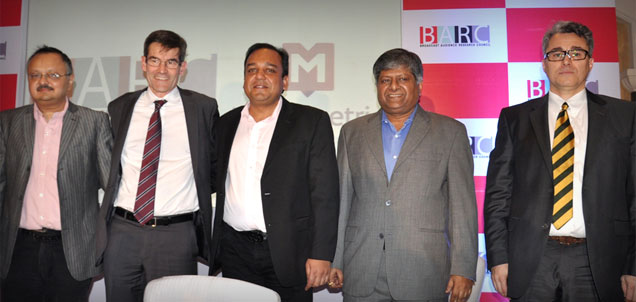
    For BARC chairman and Zee Entertainment MD and CEO Punit Goenka, the announcement of Mediametrie as the technology partner and the signing of the Letter of Intent in Mumbai is a big step towards the new audience measurement regime. Ditto for Benoit Cassagne. Mediametrie’s Executive Director of audience measurement and Senior Vice President for whom entering a large market like India is a significant recognition of its captabilities. Soon after making the announcement, both Messrs Goenka and Cassagne took time out to speak with Shobhana Nair


    Technology & cost were factors in choosing Mediametrie: Punit GoenkaIn a sense, the future of the broadcast sector depends a lot on the decision to select Mediametrie as BARC’s technology vendor.  Are you fully convinced about the path chosen?

    The first and foremost is that fact that it is a far more advanced technology that Mediametrie has brought to us. Apart from the watermarking solution that they are using, it is an open source technology. And any PC-based technology is far better and cheaper than a propriety system.  Other than technology, cost too was a factor in choosing Mediametrie. The entire process of audience rating is broken into three different stages and no one stage can go to another vendor. This in itself brings in checks and balances on who does what.


    With so many parties involved, will it not complicate things?

    Yes, it will complicate, but that’s part of life if you want a robust system to come in. We see the same happening in the UK which is a large market. I don’t see any reason why we can’t make it happen here.


    TAM says it was appointed jointly by the three bodies – IBF, AAAI, ISA – for audience measurement. These three associations are also statekholders of BARC. Why do you think nothing can go wrong even now?

    I am not sure whether TAM was officially appointed by all three bodies. We can go wrong however we have to work very hard. We have taken solutions after studying the models adopted by several countries. Our core proposition is based on the UK-model of BARB where you outsource it to three to four agencies so that no single agency controls the entire process and there is complete transparency.


    Do you think you will be able to meet all your deadlines that you have set for BARC?

    I am very confident that we will meet the deadlines.

    Journey might be difficult but I know we will succeed: Benoit CassaigneThe technology you have has been adapted in stable markets like France. Do you think India is ready for this kind of a system?

    India is ready for the change. We have met the people at BARC several times and we think these people are very qualified about audience measurement and they know exactly what they want to achieve. They have a clear roadmap. My belief is that the journey might be difficult but I know we will succeed


    Is the watermark technology really the best way to measure television audiences?

    Watermarking is very precise and I am very confident in our technology. Watermarking is very precise for time-shifting audience and to make difference between a live and time shifting edition. This is beneficial for new screen measurements. I think it will work well here in India.


    Did you study the current Indian television audience measurement system. Being an outsider, did you study the current TV measurement system? What are the loopholes in them?

    This is not an easy question and I am not a specialist. I don’t know the situation here but I do know there are complaints. I don’t know whether it is a question of governance, size of panels or technology. I can’t say really what was wrong. I am too new and too far from this market. But I have a lot of respect for them.


    Are there any peculiarities about India for the development of a measurement system? Do you think it’s tougher to administer one here in India than it’s in your home market France?

    Media measurement is a small world and the Indian situation is not-so-special. TV ratings systems are very comparable from country to country. The technology is comparable but the size of the market is not. Likewise, the local channels cannot be compared. Clearly, the Indian demand and market conditions are not difficult.

    The announcement: BARC signs deal with Mediametrie, a joint industry body in FranceBARC announced the formal tie-up with Mediametrie of France for some key technology services and licensing for the proposed television audience measurement system. Mediametrie is the Joint Industry body in France, operating the TV, Internet and Radio currency ratings systems, engaged in multimedia audience research for the last 25 years. They have been designing and developing their own TV metering systems for 15 years.
They are pioneers in the development and usage of watermarking technology in audience research and have been using this successfully for the last seven years. This technology is used in 3 currency markets : France, Morocco and the Netherlands.


    Under the arrangement, Mediametrie will provide technological knowhow and licenses to BARC to use their TV metering system and also help BARC procure its own metering hardware.


    Speaking about the same, Punit Goenka, Chairman, BARC said “I am delighted at this association with Mediametrie. Our Technical Committee and the Management had scouted the global marketplace for suitable technology and we are happy with our choice. We will take a quantum jump in technology for audience measurement in the country with this.”


    Benoit Cassaigne, Senior Vice President, Mediametrie said “We are very happy and proud of BARC’s confidence in our solutions and expertise. We are thrilled to bring our know-how on such a TV market and share it with BARC a company very similar to us in its DNA. We are sharing a lot already in term of philosophy and vision and I am sure we will go far together”


  • MSLGroup elevates 4 from India to Asia regional practice leadership

    By A Correspondent


    MSLGroup, the Publicis Groupe’s strategic communications and engagement consultancy, has announced the appointment of eight new regional practice group leaders and two regional deputy practice group leaders across Asia to further strengthen the firm’s expertise and leadership.


    Glenn Osaki
    Jaideep Shergill

    The practice leaders will have as their mandate to ensure MSL’s regional leadership position in their respective practice through best-in-class client service and strategic counsel amongst.


    Said Glenn Osaki, President Asia, MSLGroup, said: “Most of these top talents and leaders have been with us for many years, some have grown with us for over a decade. We are very happy to appoint these experts to take on international leadership roles and to contribute to developing the future of MSLGroup in Asia and globally.”


    Amrit Ahuja

    Amit Misra

    Parveez Modak

    Narendra Nag


    The four Indians elevated to the role are: Amrit Ahuja (Business to Business and Technology), Amit Misra (Public Affairs), Parveez Modak (Employee Communication and Engagement) and Narendra Nag (Social Media). Meanwhile, MSLGroup India CEO Jaideep Shergill will continue his leadership role of the regional financial communications practice.


  • Maa, Meri Maa!


    By Delshad Irani & Amit Bapna


    There was a time a Hallmark card with Happy Mother’s Day scrawled on the front, and yes, “Thank You” on the inside, would have worked for Ma. Now advertisers are making every day Mother’s Day if commercials on the telly are anything to go by.


    Hallmark just won’t cut it anymore. If one really appreciates the woman who spent laborious hours just to give you life,  the only way to show gratitude is this: Hire an award winning director, preferably Alejandro González Iñárritu, and Ludovico Einaudi to provide musical score, for a commercial shot on multiple continents to document candid everyday Mommy moments: Washing the battered jersey, making lunch, driving back and forth from school, swimming, skiing or boxing class.


    But there’s a prize for all the hard work. If washed and chauffeured well enough, the best kid will be rewarded a gold medal at the next Olympic Games. Well, not you and I, of course. (We aren’t all made up of that special Olympian stuff, Ma.)


    The film ‘Best Job’ and its follow up ‘Pick Them Back Up’, part of P&G’s global campaign ‘Thank You, Mom’, are two universally acclaimed commercial films. (See box.) Apart from single-handedly providing a sales-boost to tissue-paper manufacturers the world over, they have also revived the discussion on how advertisers speak to and communicate with women in their role as mothers.


    Communication directed at mums has generally not been as exciting, or insightful as advertising aimed at men. Xavi Bech de Careda, chief strategy officer – TBWA\India attributes it to the concept of a ‘working woman’ who is financially independent being of a relatively recent vintage.


    And so, advertisers turn on the mommy water-works one moment and unleash the tiger mom during the next ad break. According to Katherine Wintsch, founder & CEO, The Mom Complex (a mom-dedicated unit of the US based The Martin Agency), there are five, very common mistakes advertisers make in ads depicting moms: 1) She’s always happy.  Especially when cooking and cleaning. 2) Her children are obedient angels. 3) She loves wearing cardigans and capri pants. 4) Her wardrobe often matches the brand colours of the product she’s promoting. 5) She loves talking to the camera. We can see one or all of these in many mom related ads.


    The supermodel mom, whose perfection is infuriating (say real moms) and the ma who knows-it-all. (We speak, fairly fondly, of Lalitaji’s samajdari still.) Then we have a heart-to-heart with the best-friend-mom whose emotion-detector is 100% accurate (take that, John Larson, inventor of the polygraph.) We even have moms who are the entertainment, but hardly ever the entertained.


    Interestingly, marketers have only recently begun to valorise motherhood. They’ve unleashed a horde of campaigns that celebrate the ma in every woman. But the biggest mistake advertisers make is idealising motherhood. Karthi Marshan, executive VP & head – group marketing, Kotak Mahindra warns in celebrating the woman’s role as mom, we frequently diminish her identity as a person, and risk focusing on the stereotype of dishwasher, cook, laundry lady, support system, et al.


    Not just that, making a mom the “hero” of an ad, is a dangerous proposition. A global study by The Mom Complex across 17 countries, revealed the number one emotion all moms share in common is doubt, more specifically self-doubt.


    Says Manjari Upadhye, VP – marketing, Cocoa Beverages, Mondelez International, “Advertisers more often than not, bring out her worst fears and anxieties. However, they have also started portraying a more real picture of today’s mom and that is a good start.”


    The very idea of parenthood for mothers has changed. It extends beyond just wiping away their child’s snot and fears and obsessing about their height and weight. The growing power of the working mom makes her an even more relevant decision maker in brand choices for the family, and this presents a whole new set of opportunities and challenges.


    Says Mr Marshan, “Agencies and advertisers are still navigating the greenfield cum minefield this evolution presents. We get it wrong as often as we get it right. While phenomenal upsides exist in recognising the vital role a mother plays, risks abound as well.”


    There are, however, rich dividends for agencies and brands which can manage to tap into the unique struggle, humour and emotion that come with motherhood. Millennial mothers, especially, have no trouble admitting they’re human and make mistakes, hence the popularity of the Twitter hashtag #MomFail.


    It’s also becoming more of a team sport. According to a study by McCann’s Truth Central “88% of moms say that when they hear an interesting idea or piece of advice about being a parent they want to share it, and 37% say they want to share it with as many parents as possible.”


    Besides who says moms don’t have a sense of humour? The goal with marketing to moms should be to raise the bar of creativity and “stop playing it so straight. It’s boring,” says Wintsch. In fact, in another study conducted by the agency, moms went out of their way to say how much they love the advertising from Budweiser. All directed at men and none features a mom.


    “The concept of the mother and the father stereotypes is breaking down fast. Just as phones have become smartphones, moms have also become smart moms,” says Joseph George, CEO, Lowe Lintas, the agency behind an ad for jewellery brand Tanishq which features a young mother’s wedding. He says, “It is the time of the youth and the time of moms – these are the two segments that will rule the market.”


    However, as George also points out, in this celebration of mothers the fathers are the ones who are being marginalised now, “Moms are the all-rounders and dads are ending up as either the batsman or the bowler only.” Alright, we’ll say it. “Thank you, Dad.”


    British Airways ‘A Ticket To Visit Mum’

    In the business of making Moms proud and happy was a BA web-film, although not necessarily targeting mothers directly  (Spoiler alert). The airline promises to fly a Mom-made meal to her son who moved to the US when he was 17. They fail to deliver on that promise. But BA gives the son a ticket to visit his mum instead. Says Christopher Fordyce, regional commercial manager – South Asia, British Airways, it isn’t enough to focus on functionality anymore. Brands must connect on an emotional plain. The core message was that BA’s the airline which connects people around the world. And to be able to witness a mother reunited with her son, there’s not a better way to get the emotions flying and tears flowing.


    Bournvita’s ‘Taiyyaari Ki Jeet’

    In 2013, Bournvita released two commercials, Runner and Boxer. According to Mondelez’s Upadhye. the brief to the agency, Ogilvy, and the campaign objective was to bring out the progressive parent in every mother who has left the sidelines and is taking charge of inculcating good habits, in order to prepare the child for all eventualities in life. The Runner TVC featuring an athlete mom training her young son has already crossed a million views on YouTube. The Boxer, on the other hand, features a working-mother providing for and supporting her daughter to excel in a male dominated sport. It has clocked 315,000 views in three weeks.


    P&G’s ‘Thank You, Mom’

    The P&G ‘Thank You, Mom’ campaign, the biggest in the company’s 175-year history, recognises and celebrates the moms behind the athletes. It’s part of P&G’s worldwide sponsorship deal with the International Olympic Committee (IOC). According to a company spokesperson, the insight for their most recent spot ‘Pick Them Back Up’ for the Sochi Winter Olympics came from research P&G did with real moms all over the world. “From talking to moms, we learned a few things all moms share – they want to teach their kids resiliency and determination. To quote one mom from the UK – ‘Teach your child to chase a dream but not to fear failure,’ While we seek to delight as many people as we can, for this campaign, we wanted to take time to specially thank moms as P&G is, largely, in the business of helping moms. So we see our sponsorship of the Olympic Games through a special lens – moms.” Digital drove program engagement and lifts in brand social-media buzz volume; there were nearly 74,000,000 views of digital assets. The first film ‘Best Job’ drove 21,681,704 views across more than 200 countries.


    Google’s ‘Here’s To The Moms’

    Google paid tribute to Mummies everywhere with a film covering all those moments when mom was there for her child, from the first ultrasound to coming out of the closet.


    Fiat’s ‘The Motherhood’

    A genuine rap on motherhood complete with “babes, bitches and hoes,” also known as her kids, her dogs and a hose in the back seat. This video, released for the car maker’s UK market, has well over 4 million views on YouTube. It’s real, hilarious and very graphic. Here’s a sample. “Wear a nursing bra, like a bulletproof vest. Work versus home is a mental combination, with my elbows deep in infant defecation. I’m a school-run-taker, fairy-cake-baker, dealmaker, orgasm-faker, rattle-shaker, cheesegrater, nighttime waker. I’m a placater, peacemaker.”

    Source:The Economic Times

    Copyright © 2014, Bennett, Coleman & Co. Ltd. All Rights Reserved

    Licensed to republish

     

  • New IRS study findings to be released next week

    By A Correspondent

    The new Indian Readership Survey findings are scheduled to be released next week.

    It may be remembered that on the basis of a recommendation of  the Readership Studies Council of India (RSCI), the Media Research Users’ Council had awarded the IRS contract to Nielsen. The decision was arrived at after a comprehensive nine month process that began in November 2011, with the formation of the RSCI by its sponsors, the MRUC (Media Research Users’ Council), and ABC (Audit Bureau of Circulation). The RSCI was mandated by the industry to oversee the conduct of a unified Indian Readership Study (IRS), billed as the world’s largest continuous readership study.

    The Technical Committee meeting was held yesterday (Jan 22) and the first findings of the study are scheduled to be released before the month ends, and in all probability on January 28.

    (See also: http://www.mxmindia.com/2013/03/new-improved-irs-hailed-by-industry/)

  • Life OK ahead of Sab in Week 3

    By A Correspondent

    Week 3 of 2014 saw some changes in the weekly TAM ratings. No change to the Top 3, but Life OK went past Sab.

    Star Plus was at 626 (previous week was 629), Zee at 471 (488), Colors a close third at 467 (the  previous week was not as close at 457), Life OK at 347, Sab at 318 and Sony at 258. In Week 2, Life OK and Sab were tied at 318 and Sony was at 258.

    As always, this info is based on what a TAM subscriber told us. Nothing official about it. But it’s reliable.


  • Why our brands do not connect…


    By Graham Jones

    As the design community of India emerges from its restrained incubation into the next hothouse of creativity, the designers of brands are unprepared for the pace of change with a lack of depth, originality and imagination. Designers panic and borrow from traditional Indian elements. Colours. Patterns. Whatever. Paying scant regard to the cultures that created them. Doomed to fail as the culture of the past runs counter to the new aspirations of a dynamic young India. Leaving their audience just as confused. An audience that is mostly young, who speak 50 different languages, who are from the most ethnically diverse cultures and religions on the planet and who inhabit some of the most poorest areas to the most opulent surroundings, living on top of each other.


    In this crazy country, why does everything look the same? We’ve grown up with the same faces. Adorning our TV screens and billboards. The singular image of celebrity endorsement. Only in India can you get away with the same star selling everything from toothpaste to food to furniture. Reinforcing their status of being the world’s biggest stars without denting their reputation. Yet with all this unquestionable talent available to Bollywood maybe their marketing promiscuity is causing them to fail to inform and lead a new culture, instead leaving a creative vacuum. It is Jay Z you hear on the mobiles of slum kids. The simple truth is he has more in common with them.


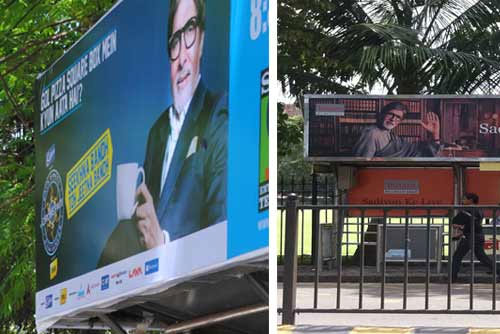
    Is "Big B" promoting his latest TV series or the bag of cement named after him? Every bus stop, same everything, different product. Celebrity dominated advertising has stalled the natural evolution of the design movement in the country. This is lazy advertising


    We ask ourselves how else can we create an image that appeals to everyone, everywhere? A single idea that will appeal to 1.1 billion people. Global brands are created with a single belief or idea at their core. Indian brands and their marketeers, being heavily influenced by their western counterparts, have become obsessed with this singular philosophy. We believe in this because that’s what global brands and branding dictates. It should be expected. The younger generations have grown up with the singular creative direction of brands influenced by western cultures. And these western brands were influenced by the iconic decades of fashion and pop culture. Black and white imagery simply misunderstood by an Indian audience by the lack of knowledge of 60s cool. But these brands sell lifestyles. And although unobtainable to most, young India is very seduced by these ideas of freedom and expression. So we continue to talk with a single voice to everyone, sometimes marrying Hindi and English, worrying that our headlines don’t translate when we should be focusing on the very idea translating. The Indian creative industry continues to pay homage to the west, while a rich and textural culture lies on it’s very doorstep. With an audience that’s crying out for new. All for the fame of being world class.


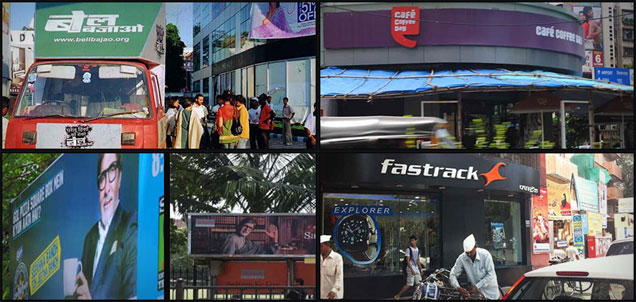
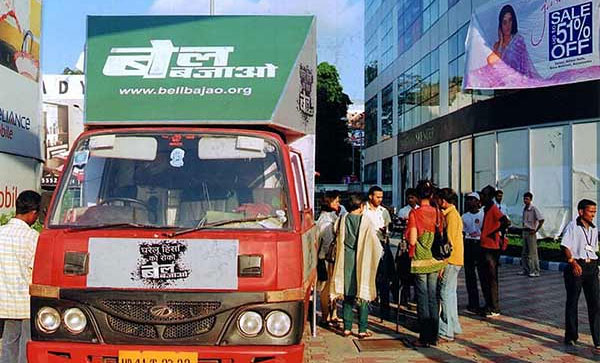
    Successful campaigns such as Breakthrough's Bell Bajao show the power of coupling local creativity with local context


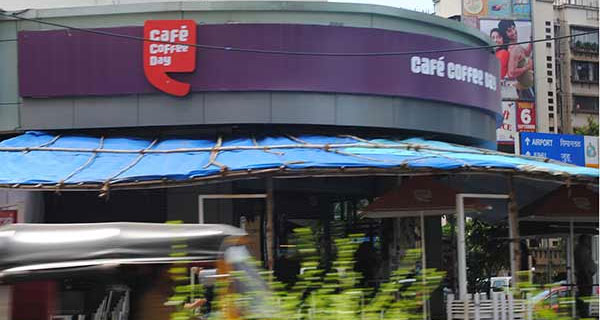
    While Café Coffee Day has brought humour as well as coffee to India, it also stands proud on the world stage. But there is a new world class about to be born. And it will be remixed by the Indian people. McDonald’s has abandoned it’s singular pursuit and has creatively remixed it’s business model to suit it’s audiences’ taste. Flipkart has remixed a successful global business idea to suit the Indian market. While Micromax the idea of branding by crowd sourcing it’s identity.


    The smiling icons at Café Coffee Day break the old rules. Made for young India, it's ready to take on Starbucks


    Recently brands have shown they’re ready to change. But they’re only doing what India has always done. India has developed by remixing it cultures and traditions. India has taken the ideas of the west and remixed them to be relevant to the masses. Successful brands will be the ones that constantly remix to India’s people’s needs.


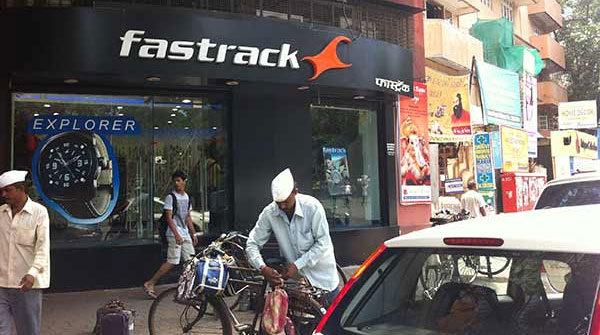
    Homegrown brands such as fastrack are symbols of the process of remixing in action


    With 4G about to role out across the country, we will not only see entrepreneurs of start ups, engineers, bloggers and coders remixing ideas to create new categories of businesses and ultimately brands, but we will also see our audiences turning from consumers to producers. Creating a culture of everything. A culture of chaos. We need to embrace this chaos, be prepared to make mistakes and be relentlessly optimistic. But above all else, we need to abandon the philosophy of a single idea.


    Graham Jones is a creative director at venturethree. He is currently leading the 4G brand project for Reliance. Republished with permission from Kyoorius magazine, where this article was first published.  Kyoorius is a bi-monthly print magazine on visual communications.  For buying a single copy (or any of the previous issues), write to sales@kyoorius.com. You can order the issue from Tadpole, get the digital copy from Magzter and also buy it from bookstores.


  • Arun Sharma returns to IPG Mediabrands after 10yrs at Airtel


    Arun Sharma
    Arun Sharma

    By A Correspondent

    Senior marketer and until recently head of the media vertical at all business units of Bharti Airtel, Arun Sharma has moved to IPG Mediabrands as Vice President.

    Confirming that Mr Sharma had joined the leading media agency conglomerate on Monday in New Delhi. Shashi Sinha, CEO of IPG Mediabrands, said that he will be working on a group role. “Arun has been at senior positions in the industry and we are glad to have him on board,”  Mr Sinha said.

    A member of various industry bodies, Mr Sharma has a career spanning across 17 years, the last decade of which was spent with Airtel and before that with the IPG Mediabrands group for six-and-a-half years. “It’s a homecoming of sorts for me,”  Mr Sharma said while adding that he is looking forward to the new responsibilities at IPG.

  • Zee Media launches ‘Zeegnition’ in multiple media with Adil Darukhanawala

    By A Correspondent

    In a first, Zee Media Corp has unveiled a multiple media auto publication called ‘Zeegnition’. While it has started as a one-pager in the group’s dna newspaper and a website, Zeegnition will also find its way in a television show on Zee News and Zee Business.

    This brand, would be staffed by an exclusive team that has worked extensively within the Indian automotive world over the last two-and-a-half decades other than members of the Zee Media group.

    Says Adil Jal Darukhanawala, editor-in-chief of Zeegnition:  “True, there are media platforms in this country that cater to audiences who are interested in automobiles. But, never before would these audiences have a cohesive 360-degree access across multiple platforms on anything and everything on wheels that constantly feeds their passion for automobiles. Zeegnition is not merely a reservoir of information on cars, bikes, motorsport, technology, vintage classics and more, it is both a source and a reservoir that originates from a medium that the entire world lives on – the World Wide Web with print and television feeding from it and also at times feeding into it.” Mr Darukhanawala is a seasoned auto journalist and was until recently with The Times of India group, editing Zigwheels and earlier with Car & Bike International and Overdrive magazines.