Category: ADVERTISING

  • Social Media is here to stay: Jonathan Kopp

    Mr Jonathan Kopp, Partner & Global Director, Ketchum Digital was in India recently to launch its India division with Sampark. The company is betting big on Social Media. On the onset, Ketchum Sampark Digital (Sampark is the Indian affiliate of global communications network Ketchum Inc) will service its existing clients in India, offering digital media services of which social will be a big part.


    MxM India’s Rishi Vora spoke to Mr Kopp on the Social Media scene in India. Excerpts:


    Q: What was the thought process behind launching a digital agency in India now? Have you entered the Indian marketplace a little late?

    I think the timing is perfect. Right now we’re in the era of the social web. There used to be a distinction between digital media and social networks, and now we are in a period where everything on the web is social. So if you have a web plan, or a digital plan, you’ve got to have a social plan as well. Pure play digital agencies are good in creating destinations, but that is not very relevant any more today. What matters the most is how you drive the conversations, what sort of content you require to drive conversations. These are areas which we specialize in. As for the timing of the launch, I think it’s just the right time to be here. Companies and brands are more than willing to go social.


    Q: Do you think Social Media has enough money to sustain itself as a profitable, longterm business?

    I think the growth of Social in India is going to be upward for a considerable period of time. If you think about the penetration of Digital – the numbers are good but percentages are small. So the opportunity is very much there. Whether you succeed as a brand in the social media space is a matter of how you present yourself in that space. Mobile is a potent medium in India. Combining that with video and social, it becomes so much more exciting for users; yet another reason why content should be taken so very seriously – how can you be more creative, more compelling and interesting enough to engage many users online, on to the social networks.


    Q: Is it a big challenge to sell social media to clients?

    There is not a single company in any industry that can afford not to be on the social web right now. So I’m a big believer in the power of social media. If you’re not on it, then you’re losing out a fantastic opportunity to speak with your customers. As a brand, it’s mighty important to be in the social environment because the consumers are out there.


    Q: But they’re not necessarily there to speak to brands.

    Yes, people are not interested in becoming friends or having a relationship with a brand. What they really want is to connect with the people behind the brand and so the personalisation of the brand, bringing forward the humanity – the faces, the voice, the personality – this is critical in the brand’s success in the social space. Authentic and transparent voices. Immediate response to consumers’ queries – things like these can only happen in social media.


    Q: What are the learnings from other markets that you bring to the table for Ketchum Sampark Digital?

    It’s an important question. We have invested an awful amount of lot of time and resources to build the Ketchum Global Digital Network of about 180 digital and social media experts around the world; expertise and case studies working together to really create a global perspective. One of the first things we need to do with our clients is help them understand the power of social media. So social media training is important for us to start, our clients need to understand it. It requires a lot of change – mindset change and structural change. Digital is blurring the lines across traditional communications disciplines. Digital and social media is also creating a potential clash of messages from the organisation to the public. So marketing, advertising and public relations, sales, customer service – are all entering the social space at the same time without coordinating with each other. So it’s a mess in a way. As a company, you may want to hire expertise on HR, Operations etc. Similarly, the time has come for companies to look for social media experts. I don’t think there is enough expertise on things like managing work flows in social media, guidelines, the right approach etc. These are things we have learnt by being in the business for several years internationally, and in India, it is time that we bring our expertise in the marketplace.


    Q: How do you, as a social media professional, handle negative publicity on brands?

    It’s a very good question. One of the ways to try and prevent damage in social space is be there first. You first need to be in the social media space, because when you’re in crisis, it’s not the time to be going around and looking for friends. So we have a base of constituents, a base of supporters going into the crisis and you already have an established network to tell your story. So it is important to be there first. Second, things happen. They happen in traditional media, they happen in the interactive space, they happen offline, events; so you need to respond to them. Where companies go wrong is when they are not direct and as transparent. And if the consumer figures that out quickly, the problem gets worse. So if you make a mistake, apologise and explain the situation, and do it quickly.


    Q: Do you agree that a social media campaign will have minimal impact on a brand’s profitability?

    No, I don’t agree with that. I think social media can be proven to drive revenues. Very tactical small example: Dell has sold laptops through Twitter. When there were discounts being offered, Dell tweeted about them and sold huge numbers of laptops. Social transaction as a trend is only going to grow in the coming years.


    Q: Most of what we’re seeing in social media in India is Facebook marketing. Do you see that changing?

    Facebook is an amazing company and a great platform. Over 800 million users worldwide. Those who use the mobile phone to access Facebook – there are as active as their desktop counterparts are. Facebook is a force to reckon with and it’s admirable and enviable in every regard. At the same time I also believe that it’s never been about the channel. It has always been about the conversation and the content. So yes, today it’s Facebook but it wasn’t that long ago that it was MySpace, and before that, it want too long that it was AOL.


    Q: Social media picked up when Facebook picked up.

    Absolutely. But the first mover is not always the last. So will Facebook continue to dominate? Maybe. But, my concern more as a social media professional is not to be too invested in any one channel; rather it should be driven by where the consumer is. Right now, conversation is being held on Facebook, so it would be absurd to ignore Facebook. We’re going to use Facebook, but there are many other channels that we need to watch and learn from. For example, if you’re looking at corporate communications and executive positioning, Facebook might be important but I would want to look at Slideshare because that’s a perfect platform for you to share thought leadership. Similarly, if your concern is employee recruitment or professional networking, LinkedIn is the place to be on. So it really depends on what the purpose is.


    Q: What do you think about Google Plus?

    Google Plus is a new entrant. It is directly connected to YouTube. If you’ve got video and video is the way you’re telling your stories, then you need to consider Google Plus and YouTube. Just like the numbers tell us India is an important market to be in, the numbers tell you that Facebook is an important platform to be on. But, our job is to look at all of the platforms and all of the technologies that’ll help our clients tell their stories on the social web.


    Q: Do you see Google Plus catching up with Facebook?

    Google takes a very different philosophical approach to social web than Facebook does. It’s just got launched and Facebook has been around for some time now. But I don’t think Google Plus is as important as a standalone social network as it is for its ability to connect content and people across the entire social web. Facebook is about the Facebook platform and selling advertisements on that platform and creating social commerce on Facebook. So I don’t see them competing with each other – they both have a different role to play in the social web.


    Q: Can Social Media be a primary medium of communication for brands?

    I think the way we are going to be moving forward is really about integrating communications. It’s not about social over others. It’s about a consistent message and consistent requirement of content across all the channels where we need to reach the audiences. Broadcasting, print – newspapers and magazines are doing social media but some campaigns are starting in the social space and moving out to traditional. Some are moving from traditional to social. We really need to be everywhere.


    Q: There is a feeling that the medium is not taken seriously. Marketers and advertising professionals are talking about it, but in a way, they are the ones who are not really putting in the time, money and effort vis-à-vis traditional modes of advertising. Is there anything that social media experts need to look into?

    Metrics and evaluation is going to play a big role. The way we evaluate social media today – there is no single measure. TV, there’s GRPs; in traditional PR, it’s impressions. What we are trying to measure in the social space is engagement, and it’s a fuzzy concept right now. Facebook, with its analytics has gone much closer to measuring engagement in a very important way… The analytics behind a Facebook page drives you to not just the number of fans or friends but really the active user and the talked-about and how content is moving and who are the people that are moving it. As that science continues to move forward, I think people are going to be able to put a specific value on social media. You can certainly measure direct ROI if you’re seeing sales through social commerce.

  • Debrief: Cooking emotions

    By Anil Thakraney


    Here’s another tear-jerker. And if you are an emotional fool (like me), you will rush to your nearest grocer to pick up cartons of Fortune cooking oil. And when the emotion involves a mother/son situation, an advertiser can be pretty sure it’s a safe bet.


    Fortune’s new commercial features an elderly mom who whips up delicious food for her merchant navy officer son. Since the officer won’t get a holiday to visit home, she lands up on the ship to celebrate his budday. And then, of course, it’s the predictable re-union.


    Smart move. Instead of unleashing boring stories of healthy electrons and neutrons inside the cooking oil, Fortune has gone all out to win the housewife’s heart. And the cleverest thing about the ad is the soundtrack. It’s the classic song from SD Burman: ‘Meri duniya hai maa’. It’s the sort of song that will move a heartless, emotional geek, leave alone an already teary mother.


    However, I must add that I didn’t get the same emotional high that I did from the recent Cadbury ‘Lonely maa’ ad. Here, the emotion seems to be a bit contrived and forced, and I suspect the person to blame for that is the ad filmmaker. Somehow the tears get diluted in the translation of the storyboard. Tells you how important it is to cast the right director.


    Rating: (On a scale of 1 to 5): 3. Most of those marks go to Burmanda.

  • Chuckle-worthy ads from Ideas@work for BigRock

    By Shubhangi Mehta


    Big Rock.com,an internet business providing web-presence solutions, has launched its latest advertising campaign.


    The campaign consisting of three TVCs, created by Ideas@work promotes BigRock.com’s offer of having a complete website for Rs. 499. The idea, “Got a business, get a website”, is a continuation of the campaign BigRock had rolled out in January this year.


    ideas@work and Big Rock started working together in September 2010. They have worked on TVCs and a few print campaigns.


    The dead-pan humour has found likeability to a lot of people’s sense and sensibilities. The treatment of a depicting a real business for whacky/imaginary products and services evoked humor and also drove home the message, subliminally, no matter what your business is, getting a website is essential.


    There is a continuation down the path of highlighting unusual businesses in a humorous light and in a way that connects with Indians everywhere. The campaigns are being launched in 5 languages because BigRock is a well-regarded pan India brand. The communication campaign that comprises of TV commercials, and viral campaigns are being unveiled across tier I, II and III cities with the simple message – ‘Got a Business? Get a Website.’ The communication showcases small businesses that have benefited with a website from BigRock and inspires the business owner to think – ‘if they can have a website, so should I.’


    The research insight for the campaigns was that there are an estimated 100 million users of the internet in the country. India is projected to become the third largest globally in terms of internet users by 2013. To give perspective, the top country’s in terms of internet usage today – China and US – have an internet user population of 485+ million + and 480+ million +, respectively.


    The total number of domains registered in India is only about 3 million. The ratio of the total internet users to the total domains registered in the country thus is an abysmal 1:45. In a country such as the USA that number would be 1:5 – thus there is every indication that the headroom for growth in this industry is enormous.
    Bhavin Turakhia, Founder, BigRock, said, “The ad was communicating a brand and a message which the TV Viewer has never been exposed to. Hence we had to take utmost care of keeping the concepts simple, relatable and humorous.


    “If you see any of our TVCs, they have 3 stages. The first stage talks about the funny / imaginary business which then leads to the business owner’s website name and the message – Got a business? Get a website. The last part is the product offering / offer window.


    “In totality, we tell the TV viewers that there is a wacky/unbelievable business which has a website and that every business should have their website and finally finishing with the offer that at BigRock, you can get a complete .COM Website at just Rs. 499.”


    He adds, “If you were to compare the BigRock ads to any other .COM Company ad, you’ll notice that the treatment and the concepts used for BigRock are highly disruptive, simple to understand and have a clear call to action. The look and feel of the ad is also highly real. We believe that the brand is for everyone who has a business/ has thought of setting up a website. There is a definite risk that when the campaign is this catchy, the consumer gets more engrossed in the campaign rather than focusing on the product but if you’re not entertaining the TV viewer, there are more chances of your brand being forgotten. The balance between the story and the product window has to be optimized to drive home both, the brand name and the communication”.


    The campaigns will be a 3-3.5 week affair on TV, Digital Media and Print.
    Sharing his views on the campaign Amod Dani, ECD, Leo Burnett, said, “Some really interesting stuff here by bigrock.com. The campaign has humour nicely woven into it and the Savitri Bai and Rambo acting classes commercials are very well crafted and funny. The “Newspaper… Toilet paper” touch and “Mere ladke ko julab ho gaya hai” got me ROFL!


    BigRock really stands out thanks to some good honest and simple execution. Nice to see humour well done, after a long time. Though I feel all of them are not as funny as Savitri Bai and Rambo acting classes, but overall the work is far better than what we’re seeing on the idiot box. Give me also a two now!”

  • Anil Thakraney: Adland blues – where the ‘uncles’ don’t understand digital & ‘dudes’ don’t know Real India

    By Anil Thakraney


    One subject that keeps popping up when I meet senior creative directors from the ad world is the challenge posed by new media. And it’s a bit of a worry for everyone because India, unlike developed nations, is placed on a very interesting media matrix.


    On the one hand, we have the so-called old-world creative directors (most of them also chairmen of agencies) who have been weaned on TV commercials. Their entire focus and creativity is concentrated on the tube, they can only think TV (not even print!). And they will continue to thrive for many more years because unlike in the western nations, TV isn’t about to die in a hurry in this country. However, these TV hero ‘uncles’ are zeroes when it comes to using the digital media for their clients, and that’s obviously a big weakness. Their understanding of the opportunities offered by the social media space, for example, is very poor. In fact, both Balki and Piyush haven’t even registered for either Twitter or Facebook, that should give you an idea of their disinterest.


    Which is why they rely on the ‘young geeks’ in their offices to figure out the use of the digital media for their clients. The twenty-somethings who live their lives purely in the virtual world. The problem with these nerds, on the other hand, is that they don’t understand the traditional media at all. In fact, drowned in their comps/pads/mobiles 24X7, these techno-wizards are disconnected from reality. Therefore incapable of coming up with ideas that are born out of the nation’s culture and beliefs.


    For a Kolaveri sort of viral magic to happen for brands, this twain shall have to meet. Either the senior CDs make sure they spend energies to understand and bond with the digital space. Or, they ensure the bachchas in their agencies spend at least half their waking hours getting to know Real India. There is no third way out.


    This chasm is no good for the health of the brands they handle.


    ***


    PS: A review of Suhel Seth’s book has got the author all worked up. And the feisty man has been busy dissing the article writer, calling him a ‘loser’, ‘unemployed economist’, ‘a lowdown’, etc. Apparently, Seth later deleted the sweet tweets. Here’s the link to the said review. Must-read stuff.


    http://www.caravanmagazine.in/Story.aspx?Storyid=1189&StoryStyle=FullStory

  • Thakraney: Sony after KBC. Reality shows must face the music

    By Anil Thakraney


    I really don’t know what Sony’s revenue model was for the recently concluded KBC. As in, did the channel actually make money on advertising and sponsorships after deducting the massive costs? Which include phenomenal sums going to the host Big B, not to speak of all the prize monies (Mr Sushil Kumar alone walked away with five crore rupees). Maybe they did make a little profit on the show, maybe they did not. But here’s what has happened immediately post the show: On the ratings chart, the channel slipped to No 3 from its position of No 2.


    Now, traditional programming logic suggests that expensive reality shows and blockbuster cinema films play the role of a magnet, of getting a channel some stickiness with the viewers. Having come onto the platform, viewers would taste the regular fare on the channel and hopefully stay on. Well, KBC doesn’t seem to have delivered on that promise. After enjoying the show, clearly many viewers defected to the other channels. This naturally raises a doubt in the mind: Are reality shows over-hyped in the desi entertainment channels? Are they worth all the effort and the expenditure? Is too much expectation being loaded on them?


    There are no easy answers to this one. But one thing is clear: You can tempt patrons into a restaurant by offering an outstanding dessert, but they will only return if the food is delicious. You can’t build loyalty through window dressing. The idea should be to first build a powerful back-end… which is to create super regular programming. And then run a huge reality show, so that viewers like what they taste when it comes to the ‘bread and butter’ shows.


    In this context, one has to wonder if Sony put the cart before the horse. Star Plus’s consistent No 1 position should provide a way forward for other channels: Which is to first do the basics rights. And then dial Mr Bachchan’s number.

    ***

    PS: LOL! Watch this ad for Snickers. A good example of how to (literally) use research methods in advertising, AND make it work very nicely!

  • Emgee group gives Quadrant creative mandates

    By Shubhangi Mehta


    In a multi-agency pitch, EMGEE Group has provided Quadrant Communications with the creative mandates for their property in Goa called Anantham.


    The account size is estimated to be around Rs 15 crore. Though no confirmation could be attained from the agency, industry sources close to the development have confirmed the news to MxM India.


    Poised for scaling greater heights in India and abroad, the EMGEE Group, with its solid financial roots and invaluable experience spanning 25 years, is spearheading the dreams of millions. The Group has raised the bar for quality construction, through modern homes strapped with luxury, astutely laid out commercial complexes and self-contained townships in vantage locations.

  • Change is the biggest challenge, says Divya Gupta (now @ Dentsu Media)

    By Tuhina Anand


    Divya Gupta, who has joined Chief Executive Officer, Dentsu Media is back in the media agency side of the business after a gap of almost seven years. She has been away from the agency set up but not really away from the industry as she was gaining experience being on the other side of the fence. First with Reliance ADA Group as Media Advisor to the Chairman’s Office providing strategic advisory on media investments for the group; later at Hindustan Times Media as Business Head – West with the mandate of building the business. Just before joining Dentsu India, Ms Gupta was an independent consultant advising and consulting marketers, media agencies and owners in the media business.


    In seven years, a lot has changed in the media landscape and MxM India deicided to catch up with Ms Gupta and find out what changes in the industry she can outline. She puts it concisely, that the changing environment presents both challenges and opportunities for the industry.


    Ms Gupta says, “First, I think the changing environment allows for having meaningful dialogues with consumers, almost on a one-on-one basis. Media today allows us to actively engage, build and nurture rich relationships with our consumers. And both the message and the medium can be tailored and served to each consumer.” For example she cites that the advertisements that are served to the consumers while accessing mail, search, etc, is basis their past interests and behaviour. Hence, the targeting goes beyond the demographics and makes a marketer’s and media professional’s job much more exciting.


    “Second would be about harnessing collective media synergies, seamlessly, in real time. Media roles are changing and no single medium, even TV, will be self-contained. The opportunity lies in media blending; combining and harnessing each medium in a digital chemistry that delivers across all, paid, owned and earned media,” continued Ms Gupta. “Centered on the brand engagement idea, the focus will be to get better “earned” dividends and the ultimate goal being allowing our consumers themselves to carry forth our crusade.”


    Also she emphasized that today’s landscape allows for realtime, instantaneous consumer feedback. If on the right track, one can march forward or do some quick course correction if need. No more waiting for months to understand the impact of advertising that used to happen some two decades ago, as now the response is instant.


    “Lastly, it is about tightening ROI from computing mere eyeballs to an engagement metric. Reach that is layered with engagement, in both planning and pricing, is a step forward in computing actual ROI. Today, computing eyeballs alone is sub-optimal. Think about it, how often do we check our mobiles while supposedly viewing TV? Dual screens are here to stay. Or how often do we read and register (keep click aside for the time being) all advertisements that get served to us on a search page?” said Ms Gupta.
    Concluding she said, “To encapsulate, it is exciting times, with media posing huge challenges and opportunities in building engaging consumer connections, experiences and nurturing relationships.”


    Talking about her task at Dentsu Media, she shared that it is to first stabilize and deliver to their current clients and then harness their global experience, to the way they work and their suite of media tools to deliver an integrated, multi disciplinary, channel solutions to their clients.

  • Magnaglobal predicts 15% ad growth in India

    Magnaglobal, a division of IPG Mediabrands, released updated Global Advertising Forecasts, showing media owners’ revenue growth for 2011 and 2012 to be slower than previously projected, but still resilient.


    Key and detailed Findings, all from the Magnaglobal communique

    -2011 global growth is revised down to +4.7% (downgraded by -0.5%), totaling $427 billion.
    -2012 global growth is revised to +5.0% (downgraded by -1.5%), totaling $449 billion.
    -Quadrennial events, combined with the scale and dynamism of the BRIC countries will help sustain global growth despite worsening economic outlook. They contribute to 45% of the global growth in 2011.
    -Internet will become the second biggest media category in 2011, reaching a 20% global market share in 2012.
    -China will become the second largest advertising market in 2012, outgrowing Japan.


    2011: The Slowdown
    In 2011, media suppliers around the world will see their advertising revenues grow by +4.7% to total $427 billion (constant USD 2010 basis). That estimate is down slightly (-0.5%) from our +5.2% forecast published in June 2011, due to the softening of some markets in the second half of the year. Our media suppliers advertising revenue projection includes: television (pay and free), Internet (search, display, video, mobile), newspapers, magazines, radio, cinema and out-of-home (traditional and digital). It excludes direct marketing categories such as direct mail or traditional “yellow page” directories. We monitor media suppliers’ revenues in 63 markets (including all major markets), representing more than 95% of the world’s economy.


    The geography of growth. More than ever, emerging economies drove global advertising revenue growth in 2011, posting an average +15.0% growth during the year. Among these developing economies, Latin America posted the strongest growth rates, averaging +13.2%, closely followed by Central and Eastern Europe (+13.0%). Developed markets, meanwhile, grew at much slower rates, such as +1.6% in Western Europe and +3.1% in North America, due to a number of factors including: a strong 2010 comparison (revenues were up +8.2% compared with 2009); macro-economic slow-down and persistent financial uncertainties; the absence of major sporting events or U.S. elections; and natural disasters in Asia. Among individual countries, the strongest growth rates came from: Argentina (+37.9% in the context of a strong inflationary economic growth), China (+22.5%), Kazakhstan (+25.6%), Russia (+20.4%), India (+15%) and Brazil (+10.2%).


    Eleven countries (out of the 63 analyzed by MAGNAGLOBAL) suffered a decline in advertising revenues, including countries in Southern Europe hit by protracted economic turmoil and political instability (Greece: -19.3%; Portugal: -6.9%; Spain: -6.3%; Italy: -2.5%); emerging markets temporarily destabilized by the Arab Spring (Egypt -21%); and Asian countries hit by natural disasters (Japan -2.0%, Thailand: -2.0%). Many of the large markets of Western Europe and North America wound up in the middle, typically showing low single-digit growth (UK: +1.8%; Germany: +3.0%; U.S.: +2.9%).


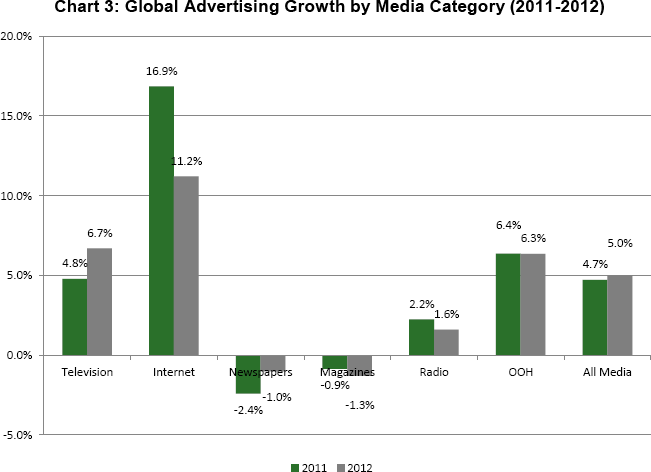
    Among media categories, television, an unexpected winner in 2010 (+12.7%), continued to show strength in 2011, despite the absence of cyclical sporting events or elections in the U.S. Broadcasters’ advertising revenues grew +4.8% to $175 billion, in 2011, maintaining TV’s leadership with a 41.0% market share globally. Strong audience levels and audience measurement improvements – such as the integration of time-shifted DVR viewing into ratings for the first time (e.g. France) – made the medium attractive. Out-of-home (OOH) media fared even better. Including cinema, OOH grew +6.4% globally, driven by the incremental revenues generated through digital billboards (+19.9%), which have rolled out in various parts of continental Europe and Asia. Other traditional media categories, however, had a tougher year. Radio grew only +2.2%; newspapers’ revenues were down -2.4% and magazines declined -0.9%.


    Declining circulation, shrinking readership, Internet competition and short term media buying patterns (which penalizes monthly magazines), all contributed to print’s decline in developed markets. Things are different in emerging markets, however, where literacy is still increasing and broadband access is still relatively low. In those markets, magazines are growing along with the middle class, and there is enough advertising demand for every media beyond TV to benefit. Overall, print advertising revenues are up by high single digit percentage points in emerging markets.


    The big winner of 2011, however, was Internet media. Total Internet advertising revenues increased +16.9% to $78.5 billion. While Display subcategories increased +15%, Paid Search reaped the benefits of usage growth and algorithm improvements to reclaim its position as the largest digital revenue driver (+19%). Within Display, online video continues to show impressive growth (+58.5%), reaching $4.7 billion in revenues.


    Pre- and mid-rolls in online videos now generate 6% of total Internet advertising revenues and one percent (1.1%) of global advertising revenues. Even more than online video sharing specialists, TV broadcasters offering free, ad-funded online “catch-up” of long-form, full-length episodes are driving category growth.


    Overall, coming after a strong 2010 and in a poor macro-economic context, media suppliers displayed a resilient performance in 2011. But the global market is barely back to where it was in 2007 ($423 billion in constant USD), and still smaller in the case of Western Europe (2007: $112 billion, 2011: $106 billion). This reflects that media costs that are still low from a historical perspective.


    2012: The BRIC Engine
    For 2012, we now forecast media owners’ advertising revenues to grow by +5.0% to $449 billion. This is -1.5% below our previous prediction published in June 2011 (+6.5%).


    This downward revision is due to deteriorating macro-economic perspectives. Our forecast model is based on current, official economic forecasts that are generally predicting weaker – but still positive – growth next year. However, the uncertainty remains high, especially in Europe. In September, the IMF reduced its global output forecast (real GDP growth) from +4.5% to +4.0%. Although that forecast suggests the world economy would still grow, it’s an awkward average between emerging economies that are growing at healthy rates and developed economies that are still sputtering (average +1.9%, US: +1.8%).


    In late November, OECD revised its own global output forecast to +3.4% (including +1.6% for OECD countries and only +0.2% for the Euro area) warning that 4Q11 and 1Q12 could tip negative in most European countries, in line with 3Q11 slowdown. Greece, Italy and Portugal, in particular, are now expected to suffer full-year recessions in 2012. Other economic indicators (industrial production, personal consumption and business confidence) have been similarly downgraded in recent months and some independent forecasters have expressed increasingly gloomier views.


    Despite the worsening economic outlook, we are still projecting a positive growth rate based on a few factors:
    -First, the well-known “quadrennial” cyclical driver is back, and we believe it will be stronger than ever. The incremental ad spend generated by major sporting events (London Summer Olympics, Poland/Ukraine European Soccer Championship) and the U.S. Presidential Elections will bring an additional +1% to +2% on top of organic revenue growth across markets. In the U.S., Political and Olympic (P&O) money will account for three billion dollars of incremental ad spend, mostly on television ($2.4 billion related to the Elections, $600 million generated by Olympic Broadcasts). Meanwhile, major sporting events will help in European markets that are otherwise hit by economic stagnation, such as the UK (which is hosting the Olympics, although the games are broadcast on the ad-free BCC) and Italy (where the Games and Soccer tournament will mostly be broadcast by RAI, one of the few European public television groups still allowed to carry a full, all-day advertising load).


    -Second, big emerging countries will increase their share of global economic and advertising influence. At the end of 2012, emerging markets will represent 24% of global advertising revenues (compared with 7% in 1999) and the four BRIC countries alone will account for 14% (compared with 3% in 1999). Adding scale to dynamism, the BRIC markets have the capacity to offset part or all of the Western weakness. The four BRIC markets equated to only 10% of Western Europe’s advertising revenues in 1999. That ratio will grow to 59% by the end of 2012, and by 2016 the BRIC countries will almost match the size of Western Europe (94%). The BRIC countries contributed to 45% of the global market growth in 2011 ($9 billion out of $19 billion). With a growing proportion of the BRIC countries’ population adopting Western-style media consumption patterns, and with Western and local brands competing for top-of-mind among the emerging middle class, media demand is in excess of supply and inflation reigns. BRIC countries lag behind the global average advertising spend per capita ($80) – Russia: $70, Brazil: $60; China: $21, and India: $4. With such structural factors, we expect advertising spending and revenues in those markets to keep growing faster than the general economy, supporting global revenues in their wake.


    -Thirdly, some lessons learned in 2009 may help avoid a replay. Some major advertisers, e.g. in FMCG, have since admitted that they may have over-reacted back then by cutting advertising expenditures too hard and too quickly, harming their brands. We believe that this time, even if sales forecasts are being revised downwards, marketers will remember that market shares are subject to losses or gains, including – and perhaps even more so – during a recession, as consumers reconsider their choices. In addition, the Western advertising market is still smaller than five years ago, which means prices and net costs per thousand – despite some inflation in 2010-2011 – are still competitive and attractive by long term standards. Therefore, brands in various sectors have both the incentive and capacity to invest smartly to boost or defend their market shares.


    In 2012, advertising revenues will grow by +12.4% in emerging economies, with Latin America still leading the charge (+13.0%) followed by Central and Eastern Europe (slowing down at +7.7%). Asia Pacific will re-accelerate to +8.3% due to the recovery of Japan and the continued growth of China. Western Europe will slow down at +1.1%. The sports driver will not be enough to offset recession in many European countries: Greece, Portugal, Spain, Ireland will decrease again (between -2% and -6%); Italy and France will be flat at best. UK and Germany will grow below +2%.


    The biggest growth rates of 2012 will come from Argentina (+26.4%), Ukraine (+21.0%), Indonesia (+16.0%), China (+16.1%), Brazil (+12.0%), India (+13.5%) and Russia (+9.6%).


    In terms of media market share, Internet will grow by 11.2% and outrank newspapers to become the second biggest media category globally, accounting for nearly 20% of global advertising dollars (19.5% at $87.4 billion). The category already stands at 23% in both North America and Western Europe (where it even takes the #1 spot in a few markets, such as the UK). Television will receive the bulk of the “quadrennial” bonanza and will benefit from the typical concentration of advertisers into leading media at the expense of secondary media during harsh times. TV will grow by +6.7% globally to $187.1 billion. Newspaper and magazine revenues will shrink by an average -1.0% and -1.3% respectively, with much deeper drops in Western markets, where circulation losses of 2011 will be reflected in 2012 ad pricing. Radio will grow by +1.6% to $30.4 billion. OOH will also benefit from the “quadrennial” events and the roll-out of new digital (+6.3% to $28.3 billion) platforms. In the UK, the innovative upfront auction process conducted last summer to allocate the most premium London inventory during the Games did not quite meet the high expectations, but the industry is still expected to grow healthily next year.


    China Takes the #2 Spot
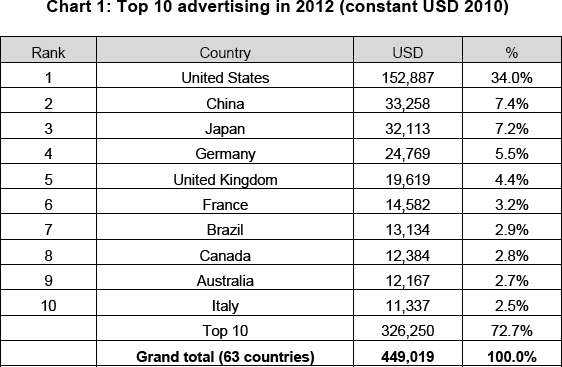
    China’s advertising market is expected to continue outperforming its already impressive economic growth in 2012, with a +16.1% growth. At $33.3 billion, China will become the second biggest advertising market, ahead of Japan, now third at $32.1 billion. Germany remains the fourth biggest market, some distance behind ($25 billion). Other top 10 markets are – in order – UK, France, Brazil, Canada, Australia and Italy. Russia will enter the top 10 in 2013, at the expense of Italy.


  • The Anchor: Lara Balsara’s 5 reasons media agencies should attract talent from outside

    By Lara Balsara


    #1 Thinking beyond numbers and objectivity. A typical media planner tends to think very objectively and tends to opt for plans and media that are supported by numbers and makes only data-based decisions. Whilst this is a basic necessity, you have to use your imagination based on quality of content, its appeal to different target audiences, etc for your plan to be a holistic media plan that is based on rigour and discipline but does not lose out on the soft factors. If you look only at hard numbers, most media plans would look exactly the same and that would not serve the brand’s purpose.


    #2 To come up with innovative and comprehensive solutions. Media in India has now been a specialist discipline for over 15 years and therefore there is a certain sameness in thinking that has come about among professionals. To counter this, you need people who are better with lateral thinking capabilities as they would balance a plan supported only with numbers. When you have a diverse talent pool working together, each individual brings in their own unique perspective and their area of expertise; as a result you come up with a brilliant strategy, idea and execution. At Madison Media, we have experts in analytics, account planning, creative and content integrated in the core media plan and we have seen this diversity work magically for our clients.


    #3 Scope of media is very broad. Today anything and everything is a communication medium, and the biggest challenge for media agencies is to come up with new and interesting ways to reach out and engage with audiences. Increasingly with so much noise in the marketplace, there is a need not just to expose your target audience to the message, but to affect them in a deep and engaging manner. If you look at media awards, which are a barometer of good media thinking, you will see some outstanding examples.


    #4 There isn’t enough talent available. It’s a simple issue of demand versus supply. Media professionals are in huge demand and there is a huge shortage of good talent available. Media agencies have no option but to look outside.


    #5 Media professionals rock. Having said all the above, you can’t underestimate the skill sets of media professionals; they are the most equipped to handle almost any job in communications, but the same can’t always be said of other communications professionals’ ability to handle a core media planning job.


    Lara Balsara is Director, Madison World.

  • Debrief: Rusky business

    By Anil Thakraney


    Britannia claims their new biscuit called Britannia Rusk is crunchy and juicy. And it’s difficult to find such a taste anywhere in the world. And so, the creative takes you out of the world. Into a spaceship.


    In the TVC, a young astronaut takes a tea break and munches on Britannia Rusk. Suddenly, literally out of the blue, his entire family arrives to share the biscuits. Mom, dad, granny, even the kaamwaali bai. The message: Britannia Rusk brings the family together with its sensational taste.


    While I like the unusual setting of a spaceship, which will help the commercial get noticed, there are two factors that weaken the communication. Even as family bonding is demonstrated, the novelty value of a rusk biscuit, the ‘crunchy and juicy’ promise, gets lost somewhere in, well, outer space. Since rusk is a relatively new breed of biscuits out here, the initial advertising ought to have focused on product attributes rather than lifestyle. Secondly, the humour is weak. The maid’s appearance will bring a little smile, but that’s about it.


    All said, the TVC will arouse a little curiosity but may not be effective beyond that.


    Rating: (On a scale of 1 to 5): 2. The strategy needs a rethink.

  • After TVCs, the next best thing


    By Shubhangi Mehta


    Commercial advertisers often seek to generate increased consumption of their products or services through “Branding”, which involves the repetition of an image or product name in an effort to associate certain qualities with the brand in consumers’ minds.


    The marketing mix has been the key concept in advertising. Suggested by Professor E Jerome McCarthy in the 1960s, the marketing mix consists of four basic elements, famously called the Four Ps. They are Product; Price, representing the process of determining the value of a product; Place representing the variables of getting the product to the consumer like distribution channels, market coverage and movement organization; and Promotion, the process of reaching the target market and convincing them to go out and buy the product.


    There is a plethora of ways to do this. The modes of advertising include television, radio, online, OOH and then these further have various categories in them.


    Television is generally the first choice for most of advertisers, but what about radio, digital and OOH?


    Prasoon Joshi
    Abraham Allapatt

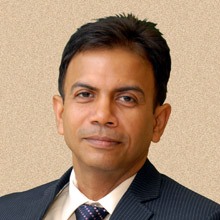
    Prasoon Joshi, Executive Chairman, McCann Worldgroup, commented, “It’s all about the requirement of a brand, it depends on a particular brand as to what marketing mix is to be used. There might be a brand for which I may not even use television, but might go in for a local newspaper etc. Hence it is not possible to choose a particular medium over others across the board.”


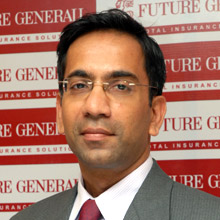
    Abraham Allapatt, Head – Brand & Corporate Communication, Future Generali India Life Insurance Company Limited, said, “Frankly, one cannot definitively state that one of these mediums is the best (after TV) simply because each of them has pros and cons. Radio is good if one wants to reach out to young/upwardly mobile urban customer prospects with a limited budget – especially if you have a powerful/simple message and creative to deliver, but it’s limited in terms of reach.


    “Similarily when we talk about print, it can target specific audience and is quick in reach but again it is a little expensive as compared to other media (cost per reach) and it is relatively limited in terms of reach at an overall level versus TV.


    “OOH is a powerful reminder medium for topical messages but is a relatively disorganised sector/medium. There is no science to measure impact/effectiveness. Large agencies use some tools to add some science to measurement, but it is still not too dependable.


    “Digital is focused down to the individual and is measurable accurately and instantly. It is very good for reaching young, urban, upmarket segments, plus it is cost-effective and an image driver. The only issue is that it is still limited in reach to large cities/income segments.”


    Apurva Purohit

    Apurva Purohit, CEO, Radio City 91.1 FM, said, “Radio as a medium has the ability to impact millions of Indians due to its wide coverage. And that’s just one of the multiple benefits of the medium! It enjoys a deep personal connect with listeners, allows marketers to create customized and local communication for pocketed audiences, and offers extensive on-ground engagement prospects to supplement advertising campaigns. Such offerings make the medium superiorly effective and attractive for marketers.


    “Radio has an edge over other media due to the local relevance that the medium offers. Advertisers seek to maximize efficiency of their marketing spends by looking at micro targeting communication to consumers in focus markets. Radio serves as a key medium to fulfil this need with its ability to create customized and local communication for the relevant target audience.


    “Another important feature that gives radio a one-up is that it’s an anytime access medium. Hence, advertisers can reach their consumers anywhere, anytime. Different sets of people tune into radio at different points of time and therefore the medium is consumed across the day. This is unlike print which is mainly consumed in the morning and TV which is mainly consumed at night.


    “Of course, the medium’s cost-effectiveness is unquestionable. Radio is far more inexpensive than print. If you need a local media plan you will pay six times on print, while at one-sixth you will get the same kind of reach and frequency on Radio.”


    Sanjay Tripathy

    Sanjay Tripathy , Executive Vice President – Head Marketing and Direct Channels at HDFC Life, said, “Choosing a medium will always be the prerogative of a brand marketer depending on his/her key objectives. While Television is the most preferred medium for marketers because of the kind of reach and opportunity for quality of communication it provides, Print comes a close second because of its ability to provide detailed information about the product/ service. This medium is also hugely preferred because the circulation and readership numbers are measurable unlike Radio and OOH, which are usually used for local, last mile reach. Contrary to popular perception, in a highly populous country like India, print still has a lot of scope for growth in the interiors where literacy is still catching up. Print provides flexibility in terms of customisation as per the regional target audience. However, the characteristics of the target audience influence hugely in terms of ‘where’ would the marketer best capture their attention, leaving a lot of scope for exploring different media channels. Especially in case of digital – the new-age innovative medium, which is my personal favourite and which, I believe, has a lot of potential over all the other media. Going forward, as most people are spending more and more time online and on social media, these will emerge as preferred media for brand engagement.


    Kalyan Kumar, CMO Games 24×7.com, said, “Being an e-commerce company, our vote will definitely go to digital. Digital is growing rapidly and has a great future scope. If there was a medium to be chosen after television, then hands down, my vote goes to digital.”


    Ranjeev Vij, Vice President, Head – Proximity, said, “We cannot isolate and say that digital is the only preferred choice. It works best when used in tandem with traditional media. For example look at “Quaker Mission to Make India Heart Healthy Campaign” done by BBDO/Proximity India in 2009 where TV and print ads were linked to the website (www.goodmorningheart.com) and the website led people to social media sites, which helped create buzz, conversations and relationships between consumers and the brand. What digital does brilliantly over other medium is that it helps build relationships and brings customers close to brands by enhancing user experience. Digital is best used to ‘amplify’ everything we do to the power of millions.


    “For marketers Digital provides real-time access to data and analytics, instant feedback on campaigns, product/service quality, etc. along with better understanding of consumer journey and behaviours. This data if mapped properly can help brands massively multiply the results of their marketing initiatives.”


    News paper image: Nuttakit

  • Hard Knocks: Crossed signals over FDI

    By Anil Thakraney


    I often wonder why international corporates even want to invest in a messy country like India. Why do they wish to take on all the headaches of operating inside such a chaotic nation. The answer, I suppose, is the market saturation in their own lands, and a raging desire to capitalize on the booming spending populace of this third world nation. Which makes the suits risk an entry into this snake pit.


    Well, all I can say is that these companies are either gutsy or desperate or both. If I was an international investor, I would quietly park my money in China. Or even Vietnam and Indonesia. And fly over India. Look at all the tamasha that just happened over the issue of FDI in multi-brand retail. And now it’s been put on ‘hold’… an euphemistic way of saying that the government chickened out of the deal. Here are the three messages we just sent to the global businessmen:


    1> The Indian PM is lamer than a lame duck. He has the vision, but lacks the ability, wherewithal and support to push new projects through. That, not just his rivals and allies, even his own party men can upset his plans at any time.

    2> Even if the FDI in retail bill gets passed, which is now a very remote possibility (even Baba Ram Dev doesn’t like it!), it’s left to the various states to accept or reject it. So you could be present in Delhi and Mumbai but missing in Bangalore, Kolkata and Chennai. And when the state government changes, there’s no surety the new government won’t kick you out of the city. So there’s never any hope of stability.

    3> Goons of various political parties are always ready for some action on the streets. So to pacify a particular vote bank segment, there’s always a chance that they will strike your super expensive store. Shattered glass panes, damaged wares and bruised business could be just a stone’s throw away.


    Yes, India is a hot destination for dhandha. But only for the steely, hardy, brave risk-takers.


    ***


    PS: Quite liked the rich tributes various TV channels paid to Devsaab immediately on the news of his death. The best package was put out by Times Now (pretty much non-stop coverage) and Aaj Tak (the only channel that told us some untold Dev Anand tales). The only disappointment came from NDTV. On a day like that, when the whole nation was humming Dev’s classics, they ran an hour-long, maha-boring prime time show on parliament adjournments. From the sublime to the ridiculous.