Category: ADVERTISING

  • Lalla on board with Mindshare

    By A Correspondent

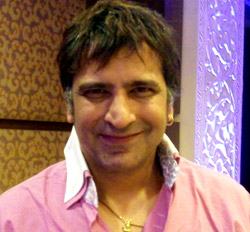
    Strengthening its senior leadership team, Mindshare, the flagship media agency of GroupM has appointed Ashok Lalla as Leader, Digital for Mindshare, South Asia. Mr Lalla takes over a world class operation that has won Mindshare a large number of awards over the last 3 years, and was also Digital Agency of the Year in 2010. Based out of Mumbai, Mr Lalla will report to Ravi Rao, Leader, Mindshare South Asia.

    Mr Lalla is an award-winning Digital, Brand and Social Media Marketing leader with over 18 years of agency and client business experience on brands that cut across the spectrum from one-cent candies to million dollar hotel stays. He moves from Euro RSCG, where he was President – Digital, and worked with several blue-chip clients including Unilever and IBM. Earlier, he was Director of Internet Marketing at Taj Hotels where he led worldwide Digital strategy and Ecommerce for the hotel chain for 9 years.

    Welcoming Mr Lalla, R Gowthaman, Leader, Mindshare South Asia, said, “Ashok Lalla, joins Mindshare at a time when our digital businesses is well poised to grow manifold, not only on the basic services, but also across Search, Social, Mobile, Creative and Performance Marketing. We are delighted to have him on board to take Mindshare to greater heights in the Digital Marketing space.”

    On his move to Mindshare, Mr Lalla said, “I am excited to join Mindshare, an agency with a mouthwatering array of clients, a great Digital team and a fantastic track record of doing breakthrough digital work. I look forward to taking Digital to the next level for our clients, and growing our team into an even stronger unit that does even more spectacular Digital work, and sets new industry benchmarks.”

    Mr Lalla is a compelling presenter and a visionary keynote speaker on Digital Marketing, Social Media and Brands at leading events and B-schools. He is also the Author  and  curator  of  “The  Future  of  Digital for  Brands”,  a  highly  regarded  online global community of over 1900 Digital, Marketing and Brand experts and enthusiasts from 38 countries.

    Mindshare is a global media and marketing services network with billings in excess of $27.8 billion (source: RECMA). The network consists of 114 offices in 82 countries throughout the North America, Latin America, Europe, Middle East, and Asia Pacific.  Mindshare is a member of WPP, the world’s leading communications service group, and is part of GroupM, the world’s leading full service media investment management operation.

  • 5 reasons why the Amul Butter Girl advertising is still relevant

    By Jayen  S Mehta

    #1 It’s topical.  Amul advertising is a comment on any recent development that has happened. It captures the flavor of the current scenario and then moves on to next subject that is making news. Also our brand ambassador, the Butter girl continues to remain young thus managing to remain relevant to many.

    #2 It’s not too intrusive. The advertising, while being topical, is not in-your-face.

    #3 It’s funny. There is wit and humour in the lines, which brings an immediate connect. The pun is always clever. It’s advertising that doesn’t try too hard to be funny, so it is subtle yet humorous.

    #4 It’s on time. The advertising is always on time, managing to capture what’s trending or the topic of conversation.

    #5 It’s available across media. This advertising has gone beyond the hoardings and is available across media platforms to better engage with consumers.

    Jayen S Mehta is the General Manager (Planning & Marketing), Gujarat Co-Operative Milk Marketing Federation Ltd.

  • Anil Thakraney: Why the media must boycott Abhi-Ash baby birth

    By Anil Thakraney


    Aishwarya’s yet-to-be-born baby has become national news. Front pages of newspapers and prime time programming on television carry minute details of the event. Astrologers have been consulted to predict the sex of the baby, and the whole nation knows which hospital has been chosen for the historic delivery.

    Well, I am not going into the importance of the story vis-à-vis more pressing matters, that’s for Shri Katju to worry about. I just find it appalling that the Bachchan-baby obsessed media has so quickly forgotten the humiliation of the recent past. Remember the Big Wedding? When journalists waiting outside Pratiksha and Jalsa for days together were completely ignored by the Bachchan clan. When some photographers were beaten up by Amitabh’s then chhote bhaiyya Amar Singh’s goons. When the newly wed couple didn’t even extend the courtesy of emerging for a single photograph.


    Yup, it’s all forgotten. The media is back to cover the baby birth with full gusto. And the journos are ready to get humiliated all over again. Have we no shame? Have we become so beygairat? In fact, according to Mumbai Mirror, a guideline has been issued by the Broadcast Editors’ Association on how TV channels must conduct themselves during the event! And to think this sort of a guideline ought to have been issued during the 26/11 terror attacks, and who knows… some lives could have been saved. Tells you how jumbled up our priorities are. While to some extent I can understand the junta’s interest in the new member’s arrival inside India’s ‘first family’ household, if we in the media have any self respect left, we should boycott the event.

    Of course, that’s not going to happen. Kya karein, we are like that only.


    ***


    PS: Speaking of Beygairat Brigade, here’s the whacko Pak band with their popular number titled ‘Aalu Anday’. An otherwise ordinary track that became a rage courtesy the social media. Intersperse faces of the lads with those of our popular TV anchors and the song works marvellously!

  • The Anchor: Sonal Dabral on 6 ads that will always remain in his mind

    Liril with Karen Lunel:  I remember waiting eagerly to watch the ad in auditorium just before the beginning of a movie. The entire packaging of the ad makes it compelling and I think it was a unique leap that Mr Alyque Padamsee and Lintas had taken at that time. It was a commercial to sell a soap but done in an impactful manner. Kailash (Surendranath) had shot it tastefully so it was not vulgar even if you have a girl frolicking under a waterfall.

    Lifebuoy:  Lifebuoy hai jahan, tandrusti hai wahan. It was a simple ad but also a great idea. Such a wonderful and simple line captured the essence of the product. In advertising, it often happens that in search of a good idea we tend to make life too complicated for ourselves. We try too hard to be clever, ‘creative’ but we just have to remember that in advertising in the end it is just about selling a product, selling an attitude and a shift in behaviour and nothing beyond that. If we realize this then that’s where simplicity comes. Lifebuoy advertising was unpretentious, simple and did its job for many many years.

    The Freedom Run: This ad came at a time when I was just about to leave NID and it rebuilt my faith in advertising as a profession. At that point, I was at a crossroads whether to go into pure design, films or advertising. Suresh Mullick’s Freedom Run was not an ad but a film that brought pride when you watched it.  It was meant to bring pride and you could sense the passion with which it was made.  It is the truth that if you do something with passion, it generally turns out to be good.

    Cadbury’s girl dancing on the pitch: I had the wonderful opportunity to work in O&M and at one point  Piyush Pandey and I decided that we would turn around the agency one day and be the top agency in India, the region and possibly in the world. After tremendous hard work came the flagship campaign on Cadbury Dairy Milk which was the girl on the cricket field. I had worked on the ad along with Piyush and the team, and I think the ad was a milestone in Indian advertising and was somewhere even dubbed as ad of the century.

    Fevicol: The work on Fevicol has been landmark. The idea is great and has been well executed.

    Virgin Mobile: The work by Bates on Virgin Mobile is again pathbreaking and stretched the morals, if I can say, to a certain limit. Indian Panga League was daring, risky and pushed boundaries. It created a new lingo. Since I have worked on it, it might be selfish to say but it’s a personal favourite piece of work too. It was audacity to come out with 115 films and put on the web. Daring, risky and an amazing idea done amazingly well.

    Sonal Dabral is Chairman India and Regional Executive Creative Director, Bates Asia.

  • Indigestion!

    Dabur Hajmola: Ad hazam nahin hua!

    Dabur has come up with a very ambitious idea in an effort to expand the market share for its digestive tablet brand, Hajmola. So far, if I recall correctly, the tablet was pitched at the over-eaters and the greedy pigs. But now Dabur wants you to have a Hajmola after every meal and snack! In short, they expect to net a whole lot of new consumers, many of who may never even have heard of the brand.

    Now when marketers attempt such a Himalayan task, it’s paramount that the advertising shines for them to harbour any notions of success. Sadly, Dabur has released a safe, dull, regressive commercial for Hajmola. It’s back to the ‘Desh ka choice’ route of the eighties. The commercial features all sorts of people eating all sorts of things and then topping it all up with a Hajmola. From burgers to paani puris to idlis to samosas to kebabs. ‘Hajmola kare khana complete’ is the new tagline.

    Total flop show. A tired idea and an even more tired execution. This is the sort of stuff we have seen over and over again. When what was needed out here was some advertising magic to go with such an ambitious project.

    Rating: (On a scale of 1 to 5): 0. Got a bad digestion!

  • Anil Thakraney: Any one for brief briefs?

    By Anil Thakraney


    A firangi ad pal has come up with a fantastic idea: Clients and ad agency client servicing people should brief creative people only on Twitter. That, no other method should be used, and all current briefing formats must be junked. Brilliant! Because this means the suits will be compelled to tell their creative folks what the advertising needs to communicate in just 140 characters. And it will cut the temptation to file pages and pages of irrelevant info and put out excessive demands from an advert. This will result in sharp, focussed communications.


    I recall some years ago when I was in the advertising biz, I did recommend a similar sort of thing. I once bought a wad of tickets from a Mumbai BEST bus conductor. And then circulated the little tickets amongst the agency client servicing people and account planners, insisting that briefs must only be written on the back of the bus ticket. One brief per ticket. Of course, they were outraged. How can one state everything on that size of a paper, was the common protest. Yes, they missed the point completely. Which is the need to keep the brief simple and single-minded, state one promise that the ad must deliver on, and remove all the so-called secondary data, which planners and suits feel very tempted to load on. And which is not just unnecessary, it confuses the hell out of creative people.


    Well, no need for bus tickets any more. Technology has provided the answer. Tell your creative people in 140 characters what the ad must communicate and who it should address. If you can do this, chances are very high you’ll get a much better creative output. And if you refuse to tweet and continue to dart out large e-mails, then don’t blame your creative people for coming up with laundry garbage.


    Now let me sum up the above column in exactly 140 characters and you’ll notice it still works! No reason a brief should not.

    My tweet: “Mr Suit: Tell me who the target audience is. The brand promise. The desired brand personality. The media vehicles. And then leave me alone!”

    Happy tweeting!


    ***

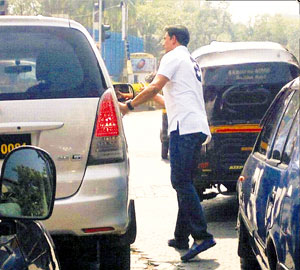
    PS: Loved it that hunky star Akshay Kumar chucked the empty ciggie pack back into the face of the car driver who had carelessly thrown it on to the street. We must all learn from Akshayji. Just one question: How did the hero manage to grab a picture of the incident? Does he take his publicist along wherever he goes? Hmmm.


    Image courtesy: Mumbai Mirror.

  • Fireworks less bright, but not media players outlook

    By Ritu Midha & Dhara Salla


    Picture this:


    – As per a recent survey India’s wholesale price index (WPI) likely rose an annual 9.6 percent in August
    – As per Government data released recently, India’s food price index rose 9.55 percent while the fuel price index climbed 12.55 percent in the year to Aug. 27
    – As per a Paris based think tank OECD, India, China and most of the developed world are witnessing strong signs of economic slowdown
    – August domestic car sales are down 10.1 percent. Total passenger vehicle sales are down 5.9 percentA recent AC
    – Nielsen study talks about the reducing consumer sentiment in India in the Q2, 2011
    – FICCI and CII have expressed concern on falling business sentiment

    And it is almost time to wish Happy Diwali!

    The point to ponder here is that, in this backdrop, would the consumer be in a mood to delight the marketers, and would marketers in turn be in a mood to delight the media owners? Or, would they rather use a big chunk of their promotional budget on directly delighting the customer, through special offers and discounts.

    As is known, the festive season in most years sees a remarkable increase in ad spends. Ms Punitha Arumugam, CEO, Madison Media Group, explains,About 30 to 40 percent of ad spends come from FMCGs spends in this category are, by and large, not too influenced by festivals. It is the balance 60 percent that spends more during festive season. Keeping that in mind, I would say spends in Q3 of the year would usually be higher by 20 percent or so as compared to the other quarters.


    Media players: optimism unlimited


    If one looks at print in isolation, spends during festival season increase even more due to the increased spends by categories like autos. Q3, as per Mr Peter Suresh, Head Strategy, Dainik Bhaskar Group typically accounts for almost 35 percent of the annual ad revenues.


    As for this year, stresses Mr Shantanu Bhanja,Vice President – Marketing, Hindustan Times Media Ltd,There will be an upswing during the season.


    But would the cash registers ring that loudly for media companies this year? Perhaps not.


    As per a few experts, ad budgets have already been cut down and the heat is being felt by print media first. To quote Mr Harish Bijoor, CEO, Harish Bijoor Consults, Ad spends are already affected. Marketers have reduced ad spends, and in many cases cut their spends on print altogether. Television is gung-ho as yet though, he adds, For the moment.


    And gung-ho it is. Mr Rohit Gupta, president, network sales, licensing and telephony, Multi Screen Media emphasizes, Even when we witnessed the biggest global slowdown a couple of years back, the television industry was not affected to that extent. Television is one of the most accountable advertising media, and therefore, slowdown if any, will not have much effect on advertising trends. Overall marketing budgets might be cut down but not the spends on television.As for his own network, he expects growth in ad spends to be to the tune of 30 to 35 percent.


    Mr Gupta has an ally in Mr Rahul Johri, Senior Vice President and General Manager – South Asia, Discovery Networks, Asia Pacific. He too is very positive that television is all set to gain this Q3 as is the norm every year, As the consumers gear up for the festive season, we can see a positive curve across a category of brands. Year-on-year we have witnessed growth in advertising during festive season on our channels and we anticipate the same trend this year as well.


    Do the television channels, then don’t need to be worried about ad budget cuts? The opinion here is divided. While a few television players believe there would be no impact, others have a difference of opinion. Mr Bavesh Janavlekar, Deputy VP Marketing, Zee Marathi and Zee Talkies simplifies the predicament, There is a huge splurge on the spends at the customers end during the festive season starting off with Ganpati, Diwali etc. The spike is for the simple reason that consumers are in a mood to spend, and advertisers amplify that opportunity. However, low GDP growth will definitely have an impact on festive ad spends to what extent, remains to be seen.


    The general feeling, however, is that the festive season just might bring the cheer back in the marketplace . Mr Bhanja explains, Advertisers want to make the most of this increased propensity to spend coupled with increased discretionary income that the festival time brings…This is also a great time for advertisers to launch new products, and capture the general positivity of the Indian consumer during the season.


    Mr Suresh too states that though there is a slowdown at the moment, festivities just might help in lifting the spirits all around. He states with cautious optimism, We have also been impacted with this slowdown along with other media players. It is quite difficult to issue a forward-looking statement in the current scenario. However, we do remain optimistic.


    Media experts: festivals have lost a bit of sheen

    The optimism of media owners, at this juncture, is not mirrored by media planners and buyers.We had predicted approximately 17 percent growth in ad spends this year, but by looking at the current scenario, in my view, it would be closer to 10 percent, states Ms Arumugam,Most marketers were expecting exponential growth this year however, nothing very dramatic happened in January to June 2011 quite a few companies saw single digit growth, and it has directly influenced ad spends.


    Does that effectively mean that one would not see any increase in ad rates this festive season. Explains Mr S Yesudas, Managing Director – Indian Sub-Continent, Vizeum Media Services,There is usually no increase in ad rates during festive season. And this year, due to market dynamics, I do not see this happening at all.


    As per the media experts, though, both TV and print would not see any noteworthy growth in ad revenues, print would be hit more. Ms Arumugam comments,Though both television and print would be affected by the slowdown, impact on print would be far more pronounced.


    But don’t the categories that spend more during festive season, also spend largely on print? Yesudas takes pains to explain, Categories that are print-centric like automobiles and traditionally advertise more on print  will continue to do so. Specially those which are under pressure due to falling sales will need to reach out to the consumers with their special offers. It is the categories which are not heavy spenders on print that would cut their print budgets further.

    The scenario does not look too festive at the moment. However, marketers definitely are getting ready to woo the consumer in a myriad different ways. In media too, one might see a lot of innovations and innovative offers to enable the marketers to reach the consumer in a more impactful way.


    Photograph: Fotocorp (www.fotocorp.com)

  • Hard Knocks: How the Indian media doesn’t champion the cause of ‘lesser’ children

    By Anil Thakraney


    Just as it happened with crimes against Priyadarshini Matoo and Jessica Lal, our news channels have been busy doing shows on the dead young men from Mumbai, Keenan and Reuben. Just in case you are a Martian, the two were killed by some drunken elements when they protested against sexual harassment of the girls accompanying them. And yes, it’s nice that the media stands up for such people and puts pressure on the system for swift deliverance of justice. So, good show.

    However, what I don’t like about what’s happening is that the Indian media only stands up for the middle class, for ‘people like us’. Because crimes in the metro towns attract more attention, and I daresay, they also excite the advertisers. Which perhaps explains all the campaigns for justice. But the media must also stand up for crimes committed against the have-nots from interior India and run similar campaigns for justice on their behalf, even if this doesn’t interest the advertisers too much. Not just because residents of rural areas are Indians (lest we’ve forgotten), but because they are human beings too and their lives are just as precious.

    To illustrate this apathy with an example, let’s take the case of the heinous crime that was committed in the ‘unhappening’ Khairlanji village of Maharashtra some years ago. Priyanka Bhotmange was attacked by twelve men. They strapped her to a bullock cart as one would a disobedient animal, and dragged her out to the village chaupal. Then, they took turns to rape her, following which they completely stripped her and paraded their ‘trophy’. This was followed by beating her naked body with bicycle chains and publicly gang raping her all over again… and this went on till the mutilated Priyanka stopped breathing. However, not satisfied, the goons continued. The teenage corpse was raped yet again. On realizing the dead body was no longer rape-worthy, the men shoved iron rods into her blood clotted genitals and used pickaxes to disfigure her face.

    [youtube width=”400″ height=”250″]http://www.youtube.com/watch?v=GnGI76__sSA&feature=youtube_gdata_player[/youtube]

    Did the news channel run aggressive campaigns on her behalf? Were candle light marches held in her memory? Did the media keep the pressure going to get justice for her? The answer to these questions is a sad ‘NO’. Aside from the odd, reluctant story, Priyanka was quickly forgotten. And this, quite obviously, is unfair.

    So yes, I am proud that the media fights for the middle class urban victims of crimes. But I would be happier if this passion is also on display for the children of the lesser god.


    ***


    PS: Lilting tributes continue to pour in for Steve Jobs. Here’s a lovely one from Jonathan Ive, the Senior Vice President of Industrial Design at Apple Inc. No, we can’t have enough of Jobs, keep them coming! What a man!

  • The Anchor: The Seven(?) Traits of Creative People

    We are all born creative. Remember the first months after birth. We make amazing sounds, don’t care how we look, are comfortable with our nudity, create a mess, scream like crazy and attract a lot of attention and emotion by saying words that make no sense.

    These are the traits of a creative person.

    Then something goes wrong. Somewhere along the way we grow up. We accept conformity as a sign of social success. We fool ourselves into believing that this is the real us – our unique voice drowned by the noise of the larger collective.

    But our creativity never gives up on us. It waits inside us, dormant and patient – hoping for someone or something to let it out. Till one day we realize that ‘being creative’ is a decision. All we have to do is repeat the personal mantra “Yes, I am creative. Yes I am, yes I am creative”. And we are born again. Kicking and screaming, we proclaim our new position to the world. “I am creative!”

    So this one goes out to you, the reclaimed individual, the re-arranger of dreams, the new you in the old bottle, the enlightened fool, the one who was lost and now is found. These are your habits… who am I to restrict it to seven. Why seven? You are more than a number. Who decides these numbers any way! Let’s just celebrate you: with all your limitless magical liberated traits of creativity:

    1. You are a child. You resigned from adulthood long ago.

    2. You are not afraid to ‘act’ like a creative person

    3. Your eyes light up at a question you can’t answer

    4. You are excited about unusual problems, as well as solutions

    5. You make new connections. You fuse two seemingly unconnected things and give it fresh meaning

    6. You generate as many answers as possible. You don’t look for the one “right answer”

    7. You don’t ask if something is “logical”

    8. You set aside all rules

    9. You don’t judge the quality of an idea by looking at its “practicality”

    10. You allow ambiguity

    11. You need people

    12. You are not afraid of silence. In solitude you are least alone

    13. You are an observer, a social voyeur, a curious eyewitness

    14. You worship nature

    15. You trust your own feelings

    16. You combine intuition with logic, and in conflict listen to your gut

    17. You believe in play, you kick the problem like a football

    18. You are emotional

    19. You discover hidden meaning in information

    20. You listen

    21. You don’t listen

    22. You’re not afraid to fail. You are willing to lose

    23. You refuse to grow up

    24. You take risks

    25. You express your thoughts and feelings openly and freely

    26. You have a crazy sense of humour

    27. You are motivated by the problem itself

    28. You recognize the “Ah-Ha!” experience

    29. You have a high capacity for visual imagery and fantasy

    30. You cry easily

    31. You hate articles like this that try to define people

    32. You march to your own drum beat

    33. You are freedom’s child

    34. You don’t take ‘no’ for an answer

    35. You win


    By Josy Paul, age 6 (Nov 14, 2011)

  • Ouch! Tobacco depiction rules effective today, to extend to print and OOH

    By A Correspondent

    It’s November 14, 2011, and along with Children’s Day and the celebration of Pandit Jawaharlal Nehru’s birth anniversary, it’s also the day when the health ministry restriction on depiction of tobacco in the media takes shape.

    While there’s been much awareness of how the new guidelines will impact the film and television trade, tucked away at the end of the amendment is something that the print media needs to also be careful about.

    The relevant ruling states:

    “Wherever brand names or logos of tobacco products form a part of the pictures to be printed in any form of print or outdoor media or footage to be aired through any form of electronic media, it shall be mandatory for the media to crop or mask the same to ensure that the brand names and logos of the tobacco products are not visible, except in case of live or deferred live telecast of sports, cultural and other events or activities held in other countries being aired on television in India.”

    As per the notificiation, all old movies and TV programmes, that is, produced before November 14 displaying tobacco products or its use shall have to mandatorily display:

    a. anti-tobacco health spots or messages of minimum thirty seconds duration each at the beginning and middle of the film or the television programme.

    b. anti-tobacco health warning as a prominent scroll at the bottom of the screen during the period of such display.

    And such programmes will be telecast at such timings that are likely to have least viewership of minors.

    For new films and TV programme, a strong editorial justification for display of tobacco products or their use shall be given to Central Board of Film Certification (CBFC)  along with UA certification, and it will be accompanied by the following:

    a. a disclaimer, of minimum twenty seconds duration, by the concerned actor regarding the ill effects of the use of such products, in the beginning and middle of the film or television programme;

    b. anti-tobacco health spots or messages, of minimum thirty-second duration each at the beginning and middle of the film or the television programme;

    c. anti-tobacco health warning as a prominent scroll at the bottom of the screen during the period of such display:

    There will be a representative of Ministry of Healthy and Family Welfare in the Censor Board (CBFC).

    In order to restrict display of tobacco brands in old films and TV programmes, these rules  make it mandatory to crop /mask display of brands of cigarettes or any other tobacco product or any forms of product placement, closeups  and for new films and TV programmes  such scenes shall be edited/blurred by the producer prior to screening. The ban on display of tobacco product or its usage also extends to promotional materials and posters as well.


    Ministry of Health and Family Welfare notification:

    http://pib.nic.in/archieve/others/2011/nov/d2011111102.pdf

  • Euro RSCG Design & Mosaik Communication join Havas Design+ community

    By Amit Bapna


    The global branding and design community HAVAS DESIGN+ is possibly the first of its kind that brings together a community of experts from different countries putting their competencies in common. It has recently announced addition of two new members to its portfolio – these include Euro RSCG Design, Brazil and Moroccan agency Mosaik Communication. These two new additions extend the Havas Design+ community’s reach into Africa for the first time and strengthen its position in South America.


    Design is increasingly becoming a strategic tool and is becoming the engine fuelling the creation of new businesses and changing the story of brands. Reiterating the importance of design in their region, Monique Elgrichi, General Director, Mosaik Communication says, “it has become fundamental for any brand willing to bring a homogeneous and consistent answer to its audiences, be it in its visual identity, its communication tools, online or on its sales locations. The context is thus very favourable in Morocco.


    “Companies are well aware of this and have started increasingly investing in the design discipline. Elaborating on their offerings, Mr Jose Melchert, Euro RSCG Design shares, “We will offer Branding & Design services – challenges ranging from the creation of new brands, repositioning and designing portfolios to introducing a brand at the point of sale – brochures, shelves, furniture.” With the globalization, international brands are making the choice in brand management to stay global or to develop local brands to adapt to their market, and therefore must rely on experts having the appropriate insights to do so, which is where such a group of experts under one umbrella can help the brands.


    For this international group of agencies that is dedicated to brands in the emergent countries and countries with quick economic growth, India is not too far in its expansion plans. Shares Mr Denis Gancel, co-founder and coordinator of Havas Design+, “Within this framework, India is one of our priorities. We are examining different opportunities that will add to our existing locations and the ones of the Havas group, already present in India.” The multicultural community now numbers 15 agencies across the world employing 500 branding and design experts.


    Source:The Economic Times

    Copyright © 2011, Bennett, Coleman & Co. Ltd. All Rights Reserved

  • Bindu Sethi to be National Head Planning @ JWT

    By Shubhangi Mehta


    Post putting in her papers at Grey, Bindu Sethi is now joining JWT India as the National head planning. Industry sources close to the development have confirmed the news to MxM India. She will be based out of Delhi.

    It was reported yesterday that Ms Sethi has called it a day at Grey. Since then there have been a lot of speculations as to where will she be moving now.

    Ms Sethi has spent nearly more than two decades in the advertising and marketing industry. She joined Grey India in 2009 as the national planning director. In May 2010, she was promoted as the chief strategy planning officer for Asia Pacific. However, she continued to handle India responsibilities as well.

    Joining JWT can also be regarded as a homecoming for Ms Sethi, as she began her career at the Indian Market Research Bureau (IMRB). She then moved to JWT where she developed and headed the strategic planning department for eight years. She was instrumental in building JWT’s reputation for deep consumer sensitivity and brand building. At JWT she got the opportunity to work on brands such as Horlicks and Maggi.

    She was instrumental in creation of JWT’s social communications division Thompson Social, which redefined the role of communications in the adoption of new health practices amongst rural and suburban populations. Furthermore, her experience extends to the marketing side of the business, where she partnered Hindustan Lever Limited as General Marketing Manager – Personal & Hair Care. There, she formulated the brand vision, strategy and proposition for Unilever’s family health portfolio comprising three brands across seven South Asia and South East Asian markets.

    With experience as diverse and rich as hers, it comes as no surprise that she won WPP’s prestigious Atticus Award for original thinking for her piece entitled Understanding India through Advertising.