Category: ADVERTISING

  • Anil Thakraney: Remembering Devyani Chaubal

    By Anil Thakraney


    I was much too young when the kickass film journalist, Ms Devyani Chaubal, was in her prime. So I have no personal opinions to offer on her. The name cropped up in the wake of Rajesh Khanna’s death, not just because she was very close to the star, some even credit her for playing a part in his meteoric rise.


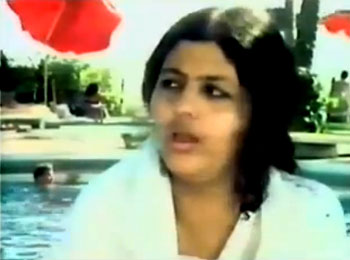
    An ancient BBC documentary on Rajesh Khanna has surfaced on the internet, and it’s a must-watch. Devi (as Devyani was called) has been interviewed in the film, and it’s easy to see she was one hell of a feisty lady. No wonder the Hindi film world of the sixties and the seventies loathed and respected her at the same time.


    Devyani Chaubal in the BBC Documentary posted on YouTube. Source: Pavitra66

    This got me interested in Devi, and I spoke to a couple of people who knew her, and also read up on her modus operandi. And I must say I am left very impressed. For those who may not know, Devi was a hot film gossip-writer employed with the magazine, Star & Style. Her fortnightly column called ‘Frankly Speaking’ was immensely popular and it was quite acerbic. Because of her superb connections in the movie biz, and her close proximity to stars, their secretaries and their chamchas, Devi would fish out red hot goss and then lace it with her own acidic views. More often than not she used to be accurate with her stuff, and this is why movie stars used to dread her columns. She could make or break both, careers and relationships. In fact, her juicy notes on Hema Malini and Dharmendra’s torrid affair didn’t leave the latter very amused. The ‘He-Man’, after downing some Patiala pegs, went after Devi and rained a few punches.


    So what emboldened Devi? I suppose there must have been many reasons. One, her own fiery temperament and the devil-may-care attitude. Secondly, the full backing from her publishers and her editor. Also, Devi came from a wealthy family and the fear of losing her job may not have played on her mind at all. As a bonus, her dad was a well-known barrister, therefore legal notices from movie stars (and there were plenty) would have had no effect on her.


    Devi passed away in 1995 and I must say there hasn’t been a filmi journalist like her since. What you get these days is convenient ‘leaks’ doled out by the stars’ agents and sometimes the stars themselves. Film reporters have become sub-servient, and not wanting to rub stars the wrong way seems to have become the credo. Part of the problem is the media boom. With so many media options now available, the film industry can block out an ‘inconvenient’ journalist without batting an eyelid, and the show goes on.


    This means we’ll never get to see someone like Devi again. This is great news for the movie stars, but it’s a loss for the desi media.


    P S: Here’s some dope on Khanna which no one’s spoken about. It tells you the man had a sense of humour too. On the eve of the release of Bachchan’s huge film called Shakti (1982), Rajesh Khanna was overheard making a snide remark. He said: “Wow, such a long queue outside movie halls for the man! Didn’t know Dilipsaab is such a crowd puller even at this age.” Haha. Rest in peace.


  • Arena Animation creates country’s first 3D commercial

    By A Correspondent


    Aptech’s education brand, Arena Animation has created the first 3D stereoscopy commercial. The commercial named as ‘Dudolls’ is the first ever TVC produced inIndiathat has undergone a 3D stereoscopy conversion. It means that the TVC can be viewed on any 3D supported device like 3D cinema theatre and 3D monitors.


    ‘Dudolls’ has been created by the reputed production house, Talking Donkeys for Arena. It shows playful animated characters (named Dudolls) in an Arena centre and the backdrop showcases facilities provided by Arena Animation to their students.


    The TVC is already being aired on many national TV channels. However, the 3D stereoscopy output will be seen in multiplexes in 3D movies. It would be seamlessly built into the ad slot during the 3D films. It is meant for any 3D device that includes television and mobile phones. The advertisement is also expected to run on the 3D televisions of the future.


    The concept is to showcase Animation & Multimedia as a fun and rewarding career.

    The concept has been collaboratively built by the marketing team at Arena & the creative agency, Quadrum Solutions.


    Speaking at the launch, Mr. Ninad Karpe, MD & CEO, Aptech Ltd said: “We have moved a step further in the world of animation with our latest TVC in 3D. It will help us reiterate ourselves as leaders in the animation arena and expand in our category. ‘Dudolls’ just reiterates how animation is gaining prominence and has become a coveted career of the youth.”


    Sonya Banerjee, Marketing Head, Aptech added: “We made a 3D commercial foreseeing the trend in 3D content. Planning on this required a foresight to integrate the 3D vision early in storyboarding stage and not as an after thought.”


  • Anil Thakraney: Cap on TV ads harsh. but necessary

    By Anil Thakraney


    TRAI’s proposal to control television advertising does sound anti-free market at first glance. They have proposed 12-minutes per hour cap on ads. And also a ban on drop-downs and half-screen ads. Surely this is unacceptable. In an open market economy, marketers must be allowed to run their own commercial agendas, as long as no law is being broken. Just as all other media formats and most other businesses are allowed to. And I do see matters reaching the boiling point as the D-Day gets closer. Fair enough.


    Having said that, there is no doubt that TRAI’s new guidelines will vastly enrich the TV viewing experience. There are often too many ad breaks, and the Hindi news channels are particularly guilty of this. Many of us get scared of watching these channels more because of the breaks rather than the bhoot prets they regularly feature.


    And on some entertainment channels, the ad breaks are so long, leave alone No 1, you can actually manage No 2 inside one break! I know this example is crass, but you have to admit it’s quite relevant in this context. 🙂


    And of course, some of the sports channels have made a mockery of the TV screen. The way they splash live action with ads and commercial graphics, it’s like a naughty child has been let loose on canvas with a bucketful of paint. Half the fun of watching live action cricket has gone because of these sad gimmicks.


    TRAI’s proposal attempts to correct these things, and that’s a good thing. Also, because the ad rates will zoom up in the new regime, advertisers will be pickier about the programmes they choose, and will make sure they are focused. This will provide them with better return on investment. Today, on a very serious programme like Satyamev Jayate, one is bombarded with rubbish chaddi/baniyan ads. This makes no sense, neither as a marketer nor as a viewer.


    In addition, advertisers and their ad agencies will be compelled to get innovative on television. People will have to think beyond the classic 30 seconder, and as a creative person, I find that idea pretty challenging.


    Bottom-line: Yup, TRAI’s proposal is autocratic and draconian. They have no right to decide how private operators choose to make their money. I accept that point. But if their new guideline does get implemented, the television medium will regain some of its lost sheen. That, too, is a fact.


    * * *


    PS: Ah! Just another fun filled day in the ad world. It was like this a hundred years ago, and it’s still the same. And outsiders wonder why ad guys are often found inside watering holes. This is the key reason!


  • Ad Strat: Tata I-Shakti unpolished dals

    Kapil Mishra, Executive Creative Director, Leo Burnett


    1. Name of the Campaign: Tata I-Shakti unpolished dals


    2. The Brief:

    The brief given to the agency was to bring out the health advantage of ‘unpolished dals’ over the polished ones and marrying the qualities of the product – Taste and Health with the food cooked by celebrity chef Sanjeev Kapoor.


    3. The thought process behind the creative:

    I-Shakti dals are unpolished and reach the consumer after undergoing cleaning that is only absolutely necessary. The latest campaign seeks to bring alive this truth with the apt tagline ‘Bina chamke sehat chamkaaye’4. Media vehicles chosen:


    The promotion campaign will have TV advertisement being aired across national and regional channels, supported by Market level and outdoor visibility drives. Such as bus back panels, toll hoardings, branding at Metro stations in key metro city markets.


    TV channels national and Regional C&S, Outdoor media, in-shop branding and marketplace visibility through merchandising.


    5. Does the treatment do justice to the brief:

    The treatment is according to the brief which was to have a message based on goodness of Tata I-Shakti Unpolished dals and create generate awareness. To drive this point home, Sanjeev Kapoor, a trusted celebrity and household name has been chosen to endorse the brand. For a category in which the consumers don’t have an evolved yardstick of pre-evaluation to aid  buying process, having Mr Kapoor lends credibility to message to choose a Tata I- Shakti dals which are a deviation from current buying behavior and  consumption pattern.


    6. What according to you is the differentiating factor about the ad:

    When you have a message based on honesty and authenticity, the tone and manner in which it is delivered needs to be exactly the same – honest and authentic.


    7. Market Client feedback:

    Yet to be received


    Compiled by Shubhangi Mehta


  • ‘If you’re not ready for digital, your company is’: Media Rhythm 4


    By A Correspondent


    Stratagem Media Pvt. Ltd, an independent media services company, held its fourth training program called ‘ReveNEW Concepts – The Media Rhythm series and Ideas’ on July 21 in Mumbai. The workshop saw participants from The Times of India, The Hindu, Malayala Manorama, Eenadu, Amar Ujala, MY FM and other media companies.


    Among the speakers were Mr Sundeep Nagpal, Founder Director at Stratagem Media Pvt. Ltd; Mr Suresh Balakrishna, CEO, Brand Programming Network; Mr Bharat Kapadia, Chairman, Whatuwant Solutions and Mr Madan Sanglikar, a digital media expert and CEO, AD2C.


    About bending backwards with ease:

    Mr Nagpal, the first speaker of the day, delved on ‘Bending back with ease’ wherein he asked the participants to first know what they are selling. He said that instead of selling many things at one time, there has to be some clarity and certainty of what is being sold and only then the expectations of the clients can be met. Mr Nagpal also spoke about the importance of reminding the consumers about the brand even after awareness is created: “A consumer needs to see the ad frequently. Time and again we have been able to convince clients that in a crowded market, playing one advertisement is not enough. Therefore a reminder is very important.”


    He also said that even though there is awareness, reminder and high impact, the brand may not sell as the problem could be because the competition is making more noise. “At times when everything is good, there is no recall because competition is making more noise. Response measurement is very tricky and must be done in a scientific way. Low response could be because of the lack of good features, price and distribution issues,” he said.


    Mr Nagpal also pointed out that it is very important to know the client’s business or product: “If you are managing client expectations, you must also know the client’s needs. When you do consultative selling, you can reduce the discount selling.”


    He also spoke about the two ways a brand can grow. First, get new consumers and second get the same old consumers to consume the brand more frequently. Some other ‘home truths’ Mr Nagpal shared were: remove discount, adopt differential and value based pricing.


    He said it is important to know the competition as is important to calculate, permute and innovate and that you can always refuse a business instead of selling lower than what you deserve.


    Customising media usage for brand communication:

    Mr Suresh Balakrishna kick-started his session by playing a one minute trailer of the film ‘Rocket Singh, Salesman of the Year’ as an example of how one should and can sell his brand to the consumer. He spoke about going beyond media objectives and looking at communication objectives, quickly pointing out that the media objective is only a channel; the client however wants a communication objective. “You need to create a connect between communication objective and media solution. It is important to understand the communication objective of the client, his needs and aspirations as well. You must, therefore, involve your clients and listen more to what your client wants.”


    Mr Balakrishan presented three case studies – Union Bank of India, Vodafone, and Cadbury Dairy Milk Shubh Arambh. He split the participants in different groups and asked them to do various exercises on the case studies presented. He gave the participants various challenges and asked them to come up with solutions to those challenges: how they would have connected with the consumers; how they would have amplified a particular campaign in the media or solved a certain problem in a different way.


    On Motivation and Innovision:

    Mr Bharat Kapadia spoke about the importance of motivation in an individual and the need for ‘innovision’- a combination of innovation and vision. “Everyone cannot have wrong card, what is important is how you play your cards. Unless ‘You’ believe that nothing is impossible, nobody will be able to help you out. Whenever you are given a tough task, don’t see it as impossible, but instead attempt it to raise the bar for yourself.”


    On the need for innovation, Mr Kapadia stated that even innovation needs to have a vision. He said that one needs to innovate, to not only stay ahead of the competition, but also to create a new experience or even to solve a problem which at first looked quite challenging.


    Mr Kapadia shared four crucial points for innovation: Uniqueness, Impact, Achieving the goal and Sustainability. He was quick to state that ideas and creations are nobody’s monopoly as each one is capable of generating ideas. Therefore, one needs to start thinking without any baggage.


    He also stressed that an idea needs nurturing, which could be achieved with the help of family, friends and colleagues. He asked the participants to mentor the ideas of their juniors, so that they would come up with better ideas. But he was also quick to stress that the real test lies in the execution of the idea. One must always think of the end objective of their idea, and the hurdles they might have to cross.


    Mr Kapadia also warned the participants about the dangers of an idea: “Be careful that your idea is not gimmicky and irrelevant, the idea must fit into the objective of the brand. A good idea becomes a great idea if it is implemented well.”


    He also told the participants not to be afraid of mistakes and failures, but to learn from them. Mr Kapadia shared his experience about how he managed to successfully execute the Bru Coffee aroma campaign on The Hindu and the challenges he have to overcome to execute the campaign successfully.


    Mr Kapadia also gave participants some practical or exercise work during his session. He asked them to come up with an innovation for any media vehicle for any brand, whether existing one or a fictitious one. He asked them to exploit the strength of that medium. The teams were split into five groups.


    While concluding his session, Mr Kapadia reiterated that an idea is no one’s monopoly. It must however be relevant, feasible and beneficial to the client. He concluded: “There is no dearth of money in the market because it is all about a good idea. If you come up with a good idea, then the client will also shell out the money required for that idea. A good idea can even bring new advertisers.”


    Teleporting to 2015:

    Mr Madan Sanglikar shared nine concepts on digital, emphasising the growth of digital and the implication of that growth to other medium and the brands. He spoke about the future of print, television, gaming, mobile, social media, e-commerce, data visualization and eco-system transition, pointing out the need to think digital, that innovations are also happening on digital, and the fact that digital media is the fastest growing medium in the country.


    He said that the growth of digital will see more advertising categories increasing their spends on digital. He also said that digital will reduce the urban- rural gap. On the future of print media: “Print will be the biggest beneficial from the digital growth among the media categories. Dailies and magazines will get a new lease of life and static and AV (Audio Visual) formats of content and ads will co-exist.”


    On the future of television, Mr Sanglikar said that television experience will get better, a lot of which will be gesture controlled. Online video format will merge with television; it will create an explosion of online and on-demand videos.


    Talking about the gaming market, he stated that it is expected to grow to Rs3,100 crore by 2015 and there is a shift of gaming from bedroom to living room, wherein it becomes a family entertainment medium.


    Mr Sanglikar gave the example of a bakery in London who used Twitter to attract customers to his bakery as an example of how social media can be used for enhancing the business. He said that very soon there will be no emails as corporate social network will see huge growth.


    On the e-commerce front, Mr Sanglikar stated: “E-commerce market is also growing tremendously. Online shopping is getting more interactive with more pay options available and newer shopping categories soon catching up.”


    Mr Sanglikar also explained the difference between paid media, owned media and earned media and how today we are witnessing owned media and earned media share growing. He concluded: “Digital is like another medium and not imbibing the medium will not work. If you are not thinking about digital, your companies are certainly thinking about it.”


    What the participants say:

    At the sidelines of Media Rhythm 4, MxMIndia spoke to some of the participants for their views on the daylong event. According to Mr Subin Thomas from MY FM: “It was very interesting and fun too. Mr Suresh Balakrishna’s session was especially very good. There has been lot of learning, especially about innovation and communication objective.


    Ms Zeenat from Eenadu said: “The workshop was definitely helpful for us as it helps us with new ideas. After being in the industry for a long time, you tend to get a rigid mindset but, when we attend such forums where so many different issues are discussed, it refreshes our thoughts and allows us to think differently. The session on digital will probably help us in our work in digital.”


    A Times of India participant said: “It was a good way of looking at certain things and even on media selling. All in all it was a good and interactive sessions. There have been some good learning and takeaways too. I would also be taking some of the takeaways from these sessions to my clients.”


    Mr Soham Khimani from Malayala Manorama said: “The sessions were really wonderful and the speakers too were good. There was lot of creativity in the session which is very important in media sales today.”

     

  • Cadbury’s ‘nayi dosti ka Subh aarambh’

    By A Correspondent


    Cadbury Dairy Milk celebrates the beginning of new friendships with its latest TVC – ‘Nayi Dosti Ka Shubh Aarambh’. The TVC showcases the first magical moments of a blossoming friendship between a young girl and boy on the sidelines of a wedding, an occasion that in itself connotes new relationships. The traditional setting, combined with the contemporary twist results in an easily relatable and youthful TVC which hit TV screens nationwide on July 21 and is expected to have a presence in over 70 television channels.


    To further strengthen the brand’s digital presence, the TVC was released online on YouTube and Facebook on July 13. The response in the first 6 days has seen close to 573,000 hits on YouTube and 10,600 likes on Facebook.


    Speaking on the campaign Chandramouli Venkatesan, Director, Snacking & Strategy, Cadbury India said: “Cadbury Dairy Milk encapsulates an enormous breadth of emotions, from shared values such as family togetherness, to the personal values of individual enjoyment. The latest TVC celebrates and honours another very important aspect of relationships- the start of a new friendship.”


    Abijit Avasthi, National Creative Director, Ogilvy India added: “The campaign is perfectly timed to coincide with Friendship Day on August 5. This is an exciting, action-packed time for youngsters since colleges re-open around this time and they get to meet new people and start new meaningful friendships that last a lifetime.”


    The TVC will be supported by a robust integrated marketing campaign, including on-ground activations in 80 colleges, creative print placements, interesting radio capsules in leading radio stations across many cities and outdoor, to urge people to make new friends and celebrate special “friendship moments”.


    The new commercial plays out at a traditional wedding ceremony. A teenage girl and boy exchange notes on how every family has a “dancing uncle/aunty” and an “allergy aunty/uncle”. They quickly realize that the two families have much more in common than they thought. When the girl excitedly asks, “Tumhaari family mein mere jaisa kaun hai?”, the boy smiles and replies “Main”. A piece of Cadbury Dairy Milk is exchanged to celebrate their new found friendship and the closing VO states “Nayi Dosti Ka Shubh Aarambh. Kuch Meetha Ho Jaaye.”


  • Is there money to be made in e-commerce?


    By Tuhina Anand


    There has been a lot of buzz surrounding e-commerce, what with new sites being launched every other day, investment galore and customers finally warming up to buying more than air or train tickets online, one would think that the category come of age.


    However, if the front-end gives an impression that everything is hunky dory, a closer look will throw up a completely different picture. There are several reports doing rounds on how Flipkart, the site which is largely responsible for rewriting the game of e-comm is bleeding profusely and unofficial estimates put the losses to around Rs6-7 crores monthly. One does wonder if this is the scenario, then how it is with other e-comm sites and what lies ahead for the players.


    Kashyap Vadapalli

    Kashyap Vadapalli, Chief Marketing Officer, eBay India said: “There is a lot of buzz around e-commerce – new funding, new player announcements, consolidations and closures, expansions into new areas of business – all making news and hitting the consumer consciousness. However, it is certain that e-commerce is here to stay. Reputed players in the e-commerce industry are focusing on building consumer trust by evangelising online shopping’s benefits to them. This is probably of as much importance as it is to convert internet users to online shopping.”


    “There is a significant increase in supply side dynamism, especially over the last 2-3 years, where we have seen large brands, manufacturers and offline retail chains increasingly showing interest in the e-commerce opportunity. Once brands with offline recognition participate in e-commerce, comfort levels for end users will also increase. The fundamental characteristic of building a successful e-commerce business is one that provides consumers with ‘selection’ or ‘variety’ and not just ‘deals or value for money’,” he added.


    An interesting facet is that for the many outside the few cities where modern retail has penetrated, online shopping provides access to brands which are not available in their city or town, bridging distribution inefficiencies. eBay India Census 2011 identified buyers from 3,311 Indian cities which are shopping online covering all 28 states & 7 union territories of India.


    The Internet & Mobile Association of India (IAMAI) has estimated Indian eCommerce market to be worth Rs46,520 crore or $10 billion in 2011, with a user base estimated at around 10 million people.


    Ravi Vora, VP – Marketing, Flipkart said: “The e-commerce story in India is still to reach its full potential. 2011 was the year when this industry finally started to come of age. Today, increased attention from serious players and investors has given this ecosystem a much needed boost. Consumers too are slowly buying into the concept of online shopping – and as online companies continue to improve on their service experience, we see this trend continuing. It’s true that we are seeing the entry of lots of players in the current scenario – and going forward we do expect to see some consolidation in this space. However, the India n e-commerce story is far from over. In fact, in the near future we expect to see it become as robust a model as offline retail is in the country today.”


    Mr Vora of Flipkart elaborates that the domestic market has a lot of potential: “The company is scaling up business in order to be able to make the most of it. Our initial customers were the urban, net-savvy youth. However, with our current campaign we have started focusing on offline shoppers, especially in tier 2 and 3 cities. We believe this is where the growth will come from in the coming months – and our aim is to convert these offline shoppers to the online mode. Additionally, we are betting big on the digital business. We think it will expand a lot in the near future and have already made our debut with our online music download service – Flyte.”


    K Vaitheeswaran

    While the players talk about potential, and the largely untapped, market in tier II and III towns, there is another side of the story. K Vaitheeswaran, Founder & CEO, India plaza.com, one of the pioneers in online shopping in India, having founded www.fabmart.com in 1999 and later acquired and rebranded as Indiaplaza.com, has been through two cycles of boom and bust in the dotcom. He is of the opinion that the category has already begun to see some correction: “Unlike the first time when most e-comm companies had to shut shop, I think now the scenario will be different. Now the customers have experienced online shopping and know its merits so what one would see is consolidation in this category.”


    For him the mantra for success has been by “keeping a ruthless focus on cost management”. So no snazzy address and definitely no stocking inventory or having a warehouse, but focus is on great selection of products, good pricing and timely delivery. It’s a simple market place structure where they have vendors who provide goods and they manage the backend. Mr Vaitheeswaran said: “If you look at our ROCE (return on capital employed), I think we will top in profitability. Today most players are burning money; I mean how can a business be profitable if you are losing money faster than you are making and you are mindlessly growing operations cost? I think its high time people look at e-comm as a business and not merely as hobby.”


    The estimated size of the e-commerce industry is Rs2,000 crore (that is if one is looking at margins) minus the travel. This has been growing at 50 per cent, especially last year.


    In this growth, Flipkart has played a role which cannot be undermined. With its superfast delivery mechanism and COD (cash on delivery) option, it has revolutionized the e-comm market in India. Its high decibel campaign addressing deterrents in e-comm has also helped in making e-comm amenable to Indians, besides helping the company create a brand name for itself, which has a high recall. However, this has come at a cost for the company. Its investors – Tiger Global Management and Accel Partners (the latter did not revert on our query) – it seems are not keen on investing any further. Hence, now for Flipkart, which has recently acquired Letsbuy.com, the option is to be either open to acquisition by a global giant or look for a larger PE investor.


    Mahendra Swarup

    Giving his take, Mahendra Swarup, Partner, Avigo Capital, said: “In the long run, e-commerce will grow, given that internet penetration in India will only rise and more number of population will become comfortable with the medium.”


    He believes what has gone wrong is the way e-comm companies have been structured. What the companies have been selling on the net is a value proposition, while at the same time, the cost of customer acquisition remains high. In fact, in many categories like the books there is hardly any margin. He said: “The VC’s have taken the e-comm business to scale, but after a point there is a need for large PEs to come to rescue as in the case of Flipkart.”


    Mr Swarup’s company Avigo Capital has not invested in any e-comm sites as he said: “we are not interested in that game”. He makes a relevant point when he says that most e-comm sites have failed to create a mature management and have been stuck at the entrepreneur level, unlike in other parts of the world where entrepreneurs take back seat and hand over the reins in able managers while still remaining the face of the company, fine example being Google and Facebook.


    Also their supply-chain management is not that mature, so in reality, they haven’t created anything that will be attractive for a PE to invest: “I think many small e-comm companies who are non-funded have a better chance to survive than the funded ones.”


    Mr Swarup said that the whole talk of Amazon buying Flipkart holds no value as the latter has created no value or attractive proposition for the former to buy and as far as customer loyalty on the web is concerned, none exists. He feels niche players providing specialized merchandise like bikes, mountaineering equipments or kids clothing and accessories have a better chance of survival.


    However, the whole e-comm buzz has helped players who remained dormant after creating e-comm platforms on their sites. A large player has seen 100 per cent growth in last year by just tweaking its website and catalogue changes with no additional cost. In fact, most players follow no inventory, no warehouse model, unlike Flipkart whose losses is attributed to its business model of stocking products, which has helped it in delivering fast but cost a dent to the company.


    Also, the COD model, which has lured many customers to order from the net, is seen as a complete ‘con game’, as one doesn’t get cash immediately and margins gets reduced immensely plus products get returned, thus creating additional cost burden. In fact, this problem could be solved by creating a database which can be shared by the e-comm players with suspect customers similar to banking sector.


    Ashutosh Lawania

    However, all is not lost, Ashutosh Lawania, Co-Founder & Head of Sales, Myntra.com, said: “We have been doubling every six months and it has gone as per the plan. Currently there are 120 million internet users in India which is estimated to grow to 300-400 million users. Out of the 120 mn internet users today, only 10 per cent are transacting online. This number will only grow as more and more people will have trust on online shopping. Overall, this is a big market and there is enough for all the players. In the next 12-24 months, I do see some kind of consolidation happening.”


    Myntra, which started with offering personalized merchandise, now sees almost 55 per cent demand from the footwear category. There is potential and there are ready customers so the e-comm story which began as a roller-coaster ride will see some correction to pave way for future growth.


    However, one should pay caution to the business model as speedy growth comes at a cost and for running a business what one must always remember is the basic – be profitable and do whatever it takes to achieve that. However, e-comm in India right now has become nothing less than a soap opera.


  • Relaxo signs Salman Khan as brand ambassador for Hawaii

    By A Correspondent


    Relaxo, the second largest producer of footwear in India, has signed Salman Khan as the brand ambassador to endorse one of their most popular brands – Hawaii slippers.  Hawaii has introduced a new Hi-Fashion range of slippers for men and women, and Salman Khan will feature in all the brand communication related to Hawaii across the media.


    Speaking on the occasion, Gaurav Dua, Executive Director, Relaxo Footwears Ltd. said: ” Hawai i has always been on the forefront to provide the comfort and ease in daily wear for the masses. Through this new commercial, we bring in light the strength and toughness aspects of Hawaii slippers. And what better way to promote this strong USP than having Salman Khan endorse our product. We are extremely happy to associate with him and we hope this tie strengthens our bond with our customers.”


    Highlighting the same, Salman Khan said: “Relaxo is one of the most trusted brands in footwear, and I’m glad to be doing this commercial as it is focused on the concept of “mazbooti” (strength), and completely suits my persona.”


    Mr Khan will soon be seen endorsing Hawaii slippers in a 45 second TVC created by ARMS Communications Pvt. Ltd, positioning Hawaii as a symbol of style, comfort and strength. The film revolves around the star Salman Khan, who with confidence saves different girls from life-threatening situations, an act which seems impossible in real life. Since all this seems unrealistic, Salman appears on screen and says, “Yeh thodaa zyada hogaya. Lekin RELAXO Hawaii hai mazboot. Main pehenta hoon.” This statement sums up the exaggeration yet leaves the viewers with the message that  creates an aspiration in the minds of the consumer to acquire what their favorite star endorses.


  • Mogae announces specialist unit Mobiwise for mobile SEO/SEM

    By A Correspondent


    After the launch of Mobocracy, the creative boutique for mobile, Mogae Media announced that it is launching Mobiwise, a specialist mobile planning unit focused on SEO/SEM. The unit will be located at the Gurgaon headquarters of Mogae.


    “In the recent years, a massive surge in the use of smartphones, and now tablets have made it essential to adapt web pages to meet the needs of their users. In particular, the web pages should be optimized for search on these platforms, so you reach your audience that is typically mobile, business oriented and mostly affluent,” said Tanya Goyal, Executive Director of the Mogae Group.


    Mobiwise brings in-depth understanding of how the user behaviour differs on these handheld devices from PC browsing and provides effective search engine optimization [SEO] for the mobile site. Experienced specialists at Mobiwise will help clients ensure their SEO works across all devices.


    The mobile SEO services will include regular mobile site audits, onsite and offsite SEO, accessibility and usability consulting, multilingual mobile site optimization, a balanced approach to SEO and pay per click [PPC].


    To balance the use of organic SEO and PPC advertising on mobile devices, an in-depth understanding of how the various search results and adverts are displayed across a range of the most popular platforms is required. It is also vital to keep up-to-date with the latest technologies and gadgets and their impact on user behaviour as well as search engine policies.


    Mobiwise has been setup especially to help clients through this maze and make sure their business is being found by users of the latest phones, tablets and other devices. Mobiwise helps get the best from this relatively new advertising medium, allowing the client to reach out to an affluent, mobile and technologically savvy audience.


    “At Mogae Media we are trying to provide single window solutions for the mobile medium. We believe the market is close to an explosive inflection point. Mogae, with Mobocracy and Mobiwise, will be in the forefront of mobile communication,” emphasized Ms Goyal.


  • Debrief: HCL: Fresh and entertaining

    By Anil Thakraney


    HCL is back with its Mr HCL and Mr Banker campaign. The positioning is the same as before: ‘Technology that touches lives’. But innovation is at the heart of the new commercial.


    This time the two dudes are marooned on a remote island. The banker plays the bumbling idiot, and Mr HCL is, of course, the smart one. The latter uses the banker’s dead cell phone to light a fire on the beach. The smoke is detected by a rescue helicopter, and the two are saved. But not before the banker has made a fool of himself for some quick laughs.


    This commercial works for me. Mainly because Mr HCL isn’t shown using technology to provide a solution, he uses ingenuity. Imagine if he had used techno magic to perform the rescue act, the TVC would have become literal and therefore boring. At the same time, this approach projects HCL as an innovative company that’s ready to think out of the box. Ergo, message delivered.


    [youtube width=”400″ height=”225″]http://www.youtube.com/watch?v=1gAASVe09VM[/youtube]

    I didn’t much care for the ‘ass on fire’ slapstick stuff, it is much too forced, but our cold techie friends will find this funny, so that’s fine. But why make fun of investment bankers? Are they such morons? This is the only part I don’t quite get.


    All in all, an entertaining ad that delivers the message. Also, the Discovery Channel type of a setting, of being rescued from wilderness, adds to the freshness of the communication.


    Rating: (On a scale of 1 to 5): 3. Focused message. Cool delivery.


  • London’s Imagination creative shop enters India

    By Preethi Chamikutty


    Imagination, a London based creative agency became the latest entrant in the Indian advertising landscape. With offices in Mumbai and Bengaluru, Imagination is currently in the process of building its team in India. The India operations will be headed by Uday Vijayan, who has worked in the past with agencies like JWT, Bozell and GPJ.


    Imagination’s creative team will be headed by Alistair Petrie, regional creative director who is based out of the agency’s Hong Kong office. Imagination started off as an experiential agency but now handles different creative needs that a client may have. At the Auto Expo 2012 held in New Delhi earlier this year, Imagination helped auto brands like Land Rover, Ford and Tata Motors showcase themselves in a distinctive manner.


    “This maybe our official entry into India, but we have been working with Indian clients over the last 15-20 years,” explained Mark Barrett, CEO, Asia Pacific, Imagination.


    Oberoi hotels, 360 restaurants, Hyatt New Delhi and Ritz Carlton Bengaluru are among the brands that Imagination has worked with. Imagination has also redesigned the Aston Martin showrooms for the car brand in India.


    Imagination has 16 offices spread across Qatar, Moscow, Seattle, Sao Paulo and has 9 offices in the APAC region alone. China was its last entry before India, and Barrett hopes to replicate the success of Chinese market in India as well.


    “Our past experience with Indian brands is helping us grow. Everybody thinks an international agency will be expensive, but we think globally and work locally,” said Mr Barrett. He also said Imagination will draw upon its resources across the globe to do the best work for its clients, irrespective of where the client is physically located.


    Imagination, said Mr Barrett, works with over 311 brands globally including Disney, Siemens, Aston Martin and The Body Shop among others. Talking about the Indian opportunity, he said there are a lot of luxury brands in India which he says is an area of opportunity for them.


    Source: The Economic Times

    Copyright © 2012, Bennett, Coleman & Co. Ltd. All Rights Reserved


  • … but rejoice! Dabur increases its adspends

    By Jwalit Vyas


    Dabur India delivered a good performance in June 2012 quarter. The major surprise of the June quarter numbers was the year-on-year 51 per cent jump in its advertising and publicity expenses.


    Dabur had kept its advertising cost in control over the past several months in order to maintain its profitability. However, the strategy seems to have changed as the company again has started pumping money in marketing its products.


    Its advertisement to sales ratio increased by 310 bps year-on-year to 15.7 per cent in March 2012 quarter. Its sales grew by 20 per cent y-o-y to Rs1,462 crore, which its net profit grew by 17 per cent to Rs 150 crore. Operating margins remained flat at 16 per cent which is positive for the company considering the additional advertisement expense.


    The second most diversified Indian FMCG company showed a healthy growth across segments. Its food business which contributes to around 15 per cent of the company’s net sales grew by 31 per cent, while its consumer care business which is 80 per cent of its total sales grew at 15 per cent. Its retail business (Kaya Skin Clinic) continues to be loss making but the size of this business is negligible when compared to its overall business.


    Dabur’s stock closed 0.1 per cent up at Rs 118 while the Sensex was down by 1.7 per cent. The company’s stock is trading at a price to earning multiple of 31.


    Source: The Economic Times

    Copyright © 2012, Bennett, Coleman & Co. Ltd. All Rights Reserved