Category: Ad Agencies

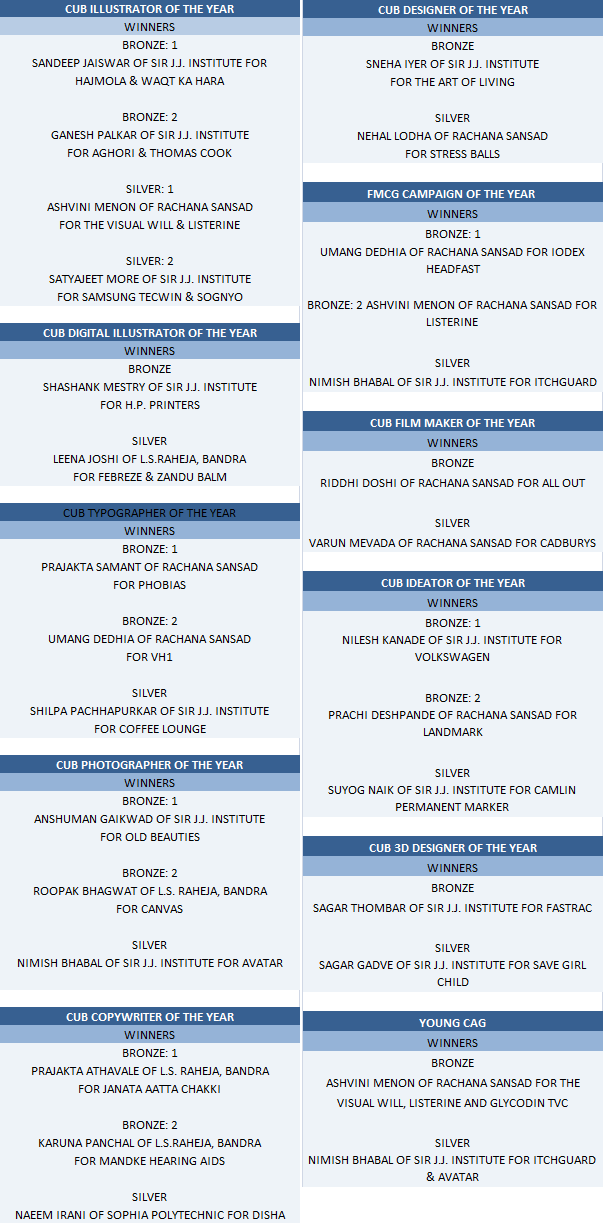
  • Why Cag has stopped awarding seniors


    By A Correspondent


    (with generous inputs from a speech by Gangadharan Menon)


    Those who’ve been part of the ad and media fraternity for less than a decade may be wondering why the Big Story today is on the Cag Awards. In fact the only CAG in their lives is perhaps the Comptroller and Auditor General, better known for unearthing scams and irregularities so very frequently.


    The reason why most of our youth is unaware of what Cag is has perhaps got to do with the decay that has set into the way ad awards were being conducted. Communication Arts Guild, or Cag (written in upper-lower as against all caps) as is popularly known as in advertising circles, was founded in 1950. The sole purpose then, and now, is to spot, nurture and reward talent in the field of creative communications. Initially it started off specifically for commercial artists, but over the years it expanded to include all forms of creative communications. And in fact, the name too changed from Commercial Artists Guild to Communication Arts Guild to reflect this change.


    The highlight every year was the Annual Cag Awards in various communication categories, culminating in the Art Director of the Year and the Cag Hall of Fame. The following year would see the release of the Cag Annual that would feature the previous year’s awardwinning work.


    Somewhere in the mid-90s, the much-coveted Cag Awards were discontinued. Reason: the unchecked and uncontrolled proliferation of what came to be known as scam advertising. Meaning, advertising that was never released in mass media, but was created only for the purpose of winning awards. The client was fictitious (or perhaps that cobbler or panwallah down the road who never needed any advertising), the brief was non-existent and the media was unaware of their existence. When 90 per cent of the entries started belonging to this obnoxious category, Cag called it quits. And with it stopped the highly sought-after Cag Awards, and thereby dried up Cag’s only source of funding. But the very next year, Cag started the Young Cag Awards, to spot, nurture and reward the young creative talents in the various art colleges across the city. And for a dozen years, it has been feeding the advertising and allied applied arts industries with a steady stream of young talent.


    Over the academic year, Cag holds various workshops by practising professionals, and at the end of the year conducts a meticulous talent hunt across all art colleges. Starting this year, the hunt has been extended to art colleges across the country. This culminates in various awards given across categories: Cub Illustrator, Cub Photographer, Cub Copywriter, Cub Typographer, Cub Designer, Cub Ideator and Cub Art Director of the Year. An exhibition of this awardwinning work is held every year after the awards function to inspire younger students to excel in the creative communications field.


    These awards are purely funded by the interest earned from the earlier kitty generated by the Cag Awards for Professionals. There is no fresh source of funding as Cag doesn’t believe in charging award entry fees to students. The people who work for Cag do it pro bono, merely giving back to an industry that gave them fame and fortune.


    In the year 2010, Cag took a decision to go digital. And it digitised around 36 Cag Annuals and put them on its website. This is a treasure-trove of advertisements that appeared between 1950 and 1995; and is the only source for students, academicians and professionals who want to understand the creative evolution of Indian Advertising.


    One of the recognitions that continued uninterrupted is the prestigious Cag Hall of Fame. A citation and award that recognises and acknowledges an individual’s seminal contribution in the field of creative communications, spanning a few decades. This illustrious Hall has already inducted various luminaries into its hallowed precincts: Kersy Katrak, Panna Jain, Ravi Gupta, Frank Simoes, Gerson da Cunha, Avinash Godbole, Arun Kale and Arun Kolhatkar.


    This year, Kiran Nagarkar was inducted into the Cag Hall of Fame. For his outstanding contribution in pioneering some of the finest campaigns in Indian advertising and for his versatile talent in other fields of creative writing: as a playwright, screenplay writer and an award-winning novelist.


    Nagarkar made a plea to the audience to not let Cag to die and made a clarion call to young creative professionals to shun scam advertising.

    # #


    What would you expect creative boys and girls to be doing on a Saturday morning? Majorly hung over, getting off their beds a little before noon? Guess we’ve got it all wrong. On Saturday, April 7, right in the middle of the looong Good Friday weekend, Cag held its 63rd annual awards function. At the Ravindra Natya Mandir at Prabhadevi. Since most of the award-winners were students, it was a packed house. Except for the front rows since the ad fraternity and some of the other leading lights among ‘communication artists’ don’t appear to quite care about being present. “It’s perhaps because Cag is now essentially a students’ show with just one veteran being awarded,” said one senior art director.


    The Cag committee comprises veteran professionals like Samir Khanzode, Gangadharan Menon, Sunil Mahadik, Gopi Kukde, Brendan Pereira, Ranjan Joshi and Sachin Puthran. Cag, according to vice president Gangadhar Menon is clear it doesn’t want to revive the awards for seniors. Unfortunate, because surely there ought to be a way in which one should be able to eliminate scam ads. Or at least minimise them. Cag comprises and celebrates creativity. It must now find a creative (and effective) solution to the problem.


  • @ Creative Abbys: Ogilvy and Creativeland Asia get 1 Grand Prix each

    The Grand Prix-winning Ogilvy team at the Creative Abby presentation on Friday


    By A Correspondent


    Creativeland Asia was awarded the coveted Grand Prix at the Creative Abby at Goafest 2012 this evening. Creativeland joins Ogilvy in the Creative Abby awards which had bagged a Grand Prix in the awards presented yesterday. While Creativeland won it in the integrated category for Audi A8L 3D, Ogilvy was awarded for the Online Integrated Campaign for FoxCrime.


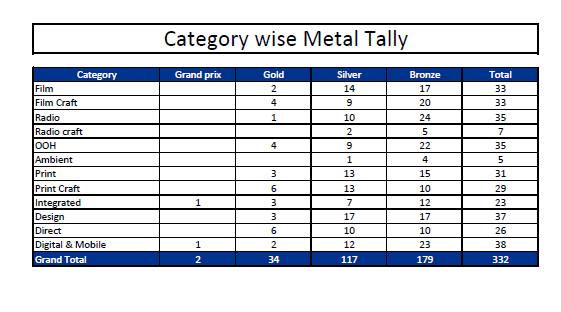
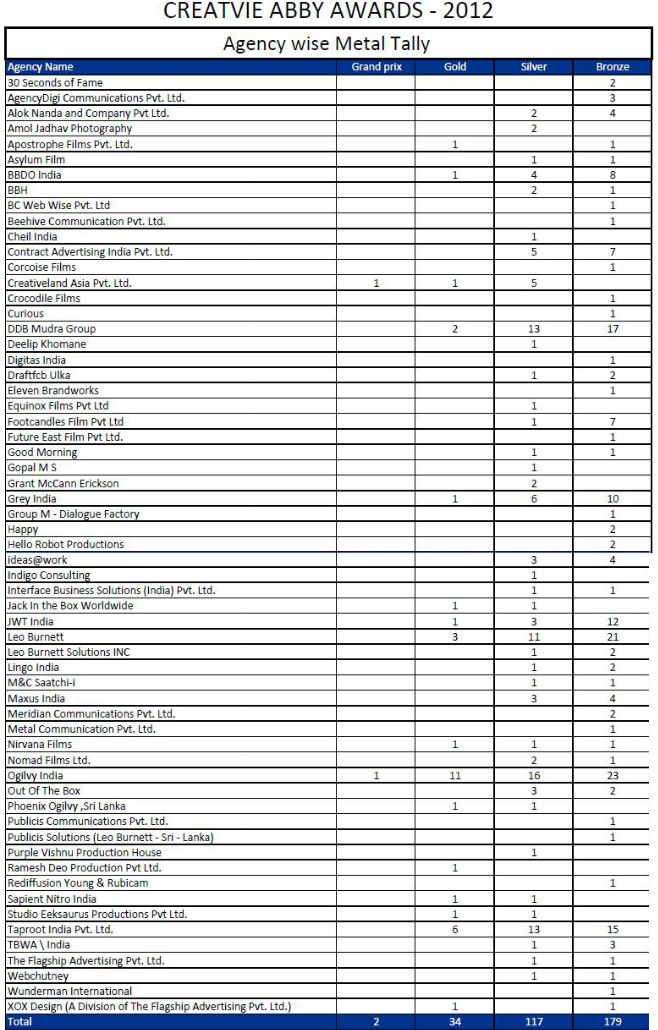
    Ogilvy won a total of 51 metals, which includes 1 Grand Prix, 11 Gold, 16 Silver and 23 Bronze. If GrandPrix and Golds are the yardstick chosen for the rankings, Creativeland Asia stands next with 1 Grand Prix, 1 Gold and 5 Silver followed by Taproot with 6 Golds, 13 Silvers and 15 Bronze (34) and Leo Burnett with 3 Golds, 11 Silver and 21 Bronze (35).


    Said Shashi Sinha, Ad Club Bombay President and Chairman of the Awards Governing Council: “This year, the quality of judging has been superior and the quality of discussion too was very good. We have more metals being distributed and had fresh categories of awards have been introduced. We had awarded around 224 metals last year alone as compared to a total of 332 awards this year, which is a 50 per cent increase. Besides, our Grand Prix have also increased in the Creative Awards from one last year to two this year.”


    The total number of awards given out this year was 332, with 2 Grand Prix, 34 Gold, 117 Silver and 179 Bronze.


    Said Goafest organising committee chairman Arvind Sharma, “The festival is all about celebrating breakthroughs whether it is about inviting our neighbouring South Asian countries for the first time as entrants or allowing their creatives as entries in our awards or even increasing the number of metals this year.”


    Click here for detailed list of Creative Abby award-winners as received from the Awards Governing Council


    Photograph: Shailesh Mule/Fotocorp


    Click here to view all Goafest 2012 stories


  • Cannes Lions launch Mobile category; Tom Eslinger appointed first jury chair


    By A Correspondent


    The International Festival of Creativity – Cannes Lions – has announced that Mobile will be added as a new awards section, launching at the 2012 Festival. Tom Eslinger, Digital Creative Director of Saatchi & Saatchi Worldwide, will preside over the Mobile Lions jury in its inaugural year.


    Mobile Lions will reward the best work which lives on or is activated by a mobile device, app or mobile web. The judging criteria will be based on creativity and the idea, execution (usability, user experience, craft and design), relevance to the mobile platform and results (level of user engagement and any quantifiable outcomes). The categories for the new Mobile Lions will include Creative Use of Technology, Mobile Websites and Web Apps, Mobile Apps, Tablet Apps, Games, Rich Media Mobile Advertising and Integrated Campaigns led by Mobile.


    The jury will be made up of experts in mobile from digital agencies and applications development, and will award Lions to the best use of mobile in marketing campaigns with the winners being announced alongside the Press, Cyber and Design Awards Ceremony taking place on Wednesday 20 June in Cannes, France.


    Philip Thomas, CEO of Cannes Lions, commented, “Mobile has been part of the Lions for some years, within other sections such as Cyber and Film, and a large number of winning campaigns in sections like Media, Design, Direct and Outdoor have made significant use of mobile technology. By carving it out of the other sections, we are simply reflecting the importance of mobile in the media mix, and we are delighted that Tom Eslinger has agreed to step up and lead as jury president. The category could not be in better hands in its launch year.”


    Joining Saatchi & Saatchi New Zealand as a Creative Director in 1998, Mr Eslinger began creating mobile ideas launching projects for Rugby Super 12, the New Zealand All Blacks, Telecom, NZ Dairy Foods and the NZ Retirement Commission. More recently, Mr Eslinger has worked across applications, augmented reality and games for Toyota, 3M, Burton Snowboards, Coca-Cola, T-Mobile and Visa. Now based in London, he works across Saatchi & Saatchi’s worldwide digital capability and in 2002 was appointed to the Worldwide Creative Board where he leads the creative growth of Saatchi & Saatchi’s worldwide digital team, adding new teams and capabilities. He is a multiple Cannes Lion winner and has previously served on the Cyber and Titanium and Integrated juries before presiding over the Cyber Lions jury in 2007.


    Commenting on his appointment, Mr Eslinger said, “It’s always an honour to be asked to join a jury and awesome to be asked to be president for a new category, especially one I have a deep passion for. I’ve been creating mobile ideas for over a decade and I’m stoked that Cannes Lions has chosen this particularly exciting time to start recognizing the best ideas created for mobile devices, apps, sites and other new and wonderful permutations. I’m keen to get started!”


    The new look Cannes Lions 2012 website (www.canneslions.com) has been launched, with up-to-date information on the Festival and awards, interviews with key industry members, video content and much more in the lead up to the Festival.


  • Quadrant creates Tiger Balm’s new TVC

    [youtube width=”400″ height=”200″]http://www.youtube.com/watch?v=gA4LTXqDMos[/youtube]

    By Shubhangi Mehta


    The latest Tiger Balm campaign created by Quadrant Communications portrays that Tiger Balm is so popular that most people across the world recall the balm brand and not the animal. The setting of a language class has been used to accentuate this. It’s a 30-second commercial in Hindi, Kannada, Tamil, Telugu and Marathi.


    The Indian balm market is dominated by heritage brands like Zandu and Amrutanjan. Tiger Balm too enjoys good brand recall in minds of the consumers, however it is more back of mind memory than top of mind memory. The brand has been away from media hence the motive of the campaign is to let the consumers recall the brand.


    On the TVC, Rajan Narayan, President, Quadrant Communications said, “During the researches conducted, following things clearly came across, Strong awareness of Tiger Balm as an international brand association of Tiger Balm as a strong balm, its unique packaging and logo. Recent communication by competitors within the category had not communicated anything new to grow the category. The fallout are new formats like gels and creams eating into the balm market share. Hence we devised this campaign which can be regarded as clutter breaking due to its approach”.


    The strategy was to leverage the fact that Tiger Balm is the trusted pain relieving balm in most countries across the world.


  • Welcome,the new adland superpower:Dentsu


    By A Correspondent


    It’s no longer watercooler chatter or just a whisper in the corridors. By gobbling up Aegis, Dentsu has made its intentions very clear. Sir Martin Sorrell and Maurice Levy, the Japanese are a-comin!


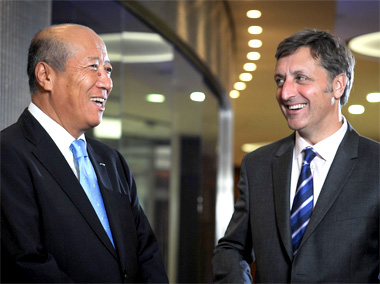
    Announcing the mega-deal: Tadashi Ishii, President and CEO, Dentsu Inc and Jerry Buhlmann, CEO, Aegis

    Dentsu’s $4.9 billion acquisition is being counted as the biggest in the advertising business. It’s the second buy of a British ad entity within a month. But, of course, Aegis is a large network while BBH (which sold out to Publicis) is just a creative boutique.


    There was nothing forthcoming from the Dentsu and Aegis offices in India, however, it’s set to be business as usual for the now. The nitty gritty will only be completed by the end of the current year, and the impact, if at all, will be more on shared services, sources tell us.


    There is a marked difference between our respective styles of functioning, an insider at Dentsu told MxMIndia on conditions of anonymity. “But that too is a global issue”.


    Another industry voice told MxMIndia that the scale which Dentsu attains will help it considerably. It’s not just the preserve of networks like WPP, Omnicom, Publicis and IPG any more. The rub-off will be very positive on both entities and pitches henceforth will see them as significant players.


    First some background:

    In July 2009, Dentsu announced its medium-term management plan titled “Dentsu Innovation 2013”, focusing on global business expansion and intensifying digital offerings, together with further strengthening its mass media business, to drive its business strategy as one unified group and to achieve strong growth. Looking to its clients’ and media agencies’ business landscape, Dentsu’s business exposure has been expanding globally, especially with strong focus on emerging markets including Asia.


    On the other hand, Aegis, a global focused media and digital communications group with highly competitive digital service offerings, enjoys a strong presence across Europe and increasingly in the US (clearly the world’s largest advertising market), and is rapidly growing its footprint across Asia and the Pacific. The combination of Dentsu and Aegis will be highly complementary, bringing together a global media platform with capabilities to provide integrated solutions, and offer enhanced quality services to clients.


    Both companies place “client centricity” at the core of their values and Dentsu’s corporate vision for “Good Innovation.” and Aegis’ to “Reinvent the Way Brands are Built” demonstrate the respective commitment to continuous improvement.


    The Rationale:

    Dentsu believes that a business combination between Dentsu and Aegis will deliver the following strategic and financial benefits:


    1. Expansion of global presence

    The geographical fit between Dentsu and Aegis is highly complementary. Dentsu has a leading market position in Japan’s advertising and marketing sector, an established presence across Asia, and an increasingly expanding business in the US, with mcgarrybowen as its core US subsidiary.


    Additionally, Aegis enjoys a leading position showing strong presence across Europe and increasingly in the US. Moreover, Aegis is rapidly growing its footprint across emerging markets, and has established robust positioning in Asia excluding Japan.


    Together, the enlarged group will be a stronger global competitor with the scope and scale to compete for and win international mandates across Japan, Europe, Asia Pacific and the Americas. The combined network with a full range of advertising, media and marketing services will enable Dentsu and Aegis to provide highly integrated services for local, regional and global clients across multiple international locations.


    2. Enhanced service and integrated solution offerings

    Dentsu and Aegis each rely, in order to be competitive, on distinct service offerings and expertise, together with their creativity and integrity, to exploit best solutions with a variety of service offerings.


    Following the transaction, the combined group will have a strengthened ability to offer a wider spectrum of niche services and expertise as a full service agency. With both Dentsu and Aegis’s extensive experience and knowledge, the combined group will enhance its ability to offer integrated solutions to clients.


    3. Intensified digital capabilities

    The adoption of ‘scaled’ technologies by consumers has driven the proliferation of connected devices and advancements in communication technology, significantly affecting clients’ advertising and marketing activities. Dentsu faces strong client expectations to strengthen digital solutions.


    With the rise of digital consumption and client demand for digital services, Dentsu has successfully enhanced its digital solutions over the years. By integrating Aegis, with Isobar and iProspect’s digital strengths in creative origination and performance marketing, the combined business will provide a powerful global platform for media, content and digital technology, and will increasingly support client activities.


    The combination of Dentsu and Aegis, with its robust client portfolio, will count at least 71 out of the top 100 marketers as clients on a combined basis, and will provide global and local clients with a new, differentiated proposition to achieve their objectives, and also accelerate the drive to continuously create new innovations as one unified group.


    CEO-speak:

    Here are comments from the respective CEOs:

    1. Dentsu: Tadashi Ishii, President and CEO:

    I am pleased to announce this exciting and transformational combination between Dentsu and Aegis. Together, we will be able to deliver fully integrated and best-in-class services to our clients through a new global communication network born in the digital age offering a broadened service portfolio. Dentsu and Aegis will be the market leader in the Asia-Pacific region, enjoying a strong presence across Europe and the fastest growing agency network in the US.

     

    In recent years, under the leadership of Jerry Buhlmann and his team, Aegis has been recognised as the most successful independent media and digital communications agency with strong performance momentum and talented, client-focused employees. We look forward to working with our new colleagues with whom we already share a common “client-centric” philosophy. Jerry and I have huge ambitions for a truly client-focused global communication network built in the digital age, and are looking forward to further innovating our business and continuing to contribute to our clients’ success.


    2. Aegis: Jerry Buhlmann, CEO:

    This is a compelling combination of two great businesses that will create one of the world’s most dynamic marketing services groups – and the first to be born in the digital age.


     

    We at Aegis are delighted at the prospect of being able to play a full part in helping Dentsu create a platform for global growth and continued digital innovation. By forming the first communications group with true global reach, the growth strategies of both businesses will be enhanced as we provide more scale, geography, capability and investment to support clients.


    “For the people of both these great businesses, the combination offers continuity and the promise of working for one of the most exciting, high-growth companies in our industry. We have complementary geographic fits and aligned visions and strategies. Together, we have strengthened investment capabilities as we work to help more clients than ever before navigate the complex and converging media ecosystem.”


    The India angle:

    Market observers in India credit the team led by Sandeep Goyal for the initial salience of Dentsu amongst advertisers. The Japanese ad network is no longer an alien name, even though it’s not as big as WPP, Publicis, Ommnicom or IPG.


    In India, Dentsu has the following arms: Dentsu Marcom, Dentsu Communications, Dentsu Creative Impact, Dentsu Media and Dentsu Digital. And Aegis has: Carat, Vizeum, Isobar, iProspect, Posterscope, Brandscope, Hyperspace, Carat Fresh Integrated, PSI and Doosra.


    But the presence of Mr Goyal earlier and now Rohit Ohri has ensured that business keeps coming in to Dentsu, a senior media agency executive told MxMIndia. As for Aegis, the leadership of Ashish Bhasin means that the group has stability at the helm.


    For Mr Ohri: Ken Terasawa (Exec Vice Chairman), Soumitra Karnik (NCD) Narayan Devanathan (Dentsu Marcom), Titus Upputuru (NCD, Dentsu Marcom), Arijit Ray (Dentsu Communications), Glen Ireland (Dentsu Digital), Yutaka Kamoshita (Dentsu Digital) and Divya Gupta (Dentsu Media) and for Mr Bhasin: Kartik Iyer (Carat), Anand Bhadkamkar (CFO), S Yesudas (Vizeum), Haresh Nayak (Posterscope), Shamsuddin Jasani (Isobar), Zaheer Mirza (Doosra).


    While Mr Ohri is travelling and not available for contact, the information that MxMIndia received the morning after the announcement that the overall global structure will be unveiled only by the year-end, and following that regional and India-specific restructuring may happen. However, in the same breath, a source in a Dentsu international office told us that given the slowdown managements will be sensitive to overspending, so don’t be surprised if the process towards rationalization happens quicker.


    Suggested reading:

    Ad Age report: Not the ‘Big Four’ Holding Firms in Adland Anymore — Now It’s the Big Five

    http://adage.com/article/agency-news/big-holding-firms-adland-anymore-big/236001/


  • @dvantage Digital


    By Ravi Balakrishnan


    Never mind the famous introduction to Charles Dickens’ A Tale Of Two Cities; digital agencies today can afford to stop at ‘It was the best of times.’ Because, there has been no better time to be in this space. For one, marketers no longer need to be coaxed into going the digital route. Also unlike mainstream advertising, almost every new campaign or assignment has the scope for interesting, maybe even ground-breaking work; considering best practices are yet to be carved in stone. And finally it makes a lot of business sense. Through 2012, independents in this space both in India and overseas are being picked at a rapid clip and the people doing the picking are some of the biggest names in the marketing communications industry.


    The one player that’s yet to announce a key purchase so far, Omnicom, is said to be keenly watching the Indian market, with a representative visiting practically every month. An industry insider is confident of at least three more acquisitions being announced before the year is through.


    Amar Deep Singh

    Not bad at all considering that many of today’s hottest targets started life a little over a decade ago, as a ragtag bunch of entrepreneur driven specialist shops. Many of them began either before, during or immediately after the great dotcom bust of 2000. It seemed a quixotic endeavour. Through the early years, most mainstream advertising and media agencies opted to ignore the space entirely. Says Amar Deep Singh, CEO, Interactive Avenues, “Traditional agencies missed the bus while advertisers saw value in using digital media. They now find it easier to buy than to build. It’s a win-win for both, because it gives traditional agencies digital expertise and it helps digital agencies get scale.”


    Today, even as ‘old’ shops like Indigo Consulting and Hungama Digital Services get picked up by the likes of Leo Burnett and JWT, agencies and their holding companies are casting the net wider. While Ignitee which has survived two name changes and 12 years in the business is an obvious choice, even the three and a half year old 22 Feet which has worked on Titan Fastrack, Kingfisher and Lenovo is being approached. Brijesh Jacob, founder and director of 22 Feet, admits, “Every offer is tempting because it’s either an agency you adored growing up or someone that’s done awesome work.”


    CVL Srinivas

    In the fray are creative and media agencies, larger digital shops, holding companies and even IT firms. But among the first two, there’s a rivalry that’s as old as the days of unbundling. They have squabbled over who gets more face time with marketers and more recently over credits at award shows. And now, many senior practitioners on both sides are convinced that their firms are quite literally the best support system for a digital shop.


    Media agency heads often argue that considering digital is a measurable, accountable, result driven medium, what better partner than a business that concerns itself daily with these very issues? Says CVL Srinivas, chairman, SMG, “Media agencies are ahead of the curve when it comes to digital. We hear this from clients and not just agencies.” Sudha Natrajan, founder of media consultancy, TMC and a veteran of Lintas Initiative Media believes, “The lines between creative and content, and analytics to chase, understand and convert consumers, do not exist. The talent and understanding in a media agency is more apt to capitalise on this, rather than a creative agency. Creative agencies have stopped understanding media a while ago; some are making a feeble attempt to understand the digital medium, but are failing.”


    Sudha Natrajan

    The creative agencies on the other hand argue that in the absence of ideas and content, there’s unlikely to be any consumer response worth measuring. Says Arvind Sharma, chairman and CEO, India subcontinent, Leo Burnett, “Agencies produce TV commercials and hand these over to media agencies who release them. But if you need to manage content on a live basis, just handing it over is not the future.” He believes media agencies can possibly work only in the short run and on specific clients where the communication is less dynamic.


    Mr Sharma counters the media agency claim about being result driven with, “Human beings are persuaded by content. In a simple thing like door-to-door retail, change the message and the productivity levels are up from 20% to 80%. Around the world, who are the bigger winners of Effies, creative or media?” Madhukar Kamath, group CEO and managing director, DDB Mudra says a tad philosophically, “I disagree with the point of view saying either digital or activation should rest with a creative or media agency. It resides with whoever thinks like a full service agency; addressing brand issues.”


    Arvind Sharma

    While pretty much everyone is speaking (or has spoken to) everyone else, a pattern is emerging where the more content and social media driven digital agencies find a space within a creative network and the more result and search engine optimisation focused shops opt for media companies.


    It’s an arrangement that Atul Hegde, CEO, Ignitee finds essentially flawed: “They should be doing the opposite. Why shouldn’t a media agency acquire a strong creatively led agency? It will bring completely varied skill sets.” Some digital heads claim they don’t have a dog in the fight between creative and media. This is especially true since it’s quite impossible to go in for unbundling in digital. Says Chhaya Balachandran Aiyer, founder and managing director, BC Webwise, “It will have to be pure play; agencies are okay either continuing independently or merging with an existing digital arm.”


    Atul Hegde

    The agencies themselves have earned the right to be spoken to on their own terms. The offers are a lot less diffused than they used to be. While previous conversations were primarily about money, these days, companies attempt with varying degrees of success to draw a roadmap. And given how digital firms have grown in size and scale and the frequent inability of the acquirers getting richer, the founders can take pride in their creations continuing to exist as standalone brands for the foreseeable future.


    Says Vikas Tandon, CEO of Indigo Consulting, “Being part of Leo Burnett gives us a chance to be at the table when a strategy is formulated at the top management level.” And yet he argues, “It would be foolish to not leverage the equity of Indigo.”


    Chhaya Balachandran Aiyer

    Gulrez Alam, COO, Resultrix says “We are the leading buyer of Google in India and Performics is the biggest buyer of Google worldwide. We will be representing Performics in India.” However the name remains unchanged even post merger with the Publicis Groupe firm – Alam says the only addition will be the line ‘a Performics company.’


    There are others who have been in conversations for years and are yet to hear anything they really like. Mr Hegde admits, “There have been no compelling offers; no network that can add value to our growth plans. Being independent is our strength today, allowing us to work across agencies and brands. One of the biggest things about acquisitions is someone comes to you for what you are. Once they acquire you, they try to make you who they are.”


    Vikas Tandon

    Besides, there’s a bit of scepticism about what value an acquisition really brings to the table. An industry insider believes Webchutney is pretty much unchanged and the same applies to Quasar. For the moment though, it sure feels good to be wanted. And digital agencies with their PC, Mac and Tab saturated offices, internet meme based humour and boisterous geeky staff are the unlikely belles of the ball.


    Source: The Economic Times

    Copyright © 2012, Bennett, Coleman & Co. Ltd. All Rights Reserved


  • Dentsu acquires 51% stake in Taproot, Management (&creative) controls stay with Agnello Dias and Santosh Padhi

    By Ravi Balakrishnan


    Japanese advertising behemoth Dentsu has acquired a 51% stake in Taproot, arguably the most creative among the Indian independent advertising agencies.


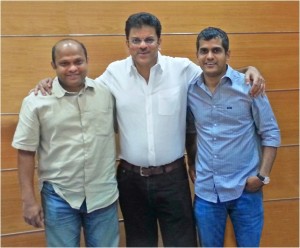
    Taproot's Agnello Dias (left) and Santosh Padhi (right) with Rohit Ohri of Dentsu (centre)

    With several of the most popular recent campaigns like ‘Har Ek Friend Zaroori Hota Hai’ and ‘Joh Tera Hai Woh Mera Hai’ for Airtel and ‘Change the Game’ for Pepsi under its belt, the five year old agency has seen a meteoric rise. It’s also won critical acclaim; the most recent being a Gold Lion at Cannes along with Ramesh Deo Productions for the ‘I Am Mumbai’ film for Mumbai Mirror, a newspaper from the Times Group, which also publishes The Economic Time


    The managements at both Dentsu and Taproot declined to discuss the financial aspects of the arrangement. Industry observers estimate the initial upfront payout at Rs 60 crore with another Rs 80 crore expected in future earn-outs


    In a global deal in July, Dentsu had paid $4.9 billion for British media buying group Aegis, valuing the company at 12 times its earnings before interest, taxes, depreciation & amortisation.


    The Economic Times had reported in June that Dentsu among other agency groups was speaking to Taproot about a possible acquisition. Says Rohit Ohri, executive chairman, Dentsu India group, who has previously worked with one of Taproot’s founders Agnello Dias at JWT: “They (Taproot’s co-founders & chief creative officers, Dias and Santosh Padhi) could have chosen anyone. What convinced them about Dentsu is that we are very entrepreneurial and evolving; and more willing to look at out of the box ways of working.”


    Adds Dias: “We felt it was the right thing to do. Of all the conversations we had, we felt most comfortable with the equation we were sharing with Dentsu. Another reason cited is Dentsu’s global strengths in the digital medium and that it is currently the leading network in Asia.


    Taproot will retain its identity and won’t be rebranded. Although Dentsu is a majority owner, management control of the agency continues to rest with Dias and Padhi. Dias says, “In terms of changes, there’s nothing in the pipeline. I think even Dentsu is saying ‘why should we upset a system that’s doing so well’?”


    What the arrangement brings Taproot is integrated communication, superior execution abilities and a national network. As far as Dentsu is concerned, Taproot, says Ohri, “is really the creative firepower we needed in the group.” However, the firepower is not likely to be immediately applied to any of Dentsu’s current client relationships.


    Both partners believe that Taproot will step in only when needed “on a case by case basis” according to Padhi. Interestingly enough, two of Taproot’s most productive client relationships have been with Airtel and Pepsi, brands that Ohri worked on in a previous stint at JWT. Ohri regards this as “a great bonus”, but he cites the talent of the two principals at Taproot and the chemistry with senior management at Dentsu as the main reasons for the merger.


    Among a spate of recently launched creative-led independent agencies which include Creativeland Asia and Scarecrow Communications, Taproot has arguably been the most successful with several marquee campaigns to its name for Airtel, Pepsi and The Times Group.


    The agency was founded in 2008 when Dias (then national creative director at JWT) decided to join forces with former colleague Santosh Padhi (executive creative director at Leo Burnett at the time). The 33 person strong agency has been particularly successful in wresting business from Dias’ former employer JWT, landing prestigious assignments from Pepsi and Airtel.


    Source:The Economic Times

    Copyright © 2012, Bennett, Coleman & Co. Ltd. All Rights Reserved

  • Rajesh Mathew joins Dentsu Communications as Senior Vice President

    By A Correspondent


    Continuing with its series of senior-level appointments, the Dentsu India Group has announced the appointment of Rajesh Mathew as Senior Vice President, Dentsu Communications, Mumbai.


    An adman throughout, spanning over 17 years in advertising, Mr Mathew was Managing Partner at Doosra Brand Communications, Mumbai (part of the Aegis Media Worldwide network, since December 2011) prior to joining Dentsu.


    Welcoming Mr Mathew to Dentsu, Arijit Ray, CEO, Dentsu Communications said, “Rajesh’s induction into Team Dentsu Communications is part of our on-going impetus on strengthening and consolidating the talent profile. I am sure Rajesh’s diverse experience across brands over so many years across markets, will help enhance our value proposition amongst our key business portfolios. I wish him a great innings at Dentsu.”


    Mr Mathew said, “I look forward to the exciting challenge and opportunities at Dentsu Communications; given the ambitious growth plans that are set, I couldn’t ask for a better timing than this, to come on board.”


    Among the agencies Mr Mathew has worked for in India include Saatchi & Saatchi Direct (Bangalore), Ogilvy & Mather (Bangalore), Lowe Lintas Worldwide (Chennai – as Brand Services Director), Rediffusion DYR & Wunderman (Chennai – as GM for both the Agencies), Contract Advertising (Chennai – as Senior Vice President & Manager), Ogilvy & Mather (Mumbai – as Vice President & Business Head).

  • The Anchor: 5 contrasts between independent agencies now and then

    By Ravikant Banka


    #1 Dost dost na raha, pyaar pyaar na raha

    Independent agencies used to be client’s friend; there used to be love in the air every time the brand manager met the account manager, discussing approvals over a beer. But these days, friendship is dictated by the retainer and the love is traded for a brief.


    #2 Do aankhen, baara haath

    Multitasking used to be the name of the game. The account manager was also the account planner. Servicing teams actually came up with creative ideas. And art directors doubled as copy editors to make the copy sensibly shorter while the copywriter had a say in the 20-odd fonts to choose from. Nowadays, each function is excruciatingly well-defined while people wear blinkers and do only what is “written in the job profile”.


    #3 Haath ki safaai

    Artworks were a manual, methodical and a sacred affair. It took weeks to assemble the final artwork that finally culminated on the way to the client meeting (only later would they realize that the type-sets had fallen off in all the chaos). The chaos remains the same, but the artworks are a matter of a few hours on the latest-to-the-day software, open for innumerable changes till the client is finally ready to fly to Dubai.


    #4 Stock mein hai kya?

    Visuals were ‘created’ by visualisers who either drew them or clicked them the way they wanted them to look. Today, stock images dictate our ideas and layouts.


    #5 Commission vs confusion

    Then: 15 percent commission, 85 percent confusion. Now: The commission is decreasing and …


    Ravikant Banka is a Mumbai-based adperson


  • Sweet win for O&M at IPA Effectiveness Awards

    By A Correspondent


    Ogilvy & Mather Advertising, Mumbai, became the first Indian agency to win Gold at the IPA Effectiveness Awards in London. The award was won for Cadbury Dairy Milk’s 7-year-long ‘Kuch Meetha Ho Jaaye’ campaign in India. Launched in 2005, this campaign has led to Cadbury Dairy Milk increasing its business manifold, and has also contributed to increased revenues and profits for the company, Cadbury India Limited. This case also won a special award for ‘Best Use of Insight’.


    The IPA, organiser of the IPA Effectiveness Awards, is the professional body for advertising, media and marketing communication agencies in the United Kingdom. Since their launch in the UK in 1980, the IPA Effectiveness Awards are recognized by agencies and clients as the industry’s most rigorous award scheme, because entrants have to prove their communications strategies have worked in hard business terms.


    The rigorous judging process includes each entry being judged by two panels before it is considered worthy of an award – an industry panel and a client panel. The Industry panel decides the shortlist (by making sure that each shortlisted paper fulfils the requirement of clearly demonstrating a return on marketing investment). The Client panel then attributes each shortlisted paper a Gold, Silver or Bronze Award and allocates the special prizes.


    The year 2012 has seen a total of 65 entries for the awards of which 35 entries made it to the shortlist. Ogilvy’s winning entry was India’s only shortlisted entry at the awards.


    Piyush Pandey, Executive Chairman & Creative Director, Ogilvy & Mather South Asia, and also the brain behind the ‘Kuch Meetha Ho Jaaye’ campaign, said, “I am totally delighted that we have won India’s first ever Gold at one of the most rigorous effectiveness awards in the world – the IPA. And that too for Cadbury. As I have always said in the past, great work comes out of great partnerships. A big salute to you, Cadbury India. And heartiest, heartiest congratulations to my young colleagues at Ogilvy & Mather, Mumbai.”


    Chandramouli Venkatesan, Director, India Snacking & AP Developing Markets – Chocolate Lead, said, “It is a matter of great pride that Cadbury Dairy Milk is the first ever gold winner from India. It is a testimony to the exceptional advertising the brand has done over a long time. Special kudos to our partners Ogilvy India for being such an outstanding brand steward.”


    Kawal Shoor, Head of Planning for Ogilvy Advertising Mumbai, and also co-author of the entry, was present at the gala ceremony held at the London Hilton Park Lane Hotel. Beaming with joy, he said, “This is unprecedented. Only time will tell what this means for us, and Indian advertising, but right now we’re over the moon. We have always loved and stood by our work, and knew it was world class, but to now get acknowledged as that, by arguably the most renowned and sceptical set of judges, ahead of other strong campaigns from around the world… across categories… Wow! And then to win another one for insights… perfect!”


    Navin Talreja, Head of Ogilvy & Mather – Mumbai, had said, “This is absolutely fantastic! We strongly believe that our wins happen only because of the faith that clients show in us, and are invariably a result of a process of co-creation with clients. Cadbury has been one such relationship that we have enjoyed for over 60 years.”


  • Draftfcb Ulka creates Dark Fantasy for Sunfeast

    By A Correspondent


    Riding on the successful re-launch of brand Sunfeast Dark Fantasy in 2010, ITC Foods has unveiled a new television campaign for Sunfeast Dark Fantasy Chocolate and Vanilla cream biscuits with a new theme ‘How far will you go for a Dark Fantasy?’ Conceived by Draft FCB Ulka, the Sunfeast Dark Fantasy brand communication reflects the core promise of ‘Pure Indulgence’.


    [youtube width=”400″ height=”220″]http://www.youtube.com/watch?v=0CV5ozuBZw8[/youtube]


    Dennis Koshy, Vice President, Draftfcb Ulka Bangalore, said, “Indulgence products are expected to whisk you away into another world – a world of sensorial pleasures. With its premium ingredients, Sunfeast Dark Fantasy is perfectly crafted to deliver on that promise. Even the final signoff ‘Dark Fantasy – escape into one’ flows from this belief.”


    [youtube width=”400″ height=”220″]http://www.youtube.com/watch?v=xdMY5QqOM8Y[/youtube]


    The new campaign developed by Draftfcb Ulka consists of two TV commercials, one for Chocolate and one for Vanilla cream.


    Sunfeast Dark Fantasy, the premium range of creme biscuits from ITC was launched in 2005. The brand is currently the leader in the premium creme segment and is available in three variants, Chocolate, Vanilla and Choco Fills.


    Client: ITC Foods

    Agency: Draftfcb Ulka, Bangalore

    Creative Team – Dharmesh Shah

    Production House and Director: Ginger Water Films, Zap.


  • Havas pushes integration, digital strategy into media

    By A Correspondent


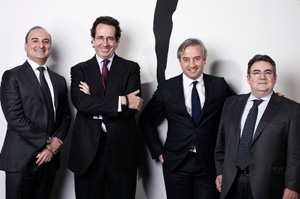
    (L-R) Michel Sibony, Alfonso Rodes, Dominique Delport and Jordi Ustrell

    Havas has announced another step forward with its integration strategy, simplifying its brands and structure.


    The newly created ‘Havas Media Group’ will include all of Havas’s media agencies, consisting of Havas Media (operating in 126 markets, India included), within which its media brand MPG and its digital brand Media Contacts, also in India, will be fully incorporated and rebranded, and Arena Media (operating in 13 markets). The rebrand is supported by a new simplified structure that places its digital expertise and content marketing at the core of its operations. This move brings the media side of the business in line with the structure of Havas’s creative division, Havas Creative Group (composed of the Havas Worldwide global network and Arnold Worldwide micro-network).


    Alfonso Rodes, Havas Media Group’s CEO, commented, “The explosion of digital media means that no one can afford to deliver a siloed approach to communications. This new media model integrates our digital expertise “at the core” of our organisation, promoting greater agility between all our teams and disciplines. It’s a simple yet progressive move that enables us to harness the digital transformation that has hit all types of media. By reorganising our teams, changing the lines of reporting and investing in building company-wide digital fluency, we put ourselves in a unique position in the industry. Our scale and simplicity allows us to present clients with a shared vision that meets consumer demand for more meaningful connections.”


    The new media organisation allows Havas to continue its strategy to be the first major communications holding company to invest in establishing digital excellence at the centre of all its agencies around the world. The new structure will place its specialised units such as Artemis (the group’s global data management network), Mobext (mobile network), Socialyse (social media), and Affiperf (Havas’s global trading desk) so that they are more accessible to the teams from both Havas Media Group and Havas Creative Group.


    On the content marketing side, Havas Sports & Entertainment will support this structure with its 36 international offices, India included. To support this move the Havas Media brand will be relaunched on January 24 with a new identity to reflect the tighter, more integrated organisational structure.


    To manage this new organisation the group has formed a new executive committee managed by Mr Rodes. Dominique Delport, CEO of Havas Media France, is appointed as Global Managing Director Havas Media Group. Reporting to Mr Rodes, he will be in charge of the commercial activity for all countries and all brands, strategy, new business, digital integration and intelligence. Michel Sibony, “Global Head of Middle Office”, will manage all global planning and buying operations as well as the group’s digital and specialist offers. Jordi Ustrell, “Global Head of Back Office”, will oversee the global support services such as IT, HR, legal and finance


    Mr Sibony said, “We need to guarantee our clients more consistency in every market and more speed in the delivery of this change to provide greater effectiveness and more efficiency when leveraging the new technological given by data management and technological platforms.”


    Mr Delport explained, “Our clients need change and innovation more than ever because beyond media, digital affects any business with great opportunities but also potential disruption. Understanding the relationship between brands and consumers, especially for the growing digital generation, is essential. Our aim is to form a new company that lies at the intersection of the traditional international holding groups and the new style of innovative, digital companies. It’s an exciting challenge for our clients and our teams.”


    Vishnu Mohan

    Vishnu Mohan, CEO, Havas Media, Asia Pacific, added, “This rebranding couldn’t have been initiated at a better time from the Asia Pacific perspective. Clients in the region are looking for simplicity in agency structures and an integrated offering. The objective of our current rebranding is aligned to that expectation. The simplification of brands within our group furthers our aspiration of being the most agile and integrated agency group with digital at its core”.


    Commenting on the development, Anita Nayyar, CEO, Havas Media India, observed, “Media is today an evolving ecosystem where only change is constant. Digital is fluid across every platform from traditional to new age, so the concept of ‘digital at core’ is vital. It is not ‘only’ specialization but the dynamics of integration and knowledge synergies that will exploit it to advantage. Brands are asking for integrated communications to differentiate themselves; they need responsive and analytical services. In India, digital is a reality or aspiration for every Indian. Our integrated service offerings of media, outdoor, digital and mobile with the new platform will be better leveraged to the benefit and delight of our customers.”