Following a multi-agency pitch, White Rivers Media has won the social creative and digital mandate for the Germany-based cosmetic brand Cosnature by Cosmolux Deutschland GmbH.
Commenting upon the association, Nicolas Camci, Director, Cosnature, India, said: “Cosnature carries a worldwide reputation of all-natural, high-performance cosmetics that are ‘Made in Germany’. Our intentions to land a strong footing in the Indian market critically requires an equally strong data-backed digital marketing strategy. White Rivers Media understands our product and marketing philosophies. Together with its creative and technological capabilities, we are optimistic about the brand’s success in India.”
Shrenik Gandhi
Added Shrenik Gandhi, Chief Executive Officer & Co-founder, White Rivers Media: “We are excited to work with Cosnature, as it will be one-of-its-kind proposition for young Indian consumers. The brand has a prodigious reputation globally, in terms of both its products and marketing philosophies. Parallel to that, we shall curate strategies that leverage precision targeting and communication to discover, capture, and engage audiences in India, and then convert them into brand evangelists.”
Valentine’s Day 2020 is just another day. For a majority, this templated festival of expectations, the celebration of love and care would come and go like the other such days, Rose Day, Proposal Day… associated with it.
It was Valentine’s Day, and the prices of roses expectedly hit the circuit-breaker around February 14. In the era of proximity, floating or fleeting loyalty, the app-led search for love and commitments, high cost of expression and permanence of tattoos, it was templated.
It was celebrated because the marketing community had put peer pressure for you to celebrate it. The ritual of love, roses, gifts and dining were performed. It was no longer about what you wanted to do but about what you should be doing.
For the brands addressing young adults, It was an opportunity to stand apart, be quirky, cheeky and leverage the festival mood.
In my timelines, WhatsApp was full of silly jokes around love, sex, wife, girlfriend ex or otherwise, commitment and future relationships.
For me, the evening was spent with wife dressed in Valentine colours at the St Andrew’s College Auditorium, Bandra. Ad Club COO Bipin Pandit and his group of specially talented singers and musicians under the banner of Khumaar, a celebration of love and romance kept one entertained with songs of love and romance.
BRAND AND VALENTINE’S DAY.
One of the regular readers of my blog (thanks) sent me two clips. In her view, they were a great example of brands attempts to remain relevant. The brands were willing to innovate within the constraints. And that made me think.
VALENTINE AND AFFECTION
Oh, Yes, the nation again saw some groups disturbing couples in a few cities. The self-proclaimed extra-vigilant valentine social regulators took upon themselves to draw the line according to their ill-defined interpretation of culture and social expectations.
Brand Manforce after having burnt their fingers during Sunny LeoneNavratri hoarding some year back recognised this unbridged gap in the era of video traping. It urged young couples to exercise caution during Public Display of Affection (PDA) and digitally capturing their moments of intimacy. It was purpose-led safer sex. #YouAreNotAlone follows their earlier campaign #ShutThePhoneUp. Lovely, to see a brand continuing to focus on the same idea.
Durex, the other condom, moved towards 365 days of love, care and sex. Three years back, the brand asked couples to connect on Valentine’s Day and give your mobile a rest. The brand has been slowly evolving. And if you see their international work, you will realise they are at different point of evolution across countries.
So, Durex now sees the redundancy of Valentine’s Day. Who needs it when every day could be Valentine’s Day. It seems to talk the language of the current generation, always-on, curious, and questioning traditional relevance.
Valentine’s Day is here and we’re NOT excited! Because let’s face it, with Durex everyday is a celebration and hence #EverydayIsValentines! So, select the most boring gifts you have received on this day from the options below and we will gift you something super exciting instead!
— Durex India (@DurexIndia) February 11, 2020
OTT GOES OVER THE TOP ON VALENTINE DAY.
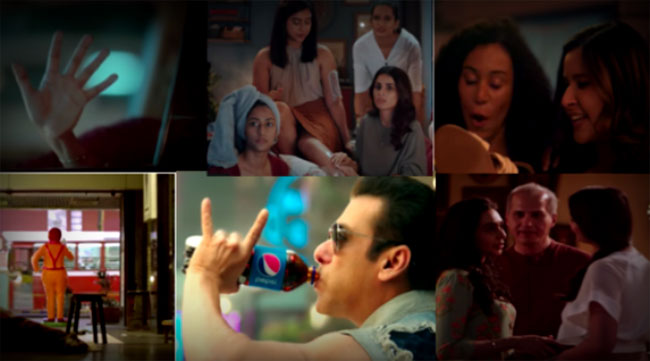
Netflix, on the other side, has a finger on the pulse of young adults. Their message ‘We are sincerely and terribly sorry for all the drama we’ve caused before. We promise to be better’ was definitely beautiful and relevant. Netflix apologised for all the fights it has started. It silently made the point of its high viewer engagement and involvement. It is a nice cheeky way to leverage the festival with strong product service association. It was treated like a Netflix original and starred ‘Maskaby’ cast, a Netflix original to be released later this year. I hope the audience loved it.
BURGER KING BRILLIANT TAKE ON VALENTINE’S DAY.
The Burger King and McDonald’s rivalry is well-known and documented. The brands have given us many moments of wow. This one is no different.
This year, way Burger King looked at Ronald (the McDonald Clown Mascot) and branded it as the most lonely person on earth, it is just superb. The script remains true to the valentine ethos while refocussing on the competition.
The communication is cheeky. The loneliest man in the world has always been in front of their eyes. Burger King asks customers to go ahead give company to the loneliest man on earth, take a picture or two and tag @burgerkingindia to get a free Whopper this Valentine’s Day. #LonelyNoMore. Must compliment the team that saw this opportunity.
PEPSI SOLO LOSES THE PLOT.
Now compare Netflix, Manforce with a brand like Pepsi using an overexposed fifty-plus star for Solo Swag. The timing absolutely bang on. The message and brand ambassador choice questionable. The spot has high visibility and attracted millions of viewers. Hope, the brand does not misinterpret views with brand affiliation.
https://youtu.be/MOVM4757i-Q
BOROSIL FAILS ON VALENTINE METER.
BOROSIL in the changing societal environment tries exploring the first Valentine Day for the same-gender couple. The idea is excellent. The curtailed expressions of the same-gender couples in the earlier era have been well-captured. ‘I hated Valentine Day, not because I did not have someone to share, but because I did’ is brilliant and powerful.
The brand missed because of a weak product association. And whatever was left was destroyed by adding the end-super about Supreme Court’s favourable verdict on section 377 in 2018! Should it be the first or the second Valentine’s Day? The subtlety was lost, and the forced brand integration is fragile. It happens when brands search for a purpose and find one that is constrained.
BRAND GRAVEYARD ON VALENTINE’S DAY.
Few brands remained functional, so they played safe with their communication on Valentine’s Day, neither gaining or losing. Brands like, Hide and Seek, KFC (Bucket bae), and Platinum Bands.
Kalyan Jewellers tried to play the patriotic card to align with the feelings of women missing their husbands who are on duty at the border.
Don’t forget ‘The Man Company’ trying to make it simple for all kinds of love. ‘Love knows no age, religion or gender’. Very stereotyped expression.
MELORRA RUINED SOMETHING.
Here is the one I loved until it exposed itself as a pure selling tool. Upping the game fell flat when it got down to giving brand items as a gift. Melorra campaign was was bubbly, strong, confident, cheeky, empowering and full of attitude and then it was just about sales. #UpYourGiftingGame
THEY DON’T MAKE THEM LIKE THIS ANYMORE.
The one that I would rate highly is SBI INSURANCE Valentine’s Day ad. Watch it to know how it touches the chord. It is an excellent example of emotion and product linkages. ‘Hira Kya Zane Tumhari Umar’.
Leave it, if there are no dots, stop connecting them. If you have a real purpose that is brand linked and allows you to leverage an opportunity- go right ahead. Otherwise, it is a waste to do forced integration.
Publicis Sapient has announced a collaboration with Elder Research and Tquila to launch Publicis Sapient AI Labs (PS AI Labs). The newly formed consulting company will offer an extensive set of data science services to enable digital transformation for large enterprises in North America and Europe.
Commenting on the collaboration, Thomas Kracz, CEO, Americas of PS AI Labs said: “The joint venture with Elder and Tquila enables us to make AI mainstream for our clients and extends our rapidly growing AI and Data capabilities globally. As organisations struggle to apply data and AI solutions to complex operations, PS AI Labs will play a significant role to solve such client problems and enable us to deliver on our value proposition of being one of the fastest growing digital business transformation service providers in the world.”
Said Gerhard Pilcher, Chairman at PS AI Labs, CEO at Elder Research: “Elder Research has had a great partnership with Publicis Sapient for five years, and this Joint Venture further solidifies the combined strength of our teams. Our rigorous machine learning models will quickly be turned into enterprise level solutions by Publicis Sapient’s experience in driving transformation at scale, thus enabling clients to overhaul their business processes.”
Added James McHugh, CEO and co-Founder at Tquila: “Tquila’s mission is to leverage our talent acquisition capability, to scale at speed, how the JV sources, attracts, trains and retains the best talent in a resource short market. Additionally, our operational oversight required to scale these start-up businesses will bring discipline to a start-up environment. The combination of all three partners will be game changing for clients seeking to derive value from Data Sciences.”
The Advertising Club and the Advertising Agencies Association of India (AAAI) announced the names of the jury for ‘The Red Abby’ award which will be presented as a part of Goafest 2020. ‘The Red Abby’ awards have been instituted to acknowledge the best creative works that address the issue of violence against women in society.
The jury for the Red Abby Awards include some of the foremost leaders from across the FMCG, advertising, media, creative and entertainment industry.
The jury list for ‘The Red Abby’ 2020 (in alphabetical order)
1. Anupriya Acharya- CEO, Publicis Groupe, South Asia
2. Babita Baruah, Managing Partner, GTB India
3. Deepika Warrier, CEO, Nourishco Beverages (a joint venture between Pepsico and Tata Global Beverages)
4. Lara Balsara Wajifdar, Executive Director at Madison World
5. Megha Tata, MD- South Asia, Discovery Communications India
6. Mini Mathur, Acclaimed Actor and Television Host
7. Raj Nayak, Founder, House of Cheer
8. Tarun Katial, CEO, Zee5, India
The jury meet is scheduled for March 17 in Mumbai where the jurors will test creativity and impact of the communication campaigns.
Speaking about the judging process, Partho Dasgupta, President- The Advertising Club President said: “Women’s safety is a cause that needs a loud and clear voice. The esteemed jury of ‘The Red Abby’ comes from a diverse background with rich experience in their respective industries. Their collective experience will make the evaluation process robust and fair, while adjudging the works’ impact.”
Speaking about the jury, Sonia Huria, Managing Committee Member of The Advertising Club and Evangelist – ‘The Red Abby’ added:“At the heart of a successful campaign is the impact it made. In case of ‘The Red Abby’ the impact will be basis the effectiveness of the behaviour change messaging of the campaign. With such an esteemed jury for its maiden edition, we are sure that the best-in-class works will find their right place in the Abby Awards Hall of Fame.”
To nominate communications campaigns focused towards stopping violence against women click here.
The India chapter of the International Advertising Association (IAA) conducted the 10th edition of the Olive Crown Awards celebrating excellence in communicating sustainability.
In the Corporate Crusader of the Year category, Reliance Foundation won the Gold and Mathrubhumi Printing & Publishing Company the Silver. The two NGOs – People For Animals Wildlife Hospital & Rescue Centre and Chirag Rural Development Foundation – shared the Gold for their contribution to environment sustainability. Carbon Craft Design and Air Link was awarded the New Age Green Initiative Gold and Silver respectively. Earth Edition Drives bagged with the Digital Gold and FCB Interface with the Green Campaign of the Year-Gold.
Maharashtra minister Aditya Thackeray was Chief Guest on the occasion, but he arrived late. Also present was Mark Read, CEO, WPP who addressed the audience.
Said Punit Goenka, President, International Advertising Association (IAA) – India Chapter and MD & CEO, Zee Entertainment Enterprises: “We at IAA are extremely proud of Olive Crown Awards as an initiative. The overwhelming response received from the industry speaks a lot about the need of such initiatives in today’s era. Apart from being the pioneer in recognizing creative excellence in sustainability, Olive Crown Awards as a property has also led to a mindset change in the approach taken by the marketers and advertising agencies while crafting strategic communication campaigns. I am very glad to note that this initiative has touched the 10 year milestone. I am very proud of the entire team at IAA, for their immense amount of energy and time invested in building this initiative and all the key initiatives which bring about a positive change for the industry and the society at large.”
Added Megha Tata, Chairperson IAA Olive Crown Award: “Today we celebrate a decade of communicating sustainability, a decade where we have brought sustainability to the forefront and on the agenda of both Marketers and Agencies alike. We have seen the conversation shift from doing something green to campaigns and brands vested in sustainability. We have seen this shift and are happy to have identified and led the way to acknowledge these initiatives. We have shown that we are not just custodians of our respective Brands but Custodians of Brand Earth.”
Kaushik Roy, Past President IAA, expressed pride of being President IAA during the conceptualization of the Olive Crown Awards, fondly mentioned that if IAA Olive Crown was a tree it would be big today.
Prasoon Joshi, Chairman of the Central Board of Film Certification and CEO of McCann World group India, reminded us of the fact that while it is a great initiative we must imbibe and live by the values. He recited a poem he had written on Water.
Dentsu Webchutney has bagged the digital and creative duties for dating app, OkCupid India. The account was won following a multi-agency pitch and will be serviced out of the agency’s Bengaluru office.
Prashant Gopalakrishnan
Commenting on the win, Prashant Gopalakrishnan, SVP, Dentsu Webchutney said: “We are excited to partner with yet another industry giant in OkCupid. Innovative ideas can help overcome challenges in the Indian online dating market. It is a phenomenal market opportunity – one that has been covered in-depth in analyst reports. On a lighter note, as the sole married employee on the account, I believe the rest of the team can truly do justice to it!”
Shruti Gupta
Added Shruti Gupta, Brand Manager, OkCupid India: “OkCupid is about meaningful relationships – on, and off the service. This is why the newest one we are forging with Dentsu Webchutney feels like the beginning of a long and productive journey.”
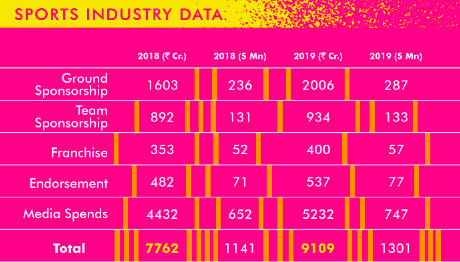
ESP Properties, the entertainment and sports division of GroupM India, released the 2020 report on sports sponsorship in India. Overall growth in sports sponsorship at a healthy 17 per cent where the sports sponsorship Industry crossed the INR 9000 crore mark in 2019.
The 2019 was the year for cricket and dominated the sports advertising sector unanimously. IPL and ICC World Cup gave a push in both, on-ground sponsorship and media spends. On-ground sponsorship grew by 25 per cent, for the first time, crossing INR 2000 crore mark. Overall industry upsurge was INR 1347 crore of which INR 800 crore was contributed by media spends alone growing at 18 per cent.
Said Vinit Karnik – Business Head, ESP Properties: “Indian sports industry is on an upward trajectory breaking new grounds year-on-year. While cricket proved its dominance in 2019, overall the last 5 years the industry has doubled its size. If we look further, we can see a strong CAGR of 12.8 per cent in the business of sports over the last 10 years, making it one of the strong pillars of the Indian economy. With the sports industry growing at 17 per cent in 2019, the momentum on sports with added thrust from the government provides a holistic opportunity for the sector. Initiatives like Khelo India and Fit India movement are drivers towards making India a truly sporting nation.”
Added Prasanth Kumar, CEO of GroupM South Asia: “Over the last decade, we have witnessed the growth of sports leagues and their gaining popularity across the country. The sports industry has been growing and has witnessed a significant upward shift in the overall ad spends. The passion and excitement that’s involved in this platform have only strengthened. We see more and diverse audience indulging with this platform. Many innovations and leverage of assets in this space are powerful opportunities. As we are unfolding another decade, we see this space to be providing powerful thrust for greater brand stories.”
The non-cricketing space was dominated by women athletes. Badminton queen P V Sindhu was the leading non-cricketing athlete in 2019 in terms of brand endorsements. While Sindhu added four brands to her portfolio, the most notable one among them was her tie-up with VISA that made her the first Indian athlete to endorse the financial services brand.
Given the threat of Coronavirus in Mumbai and the lack of awareness of its severity, Brihanmumbai Municipal Corporation took it upon itself to ensure that Mumbaikars too the necessary precautions to prevent the spread of the virus. And to help them do that was Lowe Lintas.
Said Anaheeta Goenka, President, Lowe Lintas: “We had a single-minded brief on “no panic just prevention” from the BMC – to create awareness of basic actions across citizen profiles we needed a sharp active idea.”
Added Sagar Kapoor, CCO, Lowe Lintas: “We created the simple idea ‘Corona Se Mat Darona’ which aims to calm the anxiety in this time of crisis, although by arming people with corona prevention methods.”
New research released by media services network GroupM offers interesting insights for marketers about consumer attitudes toward digital marketing. Consumer Trust in Digital Marketing, which surveyed nearly 14,000 consumers in 23 countries including India, uncovers consumers’ concerns with digital marketing and suggests important considerations for marketing on digital platforms:
On average, two times more consumers say TV ads provide a more positive impression of brands than common digital formats.
6 in 10 consumers say they are less inclined to use a product if their data is used for any purpose.
56 percent of consumers want more control over their data.
64 percent of consumers would have a negative opinion of a brand next to inappropriate content.
Against the backdrop of newsworthy security and privacy issues across the globe, the research revealed that consumers react more positively to television advertising and that more than one-third of consumers (37 percent) feel digital ads are too intrusive. With this, marketers need to focus on using the right digital platforms to reach consumers, to be transparent about how data is gathered and used, and to think holistically about the many media venues where they can build consumer relationships.
“With pervasive reports of data security and privacy missteps, consumers are increasingly wary of information gathering about them as they move online,” said Christian Juhl, Global CEO of GroupM. “Media has evolved dramatically and it’s crucial the industry work collaboratively to make advertising work better for people around the world. As marketers, it’s our responsibility to ensure that we are using consumer information responsibly and transparently.”
GroupM’s analysis of the survey findings pointed to important paths for creating more dialogue and trust with consumers:
BUILDING TRUST THROUGH PLATFORMS
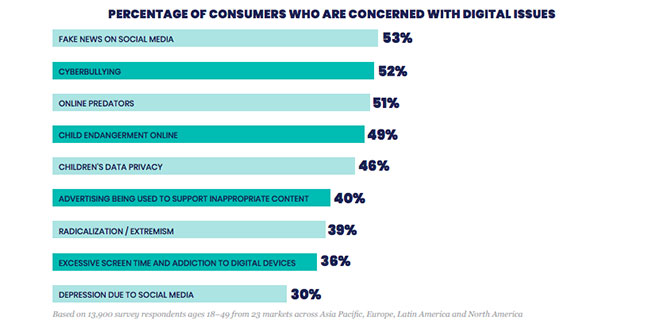
GroupM found that, among consumers with digital marketing concerns, top challenges include fake news on social media, cyberbullying and online predators. Seventy-five percent of consumers believe it is a digital platform’s responsibility to stop inappropriate content from appearing. In order to secure consumer trust in their brands, marketers should continue to consider whether the online advertising platforms they are using are appropriate for the type of brand content they’re creating. Additionally, they should ensure they’re setting parameters around ad placements that build marketing effectiveness and protect brand value.
BUILDING TRUST WITH DATA
Data privacy remains a significant concern for consumers globally, with sixty-one percent of those surveyed indicating they would be less willing to buy or use a product or service if companies use their personal data. Correspondingly, consumers are looking to protect themselves. GroupM’s research shows that changing privacy settings and deleting cookies and browser history – areas informing digital advertising – are on the rise. If companies wish to continue using consumers’ data, marketers may need to offer incentives and communicate the benefits more convincingly. Being transparent about consumer data usage, with clear frameworks aligned through a whole organisation, will help foster a new relationship of trust in the digital marketing process.
BUILDING TRUST BEYOND TRADITIONAL ADVERTISING
According to GroupM’s findings, consumers are receiving more communication from brands than desired. Marketers should work to optimize the customer experience by tailoring the frequency and the types of messages. With consumers spending more time online, marketers should place even greater emphasis on communications tactics such as working with micro- and nano-influencers, which may help mitigate digital advertising fatigue. To support growing interest among brands, GroupM has introduced INCA, an influencer marketing solution in select markets. This helps marketers to be confident in accurate, verified and measurement-based influencer marketing outcomes.
GroupM’s report also highlights interesting findings on the appreciation consumers have for different types of brand communications and points to, in some cases, big differences of opinion across markets. For example, an average of 59 percent of consumers globally appreciate receiving discounts and offers, but only 20 percent appreciate invitations to complete satisfaction surveys. Seventy-five percent of consumers in New Zealand said they would be less willing to buy or use a product or service if companies used their personal data, whereas only 38 percent of consumers in Indonesia said the same.
“To make digital advertising work better for everyone, we must listen to what consumers are saying and refine our strategies accordingly,” said Chris Myers, report author and Regional Director, GroupM APAC. “Marketers should not pull back on digital advertising; on the contrary, they should push forward in ways that respect consumers’ evolving relationship with digital media.”
Dentsu Aegis Network (DAN has announced the appointment of Wendy Clark as Global CEO of Dentsu Aegis Network.
Clark brings almost 30 years’ of industry experience having worked for global brands such as The Coca-Cola Company and AT&T, as well as industry-leading agency roles. She joins Dentsu Aegis Network in September 2020 from Omnicom where she held the role of Global President & CEO for DDB Worldwide. Prior to Omnicom, Clark spent seven years at The Coca-Cola Company in global and regional operating roles, culminating in her promotion to Coca-Cola’s President of Sparkling Brands and Strategic Marketing.
Wendy Clark
Said Clark: “It’s both an incredible honour and deep responsibility to join DAN at this crucial time. Given such unprecedented global change it’s more important than ever that we’re completely focused on creating insightful, informed, important ideas for brands, businesses and their customers. The focused investments made by DAN over the last few years to acquire and grow the right assets, talent and capabilities, enabling modern marketing solutions, is undeniable and ready-made for today’s marketplace and beyond.”
Clark will report to Tim Andree, Executive Chairman, Dentsu Aegis Network and will be appointed Executive Officer Dentsu Group Inc. at the same time as she joins the business in September with the approval of the Board of Dentsu Group Inc. Andree has been Executive Chairman of DAN since its founding in 2013, adding the CEO role to his responsibilities for the past 15 months, and he has lead the search process.
Added Andree: “Following a thorough and considered global search, I am happy to welcome Wendy as our new CEO and look forward to working together to drive our ambitious agenda forward. With her combined experience of walking in the shoes of the client, coupled with her leadership in running a large global creative agency network, Wendy is the stand-out choice for the role. Her experience is hugely complementary to DAN’s growth plans over the coming decade where Dentsu’s long-standing history of client-centricity combined with an ability to deliver fully integrated solutions will be critical. Wendy will join us as the world is emerging from a period of unprecedented challenges. I am confident that her strong leadership style and comprehensive experience will inspire our people, connect with our clients to help drive their brands forward and continue our focus on providing integrated global solutions while building excellence into every part of the rapidly changing marketing ecosystem we serve.”
The Publicis Group has released a report ‘Reboot To A New Normal’, a study on the consumption patterns, media usage, purchase behaviour and overall marketing and brand trends in India, in the face of the Covid-19 outbreak. We haven’t seen the report but a communique says it examines the impact on businesses, consumer sentiment and behaviour and the response of brands.
Said Anupriya Acharya, CEO, Publicis Groupe, South Asia: “The impact of the COVID-19 pandemic has meant that uncertainty has become the norm for brands and businesses across sectors and geographies. Publicis Groupe, through this report, offers some of our latest insights tracing the evident change in consumer behaviour, resilience, and solidarity among brands in these times, conceivable future implications and the reboot in brand response to that. Most certainly, only the ones who imbibe this change, and more importantly, lead it, will emerge stronger. We look forward to and promise sharing the quest for the new normal, evolving businesses and robust communities.”
Adds the communique:
The report marks profound shifts in the wake of the lockdown enforced by the Government of India. Many of these behavioural changes are not transient in nature; they are likely to stay long-term. While the focus of the report remains on the Indian market, the study also draws on comparisons with other countries across US, Europe and APAC and predicts some of the outcomes ahead for brands.
Online is clearly the new norm as companies embrace remote work and rapidly digitise operations in order to ensure business continuity. However many still struggle to operationalise work from home initiatives because of cumbersome compliance and technical requirements.
Indian consumers today are single-mindedly focusing on essential products, sidestepping discretionary purchases such as apparel, electronics and watches. Immunity-boosting products such as Honey and Chyawanptrash see huge surge in demand, alongside medicines, face masks and hand sanitizers. As they brace for uncertain times ahead, consumers are panic-buying and tend to hoard supplies. Restaurants and food delivery apps have started offering contactless delivery. The demand however continues to be muted given hygiene-related concerns.
At the start of the outbreak, ecommerce witnessed huge momentum with people instinctively turning to online channels. The convenience, promotions and value deals on online grocery platforms has in any case always been a huge draw and the crisis accelerated demand. During this period, online retail received a short-term boost in the fresh food, personal hygiene, and food delivery categories. However the shortage in stock and inability to deliver has led to frustration among consumers and has subsequently impacted sales volumes.
Television ratings, on the decline over the past year has now experienced an exponential jump because of coronavirus-related news. The trend is in line with other Asian markets such as China and Korea.
In the period between March 1-21, 2020, Gaming has witnessed a 41% increase in time spent while Entertainment & OTT have registered a 34% increase.
Online news has become the de facto source of information with digital editions of mainline publications seeing huge increase in traffic. Between March 16-22, there has been a whopping 61% increase in visits to websites and mobile apps, as compared to a month ago. Regional publications also see huge online demand, as much as 50% increase, significantly higher than that of English publications. Publishers may need to shift focus on to digital operations as it remains uncertain whether consumers will continue subscriptions of physical copies. Understandably, government notifications and health-related news in connection with the outbreak are the most consumed content categories
Brands are now agents of positive change and are instrumental in spreading social awareness and information around Covid-19. Examples are: Viacom ‘s #PauseForACause campaign focusing on care-givers, Bajaj Alllianz’s #DooriHaiZaroori campaign on social-distancing, Jeep’s Explore The Great Indoors campaign on staying safe and indoors, and Zee’s #BreakTheCoronaOutbreak campaign urging viewers to wash hands and maintain hygiene.
With content consumption set to rise, brands are creating content relevant to their consumer, in areas such as health, fitness, DIY, food, mental health and entertainment. Brands can weather the current conditions by creating relevant content, developing an omni-channel strategy, addressing consumer anxiety through positive messaging, realigning brand and media strategy in line with consumer trends, using media in agile ways.
Philips Avent, in association with Carat, the media agency from the house of Dentsu Aegis Network (DAN) India, has launched its latest digital campaign, #ToughTimesTougherMoms.
Said Gulbahar Taurani, Vice President, Philips Personal Health, Indian Subcontinent: “Mothers make life better for all of us, everyday. We at Philips Avent wanted to celebrate this spirit of motherhood that has shone brighter than even before during the COVID lockdown and so we created this short film as a token of our gratitude. The beauty of this whole campaign is in its authenticity – the film cast are real mothers living everyday moments at their homes. Entirely self-shot, this film is our way of saying thank you to all the mothers who make life better for us, everyday.”
Added Rajni Menon, CEO, Carat India: “The one-of-a-kind film captures unsung heroes of these times – the ‘Moms’. It is a slice-of-life of how mothers have been keeping their families secure and happy in such times. Indeed, moms are the true warriors. Hence, there was no better way to thank them than by capturing real moms in daily life.”

 Valentine’s Day 2020 is just another day. For a majority, this templated festival of expectations, the celebration of love and care would come and go like the other such days, Rose Day, Proposal Day… associated with it.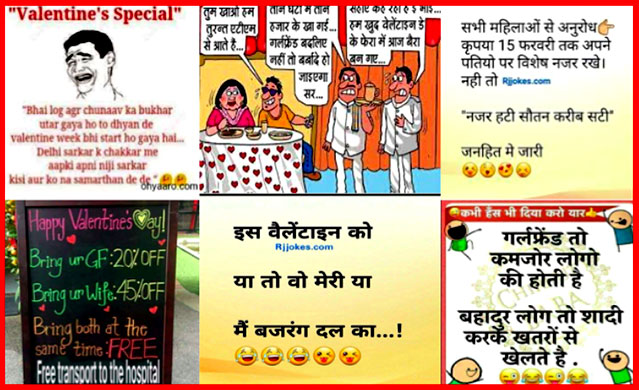


 ESP Properties, the entertainment and sports division of GroupM India, released the 2020 report on sports sponsorship in India. Overall growth in sports sponsorship at a healthy 17 per cent where the sports sponsorship Industry crossed the INR 9000 crore mark in 2019.