Category: Ad Agencies

  • Proximity India hires Punit Singh to lead Digital Technology

    By A Correspondent


    BBDO/Proximity has hired Punit Singh as, AVP, Digital Technology.

    Prior to joining BBDO/Proximity, Punit handled digital strategy for Reliance MediaWorks for India and Malaysia . He has also headed Technology and User Experience at Tribal DDB India. He has worked on brands like Volkswagen, Idea, HDFC, Honda Cars, Standard Chartered, Asian Paints to name a few. Punit holds an engineering degree from REC Nagpur and MBA from IIM-Indore.

    On the appointment of Punit Singh, Ajai Jhala, CEO, BBDO/Proximity India said, “Punit lives at the junction of digital technology + creative + strategy. Punit is that rare talent in the digital space who can walk the talk. We hope to see the impact of his hire on both the work and attracting new talent.”

    Ranjeev Vij, VP & Head – Proximity India added, “An absolute digital junkie, Punit is passionate about everything digital and shares our vision to contribute towards strengthening of the platform in the Indian scenario with behavior-changing interactive ideas.”

    Commenting on his move Mr Singh said, “India is placed at an exciting point on the Digital front. With brands warming up to the potential of digital, the coming years would witness a paradigm shift in the way they reach out to their consumers. With thought leaders like Ajai, Josy and Ranjeev to steer and a great creative team to work with, Proximity India is set to become the next big hub of marketing rationale and radical advertising in the digital space.”

    Proximity India is the youngest agency of Proximity Worldwide, and is globally aligned to BBDO Worldwide. Proximity India offers talented communications experts with skills across the full range of relationship, digital and direct marketing services.

    Early next year, Proximity will launch their proprietary Digital Lab Initiative in India, which is a multi-faceted program, designed to drive digital thought leadership and to provide a significant added value service to its clients.

    BBDO/Proximity India, the youngest agency of BBDO Worldwide and the Omnicom Group, began operations over 36 months ago. With offices in Delhi and Mumbai and talent strength of over 90 people, BBDO India is helping shape brands like 7 Up, Nimbooz, Quaker Oats, Aviva life insurance, P&G Gillette, Godrej Protekt, Bayer Healthcare, Wrigley’s Doublemint, J&J Baby, J&J Nicorette and BlackBerry.

  • All set for Effies on Dec 14

    By Tuhina Anand


    The Advertising Club Bombay is gearing up for the judging that is slated to take place this week for Effie 2011. The Effie awards recognize effective advertising is slated to take place on December 14, 2011 in Mumbai.


    Ajay Kakar, CMO – Financial Services, Aditya Birla Group and Chairman Effies Committee, Ad Club Bombay said, “As a Marketer I view the Effies as the most coveted awards platform, because it recognises work that works – for the brand and the business. It is also the only award that is given to both the agency and client. With regards to the format, this year we have given greater focus and recognition to a wider number of categories. Also, as a first – we are going to have the judging take place in Bombay and Delhi.”


    What is different this year that the Round One of judging which has traditionally taken place only in Mumbai will also be happening in Delhi this year. The Mumbai judging will take place on November 22 and 23 whereas the Delhi round will happen on November 29. The Round Two will only take place in Mumbai.


    Talking about the development, Bipin Pandit of The Ad Club Bombay said, “The Advertising Club Bombay is a national entity and not just Mumbai-centric. We want the club to spread its wings and believe that it should include players from the industry across.”


    This year almost 275 entries are expected and if the number seems low then one must understand that each entry costs Rs 21000 hence the quality of entries is highly superior. The awards will be given in 15 categories. “This year I do expect the number of entries to exceed the record of last year and I see the entries come from a wide spectrum of agencies and brands, across categories,” added Mr Kakar.


    The awards are the only ones that involve client as well as the agency and are given to advertising that has worked in the marketplace. The Effie Case studies are also most sought after and will be presented as part of the event. Besides, there is an impressive line of marketers and account planners on board who will be judging the awards.


    Times TV Network and Marico are the Associate Sponsor for Effie 2011 whereas Brand Equity is the Category Sponsor for Bravery Awards.

  • JWT restructures to bring in 3 NCDs


    By Tuhina Anand & Shubhangi Mehta


    After roping in Bobby Pawar as its Chief Creative Officer and Managing Partner, JWT is now bringing in more changes in its team structure which Colvyn Harris its CEO dubs it as `transformational changes’.  It is learnt that JWT has brought in a three National Creative Director structure which includes Swati Bhattacharyya in Delhi, Tista Sen in Mumbai and Senthil Kumar down South. All three NCDs will have a team of ECDs under them and when Bobby Pawar joins which will probably be in March 2012 as the CCO , he will spearhead this structure.

    Ms Bhattacharya has been heading the GSK business at JWT while Ms Sen and Mr Kumar have been Executive Creative Directors at the agency.

    On the restructuring, Mr Harris said, “I cannot think of 3 more deserving and talented people who have imbibed the best of JWT values and who believe in the JWT Company. It has taken us some time to recognize that their current roles and responsibilities far exceed what national creative directors in other agencies are responsible for. Given the sheer scale of our operations, and our most admired line-up of India’s finest and the world’s most admired brands, it was imperative to recognize the creative leadership team with a designation based on their role.”

    “Given the exigencies of the market and the pressure which is being brought to bear on us to improve our creative work – especially from clients who are in the more competitive categories – we believe that the combined skills and talents of Swati,Tista and Senthil will be able to provide the best solutions for our clients, our brands, and our people, added Mr Harris.

    Talking to MxM India on the creative pillars that JWT is creating, Mr Harris said, “The roadmap that JWT has drawn of being a creative powerhouse and being creative led and creative driven organisation will be achieved by these changes. Bobby along with the team will help us in realizing this vision. In fact, people who are saying that the CCO position at JWT has been unstable should know that Adrian came as the Delhi office head so we didn’t really have anyone take the CCO position for long. Bobby’s position in that sense is of true CCO who will lead a team of around 300 creative people at JWT along with the newly restructured team.”

    It may be recalled that when Josy Paul had joined JWT as its NCD, Agnello Dias had also been promoted as NCD and the agency followed the dual NCD structure at the helm but no CCO. It was only later when Mr Paul quit that Mr Dias was made CCO, though he too quit soon after to start Taproot India.

    Mr Harris also said  that one should gear up to hear of some more announcements at JWT very soon. The agency has also recently roped in Max Hegerman as Senior VP and its Head to look after JWT’s Digital strategy.

    On his mandate at JWT, Mr Bobby Pawar said, “My job at JWT will be ensure we change our benchmarks and set new standards. Critical would be in setting a vision and then delivering on it. JWT will be the magnet for the best talent in the industry and offer the most creative solutions ever seen.”


    INTERVIEW

    Bobby Pawar, the guy who is taking over as Chief Creative Officer and Managing Partner of JWT, has been responsible for turning around the agencies which he has worked for. When he was at BBDO in Chicago he weaved his magic to make one of the hottest shop in the region. In India too, with Mudra as its Chief Creative Officer he has been instrumental in the agency winning awards and accolades on many international and desi platforms. The agency has done some high decibel advertising like the ones for Volkswagen launch in India and there after its variants that had caught eyes of many. With Mr Pawar’s next destination being JWT which has  seen causalities in quick succession including Bruce Matchett, Josy Paul, Agnello Dias and Adrian Miller. Looks like JWT is gearing up for combat and shut the wagging tongues of the industry. Here’s an interview with Bobby Pawar who sportingly answered our questions though he steered away from some specifics.


    Q: Omnicom as a parent, so many awards in the kitty all with your leadership… why then did someone like Bobby Pawar leave?

    I guess I am addicted to challenges and the task of polishing JWT’s creative luster and raising the game there was just too seductive to pass up.


    Q: What is the mandate at JWT, also we have seen the creative head at JWT being an unsteady wicket in last few years, should we expect a change now?

    Colvyn didn’t asked me to partner him on the mission of maintaining status quo. I would hardly be the right guy for that. Both of us want JWT to evolve, to build on the past, but look firmly at the future. The focus will be on the work and the people who do it. And that means the entire agency. We don’t just want a highly creative creative department, but a highly creative company. Everybody has a role to play in making sure the solutions we think up, sell, and execute are as great as the brands need them to be.


    Q: Was the Omnicom deal anything to do with your moving out?

    If anything the Omnicom deal almost kept me back. That is a great company and I have the highest regard for John Wren, Chuck Brymer, John Zeigler et all. They made me feel very welcome, but as they say a man’s got to do what a man’s got to do.


    Q: How would you sum up your stint at Mudra?

    I loved it. See, I’m not leaving because I am unhappy. When I started nobody gave us a chance. Four long and hard years later, our creative reputation is the opposite of what it was. We did pathbreaking work for Volkswagen, Big Cinemas (Silent National Anthem), 7-Up, Union bank Of India, Emirates, Philips, Economic Times, McDowell’s No. 1, etc. We were the winningest DDB agency at Cannes this year along with DDB Paris, 3rd in the agency of the year standings at Spikes and we had the most metals Abbys. Not too shabby, right?


    Q: What should we expect from Bobby Pawar in his JWT avatar?

    I believe that agencies don’t just need to create, they also need to invent. Why can’t we invent a whole new medium while we thinking of a campaign that runs on it? The future will be invented by those who ask the most interesting and unexpected questions.


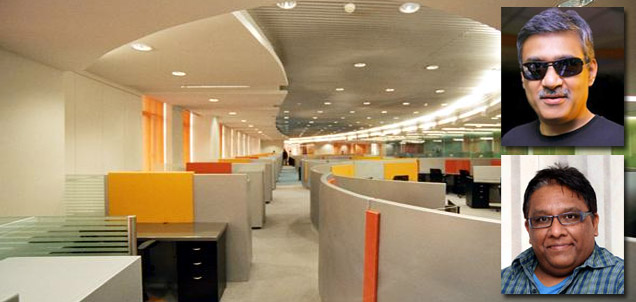
    Photograph of JWT Mumbai courtesy JWT website. Images of Messrs Harris and Pawar from the JWT and Mudra sites respectively

  • Need to focus on consistency: Tom Doctoroff, JWT

    [youtube width=”300″ height=”250″]http://www.youtube.com/watch?v=6qvtd5T__QI[/youtube]

    By Tuhina Anand

    Video by Shruti Pushkarna

    Tom Doctoroff is a JWT man who has worked with the agency across geography. Having started his advertising career at Leo Burnett in Chicago he later moved to JWT. In 1994, he moved to Hong Kong as Regional Business Director for clients such as Pepsi, Philip Morris/Kraft and Citibank and then in ’98 to China as the Managing Director of JWT Shanghai. In 2002, he was appointed Northeast Asia Area Director (China, Taiwan, Hong Kong and Korea) and Greater China CEO. In 2008, he also assumed leadership of JWT Japan. Mr Doctoroff has played a key role in the growth of JWT in North Asia.


    Q: How do you see JWT based in the scheme of things in Asia today?

    I think that we have a lot to be proud of. JWT has an extremely cohesive management structure where all our goals and values are aligned, and I’m particularly proud of our creative community which is probably one of the jewels of our global network out here in Asia Pacific. I think we’ve got people who are proud of their own output in their own countries. One thing that I’ve always liked about JWT is that we are not cultural imperialists. I’ve never felt for example that because I’m in China, even 13 years ago, that I am on the other side of the world. We have a company culture that does respect individual idiosyncrasies and that’s very important to avoid this hegemonistic-macho advertising ethos. So, I am proud of JWT. We’ve certain things that we could do better, like digital where we’ve been a little bit slow, but I think we are catching up now. We are trying to bring into the agency an ethos of the need for digital to reinforce brand ideas. As for India, JWT in India is a powerhouse and it has a lot to be proud of. And I’m sure that it will overcome some of the frustrations of the past year because everybody knows it needs to be done.


    Q: How do you see JWT China in terms of creativity, going ahead?

    If this doesn’t get broadcast in China I’d be happy because I don’t want to appear arrogant where I live, but I think we set the standards of creativity in China. Honestly, we have a very stable management team and a very stable creative leadership team, and what that means is that we create an environment of safe self-expression within the agency as a whole. So we usually are the ones that are doing the firsts, we won the first Cannes Grand Prix, yes it was for print but it still didn’t happen by chance; it’s because we have a belief of what creativity is and how people work together in the agency and in collaboration with people outside the agency, even outside of China to develop engagement platforms. So I am very proud of our creative leadership. People call us the ‘temple of advertising’ and I think that’s because we’ve been so stable for such a long time. I’m not saying we don’t have weaknesses but creatively speaking, I think if you ask around, we tend to define a high ground to a certain extent.


    Q: What are the two things that you would advise to people in the industry which they could follow to get more ROIs?

    As soon as you bring in the ROIs, you bring in a different question altogether. So before we get to ROI, I think that one needs to always focus on consistency. A consistent brand idea, a consistent engagement idea that is genuinely media-neutral. I think the danger is that as we experiment with new forms of technologically-enabled engagement, we forget about the primacy of an idea. And if you start your media plan without having that idea clearly understood by all, then you have chaos. One thing that is critical in new markets is order, in consistency, in clarity of ideas or else people will tune you out. Nobody wants to figure out how the internet or how the digital app or the landing environment connects to the TV ad. So consistency is always key, and that will always require a high degree of conceptual craftsmanship. And the second thing about digital is that all digital is not the same. There is certain digital that is relevant to campaigns, there is certain digital that is relevant for customer relationship marketing, there is certain digital that is more transactional at the point of purchase; some of those belong inside the agency and then the big question is how you make sure that the entire agency is digital, but having a digital core centre of expertise as a heartbeat within the agency with some of that for outside the agency. So agencies need to know who they are first and then build their digital strategy based on that.


    Q: Talent is an issue; how much of an issue is it and how do you tackle it?

    It’s an issue at the most senior level. I find that the biggest issue for talent is that many senior people – and this is in China, I don’t think it’s the same in India – there is an abstract nature of advertising which makes people feel insecure. Chinese people want to have a sense of control over their destiny and they revere the concrete, and so what we often find happening is that people in their desire for control either start leading dysfunctional agencies, their own small agencies or they leave the industry altogether. So what we need to do is find ways to make a long-term career in advertising seem safe. Part of that is financial and frankly in China it’s not a problem, because once you get to be senior in China as a local person, the pay is quite respectable. But the real issue is making sure that you are providing a platform for senior management to stand up and feel confident on, and that requires a lot of persuasion and a lot of coaching as people come up to the ranks. On the junior level or the mid-level, it’s really a question of liberating their creative potential and making them feel that when they will open their mouth, they will be saying something that’ll be appreciated; and that gets into corporate culture and how you have an environment of dangerous silence, safe self-expression where proactivity is truly rewarded in a meritocratic sense. So advertising has to be very meritocratic and that’s something that’s not always compatible with traditional Chinese culture. But we make it quite meritocratic, so our attrition rate is much lower than the industry average is.


    Q: What do you think of Indian advertising in recent times; how do you think it has improved?

    I have been working with India tangentially for 17 years so there’s been huge progress. I think the progress first came on the production level. The change started around 10 or 12 years ago. I just noticed the ads didn’t look that cheap, the production values were pretty high. And now when I take a look at Indian advertising, I think that it is strong. It is very culturally rooted which is fine, as long as that culture is not gimmicky and it comes from cultural insight as opposed to just a celebration of anything Indian. So I personally think that strategically Indian advertising is very strong, execution has become better. I just think that the unfortunate thing is because of its proud confidence in the Indian identity, it’s not as accessible to many people around the world but it’s good, it’s made much progress.

  • Raising the Bar: Colvyn on JWT with Bobby


    By Johnson Napier


    The last few days have witnessed media and advertising circles going gaga over news of a restructuring exercise at JWT and the surprise coronation of Bobby Pawar as the Chief Creative Officer & Managing Partner, alongside the elevation of three of its key ECDS to the post of NCD – Swati Bhattacharya, Tista Sen and Senthil Kumar. But what has kept the industry guessing is the swiftness with which this transformation has been carried about and who from JWT is responsible for this smooth makeover.


    MxM India meets the man who has effected the change – Colvyn J Harris, CEO, JWT India. In a detailed conversation, Mr Harris reveals the new creative direction that the agency will root for with the coming in of Bobby Pawar, the unmatched experience that would be delivered to clients and how he could get back to serving the industry with the easing of the creative function at JWT. Excerpts:


    Q: Apart from the CCO and NCD level restructuring exercise, have there been any other senior-level elevations at JWT?

    The restructuring exercise where creative is concerned is over. We have Bobby Pawar as Chief Creative Officer; he will be supported by three NCDs comprising Swati Bhattacharya in Delhi, Tista Sen in Mumbai and Senthil Kumar in the South. There are a set of ECDs who would work in partnership with the above team. There won’t be any replacements as such where the earlier ECD posts are concerned.


    Q: Were there any other candidates you considered other than Bobby Pawar, including any international contenders?

    We did consider international candidates but we were very clear that we needed somebody who had roots in India, who understands the country in which we operate – the nuances and sensibilities of India. As for Bobby, he has international experience, having worked in BBDO and Ogilvy in the US. So that’s the best of both the worlds that one could ask for.


    Q: Was it a long chase to get Bobby Pawar take up the offer at JWT?

    It was not a chase actually; it was fairly mutual. We felt that he had the right qualities to lead and help us deliver on a vision which is to be the very best in what we do.


    Q: Knowing Bobby’s liking towards working for an indigenously-run agency like Mudra (before Omnicom buying out a majority stake), what was the differentiating factor that convinced him to take up an offer at the WPP-run agency?

    I think where JWT is concerned, we may be global and affiliated to WPP but we are finally rooted in India. If you trace the lineage of JWT India, it is actually Hindustan Thompson Associates (HTA). We have not shed any of the institutional attributes that JWT or HTA was built on. So I think that foundation continues and we are as Indian or as global as a client would want us to be. For creativity to flourish and thrive and do well, you need a platform. JWT has some large and reputed clients. We work with the leaders in every category so the work you do is going to get visible. So it’s an opportunity that presents itself to all of us who work for JWT. And for talent, what more can you hope for other than the set of clients that we have? We work with the best known Indian clients and we work with the world’s most admired brands, whether it is Nike or Pepsi…


    Q: How has the industry reacted to the nomination of Bobby Pawar? Moreover, what has been Sir Martin Sorrell’s reaction to the appointment?

    Sir Martin Sorrell and Bob Jeffrey (Worldwide Chairman and CEO, JWT) are very happy with the decision. They realize that I also need a partner to carry forward this responsibility. JWT is a big ship, we have been suit-led for too long. So this gives us a nice balance.


    Q: Yes, don’t you think the agency has been suit-led for a while now?

    That’s not how you should look at it because we have eight ECDs, because our scale of operations is large – in Delhi we have around 380 people. So if you were to compare you’ll understand that wherever we operate we are completely full-service; all skills operate in all offices. We just didn’t have somebody to drive the creative agenda for us with a greater focus. That’s because when you run businesses or lead an agency on a management framework you take your eyes off the ball on a greater platform. So Bobby’s going to play that role.


    Q: Having being suit-led for some time, would you then agree that the agency did witness a creative slump post the going away of senior resources like Agnello Dias and Josy Paul?

    Not at all. Whatever talk you hear is all loose talk. When people don’t know then there is talk but finally the success of a company is derived by how our brands perform in the marketplace – which is a great success as all of them are leaders. The success of an agency is how our people perform – again, all of them have done extremely well, and finally, where success is concerned there are financial benchmarks and there are creative benchmarks and we have been very consistent in winning. Senthil is an international award winner, the Mumbai office is the most awarded agency… so you have got all the success stories that you need.


    Q: How would you also react to the claim that your former creative heads took along some clients with them after they quit JWT?

    They didn’t take clients as such; they took projects along with them. We still have over 200 clients; we can’t be a hundred percent of every client all the time. I am sure a client chose to exercise his judgment on an idea which will help his business. We definitely respect that and welcome it. In both cases, they got something good so I am happy.


    Q: Coming back to Bobby Pawar, what would be expected out of him? What’s his mandate as CCO?

    Firstly, he has a team – he has NCDs, ECDs and a team of about 300 people in creative. So he’s gonna have to set an agenda for creative. That means there will be a vision and a purpose that we want to go back to. And after that it is actually how do you achieve those objectives – how do you deliver on that vision, how do you execute that vision, how do you get the work to look better… So that’s the agenda that he would be riding on.


    Q: Do you expect Bobby to get his set of clients from Mudra to JWT or wish such a natural progression to occur given his stature at Mudra?

    We are not looking at that. In our gameplan, Bobby fits extremely well and our strategy is to improve the work, change the benchmark, create new standards…and that’s what we are doing.


    Q: So while Bobby gets to set a new creative agenda, do you see a creative shift coming about at JWT?

    As I said, our agency has been very successful. What we will do is that we will jointly set a vision, and as a team we will have to work jointly on delivering on that vision.


    Q: Would Bobby lend his expertise to other domains under JWT like digital, activation, public relations, direct marketing, etc…?

    Yes, of course. We talk about idea-centricity – the idea at the centre based on a brand and how you seamlessly use every touchpoint to the audiences identified. So it’s a one seamless idea which we will try and make it a big platform idea.


    Q: With Bobby at the helm, will the focus now be on reclaiming the ‘most awarded agency’ tag – that was his claim to fame at Mudra, making it the most awarded agency in recent years?

    If you look at our work, we are all over the place. Now with Bobby at the helm, we want to raise the bar and improve our standards. We want to be recognized firstly at an Indian platform, we want to be recognized globally and we definitely want to improve our body of work. But all said and done, it is not about winning awards; it is also important that the work we do for clients is effective and successful for them in the market. That’s priority No 1. If that work goes on to win awards then that’s fantastic. So it’s actually an and/and rather than an either/or.


    Q: Any new verticals being planned for take-off?

    Nothing as such. We have design, digital, Thomson Social, Encompass… so we are not looking at anything else right now. But digital is something that we are looking at going forward with and that’s why we have hired Max Hegerman.


    Q: Moving on to you, how would your responsibilities change, going forward? Is there anything that has been planned for you?

    I think my responsibilities will reduce, hopefully, because I have been on a treadmill and a rollercoaster at the same time last year. Hopefully this new change will give me some breathing time…


    Q:…It could also allow you to get back to serving the industry and catering to several issues like you did while you were the Chairperson of Goafest.

    I used to be involved on a big scale earlier but I have cut it down as it takes away a lot of your time, but it’s important for us industry leaders to be a part of the industry; to engage with people who make it what it is today so that this industry, firstly, is successful. On an overall basis, it’s industry definitely for me; it is what you give back as well. And also the network as well; we are a global company, and that is also equally important for me to look after.


    Q: Lastly, if you were to set a goalpost for JWT in 2012, what would that be?

    I think if by the end of 2012, we are able to do good work on our key clients and that is acknowledged by clients first, and then maybe awards as the second parameter, I think that will be a great step forward.
  • MediaVest Worldwide bags SuperMax business

    By A Correspondent


    MediaVest Worldwide has won the SuperMax media account and will handle for the latter media planning and buying across all media. The business was won in a multi-agency pitch that was conducted earlier this month. MediaVest will handle this business from their Mumbai office with immediate effect.


    Confirming the development, MediaVest VP in Mumbai Dinesh Rathore said, “We are delighted to have won the SuperMax business and are looking forward to partnering them. This has been a good year for our agency. We are looking forward to building on this momentum in the coming year.”


    Starcom MediaVest Group (SMG) has recently has picked up over 14 new businesses in the past few months from their Delhi, Mumbai and Bangalore offices including most recently the Aircel TV and Digital business.

  • Vizeum wins media duties for Educomp Schools

    By A Correspondent


    Educomp Schools, as part of its growth strategy, has appointed Aegis Media’s Vizeum India as its media AOR. Media agency Vizeum India, which operates in 55 countries, will now handle Educomp Schools’ media mandate in India to identify the appropriate communication programmes and deliver the same most cost optimally.


    Founded in 1994, Educomp Solutions is a globally diversified education solutions provider. With an employee base of more than 10,000 professionals, Educomp serves 26,000 schools and 15 million learners and educators in India as well as the US, Canada, Singapore and Sri Lanka. The company works closely with schools to implement innovative models to create and deliver content to enhance student learning.


    Educomp Schools provides educational content / IP and educational infrastructure to a range of differentiated preschool and secondary school brands in its quest to be the school service and Infrastructure provider of choice for all demographic and psychographic segments of society across India. Between the three brands, Universal Academy, Takshila Schools and The Millennium School with their different learning systems, the infrastructure and fee structures, its schools provide distinctly different schooling experiences to students and parents.


    Partho Dasgupta, President, Educomp Schools, said, “We are happy to confirm the appointment of Vizeum as our strategic media partners. Their overall result-oriented approach is quite unique and interesting. They are mandated to help us overcome some of our business challenges. We look forward to working with Vizeum and wish them all the very best.”


    Commenting on the win, S Yesudas, Managing Director – Indian Subcontinent, Vizeum, said, “We have pleasure in welcoming Educomp into the Vizeum family. It is a challenging assignment and we are fully geared up with the right delivery solutions. We look forward to addressing the business issues of the client as their extended brand team. We are thankful to the Educomp management for considering us worthy to partner them. This business will be handled out of our Delhi office.”

  • We’ve bn inconsistent in r work: Sonal Dabral


    By Anil Thakraney


    Sonal Dabral’s career has been nothing short of fantastic. In the nineties he partnered Piyush Pandey and together they turned around the fortunes of O&M. He later flew to Malaysia and then Singapore, and did ditto with O&M’s offices there. A few years ago he took on another challenge: To recreate the magic at Bates, where he is Regional Creative Director, Asia Pacific & Chairman for their Indian operations. While he has been over-seeing India, Sonal physically moved here only a few months ago. And though a few cartons still remain to be unpacked, the man is very clear about the way forward for his agency.


    In a rare, frank and a very insightful interview, the 49-year-old reveals his ideologies, his plans for India and his opinions on the ad industry. We also take a trip down his memorable career journey.


    What struck me most is how clued in Sonal is about the key challenges that face brands in contemporary times. I don’t always find that in Indian ad agency leaders.


    Q: There’s a buzz about you joining Mudra.
    No truth in it at all. But I can understand why the rumours must have started. Balki is the face of Lowe, Prasoon is the face of McCann and Piyush, of course, is the face of O&M. So for somebody of stature to walk into a big agency like Mudra… that just leaves me.


    Q: But if they approached you, you would talk to them?
    I won’t be interested. Lots of things to be done out here at Bates.


    Q: What motivated you to shift to India after all these years?
    When I joined Bates about three years ago, the agenda as the regional creative head was to improve the creative health of the agency through the right kind of hiring, inspiration and hands-on involvement. Bates, historically, has had some big clients and pockets of excellence with sporadic good stuff coming out. But overall the network’s creative health has not been good. My additional role is that of Chairman, Bates India, and it was the duality of the role that attracted me to this job. Which is to get back in touch with India and yet have a bigger role than what I was doing at O&M Singapore. So my first job was to ensure that we had the right kind of creative leadership in every place. Once that got done in the last three years, we started looking at India as a very important market for us. And India is a place where I can make a visible difference because of my equity out here, because of all the years I have spent here. And that’s why I decided to locate here.


    Q: Cut to the past. Why did you leave India in the first place? You were Piyush’s blue-eyed boy at O&M. Doing phenomenally well in the agency.
    In the latter part of the nineties, Neil French had taken over as the regional creative director for Asia. On his first trip to India he saw some print work I had done for Cadbury Perk and he was pretty impressed. He cancelled a lunch meet with Ranjan Kapur and Piyush Pandey and took me out for lunch instead! (Smiles.) And he asked that I move to O&M Malaysia. The agency was going down, and they desperately needed a creative head to come and build the place.


    Q: Am sure Piyush must have been upset with your decision to move.
    Neil spoke to Piyush and Ranjan about this. And they called me for a morning cup of tea on a Sunday. They said Neil sees this as a good opportunity for me. They said they wouldn’t like me to go, but wouldn’t stand in the way either. I thought about it for a long time because I was heading O&M Bombay which was 50 percent of the agency’s business, we were riding high. Anyway, I did a recce trip to Malaysia, and the O&M office turned out to be a small one, though they gave me a red carpet welcome. I came back and thought I would never join such a small place. Then they started writing to me, saying they wanted me out there. You know Anil, I believe in destiny, I believe things happen for a reason. Also, the charm of the unknown has always enticed and fascinated me. The discomfort of going to a new place, that too to a place that has nothing to offer, appealed to me. The same thing happened when I left Lintas to join Ogilvy in 1991. Ogilvy was nothing at that time and the only remarkable thing they had done was the ‘Mile Sur’ film.


    Q: But then you eventually left Ogilvy and joined Bates.
    Again, for the same reasons. Helping a place to shape up has always excited me. Maybe it’s to do with a big creative ego, though otherwise I don’t have an ego at all.


    Q: The key difference between working in an international market and working in India…
    In India we work a lot on the individual, friendship level. It’s like if I know Thakraney really well, and he is the agency and I am Unilever, then Thakraney and Dabral will work together and create a campaign. Things happen on a very personal level here. In the international markets… and you can call it professionalism or stuck-up-ness… there are still a lot of procedures and processes that get followed. I prefer a combination of the two methods. We are a very chaotic, free-for-all nation and at times that free-for-all-ness helps creativity. But it also brings with it a sense of indiscipline. And this affects the execution of work, that’s where we fall flat. Obviously, in the last 12 years, I have learnt something that’s different from India. And I am trying to get some systems in place in the way we work out here at Bates.


    Q: When you first came to Bates India, the good and the bad things you noticed…
    (Thinks carefully.) Creatively we have not been consistent. There is potential but the realisation is not happening. We need to correct that so that our number of hits increases.


    Q: The significant changes you’ve made in the last few months.
    I want to make this an agency of people who are not just creative but are intelligent, aware and knowledgeable creative people. True creativity needs you to be curious. The curiosity bit I want to feed as much as possible. Last weekend I invited a film chief from the National Institute of Design to conduct a film appreciation workshop. And it had nothing to do with advertising. Sometime later we’ll have another kind of workshop. Basically, I want to tell people that advertising is the only profession where you don’t learn things from the inside, it will all come from the outside.


    Q: What do you look for when you hire creative people?
    Besides obviously the work, I look for a certain amount of authenticity. It might be difficult to get that in a meeting, but you do get a sense of it. It’s very important for any creative person to let his or her guard down.


    Q: As a client, why should I choose Bates?
    We are the ‘change’ agency. It’s about making strategies that are based on the shifts that are happening within the product category or within the target audiences. And based on the cultural shifts that are happening within the society. We call that positioning ‘Change Engage’. It means a changed thinking which leads to work that has a two-way communication with the consumers. For example, you saw what happened during the Anna Hazare movement. It was about the power of people coming together really fast and having an opinion about something. Or for example what happened with the Kolaveri video. It’s the power of tech that consumers now have. This means advertising has to change in the way we approach things. We need to make an impact on a consumer for him to start conversing or debating about our brands. The other thing is we are an Asia-only network, so we are still small when compared to a JWT or an Ogilvy. So there’s a certain amount of nimbleness and spontaneity that we have. Also, on a personal front, the wealth of experience I bring with my Indian and global experience.


    Q: Why hasn’t Bates really taken off in India?
    It’s to do with the fast changes that have taken place. It’s been only about four years since it has emerged as Bates. Before that all the mergers were taking place. First it was Enterprise, then came David. Also there have been personnel changes. Subhash Kamath left for BBH, I have come now, Sandeep Pathak has taken over as CEO. It’s been going through a churn. It’s only now that we have begun to feel settled.


    Q: What’s all this about Smashing Pumpkins and Cabbage Curry?
    Smashing Pumpkins is something I coined for our annual creative conference. We would smash pumpkins at the event. Bates’s earlier colour was pumpkin yellow. And I said we need to be doing smashing work, so that’s how it got coined. Cabbage Curry Fridays I had started in Malaysia and Singapore. Every Friday we would have a chat session or a presentation which had to do with the culture of curiosity I was talking about earlier. I want to tell people that if you don’t have a passion beyond advertising, then your mind will become like a cabbage. (Laughs.)


    Q: What’s happening on your movie script?
    There are a couple of ideas in my head. I have started working on it but it’s been going very slowly. I have a story in mind that’s solid and substantial. It will not be a time-pass flick.


    Q: I last met you in the late nineties when you were a young, happy creative director. I have a feeling you have become a tough guy since.
    I have changed over the years to an extent which is required to run a place. But otherwise I am not as tough as I should be. Laughter to me is the biggest asset an ad agency can have.


    Q: I think in India you’ll have to kick ass at times.
    I totally agree with you.


    Q: Would it be right to call Piyush Pandey your mentor?
    He is one of the people. There would be others too like Neil French.


    Q: Do you at times feel you should never have left India? Bates is a small player, and had you stuck on, you could have been the captain of a very large ship.
    Not at all. I am extremely happy and I feel very lucky. That I did go and work in Malaysia and Singapore. The exposure that gave me towards communications, advertising, work, etc, couldn’t have happened in India. Also when I was abroad there were offers to head a large organisation here, and those offers won’t run away anywhere. I totally believe in destiny, I wasn’t meant to be here for those 12 years.


    Q: One creative chief of a large Indian agency you most admire.
    (Thinks for a long time.) I like the way Aggie (Agnello Dias) and Padhi (Santosh Padhi) have gone about their work. The way they have approached business, the kind of work they are doing. Their small size has not held them back. In terms of the large agency Chairmen, is there anyone I envy or admire? Well, no, not really.

  • Karthik Lakshminarayan to leverage his TV experience @ Crest

    By A Correspondent


    Madison Media has roped in Karthik Lakshminarayan as COO of Crest to head the AOR of its ITC business. Mr Lakshminarayan has earlier worked with Madison and its homecoming for him. He has essentially been a media agency person, having spent close to 13 years on the agency side with Initiative Media, Starcom, besides Madison. He then crossed over to television where he spent close to four years with Colors and Food Food.


    Talking about the edge he will have because of his television experience, he said, “Having worked closely with the leading channels and even on the production side, I think it has given me first-hand experience of working on the other side of the business. Media planners tend to look at the past data of the channel to predict future and I think having worked in channel has given me an insight to work this premise in a better and meaningful way. It will help in bringing that amount of difference and identify benefit for our clients.


    “Also having worked on the production side has given me fair knowledge of how content can be integrated in a better way to bring a better value to the client,” added Mr Lakshminarayan.


    For Crest, he will be alternating between the Bangalore and Kolkata operations of ITC. In his career, he has worked on a large and diverse portfolio of brands including Godrej, Cadbury, Marico, Asian Paints, Bharti Axa, Infosys, Britannia, Titan, Heinz, Pillsbury and Hallmark amongst many others.


    On his role at Crest, Mr Lakshminarayan added, “Crest has been doing great work for ITC in the last one year and I am looking at further raising the bar of the work being done.”


    Punitha Arumugam, Group CEO, Madison Media, commented, “I am delighted to have Karthik back with Madison Media. The best testament for Madison Media as an organization is when ex Madisonites as talented as Karthik are willing to accept and explore career opportunities with us once again. “

  • Social Media is here to stay: Jonathan Kopp

    Mr Jonathan Kopp, Partner & Global Director, Ketchum Digital was in India recently to launch its India division with Sampark. The company is betting big on Social Media. On the onset, Ketchum Sampark Digital (Sampark is the Indian affiliate of global communications network Ketchum Inc) will service its existing clients in India, offering digital media services of which social will be a big part.
     

    MxM India’s Rishi Vora spoke to Mr Kopp on the Social Media scene in India. Excerpts:


    Q: What was the thought process behind launching a digital agency in India now? Have you entered the Indian marketplace a little late?

    I think the timing is perfect. Right now we’re in the era of the social web. There used to be a distinction between digital media and social networks, and now we are in a period where everything on the web is social. So if you have a web plan, or a digital plan, you’ve got to have a social plan as well. Pure play digital agencies are good in creating destinations, but that is not very relevant any more today. What matters the most is how you drive the conversations, what sort of content you require to drive conversations. These are areas which we specialize in. As for the timing of the launch, I think it’s just the right time to be here. Companies and brands are more than willing to go social.


    Q: Do you think Social Media has enough money to sustain itself as a profitable, longterm business?

    I think the growth of Social in India is going to be upward for a considerable period of time. If you think about the penetration of Digital – the numbers are good but percentages are small. So the opportunity is very much there. Whether you succeed as a brand in the social media space is a matter of how you present yourself in that space. Mobile is a potent medium in India. Combining that with video and social, it becomes so much more exciting for users; yet another reason why content should be taken so very seriously – how can you be more creative, more compelling and interesting enough to engage many users online, on to the social networks.


    Q: Is it a big challenge to sell social media to clients?

    There is not a single company in any industry that can afford not to be on the social web right now. So I’m a big believer in the power of social media. If you’re not on it, then you’re losing out a fantastic opportunity to speak with your customers. As a brand, it’s mighty important to be in the social environment because the consumers are out there.


    Q: But they’re not necessarily there to speak to brands.

    Yes, people are not interested in becoming friends or having a relationship with a brand. What they really want is to connect with the people behind the brand and so the personalisation of the brand, bringing forward the humanity – the faces, the voice, the personality – this is critical in the brand’s success in the social space. Authentic and transparent voices. Immediate response to consumers’ queries – things like these can only happen in social media.


    Q: What are the learnings from other markets that you bring to the table for Ketchum Sampark Digital?

    It’s an important question. We have invested an awful amount of lot of time and resources to build the Ketchum Global Digital Network of about 180 digital and social media experts around the world; expertise and case studies working together to really create a global perspective. One of the first things we need to do with our clients is help them understand the power of social media. So social media training is important for us to start, our clients need to understand it. It requires a lot of change – mindset change and structural change. Digital is blurring the lines across traditional communications disciplines. Digital and social media is also creating a potential clash of messages from the organisation to the public. So marketing, advertising and public relations, sales, customer service – are all entering the social space at the same time without coordinating with each other. So it’s a mess in a way. As a company, you may want to hire expertise on HR, Operations etc. Similarly, the time has come for companies to look for social media experts. I don’t think there is enough expertise on things like managing work flows in social media, guidelines, the right approach etc. These are things we have learnt by being in the business for several years internationally, and in India, it is time that we bring our expertise in the marketplace.


    Q: How do you, as a social media professional, handle negative publicity on brands?

    It’s a very good question. One of the ways to try and prevent damage in social space is be there first. You first need to be in the social media space, because when you’re in crisis, it’s not the time to be going around and looking for friends. So we have a base of constituents, a base of supporters going into the crisis and you already have an established network to tell your story. So it is important to be there first. Second, things happen. They happen in traditional media, they happen in the interactive space, they happen offline, events; so you need to respond to them. Where companies go wrong is when they are not direct and as transparent. And if the consumer figures that out quickly, the problem gets worse. So if you make a mistake, apologise and explain the situation, and do it quickly.


    Q: Do you agree that a social media campaign will have minimal impact on a brand’s profitability?

    No, I don’t agree with that. I think social media can be proven to drive revenues. Very tactical small example: Dell has sold laptops through Twitter. When there were discounts being offered, Dell tweeted about them and sold huge numbers of laptops. Social transaction as a trend is only going to grow in the coming years.


    Q: Most of what we’re seeing in social media in India is Facebook marketing. Do you see that changing?

    Facebook is an amazing company and a great platform. Over 800 million users worldwide. Those who use the mobile phone to access Facebook – there are as active as their desktop counterparts are. Facebook is a force to reckon with and it’s admirable and enviable in every regard. At the same time I also believe that it’s never been about the channel. It has always been about the conversation and the content. So yes, today it’s Facebook but it wasn’t that long ago that it was MySpace, and before that, it want too long that it was AOL.


    Q: Social media picked up when Facebook picked up.

    Absolutely. But the first mover is not always the last. So will Facebook continue to dominate? Maybe. But, my concern more as a social media professional is not to be too invested in any one channel; rather it should be driven by where the consumer is. Right now, conversation is being held on Facebook, so it would be absurd to ignore Facebook. We’re going to use Facebook, but there are many other channels that we need to watch and learn from. For example, if you’re looking at corporate communications and executive positioning, Facebook might be important but I would want to look at Slideshare because that’s a perfect platform for you to share thought leadership. Similarly, if your concern is employee recruitment or professional networking, LinkedIn is the place to be on. So it really depends on what the purpose is.


    Q: What do you think about Google Plus?

    Google Plus is a new entrant. It is directly connected to YouTube. If you’ve got video and video is the way you’re telling your stories, then you need to consider Google Plus and YouTube. Just like the numbers tell us India is an important market to be in, the numbers tell you that Facebook is an important platform to be on. But, our job is to look at all of the platforms and all of the technologies that’ll help our clients tell their stories on the social web.


    Q: Do you see Google Plus catching up with Facebook?

    Google takes a very different philosophical approach to social web than Facebook does. It’s just got launched and Facebook has been around for some time now. But I don’t think Google Plus is as important as a standalone social network as it is for its ability to connect content and people across the entire social web. Facebook is about the Facebook platform and selling advertisements on that platform and creating social commerce on Facebook. So I don’t see them competing with each other – they both have a different role to play in the social web.


    Q: Can Social Media be a primary medium of communication for brands?

    I think the way we are going to be moving forward is really about integrating communications. It’s not about social over others. It’s about a consistent message and consistent requirement of content across all the channels where we need to reach the audiences. Broadcasting, print – newspapers and magazines are doing social media but some campaigns are starting in the social space and moving out to traditional. Some are moving from traditional to social. We really need to be everywhere.


    Q: There is a feeling that the medium is not taken seriously. Marketers and advertising professionals are talking about it, but in a way, they are the ones who are not really putting in the time, money and effort vis-à-vis traditional modes of advertising. Is there anything that social media experts need to look into?

    Metrics and evaluation is going to play a big role. The way we evaluate social media today – there is no single measure. TV, there’s GRPs; in traditional PR, it’s impressions. What we are trying to measure in the social space is engagement, and it’s a fuzzy concept right now. Facebook, with its analytics has gone much closer to measuring engagement in a very important way… The analytics behind a Facebook page drives you to not just the number of fans or friends but really the active user and the talked-about and how content is moving and who are the people that are moving it. As that science continues to move forward, I think people are going to be able to put a specific value on social media. You can certainly measure direct ROI if you’re seeing sales through social commerce.

  • Chuckle-worthy ads from Ideas@work for BigRock

    By Shubhangi Mehta


    Big Rock.com,an internet business providing web-presence solutions, has launched its latest advertising campaign.


    The campaign consisting of three TVCs, created by Ideas@work promotes BigRock.com’s offer of having a complete website for Rs. 499. The idea, “Got a business, get a website”, is a continuation of the campaign BigRock had rolled out in January this year.


    ideas@work and Big Rock started working together in September 2010. They have worked on TVCs and a few print campaigns.


    The dead-pan humour has found likeability to a lot of people’s sense and sensibilities. The treatment of a depicting a real business for whacky/imaginary products and services evoked humor and also drove home the message, subliminally, no matter what your business is, getting a website is essential.


    There is a continuation down the path of highlighting unusual businesses in a humorous light and in a way that connects with Indians everywhere. The campaigns are being launched in 5 languages because BigRock is a well-regarded pan India brand. The communication campaign that comprises of TV commercials, and viral campaigns are being unveiled across tier I, II and III cities with the simple message – ‘Got a Business? Get a Website.’ The communication showcases small businesses that have benefited with a website from BigRock and inspires the business owner to think – ‘if they can have a website, so should I.’


    The research insight for the campaigns was that there are an estimated 100 million users of the internet in the country. India is projected to become the third largest globally in terms of internet users by 2013. To give perspective, the top country’s in terms of internet usage today – China and US – have an internet user population of 485+ million + and 480+ million +, respectively.


    The total number of domains registered in India is only about 3 million. The ratio of the total internet users to the total domains registered in the country thus is an abysmal 1:45. In a country such as the USA that number would be 1:5 – thus there is every indication that the headroom for growth in this industry is enormous.
    Bhavin Turakhia, Founder, BigRock, said, “The ad was communicating a brand and a message which the TV Viewer has never been exposed to. Hence we had to take utmost care of keeping the concepts simple, relatable and humorous.


    “If you see any of our TVCs, they have 3 stages. The first stage talks about the funny / imaginary business which then leads to the business owner’s website name and the message – Got a business? Get a website. The last part is the product offering / offer window.


    “In totality, we tell the TV viewers that there is a wacky/unbelievable business which has a website and that every business should have their website and finally finishing with the offer that at BigRock, you can get a complete .COM Website at just Rs. 499.”


    He adds, “If you were to compare the BigRock ads to any other .COM Company ad, you’ll notice that the treatment and the concepts used for BigRock are highly disruptive, simple to understand and have a clear call to action. The look and feel of the ad is also highly real. We believe that the brand is for everyone who has a business/ has thought of setting up a website. There is a definite risk that when the campaign is this catchy, the consumer gets more engrossed in the campaign rather than focusing on the product but if you’re not entertaining the TV viewer, there are more chances of your brand being forgotten. The balance between the story and the product window has to be optimized to drive home both, the brand name and the communication”.


    The campaigns will be a 3-3.5 week affair on TV, Digital Media and Print.
    Sharing his views on the campaign Amod Dani, ECD, Leo Burnett, said, “Some really interesting stuff here by bigrock.com. The campaign has humour nicely woven into it and the Savitri Bai and Rambo acting classes commercials are very well crafted and funny. The “Newspaper… Toilet paper” touch and “Mere ladke ko julab ho gaya hai” got me ROFL!


    BigRock really stands out thanks to some good honest and simple execution. Nice to see humour well done, after a long time. Though I feel all of them are not as funny as Savitri Bai and Rambo acting classes, but overall the work is far better than what we’re seeing on the idiot box. Give me also a two now!”

  • Emgee group gives Quadrant creative mandates

    By Shubhangi Mehta


    In a multi-agency pitch, EMGEE Group has provided Quadrant Communications with the creative mandates for their property in Goa called Anantham.


    The account size is estimated to be around Rs 15 crore. Though no confirmation could be attained from the agency, industry sources close to the development have confirmed the news to MxM India.


    Poised for scaling greater heights in India and abroad, the EMGEE Group, with its solid financial roots and invaluable experience spanning 25 years, is spearheading the dreams of millions. The Group has raised the bar for quality construction, through modern homes strapped with luxury, astutely laid out commercial complexes and self-contained townships in vantage locations.