Category: Ad Agencies

  • The Anchor: Prathap Suthan on 10 character indicators for an agency to dump a client

    Nothing is more rewarding than a client who sees the agency as its redeemer, partner, marketing dept., brand builder, wealth creator and undying fan. Most of us have had the pleasure to work with some fantastic and inspirational clients.

    But there are also times when you are saddled with clients who aren’t worth your aching back. People so daft, you’d rather terminate them than self-destruct yourselves. I once worked for a global automobile client who turned out to be the worst kind, and I bayed for sending them a sack letter screen-printed on a jute sack. However, the agency bookkeepers were too bothered about pending bills and we eventually had to pitch a bigger automobile client, win the business, and then eject the client.

    I am sure you can do without a couple of clients in your portfolio. Clients who don’t let you do great work, clients who have stopped contributing to your bottom line, clients who keep you on a diet of insults, and clients who don’t share your passion. You don’t need me to tell you what you need to do. But just in case, you missed the signs, here are some telltale client characteristics or characters you must look out for. There are more, but these are perhaps the more evident symptoms.


    #1 When the client turns Scrooge

    Here’s the client who changes stance all of a sudden. Every cost, expense, investment has to be borne by the agency. Almost like it’s the agency’s fault that the client has to spend money to advertise. This is a reflex to a cost cutting drive initiated by the CEO, and it’s a time when they’d like to evaluate all past spends. With supporting bills. From here on, you aren’t going for meetings on advertising and brand building. They will be all about haggling. Trust me, this relationship will lead you to Shylock.


    #2 When the client turns Cinderella

    This usually happens when the Lala’s young son or daughter takes over the business. Armed with a fancy MBA from hinterland USA, this zero advertising brain will never get the big picture. Do all you want, and waste all your adrenaline. Everything that you do will never be up to the mark, and everything you do will be incomprehensible. Criticism, blame, and threats are what you’d now hear. And if you are not an agency making names in the wine circles, your time was up yesterday. This pumpkin will implode.


    #3 When the client turns Piyush

    There comes a time when the CMO changes his role. Overtly. Instead of ensuring that the marketing team gets their briefs right, the head of marketing suddenly becomes the CD on the account. Once is a while, all CMOs will like their pet idea to bloom into life. We will even indulge them. There will be scripts thrown at you, plots suggested, headlines rattled off, references to Nike, ‘when I met Piyush’, etc. But when these become a daily affair, and when the regal curls of your agency’s moustache droop, pull the damn plug.


    #4 When the client turns Titanic

    All of sudden, you’d notice that your client has hit an iceberg. There’s been an inexplicable end to work. Even a little sticker is on its 9th iteration. And the discussions are all over the place with hints of sarcasm and remorse. Somewhere he or she has become unsure, rudderless, and powerless. He or she has lost clarity, focus, and is possibly on grace period. Your bills too have been on hold for a couple of months. This is a sinking ship, determined to take the agency down with it. Get the lifeboats out.


    #5 When the client turns Jellyfish

    This is a variation to the above. This is about the disappearance of the conviction bone. When major campaigns are presented to the Board,or when budgets are shared with the CEO, or when a piece of creative has to be defended, this variety will make its appearance. They will turn white, or pretend to take an urgent call, or look at you with a pleading sweetness. Beware, this is poison. Soon, everything you do will come back to you, everything is your mistake, as are the listless results of every campaign. When this becomes a habit, stand tall, show spine, and squash jelly.


    #6 When the client turns Shakespeare

    Ah, here is the drama queen or king. Nitpicking rajahs and ranis. This is when the smallest of mistakes take on the biggest of proportions. Imagine you haven’t delivered on a label, or a small proofing error gets noticed in the layout, and suddenly mobiles are whipped out and your holidaying CEO is hauled over coals. Every client is allowed this show of power to belittle the CD and the Account Head once in a while. But if every meeting gives you the feeling that you are no longer what you think you are, that you are redundant, and you are no longer capable of anything right, it’s high time you bring down the curtains.


    #7 When the client turns Hitler

    This is when the reign of the tyrant begins. This lady or gentleman is all about telling you and emphasizing where you stand or squat in the pecking order. Impossible deadlines. Impossible language. Impossible tasks. Just to ensure that the agency is always kept in a servile mode. Usually we revel in being challenged. When we go out and do things impossible. Pulling off magic, saving the day etc. But when this begins to happen day in and day out, time and respect are of no consequence or importance, and every piece of work is a struggle to sell, assassination is the only recourse.


    #8 When the client turns SlimeBall

    Some of these otherwise incorruptible gentlemen have a completely different face. Slowly and surely you will be made obvious of his penchant for the crooked. This is when you are deftly asked to keep a cut on the side for the films that he is approving, or the print run he has authorized. He is also pretty blatant about his appreciation of single malts, the next holiday destination he is contemplating, and his ‘I am so looking forward to some stimulating evening company during the film shoot.’ Most agencies would rather not accept severe morality breaches. But if I were you, I’d call in the mafia, er..media.


    #9 When the client turns Unicorn

    For a client who was always accessible, you’d notice that you don’t get to meet him or her anymore. Meetings are called, only to be postponed. Appointments are given, only to be cancelled. Calls aren’t put through, and the mobile is always ringing, never answered. Chances are the CMO is busy. But more often than not, he or she is talking to another agency behind your back. Or is gutless to tell you that the relationship is over. Or has been instructed by the MD that his friend’s agency will be taking over. A client who strangely transits to the mysterious and mythical side of life is more than enough warning for you to see the last of this beast.


    #10 When a client turns SonofaPitch

    I don’t know why they do this. But there are some clients who believe that ‘I will call for a pitch’ is enough to send their agency scurrying to get their brains back. Pity. Fear will only make an agency timid, and not cleverer. Ideally, call their bluff and tell them to go ahead and announce the pitch. Chances are they won’t. The pickings will be slim. Personally I love pitches. Because I believe that a pitch on an existing business is one more opportunity to show the client that I am better than anyone else. But then, if every second meeting is to keep cribbing and keep echoing the pitch intent, sack the moron. He or she doesn’t deserve you. Oh yes, change the P to a B.


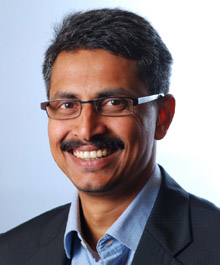
    Prathap Suthan is the Chief Creative Officer at iYogi.

  • First on MxMIndia: Pioneer bags BEST tender

    By Nibha

    Pioneer Publicity has won the BEST (Brihanmumbai Electric Supply and Transport Undertaking) tender for advertising rights on single and double-decker buses. Established in 1873, BEST operates one of India’s largest fleet of buses.


    The company has won the rights for three years – 2011-14 – for about 4050 old buses in all.


    Confirming the same, Mr Sunil Vasudeva, said on the win, “We worked for BEST from 2002-2008,after that the business went to Bright Outdoors. Now, we have the business again with an account size of 85 crore.”


    Prior to this development, Bright Outdoor had owned the ad rights to the buses, but, as reported by MxMIndia, due to heavy losses it had withdrawn from the tender.

  • APac beckons Gman as Ravi Rao to be new Mindshare South Asia boss

    By A Correspondent


    Media agency major Mindshare has appointed Mr R Gowthaman as Chief Client Officer for the Asia Pacific region, effective January 1, 2012. Mr Ravi Rao, who has been leading the South Asian operation for Team Unilever since 2009, will succeed Mr Gowthaman in the position of Leader, South Asia effective Jan 1.


    Mr Gowthaman will be based in Singapore and will report to Mindshare APac CEO, Mr Ashutosh Srivastava.  According to a press communiqué, he will lead a team of regional client leaders who provide strategic direction and coordination for Mindshare’s work on key regional and global accounts across all Asia Pacific countries.


    Mr Vikram Sakhuja, GroupM CEO for South Asia said, “Gowthaman has done a fine job of laying the architecture of the new Mindshare in India, by re-shaping the organization into one capable of delivering business planning, integrated communication solutions and robust media implementation for its clients via highly customized offerings. In the process he has re-enforced Mindshare’s supremacy in India as being not only India’s largest Media Agency, but also the best.”

  • With animals, what you see is what you get. With human beings, it’s more complicated


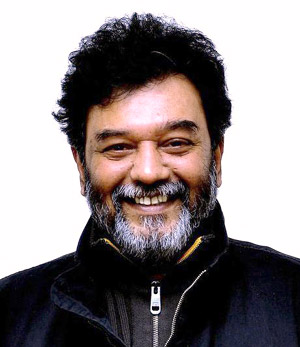
    Make no mistake about this: Lynn de Souza has a soft, warm, chilled out, happy exterior. But inside that resides a steely, tough, hard-edged professional. And she needed all that internal strength to survive and thrive in an industry notoriously dominated by what she calls the ‘Old Boys Club’. Lynn and I go a long way back, and this made our conversation frank, fun and, yes, highly argumentative. And we discussed many issues ranging from the dubious media research, the future of various media, her role in promoting gender equality, her formula for cleaning up the otherwise scandalous Goafest. And why she, er, chooses dogs over men.  


    By Anil Thakraney


    What’s your exact job portfolio at Lintas?


    I look after Lintas Media Group, and our subsidiaries Karishma Initiative, Aaren Initiative and Lin TV. LMG and Karishma are media agencies, Aaren Initiative is the largest OOH agency and Lin TV produces and distributes branded content. I am responsible for their overall financial and reputation, health, corporate governance, etc.


    Who do you report into?


    Michael Wall, the global CEO of Lowe Worldwide.


    Would you not like a global role now, having been there and done that in India?


    Have I been there and done that in India? I don’t think so. India’s potential story is not even the tip of the iceberg, and I haven’t even travelled the whole tip yet! I would love to have a global role that is based out of India, because this is where it’s all happening. I am fiercely proud of India and all things Indian and it’s our time to show the globe a thing or two. We don’t need to be sitting in Manhattan or London to do that, in fact, that could be counterproductive.


    Would it be correct to say you’ve reached the top of the Indian media peak?


    More like the bottom of the ocean, which has the most beautiful creatures and colours in the world. There are so many challenges ahead, so much to learn and so much to do. Our lives as consumers of media are being transformed so rapidly it’s really hard to keep pace, and this rate of change is even faster in an emerging market like ours. What we thought we knew yesterday is no longer relevant today, and what we think we know today will not be relevant tomorrow. The only people who can be on top of all of this are those who want to keep learning and keep evolving and keep travelling. There is no place for those who think they have arrived.


    What’s your goal for the next 10 years? What else would you like to achieve?


    Goals are for footballers and 20-year-olds. I don’t have any. I am just happy to be alive, to have a wonderful family, to work with some awesome people, to have a few good friends, and to do my little bit for my four legged friends. I take each day at a time, that’s all, and just try to do the best I can for that day, honestly. When I was young, I did have plans and was ambitious, too ambitious. My values have changed. It’s important to be good at what you do, but it’s also important not to be so good that you become bad for everything else around you.


    Key challenges ahead for the media buyers.


    Look beyond the colour of money to the colour of advertising and media content, and the kaleidoscope of consumer insights. Get away from the keyboard and play some real piano now and then. Visit places they have never been to, in reality, and not only on 3G. Meet and talk to people from all cultures including, especially including, our villages in the length and breadth of our country. Data will never be a substitute for reality and as long as we hold on to it for dear life, we will continue to reduce the value of the media, and the consumers they deliver, to the lowest common denominator – a CPRP.


    Are our creative people ready for the new media? And the clients?


    I think the younger ones are. I have been meeting a lot of independent digital agencies recently, and it’s always great fun to meet their founders – usually young creatives and techies who have left traditional agencies and employers to write their own dreams and ‘apps’! You would also be surprised how many clients are now taking to what you call ‘new’ media like fish to water. There are lot of questions and uncertainties and domain knowledge issues of course, but there is no dearth of desire to learn, because user technology has become so easy and enjoyable that once they use the digital spaces for themselves, they want to start using them for their brands.


    Was media unbundling a good thing? You pioneered it.


    It was the best thing to happen to the media function. Till then, media planners were languishing in the backrooms with their big red NRSs and estimates, always at the tail end of a presentation and often sent home without even presenting. Making the function profit seeking in its own right attracted the right kind of front-room talent, investment in tools and databases and the ability to then cope with a magnifying media world. Which industry has seen such an explosion of new offerings in such a short time – 600 TV channels, 70,000 print titles, 350 radio stations, and countless websites, all in 15 years or less? Unbundling has allowed us to specialize enough to cope with this growth, possibly even enable this growth.


    Predict the future of the print media in India. Newspapers are shutting down all over the world.


    You need to separate form from content. Newspapers abroad have digital versions that have a much larger following than the newsprint version. I read the NY Times every day because the reading experience is so enriching, it doesn’t matter that I don’t live in that city. As long as people have eyes, they will read, and as long as they read, there will be something delivering the news to them in a written form… in newsprint or cyberspace, or Kindles, how does it matter? About India, do you know that the highest read newspaper in the world is a Hindi daily? Regional language papers have trebled in readership in the last ten years. Tier two and three cities, where literacy is still not even 70% and growing, register the highest growth.


    And what about television?


    TV will be fully digitized very shortly and this means that the convergence of content across digital broadcast, web and telephony platforms is almost here. My agency is already producing content for television, re-purposed for mobile, and developing web apps to go along. As are many others. Consumers follow and lead content, so to track them and predict their behavior will be very important, our measurement systems will need to keep pace and adopt new technologies to capture, retrieve and analyze data.


    There are too many complaints about media research in India. What can be done to change things?


    There’s an overload of data in some aspects. We have different data sources for different media. And there’s no one single source available. That’s why many of the media agencies invest in their own studies. We have our own, for example. What worries me is that nobody’s looking at the future. So that we have future-ready research which is truly centered around the consumer. I told the IRS people that they need to think ahead. They have a 10-year-old way of collecting data and that has to change.


    Also TV viewership measurement.


    That’s why you can’t recommend media only on that basis. Which is why a lot of us have our own proprietary research which picks up a whole lot of other aspects. You cannot rely only on these data sources.


    That’s no solution. We need few but reliable research studies which the whole industry can follow.


    It’s not necessary for everything to be done at the industry level. You do things at an industry level when you want a currency. When you want a common parked research where both the buyer and the seller access it, so it becomes a currency. But if you want to do things that are genuinely good for the brand, you develop a whole lot of other proprietary studies, which many of us do.


    Lynn, frankly I am disappointed with you. You’ve spent a lifetime in the media industry, you’ve done it all, you’ve made your money. Isn’t it time for you to think of the industry and take on the challenge of reforming media research so that everyone benefits?


    If I did that, I wouldn’t say it to you. If I had any ambitions that I want to change something, I would quietly go about doing it my way. Three years ago, I didn’t want that there should be two research agencies, the IRS and the NRS. I was sitting on both the committees and I found both doing the same things, both saying the same things, so I said why can’t they be together. So quietly, at both meetings, I would suggest let’s have only one study. It took three years of doing this before the RSCI got formed. They’ve elected me as the first Chairman and we had our first meeting only last week. I am hoping we will change the readership agenda of this nation. Print is still the largest medium in India, and if the RSCI works out, we will make a big change. But I won’t thump my chest and say ‘Hum yeh kar rahe hain, hum woh kar rahe hain!’ (Laughs.)


    Not enough. You should take on media research full-time, and become the Queen B who made a huge difference.


    (Long pause.) I promise to give it a serious thought just to please you. (Laughs loudly.) But I will not commit to anything you wish me to commit to!


    You’ve cleaned up Goafest. There were no scandals this year. How did you do it?


    I am a great delegator. And I give a lot of respect to people I delegate to. So we had Shashi (Sinha) completely given the role of running the awards. I gave Sundar the role of running the conclave. I looked after the organizing and the venue. The most important thing I did for Goafest was to create an impression of being clean. I looked for a very clean looking place, I changed the venue itself. So it looked fresher, cleaner, greener. That had a very subtle effect. Then, I roped in the ASCI and the IAA with the responsibility agenda on the first one and the sustainability agenda on the second one. That gave the impression we are doing something good for the industry, and not just pampering creative egos.


    How did you handle the problem of self-voting?


    Shashi led that and he did a fantastic job. People were not allowed to self-vote. One or two individuals who were supposedly high on self-voting in the past were not included as judges this time.

    But Lintas still won’t take part in the awards…


    We do not have any confidence in the awards given by our peers. I was given a job to do, to chair Goafest. I was forced to do it, and I did it to the best of my ability. But that’s different. You know, I served at the Cannes media jury in 2009 and it was a fantastic experience. It was professionally run, it was technically advanced. I have served on the Indian juries as well, and it was nonsense, though am sure this time around they did a better job. I have seen the behaviour of our peers, the kind of lobbying and planning that goes on. As an agency we are not into chest-thumping. But when our agency wins awards because our clients have won, I value those because the consumers voted us.


    But now that you’ve cleaned up the place, will Balki take part next year?


    That you have to ask him. But it has to do with the value you place behind awards. Not everyone thinks awards are the best thing in life.


    Looks like you’ve fallen in line with Balki’s ideology.


    (Laughs.) On the contrary he may be falling in my line! We have our own independent reasons.


    What’s this about women’s rights you’ve been promoting?


    Internationally, diversity and inclusion is a big agenda. As a part of that agenda, two years back, IPG asked me to set up and lead the women’s leadership network. Initially I refused. I didn’t think there should be segregation of any kind. Later I studied the subject in detail, and I realized there’s a very powerful economic reason why you have to support women. There are three ‘Ws’ that will transform this century: Web, Weather and Women. And the power that women are exerting on this century is enormous. It’s said if women were empowered at Wall Street in 2009. things wouldn’t have been the way they were. In India we have 29 women heading banks and financial institutions. So there is an approach that women bring to the table that improves the productivity of a team. So it’s important to keep and retain women. At IPG, 30% of our staff are women, and when you come to the top, it’s just 11%.


    How do we change this inequality?


    We need hardcore practices in place. We can have a hiring quota set aside for women. I believe last month Hindustan Lever hired only women. We need to make everybody conscious we are not doing anything special for women. We have to make men and women understand that when you work together, you do well. For example, Coca Cola has something called the ‘Power of 3’. They believe that in any big team, the minute you have three women in the team, the group becomes far more productive. And if you have just one woman in the team, she gets eaten up.


    But Lynn, women falling out along the way is a social problem. Babies have to be looked after. How will you change that?


    You try and keep them engaged in the work orce. Some of the things we’ve done include giving them the option to work from home when they are pregnant. By giving them a desktop mirroring system at home. That’s literally like working in the office. There are lots of such ways in which you can keep women productive even if they have babies.


    Personally, I am quite cynical about this whole thing. You can’t change deeprooted beliefs and attitudes so simplistically.


    Anil, you are basically cynical about everything! Anil ‘bloody cynical’ Thakraney! (Laughs.)


    Why are all ad agencies headed by men?


    In the creative agencies there is a very strong old boy’s club. It’s very difficult for women to break through into that club. And if they don’t play by those rules, they will not break into it. Read my blog on this (link).

    Exactly why were the 3As of I guys giving you stress? Why didn’t they want you in?


    (Long pause.) Because I am clean.


    You found corrupt activities going on?


    (A longer pause this time.) No comment.


    One rival media chief you admire.


    Sam Balsara. He’s awesome. A hardcore desi boy with so much energy, he does so much.


    The best boss you’ve had.


    Ravi Gupta. And Steve Gatfield.


    One thing you learnt to do from Roda Mehta?


    Two things. Precision and integrity.


    One thing you learnt NOT to do from Roda.


    (Thinks.) Over-precision. Beyond a point you have to just let it go, you don’t need perfection.


    Roda didn’t just do the media job, she built the media planning and buying industry in India. None of you guys have been able to do that. She was a game changer.


    It’s not needed. You don’t need a crusader in today’s world. You need inventors and innovators. In today’s world we need enablers. Twenty years ago it was different, it was the licence era, there were strictures and rules. Today there’s far more freedom. No one wants a crusader. Everyone wants an enabler.


    Would it be correct to say you love dogs more than men?


    (Laughs.) Why only dogs, any animal. With animals, what you see is what you get. With human beings it’s more complicated.


    Is that the reason you are still single?


    No, it has nothing to do with that. I didn’t find anyone as intellectually stimulating as… my dog! (Laughs.) Are you happy to hear that?


    Have you watched Balki’s two films?


    I haven’t watched ‘Cheeni Kum’ yet. And Balki hasn’t forgiven me for that. But he sent me the ‘Paa’ DVD, and I really liked it. I didn’t watch the last five minutes of the film though. Because I wanted to make my own ending. I wanted the character to live. So I made him into a dog. (Laughs.)
  • TME to have a strategic alliance with MPG

    By A Correspondent

    TME (the media planning and buying arm of Rediffusion – Y & R and Everest Brand Solutions) and MPG (the flagship brand of Havas Media) have entered into a strategic alliance to provide value added media planning and buying services to clients of Rediffusion – Y & R and Everest Brand Solutions.

    This alliance came into effect from November 1.

    As per a communique, TME and  MPG will leverage their individual strengths to partner and provide greater value to clients and collaborate to tap opportunities for growth in the market. The alliance will enable TME clients to benefit from Havas Media’s extensive network knowledge resources, the integrated buying clout, MPG’s well-regarded proprietary Decision Support Systems and their touch point platform “CONNECT” bringing together a more effective and optimized investment plan. TME will continue to be built as a media independent brand under MPG’s stewardship.

    Statements issued in a press communique:

    D Rajappa, President, Rediffusion – Y & R: “This alliance is a collaborative effort to grow the business and also add enhanced value to existing and prospective clients of RYR”

    Dhunji Wadia, President, Everest Brand Solutions: “This is one of the deepest integrations to date, marking yet another milestone in the Group’s plan for a consolidated media investment management operation. The focus is to bring competitive advantage to our clients and our companies.”

    Anita Nayyar, CEO of Havas Media, South Asia: “This strategic alliance is a synergistic relationship between MPG and TME wherein both brands will co-exist and continue to provide benefits to each other working towards a common goal of delighting clients.”

  • Lalla on board with Mindshare

    By A Correspondent

    Strengthening its senior leadership team, Mindshare, the flagship media agency of GroupM has appointed Ashok Lalla as Leader, Digital for Mindshare, South Asia. Mr Lalla takes over a world class operation that has won Mindshare a large number of awards over the last 3 years, and was also Digital Agency of the Year in 2010. Based out of Mumbai, Mr Lalla will report to Ravi Rao, Leader, Mindshare South Asia.

    Mr Lalla is an award-winning Digital, Brand and Social Media Marketing leader with over 18 years of agency and client business experience on brands that cut across the spectrum from one-cent candies to million dollar hotel stays. He moves from Euro RSCG, where he was President – Digital, and worked with several blue-chip clients including Unilever and IBM. Earlier, he was Director of Internet Marketing at Taj Hotels where he led worldwide Digital strategy and Ecommerce for the hotel chain for 9 years.

    Welcoming Mr Lalla, R Gowthaman, Leader, Mindshare South Asia, said, “Ashok Lalla, joins Mindshare at a time when our digital businesses is well poised to grow manifold, not only on the basic services, but also across Search, Social, Mobile, Creative and Performance Marketing. We are delighted to have him on board to take Mindshare to greater heights in the Digital Marketing space.”

    On his move to Mindshare, Mr Lalla said, “I am excited to join Mindshare, an agency with a mouthwatering array of clients, a great Digital team and a fantastic track record of doing breakthrough digital work. I look forward to taking Digital to the next level for our clients, and growing our team into an even stronger unit that does even more spectacular Digital work, and sets new industry benchmarks.”

    Mr Lalla is a compelling presenter and a visionary keynote speaker on Digital Marketing, Social Media and Brands at leading events and B-schools. He is also the Author  and  curator  of  “The  Future  of  Digital for  Brands”,  a  highly  regarded  online global community of over 1900 Digital, Marketing and Brand experts and enthusiasts from 38 countries.

    Mindshare is a global media and marketing services network with billings in excess of $27.8 billion (source: RECMA). The network consists of 114 offices in 82 countries throughout the North America, Latin America, Europe, Middle East, and Asia Pacific.  Mindshare is a member of WPP, the world’s leading communications service group, and is part of GroupM, the world’s leading full service media investment management operation.

  • Fireworks less bright, but not media players outlook

    By Ritu Midha & Dhara Salla


    Picture this:


    – As per a recent survey India’s wholesale price index (WPI) likely rose an annual 9.6 percent in August
    – As per Government data released recently, India’s food price index rose 9.55 percent while the fuel price index climbed 12.55 percent in the year to Aug. 27
    – As per a Paris based think tank OECD, India, China and most of the developed world are witnessing strong signs of economic slowdown
    – August domestic car sales are down 10.1 percent. Total passenger vehicle sales are down 5.9 percentA recent AC
    – Nielsen study talks about the reducing consumer sentiment in India in the Q2, 2011
    – FICCI and CII have expressed concern on falling business sentiment

    And it is almost time to wish Happy Diwali!

    The point to ponder here is that, in this backdrop, would the consumer be in a mood to delight the marketers, and would marketers in turn be in a mood to delight the media owners? Or, would they rather use a big chunk of their promotional budget on directly delighting the customer, through special offers and discounts.

    As is known, the festive season in most years sees a remarkable increase in ad spends. Ms Punitha Arumugam, CEO, Madison Media Group, explains,About 30 to 40 percent of ad spends come from FMCGs spends in this category are, by and large, not too influenced by festivals. It is the balance 60 percent that spends more during festive season. Keeping that in mind, I would say spends in Q3 of the year would usually be higher by 20 percent or so as compared to the other quarters.


    Media players: optimism unlimited


    If one looks at print in isolation, spends during festival season increase even more due to the increased spends by categories like autos. Q3, as per Mr Peter Suresh, Head Strategy, Dainik Bhaskar Group typically accounts for almost 35 percent of the annual ad revenues.


    As for this year, stresses Mr Shantanu Bhanja,Vice President – Marketing, Hindustan Times Media Ltd,There will be an upswing during the season.


    But would the cash registers ring that loudly for media companies this year? Perhaps not.


    As per a few experts, ad budgets have already been cut down and the heat is being felt by print media first. To quote Mr Harish Bijoor, CEO, Harish Bijoor Consults, Ad spends are already affected. Marketers have reduced ad spends, and in many cases cut their spends on print altogether. Television is gung-ho as yet though, he adds, For the moment.


    And gung-ho it is. Mr Rohit Gupta, president, network sales, licensing and telephony, Multi Screen Media emphasizes, Even when we witnessed the biggest global slowdown a couple of years back, the television industry was not affected to that extent. Television is one of the most accountable advertising media, and therefore, slowdown if any, will not have much effect on advertising trends. Overall marketing budgets might be cut down but not the spends on television.As for his own network, he expects growth in ad spends to be to the tune of 30 to 35 percent.


    Mr Gupta has an ally in Mr Rahul Johri, Senior Vice President and General Manager – South Asia, Discovery Networks, Asia Pacific. He too is very positive that television is all set to gain this Q3 as is the norm every year, As the consumers gear up for the festive season, we can see a positive curve across a category of brands. Year-on-year we have witnessed growth in advertising during festive season on our channels and we anticipate the same trend this year as well.


    Do the television channels, then don’t need to be worried about ad budget cuts? The opinion here is divided. While a few television players believe there would be no impact, others have a difference of opinion. Mr Bavesh Janavlekar, Deputy VP Marketing, Zee Marathi and Zee Talkies simplifies the predicament, There is a huge splurge on the spends at the customers end during the festive season starting off with Ganpati, Diwali etc. The spike is for the simple reason that consumers are in a mood to spend, and advertisers amplify that opportunity. However, low GDP growth will definitely have an impact on festive ad spends to what extent, remains to be seen.


    The general feeling, however, is that the festive season just might bring the cheer back in the marketplace . Mr Bhanja explains, Advertisers want to make the most of this increased propensity to spend coupled with increased discretionary income that the festival time brings…This is also a great time for advertisers to launch new products, and capture the general positivity of the Indian consumer during the season.


    Mr Suresh too states that though there is a slowdown at the moment, festivities just might help in lifting the spirits all around. He states with cautious optimism, We have also been impacted with this slowdown along with other media players. It is quite difficult to issue a forward-looking statement in the current scenario. However, we do remain optimistic.


    Media experts: festivals have lost a bit of sheen

    The optimism of media owners, at this juncture, is not mirrored by media planners and buyers.We had predicted approximately 17 percent growth in ad spends this year, but by looking at the current scenario, in my view, it would be closer to 10 percent, states Ms Arumugam,Most marketers were expecting exponential growth this year however, nothing very dramatic happened in January to June 2011 quite a few companies saw single digit growth, and it has directly influenced ad spends.


    Does that effectively mean that one would not see any increase in ad rates this festive season. Explains Mr S Yesudas, Managing Director – Indian Sub-Continent, Vizeum Media Services,There is usually no increase in ad rates during festive season. And this year, due to market dynamics, I do not see this happening at all.


    As per the media experts, though, both TV and print would not see any noteworthy growth in ad revenues, print would be hit more. Ms Arumugam comments,Though both television and print would be affected by the slowdown, impact on print would be far more pronounced.


    But don’t the categories that spend more during festive season, also spend largely on print? Yesudas takes pains to explain, Categories that are print-centric like automobiles and traditionally advertise more on print  will continue to do so. Specially those which are under pressure due to falling sales will need to reach out to the consumers with their special offers. It is the categories which are not heavy spenders on print that would cut their print budgets further.

    The scenario does not look too festive at the moment. However, marketers definitely are getting ready to woo the consumer in a myriad different ways. In media too, one might see a lot of innovations and innovative offers to enable the marketers to reach the consumer in a more impactful way.


    Photograph: Fotocorp (www.fotocorp.com)

  • Bindu Sethi to be National Head Planning @ JWT

    By Shubhangi Mehta


    Post putting in her papers at Grey, Bindu Sethi is now joining JWT India as the National head planning. Industry sources close to the development have confirmed the news to MxM India. She will be based out of Delhi.

    It was reported yesterday that Ms Sethi has called it a day at Grey. Since then there have been a lot of speculations as to where will she be moving now.

    Ms Sethi has spent nearly more than two decades in the advertising and marketing industry. She joined Grey India in 2009 as the national planning director. In May 2010, she was promoted as the chief strategy planning officer for Asia Pacific. However, she continued to handle India responsibilities as well.

    Joining JWT can also be regarded as a homecoming for Ms Sethi, as she began her career at the Indian Market Research Bureau (IMRB). She then moved to JWT where she developed and headed the strategic planning department for eight years. She was instrumental in building JWT’s reputation for deep consumer sensitivity and brand building. At JWT she got the opportunity to work on brands such as Horlicks and Maggi.

    She was instrumental in creation of JWT’s social communications division Thompson Social, which redefined the role of communications in the adoption of new health practices amongst rural and suburban populations. Furthermore, her experience extends to the marketing side of the business, where she partnered Hindustan Lever Limited as General Marketing Manager – Personal & Hair Care. There, she formulated the brand vision, strategy and proposition for Unilever’s family health portfolio comprising three brands across seven South Asia and South East Asian markets.

    With experience as diverse and rich as hers, it comes as no surprise that she won WPP’s prestigious Atticus Award for original thinking for her piece entitled Understanding India through Advertising.

  • Quadrant appliesTiger Balm, bags creative biz

    By Shubhangi Mehta

    The creative mandates for Tiger Balm have been won by Quadrant Communications, industry sources close to the development have confirmed the news to MxM India.

    The account size is estimated to be Rs 10 crore. This is the first time that Tiger Balm has appointed an agency to handle their creative mandates.

    Tiger Balm competes with the likes of Zandu Balm and Amrutanjan. Jagdish Saxena, chairman, Elder Group introduced the balm over 20 years ago. It initially imported the product from Singapore. Later on, Elder manufactured Tiger Balm Red and White at their Ponta Sahib factory in Himachal Pradesh.

    It may be noted that in July this year,BSE-listed Elder Healthcare, which was the exclusive marketer of Tiger Balm in India, parted ways with its long-term partner, Singapore-based Haw Par Healthcare .

    Quadrant Communications Ltd is a full-service advertising agency, providing clients with 360-degree marketing communications solutions.

  • Amod Dani is ECD, Leo Burnett

    By Shubhangi Mehta


    Leo Burnett India has promoted Amod Dani to Associate Executive Creative Director, Leo Burnett India. He will be based out of Delhi henceforth and will be directly reporting into K V ‘Pops’ Sridhar.

    Samir Gangahar, Executive Director, Leo Burnett, said, “Amod is one of the best talents of our country as well as a well awarded creative person. We are very excited to have him in the Delhi team and expect him to continue with the great work.”

    Mr Dani said, “The move is challenging, yet very humbling. It’s an absolute honour to be a part of Leo Burnett Delhi. Working with great people such as Nitish, Sam and Sai is truly exciting. Delhi is one of the fastest growing offices in the entire Burnett family. I hope to concentrate my efforts towards the upsurge and do justice to their faith in me”.

    Mr Dani has been in the industry for close to seven years. After completing his post-graduation from MICA, he joined Lowe, Doha as an intern. He then moved to Lowe, Mumbai, where he worked with Priti Nair for a year.

    He joined Leo Burnett in 2006, where he has worked on brands such as McDonald’s, Tata Capital and Reliance Mobile. The brands he handled at Lowe include Surf, Idea, Wheel and Liril.

  • Lodestar UM shines @ inaugural FOMA


    By A Correspondent


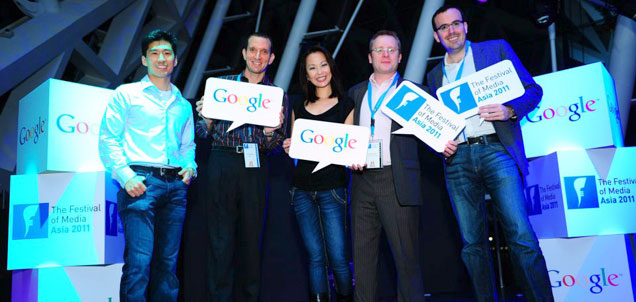
    The Festival of Media Asia 2011, the first Asian iteration of the acclaimed festival of media creativity and innovation, witnessed the conglomeration of over 600 attendees, over 40 speakers, and more than 50 of the world’s biggest brands. Held at the Marina Bay Sands Expo and Conference Centre, Singapore from November 13-15, 2011, the Festival sparked conversations and provided insights into the media and marketing industry as a whole and the scenario in the Asian region, which is expected to overtake Western Europe as the second-largest advertising market in 2012.

    The Festival culminated in a gala dinner where the inaugural Festival of Media Asia Awards were given out, recognizing the most original and creative campaigns from the region. The awards were given across three top categories and 12 open categories. The Awards drew an overwhelming response – 410 entries from 16 countries, which were cut down to a shortlist of 81 from which the winners of the open categories were selected.

    The top awards at the event were bagged by Ikon Communications, UM and Coca-Cola for Agency of the Year, Network of the Year, and Advertiser of the Year, respectively. From India, it was Lodestar Universal that bagged the only award in the category of Best Entertainment Platform.

    Reacting on the win bagged by his agency, Shashi Sinha, CEO, Lodestar Universal Media said that it was a befitting reply to the spectacular work that the agency had been churning out on a consistent basis. “Being the only agency from India to bag an award is quite an achievement. That is because more often than not, Indian agencies don’t put up a good show where international awards are concerned. So it’s a big recognition for us and I would like to credit the team that worked on producing such an incredible piece of work.”

    The rigorous selection process for the Awards was completed under the guidance of Rahul Welde, Chairman of the Jury, The Festival of Media Asia 2011 and Vice President – Media (Asia, Africa, Middle East, Turkey & Russia), Unilever. On the entries at the awards, Welde said, “There were a number of outstanding cases which just stood out as sure wins, and there were some close calls in a number of categories which stimulated very engaging discussions. The jury was unanimous that the submissions for the inaugural Festival of Media Asia Awards were excellent. It’s great to see this calibre of creativity, execution and effectiveness in our region, and kudos to the brands and agencies who are have turned out some splendid work – quite a few risking and trying something new.”

    Focused on media and marketing in Asia, the session on Day 1 began with a short welcome address from Charlie Crowe, Festival founder and CEO of C Squared. Averred Crowe, “We want to make this an annual event. There is tremendous amount of creativity here, and we’re seeing this explosion of originality all over Asia. There is no better time to tap into it than right now.”

    His speech was followed by a panel discussion which featured representatives from three major Chinese online corporations – Baidu, Youku and Tencent – talking about the digital revolution in China, and their plans to one day challenge giants like Google. Colin Currie, President and Managing Director, adidas Greater China, discussed the challenges involved in connecting with the Chinese consumer, and the way that adidas marketing evolved to take cultural and social sensitivities into consideration.

    The next panel comprising panelists such as D N Prasad of Google – APAC, William Manfredi of Wunderman, Young & Rubicon, Shaun Ruming of McDonald’s Asia-Pacific, Middle East and Africa, and Barry Cupples of Omnicom Media Group, APAC, tackled the shortfall of talent in the media industry in Asia, and explored the reasons for this trend as well as strategies to manage this problem.

    The most appreciated and talked about session was the enthralling keynote by Carolyn Everson, Vice-President, Global Marketing Solutions, Facebook. Everson held the audience captive as she previewed Facebook’s new Timeline feature, talked through the importance of capitalizing on people’s social connection as the basis for marketing, and then presented how Facebook could support brands looking to create connections with their consumers. “Social discovery is the most powerful driver of human behaviour in the world today,” said Everson, “We have always asked our friends for recommendations.”

    Rahul Welde, Vice-President – Media, Unilever Asia, Africa, Middle East, Turkey and Russia, took the conference even further by looking at how marketers would have to change their mindsets and reframe themselves. He offered new and different ways to think, including enhancing interaction and experience, as ways for marketers to address the changing ways that people are relating to media, particularly digital and social media.

    Other notable feature was the Agency CEO tours of media innovation, which took place several times during the event. Leading CEOs took to the stage to showcase and share an innovative or special campaign that had run during the year.


    Awards at a glance:

    The open categories and winners of The Festival of Media Asia 2011 Awards are as follows:

    Best Communications Strategy – Break up for National Australian Bank/ ZenithOptimedia /Australia

    Highly Commended – Mars Play Challenge for Mars / Starcom Melbourne / Australia

    Best Contribution to a Campaign by a Media Owner – 11 Degrees New Media Film Project for Chevrolet Cruz / Youku.com / China

    Highly Commended – Invite Mr Wright for Canon / Discovery Networks Asia Pacific / Singapore

    Best Entertainment Platform – Coke Studio for Coca-Cola / Lodestar UM / India

    Best In-Store Activation – Burst of Freshness for Comfort / Mindshare Vietnam / Vietnam

    Best Targeted Campaign – Whiskas Pledge for Whiskas / Starcom Melbourne / Australia

    Best Use of Content – Johnnie Walker Yulu for Johnnie Walker Black Label / BBH Asia Pacific / Singapore

    Best Use of Digital Landscape – Property Guide iPhone Application for The Commonwealth Bank of Australia / Ikon Communications / Australia

    Highly Commended – Polident Bridges the Generation Gap for Polident / MediaCom China / China

    Best Use of Emerging Technology – Property Guide iPhone Application for The Commonwealth Bank of Australia / Ikon Communications / Australia

    Highly Commended – Woolworths iPhone and Android Application for Woolworths / Tigerspike / Australia

    Creative Use of Media – Interactive TV for Coca-Cola / UM / Hong Kong

    The Effectiveness Award – Australia Kinect for Xbox Kinect / UM / Australia

    The Public Service Award – Harnessing People Power to Let People Know That Speed Kills for The Transport Accident Commission / Naked Communications / Australia

  • Elvis Sequeira quits Cheil

    By A Correspondent


    It is learnt that Elvis Sequeira, the National Creative Director at Cheil Worldwide Southwest Asia has quit the agency. Mr Sequeira had joined the agency just few months ago in March this year. The agency is learnt to be currently hunting for a replacement.

    Mr Sequeira is an advertising veteran and had moved to Cheil from Good Morning Films. He has worked with JWT Delhi as well as Lowe Lintas besides working at Clea, Mudra and Interact Vision.

    Though he could not be reached, a call to the Cheil office confirmed that he has moved out of the agency.