Author: Vikas Mehta

  • Vikas Mehta: Kanwar Yatra: Beyond just a ritual?

    Vikas MehtaWith apologies to none at all


    It’s uncanny how for the last two-three years our yearly family holidays have coincided with the Kanwar Yatra. For the uninitiated, Kanwar Yatra is an annual ritual during the month of Sawan (rains), when pilgrims walk barefoot from their villages to collect gangajal, mostly from Haridwar, but also from Gomukh and Rishikesh to take it back to the village Shiv temples to do jalabhishek of the deity.


    Till a decade ago, this was an unheralded, unnoticed and a quiet ritual that was not even a blip on anyone’s radar. But given the intertwining of politics and religion, the Yatra has earned its place under the sun. In the north, this is an event which today, unfortunately, is also associated with rowdiness and unruliness.


    In this column, I am attempting to make some unbiased observations and also delve into its economic consequences.


    As this is a strenuous Yatra, mostly it is associated with youngsters. Given India’s demographic profile, the Yatra attracts huge numbers of pilgrims. That, coupled with the current dispensation’s agenda of highlighting any Hindu festival or ritual the Yatra, attracts numbers in millions. On the occasion of Guru Purnima, that’s when the month of sawan commences, it is estimated that more than a million people had gathered at Haridwar.


    As the Yatra gains pace, most of the national and state highways between Delhi and Haridwar are overrun with the devotees. As a result, for about two weeks, the main highways are closed to all transport except for the Kanwariyas. But wait, wasn’t this supposed to be a barefoot walking Yatra. Technically, yes. But with the popularity, political patronage and money flowing into the Yatra, the Yatra has spread further and evolved with new rules and rituals.


    Enter Dak Kanwars. Traditionally, the Kanwars (that’s what the devotees who do the pilgrimage are called), would carry the gangajal in specially decorated palanquins a la, Shravan Kumar. I have attached some photos at the end of the article for reference. But now with distances increased and there being a premium on time, the Yatra is done in groups using bikes, trucks or tempos.


    These vehicles run along with the Kanwars who do a sort of relay amongst themselves carrying the gangajal as the baton in a relay race. One rule being that the gangajal will not be rested along the ground. Most Kanwars consult a priest to decide how much time they should take to get back from Haridwar and try to reach back in that time.


    Now these modes of transport become their home for a few days. The trucks are decorated with banners, religious flags and equipped with food, gas cylinders, gensets, water barrels, fuel for the genset, sleeping mattresses etc. In fact they have two levels. The upper deck is where they sleep and lower is where all the stuff is kept. And at the back a ladder is secured firmly. Please do look at the photographs attached. It’s Indian jugaad exemplified.


    But the jugaad is scary. Imagine gas cylinder, genset, diesel all in one closed area. All it needs is a spark. Actually it should not be called a jugaad at all.


    Some of you may be wondering why the genset. Well, now these Dak Kanwars also need music. So, music systems with huge speakers, disco lights and DJs also are part of the converted vehicles. I witnessed impromptu DJ contests right in the middle of the road. Vehicle pollution, genset pollution plus noise pollution was a potent cocktail that contributed to the increased levels of adrenaline and testosterone.


    And the increased level of adrenalin coupled with the increasing political patronage behind the Yatra, the Kanwars have a free hand. They become belligerent, they boss the whole route and mostly become a law by themselves. The governments of Uttarakhand and UP go out of the way to honour the Kanwars; showering of rose petals from helicopter, the CM and various dignitaries washing the feet of the Kanwars, all traffic being banned on roads. Given the lax handling, the Yatra is denigrating into a lawless affair. This year, police officers have been manhandled twice. FIRs have been registered but hardly any arrests or strict action has been taken.


    Last week, I witnessed some of the high-handedness myself. The bikers were shooing away cars. Once when our driver honked for the Kanwars to be careful, as they were driving recklessly, they glared at him, mouthing abuses and I feared the worst. But our cabbie was experienced at this. He immediately folded his hand in apology and mouthed a religious chant. We got away, but the danger was omnipresent.


    Personally, I think, all this is deliberate. Not only does this distract the youth from his miseries of unemployment and inflation but it also gives him a chance to flex his muscles and for once show to the world that he is the boss. And of course, I dare say that this also gives an aggressive outlook to Hindutva, which is what the current dispensation wants. Just as an example, all the flags which had the image of Lord Hanuman, had the new serious, angry, brooding look. Not his gentle and devotee look, which is how I remember Lord Hanuman. Again, see the visuals below.


    And the aggressiveness is exemplified by the songs that have become a rage during the Yatra. These are local songs, mostly based on the Bollywood tunes, but they are aggressive in nature. One song which I heard many a times had lyrics which said something to the effect “main highway hoga jaam, ke Kanwar aye hain.” (The main highway will be jammed because the Kanwars have arrived). The assertiveness and aggressiveness was in your face.


    Now let’s look at the economics of this event. There are first some negatives. Most of the hotels dhabas and eating joints on the Yatra route shut down. We found it very difficult to find even a single decent place, not overrun by the Kanwars to stop at. Of course the food courts and brands like McDonalds or Burger King which serve non-vegetarian foods stand no chance. But food with onion and garlic is also not allowed. Only Satvik food. One small dhaba was vandalised because it was alleged that it was serving non Satvik vegetarian food. Most of dhaba owners shut down voluntarily because they fear non-payment and vandalism. This results not just in loss of business but also loss of employment for many.


    On the positive side is the amount of money flowing into the economy. If you look at the economics of each Dak Kanwar truck and associated mobikes, depending upon the distance, nothing less than a lakh a day is required. Someone or many are sponsoring this. And the total amount is mind-boggling. Imagine the extra money that a DJ or the truck companies or the drivers, or the genset companies, or the petrol pumps are making. And the associate labour cost plus temporary employment opportunity. Not to forget that businesses, small businessmen and even families pitch in to help the Kanwars by opening free langars and bhandaras on the roadside. Again the temporary employment this all generates.


    What caught my eye was also group of people standing in the roadside with water bottles, food packets, snacks etc doling it out to the Kanwars.


    Environmentally, there are huge downsides. There is no waste management systems. There is no awareness of waste management. People dole out water bottles which are dumped on the road. Food left overs, waste as in plastic, packaging material, paper etc was littered right through the route. Gangajal is now transported in plastic bottles and plastic jerrycans. And the pollution issues I have already highlighted.


    Kanwar Yatra is not a new phenomenon. Indeed a friend tells me that it happens in the South too. But typically it was associated with the hardships of a pilgrimage. Youngsters walking for days, barefoot with palanquins slung over their shoulders carrying gangajal. Local villagers helping and feting them. Quiet, unassuming and serene.


    That has changed. Is it for the worse? That’s what many do not think.


    Religious overtones have become a sacred cow. Not to be debated or questioned. Even politically, opposing it may mean a kiss of death for a political party. So, no one questions it. In the meantime, the Yatra gets more boisterous, more aggressive and more in your face. Some say, it is good as it lets the youth vent out their anger and hopelessness.


    I don’t agree. For me it’s a reflection of how divided and polarised we have become.


    It also tells me how we have been intimidated into silence.


    We have a problem of a polarised youth. But we refuse to address it.


    I was advised by all not to travel by road. Avoid the Kanwars. Don’t take a chance with them. They are dangerous. Everyone was happy living in a cocooned sheltered safe life. No one wanted to address the issue but just criticise the Yatra. In private.


    All the above is also the reason why big brands or marketers keep away from the occasion. They don’t want to be associated with what goes in the name of the Yatra.


    The shame is truly on us.


    Vikas Mehta is a senior marketing strategist and educator based in Dehradun. He writes on MxMIndia every other Monday. His views here are personal.

  • A Tryst with Books and Gen Z

    A Tryst with Books and Gen Z

    With apologies to none at all

    By Vikas Mehta

    Vikas MehtaMy daughter is an avid book reader. She actually reads books. That’s offline reading. Not Kindle or from any online site, but physical books. And that is a rarity. Since childhood, she would never get any pocket money but a monthly allowance to buy books. I would try to gently nudge her into buying some books but her independence in choosing her own genres came through at a very young age. Even now, books are her indulgence. Maybe that’s the reason she is doing graduation in journalism with creative writing as her elective. Three months summer break and she has already bought around 25-30 books and is now stocking to take some to the university.

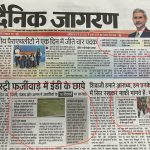
    Dainik Jagran clipping showing highlights of newsNeedless to say, she is an exception. Reading as a habit is declining in Gen Z. Attention spans are also reducing. It’s not even videos but reels. Newsletters send summary with their articles. Even regional newspapers like Dainik Jagran summarise big stories into highlighted points; something which I noticed that some mainline English newspapers have also started to follow. (See image).

    Podcasts are catching on. You can be driving and listening to a podcast or even watching cricket and listening to a podcast on the perils of investing in cryptocurrency. All major news sites also have audio version of the news.

    So, what’s happening? Too much information, too little time? Multitasking and wanting to keep up with the Jones? Multifocus (does that even make sense?) and multifaceted? All valid reasons. But is there a cost to it?

    My thinking is that the explosion of technology, in every field, have made people insecure. So, everyone is trying to know everything. And with Gen Z being born with a technology spoon, technology is not a medium or conduit but way of life. So, if I can do a masters in finance, I can also do a certification in AI, follow someone who gives tips about immigrating to Australia or Canada, learn how to retire at 40, follow stock market to get rich quick… you get the drift. Insecurity about the future, ironically caused by technology itself, forces them to try and know as much as possible

    The width of knowledge of Gen Z is amazing. But the depth is a question mark? Jack of all trades but master of none is very applicable here. There is a view on everything but there is no confidence in that view. And proper lack of reading books is one reason why the depth of knowledge is missing. Reading books gives one a context. Historical perspective. Various viewpoints. Nuanced knowledge. A rich vocabulary. Ability to communicate, I can go on and on.

    I was therefore eager to visit a book fair in Doon which my daughter discovered.

    It was promoted online (the irony of it!) with 3000 books available as a hook and it promised books by the kilo.

    And to my pleasant surprise I found that the venue was full of Gen Z, mostly students. Not to buy curriculum books, they hardly buy curriculum books nowadays its either some online repository or maybe in some cases library, but to buy books of various genres. I noticed that except me and my wife, there was just one more oldie parent. Heartening, to say the least.

    At first, I was bewildered.

    All I could see was books by unknown authors.

    Self-help books.

    Books advising on stockmarkets.

    Books on romcom.

    Books on psychology fiction, literary fiction.

    And books on dark mystery.

    I had hardly heard of these genres. But my daughter patiently took me through them.


    Good girl guide to murder- it was a series of three or four books.

    Before the coffee gets cold – sort of science fiction psychology

    People we meet on vacation – Romcom

    Cleopatra and Frankenstein – Literary fiction

    I want to die but I want to eat but I want to eat tteokpokki – Psychological fiction

    Normal people – Romance thriller


    And most of these books claimed to be bestsellers. Published by leading publishing houses like Penguin or Bloomsbury publications amongst others.

    But the most eyecatching thing was that most of the books had very young authors. Late twenties or early thirties. And mostly females. Holly Jackson (31 years), Anna Hueng (33 years), Emily Henry (33 years), Baek Sehee (33 years).

    And most books were between 200-350 pages. No voluminous read that went for months.

    In contrast, I hardly found the old voluminous classics like War and Peace or some of the Charles Dickens ones. The only old classics I could see were Crime and Punishment and Exodus.

    There was a smattering of Dan Browne, Fredrick Forsyth and Jeffery Archer.

    And then there were tonnes of self-help books, many by Indian authors, all men, on how to game the stockmarket, get rich quick, retire at 30 or 40 etc.

    Most books had Hindi translations available. Alchemist by Paul Coelho was available only in Hindi. So were almost all help books and get rich books. And the Romcoms too.

    Autobiographies and biographies were also available but mostly in Hindi or of Indian sports stars. Virendra Sehwag, Suresh Raina, Shane Warne and Nelson Mandela were the favourites, all in Hindi.

    There were many detective and mystery books too and many by Indian authors. I guess the genre needs better situational and local nuances understanding.

    By now my mind was buzzing with questions and I took the help of my ever-obliging daughter and wife to ask three-four youngsters some questions.

    I am listing some interesting observations into Gen Z reading habits.

    They usually do not have book reading as a habit but do come to such fairs as many self-help books and modern books are available cheap. By kilo. Strike one.

    Mystery, politics, true events etc are more fun to watch on OTT rather than read about it. As one smartalec wisecracked, the daily newspapers are full of it anyways. Strike two.

    They are comfortable in reading English as long as it is not Tharooresque. Not comfortable in communicating in English. But reading is a different ball game. Strike three.

    Books do give them some sort of privacy. As its their personal area. But phones give them more privacy because no one knows what they are reading on it. Strike four.

    They don’t read authors (my daughter disagreed), they read recommended books. Influencers and friends play a very strong role in their reading decisions. Strike five.

    There is no budget for books. It’s a rare occurrence. Only at such book fairs where they buy in bulk in kilos. And they never keep the books. Exchange with friends or sell them off and that’s how they get recycled into such book fairs. Strike six.

    But finally it was one guy who when asked about reading books for indepth knowledge, gave me a quizzical look and muttered: “Jab padai mein hum zyada depth mein nahin jaate tohi uski aadat kaise padegi” Loosely translated “When our education does not encourage us to dig deep then how will we get that habit.”

    I will leave you with that deep thought as the master of all strikes.


  • What they don’t teach you about retail at an MBA course

    What they don’t teach you about retail at an MBA course

    With apologies to none at all

    Vikas MehtaWhen I passed out from business school more than 35 years ago, India had not even entered the world of malls. Retail meant mostly mom-and-pop neighbourhood stores and every FMCG company worth its salt was into the depth of distribution. The role of wholesalers, in the Indian context, could never be overstated. While western marketing authors always used the words distributor and wholesaler interchangeably, In India depth of distribution meant huge dependence on wholesalers. Even for the HULs and the ITCs.

    But B-schools hardly explained the Indian wholesale phenomena. At best wholesale was referred to as buying in bulk, cheaply and then distributing it to retailers and earning good margins. In reality, it was almost the opposite. Sorry, not was. IS. Even today, wholesale is referred to as cheap. In fact there is a neighbourhood modern store in my area which is called Wholesale Store just because it claims to be at least 5% cheaper on almost everything.

    For the uninitiated, wholesalers in India buy across product categories, unlike most distributors. And it’s not just 5-6 categories but maybe 30-40 categories. The idea is to service kirana and groceries in small towns and villages with everything that they need. These shops may buy 20 soaps and five 1 kg detergent powder packs a month. A distributor cannot afford to service them as the margin on those small quantities does not cover even his/her transportation costs. A wholesaler, by servicing the whole gamut of products in a small kirana store, makes margins across product categories that allows it to make profits. And this allows sales at thin margins, in effect sometimes enabling a kirana store to sell below MRP. And that’s why the myth of wholesaler buying in bulk, selling cheap. S/he buys in bulk but across many product categories. S/he sells cheap because his depth of product categories allows him to do so.

    Since the last 35 years, trade has evolved rapidly. Modern trade, which is local supermarkets, emerged. They made shopping a pleasant and an involved experience. From dinghy, badly lit kirana stores, one could touch, feel and see the variety at offer.

    But it was the malls that shaped this modern trade into supermarket chains. The now-defunct Big Bazaar was the pioneer. There was Spencer too. And malls and big supermarkets were made for each other. Malls had big brands. In apparel, footwear. Electronics, fashion, etc. But the problem was that after the novelty wore off, the consumer would not visit regularly. One does not buy branded clothes or footwear or electronics every month. It’s maybe twice or thrice a year. Malls wanted footfalls every day.

    That’s when the concept of anchor stores came in. Consumers need groceries every week. So, if a mall could get a good supermarket, consumers would come in every week. And these would be located either on the top floor of the mall or at the end of a vast one level mall. The idea was that the consumer will get to see other stores and would be tempted to walk in, browse around and get attracted by offers. In fact, within a supermarket too, this concept works. Vegetables or daily products like milk, eggs bread are always at the end of the supermarket. So that you walk through the entire display and are tempted to buy more.

    Now, if consumers come in once a week, can we get them more than once? ‘Super Wednesday’ with the concept of mid-week replenishment came in. Or the concept of cheapest first seven days of the month. Traditionally, the local kirana would give credit which would be paid off in the first week of next month, once payday happened. This was one step ahead. Buy in advance for the month when your pay day happens. Stock up for the month.

    The concept of anchor stores got extended into multiplexes, food courts. All again on the top floor or at the end of the mall. Malls without anchor stores struggle. Even today.

    Retail had definitely evolved

    E-commerce of course changed retail forever. People call it retail at a click, I call it retail on wheels. It brought everything, even apparel to your doorstep. It made you lazy but it opened a new concept call gig workers. The delivery boys and girls. I would love to see some hard facts but I think that Dehradun, where I stay at least 20-30% of two wheelers on road are into delivery. And these have become brands in their own right. Ekart, Delhivery.

    But I digress. We think ecommerce changed the way we shop because they gave discounts. That’s a fact which cannot be disputed. But discounts were the sop. Today, we are used to paying delivery charges. One feels good that a saving of Rs 30 has happened on a Rs 250 order, but we also pay Rs 30 as delivery charges. Delivery charges have become so commonplace that free delivery today, is an effective promotion. That is the price we pay for the wheels. That’s why I call it retail on wheels.

    And today we are in the age of Q commerce. Quick commerce. Retail on steroids as I call it.

    I don’t think it’s about the 10-minute or 15-minute, quick delivery. I think it has touched the psychological sweet spot of completing the full shopping experience in a few minutes. Let me explain.

    Twenty or 30 years ago, shopping meant having a shopping list and going to the market to shop. One would spend maybe an hour or so, but in that one hour choosing, deciding, haggling, weighing and paying would happen. And one would be back home with the full shopping. Done and dusted.

    E-commerce actually stretched the shopping experience into days. Sure, one has a list. One clicks and checks out. But then one has to wait for delivery. It could be 24-72 hours. It causes anxiety. Will someone be at home when the order is delivered? Will all the stuff come? Will there be some mistake in the quantity? Will the quality be satisfactory? To assuage these came delivery on fixed time slots, return policy etc. But it was ironical that the shopping experience took longer to complete.

    Q commerce actually is a panacea to that. It came at a time when consumers were used to discounts. Q commerce offered it. Consumers were used to delivery charges, Q commerce extracted it. In fact, during certain hours Q commerce charges rush surcharge. And yesterday on Blinkit I saw a rain surcharge and it said that it’s raining heavily in the vicinity of the store so…. You get the point.

    But, more importantly, by delivering in 15-20 minutes, Q commerce rounds up the full shopping experience and frees one from all the worries. That’s why it’s been such a big success. It’s like going to your neighbourhood store and buying three-four things and coming back in 10-15 minutes. Except, this neighbourhood store also sells iPhones and pooja thalis.

    And like anchor store,s Q commerce is trying to make you visit more often. Just one example to explain this

    Big Basket every day morning sends me notification of some deals. All offers for Rs 29. Sometimes for Rs 10. Or BOGO. Buy one get one free. Or flat 15% off on bakery. Now it’s a good trick to get one to browse. Rs 10 could be a small Lays packet or a small scrubber or even 100 gms ladyfinger. But with that the bigger packs or larger quantities are also available. So, when I click the option, I may not want 100 gms ladyfinger but definitely 500 gms, so I buy that. In lure of Rs 10 I have entered the store and done shopping which I was not planning to.

    I started this column with the grouse that one never learnt wholesale distribution during MBA, I suspect it doesn’t happen even today. Do MBA courses keep pace with the evolutionary trends? Is Q commerce in the curriculum. Is the difference between Omnichannel retailing and multi-channel retailing being taught? Has the faculty participated along with the industry to understand the evolution? Or are the colleges and Universities just paying lip service by taking a guest lecture or two on the topic. Or holding a webinar?

    This column is not to criticise but to reflect upon how much has changed in the retail sector and are our MBA courses reflecting those changes?