Author: Prabhakar Mundkur

  • Prabhakar Mundkur: An Ode to Steve Jobs

    Prabhakar MundkurBy Prabhakar Mundkur


    “Think different” was written by Craig Tonamoto, art director at Chiat/Day who also did the initial concept work on Apple. In a way that shattered the notion that art directors are meant to do art and copywriters are meant to do copy.  But the world had changed already in 1997 when this tag line was written, breaking the boundaries between different disciplines in creative, a notion that existed in the advertising business of the 60s and 70s.


    October 5 of course brought back memories of Steve Jobs because it has now been a decade since he passed.  As an Apple user for the last 15 years, I couldn’t help feeling a twinge of sadness when I read the statement that his family put out on this memorable day.


    “For a decade now, mourning and healing have gone together. Our gratitude has become as great as our loss.

    Each of us has found his or her own path to consolation, but we have come together in a beautiful place of love for Steve, and for what he taught us.

    For all of Steve’s gifts, it was his power as a teacher that has endured.

    He taught us to be open to the beauty of the world, to be curious around new ideas, to see around the next corner and most of all to stay humble in our own beginner’s mind.

    There are many things we still see through his eyes, but he also taught to look for ourselves. He gave us equipment for living, and it has served us well.

    One of our greatest sources of consolation has been our association of Steve with beauty. The sight of something beautiful – a wooded hillside, a well‑made object – recalls his spirit to us.”


    With that statement was also released a film that encapsulated the essence of Jobs and Apple.


    Before I started using Apple, I would be amazed at the instant connection that two Apple users felt in a room when they first discovered each other to be Apple users. The connection was almost electric. It was magical, the sense of camaraderie and the feeling of belonging to a secret cult of Apple lovers.


    When I saw the shape of the newly launched iPhone 13 this month, I couldn’t help feeling that it reminded me strongly of the Apple iPhone 5 which was the last phone launched by Jobs.


    I can’t get over the brilliance of the commentary of the Think Different commercial.  It makes me proud to belong to a cult of Apple users.


    Here’s to the crazy ones

    The misfits

    The rebels

    The troublemakers

    The round pegs in square holes

    The ones who see things differently

    They are not fond of rules

    And they have no respect for the status quo

    You can quote them, disagree with them,

    Glorify them or vilify them

    About the only thing you can’t do is ignore them

    Because they change things

    They push the human race forward

    While some may see them as the crazy ones

    we see genius

    Because the people who are crazy enough to think

    They can change the world, are the ones who do


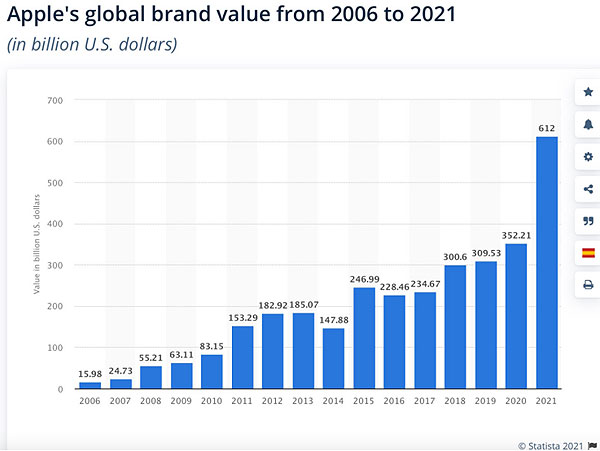
    It was to catapult the Apple being one of most worthy  brands on the planet. Today, it is worth $ 612 billion.


    In many ways, the commentary of Think Different glorified the Apple user and made her/him feel a strong part of a tribe around the world.


    As we remember Jobs, this powerful and shared feeling carries on.
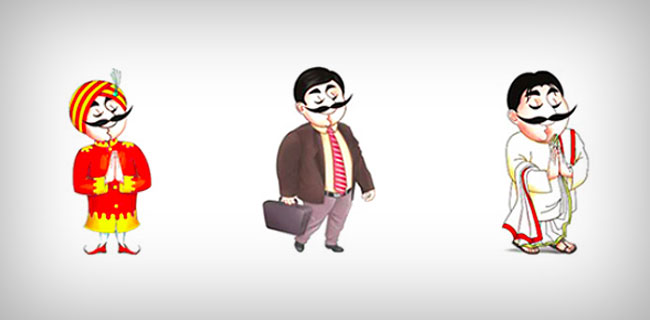


  • Air India Maharajah: An Anachronism or Timeless?


    By Prabhakar Mundkur


    Prabhakar MundkurThe tirade against the Maharajah is almost as old as that against the airline itself. The Air India top management, the aviation ministry and their new advertising agencies have been wanting to do away with the Maharajah for almost 30 years now. The agency HTA* that created him and nurtured him, even lost the Air India business after handling it for over half a century, maybe because they were the creators of the Maharajah.
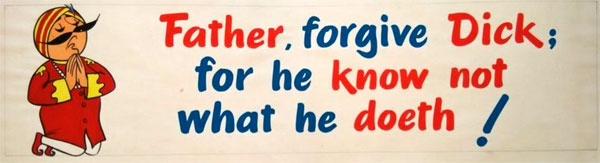
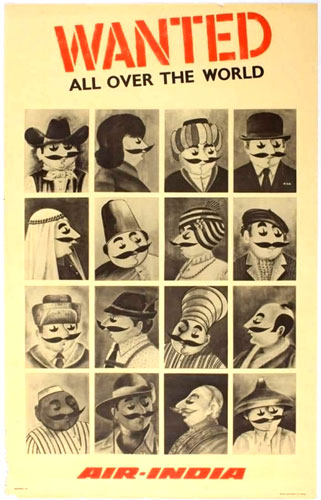
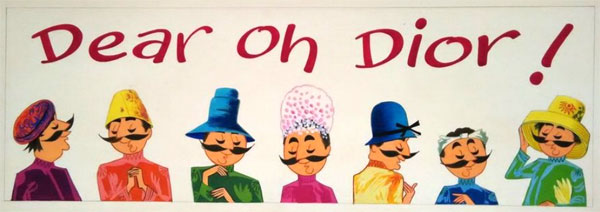
     

    It is really a wonder he has survived this long. He doesn’t look the same, he doesn’t speak the same language that he spoke years ago when I handled the business, he has lost his unique sense of humour and wit, he is completely out of touch with current affairs, in fact he is a mere shadow of his former self and he might as well have been executed than allowed to linger like this on a ventilator. He was born on the corner of a letterhead, and he has gone back to being there, making me wonder if he might also be buried there.


    On Richard Nixon during Watergate


    Most people who have this point of view don’t understand that he is not just a Maharajah. He is a mascot who embodies the soul of Air India. Only his garb is that of an Indian prince. When he was conceived, he was meant to stand for everything that Air India stood for. Just like well-travelled Indian royalty that could speak authoritatively to both India and the world. Also, the Maharajah was not just the Maharajah. He took many shapes and forms disguised for the country he was meant to represent.


    Sawant, one of the Creative Directors at HTA who could draw the Maharajah in 15 seconds. was so inspiring that HTA once created a film, by making Sawant draw the Maharajah in real time, with a camera following his talented hands.


    K ‘Bobby’ Kooka, the Commercial Director of Air India, is once known to have said: “We call him a Maharajah for want of a better description. But his blood isn’t blue. He may look like royalty, but he isn’t royal.” Famous for having conceived the Maharajah along with Umesh Murdeshwar Rao of JWT in 1946, the Maharajah is one of the oldest mascots in the world. Kooka was later Chairman of Hindustan Thomspon Associates*) and watched the Maharajah and Air India advertising grow in stature and popularity.


    Ivan Arthur, earlier National Creative Director of JWT, and now educator and author, when asked about the Air India advertising, said: “Conceived as a letterhead design, the Maharajah broke the fetters of the line drawing and became flesh with a personality and DNA of his own: the double helix of gracious exotica. That DNA did not permit him to stand in the street corners of conventional media and tout his destinations like a cheap ticket salesman. His famous romps on those hoardings were not advertising. They were non-advertising: parlour talk, one-liner points of view, camaraderie, provocation and good humour, all of which did not ask you to buy an Air India ticket. In fact, in many of the hoardings, he refused to have the Air India logo as sign-off. He was the sign-off. He was no commercial mascot. He became a national figure. Much loved and respected.


    The Maharajah dies a 100 deaths


    Come the ’80s, however, frequent changes to the Chairman of Air India position resulted in the Maharajah dying a 100 deaths. Air India chiefs were keen to kill the Maharajah in lieu of something new and more contemporary. One such case was when in the late ’80s one Air India chief hired Landor, the well-known design firm, to redesign the logo of Air India in 1989. An airline identity change is one of the most expensive identity changes for any industry because it involves repainting all the aircraft, the livery, the ground vehicles and every signage in every country. But Air India went through all that bravely, eager to dump both the Centaur, which was their logo for the longest time and the Maharajah who was accused of not being in tune with the times. Rajan Jetley, then Managing Director of Air India, had said in defence of the new logo: “It is a public statement of change and a product exercise in the classic marketing sense.”


    Air India’s new identity created by Landor


    This was painted on the tail of the aircraft and the Boeing 747 Rajendra Chola became the first aircraft to carry the new logo and the livery. This facelift is known to have cost Air India $35 million back in 1989. But the public started questioning the change, immediately missing their familiar brand Air India. Questions were also raised in Parliament about the change of identity. But in spite of the identity change, the Maharajah seemed reluctant to leave the brand and its advertising. For every one person who didn’t want him, there was a loyal fan who wanted him back.


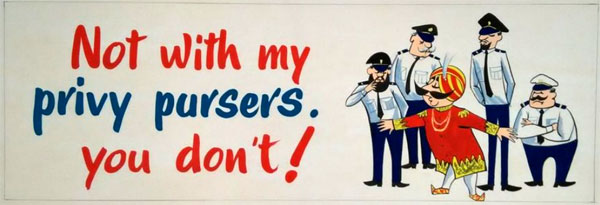
    Abolition of privy purses 1971


    Changing a brand’s identity is not an easy task. It is easy to say the Maharajah is an anachronism for those who don’t understand the Maharajah and the brand. Colonel Sanders who died in 1980 is still a part of the KFC logo. The Marlboro cowboy first made his appearance in 1954 while the cowboy era ended in 1885 at the end of the American Civil Revolution. They are not anachronisms. They are timeless just like the Maharajah. As Piyush Pandey, Chairman of Ogilvy is known to have said to Economic Times last week: “The Air India Maharaja stands for India. For any brand, any mascot, any logo, any identity is as meaningful as what they do with it.”


    With the Air India brand firmly with the Tatas, one wonders what the future of the Maharajah might be? Considering that the Maharajah is a crucial part of Air India’s brand equity and having worked on the brand, I can only hope that he will be re-incarnated.


    *now Wunderman Thompson

  • Coke’s ‘Real Magic’ casts a new spell!


    By Prabhakar Mundkur


    Prabhakar MundkurCoke and Pepsi have been at it for half a century, trying to outsmart each other both for marketing share and advertising that makes the brand relevant to the youth. Real Magic, the new commercial by Coke, I think has taken a giant leap and  does manage to outsmart Pepsi.


    Firstly, it is rooted in Gen Z passions by basing the idea on gaming. The gaming market is expected to reach USD 398,950 million by 2026 growing at an annual rate of 11%.  Secondly, the Coke commercial is based on a philosophy that makes more sense than ever before.


    Says Manolo Arroyo, marketing lead at Coca-Cola: “The ‘Real Magic’ philosophy is rooted in the belief that dichotomies can make the world a more interesting place-a world of extraordinary people, unexpected opportunities and wonderful moments.”  The philosophy itself is not new – the hippie revolution believed in this more than anyone else right since the 60s.  The world is growing more apart as we celebrate our differences rather than our similarities. The real idea behind the wave of globalisation was to embrace our dichotomies.


    ” ‘Real Magic’ is not simply a tagline or a one-off campaign,” says Arroyo. “It is a long-term brand philosophy and belief that will drive and guide marketing and communications across the Coca-Cola trademark.” Maybe it was about time for Coke to try something new given its sluggish sales in the recent past.  Real Magic then succeeds ‘ Taste the feeling’ which was first introduced in 2016. BETC London, along with director Daniel Wolfe made the film.


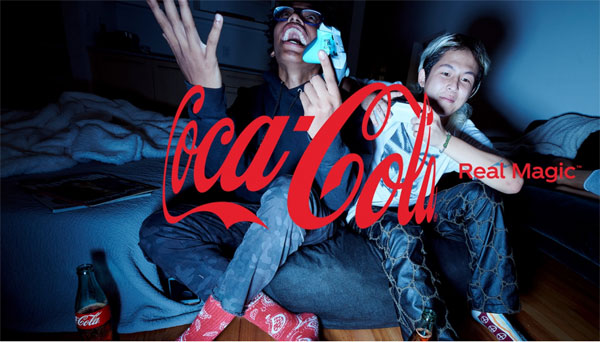
    The campaign also uses the Coca-Cola logo to wrap around the campaign images.  I thought this was a pretty unique treatment of the logo given that the curvature of the Coke bottle or can always makes the logo seen this way.


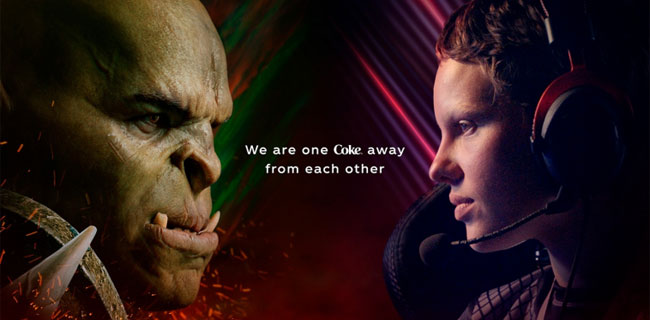
    Also the tagline ‘We are one Coke away from each other’ is reminiscent of the six degrees of separation theory first propounded in 1929 which said that we are on an average six or fewer social connections away from each other. With the expansion of the internet and social media to cover people around the world has often meant that we might very often be just one connection away from each other.  Or one coke away from each other.  Clever!


    The commercial shows a World of Warcraft type of battle in progress until one of the contestants opens a can of Coke. After the contestants first sip, Orc in the game is overcome with feeling and throws away his battle axe, picks up his opponent and there is suddenly peace in the gaming universe. A metaphor for World Peace?


    There is a lesson to be learnt here for the world. After all we if we all threw out our weapons nuclear or otherwise, one of the principles of nuclear disarmament, we might be all less threatening to each other.


    Having grown up as a teenager in the 60s, all these little nuggets of philosophy make great sense to me, although it is supposed to appeal to Gen Z.  And if Gen Z does think like this maybe we can hope for World Peace as eulogised by John Lennon in his immortal song Imagine!


  • By Invitation | Prabhakar Mundkur: Rediffusion – Never too late?

    Prabhakar MundkurBy Prabhakar Mundkur


    “Tomorrow is nothing, today is too late, the good lived yesterday”.


     Marcus Aurelius


    Rediffusion has come a long way since WPP’s Martin Sorrell made a bid to up his 26.7% stake in the agency in the early millennium, which had a tripartite shareholding of WPP, Dentsu (13.3%) and 60% owned by Dewan Arun Nanda and Ajit Balakrishnan.  The two international shareholders holding 40% were strange bedfellows making the once highly regarded agency a bit of an oddity.   The agency touted some of the industry’s best people once upon a time including the late Dr Ashok Bjiapurkar and Kamlesh Pandey who later moved on to script writing in Bollywood. Not to mention many other well-known names like V Shantakumar. Why, even Mohammed Khan was one of the original founders before he went on to start Enterprise.


    Like many agencies of its ilk, it kept attracting back some its best names in some consultative capacity or the other.  Mr Nanda is known to have had good ties with most of the people who worked for him and that could be the reason.


    According to the grapevine those days, Nanda might have paid dearly for refusing Sorrell’s offer to increase his stake in the early millennium.  Sorrell was known to be very clear in the ownership patterns of his acquisitions. He always wanted a clear majority and typically the starting point would be at least 51% share before engulfing most of the remaining stake in the shortest period of time.  People those days spoke in hushed whispers that Sorrell had threatened that if he couldn’t increase his stake in the agency, he would pull out its largest piece of business which at that time was Colgate, being a global Y&R account and terminate the Y&R partnership with Rediffusion. Moving global accounts to another agency is not a piece of cake, but Sorrell finally seems to have carried out his threat by moving Colgate to Bates 141, which created a special unit to handle the account, reporting directly to the Y&R global management. This gave credence to what thus far was attributed to agency gossip.


    Team Colgate was a typical WPP style business unit that that had become Sorrell’s favourite model, a prime example being GTB for Ford.  This ensured that Sorrell had direct control over some of the most important global accounts in the group.  There is a bit of history there, since the agency heads of individual accounts can become quite powerful with time. A great example was Peter Schweitzer at JWT, who by heading the Ford account which once upon a time contributed to almost 25% of JWT’s global revenue, grew too powerful for Sorrell’s liking. When Schweitzer retired as CEO, Sorrell quickly moved Ford from JWT into WPP’s special unit called GTB thereby retaining direct control over this large piece of business.


    When Colgate left Rediffusion, it was a telling blow.  Losing large accounts didn’t faze Rediffusion. They had lost Airtel in the first decade of the millennium. And after Colgate they it lost the Tata Sons PR business which was placed in their partnership with Edelman to Adfactors.


    In the M&A business, timing is critical. Both for the buyer and the seller. Rediffusion no doubt was well past its best valuation having waited too long for someone to come along.  But the ego and the resilience of the founders kept it plodding along.  What has Sandeep Goyal really bought into, one is not quite sure. The press release talks of its past glory rather than anything else clearly making it a ‘has been’.


    So it would be interesting to speculate on what Goyal would do with the agency he has bought.  He would necessarily have to fill the shell with some meat. If one goes by his earlier reputation, he is known to walk into agency pitches with a bag full of advertising campaigns, something that used to shock advertising professionals 20 years ago because it painted a picture of the ‘servile’ model for advertising.  Servility in the advertising business has peaked since then and also contributed to its downfall.


    The industry did little to continue the legacy of equal partnership and mutual respect with clients.  It needs to be seen however whether the same tactic will work today.  His long-term gameplan of course would be to dress up the bride.  For this, he would need to build adequate value in Rediffusion to attract a global agency for an acquisition.  Of course he can hardly be underestimated. His aggressive business stance is well-known.  As is his passion for hard work, and particularly his extreme dismay at losing.


    But it may take a while for the once famous agency of yore to re-acquire its earlier halo!  For Rediffusion, Sandeep Goyal might well be its Angel Gabriel, the Arch Angel of Resurrection, the Voice of God and the Bringer of good news.


    Prabhakar Mundkur is a veteran advertising person, a former agency CEO – in India and elsewhere in the world, a musician, a music producer, a talkshow host, a prolific commentator and a great conversationalist with an infectious laugh. His views here are personal.


  • Cadbury ad. Overdependent on Nostalgia?


    By Prabhakar Mundkur [updated]


    Prabhakar MundkurAs I write this, I am sure the latest Cadbury’s ad has already gone viral if that is a measure of its success. The latest message I got on WhatsApp went like this:


    “In 1994, Ogilvy India made an ad for Cadbury Dairy Milk.

    In 2021, Ogilvy India made the same ad for Cadbury Dairy Milk, with a difference.

    Check both out!!!”


    The praise showered on it has had no bounds over the last two days.  One of the comments went like this: “It’s a follow-up to the ad the great Piyush Pandey wrote in 1994 which catapulted him to advertising fame.”  No doubt Piyush is a shining star in the advertising firmament, but I am not sure this criterion can be used to judge an ad, both by commoners or 50-year-old advertising executives. I never thought of an ad as great only because David Droga or Bruno Bertelli wrote it. In any case, I am getting used to the hysteria and adulation India accords its heroes. Just yesterday, we saw a union minister likening our Prime Minister to God.  And later, the Prime Minister’s Report Card handle on Facebook posted the Cadbury ad, giving it record likes and shares. God himself then has endorsed this ad.  So, who am I, a mere mortal to even start evaluating it?


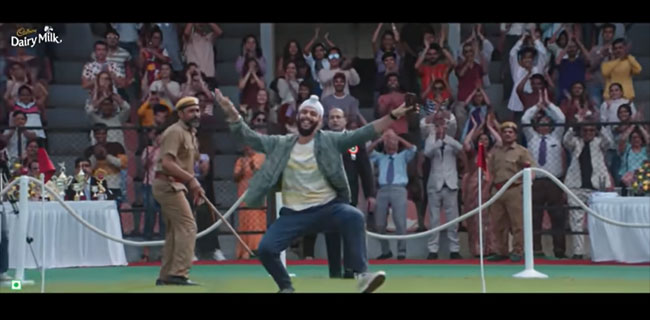
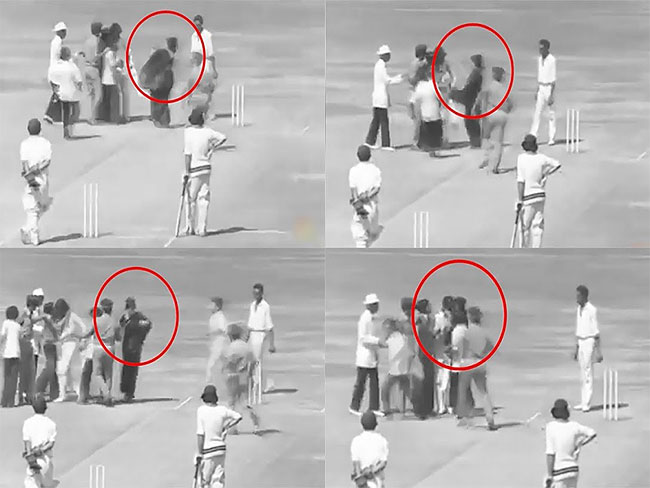
    I must admit I am an aberration of the Indian consumer because I spent the better part of the 90s working overseas and could not use the 1994 ad as a reference. It seemed like just another cricket ad to me, or simply put just a typical scene from Indian cricket which we have seen repeatedly, for much longer than the Cadbury ad. After all, didn’t a woman do the same thing to Brijesh Patel when he scored a century in 1975?  She went past the security (India’s disrespect for the law is legendary), right until the pitch and then planted a kiss on Brijesh’s cheek. I know cricket is a hot button in this country, but the 99 runs on the scoreboard with a sixer coming up is both a bit trite and hackneyed.


    Which brings me back to one basic question: if this ad was trying to capitalise on nostalgia marketing, was it aimed at people who were over 50 years old? We don’t know Cadbury’s strategy, but it could well be that they no longer wanted their brand to be seen as a young person’s brand. If the target audience were expected to have seen the ad in 1994, it does mean that this ad is talking to people who are in the age group of 40-50 years at least or even more.


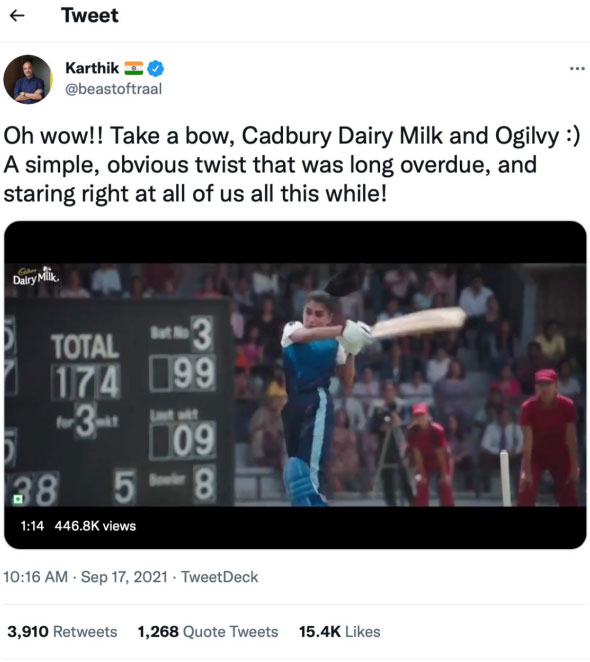
    Of course, while arguing my way through the merits and demerits of the ad, many people stoutly defended the ad saying that it was brilliant, even as a standalone, and even if people had not watched the 1994 version. Maybe, but I would imagine that the people who had seen the 1994 ad would rate it 5x times better than the people who hadn’t seen the 1994 ad. People who first posted the ad on social media were mostly older, but the overall hype was so overcoming that I believe the youth had taken to sharing the ad later, on Instagram. Take this tweet for example which got a rousing response. I don’t know Karthik personally, but I am willing to wager that he is at least 40 years old to have seen and remembered the 1994 ad.


    But somehow the Cadbury ad seems to have touched a chord and has got accolades for showing a woman in the lead role. Many people have commented that this was a long time coming. Of course, any ad like Cadbury’s is a welcome addition to the tirade against gender discrimination. India for centuries has discriminated against women, and there is still scope to do much more. India ranked 131 in the 189-country survey on the Gender Development Index. So, any commercial or full-length movie that goes towards portraying the importance of women is welcome because it can help to change the status quo. I see advertising and cinema as important influencers in pushing the envelope for social change.


    Oscar Wilde in his 1889 essay ‘Decay of Lying’ posed the rhetorical question, whether Art imitates Life or Life imitates Art. I firmly believe that Art must do its bit to change society so that Life can start to imitate Art. The Cadbury ad from that point of view is a step in the right direction.


    Except that as I said earlier, the Brijesh Patel incident also raises the question if this is Art Imitating Life?  It could well be!


    Oscar Wilde was right in posing this queer and difficult paradox.


    Prabhakar Mundkur is a former advertising agency captain and has spent over four decades in marketing services across geographies. He is a prolific writer and was a few years back rated as among the top voices by LinkedIn. Other than advertising and writing, Prabs, as he is known to friends, is a very active musician and a self-taught producer of music. In the pandemic, he has performed and produced nearly 50 songs, including one with the very accomplished Usha Uthup. Mundkur’s views here are personal.


  • It’s Mera Bharat Mahaan for Micromax


    By Prabhakar Mundkur


    In light of the Tanishq controversy, the new Micromax commercial provides an interesting counterpoint.


    The larger  truth that I am missing in all the marketing discussions on Tanishq is that ‘brand purpose’ came about because Millennials and Gen X in the West were looking for authenticity, honesty and purpose in brands.  In other words, they were looking for brands to mirror their own feelings and their higher purpose.  And this higher purpose took the form of say ‘Real Beauty’ for Dove as a proof of authenticity or the higher purpose took on a higher social responsibility to support some cause: sexism, racism (for us it is casteism), climate change, sustainability, poverty, domestic abuse, climate change and a host of other causes.


    I don’t know if the big brands have done a study of what this greater social responsibility might mean for Millennials and Gen X in India. I don’t think it is any of those that I mentioned for the Western audiences above.


    But the important point here is a that it is not marketing directors who sit in their ivory tower offices and determine brand purpose or the language a brand speaks. For brand purpose to be real, it must coincide with the people’s aspirations. Just as an example if the higher purpose of our targets in the country is to prevent “love-jihad” they may want to see brands that reflect that higher purpose. And Tanishq’s higher purpose was at odds with the higher purpose of a section of the public that engaged in the destruction of their commercial.


    After all, brands are not allowed to have a purpose that excludes the people it is talking to unless it wants to be altruistic or idealistic, which I am sure is not what Tanishq wants to be.


    Moving on, I found a useful counterpoint in this Micromax commercial.


    https://m.youtube.com/watch?v=aRo69b1wTNg


    The commercial essentially announces that they are back in the game after having taken a beating at the hands of the several Chinese mobile handsets in the market.


    In its ‘come back’ commercial appropriately titled ‘Micromax is Back’, the brand touches all the hot spots of the new Indian. Look at the various subtle inflections.  The story of an Indian entrepreneur who came from the ‘gullys’  of middle class India after borrowing Rs 3 lakh from his father.  A brand that was the No 1 brand in India and in the top ten brands in the world.  Stirring the new sense of ‘nationalism’ in the Indian.


    Then look at the skillful way in which the brand provokes anger against China by saying he was put down by Chinese brands. And that too in his own country? Oh, the injustice of it all!


    Then invoking the border conflict with China, invoking the Prime Minister were all briiliant strokes in a campaign that reeks of Made in India.  And to cap it all the new series being marketed by the marketers is ‘IN’. Another stroke of brilliance to use the first two letters of the country name. What could be more Indian, more desi that?


    Now go back to the Tanishq commercial and think for yourself whether it invoked the right feelings in the target audience. Or did it provoke mob anger by touching on a raw nerve that people are most sensitive about.


    For me this is a case study that brands cannot speak a language that does not strike the right chords among the people. Brands can’t hold beliefs that are in insolation without consulting the people they are talking to. Brands need the permission of the people before they speak.


    We have a choice now.  Either conform to the feelings of the new India that has been emerging for the last six years or continue to live in the past.


    Lofty ideals for brands must be examined in the light of the current mood of the nation.


    Prabhakar Mundkur is a veteran advertising professional and commentator. And also a musician. He has worked across geographies. His views here are personal


  • Prabhakar Mundkur: While the world is rising for unity, are we digressing?

    By Prabhakar Mundkur


    2020 is a year of huge upheavals not only because of Covid, but because of the huge social uprisings for unity.


    The killing of George Floyd, a 46-year-old black man in Minneapolis, by the police sent a sweeping shock wave of social change the world over.


    Racism of any kind just went out of the window this year. And the impact on brands was tremendous. Almost every brand worth its salt pledged to be fair and non- discriminatory. Brands asked people to stand against racism. Even the stoic Hindustan Unilever joined the tirade against discrimination of any kind when it decided to change the name of one its most profitable brands in country Fair & Lovely to Glow and Lovely. Such were the sweeping forces of an unprejudiced world. I sometimes wonder if Covid might have helped because it didn’t discriminate either between rich and poor, black and white or rich and poor.


    So, when Tanishq one of India’s favourite brands put out a commercial about the unity between two religions the uprising on Twitter felt unfair and the height of discrimination. After all India has been a pot pourri of various races and religions for centuries.


    https://twitter.com/beastoftraal/status/1315848777123598337?s=20

    Tanishq has pulled the creative off YouTube. The ad can be viewed here on a tweet by @bestoftraal – Ed


    Another common practice has always been to celebrate each other’s festivals and cultural practices. After all who can but help to eat biryani at Id, order a Sadya menu for Onam, or offer tilgul for Makar Sakranti. Somehow India has grown up celebrating every festival irrespective of which state, language or community it belonged to. Following this pattern, the commercial shows the mutual respect for each other’s customs.


    So, the outrage on Twitter seemed a little misplaced. Unless it was not representative of the feelings of the population at large.


    Should brands give in?


    I think when brands have done no wrong they should stick to their guns. And not get cowed down the mass hysteria on Twitter? Why do Twitter mobs behave in such extreme ways? Mob anger can be strange, pathological and monstrous. Behaviour of a larger group is known to have a big influence on individual behaviours and have been an area of interest in social psychology for years. Psychologists have found that group behaviour tends to be more extreme and amplifies the typical behaviour of its individual members. Mobs are known for losing their self-awareness. Sociologists refer to the process as de-individuation where individual personalities become dominated by the collective mindset of the crowd. Gustave Le Bon an early explorer of this phenomenon viewed crowd behaviour as “unanimous, emotional, and intellectually weak”.  The other reason is that twitter anger dies down as quickly as it is ignited. The half-life of a tweet ( average lifespan ) is 24 minutes or thereabouts.


    So, a kneejerk reaction to take your commercial off the air might well be unfounded.


    What else can brands do?


    Companies need to figure out strategies for dealing with social media manipulation with respect to their ads. After all a pattern seems to have been established of cyber bullying to pull out movies and ads.


    It can’t be difficult to gauge the reaction to your ads. Research should warn you about cultural inflections, and if there is an ad that has even a small probability of inciting twitter mob anger it might be better to go in well prepared. If social media and twitter can be manipulated by politicians and religious groups can’t they be manipulated equally by the biggest and best marketers in the country?


    Maybe we are seeing the dawn of a new era. Where brands can use their marketing power to do what politics and the law can’t do. Right the wrong. Tell television channels to stop doling out trash to the public. Tell Twitter mobs to shut up. Hail brand power! We might well be at the edge of a new era in marketing!


    Prabhakar Mundkur is a veteran advertising professional and has led agencies in various geographies, including India. He is a prolific writer and also a prolific musician. He comments frequently on MxMIndia, as on LinkedIn and other platforms. His views here are personal

  • The Unfairness of It All


    By Prabhakar Mundkur


    When Hindustan Unilever announced its decision to rename its moneyspinner $500 million brand Fair & Lovely to Glow & Lovely, it was a classic case of doing too little too late.


    To imagine that the decision was perhaps based on the greatest upheaval of racist stereotyping of our time with the excruciating George Floyd pinned to the ground doesn’t say much for Hindustan Unilever’s decision. There is nothing to congratulate them about.  There can be no appeasement of public emotion. There can only be guilt and shame.


    Activists through the decades have objected to Unilever’s fairness cream but it needed a revolt as ugly as George Floyd’s death, for the great marketer to make this small move.  Not since Rosa Parks was denied a seat on a bus in Montgomery has the world been so affected by the colour bias of the human race.


    But how good is the new name Glow & Lovely? Decades of skin care research has shown that ‘Glow’ is a major benefit in for the skin care regimen. Just like ‘Shine’ is. a major benefit for hair. So, taking a benefit from research and planting it in a brand name is perhaps not the most creative way of configuring brand names. But then Unilever has not been particularly known for its creativity. That lesser brands like Emami had already pre-empted this thinking by naming their brands Glow & Handsome is a bit of a shame. After all, one expects leaders to show the way. Not follow in the footsteps of their smaller competitor in the FMCG business.


    But is Glow and Lovely a good name?


     There is a reason why Glow and Lovely doesn’t sound right given the vagaries of the English Language. The reason why it doesn’t roll of the tongue as easily as Fair and Lovely has to do with the English language. Both Fair and Lovely are adjectives. Glow on the other hand is either a verb or a noun depending on how you use it. Glowing & Beautiful would have sounded better in English. Because Glowing is an adjective. But it then lengthens the brand name. And Unilever might have decided they would stay close to the current syntax. Anyway to the large majority of Indians it would hardly matter. It’s just another name for Fair & Lovely. Fair and Glow are both four-letter words. But how the name changes the advertising need to be seen. Will the new ads have dark and glowing faces to make amends with the brand’s past? That is anybody’s guess.


    How Darkie changed its name


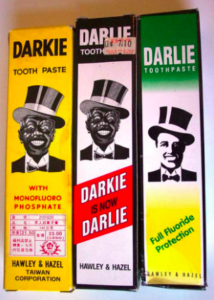
    It may interest people to know that the exact opposite of Fair & Lovely existed as a toothpaste in Asia many decades ago. A toothpaste called Darkie. Produced by Hawley and Hazel, the brand was very popular in Asia. The pack showed a smiling black performer. The brand was then acquired by Colgate Palmolive which faced a lot of racist flak on the brand. In 1989, Colgate Palmolive decided to change the brand name to Darlie.


    “It’s just plain wrong,” Reuben Mark, chairman and chief executive of Colgate-Palmolive, said about the toothpaste’s name and logotype. “It’s just offensive. The morally right thing dictated that we must change. What we have to do is find a way to change that is least damaging to the economic interests of our partners.”


    Seems like a shame that another global company had thought about this so deeply more than 30 years ago. So Unilever in many way is 30 years too late.


     What will posterity say about Fair & Lovely?


     But what this would mean for the generations to come is anybody’s guess.  Will Generation Alpha which may use the brand a few years from now warm up to the brand given its history? (Generation Alpha is the demographic cohort succeeding Generation Z. Researchers and popular media use the early 2010s as the starting birth years and the mid-2020s as the ending birth years.)


    How will these young people see our racist past? One piece of research showed that Generation Z are as racist as their millennial parents. But will this continue on to Generation Alpha? Technology is likely to change a lot of mindsets in the future. And that may change the fortune of the brand called Glow & Lovely.


    Prabhakar Mundkur is an advertising veteran, a lateral thinker, storyteller and musician. He has spent several years in advertising – in India and elsewhere in the world – including at JWT China where he headed the Unilever business, amongst other functions. In fact he worked on Unilever brands for a good 17 years… though never on F&S ;-). A prolific writer now, he was LinkedIn’s #1 Top Voice for 2016 and YourStory’s 100 Emerging Voices 2018. He writes frequently on MxMIndia.