Author: mxmadmin

  • The Anchor: 4 things I would like to change in Radio Programming

    By Sarthak Kaushik


    1. Programming differentiation

    Sometimes looking around can influence individual creativity, and far too often, the ‘mega’ goings on are mirrored across the airwaves, without a thought for its efficacy in grabbing eardrums of that particular city.


    2. Radio as a LOCAL medium

    What a listener in Mumbai would identify with is not necessarily what appeals to the listener in Bengaluru. Radio is an intensely local medium, with its geographical bearings – and the understanding thereof – being critical to its connect. And on radio, if the personal touch is missing, the biggest USP of the medium has been squandered. In trying to make a countrywide campaign, sometimes this attention to ‘local’ goes missing.


    3. Making the listener a star

    Far too often, celebrity endorsement overshadows the fact that radio works on a one to one, on-the-passenger-seat-of-my-car intensity. And when the listener feels a part of the station – the Star – the loyalty lasts for a long time. Attention to making the listener feel special could perhaps do with a little more focus. Everyone wants to be associated with a celebrity, but more importantly, everyone wants to feel like a celebrity, the nudge-wink “I Am on Radio” feeling could also perhaps be encouraged a little more


    4. Simplicity still rules

    The keep it simple rule still applies very much to radio. Being a medium with only one sense paramount, the message – both about the identity of the station and things attached with it – needs to be stylish, individualistic, and memorable. But, perhaps, the power of simplicity in ticking all these boxes gets dropped by the wayside. A flashy message might make the jaw drop open, but the simple elegance of a warm connect will invariably lead to a smile. And in the end, the smiles are usually more memorable in the long run.


    Sarthak Kaushik is Director, Programming, Hit FM


  • Debrief: Aircel: Misplaced belief

    By Anil Thakraney


    ‘Let’s keep believing’, says Aircel. Okay man, will do. But believe in what? In myself or in the Aircel call center executive who will hopefully have solutions to my billing problems? That minor detail doesn’t get explained in the new Aircel advert.


    So, I suppose ‘Belief’ is Aircel’s brand new corporate philosophy. That’s fine, but this platform has been sucked out dry in advertising. I wonder if people, er, believe in it anymore. Also, the treatment of the ad film, which features brand ambassador Dhoni explaining to a young friend (and to himself) the importance of not losing hope in bad times, is too close to one of those booze commercials the cricket captain does. I almost expected Maahi to sign off the ad by asking the kid to ‘Make it large’.


    Blasphemous thought.


    But more than the positioning and the treatment, I have a serious problem with brand linkage. What does Aircel have to do with Dhoni’s self-belief saga? This ad is valid for any brand and any product category… self-belief is a universal concept.


    Also, because the brand arrives abruptly in the end, its recall is gonna be a dicey issue. I would be rather surprised if Aircel gain’s much from this effort.


    [youtube width=”400″ height=”200″]http://www.youtube.com/watch?v=QJbpzQSO3U8[/youtube]

    Yep, I believe in Maahi. Nope, I don’t believe in this ad. I think I’ll just go and make it large.


    Rating: (On a scale of 1 to 5): 1. Weak idea and execution.


  • [MJR] Crime & transport are issues of national importance

    By Ranjona Banerji


    Newspapers in Mumbai this week have been pre-occupied – and quite rightly – with two major issues: transport and crime. A fire at a signalling cabin crippled the Central Railway’s Main and Harbour lines, affecting some 40 lakh commuters. The problems are not likely to vanish fast either.


    The coverage has been comprehensive and detailed – and it is difficult to fault any paper here.


    In fact, even with the other more sensational case of murders and the underbelly of the glamour industry, newspapers have shown remarkable restraint while still providing blanket coverage.


    Both stories in a sense are not Mumbai-centric. The collapse of a commuter system in the country’s financial capital means that millions cannot get to work on time, if at all. This affects productivity and, ultimately, profits for everyone. Also, for other large and growing metros there is a lesson here about the importance of infrastructure and alternative public transport systems.


    The case of the murders may be murky but also affect the nation. Thousands still flock to Mumbai as the mecca of the film and television world. Many of these are innocent or naïve in the ways of the world and get easily conned by the criminal elements that hang around the fringes of the industry. The three murders being investigated – an old gentleman whose son was fooled by the suspects, a young man who was trying to cut business deals with them and a young model – are cases in point and all the victims came from outside the city.


    The larger point is that these are issues – logistic and sociological – which affect the whole country. Newspapers elsewhere should take them up. And not just for the salacious context of the murders.


    * * *


    The successful launch of Agni V got its space on TV and in newspapers but perhaps nowhere so much as on Twitter and in cyberspace. People were breathless with excitement over this great achievement by India and there was little or any objective or even critical comment. It is quite difficult to be critical about “nationalistic” issue on the Internet because of the waves of patriotism which sweep all over it!


    * * *


    The fifth edition of the Indian Premier League reveals some maturity on part of the Indian media. The last four years have been filled with enthusiastic hyperbole or visceral hatred all over TV and pages of print. Since last year was something of a flop and the opening ceremony of this season a damp squib, there was general wariness all around.


    However, with the IPL being treated more as a sporting encounter with elements of fun rather than a be-all-end-all mega-event which must bring our lives to a standstill, it is well on its way to being a success. Media hype has been limited but media coverage has been adequate. This year, hysteria over the owners and their glamorous friends has been limited.


    The worst you can say about the IPL is that the studio shows are enormously irritating and tacky, where seasoned cricketers are forced into silliness by the hosts. When these same hosts prance all over the cricket field, they are no less silly and the cheerleaders in the studio just look tacky. No one seems to care much about those on the field either – and their dancing hasn’t reached the high level of gymnastic ability and artistic proficiency that American cheerleaders have to display. In fact there is a lot of wiggling and waving but practically no dancing. Just saying.


    * * *


    As you may have guessed, I have been sadly deficient in my TV news watching this week. Blame it on the weather – didn’t want to get any hotter under the collar!


  • Department of IT (DIT) renamed Department of Electronics & IT (DeitY)

    By A Correspondent


    The Minister of Communications & IT, Kapil Sibal, has said thatIndia’s electronic sector aims to achieve a turnover of about $400 billion, with an investment of about $100 billion and employment to around 28 million by 2020.


    Shri Sibal said it is proposed to set up over 200 electronic manufacturing clusters and significantly upscale high-end human resource creation to 2500 PhDs annually by 2020 in the sector. He was presiding over a function in New Delhion Thursday where the Department of IT (DIT), Ministry of Communications and Information Technology, was officially rechristened Dept of Electronics & IT (DeitY).


    Dwelling on the name change of the Department, Shri Sibal said the introduction of electronics in the Department’s name is a signal of embarking on the development of electronics in the country, a journey which is essential if the country has to realize its dual objective of accelerating the growth momentum and enabling inclusive growth and development. The renaming of the department is reflection of the thrust which government provides to the electronics sector.


    Shri Sibal said the new National Policy on Electronics is under finalization, now that the process of widespread consultations is over. Its draft was released last October. He said the policy will provide a clear road map for the development of electronics sector in the country for the coming decade.


    He also said the Ministry has already initiated several initiatives for the development of electronics sector in the country.India has become the hub for semiconductor design, generating nearly $2 Billion in revenues. He said the government has, therefore, decided to set up semiconductor wafer fabrication facility in the country and the Cabinet has constituted an Empowered Committee to recommend technology and investors and incentives required to make the fabrication happen.


    In response to a global Expression of Interest, some of the leading technology providers have shown interest in participating in the fabrication project. The Minister said the Government has also decided to provide preference to domestically manufactured electronic goods in all Government procurement as well as all those electronic goods whose usage has security implications for the country.


    The policy is expected to strengthen the cyber security ecosystem in the country as well as provide a boost to the domestic manufacturing. Emphasising on developing human resource, Shri Sibal said the Department is in the process of extending and expanding the Special Manpower Development Programme for VLSI and chip design.


  • RBNL announces alliance with Speed Records

    By A Correspondent


    Reliance Broadcast Network (RBNL), one ofIndia’s youngest multi-media conglomerates, announced its alliance with Speed Records,Punjab’s music leaders. The partnership gives RBNL’s business verticals - 92.7 BIG FM and BIG CBS Spark Punjabi – immediate access to the extensive and expansive library of Speed Records, thus further strengthening its offering.


    The alliance simultaneously gives Speed Records excellent platforms through which they can reach their rich music content to a huge audience base in the region. Speed Records boasts of an enviable library with music ranging genres like Sufi, Punjabi, Hip Hop, Contemporary, and featuring music ranging stalwarts to fresh talent with names like Gippy Grewal, Jazzy B, Satinder Sartaj, Amrinder, Honey Singh, Alfaaz, Preet Harpal, Master Saleem, Nacchatar Gill, Geeta Zaildaar and more.


    92.7 BIG FM is already a leading FM station in the region with a strong reach to over 22 cities in the PHCHP region. With a significant part of its programming featuring local music featuring the latest and widest Punjabi music preferences, the alliance with Speed Records will allow the radio station to serve an assortment of music ranging genres. The deal allows for 92.7 BIG FM to play the music of Speed Records across any of its Stations in India.


    Similarly, BIG CBS Spark Punjabi caters to audiences who demonstrate high music preference in their entertainment choices. With a high affinity for music, the library of Speed Records promises to further strengthen the offerings of the Channel. The increased music content will see categorization of the songs and introduction of new daily music shows that have been christened - Dil Bole Haddipa, Chak De Dholiyan, Spark Top 20 and Punjabi Melodies.


    Reliance Broadcast Network said in a statement: “This alliance allows our audiences immediate access to an enviable music library, featuring some of the best and latest from the Punjabi music industry. With music surfacing as one of the key entertainment preferences during audience insight mapping, we are happy to be upping the ante on it. Through our media platforms – both 92.7 BIG FM and BIG CBS Spark Punjabi, we offer audiences the entertainment that they seek while offering marketers the best ROI for their brands.”


    Reliance Broadcast Network Limited is a multi-media entertainment conglomerate with play across radio, television, intellectual properties and out of home. It is part of the Reliance Group and specializes in creating and executing integrated media solutions for brands. It houses the following verticals: 92.7 BIG FM,  BIG CBS – A joint venture with CBS Studios International which has launched four channels, BIG CBS Prime, BIG CBS Love, BIG CBS Spark Punjabi and BIG MAGIC. Added to this robust bouquet, the Company also distributes Bloomberg UTV,India’s premier business news channel.


  • Improved enforcement & surveillance musts to check misleading ads: Consumer affairs minister

    By A Correspondent


    Close on the heels of the Advertising Standard’s Council of India’s announcement of the ad monitoring service that it is setting up along with TAM, Prof K V Thomas, Minister of consumer affairs, food & public distribution, has said that there is urgent need to update laws and improve enforcement to protect consumers from misleading advertisements as despite several provisions false and misleading advertisements continue to exploit the consumers and now have a wider canvas. He said that the widely accepted opinion is that both self-regulation and legal controls should work in synergy. Prof Thomas was addressing a national seminar on misleading claims in advertisements organised by the Department of Consumer Affairs with a view to protect the consumers from exploitation.


    The full text of Minister’s address is given below:

    “I welcome you all to this national Seminar on misleading claims in advertisements organised by the Department with a view to find a way to tackle or regulate them effectively so as to protect the consumers from exploitation. As you all know the Department of Consumer Affairs has started country-wide consultations with all stakeholders on this important matter to elicit their views in order to come to a consensus on what suitable measures could be put in place to regulate such misleading advertisements.


    Advertisements have become a part and parcel of our lives today. However, it is necessary to use advertisements with caution to avoid a vicious effect on social values. Advertisements are a crucial aspect of any type of business because they promote products or let the public know about them. Consequently, when this route is exploited by unscrupulous businesses persons to mislead the public, then it may destroy the very image of advertising.


    Though advertising is a useful tool to give information which are factual and accurate, questions are frequently raised whether it creates class consciousness, materialism, conspicuous consumption and other values which are not universally accepted. For most companies, the question is how often to communicate with the consumers. To reach the target markets advertisers sometimes overstep the legal and social norms.


    The Constitution of India guarantees freedom of speech. Nevertheless, the government is authorized to regulate commercial advertisements. It can restrict deceptive, unfair, false and misleading advertisements. An advertisement is termed deceptive when it misleads people affecting the purchasing behaviour of the consumer. In India, advertisements for cigarettes, liquor, pan masala (chewed tobacco), products that are harmful to the public continue to find a place in the TV channels, despite the ban imposed by the Government of India.


    Unfortunately despite several laws meant to protect consumers against such unfair trade practices, false and misleading advertisements continue to exploit the consumer. In fact such advertisements now have a wider canvas. While earlier, one saw them only in the print media, today you can see them on television, influencing a larger number of people and impacting even the illiterate. Proliferation of advertisements through television marketing networks promoting health cures, slimming and beauty gadgets of unproven value is a cause of great concern, because today the reach of television channels is phenomenal. And undoubtedly, the impact of the visuals on the television screen is far greater than the newspapers.


    Outdated laws and poor enforcement of laws are the main reasons for the prevalence of any social malady and mal-advertising is no exception. The need of the hour, therefore, is better laws, their regular updation, improved enforcement and regular surveillance by the authorities. Widely accepted opinion is that both self-regulation and legal controls should work in synergy. In certain countries there are stronger legal controls over the advertising, for example in Scandinavia. On the other hand the industry`s self regulation is preferred in the Anglo-Saxon world. Needless to say, the social acceptability varies from one culture/country to another. At the end of the day “good taste or bad is largely a matter of the time, the place, and the individual”. It would be also probably impossible to set clear-cut and detailed rules in the era of Internet and interactive TV.


    Therefore, I feel that both types of regulation should be applied with the ultimate aim of reaching balance between the sacred right of freedom of choice and information and minimizing possible widespread offence.


    Probably the most controversial issue in the field of marketing communications is the content of advertisements. Three areas of interest in terms of ethical judgment of advertisements are “individual autonomy, consumer sovereignty, and the nature of the product”. The individual autonomy is concerned with advertising to children. Consumer sovereignty deals with the level of knowledge and sophistication of the target audience whereas the ads for harmful products are in the centre of public opinion for a long time. Advertising of hazardous products is even more harshly criticised when it is aimed at audiences with low individual autonomy, i.e. children. Children are not only customers, but also consumers, influencers and users in the family Decision-Making Unit. Additional difficulty is that they are too impressionable to be deciders. It is not a surprise then that “spending on advertising for children has increased five-fold in the last ten years and two thirds of commercials during child television programs are for food products”. In some countries like Sweden, Norway, Germany, Netherlands and Australia, there are harsh restrictions to the children advertising.


    Advertising standards and self-regulation by the advertising industry is an important issue, particularly so in a country such as India where a majority of the consumers are in rural areas. To improve our record, we need to compare ourselves to the rest of the world. This does not mean that there is a global barometer which sets standards on which ads are offensive and which are not. If we go simply the number of ads for which the ASCI (Advertising Standards Council of India) receives complaints, then Indian advertising is of exceptionally high standards! Far fewer advertisements are hauled before the ASCI than the ASA (the Advertising Standards Authority of Britain). If the ASCI receive complaints in the hundreds, the ASA receives them in tens of thousands. In India, the number of complaints does not always give a true picture of the standards of advertising nor does it say anything about the level of consumer dissatisfaction. The reasons are low awareness level and apathy. The ASA, I am told, is also quite pro-active. It has conducted surveys of the national and regional press to check compliance with the ASA codes. Its results have been encouraging. 97 per cent of ads were found to comply with the codes in one such survey.


    Section 2 (r) of the Consumer Protection Act gives a comprehensive definition of unfair trade practice and Section 14 deals with the directions that the court can give to deal with such practices. The consumer courts have given some excellent orders in this area, but they cannot deal with misleading advertisements like the MRTPC. For one, the consumer courts neither have the power nor the infrastructure to investigate, suo motto into misleading advertisement nor take up such cases on their own, as done by the MRTP Commission. Nor do they have an investigative wing like the office of the DG (Investigation and Registration) under the MRTP Act. The consumer courts can only adjudicate over complaints filed before them. However, the consumer courts can issue interim orders stopping such advertisements pending disposal of the case. They can give directions to the advertiser to discontinue such advertisements and not to repeat it. They can award compensation for any loss or suffering caused on account of such unfair trade practices, they can also award punitive damages and costs of litigation. Section 14 h (c) of the Act, describing the powers of the court, says that the court can order “corrective advertisement to neutralize the effect of misleading advertisement at the cost of the opposite party responsible for issuing such misleading advertisement”. In so far as misleading advertisements are caused, this is the most important provision and can really have a deterrent effect, if used effectively. Unfortunately, this provision has hardly or perhaps never been used.


    Ladies and gentlemen, I have placed before you, a set of arguments and counterarguments so that the delegates, informed and involved stakeholders as they are, could further deliberate on them. In the end, I am hopeful that the outcome of these discussions would produce a consensual document delineating the steps leading to affirmative action, including legislative efforts if found necessary, without impeding the freedom of responsible speech. Because, the need of the hour is a strong signal to the people of the country that the sovereignty of the consumer is nonnegotiable and they will not be allowed to be taken for a ride. Equally important is to tell the comity of nations that India, as an emerging economy and a promising market is fully committed to ensure, protect and uphold consumers’ interest and rights”.


    The seminar was attended by representative of State Governments, various Central Ministries, the Advertising Standards Council of India and consumer bodies.

     

  • Rude people spur innovation, says Red Hat CEO

    By Dibeyendu Ganguly


    One of Red Hats’ most valuable assets is the system of blogs it has created over the years, where employees can discuss and debate on a range of work issues.


    In the spirit of an enterprise that’s makes its money from open source software, Red Hat takes great care to ensure the intranet is truly open. Anyone in the company can post anything – which can lead to ticklish problems.


    Last year, Red Hat President and CEO Jim Whitehurst was informed that company intranet was being flooded with jokes. Occasional light banter had always been a part of the communication system, but now people were regularly posting funny stuff that had nothing to do with anything. It had to stop.


    Mr Whitehurst, formerly the COO of Delta Airlines, proposed appointing a moderator, who would scan all mails before they appeared on the blogs. “I was advised it would be a disaster,” he says.


    “If management appointed a moderator, people would go off the list.” What Red Hat did instead was to identify the five largest contributors to each blog and ask them to help ‘soft moderate’ their peers. This approach worked since these individuals were highly respected software developers and sales executives, who had a stake in the smooth functioning of the intranet.


    The solution was also a cultural fit. “We’ve never had one-way memos in Red Hat. Whether it’s to do with technology or corporate strategy, everything is up for discussion, and everybody is invited to participate. The worst thing you can do is surprise people with unilateral decisions that have never gone through the discussion process,” says Mr Whitehurst.


    The intranet system has become all the more useful as Red Hat has grown and expanded geographically. More than 60% of its 4,000 employees are now outside the US – in engineering centres located in India, Australia and Czechoslovakia – and intranet keeps them all connected.


    Wherever they are, employees know what the thinking is in the organisation and are never clueless about strategy. The intranet also takes care of one of the most vexing issues that global organisations face – the difficulty of having real-time discussions across time zones. This way, an engineer in Pune can put his views on the technology blog during his own working hours, for his counterpart in Boston to read later. The intranet also serves as a great equaliser.


    For those whose first language is not English, writing things down is easier than participating in a conference call, where those more fluent in English are at an advantage. And if it’s well integrated into the culture of the organisation, the intranet can reduce, if not eliminate, the geographical advantage of those located in the home country. “I still get inputs from those I run into in the hall, but I also read the inputs from those located elsewhere, thanks to the intranet,” says Mr Whitehurst.


    The Red Hat intranet provides a study in how people communicate across cultures. While Americans and Europeans can get rude and aggressive, Asians tend to be polite and diffident, which Whitehurst actually sees as a failing: “In open source culture, it’s perfectly acceptable to call somebody an idiot. We celebrate obnoxious people in the organisation because they spur innovation. But in Asia, it’s against the cultural norm. That’s probably why India and China are big users of open source software, but not big contributors. You need an aggressive personality to climb the hierarchy in open source projects.”


    Red Hat loves the mercurial temperament – even arrogance – of programmers and engineers with deep technical knowledge and gives them a lot of leeway. “Google gives all its employees 20% free time to pursue their own projects, but we give our high-merit engineers 100% free time if they want it. However, if you haven’t established yourself, you get 0% free time. It’s a meritocracy, not a democracy,” says Mr Whitehurst.


    When it was acquiring a US-headquartered but Bangalore-based company called Gluster last year, Red Hat sent down a team of engineers from the USA to check whether there was a cultural fit. “We were basically buying a team of people. Our engineers are very smart people and they want to work with other smart engineers in a relatively fun environment,” says Mr Whitehurst.


    A face-to-face check is necessary for an acquisition, but once a company is acquired and becomes a part of Red Hat’s global intranet, it’s no longer that important. The intranet’s ability to cull talent is actually remarkable. Follow the postings and it becomes quite obvious who the natural born thought leaders are. The others automatically defer to them and their ideas tend to provoke the maximum discussion and debate.


    “The worst insult on the blogs is when nobody responds to your postings,” says Mr Whitehurst. “That means they’re not even worth shooting down, let along debating. On the other hand, those with original ideas are always listened to. Meritocracy flourishes on our intranet.”


    Source:The Economic Times

    Copyright © 2011, Bennett, Coleman & Co. Ltd. All Rights Reserved


  • Ad Conclave Takeout #1: Technology is the new tool for creativity!


    By Robin Thomas


    ‘Ideas that impact the full circle’ is the theme for Goafest Advertising Conclave 2012, expected to be attended by over 3,000 members of the media, advertising and marketing fraternity from not just India, but various south Asian countries as well. Yes, this year’s edition of Goafest is billed as the biggest ever in the history of the event and will include delegates from Sri Lanka, Pakistan, and Bangladesh.


    The Goafest Advertising Conclave 2012 held on Thursday highlighted the fact that the next few years are going to be transformational as far as creativity in the industry is concerned. We live in an era where young people are growing up in a digital era, they spend more time on social network and brands are targeting their consumers on social networking sites. India is restless and what the country needs is not traditional creativity, but radical creativity. Technology is the new tool for creativity and India must immerse into it.


    Tim Love, CEO, APIMA, Vice Chairman, Omnicom Group spoke about how the world has become not only interconnected but also inter-dependent due to digitization and globalisation. He was also quick to point out living in an era of digitization, there is plenty of information available, but there is a need to know how to use that data effectively.


    Jonathan Mildenhall, VP, Global Advertising Strategy and Creative Excellence, Coca-Cola pointed out that there are two types of creativity – traditional creativity and radical creativity. What India needs today is not traditional creativity but, radical creativity. “We need to develop ideas and hence we need to integrate technology with creatives. We need to move away from 30 minute television storytelling to dynamic storytelling,” he clarified.


    Mr Mildenhall also explained that brand stories must add values and significance to the consumers’ life. The stories must engage the consumers and make them feel connected to the brand. “We need bigger creative thinking in our heart and we need online dialogue as well as engagement with our consumers. Nevertheless, we need to iterate our content and not replicate them.”


    While speaking on ‘Building brands in an era of multiple degrees of freedom’, Jayant Murty, Director of Strategy, Media and Integrated Marketing, Asia Pacific Region, Intel Corp  observed that most often brands bribe their consumers to get involved, but they fail to understand that the consumers do not want to be bribed. He added that brands must be remarkable and different. “Immerse in technology because technology is the new tool to creativity and find partners that understand the use of technology,” he further added.


    Keeping in line with the theme of ‘Ideas That Impact The Full Circle’, a panel discussion moderated by Anuradha Sengupta, Features Editor, CNBC TV18 and including panellists Tim Love of Omnicom Group, Jonathan Mildenhall of Coca-Cola, Jayant Murty of Intel Corp and Jean-Yves Naouri, COO, Publicis Group focussed on the need to present their agencies differently; the loss of long-term relation between the clients and the agencies and the need for multiple agencies to build a brand.


    Mr Love observed that advertising is actually an education, also noting that while the advertising industry is all about ideas and thus the need for young rebellious minds, there is also a need for the old and the wise to guide and direct the youth.


    Mr Jean-Yves Naouri, on the other hand, highlighted that creative agencies are here to respond to business and gain the trust, mind and presence in their client’s life. “Keep the dialogue between brand and consumer alive. Engage consumers as there will be people who will be inspired b the brands and this is what matters the most,” he counselled.


    Speaking on the agency-client relationship, Mr Mildenhall said that it is easy to maintain one relationship better that ten different ones, and therefore he would reluctantly look outside his roster agencies for creativity. However, he felt that brands may scout for multiple creative agencies if they find the need for specialist agencies that could help them reach out to their clients more effectively. He was also quick to point that although digital is showing robust growth inIndia, it needs to boost its creativity in this space. “Majority of the UK spends on digital, however the internet reality is bigger than the creative ambition inIndia.”


    KV Sridhar aka Pops, NCD, Leo Burnett talked about how advertisements look in a world of censorship. He was of the view that though advertising is a serious subject, it is nothing less than entertainment. Therefore, if one puts restrictions on advertisements, it may lose its enjoyment. Pops highlighted that there are two types of people in advertising, the ones that care and the ones that don’t care and therefore the industry must be sensitive to the sentiment of various people. He also said that while the industry should be governed by creativity and not regulations, there is also a need to keep a check of the contents as it is in our hands.


    Industry expectations are high, especially after the conclave on Thursday as was summed up by a variety of delegates. Said Niloufer Dundh, Head- Integrated Media, Hungama Digital Media Entertainment Pvt Ltd: “The advertising conclave was fabulous. Great speaker line-up and the points raised finally focused on digital. The international speakers don’t treat digital as an extra or add-on; it is part of their communication strategy. Jonathan Mildenhall’s speech on Global Advertising Strategy and Creative Excellence was awesome!”


    Another delegate who did not wish to be named said he was looking forward to getting the ”real” lessons from marketers. “I am glad Goafest is giving us this opportunity.” But, he said, the only problem is the “awful” heat. Now you can’t get all things in the world your way, can you?


    Click here to view all Goafest 2012 stories


  • Idea is to make Goafest evolutionary than revolutionary: Arvind Sharma

    It takes quite an effort to put up an event of Goafest’s scale where delegates assemble to exchange and co-share ideas that have evolved over a period of time. As the first day of the festival kicked off with the Advertising Conclave, MxMIndia spoke to Arvind Sharma, festival Chairman, to gather his perspective on the start and expectations from the rest of the event.

     

    On Ad Conclave being evolutionary

    We are only half way through and there are still two days to go. From what I have heard, the start has been brilliant so far. There are more than 3,000 delegates expected, the quality of entries have gone up and the speaker line-up is exceptional. So all in all, it should be a magical Goafest.


    The idea is never to make it different; the idea behind festivals like this is to make it evolutionary, than revolutionary. That’s because about 2,500 people came here last year and they expressed their liking towards what we had put up for them. So it would be irresponsible on our part to do something different. How we can make the event more relevant to the industry in the coming years, how we can add pieces, how we can add streams of participants like clients, and so on… all of these things are evolutionary. I think it needs to remain the same 90 per cent and 10 per cent, you say, how can I make it more attractive and relevant to the delegates?


    On ideas taking centrestage

    The media environment is changing and the consumer is changing. There are infinite number of conversations happening and they will continue to happen. But if they happen in private drawing rooms, you wouldn’t know about them, but now they happen in public. So, if two of you are chatting the whole world can see you chat.


    And that creates anxieties and it creates opportunities. The speakers presented their take on how to deal with it, have stories that are linked to the brand, allow stories to evolve, and to curate the best thing that is done. The most powerful way is if you use these ideas in creative, unorthodox combinations and make people the centrepiece of everything that you do.


    Future belongs to digital

    I think client spends and advertising agencies’ attention and commitment have been lagging behind, where the consumers already are. We need to believe and commit to the medium of digital. So if you are not embracing digital, you would be doing disservice to your brand. Nobody disagrees on the importance that the medium bears but we need to have conversations and invite people to come and share their ideas and aspirations around the medium and that is what we intend to do at Goafest this year.


    Click here to view all Goafest 2012 stories

    Click here to view all Goafest 2012 stories


  • Special to MxM | Daily Commentary by Shashi Sinha

    By Shashi Sinha


    The Conclave got off to a rousing start yesterday. The sessions this year were in a different format from last time, where we had a few international speakers. What’s working is the international case studies that were being presented by several international leaders. There is a common theme running this year where it is not about digital, it is not about activations but about larger ideas which can be made popular and which people can use as a part of their journey. They don’t necessarily have to embrace the content, but they can embrace an idea and they can exploit it as per their wishes. So there is a consistency in the way in which the sessions have been rolled out.


    One of the moving sessions was by Tim Love of Omnicom, who expressed how ideas multiply when you connect with them in different ways. So, while there was a common theme this year at the Conclave, each one was different and had their own theories to present. Personally, this format works better than the format we had last year, where we had presenters coming and discussing internal issues like recession and so on, which were good to an extent but there is a newness that is needed every year and that was what has been achieved at the Conclave this year.


    This enables a level of conceptual thinking that is needed behind every idea. So, all in all, it was a good day to start with as there were not too many sessions and there were less but effective presentations.


    The Conclave saw some big international marketers from Coca Cola and Intel discuss the way ahead for the industry, but the sessions on Saturday will see some key and large marketers from India shedding light on mantras and ideas for a better tomorrow. I think from an organiser’s point of view, not only getting them to interact but also present their point of view is what will make it a different experience for the delegates this year.


    As for the awards that would begin from today, we are proud to have received tremendous amount of participation from agencies, but I think still that the scale could have been bigger. That is what we will attempt to do next year. This year there was a delay in the forms being dispersed and so on, so it requires evangelisation and we need to sell the idea and concepts well. But it is a very good beginning; you will see the results on Saturday.


    Net-net, I think, this year we have managed to get some high quality marketers to come and share their mantras. Second, the whole theme around the power of ideas has been simplified and has been presented in an enlightening way to the delegates. A lot of people were saying it is all about digital; but that is not the case. It is about an idea and how you magnify an idea. Third, and last, everyone keeps talking about co-creation of ideas but it is not about that – it is about how consumers embrace ideas. Delegates can look forward to more empowering sessions in the two days, especially the young turks from the industry.


    Shashi Sinha is CEO, Lodestar UM. He is also President of the Advertising Club Bombay and Chairperson of the Goafest Awards Governing Council.


    Click here to view all Goafest 2012 stories


  • Goafest has grown in stature: Rahul Johri

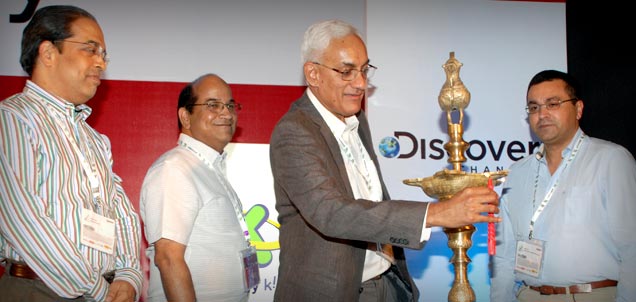
    The Discovery network is partnering Goafest for the fourth time and the focus this year is around Discovery Kids, its soon-to-be-launched channel for kids. MxMIndia speaks to Rahul Johri, Senior Vice-president & GM, Discovery Networks on Discovery’s association with Goafest (and of course Discovery Kids and how he is looking forward to digitization).


    On partnering Goafest in 2012

    Goafest is a landmark event of the industry and this is our fourth year of participation in the event. The who’s who of the industry congregates here for co-sharing and exchange of ideas and solutions. It has grown in stature over the past years – the quality of speakers it attracts, the kind of discussions that take place…it has gotten better every year and that is why we are excited to partner such an event. The focus of what was said today was on good quality content and we are one of the biggest content producers in the world. It is good to hear speakers deliberate on how content is playing an integral role and is at the core of everything that we do.


    On the age of digitization

    The onset of digitalization presents an opportunity for niche networks to come in and therefore you see our channels like Discovery Science, Discovery Turbo or Discovery HD…these channels really thrive in a digital environment where they are not limited by capacity constraints of analog cable and we are really looking forward to digitization.


    On Discovery’s stride in India

    We have just announced the launch of Discovery Kids a few weeks ago and that has been a big move for us. Discovery has grown rapidly in the past one year. In the last three years, we have gone from three channels to eight channels, from two languages to five languages…so we are growing very rapidly and this year it is going to be all about Discovery Kids.


    Click here to view all Goafest 2012 stories


  • We need to stop ranking ideas: Jayant Murty

    At the Advertising Conclave, Jayant Murty, Director of Strategy, Media and Integrated Marketing, Asia Pacific Region, Intel Corp presented his ideas on building brands in the era of multiple degrees of freedom. MxMIndia spoke to Mr Murty to gather his perspective on the festival and the role that marketers can essay at such events.


    On Intel’s association with Goafest

    A few of us, marketers, were invited here to share as to where do we think brands need to head and the kind of communication support it needs to get there. According to me, this is not a place to lecture but to engage in meaningful dialogue. Any speaker who speaks at such forums is good when they can bring in something radical and controversial that you can start a new kind of conversation. I am viewing this as: can I, as an individual, bring in something that can start a new conversation.


    On digital as a way of life

    One of the talking points today was digital and I do not think consumers look at life as being analog or digital or television or web. I think consumers are looking at things that inspire and interest them and it is up to marketers to figure at all points of time which medium will deliver that inspiration. What is important is that consumers, at any point in time, deal with multiple screens – computer, tablet, phone, television and the newspaper and as long as you understand and respect the fact that consumers have different expectations and you build content to make that screen as engaging and inspirational as possible, I think that’s what brands need to strive for in the future.


    On the power of an idea

    I think what we all need to do is stop ranking ideas. I do not think anybody can say that this idea is better than the other one. That’s because a great idea from one industry looks a little bit different from a good idea from another industry. And some, unfortunately, look fashionable and sexy than other ideas. I think it would be better if we stopped rating ideas. But what one must do diligently with all the ideas that we implement is see how they fared. Did people engage with them, did it build new fans, did it start conversations…and I think we need to become more analytical in our analysis rather than this public sentiment that this is a great idea and this is an average idea.

    Click here to view all Goafest 2012 stories

    Click here to view all Goafest 2012 stories