Author: mxmadmin

  • Television Street Maps (TSM) expands coverage

    By A Correspondent


    TV Street Maps (TSM), What’s-On-India’s newly launched television channel distribution & connectivity monitoring vertical has just announced its aggressive plans to expand its National coverage. TSM recently increased its footprint from 750 head-ends to more than 1000 head-ends spread across 450 towns, up from 220 towns.


    “Our goal is to create the widest & largest TV channel distribution monitoring system in the market, and with this latest expansion we have achieved that!” said Joydip Kapadia, Executive Vice President, What’s-On-India.


    The move to go aggressive on ‘TV Street Maps by What’s-On-India is considered strategic, especially in the context of dramatic changes expected in the distribution side of the TV business over the next couple of years due to the digitalization regime being introduced by the government.


    Given this ground reality, TSM has plans to reach a scale of 3000 head-ends by the year end spanning more than 2000 towns including key less-than-class-1 towns (LC1 markets).


    TSM covers day-to-day TV channel monitoring for availability, frequency & changes by head-ends & towns. Its current coverage is 1000+ analogue & digital head-ends across 450+ towns and cities. Mapping includes DTH, Analogue Cable and Digital Cable. Other services include vicinity connectivity, Flash Street News, dispute resolution.


  • FMCG players upbeat after Q4 sales boom

    By Ratna Bhushan & Sagar Malviya


    Consumer goods companies and retailers expect a spurt in demand this fiscal, buoyed by indications of better-than-expected earnings in the January-March quarter backed by a revival in consumer sentiment.


    Analysts expect all leading FMCG companies to post strong results in the fourth quarter ended March and maintain their margins in the current fiscal, even as gung-ho investors have pushed shares of most companies to their 52-week high on the Bombay Stock Exchange this month.


    “The last two quarters seem to have stabilised in terms of consumption though there have been price hikes,” said A Mahendran, MD, Godrej Consumer Products. The maker of Cinthol soap and Good Knight mosquito repellant expects its fourth quarter earnings to be better than analyst forecasts of 16-22 per cent increase in revenues.


    Growth in FMCG product sales signals revival of consumer sentiment over 2011 when market growth slipped to 8 per cent from 12 per cent the previous year.


    Companies now look to ride on high-margin products, rural demand and innovations to maintain the growth momentum without taking a hit on their margins.


    NO DOWN TRADING

    They are buoyed by the fact that there is no significant indication of down trading, or the trend of switching to a cheaper brand due to price increase, by consumers despite 5-10 per cent increase in prices of daily use items like soap, toothpaste and hair oil. “We have not seen downtrading,” Anand Burman, chairman of Dabur India, which makes Vatika shampoo and Amla hair oils, said. He added that a combination of rural consumption and growth from mass-priced products in urban markets were triggering demand for Dabur’s hair care and oral care products.


    But Harsh Mariwala, chairman and MD of Marico Ltd, which makes Parachute hair oil and Saffola edible oils, warned that margins may remain under pressure. “We expect healthy top line in continuation of the previous quarter…in terms of bottom line though, margin pressures will remain because of fluctuating raw material costs and complex global cycles,” he said.


    Prices of menthol have shot up 40 per cent over the past two months, while palm oil prices have surged 10 per cent in the last one month. But analysts expect margin pressure to ease with innovation gaining centrestage. Then companies will gradually increase their advertising and marketing expenditure, Edelweiss Financial Services research analyst Abneesh Roy said. “We expect margins to begin slow northward trajectory in the coming months as raw material prices cool off and rupee depreciation reverses,” Roy wrote in a report early this month.


    APRIL BOOM

    The country’s top retailer says that retail sales have picked up speed in the past two weeks and expects healthy demand to continue in the next two quarters. “While the January-March quarter was good and grew better than the same period last year with most retail segments growing by high single digits, we are seeing an upsurge in sales in the last two weeks across all formats,” Kishore Biyani, chairman of the country’s largest organised retailer Future Group, said.


    He said there is an upsurge in sales of even consumer durables April onwards, adding that Pantaloon, Big Bazaar and Home Town have witnessed high double-digit growth. Apparel, toys and footwear retailer Lifestyle International’s MD Kabir Lumba said its sales grew the most in the fourth quarter. “We have seen a lift from the lower trading conditions of September to November. While we grew 22 per cent overall last year, the fourth quarter grew faster,” he said.


    DURABLES STRUGGLE

    Makers of home appliances such as fridges and ACs are, meanwhile, reeling under the double whammy of late summer as well as price hikes. AC sales were down by 30-35 per cent year-on-year during the quarter, while there has been a marginal 3-5 per cent growth for refrigerators. “The overall market is down due to sluggish sales of cooling products. Temperatures are yet to rise to induce AC purchases, while the price increase for input cost and excise too have been a big dampener,” Kamal Nandi, VP (sales and marketing) at Godrej Appliances, said.


    Prices of products have gone up by 10-15 per cent due to input cost hikes, upgradation in star ratings for energy labelling and increase in excise duties in the Budget.


    While consumer sentiments had improved during the Republic Day period in January due to aggressive discounts and promotions by retailers, sales were muted in February and March. Whirlpool VP (corporate affairs and strategy) Shantanu DasGupta, however, said the new fiscal year has started in positive note. “April has started off okay, but it is early days yet,” he said.


    “Individual companies may be growing, but that’s not due to demand. Instead, it’s led by innovation in new launches and distribution gains,” Mr DasGupta added. Electronic firms are now betting more on LCD and LED televisions, washing machines and microwave ovens for growth.


    “Flat panel televisions continue growth momentum since this category did not see any significant price changes this year,” Samsung VP (audio-visual business) Raj Kumar Rishi said. Samsung expects sales of summer products like AC and refrigerators to gather momentum in the second quarter.


    (With inputs from Writankar Mukherjee and Sarah Jacob)
    Source: The Economic Times

    Copyright © 2012, Bennett, Coleman & Co. Ltd. All Rights Reserved


  • Digital is the way to go, but…


    By Robin Thomas


    Consumers in India are evolving rapidly from print and radio to television and now digital. Just when you thought that digital was all about display advertising, bulk SMS, search, email advertising and online classifieds, in came the social media, video advertising, smart phones, tablets, apps, mobile advertising and so on.


    According to industry estimates there are 120 million internet users in India today, of which almost 30 per cent are from small towns. While India’s broadband internet penetration is still low, it is believed that the next phase of growth in internet will come from mobile users which are estimated to be over 800 million.


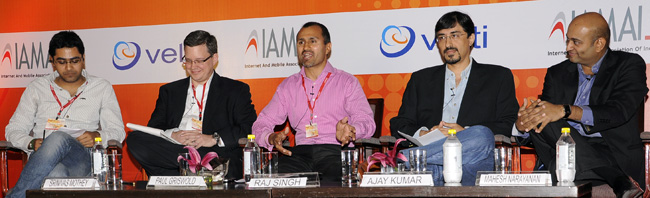
    As more and more youngsters gain access to various digital platforms, there is a greater need for marketers to not only engage the young consumers, but they must also be able to give them a unique experience across the digital platforms. The IAMAI (Internet And Mobile Association of India), which held its 8th Marketing Conclave, 2012 – ‘Digital Marketing 3.0’ on April 13 in Mumbai, extensively discussed the role of social media, video advertising and mobile advertising in the near future.


    Using Social Media:

    Today most companies have multiple social networking sites – Facebook, Twiter, LinkedIn and others. There are separate teams handling social media marketing for the company, but, are brands listening to their consumers? Do they interact and respond to queries and complaints? Do marketers understand the social media and know how to monetize it? Or are brands simply satisfied with the number of ‘Likes’ and views they generate on their social networking sites?


    Karthik Nagarajan, National Director, Social and Insights, Group M was of the view that unless one is not ready and mature enough as an organisation for the medium, the organization must stay away from social media.


    According to Usha Sangwan, Executive Director, LIC India, what brands lack today is the courage to be transparent, they don’t respond to negative feedback and fail to turn the customer as an advocate of their product. “Brands must not see social media as a mere marketing tool and limit to generating numbers alone, but social media must be used mainly for connecting with the TG and co-creating the product. Brands must try and understand their TG and become a part of their customer’s day to day life.”


    Virginia Sharma, Chief Marketing Officer, IBM India hit the nail on the head by stating that brands must have the ability to admit their mistake and apologise to the customer. She admitted that while there is a certain amount of fear among brands to apologise for a mistake committed because it may lead to negative public opinion, but felt it is always better to apologise and rectify the mistake which could lead customers to becoming an advocate of the brand.


    Vinay Bhatia, Customer Care Associate and Vice President Marketing and Loyalty, Shoppers Stop added that it a company’s reputation is harmed only when it fails to act responsibly to a complaint made, and not when it apologises for a mistake and tries to rectify it. “The problem with the companies today is that they make policies as if the consumer is a criminal. Accepting a feedback and acting upon it will not harm the brand but, if one chooses to remain silent about a complaint, that’s the worst one can do to his brand.”


    Leveraging Mobile Advertising:

    Besides the social media, mobile advertising is another challenge faced by marketers who have more or less failed to leverage the small screen. Sadly, mobile advertising is largely limited to only SMSes. Marketers are said to often mistake mobile as an extension of broadband internet and as a result they fail to give their consumers a unique experience on mobile.


    Speaking from a marketer’s point of view, Ajay Kakar, CMO, Financial Services, Aditya Birla Group stated that although the potential for mobile advertising is high, there is still a section of people who have not seen the mobile as an opportunity. He added that mobile industry must follow the ‘Jo dikhta hain, wahi bikhta hain’ policy and evangalise the benefits of mobile advertising. “Content is very important, don’t tells me about your brand, but tell me what’s in it for me? Give me the case study of successful mobile advertising. What I want to know is how much money mobile advertising is making for my brand and for my business? What you must do is to stop saying ‘buy me, buy me’ but, instead tell me ‘why me, why me’?”


    With the introduction of 3G and now 4G services, mobile internet is expected to be faster and with high quality content, better mobile applications, much better video and much more. In addition to these, smart phones and tablets are also said to play important roles in the growth of mobile internet in India.


    Mahesh Narayanan, Country Head-Mobile, GoogleIndiasaid that there is not only lack of understanding about mobile advertising, but also lack of discussion about mobile as a medium in board room meetings. “The consumer shift is already happening from traditional media to mobile; however, great amount of content for mobile is yet to be created. People are looking for your brand on their mobile phones but, ironically brands are absent on mobile.”


    While mobile subscribers will continue to grow and more people will access internet through their mobile phones, the challenge lies in monetizing the medium and to find newer ways to reach out to consumers besides SMS advertising.


    Paul Griswold, Director Product Management, Mobile Marketing, Velti was of the view that mobile is not treated as an integrated part of marketing strategy, but is seen as an extension to online. “There has been a failure to take the advantage of the one on one interactivity mobile offers and just sending SMS is definitely not the way.”


    The participants outlined not only the problems but also possible solutions. According to Srinivas Mothey, Head Mobile Marketing and Advertising, One97, the first step is to educate advertisers and agencies about the benefits of mobile advertising. Although every advertiser may have a different view about the medium, nevertheless they need to be encouraged to invest in mobile. “We are also encouraging advertisers to create mobile assets and not just mobile apps. We are beginning to see the positive results but, in order to see more results, it may take some more, but the first step needs to be taken.”


    Video Marketing:

    Video advertising/ marketing is not a new phenomenon for marketers. Traditionally, marketers are said to be comfortable with video and we have been seeing that on television, and will probably see the same, and in a much bigger way, online and on mobile in the near future.


    According to Debadutta Upadhyaya, Vice President, Vdopia Media, there has been over 50 per cent growth in video consumption in the last one year alone, the fourth largest globally. “Unlike other countries,Indiahas made the leap from web to email to social media and now video. There is still a long way to go on the creative aspect because the primary advertising medium of a creative agency has always been television, so creativity in video advertising is bound to take some time.”


    As India’s broadband penetration and mobile internet accessibility increases, it would be just a matter of time when video marketing would explode inIndia. Besides online, with 3G and 4G services, video consumption on mobile should be an altogether different experience for users and marketers.


    But Shubhranshu Singh, Marketing Director-IndiaandSouth Asia, Visa cautioned: “There is a difference between video on web and video on mobile, and the difference between the two is galloping ahead in terms of content. Perhaps the youngest audience in our country today will watch television online for the first time which could be an opportunity or a threat if we are not ready for it.”


    Digital marketing in itself has become 360 degree for marketers. It has gone beyond display and banner advertising, to becoming more interactive and innovative to reach out to consumers. Digital marketing, as the industry players pointed out, is in a transition phase from web, to email and now brands are trying to reach out to their customers through social media, mobile and video.


    Marketers must stop considering mobile internet as an extension to online and, therefore, give mobile users unique experience of mobile advertising. Social media must not be seen as a mere marketing but, a medium to interact with their consumers, know their behavior and be a part of their day to day life.


    Brands must be receptive to both positive and negative feedback of customers, admit to their mistakes, apologise to the customer and rectify the fault. Digital marketing will undoubtedly grow but, marketers must first be evangalised not only about the benefits of the medium but, also ways and means to leverage it.

    Imaging: Rafiq

     

  • Young changemakers talk about Change

    By Insiyah Rangwala


    The Young Changemakers Conclave (YCC) 2012 was held on April 14 at the US Consulate, Mumbai. Organized by Samyak Chakrabarty, Managing Director, Youth Media Group and team for the United Nations Information Centre forIndia and Bhutan (UNIC), in collaboration with the US Consulate General, and presented by UTV Bindaas, the Conclave which is in its second year, was being hosted in Mumbai for the first time. The key focus point of the Conclave was ‘Role of Youth: Transforming Dialogue To Action’.


    The Conclave was attended by 200 young individuals between the ages of 18 to 35 who were selected from diverse backgrounds of the 5000 who applied, to attend this near-day-long event to discuss, deliberate and confer on a wide array of topics while engaging with current day leaders and started off with an address by Mr Peter Haas, US Consul General, who talked about how change wasn’t meant to be easy.


    Thereafter a diverse and interesting list of dignitaries addressed the gathering:

    > Mr Suhel Sheth, Managing Partner, Counselage who talked about change being internal and about understanding yourself and changing yourself before the world.

    > Mr Arnab Goswami, Editor-in-chief, Times Now, spoke about how the fear of exposure is what leads to making people want to control the media and how that is a change that should be stopped

    > Mr Agnello Dias, Founder, Taproot spoke about creativity in finance and business.


    Other speakers included Mr Sanjay Nirupam and Mr Anurag Singh Thakur, both Members of Parliament who spoke about the importance of educating the youth about politics, and a mix of celebrities from the arts and cinema, sports, advocacy and hospitality. Masaba Gupta, Leander Paes, Rahul Akerkar, Rajeev Samant, Laxmi Narayan Tripathi, Asin Thottumkal, and Awista Ayub, Director, South Asia Program for Seeds of Peace, all of who spoke about their respective journeys to make a change in their own way. Musicians like Vishal Dadlani spoke about using music as an instrument for social change and how it is easier to sneak in a message through music. The event ended with a vote of thanks by Mr Keith Alphonso, Business Head, UTV Bindaas.


    Keith Alphonso, Business Head – UTV Bindass, talks to MxMIndia about what he defines as a changemaker, the channel’s new look and plans for Bindass

    The word change maker is used a lot nowadays. What do you, and the company, think is a change maker?

    Well, Bindass has always been about change. If you look at the brand, it has changed. This country is on the threshold of an immense amount of change across a variety of levels. I really think that for young people, success is a religion and achievers are their gods. Those who have taken the plunge beyond what society told them, they are the heroes for the kids today. Their achievement is what has identified them as a hero.


    Who do you believe are the three top Indian changemakers?

    A: I think it would be a gross injustice to name just three. The only thing that comes to my mind isIndiaitself, and the fact that there is a majority of young people today who are heroes. These are the kids who are going to drive the change, so there maybe 3,000 heroes in small towns who actually go out and do something to make a significant difference to the big guys you see on stage. I think it is the spirit of change that exists among the kids today that will be the changemaker.


    Bindass has changed their logo, so any comments about the new look.

    This is the third change we are going through because the audience changes at a supersonic level, there is no such thing as a steady state, especially when dealing with young people. The new look is about the change, so the new tag line- Restless – is about change. It’s about the fact that there is so much opportunity out there, that if you get up and do it now you will succeed and that is the message we want to take across.


    Future plans for Bindass…

    To start with the idea behind the new logo is that we celebrate the fact that ‘If you rest less rather than sitting ideal you will be successful and you will achieve’. We want to empower that transformation. We have several platforms through which we want to do it – we have two blockbuster shows coming up: Live Out Loud and Fearless. The brand is all about helping you change, helping you make that move to the better life. On ground we have got a whole string of activities- there is Campus, we’ve got something called the Bindass Buddies, a contact program which helps people get admission to college because that’s a huge problem for a lot of people. We’ve got a 5 city music tour that we are doing. So, the idea is not to do a couple of shows and just be happy. We are looking at the Young India and where we can make a difference.


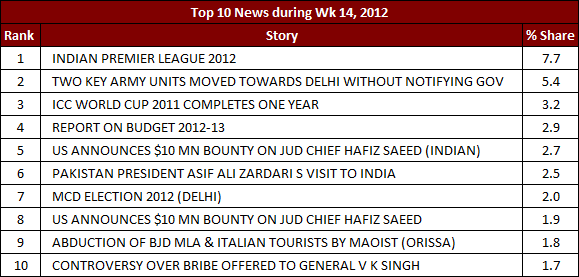
  • TAM NCT Data Wk 14 ’12


    Source: News Content Track – A service of TAM Media Research Pvt. Ltd
    Channels: Aaj Tak, CNN IBN, Headlines Today, IBN 7, India TV, NDTV 24/7, NDTV India, Star News, Times Now, News 24 & Zee News
    Period : Week 14 – Apr 1 to Apr 7, 2012
    Note : Analysis is based on the Telecast duration


    About TAM Media Research

    TAM is a joint venture between Nielsen Company & Kantar Media Research. Besides measuring TV Viewership, TAM also monitors Advertising Expenditure of Television, Print & Radio through its division AdEx India. Since 2004, it extended its presence in the PR Measurement & Analysis space for Corporate/Marketing Clients by setting up a separate division Eikona PR Measurement.


    In 2007, the joint venture introduced RAM (Radio Audio Measurement) service to track Radio Listenership for the Indian Radio Broadcast Industry. In year 2009, TAM launched a division, called TAM Sports that specializes in monitoring Sports Sponsorship ROI.


    TAM Media Research’s objective is to fuel media insights that will drive the growth of the Indian Media Industry.

  • [MJR] Mamata’s antics dominate the news

    By Ranjona Banerji


    The strange doings of West Bengal chief minister Mamata Banerjee continued to dominate print, TV and social media. The arrest of a Jadavpur university professor for forwarding a cartoon about her was compounded by news of another arrest of another professor for protesting on behalf of slum-dwellers in Kolkata. On Times Now, one lone “sort of” Trinamool Congress-Mamata Banerjee supporter said yes, but, maybe, should not, but. In print, edits and edit page pieces have consistently made fun of her and social media has of course been rife with criticism.


    It is also true that a lot of this anger is middle class rage which does not always translate but it is interesting nonetheless.


    Mumbai newspapers were not unnaturally taken up with Monday’s autorickshaw strike which crippled the suburbs. In the north, it was the chief ministers’ conference on matters of “federalism” and their general beefs with the Centre. Beef is the wrong – or is it right? – word to use here as a “beef-eating festival” organised by Dalit students at the university in Hyderabad has led to near-riot conditions with the right wing Akhil Bharatiya Vidhyarthi Parishad objecting.


    The Taliban attack on Afghanistan was an important part of the news cycle. The last couple of weeks have been minus the sort of media hysteria which has gripped us recently. This means that news can get its normal play without being whipped up and re-packaged as end-of-the-world scenarios.


    * * *


    The murky underbelly of fixers and operators which trawl the paths of Mumbai’s hopeful newbies searching for money, fame and glamour has been exposed by the three murders currently in the newspapers. Intriguingly, the same people are somehow involved in three deaths or connected at any rate.


    Although the cases have got much coverage, thankfully the sort of breathless hysteria which has coloured cases like the Aarushi Talwar-Hemraj murders or the J Dey murder-Jigna Vora arrest has been missing here.


    * * *


    It was a joy to read about Nari Contractor by Makaran Waingankar in Tuesday’s Times of India in what appears to be a nostalgia series called “Bombay Boys”. Made a change from the sniping and/or hagiography about current players practised by some young sports journalists these days!


    * * *


    Also interesting in TOI is an interview with Google co-founder Sergey Brin about how apps are reducing web freedom! Since I am app-less am guessing I should celebrate my freedom!


  • Debrief: Flipkart: Clever and entertaining

    By Anil Thakraney


    Using kids as adults isn’t really a novel idea in advertising. But because it’s done well in this instance, ads from Flipkart are always great fun to watch. Flipkart is back with a brand new series of commercials, and the one I watched is quite funny.


    This time the theme is ‘Shopping ka Naya Address’. And it looks like Flipkart is out to nail folks in the non-metro towns as well with an old world Hindi film treatment. The ad features three generations of a family living together in a house. The grandson receives a pack via courier that contains a mobile phone which the grandpa has ordered. From Flipkart, of course. The boy’s father plays the cynic of the family, and he expresses doubts over online transactions. This makes his missus join in the conversation, and it all gets really amusing. As kids play elders, with all the make-up and expressions in place.


    [youtube width=”400″ height=”200″]http://www.youtube.com/watch?v=tt18PjLzNcw[/youtube]

    Good stuff. The ad will appeal to the non net savvy folks too, and this could result in a huge boost in sales for Flipkart. The execution isn’t slapstick or over-the-top, and that’s why it works. The humour is understated and this makes the ad charming. And the kids have simply rocked it.


    Rating: (On a scale of 1-5): 3.5 Smart marketing strategy. Cool creative work.


  • Now fans can own Deccan Chargers Team

    By A Correspondent


    Deccan Chargers, a popular IPL franchise on Monday announced a unique social media marketing initiative using Mojostreet (www.mojostreet.com) – a popular location based mobile game.


    The marketing initiative will allow fans to virtually own the Deccan Chargers team and watch the IPL matches from the Owners Lounge at the Hyderabad Stadium. This initiative will also reward the fans with discounts and freebies at more than 100 partner stores, which have partnered with Deccan Chargers.


    Making the announcement, Kalyan Manyam, CEO of Mojostreet said: “We are excited with the way Mojostreet is being used by brands acrossIndia. This unique initiative by Deccan Chargers will take the DC brand closer to its fans and increase engagement. I am sure Mojostreet users will be very excited to grab this opportunity to own the DC team.”


    E. Venkat Reddy, COO ofDeccanChargers said: “This is a first of its kind initiative in the world wherein a sports team is connecting with its fans virtually through a mobile game and rewarding them in the real world. We are confident this initiative will greatly contribute to the strong presence of the DC Brand in the digital world.”


    To virtually own the Deccan Chargers, a user needs to download Mojostreet on their smartphones (freely available on all major app stores) and then check-in at any of the partner outlets of Deccan Chargers listed on Mojostreet. Once a user completes a check-in, a special offer is delivered right on the users mobile screen.


    The same can be redeemed at the outlet in real-time. Users who check-in maximum at partner locations will get to virtually own the DC team and will get a chance to watch the matches from the Owners lounge at the Hyderabad stadium.


    Mojostreet (www.mojostreet.com) is a location based game, friend finder, city guide and loyalty rewards all rolled into one app for your smartphone. The app also helps one discover amazing places of their interest based on friend’s recommendations. Mojostreet has an online and mobile version. The mobile app is available for Blackberry, Nokia, iPhone and Android users. One can sign in with their Facebook or Twitter account to access Mojostreet.


    Deccan Chargers is an IPL franchise that represents the city ofHyderabadin the Indian Premier League. The Deccan Chargers franchise is owned by the Deccan Chronicle Holdings Limited. Deccan Chronicle is the largest circulated daily in South India.


    Deccan Chargers turned the tide in their favour by winning the second season of IPL -2009 inSouth Africaand making it to the semi-finals in the IPL-2010.


    The Deccan Chargers mascot represents a raging bull signifying strength, power and aggression while the red and gold bands on the flag stand for dominance and victory.


  • 92.7 BIG FM returns with the second edition of BIG Marathi music awards

    By A Correspondent


    Reliance Broadcast Network Limited’s intellectual property vertical BIG Live and its radio arm 92.7 BIG FM, the Golden Mikes’ Broadcaster of the Year, have announced the second edition of BIG Marathi Music Awards 2012 – the biggest celebration of regional music for the Marathi music industry.


    After the phenomenal success last year, the second edition of BIG Marathi Music Awards promises to be bigger, better and more glamorous this year. ETV Marathi will once again be the official telecast partner and STAR Majha has come on board as the news partner. A special one hour segment of the ceremony will be aired on STAR Majha.


    BIG Marathi Music Awards 2012 is a unique platform conceptualized to recognize, applaud, and honour the extraordinary talent from the Marathi music industry who have significantly contributed to the music industry. These awards will have nominations across a wide range of categories and will also pay tribute to legendary artists of the Marathi music fraternity who have contributed to growing the industry and inspiring talented young singers and musicians to excel.


    The esteemed list of jury members include classical vocalist Arati Ankalikar, Ravindra Sathye and Sudesh Bhosle. The jury, along with the public, will select the winners.


    A judicious mix of media including 92.7 BIG FM, OOH media and the social media will be pressed into service to promote this property. The Facebook page which will be specially created for this property will allow the online users to browse through the page, explore links, and upload videos or files in related categories and above all a special voting application to vote for their favorite nominee of the awards. In addition to all this promotion an SMS push for the event will reach out to 10 lakhs consumers directly.


    Reliance Broadcast Network Limited is a multi-media entertainment conglomerate with play across radio, television, intellectual properties and out of home. It is part of the Reliance Group and specializes in creating and executing integrated media solutions for brands.


  • Burson-Marsteller releases list of the most influential political voices

    By A Correspondent


    Burson-Marsteller, a leading global public relations and communications firm, on Monday released a list of the top 10 most influential political voices on Twitter inIndia. This list was developed as part of a global research study- G20 Influencers – that named the 200 most influential political voices on Twitter across the G-20 nations.


    G20 influencers is a study conducted by Burson-Marsteller, a leading global public relations agency working with Klout, the social media analytics company. The study aims to identify the ten most politically influential people on Twitter in each country of the G20. The study measures influence by using a tweeter’s Klout Score. Burson-Marsteller created a list of over 900 politically influential people on Twitter across 26 countries. This included politicians, journalists, bloggers, public affairs specialists, NGOs, and industry and trade associations. The data used for the study was taken in March 2012 based on activity over a 90-day period.


    The list of the top 10 political tweeters was determined using data from Klout (klout.com), the standard for influence. Klout analyzes engagement across social networks and creates a Klout score, based on this data to help users understand and unlock their influence.


    Burson-Marsteller’s global public affairs and digital consultants drew up a list of close to 1000 people on Twitter who are politically influential in the G-20 nations. Klout then assessed and scored them against its influence metric, set on a scale from 1-100, measuring influence based upon a user’s ability to drive action.


    The ten most influential Twitter accounts inIndiaare (alphabetically):


    1. Kiran Bedi – @thekiranbedi

    2. Anand Mahindra – @anandmahindra

    3. Narendra Modi – @narendramodi

    4. Derek O’Brien – @quizderek

    5. Vir Sanghvi – @virsanghvi

    6. Jonathan Shainin – @jonathanshainin

    7. Digvijaya Singh – @digvijaya_28

    8. Dr. Subramanian Swamy – @Swamy39

    9. Sushma Swaraj – @SushmaSwarajBJP

    10. Shashi Tharoor – @ShashiTharoor


    “The G20 study is representative of how social media is an increasingly trusted and utilised platform for shaping public opinion here inIndiaand around the world,” said Rahul Sharma, president of Genesis Burson-Marsteller’s public affairs practice. “Citizens are not just seeking new information, but looking for a forum through which their voices can also be heard. Twitter is definitely becoming a preferred medium for delivery and discussion of new ideas, policies and whatever else that is the shaping the political and social landscape.”


    The study found that the top political tweeters inIndiaare politicians, journalists, bloggers and campaign advisors. The study found that over a 90-day span these influencers: received an average of 28,110 re-tweets; received an average of 24,600 mentions and had an average of 337,964 Twitter followers.


    The other countries covered in this study include Argentina, Australia, Brazil, Canada, China, France, Germany, India, Indonesia, Italy, Japan, Mexico, Russia, Saudi Arabia, South Africa, South Korea, Turkey, United Kingdom, United States and the European Union (including Latvia, Netherlands, Poland, Portugal, Spain and Sweden).


    Burson-Marsteller, established in 1953, is a leading global public relations and communications firm. It provides clients with strategic thinking and program execution across a full range of public relations, public affairs, reputation and crisis management, advertising and web-related strategies. The firm’s seamless worldwide network consists of 69 offices and 80 affiliate offices, together operating in 107 countries across six continents.


  • The Anchor: 6 things to keep in mind while looking for discounts online

    By Rama Jamili


    Investing our hard-earned money is very important, especially when we want to buy something tangible. Nowadays, people are worried when it comes to online shopping. But we can’t ignore the fact that online shopping gives us more discounts and privileges to get the right products into our homes, even without stepping out of our doors. Price is the primary factor when we do online shopping. Here are 6 things to keep in mind when we go for discounts online.


    1) Quality:

    While purchasing any product, quality of the product is of prime importance for the customers. Hence, maintenance of quality of each and every product is valued more by the online retailers, because we are more focused on retention of customers. Description and specifications of the products can be checked before selecting any product. If the buyer is not satisfied with the quality of the product, they can first check the product and then only buy it. Online shopping also has options of cash back in case the buyer finds any damages or faults with respect to the quality of the product.


    2) Time period for product delivery:

    Delivery of the product within stipulated time is another important factor while shopping online. Many websites offer buffer delivery time, like delivery can be made within 2-3 working days, but the product reaches the customers within a day, which definitely creates a good impression in the buyers’ mind. In today’s busy world, where people don’t have time to go out and shop, online shopping is the best option for buying/sending gifts for birthdays/anniversaries and so on. Online shopping with discounts and proper delivery of the product attracts more Indian customers.


    3) Variety of products:

    More discounts will be available when wide variety of products is offered in online shopping. The advantages are, first, it attracts more customers as there is choice. Second, online retailers provide an option to compare prices of different brands or different models.


    4) Guarantee/ Warranty:

    The next big question for most of the buyers, if they are buying discount products online they are not sure of ‘guarantee /warranty’ of the product. Despite mentioning about the products warranty, for example if it’s a mobile then the warranty period will be mentioned. All customers should check the warranty and provide proper email id so that there is always a proof with them about the product. Still, if the product bought online has any defects; the product can be repaired or exchanged.


    5) Mode of payment:

    Another important factor is mode of payment for the products purchased online. Some people are worried about the quality of the product or what if it is damaged or if they buy a fake product. This fear can be removed by inclusion of Cash on delivery (COD), which is the most preferred option. Other options available are Credit card, debit card, VISA and others. Easy refundable clause is also prior concern to the customers.


    6) Free shipping:

    Free shipping is another factor which buyers generally look for to save cost. Shipping cost would again add up more to the amount paid for particular product which generally bothers the buyers. Online websites providing free shipping attracts more buyers to discounts of products where retailers are making it easy for buyers to shop online.


    Rama Jamili is the Director of Fopping.com