Author: mxmadmin

  • Incredible India back with Ogilvy

    Ogilvy Delhi has been awarded the Ministry of Tourism (Incredible India) creative business. The business win is an outcome of a  multi-agency pitch from among agencies across India. Piyush Pandey, Executive Chairman & Creative Director, Ogilvy South Asia, said, “I am absolutely delighted that the Incredible India campaign that we had launched in 2003 is now back with us. We look forward to doing some incredible work for India Tourism.”


    With this win again, Ogilvy’s mandate over the next three years is to provide a strategy and creative vision. This should align with and take Incredible India to the next level in both, the domestic and international markets.


    Sanjay Thapar, Group President – North & East, Management, Ogilvy & Mather, New Delhi, said, “Building a Brand for the country is probably one of the highest honours that any agency can be given and I am so happy that we have received this opportunity once again for India. We launched Incredible India when the journey first began and will now partner the Ministry of Tourism to take it to greater heights again. This is probably one of the best things that could happen to us at the start of 2012.”


    Ogilvy India has established its capabilities in the tourism sector having created very laudable campaigns for MP Tourism, MTDC (Maharashtra Tourism Development Corporation), Gujarat Tourism among others. Ogilvy Delhi is currently handling J&K Tourism and has been empanelled with HP and Rajasthan Tourism in the past.


    Tourism is the second largest foreign exchange earner in India. Besides being an economic driver for growth. Tourism promotes national integration and international brotherhood. India’s thousands of years of history, its length, diversity and the variety of geographic features make its tourism offering interesting, large and varied.


  • Anil Thakraney: Save the attitude, kids

    ‘By Anil Thakraney


    As part of my journalistic job that covers all beats including movies, sports, politics, crime, etc, I have to often deal with young people. I also conduct guest lectures at various colleges and institutions, which gives me an opportunity to interact with youngsters. And I really enjoy these meets, it gives me a chance to discover first hand what Young India thinks and feels. And while I admire the ambition, the adrenalin and the energy, I also get alarmed when I notice young people with what we often disparagingly call an ‘attitude problem’. The belligerent, arrogant, ‘I know it all’ outlook on the world. The attitude that reflects scant respect for seniority and experience. For just about anything, for that matter.


    Usually, this attitude appears pretty cute and cool. After all, who wants our young people to be subservient, low self-esteemed and unconfident? That’s so damn boring! We want our guys to be bubbling with passion and the ‘can do’ spirit. However when the ‘attitude problem’ is taken to an extreme level, it can get very infuriating and off-putting.


    Without intending to be preachy, here’s a word of advice for Gen X: While it’s great to have an attitude, it must be channelized into your work and NOT into your interpersonal interactions. Also, while attitude should reflect confidence in one’s abilities, it becomes self-defeating when it extends to closing one’s mind to other people and other ideas.


    Let me illustrate this with some examples. Both Sachin Tendulkar and S Sreesanth have an ‘attitude problem’. While Sachin employs that attitude into his batting skills, Sreesanth uses it to provoke and offend his rivals and teammates. Whom do you respect more? Who of the two will achieve more in life? Who do you want to be like? Only you can answer these questions.


    Here’s another one: If Hrithik Roshan throws attitude at you, how will you react? And if Harman Baweja does ditto, how will you react? Chances are, quite differently. Perhaps it’s a good idea to prove your worth, do something substantial in life, before baring your fangs? Bad attitude display from a nobody, a non-achiever, is even more difficult to deal with. And if you are wondering who Harman Baweja is, then that only proves my point.


    Finally, I am quite aware a few of you, after reading this piece, will react with: “Oh, come on man, who the hell is this old fart to tell me what I should do and think? I know my shit and don’t want an uncle to lecture me.”


    Well, okay, it’s your life after all. Good luck!


    ***


    [youtube width=”400″ height=”200″]http://www.youtube.com/watch?v=mEsnb3kUDAw[/youtube]

    PS: Crew members of Finnair celebrated India’s Republic Day with a bit of dance and masti. And the video has gone seriously viral. I am quite certain the top bosses at the airline wanted exactly this to happen. I’m not sure how kicked they were about January 26th, but they must be really happy with all the free publicity. Think about how many more people know of Finnair now. Good work.


  • FM Radio rocks in South India… and how!

    By Robin Thomas


    The FICCI-Deloitte report on Media and Entertainment in South India says that radio in South India will grow with a CAGR (Compounded Annual Growth Rate) of 20 per cent by 2015. The reach of FM radio is said to be far higher in South India than its counterparts in other parts of the Country. According to Ms Nisha Narayanan, Senior VP Projects and Programming Red FM, South India has 28 per cent share of existing radio channels and it will have 28 per cent representation in FM phase III as well.


    Besides the larger FM stations like Red FM, Big FM, Radio Mirchi and Radio City, there are many local or smaller FM stations as well, such as Radio Hello, Club FM, Best FM, Suryan FM and Radio Mango, to name a few. Unlike the North, FM radio stations in the South play music in multiple languages as prominence is given to the local language. Big FM for instance plays only Kannada music in Bengaluru whereas in Hyderabad it plays Telugu and Hindi music. Club FM, a Kerala-based FM station, plays mainly Malayalam music with a mix of Tamil and Hindi music whereas Red FM in Andhra Pradesh mainly plays Telugu.


    Rabe T Iyer
    Nisha Narayanan

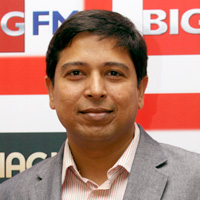
    Rabe T Iyer, Business Head, Big FM, the radio arm of Reliance Broadcast Network was of the opinion that compared to the rest of the country, the reach of radio in south India is much higher. Mr Iyer was also quick to point out that in some key markets like Bengaluru, Chennai and Hyderabad the reach of radio is significant, higher than most news channels, and is on comparable terms with leading GECs.


    “Given the inherent strengths of the region backed by a strong film and music Industry, added to its rich cultural diversity, it is not surprising that radio in South India has relatively higher penetration than other regions. The south of India has done some innovative radio over the years. It continues to be a huge focus area for all players given that it has three big metros which are important from both listenership ratings and revenue perspective,” he added.


    Nisha Narayanan of Red FM said, “South has been an integral part of radio and its growth in India. Radio is more close to people’s lifestyle here than any other part of India. Radio Ceylon had created a strong base for radio even before the advent of FM radio in India. FM radio penetration is the highest in South India, particularly in Tamil Nadu. In the long term, obviously there is tremendous growth and we are in the early stage of that growth.”


    Shaan Menon, Manager Content, Club FM noted, “FM in South India is going to take a huge leap as it is waiting for the next bidding. Even the smaller cities and small townships in Kerala will get a chance to taste the feel and warmth of FM culture. South Indian film music is the strongest music industry in terms of production. Although CD sales are deeply affected due to rapid downloads, FM industry is full of the new genre of music and music directors.”


    Challenges and Opportunities

    Some of the key advertisers in the south are retail, textile, jewellery, real estate, hospitality, FMCG, consumer durables etc. Big FM claims its advertising and content ratio to be 1:4, while Red FM says it plays 45 minutes of music and 15 minutes of ads every hour during off peak season whereas in peak season the inventory time is slightly more. One of the reasons why radio is said to be doing well in the south is because of its strong regional film and music industry. “Given the diversity, there is tremendous potential for localization which radio can capitalize on and deliver. The opportunities to create a unique brand identity in this market are immense,” explained Mr Iyer.


    He further said, “A challenge any product faces in its life cycle is finding the ‘differentiating quality’ after the market matures. The same applies to the radio industry and its many players. With a market that has matured and grown manifold and poised to grow further, novelty and innovation in content will be a key component for success and will decide further growth of the category.”


    Ms Narayanan on the other hand observed that time has come for radio to look for new revenue streams. She was also of the view that radio stations must experiment beyond the traditional programming formats, and that music royalty still remains a challenge. “Content has to evolve a lot as most of the programming strategies are music based. We are still into traditional programming formats and the time has come to take it to the next level. The ability to create new revenue streams is ideally needed at this hour, as the only source of revenue for radio stations has been advertising sales. Music royalty is another area of concern as we pay needle per hour, whereas the international markets follow the revenue sharing model. These are the challenges faced nationally too.”


    The road ahead

    The much awaited FM Phase III policy seeks to extend FM radio services to about 227 new cities. Phase III will cover all cities with a population of one lakh and above, simultaneously there will be a total of 839 new FM radio channels in 294 cities. The local players in particular expect to further expand their radio station into the southern markets. However, one of the possible challenges after FM phase III is launched could be to attract listeners to the medium and then to sustain its listenership.


    Mr Iyer of Big FM observed, “We foresee huge growth in the radio industry in the coming years. There will be more stations leading to more innovation in content and communication. This will result in more revenues and hence more profitability for all players.”


    Ms Narayanan remarked, “South India has 28 per cent share of existing radio channels and it will have 28 per cent representation in phase III as well. Radio will be a national medium and the true mass medium with the number of channels coming in Phase III. In the south 75 to 80 per cent of the licenses are for the ‘D’ and ‘C’ cities which will be a great boost for advertisers as a medium breaking across demography.”


    Mr Menon stated, “The challenge during FM Phase III is to convince the small town public that FM radio is equally or more entertaining than TV. It will be difficult to make them taste the sample, but the current popularity of FM industry in the main towns will definitely help to fight the difficulty of convincing the new public.”


  • Given India TV sting, EC warns parties on unfair practices

    By A Correspondent


    A sting – Operation MLA – telecast on India TV on January 26 which alleged that some candidates belonging to various political parties are procuring bribes from corporates, allegedly for the purpose of their election expenditure in the forthcoming Uttar Pradesh Assembly elections, has drawn the Election Commission’s attention.


    The sting also telecast that such persons, aspiring to be candidates from various political parties, have admitted that their election expenditure will be between Rs1-3 crore, which includes expense in the name of dummy candidates, liquor for the electors and other expenses.


    The Commission, taking serious note of the contents of this sting operation, called for the transcript. After considering the transcript, the Commission has taken the following decisions and measures:


    1. Any attempt to obtain or procure gratification for exercising any electoral right, including right to stand or not to stand at election, is offence of bribery under IPC. Therefore, the DEOs have been asked to file complaint against the persons who were seen to be involved in such acts for the offence. (If convicted by the court, it may result in imprisonment up to one year or fine, including disqualification for continuing as MLA, if elected, and also from contesting any election in future).


    2. The Commission has reiterated its appeal to all the political parties, whose functionaries are named in the sting operation, to inquire into the matter and advise all their functionaries to refrain from such activities in the current elections.


    3. The Commission has reiterated its stand that such bribery under the IPC should be made a cognizable offence. The Commission has once again approached the government to pass an ordinance to make suitable changes in the law, as the matter is quite serious.


    4. Besides the above, the Commission has given strict instructions to all election officials in Uttar Pradesh that any such attempt to bribe any elector during election process should be dealt with firmly. The entire liquor production, sale and distribution shall be monitored everyday and any illicit liquor shall be seized. Movement of unaccounted cash in the constituency is to be monitored and seized. If any person raises funds in cash as mentioned in the sting operation, the Income Tax department has been alerted to deal with such donors firmly and investigate about the source of such bribe money.


  • Ad Strat: No kidding with Flipkart

    Kartik Iyer, CEO, Happy Creative Services


    Name of the Campaign/Ad:

    No Kidding. No Worries. – Flipkart.com


    The Brief :

    To convince people that it was safe and hassle-free to shop at flipkart.com. In short, build trust for the brand.


    [youtube width=”400″ height=”200″]http://www.youtube.com/watch?v=QZ47GDgTWGg[/youtube]

    Research insights


    We found that there were two categories of people we needed to speak to:

    a) Those who were already transacting online for tickets on sites like IRCTC and travel sites, but were not shopping for physical goods.

    b) Offline shoppers – people who were sceptical about transacting online itself.


    We found the common thread between them to be lack of trust, and both groups had common fears:

    a) Fear of losing their money by having to pay upfront.

    b) Unsure about quality of products and their warranties.

    c) Fear of not having a place to replace / exchange a product in the event of a problem, if any.


    Flipkart already had the solutions to the above problems in place, ie multiple payment options (including cash on delivery), easy replacement policy, and the fact that they only dealt in original products that came with original warranties. All we had to do was go out and tell the world that there’s nothing to worry about.


    Being the first mover, we were clear that Flipkart needed to battle the demons of e-commerce itself. Basically, grow the category.


    The thought process behind the creative:

    We knew we were pretty much talking to everybody. In some way we had to voice the concerns in the minds of the consumers. So we chose a classic question / answer format that allowed people to recognize their own fears in every piece of communication. Since we were there to build trust, the choice to go ahead with children was almost unanimous, as they are the only ones who trust unconditionally. So we had a format and we had kids, all we needed was a little touch to make it clutter-breaking. So we decided to get the kids to behave like adults and gave them adult voices, which took the experience of watching the commercials to another level. After all, we wanted to tell everyone after every piece of communication that there was no need to have any fear when it comes to shopping on Flipkart.com. No kidding. No worries.


    [youtube width=”400″ height=”200″]http://www.youtube.com/watch?v=eNrjHvGerLY[/youtube]

    Media vehicles chosen

    TV, Print, Outdoor, Digital.


    Key issues kept in mind while executing the ad:

    Getting the performance right was key. We didn’t want it ending up like a spoof or have the kids ‘trying’ to act like adults. The kids came through like magic. Their performances are there to be seen and appreciated. Full marks to Aiyappa the director and Footcandles the production house for their commitment and efforts. Special mention to Shaun who trained the kids with workshops prior to the shoot, and kept them in great spirits through the entire schedule.


    Does the treatment do justice to the brief?

    The campaign definitely did justice to the brief. I am not sure if a treatment is expected to do justice to a brief. If i understand your question right, yes it definitely helped people to watch the communication repeatedly, to the point that they not only recalled everything that Flipkart was trying to communicate but also the dialogues from everyone in the films.


    What according to you is the differentiating factor about the ad?

    The kids acting like adults and speaking in adult voices definitely made the campaign stand out. The little touches of subtle humour only added to repeat value in viewership.


    Market and client feedback:

    The campaign was appreciated without prejudice by consumers, marketers and industry peers alike.

    The commercials went on to become a viral success, and crossed a million views on YouTube alone within two weeks, streaming on channels that were not owned by Flipkart or the agency.

    People actually started recalling the dialogues from the commercials in normal conversation. “Thats a classic,” has found its way back into common parlance and comments on Facebook.

    The campaign featured among the five most recalled campaigns of the festive season.

    It also featured in the most recalled campaigns of 2011 in polls conducted by Financial Express, Business Line, Afaqs, Campaign India and FHM, among others.


    Results:

    1. The website traffic, orders and revenue all doubled post the campaign. In August Flipkart was clocking Rs 30 cr/month. By the end of the campaign they clocked in excess of Rs 60 cr each month.

    2. Website traffic jumped to 100 lakh visits per month and 1000 lakh page views.

    3. Flipkart is now among top 30 sites in the country ahead of eBay (Alexa rankings) and the largest e-commerce (physical goods) player in the country.

    4. Today Flipkart ships close to 30,000 items every day ie 17 items every minute.

    5. The campaign was skewed towards the new electronics categories whose contribution went up from 40 percent to 60 percent in the two months of the campaign.


    Campaign Credits:

    Client – flipkart.com

    CEO – Sachin Bansal

    VP Marketing – Ravi Vora

    Agency – Happy Creative Services

    Creative Directors – Kartik Iyer / Praveen Das

    Copywriter – Naren Kaushik

    Art Director – Anuja Singhal

    Acct Management – Ruchika Chaudry / Neelima Kariappa

    Strategy – Ravi Bhat

    Production House – Footcandles

    Director – Aiyappa

    Exec Producer – Anand Menon

    Producer – Amaerjeet Phukan

     

  • Anchor: 5 reasons OOH must shift focus to Tier 2 & 3 cities

    By Vikas Nowal


    #1 There is considerably less OOH media clutter in Tier II and Tier III markets, which means that messages do not get lost in the proliferation of communication targeting the target consumer.


    Media is more noticeable in these markets, so any innovations done are highlighted, and receive local media coverage as well as become talking points among the TG.


    #2 The relative cost of media is less, therefore, spending more rational amounts of money can help cover the city, rather than spread yourself thin due to high per unit outlays. It is possible to capitalize on the “build” and perception “spillover” quality of OOH, by retaining sites for a longer duration, since the costs are rational.


    The limitations of too-short campaign periods, which have become almost a norm in metros, can be rectified and the campaign has the ability to register and be internalized by the TG.


    #3 Business potential across categories is rising in these markets, therefore an investment in media in these cities results in better ROI for the client. Most brands have seen increased purchasing power in smaller markets, and these audiences can be tapped effectively using OOH, whereby the returns will typically be higher than in metros.


    #4 Media absorption power in these markets is more limited, therefore the possibility of optimally covering the entire city costs less than a Mumbai or a Delhi. For eg: spending Rs100 in Mumbai / Delhi may yield a less than optimum coverage whereas even a lesser spend in a smaller market with a comparable geographical spread may result in overkill.


    #5 Malls and multiplexes are gaining traction in smaller markets as destinations, and media available at these locations provides a controlled OOH visibility option closer to POS, thereby driving purchase decisions. Activation undertaken at these locations also helps in multiplying the effect of static OOH done across the city.


    Vikas Nowal is Vice President, Mudra Max OOH.


  • LMG announces key elevations in Mumbai, Kolkata & Kochi

    Mahesh Motwani

    By A Correspondent


    The process of restructuring at Lintas Media Group (LMG) continues. Mr Suresh Balakrishna, CEO of the proposed agency under the LMG fold, has announced a few elevations in a communiqué released to the media.


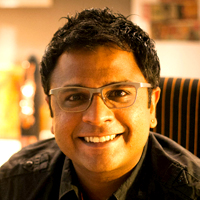
    While, Mr Premjeet Sodhi, has taken charge as COO of LMG (as reported first by MxMIndia), on the back of strong new business wins and a healthy growth in Kolkata, Mr Mahesh Motwani has been promoted to Executive Vice President of the Kolkata office and will develop new markets as well. Mr Patrick Gomes has been elevated to head of the agency’s Mumbai business. With fourteen years experience, Mr Gomes has been with LMG for 1.5 years, heading prestigious financial accounts and the Bajaj Group. He was previously with Starcom, Mediacom,TME and Madison.


    Patrick Gomes

    Meanwhile, eight-year LMG veteran, Dhirendra Singh has been promoted to Head of Planning for the Mumbai Office. He has been overseeing planning for accounts like UBI, Jyothy Laboratories, Bombay Dyeing etc and now takes on a larger responsibility for the entire office.


    Vidya Nandakumar

    Ms Vidya Nandakumar has returned to the agency earlier this month as Head of the Kochi office and has taken charge of the Manappuram and other businesses. She has come in from Madison, Bengaluru and has more than 12 years of experience in the industry, handling businesses like Britannia Industries Ltd, ITC Ltd, Hewlett Packard and Muthoot Finance.

  • NDTV expands global reach in US

    By Akash Raha


    NDTV 24×7 and NDTV Good Times is now available on Dish Network in the US, bringing the channels to 74 countries and 18 million households outside India.


    Both channels are now a part of Dish Network’s South Asian Mega pack along with other channels from India. In addition, NDTV 24×7 also becomes the first Indian channel to also be available in their international base pack as well.


    Commenting on the launch, Vikram Chandra, Executive Director and Group CEO, NDTV Limited said, “NDTV is delighted to be partnering with Dish Network to bring its content to an even wider audience in the US. We recognize that Dish dominates the South Asian market in the US, but we are also delighted that NDTV 24×7 will also be available to a wider audience through their International base pack. We hope our association helps both companies reach new heights.”


    The launch of NDTV 24×7 in Dish Network’s international base pack comes close on the heels of the launch on Virgin in the UK, where it also became the only Indian channel to be launched in their basic pack.


    NDTV’s channels are now available in the leading platforms across the US, UK, Canada, Sub-Saharan Africa, the Middle East, Australia-New Zealand and the Indian sub-continent, among others, and reach more households than General Entertainment Channels (GECs) in the international market.


    In addition, NDTV Good Times, India’s very own lifestyle channel, has also done well in the international market, allowing the Indian Diaspora to enjoy the range of offerings that it brings, and giving them a taste of the New India. Within four years of its launch NDTV Good Times is available in key international markets, including the US and Canada, with a launch in the UK already in the pipeline.


  • Making fun of Page 3 culture

    By Ranjona Banerji


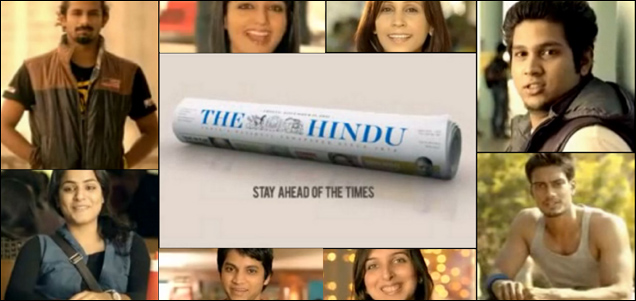
    Have to say, I just love the new Hindu ads. Making fun of your competition is not just unexpected from India’s most sober newspaper but it is also rare in India. Are these ads a direct response to The Times of India’s Chennai campaign, where the ads alleged that the Hindu put people to sleep? Perhaps not, since the Hindu campaign seems all-India and directly accuses the Times of dumbing its readers down. There is nothing implied in the Hindu ad – we can clearly see that all the idiots being quizzed on their knowledge (or lack of it) claim to read The Times of India, bleeped out though the name may be.


    The print ads include one which says “we also have pages 1,2, 4, 6” and so on, a clear dig at The Times’s introduction of society and celebrity news on Page 3 of the Bombay Times many years ago. “Page 3” culture is now part of our lexicon and indeed Madhur Bhandarkar even made a film about it, almost as scathing as the Hindu’s ads. The funny thing is that we always have had a society-celebrity media, what Bombay Times did was to both magnify and expand it. The even funnier thing is that almost every other publication in the country was quick to copy the TOI. Even the Hindu, which may not have a celebrity circus page, was increased its light feature content.


    It’s also curious that DNA ran a very similar campaign to the Hindu’s recently – interviewing young people who knew nothing about anything except Bollywood and then it turns out that they only read DNA After Hrs! In DNA’s case, there was apparent pride in ignorance; Hindu mocks it.


    In these times, when the media itself has become the news, the Hindu ads – done by Ogilvy – are bound to get attention and approval. There are many who believe that trivialisation of the media is dangerous and that there is cynical marketing manipulation of our apparent obsession with Bollywood. The Press Council of India chairman Markandey Katju is probably nodding away happily, especially when he sees line like “Because government malfunctions matter more than wardrobe malfunctions” – another of the Hindu’s print ads.


    For my money however far worse than the trivialisation of newspapers is the fact that all celebrity news and gossip is actually fake – paid for by the stars, studios, sponsors and so on. The readers are fooled into believing that what they are reading is the result of some digging up by journalists – as it used to be in the old days, even film news. The truth of course is that it is handed to newspapers by public relations companies or by the marketing department to the editorial staff.


    Bad enough that we are trivial, we are also, it seems, foolish and exploited!


  • Hindu hits back with a tough punch


    By Tuhina Anand


    The Times of India fired the first salvo with its hints at a “boring” newspaper. The Hindu has countered with its ‘Stay ahead of the times’ campaign. A bit of a revelation coming from the house of the newspaper which is perceived as traditional and old-fashioned, the 360-degree pan-Indian advertising campaign seeks to bring the core values of journalism to the fore. At the same time it shows how the ‘popular’ read has trivialised the kind of news being dished out to the readers, with the result that they are more clued in about Aishwarya’s baby and Hrithik Roshan’s pet name than knowing the name of the Vice President of India.


    What is more surprising is that in the campaign, even though it’s bleeped out, one knows that people who have been featured say that they read The Times of India, thus clearly acknowledging at one go that TOI is a force to reckon with but at the same time responsible for this trivialization of news. The tagline leaves no room for doubt as it states, “Stay ahead of the times.”


    This kind of aggressive marketing could be the answer to the campaign that The Times of India had come out with a few months ago in the Tamil Nadu market which targeted The Hindu for being boring. The Times of India campaign says, “Stuck with the news that puts you to sleep? Wake up to The Times of India.” In fact, it is learnt that the TOI had even printed a dummy newspaper, circulated within the industry, with The Hindu masthead and “zzzzz” printed all over, to underline its message that reading the newspaper put people to sleep.


    Mr Suresh Srinivasan, Vice President (Advt), The Hindu Group of Publications insists that the campaign is not a reaction to the earlier TOI salvo. He said, “We have been on a path of transformation and change where we have not only undergone organizational changes but also been contemporising our product in order to connect better with our reader. The changes have been in content, layout and packaging based on the research we had commissioned, and their suggestions.”


    He added, “We are the country’s most respected English daily and the number 1 English daily in the South, with a growing footprint in the North. While we build on our strengths there is also a need to protect our turf. The Times of India is definitely our single largest competitor down South.”


    The Times of India, meanwhile, has been watching the recent development with a  touch of amusement. Mr Rahul Kansal, Chief Marketing Officer at Bennett Coleman & Company Limited, said: “It is good fun to watch it from the sidelines. TOI is an all-India brand and has redefined the news and newspapers altogether. In fact, this doesn’t really damage our brand in any way. On the contrary, it reiterates the fact that we are a very strong contender for the leadership position in the Chennai market. Remember, the Coke and Pepsi war? It didn’t hamper Coke in any way but it did establish Pepsi as a worthy young brand.”


    One of The Hindu TVCs
    [youtube width=”400″ height=”200″]http://www.youtube.com/watch?v=xmXPBp7DpQw[/youtube]
    The Times of India TVC
    http://timesofindia.indiatimes.com/videos/news/Wake-up-Chennai/videoshow/10557020.cms

    “While advertising, one does exaggerate and that’s what we had done when we said in our earlier campaign that The Hindu is a staid brand. One takes extreme positions in advertising to bring out the humour, so even now when the ad says we give only Page 3 news that just to bring out humour. Everybody knows that the TOI is a complete newspaper,” added Mr Kansal.


    Despite the impressive numbers of The Hindu, there definitely seems some concern about the might of the TOI which led to this kind of aggressive marketing. Mr Narendra Kumar Alambara, Vice President at Starcom Worldwide, who has been observing the Chennai market, explained: “The TOI has made inroads into the Chennai English newspaper market and there is no denying that. While the gap between the leader and TOI is still huge, but the latter has become a strong competitor. Youngsters and migrant population have been picking up this newspaper, especially, because of the kind of news reporting that TOI has been doing. While earlier there was no option, but now there is an alternative read. In terms of readership, I think that for The Hindu it has remained stagnant while TOI has grown the category itself. However, one should remember that in the Chennai market retail advertisers lead and for them The Hindu is still a priority.”


    On the campaign, Mr Srinivasan said: “The Hindu believes that, more than ever in a globalising, knowledge-driven economy, it is vital that readers are well-informed about the world at large. And yet, over the last few years, the news and media industry in India has become increasingly focused on serving up a steady diet of trivia, shying away from the national and international issues that really matter. This may help sell more newspapers or get more viewership in the short term, but it is the news equivalent of junk food. And the long-term result is a steady dumbing-down of readers who end up knowing more about Aishwarya’s baby than the Arab Spring.”


    The campaign shows how one may be creating a country that is fully conversant with gossip and Page 3 culture but clueless about current affairs and world events.


    Mr Srinivasan says, “The campaign is aimed at triggering conversation and if we succeed in provoking thought and debate that would be the measure of our success. It is intended as an eye-opener to get people to re-evaluate their media choices, to demand a smarter newspaper.”


    The campaign will be on TV, radio, cinema, print, outdoor and digital. It will be supported by on-ground activities in malls, cafes and other locations.


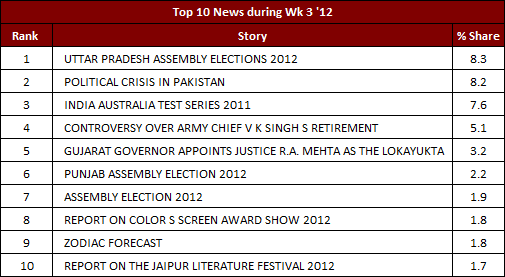
  • NCT Data Wk 3 ’12


    Source: News Content Track – A service of TAM Media Research Pvt. Ltd
    Channels: Aaj Tak, CNN IBN, Headlines Today, IBN 7, India TV, NDTV 24/7, NDTV India, Star News, Times Now, News 24 & Zee News
    Period: Wk 3 – Jan 15 to Jan 21, 2012
    Note : Analysis is based on the Telecast duration


    About TAM Media Research


    TAM is a joint venture between Nielsen Company & Kantar Media Research. Besides measuring TV Viewership, TAM also monitors Advertising Expenditure of Television, Print & Radio through its division AdEx India. Since 2004, it extended its presence in the PR Measurement & Analysis space for Corporate/Marketing Clients by setting up a separate division Eikona PR Measurement.


    In 2007, the joint venture introduced RAM (Radio Audio Measurement) service to track Radio Listenership for the Indian Radio Broadcast Industry. In year 2009, TAM launched a division, called TAM Sports that specializes in monitoring Sports Sponsorship ROI.


    TAM Media Research’s objective is to fuel media insights that will drive the growth of the Indian Media Industry.

  • Rural market is the new siren call for OOH

    By Robin Thomas


    According to industry estimates, ruralIndiais growing at a faster pace than its urban counterparts, atleast in certain product categories. The overall Indian rural market size is believed to be Rs800 crore, with a total advertising pie of Rs12,000 Crore in rural markets. FMCG products, consumer durables, agro manufacturers, banking and insurance, telecom companies are some of the big spenders in rural markets.


    A survey reveals that FMCG products account for nearly 53 per cent of the market share in ruralIndiawhereas consumer durables account for the rest.


    The last few years have seen a drastic increase in the standard of living and purchasing power in ruralIndiaand many marketers heading for the lucrative rural markets. Also people in rural areas tend to spend a lot of time outdoors, which makes the rural market an ideal target for OOH media. As a result, almost every OOH industry player believes that the next phase of growth for the out-of-home media will come from rural markets.


    In interactions with MxMIndia, Mr Nabendu Bhattacharyya, Managing Director, Milestone Brandcom – who had shared his plans to launch Milestone Rural – and Mr Rohit Samarth, Business Head – Rural, Percept- Out of Home, were of the opinion that out-of-home media is seeing a tremendous growth in rural markets as consumption power in smaller towns and villages is increasing.


    Mr Anirban Ghosh, Senior Vice President, Adz Edge opined that an increase in purchasing power of rural masses in recent past has fuelled lot of interest amongst clients across all categories in ruralIndia. “Once considered a market only for low end products, today companies are seeing rural market as the new growth avenue. Comprising more than 70 per cent of the total consumers in India and annual market potential in excess of Rs12,30,00 crore, rural India is being charmed in novel ways. Naturally, out-of-home has also taken an upswing in rural market. More and more clients have shown interest in tapping this market which has got tremendous potential and increasing buying power” he said.


    The main revenue stream in rural market will come through a media integration and activation approach such as van activations, road shows, wall paintings, melas or village fairs.


    Mr. Ashish Pherwani, Associate Director, Advisory Services, Ernst & Young is very optimistic about rural out-of-home media. He believes that it can reach 25-30 per cent of the OOH advertising share in 5 years and that as consumptions shifts from metros to the 35 to 100 of the largest towns, OOH spends will also follow.


    Although OOH in rural areas is on the growth curve, it still has a long way to go and in order to continue growing in the long run; industry players believe that there are certain challenges and concerns that need to be overcome.


    One of the biggest concerns is the fact that the rural market is very fragmented and there is neither a credible measurement system nor a clear census data that can provide a clear definition of ruralIndiaand the socio-economic classification, among other relevant details.


    Mr Samarth observed: “While advertising in ruralIndiais growing, fragmentation of the market is a big challenge; there is no distribution network and there is no credible measurement system either. Another set of challenge is about living up to the promise of delivery in the rural markets. However, on the positive side, the biggest change in the rural is the fact that there is much less central control because today a lot of large companies are decentralizing their budgets.”


    Mr Pherwani said: “The rural market is extremely fragmented and there is little or no transparency to provide confidence to advertisers. Therefore, transparency needs to improve with better demonstration of proof of delivery. There are also few national players who can support large campaigns.”


    But Mr Ghosh believes that the biggest challenge for OOH is the lack of quality properties in rural market and also the fact that it is even more unorganized as compared to its urban counterpart. As a result, execution and proper monitoring is another core challenge. “To overcome these problems, we need to understand the rural market in a better way. Major players from OOH media owning houses should take initiative to open up their operations close to these locations for better control. They should collaborate with the local authorities to implement uniform regulations and open up more quality properties in rural market” he suggested.


    Innovations are the need of the hour to attract the rural masses and the OOH approach needs to be more interactive and integrated with brand activation for high recall value. As product consumptions increase, OOH media spends will also increase.