
Author: mxmadmin

  • Negotiating their way to compliance

    An image of a visually impaired girl with an adult sitting in front of computer


    By Shruti Pushkarna


    Shruti PushkarnaIn my last piece, Building a Case for Access in an Exceedingly Digital World, visually impaired professional, Rahul Bajaj explained the basics of accessibility, how technology enables disabled people to function independently and how inaccessible products and services exclude them from the mainstream of things.


    The disabled community is one of the largest minorities, as 15% of the global population lives with some form of disability. They have similar needs, aspirations and interests. Their limitations simply change the way they access facilities. In an increasingly digital post-Covid world, food delivery, travel bookings, banking, health appointments, entertainment, et cetera can all happen easily online. But what about persons with disability? Are mobile apps and websites just a click away for them as well?

    Unfortunately, not.
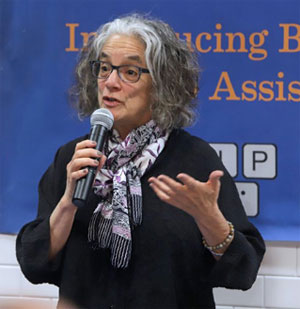
    Lainey Feingold
    Lainey Feingold

    Rahul Bajaj along with a couple of other legal experts who are also visually impaired, has started an initiative against inaccessible websites and mobile applications. Interestingly, in this battle for inclusion, the legal route is their last option. They are applying a method called ‘structured negotiation’, a concept popularised by an American Disability Rights lawyer, Lainey Feingold. An alternative to lawsuits, Lainey proposes a meaningful dialogue with the service provider, to get them to become accessible, explaining the issues and encouraging them to do something about it. The method assumes that inaccessibility is a fallout of ignorance rather than a deliberate attempt to exclude.

    In a candid conversation, Rahul shares certain issues with commonly used mobile and web platforms, accessibility guidelines and the need to advocate for equal rights.
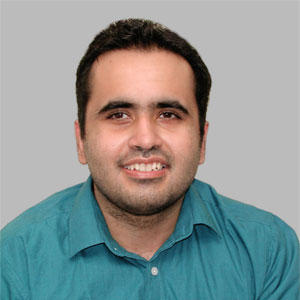
     

    Rahul BajajQuestion: What is this new initiative that you have taken up against inaccessible websites and apps?

    Answer: I realised there is massive inaccessibility for the disabled in the digital world we inhabit. From making payments, to ordering groceries, making medical appointments, everything is either out of reach or very difficult to do independently. And if these were in existence in the physical world, I might still understand that it requires a lot of retrofitting as old buildings were not designed with accessibility needs in mind. But it is very painful that in the digital world, where there is absolutely no reason for it to be inaccessible to anyone, there are so many barriers. Mission Accessibility seeks to constructively work with service providers of apps and websites to get them to become more accessible. And we try to do this through a variety of ways. One approach is to identify the users of a particular inaccessible platform, and share a template to get them to write to the service provider. That is a way of empowering individuals to advocate for themselves. Another approach is systemic in nature where the idea is to create a more conducive environment at the systemic level, to ensure that the service providers are made aware of their obligation. That can be done by involving the government or regulators like, SEBI, RBI, TRAI, under whose control the service providers fall in. Third approach is some sort of judicial intervention against service providers who aren’t complying. The basic idea is to change things.


    Question: You must have received several responses to your request, seeking details about people’s experiences of inaccessible apps and website?

    Answer: We sent out an email asking people for the names of such platforms that we should work on. The response was overwhelming, we got as many as 40 to 42 names. And we got a whole host of service providers, from food, to groceries to dating to academic writing and referencing, to medical appointments, everything. Some people said that this is something they’ve always wanted to do, to take on the issue of accessibility in a more systemic fashion.


    Question: Can you name some of the apps and websites that came up in the responses? I’m curious if there are any media websites in the list?

    Answer: There are, definitely. In terms of more generally what it includes, Dunzo for groceries, the common app people use for home delivery. Practo to meet doctors online. Hotstar, which is an OTT provider, and Rapido for booking cabs and bikes online. Dating apps like Bumble and Tinder. There are a lot of media apps that came up, including NDTV, Moneycontrol, Economic Times, Times of India, all of these have some or the other issue on their platform. For instance, the iOS NDTV app sends you a notification when there is breaking news or some major update. When you double tap that, or when you open that with VoiceOver on the iPhone, it doesn’t actually take you to the article. It takes me to a random advertisement on the app rather than to the actual article that I had opened up.

    Question: You mentioned that you access your daily dose of news on the YouTube programme put out by Faye D’souza. Are there any other examples of inaccessible news websites?

    Answer: One other that I really struggle with is New Indian Express. Whenever you open an article, it keeps telling you other things. And that must be because there is some sort of a visual, these are dynamic websites, where the content is constantly switching from one thing to the other. So, either it will be an ad or some flashing stories, which come in the way of smoothly reading the article from start to finish. Even with Moneycontrol, there is a similar problem. The screen reader jumps focus because people don’t design the website properly. Nobody’s saying that you do away with visually appealing elements. Because at the end of the day, that may be a strategic call. But at the same time, I’m sure there must be ways to retain those visual features and yet remain accessible to the disabled. People just don’t think about it because they don’t have accessibility experts in their midst. Also, they don’t anticipate disabled users visiting their platform.


    Question: Speaking of design, can you tell us about the W3C guidelines which are in place to ensure accessibility?

    Answer: The World Wide Web Consortium has what are called the Web Content Accessibility Guidelines or WCAG. And the latest version of that is called 2.1 AA. They actually prescribe in granular detail what norms you have to comply with in order for something to be accessible. So, if you want to know, what you must specifically do to make your platform disabled friendly, then that is really the tool that you need to use. Like having headings in place, making sure that buttons are clearly labeled, making sure that you don’t use CAPTCHA without either an audio or text substitute, or both ideally, for the deafblind also.


    Question: What are the legal remedies in terms of non-compliance? What does the law say on it?

    Answer: Under the 2016 Rights of Persons with Disabilities Act, there is an obligation to make your platform accessible, and all service providers were required to do this by June 2019. The deadline to do that has already expired. Now, the question arises, what do you do about it? Section 89 says that any breach of the Act shall be punished with a fine up to five lakh rupees. There is a possibility of financial penalty being imposed on those contravening the Act, so you would basically need to go to the Chief Commissioner for Persons with Disabilities in the first instance, or the State Commissioner. If that doesn’t work, then you go to a High court and to the Supreme Court.


    Question: OTT platforms are the trending thing now. We’ve seen with Covid and the lockdown, most of us were hooked to Netflix, Amazon Prime, Sony Liv, Voot or Hotstar. Are these OTT platforms accessible to a blind person? By the way, a lot of people think that blind people don’t watch films or TV. So why don’t you start by busting that myth…

    Answer: While it’s true that movies are primarily visually oriented, there are a couple of ways in which someone who’s blind can also have a really enjoyable experience while watching them. One is by listening to the audio components of it, the dialogue, the music, all the background noises. And the second, perhaps the more important aspect is audio description, which is where the OTT providers’ role comes into play. Audio description is basically where whatever is happening on the screen is being described by someone for the benefit of a blind person. Like Meg is a white woman who has brown hair and black eyes; we see her standing in her living room; or Meg drives in her car, and goes to the grocery store. And this is something Netflix has really pushed the frontiers on. A large majority of their content, and I hope it stays this way, is actually audio described, even in Hindi. Amazon Prime is also good, but it doesn’t have as much audio description. But the platform itself is definitely accessible. However, Hotstar is the most disappointing of the lot, the platform is inaccessible, what to speak of audio description. The app is designed in a very bad way, different controls are jumbled up. Buttons are unlabeled, you can’t really find things on your own. Many issues are there, but we are working with them. Actually, we sent them a legal notice and after that they began talking to us. They have in fact asked us to conduct a sensitization session for their engineers.


    Question: Let’s talk about the inaccessible content in terms of a sporting event on TV. Or national news coverage on Elections or Union Budget which is accompanied with a lot of graphics. How do these visual elements affect the visually impaired person’s TV watching experience?

    Answer: That is definitely a big issue. Sometimes the ad comes even before they have told you the score at the end of an over, and you can’t read the score on the screen. Same with other graphic content. The way to resolve that is to mainstream audio description. It benefits everyone because it will generate more employment. It will also generate more revenue because at the end of the day, you will tap into more users who are not seeing the platform/channel currently. I was interviewed on this Good News programme where the news team portrayed me in a very positive inspirational light. That doesn’t help me. This was part of the India Today network, if Aaj Tak gives me audio description or subtitles, that’s what will truly change something. To the folk in media I would say, bat for accessibility in whatever shape or form you can. Some people might say that this is a call to be taken up by people higher up in the organization. That’s not true. You can connect relevant people, your product design team, your engineers, your marketing people who run your website, and so on, with people with disabilities and open up that channel of communication. It’s not okay just to be outraged by this. See what you can actually do in your everyday life to make things a little better.


    Rahul Bajaj works as a Senior Resident Fellow with the Vidhi Centre for Legal Policy. A Rhodes scholar, he also worked with a Supreme Court judge before joining Vidhi.
     

  • ShareChat & MX Media merge

    By Our Staff


    MX Media Co. Ltd, the parent company of MX TakaTak, and ShareChat, the parent company of Moj, have announced a strategic merger between Moj and MX TakaTak, to create the largest short video platform for Indians, whereby the two platforms will now be controlled by ShareChat. The combined platform will have 100 million creators, over 300 million Monthly Active Users (MAU), and nearly 250 billion monthly video views. Post this transaction, MX Media and its shareholders will become strategic shareholders of ShareChat.


    Commenting on the merger, Ankush Sachdeva, CEO and Cofounder, ShareChat & Moj, said: “We at ShareChat are building India’s largest content ecosystem which has been on an unprecedented growth trajectory. MX TakaTak is a popular platform and this merger further solidifies our position in the short video ecosystem. With this development, we aim to build the largest original content platform on Moj along with the largest community of users across India.”


    Added Karan Bedi, CEO MX Media: “I am excited to announce the strategic merger of India’s two most popular social media platforms. As India’s largest digital entertainment platform, MX has always strived to build superior world class products, and TakaTak is no exception. This combined with Moj’s AI and execution capabilities makes the combined business a truly world class short video platform. MX has created two ‘unicorns’ within one business, unlocking significant value for our shareholders, and will now continue to double down on OTT, with significantly increased financial resources.”


  • Shark Tank India: No Fishy Business


    By Shailesh Kapoor


    Shailesh KapoorLast week saw the end of a seven-week first season of Sony’s new show Shark Tank India. The show, a worthy adaptation of the successful international format that goes by the same name, managed to get the social media buzzing. Through memes, reviews and other ancillary content, Shark Tank India has become a favourite among digital content creators in India. The Sony LIV app even has a separate Shark Tank tab, which is tell-tale sign that the show has been a digital success.
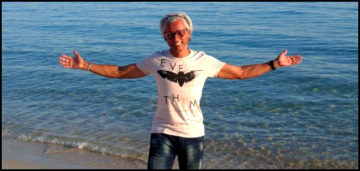
     

    The television performance, however, has been less-than-flattering. In a tough weekday 9pm slot, the show didn’t find much traction in the mass television audience, touching only the 0.5% rating mark in urban Hindi-speaking markets. One hopes that the show’s economics are good enough for a next season, and a few more. Because Shark Tank India is arguably the best new show that may have come up in the Hindi non-fiction space in a while.


    The Hindi non-fiction market is almost entirely driven by franchise shows, some of which are in their double-digited seasons now. While they make for comfort viewing and enjoy a loyal fan base, they certainly do not provide freshness. Before Shark Tank, Color’s live singing reality show Rising Star (first season in 2017) was the last successful new non-fiction format to be introduced in India. That show has not returned post-pandemic.


    But Rising Star was also a talent show, a genre that now has so many shows that it’s difficult to keep track. There are at least half a dozen Hindi shows with Dance or Dancer in their names. Then there are the singing shows, and the those on talent in general, like the recently-launched India’s Got Talent and Hunarbaaz. Many talent shows rate fairly well, and have good reasons to be on TV. But they do not raise the bar. They are the safe, low-risk options, even at their high costs. Even on streaming, the non-fiction experimentation has been stilted. Most attempts have been in the comedy talent space.


    I have to say I was a bit surprised when I first heard that Shark Tank will get a Hindi GEC adaptation. To use the show’s terminology, the TAM (Total Addressable Market) is only a small fraction of the Hindi GEC audience universe in urban India, given how little the weightage of the metro cities is in the mix. And how much can you ‘mass-ify’ the Shark Tank format anyway, when its essence is rooted in the idea that it caters to a niche? But then, you add the streaming factor to the mix, and the decision to do the show begins to make more sense.


    But for the dull Rannvijay interludes, designed only to cater to monetisation demands, the show makes for engaging viewing. The sharks have their individual and distinctive personalities, and the unmistakable Delhi vibe in some of them provides the entertainment quotient without taking away from the purposeful idea of the show. The pitches ranged from banal to interesting to inspiring, and will only get better with subsequent seasons.


    Corporate India has been poorly represented in our entertainment. Except some online shows, mostly produced by TVF, authentic portrayal of the corporate world in mainstream media has been conspicuous by its absence. And on the rare occasion when it’s done, it’s generally been broadstroked and lame (“I have an important presentation today”).


    I’m not entirely sure if Shark Tank India can fuel the entrepreneurial culture in India in the short run. But it can build awareness in that direction, over a few seasons. But what the show has done already, in just one season, is to push the envelope in the stagnating Hindi non-fiction space on Hindi television and streaming categories. And that’s no mean achievement.

  • Das ka Dum with Dr Bhaskar Das | So how does someone like Dr Bhaskar Das observe Valentine’s Day? Now please don’t say that every day is V-Day or I’m too old for it..

    Bhaskar DasIt was meant to be a fun Friday question. But our Wizard with Words makes the even most frivolous of them philosophical. Here’s Dr Bhaskar Das’s response to our question in the February 11 edition of Das ka Dum. Read on…
     

    If you wish to access the archives, please go to the Das Ka Dum tab on the website’s top navigation bar.


    Q. So how does someone like Dr Bhaskar Das observe Valentine’s Day? Now please don’t say that every day is V-Day or I’m too old for it..


    A.Ha ha. It seems you have applied AI/ML technique in anticipating my response. Hence, it has to be different this time. See, we all believe in Vasudhaiva Kutumbakam (world is a family). Iif one gets out of a myopic biological raison d’etre of celebrating a Valentine, then one can love anyone, irrespective of biological and gender reasons. So if one is a blithe spirit, love is everywhere. Just feel it more on Valentine’s Day, perhaps.


  • CaratLane launches campaign for Valentine’s Day

    By Our Staff


    CaratLane, the omnichannel jewellery brand, has launched its digital campaign, “Love it or Hate it” in an attempt to make Valentine’s Day special for everyone. The campaign with three films has been conceptualised and executed by BBH India.


    Talking about the launch, Avnish Anand, COO and Co-Founder of CaratLane said: “As a brand, we have been witness to how our country has been celebrating Valentine’s Day in the last few years. We’ve seen more stories about how daughters have received jewellery on February 14 though their mum isn’t a fan of this day. We’ve realised that people need an excuse to gift and celebrate the love they have for someone in their life. And what’s unique about these stories is that it’s beyond the stereotypical couple gifting and extends to sisters, mother-daughters, aunts-nieces, etc. Through our 3 films, we wanted to highlight this beautiful insight and we’ve also curated special designs that make it easier for our customers to select thoughtful gifts.”


    Speaking about the genesis of the campaign idea Aarti Srinivasan, ECD, BBH India added: “Most advertisements about Valentine’s Day showcase people who absolutely love and celebrate the day in an over the top way. But in reality that’s not always the case. So for this year’s campaign, we explored a contrarian and a more real take by telling stories of those who aren’t fans of this day.


  • Neeraj Chopra films for Tata AIA Life

    By Our Staff


    Tata AIA Life Insurance has unveiled its latest digital brand campaign ‘#TataAIAKaBharosa’, highlighting the significance of trust when it comes to taking the right decisions in life about securing one’s financial future.


    Said Venky Iyer, Executive Vice President and Chief Distribution Officer, Tata AIA Life Insurance: “In life, many of our decisions are not just a result of detailed analysis but an outcome of the trust we place in others or in something. When it comes to solutions such as Life and health insurance, the ‘Trust’ factor becomes even more critical .  Hence, choosing the right brand and solution to ensure the financial security of our loved ones becomes a matter of trusting the one name that will fulfil its promise of protection at all times. Our latest campaign ‘#TataAIAKaBharosa’, highlights the trust that Tata AIA enjoys among its consumers given its rich parent heritage and demonstrated capabilities over 2 decades as a Life Insurer.”


    Added Girish Kalra, Chief Marketing Officer, Tata AIA Life Insurance: “The film is shot in warm surroundings and shows Neeraj emphasizing on the importance he places on his javelin and technique in getting the maximum throw in. It is an interesting take to show Neeraj in one of those reflective moments in life, away from the action at the field.  In the end, he urges all of us to believe in ourselves and take help of trusted enablers, similar to how he has trusted Tata AIA Life for best in class Protection and Savings solutions.”


  • AdColony launches Game Academy

    By Our Staff


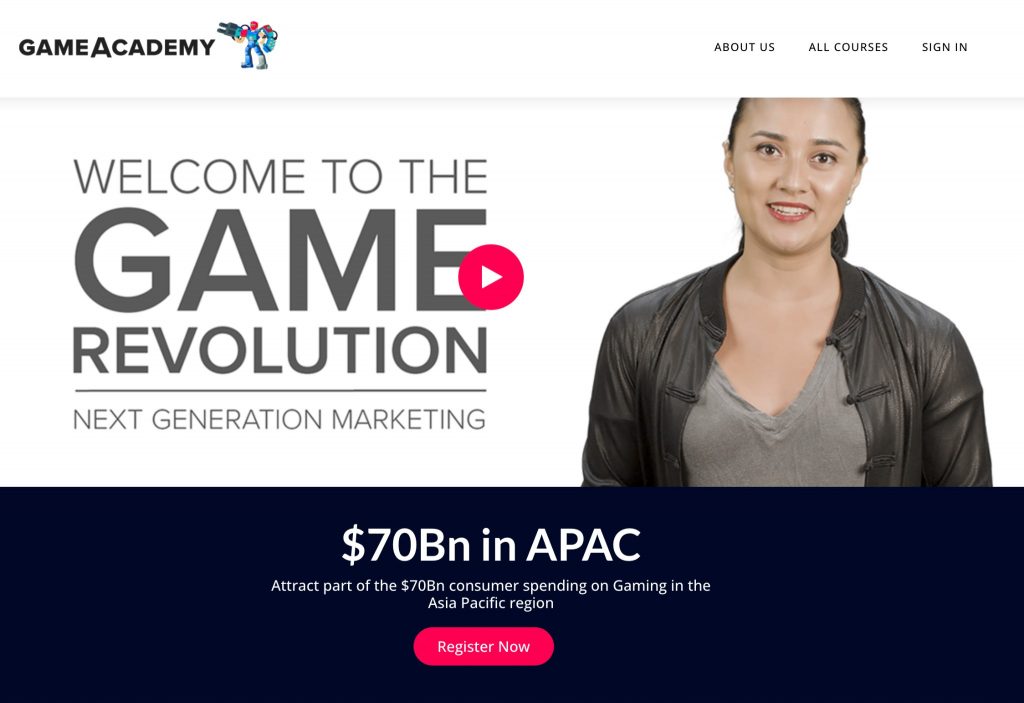
    AdColony, a digital media firm, has launched Game Academy, a free online skills masterclass and qualification focused on marketing solutions in gaming. Game Academy is an interactive learning platform that gives marketers knowledge around gaming advertising. The first season of Game Academy is now available to marketers from any level and company in Asia-Pacific.


     

    Commenting on the launch of Game Academy, AdColony’s Senior Vice President APAC, Tom Simpson, said: “Successful marketing has always been based on keeping as closely in step with consumers behaviours, but the explosion of gaming consumption means marketers are now racing to catch up with new habits, audiences, and channels. We are very excited to launch Game Academy to elevate how marketers think about gaming advertising and bring the industry as a whole one big step closer to consumers.”


  • Scaler kicks off new brand campaign

    By Our Staff


    Scaler, a tech upskilling startups, has kicked off its brand marketing campaign with a film that draws on popular shows and internet references. The campaign aims to throw light on the enduring skill gap in the technology space and the urgent need to address the same.


    Speaking about the film, Abhimanyu Saxena, Co-founder, Interview Bit & Scaler Academy, said: “Scaler has always been a proponent of the importance of having the right set of skills to perform any given role, and believes that securing a good job, while important and gratifying, is not the sole purpose of acquiring a skillset. The gap in skills that we are currently witnessing in the industry, acerbated even more by the rapid digitalisation that followed in the wake of Covid-19, has brought to light the need to not only keep oneself relevant by updating one’s skill set but also the value of thinking beyond oneself and using one’s skills to effectively address and overcome key challenges in the way we work and live.”


  • DentsuMB wins creative mandate for Social Alpha

    By Our Staff


    DentsuMB, the integrated communication agency from Dentsu India, has bagged the digital creative mandate for Social Alpha, a multistage innovation curation and venture development platform for science and technology startups. As per the mandate, DentsuMB will develop the communication framework and create campaigns that showcase the initiatives across Social Alpha’s social media assets. The focus will be on the core mission of the brand, which is to create social, economic, and environmental impact through the power of innovation and entrepreneurship.


    Indrajeet Mookherjee
    Indrajeet Mookherjee

    Said Indrajeet Mookherjee, Managing Partner, DentsuMB: “We are honoured to partner with Social Alpha in their mission for bringing about change. It will be a unique journey given the nature of services that Social Alpha provides and the divergent startup sectors it works with. At the heart of Social Alpha, is a clearly defined purpose ‘of making a difference to the lives of millions’ and we hope to collaborate on bringing these beautiful stories of impact and change to a larger audience.”


    Manoj Kumar
    Manoj Kumar

    Added Manoj Kumar, CEO & Co-Founder, Social Alpha: “At Social Alpha, we work with innovators who are on a mission to solve some of the most complex challenges of humanity with entrepreneurial risk-taking. While we take extreme pride in what our startups do, we needed help in communicating the inspiring work of our portfolio companies with an intent to attract more innovators and enablers to this emerging sector.”


  • Ogilvy creates film for Skinn Fragrances by Titan

    By Our Staff


    Fragrance brand Skinn by Titan has launched a digital film featuring actors Sanya Malhotra and Suhail Nayyar for Valentine’s Day.


    Said Ankit Kasliwal, Head of Marketing, Fragrance Division, Titan Company Limited: “There are often expressions of love that remain unsaid as words fall short while conveying the true depth of feelings. Gifting a fine fragrance to a loved one thus becomes an intimate, and expressive gesture. For this Valentine’s Day, we wanted to capture this true essence of love that runs deep and showcase these imperfectly “perfect relationships” where the little unsaid moments can be rejoiced with Skinn by Titan.”


    Added Divya Bhatia, Group Creative Director, Ogilvy South: “For this year’s Valentine’s Day campaign, we wanted to do something that not everyone would be talking about. But something that everyone could relate with. And that’s how we came upon the thought of what happens after you’ve fallen in love. When you’ve settled in the relationship. The reality is, the deeper the bond, the more comfortable the couple is to do their own thing and grow within the relationship. Taking that as a premise we went ahead and created this narrative with a twist. A narrative that celebrates couples for who they are, individually and together. After all, it’s the little imperfections that make each relationship perfect in its own way.”


  • WhatsApp launches campaign for Safer Internet Day

    By Our Staff


    View this post on Instagram


    A post shared by Anmol Sachar (@anmolsachar)

    WhatsApp hjas announced the launch of a week-long #OnlineSafety campaign in partnership with Yuvaa. The campaign, #TakeCharge –started on ‘Safer Internet Day’ with a series of infotainment content on Yuvaa’s Instagram page with an aim to raise awareness about online safety, encouraging  people to understand the various safety tools and resources that can be used to stay in control online.


    Talking about the latest #TakeCharge user-safety campaign Abhijit Bose, Head of India, WhatsApp, said: “WhatsApp is an industry leader among private end-to-end encrypted messaging services in promoting online security. Besides continuously innovating on the product side to build safety features, WhatsApp also deploys dedicated teams of data scientists, analysts, security experts as well as AI & ML to keep users safe online 24x7x365. Additionally, it has been our continuous endeavor to raise awareness and education about user-safety. Our current Safer Internet week campaign is another such attempt to help users understand the importance of online safety and how they can #TakeCharge to navigate the internet safely.”


  • NIIT launches brand campaign

    By Our Staff


    NIIT Limited has launched it brand campaign titled #AbPlacementPakki. Commenting on the campaign Archit Shankar, Head – Marketing, Career Education Business, NIIT Limited said: “At NIIT, we are committed to helping students augment their college degrees with job ready skills in new age fields which will help them build a satisfying career. This will have the effect of transforming their lives by helping them land the right job.  Our priority has always been to deliver outcome-driven learning interventions that are in line with the constantly changing industry requirements. Our #abplacementpakki campaign is another positive step in that direction, with the goal of continuing capacity building and instilling more skills in the industry to enable a more competent and future-ready workforce.”