
Author: mxmadmin

  • India@75: Non-Violence – Relevant or Retarded?


    By Avik Chattopadhyay

     

    Avik ChattopadhyayThis is the fifth [and last] in my series on India@75 where I have tried to explore some indelible brands associated with the journey of our young nation. Having discussed brands like Democracy, Congress, Secularism and Doordarshan, I felt it most appropriate to bid goodbye to an eventful year with a discussion on brand ‘Non-Violence’.


    As a nation, this is one brand value we are most associated with given our freedom struggle since the early 1900s that was led by the principle of ‘Non-violence’. History describes the Indian ‘freedom struggle’ as the world’s first and largest ever at this scale. Its success against a particularly repressive colonialist became an inspiration to many others since then like the Civil Rights movement in the US, the freedom movement in South Africa, the Velvet Revolution in Czechoslovakia, the Mass Action for Peace in Liberia, and the February Revolution in the Philippines. Petra Kelly formed the Green Party in Germany based on non-violence. The Semai tribe in Malaysia have adopted non-violence as an active form of socio-political life. Morihei Ueshiba founded the martial art Aikido based on non-violence!


    US theologian and activist Walter Wink had said that in 1989 alone, 1.6 billion people across 16 nations had used non-violence as the means of demonstrations and protest. If one were to add the populations of India and South Africa, by then close to 65% of the world’s population would have attained freedom through non-violence.


    Twenty twenty-one will be a watershed year in Indian history as yet another non-violent movement succeeded when the central government decided to roll back the three Farm Laws. The Farmers’ Protest of 11 months was another demonstration that the route of non-violence still works, as long as one can be patient enough. While vested interests vilified the campaign and tried all tricks to destabilise it, the world actually saw it in positive light, not so much for the cause but more so for the means. Farmer protests typically end up being violent and ugly as seen in Europe and US where both protestors and enforcers use physical force. India, on her 75th birthday, once again told the world how it is to be done!


    Brand ‘Non-violence’ is beyond books of faith and the way of life of certain religious communities like the Buddhists and Jains. It is a greater purpose of how to subsist and sustain as a people and a nation. Like all enduring brands, it has a clear purpose, promise and personality. Over centuries it has kept evolving itself in its application and manifestation as well as adoption by an increasing number of people across nations.


    Interestingly, authoritarian governments have always been at loggerheads with non-violent protests for the latter neutralises the former’s ability to mete out physical harm. The autocrat is looking for a physical fight and some blood-spilling as a natural expression of power and hegemony. That is his / her comfort zone. The moment the protestor shifts the game to another playground, the autocrat is confounded. Revenge and retribution in the traditional sense make no sense here. And due to the inherent intellectual deficiency of the autocrat, mental torture is never a primary mode of offense.


    This is precisely why non-violence has become the most popular and powerful route of activism and protest. The tool-down and sit-down strike at a factory is far more effective than the days of the Luddites. The core operating principle that nothing should be harmed be it an object, a structure, a human being, or society’s interest is just too powerful to counter. And this makes non-violence so sustainable and adaptive as a brand ethic.


    The authoritarian state always builds a narrative against the non-violent protest by propping up ‘nationalist’ symbols of order, discipline, and masculinity like the army and law enforcing bodies. The soldier is typically positioned against the protestor as being the true nationalist while the latter is a renegade. Protecting land and borders is always more important than protecting rights and social sanity.


    There are some misgivings and myths about non-violence as a brand that I wish to dismantle here.


    Not peaceful or pacifist

    A non-violent movement need not be peaceful at all. Actions like non-cooperation, sit-down strikes, public addresses, marches, civil disobedience, economic boycotts, public assemblies, and petitions are all forms of non-violent protests.


    Non-violent interventions are some of the more incisive and powerful methods of protest using tools like public scrutiny, hunger strikes, occupation, blockades, and parallel governments. Since its coinage by Gandhi, ‘Satyagraha’ has become one of the most powerful ever. The Total Revolution of 1974 led by Jayprakash Narayan and the India Against Corruption movement of 2010 are telling examples of how interventions were used to weaken a government finally making it collapse.


    Hence, non-violence is neither peaceful nor pacifist, like any successful brand cannot.


    Not only reactionary

    Non-violence as a way of life is fundamentally proactive. In fact, it has brought disruptions in society that has led to far-reaching reforms. The Vedic revisionism around 500 BC was an outcome of the birth and rise of Buddhism and Jainism.


    Similarly, as a form of protest, non-violence can be institutionalised in civil society and tools put in place that ensure a totally proactive role in keeping the state in check and under constant vigil. The emergence of non-violent bodies like Greenpeace, Amnesty and Albert Einstein Institution makes up a unique eco-system of checks and measures that transcend borders to neutralise the ability of power-centres to harm.


    Not unidimensional

    Political scientist Gene Sharp, also called the ‘Machiavelli of Non-violence’, described 198 ways of non-violent action in his seminal 1973 book “Waging Nonviolent Struggle”. This is a handbook used by movements across the world right from the Estonian, Latvian and Lithuanian governments gaining independence from USSR in 1991 to Iranians protesting election fraud in 2009.


    There is no single route nor any straight-line solution for a non-violent protest. Multiple actions have to be deployed concurrently to make a non-violent movement successful. Just like the stakeholder engagement strategies for any product or corporate brand, this brand too follows the same blueprint.


    Not only political

    The Chipko Andolan, the Narmada Bachao Andolan and the Anti AFSPA Movement are examples of non-political non-violent struggles. Non-violence as a means can be applied to any subject and any context. School children marching across streets of Gurgaon or Bengaluru holding placards and singing songs to protect the Aravalis or the Ulsoor Lake have no political agenda. For them this non-violent form of protest is demonstrative of the life they wish to live, challenging the wrongs and protecting the right without causing any harm to anyone.


    Non-violence has to be accepted as the means of life for the maximum good of maximum people.


    Not only on charity

    Like all good brands, non-violence cannot be invoked only during the bad days or when the chips are down. It needs to be ‘invested in’ and nurtured at all times. In fact, the role that non-violence plays in the good times has a positive bearing on overall governance as it helps keep a constant eye on the state. This allows for lesser instances of mis-governance or mal-governance ensuring lower friction levels even during bad days.


    Every mature democratic nation needs to have a non-violent apolitical parallel governance mechanism operating 24×7 as a moral shadow of the political system in power. This mechanism needs to be owned by the man and woman on the street while its leaders ensure collaboration and co-creation. And this means that proper financial funding is needed to allow specific movements to sustain. There is nothing unethical about the same whatever the state might try to make one believe.


    Accepting the Nobel Prize for Peace on December 11, 1964, Martin Luther King Jr. had said: “Nonviolence is a powerful and just weapon. Indeed, it is a weapon unique in history, which cuts without wounding and ennobles the man who wields it.” Countering him, George Jackson of the Black Panther movement commented, “The concept of nonviolence is a false ideal. It presupposes the existence of compassion and a sense of justice on the part of one’s adversary. When this adversary has everything to lose and nothing to gain by exercising justice and compassion, his reaction can only be negative.”


    To me, non-violence is a unifying concept and holds huge relevance in a country like India with our diversity of opinion and multiplicity of issues. We won our freedom not merely by non-violent means as is made out by mainstream historians, but by use of multiple means with non-violence playing the lead role. The struggles of a Gandhi would never have worked without the sacrifice of a Surya Sen. They co-existed and tactically collaborated to stretch the colonial administrator to the point it finally snapped.


    The last 18 months have seen India go through two large non-violent movements – the Anti CAA and Anti Farm Laws. Both were successful in their own ways, the former forcing the state into inaction while the latter led to a reversal by the state.


    Brands India and Non-violence will always enjoy a symbiotic relationship.

    Whenever one mentions India, non-violence will be associated with her.

    Whenever one studies non-violence, India shall always find a prominent mention.

    As we look forward to the nation’s next 75 years, this will be one illuminating moment!


    Jai Hind!


    Avik Chattopadhyay is a senior brand strategist based in Gurugram. He writes on MxMIndia every other Tuesday and sometimes on other days as well. His views here are personal


  • Ranjona Banerji: The sad story of propagandists

    Ranjona BanerjiBy Ranjona Banerji


    There are videos doing the social media rounds of opposition politicians like Rahul Gandhi and Kanhaiya Kumar pushing back against questions from TV reporters which they feel are biased or loaded. Some journalists have shared these videos as examples of what happens when the media is seen as biased and unprofessional. Others, often those who work in TV, are upset that these politicians are shooting the messenger and the reporters were just doing their job.


    Yes, shooting the messenger happens often. Journalists sometimes face the consequences of the news they make public.


    But the is a subtle difference when those in the media act as government spokespersons and when the media gets into trouble with the government for not being a media spokesperson. The first act destroys media credibility to such an extent that occasionally those on the ground face the anger or sarcasm of those whom they question on behalf of the government. But the second is far more dangerous because it destroys democracy. And this is where we are.


    Remember the farmers? They knew they would not get a fair hearing from India’s mainstream media. That is why several media representatives were asked to leave their protest sites. It starts here: the media pretended through the protests that the farmers had blocked the roads and inconvenienced the public. It was only when the matter went to the courts and the government admitted that the police had put up blockades that it was clear just who had created the inconvenience. By then we were at the end of the protests but the media’s perfidy was clear.


    The same thing had happened at the Shaheen Bagh protests against CAA. The police had put up the barricades but the protesters were blamed. The bulk of the media was complicit.


    A media which sides with the establishment has practically nothing to do with journalism. And thus, the poor reporters who asked loaded and not just the usual stupid questions had to face some sarcastic pushback and a bit of anger.


    The Chief Justice of the Supreme Court NV Ramana, who started life as a journalist spoke at a book launch the other day, rueing the collapse of investigative journalism in India today: “When we were growing up, we eagerly looked forward to newspapers exposing big scandals. The newspapers never disappointed us. In the past, we have witnessed newspaper reports on scandals and misconduct creating waves leading to serious consequences. Barring one or two, I don’t recall any story of such magnitude in the recent years. Everything in our garden appears to be rosy.”

    https://thewire.in/environment/concept-of-investigative-journalism-vanishing-from-media-canvas-cji-ramana


    Of course, he is quite right. There is little investigative journalism because the cost of investigative journalism in India is very high. In fact, even regular journalism is dangerous. You stand to lose money, access and even your life. Your owners are either scared or agree with government policy. Most senior editors appear to have given up: cowardice for them is the better part of valour.


    But as veteran journalist P Sainath points out to the Chief Justice in this excellent piece, where is our judiciary: “Perhaps the abject state of journalism could be somewhat improved if the judiciary confronted the reality that press freedom is at its lowest ebb in independent India’s history? The capacity for repression of the modern technological state – as you doubtless observed in dealing with the Pegasus case – dwarfs even the nightmares of the Emergency.


    India plummeted to rank 142 in the World Press Freedom Index put out by the France-based Reporters Without Borders in 2020.”

    https://thewire.in/media/to-the-cji-on-his-lament-that-investigative-journalism-is-vanishing-from-indian-media


    The judiciary itself only appears to have recently woken to India’s democratic collapse, and perhaps celebratory five-star meals with expensive wine will be on hold for now.


    Journalism is only one of the institutions which have collapsed.


    So for those colleagues who are upset, dial back on government propaganda and who knows, when the scales fall from your eyes, actual journalism may appeal to you once again?


    Ranjona Banerji is a senior journalist and commentator. She writes on MxMIndia on Tuesdays and Fridays. Her views here are personal


  • One step closer to the merger. Zee & Sony sign definitive agreements

    By Our Staff


    Sony Pictures Networks India Private Limited (SPNI) and Zee Entertainment Enterprises Ltd. (ZEEL) have announced that they have signed definitive agreements to merge ZEEL with and into SPNI and combine their linear networks, digital assets, production operations and programme libraries. The agreements follow the conclusion of an exclusive negotiation period during which ZEEL and SPNI conducted mutual due diligence. After closing, the new combined company will be publicly listed in India. The closing of the transaction is subject to certain customary closing conditions, including regulatory, shareholder, and third-party approvals.


    Under the terms of the definitive agreements, SPNI will have cash balance of USD $1.5 Bn (assuming an INR:USD exchange rate of 75:1) at closing, including through infusion by the current shareholders of SPNI and the promoters (founders) of ZEEL, to enable the combined company to drive sharper content creation across platforms, strengthen its footprint in the rapidly evolving digital ecosystem, bid for media rights in the fast-growing sports landscape and pursue other growth opportunities.


    SPNI is an indirect subsidiary of Sony Pictures Entertainment Inc. (SPE). Under the transactions contemplated by a non-compete agreement, SPE, through a subsidiary, will pay a non-compete fee to certain promoters (founders) of ZEEL, which will be used by such promoters (founders) to infuse primary equity capital into SPNI, entitling the promoters (founders) of ZEEL to acquire shares of SPNI, which would eventually equal approximately 2.11% of the shares of the combined company on a post-closing basis. After the closing, SPE will indirectly hold a majority 50.86% of the combined company, the promoters (founders) of ZEEL will hold 3.99%, and the other ZEEL shareholders will hold a 45.15% stake.


    Punit Goenka will lead the combined company as its Managing Director and CEO.  The majority of the board of directors of the combined company will be nominated by the Sony group and will include the current SPNI Managing Director and CEO, N P Singh. On closing, Singh will assume a broader executive position at SPE as Chairman, Sony Pictures India (a division of SPE) reporting to Ravi Ahuja, SPE’s Chairman of Global Television Studios and SPE Corporate Development.


    As part of the definitive agreements, the promoters (founders) of ZEEL have agreed to limit the equity that they may own in the combined company to 20% of its outstanding shares. This construct does not provide the promoters (founders) of ZEEL any pre-emptive or other rights to acquire equity of the combined company from the Sony group, the combined company or any other party.  Any shares purchased by the promoters (founders) of ZEEL, must be in compliance with all applicable laws including any pricing guidelines.


    Commenting on this development, Punit Goenka, MD & CEO, ZEE Entertainment Enterprises Ltd. said, “It is a significant milestone for all of us, as two leading media & entertainment companies join hands to drive the next era of entertainment filled with immense opportunities. The combined company will create a comprehensive entertainment business, enabling us to serve our consumers with wider content choices across platforms. I am immensely grateful to the teams at ZEEL, SPE and SPNI for their efforts, that swiftly led us to this point within the stipulated timelines. This merger presents a significant opportunity to jointly take the businesses to the next level and drive substantial growth in the global arena. I look forward to working with the guidance of the esteemed members of the combined company’s board to unlock the potential of this merger, and I wish N.P. Singh all the best in his new role at SPE. His contribution to the Indian media & entertainment industry has been invaluable. I am most certain that our collective wisdom, rich experience and expertise will lead to a more value accretive and exciting company for our shareholders and employees, and a more engaging one for our customers and partners.”
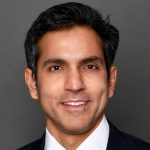
     

    Added Ahuja: “Today marks an important step in our efforts to bring together some of the strongest leadership teams, content creators, and film libraries in the media business to create extraordinary entertainment and value for Indian consumers,” adding: “I want to thank Punit and his team at ZEEL and the small army of people at SPE and SPNI who have worked so hard to get us to this point. I especially want to thank N.P. Singh, who presented us with the idea to explore this merger well over a year ago.  N.P. has done extraordinary work building SPNI to what it is today, and we look forward to continuing our work with him in his new role after closing.”
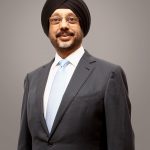
     

    Said Singh: “This merger will create a company that’s best in class and will redefine the contours of the media and entertainment industry. As a representative of SPE on the Board of the new merged company, it will be my endeavour to provide strategic guidance and support to the company’s operating team in achieving our vision. I am also excited at the opportunity of being appointed, Chairman, Sony Pictures India, to oversee SPE’s investments and craft a wider footprint for Sony in India.”
     

    SPE was advised on this transaction by Morgan Stanley, KPMG Corporate Finance, and Shardul Amarchand Mangaldas & Co. ZEEL was advised by KPMG, JP Morgan, Trilegal and Boston Consulting Group.


  • Zeno Group expands leadership

    By Our Staff


    Zeno Group communications agency has announced the appointment of Ketan Pote in dual roles as Head of the Mumbai office and the National Practice Lead- Technology and Reputation. This is intended to spearhead the growth of its Mumbai operations and to establish a strong Technology and Reputation practice in India.


    Pote was last with MSL Group in Mumbai where he worked for over eight years and was last an AVP. Based in Mumbai, Pote will report to Rekha Rao, Managing Director for Zeno India.


    Said Pote: “Zeno is truly a new-age agency, converting data into compelling, platform-agnostic strategies and ideas. I am excited about the prospect of continuously learning new ways of delivering impactful communications to our clients while rounding these up with my nearly two decades of experience, and of course the fearless philosophy.”


  • Das ka Dum with Dr Bhaskar Das | The film ’83’ releases on Friday. How did you celebrate the World Cup win on June 25, 1983?

    Bhaskar DasAnother soft question today, but, the events of the 1983 World Cup changed the face of not just cricket but A&M thereafter. Cricket got to the centrestage in every adspend/ media plan. Here’s Dr Bhaskar Das in the December 22 edition of Das ka Dum. Read on…
     

    If you wish to access the archives, please go to the Das Ka Dum tab on the website’s top navigation bar.


    Q.The film ‘83’ releases on Friday. How did you celebrate the World Cup win on June 25, 1983


    A. Only one word: ecstasy. Those days there were not enough scope of celebration of unique events that engendered national pride. Now there is cricket fatigue some time due to plethora of tournaments. Looking forward to reboot the same experience in a simulated manner through the ‘83’ film. In short, very excited. Memorable nostalgia is a treasure.


  • From vaccines to Wakau. Adar Poonawalla picks 20% in video platform

    By Our Staff


    Serum Institute of India CEO Adar Poonawaalla has picked up a 20% stake in Wakau Interactive Pvt Ltd, a JetSynthesys subsidiary. The community-driven social media platform Wakau offers short video content in entertainment and fashion domains with an associated video-commerce element. Poonawalla joins actor Amitabh Bachchan as Wakau’s league of investors. Launched by digital entertainment and technology company JetSynthesys, Wakau has recently bagged AWS’ prestigious ‘Best B2C Innovation Leveraging Amazon AI/ML Services’ award at the Amazon AI Conclave held last week.


    Commenting on this development, Poonawalla said: “New content formats like short entertainment and fashion videos are gaining wide scale popularity and Wakau, leveraging its advanced AI based tech stack has made it so easy, creative, fun and safe for consumers with its high levels of personalization. I’d like to congratulate the team on the AI award and am delighted to join this juggernaut of possibilities with Wakau as it sets off on its next phase of growth.”


    Added Rajan Navani, Vice Chairman & Managing Director, JetSynthesys: “We created Wakau with one goal, to entertain users and promote creativity. It empowers the creator community with both distribution and monetization of content through new-age mechanisms like NFTs. Short video sharing social media platforms have been seeing great traction from users since the last couple of years. Now no longer just a form of expression, the digital realm helps you build connections, a community of followers, and now make a mark in the metaverse. We’ve consistently leveraged various AI/ML service offerings from AWS in combination with in-house developed Data Science models to maintain content quality, filter out inappropriate content to provide a safer experience for users, develop new features and designs based on user requirements and serve the best content as per the user’s preference and interest while keeping them engaged. Adar has been privy to the team’s work done so far and sees the tremendous potential that the platform has. We’re thrilled to have him with us on the journey in official capacity now, alongside Big B, and we look forward to jointly unlocking newer milestones for Wakau in the future.”


  • ET MediaLabs bags digital mandate for Shadowfax

    By Our Staff


    ET MediaLabs, the performance marketing and analytics company, has announced partnering with Shadowfax Technologies, the on-demand food delivery platform that helps businesses outsource last-mile activities. Via this association, ET MediaLabs will be driving growth by offering high-end performance marketing services to the brand.


    Said Raghav Kansal, Founder & CEO, ET MediaLabs: “We are thrilled to announce our collaboration with Shadowfax. It is swiftly becoming one of the most trusted businesses, offering its consumers quick delivery services. Our objective for Shadowfax is to keep growth at the center of our approach and put our efforts in helping the brand scale by getting quality installs and users in order to grow its consumer base. The app has been positively welcomed by millions of users, and by using the right approach via performance campaigns, we will be able to assist them in scaling up. We are proud of our ability to give value to our associated companies, and we are thrilled to be doing so with our newest collaboration.”


    Added Ishan Parmar, Associate Director, Shadowfax: “Our organisation is well-known for providing quick and simple delivery services. We have experienced growth in terms of achieving a decent rate in the category. However, we plan to collaborate with ET Medialabs to unleash the power of performance marketing and scale up by getting quality users and directing them into our funnel. Associating with ET MediaLabs is an exciting chance as the company is well-known in the industry for providing high-end performance marketing services.”


  • Deepshikha Dharmaraj to India Group CEO @ BCW

    By Our Staff


    BCW, the global communications agency, has named Deepshikha Dharmaraj as Chief Executive Officer, BCW India Group. Dharmaraj will retain her current role as Chief Executive Officer, Genesis BCW, in addition to managing the overall business interests of BCW in India and implementing its growth strategy encompassing people, clients and partners.


    Said Matt Stafford, President, BCW Asia-Pacific: “Under Deepshikha’s impressive leadership in 2021, Genesis BCW has achieved one of its best years of revenue growth in it’s nearly three decades of operation. Six Degrees has also recorded double digit growth this year under Rishi and Vandana. The time is right for Deepshikha to take on a wider role overseeing both of our fantastic teams in India.”


    Added Dharmaraj: “It has been a great privilege to be part of Genesis BCW’s eventful and illustrious journey over the past 30 years,”. “Under BCW India Group, we have faced the challenges of the past two years with our combined assets and come out stronger for it. BCW India Group has ambitious plans for 2022 and I am excited to work closely with both the Genesis BCW and Six Degrees BCW leadership teams to take the business to new heights.”


  • Sanjeev Kotnala: Review of Suman Srivastava’s ‘Don’t Beg, Inspire’

    By Sanjeev Kotnala


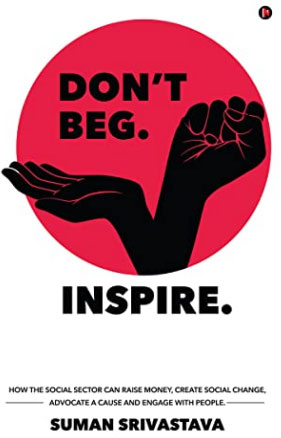
    Sanjeev KotnalaI am associated with Aid-Et-Action (Changing The world through education) in the capacity of  member South East Asia Advisory Council and India Board. Suman Srivastava’s second book, ‘Don’t Beg, Inspire’, resonated with me. The subtitle- ‘How The Social Sector Can Raise Money, Create Social Change, Advocate a Cause and Engage with People’ was very persuasive. I ended up ordering a copy on Amazon and absolutely loved reading it. Suman, the innovation artist and a batchmate from IIM Ahmedabad, has this wonderful capacity to simplify complex thinking and concepts which he did even when he was the agency head and I was the client.
     

    The Foundation

    Every SPO – Social Purpose Organisation have one of the four needs. Fund Raising, Advocacy, People Engagement and Social Change- many have all the four needs. They need to identify their audience and then make the audience identify with their needs, motivation, compulsions, and pressures. Communicate and press triggers for the people to help them get their results. And marketing is a definite need for them. However, marketing is somewhat underplayed and complicated for the lack of funds. Being a change agent and having a purpose alone does not cut ice. The result, yes, most of the SPO approach fundraising as pleading and pushing. Begging is a strong word for it: but indeed, it is not wrong.


    Marketing & Branding

    Marketing and branding appeal to both the internal and external audiences to get them towards the larger purpose. Branding aims to create cohesion among these people, rather than only the customers’ loyalty to the service or the purpose. When the identity matches with the external image through such efforts, then magic happens. The organisation ends up creating additional capacity and hence a more significant impact. Should magic not happen. The book provides a framework for the magic to happen.

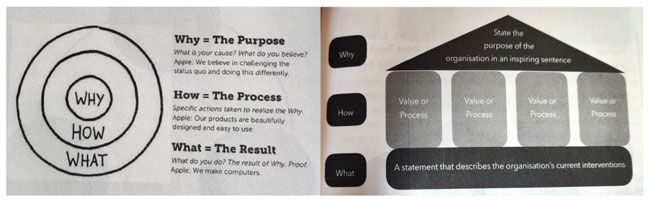
    Suman draws upon the book ‘Start with Why by Simon Sinek and his well-acclaimed TED talk. He makes the point to start with the why. Explain the purpose and then talk about how they are different and end in the product or service they offer, instead of the other way round. Suman is Justified as most SPO defining ‘WHAT’ they do and ‘HOW’ they do before coming to ‘WHY’ they do it. To simply, Suman proposes using the pillar or the HUT model- with the roof defining the purpose of the organising in an insuring way. The pillars that support are the values and the processes resting on the foundation of the organisation’s intervention.

    To make the reader comfortable and ease the understanding, Suman picks four different SPOs working in the same area of education. Teach for India, Educate Girls, Pratham and eVidyaloka. And then proceed to demonstrate how they differ in their models of Why, How and What?


    Works with Individual – Brand-i

    And I, the proponent of individual branding, BRAND-i, is maha pleased when he asks the reader to try the model at an individual level. I will plagiarise this for my next BRAND-i workshop- promise to give credit at the right places.

    Before taking the magic pill, he warns that defining the brand is the first step. Which is helped with the Why-How- What model. It does not mean that the world sees you that way- but it helps to clarify how we want us to be perceived, and it helps to measure how far we are from the desired position.


    Empathy Mapping

    Suman Srivastava  asks you to do the empathy mapping. Define What the audience says, thinks, does, and feels. Identify the most relevant and easy to influence audience segment instead of spraying masses with your appeal and communication. So, he proposes and, through stories, vigorously defends his approach. Again, the storytelling at work. So, the four steps are – Define the brand, Identify the desired behaviour change, understand the audiences and Generate the Strategy.


    Examples & Storytelling used to effect

    Suman picks up live examples to demonstrate the power of purposeful purposing and marketing in the sector. The examples as storytelling are quite a powerful tool to make the point, and Suman uses them judiciously. These examples are essential “people get defensive when you point out their mistakes, but when you tell them a story about someone else, they are free to work things out in their own heads. This way the lessons are learnt more easily and stay a bit longer. Skilled storytelling is a key to behaviour change. The brain processes stories a lot differently than rational facts and figures.


    My Favourite Example

    One of the examples of approach and marketing, one that I was not aware of (in addition to a few more) till I read the book, was covered in Chapter 24- Rap vs Unilever. About the Ponds thermometer factory in Kodaikanal, India and its impact. And when there was no action, the Chennai based rap singer Sofia Ashraf created a rap song that went viral on social media- with a hashtag to Boycott Uniliver. And it worked magic with Global CEO Paul Polman acknowledging and taking action. A song made Unilever give up!


    The Summarising Pit Stops

    There are PIT STOPS- yes, Suman calls the chapters summarising the learnings or the argument and examples in each section of the book- Pit Stop. While reading – it is advisable to take the title at face value- and really stop- reflect and then get recharged to attack the next section. Maybe reading these pit stops later is an excellent way to revive your learnings.

    I just hope that the book chapter on these examples dwelled more and shared their communication and efforts in many details. I am happy to note that few of these examples or the foundation- approach behind them were eye-openers to me- a person who prides himself in knowing and following such communication. 

    And with his art of simplicity draws upon the book ‘The Little Book of Green Nudges’ and asks you to go EAST, Make it Easy, Attractive, Social and Timely.


    The Missing Link – The Magic Key

    The donors ‘ customers are somewhat obvious magic but always missed key in SPO marketing. Because they are the key to getting the corporate donors interested. SPO mostly seems to focus on and about the underprivileged group- their audience or consumers they are working with, and the corporate donors.

    Instead of trying to convince everyone and hence target masses- the way is to start with the group that is most likely to change (Nudge theory). Once they change, they will encourage others to join them. As the crowd grows, more and more people join in.


    Suman has something for the Elephants

    Suman seems to love elephants. They were part of his earlier book- ‘Marketing Unplugged’– and they are here in ‘Don’t Beg, Inspire’- for a different perspective and objective. Here are some elephant notations from the book. Suman draws upon the analogy of the Elephant and the rider and the rider.

    The Elephant represents System-1 thinking, and the rider represent System-2 of the decision making. The Elephant is emotional and easily distracted. The rider is analytical and rational in approach and can guide the Elephant to the destination. Elephants will only go on a path when motivated to do so. If the course is challenging or there is something to distract, the Elephant may wander off. The Elephant always wins when there is a difference in the desire of the Elephant and the rider.

    :: The Elephant has a long memory and doesn’t change very fast. But, once it does change, then it keeps a new memory for too long.

    :: Elephants like to move in a herd, and that’s their comfort zone. It is the same with the Elephant of the mind.

    :: The rider of the Elephant is analytical and logical. But also tends to do too much analysis and sometimes gets into a bind as a result. Gets into analysis-paralysis. So, it is vital that the rider gets a clear direction and not be burdened with too many choices. Then the rider and the Elephant is more likely to proceed to the desired behaviour.

    :: The Elephant likes to take the easy path, and he’s also playful and prefers the path that is more fun.

    :: The Elephant sometimes listens to its readers. Especially when the rider is someone it respects for lovers. In short, an authority figure.


    Nudging you further

    I had read the NUDGE THEORY and thought I understood it reasonably well, but Chapter 66- on FAQ’s in Nudge Theory was somewhat of a revelation. It is a well thought out chapter- as Suman banks a lot on Nudge theory in making his model. In the current world where instead of reaching across a larger audience, the idea of approaching a smaller- but easy to change audience- followed by them converting others is important. What is important is the quality of the ideas/strategy and how it can be good starting a movement. That is as simple as community building. The focus should remain on ‘Infecting’ a small number of people and getting them to spread the message. The message must resonate deeper with this smaller section of the audience. And then, they will spread the idea and the movement to many others. In the end, that is the task and the objective.

    So, if you are an SPO or involved in the social sector, read the book. But, if you are in corporate marketing, still read the book. Maybe the book will remain in my not to be UnCaged list for some time. On the other side, you  could  ask Suman to help you with the process- do a workshop for you- help shift from Begging to inspiring. And would that not be great?


    ‘Don’t Beg, Inspire’

    By Suman Srivastava

    Notion Press

    Rs 299

    227 Pages

    Available at Amazon.

  • Das ka Dum with Dr Bhaskar Das | It’s our annual X’mas question: Your wish to Santa for the Indian A&M industry?

    Bhaskar DasAs we said, it’s our annual question. So let’s read what Dr Bhaskar Das writes in the December 23 edition of Das ka Dum. Read on…


    If you wish to access the archives, please go to the Das Ka Dum tab on the website’s top navigation bar.


    Q. It’s our annual X’mas question: Your wish to Santa for the Indian A&M industry?


    A. My prayer would be that let the world be filled with warmth and good cheer this Holy season, and throughout the year for everyone. The world needs healing. A of us need it, irrespective of industry. Everything else would follow in due course.


  • UFC martial arts and Timex enter global partnership

    By Our Staff


    UFC mixed martial arts organization and Timex have announced a major global sponsorship and licensing partnership that provides an ideal marketing opportunity for each brand to reach more fans and consumers.


    Timex will become an ‘Official Licensing Partner of UFC’ and will offer a wide variety of UFC-branded products, including wristwatches, health and fitness tracking-enabled watches, watch straps, clocks, and more.  Each piece will be made with the same craftsmanship, quality, and innovative design that has made Timex the most famous watch brand in the world.


    Said UFC President Dana White: “Every fight fan knows the importance of time and clock management in this sport. Every second counts, and the ticking clock adds to the drama and the fun of a great UFC fight.  Now Timex is going to be associated with UFC’s biggest moments as they’re broadcast around the world.  Timex is an iconic brand, and we’re looking forward to having them as an official UFC partner.”


    Added Tobias Reiss-Schmidt, President & Chief Executive Officer of Timex Group.”We could not be more excited to partner with UFC to create a collection of Timex UFC timepieces that embody the toughness and tenacity of both brands. The undisputed leader in combat sports, UFC has built a lasting, recognized legacy. As the official Timekeeper and Watch partner of UFC, we can’t wait to deliver iconic products that speak to the unique and diverse global UFC fanbase and celebrates UFC’s biggest moments.”


  • #SonyZee Merger in ~8 months, Cricket rights & OTT key to future


    By Our Staff


    As most of the paperwork has been completed with the two parties having signed a definitive agreement, all eyes are now on the regulatory approvals. The 75 per cent shareholder approval is being given much importance, given the problems that Invesco had with the Zee promoters. But that we hear isn’t much of a problem. Invesco wants maximum bang for its invested buck, and is not known to be a predatory investor. Either in India or the rest of the world.


    However, it must be noted that while the Zee-Sony merger is being called a done deal, there have been a few instances when the final closure hasn’t happened. The much touted Publicis-Omincom merger, for instance, fell through. In India too, some like HDFC and Max Life, RCom-Aircel, Snapdeal-Flipkart and IDFC-Shriram Finance are said to have failed at the ‘due diligence’ or a variety of circumstances, most often dubbed ‘unforeseen’.


    But both Zee and Sony have been wanting to get this done, with each other and with others. Given that it’s been discussed in their own offices for a while, care would’ve been taken to ensure their books and operations are merger-ready.


    A lot is being said about what the merger and what it will mean. Other than it becoming a behemoth and the biggest broadcast conglomerate in the currently, there is a great amount of soul searching that the combined entity needs to be done.


    01. Other than the Sony Sab in the Tier 2 (or shall we say 1A), none of the general entertainment channels are #1 the pack.

    02. The sports channels have some good properties, but without IPL and the various India cricket matches, it doesn’t have the desired clout

    03. Both Sony Liv and Zee 5 have some good content, but Disney+Hotstar among the Indian entities, and Netflix and Amazon Prime Video are bigger. Plus there’s Voot that’s getting into sports and could emerge as a significant player. It’s gambit for Bigg Boss, for instance, was significant. Perhaps a merger of Zee5 and SonyLiv will be a good idea

    04. The strength of Zee has been in its regional play, but its mainstay Marathi offering has taken a beating in ratings. The others are good, and there is an urgent need to consolidate that franchise

    05. The studio business is good and strong, but the likes of an Endemol, Balaji and now even Applause are doing some great, buzzy work


    In the light of the above, and some exceptional talent that both organisations have, there is a clear advantage of a merged entity.


    One of the factors discussed in the run-up to the agreement signing on Tuesday was the factor that Zee will be reduced to a minority shareholder, even as Punit Goenka will be the boss. Founder and chairman emeritus Subhash Chandra is known to never be a silent member in the M&E space. He is sure to spring back to something significant soon with a few of his other M&E interests. Also, what about the charges that Invesco had made about Zee and its governance. If indeed they are incorrect as Zee has said, will the conglomerate file a defamation suit against it? Or will there be a settlement.


    All eyes are clearly on the merger happening sooner that. Most in the A&M&E arena have welcomed the move.