Author: mxmadmin

  • Nanhi Kali: Story of the triumph of communication

    By Tuhina Anand


    Project Nanhi Kali along with StrawberryFrog has set a fine example of what an evocative communication can do for a cause. When KC Mahindra Education Trust, a registered public charitable trust in India and Mahindra Foundation USA, both not-for-profit arms of the Mahindra Group commissioned StrawberryFrog NYC (known for being the world’s first cultural movement agency), it had an inkling of the path ahead. The task for the agency was to help create awareness and support for its Project Nanhi Kali globally, especially through digital and new media campaigns.


    For decades, Project Nanhi Kali relied on paid advertising to generate awareness and support. Seeing the immense potential of the world wide web and the recent social media boom, the management decided to focus all its resources towards the cause and completely reinvent its marketing strategy to harness the potential of the digital media and online space.


    The collaboration between Project Nanhi Kali & StrawberryFrog has witnessed the design and launch of some unique and successful digital campaigns like the ‘A Girl Story’ (http://www.agirlstory.org/), ‘Girl Store’ (http://www.the-girl-store.org/) and the more recent ‘Girl Epidemic’ (http://thegirlepidemic.com/).


    Through these innovative campaigns Nanhi Kali has not only been able to successfully create mass awareness globally and raise sponsorships amounting to $44,218 for the project as well as drive traffic to the official Nanhi Kali website and generate a buzz on online communities such as Facebook and Twitter.


    The StrawberryFrog-Project Nanhi Kali collaboration has witnessed the launch of some innovative and hard-hitting campaigns that have created a buzz online. StrawberryFrog has purposefully designed these campaigns to be provocative to create an initial shock and awe response to the campaigns, and thereby create awareness and break through the wall of indifference.


    The websites individually and collectively not only put the issue of uneducated girls being most vulnerable to exploitation upfront, but also provides the viewer with a solution to join the fight against it by sponsoring the education of young girls. The idea is to bring about a shift in the “culture of silence” in our societies and bring critical issues to the forefront and seek global support to bring about effective change.


    Sheetal Mehta, Executive Director Project Nanhi Kali, on the Girl Epidemic (the recently launched campaign) said: “The Girl Epidemic must be seen and shared, there’s never been anything like it.”


    She added, “The work for Nanhi Kali could convert those who think that creativity in advertising is on the wane. The sheer volume of first-rate award winning work being produced is impressive. From the simple brilliance of “A Girl Story” which is the world’s first donation-based online film series to another standout – The Girl Store an opportunity to bring e-commerce and creativity together in an innovative campaign and where you can buy a girl her life back before someone else takes it.


    The creative excellence, strategic smarts and work ethic of StrawberryFrog working on Nanhi Kali has helped spark something special for brand Nanhi Kali. Further, StrawberryFrog has always understood that a nonprofit has limited resources, and therefore the message being sent needs to be strong and powerful enough to start a movement. The momentum, being slowly built over the past four years, has created a body of work that is outstanding. We are seeing Nanhi Kali at its best.”


    Scott Goodson, Chairman of StrawberryFrog said: “Our goal with this work is to generate more money to educate girl children through Project Nanhi Kali. Period! And we wanted to do this with the greatest weapon we have at our disposal: creativity and innovation.”


    Here’s a look at what StrawberryFrog has created for Nanhi Kali Project


    The Girl Epidemic

    StrawberryFrog & Nanhi Kali recently launched the Girl Epidemic. It shows how girls in some parts of the world are treated as an infectious disease. It highlights the centuries-old absurdity that would value the life and potential of a young girl less than a boy, the result of which is the disappearance of girls, the selling of young girls as young as 8-years-old into sex slavery or marriage. The extremely powerful campaign brings home the message that this is wrong, that it must stop, and that education is the cure. In fact, it is the cure to solving the most important challenge we face as human beings. If you educate a girl, you educate a family, and as a result you reduce overpopulation, environmental impact, hunger, disease and a host of other world problems. The Girl Epidemic shows how educating a girl can save the world.


    The multiplatform Girl Epidemic campaign features an innovative e-commerce site. The main spark to ignite the Girl Epidemic is a major film production for YouTube and the Girl Epidemic ecommerce site where you can make donations. It is a unique trailer-style film that dramatizes an already disturbing societal norm. Young girls are often sold into sex slavery, child labor, and are frequently killed at birth because they are not of the desirable sex: male.


    The cure for The Girl Epidemic is education. Donating to www.TheGirlEpidemic.org can help change deep-seated social norms by allowing girls to receive an education, therefore transforming young girls to become valuable members of society – making them indispensable.


    The Girl Store

    In 2010 KCMET & StrawberryFrog together launched www.the-girl-store.org. ‘The Girl Store’ is an innovative website which allows the viewer to sponsor the supplies that allow an underprivileged girl in India to go to school and get an education. The Girl Store operates like an e-commerce site. The site asks visitors to a buy a girl her life back by donating school materials to underprivileged girls in India. Visitors can buy specific items, such as a backpack, workbooks, or school shoes for a girl pictured on the site.


    The core idea reiterated throughout the site is that the life of an underprivileged girl is not a condemned fait accompli. It is up to the viewers to change her destiny by ‘buying’ her life back – empowering her through education.  Funds raised through the site are used to provide holistic educational support (not only academic support through classes, but also material support in the form of a comprehensive material kit) to underprivileged girls in India. This website has raised $40,000 through online donations on the store, from 1115 donors globally till date providing educational support to 500 underprivileged girls in India.


    The site has received over 3 million hits till date, raising enough funds to send hundreds of girls to school, and has also received global media coverage. The ‘Girl Store’ has earned critical acclaim to its credit, including the ‘Bronze Pencil’ at the prestigious One Club Annual at One Show Awards held in New Yorkin 2011. It also received a ‘Bronze Cyber Lion’ at the Cannes Lions International Advertising Festival 2011.


    A Girl Story

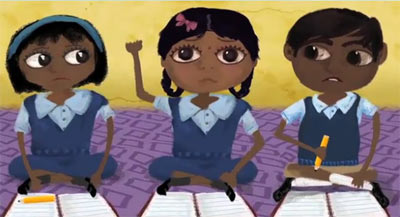
    Launched in 2010, A Girl Story is a unique, donation-based film series that combines technology, film, and storytelling to shed light on the global challenge of educating young girls. The animated, emotional story follows the path of a young Indian girl named Tarla who wants to go to school to better her life. Whether she succeeds, however, is completely up to you, because Tarla’s story progresses only by audience donations that unlock new chapters within the film series. This website raised approximately $4,000 from 182 donors globally.

     

  • JWT acquires 51% stake in Hungama Digital

    From the MxM Infodesk


    Leading advertising agency JWT has acquired a majority stake in Hungama Digital Services, the digital and promotions marketing division of Hungama Digital Media Entertainment. Although the joint communique issued does not state it, MxMIndia learns that the JWT stake in Hungama Digital will be 51 percent.


     

    The new entity which will be called Hungama Digital Services Pvt. Ltd.will be a full-service digital agency specializing in digital marketing and social media solutions. As part of the acquisition, Hungama’s activations arm, Hungama Promo Marketing will become a part of Hungama Digital Services Pvt. Ltd. and provide an engagement platform linked to online and offline deliveries.


    Neeraj Roy

    Said Neeraj Roy, MD and CEO, Hungama Digital Media Entertainment, “With JWT, we are now part of the largest advertising network in the world. Hungama Digital Services is the coming together of two exceptional teams in a globally relevant market.” He added, “India is at the cusp of a digital revolution with the advent of 500+ million consumers getting online in the next 3-4 years. From augmented reality to developing applications for connected devices, Hungama Digital Services has been at the forefront of digital technology. With this partnership\ with JWT we hope to offer integrated digital and experiential services to our clients and prepare brands to connect, interact and now transact with their customers.”


    Hungama Digital Services has been a dominant player in the digital space for 13 years and is spread across six cities in India. The existing team of 120 people, who will join Hungama Digital Services, will continue to drive the agency, including servicing old and new clients and offer creative and promo marketing services, viral marketing campaigns, social media marketing and mobile marketing, applications, managing websites and video services.


    Colvyn Harris

    “Digital is our next new frontier.The idea of the partnership is to build a digital offering for our clients so we can live up to being a ‘single source’ partner across all their ‘marketing solutions’ needs. What will be most effective in the future is a new set of talented, digital high end specialists who will add new skills and capabilities to what JWT already offers to its clients. We want all our clients to be leaders in their respective categories.” said Colvyn Harris, CEO of JWT India.


    With this acquisition, Hungama Digital Services along with JWT Digital capabilities will be a digital thought-leader with delivery capability in digital ideation, production, and social media.By our association with many of India’s largest clients, Hungama Digital Services will be able to create the right traction and critical mass within the digital and business community in India.


    “We have greatly expanded our digital capability across the region, and we are not standing still. JWT will continue to hire new digital experts and explore possible acquisitions across the region this year,” said Michael Maedel, President, JWT Asia Pacific.


  • Eros International launches online music channel

    From the MxM Infodesk


    Movie-makers Eros International Media Ltd has announced the launch of a dedicated online music service on YouTube titled ‘Eros Now Music’ (youtube.com/erosnowmusic).


    The channel will serve as a platform for emerging and established artists and will showcase original music content and leverage from the global reputation of Eros as a premium content provider.


    Speaking on the launch, Ricky Ghai, CEO, Eros Digital, said: “As part of our digital transformation, the launch of Eros Now Music is a step forward in providing rich and original music exclusively on the digital platform. This is part of Eros’s global vision to raise the stake and appreciate the raw and diverse talent of South Asian Music and promote it on the world platform.”


    Eros Now Music will feature established as well as emerging talent including Shaan, DJ Sheizwood, UK-based pop artist Kimeli, Shweta Yogendra, Farhan Saeed, Gajendra, Simmy and Tippy, Rahul/Shah Rule among others. The content on the newly launched channel will include music videos and behind-the-scenes footage.


  • Online ad platform Komli Media raises $39 million

    By Radhika P Nair


    Komli Media, India’s biggest online media technology platform for advertising, has raised $39 million, or Rs214 crore, in the biggest round of fundraising by an internet company in the country this year.


    Norwest Venture Partners led the latest round with participation from existing investors- Nexus Venture Partners, Helion Venture Partners and Draper Fisher Jurvetson- along with one new investor, Western Technology Investment.


    Komli’s CEO Prashant Mehta declined to disclose the valuation of the Mumbai-based company in a deal which takes the total private equity capital raised by it to $62 million. Industry experts said that internet companies in India are typically valued at up to five times their revenue. Komli, which is targetting revenue of $100 million in 2013, can therefore be inferred to have a value of up to $500 million.


    “Considering that advertising spends are the first to get affected in a downturn, this investment has greater significance than just the amount invested,” said Mayank Rastogi, a partner who specialises in private equity at consultancy Ernst & Young.


    The month of May saw the lowest amount of private equity investment in the past year, with just $385 million in funding for 32 deals. In contrast, in May 2011, there were 44 deals, in which close to $1.3 billion was invested. Mr Mehta, whose company counts Facebook as an exclusive partner in India and expects a Nasdaq listing within 18 months, was of the opinion that even though the overall environment is gloomy, it is not so for the digital media industry.


    “We are at a tipping point. Komli thinks the digital medium is far more accountable and provides greater return on investment,” he said The online advertising market in India is estimated to be worth Rs1,850 crore, which is just 7 per cent of the overall advertising pie, according to an Avendus Report. However, the sector is expected to grow rapidly to Rs7,000 crore by 2015. Google and Facebook collectively account for about 29 per cent of direct advertising spends.”


    Founded in 2006 by Amar Goel, who is also the chairman, Komli has been aggressively buying companies overseas to speed up growth. In February, it made its sixth acquisition in two years, buying Singapore-based online advertising network Admax.


    Last year, Komli took over the India business of video advertising venture Jivox and in July 2011, it acquired mobile advertising and publishing network Zestadz. The Zestadz acquisition marked Komli’s entry into the fast-growing mobile advertising segment.


    “It is in the mobile advertising space that Komli competes directly with Google’s AdMob, which is the market leader globally and in India, and with InMobi,” said Srinivas Chari, cofounder and chief marketing officer of Xerago, a digital and interactive marketing company.


    Source: The Economic Times
    Copyright © 2012, Bennett, Coleman & Co. Ltd. All Rights Reserved


  • End of Digital Beginning for M&E: PwC


    From the MxM Infodesk


    Digital migration is increasingly playing out differently across the various segments and geographies of the entertainment and media industry, says leading consulting firm Pricewaterhouse Coopers’s Global Entertainment and Media Outlook 2012-2016. Despite ongoing economic uncertainty, the past year has seen global sales of tablets and smart devices reach record levels once again, underlining the growing revenue opportunities from digital delivery of media and entertainment (M&E) content and advertising to increasingly connected, and particularly mobile, consumers.


    According to PwC’s annual Global Entertainment and Media Outlook 2012-2016, released yesterday (June 12), digital opportunities are now well understood by media companies, advertising agencies and advertisers themselves: the industry is approaching the ‘end of the digital beginning’ as rising comfort levels with digital mean that it is becoming business-as-usual. Although the ‘fog’ experienced in the past few years around strategic options is lifting, there is more to be done: today’s challenge is in the implementation of those digital strategies.


    A world of difference

    PwC believes that though the focus may still be on digital migration, challenges for M&E companies differ according to diverging market pictures across segments and geographies. Tipping points and contrasting market development rates highlighted by this year’s Outlook data and analysis show:


    • Global media and entertainment spending on digital advertising and consumer formats increased by 17.6 percent in 2011 compared with only a 0.6 percent rise in non-digital spending. Digital’s share of total spend will grow from 28 percent in 2011 to 37.5 percent in 2016, and digital spending will account for 67 percent of total M&E spending growth to 2016.
    • Digital maturity varies widely at a segment level. For example, global spending on digital recorded music formats will overtake physical distribution in 2015, reaching 55 percent of total revenues in 2016. And global spending on online and wireless video games will overtake console and PC games revenues in 2013. By contrast, the digital component of consumer magazines will account for only 10.4 percent of spending by 2016, up from 3.1 percent in 2011.
    • Global spending on music rose 1.3 percent in 2011, the first gain in many years, thanks to growth in the concert and music festival market and a slower decline in recorded music. Rises in digital music spending mean that overall, global spending on recorded music will finally begin to increase in 2013.
    • Mobile internet access subscriber numbers, a key driver of digital spending, will more than double during the next five years to 2.9 billion by 2016, of which almost 1 billion will be in China. In India, mobile internet subscribers will increase from a low base at a compound annual rate of 50.8 percent to 2016, making it the fastest growth market for mobile internet in the world.
    • By 2016, global mobile internet advertising revenues of $24.5 billion will grow at 36.5 percent compounded annually, to almost match the size of the classified internet advertising market. However, paid search at $78.1 billion and banner/display at $46.6 billion will retain the lion’s share of the market in 2016. China’s mobile internet advertising market will grow at a compound rate of 68.4 percent to reach $6.2 billion in 2016, making it the second largest market in the world behind the United States at $9.4 billion.
    • The newspaper publishing segment illustrates diverging trends across mature and growth economies. There will be ongoing declines in some territories such as the United States (declining 1.4 percent compounded annually to 2016, and expected to be worth 43.8 percent less in 2016 than 2007), but strong growth in countries where the digital infrastructure is less mature, such as Argentina (11.9 percent growth compounded annually to 2016), Indonesia (11.2 percent), and India (9.6 percent).
    • France passed the United Kingdom and Germany in 2011 to become the second largest TV subscriptions market in the world behind the United States, driven by a 76 percent rise in IPTV households. In the TV advertising segment, spending in Russia surged by 20.2 percent in 2011; by 2016, Russia will overtake the UK, Germany, Italy, and France to become the largest TV advertising market in EMEA (Europe, Middle East and Africa).
    • In the worldwide filmed entertainment market, over-the-top/streaming services will grow at a 21.0 percent CAGR to $11 billion in 2016, and will overtake spending through TV subscription providers in 2012.


    Said Marcel Fenez, Global Leader, Entertainment & Media, PwC: “The various segments of the M&E sector are at different stages of digital development, but they are all embracing digital to meet the ever-changing demands of consumers effectively and profitably. Media and entertainment companies have reached what we’re calling the ‘end of the digital beginning’: they’ve made the commitment to a digital future, and are now striving to make the necessary changes to their products, distribution and organisations.”


    Reshaping and retooling for life in the digital new normal

    According to the Outlook, the challenge now for M&E companies in a world where digital is established as ‘business as usual’ – and in those markets where the infrastructure is suitably developed to support digital distribution and consumption – is to focus on planning out and executing their digital strategies. Uncertainty in past years triggered by digital migration is giving way to a sharper focus on identifying, choosing and executing the business models, organizational structures and skill sets to harness new consumer behaviours and deliver rising future value.


    • A finger on the consumer’s pulse
      M&E companies need more than ever to understand consumer behaviours and motivations in order to engage with and immerse consumers in their connected, multi-screen environment. Data analytics tools are required to mine the mass of customer data, however the development of such tools may be triggering consumer fears over risks to their privacy. PwC believes that avoiding this will require a shift of industry mindset from ‘customer ownership’, towards facilitating a position where the customer is ‘in control’.Companies will find that giving consumers more control over how their personal data is used may deliver higher benefits back to consumers, encouraging them to volunteer even more information, as well as providing better value for advertisers and higher rewards for media owners. Businesses need to aim for a win-win model in which the medium, the advertiser and the consumer all collaborate and benefit. Ultimately, the only person who ‘owns’ the customer – and the customer’s data – is the customer him or herself.


    • New roles emerge across the M&E value chain
      M&E companies need to identify the role or roles they will occupy as new structures emerge across the digital value chain, and work collaboratively with other providers with complementary capabilities.


    According to the Outlook, these roles could include:

    • acting as the online destination or physical auditorium that hosts the customer experience (the ‘venue’)
    • aggregating and filtering consumers’ content requirements (the ‘community curator’)
    • providing exclusive content (the ‘content monopoliser’)
    • being the ‘device developer’
    • acting as the consumer’s trusted content companion across devices (the ‘digital services champion’)
    • being the third-party specialist supporting experimentation, innovation and execution (the ‘ideas generator’)


    For creative and media agencies, the rise of unpaid or earned media reflects an innovative new fusion of advertising, content and analytics, and presents an opportunity for sweeping change in their roles and business models. Advancing socialization is feeding into the widely-accepted concept among agencies and advertisers of “bought, owned and earned” advertising. A fourth category is emerging — “managed” advertising, (the orchestrated use of social media, such as engagement via bloggers). Everything that agencies do for their clients now has an embedded digital component and agencies are directing clients’ attention toward output measures such as earned/unpaid media reach, and purchasing intentions.


    There are therefore opportunities for agencies to act as digital marketing and brand consultants, guiding their clients with insights into opportunities around the aggregation of data, socialization and content – particularly as the historical distinction between traditional and digital disappears.


    • Benefits of reorganizing around digital
      To date, many M&E businesses have developed digital as an adjacent operating group, with separate infrastructure, solutions and staff. But in the ‘new normal’, PwC believes that companies need to move away from this siloed approach, instead embedding and integrating their digital operations into the main enterprise, and driving improvements in three key areas: profitability, by reducing operational costs through common platforms and integrated business processes; scalability, gaining greater agility to grow and flex the business; and innovation, through integration, automation and talent.To realise these benefits, companies will have to tackle challenges around rights, royalties and piracy – areas where many M&E companies are often burdened by rigid, complex, bespoke legacy systems There are additional issues in leading and marshalling the talent and culture of innovation, needed to make digital implementation a reality, particularly in meeting the distinctive employment needs and expectations of the Millennial generation.

      Added Mr Fenez: In the face of sweeping change and uncertainty, the M&E industry has spent the past few years seeking effective business and operating models for the new world, through a cycle of constant experimentation, ongoing innovation and targeted analysis of the results. This will continue. But with digital now at the core of business-as- usual, PwC believes that experimentation and execution are no longer sequential but will proceed in parallel, enabling M&E companies to press ahead into the ‘new normal’ with confidence.”

      “We’ve reached the point at which talking specifically about ‘digital’ increasingly misses the point. As digital becomes the standard, its rising penetration ceases to be a topic for discussion in itself. What matters now is how companies capitalise on it and operate within it,” he said


    The Pricewaterhouse Coopers Outlook for Entertainment and Media 2012-2016 can be purchased at www.pwc.com/outlook.


  • Vizeum bags media duties of Bloomberg UTV

    By A Correspondent


    Aegis Media’s Vizeum India announced their appointment as media AoR for Bloomberg UTV. As Bloomberg UTV prepares itself for an aggressive growth strategy, Vizeum is roped in as the Media AoR and will play a vital role in the channel’s future growth plans.


    Confirming the same, Sriram Kilambi, President, Bloomberg UTV said: “We were on the lookout for a passionate, result-oriented partner who would think like us and find value for us. Vizeum came to us with strong references and once we met, we knew they had what we were looking for. We are looking forward to working together.”


    Commenting on the win,S Yesudas, Managing Director – Indian Subcontinent, Vizeum said: “We had a dream of attracting clients and talent to Vizeum automatically in our 4th year of operation, rather than us having to go out, based on what we do. As we are embarking on the 4th year, I am delighted with the progress we are making. I take this opportunity to welcome Bloomberg UTV into the Vizeum family. We are thankful to Sriram and his team for considering us worthy. This business will be handled out of our Mumbai office.”


    Vizeum successfully operates in 55 countries with a philosophy of in-depth understanding of the co existence of lives, brands and media in the actual world.


  • Troll travails thanks to Twitter

    Ranjona Banerji

    By Ranjona Banerji


    Warren Buffett’s research has shown that while people may no longer read mainline newspapers, they are still loyal to their local community papers. Or at least that’s why Hathaway has invested in any number of community papers in the US but will not put money into the mainstream media. The same research also shows that people who do not buy mainline papers will read them online but not if they have to pay.


    This is a lesson about the internet that the traditional media in the west especially has yet to understand. In India, newspapers are free online but even they have irksome proceedings – like having to register to read the e-paper format like The Hindu. Others like Mail Today only have an e-paper format and no website which is also annoying.


    The freedom of the internet is what makes it appealing – even if no more than 200 people gathered to protest internet curbs – and this includes freedom from opening the wallet.


    The Huffington Post and Daily Beast both every effectively use social media like twitter and Facebook to push their stories – the Indian media is not quite so effective. Although Firstpost (web) and Mid-Day (paper) are not too bad and Firstpost also has the advantage of a fan base which retweets.


    The Times, London is a downer because it requires a one pound payment to open any story and the question is not of the amount so much as the procedure. This also stops The Times from reaching a wider audience as its stories cannot get picked up websites which collate news of a certain kind or allow readers to pass interesting articles along.


    * * *


    Until someone invents something better, Twitter remains the best disseminator of news as it happens. There are disadvantages, as passionately delineated by Namita Bhandare in the Hindustan Times (http://www.hindustantimes.com/technology/SocialMedia-Updates/Running-away-from-the-trolls/SP-Article1-868619.aspx). Bhandare’s problem is mainly to do with the viciousness of internet trolls and she has clearly suffered. But of course it could be argued that the only reason that these “trolls” are so annoying/frightening is because of the enormous access that the internet provides. These “trolls” exist in real life also but we may not meet them that often. The internet cannot invent new ways of human behaviour.


    This response to Bhandare’s article by someone who calls himself a “troll” (aah, irony thou are not dead in India yet) is also illuminating  http://chamchaa.wordpress.com/2012/06/10/an-open-letter-to-namita-bhandare/.


    * * *


    From my personal experience as a columnist for many years I can safely say that people will insult you if they want via any medium of communication open to them. Twitter is just one more. I for one have got death threats, legal notices envelopes filled with talcum powder pretending to be anthrax and plenty of questions raised about the sexual habits of my ancestors and in the old days, all these came via the post office. So what, say I?


    Years of reading letters to the editor (in practically every publication I have been part of) has at least made me realise that people are dying to be heard and deeply resentful when their voices are blocked – or when they perceive it as such. Twitter gives them such a wonderful platform to vent and get rid off their frustrations. Worse than any “troll” remains the famous Mumbai postcard writer with the initials ‘MSK’ whose imagination and capacity for personal insults was prodigious. I believe he is no more and his loss is deeply felt. These are the people who make becoming a journalist worthwhile.


    Yes, there are offensive people on Twitter but one can either not encourage them or just shut them off!


  • TDSAT reprieve for broadcasters, stays TRAI’s ad duration rule

    By Shruti Pushkarna


    The Telecom Disputes Settlement and Appellate Tribunal (TDSAT) has stayed the Telecom Regulatory Authority of India’s (TRAI) notification to limit the duration of ads to 12 minutes per hour. The case will come up for hearing next on July 17.


    The TDSAT stay comes is a relief to broadcasters who slammed the TRAI’s move to limit the duration of ads on their networks. Uday Shankar, President of Indian Broadcasting Foundation (IBF) and CEO of Star India has confirmed the development to MxMIndia.


    In an earlier statement, Mr Shankar had said, “TRAI has no jurisdiction in the subject. Advertising is governed by the Cable and Satellite Act and the appropriate authority is with the ministry of information and broadcasting. The regulator is overstepping its brief.”


    Speaking to MxMIndia after the stay order by TDSAT, Mr Sunil Lulla, Vice-President, IBF and Managing Director & CEO of Times Television Network said, “Since the stay is only for a month, there’s another hearing coming up. It’s not appropriate for us to comment when it’s work in progress. As for our stand on the ad cap issued by TRAI, our stand is well known and it won’t change.” Mr Lulla, who is also on the Board of Directors of the News Broadcasters Association, had criticized the TRAI’s decision on limiting the duration of ads, in the past. He said, “This move is completely ridiculous. Self-regulation is the best regulation.”


    Broadcasters believe that low revenues from subscription leave them no option but to rely heavily on revenues from advertising. However, there is a large section of media professionals and consumer organizations which which believes that broadcasters have misused the leeway given to them so far, and the number of ads screened at peak hours mars the viewer experience.


  • Making brand the hero with BPN


    Just when you thought that the media agency space is getting crowded in India comes the news of another agency setting up shop in India. Brand Connections that was present in 12 countries across the globe excluding India and the United States, will now be rechristened Brand Programming Network. In effect this will be the official launch of BPN in India. And simultaneous with the rest of the world. This will make the agency the third such offering from IPG Mediabrands in India. It already has two in the form of (Lodestar) UM and (Lintas) Initiative. BPN will work under the LMG umbrella.


    Says Lynn de Souza, Chairman and CEO of Lintas Media Group in a communique, “For media agencies thus far, the starting point has always been the advertiser. Consolidation, portfolio management, aggregation etc. are all client focused and to some extent consumer data driven. BPN will focus on the brand. The time has come to turn back several chapters and make the brand the hero of all communication effort, and BPN has developed processes to do just that.”


    BPN will take on the service mandate of clients like Jyothy-Henkel, Bajaj Auto, Samsonite, and several other clients of LMG to start up with a billing volume of over Rs. 1000 crores, in Mumbai, Delhi, Hyderabad, Kolkatta and Cochin.


    In India the agency will be led by Suresh Balakrishna, who has assumed charge as CEO of the agency. While BPN will be essentially a media agency, it will play the game differently by focusing on the brand. “Everything that we are recommending is going to be from a brand strategy direction,” assures Mr Balakrishna, as he gave MxMIndia a quick peek of what to expect from the agency in India, hours before it was unveiled.


    In conversation with Pradyuman Maheshwari and Johnson Napier, Mr Balakrishnan delves on how BPN will be different from the others, on the increased emphasis that will be laid on social media and digital and the new initiatives to look forward to from BPN in the coming few months. Excerpts:


    Is Brand Programming Network old wine in a new bottle?

    No, it is not. The usual answer that comes up about a third agency is that it is created due to a conflict of clients, allowing you to take on more of the similar clients. But with BPN, it is a thought-out strategic decision. If you look at India, there is no immediate conflict business (from network agencies) that is being parked in BPN. If you look at Mediabrands, for the last 10 years it has had a network called Brand Connections in other countries. But as markets have developed, especially a market like India, we find that there are enough businesses out here to have a third agency with a different character, a different way of thinking…and of course help handle conflict in the long run. So it’s not a knee-jerk old wine in a new bottle reaction from our end.


    The reason we ask you this question is that you have reallocated some of your existing businesses here. Does this also mean that Initiative and BPN could be in conflict with each other?

    It could be. In our system we can compete for businesses for the same pitch and may the best team win. Therefore we have a Lodestar UM, an Initiative and a BPN; we have three networks here in India and all three can compete for a business if necessary.  We do believe there is enough business out there and why leave some money on the table…


    What is it about BPN that differentiates it from others?

    A few things actually. Firstly, we are turning the clock back as an agency. We are going back a little in time and therefore the name Brand Programming Network. The whole idea is to focus on the brand. Earlier, media used to be in one house there used to be much more brand focus, even the media guys owned the brand. But over a period of time, media has become more professional, accountable, larger, etc but somewhere in the process we believe that brand connect has got lost. Therefore, BPN would be an agency that would focus on the brand; everything that we are recommending is going to be from a brand strategy direction. To give an example, in the last four months we have won over four-five businesses and in almost all the business pitches the client fed back to us saying is this a creative agency presentation or a media agency presentation? So you can imagine the extent to which we are spending time to analyse the brand, looking at brand strategy, looking at TG, etc. We are focusing on that aspect of the business and of course at the end of the day media is just a delivery vehicle.


    In fact Mr Shashi Sinha even hinted in an interview with us that we need to return to the full-service agency model. Are you in agreement with that statement?

    Half-way house, I would say. We are calling ourselves a full-service media agency in the sense that the touchpoints today have become all-pervading. For example, the touchpoint would be you ride on content. But who creates that content? You have an instance where the customer himself creates content in digital and then you have specialists who create content. So content itself has no owners and therefore reaching out to the customer has become that much more complex and you can only do it of you have the fabric of the brand and what it wants to convey.


    But the same thing could even be said by the creative agency bosses like, say, R Balki of Lowe, etc who feel that creative is alright but we also need to add some media to it. They could also be thinking on those lines…

    So what if they think the same, but I think at the end of the day to deliver media, you need a certain size… in fact many media heads today are CFOs; they are not media people. They have a commercial bent of mind and manage money.


    So are you saying that a media agency can be a full-service agency but a creative agency cannot be a full-service agency…?

    In today’s context yes, I believe you can say that.


    Sorry to be asking you this for for the third time in different ways, but getting back to BPN, in a sense it will be a brand agency…

    Yes, and across the world in the 13 other countries that we are present in apart from India, we have a lot of retail businesses and that is another area of growth that BPN is seeing. That seems to be the character of the agency globally – handling a lot of retail clients on a local basis.


    Will you only handle products and not brands in other sectors?

     There will be no category and geographical limitation. What the agency will bring to the table is brand perspective. In many cases, we have seen that clients do not want a brand perspective from a media agency. They get enough of it from a creative agency and want only the media bit from us. So I may not be the right pick. But being part of an agency like LMG I may bring along a necessary clout; I am big enough to matter and small enough to care. But that is not going to be my reason to be.


    In fact for BPN, one of the things being discussed is India as the analytics hub for BPN worldwide.


    Is it likely to happen soon?

    Yes, it is going to happen very soon.


    Wouldn’t analytics have done better as a separate unit like what the other networks offer?

    Maybe if it did well it could become a separate agency but to begin with it will be a part of the service that we are offering.


    Somewhere in your press release you have emphasised on laying adequate stress on social media. Is BPN going to be basically a digital or social media agency?

    No. But globally, and in India, I believe that digital and social media has much more mindspace than wallet space. So it really has a long way to go. Having said that, digital is growing very rapidly globally. One of the things that you will hear from us is a tie-up of sorts with a large platform about which you will hear soon.


    Will social media be the mainstay for BPN…?

    Not in India but worldwide, yes.


    So here you will be doing the traditional stuff plus digital and social…

    Absolutely.


    Could you delve a bit on the team that will drive the function for you in India?

    We have Premjeet Sodhi as the COO, Patrick Gomes would be the head in Mumbai, Mahesh Motwani would be head of Kolkata, Vidya Nanda Kumar will be head of Kochi…we have identified a head for Delhi and Hyderabad that we will announce very soon. We have a staff strength of about 70 and about 40 clients till now.


    Going forward, will BPN and Initiative be sitting together and pitching for a business?

    All the existing businesses in Delhi, Bangalore etc will belong to Initiative while Mumbai, Kolkata, Kochi etc will belong to BPN. We will be having separate offices which ever cities both of us are present.


    Any other plans on the anvil for BPN?

    Yes, we would be having a training and consultancy cell for media houses. The other thing will be branded content….


    Paid news?

    No (laughs). AFPs, in-film branding etc.


    You have always been a print man, do you still have a soft corner for the medium compared to television which is more popular of the two?

    Brands of course want television but I think print also works. Ours is the only country where print is still growing.


    But TV is growing a bit faster.

    Yes.


    What will the the revenue mix of BPN look like in future… if it’s 99 traditional and 1 digital?

    Going by your 99-1 yardstick, it will be 80 per cent traditional and 20 per cent from other mediums. Possibly even 75-25.


    If BPN has business worth Rs 1000 crore, how much will Initiative be?

    It would be the same. LMG as a group is Rs 2000 crore.  All the businesses in Delhi and Bengaluru belong to Initiative while Mumbai, Kolkata, Kochi are now part of BPN.


    In Indian corporates, there is a tendency to guard one’s fiefdom. Did Initiative feel bad you took away some of its businesses?

    They haven’t expressed anything as yet.


  • Zoot review for Junior Horlicks

    By Shubhangi Mehta


    The new campaign for Junior Horlicks using Zoot Review has been released inIndiain Hindi, Tamil and Bengali versions. This is the third advertising campaign in last 2 years for Junior Horlicks which uses the Zoot Review format which has a celebrity nutritionist talking about Junior Horlicks. As in the past, the media vehicle used is television.


    The basic idea to use Zoot for Junior Horlicks is to drive sale and focus on the relevance of Junior Horlicks as an expert in early childhood nutrition.


    On the campaign, Sanjeev Singhai, Business Director – Indian Sub Continent, said: “We used a credible nutritionist to educate consumers (moms) on the needs of having right nutrients for child’s growth and communicate about the two available variant: Junior Horlicks 123 and Junior Horlicks 456.”


    The Zoot Review ads majorly focus on educating consumers, here mothers, on the need for getting the right nutrition specific to kids for right physical and mental development of their small kids.


    The Usage of third party authority platform like Zoot Review and a credible nutritionist makes the campaign more acceptable by the masses.


    Though an all India Client feedback for current TVC is not available as campaign has just been released, since client is using the same route third time in last 2 years, it’s evident that client is able to achieve his objectives and hence is continuing with usage of Zoot Review TVC template.


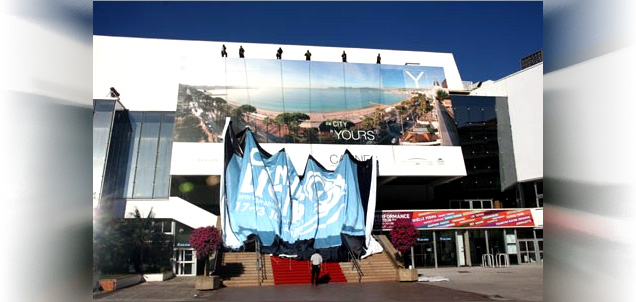
  • Heading high towards Cannes 2012


    By Shubhangi Mehta


    In its 59th year, the Cannes Lions International Festival of Creativity, which will take place from June 17 till 23, is considered the largest worldwide gathering of advertising professionals, designers, digital innovators and marketers.


    Every year in June, around 9,000 registered delegates from 90 countries visit the fest to celebrate the best of creativity in brand communication, discuss industry issues and network with one another. Thousands of ads from all over the world are showcased and judged.


    Inspired by the International Film Festival, staged in Cannes since the late 1940s; a group of cinema screen advertising contractors from the Screen Advertising World Association (Sawa) felt that the makers of advertising films should be recognised similarly. They established the International Advertising Film Festival, the first of which took place in Venice in September 1954, with 187 entries from 14 countries. The lion of the Piazza San Marco in Venice was the inspiration for the Lion trophy.


    Cannes Lions juries are drawn from experts in each field from around the world. Each jury is headed by a jury president. They judge submissions in Film, Film Craft, Media, Press, Outdoor, Cyber, Promo & Activation, Direct, Design, Radio, PR, Creative Effectiveness and Titanium and Integrated.


    Inspiring creativity is at the heart of Cannes Lions. The Festival is where creative professionals come to debate, learn and be inspired; where the greatest industry honours are bestowed; where those pushing creative communications forward are celebrated. Amongst the featured agencies this year are names such as BBDO India, Leo Burnett India, DDB Mudra, TBWA India, JWT India, BBH India, Taproot India, Publicis India, Contract Advertising, Grey India , Happy Creative Service and Ogilvy India.


    Since the past couple of years, India has been doing fairly well at Cannes due to which the expectations are increasing with each passing year. Hence MxM India tried to find out what the experts think are India’s chances in the run for metals at Cannes Lions this year.


    Russel Barret
    Ashish Khazaanchi
    Kartik Iyer
    KV Sridhar
    Rajiv Rao
    Senthil Kumar
    Jishnu Sen
    Josy Paul

    Russel Barret, Managing Partner, BBH India, said: “India matches up to any other country when it comes to creativity. What we lack is the space between ideas and execution. The factors that affect it are probably budget and time. I am really hopeful that we will win just like any other agency which sends their work. Though out of all the Indian work that I have seen, the Tide (print) by Leo Burnett India and OOH Iconic poster by Mudra are my favourite works.


    Ashish Khazaanchi, NCD, Publicis Ambience was optimistic: “Our country has had some good and some not so good years at Cannes, but there has never been an extremely dreadful year for our country. India is amongst the countries having ‘great creative talent’ and the proof is the Grand Prix in the past. Our agency has done wonderfully at Cannes, but this year our focus was mostly on agency growth. My preferred work for this year would be Fox Crime ad and Gandhi booklet by Leo Burnett.


    Karthik Iyer, Owner, Happy Creative Service felt awesome: “Any agency would, to get recognition from the world’s best creative leaders on a global scale. India never lacked ideas, for sure. But I think more attention can be paid to craft. That’s an area we always get beaten, either because of the lack of time, budget or both. When it comes to my favourite work, there are so many it would be unfair to point a few. But a few that come to mind – Coke Studio Entry of the music from Coke bottles DM, I absolutely love that piece, Fox Crime should pick up something, Bajaj Exhaust fans and Sour Marbels to name a few.


    KV Sridhar aka Pops, NCD, Leo Burnett, India maintained: “The only place where our country lacks is exploring the new medium ideas such as digital. We focus more on the conventional mediums rather than the non-conventional ones, unlike countries in Latin America. The chances of India collecting metals at Cannes Lions are more in the categories like design, photography and sound design. For me the magic creators are Killer Jeans, Tide and Bajaj. I feel this will be a good year and we might get close to 20 odd metals, but we cannot regard it as a record breaking year. I’m hoping for the best for Leo – especially for properties like Tide, Coke Studio, a couple of Radio spots and Thums Up for branded content.


    Rajiv Rao, NCD, Ogilvy India said: “I think Indian work is absolutely fantastic, hence it does so well in the Indian market. The scenario in our country is such that we need to do a specific kind of work to appeal to our consumers, hence we do not appeal to the global jury at times. But that is not because of the quality of our work. All we need is to bridge our work in such a way that we appeal to the local masses as well as the international juries.”


    Senthil Kumar, National Creative Director JWT India was of the belief that they can only do their best and hope for God and the jury to do the rest: “Sure we have the potential but until the jury agrees, we won’t be striking heavy metal there. I have always believed that Indians are the most creative people on earth. We have to be more unabashedly Indian in our ideas and even in our ‘God is in the details’ execution. If only we’d stop aping the West and strive to unleash something very Indian every time, we’d have better chance at hunting down Gold Lions. This year, our creative hopes would ride on the following ideas: The Times of India Kerala Launch, RIN Eraser, Lifestyle’s Baddie bags, Nokia Recycle Films, and some other ideas that may just surprise the audience.


    From a potential point of view, these ads are the ones that could hunt down a few Lions for India this year: Google Chrome Tanjore, Mumbai Mirror, The Times of India Kerala Film & IPL 5 Carnival in Film Craft, The FOX Crime Series in Digital, the Nokia Recycle Viral Films, the Coffee House print work, the 3D Audi Website…


    Jishnu Sen, chief operating officer, Grey India, put forth his view: “The reason that the metal tally for India isn’t as high as some Latin American country is because of the international jury. Our work is always great and creative. Grey has done some great work this year with Killer Jeans and Cupid Condom. We are hoping to pick up some metals.”


    Josy Paul, Chairman and NCD, BBDO India felt: “India is a late entrant at Cannes, and taking that in consideration, we are doing fairly well and growing year by year. I am expecting the Gold and Silver winners from Abbys to do well at Cannes as well. As for my agency, Cannes is like a lottery, last year we did not expect to do so well, but we did. This year too, we are hoping our Gillette campaign would do well.”


    Main image: www.CannesLions.com


  • Rough roads ahead for M&E, but not everyone’s complaining


    By Johnson Napier with Tuhina Anand, Shruti Pushkarna, Meghna Sharma and Shubhangi Mehta


    Not many in the business arena would want to relive the harsh moments of 2008-09, which saw the economy at its most downward. While the phase did see a few corporate entities engage in a growth spree of daredevilry proportions, most brands were put to the ultimate test of surviving the slowdown odds or risk folding up business. The phase was, as most experts would agree, the toughest that had hit the Indian shores in a long time. And that there wouldn’t be anything harsher than that in a long time to come.


    But then that phase was a thing of the past and if one has to assess the current scenario, there is a sentiment of adversity that’s staging a strong comeback yet again. Given the spate of hurdles facing the economy like rising inflation, hike in petroleum prices, falling value of rupee and global uncertainty, the question doing the rounds is whether the current economic crisis is putting as much strain on the industry as it did in 2008-09? And, importantly, will the gloom see the growth numbers nosedive to lower levels than what was originally anticipated for 2012-13?


    To recap the growth numbers that was predicted for the media industry for 2012, Mindshare’s annual report – ‘This Year, Next Year: Indian Media Forecasts’ – had projected net revenue for 2012 at Rs37,397 crore, slated to grow at 12 per cent over 2011. This was somewhat close to the kind of growth that was witnessed in 2011, which stood at 12.8 per cent. But with the current crisis refusing to die down and with the sector already moving at a slow pace since January this year, the growth figures may see a marginal fall or remain stagnant.


    Sectoral evaluation

    Providing his outlook, Sujay Ghosh, Senior Vice President, DDBMudra South said that there is indeed a slowdown being felt across sectors. “There is a slowdown across several sectors like retail, apparel, real estate to name a few. As it happens with every slowdown, consumer spending gets concentrated on essentials and indulgences get affected. So, footfalls have shrunk and “like to like” buying has also come down. And with the petrol price hike, things will worsen further.”


    Divya Gupta

    Sharing a similar sentiment, Divya Gupta, CEO, Dentsu India said that there is a slowdown being witnessed in certain sectors, but then there are others that are doing business as usual.


    When analysed further across sectors, the buzzword that’s doing the rounds is “caution”. Expressing such a trend in the domain of television, Ravikumar Gilganchi, VP, Sales, Kasthuri TV shared that in the last two months there has been an increased demand from the advertisers on returns and they have become very rigid on spending: “The dip would be around 15-20 per cent. However, I would like to believe that this is a short-term scenario and by June things would bounce back to normal.” His reason being that since it’s just the start of the financial year many would still be getting their budgets approved and hence, June is when the action would begin.


    Sujay Ghosh

    He further shared: “For the first rung channels, there is not much choice for advertisers and they will go with whatever price is being quoted with not much negotiation as they would want that channel to be part of their media plan. They would start negotiating hard with second rung channels where there are many options available.”


    And it’s not just broadcasters who are feeling the heat. Production houses that play an integral part in the broadcast business too are seeing a rough patch. Hemal Thakkar, Director, Playtime Creations, whose show ‘Ruk Jana Nahi’ airs on Star Plus said, “This time economic slowdown has brought inflation with it which is the biggest cause of concern. This has led to a spike in manufacturing cost of product and budget limitation puts everyone in a spot. Interest costs too have shot up in last two years and so it triples the burden of execution in limited budget.”


    Hemal Thakkar

    But Rahul Kumar Tewary from Swastik Productions Pvt Ltd  whose show Navya airs on Star Plus thinks there is also an opportunity in all this: “The economic downturn has affected the industry as can be seen with the shutdown of channels like Imagine, but it hasn’t made any impact on the major players. The TV industry is on track for major growth as per the industry reports.” According to him, there are unlimited opportunities in the media space as it is a growing industry.


    Another sector that may see a saturated growth pattern is print, which is the second favourite with the brands after television. Alok Sanwal, Project Head & Editor, Inext, expressed concern as he said, “Largely, there is a note of caution for each one of us and this phenomenon is something that a lot of ad agencies had predicted from the beginning of the year for us. If we look at the larger advertising scenario, it was not good even last year. As of now things have been fine for most publications, including us. I feel each one of us have to be sceptical of how things would shape up in the second and third quarter of 2012-13.”


    Rahul Kumar

    As for the larger players, Sanwal feels that there is a word of caution there and the trend is utilitarian, by which he means, it is extremely sales driven: “So to that level, I think, it is a challenge for them. At the end, revenues may continue to grow but the larger challenge would be how to control expenses or optimise investments.”


    R Rajmohan, publisher, Open said: “What we are seeing now is worrisome but the print industry has been witnessing a slump from January this year onwards. The range varies across newspapers and magazines and in some cases it is much more than 20 per cent drop in revenues. The market sentiments have not been positive for a long time and this has led to people curtailing their ad spends on a large scale.” As for the brands, he feels they are playing the game of caution. “They will only spend where they see a genuine need. As for the genre, I feel the lifestyle magazines would continue to do well while the others may not do so well. But the scenario may change with the onset of the festival season. Till then it is wait and watch.”


    But there are those who believe that the scenario is not as bad for the sector and that it is on track for recording modest growth. Krishna Prasad, Editor, Outlook said: “I don’t know if the sentiment is as gloomy as it looks. If you look at the papers and magazines, there are so many sectors that are still promoting ads in them. The media, per se, has been witnessing tremendous action with so many new channels being launched and so many acquisitions and takeovers being the order of the day. So from a macro view, the economic gloom is not really taking a toll on our industry. But that does not mean all our problems are over, far from that. Oil prices are shooting through the roof, the value of rupee is falling further and all these factors will make our growth a challenge. We will have to see how things pan out in a couple of months from now.”


    He added: “Brands are being careful with their spends. Even big brands are treading cautiously and are not going overboard, unless required. We will have to wait and see what the forthcoming months will unfold for the print industry.”


    Agreeing with him, Mr Ghosh said that there are indeed pressures being felt by the clients as well: “There are client pressures in terms of numbers and therefore the client expects us to value add…in terms of strategic thinking on how to get more share of wallet. So our involvement with the client has gone up significantly. Similarly, the clients are concentrating on trying to get more out of their spends from everywhere.”


    He further stated: “I think the spends will remain constant or probably fall a little but nothing drastic will happen. Because the clients have been through it earlier and are experienced enough in not going overboard with expenses…especially with hiring, inventories and so on. So they won’t have to cut down much on marketing spends or any other spends for that matter.”


    Need for self-introspection

    KV Sridhar

    Always the one to be bridging the gap between the client and the consumer, the advertising agencies too are approaching the gloom with a note of caution. Providing his outlook, KV Sridhar, NCD, Leo Burnett, said: “If the industry is affected, the agency is affected and all this is caused by our internal issues more than the external issues. There are three pointers to this. First, advertisers do cost cutting and there are agencies available that are ready to work at lesser prices, this in turn affects the complete industry. Second, there are inefficient government policies, where the government is neither affected nor concerned about the sky-scraping inflation. And third, it’s the fact that we are all a part of a global family as an advertising fraternity. Keeping all this in mind we can still expect a double digit growth, the issue being that growth is also not enough for us, we are always aiming for more.”


    Agnello Dias

    Agnello Dias of Taproot India spoke on behalf of small and independent agencies when he said: “Ours is a small and independent agency, and hence personally, I do not think that agencies like us get affected by slowdown. It’s actually the bigger agencies having clients who play a part in the rise and fall of the economy of the country who get affected by the slowdown.”


    Representing the industry as president of AAAI and also the Executive Director – India Operations of Draftfcb Ulka Group, Nagesh Alai too feels that the current slowdown is affecting the advertising industry: “The advertising industry, to a considerable extent, is linked to the fortunes of the country’s economy/GDP. The recalibration of GDP growth to under 7 per cent, the high inflation, the high interest rates, falling FDI inflows and share portfolio pullouts, the plunging rupee, lowered credit rating, policy paralysis at the government et al have significantly heightened concerns in the business world and that is reflected in poor business confidence.” According to him, while a few sectors like FMCG seem a bit more confident, most other sectors are seeing a softening and are seeing revenue and profit pressures.


    Suggesting the possible solution that agencies could adapt, he said: “Overall, it’s going to be quite a challenging 2012. Most agencies will be affected and may have to relook at their numbers. Having said that, it is better to accept the situation as a business cycle and weather it with prudence and caution. It’s certainly not gloom and doom. My sense is that this time around, it is entirely up to us to rescue the situation and the sooner we do it, the better it will be for everybody. I only hope that the incumbent government gets out of paralysis and inaction and takes some positive steps in the interest of our economy and its people, if they are hoping to win at the 2014 general elections.”


    Though a relatively small domain, Out of Home too is seeing the effects of the slowdown. Sunder Hemrajani, MD, Times OOH highlighted the trend as he said: “After the last slowdown which happened in 2008-09, when the industry actually declined, subsequently the industry had two good years, 2010-11 and virtually 2011-12. The last year, 2011-12 started well for the industry, in the first half from April to September, the (Out of Home) industry saw good double digit growth rates. The slowdown started in November and carried on right upto March and April this year. So overall, you had a situation where the industry grew at about 8 per cent but first half was significantly better than the second half.”


    According to Mr Hemrajani, what has happened is the whole environment, and this is true not just of OOH but all media segments, has become very uncertain. “As a result of that uncertainty you find that people are holding on, clients are not making long term commitments. Earlier one used to get an annual deal or a six months deal, but now they have become three months and one month…so the level of commitment is becoming more short-term rather than long-term. Secondly, the pricing…it’s becoming difficult to increase prices and in some segments the prices have declined as well.”


    But the situation is not as bad for Rajan Mehta, Founder and CEO, LiveMedia. He said, “Contrary to the current economic situation, our business is growing quarter on quarter. Possibly because it’s new and hasn’t hit saturation as yet and also because it is very well targeted and hence cost effective. We are seeing that marketers for whom we were not a priority medium earlier are beginning to consider us as their media budgets have been reduced. They say ‘necessity is the mother of invention’ and therefore it is in these hard times that when advertisers are being challenged to get a bang for their buck that they are discovering and adopting mediums like LiveMedia.”


    Adding his thoughts, Haresh Nayak, MD, Posterscope Group India said, “From trade point of view we are seeing trends as close to 2008 and clearly non occupancy has gone up resulting in loss of business. This coinciding with monsoon which is supposed to be the lean period for OOH has brought down business and according to our estimates the non-occupancy has gone to 50 per cent. Though we implemented 18 campaigns last month, we are seeing a trend of quick availability and ease in implementing large campaigns due to slowdown.”


    With the rupee showing slow signs of recovery and with petroleum prices expected to be hiked further in the coming months, the M&E industry will have to look at alternative strategies to see itself emerge stronger from the economic broil. It may help that the mediums of digital, radio and so on are putting up a strong show, especially digital that is scheduled to grow in excess of 30 per cent. Radio, too, could make merry with the stage set for phase 3 rollout, providing them alternate streams for revenue generation. For now, players are opting to tread on the cautious route and one will have to wait a couple of quarters before the fate of the sector could be ascertained.