Sandhya Srinivasan, Chief Strategy Officer, Law & Kenneth
Name of the Campaign:Â eBay – Want it. Get it.
The Brief: eBay India is where you can buy a range of brand new products.
Research/Insights:Â
Shopping, in reality, has a strong emotional narrative. While money is exchanged and tangible goods are purchased, it’s the intangible flight of the heart that makes shopping such an addiction. People don’t buy products & services. Their attempt is always to fulfill a desire or negate a worry. They want to get back to their waist 24′ jeans or look like the coolest dude in the mohalla and so on. Products they shop for are just means to an end.Â
Â
The thought process behind the creative:
To fulfill your wants and achieve your dreams, you will need a lot of things along the way. Whatever they are, you will get them on eBay India
Media vehicles chosen:Â TV, OOH, Digital, BTL [Cafe Coffee Day and PVR]
Key issues kept in mind while executing the ad:
eBay India offers great deals on the widest range of brand new products
Does the treatment do justice to the brief?
Yes it does. It puts the products in a life context, almost mirroring the unspoken desire that drives shopping. Makes it relevant in an easy, casual sort of way.
What according to you is the differentiating factor about the ad?
Every other brand in the eCommerce space is focused on discounts/deals and modus operandi of the category itself. eBay India’s focus, however, reinforces the role of eBay in every Indian’s life thereby lifting online shopping beyond the mandi/bazaar mentality to a life/lifestyle upgrader.
Market and client feedback:
eBay India has witnessed strong double-digit growth in overall traffic to the site as a result of this campaign
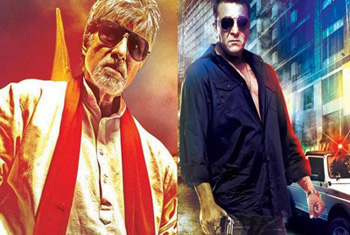
Ram Gopal Varma doesn’t care about critics (he doesn’t care about audiences either!) or he would have spent a very depressing weekend, as his latest film Department is shredded into small pieces. The lowest rating ½ , the highest 2.
One opinion is that this film is even worse than Ram Gopal Varma Ki Aag. It certainly is a toss up between the two to decide which one is more crass.
Janhavi Samant of Mid-day gave it ½ star and wrote: “It doesn’t matter what the plot is, Sawatya has an endless supply of gang members who take till the end of the film to perish. And there is some random gyaan about Bhagvad Gita. At some point Mr Bachchan enters the fray to do some spectacular hamming of his own, showing his penchant for doing ‘legal things illegally’ rather than ‘illegal things legally.’ Really Ramu, did you have to say that thrice in the film?”
One star from rediff.com’s Raja Sen, who calls it a failed experiment: “Varma, predictably, has fun with a couple of quirky lines – especially one that blatantly introduces Nathalia Kaur’s item number, a cameltoe-y milestone for Bollywood – and a scene with the camera mounted on the striker on a carrom-board is genuinely imaginative, but Department is an utter waste. The director who showed us how to film violence is now sucking basic action scenes of their dynamism, leaving them dry and dead, but filming his movie’s carcass from multiple angles. Tragically enough, Satya and Shiva are just names of characters for the new Ramu.”
DNA’s Aakanksha Naval-Shetye and Chhaya Unnikrishnan moved up to 1.5: “Dizzying shots, bizarre camera angles and a confusing storyline mark Ram Gopal Varma’s cop and underworld drama, Department. With Varma returning to his forte, (read underworld), one expected a gritty drama but what unfolds is a saga of gory violence and crass scenes.”
Rajeev Masand gave it 1.5 too and wrote: “Small cameras positioned at odd places, indulges his quirk for gravity-defying angles. It works occasionally in the action scenes that appear more visceral now, but for the most part the bizarre camera movements give you a headache. Just shy of two hours and thirty minutes, ‘Department’ is tedious and boring and doesn’t have any of the originality of ‘Satya’ and ‘Company’, or even the occasional tension of ‘Sarkar’. Dutt delivers his lines like he’s reading out the phone book, and Bachchan hams it up no end as the gangster-turned-minister. It’s only Rana Dagubatti who approaches the film with any earnestness whatsoever… It’s a lazy, indulgent film that tests your threshold for pain.”
Karan Anshuman of Mumbai Mirror went with 1.5 too: “No matter what format a film is shot on, no matter what technique – whether it’s of conventional genre or found footage or experimental Dogme 95 – the gimmick is only a means to an end (a broad view of the end being audience engagement at a story level). With RGV, now the end is simply a different visual experience that does nothing to draw you in. So many times you’re missing dialogue and performances because the camera is overwhelmingly, utterly distracting. This would be acceptable if the visuals were any good, but they are not.”
Anupama Chopra was kinder with 2 stars: “Varma has mined this material before, from Satya to Ab Tak Chhappan, which he produced, so he decided to embellish this film with a new technique that he calls “rogue filmmaking.” Which means he chose student camera operators and high-end digital cameras over a cinematographer and film camera. Which further means that strange camera angles, a regular feature of Varma’s films, are now the main event.”
From the Times of India, 2 stars is a massive put down. Sriranjana Mitra Das wrote: “The violence might even have clicked, considering the tale’s twists – but crazy camerawork makes you forget all that. Varma’s experimented, placing multiple cameras at different angles, treating you to close-ups of bottles pressed to mouths, lips sucking cigarettes, zooms up Dutt’s hairline. The camera even flips upside down, puncturing the tension that should’ve vibrated between Bachchan and Dutt. One line – “Chamatkaar ko namaskar” – nails it. You stagger out sensing something wasted – Nathalia Kaur’s item number’s more hideous than hot, the prettiest thing around is a translucent tea-cup, the action is mind-numbing. Losing the plot and three strong stars, Department shoots itself in the foot.”
The Zee News critics commented: “Watch ‘Department’ if you have been missing your headaches for a long time. Watch ‘Department’ to see the way in which brilliant actors can be wrung dry and left skill-less. And above all, watch ‘Department’ if you are an ardent Ram Gopal Varma fan. And then leave the theatre cursing yourself for watching this brilliantly crafted piece of – well, by now – you know what.”
The Business of Cinema reviewers are brutal too: “The film opens with the line ‘Absolute power corrupts absolutely’, but Ram Gopal Varma’s action film frustrates absolutely. Not only is the story old wine in cracked bottles but also it’s shot with camera angles that make you nauseous and dizzy while leaving you wondering what Varma and his cameraman were thinking.”
Indian Premiere League (IPL) was the most-talked about sporting tournament inIndiawhen it started in 2008. From players’ auctions to cheerleaders, the Twenty20 championship caught everyone’s fantasy.
From its inaugural year till today, the tournament has been more than just cricket. It seems that IPL and controversies go hand-in-hand. Slapgate, cheerleaders’ uniforms and Lalit Modi’s case made us wonder if one had seen it all. However, the hand-in-glove relationship the cricket tournament has had with controversies has never stopped. The latest ones – match fixing, SRK-MCA brawl and molestation case – have started everyone talking again, not all of it good. Some even want the IPL to shut down as well.
MxMIndia’s Meghna Sharma spoke to a few media professionals to know if they think brand IPL is losing its value.
Dilip Cherian
Vikram Sakhuja
Josy Paul
Dilip Cherian, image consultant and co-founder Perfect Relations
It’s true that brand IPL has taken a knocking due to current controversies. However, I don’t think it will harm the brand. The recent events just show that the various rules and regulations need to be stricter and implemented well.
As long as crowds go to the stadiums and viewers switch on their television sets to watch the matches, the show will go on. It also brings other brands into people’s mind. Hence, marketers will continue to invest in the tournament. Â So, why will the brand die?
Vikram Sakhuja, CEO – South Asia, GroupM
With so many channels and shows, the eye-ball distribution is obvious. But the tournament, so far, has got more TRPs than last four years. This only proves that the tournament is doing well. IPL is alive and kicking and will continue to do so.
Josy Paul, Chief Creative Officer and Chairman BBDO India
IPL is a bhelpuri of entertainment, and not cricket. The more controversies, the merrier it will be for the tournament. Nothing can shake it; controversies and achievements will only increase its sheen. The brand IPL is about entertainment and it is providing the same to its fans.
Kushal Sanghvi, MD, Spiider Digital Hub
The TRPs of this season is around 3, so it is not doing as well. However, the show is big and helps any brand to position itself well across sections. The marketers get visibility so will continue to get associated with it. No controversy can shake it; it will continue to remain huge.
Kamal Nandi, vice-president (sales and marketing), Godrej & Boyce
The stats have gone down, so it is becoming less lucrative to invest in the IPL. There is no doubt that it is a strong brand and will be so – controversies or no controversies. However, marketers will be a little cautious in investing in the tournament is the returns are lower than the investment.
The Indian Premier League has now been declared responsible for all India’s problems. This has been unequivocally stated on our TV news channels, and is thus now the incontrovertible truth. This cricket tournament has destroyed our sense of morality, taken us down a road of sex, drugs, violence and betting, not to mention completely killed cricket. These evils, so far unknown and unseen in Indian society, will soon become widespread.
Look at what the IPL has done:
Item: Made a film star fight with a security guard (violence).
Item: Made a cricketer molest a woman (sex).
Item: Made two players go to a rave party (drugs).
Item: Made five players work out spot-fixing deals with bookies (betting).
Item: Made players restrict matches to 20 overs a side and then made this version popular with – shudder – cheerleaders (killing cricket).
Against all these charges, the IPL does not stand a chance. It has been clear to the protectors of both cricket and Indian society from year one that the IPL was BAD NEWS. The very fact that so many people were interested was proof enough. And then, all those film stars, starlets, dancing girls, rich people, money, parties – my word, what is the world coming to?
Each year, the IPL, our TV channels have found, has gotten bigger and thus by conclusion it has become worse.
Just look, for instance, what it has done to Shah Rukh Khan: Forced him to fight with a security guard and with Mumbai Cricket Association officials. This is unacceptable behaviour and absolutely no way for film stars to behave. It is one thing to run over people, help gangsters bomb the city or beat up your wife (or even wives). For these crimes, if you’re unlucky, you will get a few newspaper editorials and maybe even go to jail but you will just be seen as a lovable rogue. But fighting with a security guard? That is the end of civilisation as we know it.
It is hard to know what to do to save India after this. No doubt, the TV channels will tell us. A beginning has been made by former cricketers Kirti Azad and Bishen Singh Bedi, who have apparently gone on a hunger strike to save India from the IPL. The TV channels do not appear to have given this hunger strike the 24-hour coverage they granted to Anna Hazare’s hunger strike. But they do assiduously cover the cricket part of the IPL in their sports programmes. Come on, now, the whole country watches the IPL!
* * *
Having made it to the TIME magazine’s list of the world’s 100 most important people, West Bengal chief minister is now planning to top the list and every other list which will ever be made. This is the link to her latest dramatic act – storming out of a CNN-IBN audience meeting in Kolkata, leaving even the formidable Sagorika Ghose, TV anchor and event host, at a loss for words. The CM was furious because the students in the audience were “CPM cadre and Maoists”. That is, they asked questions she didn’t like.
The other link is to the reply written by the erring student.
I had been traveling all of last week, but I kept track of the IPL shenanigans as and when I could. Since the news channels and the social media folks were busy discussing two sensational incidents of last week, allow me to add my two-bits. And I’ll cut to the chase, as always.
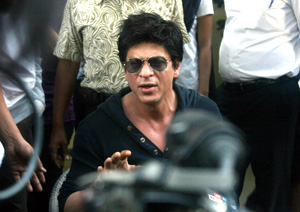
Firstly, on the Shah Rukh Khan versus Wankhede security personnel battle. If SRK’s kids and their pals did not have passes to enter the stadium, the security guards had every reason to demand their immediate removal. Kids will be kids, and it’s highly likely that they would run onto the pitch. There have been allegations that the kids were ‘molested’. I think that’s utter crap. Had that been the case, garam khoon Mr SRK would not have settled for maa bahen ki gaalis, he would have dispatched a few souls to the nearby Bombay Hospital. Also, guards molesting kids on an open ground when the IPL office bearers and players are still at the venue is a preposterous idea to even imagine.
Net net: King Khan’s fat ego (and maybe his booze-influenced head) got the better of him, and he lost control. Ergo, it’s correct that the MCA has banned him. Though given the star’s super heavy connections; that would soon be lifted. But, hats off to the security men who stood up to him. It’s very, very rare in a celeb and VIP obsessed India for lowly officials to take on a heavy weight. I think these guys should be bestowed with an honour.
Next: The incident in Delhi where a drunken IPL player allegedly molested a lady inside her hotel room. That’s a criminal case, and we will have to leave the investigation to the local cops. No one has the right to pass any moral judgments. But Mallya Jr’s tweet was beyond disgusting. It not only denigrated the woman in question, his rant exposed the dude’s sick mindset towards women in general. If Dr Vijay Mallya is a good dad, he needs to send darling beta for counseling, ASAP. And he must also insist that the brat disconnects his twitter account. Junior is not just busy bringing disrepute to his family – he’s reflecting a very poor image of the entire UB group.
It’s Sunday evening as I write this piece. The dust is beginning to settle on both the above issues. But am sure the next scandal is just round the corner. What’s the IPL without some offline tamasha? Aisa mauka aur kahaan milega, bhaiyya?
* * *
PS: “If You’re Not Pissing Someone Off, You’re Probably Not Innovating.” An interesting read from the Harvard Biz Review. On what innovation really means and how marketers must do things differently in order to make a real impact.
The IPL’s fifth season is proving to be good news for mobile TV operators. Apalya Technologies, leader in mobile video, has registered 11 million viewers till now for the IPL 2012. This rise in mobile viewership is close to the numbers garnered by YouTube, which is also registering the same number of viewers on its website.
Speaking on the increasing viewers for mobile TV, Vamshi Krishna Reddy, Co-founder & CEO, Apalya Technologies said: “We started the tournament with an aim to catch at least 10 million subscribers before IPL 2012 ended and today after 65 matches, we are proud that Apalya Technologies has already crossed its target and registered 11 million viewers who are watching the matches Live on their mobiles. With another 10 odd matches to go, we are sure that we will be able to write many success stories this IPL.”
He added:Â “Apalya Technologies is exceeding not only TV, but also online viewership numbers, as compared to mobile viewership with the average minutes of usage per customer being between 17 to 20 minutes per day. Out of these viewers that we have registered till now, at least 70 per cent is coming from the Nokia users. The fact that mobile TV viewership is increasing is a proof in itself that the trends are changing and we are adapting to newer ways of watching TV.”
With emerging technologies and growing mobile video viewing habits, India records over 200 million video views a month on mobile devices and Apalya is all set to capitalize the opportunity to tap the interest of the youth, allowing them mobile video viewing for various popular events. During the World Cup season in April 2011, Apalya generated 17 TB of streaming and with close to 50 minutes of usage per user for the 6 matches India played. Currently, Apalya powers mobile TV for all the major telecom service providers in India and has also launched its services with leading operators in Sri Lanka & Indonesia.
The ABP News-Nielsen survey conducted on the eve of the UPA-II third anniversary has revealed that after eight years in power, the Congress-led coalition’s pull seems to be diminishing.
The survey, conducted across 28 cities across the country in April-May 2012, revealed that the BJP would garner 28 per cent of the votes if Lok Sabha elections are held now, while the Congress would manage only 20 per cent.
In fact, the BJP has turned out to be the most favoured party. In an interesting revelation, only 69 per cent of those who voted for Congress during 2009 Lok Sabha elections are still intending to vote for it, if Lok Sabha elections are held now. 31 per cent are moving away from it and 12 per cent now intend to vote for the BJP. Whereas for BJP, 84 per cent will stick with the party and only 2 per cent are switching away from it to Congress.
In 2009 elections, 28 per cent of these respondents voted for Congress, while 27 per cent voted for the BJP. But for the BJP, the dip of 8 per cent in the Congress vote share is not a complete gain. The BJP is gaining only a marginal 1 per cent. The remaining 7 per cent dip in Congress vote share among these respondents is gain for regional parties.
In the 2009 Lok Sabha elections, Congress had won 207 seats while BJP had got 116 seats.
While 32 per cent believed the government’s performance was good or very good, a sizable 35 per cent rated the performance as average.
Significant 21 per cent respondents said it was poor while 11 per cent rated the performance as very poor. The performance of UPA government has been rated slightly below average with a mean score 2.95, which is lower than the mean score of 3.22 last year.
However, Manmohan Singh’s ratings are good with 37 per cent respondents saying his performance was good or very good. Another 33 per cent ranked him average, while 28 per cent believed his performance was poor or very poor.
Around 32 per cent of the respondents felt that performance of UPA government is better or much better than its last term. A dip of 8 per cent is observed in the perception of people from last year survey, where 40 per cent of the respondents felt that the performance of UPA government is better than previous term. 39 per cent rated UPA performance as “about the same” this year, similar score in comparison to last year.
Only 36 per cent of the respondents felt that performance of the PM is better than its last term. A dip of 8 per cent is noted in the perception of people from the last year survey, where 44 per cent of respondents said that the PM performed better than his previous term.
When it comes to best leader in the country, Narendra Modi 17 per cent said he is the best leader over Manmohan Singh at 16 per cent. Modi was preferred at number four during last year’s survey (12 per cent).Manmohan was ranked at number 1 last year (21 per cent). Rahul Gandhi’s scores have dipped from 19 per cent to 13 per cent this year. Sonia Gandhi’s scores are down from 14 per cent to 9 per cent.
The Aditya Birla group investments may help India Today invest in launching editions of its newspaper Mail Today in Mumbai and other metros.
By A Corresdpondent
Kumar Mangalam Birla, chairman of Aditya Birla Group, has bought a 27.5% stake in Aroon Purie-controlled Living Media India, the publisher and owner of India Today magazine and Aaj Tak television channel. Mr Birla will use his personal money to invest in the New Delhi-based group, which straddles the entire media chain, from television to magazines to tabloids.
A statement from the metals-to-retail group said Birla has agreed to join the Living Media group as a financial investor. It did not specify the price for the deal or the valuation.
However, investment bankers close to the transaction said the deal has been finalised for Rs 600-700 crore, valuing the media group at Rs 2,400-2,800 crore. Mumbai-based investment bank Ambit Corp was the advisor to the deal.
This is the second big investment by an industrialist in the media space. In January, affiliates of Reliance Industries agreed to buy a large stake in the companies of Raghav Bahl, the promoter of Network18 and owner of channels such as CNBC-TV18 and CNN-IBN. The investment was worth over Rs 1,500 crore.
TV Today is listed on the stock exchanges, but it is not clear whether Birla’s personal investment companies will now have to make an open offer to buy 26% from public shareholders.
The financial investment also marks the realisation of Kumar Mangalam Birla’s cherished dream of owning a media company. “The media sector is a sunrise sector from an investment point of view. I believe that Living Media India offers one of the best opportunities for growth and value creation,” Birla said in a release.
Birla made an unsuccessful entry into the entertainment space by launching a movie and TV production company, Applause Entertainment, in 2003. The company, which produced the acclaimed movie Black , was closed down in 2009 after the downturn in the entertainment industry sparked off by the global recession.
Living Media will use the cash from the deal to expand its presence in media. It may now look at launching its New Delhi-based tabloid, Mail Today, in other metros, including Mumbai, according to persons close to the company.
He was, arguably, the biggest Bollywood superstar not long ago but with a few unsuccessful releases, a night club brawl and now a scuffle with officials at a Mumbai cricket stadium to his credit, Shah Rukh Khan’s brand is losing sheen.
In the last couple of years the actor has not signed any big brand endorsement deals, although his portfolio still boasts of more than a dozen brands. People in the endorsement industry say that SRK’s image has suffered in the last couple of years not only due to the controversies that have surrounded him but also because he is an ageing celebrity.
“Controversy does not make for good brand endorsers and any marketer will keep away from a celebrity like that. Besides the controversies that have courted him recently, what is a bigger concern is that he is ageing and that does not bode well for multiple brands in India that want a youth connect,” said Manish Porwal, MD, Alchemist, a talent management agency.
Cola major PepsiCo, for which SRK was a brand ambassador for a long period, dropped him in 2009. In a move that was veering towards the youth, the cola major got on board Ranbir Kapoor. Later, telecom major Airtel did not renew its contract with SRK, although, they have not officially announced their disassociation with him.
LOST IN TRANSITION?
Endorsements: Tag Heuer, Hyundai, Belmonte, V-jon, Navratna, Dabur sona chandi, Lux Cozi, Linc pens
SRK’s endorsement rates haven’t come down though as he charges around Rs 1.5 crore per day. But it’s 50 per cent less than what Aamir Khan commands.
Today, his roster of more than a dozen of brand endorsements include Belmonte, V-jon, Navratna, Dabur sona chandi, Lux Cozi, Linc pens, besides a few marquee names such as Tag Heuer and Hyundai. SRK’s endorsement rates haven’t come down though as he charges around Rs1.5 crore per day.
However, it’s 50 per cent less than what his contemporary Aamir Khan commands, but the latter has largely been off the endorsement market of late, say industry people.
“What you are seeing is something that a lot of stars have gone through. It’s a transitional phase which all celebrities go through; while some bow out gracefully, some do not. It is an inevitable shift of power and it has not been a smooth ride for him,” said Santosh Desai, CEO at Future Brands.
However, some of the brands that he endorses are sticking with him. DTH player Dish TV, which has him as a brand ambassador for over five years, says these incidents have had no rub-off as far as his brand appeal among masses goes. “There is no dent that has been made on Brand SRK, we will continue to have our association with him,” said Salil Kapoor, COO, Dish TV.
On April 10, the TV Today network clarified to the Bombay Stock Exchange on rumours that the Aditya Birla group was acquiring a stake in the India Today group. The clarification said the Company (TV Today) was not aware of any such transaction and was not in a position to confirm the contents of the media reports.
A little over a month later, the same organization sent the BSE a copy of the press release stating that 27.5 per cent of Living Media India, better known as the India Today group, was sold to the Aditya Birla group.
A senior member of the AV Birla group told this correspondent that the investment was made by chairman Kumar Mangalam Birla on a personal level and not by any of the group companies. Â After the customary approvals in a few months, we would get to know the real numbers. Late on Friday, Ashish Bagga, recently appointed CEO of the entire group (including TV Today), informed staff of the development by way of an email.
The question which everyone wants to know is the price that Mr Birla paid for the 27.5%. There have been various figures floating around… that the money paid is in the region of Rs 350-500 crore. In the communique issued, Mr Birla is quoted saying: “The media sector is a sunrise sector from an investment point of view. I believe that Living Media India offers one of the best opportunities for growth and value creation.”
Also read:
AV Birla group buys 27.5% in India Today group
Birla may use personal money for buy, Mail Today may now launch editions in Mumbai, other metros
Loss of plurality is worrying: Paranjoy Guha Thakurta
And here’s what Aroon Purie, chairman of the India Today group said: “I am delighted to partner with the Aditya Birla group to aggressively address the current and future potential of the Indian media business which is at a tipping point. The Aditya Birla group with its strong leadership global footprint, diversified business interests and its shared values of integrity, commitment and social responsibility make it a perfect fit with the India Today group.”
So where’s the money going to be used? For one, it would mean expanding its current businesses. Specifically, Mail Today to move to markets like Mumbai and other cities and for TV Today to get into the regional space, and possibly a business channel. With a question mark on overall growth of newsmagazines, Living Media needs to invest its resources on segments with a growth potential.
It has already done so by investing in smaller, niche magazines which have a smaller print run and attract fair amount of advertising as also bringing in international content.
The TV Today network has also been in pressure in recent months with competition gaining ground. The radio station -Oye 104.8 – also needs to grow on the ratings roster.
And what does it mean for the industry? Although a 27.5% equity will give Mr Kumar Mangalam Birla a toehold in media, it’s not significant enough for him to wrest editorial control. However, while there is fear of how big business money may impact the media, the fact is that it is already doing so. Even today, there exist managements and editors which buckle under pressure from large advertisers and influential individuals. There are enough stories of vested interests at play in Indian journalism, and for the media as a whole, the infusion of money from big business houses and foreign players could possibly ensure better salaries and hence lesser corruption. Standards of journalism are bound to improve.
Also, it’s not that business empires haven’t been in the media already. The KK Birla group runs Hindustan Times, the Tatas would own the Indian title of Reader’s Digest until it sold to Living Media and there are other smaller players too who are known to back media players. Zee TV’s Subhash Chandra has a successful enterprise running under the Essel brand and even The Times of India group’s Jains have had long-standing interests in other fields.
Since the media needs to increase scale, it needs the money for expansion. A route followed by some groups like Dainik Jagran, Dainik Bhaskar and Deccan Chronicle has been to go public. Still others – like Network 18 and Television 18 – have been public and also secured investment. Last year, the Abhey Oswal group bought 14.17% in NDTV.
The Reliance Anil Ambani group has significant presence in the media with radio and television. It has also acquired a majority stake in business channel Bloomberg UTV. Just yesterday (Sunday, May 22), one saw a programme airing consumer complaints with a subscribers’s peeve against Reliance Communications. So it’s not that Bloomberg UTV blanks out all criticism of Reliance ADAG activities.
According to me, more than the possibility of business empires exerting pressure after investing in the media, the worry is when the situation reaches oligopolistic proportions. This has in fact been seen with media groups having a stake in allied business like radio, television and events.
Buzz me if you have a story to tell. Confidentiality assured. There are various ways you can reach me:
pradyumanm[at]mxmindia.com, BBM 23050B5D, Gtalk pradyumanm@gmail.com, Twitter @pmahesh and of course the mobile: 98338 76278.
Disclaimer: Although he is CEO and Editor-in-Chief of this site, Pradyuman Maheshwari’s views in Mediaah! are not necessarily those of the rest of the team and MxMIndia.com.
This sort of an acquisition is part of a growing trend of ‘corporatization’ of the media where big business houses such as the Aditya Birla Group and the Reliance Industries group are investing into existing media groups. Through this process of consolidation, they are also bailing out these groups.
The Raghav Behl-led Network 18 and Ramoji Rao-led Eenadu are now part of one big conglomerate because Reliance Industries Ltd (RIL) has bailed out both by pumping in a huge amount of money. On paper, it appears as if they are still separate corporate entities, which they are, as per the laws of the land. But the kind of associations they have struck gives an impression that they are now going to work like a conglomerate. Now this is exactly what has happened in the case of Mr Aroon Pourie who heads the India Today group which is also going to be one major conglomerate. So what we are seeing, in that sense, is the ‘cartelization’ of the media. There are cartels being formed, there are oligopolies being formed.
The recession in the west has led to shrinking of advertising expenditures for the media in India and across the world especially after 2008, and this has had a direct impact on the fortunes of media organizations. So this process of consolidation has got expedited. What this means is that the media in India is going to become less plural, it’s going to be dominated by relatively fewer groups. What you are really seeing is, large corporate groups exercising greater dominance on the media. Now there are two implications.
Also read:
AV Birla group buys 27.5% in India Today group
Birla may use personal money for buy, Mail Today may now launch editions in Mumbai, other metros
Why media purists needn’t worry about Kumar Mangalam Birla’s 27.5 % in Living Media
One is, of course, you are finding telecom companies (Mr Aditya Birla also happens to be the head of Idea and Mr Mukesh Ambani’s RIL is a major player in the broadband wireless access space), which are providing you communications, are also now playing an important role in companies that produce content. So the content providers and content distributors are coming together. This, in my opinion, is going to result in a loss of heterogeneity, resulting in a loss of plurality. In a sense, the oligopolies that are going to be formed will also impact the listeners of content, the viewers of content, or the readers of content. The content they get will be less heterogeneous.
The other part of the story is that these companies are also big advertisers. Therefore, the clout of the advertiser will go up. As I said, the telecom service providers are now becoming important stakeholders in companies that are producing content. So the distributors of content are becoming stakeholders in the producers of content. Similarly what you also see at another level, the companies which are big advertisers are also now becoming the owners of the media. So in my opinion, these trends towards ‘cartelization’, or the formation of these giant corporate conglomerates is not going to lead to greater plurality as far as the consumers of content are concerned.
The numbers of TV channels and newspapers and websites often give you a very deceptive kind of a picture and the capital is a classic example of that.Delhiis the only city in the world with 16 English language daily newspapers. This gives you a misleading picture, that readers of English dailies inDelhihave a huge choice. But the fact of the matter is that two newspapers, The Times of India and Hindustan Times would account for well over three-fourths of the total market of all English daily newspapers. And if you add to that Economic Times, then these three publications put together would account for more than 80 per cent of the total circulation of all English newspapers in India. So, in terms of numbers it looks good, but if you look at the structure of the market, you see few dominant players.
In India, unlike in other countries of the world, like US, UK or Australia, there are no cross-media restrictions. In other countries, there are both vertical as well as horizontal restrictions. Vertical restrictions mean that the content producer and the content distributor are different companies/groups. In India, the same guys who are producing content are also distributing the content. You have the DMK controlling the distribution channel and also producing the television channel; you have Zee News producing news and also controlling Dish TV. There are clear conflicts of interest that arise if your distributor and the provider are the same. That’s only one part of the story.
The other is what is called horizontal cross media restrictions. That means, the same company dominates all forms of the media, like print, radio, TV, in the same geographical area. In our country we don’t have any legal restrictions on cross media holdings. As far as the media is concerned, the group concept or the conglomerate concept does not operate in our country. So you have Bennett Coleman Ltd which brings out various print publications, and then you have Times Global Broadcasting which brings out the television content. These two companies happen to be controlled by the same set of people. But because the legal restrictions that exist in India apply to individual entities and not to conglomerates, effectively you have no cross-media restriction.
Speaking of editorial content, editors will not publish or broadcast anything that would go against the interest of the corporate that controls; these would become subtle forms of censorship and control. For instance, Living Media which includes, Aaj Tak, India Today, Headlines Today and Mail Today, these publications or these broadcasters are unlikely to publish anything negative that could affect the business interests of the Aditya Birla Group. So that could be an eminent danger, that degrees of freedom that editors and content providers would enjoy, would get curtailed not just because of the pattern of ownership but also because the owners of major conglomerates are also major advertisers.
Even if on paper, the editors have the autonomy and independence to publish what they like, there could be subtle forms of censorship wherein editors would feel constrained or would think twice before publishing any story that could in any way go against the interest of the promoters of the company that control these media conglomerates.
I am optimistic about the future of media in India but I am also concerned about the fact there is loss of heterogeneity, loss of choices to the consumer.
(As told to Shruti Pushkarna)
Paranjoy Guha Thakurta is a senior journalist, editor and broadcaster based in New Delhi.
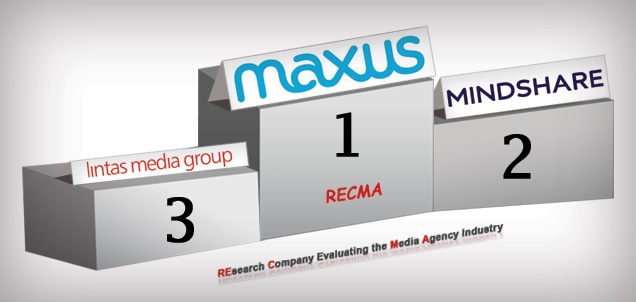
Group M agency Maxus is on tops of the much-respected RECMA qualitative evaluation of Indian media agencies in April 2012. While Maxus has scored 17 points, Mindshare has 15 points, whereas Lintas Media has 13 points. Both Maxus and Mindshare have a ‘Dominant’ profile and LMG has a ‘Good profile’. These are cumulative points across four categories.
In competitive pitches, Maxus and LMG are found to be ‘successful’ and Mindshare is ‘stable’.
The RECMA study is done four times a year. In December 2011, the following were the standings: Maxus: 15 points (Dominant, successful), Lodestar UM 13 points (Good, successful) and Madison Media 13 points (Good variable).
And in December 2010, it was as follows: Maxus 17 (Dominant, successful), LMG 15 (Dominant, successful), Madison 12 (Dominant, stable).
When compared over three periods – April 2012 vs December 2011 vs December 2010 – the Benchmark points for the three leading agencies of April 2012 are: Maxus (0), Mindshare (+4) and and LMG (-2). Maxus has had the same points in December 2010 and April 2012, while Mindshare and LMG have seen a change of +4 and -2 respectively.
Ajit Varghese
“RECMA is an important achievement for our agency as it is the only study that is authentic and is backed by numbers. On a global level, it is the numbers that do the talking and we are happy to have been performing consistently well,” said Ajit Varghese, managing director, Maxus. “It gives us an edge over our competitors and shows that we are not just a flash in the pan; that we are a dominant and successful agency. Yes, competition is pushing us to perform harder but we have been successful each time and this can be seen by our consistent performance at the top.”
“Recma is an important benchmark for us as it is considered seriously by most advertisers around the world, ” said Lynn de Souza, chairman and CEO, Lintas Media Group. “It is based on hard facts and data and not like the other studies that are based on perception. Also, the study cannot be manipulated and is therefore genuine to stand by.”
Lynn de Souza
As many as 19 media agencies were ranked in April 2012 with scores from +17 to -9; following a decreasing classification from ‘Dominant’ to ‘Good profile’, ‘Average profile’ and ‘Low profile’. This ranking is combined with a New Business qualification: ‘successful’, ‘stable’ or ‘underperforming’.
This qualitative evaluation has been processed in 40 countries and gathers 14 criteria in four categories:
1- Competitiveness: mainly measured by pitches results over the last three years (including a 2012 trend).
2- Momentum measured by the activity growth, market shares growth over 3 years, new business activity and changes to the top management.
3- Resources in Digital and Diversified Services (outdoor, branded content, entertainment, sponsoring/events, multi-cultural, retail, econometrics, etc.) as well as geographical coverage.
4- Client Profile: number of big advertisers handled, number of local advertisers, share of the 1st client and the 3 biggest (exposure).
“The factors that have led us to achieve such a ranking include our ability in growing in new segments and our ability to retain big clients. Vodafone, Nokia are a few examples where we have managed to retain them despite they belonging to different agencies worldwide,” Mr Varghese added.
Said Ms de Souza:Â “We are pleased with our current performance at RECMA. We have topped the list of being the most ‘successful’ agency in the criterion of competitiveness,” This was largely due to our aggression in pitching for new clients and our ability to retain most accounts. There was a worry in 2011 when we lost one of our biggest clients in ITC but then we compensated for that loss by aggressively pitching for mid-sized clients and doing that specifically in Tier 2 and 3 towns and cities. Going by our strong performnace , I see ourselves becoming the No 1 or 2 agency at RECMA very soon.”
Mindshare India Leader Ravi Rao was in meetings and not available for comment at the time of writing.
The India Qualitative Evaluation report is the fifth edition, the first one having been released in October 2010. “The key benefit of this study is to provide advertisers a fresh picture of the competition throughout a qualitative assessment of the strengths and weaknesses of each player, ” said Eudes J. Delfaon, the Paris-based RECMA Founder and Director of Research and Michèle Le Bris, RECMA’s Regional Director APAC in Manila.
“Revised and updated on a quarterly basis, the RECMA domestic reports stand as a powerful benchmark essential to all industry professionals in order to get a good and accurate understanding of the media agency landscape and deliver relevant credentials in their presentations,” he added.
 Sandhya Srinivasan, Chief Strategy Officer, Law & Kenneth
 Department



 By Anil Thakraney
 By Samidha Sharma
 By Pradyuman Maheshwari